Results by title
5159 books match the query 'Biography' and 217 start with r
Rebecca Harding Davis
Writing Cultural AutobiographyJanice Milner Lasseter
Vanderbilt University Press, 2001
Rebel Bulldog
The Story of One Family, Two States, and the Civil WarJason Lantzer
Indiana Historical Society Press, 2017
Rebel Poet
More Stories from a 21st Century IndianLouis V. Clark (Two Shoes)
Wisconsin Historical Society Press, 2019
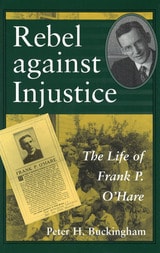
Rebel against Injustice
The Life of Frank P. O'HarePeter H. Buckingham
University of Missouri Press, 1996
Rebel against Injustice, a carefully crafted biography of Frank P. O'Hare (1877-1960), socialist, political activist, editor, and husband of prominent radical Kate Richards O'Hare, is the first study of a much-neglected but important figure of the American Left whose contributions are often referred to, in passing, in many other works.
Abandoned by his father at the age of four, O'Hare grew up in the Kerry Patch slum of St. Louis. Although he began his career in business, O'Hare turned to socialism with the sublime dream of bringing about a better world. While attending a school for Socialist organizers, he met Kate Richards, and the young couple forged a personal and professional partnership. Settling in Oklahoma, the O'Hares helped build a strong grassroots movement through grueling lecture tours and colorful camp meetings. In 1911, Frank, his wife, and their four children moved to St. Louis, where they transformed the National Rip-Saw into a popular Socialist monthly magazine. It was there that Frank found his niche as a Socialist impresario, editing the writings and arranging the tours of his "stars," Kate O'Hare and Eugene Debs.
A series of calamities, including the breakup of his marriage, brought Frank O'Hare near the edge of despair in the mid-1920s. Divorcing and remarrying, he made a new life in St. Louis. Plunging back into radical activism, he worked for the Federated Press syndicate. During the last twenty years of his life, O'Hare wrote for the St. Louis Post-Dispatch, worked as a business consultant, and continued his involvement as a community activist in St. Louis. Although Frank O'Hare has long been dismissed as a lost soul without Kate Richards O'Hare, Rebel against Injustice shows that he continued to be a presence in St. Louis and never stopped his fight against injustice. In 1958, a Teamster newspaper referred to O'Hare as "one of the truly great men of St. Louis--possibly the ONLY one."
Based upon a close study of the largely untapped Frank P. O'Hare papers, this well-written biography will enlighten readers about the organizational choices behind the success of American Socialism, while shedding new light on the lives and activities of many prominent American radicals.
Rebels in Law
Voices in History of Black Women LawyersJ. Clay Smith, Jr., Editor
University of Michigan Press, 2000
The essays demonstrate the involvement of black women lawyers in important public issues of our time and show them addressing the sensitive subjects of race, equality, justice and freedom. Drawing together many writings that have never been published or have been published in obscure journals or newspapers, Rebels in Law is a groundbreaking study. In addition, it offers historical background information on each writer and on the history of black women lawyers. Providing an opportunity to study the origins of black women as professionals, community leaders, wives, mothers, and feminists, it will be of interest to scholars in the fields of law, history, political science, sociology, black studies and women's studies.
J. Clay Smith, Jr., is Professor of Law, Howard University Law School. He was formerly a member of the United States Equal Employment Opportunity Commission, Dean of Howard University Law School, and President of the Washington Bar Association. He is the author of Emancipation: The Making of the Black Lawyer, 1844-1944 and numerous articles.
Rebels in Paradise
Sketches of Northampton AbolitionistsBruce Laurie
University of Massachusetts Press, 2014
Long ago dubbed the “Paradise of America,” Northampton, Massachusetts, is also known as the home of visionaries—from the Reverend Jonathan Edwards, father of the First Great Awakening, to George W. Benson, brother-in-law of William Lloyd Garrison and a founder of the utopian Northampton Association for Education and Industry. During the mid-nineteenth century the town became a center of political abolitionism and a hub in the Underground Railroad. In this book, Bruce Laurie profiles five rebellious figures who launched Northampton's abolitionist movement—Sylvester Judd Jr., John Payson Williston, David Ruggles, Henry Sherwood Gere, and Erastus Hopkins. Through their individual stories he traces the evolution of the antislavery movement in western Massachusetts and links it to broader developments in economics, civil life, and political affairs.
Northampton's abolitionists were a heterodox group, yet most were intrepid devotees of democracy and racial equality, idealists who enjoyed genuine friendships and political alliances with African Americans. Several even took the bold step of hiring African Americans in their businesses. They avoided the doctrinal rivalries that sometimes troubled the antislavery movement in other places, skillfully steering clear of the xenophobic nativism that infected Massachusetts politics in the mid–1850s and divided the Republican Party at large. Although a prohibitionist faction disrupted the Northampton abolitionist movement for a time, the leaders prevailed on the strength of their personal prestige and political experience, making the seat of Hampshire County what one of them called an abolitionist “stronghold.”

Reckon
Logan Phillips
University of Arizona Press, 2026
In Reckon, artist Logan Phillips returns to the fabled town to face the history he was raised on as a boy—gunfights, outlaws, and Hollywood cowboys—for a new, personal confrontation with the West’s foundational mythology. This hybrid memoir also explores sexuality, masculinity, parenting, and what it means to love a land rife with contradiction and “slathered in murder.”
As innovative as it is moving, this memoir is constructed of essays, photography, poetry, newspaper clippings from the Tombstone Epitaph Local Edition, and of course, movie screenplays. As he writes the characters of his past––including Youngfather and Teenme––Phillips finds the real history to be much more complex than the stories he was told. This is Tombstone in the 1980s and 90s, a century after the West’s most famous gunfight––a fifteen-second event still performed every day in historical reenactments––where Phillips’s father works as a historical exhibit designer at the Courthouse Museum and his uncle as a stuntman at Old Tucson Studios.
With an original, searing voice, Reckon is an essential answer to the tough questions of past and future, inheritance and reinvention, all from the perspective of a boy stuck in the middle.
Reckoning Day
Race, Place, and the Atom Bomb in Postwar AmericaJacqueline Foertsch
Vanderbilt University Press, 2013
Foertsch also examines the location of African American characters in novels, science fiction, and survivalist nonfiction such as government-sponsored forecasts regarding post-nuclear survival. In these, black characters are often displaced or absented entirely: in doomsday narratives they are excluded from executive decision-making and the stories' often triumphant conclusions; in the nonfiction, they are rarely envisioned amongst the "typical American" survivors charged with rebuilding US society. Throughout Reckoning Day, issues of placement and positioning provide the conceptual framework: abandoned at "ground zero" (America's inner cities) during the height of the atomic threat, African Americans were figured in white-authored survival fiction as compliant servants aiding white victory over atomic adversity, while as historical figures they were often perceived as "elsewhere" (indifferent) to the atomic threat. In fact, African Americans' "position" on the bomb was rarely one of silence or indifference. Ranging from appreciation to disdain to vigorous opposition, atomic-era African Americans developed diverse and meaningful positions on the bomb and made essential contributions to a remarkably American dialogue.
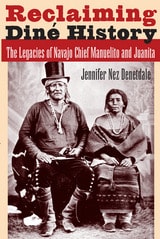
Reclaiming Diné History
The Legacies of Navajo Chief Manuelito and JuanitaJennifer Nez Denetdale
University of Arizona Press, 2007
Here she presents a thought-provoking examination of the construction of the history of the Navajo people (Diné, in the Navajo language) that underlines the dichotomy between Navajo and non-Navajo perspectives on the Diné past. Reclaiming Diné History has two primary objectives. First, Denetdale interrogates histories that privilege Manuelito and marginalize Juanita in order to demonstrate some of the ways that writing about the Diné has been biased by non-Navajo views of assimilation and gender. Second, she reveals how Navajo narratives, including oral histories and stories kept by matrilineal clans, serve as vehicles to convey Navajo beliefs and values.
By scrutinizing stories about Juanita, she both underscores the centrality of women’s roles in Navajo society and illustrates how oral tradition has been used to organize social units, connect Navajos to the land, and interpret the past. She argues that these same stories, read with an awareness of Navajo creation narratives, reveal previously unrecognized Navajo perspectives on the past. And she contends that a similarly culture-sensitive re-viewing of the Diné can lead to the production of a Navajo-centered history.
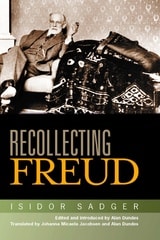
Recollecting Freud
Isidor Sadger; Edited and introduced by Alan Dundes; Translated by Johanna Micaela Jacobsen and Alan Dundes
University of Wisconsin Press, 2005
As a student, Sadger attended Freud's lectures from 1895 through 1904. Two years later Freud nominated Sadger to his Wednesday Psychological Society (later called the Viennese Psychoanalytic Society). Sadger, however, was not part of Freud's inner circle, but more a participant observer of the early years of the psychoanalytic movement and of Freud as teacher, therapist, and clinician.
Sadger was considered one of the most devoted followers of Freud and hoped to become one of Freud's "favorite sons." At the First Psychoanalytic Congress held in Salzburg in 1908, Sadger was chosen to be one of the principal speakers along with Freud, Jones, Alder, Jung, Prince, Rifkin, Abraham, and Stekel, an honor that bespeaks Sadger's early role in the movement. But Freud and many of his disciples were also openly critical of Sadger's work, calling it at various times overly simplistic, unimaginative, reductionist, orthodox, and rigid.
In 1930 Sadger published his memoir, Sigmund Freud: Persönliche Erinnerungen. With the rise of Nazism and World War II, the book became lost to the world of psychoanalytic history. Recently, Alan Dundes learned of its existence and mounted a search that led him around the world to one of the few extant copies—in a research library in Japan. The result of his fascinating quest is Recollecting Freud, a long-lost personal account that provides invaluable insights into Freud and his social, cultural, and intellectual context.
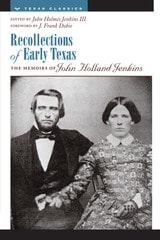
Recollections of Early Texas
Memoirs of John Holland JenkinsEdited by John Holmes Jenkins III
University of Texas Press, 1958
“[These reminiscences] light up for whoever will read the earliest days of early English-speaking Texas.” —J. Frank Dobie, from the foreword
A firsthand account of pioneer life in east Texas.
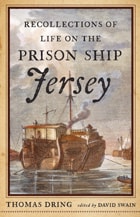
Recollections of Life on the Prison Ship Jersey
Thomas Dring
Westholme Publishing, 2010
“Among the many events which took place during the Revolutionary War from its commencement to its termination [are] the cruelties inflicted upon that unfortunate class of men who had the misfortune to be numbered among the prisoners [of the British] and more particularly those whom the dreadful chance of war had placed on board their prison ships at New York.” So begins the remarkable narrative of Thomas Dring. In 1824, Dring was an aging man of 65, retired in his native state of Rhode Island. Forty-two years before, he, like thousands of other young men, had been caught up in the American cause. In 1782, he had been captured by the British and sentenced to the infamous prison ship Jersey, a demasted hulk anchored in the East River off New York City. It is estimated that more than 11,000 men perished on the British prison ships over the course of the war, and their bones regularly washed up on the shore long after hostilities ceased. Dring survived to tell the tale, and in 1824, he decided to do just that. He was motivated partly because the fate of the prisoners was beginning to be doubted, that their hardships were thought to have been grossly exaggerated, and even that the entire experience had never occurred.
This book publishes for the first time the complete text of Dring’s handwritten manuscript, a major primary-source document, in which he describes the horrible conditions, treatment by guards, and experiences that he and others endured during captivity. Recollections of Life on the Prison Ship Jersey is a plea not to forget but instead to remember the inhumanity of the captors and the sacrifices of the captives—a message that continues to resonate today. Editor David Swain has provided an introductory essay and extensive notes that contain background information and historical documentation to accompany and illuminate the original manuscript.
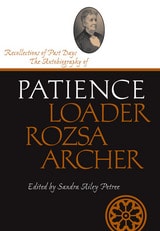
Recollections of Past Days
The Autobiography of Patience Loader Rozsa Archeredited by Sandra Ailey Petree
Utah State University Press, 2006
For visitors to the Martin's Cove historic site in Wyoming, Patience Loader has become an icon of the disastrous winter entrapment of the Martin and Willie handcart companies. Her record of those events is important, but there is much else of interest in her autobiography. In fact, it is a bit unusual that someone such as her would have left such an engaging record of her life.
The daughter of an English gardener, Patience Loader became a boarding house servant, domestic maid, and seamstress. Converted to Mormonism, she shipped with her parents to America. They joined the ill-fated Martin company, which because of poor planning and a late start west, was caught poorly prepared by severe high plains snowstorms in October and November 1856. The combined fatalities of the Martin and Willie companies made this the worst disaster in the history of overland travel. Patience = s father was one of those who died. After reaching Utah, Patience took the unusual step for a Mormon of marrying a soldier, John Rozsa, stationed at Camp Floyd. The troops there had made up the Utah Expedition, sent to ensure federal authority over the Mormons. Rozsa was a Hungarian immigrant and Mormon convert. When the Utah troops were recalled for the Civil War, Patience accompanied her husband, as an army laundress, to Washington, D.C., running a boarding house while Rozsa fought. After the war, he died at Fort Leavenworth of consumption, and Patience returned alone to Utah, where she became a cook at a mining camp in American Fork Canyon. Her autobiography ends there in 1872, though she lived till 1922.
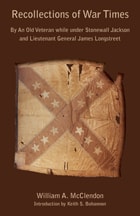
Recollections of War Times
By An Old Veteran while under Stonewall Jackson and Lieutenant General James LongstreetWilliam A. McClendon, with an introduction by Keith S. Bohannon
University of Alabama Press, 2010
"Gus" McClendon joined the 15th Alabama Infantry Regiment, and served in many of the Eastern Theater engagements. More than fifty years later, he sent down his reminiscences, still an unreconstructed Southern patriot, although able to look back with some amusement on his younger self.
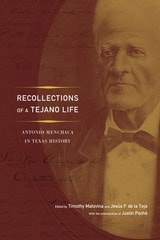
Recollections of a Tejano Life
Antonio Menchaca in Texas HistoryEdited by Timothy Matovina and Jesús F. de la Teja
University of Texas Press, 2013
San Antonio native, military veteran, merchant, and mayor pro tem José Antonio Menchaca (1800–1879) was one of only a few Tejano leaders to leave behind an extensive manuscript of recollections. Portions of the document were published in 1907, followed by a “corrected” edition in 1937, but the complete work could not be published without painstaking reconstruction. At last available in its entirety, Menchaca’s book of reminiscences captures the social life, people, and events that shaped the history of Texas’s tumultuous transformation during his lifetime. Highlighting not only Menchaca’s acclaimed military service but also his vigorous defense of Tejanos’ rights, dignity, and heritage, Recollections of a Tejano Life charts a remarkable legacy while incorporating scholarly commentary to separate fact from fiction.
Revealing how Tejanos perceived themselves and the revolutionary events that defined them, this wonderfully edited volume presents Menchaca’s remembrances of such diverse figures as Antonio López de Santa Anna, Jim Bowie, Davy Crockett, Sam Houston, General Adrián Woll, Comanche chief “Casamiro,” and Texas Ranger Jack Hays. Menchaca and his fellow Tejanos were actively engaged in local struggles as Mexico won her independence from Spain; later many joined the fight to establish the Republic of Texas, only to see it annexed to the United States nine years after the Battle of San Jacinto. This first-person account corrects important misconceptions and brings previously unspoken truths vividly to life.
Reconsidering No Man Knows My History
edited by Newell G. Bringhurst
Utah State University Press, 1996

Record Makers and Breakers
Voices of the Independent Rock 'n' Roll PioneersJohn Broven
University of Illinois Press, 2009
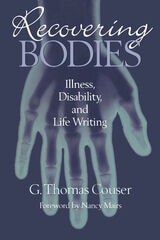
Recovering Bodies
Illness, Disability, and Life WritingG. Thomas Couser
University of Wisconsin Press, 1997
Responding to the recent growth of illness and disability narratives in the United States—such works as Juliet Wittman’s Breast Cancer Journal, John Hockenberry’s Moving Violations, Paul Monette’s Borrowed Time: An AIDS Memoir, and Lou Ann Walker’s A Loss for Words: The Story of Deafness in a Family—Couser addresses questions of both poetics and politics. He examines why and under what circumstances individuals choose to write about illness or disability; what role plot plays in such narratives; how and whether closure is achieved; who assumes the prerogative of narration; which conditions are most often represented; and which literary conventions lend themselves to representing particular conditions. By tracing the development of new subgenres of personal narrative in our time, this book explores how explicit consideration of illness and disability has enriched the repertoire of life writing. In addition, Couser’s discussion of medical discourse joins the current debate about whether the biomedical model is entirely conducive to humane care for ill and disabled people.
With its sympathetic critique of the testimony of those most affected by these conditions, Recovering Bodies contributes to an understanding of the relations among bodily dysfunction, cultural conventions, and identity in contemporary America.

Red Dust and Broadsides
A Joint AutobiographyRonald D. Cohen
University of Massachusetts Press, 1999
Perhaps best known for Broadside, the influential magazine they founded in 1962, Agnes “Sis” Cunningham and Gordon Friesen have long been renowned figures on the American left. In this book, these two dedicated social activists—Sis the folk musician and Gordon the radical journalist—offer a spirited account of their personal and political odyssey. The story is illustrated with numerous photographs and drawings.
Born into poverty in rural Oklahoma, further shaped by the hardships of the “dustbowl” Depression years, Sis and Gordon were already committed to radical causes when they met and married in 1941. A short time later they moved to New York City, where they befriended Pete Seeger and Woody Guthrie. Sis joined the folk protest group the Almanac Singers, and Gordon continued his work as a journalist. Although blacklisted for their political views during the McCarthy era, Sis and Gordon persevered and eventually launched Broadside, which they continued to produce for almost twenty years. The magazine was instrumental in promoting the careers of many singer-songwriters, publishing the first works of such artists as Bob Dylan, Janis Ian, Phil Ochs, Buffy Sainte-Marie, and Tom Paxton, as well as the works of more established figures, including Malvina Reynolds and Pete Seeger. Indeed, Broadside gave birth to a musical revival that energized the country and forged a vital link between the folk music of the 1930s and 1940s and the urban folk revivalists of the 1960s and 1970s.
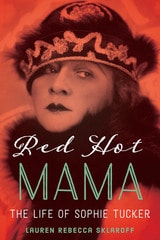
Red Hot Mama
The Life of Sophie TuckerLauren Rebecca Sklaroff
University of Texas Press, 2018
The “First Lady of Show Business” and the “Last of the Red Hot Mamas,” Sophie Tucker was a star in vaudeville, radio, film, and television. A gutsy, song-belting stage performer, she entertained audiences for sixty years and inspired a host of younger women, including Judy Garland, Carol Channing, and Bette Midler. Tucker was a woman who defied traditional expectations and achieved success on her own terms, becoming the first female president of the American Federation of Actors and winning many other honors usually bestowed on men. Dedicated to social justice, she advocated for African Americans in the entertainment industry and cultivated friendships with leading black activists and performers. Tucker was also one of the most generous philanthropists in show business, raising over four million dollars for the religious and racial causes she held dear.
Drawing from the hundreds of scrapbooks Tucker compiled, Red Hot Mama presents a compelling biography of this larger-than-life performer. Lauren Rebecca Sklaroff tells an engrossing story of how a daughter of Russian Jewish immigrants set her sights on becoming one of the most formidable women in show business and achieved her version of the American dream. More than most of her contemporaries, Tucker understood how to keep her act fresh, to change branding when audiences grew tired and, most importantly, how to connect with her fans, the press, and entertainment moguls. Both deservedly famous and unjustly forgotten today, Tucker stands out as an exemplar of the immigrant experience and a trailblazer for women in the entertainment industry.
Red Skelton
The Mask behind the MaskWes Gehring
Indiana Historical Society Press, 2008
Red Virgin
Memoirs Of Louise MichelLouise Michel, edited and translated by Bullitt Lowry and Elizabeth Gunter
University of Alabama Press, 1981
Personal memoires of influential French feminist socialist and radicalist Louise Michel, a participant and observer in the Paris Commune.
Louise Michel was born illegitimate in 1830 and became a schoolmistress in Paris. She was involved in radical activities during the twilight of France’s Second Empire, and during the Franco-Prussian War of 1870 and the siege of Paris. She was a leading member of the revolutionary groups controlling Montmarte. Michel emerged as one of the leaders of the insurrection during the Paris Commune of March-May 1871; and French anarchists saw her as martyr and saint, "the Red Virgin." These are her memoires.
When the Versailles government crushed the Commune in May 1871, Michel was sentenced to exile in New Caledonia, until the general amnesty of 1880, when she returned to France and great popular acclaim and support from the working people of the country. Michel was arrested again during a demonstration in Paris in 1883 and sentenced to six years in prison. Pardoned after three years, she continued her speeches and writing, although she spent the greater part of her time from 1890 until her death in 1905 in England in self-imposed exile. It was during her prison term from 1883 to 1886 that she compiled her Memoires, now available in English.
These memoirs offer readers a view of the non-Marxist left and give an in-depth look into the development of the revolutionary spirit. The early chapters treat her childhood, the development of her revolutionary feelings, and her training as a schoolteacher. The next section describes her activities as a schoolteacher in the Haute-Marne and Paris and therefore contains much of interest on education in 19th-century Europe. Her chapters on the siege of Paris, the Commune, and her first trial show those events from the point of view of a major participant. Of particular interest is a chapter on women’s rights, which Michel saw as part of the search for the rights of all people, male and female, and not as a separate struggle.
The Red Virgin: Memoirs of Louise Michel will be useful to both scholars and students of 19th-century French history and women’s studies.
Red, White, Black, and Blue
A Dual Memoir of Race and Class in AppalachiaWilliam M. Drennen Jr., Kojo (William T.) Jones Jr.
Ohio University Press, 2004
Redefining Science
Scientists, the National Security State, and Nuclear Weapons in Cold War AmericaPaul Rubinson
University of Massachusetts Press, 2016
The Cold War forced scientists to reconcile their values of internationalism and objectivity with the increasingly militaristic uses of scientific knowledge. For decades, antinuclear scientists pursued nuclear disarmament in a variety of ways, from grassroots activism to transnational diplomacy and government science advising. The U.S. government ultimately withstood these efforts, redefining science as a strictly technical endeavor that enhanced national security and deeming science that challenged nuclear weapons on moral grounds “emotional” and patently unscientific. In response, many activist scientists restricted themselves to purely technical arguments for arms control. When antinuclear protest erupted in the 1980s, grassroots activists had moved beyond scientific and technical arguments for disarmament. Grounding their stance in the idea that nuclear weapons were immoral, they used the “emotional” arguments that most scientists had abandoned.
Redefining Science shows that the government achieved its Cold War “consensus” only by active opposition to powerful dissenters and helps explain the current and uneasy relationship between scientists, the public, and government in debates over issues such as security, energy, and climate change.

Rediscovering National Parks in the Spirit of John Muir
Michael Frome
University of Utah Press, 2015
As a journalist, advocate, and professor, Michael Frome has spent decades engaged with conservation topics and has taken particular interest in America’s national parks. He draws on this experience and knowledge to address what remains to be done in order to truly value and preserve these special places. Part memoir, part history, and part broadside against those who would diminish this heritage, Rediscovering National Parks in the Spirit of John Muir, through thoughtful reflections and ruminations, bears witness to the grandeur of our parks and to the need for a renewed sense of appreciation and individual responsibility for their care.
In recollections of his encounters and conversations with key people in national park history, Frome discusses park politics, conflicts between use and preservation, and impacts of commercialization. He proposes a dedicated return to the true spirit in which the parks were established, in the manner of John Muir. He advocates maintaining these lands as wild sanctuaries, places where we can find inspiration, solitude, silence, balance, and simplicity, reminding us why we must preserve our national treasures and why we need to connect with the deeper values they hold.
Reflections in Place
Connected Lives of Navajo WomenDonna Deyhle
University of Arizona Press, 2009
As a recognized authority on the subject, qualified by multiple degrees in racial and American Indian studies, Deyhle is able to chronicle the lives and “survivance” of three Navajo women in a way that is simultaneously ethnographic and moving. Her critique of the U.S. education system’s underlying yet very real tendency toward structural discrimination takes shape in elegant prose that moves freely into and out of time and place. The combination of substantive sources and touching personal experience forms a profound and enduring narrative of critical and current importance.
While this book stands as a powerful contribution to American Indian studies, its compelling human elements will extend its appeal to anyone concerned with the ongoing plight of American Indians in the education system.
Reflections of a Civil War Historian
Essays on Leadership, Society, and the Art of WarHerman Hattaway & Foreword by Frank E. Vandiver
University of Missouri Press, 2003
Reflections of a Pragmatic Economist
My Intellectual JourneyEmery N. Castle
Oregon State University Press, 2010
Reflections of a Transborder Anthropologist
From Netzahualcóyotl to AztlánCarlos G. Vélez-Ibáñez
University of Arizona Press, 2020
In each chapter, Vélez-Ibáñez revisits a critical piece of his written work, providing a new introduction and discussion of ideas, sources, and influences for the piece. These are followed by the work, chosen because it accentuates key aspects of his development and formation as an anthropologist. By returning to these previously published works, Vélez-Ibáñez offers insight not only into the evolution of his own thinking and conceptualization but also into changes in the fields in which he has been so influential. Throughout his career, Vélez-Ibáñez has addressed why he does the work that he does, and in this volume he continues to address the personal and intellectual drives that have brought him from Netzahualcóyotl to Aztlán.
Reflections of a Transborder Anthropologist shows how both Vélez-Ibáñez and anthropology have changed and formed over a fifty-year period. Throughout, he has worked to understand how people survive and thrive against all odds. Vélez-Ibáñez has been guided by the burning desire to understand inequality, exploitation, and legitimacy, and, most importantly, to provide platforms for the voiceless to narrate their own histories.
Reflections on the Russian Soul
A MemoirDmitry S. Likhachev
Central European University Press, 2000
This compelling and often traumatic book is the memoir of one of the most important figures in modern Russian history, Dmitry S. Likhachev, revered as ‘a guardian of national culture’. Reflections on the Russian Soul is an incredible account of an intellectual’s turbulent journey through twentieth century Russia. Likhachev re-counts the fortunes of people with whom he came into contact and reproduces the air of passed years in Russia.
Likhachev vividly portrays his childhood years in St. Petersburg and continues into his student life at Leningrad University that led to an agonizing period of imprisonment and near death. He describes how a harmless prank caught the attention of the Secret Police, resulting in his exile and confinement within the infamous prison island of Solovki. He describes his first-hand experience of brutality in prison during the early Stalin years and the incident that not only saved him but also haunted him for the rest of his life.
He reflects on the years after his release from prison and the events leading up to the Second World War. His powerful recollection of the blockade of Leningrad provides the reader with a horrific insight into the harsh effects of war, hunger and survival. Lichachev goes on to describe post-war Russia and how his own livelihood developed from literary editor to a return to Leningrad University as Professor of History. This compelling autobiography finishes with Likhachev’s poignant return to Solovki as a free man.
Reflections
My Life in the Deaf and Hearing WorldsJohn B. Christiansen
Gallaudet University Press, 2010
Hard of hearing since early childhood, John Christiansen spent the first 30 years of his life trying to fit in to a hearing world that did little to accommodate his communication needs. Although he excelled in academics, Christiansen found social situations stressful at every level, until he obtained a position as a professor of sociology at Gallaudet University. There he learned sign language and joined a new community. Reflections: My Life in the Deaf and Hearing Worlds grew out of his personal experiences inhabiting these two worlds.
As a sociologist, Christiansen could identify the toll that trying to communicate with hearing people took on his psyche, the classic looking-glass self in action: I am what I think you think I am. He saw that people with hearing loss frequently blame themselves for social awkwardness and gaffs, even though the responsibility for clear communication should be shared. Still, after living in the hearing world for most of his life, he opted to undergo a cochlear implantation to try to improve interaction with his hearing friends, wife, and children.
His description of adjusting to his cochlear implant brings fresh reality to the implant process. As he puts it, he was not a superstar. After ten years, though, he feels positive enough about his experience to endorse it. As a denouement to his affecting memoir, he describes the disruptive 2006 protest at Gallaudet over the choice of a new president from his vantage point as a member of the search committee. Reflections stands as a remarkable account of one person’s navigation through the intricacies of two different and occasionally opposing worlds.
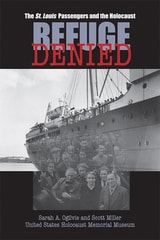
Refuge Denied
The St. Louis Passengers and the HolocaustSarah A. Ogilvie and Scott Miller
University of Wisconsin Press, 2006
Although the episode of the St. Louis is well known, the actual fates of the passengers, once they disembarked, slipped into historical obscurity. Prompted by a former passenger’s curiosity, Sarah Ogilvie and Scott Miller of the United States Holocaust Memorial Museum set out in 1996 to discover what happened to each of the 937 passengers. Their investigation, spanning nine years and half the globe, took them to unexpected places and produced surprising results. Refuge Denied chronicles the unraveling of the mystery, from Los Angeles to Havana and from New York to Jerusalem.
Some of the most memorable stories include the fate of a young toolmaker who survived initial selection at Auschwitz because his glasses had gone flying moments before and a Jewish child whose apprenticeship with a baker in wartime France later translated into the establishment of a successful business in the United States. Unfolding like a compelling detective thriller, Refuge Denied is a must-read for anyone interested in the Holocaust and its impact on the lives of ordinary people.
Regendering Delivery
The Fifth Canon and Antebellum Women RhetorsLindal Buchanan
Southern Illinois University Press, 2005
Lindal Buchanan thoroughly analyzes how antebellum women infiltrated the male-dominated realm of public speaking by adapting elocutionary instruction to subversive ends, developing distinctive delivery styles, and reconciling conflicting public and private roles. By detailing the education and oratorical practices of pioneering female public speakers, Regendering Delivery: The Fifth Canon and Antebellum Women Rhetors theorizes how gender impacted the fifth rhetorical canon of delivery and how cultural constructions of the feminine have shaped public performance.
Buchanan argues that restrictive gender norms encouraged antebellum women rhetors to develop unique styles and methods of rhetorical production and performance. She examines how schoolgirls devised ways to learn and practice elocution in academic settings and how women developed inventive delivery strategies to maintain the appearance of femininity even as they participated in conventionally masculine discursive activities from general public speaking to political lobbying. She also identifies collaborative methods that enabled antebellum women to negotiate conflicts between their domestic and rhetorical commitments and thus reach public platforms
Assessing the calculable impact of gender on rhetorical performance, Buchanan maintains that delivery holds particular sexual and textual connotations for women rhetors. Regendering Delivery notably contributes to ongoing feminist efforts to incorporate women into the rhetorical tradition by probing such gendered—and largely overlooked—aspects of oratorical delivery as cultural context, gender norms, elocutionary education, sexuality, maternity, feminine ethos, and collaboration.
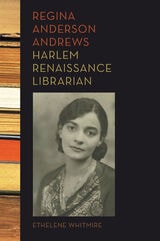
Regina Anderson Andrews, Harlem Renaissance Librarian
Ethelene Whitmire
University of Illinois Press, 2015
Andrews also played a key role in the Harlem Renaissance, supporting writers and intellectuals with dedicated workspace at her 135th Street Branch Library. After hours she cohosted a legendary salon that drew the likes of Langston Hughes and Zora Neale Hurston. Her work as an actress and playwright helped establish the Harlem Experimental Theater, where she wrote plays about lynching, passing, and the Underground Railroad.
Ethelene Whitmire's new biography offers the first full-length study of Andrews's activism and pioneering work with the NYPL. Whitmire's portrait of her sustained efforts to break down barriers reveals Andrews's legacy and places her within the NYPL's larger history.

Reginald and Gladys Laubin, American Indian Dancers
Starr West Jones
University of Illinois Press, 2000
Reginald and Gladys Laubin devoted their lives to preserving vanishing Indigenous American cultures. Their authentic Indian dances, costumes, and songs helped white Americans appreciate expressions of Native culture as an art that should be preserved. Native Americans of many peoples praised the Laubins as worthy envoys of their cultures. Audiences in the US, Europe, Israel, and Africa applauded their performances. Starr West Jones provides the historical context for the Laubins’ accomplishments by following their career through their long history of live appearances and discussing their books on American Indian tipis, dances, and archery.
Reimagining Liberation
How Black Women Transformed Citizenship in the French EmpireAnnette K. Joseph-Gabriel
University of Illinois Press, 2019
Reinventing the Peabody Sisters
Monika M. Elbert
University of Iowa Press, 2006
Reinventing the Peabody Sisters seeks to redefine this dynamic trio’s relationship to the literary and political movements of the mid nineteenth century. Previous scholarship has romanticized, vilified, or altogether erased their influences and literary productions or viewed these individuals solely in light of their relationships to other nineteenth-century luminaries, particularly men—Ralph Waldo Emerson, Nathaniel Hawthorne, Horace Mann. This collection underscores that each woman was a creative force in her own right.
Despite their differences and sibling conflicts, all three sisters thrived in the rarefied—if economically modest—atmosphere of a childhood household that glorified intellectual and artistic pursuits. This background allowed each woman to negotiate the nineteenth-century literary marketplace and in the process redefine its scope. Elizabeth, Mary, and Sophia remained linked throughout their lives, encouraging, complementing, and sometimes challenging each other's endeavors while also contributing to each other’s literary work.
The essays in this collection examine the sisters’ confrontations with and involvement in the intellectual movements and social conflicts of the nineteenth century, including Transcendentalism, the Civil War, the role of women, international issues, slavery, Native American rights, and parenting. Among the most revealing writings that the sisters left behind, however, are those which explore the interlaced relationship that continued throughout their remarkable lives.
Remarkable Curiosity
Dispatches from a New York City Journalist's 1873 Railroad Trip across the American WestJerald T. Milanich
University Press of Colorado, 2008
Although today he is virtually unknown, during his lifetime Cummings was one of the most famous newspapermen in the United States, in part because of stories like these. Complete with a biographical sketch and historical introduction, A Remarkable Curiosity is an enjoyable read for anybody interested in the American West in the latter half of the nineteenth century.
Remembering Archaeological Fieldwork in Mexico and Peru, 1961-2003
A Photographic EssayJeffrey R. Parsons
University of Michigan Press, 2019
Remembering Childhood in the Middle East
Memoirs from a Century of ChangeCollected and edited by Elizabeth Warnock Fernea
University of Texas Press, 2002
Growing up is a universal experience, but the particularities of homeland, culture, ethnicity, religion, family, and so on make every childhood unique. To give Western readers insight into what growing up in the Middle East was like in the twentieth century, this book gathers thirty-six original memoirs written by Middle Eastern men and women about their own childhoods.
Elizabeth Warnock Fernea, a well-known writer of books and documentary films about women and the family in the Middle East, has collected stories of childhoods spent in Egypt, Iran, Iraq, Israel, Jordan, Kuwait, Lebanon, Morocco, Palestine, Saudi Arabia, Sudan, Syria, Tunisia, and Turkey. The accounts span the entire twentieth century, a full range of ethnicities and religions, and the social spectrum from aristocracy to peasantry. They are grouped by eras, for which Fernea provides a concise historical sketch, and include a brief biography of each contributor. The introduction by anthropologist Robert A. Fernea sets the memoirs in the larger context of Middle Eastern life and culture.
As a collection, the memoirs offer an unprecedented opportunity to look at the same period in history in the same region of the world from a variety of very different remembered experiences. At times dramatic, humorous, or tragic, and always deeply felt, the memoirs document the diversity and richness of people's lives in the modern Middle East.

Remembering Japanese Baseball
An Oral History of the GameRobert K. Fitts. Foreword by Robert Whiting
Southern Illinois University Press, 2005
Remembering Japanese Baseball: An Oral History of the Game transports us onto diamonds and into dugouts on the other side of the globe, where the vigorous sportsmanship of the game and the impassioned devotion of its fans transcend cultural and geographic borders and prove that baseball is fast becoming an international pastime.
Called Yakyu, baseball has been played in Japan since the 1890s but has only recently gained a substantial global following. Robert K. Fitts chronicles the nation’s distinctive version of the sport as recounted by twenty-five of its players. Fitts’s careful choice of subjects represents the experiences of a mix of American and Japanese players—including stars, titleholders, and members of the Japanese Hall of Fame. Informal, candid, and remarkably specific, these recollections describe teammates and opponents, corporate owners and loyal fans, triumphs and frustrations, collectively capturing all the spirit and emotion engendered by the game from decidedly personal vantage points. Throughout, readers glimpse the unique traits of baseball in Japan and discern how the game has evolved since its inception as well as how it differs from its American counterpart.
An unparalleled introduction for an American audience, Remembering Japanese Baseball is augmented by photos of its twenty-five interviewees and a timeline demarking milestone moments in the game’s Japanese history. Robert Whiting, author of You Gotta Have Wa! and The Meaning of Ichiro, provides the foreword.
Remembering Korea 1950
A Boy Soldier's StoryH. K. Shin
University of Nevada Press, 2001
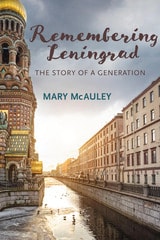
Remembering Leningrad
The Story of a GenerationMary McAuley
University of Wisconsin Press, 2019
Remembering Leningrad captures the story of a beautiful city and lifelong friendships. We follow McAuley as she walks through the streets downtown and examines politics in the 1960s, describes the hazards of furnishing an apartment in the 1990s, and learns about the challenges her friends have faced during these turbulent years. By weaving history and anecdotes to create a picture of Russia’s cultural center, McAuley underscores the impact of time and place on the Russian intelligentsia who lived through the transition from Soviet to post-Soviet life. The result is a remarkable group portrait of a generation.
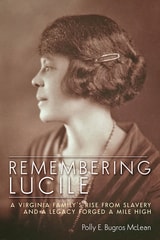
Remembering Lucile
A Virginia Family's Rise from Slavery and a Legacy Forged a Mile HighPolly E. Bugros McLean
University Press of Colorado, 2021
The first-born daughter of emancipated slaves, Lucile refused to be defined by the racist and sexist climate of her times, settling on a career path in teaching that required great courage in the face of pernicious Jim Crow laws. Embracing her sister’s dream for higher education and W. E. B. Du Bois’s ideology, she placed education and intelligence at the forefront of her life, teaching in places where she could most benefit African American students. Over her 105 years she was an eyewitness to spectacular, inspiring, and tragic moments in American history, including horrific lynchings and systemic racism in housing and business opportunities, as well as the success of women's suffrage and Black-owned businesses and educational institutions.
Remembering Lucile employs a unique blend of Black feminist historiography and wider discussions of race, gender, class, religion, politics, and education to illuminate major events in African American history and culture, as well as the history of the University of Colorado and its relationship to Black students and alumni, as it has evolved from institutional racism to welcoming acceptance. This extensive biography paints a vivid picture of a strong, extraordinary Black woman who witnessed an extraordinary time in America and rectifies her omission from CU’s institutional history. The book fills an important gap in the literature of the history of Blacks in the Rocky Mountain region and will be of significance to anyone interested in American history.
Media:
Denver Post
Daily Camera
Colorado Arts & Sciences Magazine

Remembering Tanizaki Jun’ichiro and Matsuko
Diary Entries, Interview Notes, and Letters, 1954-1989Anthony H. Chambers
University of Michigan Press, 2017
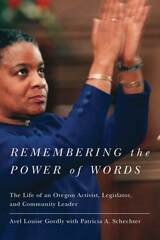
Remembering the Power of Words
The Life of an Oregon Activist, Legislator, and Community LeaderAvel Louise Gordly
Oregon State University Press, 2011
Remembering the Power of Words recounts the personal and professional journey of Avel Gordly, the first African-American woman elected to the Oregon State Senate.
The book is a brave and honest telling of Gordly’s life. She shares the challenges and struggles she faced growing up black in Portland in the 1950s and 1960s, as well as her determination to attend college, the dedication to activism that took her from Portland to Africa, and her eventual decision to run for a seat in the state legislature.
That words have power is a constant undercurrent in Gordly’s account and a truth she learned early in life. “Growing up, finding my own voice,” she writes, “was tied up with denying my voice or having it forcefully rejected and in all of that the memory of my father is very strong. To this day—and I am today a very experienced public speaker—preparation to speak takes a great deal of energy.” That this memoir has its origins as an oral history is fitting since Gordly has used her voice, out loud, to teach and inspire others for so many years.
Important as a biographical account of one significant Oregonian’s story, the book also contributes “broader narratives touching on Black history (and Oregon’s place within it), and most particularly the politics associated with being an African American woman,” according to series editor Melody Rose.

Remembering the University of Chicago
Teachers, Scientists, and ScholarsEdited by Edward Shils
University of Chicago Press, 1991
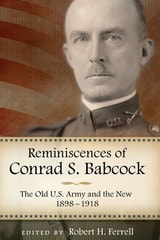
Reminiscences of Conrad S. Babcock
The Old U.S. Army and the New, 1898-1918Edited by Robert H. Ferrell
University of Missouri Press, 2012
Babcock’s original manuscript has been shortened by Robert H. Ferrell into eight chapters which illustrate the tremendous shift in warfare in the years surrounding the turn of the century. The first part of the book describes small actions against Filipinos and such assignments as taking a cavalry troop into the fire-destroyed city of San Francisco in 1906 or duty in the vicinity of Yuma in Arizona when border troubles were heating up with brigands and regular troops. The remaining chapters, beginning in 1918, set out the battles of Soissons (July 18–22) and Saint-Mihiel (September 12–16) and especially the immense battle of the Meuse-Argonne (September 26–November 11), the largest (1.2 million troops involved) and deadliest (26,000 men killed) battle in all of American history.
By the end of his career, Babcock was an adroit battle commander and an astute observer of military operations. Unlike most other officers around him, he showed an ability and willingness to adapt infantry tactics in the face of recently developed technology and weaponry such as the machine gun. When he retired in 1937 and began to write his memoirs, another world war had begun, giving additional context to his observations about the army and combat over the preceding forty years.
Until now, Babcock’s account has only been available in the archives of the Hoover Institution, but with the help of Ferrell's crisp, expert editing, this record of army culture in the first decades of the twentieth century can now reach a new generation of scholars.
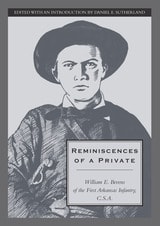
Reminiscences of a Private
William E. Bevens of the First Arkansas Infantry C.S.A.Daniel E. Sutherland
University of Arkansas Press, 1999
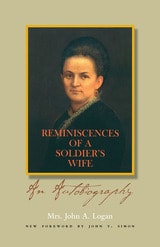
Reminiscences of a Soldier's Wife
An AutobiographyMrs. John A. Logan. Foreword by John Y. Simon
Southern Illinois University Press, 1997
"To tell my own story is to tell that of my famous husband, General John A. Logan," explains Mary S. Logan in the preface to her autobiography.
Married to John A. Logan for thirty-one years, Mary Logan shared in her distinguished husband’s career as a prosecutor in southern Illinois, as a Civil War general, and as a senator from Illinois. She observed firsthand the extraordinary events before, during, and after the Civil War, and she knew personally those world leaders who held the power to shape history. After the death of her husband, she maintained her influence in Washington, D.C. "Under the brightest and darkest skies," she explains, "I have passed than a half-century at the national capital."
Born in 1838, Logan writes of her early days growing up in southern Illinois through 1913, when this book was first published. A skillful observer, she recounts events that are personal, regional, and national in scope. In charming detail, she shares her courtship and subsequent marriage to a young prosecutor from Jackson County and the births of their children. She writes proudly of the Lincoln-Douglas debates in 1858 and her husband’s election to the Thirty-seventh Congress that same year. Logan tells of the coming of the Civil War and of her husband—formerly a Democrat and an enemy of Lincoln—casting his fate with the Union and raising a regiment in southern Illinois. She poignantly describes her brother’s defection to the Confederate Army, her life in war-torn Cairo, Illinois, and her horror at her husband’s severe war wounds. She recounts the battles, the political campaigns, and Lincoln’s reelection and subsequent assassination from her point of view—and, as the wife of a politician and general, hers is a decidedly privileged perspective.
In a position to observe and to participate in events ranging from momentous to minute throughout the latter half of the nineteenth and early twentieth centuries, she reports the essential episodes of history with the flair of journalism, a career she in fact embraced after the death of her husband. She writes movingly of a wounded captain on the road to recovery who suddenly died when the minié shifted next to his lung, amusingly of the excuses soldiers invented to wrangle a pass to town, and elegantly of her trips to Europe and of the pomp and circumstance of the parties attended by the great men and women of the time. Drawing on events grand and small, she re-creates history as only a skillful writer who was in the right place at the right time could.