Results by title
3258 books match the query 'Performing Arts' and 136 start with r
Redreaming the Renaissance
Essays on History and Literature in Honor of Guido RuggieroMary Lindemann
University of Delaware Press, 2024
Reel Freedom
Black Film Culture in Early Twentieth-Century New York CityAlyssa Lopez
Temple University Press, 2025
Lopez investigates how ordinary people, labor activists, journalists, filmmakers, theater managers, and owners all shaped Black film culture. Black girls and women used moviegoing as a means of independence and control over their lives. Race filmmaker Oscar Micheaux fought with New York State’s censorship board to get his films screened with limited edits in local theaters. And Harlem’s Black projectionists battled for unionization and fair pay, while journalists linked cinema to Black New Yorkers’ lived experiences.
In Reel Freedom, Lopez chronicles the wide-ranging and remarkable pervasiveness of Black film culture in New York City, redefining a period and place most associated with the Harlem Renaissance. In doing so, she illustrates how Black New Yorkers leveraged cinema to make the city their own and to enjoy urban living to its fullest.
In the series Urban Life, Landscape, and Policy
Reel Inequality, Second Edition
Hollywood Actors and RacismNancy Wang Yuen
Rutgers University Press, 2027
Reel Inequality was the first book to systematically document how Hollywood's institutional racism shapes the lives and careers of actors of color. In this updated edition, Nancy Wang Yuen again translates academic research on structural racism into an engaging, accessible narrative for general readers. Connecting personal stories from actors of color, industry data and practices, and historical patterns, she reveals how racism operates both behind the scenes and on the screen. She also examines Hollywood’s retreat from diversity efforts amid the broader backlash against DEI.
Yuen draws on newly released industry data and recently published interviews with actors of color, showing how racism continues to shape who gets cast, who gets hired, and who gets to tell their own story. She looks closely at the pressures actors of color face, including typecasting, financial precarity, and racial burdens, even as many push back and forge their own paths. She also uses the lens of Hollywood to explore broader issues of race, inequality, and representation.
Reel Inequality
Hollywood Actors and RacismNancy Wang Yuen
Rutgers University Press, 2016
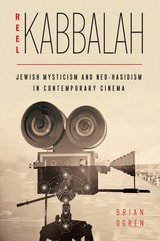
Reel Kabbalah
Jewish Mysticism and Neo-Hasidism in Contemporary CinemaBrian Ogren
Rutgers University Press, 2024
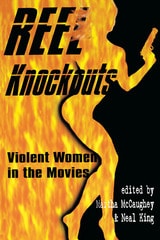
Reel Knockouts
Violent Women in FilmEdited by Martha McCaughey and Neal King
University of Texas Press, 2001
When Thelma and Louise outfought the men who had tormented them, women across America discovered what male fans of action movies have long known—the empowering rush of movie violence. Yet the duo's escapades also provoked censure across a wide range of viewers, from conservatives who felt threatened by the up-ending of women's traditional roles to feminists who saw the pair's use of male-style violence as yet another instance of women's co-option by the patriarchy.
In the first book-length study of violent women in movies, Reel Knockouts makes feminist sense of violent women in films from Hollywood to Hong Kong, from top-grossing to direct-to-video, and from cop-action movies to X-rated skin flicks. Contributors from a variety of disciplines analyze violent women's respective places in the history of cinema, in the lives of viewers, and in the feminist response to male violence against women. The essays in part one, "Genre Films," turn to film cycles in which violent women have routinely appeared. The essays in part two, "New Bonds and New Communities," analyze movies singly or in pairs to determine how women's movie brutality fosters solidarity amongst the characters or their audiences. All of the contributions look at films not simply in terms of whether they properly represent women or feminist principles, but also as texts with social contexts and possible uses in the re-construction of masculinity and femininity.
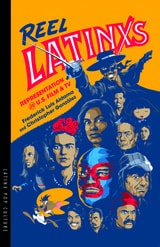
Reel Latinxs
Representation in U.S. Film and TVFrederick Luis Aldama and Christopher González
University of Arizona Press, 2019
As pop culture experts Frederick Luis Aldama and Christopher González show, the way Latinx peoples have appeared and are still represented in mainstream TV and film narratives is as frustrating as it is illuminating. Stereotypes such as drug lords, petty criminals, buffoons, and sexed-up lovers have filled both small and silver screens—and the minds of the public. Aldama and González blaze new paths through Latinx cultural phenomena that disrupt stereotypes, breathing complexity into real Latinx subjectivities and experiences. In this grand sleuthing sweep of Latinx representation in mainstream TV and film that continues to shape the imagination of U.S. society, these two Latinx pop culture authorities call us all to scholarly action.
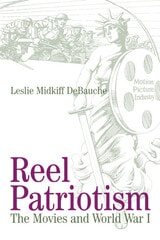
Reel Patriotism
The Movies and World War ILeslie Midkiff DeBauche
University of Wisconsin Press, 1997
Leslie Midkiff DeBauche shows how the United States government’s need to garner public support for the war, conserve food, raise money, and enlist soldiers was met by the film industry. Throughout the nineteen months of American involvement in World War I, film studios supported the war effort through the production of short instructional films, public speaking activities of movie stars, the civic forum provided by movie theaters, and the National Association of the Motion Picture Industry’s provision of administrative personnel to work directly with government agencies. While feature films about the war itself never dominated the release schedules of film distributors, they did become a staple film industry offering throughout the late 1910s and 1920s.
The film industry had much to gain, DeBauche demonstrates, from working closely with the U.S. government. Though the war posed a direct challenge to the conduct of business as usual, the industry successfully weathered the war years. After the war, film producers, distributors, and exhibitors were able to capitalize on the good will of the movie-goer and the government that the industry’s war work created. It provided a buffer against national censorship when movie stars became embroiled in scandal, and it served as a selling point in the 1920s when major film companies began to trade their stock on Wall Street.

Reel Rituals
Ritual Occasions from Baptisms to Funerals in Hollywood Films, 1945-1995Parley Ann Boswell and Paul Loukides
University of Wisconsin Press, 1999
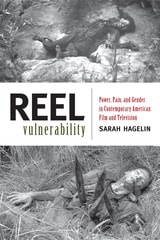
Reel Vulnerability
Power, Pain, and Gender in Contemporary American Film and TelevisionHagelin, Sarah
Rutgers University Press, 2013
The book examines the shifting constructions of vulnerability in the wake of the cultural upheavals of World War II, the Cold War, and 9/11, placing defenseless male bodies onscreen alongside representations of the female body in the military, in the interrogation room, and on the margins. Sarah Hagelin challenges the ways film theory and cultural studies confuse vulnerability and femaleness. Such films as G.I. Jane and Saving Private Ryan, as well as such post-9/11 television shows as Battlestar Galactica and Deadwood, present vulnerable men who demand our sympathy, abused women who don’t want our pity, and images of the body in pain that do not portray weakness.
Hagelin’s intent is to help scholarship catch up to the new iconographies emerging in theaters and in living rooms—images that offer viewers reactions to the suffering body beyond pity, identification with the bleeding body beyond masochism, and feminist images of the female body where we least expect to find them.
Reel World
An Anthropology of CreationAnand Pandian
Duke University Press, 2015
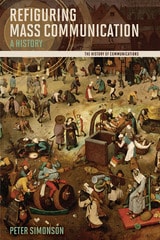
Refiguring Mass Communication
A HistoryPeter Simonson
University of Illinois Press, 2010
This unique inquiry into the history and ongoing moral significance of mass communication also represents a defense, extension, and overhaul of the idea and social form of the discipline. Organized around narrative accounts of individuals and their communicative worlds, Refiguring Mass Communication illuminates significant but overlooked rhetorical episodes in history to enable modern-day readers to rehabilitate and reinvigorate their own engagements with mass communication.
Coined in the 1920s as a way to describe radio, motion pictures, wide-circulation magazines, and the press, the term "mass communication" frequently is misused in the era of cable TV, niche marketing, and the Internet. In Refiguring Mass Communication, Peter Simonson compares his own vision of mass communication with distinct views articulated throughout history by Paul of Tarsus, Walt Whitman, Charles Horton Cooley, David Sarnoff, and Robert K. Merton, utilizing a collection of texts and tenets from a variety of time periods and perspectives. Drawing on textual and archival research as well as access to Merton's personal papers, Simonson broadly reconceives a sense of communication theory and what social processes might be considered species of mass communication. Simonson reveals the geographical and social contexts from which these visions have emerged and the religious and moral horizons against which they have taken shape. In a unique perspective, he considers the American county fair as an example of a live gathering and crucial site that is overlooked in contemporary forms of mass communication, urging a reconsideration of how individuals participate in and shape similar forms.
Refiguring Spain
Cinema/Media/RepresentationMarsha Kinder, ed.
Duke University Press, 1997
These essays consider a diverse array of texts, ranging from recent films by Almodóvar, Saura, Erice, Miró, Bigas Luna, Gutiérrez Aragón, and Eloy de la Iglesia to media coverage of the 1993 elections. Francoist cinema and other popular media are examined in light of strategies used to redefine Spain’s cultural identity. The importance of the documentary, the appropriation of Hollywood film, and the significance of gender and sexuality in Spanish cinema are also discussed, as is the discourse of the Spanish media star—whether involving film celebrities like Rita Hayworth and Antonio Banderas or historical figures such as Cervantes. The volume concludes with an investigation of larger issues of government policy in relation to film and media, including a discussion of the financing of Spanish cinema and an exploration of the political dynamics of regional television and art museums. Drawing on a wide range of critical discourses, including feminist, postcolonial, and queer theory, political economy, cultural history, and museum studies, Refiguring Spain is the first comprehensive anthology on Spanish cinema in the English language.
Contributors. Peter Besas, Marvin D’Lugo, Selma Reuben Holo, Dona M. Kercher, Marsha Kinder, Jaume Martí-Olivella, Richard Maxwell, Hilary L. Neroni, Paul Julian Smith, Roland B. Tolentino, Stephen Tropiano, Kathleen M. Vernon, Iñaki Zabaleta
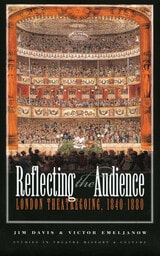
Reflecting the Audience
London Theatregoing, 1840-1880Jim Davis
University of Iowa Press, 2001
Davis and Emeljanow thoroughly examine the composition of these theatres' audiences, their behavior, and their attendance patterns by looking at topography, social demography, police reports, playbills, autobiographies and diaries, newspaper accounts, economic and social factors as seen in census returns, maps and transportation data, and the managerial policies of each theatre.
Reflections on Beckett
A Centenary CelebrationAnna McMullan and S. E. Wilmer, Editors. Foreword by Dennis Kennedy
University of Michigan Press, 2009
Refrains for Moving Bodies
Experience and Experiment in Affective SpacesDerek P. McCormack
Duke University Press, 2013
Reframing Bodies
AIDS, Bearing Witness, and the Queer Moving ImageRoger Hallas
Duke University Press, 2009
Challenging the entrenched media politics of who gets to speak, how, and to whom, Hallas offers a bold reconsideration of the intersubjective relations that connect filmmakers, subjects, and viewers. He explains how queer testimony reframes AIDS witnesses and their speech through its striking combination of direct address and aesthetic experimentation. In addition, Hallas engages recent historical changes and media transformations that have not only displaced queer AIDS media from activism to the archive, but also created new witnessing dynamics through the logics of the database and the remix. Reframing Bodies provides new insight into the work of Gregg Bordowitz, John Greyson, Derek Jarman, Matthias Müller, and Marlon Riggs, and offers critical consideration of important but often overlooked filmmakers, including Jim Hubbard, Jack Lewis, and Stuart Marshall.

Reframing Reality
The Aesthetics of the Surrealist Object in French and Czech CinemaAlison Frank
Intellect Books, 2013
Reframing Screen Performance
Cynthia Baron and Sharon Marie Carnicke
University of Michigan Press, 2008
"A significant contribution to the literature on screen performance studies, Reframing Screen Performance brings the study of film acting up to date. It should be of interest to those within cinema studies as well as general readers."
---Frank P. Tomasulo, Florida State University
Reframing Screen Performance is a groundbreaking study of film acting that challenges the long held belief that great cinematic performances are created in the editing room. Surveying the changing attitudes and practices of film acting---from the silent films of Charlie Chaplin to the rise of Lee Strasberg's Actor's Studio in the 1950s to the eclecticism found in contemporary cinema---this volume argues that screen acting is a vital component of film and that it can be understood in the same way as theatrical performance. This richly illustrated volume shows how and why the evocative details of actors' voices, gestures, expressions, and actions are as significant as filmic narrative and audiovisual design. The book features in-depth studies of performances by Anjelica Huston, John Cusack, and Julianne Moore (among others) alongside subtle analyses of directors like Robert Altman and Akira Kurosawa, Sally Potter and Orson Welles. The book bridges the disparate fields of cinema studies and theater studies as it persuasively demonstrates the how theater theory can be illuminate the screen actor's craft.
Reframing Screen Performance brings the study of film acting into the twenty-first century and is an essential text for actors, directors, cinema studies scholars, and cinephiles eager to know more about the building blocks of memorable screen performance.
Cynthia Baron is Associate Professor of Film Studies at Bowling Green State University and co-editor of More Than a Method: Trends and Traditions in Contemporary Film Performance. Sharon Carnicke is Professor of Theater and Slavic Studies and Associate Dean of Theater at the University of Southern California and author of Stanislavsky in Focus.
Reframing Todd Haynes
Feminism’s Indelible MarkTheresa L. Geller and Julia Leyda, editors
Duke University Press, 2022
Contributors. Danielle Bouchard, Nick Davis, Jigna Desai, Mary R. Desjardins, Patrick Flanery, Theresa L. Geller, Rebecca M. Gordon, Jess Issacharoff, Lynne Joyrich, Bridget Kies, Julia Leyda, David E. Maynard, Noah A. Tsika, Patricia White, Sharon Willis
Refugee Performance
Practical EncountersEdited by Michael Balfour
Intellect Books, 2013
Regarding Frank Capra
Audience, Celebrity, and American Film Studies, 1930–1960Eric Smoodin
Duke University Press, 2004
Drawing on archival sources including fan letters, exhibitor reports, military and prison records, government and corporate documents, and trade journals, Smoodin explains how the venues where Capra’s films were seen and the strategies used to promote the films affected audience response and how, in turn, audience response shaped film production. He analyzes issues of foreign censorship and government intervention in the making of The Bitter Tea of General Yen; the response of high school students to It Happened One Night; fan engagement with the overtly political discourse of Meet John Doe and Mr. Smith Goes to Washington; San Quentin prisoners’ reaction to a special screening of It’s a Wonderful Life; and at&t’s involvement in Capra’s later documentary work for the Bell Science Series. He also looks at the reception of Capra’s series Why We Fight, used by the American military to train recruits and re-educate German prisoners of war. Illuminating the role of the famous director and his films in American culture, Regarding Frank Capra signals new directions for significant research on film reception and promotion.
Rehearsing Revolutions
The Labor Drama Experiment and Radical Activism in the Early Twentieth CenturyMary McAvoy
University of Iowa Press, 2019
Choice Outstanding Academic Title, 2019
George Freedley Memorial Award Finalist, 2020
Between the world wars, several labor colleges sprouted up across the U.S. These schools, funded by unions, sought to provide members with adult education while also indoctrinating them into the cause. As Mary McAvoy reveals, a big part of that learning experience centered on the schools’ drama programs. For the first time, Rehearsing Revolutions shows how these left-leaning drama programs prepared American workers for the “on-the-ground” activism emerging across the country. In fact, McAvoy argues, these amateur stages served as training grounds for radical social activism in early twentieth-century America.Using a wealth of previously unpublished material such as director’s reports, course materials, playscripts, and reviews, McAvoy traces the programs’ evolution from experimental teaching tool to radically politicized training that inspired overt—even militant—labor activism by the late 1930s. All the while, she keeps an eye on larger trends in public life, connecting interwar labor drama to post-war arts-based activism in response to McCarthyism, the Cold War, and the Civil Rights movement. Ultimately, McAvoy asks: What did labor drama do for the workers’ colleges and why did they pursue it? She finds her answer through several different case studies in places like the Portland Labor College and the Highlander Folk School in Tennessee.
Reinventing Cinema
Movies in the Age of Media ConvergenceTryon, Chuck
Rutgers University Press, 2009
Reinventing Cinema examines film culture at the turn of this century, at the precise moment when digital media are altering our historical relationship with the movies. Spanning multiple disciplines, Chuck Tryon addresses the interaction between production, distribution, and reception of films, television, and other new and emerging media.Through close readings of trade publications, DVD extras, public lectures by new media leaders, movie blogs, and YouTube videos, Tryon navigates the shift to digital cinema and examines how it is altering film and popular culture.
Reinventing Dance in the 1960s
Everything Was PossibleEdited by Sally Banes
University of Wisconsin Press, 2003
The 1960s was a pivotal decade in dance, an era of intense experimentation and rich invention. In this volume an impressive range of dance critics and scholars examine the pioneering choreographers and companies of the era, such as Anna Halprin’s West Coast experiments, the innovative Judson Dance Theater, avant-garde dance subcultures in New York, the work of Meredith Monk and Kenneth King, and parallel movements in Britain. The contributors include Janice Ross, Leslie Satin, Noël Carroll, Gus Solomons jr., Deborah Jowitt, Stephanie Jordan, Joan Acocella, and Sally Banes.
Reinventing Hollywood
How 1940s Filmmakers Changed Movie StorytellingDavid Bordwell
University of Chicago Press, 2017
If this sounds like today’s cinema, that’s because it is. In Reinventing Hollywood, David Bordwell examines the full range and depth of trends that crystallized into traditions. He shows how the Christopher Nolans and Quentin Tarantinos of today owe an immense debt to the dynamic, occasionally delirious narrative experiments of the Forties. Through in-depth analyses of films both famous and virtually unknown, from Our Town and All About Eve to Swell Guy and The Guilt of Janet Ames, Bordwell assesses the era’s unique achievements and its legacy for future filmmakers. Reinventing Hollywood is a groundbreaking study of how Hollywood storytelling became a more complex art and essential reading for lovers of popular cinema.
Religion and Spanish Film
Luis Buñuel, the Franco Era, and Contemporary DirectorsElizabeth Scarlett
University of Michigan Press, 2014
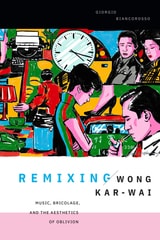
Remixing Wong Kar-wai
Music, Bricolage, and the Aesthetics of OblivionGiorgio Biancorosso
Duke University Press, 2025
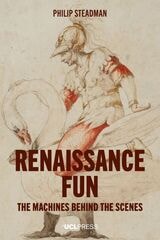
Renaissance Fun
The Machines behind the ScenesPhilip Steadman
University College London, 2021
Renaissance Fun is about the technology of entertainment in the forms of stage machinery, theatrical special effects, gardens, fountains, automata, and self-playing musical instruments from the Renaissance. How did the machines behind these shows work? How exactly were chariots filled with singers let down onto the stage? How were flaming dragons made to fly across the sky? How were seas created on stage? How did mechanical birds imitate real birdsong? What was “artificial music,” three centuries before Edison and the phonograph? How could pipe organs be driven and made to play themselves by waterpower alone? And who were the architects, engineers, and craftsmen who created these wonders? While this book is offered as entertainment in itself, it also offers a more serious scholarly argument centered on the enormous influence of Vitruvius and Hero, two ancient writers who composed on the subject.
Renaissance Shakespeare/Shakespeare Renaissances
Proceedings of the Ninth World Shakespeare CongressMartin Procházka
University of Delaware Press, 2014
Published by University of Delaware Press. Distributed worldwide by Rutgers University Press.
Renegades and Rogues
The Life and Legacy of Robert E. HowardBy Todd B. Vick
University of Texas Press, 2021
2022 Atlantean Award, Robert E. Howard Foundation
You may not know the name Robert E. Howard, but you probably know his work. His most famous creation, Conan the Barbarian, is an icon of popular culture. In hundreds of tales detailing the exploits of Conan, King Kull, and others, Howard helped to invent the sword and sorcery genre.
Todd B. Vick delves into newly available archives and probes Howard’s relationships, particularly with schoolteacher Novalyne Price, to bring a fresh, objective perspective to Howard's life. Like his many characters, Howard was an enigma and an outsider. He spent his formative years visiting the four corners of Texas, experiences that left a mark on his stories. He was intensely devoted to his mother, whom he nursed in her final days, and whose impending death contributed to his suicide in 1936 when he was just thirty years old.
Renegades and Rogues is an unequivocal journalistic account that situates Howard within the broader context of pulp literature. More than a realistic fantasist, he wrote westerns and horror stories as well, and engaged in avid correspondence with H. P. Lovecraft and other pulp writers of his day. Vick investigates Howard’s twelve-year writing career, analyzes the influences that underlay his celebrated characters, and assesses the afterlife of Conan, the figure in whom Howard's fervent imagination achieved its most durable expression.
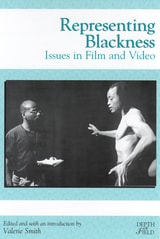
Representing Blackness
Issues in Film and VideoSmith, Valerie
Rutgers University Press, 1997
The essays in this collection provide a variety of perspectives on black representation and questions of racial authenticity in mainstream as well as African American independent cinema. This volume includes seminal essays on racial stereotypes, trenchant critiques of that discourse, original essays on important directors such as Haile Gerima and Charles Burnett, and an insightful discussion of black gay and lesbian film and video.
The contributors include Donald Bogle, Thomas Cripps, Jane Gaines, Nathan Grant, Stuart Hall, Tommy L. Lott, Wahneema Lubiano, Mike Murashige, Valerie Smith, James Snead, and David Van Leer. This volume is an important contribution to the Depth of Field series and should be indispensible for courses and individual scholars in film and multicultural studies. The book contains a mix of original and previously published pieces.
Representing Talent
Hollywood Agents and the Making of MoviesViolaine Roussel
University of Chicago Press, 2017
The book takes readers behind the scenes to observe the day-to-day activities of agents, revealing their influence on artistic careers and the prospects of Hollywood’s forthcoming projects. Agents are crucial to understanding how creative and economic power are intertwined in Hollywood today. They play a key role in the process by which artistic worth and economic value are evaluated and attributed to people and projects. Roussel’s fieldwork examines what “having relationships” really means for agents, and how they perform the relationship work that’s at the heart of their professional existence and success. Representing Talent helps us to understand the players behind the definition of entertainment itself, as well as behind its current transformations.
Representing The Woman
Cinema and PsychoanalysisElizabeth Cowie
University of Minnesota Press, 1996
Representing the Past
Essays in Performance HistoriographyCharlotte M. Canning
University of Iowa Press, 2010
How do historians represent the past? How do theatre historians represent performance events? The fifteen challenging essays in Representing the Past: Essays in Performance Historiography focus on the fundamental epistemological conditions and procedures that serve as the foundational ideas that guide all historians in their endeavors. Unified by their investigations into how best to understand and then represent the past, this diverse group of scholars in the field of theatre history and performance studies offers insights into the abiding issues that all historians face in the task of representing human events and actions.
Five primary ideas provide the topics as well as the intellectual parameters for this book: archive, time, space, identity, and narrative. Taking these as the conceptual framework for historical research and analysis, the essayists cover an expansive range of case studies and problems in the historical study of performance from the Americas to Africa and from Europe to India and China. Considering not only how historians think about these concepts in their research and writing but more pointedly—and historiographically—how they think with them, the essayists demonstrate the power and centrality of each of these five ideas in historical scholarship from initial research to the writing of essays and books.
Performance history has a diversity of identities, locations, sources, and narratives. This compelling engagement with the concepts essential to historical understanding is a valuable contribution to the historiography of performance—for students, teachers, and the future of the discipline itself. Expanding upon its classic predecessor, Interpreting the Theatrical Past: Essays in the Historiography of Performance, this exciting new collection illustrates the contemporary richness of historical thinking and writing in the field of performance history.
Representing
Hip Hop Culture and the Production of Black CinemaS. Craig Watkins
University of Chicago Press, 1998
"Watkins is at his most sophisticated and persuasive when he explains the surprising success of hyper-talented, entrepreneurial, and energetic black artists."—Archon Fung, Boston Book Review
Resetting the Stage
Public Theatre between the Market and DemocracyDragan Klaic
Intellect Books, 2012
Resistance on the National Stage
Theater and Politics in Late New Order IndonesiaMichael H. Bodden
Ohio University Press, 2010
Resistance on the National Stage analyzes the ways in which, between 1985 and 1998, modern theater pracxadtitioners in Indonesia contributed to a rising movement of social protest against the long-governing New Order regime of President Suharto. It examines the work of an array of theater groups and networks from Jakarta, Bandung, and Yogyakarta that pioneered new forms of theater-making and new themes that were often presented more directly and critically than previous groups had dared to do.
Michael H. Bodden looks at a wide range of case studies to show how theater contributed to and helped build the opposition. He also looks at how specific combinations of social groups created tensions and gave modern theater a special role in bridging social gaps and creating social networks that expanded the reach of the prodemocracy movement. Theater workers constructed new social networks by involving peasants, Muslim youth, industrial workers, and lower-middle-class slum dwellers in theater productions about their own lives. Such networking and resistance established theater as one significant arena in which the groundwork for the ouster of Suharto in May 1998, and the succeeding Reform era, was laid.
Resistance on the National Stage will have broad appeal, not only for scholars of contemporary Indonesian culture and theater, but also for those interested in Indonesian history and politics, as well as scholars of postcolonial theater and culture.
Resisting Spirits
Drama Reform and Cultural Transformation in the People's Republic of ChinaMaggie Greene
University of Michigan Press, 2019
Resolutions
Contemporary Video PracticesMichael Renov
University of Minnesota Press, 1995
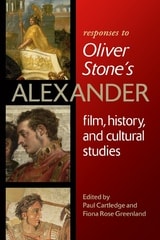
Responses to Oliver Stone’s Alexander
Film, History, and Cultural StudiesEdited by Paul Cartledge and Fiona Rose Greenland; Afterword by Oliver Stone
University of Wisconsin Press, 2009
This volume brings together an intriguing mix of leading scholars in Macedonian and Greek history, Persian culture, film studies, classical literature, and archaeology—including some who were advisors for the film—and includes an afterword by Oliver Stone discussing the challenges he faced in putting Alexander’s life on the big screen. The contributors scrutinize Stone’s project from its inception and design to its production and reception, considering such questions as: Can a film about Alexander (and similar figures from history) be both entertaining and historically sound? How do the goals of screenwriters and directors differ from those of historians? How do Alexander’s personal relationships—with his mother Olympias, his wife Roxane, his lover Hephaistion, and others—affect modern perceptions of Alexander? Several of the contributors also explore reasons behind the film’s tepid response at the box office and subsequent controversies.
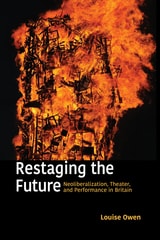
Restaging the Future
Neoliberalization, Theater, and Performance in BritainLouise Owen
Northwestern University Press, 2023
Post-Thatcher, British cultural politics were shaped by the government’s use of the arts in service of its own social and economic agenda. Restaging the Future: Neoliberalization, Theater, and Performance in Britain interrogates how arts practices and cultural institutions were enmeshed with the particular processes of neoliberalization mobilized at the end of the twentieth century and into the twenty-first.
Louise Owen traces the uneasy entanglement of performance with neoliberalism's marketization of social life. Focusing on this political moment, Owen guides readers through a wide range of performance works crossing multiple forms, genres, and spaces—from European dance tours, to Brazilian favelas, to the streets of Liverpool—attending to their distinct implications for the reenvisioned future in whose wake we now live.
Analyzing this array of participatory dance, film, music, public art, and theater projects, Owen uncovers unexpected affinities between community-based, experimental, and avant-garde movements. Restaging the Future provides key historical context for these performances, their negotiations of their political moment, and their themes of insecurity, identity, and inequality, created in a period of profound ideological and socioeconomic change.
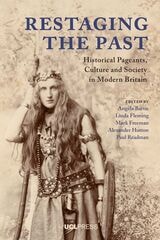
Restaging the Past
Historical Pageants, Culture and Society in Modern BritainEdited by Angela Bartie, Linda Fleming, Mark Freeman, and Alexander Hutton
University College London, 2020
Pageants were community events, bringing people together in a shared celebration and performance of the past; they also involved many prominent novelists, professional historians, and other writers, and as a result were featured repeatedly in popular and highbrow literature. Although the pageant tradition has largely died out, the contributors argue that it deserves to be acknowledged as a key aspect of community history during a period of great social and political change—and, they show, because of its former prominence, some lingering signs of “pageant fever” can still be seen in Britain today.
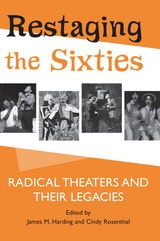
Restaging the Sixties
Radical Theaters and Their LegaciesEdited by James M. Harding and Cindy Rosenthal
University of Michigan Press, 2006
The volume explores how creations such as the Living Theatre's Paradise Now and the Performance Group’s Dionysus in 69 overlapped with political interests that, in the late 1960s, highlighted the notion of social collectives as a radical alternative to mainstream society. Situating theatrical practice within this socio-political context, the book considers how radical theaters sought to redefine the relationship between theater and political activism, and how, as a result, they challenged the foundations of theater itself.
James M. Harding is Associate Professor of English at Mary Washington University. His other books include Not the Other Avant-Garde: The Transnational Foundations of Avant-Garde Performance.
Cindy Rosenthal is Associate Professor of Theatre Studies, Hofstra University.
“A useful introduction to an eclectic period of experimental theater, providing portraits of the major political theaters and engaging with new vigor many of the era’s familiar aesthetic and ideological concerns. The writers offer a provocative history of theater’s attraction to (and occasional anxiety over) activism.”
--Marc Robinson, Yale University
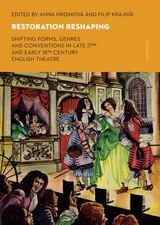
Restoration Reshaping
Shifting Forms, Genres and Conventions in Late 17th and Early 18th Century English TheatreEdited by Anna Hrdinová and Filip Krajník
Karolinum Press, 2026
An Interdisciplinary study of British theater between 1660 and 1737.
Restoration Reshaping explores English theater between the reopening of the playhouses in 1660 and the Licensing Act of 1737, examining both the dramatic works and the social, political, and cultural contexts in which they were produced. Drawing on papers from two international symposia, the volume investigates a wide range of genres—from comedies of manners and heroic plays to musical dramas, pantomimes, and ballad operas—while highlighting innovations in stagecraft, adaptation, and performance practices. Contributors consider the theatre’s connections to politics, gender, and society, its transnational influences, and its ongoing relevance for modern theatre, offering a rich, multi-perspective resource for scholars, students, and theatre practitioners.
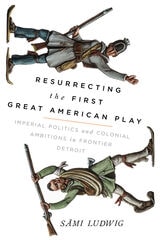
Resurrecting the First Great American Play
Imperial Politics and Colonial Ambitions in Frontier DetroitSämi Ludwig
University of Wisconsin Press, 2020
Sämi Ludwig contends that Ponteach's literary and artistic merits are worthy of further exploration. He investigates questions of authorship and analyzes the play's content, embracing its many contradictions as enriching windows into the era. In this way, he suggests using Ponteach as a tool to better understand British imperialism in North America and the emerging theatrical forms of the Young Republic.
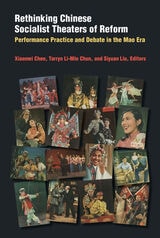
Rethinking Chinese Socialist Theaters of Reform
Performance Practice and Debate in the Mao EraXiaomei Chen, Tarryn Li-Min Chun, and Siyuan Liu, Editors
University of Michigan Press, 2021
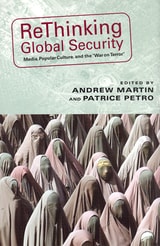
Rethinking Global Security
Media, Popular Culture, and the "War on Terror"Martin, Andrew
Rutgers University Press, 2006
Retrofitting Blade Runner
Issues in Ridley Scott's Blade Runner and Phillip K. Dick's Do Androids Dream of Electric Sheep?Judith B. Kerman
University of Wisconsin Press, 1997
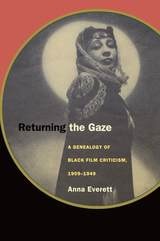
Returning the Gaze
A Genealogy of Black Film Criticism, 1909–1949Anna Everett
Duke University Press, 2001
Culling black newspapers, magazines, scholarly and political journals, and monographs, Everett has produced an unparalleled investigation of black critical writing on the early cinema during the era of racial segregation in America. Correcting the notion that black critical interest in the cinema began and ended with the well-documented press campaign against D. W. Griffith’s Birth of a Nation, she discovers that as early as 1909 black newspapers produced celebratory discourses about the cinema as a much-needed corrective to the predominance of theatrical blackface minstrelsy. She shows how, even before the Birth of a Nation controversy, the black press succeeded in drawing attention to both the callous commercial exploitation of lynching footage and the varied work of black film entrepreneurs. The book also reveals a feast of film commentaries that were produced during the “roaring twenties” and the jazz age by such writers as W.E.B. DuBois, Langston Hughes, and Zora Neale Hurston, as well as additional pieces that were written throughout the Depression and the pre– and post–war periods. Situating this wide-ranging and ideologically complex material in its myriad social, political, economic, and cultural contexts, Everett aims to resuscitate a historical tradition for contemporary black film literature and criticism.
Returning the Gaze will appeal to scholars and students of film, black and ethnic studies, American studies, cultural studies, literature, and journalism.