Results by title
4917 books match the query 'Philosophy' and 180 start with r
Recapitulations
Thomas Prufer
Catholic University of America Press, 2018
Receptive Bodies
Leo Bersani
University of Chicago Press, 2018

Reciprocity
Lawrence C. Becker
University of Chicago Press, 1990
"By reciprocity Becker understands a complex disposition to make suitable return for the benefit we receive from others, to resist the harm others inflict on us rather than retaliate for it, and to make restitution for the harm we ourselves cause. . . . This is a clearly written book which makes fresh contributions to a number of topics."—A. D. M. Walker, Philosophical Books
Reclaiming Moral Agency
The Moral Philosophy of Albert the GreatStanley B. Cunningham
Catholic University of America Press, 2008

Reclaiming Truth
Contribution to a Critique of Cultural RelativismChristopher Norris
Duke University Press, 1996
Norris presents his case in a series of closely argued chapters that take issue with the relativist position. He attempts to rehabilitate the value of truth in philosophy of science by restoring a lost distinction between concept and metaphor and argues that theoretical discourse, so far from being an inconsequential activity, has very real consequences, particularly in ethics and politics. This debate has become skewed, he suggests, through the widespread and typically postmodern idea that truth-claims must always go along with a presumptive or authoritarian bid to silence opposing views. On the contrary, there is nothing as dogmatic—or as silencing—as a relativism that acknowledges no shared truth conditions for valid or responsible discourse. Norris also offers a timely reassessment of several thinkers—Althusser and Derrida among them—whose reception history has been distorted by the vagaries of short-term intellectual fashion.
Reclaiming Truth will be welcomed by readers concerned with the uses and abuses of theory at a time when such questions are in urgent need of sustained and serious debate.
Recoding Metaphysics
The New Italian PhilosophyGiovanna Borradori
Northwestern University Press, 1988
Reconceiving Decision-Making in Democratic Politics
Attention, Choice, and Public PolicyBryan D. Jones
University of Chicago Press, 1994
Individuals and political systems alike, Jones argues, tend to be attentive to only one issue at a time. Using numerous examples from elections, public opinion polls, congressional deliberations, and of bureaucratic decision-making, he shows how shifting attentiveness can and does alter choices and political outcomes—even when underlying preferences remain relatively fixed. An individual, for example, may initially decide to vote for a candidate because of her stand on spending but change his vote when he learns of her position on abortion, never really balancing the two options.
Reconciling Science and Religion
The Debate in Early-Twentieth-Century BritainPeter J. Bowler
University of Chicago Press, 2001
Peter J. Bowler argues that unlike the United States, where a strong fundamentalist opposition to evolutionism developed in the 1920s (most famously expressed in the Scopes "monkey trial" of 1925), in Britain there was a concerted effort to reconcile science and religion. Intellectually conservative scientists championed the reconciliation and were supported by liberal theologians in the Free Churches and the Church of England, especially the Anglican "Modernists." Popular writers such as Julian Huxley and George Bernard Shaw sought to create a non-Christian religion similar in some respects to the Modernist position. Younger scientists and secularists—including Rationalists such as H. G. Wells and the Marxists—tended to oppose these efforts, as did conservative Christians, who saw the liberal position as a betrayal of the true spirit of their religion. With the increased social tensions of the 1930s, as the churches moved toward a neo-orthodoxy unfriendly to natural theology and biologists adopted the "Modern Synthesis" of genetics and evolutionary theory, the proposed reconciliation fell apart.
Because the tensions between science and religion—and efforts at reconciling the two—are still very much with us today, Bowler's book will be important for everyone interested in these issues.
Reconstructing Prehistory
Scientific Method in ArchaeologyJames Bell
Temple University Press, 1994
Reevaluating the method of scientific investigation, James A. Bell provides a bold philosophical framework for developing and assessing archaeologists' theories of the past. More informed and judicious decisions, the author asserts, are made when archaeologists explore questions such as:
•How can theories be formulated so that they increase understanding and provide insight, and are theories still useful when they do not?
•
How can theories be adjusted when anomalies are revealed?
•
How can theories be assessed against competing theories?
•
When should theories be abandoned, and when should they be pursued further?
With numerous examples from archaeology as well as comparative examples from the physical and biological sciences, Bell illustrates how exploring the answers to these and related inquiries will lead to improved formulation and testing of theories.
Reconstructing Scientific Revolutions
Thomas S. Kuhn's Philosophy of SciencePaul Hoyningen-Huene
University of Chicago Press, 1993
Scholars from disciplines as diverse as political science and art history have offered widely differing interpretations of Kuhn's ideas, appropriating his notions of paradigm shifts and revolutions to fit their own theories, however imperfectly. Hoyningen-Huene does not merely offer another interpretation—he brings Kuhn's work into focus with rigorous philosophical analysis. Through extended discussions with Kuhn and an encyclopedic reading of his work, Hoyningen-Huene looks at the problems and justifications of his claims and determines how his theories might be expanded. Most significantly, he discovers that The Structure of Scientific Revolutions can be understood only with reference to the historiographic foundation of Kuhn's philosophy.
Discussing the concepts of paradigms, paradigm shifts, normal science, and scientific revolutions, Hoyningen-Huene traces their evolution to Kuhn's experience as a historian of contemporary science. From here, Hoyningen-Huene examines Kuhn's well-known thesis that scientists on opposite sides of a revolutionary divide "work in different worlds," explaining Kuhn's notion of a world-change during a scientific revolution. He even considers Kuhn's most controversial claims—his attack on the distinction between the contexts of discovery and justification and his notion of incommensurability—addressing both criticisms and defenses of these ideas.
Destined to become the authoritative philosophical study of Kuhn's work, Reconstructing Scientific Revolutions both enriches our understanding of Kuhn and provides powerful interpretive tools for bridging Continental and Anglo-American philosophical traditions.
Reconstructing the Commercial Republic
Constitutional Design after MadisonStephen L. Elkin
University of Chicago Press, 2006
The deficiencies Elkin points out provide the starting point for his own constitutional theory of the republic—a theory that, unlike Madison’s, lays out a substantive conception of the public interest that emphasizes the power of institutions to shape our political, economic, and civic lives. Elkin argues that his theory should guide us toward building a commercial republic that is rooted in a politics of the public interest and the self-interest of the middle class. He then recommends specific reforms to create this kind of republic, asserting that Americans today can still have the lives a commercial republic is intended to promote: lives with real opportunities for economic prosperity, republican political self-government, and individual liberty.
Recovered Roots
Collective Memory and the Making of Israeli National TraditionYael Zerubavel
University of Chicago Press, 1995
In the years leading to the birth of Israel, Zerubavel shows, Zionist settlers in Palestine consciously sought to rewrite Jewish history by reshaping Jewish memory. Zerubavel focuses on the nationalist reinterpretation of the defense of Masada against the Romans in 73 C.E. and the Bar Kokhba revolt of 133-135; and on the transformation of the 1920 defense of a new Jewish settlement in Tel Hai into a national myth. Zerubavel demonstrates how, in each case, Israeli memory transforms events that ended in death and defeat into heroic myths and symbols of national revival.
Drawing on a broad range of official and popular sources and original interviews, Zerubavel shows that the construction of a new national tradition is not necessarily the product of government policy but a creative collaboration between politicans, writers, and educators. Her discussion of the politics of commemoration demonstrates how rival groups can turn the past into an arena of conflict as they posit competing interpretations of history and opposing moral claims on the use of the past. Zerubavel analyzes the emergence of counter-memories within the reality of Israel's frequent wars, the ensuing debates about the future of the occupied territories, and the embattled relations with Palestinians.
A fascinating examination of the interplay between history and memory, this book will appeal to historians, sociologists, anthropologists, political scientists, and folklorists, as well as to scholars of cultural studies, literature, and communication.
Recovering Politics, Civilization, and the Soul
Essays on Pierre Manent and Roger ScrutonDaniel J. Mahoney
St. Augustine's Press, 2022
Both Scruton and Manent have repudiated the fashionable nihilism associated with the “thought of 1968” and the “Parisian nonsense machine,” and have shown that gratitude is the proper response of the human person to the “givenness of things.” Both defend the self-governing nation against reckless nationalism and the even more reckless temptation of supranational governance and post-political democracy, what Manent suggestively calls a “kratos” without a “demos.” Both defend the secular state while taking aim at a radical secularism that rejects “the Christian mark” that is at the heart of our inheritance and that sustains the rich and necessary interpenetration of truth and liberty. Scruton’s more “cultural” perspective is indebted to Burke and Kant; Manent’s more political perspective draws on Aristotle, St. Thomas, Tocqueville, and Raymond Aron, among others. By highlighting their affinities, and reflecting on their instructive differences, Mahoney shows how, together, the English man of letters Scruton, and the French political philosopher Manent, guide us to the recovery of a horizon of thought and action animated by practical reason and the wellsprings of the human soul. They show us the humanizing path forward, but first we must make the necessary spiritual decision to repudiate repudiation once and for all.
“With sophisticated and profound scholarship, Daniel Mahoney deploys his elegant style to defend the soul of civilization. Through the writings of Pierre Manent and Roger Scruton, he charts a course through the political and philosophical turmoil of the present age, providing hope and light amid the prevailing darkness.”
— Mark Dooley, Irish philosopher, writer and journalist. Author of Conversations with Roger Scruton and Sir Roger's literary executor.
“Mahoney's collection of essays does a marvelous job of contextualizing and explaining the vital work of these two philosophers. He's also an engaging and elegant writer.”
— Daniel DiSalvo, City Journal
“A series of reflective essays by Mahoney on the philosophical, theological, and political thinking of our best conservative theorists: Pierre Manent and the late Roger
Scruton. Recovering Politics, Civilization, and the Soul expresses well what we need.” — Richard M. Reinsch II, National Review
Recursive Desire
Rereading Epic TraditionJeremy M. Downes
University of Alabama Press, 1997
A groundbreaking rethinking of epic tradition through recursive literary analysis.
Epic has often been seen as a dead genre, intrinsically patriarchal and nationalistic. Furthermore, the psychological model most frequently applied to the relations between poets has been a violent one--the Freudian masterplot of Oedipus slaying the father to possess the mother. The limited usefulness of such simplistic explanations of epic is readily apparent when confronted with the continuing production of epic poetry long after its so-called death; when confronted with the contemporary drive toward epic among women poets, people of color, and postcolonial poets; and when faced with epic's fundamentally recursive desire--obvious in oral epic, but common to the entire genre--to repeat rather than to kill or evade its precursors.
Recursive desire, rooted in more basic preoedipal negotiations of union and separation rather than in Oedipal conflict, provides an elegant and far more useful explanation. By rereading and substantially redefining epic in this way, this book recognizes and reinvests with meaning the vital recursive qualities of the genre. Examining a diverse array of texts from the Epic of Gilgamesh to Derek Walcott's Osmeros, from the Homeric epics to H.D.'s Helen in Egypt. The book develops a broadened, inclusive, and living tradition of epic poetry, demonstrating the continuities of that tradition across dramatic discontinuities in time, place, worldview, and technology.
Recursive Desire rereads epic tradition and specific epic poems in ways that challenge traditional notions of the genre and open up unexplored fields of endeavor to students of epic, of poetry, and of narrative. With its more powerful and comprehensive psychological model of poetic relations, the book provides readers with a new understanding of epic poetry and its vital, shifting, polyvocal array (and disarray) of textual forces.

Redescriptions
Toward a New Comparative ReligionRussell T. McCutcheon
Rutgers University Press, 2027
Although religion has long occupied the attention of scholars it has uniformly been assumed by them to be a special case, either to be nurtured and curated or explained away by developing theories specifically suited to it. This bracketing of our object of study has isolated the field and made it difficult for many to understand: Is religion a theological enterprise? Is it suited to the public university? Does it offend against some people’s sensibilities? Redescriptions: Toward a New Comparative Religion proposes a model for how to address this ambiguity by averring that the things scholars call religion are simply routine human doings that are therefore comparable to any other aspect of culture. The book offers a series of controlled experiments in which some novel conclusions about seemingly religious items—from myths of origins to memorials for the dead—are reached by placing them into some unexpected relationships of comparison.

Redrawing the Lines
Analytic Philosophy, Deconstruction, and Literary TheoryReed Way Dasenbrock, Editor
University of Minnesota Press, 1989
Redrawing the Lines was first published in 1989. Minnesota Archive Editions uses digital technology to make long-unavailable books once again accessible, and are published unaltered from the original University of Minnesota Press editions.
Since 1970 literary theory has experienced a period of rich interaction with both Anglo-American analytic and Continental philosophy, particularly deconstruction. Yet these two philosophical schools have regarded each other with hostility, if at all, as in the 1977 exchange between John Searle and Jacques Derrida over the work of J. L. Austin. Since then, the two philosophical traditions have begun to interact as each has influenced literary theory, and some suggest that they are not diametrically opposed.
Redrawing the Lines,the first book to focus on that interaction, brings together ten essays by key figures who have worked to connect literary theory and philosophy and to reassess the relationship between analytic and Continental philosophy. The editor's introduction establishes the debate's historical context, and his annotated bibliography directs the interested reader to virtually everything written on this issue.
The contributors: Reed Way Dasenbrock, Henry Staten, Michael Fischer, Charles Altieri, Richard Shusterman, Samuel C. Wheeler III, Jules David Law, Steven Winspur, Christopher Norris, Richard Rorty, and Anthony J. Cascardi.
Reed Way Dasenbrock is associate professor of English at New Mexico State University. He is the author of The Literary Vorticism of Ezra Pound and Wyndham Lewis: Toward the Condition of Painting.
Reduction and Givenness
Investigations of Husserl, Heidegger, and PhenomenologyJean-Luc Marion
Northwestern University Press, 1997
Reexamining Socrates in the Apology
Edited by Patricia Fagan and John Russon
Northwestern University Press, 2009
An oracle was reported to have said, "No one is wiser than Socrates." And in fact it was Socrates’ life’s work to interpret these words, which demanded and defined the practice of philosophy. Each of these original essays attends carefully to the specifics of the Apology, looking to its dramatic details, its philosophic teaching, and its complexity as a work of writing to bring into focus the "Socrates" of the Apology.
Overall, the contributors, distinguished scholars of ancient philosophy, share a belief in the unity of the letter and the spirit of Platonic philosophy: the conviction that the Platonic text cannot be reached except through reading and cannot be read except through thinking. In this way, the readings in this volume mirror Socrates’ own hermeneutical practice of uniting the demands of the mind and the demands of the text—the Socratic "examination." The result, true to the Socratic injunction that the unexamined life is not worth living, continues that practice of examination, here offering a reexamination of Socrates in the Apology.
Reference and the Rational Mind
Kenneth A. Taylor
CSLI, 2003
To demonstrate his view, Kenneth A. Taylor offers original and provocative accounts of a wide variety of semantic, pragmatic, and psychological phenomena, such as empty names, propositional attitude contexts, the nature of concepts, and the ultimate source and nature of normativity.
Referencialismo critico
le teoria reflexivo-referencial del significadoJohn Perry
CSLI, 2006
Refiguring Mass Communication
A HistoryPeter Simonson
University of Illinois Press, 2010
This unique inquiry into the history and ongoing moral significance of mass communication also represents a defense, extension, and overhaul of the idea and social form of the discipline. Organized around narrative accounts of individuals and their communicative worlds, Refiguring Mass Communication illuminates significant but overlooked rhetorical episodes in history to enable modern-day readers to rehabilitate and reinvigorate their own engagements with mass communication.
Coined in the 1920s as a way to describe radio, motion pictures, wide-circulation magazines, and the press, the term "mass communication" frequently is misused in the era of cable TV, niche marketing, and the Internet. In Refiguring Mass Communication, Peter Simonson compares his own vision of mass communication with distinct views articulated throughout history by Paul of Tarsus, Walt Whitman, Charles Horton Cooley, David Sarnoff, and Robert K. Merton, utilizing a collection of texts and tenets from a variety of time periods and perspectives. Drawing on textual and archival research as well as access to Merton's personal papers, Simonson broadly reconceives a sense of communication theory and what social processes might be considered species of mass communication. Simonson reveals the geographical and social contexts from which these visions have emerged and the religious and moral horizons against which they have taken shape. In a unique perspective, he considers the American county fair as an example of a live gathering and crucial site that is overlooked in contemporary forms of mass communication, urging a reconsideration of how individuals participate in and shape similar forms.
Reflection in the Waves
The Interdividual Observer in a Quantum Mechanical WorldPablo Bandera
Michigan State University Press, 2019
Reflections on Frege's Philosophy
Reinhardt Grossmann
Northwestern University Press, 1969

Reflections on Just War
Bat-Ami Bar On
Temple University Press, 2016
Reflections on Public Administration
John Merriman Gaus
University of Alabama Press, 2008
An exploration of government, society, and the ecology of public administration.
Reflections on Public Administration is a foundational work by John Merriman Gaus, one of the most influential thinkers in the development of modern public administration. First published in 1947, this enduring classic examines the relationship between government institutions and the broader social, economic, political, and technological environments in which they operate. Gaus argues that public administration cannot be understood in isolation; rather, it is shaped by an interconnected "ecology" of people, resources, ideas, geography, and public needs.
Drawing on historical examples and keen observation, Gaus explores how major societal changes during the first half of the twentieth century led citizens to increasingly rely on government to address public challenges. As demands expanded, so too did the responsibilities and influence of administrative agencies, contributing to the rise of the modern administrative state. His analysis provides valuable insight into the evolution of governance, public policy, and institutional development.
Written with clarity and foresight, Reflections on Public Administration continues to resonate with contemporary discussions about government effectiveness, public service, and democratic accountability. Widely regarded as a landmark contribution to political science and public affairs, it remains essential reading for anyone seeking to understand the theoretical foundations and practical realities of public administration.
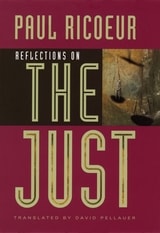
Reflections on the Just
Paul Ricoeur
University of Chicago Press, 2007
Now in paperback, the definitive English translation of Ricoeur's second collection of essays (after The Just) about justice and law.
At the time of his death in 2005, French philosopher Paul Ricoeur was regarded as one of the great thinkers of his generation. In more than half a century of writing about the essential questions of human life, Ricoeur’s thought encompassed a vast range of wisdom and experience, and he made landmark contributions that would go on to influence later scholars in such areas as phenomenology, hermeneutics, structuralism, and theology.
Toward the end of his life, Ricoeur began to focus directly on ethical questions that he feared had been overshadowed by his other work; the result was a two-volume collection of essays on justice and the law. The University of Chicago Press published the English translation of the first volume, The Just, to great acclaim in 2000. Now this translation of the second volume, Reflections on the Just, completes the set and makes available to readers the whole of Ricoeur’s meditations on the concept.
Consisting of fifteen thematically organized essays, Reflections on the Just continues and expands on the work Ricoeur began with his “little ethics” in Oneself as Another and The Just. In the preface, he considers what revisions he would make were he to start over and how that is reflected in these essays. The opening part brings phenomenology to bear on ethics; the second group of essays comprises shorter, occasional pieces considering the concept of justice in the works of other philosophers, including Max Weber and Charles Taylor. The final part turns to the specific domains of medicine and the law, examining how concepts of right and justice operate in those realms.
Cogent, deeply considered, and fully engaged with the realities of the contemporary world, Reflections on the Just is an essential work for understanding the development of Ricoeur’s thought in his final years.
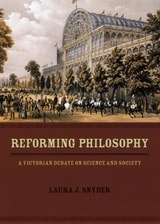
Reforming Philosophy
A Victorian Debate on Science and SocietyLaura J. Snyder
University of Chicago Press, 2006
Mill—philosopher, political economist, and Parliamentarian—remains a canonical author of Anglo-American philosophy, while Whewell—Anglican cleric, scientist, and educator—is now often overlooked, though in his day he was renowned as an authority on science. Placing their teachings in their proper intellectual, cultural, and argumentative spheres, Laura Snyder revises the standard views of these two important Victorian figures, showing that both men’s concerns remain relevant today.
A philosophically and historically sensitive account of the engagement of the major protagonists of Victorian British philosophy, Reforming Philosophy is the first book-length examination of the dispute between Mill and Whewell in its entirety. A rich and nuanced understanding of the intellectual spirit of Victorian Britain, it will be welcomed by philosophers and historians of science, scholars of Victorian studies, and students of the history of philosophy and political economy.
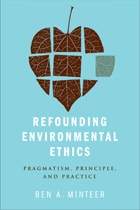
Refounding Environmental Ethics
Pragmatism, Principle, and PracticeBen Minteer
Temple University Press, 2011
Providing a bold and original rethinking of environmental ethics, Ben Minteer's Refounding Environmental Ethics will help ethicists and their allies resolve critical debates in environmental policy and conservation practice.
Minteer considers the implications of John Dewey's pragmatist philosophy for environmental ethics, politics, and practice. He provides a new and compelling intellectual foundation for the field—one that supports a more activist, collaborative and problem-solving philosophical enterprise.
Combining environmental ethics, democratic theory, philosophical pragmatism, and the environmental social sciences, Minteer makes the case for a more experimental, interdisciplinary, and democratic style of environmental ethics—one that stands as an alternative to the field's historically dominant “nature-centered” outlook.
Minteer also provides examples of his pragmatic approach in action, considering a wide range of application and issues, including invasive species, ecological research, biodiversity loss, protected area management, and conservation under global climate change.

Reframing Consciousness
Art, mind and technologyEdited by Roy Ascott
Intellect Books, 2000
Loosely themed around four key elements of Mind, Body, Art and Values, the editor leads the investigation through the familiar territories of interactive media and artificial life, combining them with new and ancient ideas about creativity and authorship, the body and personal identity. This is the first book to recognise the paradigmatic changes which art, in alliance with science and technology is currently undergoing.
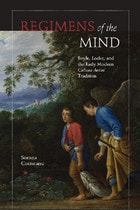
Regimens of the Mind
Boyle, Locke, and the Early Modern Cultura Animi TraditionSorana Corneanu
University of Chicago Press, 2011
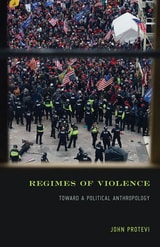
Regimes of Violence
Toward a Political AnthropologyJohn Protevi
University of Minnesota Press, 2025
A wide-ranging examination of the roots—and possible future—of violence in human societies
Is aggression inevitable among humans? In Regimes of Violence, John Protevi explores how human violence originates and exists in our societies. Taking humans as biocultural (that is, our social practices shape our bodies and minds), he shows how aggression does not arrive from any purely biological predisposition but rather occurs only in social regimes of violence that, by manipulating the ways in which culture can shape our biological inheritance of rage and aggression, condition the forms of violence able to be expressed at any one time.
Offering detailed insights into human aggression throughout history, Protevi’s analysis ranges from evolutionary psychology to affective ideology and finally to an alternate politics of joy. He examines a wide range of seemingly disparate topics, such as cooperation between early nomadic foragers, organized sports, berserkers and blackout rages, the experiences of maroons escaping slavery, the January 6 invasion of the United States Capitol building, and responses to the Covid-19 pandemic. As he entwines the philosophical with the anthropological, he asks readers to consider why humans’ capacity for cooperation and sharing is so persistently overlooked by stories that focus on aggression and warfare.
Regimes of Violence is an important contribution to studies of Deleuze and Guattari, uniquely combining cutting-edge investigations in psychology, history, evolutionary theory, cultural anthropology, and philosophy to examine the “political philosophy of the mind.” Presenting to readers a refreshingly optimistic perspective, Protevi demonstrates that we are not doomed to war and argues that humans can build a world based on antifascism, joy, and mutual empowerment.
Reimagining Livelihoods
Life beyond Economy, Society, and EnvironmentEthan Miller
University of Minnesota Press, 2019
A provocative reassessment of the concepts underlying the struggle for sustainable development
Much of the debate over sustainable development revolves around how to balance the competing demands of economic development, social well-being, and environmental protection. “Jobs vs. environment” is only one of the many forms that such struggles take. But what if the very terms of this debate are part of the problem? Reimagining Livelihoods argues that the “hegemonic trio” of economy, society, and environment not only fails to describe the actual world around us but poses a tremendous obstacle to enacting a truly sustainable future.
In a rich blend of ethnography and theory, Reimagining Livelihoods engages with questions of development in the state of Maine to trace the dangerous effects of contemporary stories that simplify and domesticate conflict. As in so many other places around the world, the trio of economy, society, and environment in Maine produces a particular space of “common sense” within which struggles over life and livelihood unfold. Yet the terms of engagement embodied by this trio are neither innocent nor inevitable. It is a contingent, historically produced configuration, born from the throes of capitalist industrialism and colonialism. Drawing in part on his own participation in the struggle over the Plum Creek Corporation’s “concept plan” for a major resort development on the shores of Moosehead Lake in northern Maine, Ethan Miller articulates a rich framework for engaging with the ethical and political challenges of building ecological livelihoods among diverse human and nonhuman communities.
In seeking a pathway for transformative thought that is both critical and affirmative, Reimagining Livelihoods provides new frames of reference for living together on an increasingly volatile Earth.
Reincarnation in Philo of Alexandria
Sami Yli-Karjanmaa
SBL Press, 2015
The best current research on Philo's allegorical exegesis of Scripture
The strong element of Greek philosophy in Philo's thought has been recognized since antiquity, but his relation to the Pythagorean-Platonic tenet of reincarnation has been a neglected, even avoided, topic in research. This book confirms the view common in the seventeenth to nineteenth centuries that Philo accepted the doctrine of reincarnation even though he preferred not to speak openly about it. The book shows how allegorization enabled Philo to give a reincarnational interpretation to very different scriptural passages.
Features:
- Highlights the importance of reading Philonic parallel passages together for fuller understanding of Philo s message
- Discusses the difference between protological and universal allegory in Philo's exegesis of the first chapters of Genesis
- Introduces new concepts to Philonic research such as the corporealization of the mind (the result of transgression and a driving force for reincarnation) and monadization (the human soul's transformation into pure mind upon salvation)
Reinterpreting Galileo
William A. Wallace
Catholic University of America Press, 2018
Reinterpreting Property
Margaret Jane Radin
University of Chicago Press, 1994
Departing from traditional libertarian and economic theories of property, Margaret Jane Radin argues that the law should take into account nonmonetary personal value attached to property—and that some things, such as bodily integrity, are so personal they should not be considered property at all. Gathered here are pieces ranging from Radin's classic early essay on property and personhood to her recent works on governmental "taking" of private property.
Margaret Jane Radin is professor of law at Stanford University. She is the author of over twenty-five articles on legal and political theory.
Reinventing the Good Life
An Empirical Contribution to the Philosophy of CareJeannette Pols
University College London, 2023
Ever since Adam Smith’s musings on “the invisible hand” became more famous than his work on moral sentiments, social theorists started to pay less attention to everyday ethics and aesthetics. Smith’s metaphor of the invisible hand posits that social outcomes emerge by dint of the behaviors of individuals rather than their intentions or virtues.
Modernist and scientific approaches to determining the common good or good forms of governance have increasingly relied on techniques of generalization, rationalization, and universalization. Everyday ethics and aesthetics—and recently also matters of truth—came to be regarded as individual matters of taste. This shift, however, has meant that we no longer comprehend why and how people display a deep concern with everyday life values in their social practices. People continue to enact these values and live by them while academics lack the vocabulary and methods to grasp them.
By reconstructing the history of ideas about everyday-life values, and by analyzing the role of such values in contemporary care practices for patients with chronic disease in the Netherlands, Reinventing the Good Life seeks to explore new ways to study the values of everyday life, particularly in situations where the achievement of a clear-cut or uniform good is unlikely. The book presents a practice-based epistemology and methodology for studying everyday care practices and supporting their goodness. This analytical approach ultimately aims to generate ideas that will allow us to relate in more imaginative ways to the many pressing concerns that we are forced to live with today.
Relational Identities and Other-than-Human Agency in Archaeology
Eleanor Harrison-Buck
University Press of Colorado, 2020
Relational Identities and Other-than-Human Agency in Archaeology explores the benefits and consequences of archaeological theorizing on and interpretation of the social agency of nonhumans as relational beings capable of producing change in the world. The volume cross-examines traditional understanding of agency and personhood, presenting a globally diverse set of case studies that cover a range of cultural, geographical, and historical contexts.
Agency (the ability to act) and personhood (the reciprocal qualities of relational beings) have traditionally been strictly assigned to humans. In case studies from Ghana to Australia to the British Isles and Mesoamerica, contributors to this volume demonstrate that objects, animals, locations, and other nonhuman actors also potentially share this ontological status and are capable of instigating events and enacting change. This kind of other-than-human agency is not a one-way transaction of cause to effect but requires an appropriate form of reciprocal engagement indicative of relational personhood, which in these cases, left material traces detectable in the archaeological record.
Modern dualist ontologies separating objects from subjects and the animate from the inanimate obscure our understanding of the roles that other-than-human agents played in past societies. Relational Identities and Other-than-Human Agency in Archaeology challenges this essentialist binary perspective. Contributors in this volume show that intersubjective (inherently social) ways of being are a fundamental and indispensable condition of all personhood and move the debate in posthumanist scholarship beyond the polarizing dichotomies of relational versus bounded types of persons. In this way, the book makes a significant contribution to theory and interpretation of personhood and other-than-human agency in archaeology.
Contributors:
Susan M. Alt, Joanna Brück, Kaitlyn Chandler, Erica Hill, Meghan C. L. Howey, Andrew Meirion Jones, Matthew Looper, Ian J. McNiven, Wendi Field Murray, Timothy R. Pauketat, Ann B. Stahl, Maria Nieves Zedeño
Relearning from Las Vegas
Aron Vinegar
University of Minnesota Press, 2009
Evaluates for the first time one of the foundational works in architecture criticism
Immediately on its publication in 1972, Learning from Las Vegas, by Robert Venturi, Denise Scott Brown, and Steven Izenour, was hailed as a transformative work in the history and theory of architecture, liberating those in architecture who were trying to find a way out of the straitjacket of architectural orthodoxies. Resonating far beyond the professional and institutional boundaries of the field, the book contributed to a thorough rethinking of modernism and was subsequently taken up as an early manifestation and progenitor of postmodernism.
Going beyond analyzing the original text, the essays provide insights into the issues surrounding architecture, culture, and philosophy that have been influenced by Learning from Las Vegas. For the contributors, as for scholars in an array of fields, the pioneering book is as relevant to architectural debates today as it was when it was first published.Contributors: Ritu Bhatt, Karsten Harries, Jean-Claude Lebensztejn, John McMorrough, Katherine Smith, Dell Upton, Nigel Whitely.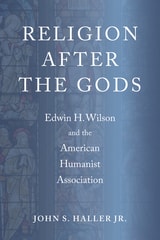
Religion After the Gods
Edwin H. Wilson and the American Humanist AssociationJohn S. Haller Jr.
University of Illinois Press, 2026
Sometimes called America’s fourth religion, religious humanism emerged in the Midwest as a product of Enlightenment rationality, the Social Gospel, and the philosophy of pragmatism. John S. Haller Jr. examines religious humanism’s first fifty years alongside Edwin H. Wilson’s pivotal role in the American Humanist Association (AHA).
Started by a group of Unitarian faculty and students, religious humanism applied the rituals of the theocentric universe of Judeo-Christianity to the non-theistic, anthropocentric universe of agnostics, altruists, humanitarians, and meliorists. Their beliefs found expression in the AHA, founded in 1941 with Wilson as the secretary and editor of its magazine. Wilson’s actions in these and other roles weighed heavily on the organization’s reputation, influence, successes, and failures. At the same time, his multifaceted work reflected the relationship between power and the possibilities inherent in the pluralistic and democratic heritage he pursued.
Rigorous and astute, Religion After the Gods reveals how the tensions between individual aspirations and bureaucratic constraints culminated in hopeful humanist practices.
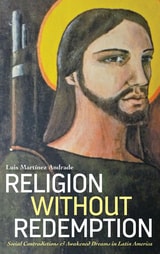
Religion Without Redemption
Social Contradictions and Awakened Dreams in Latin AmericaLuis Martinez Andrade
Pluto Press, 2015
Martínez Andrade focuses on the central role of religion in the region and how it influences people’s interaction with changes in modern economics. Capitalism in Latin America, Martínez Andrade argues, has taken on religious characteristics, with places of worship—shopping malls and department stores—as well as its own prophets. This form of cultural religion is often contradictory in surprising ways: not only does it legitimate oppression, it can also be a powerful source of rebellion, unveiling a subversive side to the status quo. Religion Without Redemption advances the ideas of liberation theory, and challenges the provincialism to which many Latin American thinkers are usually consigned.
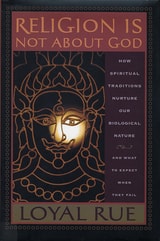
Religion is Not about God
How Spiritual Traditions Nurture our Biological Nature and What to Expect When They FailLoyal Rue
Rutgers University Press, 2006
Thousands of religious traditions have appeared over the course of human history but only a relative few have survived. Some speak of a myriad of gods, others of only one, and some recognize no gods at all. Volumes have been written attempting to prove the existence or nonexistence of supernatural being(s). So, if religion is not about God, then what is it about?
In this provocative book, Loyal Rue contends that religion, very basically, is about us. Successful religions are narrative (myth) traditions that influence human nature so that we might think, feel, and act in ways that are good for us, both individually and collectively. Through the use of images, symbols, and rituals, religion promotes reproductive fitness and survival through the facilitation of harmonious social relations. Drawing on examples from the major traditions—Judaism, Christianity, Islam, Hinduism, and Buddhism—Rue shows how each religion, in its own way, has guided human behavior to advance the twin goals of personal fulfillment and social coherence.
As all faiths are increasingly faced with a crisis of intellectual plausibility and moral relevance, this book presents a compelling and positive view of the centrality and meaning of religion.
Religion is Not about God
How Spiritual Traditions Nurture our Biological Nature and What to Expect When They FailLoyal Rue
Rutgers University Press, 2006
2006 Choice Outstanding Academic Title
Thousands of religious traditions have appeared over the course of human history but only a relative few have survived. Some speak of a myriad of gods, others of only one, and some recognize no gods at all. Volumes have been written attempting to prove the existence or nonexistence of supernatural being(s). So, if religion is not about God, then what is it about?
In this provocative book, Loyal Rue contends that religion, very basically, is about us. Successful religions are narrative (myth) traditions that influence human nature so that we might think, feel, and act in ways that are good for us, both individually and collectively. Through the use of images, symbols, and rituals, religion promotes reproductive fitness and survival through the facilitation of harmonious social relations. Drawing on examples from the major traditions—Judaism, Christianity, Islam, Hinduism, and Buddhism—Rue shows how each religion, in its own way, has guided human behavior to advance the twin goals of personal fulfillment and social coherence.
As all faiths are increasingly faced with a crisis of intellectual plausibility and moral relevance, this book presents a compelling and positive view of the centrality and meaning of religion.
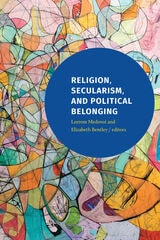
Religion, Secularism, and Political Belonging
Leerom Medovoi and Elizabeth Bentley, editors
Duke University Press, 2021
Contributors. Markus Balkenhol, Elizabeth Bentley, Kambiz GhaneaBassiri, David N. Gibbs, Ori Goldberg, Marcia Klotz, Zeynep Kurtulus Korkman, Leerom Medovoi, Eva Midden, Mohanad Mustafa, Mu-chou Poo, Shaul Setter, John Vignaux Smith, Pooyan Tamimi Arab, Ernst van den Hemel, Albert Welter, Francis Ching-Wah Yip, Raef Zreik
Religious Affects
Animality, Evolution, and PowerDonovan O. Schaefer
Duke University Press, 2015

Remain
Ioana B. Jucan
University of Minnesota Press, 2018
Engaging with remains and remainders of media cultures
As new, as current, as now—this is primarily our understanding of technologies and their mediating of our social constructions. But past media and past practices continue to haunt and inflect our present social and technical arrangements. To trace this haunting, two performance theorists and a media theorist engage in this volume with remains and remainders of media cultures through the lenses of theatre and performance studies and of media archaeology. They address the temporalities and materialities of remain(s), the production of obsolescence in relation to the live body, and considerations of cultural memory as well as of infrastructure and the natural history of media culture.
Remarks on Mathematics and Logic
Volume III, 1939–1941Ludwig Wittgenstein
University of Chicago Press, 0
The second of five planned volumes, this book collects Wittgenstein’s unabridged writings on mathematics and logic composed between 1939 and 1941.
In 1956, a significant but abridged portion of Ludwig Wittgenstein’s 1937–1944 writings for a continuation of what became Philosophical Investigations was published as Remarks on the Foundations of Mathematics. Now, in these five German-English facing-page volumes, the writings of Remarks on Mathematics and Logic are presented in full as Wittgenstein wrote them: in chronological order, without editorial omissions, selections, or rearrangements.
Volume III contains materials from 1939 to 1941, including previously unpublished—one manuscript and four manuscript parts—and one manuscript from which selections were made for previous abridgements.
The topics covered in this volume include surveyability and perspicuity in mathematics; Cantor and Gödel; Russellian logicism; geometrical cogency of proofs; consensus as part of the phenomenon of our calculating; rule-following and unwinding; consistency proofs; calculation as invention rather than discovery; superstitious fear of contradictions; why mathematicians cannot philosophize about mathematics; mathematical propositions are overdetermined; the idea of a mathematical reality; the connection between the sense of a mathematical proposition and its use; positioning a proposition in a system; an unproved mathematical proposition as the expression of a problem; the role of mathematical propositions in descriptions (of reality).
This edition will be the authoritative source for Wittgenstein’s writings in their original context.
Remarks on Mathematics and Logic
Volume IV, 1941–1943Ludwig Wittgenstein
University of Chicago Press, 0
In 1956, a significant but abridged portion of Ludwig Wittgenstein’s 1937–1944 writings for a continuation of what became Philosophical Investigations was published as Remarks on the Foundations of Mathematics. Now, in the five German-English facing pages volumes of Remarks on Mathematics and Logic, these writings are presented in full as Wittgenstein wrote them: in chronological order, without editorial omissions, selections, or rearrangements.
Volume IV contains materials from 1941 to 1943, including one previously unpublished manuscript and three manuscripts from which selections were made for the previous abridgment. The topics covered in this volume include the philosophy of mathematics, mathematical foundationalism, surveyability in mathematics, language-games and proof-networks, Gödelian undecidability, pictures in mathematics, Cantorian diagonal proofs, applied mathematics without pure mathematics, and mathematics and chess, among others.
This German-English facing pages edition presents Wittgenstein’s writings in their original context—as Wittgenstein wrote them, in chronological order, and without editorial omissions, selections, or rearrangements.
Remarks on the Philosophy of Psychology, Volume 1
Ludwig Wittgenstein
University of Chicago Press, 1980
This bilingual edition of the Remarks on the Philosophy of Psychology presents the first English translation of an essential body of Wittegenstein's work. It elaborates Wittgenstein's views on psychological concepts such as expectation, sensation, knowing how to follow a rule, and knowledge of the sensations of other persons. It also shows strong emphasis on the "anthropological" aspect of Wittgenstein's thought. Philosophers, as well as anthropologists, psychologists, and sociologists will welcome this important publication.
Remarks on the Philosophy of Psychology, Volume 2
Ludwig Wittgenstein
University of Chicago Press, 1980
This bilingual edition of the Remarks on the Philosophy of Psychology presents the first English translation of an essential body of Wittgenstein's work. It elaborates Wittgenstein's views on psychological concepts such as expectation, sensation, knowing how to follow a rule, and knowledge of the sensations of other persons. It also shows strong emphasis on the "anthropological" aspect of Wittgenstein's thought. Philosophers, as well as anthropologists, psychologists, and sociologists will welcome this important publication.
Remixing Religion
Multiple Religious Belonging and Beyond – A Latourian ProposalAndré van der Braak
Amsterdam University Press, 2026