Results by title
1761 books match the query 'Public Policy' and 100 start with r
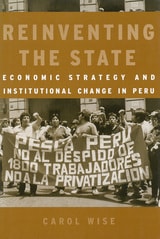
Reinventing the State
Economic Strategy and Institutional Change in PeruCarol Wise
University of Michigan Press, 2003

Reinventing the Welfare State
Digital Platforms and Public PoliciesUrsula Huws
Pluto Press, 2020
The Covid-19 pandemic has tragically exposed how today’s welfare state cannot properly protect its citizens. Despite the valiant efforts of public sector workers, from under-resourced hospitals to a shortage of housing and affordable social care, the pandemic has tragically shown how decades of neglect has caused hundreds to die. In this bold new book, leading policy analyst Ursula Huws shows how we can create a welfare state that is fair, affordable, and offers security for all.
Huws focuses on some of the key issues of our time – the gig economy, universal, free healthcare, and social care, to criticize the current state of welfare provision. Drawing on a lifetime of research on these topics, she clearly explains why we need to radically rethink how it could change. With positivity and rigor, she proposes new and original policy ideas, including critical discussions of Universal Basic Income and new legislation for universal workers' rights.
She also outlines a 'digital welfare state' for the 21st century. This would involve a repurposing of online platform technologies under public control to modernize and expand public services, and improve accessibility.
Rejecting Climate Doomism
Diana Stuart
University of Michigan Press, 2026
Drawing from climate science, sociology, psychology, and philosophy, Rejecting Climate Doomism outlines the reasons to instead choose action grounded in active hope. It examines how global warming could be effectively limited through specific policy proposals. Despite the many obstacles to achieving some of the policies discussed in this book, they are still possible and worth pursuing. By outlining a positive vision of the far-reaching changes that can be used to minimize warming, the book encourages readers to advocate for the social and economic changes necessary to forge the best path for people and the planet.
Religion and Economic Justice
edited by Michael Zweig
Temple University Press, 1992
As Eastern European economies move to capitalism, many people there hope for a better life. But capitalism is no guarantee of prosperity. Economic deprivation, war, social marginalization, and powerlessness mark the lives of millions and spark social movements for economic justice aimed at correcting these conditions. Often these movements are based in religious communities, their activists motivated by religious commitment to human dignity and the need for personal empowerment. Although the new theology contains an economic critique, little dialogue has taken place between the religious and economic communities on matters of economic analysis. Religion and Economic Justice seeks to develop this exchange.
This book contains original essays by distinguished contributors from economics, religious ethics, and biblical studies. The authors provide a powerful critique of the individualism which underlies mainstream economic analysis and which fragments our communities, a critique that extends to the values implicit in the market system. The authors also show how social marginalization and economic deprivation are the consequences of economic organization, not simply the failings of individuals.
Reluctant Partners
A History of Multilateral Trade Cooperation, 1850-2000Andrew G. Brown
University of Michigan Press, 2003
Remaking America
Democracy and Public Policy in an Age of InequalityJoe Soss
Russell Sage Foundation, 2007
Remaking the Urban Social Contract
Health, Energy, and the EnvironmentEdited by Michael A. Pagano
University of Illinois Press, 2016
Contributors: Alba Alexander, Megan Houston, Dennis R. Judd, Cynthia Klein-Banai, William C. Kling, Howard A. Learner, David A. McDonald, David C. Perry, Emily Stiehl, Anthony Townsend, Natalia Villamizar-Duarte, and Moira Zellner.

Remote Warfare
New Cultures of ViolenceRebecca A. Adelman
University of Minnesota Press, 2020
Considers how people have confronted, challenged, and resisted remote warfare
Drone warfare is now a routine, if not predominant, aspect of military engagement. Although this method of delivering violence at a distance has been a part of military arsenals for two decades, scholarly debate on remote warfare writ large has remained stuck in tired debates about practicality, efficacy, and ethics. Remote Warfare broadens the conversation, interrogating the cultural and political dimensions of distant warfare and examining how various stakeholders have responded to the reality of state-sponsored remote violence.
The essays here represent a panoply of viewpoints, revealing overlooked histories of remoteness, novel methodologies, and new intellectual challenges. From the story arc of Homeland to redefining the idea of a “warrior,” these thirteen pieces consider the new nature of surveillance, similarities between killing with drones and gaming, literature written by veterans, and much more. Timely and provocative, Remote Warfare makes significant and lasting contributions to our understanding of drones and the cultural forces that shape and sustain them.
Contributors: Syed Irfan Ashraf, U of Peshawar, Pakistan; Jens Borrebye Bjering, U of Southern Denmark; Annika Brunck, U of Tübingen; David A. Buchanan, U.S. Air Force Academy; Owen Coggins, Open U; Andreas Immanuel Graae, U of Southern Denmark; Brittany Hirth, Dickinson State U; Tim Jelfs, U of Groningen; Ann-Katrine S. Nielsen, Aarhus U; Nike Nivar Ortiz, U of Southern California; Michael Richardson, U of New South Wales; Kristin Shamas, U of Oklahoma; Sajdeep Soomal; Michael Zeitlin, U of British Columbia.
Renew Orleans?
Globalized Development and Worker Resistance after KatrinaAaron Schneider
University of Minnesota Press, 2018
Urban development after disaster, the fading of black political clout, and the onset of gentrification
Like no other American city, New Orleans since Hurricane Katrina offers powerful insight into issues of political economy in urban development and, in particular, how a city’s character changes after a disaster that spurs economic and political transition. In New Orleans, the hurricane upset an existing stalemate among rival factions of economic and political elites, and its aftermath facilitated the rise of a globally oriented faction of local capital.
In Renew Orleans? Aaron Schneider shows how some city leaders were able to access fragmented local institutions and capture areas of public policy vital to their development agenda. Through interviews and surveys with workers and advocates in construction, restaurants, shipyards, and hotel and casino cleaning, Schneider contrasts sectors prioritized during post-Katrina recovery with neglected sectors. The result is a fine-grained view of the way labor markets are structured to the advantage of elites, emphasizing how dual development produces wealth for the few while distributing poverty and exclusion to the many on the basis of race, gender, and ethnicity.
Schneider shows the way exploitation operates both in the workplace and the community, tracing working-class resistance that joins struggles for dignity at home and work. In the process, working classes and popular sectors put forth their own alternative forms of development.

Reparation and World Remaking
Elise Klein, Erin Fitz-Henry, and Rachel Hughes
University of Michigan Press, 2027
Reparations are not only about money, legal remedy, or moral repair. They are about the radical reimagining and remaking of a world still deeply scarred by colonialism, slavery, and racial capitalism. Bringing together scholars, activists, and practitioners from across the Caribbean, Latin America, the United States, Australia, and beyond, Reparation and World Remaking asks what genuinely transformative reparations might look like—and shows that, in many places, they are already underway.
Drawing on theorizations from Indigenous, Black, feminist, First Nations, and critical antipodean traditions, the volume extends reparative thinking by attending to the contributions of scholars of decoloniality, post-development, abolition, feminism, community economies, and environmental and climate justice. Reparation and World Remaking illuminates the many ways world remaking reparations are already being envisioned and enacted, in communities and movements across the globe.
Reproduction, Globalization, and the State
New Theoretical and Ethnographic PerspectivesCarole H. Browner and Carolyn F. Sargent, eds.
Duke University Press, 2011
Contributors. Aditya Bharadwaj, Caroline H. Bledsoe, Carole H. Browner, Junjie Chen, Aimee R. Eden, Susan L. Erikson, Didier Fassin, Claudia Lee Williams Fonseca, Ellen Gruenbaum, Matthew Gutmann, Marcia C. Inhorn, Mark B. Padilla, Rayna Rapp, Lisa Ann Richey, Carolyn Sargent, Papa Sow, Cecilia Van Hollen, Linda Whiteford
Reproductive Justice
The Politics of Health Care for Native American WomenGurr, Barbara
Rutgers University Press, 2015
Republic of Barbecue
Stories Beyond the BrisketBy Elizabeth S. D. Engelhardt
University of Texas Press, 2009
Winner, Barbara Sudler Award, Colorado Historical Society, 2010
It's no overstatement to say that the state of Texas is a republic of barbecue. Whether it's brisket, sausage, ribs, or chicken, barbecue feeds friends while they catch up, soothes tensions at political events, fuels community festivals, sustains workers of all classes, celebrates brides and grooms, and even supports churches. Recognizing just how central barbecue is to Texas's cultural life, Elizabeth Engelhardt and a team of eleven graduate students from the University of Texas at Austin set out to discover and describe what barbecue has meant to Texans ever since they first smoked a beef brisket.
Republic of Barbecue presents a fascinating, multifaceted portrait of the world of barbecue in Central Texas. The authors look at everything from legendary barbecue joints in places such as Taylor and Lockhart to feedlots, ultra-modern sausage factories, and sustainable forests growing hardwoods for barbecue pits. They talk to pit masters and proprietors, who share the secrets of barbecue in their own words. Like side dishes to the first-person stories, short essays by the authors explore a myriad of barbecue's themes—food history, manliness and meat, technology, nostalgia, civil rights, small-town Texas identity, barbecue's connection to music, favorite drinks such as Big Red, Dr. Pepper, Shiner Bock, and Lone Star beer—to mention only a few. An ode to Texas barbecue in films, a celebration of sports and barbecue, and a pie chart of the desserts that accompany brisket all find homes in the sidebars of the book, while photographic portraits of people and places bring readers face-to-face with the culture of barbecue.
Residues
Thinking Through Chemical EnvironmentsSoraya Boudia
Rutgers University Press, 2022
Winner of the 2023 Merton Award from the Science, Knowledge, and Technology section of the American Sociological Association
Residues offers readers a new approach for conceptualizing the environmental impacts of chemicals production, consumption, disposal, and regulation. Environmental protection regimes tend to be highly segmented according to place, media, substance, and effect; academic scholarship often reflects this same segmented approach. Yet, in chemical substances we encounter phenomena that are at once voluminous and miniscule, singular and ubiquitous, regulated yet unruly. Inspired by recent studies of materiality and infrastructures, we introduce “residual materialism” as a framework for attending to the socio-material properties of chemicals and their world-making powers. Tracking residues through time, space, and understanding helps us see how the past has been built into our present chemical environments and future-oriented regulatory systems, why contaminants seem to always evade control, and why the Anthropocene is as inextricably harnessed to the synthesis of carbon into new molecules as it is driven by carbon’s combustion.
Resist the Punitive State
Grassroots Struggles Across Welfare, Housing, Education and PrisonsEmily Luise Hart
Pluto Press, 2019
Resist the Punitive State
Grassroots Struggles Across Welfare, Housing, Education and PrisonsEmily Luise Hart
Pluto Press, 2019
Resistance and Abolition in the Borderlands
Confronting Trump's Reign of TerrorEdited by Arturo J. Aldama and Jessica Ordaz; Foreword by Leo R. Chavez; Afterword by Karma R. Chávez
University of Arizona Press, 2024
This volume provides a well-argued look at the Trump era. Insightful contributions delve into the impact of Donald Trump’s rhetoric and policies on migrants detained and returned, immigrant children separated from their parents and placed in detention centers, and migrant women subjected to sexual and reproductive abuses, among other timely topics. The chapter authors document a long list in what the book calls “Trump’s Reign of Terror.”
Organized thematically, the book has four sections: The first gathers histories about the Trump years’ roots in a longer history of anti-migration; the second includes essays on artistic and activist responses on the border during the Trump years; the third critiques the normalization of Trump’s rhetoric and actions in popular media and culture; and the fourth envisions the future.
Resistance and Abolition in the Borderlands is an essential reader for those wishing to understand the extent of the damage caused by the Trump era and its impact on Latinx people.
Contributors
Arturo J. Aldama
Rebecca Avalos
Cynthia Bejarano
Tria Blu Wakpa
Renata Carvalho Barreto
Karma R. Chávez
Leo R. Chavez
Jennifer Cullison
Jasmin Lilian Diab
Allison Glover
Jamila Hammami
Alexandria Herrera
Diana J. Lopez
Sergio A. Macías
Cinthya Martinez
Alexis N. Meza
Roberto A. Mónico
José Enrique Navarro
Jessica Ordaz
Eliseo Ortiz
Kiara Padilla
Leslie Quintanilla
J-M Rivera
Heidy Sarabia
Tina Shull
Nishant Upadhyay
Maria Vargas
Antonio Vásquez
Resisting Extractivism
Peruvian Gold, Everyday Violence, and the Politics of AttentionMichael Wilson Becerril
Vanderbilt University Press, 2021
Peru is classified as one of the deadliest countries in the world for environmental defenders, where activists face many forms of violence. Through an ethnographic and systematic comparison of four gold-mining conflicts in Peru, Resisting Extractivism presents a vivid account of subtle and routine forms of violence, analyzing how meaning-making practices render certain types of damage and suffering noticeable while occluding others. The book thus builds a theory of violence from the ground up—how it is framed, how it impacts people’s lived experiences, and how it can be confronted. By excavating how the everyday interactions that underlie conflicts are discursively concealed and highlighted, this study assists in the prevention and transformation of violence over resource extraction in Latin America.
The book draws on a controlled, qualitative comparison of four case studies, extensive ethnographic research conducted over fourteen months of fieldwork, analysis of over nine hundred archives and documents, and unprecedented access to more than 250 semi-structured interviews with key actors across industry, the state, civil society, and the media. Michael Wilson Becerril identifies, traces, and compares these dynamics to explain how similar cases can lead to contrasting outcomes—insights that may be usefully applied in other contexts to save lives and build better futures.
Resource Radicals
From Petro-Nationalism to Post-Extractivism in EcuadorThea Riofrancos
Duke University Press, 2020
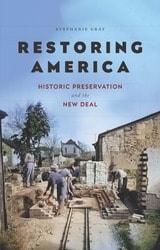
Restoring America
Historic Preservation and the New DealStephanie Gray
University of Massachusetts Press, 2025
Honorable Mention, New Deal Book Award
Exploring how the New Deal shaped history through politically driven commemoration
During the Great Depression, Americans employed historic preservation as a tool to address the political, economic, and social upheavals of the era. Inspired by the Roosevelt administration’s unprecedented support of federal arts projects, US politicians, architects, laborers, artisans, and local boosters skillfully used New Deal funds to restore, mythologize, and politicize the “historic shrines” in their communities. Restoring America illustrates how and why Americans turned to historic preservation as a strategy for managing both political realities and ambitions.
Stephanie Gray presents four thoroughly researched and diverse case studies: a colonial theater in the Deep South, a Puritan minister’s home in New England, aviator Charles Lindbergh's modest farmhouse and parklands of the Upper Midwest, and a multi-layered Spanish-German-Mexican arts village in the Central South. Collectively, these examples show how the restoration of old places emerged as a popular form of cultural production, an instrument of economic reconstruction, and a striking expression of political theater during the Depression. Moreover, these New Deal preservation projects make evident that any exercise in physically preserving the past is both conservative and progressive, reactive and proactive.
Restoring America contends that the federally funded and locally driven preservation initiatives of the 1930s and 1940s can help inform contemporary public history debates over the politics of commemoration and imagine possibilities for future preservation practice.
Restructuring the Philadelphia Region
Metropolitan Divisions and InequalityCarolyn Adams, David W. Bartelt, David Elesh and Ira Goldstein with Joshua Freely Michelle Schmitt
Temple University Press, 2008
Restructuring the Philadelphia Region offers one of the most comprehensive and careful investigations written to date about metropolitan inequalities in America’s large urban regions. Moving beyond simplistic analyses of cities-versus-suburbs, the authors use a large and unique data set to discover the special patterns of opportunity in greater Philadelphia, a sprawling, complex metropolitan region consisting of more than 350 separate localities. With each community operating its own public services and competing to attract residents and businesses, the places people live offer them dramatically different opportunities.
The book vividly portrays the region’s uneven development—paying particular attention to differences in housing, employment and educational opportunities in different communities—and describes the actors who are working to promote greater regional cooperation. Surprisingly, local government officials are not prominent among those actors. Instead, a rich network of “third-sector” actors, represented by nonprofit organizations, quasi-governmental authorities and voluntary associations, is shaping a new form of regionalism.
Rethinking America's Highways
A 21st-Century Vision for Better InfrastructureRobert W. Poole Jr.
University of Chicago Press, 2018
In Rethinking America’s Highways, Poole examines how our current model of state-owned highways came about and why it is failing to satisfy its customers. He argues for a new model that treats highways themselves as public utilities—like electricity, telephones, and water supply. If highways were provided commercially, Poole argues, people would pay for highways based on how much they used, and the companies would issue revenue bonds to invest in facilities people were willing to pay for. Arguing for highway investments to be motivated by economic rather than political factors, this book makes a carefully-reasoned and well-documented case for a new approach to highways that is sure to inform future decisions and policies for U.S. infrastructure.

Rethinking Urban Entrepreneurialism
A grounded view from ChinaEdited by Fulong Wu and Fangzhu Zhang
University College London, 2026
Circumventing historical binaries between authoritarianism and entrepreneurialism, this study presents a grounded view of urban governance in China.
China’s urban governance demonstrates perplexing and contradictory features. Despite market-oriented reform, the role of the state remains salient. What is the logic behind governing urban China? Chinese scholars provide a grounded view. Rethinking Urban Entrepreneurialism challenges the conventional understanding of urban entrepreneurialism and argues that Chinese urban governance comprises two interrelated aspects: entrepreneurial governance and innovative statecraft. The first refers to the deployment of market-based approaches to urban development, and the second refers to versatile techniques. Urban entrepreneurialism encompasses both market-oriented approaches and administrative innovations. The state upholds its strategic and extra-economic objectives by deploying and mobilizing the market and society. Urban entrepreneurialism also demonstrates a strong state intentionality rather than following the market logic. The book reveals the challenges to urban entrepreneurialism, the limits of entrepreneurial governance, and multiple managerial practices in China.
By examining entrepreneurial urban development and governance experiments, it paints a comprehensive picture of contemporary urban governance in China. It transcends the binary view of authoritarianism versus urban entrepreneurialism, showcasing a wide spectrum of entrepreneurial and managerial governance features. To rethink urban entrepreneurialism, the book suggests that it extends public-private partnerships into a broader form of statecraft known as “state entrepreneurialism.”
Rethinking Urban Parks
Public Space and Cultural DiversityBy Setha Low, Dana Taplin, and Suzanne Scheld
University of Texas Press, 2005
Urban parks such as New York City's Central Park provide vital public spaces where city dwellers of all races and classes can mingle safely while enjoying a variety of recreations. By coming together in these relaxed settings, different groups become comfortable with each other, thereby strengthening their communities and the democratic fabric of society. But just the opposite happens when, by design or in ignorance, parks are made inhospitable to certain groups of people.
This pathfinding book argues that cultural diversity should be a key goal in designing and maintaining urban parks. Using case studies of New York City's Prospect Park, Orchard Beach in Pelham Bay Park, and Jacob Riis Park in the Gateway National Recreation Area, as well as New York's Ellis Island Bridge Proposal and Philadelphia's Independence National Historical Park, the authors identify specific ways to promote, maintain, and manage cultural diversity in urban parks. They also uncover the factors that can limit park use, including historical interpretive materials that ignore the contributions of different ethnic groups, high entrance or access fees, park usage rules that restrict ethnic activities, and park "restorations" that focus only on historical or aesthetic values. With the wealth of data in this book, urban planners, park professionals, and all concerned citizens will have the tools to create and maintain public parks that serve the needs and interests of all the public.
Rethinking Urban Risk and Resettlement in the Global South
Edited by Cassidy Johnson, Garima Jain, and Allan Lavell
University College London, 2021
Environmental changes impact everyone, but the burden is especially heavy upon the lives and livelihoods of the urban poor and those living in informal settlements. In an effort to reduce urban residents’ exposure to climate change and natural disasters, resettlement programs are becoming widespread across the Global South. Yet, while resettlement may reduce a region’s future climate-related disaster risk, it can also often increase poverty and vulnerability. This volume collates the findings from a research project that examined urban areas across the globe, including case studies from India, Uganda, Peru, Colombia, Mexico, Cambodia, and the Philippines. The book offers a unique approach to resettlement, providing an opportunity for urban planners to re-think how disaster risk management can better address the accumulation of urban risks in the era of climate change.
Revising State Theory
Essays in Politics and PostindustrialismFred Block
Temple University Press, 1987
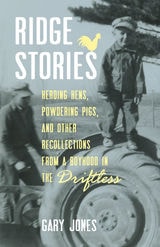
Ridge Stories
Herding Hens, Powdering Pigs, and Other Recollections from a Boyhood in the DriftlessGary Jones
Wisconsin Historical Society Press, 2019
Raised on a small dairy farm in the Driftless Area in the mid-twentieth century, Gary Jones gets real about his rural roots. In this collection of interrelated stories, Jones writes with plainspoken warmth and irreverence about farm, family, and folks on the ridge. Readers will meet Gramp Jones, whose oversized overalls saved him from losing a chunk of flesh to an irate sow; the young one-room-school teacher who helped the kids make sled jumps at recess; Charlotte, the lawn-mowing sheep who once ended up in the living room; Victor the pig-cutter, who learned his trade from folk tradition rather than vet school; and other colorful characters of the ridge. Often humorous and occasionally touching, Jones’s essays paint a vivid picture that will entertain city and country folk alike.
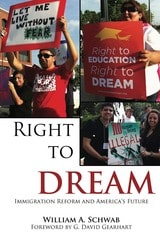
Right to DREAM
Immigration Reform and America’s FutureWilliam A. Schwab
University of Arkansas Press, 2013

Rights Enabled
The Disability Revolution, from the US, to Germany and Japan, to the United NationsKatharina Heyer
University of Michigan Press, 2015
Rise Up!
Activism as EducationAmalia Dache
Michigan State University Press, 2019
Risk Aspects of Investment-Based Social Security Reform
Edited by John Y. Campbell and Martin Feldstein
University of Chicago Press, 2001
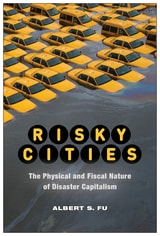
Risky Cities
The Physical and Fiscal Nature of Disaster CapitalismAlbert S. Fu
Rutgers University Press, 2022
Risqué Business
Breastaurants in American CultureTy Matejowsky
University of Alabama Press, 2025
Risqué Business serves up the breastaurant industry, where food service, sex appeal, identity, and gender politics mix.
Risqué Business explores the rise and ongoing cultural reckoning of “breastaurants”: sports bar–style restaurants like Hooters and Twin Peaks, which have long relied on the sexualized presentation of female servers to attract a mostly straight, male clientele. Ty Matejowsky, professor of anthropology at the University of Central Florida, is uniquely positioned in America’s foundational, breastaurant-saturated landscape. From this vantage, he offers a well-balanced account that draws on pop culture, media analysis, and contemporary gender politics. He delivers a smart, layered analysis of how breastaurants commodify youth and femininity, uphold retrograde masculinity, and serve as symbolic battlegrounds in today's highly charged political environments including America's deeply polarized Red State/Blue State divide.
With case studies, cultural critique, and a critical lens on labor and sexuality, Matejowsky reveals how these restaurants are more than just risqué marketing gimmicks. They reflect deeper anxieties about gender, identity, and the uneasy fusion of sex and service in American consumer culture. Risqué Business is a high-spirited study of an industry that thrives at the intersection of appetite and identity.
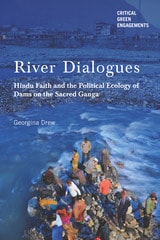
River Dialogues
Hindu Faith and the Political Ecology of Dams on the Sacred GangaGeorgina Drew
University of Arizona Press, 2017
India’s sacred Ganga River is arguably one of the most iconic sites for worship, with a continuity of rituals for the living and the dead that span over two millennia. Along the river, from high in the Himalaya to the vast plains below, people gather daily to worship the Ganga through prayer and song. But large government-sponsored dams threaten to upend these practices.
In River Dialogues, Georgina Drew offers a detailed ethnographic engagement with the social movements contesting hydroelectric development on the Ganga. The book examines the complexity of the cultural politics that, on the one hand, succeeded in influencing an unprecedented reversal of government plans for three contested hydroelectric projects, and how, on the other hand, this decision sparked ripples of discontent after being paired with the declaration of a conservation zone where the projects were situated.
The book follows the work of women who were initially involved in efforts to stop the disputed projects. After looking to their discourses and actions, Drew argues for the use of a political ecology analysis that incorporates the everyday practice and everyday religious connections that animated the cultural politics of development. Drew offers a nuanced understanding of the struggles that communities enact to assert their ways of knowing and caring for resources that serves as an example for others critically engaging with the growing global advocacy of the “green economy” model for environmental stewardship.
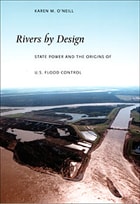
Rivers by Design
State Power and the Origins of U.S. Flood ControlKaren M. O Neill
Duke University Press, 2006
O’Neill focuses on the creation of flood control programs along the lower Mississippi River and the Sacramento River, the first two rivers to receive federal flood control aid. She describes how, in the early to mid-nineteenth century, planters, shippers, and merchants from both regions campaigned for federal assistance with flood control efforts. She explains how the federal government was slowly and reluctantly drawn into water management to the extent that, over time, nearly every river in the United States was reengineered. Her narrative culminates in the passage of the national Flood Control Act of 1936, which empowered the Army Corps of Engineers to build projects for all navigable rivers in conjunction with local authorities, effectively ending nationwide, comprehensive planning for the protection of water resources.
Rivers on Fire and Corporate Liars
The Monitoring and Sanctioning of U.S. Water Pollution CrimesJoshua Ozymy
Rutgers University Press, 2026
For over four decades, the US federal government has undertaken efforts to police and prosecute environmental crimes to protect public health and the natural environment. Yet, we still know very little about how US federal agencies have monitored and sanctioned water pollution violations and if these actions actually deter crime. In Rivers on Fire and Corporate Liars, Joshua Ozymy and Melissa Jarrell Ozymy examined over one thousand federal water pollution investigations and prosecutions undertaken by the US EPA and Department of Justice from 1983 to 2023 to answer these questions. Their analysis provides the most comprehensive empirical examination to date of how the criminal enforcement of water pollution has evolved over time, patterns in prosecutions, and how criminals were sanctioned.
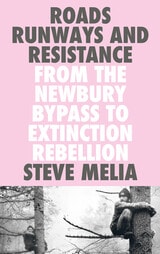
Roads, Runways and Resistance
From the Newbury Bypass to Extinction RebellionSteve Melia
Pluto Press, 2021
'As a movement for social change it is important that we understand our own history. This is a compelling read.'
From the anti-roads protests of the 1990s to HS2 and Extinction Rebellion, conflict and protest have shaped the politics of transport. In 1989, Margaret Thatcher's government announced 'the biggest road-building programme since the Romans.' This is the inside story of the thirty tumultuous years that have followed.
Roads, Runways and Resistance draws on over 50 interviews with government ministers, advisors and protestors - many of whom, including 'Swampy', speak here for the first time about the events they describe. It is a story of transport ministers undermined by their own Prime Ministers, protestors attacked or quietly supported by the police, and smartly-dressed protestors who found a way onto the roof of the Houses of Parliament.
Today, as a new wave of road building and airport expansion threatens to bust Britain's carbon budgets, climate change protestors find themselves on a collision course with the government. Melia asks, what difference did the protests of the past make? And what impacts might today's protest movements have on the transport of the future?

Romancing the Sperm
Shifting Biopolitics and the Making of Modern FamiliesDiane Tober
Rutgers University Press, 2019
In Romancing the Sperm, Diane Tober explores the intersections between sperm donation and the broader social and political environment in which “modern families” are created and regulated. Through tangible and intimate stories, this book provides a captivating read for anyone interested in family and kinship, genetics and eugenics, and how ever-expanding assisted reproductive technologies continue to redefine what it means to be human.
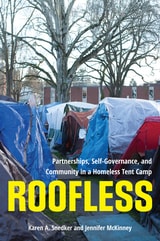
Roofless
Partnerships, Self-Governance, and Community in a Homeless Tent CampKaren A. Snedker
Rutgers University Press, 2027
Roofless critically examines homelessness and responses to it in the United States through the growing practice of forming tent camps. Karen A. Snedker and Jennifer McKinney position Seattle's "Tent City 3," (the US city with the third-largest homeless population), as an organizational model for other local governments to consider implementing in addressing their homelessness crises. Snedker and McKinney document this tent city's development through a census they conducted from 2019 to 2020, though the efforts behind Tent City 3 have a history dating back two decades. Through such an examination, the authors reveal surprising points of view and outcomes, including grassroots partnerships between city agencies, nonprofits, religious organizations, and educational institutions. In the context of rising homelessness in the US, understanding and having insight into the residents' experience of sanctioned unsheltered homelessness, compared to instances of unsanctioned encampments, allows readers to acquire a complete, nuanced picture of tent-based homelessness. As such, Roofless provides valuable insight to audiences ranging from scholars of sociology and social work, policymakers, homelessness advocates, and politicians.
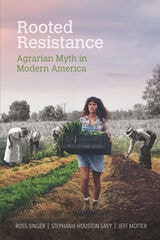
Rooted Resistance
Agrarian Myth in Modern AmericaNorie R. Singer
University of Arkansas Press, 2020
Through a careful examination of several case studies, Rooted Resistance traverses the ground of agrarian myth in modern America. The authors investigate key figures and movements in the history of modern agrarianism, including the World War I victory garden efforts, the postwar Country Life movement for the vindication of farmers’ rights, the Southern Agrarian critique of industrialism, and the practical and spiritual prophecy of organic farming put forth by J. I. Rodale. This critical history is then brought up to date with recent examples such as the contested South Central Farm in urban Los Angeles and the spectacular rise and fall of the Chipotle “Food with Integrity” branding campaign.
By examining a range of case studies, Singer, Grey, and Motter aim for a deeper critical understanding of the many applications of agrarian myth and reveal why it can help provide a pathway for positive systemic change in the food system.
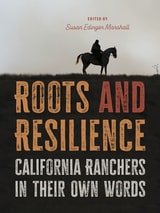
Roots and Resilience
California Ranchers in Their Own WordsSusan Edinger Marshall
University of Nevada Press, 2024
The editors have drawn together these stories, poems, and musings from ranchers across the state, calling upon real people to share their experiences, and beckoning readers to find a shared understanding concerning often divisive land-use topics. Many perspectives are considered, including those of transplanted suburbanites to seventh-generation heirs. Notably, many women’s writings are including in the book, offering unique and valuable perspectives on ranching culture.
Roots and Resilience gives voice to California’s Indigenous, Mexican American, Basque and other European American ranchers, asking the reader to find common ground in the name of land stewardship and conservation.
Routing the Opposition
Social Movements, Public Policy, and DemocracyDavid S. Meyer
University of Minnesota Press, 2005
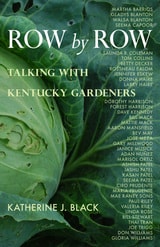
Row by Row
Talking with Kentucky GardenersKatherine J. Black
Ohio University Press, 2015
For two and a half years, Katherine J. Black crisscrossed Kentucky, interviewing home vegetable gardeners from a rich variety of backgrounds. Row by Row: Talking with Kentucky Gardeners is the result, a powerful compilation of testimonies on the connections between land, people, culture, and home.
The people profiled here share a Kentucky backdrop, but their life stories, as well as their gardens, have as many colors, shapes, and tastes as heirloom tomatoes do. Black interviewed those who grow in city backyards, who carve out gardens from farmland, and who have sprawling plots in creek bottoms and former pastures. Many of the gardeners in Row by Row speak eloquently about our industrialized food system’s injuries to the land, water, and health of people. But more often they talk about what they are doing in their gardens to reverse this course.
Row by Row is as sure to appeal to historians, food studies scholars, and sustainability advocates as it is to gardeners and local food enthusiasts. These eloquent portraits, drawn from oral histories and supplemented by Deirdre Scaggs’ color photographs, form a meditation on how gardeners make sense of their lives through what they grow and how they grow it.
Rows of Memory
Journeys of a Migrant Sugar-Beet WorkerSaul Sanchez
University of Iowa Press, 2014
Rows of Memory tells his story and the story of his family and other migrant farm laborers like them, people who endured dangerous, dirty conditions and low pay, surviving because they took care of each other. Facing racism both on the road and at home, they lived a largely segregated life only occasionally breached by friendly employers.
Despite starting school late and leaving early every year and having to learn English on the fly, young Saúl succeeded academically. At the same time that Mexican Americans in South Texas upended the Anglo-dominated social order by voting their own leaders into local government, he upended his family’s order by deciding to go to college. Like many migrant children, he knew that his decision to pursue an education meant he would no longer be able to help feed and clothe the rest of his family. Nevertheless, with his parents’ support, he went to college, graduating in 1967 and, after a final display of his skill with a short hoe for his new friends, abandoned migrant labor for teaching.
In looking back at his youth, Sánchez invites us to appreciate the largely unrecognized and poorly rewarded strength and skill of the laborers who harvest the fruits and vegetables we eat. A first-person portrait of life on the bottom rung of the food system, this coming-of-age tale illuminates both the history of Latinos in the United States and the human consequences of industrial agriculture.
Royal Capitalism
Wealth, Class, and Monarchy in ThailandPuangchon Unchanam
University of Wisconsin Press, 2022
The kingdom positioned itself to connect business elites, patronize local industries, and form strategic partnerships with global corporations. Instead of restraining or regulating royal power, white-collar workers joined with the crown to form a dynamic, symbiotic force that has left the lower classes to struggle in their wake. Unchanam presents a surprising case study that kings and queens live long and large in cooperation with the bourgeoisie's interests and ideology.
Rules and Restraint
Government Spending and the Design of InstitutionsDavid M. Primo
University of Chicago Press, 2007
One reason budget rules are ineffective, David Primo shows, is that politicians often create and preserve loopholes to protect programs that benefit their constituents. Another reason is that legislators must enforce their own provisions, an arrangement that is seriously compromised by their unwillingness to abide by rules that demand short-term sacrifices for the sake of long-term gain. Convinced that budget rules enacted through such a flawed legislative process are unlikely to work, Primo ultimately calls for a careful debate over the advantages and drawbacks of a constitutional convention initiated by the states—a radical step that would bypass Congress to create a path toward change. Rules and Restraint will be required reading for anyone interested in institutional design, legislatures, and policymaking.
Rules, Games, and Common-Pool Resources
Elinor Ostrom, Roy Gardner, and James Walker
University of Michigan Press, 1994
Explores ways that the tragedy of the commons can be avoided by people who use common-property resources
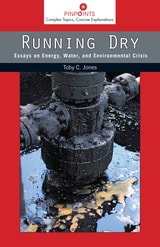
Running Dry
Essays on Energy, Water, and Environmental CrisisJones, Toby Craig
Rutgers University Press, 2015

Rural Development in China
Prospect and RetrospectHsiao-tung Fei
University of Chicago Press, 1989
Returning to Kaixian'gong in 1957 and again in the 1980s, Fei examined the changes that had occurred since his initial research. Three essays that resulted from these follow-up studies are included in this collection, providing a rare summary and analysis of developments in the village between 1936 and 1986. Also included here are four articles based on Fei's 1983-84 research in other areas of Jiangsu province. His explorations of the contrast between the wealth of southern Jiangsu and the long-standing poverty of the northern half of the province address key issues of public policy in China today. Useful to students of rural sociology as well as of Chinese history, politics, economics, and anthropology, this collection will provide an overview not only of developments in the small towns of China but also of Fei's thought.
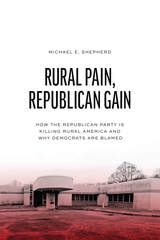
Rural Pain, Republican Gain
How the Republican Party Is Killing Rural America and Why Democrats Are BlamedMichael E. Shepherd
University of Chicago Press, 2026
An eye-opening look at how Republican policies have affected health outcomes in rural communities and why poor, rural white voters are turning to the Republican Party—not despite this harm, but because of it.
Over the last four decades, the health of rural Americans has been in free fall. Just as opioid and gun deaths have ripped apart rural communities, hospitals have closed at alarming rates, leaving millions desperately far from care. At the same time, voters in struggling rural communities have increasingly come to vote for the Republican Party.
In Rural Pain, Republican Gain, Michael E. Shepherd demonstrates that these two trends are closely connected. At both the federal and state levels, the Republican Party has increasingly enacted policies that worsen rural health. Rural voters are not indifferent to this development (quite the contrary), but they misassign blame, in part, because the Democratic Party is more commonly associated with health-related policy initiatives and has ownership of health as an issue area. Republican politicians can reap rewards from their own destructive policies by appealing to the shared grievances of rural people.
Shepherd draws on new, wide-ranging data, including in-depth studies of the opioid epidemic, hospital closures, and COVID-19. In so doing, he quantifies the harm of Republican policymaking and its disproportionate effect on rural communities, recasting how readers understand growing Republican support among less healthy, lower-income rural white Americans.