Results by title
28167 books match the query 'History' and 1206 start with r
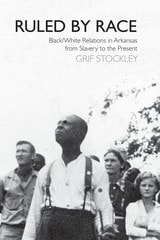
Ruled by Race
Black/White Relations in Arkansas From Slavery to the PresentGrif Stockley
University of Arkansas Press, 2008
Winner of the 2010 Booker Worthen Literary Prize, and the 2009 Ragsdale Award.
From the Civil War to Reconstruction, the Redeemer period, Jim Crow, and the modern civil rights era to the present, Ruled by Race describes the ways that race has been at the center of much of the state’s formation and image since its founding. Grif Stockley uses the work of published and unpublished historians and exhaustive primary source materials along with stories from authors as diverse as Maya Angelou and E. Lynn Harris to bring to life the voices of those who have both studied and lived the racial experience in Arkansas.
Topics range from the well-known Little Rock Central High Crisis of 1957 to lesser-known events such as the Elaine Race Massacres of 1919 and the shocking yet sadly commonplace attitudes found in newspaper reports and speeches. Through the words of the most powerful Arkansans such as racist Arkansas Govenor Jeff Davis (1901–1906) to the least powerful, including an unflinching look at the narratives of former slaves, readers will come away with increased awareness of the ways that race continues to affect where Arkansans live, send their children to school, work, travel, shop, spend leisure time, worship, and choose their friends and life partners.
Rulers and Capital in Historical Perspective
State Formation and Financial Development in India and the United StatesAbhishek Chatterjee
Temple University Press, 2017
Rulers and Capital in Historical Perspective explains why modern banking and credit systems emerged in the nineteenth century only in certain countries that then subsequently industrialized and became developed.
Tracing the contemporaneous cases of India and the United States over time, Abhishek Chatterjee identifies the factors that were crucial to the development and regulation of a modern banking and credit system in the United States during the first third of the nineteenth century. He contrasts this situation with India’s, where the state never formally incorporated a sophisticated private credit system, and thus relegated it to the sphere of the informal economy.
Chatterjee identifies certain features in both societies, often—though not always—associated with colonialism, that tended to restrict the formation of modern institutionalized money and credit markets. Rulers and Capital in Historical Perspective demonstrates thatnotwithstanding the many other differences between the North American colonies (prior to independence), and India, the same facets of their relationships with Great Britain prevented the emergence of a modern banking system in the two respective societies.
Rules and Precepts of the Jesuit Missions of Northwestern New Spain
Charles W. Polzer
University of Arizona Press, 1976
Ruling Culture
Art Police, Tomb Robbers, and the Rise of Cultural Power in ItalyFiona Greenland
University of Chicago Press, 2021
In 2006, the then-president of Italy declared his country to be “the world’s greatest cultural power.” With Ruling Culture, Fiona Greenland traces how Italy came to wield such extensive legal authority, global power, and cultural influence—from the nineteenth century unification of Italy and the passage of novel heritage laws, to current battles with the international art market. Today, Italy’s belief in its cultural superiority is evident through interactions between citizens, material culture, and the state—crystallized in the Art Squad, the highly visible military-police art protection unit. Greenland reveals the contemporary actors in this tale, taking a close look at the Art Squad and state archaeologists on one side and unauthorized excavators, thieves, and smugglers on the other. Drawing on years in Italy interviewing key figures and following leads, Greenland presents a multifaceted story of art crime, cultural diplomacy, and struggles between international powers.
Ruling Oneself Out
A Theory of Collective AbdicationsIvan Ermakoff
Duke University Press, 2008
Ermakoff distinguishes several mechanisms of alignment in troubled and uncertain times and assesses their significance through a fine-grained examination of actors’ beliefs, shifts in perceptions, and subjective states. To this end, he draws on the analytical and methodological resources of perspectives that usually stand apart: primary historical research, formal decision theory, the phenomenology of group processes, quantitative analyses, and the hermeneutics of testimonies. In elaborating this dialogue across disciplinary boundaries, Ruling Oneself Out restores the complexity and indeterminate character of pivotal collective decisions and demonstrates that an in-depth historical exploration can lay bare processes of crucial importance for understanding the formation of political preferences, the paradox of self-deception, and the makeup of historical events as highly consequential.
Ruling Peacefully
Cardinal Ercole Gonzaga and Patrician Reform in Sixteenth-Century ItalyPaul V. Murphy
Catholic University of America Press, 2007
Rum Maniacs
Alcoholic Insanity in the Early American RepublicMatthew Warner Osborn
University of Chicago Press, 2014
In Rum Maniacs, Matthew Warner Osborn reveals how and why pathological drinking became a subject of medical interest, social controversy, and lurid fascination in the early American republic. At the heart of that story is the disease that Poe suffered: delirium tremens. First described in 1813, delirium tremens and its characteristic hallucinations inspired sweeping changes in how the medical profession saw and treated the problems of alcohol abuse. Based on new theories of pathological anatomy, human physiology, and mental illness, the new diagnosis founded the medical conviction and popular belief that habitual drinking could become a psychological and physiological disease. By midcentury, delirium tremens had inspired a wide range of popular theater, poetry, fiction, and illustration. This romantic fascination endured into the twentieth century, most notably in the classic Disney cartoon Dumbo, in which a pink pachyderm marching band haunts a drunken young elephant. Rum Maniacs reveals just how delirium tremens shaped the modern experience of alcohol addiction as a psychic struggle with inner demons.
Rumba Rules
The Politics of Dance Music in Mobutu’s ZaireBob W. White
Duke University Press, 2008
Drawing partly on his experiences as a member of a local dance band in the country’s capital city Kinshasa, White offers extraordinarily vivid accounts of the live music scene, including the relatively recent phenomenon of libanga, which involves shouting the names of wealthy or powerful people during performances in exchange for financial support or protection. With dynamic descriptions of how bands practiced, performed, and splintered, White highlights how the ways that power was sought and understood in Kinshasa’s popular music scene mirrored the charismatic authoritarianism of Mobutu’s rule. In Rumba Rules, Congolese speak candidly about political leadership, social mobility, and what it meant to be a bon chef (good leader) in Mobutu’s Zaire.
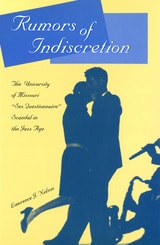
Rumors of Indiscretion
The University of Missouri's "Sex Questionnaire" Scandal in the Jazz AgeLawrence J. Nelson
University of Missouri Press, 2003
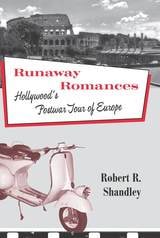
Runaway Romances
Hollywood's Postwar Tour of EuropeRobert R. Shandley
Temple University Press, 2009
In the 1950s and early 1960s, America imagined itself young and in love in Europe. And Hollywood films of the era reflected this romantic allure. From a young and naïve Audrey Hepburn falling in love with Gregory Peck inRoman Holiday to David Lean’s Summertime, featuring Katherine Hepburn’s sexual adventure in Venice, these glossy travelogue romances were shot on location, and established an exciting new genre for Hollywood.
As Robert Shandley shows in Runaway Romances, these films were not only indicative of the ideology of the American-dominated postwar world order, but they also represented a shift in Hollywood production values. Eager to capture new audiences during a period of economic crisis, Hollywood’s European output utilized the widescreen process to enhance cinematic experience. The films—To Catch a Thief, Three Coins in the Fountain, and Funny Face among them—enticed viewers to visit faraway places for romantic escapades. In the process, these runaway romances captured American fantasies for a brief, but intense, period that ended as audiences grew tired of old World splendors, and entered into a new era of sexual awakening.
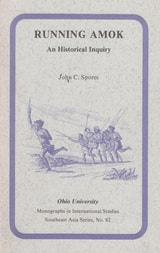
Running Amok
An Historical InquiryJohn C. Spores
Ohio University Press, 1988
Spores presents a basic etiological distinction between reactive-motivated and a spontaneous, unmotivated amok; the one an intentional act capable of establishing or restoring dignity and self-respect; the other a result of organic disturbance. He also explores the social-psychological dynamics of engagement in the two types of solitary amok and suggests possible behavioral chains. Further, his study demonstrates the impact of social forces and processes of the late nineteenth and early twentieth century which significantly altered factors in traditional Malay society important in generating expressions of solitary amok.
Running amok demonstrates the utility of bringing historical data to bear on the examination of specific social phenomena, particularly suggesting that the understanding of some present-day forms of mental disorder or other aberrant or deviant behavior can be facilitated and enriched through such analysis.
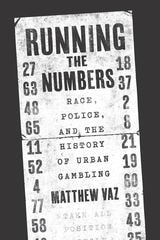
Running the Numbers
Race, Police, and the History of Urban GamblingMatthew Vaz
University of Chicago Press, 2020
How the politics of gambling became snarled in disputes over race, power, and law enforcement.
Every day in the United States, people test their luck in numerous lotteries, from state-run games to massive programs like Powerball and Mega Millions. Yet few are aware that the origins of today’s lotteries can be found in an African American gambling economy that flourished in urban communities in the mid-twentieth century. In Running the Numbers, Matthew Vaz reveals how the politics of gambling became enmeshed in disputes over racial justice and police legitimacy.
As Vaz highlights, early urban gamblers favored low-stakes games built around combinations of winning numbers. When these games became one of the largest economic engines in nonwhite areas like Harlem and Chicago’s south side, police took notice of the illegal business—and took advantage of new opportunities to benefit from graft and other corrupt practices. Eventually, governments found an unusual solution to the problems of illicit gambling and abusive police tactics: coopting the market through legal state-run lotteries, which could offer larger jackpots than any underground game. By tracing this process and the tensions and conflicts that propelled it, Vaz brilliantly calls attention to the fact that, much like education and housing in twentieth-century America, the gambling economy has also been a form of disputed terrain upon which racial power has been expressed, resisted, and reworked.

Running the Numbers
Race, Police, and the History of Urban GamblingMatthew Vaz
University of Chicago Press, 2020
How the politics of gambling became snarled in disputes over race, power, and law enforcement.
Every day in the United States, people test their luck in numerous lotteries, from state-run games to massive programs like Powerball and Mega Millions. Yet few are aware that the origins of today’s lotteries can be found in an African American gambling economy that flourished in urban communities in the mid-twentieth century. In Running the Numbers, Matthew Vaz reveals how the politics of gambling became enmeshed in disputes over racial justice and police legitimacy.
As Vaz highlights, early urban gamblers favored low-stakes games built around combinations of winning numbers. When these games became one of the largest economic engines in nonwhite areas like Harlem and Chicago’s south side, police took notice of the illegal business—and took advantage of new opportunities to benefit from graft and other corrupt practices. Eventually, governments found an unusual solution to the problems of illicit gambling and abusive police tactics: coopting the market through legal state-run lotteries, which could offer larger jackpots than any underground game. By tracing this process and the tensions and conflicts that propelled it, Vaz brilliantly calls attention to the fact that, much like education and housing in twentieth-century America, the gambling economy has also been a form of disputed terrain upon which racial power has been expressed, resisted, and reworked.
Running to the Fire
An American Missionary Comes of Age in Revolutionary EthiopiaTim Bascom
University of Iowa Press, 2015
Running to the Fire focuses on the turbulent year the Bascom family experienced upon traveling into revolutionary Ethiopia. The teenage Bascom finds a paradoxical exhilaration in living so close to constant danger. At boarding school in Addis Ababa, where dorm parents demand morning devotions and forbid dancing, Bascom bonds with other youth due to a shared sense of threat. He falls in love for the first time, but the young couple is soon separated by the politics that affect all their lives. Across the country, missionaries are being held under house arrest while communist cadres seize their hospitals and schools. A friend’s father is imprisoned as a suspected CIA agent; another is killed by raiding Somalis.
Throughout, the teenaged Bascom struggles with his faith and his role within the conflict as a white American Christian missionary’s child. Reflecting back as an adult, he explores the historical, cultural, and religious contexts that led to this conflict, even though in doing so he is forced to ask himself questions that are easier left alone. Why, he wonders, did he find such strange fulfillment in being young and idealistic in the middle of what was essentially a kind of holy war?
Rural America in a Globalizing World
Problems and Prospects for the 2010'sConner Bailey
West Virginia University Press, 2014
This fourth Rural Sociological Society decennial volume provides advanced policy scholarship on rural North America during the 2010’s, closely reflecting upon the increasingly global nature of social, cultural, and economic forces and the impact of neoliberal ideology upon policy, politics, and power in rural areas.
The chapters in this volume represent the expertise of an influential group of scholars in rural sociology and related social sciences. Its five sections address the changing structure of North American agriculture, natural resources and the environment, demographics, diversity, and quality of life in rural communities.
Rural County, Urban Borough
A History of QueensJeffrey A. Kroessler
Rutgers University Press, 2025
Rural County, Urban Borough is a history of place, charting the rapid transformation of the Queens landscape. It identifies what drove the borough’s development, from public infrastructure, architecture, and transportation to technological innovation and urban planning. New York historian Jeffrey A. Kroessler takes us inside the backrooms and boardrooms where local powerbrokers shaped the borough’s future, chronicling how its relationship with the city has evolved. He also shows the steps Queens residents from all backgrounds took to care for their neighborhoods and build their communities. Richly illustrated, this book underscores why Queens is integral to New York City and the wider world and reveals how, in its evolution, we see the whole arc of American urban history.

Rural Cuba
Lowry Nelson
University of Minnesota Press, 1950
Rural Cuba was first published in 1950. Minnesota Archive Editions uses digital technology to make long-unavailable books once again accessible, and are published unaltered from the original University of Minnesota Press editions.
Impoverished people in a rich land—that is the paradox of Cuba described with thorough documentation by Lowry Nelson, passed professor of sociology at the University of Minnesota. Professor Nelson studied rural Cuba's problems for a year during his appointment as rural sociologist for the U.S. Department of State.
With the cooperation of the Cuban government, Professor Nelson directed a series of detailed sociological surveys of representative rural districts. Data were gathered in these surveys on the family habits, agricultural methods, farm tenure, income, educational opportunities, social activities, and level of living of more than 700 rural Cuban families. This material is combined with historical background, census analyses, and on-the-spot observations for a comprehensive study that fills a gap in the available literature on the subject. The volume includes appendixes providing a description of the geography of the survey area and a verbatim sample report of a survey interviewer, together with a glossary of Spanish words, a bibliography, and tables.
In this book rural Cuba's problems are thoroughly discussed, present-day progress toward their solution is reported, and suggestions are offered for future agricultural policies that could help enrich the lives of Cuba's people.
Rural Images
Estate Maps in the Old and New WorldsEdited by David Buisseret
University of Chicago Press, 1996
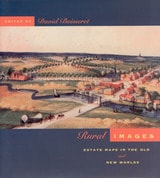
Generously illustrated with reproductions of rare manuscripts, including 8 color plates, these accounts reveal how estate maps performed vital economic and cultural functions for property owners until the end of the nineteenth century. From plans of plantations in Jamaica and South Carolina to a map of Queens College, Cambridge, handsome examples show that estate maps formed an important part of the historical record of property ownership for both individuals and corporations, and helped owners manage their land and appraise its value. Exhibited in public places for pleasure and as symbols of wealth, they often displayed elaborate cartouches and elegant coats-of-arms.
Rural Life
Portraits of the Prairie Town, 1946James P. Giffen
University of Manitoba Press, 2004
Rural Resistance in the Land of Zapata
The Jaramillista Movement and the Myth of the Pax-Priísta, 1940–1962Tanalís Padilla
Duke University Press, 2008
The peasants known in popular memory as Jaramillistas were led by Rubén Jaramillo (1900–1962). An agrarian leader from Morelos who participated in the Mexican Revolution and fought under Zapata, Jaramillo later became an outspoken defender of the rural poor. The Jaramillistas were inspired by the legacy of the Zapatistas, the peasant army that fought for land and community autonomy with particular tenacity during the Revolution. Padilla examines the way that the Jaramillistas used the legacy of Zapatismo but also transformed, expanded, and updated it in dialogue with other national and international political movements.
The Jaramillistas fought persistently through legal channels for access to land, the means to work it, and sustainable prices for their products, but the Mexican government increasingly closed its doors to rural reform. The government ultimately responded with repression, pushing the Jaramillistas into armed struggle, and transforming their calls for local reform into a broader critique of capitalism. With Rural Resistance in the Land of Zapata, Padilla sheds new light on the decision to initiate armed struggle, women’s challenges to patriarchal norms, and the ways that campesinos framed their demands in relation to national and international political developments.
Rural Revolt in Mexico
U.S. Intervention and the Domain of Subaltern PoliticsDaniel Nugent, ed.
Duke University Press, 1998
Through their studies of social movements and popular mobilization in the Mexican countryside, the contributors argue for understanding rural revolts in terms of the specific historical contexts of particular regions and peoples, as well as the broader context of unequal cultural, political, and economic relations between Mexico and the United States. Exploring the connections between external and internal factors in social movements, these essays reveal the wide range of organized efforts through which peasants and Indians have struggled to shape their own destiny while confronted by the influence of U.S. capital and military might. Originally published as a limited edition in 1988 by the Center for U. S.–Mexican Studies, this volume presents a pioneering effort by Latin Americanist scholars to sympathetically embrace and enrich work begun in Subaltern Studies between 1982 and 1987 by projecting it onto a different region of historical experience. This revised and expanded edition includes a new introduction by Daniel Nugent and an extensive essay by Adolfo Gilly on the recent Chiapas uprising.
Rural Society and Cotton in Colonial Zaire
Osumaka Likaka
University of Wisconsin Press, 1997
As local plots of food crops grown by individual households gave way to commercial fields of cotton, a whole host of social, economic, and environmental changes followed. Likaka reveals how food shortages and competition for labor were endemic, forests were cleared, social stratification increased, married women lost their traditional control of agricultural production, and communities became impoverished while local chiefs enlarged their power and prosperity.
Likaka documents how the cotton regime promoted its cause through agricultural exhibits, cotton festivals, films, and plays, as well as by raising producer prices and decreasing tax rates. He also shows how the peasant laborers in turn resisted regimented agricultural production by migrating, fleeing the farms for the bush, or sabotaging plantings by surreptitiously boiling cotton seeds. Small farmers who had received appallingly low prices from the cotton companies resisted by stealing back their cotton by night from the warehouses, to resell it in the morning. Likaka draws on interviews with more than fifty informants in Zaire and Belgium and reviews an impressive array of archival materials, from court records to comic books. In uncovering the tumultuous economic and social consequences of the cotton regime and by emphasizing its effects on social institutions, Likaka enriches historical understanding of African agriculture and development.
Rural Unrest during the First Russian Revolution
Kursk Province, 1905-1906Burton Richard Miller
Central European University Press, 2013
Rush's Lancers
The Sixth Pennsylvania Cavalry in the Civil WarEric J. Wittenberg
Westholme Publishing, 2007
The Sixth Pennsylvania Cavalry, also known as Rush’s Lancers, was a completely volunteer unit and one of the finest regiments to serve in the Civil War. Tracing their history from George Washington’s personal bodyguard during the Revolutionary War, many of the men of the Sixth Pennsylvania were the cream of Philadelphia society, including Richard H. Rush, grandson of Dr. Benjamin Rush, Maj. Robert Morris, Jr., great-grandson of the financier of the Revolutionary War, Capt. Charles Cadwalader, whose great-grandfather was a general under George Washington, Frank H. Furness, architect and Medal of Honor recipient, and George G. Meade, Jr. But it was their actions in battle, not their illustrious family histories, that distinguished Rush’s Lancers. The Sixth Pennsylvania Cavalry earned a reputation for being a highly trained and reliable unit, despite being armed initially with antiquated weapons, leaving their mark on key battlefields, including Antietam, Fredericksburg, Hanover Court House, Chancellorsville, Gettysburg, Brandy Station—where they conducted one of the most famous charges of the war—and Appomattox.
Drawing upon letters, diaries, memoirs, service and pension files, contemporary newspaper coverage, official records, and other primary sources, Rush’s Lancers: The Sixth Pennsylvania Cavalry in the Civil War by distinguished military historian Eric J. Wittenberg is an engrossing account of these young men from both Philadelphia’s social elite and the city’s working classes who, despite not being professional soldiers, answered the Nation’s call to war.
Russell Kirk and the Age of Ideology
W. Wesley McDonald
University of Missouri Press, 2004

Russia Under Yeltsin and Putin
Neo-Liberal AutocracyBoris Kagarlitsky
Pluto Press, 2002
Kagarlitsky shows how to understand these changes, and how to characterise the complex process of reform, revolution and counter revolution.
Looking in detail at the nature of Russian society and politics since 1990, Kagarlitsky offers an introductory political analysis of the major political and economic developments that have taken place under President Yeltsin, and the legacy he bequeathed so unexpectedly to his successor Putin. He focuses on the role of the media in post-Soviet Russia, corporate structures and their influence on social conflict, the formation of the oligarchy and the role of the left in modern Russia.
Russia Under the Last Tsar
Theofanis George Stavrou, Editor
University of Minnesota Press, 1969
Russia Under the Last Tsar was first published in 1969. Minnesota Archive Editions uses digital technology to make long-unavailable books once again accessible, and are published unaltered from the original University of Minnesota Press editions.
The reign of Russia's last tsar, Nicholas II, from 1894 to 1917, constitutes a period of continuing controversy among historians. Interesting in its own right, it is also a time of great importance to an understanding of the cataclysmic events which followed in Russian history.
In this volume eight scholars contribute interpretive essays on some of the most significant forces and issues in Imperial Russia during the two decades before the revolutions. Professor Stavrou writes an introductory essay. The other essays and authors are: "on Interpreting the Fate of Imperial Russia" by Arthur Mendel, University of Michigan; "Russian Conservative Thought before the Revolution" by Robert F. Brynes, Indiana University; "Russian Radical Thought, 1894–1917" by Donald W. Treadgold, University of Washington; "Russian Constitutional Developments" by Thomas Riha, University of Colorado; "Problems of Industrialization in Russia" by Theodore Von Laue, Washington University; "Politics, Universities, and Science" by Alexander Vucinich, University of Illinois; "The Cultural Renaissance" by Gleb Struve, formerly of the University of California, Berkeley; and "Some Imperatives of Russian Foreign Policy" by Roderick E. McGrew, Temple University. The book is illustrated with photographs of some of the principal figures in the history of the period, and there are a bibliography and index.
As Professor Stavrou points out in his preface, the contributors did not consult with one another before preparing their respective essays, and the various approaches are refreshingly different in their assessments of the period. The book as a whole provides a panoramic view of the fascinating Russia of Nicholas and Alexandra. It will be interesting to general readers and especially useful as a textbook for courses in Russian or modern European history.
Russia and Iran, 1780-1828
Muriel Atkin
University of Minnesota Press, 1980
Russia and Iran, 1780–1828 was first published in 1980. Minnesota Archive Editions uses digital technology to make long-unavailable books once again accessible, and are published unaltered from the original University of Minnesota Press editions.
Modern Russo-Iranian relations date from the late eighteenth century, when after several centuries of commercial and diplomatic contact, the two nations entered a period of extended warfare for possession of the Caucasian borderlands, disputed territory that eventually fell to Russia. In her history of that struggle, Muriel Atkin reasseses the motives of major figures on both sides and views the Iranians with more sympathy than Western and Russian historians have usually accorded them. Russia embarked on her course in the Caucasus for reasons connected with defense or trade, and with a longterm imperial goal based on uncritical acceptance of prevailing European doctrines of empire. The new dynasty in Iran, on the other hand, had to fend off Russian attack and secure the borderlands in order to justify its basic claim to power. In the end, the wars brought major disruption to the already unstable borderlands, and left Iran with a discredited government and a controversy over reforms and relations with the West that would continue to cause turmoil in subsequent generations.
Russia and the United States
Nikolai V. Sivachev and Nikolai N. Yakovlev
University of Chicago Press, 1979
Sivachev and Yakolev trace the course of the U.S.-Russian relations from the years preceding the American Revolution to the 1970s, when human rights issues began to cause friction. Those relations, the authors believe, were characterized by America's repeated failure to take advantage of opportunities to improve them. Recognizing the controversial nature of the book, Sivachev said in an interview with the New York Times: "We did not set out to please the American reader, nor did the University of Chicago Press ask us to. On the contrary, they recommended that we should feel free to present our own views."
"Scholars and students of American foreign policy . . . are likely to be alternatively interested, intrigued, angered, and sometimes illuminated by some of the interpretations found in this work."—Perspective
"An American reader should not prejudge this book as simply another dreary contribution to the rhetoric of Soviet propaganda. It is more than this. The book is an expression of a view of the world that is truly and strikingly different from an American one and it is important to understand that it is a theory of reality that is shared by most, if not all, Soviet intellectuals who study America and its foreign policy. It is not enough simply to establish the inaccuracies and misrepresentations contained in such a view. One must go further and understand that such a view of reality is sincerely deeply held and that it is a part of a larger belief system that gives the authors' scholarly work coherence and meaning."—Boston Sunday Globe
Russia on the Danube
Empire, Elites, and Reform in Moldavia and Wallachia, 1812–1834Victor Taki
Central European University Press, 2021
One of the goals of Russia’s Eastern policy was to turn Moldavia and Wallachia, the two Romanian principalities north of the Danube, from Ottoman vassals into a controllable buffer zone and a springboard for future military operations against Constantinople. Russia on the Danube describes the divergent interests and uneasy cooperation between the Russian officials and the Moldavian and Wallachian nobility in a key period between 1812 and 1834. Victor Taki’s meticulous examination of the plans and memoranda composed by Russian administrators and the Romanian elite underlines the crucial consequences of this encounter. The Moldavian and Wallachian nobility used the Russian-Ottoman rivalry in order to preserve and expand their traditional autonomy. The comprehensive institutional reforms born out of their interaction with the tsar’s officials consolidated territorial statehood on the lower Danube, providing the building blocks of a nation state.
The main conclusion of the book is that although Russian policy was driven by self-interest, and despite the Russophobia among a great part of the Romanian intellectuals, this turbulent period significantly contributed to the emergence, several decades later, of modern Romania.

Russia's American Colony
S. Frederick Starr, ed.
Duke University Press, 1986
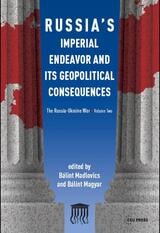
Russia's Imperial Endeavor and Its Geopolitical Consequences
The Russia-Ukraine War, Volume TwoBálint Madlovics
Central European University Press, 2024
Aside from the near-complete devastation of a sovereign state and reversal of the global balance of power, the Russian invasion of Ukraine in 2022 is leading to a radical transformation in the Eastern European and Eurasian regions – including Russia itself.
The 13 chapters in this volume examine the main geopolitical consequences of the resurgent imperialist aspirations of the Russian Federation. They examine the ideological tools of history falsification as an integral part of hybrid warfare. Turning to the economy, the book discusses how the war and economic sanctions imposed on Russia are redrawing the geopolitical map and how economic relations would change following a regime transformation. The book discusses the reactions of members of the international community to the invasion, whether threatened or neutral parties or allies. The collection therefore offers a comprehensive picture of the main consequences of the resurgent imperialist aspirations of the Russian Federation. Equipped with the conceptual tools of the analysis with a focus on the patronal features of the political-economic system, the book considers the aftermath of the war. This collection complements the book entitled Ukraine. Patronal Democracy and the Russian Invasion.
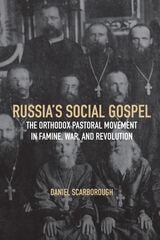
Russia's Social Gospel
The Orthodox Pastoral Movement in Famine, War, and RevolutionDaniel Scarborough
University of Wisconsin Press, 2023
This volume draws upon extensive archival research to examine the effects of the pastoral movement on Russian society and the Orthodox Church. Scarborough argues that the social work of parish clergymen shifted the focus of Orthodox practice in Russia toward cooperative social activism as a devotional activity. He furthers our understanding of Russian Orthodoxy by illuminating the difficult position of parish priests, who were charged with both spiritual and secular responsibilities but were supported by neither church nor state. His nuanced look at the pastorate shows how social and historical traumas shifted perceptions of what being religious meant, in turn affecting how the Orthodox Church organized itself, and contributed to Russia’s modernization.
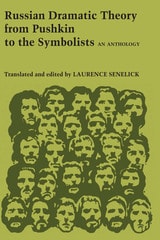
Russian Dramatic Theory from Pushkin to the Symbolists
An AnthologyTranslated and edited by Laurence P. Senelick
University of Texas Press, 1981
Although younger than most European theatrical traditions, the Russian professional theater has generated an exciting body of criticism and theory which until recently has remained unknown or nearly inaccessible in the West. This anthology presents a selection of important Russian writing on the aesthetics of drama and the theater from 1828 to 1914.
The focus of these essays, most published here for the first time in English, is on the so-called Crisis in the Theater of 1904 to 1914, a lively debate between the symbolists and the naturalists that evoked brilliant polemic writing from Meyerhold, Bely, Bryusov, and others. Along with Chekhov's amusing critique of Sarah Bernhardt ("monstrously facile!") and Ivanov's abstruse analysis of the essence of tragedy, the essays form a running commentary on the development of the Russian theater: Pushkin on his predecessors, Gogol on his own work, Belinsky on Gogol, Sleptsov on Ostrovsky and Leskov, Bely on Chekhov's The Cherry Orchard ("enervated people, trying to forget the terror of life"), the symbolists on one another.
Each selection is printed in its entirety, with extensive notes, and a lengthy introduction places all the pieces within their historical and cultural contexts to comprise a brief history of Russian dramatic theory before the revolution. This volume is essential reading for all who wish to extend their knowledge of the Russian contribution to theatrical history, theory, and criticism.
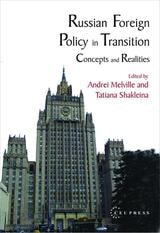
Russian Foreign Policy in Transition
Concepts and RealitiesAndrew Melville
Central European University Press, 2005
Russian Orthodoxy under the Old Regime
Robert L. Nichols and Theofanis George Stavrou, Editors
University of Minnesota Press, 1978
Russian Orthodoxy under the Old Regime was first published in 1978. Minnesota Archive Editions uses digital technology to make long-unavailable books once again accessible, and are published unaltered from the original University of Minnesota Press editions.
In this book, which is especially suitable for course use, eleven scholars examine one of the most important institutions of imperial Russia, the Orthodox church in the two centuries before the Russian revolution. The material is arranged in two sections, the first devoted to Orthodoxy's role in Russian social and cultural life and the second dealing with the church's relationship to the tsarist regime.
Russian Refuge
Religion, Migration, and Settlement on the North American Pacific RimSusan Wiley Hardwick
University of Chicago Press, 1993
Russian Refuge is a comprehensive account of the Russian immigrant experience in California, Oregon, Washington, Alaska, and British Columbia since the first settlements over two hundred years ago. Susan Hardwick focuses on six little-studied Christian groups—Baptists, Pentecostals, Molokans, Doukhobors, Old Believers, and Orthodox believers—to study the role of religion in their decisions to emigrate and in their adjustment to American culture.
Hardwick deftly combines ethnography and cultural geography, presenting narratives and other data collected in over 260 personal interviews with recent immigrants and their family members still in Russia. The result is an illuminating blend of geographic analysis with vivid portrayals of the individual experience of persecution, migration, and adjustment.
Russian Refuge will interest cultural geographers, historians, demographers, immigration specialists, and anyone concerned with this virtually untold chapter in the story of North American ethnic diversity.
Russian Religious Thought
Edited by Judith Deutsch Kornblatt and Richard F. Gustafson
University of Wisconsin Press, 1996
As Russia entered the modern age in the nineteenth century, many Russian intellectuals combined the study of European philosophy with a return to their own traditions, culminating in the novels of Tolstoy and Dostoevsky and in the religious philosophy of their younger contemporary, Vladimir Soloviev. This book explores central issues of modern Russian religious thought by focusing on the work of Soloviev and three religious philosophers who further developed his ideas in the early twentieth century: P. A. Florensky, Sergei Bulgakov, and S. L. Frank. The essays place these thinkers in the contexts of both Western philosophy and Eastern Orthodoxy, presenting a substantially new perspective on Russian religious thought.
The work of these four philosophers, this volume demonstrates, influenced virtually all aspects of twentieth-century Russian culture, and indeed, many aspects of Soviet culture as well, but also represents a rich philosophical tradition devoted to issues of divinity, community, and humanity that transcend national boundaries and historical eras.
Included in Russian Religious Thought is an introduction, brief biographical information on Soloviev, Florensky, Bulgakov, and Frank, and an Afterword by scholar James Scanlan, who elaborates on the volume’s aim to provide a thoughtful corrective, both to unexamined assumptions of past scholarship and to nationalist readings currently popular in post-Soviet Russia.
"Russian religious philosophy, banned under the Soviets, has been marginalized in the Western academy as well. This interdisciplinary volume helps explain why this body of thought has remained for so long at the center of Russian culture."—Caryl Emerson, Princeton University
Russian Style
Performing Gender, Power, and PutinismJulie A. Cassiday
University of Wisconsin Press, 2023
Russian-American Dialogue on the History of U.S. Political Parties
Edited by Joel H. Silbey
University of Missouri Press, 2000
Russian-American Dialogue on the History of U.S. Political Parties is the fourth volume in the Russian-American Dialogues series—a series that brings together scholars in the former Soviet Union and the United States who share an interest in the study of America's heritage and its importance to contemporary Russia.
In this valuable work, Russian scholars such as N. V. Sivachev, Alexander S. Manykin, and Vladimir V. Sogrin examine the history of American political parties and the role they played across two centuries. The Russians draw their own conclusions about the durability of the two-party system, giving careful consideration to historical crises—the secessionist movement and the Civil War, the reform era of the Populists and Progressives at the turn of the twentieth century, the Great Depression and the New Deal—in which the two-party structure was tested. Russian perspectives are also applied in analyzing the evolution of particular parties, from the rise and fall of the nineteenth-century Whigs to the shifting balance between twentieth-century Democrats and Republicans. The dialogue is then developed through commentaries by American historians such as Allan G. Bogue and Theodore J. Lowi and through counter-responses, often strongly expressed, by the Russian authors.
This lively exchange of ideas helps advance an understanding of key aspects of American party history and offers thought-provoking discussions of comparative international studies and historiography. Because the book provides unique perspectives on the American partisan experience by non-American specialists, it will be welcomed by all historians, as well as by anyone with an interest in the American-Russian connection.
Russian-Ottoman Borderlands
The Eastern Question ReconsideredEdited by Lucien J. Frary and Mara Kozelsky
University of Wisconsin Press, 2014
The contributors address ethnicity, religion, popular attitudes, violence, dislocation and mass migration, economic rivalry, and great-power diplomacy. Through a variety of fresh approaches, they examine the consequences of the Eastern Question in the lives of those peoples it most affected, the millions living in the Russian and Ottoman Empires and the borderlands in between.

Russians in Alaska
1732-1867Lydia Black
University of Alaska Press, 2004
Black's work challenges the standard perspective on the Russian period in Alaska as a time of unbridled exploitation of Native inhabitants and natural resources. Without glossing over the harsher aspects of the period, Black acknowledges the complexity of relations between Russians and Native peoples.
She chronicles the lives of ordinary men and women, the merchants and naval officers, laborers and clergy, who established Russian outposts in Alaska. These early colonists carried with them the Orthodox faith and the Russian language; their legacy endures in architecture and place names from Baranof Island to the Pribilofs.
This deluxe volume features fold-out maps and color illustrations of rare paintings and sketches from Russian, American, Japanese, and European sources, many have never before been published. An invaluable source for historians and anthropologists, this accessible volume brings to life a dynamic period in Russian and Alaskan history. A tribute to Black's life as a scholar and educator, Russians in Alaska will become a classic in the field.

Russia’s Black Genius
A Sourcebook on the African Heritage of Alexander PushkinEdited by Emily Wang and Korey Garibaldi
Amherst College Press, 2027
Russia’s Black Genius: A Sourcebook on the African Heritage of Alexander Pushkin brings together primary sources related to the racialization of Russian poet Alexander Pushkin and his Afro-Russian great-grandfather, the military engineer and general Abram Petrovich Gannibal. While Pushkin is a canonical figure and renowned to this day as Russia’s national poet, his African heritage is often overlooked or poorly understood; meanwhile Gannibal, despite his compelling life story, has become a relatively obscure figure outside of Russia. Yet over the course of the nineteenth and twentieth centuries, it was common to find discussions of Pushkin’s Black and multiracial ancestry in books and periodicals on both sides of the Atlantic. Building on the work of a small but influential cohort of scholars and intellectuals who have illuminated the racial dimensions of Pushkin’s legacy, this volume makes primary and source materials available, often for the first time, to readers who are not fluent in the Russian language. Ranging from US criticism and English translations of Russian, German, and French texts to numerous accounts of Pushkin’s life and works penned by Black Americans, the texts in this sourcebook expand and complicate the historical reception of Pushkin in Europe and the United States. Through translation and interdisciplinary dialogue, Russia’s Black Genius brings one of Russia’s—and the world’s— foremost poets into conversation with a broader swath of global readers.
Russia’s War on Ukraine and the Crisis of World Order
A Global ReaderDennis Dierks
Central European University Press, 2026
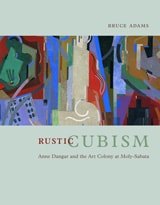
Rustic Cubism
Anne Dangar and the Art Colony at Moly-SabataBruce Adams
University of Chicago Press, 2004
In part a gripping biography of this Australian expatriate, Rustic Cubism chronicles Dangar's personal battles and the tumult of the World War II era during her tempestuous tenure at Moly-Sabata. Dangar dedicated herself to the colony's aims by working in the region's village potteries, combining their vernacular elements with Gleizes' design methods to arrive at a type of rustic Cubism. Her work there would ultimately be rewarded; her pieces can today be found in the Musée des Arts Décoratifs in Paris, the Musée d'Art Moderne de la Ville de Paris, the Museo Internazionale delle Ceramiche in Faenza, the National Gallery of Australia, Canberra, and many other museums.
Rustic Cubism places Dangar at the heart of Moly-Sabata's alternative art movement—one that, in its nostalgic present, attempted to construct a culture based on the distant past. Generously illustrated with photographs of the art and social milieu of the period, this captivating and original narrative makes a considerable contribution to our understanding of French modernism and early twentieth-century cultural politics as well as of the life of a most talented and intriguing female artist.
Rus–Ukraine–Russia
Scenes from the Cultural History of Russian ReligiosityMartin C. Putna
Karolinum Press, 2018
Examining key points in Russian cultural and spiritual history, Rus–Ukraine–Russia is essential reading for those wishing to understand the current state of Russia and Ukraine—the so-called heir to an “alternative Russia.” Putna uses literary and artistic works to offer a rich analysis of Russia as a cultural and religious phenomenon: tracing its development from the arrival of the Greeks in prehistoric Crimea to its invasion by “little green men” in 2014; explaining the cultural importance in Russ of the Vikings as well as Pussy Riot; exploring central Russian figures from St. Vladimir the Great to Vladimir Putin.
Unique in its postcolonial perspective, this is not merely a history of Russia or of Russian religion. This book presents Russia as a complex mesh of national, religious, and cultural (especially countercultural) traditions—with strong German, Mongol, Jewish, Catholic, Polish, and Lithuanian influences—a force responsible for creating what we identify as Eastern Europe.
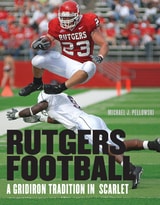
Rutgers Football
A Gridiron Tradition in ScarletPellowski, Michael J
Rutgers University Press, 2007
Rutgers Football: A Gridiron Tradition in Scarlet is a richly illustrated history of one of the most storied programs in all of college football. From the first intercollegiate contest against Princeton in 1869, which started college football as we know it, through the years that Paul Robeson suited up for the team, the famous undefeated season of 1976, and right up to the Schiano era, former Scarlet Knight Michael Pellowski takes you on a fascinating journey that chronicles the highlights of the first 137 years of Rutgers football. He makes special mention of the Scarlet Knights who have gone on to successful careers in the NFL-Brian Leonard, Mike McMahon, L.J. Smith, Gary Brackett, Ray Lucas, Deron Cherry, among others-and includes a complete listing of letter winners.
Now, with the Empire State Building being lit red in the team's honor, and fans believing that a national championship is within reach, Rutgers Football: A Gridiron Tradition in Scarlet provides the indispensable backstory for this team as it "chops" its way to future greatness.
Rutgers Meets Japan
A Trans-Pacific Network of the Late Nineteenth CenturyHaruko Wakabayashi
Rutgers University Press, 2026
Griffis and Kusakabe were only a small piece of a vast transnational network of leading modernizers of Japan in the 1860s and 70s. The Japanese students in New Brunswick were young and innovative men of samurai and aristocratic lineage, who were sent by reform-minded leaders of Japan, which was undergoing a dramatic transformation. They came to New Brunswick seeking Western knowledge that was much needed for the modernization of a newly forming nation. New Brunswick became the hub of a network of Japanese nationals that extended to the major cities of New York, Philadelphia, and Boston, and from there to the smaller towns of New England. Once in New Brunswick, these Japanese students were embraced by Protestant ministers, educators, and missionaries—both men and women—whose network encompassed Rutgers College and the neighboring New Brunswick Theological Seminary, and which stretched to Dutch Reformed parishes throughout the Eastern seaboard, and westward as far as the Dutch enclave of Holland, Michigan. Meanwhile, the American teachers and missionaries who left for Japan became part of a network of reformist leaders and Japanese returnees that extended to schools, colleges, and missions in Japan, and formed the foundations of Japan’s modern educational system. Through contributions from scholars and archivists in the U.S., Canada, and Japan, Rutgers Meets Japan aims to reconstruct the early Rutgers-Japan connections and examine the role and impact of this transnational network on Japan and the U.S. in the late nineteenth century.
Rutgers Then and Now
Two Centuries of Campus Development: A Historic and Photographic OdysseyJames W. Hughes
Rutgers University Press, 2025
Rutgers, Then and Now tells this story, proceeding through ten sequential development phases of College Avenue and Piscataway campus expansions—each with its own buildings and physical layouts—that took place over the course of 250 years. It delivers stunning photographic and historic documentation of the growth of the university, showing “what it was and appeared originally” versus “what it is and looks like today.” Among other in-depth analyses, the book compares the diminutive geographic scale of today’s historical College Avenue Campus—once the entirety of Rutgers—to the much larger-sized (in acreage) Busch Campus. Replete with more than 500 images, the book also considers the Rutgers campuses that might have been, examining plans that were changed or abandoned. Shedding light on the sacrifices and gifts that transformed a small college into a vital hub for research and beloved home for students, it explores how Rutgers grew to become a world-class university.
Rutgers since 1945
A History of the State University of New JerseyPaul G. E. Clemens with an essay by Carla Yanni
Rutgers University Press, 2015