Results by title
399 books match the query 'American fiction' and 22 start with s

Sacramental Shopping
Louisa May Alcott, Edith Wharton, and the Spirit of Modern ConsumerismSarah Way Sherman
University of New Hampshire Press, 2013
Written a generation apart and rarely treated together by scholars, Little Women (1868) and The House of Mirth (1905) share a deep concern with materialism, moral development, and self-construction. The heroines in both grapple with conspicuous consumption, an aspect of modernity that challenges older beliefs about ethical behavior and core identity.
Placing both novels at the historical intersection of modern consumer culture and older religious discourse on materialism and identity, Sarah Way Sherman analyzes how Alcott and Wharton rework traditional Protestant discourse to interpret their heroines' struggle with modern consumerism. Her conclusion reveals how Little Women's optimism, still buoyed by otherworldly justice, providential interventions, and the notion of essential identity, ultimately gives way to the much darker vision of modern materialistic culture in The House of Mirth.
Satire in Narrative
Petronius, Swift, Gibbon, Melville, & PynchonBy Frank Palmeri
University of Texas Press, 1990
Virtually all theories of satire define it as a criticism of contemporary society. Some argue that satire criticizes the present in favor of a standard of values that has been superseded, and thus that satire is generally backward-looking and conservative. While this is often true of poetic satire, in this study Frank Palmeri asserts that narrative satire performs a different function, that it parodies both the established view of the world and that of its opponents, offering its own distinctive critical perspective.
This theory of satire builds on the idea of dialogical parody in the work of Russian theorist Mikhail Bakhtin, while revising Bakhtin's estimate of carnival. In Palmeri's view, the carnivalesque offers only an inverted mirror image of authoritative discourse, while parodic narrative satire suggests an alternative to both the official world and its inverted opposite.
Palmeri applies this theory of narrative satire to five works of world literature, each of which has generated sharp controversy about the genre to which it rightly belongs: Petronius' Satyricon, Jonathan Swift's A Tale of a Tub, Edward Gibbon's Decline and Fall of the Roman Empire, Herman Melville's The Confidence-Man, and Thomas Pynchon's The Crying of Lot 49. He analyzes the features that link these works and shows how the changing pairs of alternatives that are parodied in these satires reflect changes in the terms of social and cultural oppositions.
Satire in Narrative will appeal to comparatists, specialists in eighteenth-century and American literature, and others interested in theories of genre and the relations between literary forms and social history.
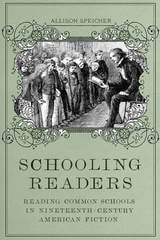
Schooling Readers
Reading Common Schools in Nineteenth-Century American FictionAllison Speicher
University of Alabama Press, 2016
Despite hailing from different regions with diverse histories and cultures, authors in all parts of the US produced remarkably similar school fictions. These stories, rather than offering idealized depictions of earnest schoolchildren in humble, rough-hewn schoolhouses, expose common schools as sites of both community bonding and social strife. These stories, Speicher shows, reflect surprisingly contemporary problems like school violence and apprehensions about assessments.
In four insightful sections, Speicher illuminates the plotlines that define the common school narrative: school exhibitions, in which common schools were opened to the public for a day of student performances; romances between teachers and students; violence against teachers; and teachers adopting their students. She offers rich examples from one hundred and thirty school stories by well-known authors such as Mark Twain, Bret Harte, Catharine Maria Sedgwick, and Edward Eggleston, as well as by educational reform pioneers such as C. W. Bardeen and long-forgotten contributors to nineteenth-century magazines.
By reading these fictions alongside the discourse of reformers like Horace Mann, Speicher illustrates the utility of fiction for uncovering the diverse reactions nineteenth-century Americans had to the expansion of public education as well as the role fiction played in shaping these responses. Throughout she maintains a dual focus, drawing on both literary and educational history, thereby offering much of value to those interested in either field.
Screening Stephen King
Adaptation and the Horror Genre in Film and TelevisionBy Simon Brown
University of Texas Press, 2018
Since the 1970s, the name Stephen King has been synonymous with horror. His vast number of books has spawned a similar number of feature films and TV shows, and together they offer a rich opportunity to consider how one writer’s work has been adapted over a long period within a single genre and across a variety of media—and what that can tell us about King, about adaptation, and about film and TV horror. Starting from the premise that King has transcended ideas of authorship to become his own literary, cinematic, and televisual brand, Screening Stephen King explores the impact and legacy of over forty years of King film and television adaptations.
Simon Brown first examines the reasons for King’s literary success and then, starting with Brian De Palma’s Carrie, explores how King’s themes and style have been adapted for the big and small screens. He looks at mainstream multiplex horror adaptations from Cujo to Cell, low-budget DVD horror films such as The Mangler and Children of the Corn franchises, non-horror films, including Stand by Me and The Shawshank Redemption, and TV works from Salem’s Lot to Under the Dome. Through this discussion, Brown identifies what a Stephen King film or series is or has been, how these works have influenced film and TV horror, and what these influences reveal about the shifting preoccupations and industrial contexts of the post-1960s horror genre in film and TV.

Scribbling Women
Short Stories by 19th-Century American WomenShowalter, Elaine
Rutgers University Press, 1997
Showalter, a highly regarded critic known for her provocative and strongly held opinions, has here established a compelling new Who's Who of women's thought. Certain to spark controversy, the omission of such feminist perennials as Gloria Steinem, Susan B. Anthony, Robin Morgan, Eleanor Roosevelt, and Virginia Woolf will surprise and shock the conventional wisdom.

Seven American Women Writers of the Twentieth Century
An IntroductionMaureen Howard, Editor
University of Minnesota Press, 1977
Seven American Women Writers of the Twentieth Century was first published in 1977. Minnesota Archive Editions uses digital technology to make long-unavailable books once again accessible, and are published unaltered from the original University of Minnesota Press editions.
Sissy!
The Effeminate Paradox in Postwar US Literature and CultureHarry Thomas Jr.
University of Alabama Press, 2017
Sissy!: The Effeminate Paradox in Postwar US Literature and Culture is a fascinating work of cultural criticism that focuses on the ways men and boys deemed to be feminine have been—and continue to be—condemned for their personalities and behavior. Critic Harry Thomas Jr. does not dismiss this approach, but rather identifies it as merely one side of a coin. On the other side, he asserts, the opposite exists: an American artistic tradition that celebrates and affirms effeminate masculinity.
The author argues that effeminate men and boys are generally portrayed using the grotesque, an artistic mode concerned with the depictions of hybrid bodies. Thomas argues that the often grotesque imagery used to depict effeminate men evokes a complicated array of emotions, a mix of revulsion and fascination that cannot be completely separated from one another.
Thomas looks to the sissies in the 1940s novels of Truman Capote and Carson McCullers; the truth-telling flaming princesses of James Baldwin’s Giovanni’s Room; the superstardom of pop culture icon Liberace; the prophetic queens of Tony Kushner’s Angels in America; and many others to demonstrate how effeminate men have often been adored because they are seen as the promise of a different world, one free from the bounds of heteronormativity.
Sissy! offers an unprecedented and counterintuitive overview of cultural and artistic attitudes toward male effeminacy in post–World War II America and provides a unique and contemporary reinterpretation of the “sissy” figure in modern art and literature.
Sleep Fictions
Rest and Its Deprivations in Progressive-Era LiteratureHannah L. Huber
University of Illinois Press, 2023
A turn-of-the-century influx of new technologies and the enormous impact of the electric light transformed not only individual sleeping habits but the ways American culture conceived and valued sleep. Hannah L. Huber analyzes the works of Henry James, Edith Wharton, Charles Chesnutt, and Charlotte Perkins Gilman to examine the literary response to the period’s obsession with wakefulness. As these writers blurred the separation of public and private space, their characters faced exhaustion in a modern world that permeated every moment of their lives with artificial light, traffic noise, and the social pressure to remain active at all hours. The implacable cultural clock and constant stress over physical limitations had an even greater impact on marginalized figures. Huber pays particular attention to how these writers rebutted Americans’ confidence in the body’s ability to conquer sleep with vivid portraits of the devastating consequences of sleep disruption and deprivation.
The author also provides a website and text visualization tool that offers readers an interdisciplinary, deconstructed analysis of the book’s primary texts. The website can be found at: https://sleepfictions.org/sleep/scalar/index
Slumming in New York
From the Waterfront to Mythic HarlemRobert M. Dowling
University of Illinois Press, 2006
Using the methods of ethnicity theory, black studies, regional studies, literary studies, and popular culture, Robert M. Dowling reveals the way in which "outsider" authors helped alleviate New York's mounting social anxieties by popularizing "insider" voices from neighborhoods as distinctive as the East Side waterfront, the Bowery, the Tenderloin's "black Bohemia," the Jewish Lower East Side, and mythic Harlem.
Somebody Telling Somebody Else
A Rhetorical Poetics of NarrativeJames Phelan
The Ohio State University Press, 2017
In doing so, he offers new readings of a wide range of narratives from Jane Austen’s Pride and Prejudice to Joan Didion’s The Year of Magical Thinking, from Joseph Conrad’s Lord Jim to George V. Higgins’s The Friends of Eddie Coyle, from Franz Kafka’s “Das Urteil” to Toni Morrison’s “Recitatif,” from David Small’s Stitches to Jhumpa Lahiri’s “Third and Final Continent,” from John O’Hara’s “Appearances” to Ian McEwan’s Enduring Love. Phelan contends that the standard view of narrative as a synthesis of story and discourse is inadequate to handle the complexities of narrative communication, and he demonstrates the greater explanatory power of his rhetorical view. Furthermore, Phelan gives new prominence to the presence and activity of the “somebody else,” as he shows that an audience’s unfolding responses to a narrative often influence its very construction.
Sounding Real
Musicality and American Fiction at the Turn of the Twentieth CenturyCristina L. Ruotolo
University of Alabama Press, 2013

South by Southwest
24 Stories from Modern TexasEdited by Don Graham
University of Texas Press, 1986
These Texas stories are among the best produced by the state's writers in the mid-twentieth century. Selected above all for their artistic excellence and their narrative mastery, they also present a vital picture of the Southwest in microcosm, as revealed in its largest state.
Texas and Texas writing moved from a Southern orientation in the 1940s—reflected here in works by William Goyen, William Humphrey, and others—to the strong Southwestern flavor of stories by such authors as Larry McMurtry and A. C. Greene to, finally, urban or Sunbelt Texas, mirrored in the edgy, sometimes experimental prose of Doug Crowell, William Harrison, and Peter LaSalle.
Here are stories by such celebrated authors as Paul Horgan and William A. Owens, as well as startling, in some cases previously unpublished work by writers like Harryette Mullen, Naomi Shihab Nye, Pat Ellis Taylor, and Thomas Zigal. A few stories may already be favorites—Larry McMurtry's "There Will Be Peace in Korea," Amado Muro's "Cecilia Rosas." Many others have become classics, such as Vassar Miller's poignantly autobiographical "Pact," Hughes Rudd's hilarious record of grade school fieldtrips, R. E. Smith's gripping story of a Houstonian's life-changing encounter with nature, and Dave Hickey's astonishing account of an old cowboy's imprisonment . . . in a bathtub.
Bill Brett, James Crumley, Linda West Eckhardt, Robert Flynn, Mary Gray Hughes, Carolyn Osborn—all are represented here by stories guaranteed to banish stereotypes and boredom and to enlarge one's vision of the Lone Star State. Anyone who thinks that oil wells and big hair define Texas will find out differently in the dazzling short fiction presented in South by Southwest.
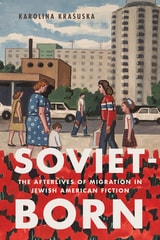
Soviet-Born
The Afterlives of Migration in Jewish American FictionKarolina Krasuska
Rutgers University Press, 2024
Entering an immigrant, Soviet-born standpoint creates an alternative and sometimes complementary pattern of how the Eastern and Central European past and present resonate with American Jewishness. The novels, short stories, and graphic novels considered here often stage strikingly fresh variations on key older themes, including cultural geography, the memory of World War II and the Holocaust, communism, gender and sexuality, genealogy, and finally, migration. Soviet-Born demonstrates how these diasporic writers, with their critical stance toward identity categories, open up the field of what is canonically Jewish American to broader contemporary debates.
This book is also freely available online as an open-access digital edition.
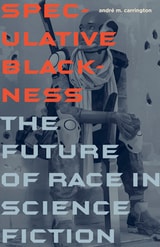
Speculative Blackness
The Future of Race in Science FictionAndré M. Carrington
University of Minnesota Press, 2016
In Speculative Blackness, André M. Carrington analyzes the highly racialized genre of speculative fiction—including science fiction, fantasy, and utopian works, along with their fan cultures—to illustrate the relationship between genre conventions in media and the meanings ascribed to blackness in the popular imagination.
Carrington’s argument about authorship, fandom, and race in a genre that has been both marginalized and celebrated offers a black perspective on iconic works of science fiction. He examines the career of actor Nichelle Nichols, who portrayed the character Uhura in the original Star Trek television series and later became a recruiter for NASA, and the spin-off series Star Trek: Deep Space Nine, set on a space station commanded by a black captain. He recovers a pivotal but overlooked moment in 1950s science fiction fandom in which readers and writers of fanzines confronted issues of race by dealing with a fictitious black fan writer and questioning the relevance of race to his ostensible contributions to the 'zines. Carrington mines the productions of Marvel comics and the black-owned comics publisher Milestone Media, particularly the representations of black sexuality in its flagship title, Icon. He also interrogates online fan fiction about black British women in Buffy the Vampire Slayer and the Harry Potter series.
Throughout this nuanced analysis, Carrington theorizes the relationship between race and genre in cultural production, revealing new understandings of the significance of blackness in twentieth-century American literature and culture.

Spies and Holy Wars
The Middle East in 20th-Century Crime FictionBy Reeva Spector Simon
University of Texas Press, 2010
Illuminating a powerful intersection between popular culture and global politics, Spies and Holy Wars draws on a sampling of more than eight hundred British and American thrillers that are propelled by the theme of jihad—an Islamic holy war or crusade against the West. Published over the past century, the books in this expansive study encompass spy novels and crime fiction, illustrating new connections between these genres and Western imperialism.
Demonstrating the social implications of the popularity of such books, Reeva Spector Simon covers how the Middle Eastern villain evolved from being the malleable victim before World War II to the international, techno-savvy figure in today's crime novels. She explores the impact of James Bond, pulp fiction, and comic books and also analyzes the ways in which world events shaped the genre, particularly in recent years. Worldwide terrorism and economic domination prevail as the most common sources of narrative tension in these works, while military "tech novels" restored the prestige of the American hero in the wake of post-Vietnam skepticism. Moving beyond stereotypes, Simon examines the relationships between publishing trends, political trends, and popular culture at large—giving voice to the previously unexamined truths that emerge from these provocative page-turners.
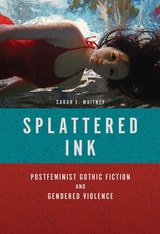
Splattered Ink
Postfeminist Gothic Fiction and Gendered ViolenceSarah E Whitney
University of Illinois Press, 2016
Sarah E. Whitney explores the genre's challenge to postfeminist assumptions of women's equality and empowerment. The authors she examines--Patricia Cornwell, Jodi Picoult, Susanna Moore, Sapphire, and Alice Sebold--construct narratives around socially invisible and physically broken protagonists who directly experience consequences of women's ongoing disempowerment. Their works ask readers to inhabit women's suffering and to face the uncomfortable, all-too-denied fact that today's women must navigate lives fraught with risk. Whitney's analysis places the authors within a female gothic tradition that has long given voice to women's fears of their own powerlessness. But she also reveals the paradox that allows the genre to powerfully critique postfeminism's often sunshiney outlook while uneasily coexisting within the same universe.
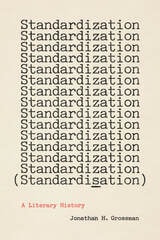
Standardization (Standardisation)
A Literary HistoryJonathan H. Grossman
University of Chicago Press, 2026
An innovative study of the history of standardization that draws on both technical documents and novels.
Jonathan H. Grossman’s elegant analysis of standardization approaches the topic by exploring how institutions create standards. Grossman tracks how published standards documents became the dominant means of homogenizing durable objects during the nineteenth century’s industrialization of manufacturing, including printing. Examining these documents as a genre, he reconstructs the nineteenth-century history of published standards documents and shows how they evolved to produce uniformity across manufactured objects.
Shifting focus from the standardized creation of objects to their use by subjects, Grossman then probes how people reimagined, through print, the ways in which their subjectivity combined with identical, interchangeable manufactured objects. To understand that relation, he looks to nineteenth-century novels by Charles Dickens, Mark Twain, and Elizabeth Gaskell, revealing how these books depicted the interchangeability of the subjects implied by this production of identical objects. The novels do not merely observe the interplay between subjects and standardized objects; they materialize it in the assemblage of readers holding their industrially manufactured, print copy.
Standards of Value
Money, Race, and Literature in AmericaGermana, Michael
University of Iowa Press, 2010
In Standards of Value, Michael Germana reveals how tectonic shifts in U.S. monetary policy—from the Coinage Act of 1834 to the abolition of the domestic gold standard in 1933–34—correspond to strategic changes by American writers who renegotiated the value of racial difference. Populating the pages of this bold and innovative study are authors as varied as Harriet Beecher Stowe, George Washington Cable, Charles Chesnutt, James Weldon Johnson, Nella Larsen, Jessie Redmon Fauset, and Ralph Ellison—all of whom drew analogies between the form Americans thought the nation's money should take and the form they thought race relations and the nation should take.
A cultural history of race organized around and enmeshed within the theories of literary and monetary value, Standards of Value also recovers a rhetorical tradition in American culture whose echoes can be found in the visual and lyrical grammars of hip hop, the paintings of John W. Jones and Michael Ray Charles, the cinematography of Spike Lee, and many other contemporary forms and texts.
This reconsideration of American literature and cultural history has implications for how we value literary texts and how we read shifting standards of value. In vivid prose, Germana explains why dollars and cents appear where black and white bodies meet in American novels, how U.S. monetary policy gave these symbols their cultural currency, and why it matters for scholars of literary and cultural studies.
Stories
Contemporary Southern Short FictionDonald Hays
University of Arkansas Press, 1989

Street Players
Black Pulp Fiction and the Making of a Literary UndergroundKinohi Nishikawa
University of Chicago Press, 2018
Kinohi Nishikawa contends that black pulp fiction was built on white readers’ fears of the feminization of society—and the appeal of black masculinity as a way to counter it. In essence, it was the original form of blaxploitation: a strategy of mass-marketing race to suit the reactionary fantasies of a white audience. But while chauvinism and misogyny remained troubling yet constitutive aspects of this literature, from 1973 onward, Holloway House moved away from publishing sleaze for a white audience to publishing solely for black readers. The standard account of this literary phenomenon is based almost entirely on where this literature ended up: in the hands of black, male, working-class readers. When it closed, Holloway House was synonymous with genre fiction written by black authors for black readers—a field of cultural production that Nishikawa terms the black literary underground. But as Street Players demonstrates, this cultural authenticity had to be created, promoted, and in some cases made up, and there is a story of exploitation at the heart of black pulp fiction’s origins that cannot be ignored.

Structuring the Void
The Struggle for Subject in Contemporary American FictionJerome Klinkowitz
Duke University Press, 1992
Among the writers Klinkowitz discusses are Richard Brautigan, Kurt Vonnegut, Max Apple, Saul Bellow, Erica Jong, Susan Quist, Gerald Rosen, Rob Swigart, and Grace Paley. He shows how, in the absence of subject matter, these writers persist in the act of structuring—by organizing autobiography as a narrative device, ritualizing national history and popular culture, or formalizing a comic response to a new imaginative state, the state of California. Klinkowitz also considers subjects such as gender and war, which, though they cannot be represented, nevertheless exercise contraints on a writer’s intention to structure.
What emerges from Klinkowitz’s analysis is a clear sense of what today’s fiction—and fiction writing—is about. As such, Structuring the Void will prove invaluable to anyone with an interest in contemporary literature.
Susanna Rowson
Sentimental Prophet of Early American LiteratureSteven Epley
Northwestern University Press, 2016