Results by title
1677 books match the query 'Archaeology' and 101 start with s
Sacred Darkness
A Global Perspective on the Ritual Use of CavesHolley Moyes
University Press of Colorado, 2014
Covering the ritual use of caves in Europe, Asia, Australia, Africa, Mesoamerica, and the US Southwest and Eastern woodlands, this book brings together case studies by prominent scholars whose research spans from the Paleolithic period to the present day. These contributions demonstrate that cave sites are as fruitful as surface contexts in promoting the understanding of both ancient and modern religious beliefs and practices.
This state-of-the-art survey of ritual cave use will be one of the most valuable resources for understanding the role of caves in studies of religion, sacred landscape, or cosmology and a must-read for any archaeologist interested in caves.
Sacred Southwestern Landscapes
Archaeologies of Religious EcologyEdited by Aaron M. Wright
University of Utah Press, 2024
Hailing from various academic and cultural backgrounds, contributors invoke a range of theoretical currents and methodological practices to examine how these relationships developed and evolved. Nearly all the places, people, and paradigms at play in contemporary southwestern scholarship find room among these pages, from the Sonoran and Chihuahuan Deserts to the Colorado Plateau; from diverse cultures, including Ancestral Pueblo, Mogollon, Hohokam, Pataya, Trincheras, Navajo (Diné), and Nuevomexicano; and from theoretical frameworks drawing upon phenomenology, materiality, bundling, and semiotics. This collective engagement showcases how religious ecologies can be studied from multiple perspectives and through sundry lines of evidence, leaving readers with appreciation and reverence for the rich and robust sacredness in southwestern landscapes.
Sacrifice, Violence, and Ideology Among the Moche
The Rise of Social Complexity in Ancient PeruBy Steve Bourget
University of Texas Press, 2016
In a special precinct dedicated to ritual sacrifice at Huaca de la Luna on the north coast of Peru, about seventy-five men were killed and dismembered, their remains and body parts then carefully rearranged and left on the ground with numerous offerings. The discovery of this large sacrificial site—one of the most important sites of this type in the Americas—raises fundamental questions. Why was human sacrifice so central to Moche ideology and religion? And why is sacrifice so intimately related to the notions of warfare and capture?
In this pioneering book, Steve Bourget marshals all the currently available information from the archaeology and visual culture of Huaca de la Luna as he seeks to understand the centrality of human sacrifice in Moche ideology and, more broadly, the role(s) of violence in the development of social complexity. He begins by providing a fully documented account of the archaeological contexts, demonstrating how closely interrelated these contexts are to the rest of Moche material culture, including its iconography, the regalia of its elite, and its monumental architecture. Bourget then probes the possible meanings of ritual violence and human sacrifice and their intimate connections with concepts of divinity, ancestry, and foreignness. He builds a convincing case that the iconography of ritual violence and the practice of human sacrifice at all the principal Moche ceremonial centers were the main devices used in the establishment and development of the Moche state.
Salado Archaeology of the Upper Gila, New Mexico
Stephen H. Lekson
University of Arizona Press, 2002
Salt in Eastern North America and the Caribbean
History and ArchaeologyEdited by Ashley A. Dumas and Paul N. Eubanks
University of Alabama Press, 2021
Case studies examining the archaeological record of an overlooked mineral
Salt, once a highly prized trade commodity essential for human survival, is often overlooked in research because it is invisible in the archaeological record. Salt in Eastern North America and the Caribbean: History and Archaeology brings salt back into archaeology, showing that it was valued as a dietary additive, had curative powers, and was a substance of political power and religious significance for Native Americans. Major salines were embedded in collective memories and oral traditions for thousands of years as places where physical and spiritual needs could be met. Ethnohistoric documents for many Indian cultures describe the uses of and taboos and other beliefs about salt.
The volume is organized into two parts: Salt Histories and Salt in Society. Case studies from prehistory to post-Contact and from New York to Jamaica address what techniques were used to make salt, who was responsible for producing it, how it was used, the impact it had on settlement patterns and sociopolitical complexity, and how economies of salt changed after European contact. Noted salt archaeologist Heather McKillop provides commentary to conclude the volume.
.
Salvage Archaeology in Painted Rocks Reservoir, Western Arizona
William W. Wasley and Alfred E. Johnson
University of Arizona Press, 1965
Sam Dellinger
Raiders of the Lost ArkansasRobert C. Mainfort
University of Arkansas Press, 2008
San Jacinto 1
A Historical Ecological Approach to an Archaic Site in ColombiaAugusto Oyuela-Caycedo and Renee M. Bonzani
University of Alabama Press, 2005
A significant work of neotropical archaeology presenting evidence of early hunter-gatherers who produced fiber-tempered ceramics.
Few topics in the development of humans have prompted as much interest and debate as those of the origins of pottery and agriculture. The first appearance of pottery in any area of the world is heralded as a new stage in the progress of humans toward a more complex arrangement of thought and society. Cultures are defined and separated by the occurrence of pottery types, and the association of pottery with mobility and agriculture continues to drive research in anthropology. For these reasons, the discovery of the earliest fiber-tempered pottery in the New World and carbonized remains identified as maize kernels is exciting.
San Jacinto 1 is the archaeological site located in the savanna region of the north coast of Colombia, South America, where excavations by led by the authors have revealed evidence of mobile hunter-gatherers who made pottery and who collected and processed plants from 6000 to 5000 B.P. The site is believed to show an early human adaptation to the tropics in the context of significant environmental changes that were taking place at the time.
This volume presents the data gathered and the interpretations made during excavation and analysis of the San Jacinto 1 site. By examining the social activities of a human population in a highly seasonal environment, it adds greatly to our contemporary understanding of the historical ecology of the tropics. Study of the artifacts excavated at the site allows a window into the early processes of food production in the New World. Finally, the data reveals that the origins of ceramic technology in the tropics were tied to a reduction in mobility and an increase in territoriality and are widely applicable to similar studies of sedentism and agriculture worldwide.
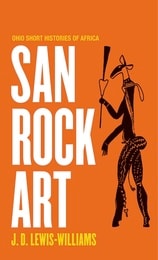
San Rock Art
J.D. Lewis-Williams
Ohio University Press, 2011
San rock paintings, scattered over the range of southern Africa, are considered by many to be the very earliest examples of representational art. There are as many as 15,000 known rock art sites, created over the course of thousands of years up until the nineteenth century. There are possibly just as many still awaiting discovery.
Taking as his starting point the magnificent Linton panel in the Iziko-South African Museum in Cape Town, J. D. Lewis-Williams examines the artistic and cultural significance of rock art and how this art sheds light on how San image-makers conceived their world. It also details the European encounter with rock art as well as the contentious European interaction with the artists’ descendants, the contemporary San people.
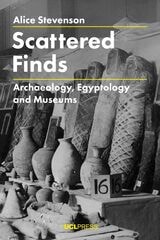
Scattered Finds
Archaeology, Egyptology and MuseumsAlice Stevenson
University College London, 2018
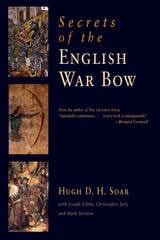
Secrets of the English War Bow
Hugh D. H. Soar
Westholme Publishing, 2010
A Complete Recreation of the Deadliest Medieval Arm
Dominating medieval battlefields for more than two centuries but requiring long and arduous practice to command, the English war bow and its battle shaft are the symbols of the rise of British power in Europe. Despite being crafted for hundreds of years and wielded by generations of archers, no example of the war bow—the military version of the longbow—exists, outside of a single broken limb. Now for the first time, expert craftsmen use all available evidence including applied archaeology to unlock the secrets of the English war bow. Historian Hugh D. H. Soar is joined by Mark Stretton, master blacksmith, and Joseph Gibbs, bowyer, in order to demonstrate how a war bow and its associated arrow heads and shafts may have been constructed and used. In addition to showing the complete manufacture of a bow from tree selection to stringing and how specialized arrowheads were forged and attached to shafts, Secrets of the English War Bowprovides information on the actual performance of the war bow, including the bow's effectiveness against various materials and, for the first time, its use against moving targets, since bows were often drawn against mounted soldiers. Armed with this new information, Soar provides an analysis of both successes and failures of the war bow in several important battles. Illustrated in color and black and white, Secrets of the English War Bowprovides an invaluable service for those interested in medieval military history, archery, and technology.
Sedentism and Mobility in a Social Landscape
Mesa Verde and BeyondMark D. Varien
University of Arizona Press, 1999
Sediments In Archaeological Context
Julie K Stein
University of Utah Press, 2001
Sediments in Archaeological Context concerns the analysis of this matrix and the potential use of sediments to answer archaeological questions. Describing sediments and sampling them in appropriate ways do not replace the study of artifacts, but they can provide additional, useful information regarding a site complex, its physical environment, and the relations of artifacts to each other.
Each chapter in the volume considers sediments within a specific context. Topics include sediments found in a variety of environments: cultural environments, rockshelter and cave environments, dryland alluvial environments, humid alluvial environments, lake environments, shoreline environments, and spring and wetland environments.
Sediments in Archaeological Context is intended for every archaeologist who investigates sites in depositional contexts.
Seeking Conflict in Mesoamerica
Operational, Cognitive, and Experiential ApproachesShawn G. Morton
University Press of Colorado, 2019
Many studies have focused on the degree to which the prevalence, nature, and conduct of conflict has varied across time and space. This volume focuses not only on such operational considerations but on cognitive and experiential issues, analyzing how the Maya understood and explained conflict, what they recognized as conflict, how conflict was experienced by various groups, and the circumstances surrounding conflict. By offering an emic (internal and subjective) understanding alongside the more commonly researched etic (external and objective) perspective, contributors clarify insufficiencies and address lapses in data and analysis. They explore how the Maya defined themselves within the realm of warfare and examine the root causes and effects of intergroup conflict.
Using case studies from a wide range of time periods, Seeking Conflict in Mesoamerica provides a basis for understanding hostilities and broadens the archaeological record for the “seeking” of conflict in a way that has been largely untouched by previous scholars. With broad theoretical reach beyond Mesoamerican archaeology, the book will have wide interdisciplinary appeal and will be important to ethnohistorians, art historians, ethnographers, epigraphers, and those interested in human conflict more broadly.
Contributors:
Matthew Abtosway, Karen Bassie-Sweet, George J. Bey III, M. Kathryn Brown, Allen J. Christenson, Tomás Gallareta Negrón, Elizabeth Graham, Helen R. Haines, Christopher L. Hernandez, Harri Kettunen, Rex Koontz, Geoffrey McCafferty, Jesper Nielsen, Joel W. Palka, Kerry L. Sagebiel, Travis W. Stanton, Alexandre Tokovinine
Seeking The Center Place
Archaeology and Ancient Communities in the Mesa Verde RegionEdited by Mark D. Varien and Richard H. Wilshusen
University of Utah Press, 2016
The continuing work of the Crow Canyon Archaeological Center has focused on community life in the northern Southwest during the Great Pueblo period (AD 1150– 1300). Researchers have been able to demonstrate that during the last Puebloan occupation of the area the majority of the population lived in dispersed communities and large villages of the Great Sage Plain, rather than at nearby Mesa Verde. The work at Sand Canyon Pueblo and more than sixty other large contemporary pueblos has examined reasons for population aggregation and why this strategy was ultimately forsaken in favor of a migration south of the San Juan River, leaving the area depopulated by 1290.
Contributors to this volume, many of whom are distinguished southwestern researchers, draw from a common database derived from extensive investigations at the 530-room Sand Canyon Pueblo, intensive test excavations at thirteen small sites and four large villages, a twenty-five square kilometer full-coverage survey, and an inventory of all known villages in the region. Topics include the context within which people moved into villages, how they dealt with climatic changes and increasing social conflict, and how they became increasingly isolated from the rest of the Southwest.
Seeking the Center Place is the most detailed view we have ever had of the last Pueblo communities in the Mesa Verde region and will provide a better understanding of the factors that precipitated the migration of thousands of people.
Selective Remembrances
Archaeology in the Construction, Commemoration, and Consecration of National PastsEdited by Philip L. Kohl, Mara Kozelsky, and Nachman Ben-Yehuda
University of Chicago Press, 2008
Examining such relatively new or reconfigured nation-states as Iran, Iraq, Turkey, Israel, Russia, Ukraine, India, and Thailand, Selective Remembrances shows how states invoke the remote past to extol the glories of specific peoples or prove claims to ancestral homelands. Religion has long played a key role in such efforts, and the contributors take care to demonstrate the tendency of many people, including archaeologists themselves, to view the world through a religious lens—which can be exploited by new regimes to suppress objective study of the past and justify contemporary political actions.
The wide geographic and intellectual range of the essays in Selective Remembrances will make it a seminal text for archaeologists and historians.
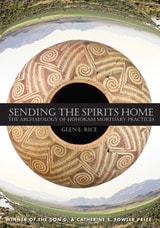
Sending the Spirits Home
The Archaeology of Hohokam Mortuary PracticesGlen E. Rice
University of Utah Press, 2015
This data-rich monograph provides new and stimulating perspectives on the Hohokam people and their mortuary practices. It breaks new ground by using the knowledge of descendent peoples to generate archaeologically testable hypotheses; demonstrating the need for mortuary analyses conducted at a regional scale; and synthesizing of the interaction of beliefs, ideology, social organization, and ecology in determining Hohokam mortuary practices. Various chapters discuss body treatment, mortuary furniture and goods, mortuary architecture, and cemeteries, and numerous figures help document the variability of Hohokam practices.
The study synthesizes data from various excavations, applied archaeology, and cultural resource management projects. With its review of past research and ethnographic accounts along with line drawings of mortuary features and artifacts, Sending the Spirits Home provides tools for the adoption of standardized protocols needed to facilitate cross-project comparisons on which future regional syntheses can be based. Although written for archaeologists, the book does not require a specialist’s knowledge to appreciate its insights into these early people of the Southwest.
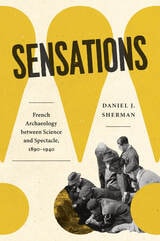
Sensations
French Archaeology between Science and Spectacle, 1890–1940Daniel J. Sherman
University of Chicago Press, 2025
For well over a century, from Heinrich Schliemann’s sensational discoveries at Troy in the 1880s, through the Tutankhamun excavations of the 1920s, to the recent LIDAR-aided uncovering of lost Maya cities, archaeology has made headlines. In this new history of archaeology and its archival traces, Daniel J. Sherman treats the friction between science and spectacle as constitutive of the field. By exploring two long-running controversies that roiled the French archaeological world and its wider public in the first third of the twentieth century, he gives the science/media relationship a unique place in the history of archaeology—and its present.
The first controversy involves a dispute over the conduct of excavations at Carthage in Tunisia, then under French colonial rule. In the second, accusations of forgery clouded what seemed to be a stunning Neolithic find at a hamlet called Glozel, in the Auvergne region in central France. The affair divided the scholarly community and attracted enormous media attention across Europe and North America. Both controversies occurred at a transitional moment between what has been called the heroic age of archaeology, dominated by explorers and adventurers with little specialized training, and the beginnings of its professionalization. As Sherman shows, the two affairs put the methods, procedures, and networks of archaeology in the spotlight and profoundly shaped its history.
Seri Prehistory
The Archaeology of the Central Coast of Sonora, MexicoThomas Bowen
University of Arizona Press, 1976
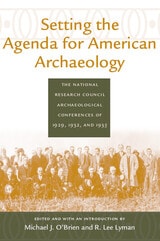
Setting the Agenda for American Archaeology
The National Research Council Archaeological Conferences of 1929, 1932, and 1935Edited and with an introduction by Michael J. O'Brien and R. Lee Lyman
University of Alabama Press, 2001
A Dan Josselyn Memorial Publication
This collection elucidates the key role played by the National Research Council seminars, reports, and pamphlets in setting an agenda that has guided American archaeology in the 20th century.
In the 1920s and 1930s, the fascination that Americans had for the continent's prehistoric past was leading to a widespread and general destruction of archaeological evidence. In a drive toward the commercialization of antiquities, amateur collectors and "pot hunters" pillaged premier and lesser-known sites before the archaeological record could be properly investigated and documented. Adding to the problem was a dearth of professionals and scholars in the field to conduct professional investigations and to educate the public about the need for preservation and scientific research methods.
In stepped the National Research Council, a division of the National Academy of Sciences, the Committee on State Archaeological Surveys. The CSAS initiated an enormously successful outreach program to enlist the aid of everyday citizens in preserving the fragile but valuable prehistoric past. Meetings held in St. Louis, Birmingham, and Indianapolis provided nuts-and-bolts demonstrations by trained archaeologists and laid out research agendas that both professionals and amateurs could follow.
Setting the Agenda contains the complete reports of the three NRC conferences, a short publication on the methods and techniques for conducting archaeological surveys, and a guide for amateur archaeologists. An extensive introduction by the editors sets these documents in context and provides insight into the intentions of the NRC committee members as they guided the development of American archaeology.
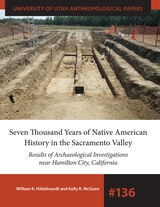
Seven Thousand Years of Native American History in the Sacramento Valley
Results of Archaeological Investigations near Hamilton City, CaliforniaWilliam R. Hildebrandt and Kelly R. McGuire
University of Utah Press, 2022
The other three sites date between 4000 and 300 years ago and reflect increasing human population density, technological innovation, and the rise of sedentism and territoriality. This historical sequence culminated in findings from a 400- to 300-year-old house complex probably occupied by the Mechoopda Indian Tribe, who collaborated with the authors throughout the project.
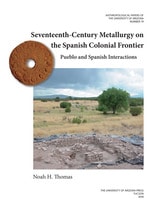
Seventeenth-Century Metallurgy on the Spanish Colonial Frontier
Pueblo and Spanish InteractionsNoah H. Thomas
University of Arizona Press, 2018
Using the ethnography of Pueblo peoples and seventh-century European manuals of metallurgy, Thomas addresses how the situated agency of indigenous practitioners incorporated within colonial industries shaped the metallurgy industry in the Spanish colonial period. The resulting analysis investigates how economic, technical, and social knowledge was communicated, contested, and transformed across the social and cultural boundaries present in early colonial communities. Viewing these transformations through an ethnohistorical lens, Thomas builds a social and historical context within which to understand the decisions made by colonial actors at the time.
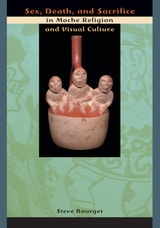
Sex, Death, and Sacrifice in Moche Religion and Visual Culture
By Steve Bourget
University of Texas Press, 2006
The Moche people who inhabited the north coast of Peru between approximately 100 and 800 AD were perhaps the first ancient Andean society to attain state-level social complexity. Although they had no written language, the Moche created the most elaborate system of iconographic representation of any ancient Peruvian culture. Amazingly realistic figures of humans, animals, and beings with supernatural attributes adorn Moche pottery, metal and wooden objects, textiles, and murals. These actors, which may have represented both living individuals and mythological beings, appear in scenes depicting ritual warfare, human sacrifice, the partaking of human blood, funerary rites, and explicit sexual activities.
In this pathfinding book, Steve Bourget raises the analysis of Moche iconography to a new level through an in-depth study of visual representations of rituals involving sex, death, and sacrifice. He begins by drawing connections between the scenes and individuals depicted on Moche pottery and other objects and the archaeological remains of human sacrifice and burial rituals. He then builds a convincing case for Moche iconography recording both actual ritual activities and Moche religious beliefs regarding the worlds of the living, the dead, and the afterlife. Offering a pioneering interpretation of the Moche worldview, Bourget argues that the use of symbolic dualities linking life and death, humans and beings with supernatural attributes, and fertility and social reproduction allowed the Moche to create a complex system of reciprocity between the world of the living and the afterworld. He concludes with an innovative model of how Moche cosmological beliefs played out in the realms of rulership and political authority.
Shaman, Priest, Practice, Belief
Materials of Ritual and Religion in Eastern North AmericaEdited by Stephen B. Carmody and Casey R. Barrier
University of Alabama Press, 2020
Archaeologists today are interpreting Native American religion and ritual in the distant past in more sophisticated ways, considering new understandings of the ways that Native Americans themselves experienced them. Shaman, Priest, Practice, Belief: Materials of Ritual and Religion in Eastern North America broadly considers Native American religion and ritual in eastern North America and focuses on practices that altered and used a vast array of material items as well as how physical spaces were shaped by religious practices.
Unbound to a single theoretical perspective of religion, contributors approach ritual and religion in diverse ways. Importantly, they focus on how people in the past practiced religion by altering and using a vast array of material items, from smoking pipes, ceremonial vessels, carved figurines, and iconographic images, to sacred bundles, hallucinogenic plants, revered animals, and ritual architecture. Contributors also show how physical spaces were shaped by religious practice, and how rock art, monuments, soils and special substances, and even land- and cityscapes were part of the active material worlds of religious agents.
Case studies, arranged chronologically, cover time periods ranging from the Paleoindian period (13,000–7900 BC) to the late Mississippian and into the protohistoric/contact periods. The geographical scope is much of the greater southeastern and southern Midwestern culture areas of the Eastern Woodlands, from the Central and Lower Mississippi River Valleys to the Ohio Hopewell region, and from the greater Ohio River Valley down through the Deep South and across to the Carolinas.
Contributors
Sarah E. Baires / Melissa R. Baltus / Casey R. Barrier / James F. Bates / Sierra M. Bow / James A. Brown / Stephen B. Carmody / Meagan E. Dennison / Aaron Deter-Wolf / David H. Dye / Bretton T. Giles / Cameron Gokee / Kandace D. Hollenbach / Thomas A. Jennings / Megan C. Kassabaum / John E. Kelly / Ashley A. Peles / Tanya M. Peres / Charlotte D. Pevny / Connie M. Randall / Jan F. Simek / Ashley M. Smallwood / Renee B. Walker / Alice P. Wright
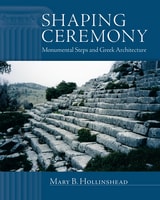
Shaping Ceremony
Monumental Steps and Greek ArchitectureMary B. Hollinshead
University of Wisconsin Press, 2014
The heart of the study is a close reading of thirty-eight sites with monumental steps from the sixth through second centuries B.C. Organized by century, the book tracks the development of built pathways and grandstands for crowds of worshippers as evidence of the Greeks' increasing awareness of the power of architecture to shape behavior and concentrate social energy. With photographs and illustrations of plans, Shaping Ceremony offers a clear account of how Greeks' adaptation of terrain for human use promoted social cohesion and integrated architectural compositions.
Shawnese Traditions
C. C. Trowbridge's AccountEdited by Vernon Kinietz and Erminie Voegelin
University of Michigan Press, 1939
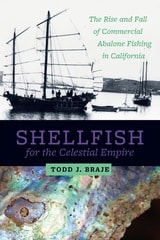
Shellfish for the Celestial Empire
The Rise and Fall of Commercial Abalone Fishing in CaliforniaTodd J. Braje
University of Utah Press, 2016
In the 1800s, when California was captivated by gold fever, a small group of Chinese immigrants recognized the fortune to be made from the untapped resources along the state’s coast, particularly from harvesting the black abalone of southern and Baja California. These immigrants, with skills from humble beginnings in a traditional Chinese fishing province, founded California’s commercial abalone industry, and led its growth and expansion for several decades. By the turn of the twentieth century, however, their successful livelihood was stolen from them through targeted legislation of the U.S. and California governments.
Today, the physical evidence of historical Chinese abalone fishing on the mainland has been erased by development. On California’s Channel Islands, however, remnants of temporary abalone collecting and processing camps lie scattered along the coastlines. These sites hold a treasure trove of information, stories, lifeways, and history. Braje has excavated many of these sites and uses them to explore the history of Chinese abalone fishing, presenting a microcosm of the broader history of Chinese immigrants in America—their struggles, their successes, the institutionalized racism they faced, and the unique ways in which they helped to shape the identity of the United States.
Sherabad Oasis
Tracing Historical Landscape in Southern UzbekistanEdited by Ladislav Stanco and Petra Tušlová
Karolinum Press, 2020
Edited by Ladislav Stančo and Petra Tušlová, this volume continues the significant work of Czech researchers in Uzbekistan, a key Central Asian republic at the crossroads of history and culture.
Ships and Shipwrecks of the Au Sable Shores Region of Western Lake Huron
John M. O'Shea
University of Michigan Press, 2004
Shovel Ready
Archaeology and Roosevelt's New Deal for AmericaBernard K. Means
University of Alabama Press, 2013
John L. Cordell / John F. Doershuk / David H. Dye /Scott W. Hammerstedt / Janet R. Johnson / Kevin Kiernan /Gregory D. Lattanzi /Patrick C. Livingood / Anna R. Lunn / Bernard K. Means / Stephen E. Nash / Amanda L. Regnier / Sissel Schroeder / James R. Wettstaed
Signs of Power
The Rise of Cultural Complexity in the SoutheastEdited by Jon L. Gibson and Philip J. Carr
University of Alabama Press, 2004
Traces the sources of power and large-scale organization of prehistoric peoples among Archaic societies.
By focusing on the first instances of mound building, pottery making, fancy polished stone and bone, as well as specialized chipped stone, artifacts, and their widespread exchange, this book explores the sources of power and organization among Archaic societies. It investigates the origins of these technologies and their effects on long-term (evolutionary) and short-term (historical) change.
The characteristics of first origins in social complexity belong to 5,000- to 6,000-year-old Archaic groups who inhabited the southeastern United States. In Signs of Power, regional specialists identify the conditions, causes, and consequences that define organization and social complexity in societies. Often termed "big mound power," these considerations include the role of demography, kinship, and ecology in sociocultural change; the meaning of geometry and design in sacred groupings; the degree of advancement in stone tool technologies; and differentials in shell ring sizes that reflect social inequality.
Signs of the Casas Grandes Shamans
VanPool Christine & Todd
University of Utah Press, 2007
Looking through this window, authors Christine and Todd VanPool find a world centered on shamans who took spiritual journeys to consort with supernatural creatures. The shamans called upon horned serpents to bring rain, the lifeblood for farmers living in the Chihuahuan desert; dealt with snakes that held powers more potent than their bites; and raised, sacrificed, and buried macaws as ritual offerings to ensure water and fertility.
These findings challenge long-held beliefs about Southwestern religion and force a reconsideration of the importance of shamanism in the development of social differentiation in societies around the world.
Silver “Thieves," Tin Barons, and Conquistadors
Small-Scale Mineral Production in Southern BoliviaMary Van Buren
University of Arizona Press, 2024
The methods of historian Bertell Ollman, particularly a dialectical approach and “doing history backwards,” are used to examine small-scale mineral production in Porco, Bolivia. The research is based on nine seasons of archaeological fieldwork and historical research, with a particular focus on labor and technology. Van Buren argues that artisanal mineral production must be understood in relation to large-scale mining rather than as a traditional practice and that the Bolivian case is a culturally specific instantiation of a broader economic phenomenon that began under colonial regimes.
Sins of the Shovel
Looting, Murder, and the Evolution of American ArchaeologyRachel Morgan
University of Chicago Press, 2023
American archaeology was forever scarred by an 1893 business proposition between cowboy-turned-excavator Richard Wetherill and socialites-turned-antiquarians Fred and Talbot Hyde. Wetherill had stumbled upon Mesa Verde’s spectacular cliff dwellings and started selling artifacts, but with the Hydes’ money behind him, well—there’s no telling what they might discover. Thus begins the Hyde Exploring Expedition, a nine-year venture into Utah’s Grand Gulch and New Mexico’s Chaco Canyon that—coupled with other less-restrained looters—so devastates Indigenous cultural sites across the American Southwest that Congress passes first-of-their-kind regulations to stop the carnage. As the money dries up, tensions rise, and a once-profitable enterprise disintegrates, setting the stage for a tragic murder.
Sins of the Shovel is a story of adventure and business gone wrong and how archaeologists today grapple with this complex heritage. Through the story of the Hyde Exploring Expedition, practicing archaeologist Rachel Morgan uncovers the uncomfortable links between commodity culture, contemporary ethics, and the broader political forces that perpetuate destructive behavior today. The result is an unsparing and even-handed assessment of American archaeology’s sins, past and present, and how the field is working toward atonement.

Sir Gardner Wilkinson and His Circle
By Jason Thompson
University of Texas Press, 1992
Following in the footsteps of Napoleon's army, Europeans invaded Egypt in the early nineteenth century to gaze in wonder at the massive, inscrutable remains of its ancient civilizations. One of these travelers was a twenty-four-year-old Englishman, John Gardner Wilkinson. His copious observations of ancient and modern Egyptian places, artifacts, and lifeways, recorded in such widely read publications as Manners and Customs of the Ancient Egyptians and Handbook for Travellers in Egypt, made him the leading early Victorian authority on ancient Egypt and paved the way for thc scientific study of Egyptology.
In this first full-scale biography of Wilkinson (1797-1875), Jason Thompson skillfully portrays both the man and his era. He follows Wilkinson during his initial sojourn in Egypt (1821-1833) as Wilkinson immersed himself in a contemporary Egyptian lifestyle and in study of its ancient past. He shows Wilkinson in his circle of friends—among them Edward William Lane, Robert Hay and Frederick Catherwood. And he traces how Wilkinson continued to use his Egyptian material in the decades following his return to England.
With the rise of professional Egyptology in the middle and later nineteenth century, Sir Gardner Wilkinson came to be viewed as an amateur and his popularity diminished. Drawing upon recently opened sources, Thompson returns Wilkinson to his rightful place within centuries of Egyptian scholarship and assesses both the vision and the limitations of his work. The result is a compelling portrait of a Victorian "gentleman-scholar" and his cultural milieu.
Sixteenth Century Maiolica Pottery in the Valley of Mexico
Florence C. Lister and Robert H. Lister
University of Arizona Press, 1982
Skeletal Biology and Bioarchaeology of the Northwestern Plains
Edited by George W. Gill and Rick L. Weathermon
University of Utah Press, 2008
Northwestern Plains prehistory and early history as told by human bones is vivid and dramatic. The skeletal and burial record spans thousands of years, a wide geographic expanse, and contains important evidence of human existence in this vast region of North America. This book helps clarify the emerging picture.
Most of the contributions assembled here were initially presented as part of a symposium at the Plains Conference in Oklahoma City in 2003. Twenty-one preeminent scholars, working across many fields within bioarchaeology and skeletal biology—including paleopathology, dental pathology, and human osteology—bring their expertise to bear not only on prehistoric Native American burials, but on numerous other case studies. They look at specific Wyoming samples of pioneer-era burials, Indian War–era casualties, historic Chinese burials, and remains from the Benick Ranch and the Korell-Bordeaux sites. Reports on Crow Indian mummies from Montana and military burials from Missouri and Nebraska continue the exploration into recent historic times.
Human burials provide a rich source of information about people’s lives—who they were, what activities they pursued, and how they may have participated in rituals of death and mourning. This volume is an authoritative statement on both the skeletal biology and bioarchaeology of the entire Northwestern Plains.
Skywatching in the Ancient World
New Perspectives in Cultural AstronomyClive Ruggles
University Press of Colorado, 2007
This collection's wide range of outstanding scholarship reveals that cultural astronomy has come into its own. The diverse topics addressed by the contributors include the correlation between Colonial Northern Zapotec and Gregorian calendars, the period of use of the Dresden Codex Venus table and the significance of the Lunar Almanacs that precede it, a new interpretation of an Inka tapestry mantle as a commemorative calendar, temple orientations in Hawai'i and church orientations in Medieval England, and the connection in cultural imagery between astronomers (science) and wizards (magic).
Contributors include: Harvey M. Bricker, Victoria R. Bricker, Edward E. Calnek, Clemency Coggins, John Justeson, Edwin C. Krupp, Stephen C. McCluskey, Susan Milbrath, Clive Ruggles, David Tavárez, Barbara Tedlock, Dennis Tedlock, Gary Urton, and R. Tom Zuidema. Mesoamerican Worlds Series
Sloan
A Paleoindian Dalton Cemetery in ArkansasDan Morse
University of Arkansas Press, 1997
New in Paper!
Excavated in 1974, the Sloan site in northeast Arkansas is the earliest recognized cemetery in the New World, containing the graves of a small group of Native Americans who died over ten thousand years ago. Although no skeletons were found in the acidic soil, the number, size, and quality of its artifacts attest to the presence of a far more complicated and sophisticated culture than had previously been thought to exist during the Dalton period.
Bringing together the work of thirteen eminent scholars, Dan F. Morse describes and assesses the assemblage of points, adzes, scrapers, abraders, and other stone artifacts as an indicator of the territorial stability of late Pleistocene peoples. The tools show that hunter-gatherer-fisher populations lived in small, semipermanent villages, hunted and butchered white-tailed deer, processed and ate vegetables, and made dugout canoes. And they buried their dead in cemeteries, a practice previously associated only with the rise of horticultural societies. Many of the tools are unused, suggesting ritual interments and a well-developed system of trade with groups in rockier areas.
Including an overview of the Dalton period in the southeastern United States and a discussion of the region’s geologic and vegetal prehistory—and newly supported by extensive high-quality image galleries now available at the website of the Arkansas Archeological Survey (see inside cover)—this comprehensive study of the Sloan artifacts provides a multifaceted assessment of a site rich in information about the technology of a single prehistoric society.
So Much Stuff
How Humans Discovered Tools, Invented Meaning, and Made More of EverythingChip Colwell
University of Chicago Press, 2023
Over three million years ago, our ancient ancestors realized that rocks could be broken into sharp-edged objects for slicing meat, making the first knives. This discovery resulted in a good meal and eventually changed the fate of our species and our planet.
With So Much Stuff, archaeologist Chip Colwell sets out to investigate why humankind went from self-sufficient primates to nonstop shoppers, from needing nothing to needing everything. Along the way, he uncovers spectacular and strange points around the world—an Italian cave with the world’s first known painted art, a Hong Kong skyscraper where a priestess channels the gods, and a mountain of trash that rivals the Statue of Liberty. Through these examples, Colwell shows how humanity took three leaps that led to stuff becoming inseparable from our lives, inspiring a love affair with things that may lead to our downfall. Now, as landfills brim and oceans drown in trash, Colwell issues a timely call to reevaluate our relationship with the things that both created and threaten to undo our overstuffed planet.
Social Adaptation to Food Stress
A Prehistoric Southwestern ExamplePaul E. Minnis
University of Chicago Press, 1985
Minnis proposes that, faced with the threat of food shortages, nonstratified societies survive by employing a series of responses that are increasingly effective but also are increasingly costly and demand increasingly larger cooperative efforts. The model Minnis develops allows him to infer, from evidence of such factors as population size, resource productivity, and climate change, the occurrence of food crises in the past. Using the Classic Mimbres society as a test case, he summarizes the regional archeological sequence and analyzes the effects of environmental fluctuations on economic and social organization. He concludes that the responses of the Mimbres people to their burgeoning population were inadequate to prevent the collapse of the society in the late twelfth century.
In its illumination of the general issue of responses to food shortages, Social Adaptation to Food Stress will interest not only archeologists but also those concerned with current food shortages in the Third World. Cultural ecologists and human geographers will be able to derive a wealth of ideas, methods, and data from Minnis's work.
Social Archaeology Futures
Rosemary A. Joyce
University Press of Colorado, 2027
Social Archaeology Futures brings together archaeologists from the Mediterranean, North America, and Latin America to consider what a “social archaeology” should be after the emergence of strong commitments to community engagement and ethical conduct in the field, establishing archaeology as a practice that both presents research and theories about people in the past and engages with people in the present to whom those findings matter. These rich narratives present a cutting-edge approach from established and emerging scholars, bridging the gap between the scholarly project of knowledge production and the social projects of care and repair.
What archaeologists say matters because they shape ideas about what is natural, what “past” led to the present, and how people’s identities took form. This leads to concerns with ethical approaches to representation, to amending the fractures archaeology has produced in previous periods, and to ensuring that communities that are sources of information also benefit from the knowledge produced. Contributors share an understanding of the historical development of social life as an outcome of the decisions and dispositions of living people. Reaching beyond archaeology to natural science, social science, humanities, and the arts, they demonstrate the continued and expanding relevance of archaeological work in transdisciplinary, not merely interdisciplinary, contexts.
Social Archaeology Futures broadens concepts around who counts as a participant in the archaeological process and what counts as archaeology, extending the understanding of the practice well beyond the idea of excavation and lab analysis to include community events, reconsideration of museum collections and archives, and engagement in storytelling. Social archaeology is the future of archaeology, making this volume of considerable interest to students, scholars, and general readers interested in anthropology, art history, heritage studies, and museum studies.
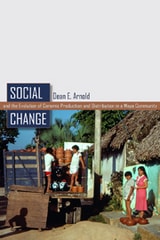
Social Change and the Evolution of Ceramic Production and Distribution in a Maya Community
Dean E. Arnold
University Press of Colorado, 2008
Dean E. Arnold made ten visits to Ticul, Yucatan, Mexico, witnessing the changes in transportation infrastructure, the use of piped water, and the development of tourist resorts. Even in this context of social change and changes in the demand for pottery, most of the potters in 1997 came from the families that had made pottery in 1965. This book traces changes and continuities in that population of potters, in the demand and distribution of pottery, and in the procurement of clay and temper, paste composition, forming, and firing.
In this volume, Arnold bridges the gap between archaeology and ethnography, using his analysis of contemporary ceramic production and distribution to generate new theoretical explanations for archaeologists working with pottery from antiquity. When the descriptions and explanations of Arnold’s findings in Ticul are placed in the context of the literature on craft specialization, a number of insights can be applied to the archaeological record that confirm, contradict, and nuance generalizations concerning the evolution of ceramic specialization. This book will be of special interest to anthropologists, archaeologists, and ethnographers.
Social Exchange and Interaction
Edited by Edwin N. Wilmsen
University of Michigan Press, 1972
Social Identities in the Classic Maya Northern Lowlands
Gender, Age, Memory, and PlaceBy Traci Ardren
University of Texas Press, 2015
Using new archaeological data from four major cities of the Classic Maya world, this book explores how gender, age, familial and community memories, and the experience of living in an urban setting interacted to form social identities.
Social Identities in the Classic Maya Northern Lowlands plumbs the archaeological record for what it can reveal about the creation of personal and communal identities in the Maya world. Using new primary data from her excavations at the sites of Yaxuna, Chunchucmil, and Xuenkal, and new analysis of data from Dzibilchaltun in Yucatan, Mexico, Traci Ardren presents a series of case studies in how social identities were created, shared, and manipulated among the lowland Maya.
Ardren argues that the interacting factors of gender, age, familial and community memories, and the experience of living in an urban setting were some of the key aspects of Maya identities. She demonstrates that domestic and civic spaces were shaped by gender-specific behaviors to communicate and reinforce gendered ideals. Ardren discusses how child burials disclose a sustained pattern of reverence for the potential of childhood and the power of certain children to mediate ancestral power. She shows how small shrines built a century after Yaxuna was largely abandoned indicate that its remaining residents used memory to reenvision their city during a time of cultural reinvention. And Ardren explains how Chunchucmil’s physical layout of houses, plazas, and surrounding environment denotes that its occupants shared an urban identity centered in the movement of trade goods and economic exchange. Viewing this evidence through the lens of the social imaginary and other recent social theory, Ardren demonstrates that material culture and its circulations are an integral part of the discourse about social identity and group membership.
Social Singing among the Mapuche
Mischa Titiev
University of Michigan Press, 1949
Social Theory In Archaeology
Michael Brian Schiffer
University of Utah Press, 2000
Since the debut of the New Archaeology in the 1960s, approaches to the science of interpreting the material past have proliferated.
Seeking to find common ground in an increasingly fractious and polarized discipline, a group of archaeological theorists representing various schools of thought gathered in a roundtable, during the fall of 1997. As organizer, Michael Schiffer sought to build bridges that might begin to span the conceptual chasms that have formed in archaeology during the past few decades. Many participants in the roundtable accepted the challenge of building bridges, but some rejected the premise that bridge building is desirable or feasible. Even so, every chapter in the resulting volume contributes something provocative or significant to the enterprise of constructing social theory in archaeology and setting the agenda for future social-theoretic research.
With contributions from every major school of thought, whether informed by evolutionary theory, feminism, chaos theory, behavioralism, or post-processualism, this volume serves as both handbook to an array of theoretical approaches and as a useful look at each school’s response to criticism.
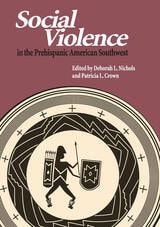
Social Violence in the Prehispanic American Southwest
Edited by Deborah L. Nichols and Patricia L. Crown
University of Arizona Press, 2008
CONTENTS
1. Introduction
Patricia Crown and Deborah Nichols
2. Dismembering the Trope: Imagining Cannibalism in the Ancient Pueblo World
Randall H. McGuire and Ruth Van Dyke
3. An Outbreak of Violence and Raiding in the Central Mesa Verde Region in the 12th Century AD
Brian R. Billman
4. Chaco Horrificus?
Wendy Bustard
5. Inscribed in the Body, Written in Bones: The Consequences of Social Violence at La Plata
Debra L. Martin, Nancy Akins, Bradley Crenshaw, and Pamela K. Stone
6. Veneration or Violence: A Study of Variations in Patterns of Human Bone Modification at La Quemada
Ventura R. Pérez, Ben A. Nelson, and Debra L. Martin
7. Witches, Practice, and the Context of Pueblo Cannibalism
William H. Walker
8. Explanation vs. Sensation: The Discourse of Cannibalism at Awat’ovi
Peter Whiteley
9. Devouring Ourselves
George J. Armelagos
References Cited
About the Contributors
Index
Societies in Eclipse
Archaeology of the Eastern Woodlands Indians, A.D. 1400-1700Edited by David S. Brose, C. Wesley Cowan, and Robert C. Mainfort
University of Alabama Press, 2001
After establishing the distribution of prehistoric and historic populations from the northeastern Appalachian forests to the southern trans-Mississippian prairies, the contributors consider the archaeological and cultural record of several specific groups, including Mohawk and Onondaga, Monacan, Coosa, and Calusa. For each, they present new evidence of cultural changes prior to European contact, including populations movements triggered by the Little Ice Age (AD 1550–1770), shifting exchange and warfare networks, geological restriction of effective maize subsistence, and use of empty hunting territories as buffers between politically unstable neighbors. The contributors also trace European influences, including the devastation caused by European-introduced epidemics and the paths of European trade goods that transformed existing Native American-exchange networks.
While the profound effects of European explorers, missionaries, and traders on Eastern Woodlands tribes cannot be denied, the archaeological evidence suggests that several indigenous societies were already in the process of redefinition prior to European contact. The essays gathered here show that, whether formed in response to natural or human forces, cultural change may be traced through archaeological artifacts, which play a critical role in answering current questions regarding cultural persistence.
Sociopolitical Aspects of Canal Irrigation in the Valley of Oaxaca
Susan H. Lees
University of Michigan Press, 1973