Results by title
1882 books match the query 'Criticism and interpretation' and 147 start with s

SEXTON
SELECTED CRITICISMEdited by Diana Hume George
University of Illinois Press, 1988
Sacred Uncertainty
Religious Difference and the Shape of Melville's CareerBrian Yothers
Northwestern University Press, 2015
Sacred and Secular Transactions in the Age of Shakespeare
Edited by Katherine Steele Brokaw and Jay Zysk
Northwestern University Press, 2019
The term “secular” inspires thinking about disenchantment, periodization, modernity, and subjectivity. The essays in Sacred and Secular Transactions in the Age of Shakespeare argue that Shakespeare’s plays present “secularization” not only as a historical narrative of progress but also as a hermeneutic process that unleashes complex and often problematic transactions between sacred and secular. These transactions shape ideas about everything from pastoral government and performative language to wonder and the spatial imagination.
Thinking about Shakespeare and secularization also involves thinking about how to interpret history and temporality in the contexts of Shakespeare’s medieval past, the religious reformations of the sixteenth century, and the critical dispositions that define Shakespeare studies today. These essays reject a necessary opposition between “sacred” and “secular” and instead analyze how such categories intersect. In fresh analyses of plays ranging from Hamlet and The Tempest to All’s Well that Ends Well and All Is True, secularization emerges as an interpretive act that explores the cultural protocols of representation within both Shakespeare’s plays and the critical domains in which they are studied and taught.
The volume’s diverse disciplinary perspectives and theoretical approaches shift our focus from literal religion and doctrinal issues to such aspects of early modern culture as theatrical performance, geography, race, architecture, music, and the visual arts.
Sade My Neighbor
Pierre Klossowski
Northwestern University Press, 1991
Klossowski was one of the first philosophers in postwar Europe to ask whether Sade's reason, although aberrant and perverted to evil passions, could be taken seriously. Klossowski's seminal work inspired virtually all subsequent study of Sadean thought, including that of de Beauvoir, Deleuze, Derrida, Bataille, Blanchot, Paulhan, and Lacan.
Sade
The Invention Of The Libertine BodyMarcel Henaff
University of Minnesota Press, 1999
A new model for examining Sade and his creations.
A new model for examining Sade and his creations.
Decried as a misogynist and pornographer, imprisoned for debauchery and for his writings, there is scarcely a cultural figure as flamboyant and controversial as the Marquis de Sade, the father of the new libertine body. But this is not, Hénaff maintains, the only way to see Sade. In this long-awaited English translation, Hénaff says that Sade should be discussed less for the sensual heat of his writing and more for the larger poetic and economic model his work represents.With unabashed candor, Sade describes bodies in terms not of flesh but of production, use, exchange, and waste. In his writing, this libertine self is unleashed from its constraints, no longer bound by old conceptions of desire and traditions of courtship. Hénaff’s argument that Sade is a sign of his times-exposing the courtly facade of a society unable to preserve itself-reveals dark, disquieting secrets about the direction of civilization. The libertine body, he says, is a child of this new order.ISBN 0-8166-2536-0 Cloth £34.50 $49.95xxISBN 0-8166-2537-9 Paper £14.00 $19.95x296 Pages 5 7/8 x 9 OctoberTranslation inquiries: University of Minnesota Press
Sally Potter
Catherine Fowler
University of Illinois Press, 2008
This survey of Sally Potter’s work explores her cinematic development from the feminist reworking of La Bohème in Thriller to the provocative contemplation of romantic relationships after 9/11 in Yes. Catherine Fowler traces a clear trajectory of developing themes and preoccupations and shows how Potter uses song, dance, performance, and poetry to expand our experience of cinema beyond the audiovisual.
Potter has relentlessly struggled against predictability and safe options. Again and again, her works grapple with the complexities of being a woman in charge. Instead of the quest to find a romantic partner that drives mainstream cinema, Potter’s films feature characters seeking answers to questions about their sexual, gendered, social, cultural, and ethnic identities. They find answers by retelling stories, investigating mysteries, and traveling and interacting with people. At the heart of Potter’s work is a concern with the ways narrative circumscribes women's ability to act, speak, look, desire, and think for themselves. Her first two films, Thriller and The Gold Diggers, largely deconstruct found stories, clichés, and images. By contrast, later films like Orlando and The Tango Lesson create new and original narratives that place female acts, voices, looks, desires, and thoughts at their center.
Fowler’s analysis is supplemented by a detailed filmography, bibliography, and an extensive interview with the director.
Sally Rooney
Perspectives and ApproachesEllen Scheible
Bucknell University Press, 2026
Bestselling Irish novelist Sally Rooney has emerged as the defining voice of a generation, a cultural phenomenon whose spare, intelligent prose and sharp social insight have reshaped contemporary fiction and sparked a global conversation about intimacy, politics, and the millennial condition. This new collection brings together contributors from a wide range of disciplines to offer fresh critical readings of Rooney’s influential novels, alongside adaptable strategies for teaching her work in today’s undergraduate and graduate classrooms. The essays situate Rooney within literary traditions from Romantic poetry to the bildungsroman and the contemporary campus novel, while engaging with contemporary topics such as gender politics, late capitalism, and media adaptation. Providing accessible yet rigorous frameworks for exploring Rooney’s fiction, this volume confirms her significance not only within contemporary literary studies but also as a cultural force whose work reaffirms the relevance of the humanities in the twenty-first-century classroom.
Published by Bucknell University Press. Distributed worldwide by Rutgers University Press.
Salvaging the Past
Georges Hoentschel and French Decorative Arts from The Metropolitan Museum of Art, 1907-2013Daniëlle O. Kisluk-Grosheide
Bard Graduate Center, 2013
Sam Peckinpah's Feature Films
Bernard F. Dukore
University of Illinois Press, 1999
At the heart of Dukore's study is an extensive and detailed examination of Peckinpah's distinctive editing techniques. Focusing on representative sequences--including the breakout from the bank and the final battle in The Wild Bunch, the half-hour siege that concludes Straw Dogs, the killing of the title characters of Pat Garrett and Billy the Kid, and combat sequences in Cross of Iron--Dukore provides a shot-by-shot analysis that illuminates Peckinpah's mastery of pacing and mood.
Sam Peckinpah's Feature Films demonstrates that Peckinpah's genius as a director and editor marks not only The Wild Bunch, Straw Dogs, and other classics but also his lesser-known feature films, even those that suffered substantial cuts at the hands of studio producers. Dukore's organic approach to the feature films reveals a highly unified body of work that remains a pointed commentary on power, violence, affection, and moral values.
Sam Peckinpah's West
Leonard Engel
University of Utah Press, 2003
"I use violence as it is. It's ugly, brutalizing, and bloody...awful." Vilified for his violent vision of the American West as presented in films such as The Wild Bunch and Pat Garrett and Billy the Kid, the artistry of Sam Peckinpah’s work was largely overlooked in his lifetime. Dismissed by critics, he was essentially ignored in the decade following his untimely death in 1984 at the age of fifty-nine. However, with the publication of a biography in 1994 and Warner Bros.’ theatrical re-release of The Wild Bunch in 1995, Peckinpah reemerged as a distinctive voice in American film.
In Sam Peckinpah’s West eleven scholars approach the director’s oeuvre with an eye toward his minor films, touching on themes and characters previously overlooked and linking his vision to America’s literary and historical traditions. These insightful essays assure us that Peckinpah’s work will not be forgotten again, nor the vibrancy of his characters who go out "not with a whimper, nor even a bang, but a cinematic explosion that rocked Hollywood and riveted us in a way we’ll never forget."
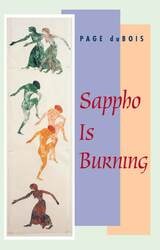
Sappho Is Burning
Page duBois
University of Chicago Press, 1995
In Sappho is Burning, duBois reads Sappho as a disruptive figure at the very origin of our story of Western civilization. Sappho is beyond contemporary categories, inhabiting a space outside of reductively linear accounts of our common history. She is a woman, but also an aristocrat, a Greek, but one turned toward Asia, a poet who writes as a philosopher before philosophy, a writer who speaks of sexuality that can be identified neither with Michel Foucault's account of Greek sexuality, nor with many versions of contemporary lesbian sexuality. She is named as the tenth muse, yet the nine books of her poetry survive only in fragments. She disorients, troubles, undoes many certitudes in the history of poetry, the history of philosophy, the history of sexuality. DuBois argues that we need to read Sappho again.
Sarah Orne Jewett
Reconstructing GenderMargaret Roman
University of Alabama Press, 1992
With the details of Jewett’s free-spirited life, Roman’s book represents a solid work of literary scholarship, which traces a gender-dissolving theme throughout Jewett’s writing. Whereas previous critics have focused primarily on her best-known works, including “A White Heron,” Deephaven, A Country Doctor, and The Country of the Pointed Firs, Roman encompasses within her own discussion virtually all of the stories found in the nineteen volumes Jewett published during her lifetime. And although much recent criticism has centered around Jewett’s strong female characters, Roman is the first to explore in depth Jewett’s male characters and married couples.
The book progresses through distinct phases that roughly correspond to Jewett’s psychological development as a writer. In general, the characters in her early works exhibit one of two modes of behavior. Youngsters, free as Jewett was to explore the natural world of woods and field, glimpse the possibility of escape from the confining standards that society has set, though some experience turbulent and confusing adolescences where those norms have become more pressing, more demanding. At the opposite extreme are those who have mindlessly accepted the roles in which they have been trapped since youth—greedy, selfish men, dutiful women who tend emotionally empty houses, young couples unable to communicate either between themselves or with others—in short, characters who are too alienated within their roles to function as whole human beings.
On the other hand, Jewett approaches the men and women of her later works with a higher degree of optimism, in that each person is free to live according to the dictates of his or her inherent personality—each character is able to measure life from within rather than from without. This group includes the self-confident men who are not reluctant to present a nurturing side, and the warm, giving women who are unafraid of displaying a decided inner strength. As Roman summarizes, “In her writings, Jewett attempts to shift society’s focus from a grasping power over people to the personal development of each member of society.”
Ahead of her time in many ways, Sarah Orne Jewett confronted the Victorian polarized gender system, presaging the modern view that men and women should be encouraged to develop along whatever paths are most comfortable and most natural for them.
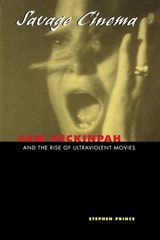
Savage Cinema
Sam Peckinpah and the Rise of Ultraviolent MoviesBy Stephen Prince
University of Texas Press, 1998
More than any other filmmaker, Sam Peckinpah opened the door for graphic violence in movies. In this book, Stephen Prince explains the rise of explicit violence in the American cinema, its social effects, and the relation of contemporary ultraviolence to the radical, humanistic filmmaking that Peckinpah practiced.
Prince demonstrates Peckinpah's complex approach to screen violence and shows him as a serious artist whose work was tied to the social and political upheavals of the 1960s. He explains how the director's commitment to showing the horror and pain of violence compelled him to use a complex style that aimed to control the viewer's response.
Prince offers an unprecedented portrait of Peckinpah the filmmaker. Drawing on primary research materials—Peckinpah's unpublished correspondence, scripts, production memos, and editing notes—he provides a wealth of new information about the making of the films and Peckinpah's critical shaping of their content and violent imagery. This material shows Peckinpah as a filmmaker of intelligence, a keen observer of American society, and a tragic artist disturbed by the images he created.
Prince's account establishes, for the first time, Peckinpah's place as a major filmmaker. This book is essential reading for those interested in Peckinpah, the problem of movie violence, and contemporary American cinema.
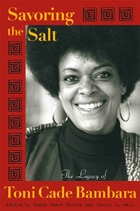
Savoring the Salt
The Legacy of Toni Cade Bambaraedited by Linda Janet Holmes and Cheryl A. Wall
Temple University Press, 2007
Admiring readers have kept Bambara's fiction in print since her first collection of stories, Gorilla, My Love, was published in 1972. She continued to write -- and her audience and reputation continued to grow -- until her untimely death in 1995. Savoring the Salt includes excerpts from her published and unpublished writings, along with interviews and photos of Bambara. The mix of poets and scholars, novelists and critics, political activists and filmmakers represented here testifies to the ongoing importance and enduring appeal of her work.
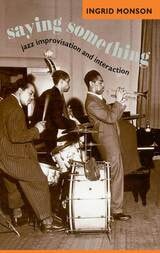
Saying Something
Jazz Improvisation and InteractionIngrid Monson
University of Chicago Press, 1997
This fresh look at the neglected rhythm section in jazz ensembles shows that the improvisational interplay among drums, bass, and piano is just as innovative, complex, and spontaneous as the solo. Ingrid Monson juxtaposes musicians' talk and musical examples to ask how musicians go about "saying something" through music in a way that articulates identity, politics, and race. Through interviews with Jaki Byard, Richard Davis, Sir Roland Hanna, Billy Higgins, Cecil McBee, and others, she develops a perspective on jazz improvisation that has "interactiveness" at its core, in the creation of music through improvisational interaction, in the shaping of social communities and networks through music, and in the development of cultural meanings and ideologies that inform the interpretation of jazz in twentieth-century American cultural life.
Replete with original musical transcriptions, this broad view of jazz improvisation and its emotional and cultural power will have a wide audience among jazz fans, ethnomusicologists, and anthropologists.
Schall on Chesterton
Timely Essays on Timeless ParadoxesJames V. Schall
Catholic University of America Press, 2000
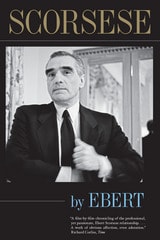
Scorsese by Ebert
Roger Ebert
University of Chicago Press, 2008
Roger Ebert wrote the first film review that director Martin Scorsese ever received—for 1967’s I Call First, later renamed Who’s That Knocking at My Door—creating a lasting bond that made him one of Scorsese’s most appreciative and perceptive commentators. Scorsese by Ebert offers the first record of America’s most respected film critic’s engagement with the works of America’s greatest living director, chronicling every single feature film in Scorsese’s considerable oeuvre, from his aforementioned debut to his 2008 release, the Rolling Stones documentary Shine a Light.
In the course of eleven interviews done over almost forty years, the book also includes Scorsese’s own insights on both his accomplishments and disappointments. Ebert has also written and included six new reconsiderations of the director’s less commented upon films, as well as a substantial introduction that provides a framework for understanding both Scorsese and his profound impact on American cinema.
"Given their career-long back-and-forth, this collection makes perfect sense. . . . In these reconsiderations, Ebert invites us into his thought processes, letting us see not just what he thinks, but how he forms his opinions. Ebert’s insights into Scorsese are terrific, but this book offers the bonus of further insights into Ebert himself."—Time Out Chicago
"Ebert, film critic for the Chicago Sun-Times, is an unabashed fan of Scorsese, whom he considers ‘the most gifted director of his generation.’ . . . Of special note are interviews with Scorsese over a 25-year period, in which the director candidly discusses his body of work."—Publishers Weekly
Scrap Theory
Reproductive Injustice in the Black Feminist ImaginationMali D. Collins
The Ohio State University Press, 2025
Screening Auschwitz
Wanda Jakubowska's The Last Stage and the Politics of CommemorationMarek Haltof
Northwestern University Press, 2018
Screening Auschwitz examines the classic Polish Holocaust film The Last Stage (Ostatni etap), directed by the Auschwitz survivor Wanda Jakubowska (1907–1998). Released in 1948, The Last Stage was a pioneering work and the first narrative film to portray the Nazi concentration and extermination camp complex of Auschwitz-Birkenau. Marek Haltof’s fascinating book offers English-speaking readers a wealth of new materials, mostly from original Polish sources obtained through extensive archival research.
With its powerful dramatization of the camp experience, The Last Stage established several quasi-documentary themes easily discernible in later film narratives of the Shoah: dark, realistic images of the camp, a passionate moral appeal, and clear divisions between victims and perpetrators. Jakubowska’s film introduced images that are now archetypal—for example, morning and evening roll calls on the Appelplatz, the arrival of transport trains at Birkenau, the separation of families upon arrival, and tracking shots over the belongings left behind by those who were gassed. These and other images are taken up by a number of subsequent American films, including George Stevens’s The Diary of Anne Frank (1959), Alan Pakula’s Sophie’s Choice (1982), and Steven Spielberg’s Schindler’s List (1993).
Haltof discusses the unusual circumstances that surrounded the film's production on location at Auschwitz-Birkenau and summarizes critical debates surrounding the film’s release. The book offers much of interest to film historians and readers interested in the Holocaust.
Screening Stephen King
Adaptation and the Horror Genre in Film and TelevisionBy Simon Brown
University of Texas Press, 2018
Since the 1970s, the name Stephen King has been synonymous with horror. His vast number of books has spawned a similar number of feature films and TV shows, and together they offer a rich opportunity to consider how one writer’s work has been adapted over a long period within a single genre and across a variety of media—and what that can tell us about King, about adaptation, and about film and TV horror. Starting from the premise that King has transcended ideas of authorship to become his own literary, cinematic, and televisual brand, Screening Stephen King explores the impact and legacy of over forty years of King film and television adaptations.
Simon Brown first examines the reasons for King’s literary success and then, starting with Brian De Palma’s Carrie, explores how King’s themes and style have been adapted for the big and small screens. He looks at mainstream multiplex horror adaptations from Cujo to Cell, low-budget DVD horror films such as The Mangler and Children of the Corn franchises, non-horror films, including Stand by Me and The Shawshank Redemption, and TV works from Salem’s Lot to Under the Dome. Through this discussion, Brown identifies what a Stephen King film or series is or has been, how these works have influenced film and TV horror, and what these influences reveal about the shifting preoccupations and industrial contexts of the post-1960s horror genre in film and TV.
Scripting Hitchcock
Psycho, The Birds, and MarnieWalter Raubicheck and Walter Srebnick
University of Illinois Press, 2011
Hitchcock allowed his writers a great deal of creative freedom, which resulted in dynamic screenplays that expanded traditional narrative and defied earlier conventions. Critically examining the question of authorship in film, Raubicheck and Srebnick argue that Hitchcock did establish visual and narrative priorities for his writers, but his role in the writing process was that of an editor. While the writers and their contributions have generally been underappreciated, this study reveals that all the dialogue and much of the narrative structure of the films were the work of screenwriters Jay Presson Allen, Joseph Stefano, and Evan Hunter. The writers also shaped American cultural themes into material specifically for actors such as Janet Leigh, Tippi Hedren, and Tony Perkins. This volume gives due credit to those writers who gave narrative form to Hitchcock's filmic vision.
Scripting the Nation
Court Poetry and the Authority of History in Late Medieval ScotlandKatherine H. Terrell
The Ohio State University Press, 2021
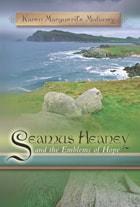
Seamus Heaney and the Emblems of Hope
Karen Marguerite Moloney
University of Missouri Press, 2007
A rich body of mythology and literature has grown around the Celtic ritual known as the Feis of Tara or “marriage of sovereignty”—ancient ceremonies in which the future king pledges to care for the land and serve the goddess of sovereignty. Seamus Heaney, whose writing has attracted the overwhelming share of critical attention directed toward contemporary Irish poetry, has engaged this symbolic tradition in some of his most significant—and controversial—work.
Seamus Heaney and the Emblems of Hope explores Heaney’s use of the family of sovereignty motifs and redresses the imbalance of criticism that has overemphasized the theme of sacrifice to the detriment of more optimistic symbols. Moreover, Moloney reviews the development of the marriage motif in Irish poetry from the ninth to the twenty-first centuries with a focus on Heaney’s adaptations from The Frenzy of Sweeney and The Midnight Court and on the work of such poets as Kinsella, Montague, Boland, and Ní Dhomhnaill. Karen Marguerite Moloney examines the central role that Heaney assigns the Feis of Tara in his response to the crisis of Ulster and to the general spiritual bankruptcy of our times, showing in his verse how the relationship of the male lover to the goddess—particularly in her more repugnant guises—serves as prototype for the humility and deference needed to repair the effects of English colonization of Ireland and, by extension, centuries of worldwide patriarchal abuse.
Through close, sustained readings of poems previously overlooked or misinterpreted, such as “Ocean’s Love to Ireland,” “Come to the Bower,” and “Bone Dreams”—poems that Irish feminist critics have deemed flawed and distressingly sexist—Moloney refutes views that have long stood unchallenged. She also considers the direction of Heaney’s more recent poems, which continue to resonate to the twin demands of conscience and artistic integrity.
An impeccably researched and immensely readable work, Seamus Heaney and the Emblems of Hope reveals that Heaney’s poetry offers a reverence for archetypal femininity and Dionysian energy that can counter the sterility and violence of postcolonial Irish life. Moloney shows us that, in the tradition of poets who preceded him, Heaney turns to the marriage of sovereignty to encode a message for our times—and to offer up emblems of hope on behalf of us all.
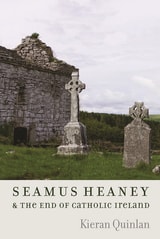
Seamus Heaney and the End of Catholic Ireland
Kieran Quinlan
Catholic University of America Press, 2020
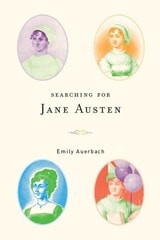
Searching for Jane Austen
Emily Auerbach
University of Wisconsin Press, 2004
In this beautifully illustrated and lively work, Auerbach surveys two centuries of editing, censoring, and distorting Austen’s life and writings. Auerbach samples Austen’s flamboyant, risqué adolescent works featuring heroines who get drunk, lie, steal, raise armies, and throw rivals out of windows. She demonstrates that Austen constantly tested and improved her skills by setting herself a new challenge in each of her six novels.
In addition, Auerbach considers Austen’s final irreverent writings, discusses her tragic death at the age of forty-one, and ferrets out ridiculous modern adaptations and illustrations, including ads, cartoons, book jackets, newspaper articles, plays, and films from our own time. An appendix reprints a ground-breaking article that introduced Mark Twain’s "Jane Austen," an unfinished and unforgettable essay in which Twain and Austen enter into mortal combat.
Secret Leaves
The Novels of Walter ScottJudith Wilt
University of Chicago Press, 1985
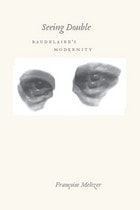
Seeing Double
Baudelaire's ModernityFrançoise Meltzer
University of Chicago Press, 2011
The poet Charles Baudelaire (1821–1867) has been labeled the very icon of modernity, the scribe of the modern city, and an observer of an emerging capitalist culture. Seeing Double reconsiders this iconic literary figure and his fraught relationship with the nineteenth-century world by examining the way in which he viewed the increasing dominance of modern life. In doing so, it revises some of our most common assumptions about the unresolved tensions that emerged in Baudelaire’s writing during a time of political and social upheaval.
Françoise Meltzer argues that Baudelaire did not simply describe the contradictions of modernity; instead, his work embodied and recorded them, leaving them unresolved and often less than comprehensible. Baudelaire’s penchant for looking simultaneously backward to an idealized past and forward to an anxious future, while suspending the tension between them, is part of what Meltzer calls his “double vision”—a way of seeing that produces encounters that are doomed to fail, poems that can’t advance, and communications that always seem to falter. In looking again at the poet and his work, Seeing Double helps to us to understand the prodigious transformations at stake in the writing of modern life.
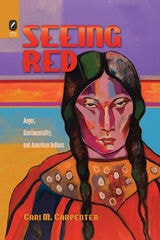
Seeing Red
Anger, Sentimentality, and American IndiansCari M. Carpenter
The Ohio State University Press, 2008
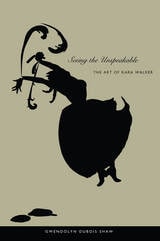
Seeing the Unspeakable
The Art of Kara WalkerGwendolyn DuBois Shaw
Duke University Press, 2004
Examining Walker’s striking silhouettes, evocative gouache drawings, and dynamic prints, Gwendolyn DuBois Shaw analyzes the inspiration for and reception of four of Walker’s pieces: The End of Uncle Tom and the Grand Allegorical Tableau of Eva in Heaven, John Brown, A Means to an End, and Cut. She offers an overview of Walker’s life and career, and contextualizes her art within the history of African American visual culture and in relation to the work of contemporary artists including Faith Ringgold, Carrie Mae Weems, and Michael Ray Charles. Shaw describes how Walker deliberately challenges viewers’ sensibilities with radically de-sentimentalized images of slavery and racial stereotypes. This book reveals a powerful artist who is questioning, rather than accepting, the ideas and strategies of social responsibility that her parents’ generation fought to establish during the civil rights era. By exploiting the racist icons of the past, Walker forces viewers to see the unspeakable aspects of America’s racist past and conflicted present.
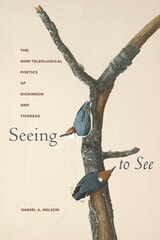
Seeing to See
The Non-Teleological Poetics of Dickinson and ThoreauDaniel A. Nelson
University of Massachusetts Press, 2025
Seeing to See focuses on two American authors who are notoriously hard to classify: Emily Dickinson and Henry David Thoreau. Dickinson proves challenging due to her short and obscure poems and Thoreau due to his insistence on capturing even the most seemingly mundane information. Daniel A. Nelson uncovers evidence that the works of these authors are often intentionally and painstakingly without aim or purpose. He argues that in their texts there is in fact an avoidance of teleological structures of writing and thinking, whereby a thing’s—or a word’s, or a text’s—value hinges on its relation to the world or other contexts.
In Nelson’s reading, Thoreau and Dickinson seem to be able to set aside all thought of distinct personal and professional goals, through which readers typically try to make an overarching sense out of, and to derive some form of profit from, disparate experiences, events, actions, and feelings. Further, both authors seem to be able to get outside of the worldview according to which the value and meaning of something, be it a natural object, a word, or an experience, is a function of its participation in a larger system. Examples of such systems include an ecosystem, taxonomic system, or syntactic system; a writer’s career, or life, or philosophy; even a single poem or journal entry. In the absence of such connections to broader categorical spheres, both writers force readers to contemplate the ineffable, constantly changing relation between words and the natural world. This contemporary reading of two iconic writers reframes their work and how readers think of nature, accepting, as these authors did, the potential freedom of the unknown.

Serapion Sister
The Poetry of Exizaveta PolonskajaLeslie Dorfman Davis
Northwestern University Press, 2001
Sergei Dovlatov and His Narrative Masks
Jekaterina Young
Northwestern University Press, 2012
This book provides an introduction to Sergei Dovlatov (1941–1990) that is closely attentive to the details of his life and work, their place in the history of Soviet society and literature, and of émigré culture during this turbulent period. A journalist, newspaper editor, and prose writer, Dovlatov is most highly regarded for his short stories, which draw heavily on his experiences in Russia before 1979, when he was forced out of the country. During compulsory military service, before becoming a journalist, he worked briefly as a prison camp guard—an experience that gave him a unique perspective on the operations of the Soviet state. After moving to New York, Dovlatov published works (in the New Yorker and elsewhere) that earned him considerable renown in America and back in Russia. Young’s book presents a valuable critical overview of the prose of a late twentieth-century master within the context of the prevailing Russian and larger literary culture.

Sergei Paradjanov
Shadows of Forgotten AncestorsJoshua First
Intellect Books, 2016
This book is the first full-length companion to the film. In addition to a synopsis of the plot and a close analysis of the many levels of symbolism in the film, it offers a history of the film’s legendarily troubled production process (which included Paradjanov challenging a cinematographer to a duel). The book closes with an account of the film’s reception by critics, ordinary viewers, and Soviet officials, and the numerous controversies that have kept it a subject of heated debate for decades. An essential companion to a fascinating, complicated work of cinema art, this book will be invaluable to students, scholars, and regular film buffs alike.
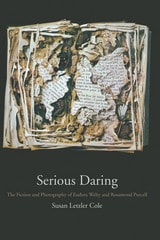
Serious Daring
The Fiction and Photography of Eudora Welty and Rosamond PurcellSusan Letzler Cole
University of Arkansas Press, 2016
Serious Daring is the story of the complementary journeys of two American women artists, celebrated fiction writer Eudora Welty and internationally acclaimed photographer Rosamond Purcell, each of whom initially practiced, but then turned from, the art form ultimately pursued by the other.
For both Welty and Purcell, the art realized is full of the art seemingly abandoned. Welty’s short stories and novels use images of photographs, photographers, and photography. Purcell photographed books, texts, and writing.
Both women make compelling art out of the seeming tension between literary and visual cultures. Purcell wrote a memoir in which photographs became endnotes. Welty re-emerged as a photographer through the publication of four volumes of what she called her “snapshots,” magnificent black-and-white photographs of small-town Mississippi and New York City life.
Serious Daring is a fascinating look at how the road not taken can stubbornly accompany the chosen path, how what is seemingly left behind can become a haunting and vital presence in life and art.
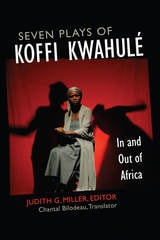
Seven Plays of Koffi Kwahulé
In and Out of AfricaJudith G. Miller, Editor, Chantal Bilodeau, Translator
University of Michigan Press, 2017
Kwahulé’s theater delves into both the horror of civil war in Africa and the diasporic experience of peoples of African origin living in Europe and the “New World.” From the split consciousness of the protagonist and rape victim in Jaz to the careless buffoonery of mercenaries in Brewery, Kwahulé’s characters speak in riffs and refrains that resonate with the improvisational pulse of jazz music. He confronts us with a violent world that represents the damage done to Africa and asks us, through exaggeration and surreal touches, to examine the reality of an ever-expanding network of global migrants. His plays speak to the contemporary state of humanity, suffering from exile, poverty, capitalist greed, collusion, and fear of “the other”—however that “other” gets defined.
Judith G. Miller’s introductory essay situates Kwahulé among his postcolonial contemporaries. Short introductory essays to each play, accompanied by production photos, contextualize possible approaches to Kwahulé’s often enigmatic work. Anglophone theater scholars and theater professionals eager to engage with contemporary theater beyond their borders, particularly in terms of what so-called minority theater artists from other countries are creating, will welcome this indispensable collection. Students and scholars of African studies and of global French studies will also find this work intriguing and challenging.
Seven Trees Against the Dying Light
A Bilingual EditionPablo Antonio Cuadra
Northwestern University Press, 2007
Standing against the visible landscape—the mountainous volcanoes, the jungles and savannahs—the seven trees conjured in these narrative poems by one of Latin America's masters also evoke another, more mysterious terrain. It is this other landscape, as invisible as poetry before it is written down but etched by history and animated by the collective memory of a people, that speaks through Pablo Antonio Cuadra’s Seven Trees against the Dying Light.
Storing experience as they exist, these tree-poems conserve local soil and memory in the place they inhabit. They are figures of life, stained by seawater and gun powder, by the bright red, bittersweet juice of the many life-giving plums that flourish in Nicaragua, and blood that has been spilled there. And they offer a way of remembering who we are, where we come from, and, above all, where we are bound if we cannot learn to root language in the earth that sustains us.
Printed here in Spanish with facing English translations, the edition includes an introduction with ecocritical focus, as well as complete notes on botanical, historical, mythological, and socio-political references.
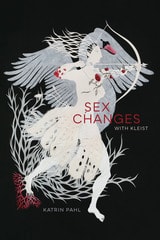
Sex Changes with Kleist
Katrin Pahl
Northwestern University Press, 2019
Focusing on the theatricality of Kleist’s interventions in the performance of gender, sexuality, and emotion and examining how his dramatic texts unhinge major tenets of classical European theater, Sex Changes with Kleist is vital reading for anyone interested in queer studies, feminist studies, performance studies, literary studies, or emotion studies. This book changes our understanding of Kleist and breathes new life into queer thought.
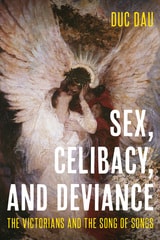
Sex, Celibacy, and Deviance
The Victorians and the Song of SongsDuc Dau
The Ohio State University Press, 2024
Sex, Celibacy, and Deviance is the first major study to explore the Song of Songs (or Song of Solomon) in Victorian literature and art. As the Bible’s only erotic poem, the Song of Songs is the canonical Judeo-Christian book about love, furnishing the Victorians with an authoritative and literary language for love, marriage, sex, mourning, and religious celibacy.
Duc Dau adopts a queer and feminist lens to consider how Victorians employed and interpreted the Song of Songs in their work. How did writers and artists fashion and, most importantly, challenge the norms of gender, romantic love, and marriage? Spanning the early Victorian era through the first two decades of the twentieth century, Sex, Celibacy, and Deviance considers the works of Charlotte Brontë, Thomas Hardy, Christina Rossetti, John Gray, Michael Field, Edward Burne-Jones, and Simeon Solomon alongside two lesser-known figures: Irish-born Scottish artist Phoebe Anna Traquair and the Catholic religious leader Augusta Theodosia Drane. By addressing the relevance of the Song of Songs in light of shifting and conflicting religious and social contexts, Dau provides a fresh perspective on Victorian literature, religion, and culture.
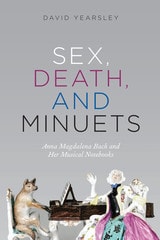
Sex, Death, and Minuets
Anna Magdalena Bach and Her Musical NotebooksDavid Yearsley
University of Chicago Press, 2019
Sex, Death, and Minuets offers the first in-depth study of these notebooks and their owner, reanimating Anna Magdalena as a multifaceted historical subject—at once pious and bawdy, spirited and tragic. In these pages, we follow Magdalena from young and flamboyant performer to bereft and impoverished widow—and visit along the way the coffee house, the raucous wedding feast, and the family home. David Yearsley explores the notebooks’ more idiosyncratic entries—like its charming ditties on illicit love and searching ruminations on mortality—against the backdrop of the social practices and concerns that women shared in eighteenth-century Lutheran Germany, from status in marriage and widowhood, to fulfilling professional and domestic roles, money, fashion, intimacy and sex, and the ever-present sickness and death of children and spouses. What emerges is a humane portrait of a musician who embraced the sensuality of song and the uplift of the keyboard, a sometimes ribald wife and oft-bereaved mother who used her cherished musical notebooks for piety and play, humor and devotion—for living and for dying.
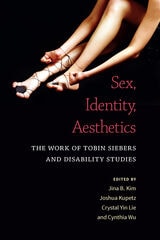
Sex, Identity, Aesthetics
The Work of Tobin Siebers and Disability StudiesJina B. Kim, Joshua Kupetz, Crystal Yin Lie, and Cynthia Wu, Editors
University of Michigan Press, 2021
Sexuality and Being in the Poststructuralist Universe of Clarice Lispector
The Différance of DesireBy Earl E. Fitz
University of Texas Press, 2001
Driven by an unfulfilled desire for the unattainable, ultimately indefinable Other, the protagonists of the novels and stories of acclaimed Brazilian writer Clarice Lispector exemplify and humanize many of the issues central to poststructuralist thought, from the nature of language, truth, and meaning to the unstable relationships between language, being, and reality. In this book, Earl Fitz demonstrates that, in turn, poststructuralism offers important and revealing insights into all aspects of Lispector's writing, including her style, sense of structure, characters, themes, and socio-political conscience.
Fitz draws on Lispector's entire oeuvre—novels, stories, crônicas, and children's literature—to argue that her writing consistently reflects the basic tenets of poststructuralist theory. He shows how Lispector's characters struggle over and humanize poststructuralist dilemmas and how their essential sense of being is deeply dependent on a shifting, and typically transgressive, sense of desire and sexuality.
Shades of Springsteen
Politics, Love, Sports, and MasculinityJohn Massaro
Rutgers University Press, 2021
In this unique blend of memoir and musical analysis, John Massaro reflects on his experiences as a lifelong fan of The Boss and one of the first professors to design a college course on Springsteen’s work. Focusing on five of the Jersey rocker’s main themes—love, masculinity, sports, politics, and the power of music—he shows how they are represented in Springsteen’s lyrics and shares stories from his own life that powerfully resonate with those lyrics. Meanwhile, paying tribute to Springsteen’s inclusive vision, he draws connections among figures as seemingly disparate as James Joyce, Ta-Nehisi Coates, Thomas Aquinas, Bobby Darin, and Lin-Manuel Miranda. Shades of Springsteen offers a deeply personal take on the musical and cultural legacies of an American icon.
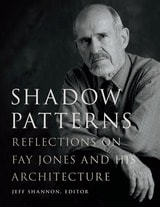
Shadow Patterns
Reflections on Fay Jones and His ArchitectureJeff Shannon
University of Arkansas Press, 2017
Winner, 2017 Ned Shank Award for Outstanding Preservation Publication from Preserve Arkansas
Shadow Patterns: Reflections on Fay Jones and His Architecture is a collection of critical essays and personal accounts of the man the American Institute of Architects honored with its highest award, the Gold Medal, in 1990.
The essays range from the academic, with appreciations and observations by Juhanni Palaasma and Robert McCarter and Ethel Goodstein-Murphree, to personal reflections by clients and friends. Two of Arkansas’s most accomplished writers, Roy Reed and Ellen Gilchrist, who each live in Fay Jones houses, have provided intimate portrayals of what it’s like to live in, and manage the quirks of, a “house built by a genius,” where “light is everywhere. . . . Everything is quiet, and everything is a surprise,” as Gilchrist says.
Through this compendium of perspectives, readers will learn about Jones’s personal qualities, including his strong will, his ability to convince other people of the rightness of his ideas, and yet his willingness, at times, to change his mind. We also enter into the work: powerful architecture like Stoneflower and Thorncrown Chapel and Pinecote Pavilion, along with private residences ranging from the modest to the monumental. And we learn about his relationship with his mentor, Frank Lloyd Wright.
Shadow Patterns broadens and enriches our understanding of this major figure in American architecture of the twentieth century.
Shadowed Cocktails
The Plays of Philip Barry from Paris Bound to The Philadelphia StoryDonald R. Anderson
Southern Illinois University Press, 2010
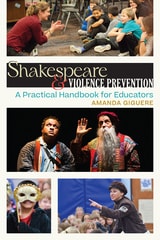
Shakespeare & Violence Prevention
A Practical Handbook for EducatorsAmanda Giguere
University of Wyoming Press, 2025
Framed by examples from Giguere’s work with the Shakespeare & Violence Prevention program, an interdisciplinary outreach project for K–12 schools developed at the University of Colorado Boulder, the text offers helpful entry points, digestible research, and practical exercises to align a violence-prevention curriculum with Shakespeare’s plays. It provides a condensed overview of key findings from violence prevention, clear synopses of the plays, and practicable strategies to implement the program. Guided by firsthand experience with a tried-and-true school program that reaches thousands of K–12 students annually, Giguere shares the Colorado Shakespeare Festival method, which focuses on “upstander” roleplays to practice violence-prevention strategies. Using a clear distillation of Shakespeare studies and violence-prevention research, she shows how the two fields naturally reinforce the concepts of teamwork, empathy, change, and hope.
Shakespeare and Violence Prevention is a new spin on these classic texts that empowers teachers and community leaders to use these tools to create research-guided university engagement programs, theatre company outreach programs, and K–12 student engagement with Shakespeare, even for those without expertise in violence prevention or Shakespeare.
Shakespeare Dwelling
Designs for the Theater of LifeJulia Reinhard Lupton
University of Chicago Press, 2018
Focusing on five works (Romeo and Juliet, Macbeth, Pericles, Cymbeline, and The Winter’s Tale), Lupton remakes the concept of dwelling by drawing on a variety of sources, including modern design theory, Renaissance treatises on husbandry and housekeeping, and the philosophies of Hannah Arendt and Martin Heidegger. The resulting synthesis not only offers a new entry point into the contemporary study of environments; it also shows how Shakespeare’s works help us continue to make sense of our primal creaturely need for shelter.
Shakespeare Only
Jeffrey Knapp
University of Chicago Press, 2009

Shakespeare and Baseball
Reflections of a Shakespeare Professor and Detroit Tigers FanSamuel Crowl
Ohio University Press, 2024

Shakespeare and the Denial of Death
James Calderwood
University of Massachusetts Press, 1987
Shakespeare and the French Poet
Yves Bonnefoy
University of Chicago Press, 2004
Translated specifically for an American readership, Shakespeare and the French Poet also features a new interview with Bonnefoy. For Shakespeare scholars, Bonnefoy enthusiasts, and students of literary translation, Shakespeare and the French Poet is a celebration of the global language of poetry and the art of "making someone else's voice live again in one's own."