Results by title
1038 books match the query 'Economic conditions' and 68 start with s

SELLING OF THE SOUTH
The Southern Crusade for Industrial Development, 1936-90James C. Cobb
University of Illinois Press, 1993
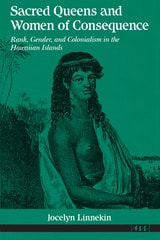
Sacred Queens and Women of Consequence
Rank, Gender, and Colonialism in the Hawaiian IslandsJocelyn Linnekin
University of Michigan Press, 1990
Sacred Queens and Women of Consequence is a pathbreaking examination of the contact encounter in Hawaii from the perspective of Hawaiian women. Jocelyn Linnekin offers a reconstruction of Hawaiian women's authority and status before contact with the West and examines changes in their cultural valuation and social position during the first century of Western contact. Through a detailed analysis of women's roles in exchange, production, kinship, and politics during the political and economic transformations of the nineteenth century, Linnekin challenges the view that Polynesian women were doomed to a peripheral status by the ritual logic of pollution. She demonstrates how Hawaiian women maintained their position as points of access to land and power, while frequently resisting the constraints of the tabu system as well as later Western-influenced attempts to abridge their authority.This book is a unique and important contribution to the scholarship on Hawaiian history as well as to the growing literature on women and colonialism and women and social stratification. It will appeal to scholars and students who work in the areas of gender studies, social stratification, cultural change, Oceania, and historical anthropology.
Sahel Visions
Planned Settlement and River Blindness Control in Burkina FasoDella E. McMillan
University of Arizona Press, 1994
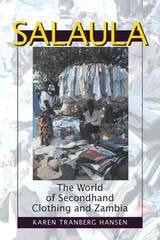
Salaula
The World of Secondhand Clothing and ZambiaKaren Tranberg Hansen
University of Chicago Press, 2000
Essential for the African economy, the secondhand clothing business is wildly popular, to the point of threatening the indigenous textile industry. But, Hansen shows, wearing secondhand clothes is about much more than imitating Western styles. It is about taking a garment and altering it to something entirely local, something that adheres to current cultural norms of etiquette. By unraveling how these garments becomes entangled in the economic, political, and cultural processes of contemporary Zambia, Hansen also raises provocative questions about environmentalism, charity, recycling, and thrift.

Sales and Celebrations
Retailing and Regional Identity in Western New York State, 1920–1940Sarah Elvins
Ohio University Press, 2004
Between the two world wars, the retail world experienced tremendous changes. New forms of competition, expanded networks of communication and transportation, and the proliferation of manufactured goods posed challenges to department store and small shopkeeper alike.
In western New York, and in Buffalo and Rochester in particular, retailers were a crucial part of urban life, acting as cultural brokers and civic leaders. They were also cultivators of area pride. Even as they adopted the latest merchandising techniques or stocked the newest items, merchants emphasized their local roots and their ability to put a local spin on national trends and innovations. Regional identity became a powerful selling tool not only during the prosperity of the 1920s but also through the economic crisis of the Great Depression.
Sales and Celebrations explains how local traditions and institutions affected the evolution of American consumer culture. It expands our understanding of American consumerism, demonstrating that local particularities and loyalties could often coexist with, and occasionally challenge, the spread of mass consumption. In her award-winning study, Professor Sarah Elvins provides new insight into the relationship between America’s largest metropolises and its smaller centers. Retailers in Buffalo and Rochester did not simply imitate the practices of their counterparts in Manhattan and Chicago; they highlighted their unique ability to serve the wants and needs of their particular markets.
By drawing attention to this persistent power of the local, Sales and Celebrations illuminates a neglected aspect of the story of American culture in the interwar period.

Saltillo, 1770-1810
Town and Region in the Mexican NorthLeslie S. Offutt
University of Arizona Press, 2001

Salvadorans in Costa Rica
Displaced LivesBridget Hayden
University of Arizona Press, 2003
Salvadorans in Costa Rica: Displaced Lives introduces readers to people from a wide range of class and educational backgrounds who had come to Costa Rica from all over El Salvador. All shared the experience of having become refugees and having settled in a new country under the same circumstances, and when the war in their own country ended, they shared a concern about the issues involved in deciding whether to return there. Their diversity allows Hayden to examine the ways in which the language of national identity played out in different contexts and sometimes contradictory ways.
Drawing on contemporary theories of migration and space, Hayden identifies the discourses, narratives, and concepts that Salvadorans in Costa Rica had in common and then analyzes the ways in which their experiences and their uses of those discourses varied. She focuses on key spatial concepts that Salvadorans used in talking about displacement and re-emplacement in order to show how they constructed the experience of settlement and how such variables as gender and age influenced their experiences. Because "nationality" was an idiom they used to relate their experiences, she pays particular attention to the role of national belonging and national difference—in terms of both the ways in which the Salvadorans were received by Costa Ricans and their reactions to their new lives in Costa Rica. A concluding chapter compares them with Salvadorans who emigrated to other countries.
The story of these displaced Salvadorans, focusing on the lives of real people, can give us a new understanding of how individuals feel a sense of belonging to a sociocultural space. By exploring many meanings of the nation and national belonging for different people under varying conditions, Hayden's study provides fresh insights into the dynamics of migration, gender, and nationalism.

Sans Papiers
The Social and Economic Lives of Young Undocumented MigrantsAlice Bloch, Nando Sigona, and Roger Zetter
Pluto Press, 2014
Undocumented migration is a huge global phenomenon, yet little is known about the reality of life for those involved. Sans Papiers combines a contemporary account of the theoretical and policy debates with an in-depth exploration of the lived experiences of undocumented migrants in the UK from Zimbabwe, China, Brazil, Ukraine and Turkish Kurdistan.
Built around their voices, the book provides a unique understanding of migratory processes, gendered experiences and migrant aspirations. Moving between the uniqueness of individual experience and the search for commonalities, the book explores the ambiguities and contradictions of being an undocumented migrant.
With its insights into personal experiences alongside analysis of wider policy issues, Sans Papiers will have wide appeal for students, academics, policy-makers and practitioners.

Saving the Nation
Economic Modernity in Republican ChinaMargherita Zanasi
University of Chicago Press, 2006
Economic modernity is so closely associated with nationhood that it is impossible to imagine a modern state without an equally modern economy. Even so, most people would have difficulty defining a modern economy and its connection to nationhood. In Saving the Nation, Margherita Zanasi explores this connection by examining the first nation-building attempt in China after the fall of the empire in 1911.
Challenging the assumption that nations are products of technological and socioeconomic forces, Zanasi argues that it was notions of what constituted a modern nation that led the Nationalist nation-builders to shape China’s institutions and economy. In their reform effort, they confronted several questions: What characterized a modern economy? What role would a modern economy play in the overall nation-building effort? And how could China pursue economic modernization while maintaining its distinctive identity? Zanasi expertly shows how these questions were negotiated and contested within the Nationalist Party. Silenced in the Mao years, these dilemmas are reemerging today as a new leadership once again redefines the economic foundation of the nation.

Scammer's Yard
The Crime of Black Repair in JamaicaJovan Scott Lewis
University of Minnesota Press, 2020
Tells the story of Jamaican “scammers” who use crime to gain autonomy, opportunity, and repair
There is romance in stealing from the rich to give to the poor, but how does that change when those perceived rich are elderly white North Americans and the poor are young Black Jamaicans? In this innovative ethnography, Jovan Scott Lewis tells the story of Omar, Junior, and Dwayne. Young and poor, they strive to make a living in Montego Bay, where call centers and tourism are the two main industries in the struggling economy. Their experience of grinding poverty and drastically limited opportunity leads them to conclude that scamming is the best means of gaining wealth and advancement. Otherwise, they are doomed to live in “sufferation”—an inescapable poverty that breeds misery, frustration, and vexation.
In the Jamaican lottery scam run by these men, targets are told they have qualified for a large loan or award if they pay taxes or transfer fees. When the fees are paid, the award never arrives, netting the scammers tens of thousands of U.S. dollars. Through interviews, historical sources, song lyrics, and court testimonies, Lewis examines how these scammers justify their deceit, discovering an ethical narrative that reformulates ideas of crime and transgression and their relationship to race, justice, and debt.
Scammer’s Yard describes how these young men, seeking to overcome inequality and achieve autonomy, come to view crime as a form of liberation. Their logic raises unsettling questions about a world economy that relegates postcolonial populations to deprivation even while expecting them to follow the rules of capitalism that exacerbate their dispossession. In this groundbreaking account, Lewis asks whether true reparation for the legacy of colonialism is to be found only through radical—even criminal—means.

Searching for Democracy
Women, Domestic Work, and Social Reproduction in Latin AmericaLeda M. Pérez
Temple University Press, 2026
How can we achieve lasting social and political equality for women? Leda Pérez tackles this thorny question in Searching for Democracy by interrogating egalitarianism in Latin America, where nearly 20% of women work in domestic service. She examines how women’s participation in society, labor, and politics continues to be conditioned by their relationship to domestic and care work.
Pérez argues that women’s relationship to these spheres of life is indicative of a nation’s development and democracy. She provides a comparative focus on the socio-cultural valuation of this labor and the experiences of women in Bolivia, Chile, Peru, and Uruguay, among other countries. Pérez asserts that it is only by changing sociocultural views on this “women’s work” that nations can create political change, foster equitable legislation, and ensure implementation of effective policies that benefit women.
Searching for Democracy shows why real and lasting equality cannot be achieved without fully enfranchising women in the lowest tiers of employment and closing the equality gap among women. Pérez’s models for gender equality are relevant for women around the world.

Season of Rains
Africa in the WorldStephen Ellis
University of Chicago Press, 2012
Second Economy In Tanzania
Eastern African StudiesT. L. Maliyamkono
Ohio University Press, 1990
Every country has its second, underground, unofficial, irregular or parallel economy. By their nature they are hidden and defy accurate and formal measurement. They provoke conceptual and definitional arguments among analysts. There has recently been a surge of interest; anecdote, newspaper reports and ‘educated guesses’ have increasingly been replaced by serious analysis. However, most of the new generation of studies are of developed economies.
This book examines the effect on a developing economy. It explores the causes, identifies the key sectoral manifestations and reveals the various groups of actors. It attempts to establish the size of the second economy of Tanzania.
Various factors drove the official economy into distress. Tanzanian peasants, wage earners and firms resorted to legitimate and illegitimate activities to overcome state control and shortage of basic necessities.
This pioneering study will be invaluable for policy makers, international funding bodies and for students who are faced with trying to understand the realities of life behind the formal facade of economic theory and official statistics.
Securing the City
Neoliberalism, Space, and Insecurity in Postwar GuatemalaKevin Lewis O Neill and Kedron Thomas, eds.
Duke University Press, 2011
Contributors. Peter Benson, Manuela Camus, Avery Dickins de Girón, Edward F. Fischer, Deborah Levenson, Thomas Offit, Kevin Lewis O’Neill, Kedron Thomas, Rodrigo José Véliz

Seeing Silicon Valley
Life inside a Fraying AmericaMary Beth Meehan and Fred Turner
University of Chicago Press, 2021
It’s hard to imagine a place more central to American mythology today than Silicon Valley. To outsiders, the region glitters with the promise of extraordinary wealth and innovation. But behind this image lies another Silicon Valley, one segregated by race, class, and nationality in complex and contradictory ways. Its beautiful landscape lies atop underground streams of pollutants left behind by decades of technological innovation, and while its billionaires live in compounds, surrounded by redwood trees and security fences, its service workers live in their cars.
With arresting photography and intimate stories, Seeing Silicon Valley makes this hidden world visible. Instead of young entrepreneurs striving for efficiency in minimalist corporate campuses, we see portraits of struggle—families displaced by an impossible real estate market, workers striving for a living wage, and communities harmed by environmental degradation. If the fate of Silicon Valley is the fate of America—as so many of its boosters claim—then this book gives us an unvarnished look into the future.
Seeking a Premier Economy
The Economic Effects of British Economic Reforms, 1980-2000Edited by David Card, Richard Blundell, and Richard B. Freeman
University of Chicago Press, 2004
Seeking a Premier Economy focuses on the labor and product market reforms that directly impacted productivity, employment, and inequality. The questions asked are provocative: How did the United Kingdom manage to stave off falling earnings for lower paid workers? What role did the reforms play in rising income inequality and trends in poverty? At the same time, what reforms also contributed to reduced unemployment and the accelerated growth of real wages? The comparative microeconomic approach of this book yields the most credible evaluation possible, focusing on closely associated outcomes of particular reforms for individuals, firms, and sectors.
Selling The Lower East
Culture, Real Estate, and Resistance in New York CityChristopher Mele
University of Minnesota Press, 2000
Tracks the shifting views of the Lower East Side from ghetto to desirable urban niche.
The Lower East Side of Manhattan is rich in stories-of poor immigrants who flocked there in the late nineteenth and early twentieth centuries; of beatniks, hippies, and artists who peopled it mid-century; and of the real estate developers and politicians who have always shaped what is now termed the "East Village." Today, the musical Rent plays on Broadway to a mostly white and suburban audience, MTV exploits the neighborhood’s newly trendy squalor in a film promotion, and on the Internet a cyber soap opera and travel-related Web pages lure members of the middle class to enjoy a commodified and sanitized version of the neighborhood.
In this sweeping account, Christopher Mele analyzes the political and cultural forces that have influenced the development of this distinctive community. He describes late nineteenth-century notions of the Lower East Side as a place of entrenched poverty, ethnic plurality, political activism, and "low" culture that elicited feelings of revulsion and fear among the city’s elite and middle classes. The resulting-and ongoing-struggle between government and residents over affordable and decent housing has in turn affected real estate practices and urban development policies. Selling the Lower East Side recounts the resistance tactics used by community residents, as well as the impulse on the part of some to perpetuate the image of the neighborhood as dangerous, romantic, and bohemian, clinging to the marginality that has been central to the identity of the East Village and subverting attempts to portray it as "new and improved." Ironically, this very image of urban grittiness has been appropriated by a cultural marketplace hungry for new fodder. Mele explores the ways that developers, media executives, and others have coopted the area’s characteristics-analyzing the East Village as a "style provider" where what is being marketed is "difference." The result is a visionary look at how political and economic actions transform neighborhoods and at what happens when a neighborhood is what is being "consumed."A comprehensive web site for Selling the Lower East Side can be found at www.upress.umn.edu/sles.
Shanghai Rising
State Power and Local Transformations in a Global MegacityXiangming Chen
University of Minnesota Press, 2009
Analyzing a Chinese city’s dazzling rise to global megacity status
Until around 1990, Shanghai was China’s premier but sluggish industrial center. Now at the beginning of the twenty-first century, the joint impact of global forces and state power has turned Shanghai into a dynamic megacity. Shanghai’s remarkable growth in economy, infrastructure, and global presence has prompted questions about the Shanghai “miracle.” This collection places the city’s unprecedented rise in a rare comparative examination of U.S. cities, as well as with Asian megacities Singapore and Hong Kong, providing a nuanced account of how Shanghai’s politics, economy, society, and space have been transformed by macro- and micro-level forces.
Contributors: Stephen W. K. Chiu, Chinese U of Hong Kong; K. C. Ho, National U of Singapore; John D. Kasarda, U of North Carolina; Hanlong Lu, Shanghai Academy of Social Sciences; Tai-lok Lui, Chinese U of Hong Kong; Ann R. Markusen, U of Minnesota; Anthony M. Orum, U of Illinois, Chicago; Yuan Ren, Fudan U Shanghai; Saskia Sassen, Columbia U; Jiaming Sun, Texas A&M U, Commerce; Fulong Wu, Cardiff U; Pingkang Yu, George Washington U; Tingwei Zhang, U of Illinois, Chicago; Zhenhua Zhou, Development Research Center, Shanghai Municipal Government.
Shaping the Motherhood of Indigenous Mexico
Vania Smith-Oka
Vanderbilt University Press, 2013
The cash transfer program is Oportunidades, which enrolls more than a fifth of Mexico's population. It expects mothers to become involved in their children's lives at three nodes--health, nutrition, and education. If women do not comply with the standards of modern motherhood, they are dropped from the program and lose the bi-monthly cash payments. Smith-Oka explores the everyday implementation of the program and its unintended consequences.
The mothers are often berated by clinicians for having too many children (Smith-Oka provides background on the history of eugenics and population control in Mexico) and for other examples of their "backward" ways. An entire chapter focuses on the humor indigenous women use to cope with disrespectful comments. Ironically, this form of resistance allows the women to accept the situation that controls their behavior.

Shepherd of the Hills Country
Tourism Transforms the Ozarks, 1880s-1930sLynn Morrow
University of Arkansas Press, 1999
Modern tourism in the Ozark Mountains of Missouri and Arkansas is concentrated around the area’s glistening man-made lakes, its fish-filled streams and rivers, and the entertainment mecca of Branson. But recreational excursions into this part of the country began over one hundred years ago as urban Midwesterners, many of them captivated by Harold Bell Wright’s novel The Shepherd of the Hills, sought the outdoors for spiritual and physical regeneration.
Morrow and Myers-Phinney excavate the beginnings of commercial tourism in the region and follow it through six decades as the influx of visitors who became familiar with the Ozarks and its investment opportunities brought capital, new commerce, and additional residents to the hills. Chapters focus on float fishing, game parks, cave exploration, the influence of the railroad, and the men who were instrumental in the region’s transformation. The authors discuss traditional lifestyles rooted in “living off the land,” with stock raising and lumbering providing basic subsistence, and changes wrought by tourism, which affected all classes of people across the White River landscape. They describe the flowering of “Ozarks folklore”—how stories told around gravel-bar fishing camps and retold by newspaper journalists translated the hills’ oral tradition for mass audiences.
While the main theme of this study is the development of tourism, it is also a social history of the interior highlands of the Ozarks. We see how the residents and their way of life were discovered, exploited, and changed by new opportunities and the demands of tourism and increasing trade. As such, this book is a valuable new addition to the University of Arkansas Press’s Ozarks Collection.
Shifting Sands
Landscape, Memory, and Commodities in China's Contemporary BorderlandsXiaoxuan Lu
University of Texas Press, 2023
How China’s borderlands transformed politically and culturally throughout the twentieth and twenty-first centuries.
China’s land borders, shared with fourteen other nations, are the world’s longest. Like all borders, they are not just lines on a map but also spaces whose histories and futures are defined by their frontier status. An ambitious appraisal of China’s borderlands, Shifting Sands addresses the full scope and importance of these regions, illustrating their transformation from imperial backwaters to hotbeds of resource exploitation and human development in the age of neoliberal globalization.
Xiaoxuan Lu brings to bear an original combination of archival research, fieldwork, cartography, and landscape analysis, broadening our understanding of the political economy and cultural changes in China’s borderlands in the twentieth and twenty-first centuries. While conventional wisdom looks to the era of Deng Xiaoping for China’s “opening,” Lu shows the integration of China’s borderlands into national and international networks from Sun Yat-sen onward. Yet, while the state has left a firm imprint on the borderlands, they were hardly created by China alone. As the Chinese case demonstrates, all borderlands are transnational, their physical and socioeconomic landscapes shaped by multidirectional flows of materials, ideas, and people.
Shock Values
Prices and Inflation in American DemocracyCarola Binder
University of Chicago Press, 2024
ONE OF THE WALL STREET JOURNAL'S 10 BEST BOOKS OF 2024
How inflation and deflation fears shape American democracy.
Many foundational moments in American economic history—the establishment of paper money, wartime price controls, the rise of the modern Federal Reserve—occurred during financial panics as prices either inflated or deflated sharply. The government’s decisions in these moments, intended to control price fluctuations, have produced both lasting effects and some of the most contentious debates in the nation’s history.
A sweeping history of the United States’ economy and politics, Shock Values reveals how the American state has been shaped by a massive, ever-evolving effort to insulate its economy from the real and perceived dangers of price fluctuations. Carola Binder narrates how the pains of rising and falling prices have brought lasting changes for every generation of Americans. And with each brush with price instability, the United States has been reinvented—not as a more perfect union, but as a reflection of its most recent failures.
Shock Values tells the untold story of prices and price stabilization in the United States. Expansive and enlightening, Binder recounts the interest-group politics, legal battles, and economic ideas that have shaped a nation from the dawn of the republic to the present.
Showroom City
Real Estate and Resistance in the Furniture Capital of the WorldJohn Joe Schlichtman
University of Minnesota Press, 2022
A unique and engaging account of local urban decision-making within the globalizing world
High Point, North Carolina, is known as the “Furniture Capital of the World.” Once a manufacturing stronghold, most of its furniture factories have closed over the past forty years, with production shipped off to low-wage countries. Yet as manufacturing left, the city tightened its hold on a biannual global exposition that serves as the world’s furniture fashion runway. At the High Point Market, visitors from more than one hundred nations traverse twelve million square feet of meticulous design. Downtown buildings—once courthouses, movie theaters, post offices, and gas stations—are now chic showroom spaces, even as many sit empty between each exposition.
In Showroom City, John Joe Schlichtman applies an ethnographic lens to the global exposition’s relationship with High Point after it defeated rival Chicago in the 1960s and established itself as the world’s dominant furniture center. In recent decades, following trends in global finance, private equity firms were increasingly behind downtown High Point’s real estate transactions, coordinated by buyers far removed from the region. Then, in one massive transaction in 2011, a firm funded by Bain Capital purchased every major showroom building, and the majority of downtown real estate was under one owner.
Showroom City is a story of exclusionary growth and unchecked development, of a city flailing to fill the void left by its dwindling factories. But beyond that Schlichtman engages the general lessons behind both High Point’s deindustrialization and its stunning reinvention as a furniture fashion, merchandising, and design node. With great nuance, he delves deeply to reveal how power operates locally and how citizens may affirm, exploit, influence, and resist the takeover of their community.

Sierra Leone's Settler Women Traders
Women on the Afro-European FrontierE. Frances White
University of Michigan Press, 1987
Silent Looms
Women and Production in a Guatemalan TownBy Tracy Bachrach Ehlers
University of Texas Press, 2000
Based on new fieldwork in 1997, Tracy Bachrach Ehlers has updated her classic study of the effects of economic development on the women weavers of San Pedro Sacatepéquez. Revisiting many of the women she interviewed in the 1970s and 1980s and revising her earlier hopeful assessment of women's entrepreneurial opportunities, Ehlers convincingly demonstrates that development and commercial growth in the region have benefited men at the expense of women.

Silent Violence
Global Health, Malaria, and Child Survival in TanzaniaVinay R. Kamat
University of Arizona Press, 2013
Malaria control, according to Kamat, has become increasingly medicalized, a trend that overemphasizes biomedical and pharmaceutical interventions while neglecting the social, political, and economic conditions he maintains are central to Africa’s malaria problem. Kamat offers recent findings on global health governance, neoliberal economic and health policies, and their impact on local communities.
Seeking to link wider social, economic, and political forces to local experiences of sickness and suffering, Kamat analyzes the lived experiences and practices of people most seriously affected by malaria—infants and children. The persistence of childhood malaria is a form of structural violence, he contends, and the resultant social suffering in poor communities is closely tied to social inequalities.
Silent Violence illustrates the evolving nature of local responses to the global discourse on malaria control. It advocates for the close study of disease treatment in poor communities as an integral component of global health funding. This ethnography combines a decade of fieldwork with critical review and a rare anthropological perspective on the limitations of the bureaucratic, technological, institutional, medical, and political practices that currently determine malaria interventions in Africa.
Singular Europe
Economy and Polity of the European Community after 1992William James Adams, Editor
University of Michigan Press, 1994
Sino–Malay Trade and Diplomacy from the Tenth through the Fourteenth Century
Derek Heng
Ohio University Press, 2009
China has been an important player in the international economy for two thousand years and has historically exerted enormous influence over the development and nature of political and economic affairs in the regions beyond its borders, especially its neighbors.
Sino–Malay Trade and Diplomacy from the Tenth through the Fourteenth Century examines how changes in foreign policy and economic perspectives of the Chinese court affected diplomatic intercourse as well as the fundamental nature of economic interaction between China and the Malay region, a subregion of Southeast Asia centered on the Strait of Malacca.
This study’s uniqueness and value lie in its integration of archaeological, epigraphic, and textual data from both China and Southeast Asia to provide a rich, multilayered picture of Sino–Southeast Asian relations in the premodern era. Derek Heng approaches the topic from both the Southeast Asian and Chinese perspectives, affording a dual narrative otherwise unavailable in the current body of Southeast Asian and China studies literature.
Slave Trade and Abolition
Gender, Commerce, and Economic Transition in LuandaVanessa S. Oliveira
University of Wisconsin Press, 2022
Vanessa S. Oliveira traces how existing commercial networks adapted to changes in the Atlantic slave trade during the first half of the nineteenth century. Slave Trade and Abolition reveals how women known as donas (a term adapted from the title granted to noble and royal women in the Iberian Peninsula) were often important cultural brokers. Acting as intermediaries between foreign and local people, they held high socioeconomic status and even competed with the male merchants who controlled the trade. Oliveira provides rich evidence to explore the many ways this Luso-African community influenced its society. In doing so, she reveals an unexpectedly nuanced economy with regard to the dynamics of gender and authority.

Slavery, Emancipation and Colonial Rule in South Africa
Wayne Dooling
Ohio University Press, 2008

Sloss Furnaces and the Rise of the Birmingham District
An Industrial EpicW. David Lewis
University of Alabama Press, 1994
"A masterpiece that deserves to be ranked with such seminal and influential works as Cash’s Mind of the South." —Edwin T. Layton Jr., author of The Revolt of the Engineers: Social Responsibility and the American Profession
This pathbreaking book tells the dramatic story of a unique manufacturing complex and the city that it helped to create. The events recounted and interpreted by W. David Lewis are of more than local or regional significance. The rise of Sloss furnaces and Birmingham epitomized the emergence of the United States as the world's foremost economic power. Similarly, the closing of a once-profitable ironmaking installation amid social and technological changes that convulsed Birmingham nine decades after the city's founding typified challenges that were facing America at the dawn of the postindustrial age.
Above all, Sloss Furnaces resonates with the class of competition and the frenetic energy with which southerners joined other Americans in a rush to transform a continent after a fratricidal drive for independence had failed. The sweeping narrative that Lewis has produced amply justifies its subtitle, An Industrial Epic.

Slow Disturbance
Infrastructural Mediation on the Settler Colonial Resource FrontierRafico Ruiz
Duke University Press, 2021
Small Privatization
The Transformation of Retail Trade and Consumer Services in the Czech Republic, Hungary and PolandRoman Frydman
Central European University Press, 1994
Social History of Economic Decline
Business, Politics, and Work in TrentonCumbler, John T.
Rutgers University Press, 1989
Social Security and Retirement around the World
Edited by Jonathan Gruber and David A. Wise
University of Chicago Press, 1998
Socialism, Capitalism, Transformation
Leszek Balcerowicz
Central European University Press, 1995
Solidarity and Fragmentation
Working People and Class Consciousness in Detroit, 1875-1900Richard Jules Oestreicher
University of Illinois Press, 1985
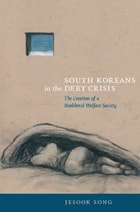
South Koreans in the Debt Crisis
The Creation of a Neoliberal Welfare SocietyJesook Song
Duke University Press, 2009
Drawing on her experience during the crisis as an employee in a public works program in Seoul, Song provides an ethnographic assessment of the efforts of the state and civilians to regulate social insecurity, instability, and inequality through assistance programs. She focuses specifically on efforts to help two populations deemed worthy of state subsidies: the “IMF homeless,” people temporarily homeless but considered employable, and the “new intellectuals,” young adults who had become professionally redundant during the crisis but had the high-tech skills necessary to lead a transformed post-crisis South Korea.
South Vietnam Trial and Experience
A Challenge for DevelopmentAng Tuan Nguyen
Ohio University Press, 1987
Dr. Nguyen Anh Tuan, former Minister of Finance of the Republic of South Vietnam, addresses a common perception of Vietnam: that South Vietnam was a fragmented society which did not deserve to succeed because of its internal weaknesses. According to Tuan, however, South Vietnam in the last decade of its life developed considerable governmental cohesion and internal social strength. Before the final failure of will, the South and its defenders were well on the way to becoming a viable society that had managed with American assistance to lift itself by its bootstraps to the point to economic take-off. Tuan argues that South Vietnam’s fall was not inevitable. This controversial book will be of great interest to all those concerned with the Vietnamese experience during the period 1954-1975.
Southern Capitalism
The Political Economy of North Carolina, 1880–1980Philip J. Wood
Duke University Press, 1986
Southern Marches of Imperial Ethiopia
Essays in History and Social AnthropologyDonald L. Donham
Ohio University Press, 2002
This pioneering book, first published to wide acclaim in 1986, traces the way the Ethiopian center and the peripheral regions of the country affected each other. It looks specifically at the expansion of the highland Ethiopian state into the western and southern lowlands from the 1890s up to 1974.
Spacing Debt
Obligations, Violence, and Endurance in Ramallah, PalestineChristopher Harker
Duke University Press, 2020
Spanish Central America
A Socioeconomic History, 1520–1720By Murdo J. MacLeod
University of Texas Press, 2007
The seventeenth century has been characterized as "Latin America's forgotten century." This landmark work, originally published in 1973, attempted to fill the vacuum in knowledge by providing an account of the first great colonial cycle in Spanish Central America. The colonial Spanish society of the sixteenth century was very different from that described in the eighteenth century. What happened in the Latin American colonies between the first conquests, the seizure of long-accumulated Indian wealth, the first silver booms, and the period of modern raw material supply? How did Latin America move from one stage to the other? What were these intermediate economic stages, and what effect did they have on the peoples living in Latin America? These questions continue to resonate in Latin American studies today, making this updated edition of Murdo J. MacLeod's original work more relevant than ever.
Colonial Central America was a large, populous, and always strategically significant stretch of land. With the Yucatán, it was home of the Maya, one of the great pre-Columbian cultures. MacLeod examines the long-term process it underwent of relative prosperity, depression, and then recovery, citing comparative sources on Europe to describe Central America's great economic, demographic, and social cycles. With an updated historiographical and bibliographical introduction, this fascinating study should appeal to historians, anthropologists, and all who are interested in the colonial experience of Latin America.

Speculative Communities
Living with Uncertainty in a Financialized WorldAris Komporozos-Athanasiou
University of Chicago Press, 2022
In Speculative Communities, Aris Komporozos-Athanasiou examines the ways that speculation has moved beyond financial markets to shape fundamental aspects of our social and political lives. As ordinary people make exceptional decisions, such as the American election of a populist demagogue or the British vote to leave the European Union, they are moving from time-honored and -tested practices of governance, toward the speculative promise of a new, more uncertain future. This book shows how even our methods of building community have shifted to the speculative realm as social media platforms enable and amplify our volatile wagers.
For Komporozos-Athanasiou, “to speculate” means increasingly “to connect,” to endorse the unknown pre-emptively, and often daringly, as a means of social survival. Grappling with the question of how more uncertainty can lead to its full-throated embrace rather than dissent, Speculative Communities shows how finance has become the model for society writ large. As Komporozos-Athanasiou argues, virtual marketplaces, new social media, and dating apps bring finance’s opaque infrastructures into the most intimate realms of our lives, leading to a new type of speculative imagination across economy, culture, and society.
Staging Growth
Modernization, Development, and the Global Cold WarDavid C. Engerman
University of Massachusetts Press, 2003
Beginning in the 1950s, the theory of modernization emerged as the dominant paradigm of economic, social, and political development within the American foreign policy establishment. Purporting to explain the stages through which all nations pass on the road to industrial modernity, it provided a rationale for a broad range of cultural and political projects aimed at fostering Third World growth while simultaneously combating communism.
But modernization theory was more than simply an expression of Cold War ideology. As the essays in this volume show, the ideal of modernization proliferated throughout the postcolonial world and across ideological lines in places as diverse as East Asia, Southern Africa, and South Asia. Indeed, it was embraced by all who shared the American enthusiasm for the increased production and higher standards of living promised by industrialization—enemies and allies alike.
Situating modernization theory historically, Staging Growth avoids conventional chronologies and categories of analysis, particularly the traditional focus on conflicts between major powers. The contributors employ a variety of approaches—from economic and intellectual history to cultural criticism and biography—to shed fresh light on the global forces that shaped the Cold War and its legacies. Most of the pieces are comparative, exploring how different countries and cultures have grappled with the implications of modern development. At the same time, all of the essays address similar fundamental questions. Is modernization the same thing as Westernization? Is the idea of modernization universally valid? Do countries follow similar trajectories as they undertake development? Does modernization bring about globalization?
In addition to the editors and Akira Iriye, contributors include Michael Adas, Laura Belmonte, Gregg Andrew Brazinsky, Christina Klein, J. Victor Koschmann, and Michael R. Mahoney.

Start-Up Poland
The People Who Transformed an EconomyJan Cienski
University of Chicago Press, 2018
As the Warsaw bureau chief for the Financial Times, Jan Cienski spent more than a decade talking with the people who did something that had never been done before: recreating a market economy out of a socialist one. Poland had always lagged behind wealthier Western Europe, but in the 1980s the gap had grown to its widest in centuries. But the corrupt Polish version of communism also created the conditions for its eventual revitalization, bringing forth a remarkably resilient and entrepreneurial people prepared to brave red tape and limited access to capital. In the 1990s, more than a million Polish people opened their own businesses, selling everything from bicycles to leather jackets, Japanese VCRs, and romance novels. The most business-savvy turned those primitive operations into complex corporations that now have global reach.
Well researched and accessibly and entertainingly written, Start-Up Poland tells the story of the opening bell in the East, painting lively portraits of the men and women who built successful businesses there, what their lives were like, and what they did to catapult their ideas to incredible success. At a time when Poland’s new right-wing government plays on past grievances and forms part of the populist and nationalist revolution sweeping the Western world, Cienski’s book also serves as a reminder that the past century has been the most successful in Poland’s history.

State of the Union
America in the 1990s, Economic TrendsReynolds Farley
Russell Sage Foundation, 1995

State of the Union
America in the 1990s, Social TrendsReynolds Farley
Russell Sage Foundation, 1995

States at War, Volume 1
A Reference Guide for Connecticut, Maine, Massachusetts, New Hampshire, Rhode Island, and Vermont in the Civil WarEdited by Richard F. Miller
University Press of New England, 2013

States at War, Volume 2
A Reference Guide for New York in the Civil WarEdited by Richard F. Miller
University Press of New England, 2014