Results by title
3388 books match the query 'Fiction' and 233 start with s

SF
The Other Side of RealismThomas D. Clareson
University of Wisconsin Press, 1971
A collection of twenty-five essays from eight countries, illustrating the many approaches to science fiction.
Sab and Autobiography
By Gertrudis Gómez de Avellaneda y Arteaga
University of Texas Press, 1993
Eleven years before Uncle Tom's Cabin fanned the fires of abolition in North America, an aristocratic Cuban woman told an impassioned story of the fatal love of a mulatto slave for his white owner's daughter. So controversial was Sab's theme of miscegenation and its parallel between the powerlessness and enslavement of blacks and the economic and matrimonial subservience of women that the book was not published in Cuba until 1914, seventy-three years after its original 1841 publication in Spain.
Also included in the volume is Avellaneda's Autobiography (1839), whose portrait of an intelligent, flamboyant woman struggling against the restrictions of her era amplifies the novel's exploration of the patriarchal oppression of minorities and women.
Sacred River
A NovelSyl Cheney-Coker
Ohio University Press, 2015
Sacred Wilderness
Susan Power
Michigan State University Press, 2014
Safe Places
StoriesKerry Dolan
University of Massachusetts Press, 2022
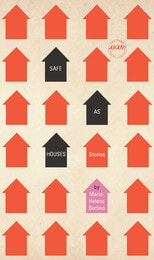
Safe as Houses
Marie-Helene Bertino
University of Iowa Press, 2012
All homes are not shelters. But then again, some are. Welcome to the home of Marie-Helene Bertino.
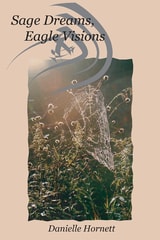
Sage Dreams, Eagle Visions
Danielle M. Hornett
Michigan State University Press, 2004
Amanda Aaron, a woman of mixed Ojibwe and white heritage, spent twenty years living in Milwaukee, away from her home and family. After the deaths of her parents, a short-lived marriage to an abusive non-Indian, and finally a tragic accident in which her friends were killed, she is pushed into a state of depression. Acting on her doctor’s orders, she returns to her grandparents’ cabin on her home reservation in northern Wisconsin, seeking the solitude she needs to recover.
Migizi, the Eagle, the Grandfather’s messenger, gifts Amanda with a feather, then visits her one night in her bedroom. Wanting to believe it was a dream, but knowing it was not, Amanda seeks the advice and counsel of Elders on the reservation who, in turn, introduce Amanda to Noah, a spiritual man who can guide and advise her as her life becomes complicated with unwanted responsibilities. Eventually, Amanda is forced to admit that the void she has been experiencing can only be filled by a return to the reservation—a life that has always enriched her and provided her with the needed strength to achieve her goals.
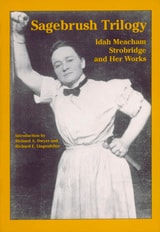
Sagebrush Trilogy
Dwayne Kling
University of Nevada Press, 1990
A comprehensive treatise on the life and works of Idah Meacham Strobridge, an American writer and bookbinder known primarily for a trio of works about the Great Basin.

Sailing Against the Wind
A NovelJaan Kross
Northwestern University Press, 2012
Jaan Kross's historical novel Sailing Against the Wind fictionalizes the life of Bernhard Schmidt (1879–1935), an Estonian-born inventor. Schmidt lost an arm in his youth while experimenting with a homemade rocket, resulting in psychological trauma that would plague him for the rest of his life. Largely self-taught, Schmidt was driven to seek recognition of his talents.
He moved to Germany in the 1930s, where, after perfecting techniques for polishing lenses, he began developing ideas for improving astronomical telescopes. He was arrested for selling one to the Russians, and although he got off with only a warning, he later suffered a breakdown and was sent to a mental hospital, where he soon died. Sailing Against the Wind becomes a meditation on national identity, the relationship between history and the individual life, and the mechanisms of the historical novel as a genre.
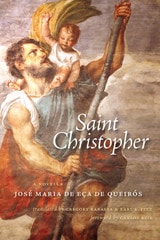
Saint Christopher
A NovellaJosé Maria De Eça De Queirós
Tagus Press, 2015
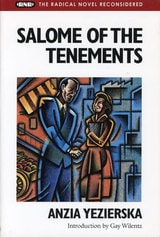
Salome of the Tenements
Anzia Yezierska
University of Illinois Press, 1951
Originally published in 1923.
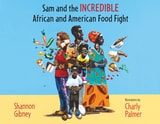
Sam and the Incredible African and American Food Fight
Shannon Gibney
University of Minnesota Press, 2023
Six-year-old Sam, with his Liberian dad and African American mom, finds a way to bring everyone in his cross-cultural family together at the dinner table
Rice and okra soup: Sam’s auntie from Liberia made it, and it’s Dad’s favorite. Mom, homegrown in Minnesota, made spaghetti and meatballs. And Sam? He’s just hungry, but no matter what he chooses to eat, someone will be disappointed. Caught in the middle of his family’s African and American food fight, Sam gets a little help from his grumbling stomach—and readers of this seriously funny book by Shannon Gibney get a peek at cultures colliding in a family kitchen that work out in a very delicious way. Charly Palmer’s vibrant and captivating illustrations make this gentle lesson in getting along a bright and colorful visual feast as well.
Cassava leaf torbogee or homemade sausage pizza? Sam’s family recipes bring Sam and the Incredible African and American Food Fight to an apt and happy ending—and readers can decide which dinner is best. But, really, why not both?
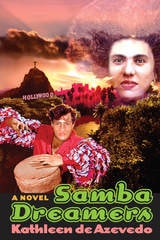
Samba Dreamers
Kathleen de Azevedo
University of Arizona Press, 2006
When José Francisco Verguerio Silva arrives at LAX, fleeing the brutal dictatorship in his native Brazil, he is determined to become Americanized at all costs. He lands a job driving a Hollywood tour bus and posing as Ricky Ricardo. He marries a blonde waitress and becomes the father of twins. Yet happiness remains elusive for Joe as he is haunted by flashbacks of prison torture. And soon a torrid affair with Rosea Socorro Katz, the crazed daughter of Hollywood’s Brazilian star Carmen Socorro, proves to be even more dangerous than the life he has fled.
Rosea spent her childhood watching her mother unravel as the celebrity system toyed with and eventually destroyed her career. Carmen had always claimed to be descended from Amazons, the woman warriors of legend, but she was tamed by Hollywood. Not Rosea. She has just finished serving jail time for setting fire to the home of her ex-husband—in an attempt to destroy his collection of Brazilian artifacts—and sets out to salvage her life.
Along the way, she manages to tear down the lives of everyone she meets. The Brazil of the imagination is shattered in this novel of two tortured souls wrestling with the myths of movies, politics, and the American Dream. Laced with fantastic tales of bird-boys and cannibal rituals, it spins a compelling story of desperation as it reminds us that American freedom and the myth of unbridled opportunity can also consume and destroy.

San Camilo, 1936
The Eve, Feast, and Octave of St. Camillus of the Year 1936 in MadridCamilo José Cela
Duke University Press, 1991
A story of history as it happens, by turns confusing and startingly clear, echoing with news and rumors, defined by grand gestures and intimate pauses, the novel leads the reader into the ordinary life of extraordinary times. Beginning on the eve of the Spanish Civil War, San Camilo, 1936 follows a twenty-year-old student’s attempts to sort out his private affairs (sex, money, career) in the midst of the turmoil overtaking his country. In vivid and richly textured prose that distinguishes Cela’s work, the emotional reality of civil war takes on a vibrant immediacy that is humorous, tender, and ultimately transforming as a young man tries to come to terms with the historical moment he inhabits—and hopes to survive.
Readers new to Cela will find in this novel ample reason for the author’s growing reputation among audiences worldwide.
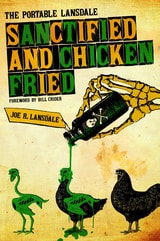
Sanctified and Chicken-Fried
The Portable LansdaleBy Joe R. Lansdale
University of Texas Press, 2009
Master of mojo storytelling, spinner of over-the-top yarns of horror, suspense, humor, mystery, science fiction, and even the Old West, Joe R. Lansdale has attracted a wide and enthusiastic following. His genre-defying work has brought him numerous awards, including the Grand Master of Horror from the World Horror Convention, the Edgar Award, the American Horror Award, seven Bram Stoker awards, the British Fantasy Award, Italy's Grinzane Prize for Literature, as well as Notable Book of the Year recognition twice from the New York Times.
Sanctified and Chicken-Fried is the first "true best of Lansdale" anthology. It brings together a unique mix of well-known short stories and excerpts from his acclaimed novels, along with new and previously unpublished material. In this collection of gothic tales that explore the dark and sometimes darkly humorous side of life and death, you'll meet traveling preachers with sinister agendas, towns lost to time, teenagers out for a good time who get more than they bargain for, and gangsters and strange goings-on at the end of the world. Out of the blender of Lansdale's imagination spew tall tales about men and mules, hogs and races, that are, in his words, "the equivalent of Aesop meets Flannery O'Connor on a date with William Faulkner, the events recorded by James M. Cain."
Whether you're a long-time fan of Joe R. Lansdale or just discovering his work, this anthology brings you the best of a writer whom the New York Times Book Review has praised for having "a folklorist's eye for telling detail and a front-porch raconteur's sense of pace."
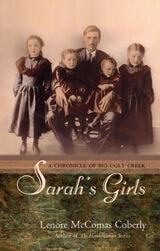
Sarah’s Girls
A Chronicle of Big Ugly CreekLenore McComas Coberly
Ohio University Press, 2006
Situated in a remote outpost in West Virginia at the turn of the last century, the story that Lenore McComas Coberly tells in Sarah’s Girls is one of place, people, and unquenchable spirit. In this fictionalized account of her recent ancestors, Coberly masterfully traces the journeys of their lives, their dreams, and their hardships over the course of the twentieth century.
At its center is the story of Lena, who returns to care for her dead sister’s daughters, giving up the promise of a life that can spare her the adversity rural living guarantees. The author goes back to Big Ugly Creek, the place where her grandparents met—and the place whose memory she cannot leave.
Using the stories she was told in her childhood as a bridge to the past, Coberly uncovers facts about her family history from documents that have made their way from one generation to another and the truth from the inherent understanding she has of these people who are so close to her.
But Sarah’s Girls is not about the author; it is about the people and a place she loves. It is fiction written to tell the deeper truth about the hold West Virginia—its mountains and its valleys—has on its people.
Satan's Stones
By Moniru Ravanipur
University of Texas Press, 1996
Women writers occupy prominent positions in late 20th century Iranian literature, despite the increased legal and cultural restrictions placed upon women since the 1978-1979 Islamic Revolution. One of these writers is Moniru Ravanipur, author of the critically acclaimed The Drowned and Heart of Steel.
Satan's Stones is the first English translation of her 1991 short story collection Sangha-ye Sheytan. Often set in the remote regions of Iran, these stories explore many facets of contemporary Iranian life, particularly the ever-shifting relations between women and men. Their bold literary experimentation marks a new style in Persian fiction akin to "magical realism."
Reports from Iran indicated that Satan's Stones had been banned there by government authorities. While its frank explorations of Iranian society may have offended Islamic leaders, they offer Western readers fresh perspectives on Iranian culture from one of the country's most distinguished writers.
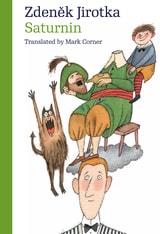
Saturnin
Zdenek Jirotka
Karolinum Press, 2016
On its initial publication in Czech in 1942, Saturnin was a best seller, its gentle satire offering an unexpected—if temporary—reprieve from the grim reality of the German occupation. In the years since, the novel has been hailed as a classic of Czech literature, and this translation makes it available to English-language readers for the first time—which is entirely appropriate, for author Zdeněk Jirotka clearly modeled his light comedy on the English masters Jerome K. Jerome and P. G. Wodehouse. The novel’s main character, Saturnin, a “gentleman’s gentleman” who obviously owes a debt to Wodehouse’s beloved Jeeves, wages a constant battle to protect his master from romantic disaster and intrusive relatives, such as Aunt Catherine, the “Prancing Dictionary of Slavic Proverbs.” Saturnin will warm the heart of any fan of literary comedy.

Saturnin
Zdenek Jirotka
Karolinum Press, 2013
On its initial publication in Czech in 1942, Saturnin was a best seller, its gentle satire offering an unexpected—if temporary—reprieve from the grim reality of the German occupation. In the years since, the novel has been hailed as a classic of Czech literature, and this translation makes it available to English-language readers for the first time—which is entirely appropriate, for author Zdeněk Jirotka clearly modeled his light comedy on the English masters Jerome K. Jerome and P. G. Wodehouse. The novel’s main character, Saturnin, a “gentleman’s gentleman” who obviously owes a debt to Wodehouse’s beloved Jeeves, wages a constant battle to protect his master from romantic disaster and intrusive relatives, such as Aunt Catherine, the “Prancing Dictionary of Slavic Proverbs.” Saturnin will warm the heart of any fan of literary comedy.
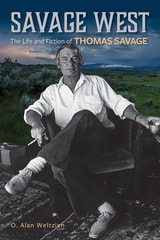
Savage West
The Life and Fiction of Thomas SavageO. Alan Weltzien
University of Nevada Press, 2022
O. Alan Weltzien's insightful and detailed literary biography chronicles the life and work of this neglected but deeply talented novelist. Savage, a closeted gay family man, was both an outsider and an insider, navigating an intense conflict between his sexual identity and the claustrophobic social restraints of the rural West. Unlike many other Western writers, Savage avoided the formula westerns— so popular in his time— and offered instead a realistic, often subversive version of the region. His novels tell a hard, harsh story about dysfunctional families, loneliness, and stifling provincialism in the small towns and ranches of the northern Rockies, and his minority interpretation of the West provides a unique vision and caustic counternarrative contrary to the triumphant settler-colonialism themes that have shaped most Western literature. Savage West seeks to claim Thomas Savage's well-deserved position in American literature and to reintroduce twenty-first-century readers to a major Montana writer.
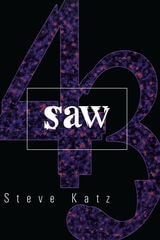
Saw
Steve Katz
University of Alabama Press, 1998
Saw is a milestone novel of the seventies. For the first time what has come to be recognized as a common modern neurosis, astronaut angst, gets full play in the fictional universe. For the first time anywhere in the history of fiction, in one of the most passionate encounters ever written, Eileen mates with a Sphere. Solid geometry finally has a face. The Cylinder is a nemesis, and its terrifying accomplishments rill on like a nightmare for this astronaut. This is a work of science fiction, geometric fiction, irrefutable fact, and gourmand fantasies.
Steve Katz, whose Swanny's Way won the American Award in fiction in 1995 was acclaimed for this novel by the New York Times Book Review as a "...witty fantasist who can homogenize pop detritus, campy slang and halluncination to achieve inspired chaos."
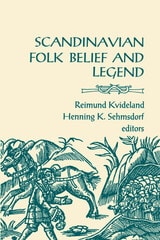
Scandinavian Folk Belief and Legend
Reimund Kvideland
University of Minnesota Press, 1991
An entertaining collection of over 400 folk tales of legends, stories, and magic. Translated from the original Norwegian, Danish, and Swedish, this highly acclaimed work is perfect for bedside or fireside reading.
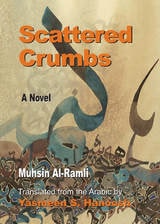
Scattered Crumbs
A NovelMuhsin Al-ramli
University of Arkansas Press, 2003
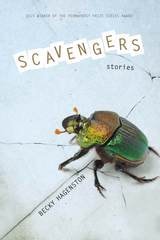
Scavengers
StoriesBecky Hagenston
University of Alaska Press, 2016
These are the people and situations—where the familiar and bizarre intermix—that animate Becky Hagenston’s stories in Scavengers. From Mississippi to Arizona to Russia, characters find themselves faced with a choice: make sense of the past, or run from it. But Hagenston reminds us that even running can never be pure—so which parts of your past do you decide to hold on to? A brilliant collection from a master of short fiction, Scavengers is surprising, strange, and moving by turns—and wholly unforgettable.

School for Pagan Lovers
Keeley, Edmund
Rutgers University Press, 1993
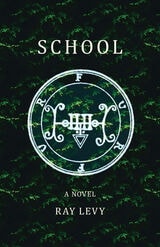
School
A NovelRay Levy
University of Alabama Press, 2023
Both an exorcism of contemporary academia and a comedic portrait of an artist seeking the means to survive.
At once angry and jubilant, Ray Levy’s School is a curse on a dying system and an incantation for transforming pain into a vessel for capacious, creative selfhood.
A dissertation manuscript possessed by the spirit of Marquis de Sade; a lecture on psychoanalysis delivered as stand-up comedy by a dysphoric graduate student; a review of a found-footage horror movie that’s also a YouTube video of a conference presentation on French theory; an interview with an avant-garde filmmaker that’s really an invocation for conjuring your demon brother; oversharing and withholding, chanting and channeling, School is a slapstick roast of Derrida’s corpse and a mystical vision of a life in which you have not lost.

Screaming with the Cannibals
LEE MAYNARD
West Virginia University Press, 2012
Scribbling Women
Short Stories by 19th-Century American WomenShowalter, Elaine
Rutgers University Press, 1997
Showalter, a highly regarded critic known for her provocative and strongly held opinions, has here established a compelling new Who's Who of women's thought. Certain to spark controversy, the omission of such feminist perennials as Gloria Steinem, Susan B. Anthony, Robin Morgan, Eleanor Roosevelt, and Virginia Woolf will surprise and shock the conventional wisdom.

Sea Of Grass
Conrad Richter
Ohio University Press, 1992
Sea of Lentils
Hilda Otano Benitez
University of Massachusetts Press, 1990
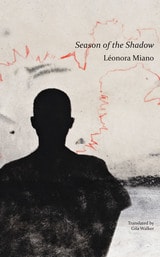
Season of the Shadow
Léonora Miano
Seagull Books, 2018
This powerful novel presents the early days of the transatlantic slave trade from a new perspective: that of the sub-Saharan population that became its first victims. Cameroonian novelist Léonora Miano presents a world on the brink of disappearing—a pre-colonial civilization with roots that stretch back for centuries. One day, a group of villagers finds twelve of their people missing. Where have they gone? Who is responsible? A collective dream, troubling a group of mothers in a communal dwelling, may have some of the answers, as the women’s missing sons call to them in terror; at the same time, a thick shadow settles over the huts, blocking out the light of day. It is the shadow of slavery, which will soon grow to blight the whole world.
Miano renders this brutal story in deliberately strange, dreamlike prose, befitting a situation that is, on its face, all but impossible for the villagers to believe.
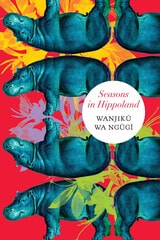
Seasons in Hippoland
Wanjiku Wa Ngugi
Seagull Books, 2021
Victoriana is a country ruled by an Emperor-for-Life who is dying from an illness not officially acknowledged in a land where truth and facts are decided by the Emperor. The elite goes along with the charade. Their children are conditioned to conform. It is a land of truthful lies, where reality has uncertain meaning.
Mumbi, a rebellious child from the capital of Westville, and her brother are sent to live in rural Hippoland. But what was meant to be a punishment turns out to be a glorious discovery of the magic of the land, best captured in the stories their eccentric aunt Sara tells them. Most captivating to the children is the tale of a porcelain bowl supposed to possess healing powers. Returning to Westville as an adult, Mumbi spreads the story throughout the city and to the entire country. Exhausted by years of endless bleak lies, the people are fascinated by the mystery of the porcelain bowl. When word of its healing powers reaches the Emperor himself, he commands Mumbi to find it for him—with dramatic consequences for everyone in Victoriana.
Captivating and enchanting, Seasons in Hippoland plays with the tradition of magic realism. Every image in this novel is a story, and every story is a call for resistance to anyone who tries to confine our imagination or corrupt our humanity.
Second Scroll
A.M. Klein
Northwestern University Press, 1985
The Second Scroll, Klein’s only novel, combines the lyric genius of his poetic works with compelling reportage to create one of the most eloquent and original works in Canadian fiction.

Secret Signs
T. J. Waters
Gallaudet University Press, 2010
Former golf pro Amy Kellen, recently widowed and the mother of a three-year-old daughter, hoped that her new job as a video relay service interpreter for deaf clients would bring stability into her life. She also wished to stay close to the Deaf community that meant so much to her late husband, who was deaf. Little did she know, however, that her new profession would cause her to witness the vicious killing of a deaf client during a video call. In this way author T. J. Waters thrusts Amy into a murder mystery that catches her up in intersecting worlds of intrigue—Internet scams, burglaries, and presidential politics—all connected through the rich Deaf community in Washington, DC.
During the investigation, Amy meets local detective Mike Seer and Secret Service agent Heath Rasco. Despite Seer’s insistence, she refuses to violate her professional ethics and discuss the content of the fatal call. Agent Rasco, who is hard of hearing, admires her commitment to her deaf clients. Amy admits her own attraction to the agent, but her first concern is to learn more about how her client, a respected deaf political strategist, was killed. Her pursuit causes her to witness two more murders and discover a third. She also finds herself and her daughter the targets of assassins. Secret Signs brings these extraordinary elements together in an electrifying combination that promises to surprise and satisfy.
Secret Spaces of Childhood
Elizabeth Goodenough, Editor
University of Michigan Press, 2003
Secret Understandings
A NovelMorris Philipson
University of Chicago Press, 2000
Secretly Inside
A NovelHans Warren; Translated by S. J. Leinbach
University of Wisconsin Press, 2006
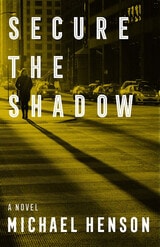
Secure the Shadow
A NovelMichael Henson
Ohio University Press, 2021
An interconnected web of lives in one midwestern city captures the surprising humanity of people searching for their authentic selves amid the 1990s drug crisis.
Amy Taylor finds the inner-city streets around her high school vibrant and animated compared to the bland middle-class neighborhood where she lives with her career-driven mother. In these streets, she meets the people of the city, among them a wayward boy named Jonathan, a struggling drug dealer, and Paul Lewis, a documentary photographer who becomes Amy’s mentor. Under his inspiration, she attempts to capture their world through the lens of her camera.
From the multiple perspectives of Amy and the expansive group of people she meets, award-winning novelist Michael Henson presents a heartbreaking portrait of the effects the Reagan-initiated drug war had on the young.
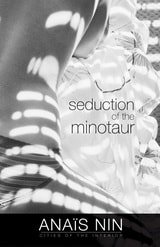
Seduction of the Minotaur
Anaïs Nin
Ohio University Press, 2014
Seduction of the Minotaur is the fifth and final volume of Anaïs Nin’s continuous novel known as Cities of the Interior. First published by Swallow Press in 1961, the story follows the travels of the protagonist Lillian through the tropics to a Mexican city loosely based on Acapulco, which Nin herself visited in 1947 and described in the fifth volume of her Diary. As Lillian seeks the warmth and sensuality of this lush and intriguing city, she travels inward as well, learning that to free herself she must free the “monster” that has been confined in a labyrinth of her subconscious.
This new Swallow Press edition includes an introduction by Anita Jarczok, author of Inventing Anaïs Nin: Celebrity Authorship and the Creation of an Icon.
Swallow Press publishes all five volumes that make up Cities of the Interior: Ladders to Fire, Children of the Albatross, The Four-Chambered Heart, A Spy in the House of Love, and Seduction of the Minotaur.
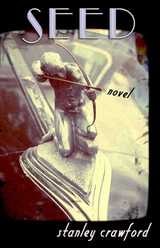
Seed
A NovelStanley Crawford
University of Alabama Press, 2015
What they get instead are Bill’s memories, made vivid by each item from the past, memories that are more exotic and curious than the lives currently lived by his young relatives.
Accompanied by his housekeeper, Ramona, and his young gardener, Jonathan, Bill is a somewhat cantankerous, wildly intelligent, and often forgetful man who recalls and speaks to his passed wife, often thinking that she's not dead. His unwillingness to recognize what has happened to her and to give away his only possession of any value, a 1937 Pierce-Arrow automobile that they bought together, becomes the measure of his grief and of his love in this profoundly funny novel that faces death and love sincerely.
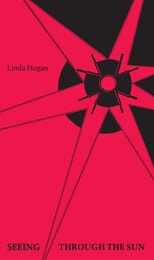
Seeing through the Sun
Linda Hogan
University of Massachusetts Press, 1985
Keen observation and vivid imagery mark this collection of poems by a Chickasaw Indian. Linda Hogan's subjects are often drawn from events of everyday life—gathering wood, watching her daughters sleep, witnessing changes in the weather, awaiting nightfall. But beneath the surface of these daily happenings runs a powerful undercurrent, a sureness of life's basic rhythms and a sensitivity to the pressures of survival.
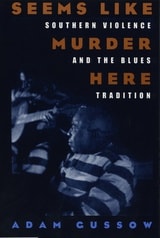
Seems Like Murder Here
Southern Violence and the Blues TraditionAdam Gussow
University of Chicago Press, 2002
Seems Like Murder Here offers a revealing new account of the blues tradition. Far from mere laments about lost loves and hard times, the blues emerge in this provocative study as vital responses to spectacle lynchings and the violent realities of African American life in the Jim Crow South. With brilliant interpretations of both classic songs and literary works, from the autobiographies of W. C. Handy, David Honeyboy Edwards, and B. B. King to the poetry of Langston Hughes and the novels of Zora Neale Hurston, Seems Like Murder Here will transform our understanding of the blues and its enduring power.
Selected Poems
Joseph Langland
University of Massachusetts Press, 1991
This book offers a selection of sixty-five poems from forty years of distinguished and prize-winning publication by Joseph Langland. These poems speak in a strong, natural voice that has mastered the craft and moves confidently within it. In them, one hears speech and music together in a wide-ranging world of ideas.
Selected Prose
New and Revised EditionJohn Milton, Edited by C. A. Patrides
University of Missouri Press, 1986
Although John Milton is best known for his poems such as Paradise Lost, his prose works, including Areopagitica, The Tenure of Kings, and The Doctrine and Discipline of Divorce, are important in their own right. In this selection of Milton’s prose, C.A. Patrides presents the best possible texts of complete works in a format designed to enable students to understand Milton the thinker as well as to judge for themselves the achievements of Milton the artist in prose.
First published in 1974, C.A. Patrides ‘s edition of Milton’s prose has proved invaluable to students and scholars of Renaissance literature because it includes mostly the complete texts of Milton’s prose works. Now, in this new and updated edition, Patrides has revised his introduction and his bibliography to reflect advances in Milton scholarship in the past ten years. In addition, the selections have been expanded to include passages from Milton’s theological treatise De doctrina Christiana.
For sale only in the USA and Philippines.
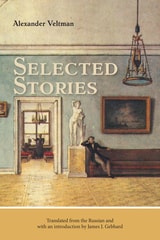
Selected Stories
A. F. Veltman
Northwestern University Press, 2026
In 1830s and ’40s Russia, A. F. Veltman’s eccentric writings were a fixture on the bookshelves of the reading public. In his era, his work influenced writers including Pushkin, Gogol, and Dostoevsky. The five stories collected here, united by themes of social satire, display Veltman’s characteristic pivots between the tragic, comic, and grotesque.
“Erotida” riffs on the genre of the society tale with linguistic puns and a bizarre plot resolution. In “Roland the Furious,” provincial officials mistake a traveler for a high-ranking government functionary. “Travel Impressions, and, among Other Things, a Pot of Geraniums” plays on the travelogue genre and includes what may be the first description in Russian literature of journey by railroad. “A Traveler from the Provinces; or, A Commotion in the Capital” parodies the Moscow literary salons of Veltman’s day. Finally, “It’s Not a House, but a Plaything!” toys with yet another storytelling convention of the time—the Russian folkloric tradition of “house spirits.”
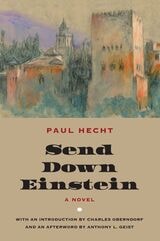
Send Down Einstein
Paul Hecht
Swan Isle Press, 2026
A comic and melancholy novel about translation and living between cultures, set during one historic day in Spain: February 21, 1981, the attempted coup against the newborn Spanish democracy.
Early one morning in 1981, Peter Carp, an American poet and translator living in Granada, wakes to the sounds of shouting and the revving of a motorcycle. These interruptions to Peter’s sleep provoke a series of interrelated thoughts, delivered with wry humor, about personal relations in Spain, gossip, the role of women in a patriarchal society, and the after-effects of expelling the Jewish population from Spain in 1492. We are introduced to Peter’s associative view of the world as he draws on a lifetime of reading poetry, of making sense of his own Jewish sensibility, and how it relates to the cultural history of the Spain he has come to love for its music, people, food, and language.
Peter lives in the home of Alberto, a professor of translation, who was once jailed under Franco’s regime. He has fallen in love with Ana, a young woman who is exploring the new freedoms of post-Franco Spain. Years ago, he had befriended flamenco singers of the Roma community, and his current task is to translate the flamenco lyrics he has collected, a process that challenges his understanding of Spanish and the capacity of language to convey meaning. His day brings him into contact with a wide range of Spaniards, including a gardener at the Alhambra, a group of children playing in the street, a professional beggar, a diverse range of personalities at a neighborhood bar before the midday dinner, and in the evening, a small band of fascist sympathizers encouraged by the attempted coup now taking place in the Spanish parliament.
With prose that mixes social observation, linguistic conjecture, and vivid description, Paul Hecht examines how living is itself a form of translation when moving from one language or culture to another, and how history can erupt into our own world. In Send Down Einstein, Hecht creates a tension between what we dream will happen and what actually does happen. In this bouillabaisse of emotion, the reader will taste how, for Peter Carp—with the right food and the best company—dreams, hope, and words can matter.
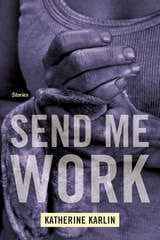
Send Me Work
StoriesKatherine Karlin
Northwestern University Press, 2011
Unlike the heroines of domestic fiction, Katherine Karlin's women face their biggest challenges outside of the house. The characters in this debut collection encompass a broad range of contemporary American experiences: a struggling young woman in post-Katrina New Orleans persuades a welder to teach her his trade; an orchestra oboist hears a confession from a beloved teacher; an idealistic aerobics instructor decamps for revolution- era Nicaragua to pick coffee on a farming collective.
In each of these stories, Karlin offers rare insight into the place of work in the lives of women, her narrators keenly observant and attuned to the humor that arises when life doesn't turn out as planned. But even more remarkable is the fullness with which she renders characters who make us wonder how they've escaped the notice of other writers. In unadorned prose that evokes complete worlds with deceptive ease, Karlin shows us people immersed in the negotiations of survival, just at the edge of being able to make sense of their lives.
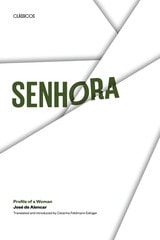
Senhora
Profile of a WomanBy José de Alencar
University of Texas Press, 1994
"It is a truth universally acknowledged . . ." that a single woman in possession of a good character but no fortune must be in want of a wealthy husband—that is, if she is the heroine of a nineteenth-century novel. Senhora, by contrast, turns the tables on this familiar plot. Its strong-willed, independent heroine Aurélia uses newly inherited wealth to "buy back" and exact revenge on the fiancé who had left her for a woman with a more enticing dowry.
This exciting Brazilian novel, originally published in 1875 and here translated into English for the first time, raises many questions about traditional gender relationships, the commercial nature of marriage, and the institution of the dowry. While conventional marital roles triumph in the end, the novel still offers realistic insights into the social and economic structure of Rio de Janeiro in the mid-1800s. With its unexpected plot, it also opens important new perspectives on the nineteenth-century Romantic novel.
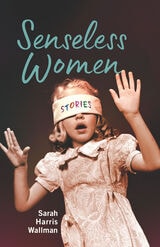
Senseless Women
Sarah Harris Wallman
University of Massachusetts Press, 2020
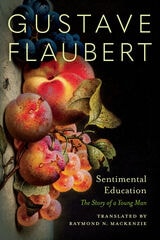
Sentimental Education
The Story of a Young ManGustave Flaubert
University of Minnesota Press, 2024
A fresh and vivid translation of Flaubert’s influential bildungsroman
Gustave Flaubert conceived Sentimental Education, his final complete novel, as the history of his own generation, one that failed to fulfill the promise of the Revolution of 1848. Published a few months before the start of the 1870 Franco–Prussian War, it offers both a sweeping panorama of French society over three decades and an intimate bildungsroman of a young man from a small town who arrives in Paris when protests against the monarchy are increasing.
The novel’s protagonist, Frédéric Moreau, alternates between aimlessness and ambition as he searches for a meaningful life through love affairs and republican politics. Flaubert’s narrative includes scenes of high drama, as scattered protests across Paris swell into revolution, and quiet moments of self-aware romanticism, crafting a story that possesses the sweep and scope of a historical novel combined with deep emotion and scandalous intimacy. Suffused with tragedy and the poignancy of lost chances and wasted lives, Sentimental Education is sharpened by satirical observations of what Flaubert condemned as the Second Empire’s endemic hypocrisy and willful blindness.
This vibrant, new translation by Raymond N. MacKenzie includes an extensive critical introduction and annotations to help the modern reader appreciate Flaubert’s achievement. Sentimental Education intertwines the personal, the intimate, and the subjective with the political, social, and cultural, embedding Frédéric’s story in the larger arc of what Flaubert saw as France’s decline into mediocrity and imbecility in its politics and manners.