Results by title
468 books match the query 'Industries' and 46 start with s

Sail, Steam, and Diesel
Moving Cargo on the Great LakesEric Hirsimaki
Michigan State University Press, 2024

Sales and Celebrations
Retailing and Regional Identity in Western New York State, 1920–1940Sarah Elvins
Ohio University Press, 2004
Between the two world wars, the retail world experienced tremendous changes. New forms of competition, expanded networks of communication and transportation, and the proliferation of manufactured goods posed challenges to department store and small shopkeeper alike.
In western New York, and in Buffalo and Rochester in particular, retailers were a crucial part of urban life, acting as cultural brokers and civic leaders. They were also cultivators of area pride. Even as they adopted the latest merchandising techniques or stocked the newest items, merchants emphasized their local roots and their ability to put a local spin on national trends and innovations. Regional identity became a powerful selling tool not only during the prosperity of the 1920s but also through the economic crisis of the Great Depression.
Sales and Celebrations explains how local traditions and institutions affected the evolution of American consumer culture. It expands our understanding of American consumerism, demonstrating that local particularities and loyalties could often coexist with, and occasionally challenge, the spread of mass consumption. In her award-winning study, Professor Sarah Elvins provides new insight into the relationship between America’s largest metropolises and its smaller centers. Retailers in Buffalo and Rochester did not simply imitate the practices of their counterparts in Manhattan and Chicago; they highlighted their unique ability to serve the wants and needs of their particular markets.
By drawing attention to this persistent power of the local, Sales and Celebrations illuminates a neglected aspect of the story of American culture in the interwar period.

Seeds of Occupation, Seeds of Possibility
The Agrochemical-GMO Industry in Hawai‘iAndrea Noelani Brower
West Virginia University Press, 2022
Hawaiʻi is a primary site for development of herbicide-resistant corn seed and, until recently, was host to more experimental field trials of genetically engineered crops than anywhere else in the world. It is also a node of powerful resistance. While documentaries and popular news stories have profiled the biotech seed industry in Hawaiʻi, Seeds of Occupation, Seeds of Possibility is the first book to detail the social and historical conditions by which the chemical-seed oligopoly came to occupy the most geographically isolated islands in the world and made the soils of Hawaiʻi the epicenter of agrochemical and agricultural biotechnology testing.
Andrea Brower, an activist-scholar from Hawaiʻi, examines the consequences related to genetically engineered seed development for Hawaiʻi’s people and the social movement that has risen in response. With insights beyond the islands, Seeds of Occupation, Seeds of Possibility illuminates why visions for a radically better world must be expanded by intersectional and systemically oriented movements.

Selected Writings on Agricultural Policy and Economic Analysis
Frederick V. WaughJames P. Houck and Martin E. Abel, Editors
University of Minnesota Press, 1984
Selected Writings on Agricultural Policy and Economic Analysis was first published in
1984. Minnesota Archive Editions uses digital technology to make long-unavailable books once again accessible, and are published unaltered from the original University of Minnesota Press editions.
Selling Power
Economics, Policy, and Electric Utilities Before 1940John L. Neufeld
University of Chicago Press, 2016
John L. Neufeld offers a comprehensive historical treatment of the economics that shaped electric utilities. Compared with most industries, the organization of the electric utility industry is not—and cannot be—economically efficient. Most industries are kept by law in a state of fair competition, but the capital necessary to start an electric company—generators, transmission and distribution systems, and land and buildings—is so substantial that few companies can enter the market and compete. Therefore, the natural state of the electric utility industry since its inception has been a monopoly subject to government oversight. These characteristics of electric utilities—and electricity’s importance—have created over time sharp political controversies, and changing public policies have dramatically changed the industry’s structure to an extent matched by few other industries. Neufeld outlines the struggles that shaped the industry’s development, and shows how the experience of electric utilities provides insight into the design of economic institutions, including today’s new large-scale markets.

Shaded Lives
African American Women and TelevisionBeretta E Smith-Shomade
Rutgers University Press, 2002
In Shaded Lives, Beretta Smith-Shomade sets out to dissect images of the African American woman in television from the 1980s. She calls their depiction "binaristic," or split. African American women, although an essential part of television programming today, are still presented as distorted and deviant. By closely examining the television texts of African-American women in comedy, music video, television news and talk shows (Oprah Winfrey is highlighted), Smith-Shomade shows how these voices are represented, what forces may be at work in influencing these images, and what alternate ways of viewing might be available.
Smith-Shomade offers critical examples of where the sexist and racist legacy of this country collide with the cultural strength of Black women in visual and real-lived culture. As the nation's climate of heightened racial divisiveness continues to relegate the representation of Black women to depravity and display, her study is not only useful, it is critical.
Shadow of the New Deal
The Victory of Public BroadcastingJosh Shepperd
University of Illinois Press, 2023
- Winner of the 2024 BEA Book Award
- Runner-up in the History Division of the Association for Education in Journalism and Mass Communication (AEJMC)
- Runner-up for the AJHA Book of the Year (American Journalism Historians Association).
Despite uncertain beginnings, public broadcasting emerged as a noncommercial media industry that transformed American culture. Josh Shepperd looks at the people, institutions, and influences behind the media reform movement and clearinghouse the National Association of Educational Broadcasters (NAEB) in the drive to create what became the Public Broadcasting Service and National Public Radio.
Founded in 1934, the NAEB began as a disorganized collection of undersupported university broadcasters. Shepperd traces the setbacks, small victories, and trial and error experiments that took place as thousands of advocates built a media coalition premised on the belief that technology could ease social inequality through equal access to education and information. The bottom-up, decentralized network they created implemented a different economy of scale and a vision of a mass media divorced from commercial concerns. At the same time, they transformed advice, criticism, and methods adopted from other sectors into an infrastructure that supported public broadcasting in the 1960s and beyond.
Shared Capitalism at Work
Employee Ownership, Profit and Gain Sharing, and Broad-Based Stock OptionsEdited by Douglas L. Kruse, Richard B. Freeman, and Joseph R. Blasi
University of Chicago Press, 2010
The historical relationship between capital and labor has evolved in the past few decades. One particularly noteworthy development is the rise of shared capitalism, a system in which workers have become partial owners of their firms and thus, in effect, both employees and stockholders. Profit sharing arrangements and gain-sharing bonuses, which tie compensation directly to a firm’s performance, also reflect this new attitude toward labor.
Shared Capitalism at Work analyzes the effects of this trend on workers and firms. The contributors focus on four main areas: the fraction of firms that participate in shared capitalism programs in the United States and abroad, the factors that enable these firms to overcome classic free rider and risk problems, the effect of shared capitalism on firm performance, and the impact of shared capitalism on worker well-being. This volume provides essential studies for understanding the increasingly important role of shared capitalism in the modern workplace.
Shepherd of the Hills Country
Tourism Transforms the Ozarks, 1880s-1930sLynn Morrow
University of Arkansas Press, 1999
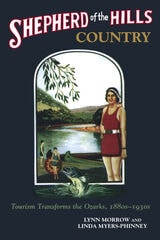
Modern tourism in the Ozark Mountains of Missouri and Arkansas is concentrated around the area’s glistening man-made lakes, its fish-filled streams and rivers, and the entertainment mecca of Branson. But recreational excursions into this part of the country began over one hundred years ago as urban Midwesterners, many of them captivated by Harold Bell Wright’s novel The Shepherd of the Hills, sought the outdoors for spiritual and physical regeneration.
Morrow and Myers-Phinney excavate the beginnings of commercial tourism in the region and follow it through six decades as the influx of visitors who became familiar with the Ozarks and its investment opportunities brought capital, new commerce, and additional residents to the hills. Chapters focus on float fishing, game parks, cave exploration, the influence of the railroad, and the men who were instrumental in the region’s transformation. The authors discuss traditional lifestyles rooted in “living off the land,” with stock raising and lumbering providing basic subsistence, and changes wrought by tourism, which affected all classes of people across the White River landscape. They describe the flowering of “Ozarks folklore”—how stories told around gravel-bar fishing camps and retold by newspaper journalists translated the hills’ oral tradition for mass audiences.
While the main theme of this study is the development of tourism, it is also a social history of the interior highlands of the Ozarks. We see how the residents and their way of life were discovered, exploited, and changed by new opportunities and the demands of tourism and increasing trade. As such, this book is a valuable new addition to the University of Arkansas Press’s Ozarks Collection.
Shock Cities
The Environmental Transformation and Reform of Manchester and ChicagoHarold L. Platt
University of Chicago Press, 2005
Shock Cities also recasts the age of industry within a larger frame of nature. Frightening epidemics and unnatural "natural disasters" forced the city dwellers onto the path of environmental reform. Crusaders for social justice such as Chicago's Jane Addams and Manchester's Charles Rowley led class-bridging campaigns to clean up the slums. Women activists and other "municipal housekeepers" promoted regulations to reduce air pollution. Public health experts directed efforts to improve sanitation.
Out of these reform movements, the Progressives formulated new concepts of environmental conservation and regional planning. Comparing the two cities, Platt highlights the ways in which political culture and institutions act to turn social geography into physical shapes on the ground. This focus on the political formation of urban space helps illuminate questions of social and environmental justice. Shock Cities will be of enormous value to students of ecology, technology, urban planning, and public health in the Western world.

Shoddy
From Devil’s Dust to the Renaissance of RagsHanna Rose Shell
University of Chicago Press, 2020
In Shoddy: From Devil’s Dust to the Renaissance of Rags, Hanna Rose Shell takes readers on a journey to discover shoddy, from Haiti to the “shoddy towns” of West Yorkshire in England, to the United States, back in time to the British cholera epidemics and the American Civil War, and into agricultural fields, textile labs, and rag-shredding factories. Shell’s narrative is both literary and historical, drawing on an extraordinary range of sources, from court cases to military uniforms, mattress labels to medical textbooks, political cartoons to high art. Shoddy moves between genres, bringing richly drawn characters and unexpected objects to life. Along the way, shoddy becomes equally an evocative object and a portal into another world.
Almost since the time it first appeared, shoddy was both ubiquitous and controversial. In part because it was often so hard to detect, it was inherently suspicious. Public health experts worried about sanitation and disease—how could old clothes be disinfected? As well, the idea of wearing someone else’s old clothes so close to your own skin was discomforting in and of itself. Could you sleep peacefully knowing that your mattress was very likely to be stuffed with dead soldiers’ overcoats? The use of the term “virgin” wool, the idea of virginity in relation to clothes, in fact emerged as an effort by the wool industry to counter shoddy’s appeal: to make shoddy seem shoddy. Over time, shoddy would capture a host of personal, ethical, commercial, and societal failings. And yet, there was always, within shoddy, the alluring concept of regeneration, of what we today think of as conscious clothing, eco-fashion, sustainable textiles.
Shell exposes an interwoven tale of industrial espionage, political infighting, scientific inquiry, ethnic prejudices, and war profiteering. Discarded clothes may make many journeys over the course of several lifetimes. Not only in your garments, but under your rug, in your mattress pads, piano blankets, in the peculiar confetti-like stuffing in your mailing envelopes, even in the insulation in your walls. Though it began with wool, over the past century the shredding “devil” has turned to synthetics from nylon stockings to Kevlar. Shoddy is likely connected to something you are wearing right now. After reading, you will never use the word shoddy or think about your clothes, the environment, sustainability, or the intermingled world around you the same way again.

Sick Planet
Corporate Food and MedicineStan Cox
Pluto Press, 2008
Neoliberals often point to improvements in public health and nutrition as examples of globalisation's success, but this book argues that the corporate food and medicine industries are destroying environments and ruining living conditions across the world.
Scientist Stan Cox expertly draws out the strong link between Western big business and environmental destruction. This is a shocking account of the huge damage that drug manufacturers and large food corporations are inflicting on the health of people and crops worldwide. Companies discussed include Wal-Mart, GlaxoSmithKline, Tyson Foods and Monsanto. On issues ranging from the poisoning of water supplies in South Asia to natural gas depletion and how it threatens global food supplies, Cox shows how the demand for profits is always put above the public interest.
While individual efforts to "shop for a better world" and conserve energy are laudable, Cox explains that they need to be accompanied by an economic system that is grounded in ecological sustainability if we are to find a cure for our Sick Planet.
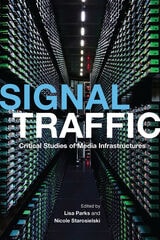
Signal Traffic
Critical Studies of Media InfrastructuresEdited by Lisa Parks and Nicole Starosielski
University of Illinois Press, 2015
Some contributors explore the physical objects and industrial relations that make up an infrastructure. Others venture into the marginalized communities orphaned from the knowledge economies, technological literacies, and epistemological questions linked to infrastructural formation and use. The wide-ranging insights delineate the oft-ignored contrasts between industrialized and developing regions, rich and poor areas, and urban and rural settings, bringing technological differences into focus.
Contributors include Charles R. Acland, Paul Dourish, Sarah Harris, Jennifer Holt and Patrick Vonderau, Shannon Mattern, Toby Miller, Lisa Parks, Christian Sandvig, Nicole Starosielski, Jonathan Sterne, and Helga Tawil-Souri.

Silver “Thieves," Tin Barons, and Conquistadors
Small-Scale Mineral Production in Southern BoliviaMary Van Buren
University of Arizona Press, 2024
The methods of historian Bertell Ollman, particularly a dialectical approach and “doing history backwards,” are used to examine small-scale mineral production in Porco, Bolivia. The research is based on nine seasons of archaeological fieldwork and historical research, with a particular focus on labor and technology. Van Buren argues that artisanal mineral production must be understood in relation to large-scale mining rather than as a traditional practice and that the Bolivian case is a culturally specific instantiation of a broader economic phenomenon that began under colonial regimes.

Slaughterhouse
Chicago's Union Stock Yard and the World It MadeDominic A. Pacyga
University of Chicago Press, 2015
Slaughterhouse tells the story of the Union Stock Yard, chronicling the rise and fall of an industrial district that, for better or worse, served as the public face of Chicago for decades. Dominic A. Pacyga is a guide like no other—he grew up in the shadow of the stockyards, spent summers in their hog house and cattle yards, and maintains a long-standing connection with the working-class neighborhoods around them. Pacyga takes readers through the packinghouses as only an insider can, covering the rough and toxic life inside the plants and their lasting effects on the world outside. He shows how the yards shaped the surrounding neighborhoods and controlled the livelihoods of thousands of families. He looks at the Union Stock Yard’s political and economic power and its sometimes volatile role in the city’s race and labor relations. And he traces its decades of mechanized innovations, which introduced millions of consumers across the country to an industrialized food system.
Once the pride and signature stench of a city, the neighborhood is now home to Chicago’s most successful green agriculture companies. Slaughterhouse is the engrossing story of the creation and transformation of one of the most important—and deadliest—square miles in American history.

Sloan Rules
Alfred P. Sloan and the Triumph of General MotorsDavid Farber
University of Chicago Press, 2002
Here, for the first time, is a study of both the difficult man and the pathbreaking executive. Sloan Rules reveals the GM genius as not only a driven manager of men, machines, money, and markets but also a passionate and not always wise participant in the great events of his day. Sloan, for example, reviled Franklin Roosevelt and the New Deal; he firmly believed that politicians, government bureaucrats, and union leaders knew next to nothing about the workings of the new consumer economy, and he did his best to stop them from intervening in the private enterprise system. He was instrumental in transforming GM from the country's largest producer of cars into the mainstay of America's "Arsenal of Democracy" during World War II; after the war, he bet GM's future on renewed American prosperity and helped lead the country into a period of economic abundance. Through his business genius, his sometimes myopic social vision, and his vast fortune, Sloan was an architect of the corporate-dominated global society we live in today.
David Farber's story of America's first corporate genius is biography of the highest order, a portrait of an extraordinarily compelling and skillful man who shaped his era and ours.

Sloss Furnaces and the Rise of the Birmingham District
An Industrial EpicW. David Lewis
University of Alabama Press, 1994
"A masterpiece that deserves to be ranked with such seminal and influential works as Cash’s Mind of the South." —Edwin T. Layton Jr., author of The Revolt of the Engineers: Social Responsibility and the American Profession
This pathbreaking book tells the dramatic story of a unique manufacturing complex and the city that it helped to create. The events recounted and interpreted by W. David Lewis are of more than local or regional significance. The rise of Sloss furnaces and Birmingham epitomized the emergence of the United States as the world's foremost economic power. Similarly, the closing of a once-profitable ironmaking installation amid social and technological changes that convulsed Birmingham nine decades after the city's founding typified challenges that were facing America at the dawn of the postindustrial age.
Above all, Sloss Furnaces resonates with the class of competition and the frenetic energy with which southerners joined other Americans in a rush to transform a continent after a fratricidal drive for independence had failed. The sweeping narrative that Lewis has produced amply justifies its subtitle, An Industrial Epic.
Small Privatization
The Transformation of Retail Trade and Consumer Services in the Czech Republic, Hungary and PolandRoman Frydman
Central European University Press, 1994

Smartland Korea
Mobile Communication, Culture, and SocietyDal Yong Jin
University of Michigan Press, 2017

So Great Was the Slaughter
Market Hunters, Sportsmen, and Wildlife Conservation in ArkansasBuckley T. Foster
University of Alabama Press, 2025
Winner of the 2026 J.G. Ragsdale Book Award
So Great Was the Slaughter reveals the untold story of Arkansas conservation pioneers who saved the state’s game and fish populations. As Arkansas entered the twentieth century, the national demand for meat combined with the ability to ship millions of animals to hungry cities like New Orleans, Memphis, and Chicago had driven many species, including bison and passenger pigeons, to extinction in Arkansas. Many others, including deer, bear, turkey, quail, and fish, were in danger of disappearing.
In response, an unlikely coalition of Arkansas sportsmen, hunters, and conservationists created a vision for conservation legislation, game laws, and the establishment of fish hatcheries and wildlife refuges. With support from influential outsiders like E. A. McIlhenny and the United States Biological Survey, they waged a long battle against entrenched political and commercial interests.
Buckley Foster’s meticulous research reveals how these pioneers fought to save the state’s wildlife resources from destruction and laid the foundations for sustainable, modern wildlife management in Arkansas. So Great Was the Slaughter will fascinate hunters, conservationists, historians, and those interested in the history of wildlife conservation and conflicts between market hunters and sportsmen in the United States and the American South.
Social History of Economic Decline
Business, Politics, and Work in TrentonCumbler, John T.
Rutgers University Press, 1989
Social Responsibilities of the Businessman
Howard R. Bowen
University of Iowa Press, 2013
First published in 1953, Howard R. Bowen’s Social Responsibilities of the Businessman was the first comprehensive discussion of business ethics and social responsibility. It created a foundation by which business executives and academics could consider the subjects as part of strategic planning and managerial decision-making. Though written in another era, it is regularly and increasingly cited because of its relevance to the current ethical issues of business operations in the United States. Many experts believe it to be the seminal book on corporate social responsibility.
This new edition of the book includes an introduction by Jean-Pascal Gond, Professor of Corporate Social Responsibility at Cass Business School, City University of London, and a foreword by Peter Geoffrey Bowen, Daniels College of Business, University of Denver, who is Howard R. Bowen's eldest son.

Solidarity in Strategy
Making Business Meaningful in American Trade AssociationsLyn Spillman
University of Chicago Press, 2012
Popular conceptions hold that capitalism is driven almost entirely by the pursuit of profit and self-interest. Challenging that assumption, this major new study of American business associations shows how market and non-market relations are actually profoundly entwined at the heart of capitalism.
In Solidarity in Strategy, Lyn Spillman draws on rich documentary archives and a comprehensive data set of more than four thousand trade associations from diverse and obscure corners of commercial life to reveal a busy and often surprising arena of American economic activity. From the Intelligent Transportation Society to the American Gem Trade Association, Spillman explains how business associations are more collegial than cutthroat, and how they make capitalist action meaningful not only by developing shared ideas about collective interests but also by articulating a disinterested solidarity that transcends those interests.
Deeply grounded in both economic and cultural sociology, Solidarity in Strategy provides rich, lively, and often surprising insights into the world of business, and leads us to question some of our most fundamental assumptions about economic life and how cultural context influences economic.

Something for Everyone
Memories of Lauerman Brothers Department StoreMichael Leanah
Wisconsin Historical Society Press, 2013
This book traces the history of the Lauerman enterprise and its importance to the community of Marinette and dozens of counties in northern Wisconsin and the UP. The author takes readers on a tour of the store’s most memorable and delightful features, from the plethora of merchandise offered to the record-listening booths to the famous frosted malt cones. Along the way we hear the recollections of dozens of former customers and employees whose memories form a unique tapestry of family, business, and community story. As it brings to life the people who worked and shopped at Lauermans, Something for Everyone will have readers fondly recalling their own favorite shopping destinations during the golden age of department stores.
Southern Capitalism
The Political Economy of North Carolina, 1880–1980Philip J. Wood
Duke University Press, 1986
Southern Illinois Coal
A PortfolioC. William Horrell. Edited with an Introduction by Herbert K. Russell. Foreword by Jeffrey L. Horrell
Southern Illinois University Press, 1995
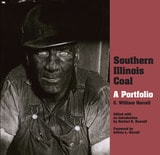
The coal mining photographs of C. William Horrell, taken across the southern Illinois Coal Belt over a twenty-year period from 1966 to 1986, are extraordinary examples of documentary photography—so stark and striking that captions often seem superfluous.
Horrell’s photographs capture the varied phenomena of twentieth-century coal mining technology: the awesome scale of surface mining machines and their impact on the land; massive machines forced into narrow passageways with inches to spare as they carry coal from the face to conveyer belts; and, more significant, the advent of continuous miners, machines that can handle four previously separate processes and which have been a fixture in underground or “deep” mines since the mid-1960s.
Horrell was also intrigued by the related activities of mining, including coal’s processing, cleaning, and transportation, as well as the daily, behind-the-scenes operations that keep mines and miners working. His photographs reflect the beauty of the commonplace—the clothes of the miners, their dinner pails, and their tools—and reveal the picturesque remnants of closed mines: the weathered boards of company houses, the imposing iron beauty of an ancient tipple, and an abandoned building against the lowering sky of an approaching storm. Finally, his portraits of coal minersshow the strength, dignity, and enduring spirit of the men and women who work the southern Illinois coal mines.

Southern Journeys
Tourism, History, and Culture in the Modern SouthEdited by Richard D. Starnes
University of Alabama Press, 2003
The first collection of its kind to examine tourism as a complicated and vital force in southern history, culture, and economics
Anyone who has seen Rock City, wandered the grounds of Graceland, hiked in Great Smoky Mountains National Park, or watched the mermaids swim at Weeki Wachee knows the southern United States offers visitors a rich variety of scenic, cultural, and leisure activities. Tourism has been, and is still, one of the most powerful economic forces in the modern South. It is a multibillion-dollar industry that creates jobs and generates revenue while drawing visitors from around the world to enjoy the region’s natural and man-made attractions.This collection of 11 essays explores tourism as a defining force in southern history by focusing on particular influences and localities. Alecia Long examines sex as a fundamental component of tourism in New Orleans in the early 20th century, while Brooks Blevins describes how tourism served as a modernizing influence on the Arkansas Ozarks, even as the region promoted itself as a land of quaint, primitive hillbillies. Anne Whisnant chronicles the battle between North Carolina officials building the Blue Ridge Parkway and the owner of Little Switzerland, who fought for access and advertising along the scenic highway. One essay probes the racial politics behind the development of Hilton Head Island, while another looks at the growth of Florida's
panhandle into a “redneck Riviera,” catering principally to southerners, rather than northern tourists.
Southern Journeys is a pioneering work in southern history. It introduces a new window through which to view the region's distinctiveness. Scholars and students of environmental history, business history, labor history, and social history will all benefit from a consideration of the place of tourism in southern life.
Stadium City
Sports and Media Infrastructure in the United StatesHelen Morgan Parmett
University of Illinois Press, 2025

Staging Tourism
Bodies on Display from Waikiki to Sea WorldJane C. Desmond
University of Chicago Press, 1999
Gathering together written accounts, postcards, photographs, advertisements, films, and oral histories as well as her own interpretations of these displays, Desmond gives us a vibrant account of U.S. tourism in Waikiki from 1900 to the present. She then juxtaposes cultural tourism with "animal tourism" in the United States, which takes place at zoos, aquariums, and animal theme parks. In each case, Desmond argues, the relationship between the viewer and the viewed is ultimately based on concepts of physical difference harking back to the nineteenth century.

Staging a Comeback
Broadway, Hollywood, and the Disney RenaissancePeter C. Kunze
Rutgers University Press, 2023
Steam City
Railroads, Urban Space, and Corporate Capitalism in Nineteenth-Century BaltimoreDavid Schley
University of Chicago Press, 2020
Steam City tells the story of corporate capitalism starting from the street and moving outward, looking at how the rise of the railroad altered the fabric of everyday life in the United States. The B&O’s founders believed that their new line would remap American economic geography, but no one imagined that the railroad would also dramatically reshape the spaces of its terminal city. As railroad executives wrangled with city officials over their use of urban space, they formulated new ideas about the boundaries between public good and private profit. Ultimately, they reinvented the B&O as a private enterprise, unmoored to its home city. This bold reconception had implications not only for the people of Baltimore, but for the railroad industry as a whole. As David Schley shows here, privatizing the B&O helped set the stage for the rise of the corporation as a major force in the post-Civil War economy.
Steam City examines how the birth and spread of the American railroad—which brought rapid communications, fossil fuels, and new modes of corporate organization to the city—changed how people worked, where they lived, even how they crossed the street. As Schley makes clear, we still live with the consequences of this spatial and economic order today.

Steel and Economic Growth in Mexico
By William E. Cole
University of Texas Press, 1967
Iron ore is widely distributed over the world and has been mined from ancient times, but Mexico, with a good supply of ore, was a relative newcomer to the ranks of iron- and steel-producing nations. This distinctive book offers a history of the Mexican iron and steel industry through the 1960s.
Archaeological evidence, the author states, shows that the indigenous peoples of Mexico had developed a technology of metallurgy—relying on gold, silver, copper, tin and bronze—before the arrival of the Spaniards, but those same peoples had no knowledge of iron. That knowledge and accompanying technology arrived with the conquistadores.
Extremely slow development characterized the progress of iron mining in Mexico and until the twentieth century ore mining and metal forging continued to be handled on a small scale.
By the turn of the century two occurrences had combined to give Mexico an embryonic steel market: the railroad grid had come to link Mexico’s diverse regions and Porfirio Díaz had used his personal power to eliminate interstate tariff barriers to trade. In 1900 the first integrated steel mill in Latin America was established in Monterrey—the city that was to become the capital of Mexico’s manufacturing sector.
Forty years later, shortages of steel imports provided the motivation for the second stage of growth of the steel industry. Much of the book is devoted to the study of this period of growth.
William E. Cole tells the whole story in this scholarly study, which has as its twofold purpose a complete examination of the iron and steel industry of Mexico and an assessment of the impact of that industry on other sectors of the economy. Much space is devoted to an analysis of the role of the Mexican government in promoting and regulating the steel industry and to discussion of the efficiency of the promotional tools employed by the government. Further, he studies the status of the industry in the 1960s, its production and its consumption, and presents a projection for the future.

Strategic Communications in Healthcare
Building Trust, Reputation, and ImpactEdited by Rose Glenn and David Jarrard
Michigan Publishing Services, 2027
Strategic Communications in Healthcare: Building Trust, Reputation and Impact is a landmark textbook that combines innovative approaches to communication with the enduring principles that drive effectiveness, influence, and results. Drawing on the real-world expertise of nationally recognized leaders Rose Glenn and David Jarrard—along with a who’s who of senior healthcare communicators and educators—this hands-on guide brings together trust-building, messaging, crisis response, culture, brand, patient experience, research, measurement, AI, and more foundational elements into a cohesive framework for students and professionals alike.

Strategic Newspaper Management
Conrad Fink
Southern Illinois University Press, 1988
The time is right for bright, aggressive newspaper managers to influence and prosper, but bleak indeed for those newspapers whose managers lack the requisite knowledge. Using case studies and examples from the business, Fink shows why some newspapers change with the times and surge ahead and why some continue to publish to an eroding market base and fail.
The difference between success and failure, he concludes, is in "long-range planning and in daily operating methodology—in, simply, the professionalism of management at all levels."

Struggle on the North Santiam
Power and Community on the Margins of the American WestBob H Reinhardt
Oregon State University Press, 2020
In this deeply researched account, historian Bob H. Reinhardt connects the North Santiam Canyon’s history to that of the Pacific Northwest and the United States more broadly. Readers will learn about specific events that illuminate themes in the region’s history: railroad development as seen through the failed dreams of the Oregon Pacific Railroad, federal land scams in the Oregon land fraud trials of the early twentieth century, the causes and consequences of mid-century river development projects like Detroit Dam, the post-war booms and busts of the timber industry, the spotted owl/ancient forest debate in the 1980s and 1990s, and the promises and perils of Oregon’s recreational tourism economy.
From nineteenth-century interactions between Native and non-Native peoples to the changing fortunes of the timber industry and questions about economic and environmental sustainability in the twenty-first century, the book offers important insights into power dynamics in small communities and marginal places. Struggle on the North Santiam will be of interest to scholars of the American West and thoughtful readers interested in Oregon and Pacific Northwest history.
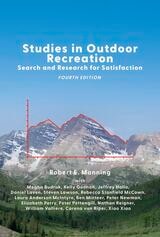
Studies in Outdoor Recreation
Search and Research for SatisfactionRobert E. Manning
Oregon State University Press, 2022
Since its original publication in 1986, Studies in Outdoor Recreation has been a standard text in courses on parks and outdoor recreation and serves as an invaluable reference for park and recreation managers. The first book to integrate the social science literature on outdoor recreation, it reviews studies from this broad, interdisciplinary field and synthesizes them into a body of knowledge, providing an historical perspective on outdoor recreation research and developing its practical management implications.
This fourth edition includes a new preface and is completely revised to reflect current research and new concerns in the field. A new chapter examines emerging issues such as sustainable transportation and the impacts of climate change.
An essential resource for students, scholars, and professionals, Studies in Outdoor Recreation explores the theoretical and methodological issues in outdoor recreation and describes the management implications of outdoor recreation research.
Contributors to the fourth edition include Laura Anderson, Megha Budruk, Kelly Goonan, Jeffrey Hallo, Daniel Laven, Steven Lawson, Rebecca Stanfield McCown, Ben Minteer, Peter Newman, Elizabeth Perry, Peter Pettengill, Nathan Reigner, William Valliere, Carena van Riper, and Xiao Xiao.

Studies of Supply and Demand in Higher Education
Edited by Charles T. Clotfelter and Michael Rothschild
University of Chicago Press, 1993
In higher education, supply refers to such issues as government support for public colleges and universities, the means by which graduate programs allocate financial support to students, and the criteria that universities use for investing endowments. Demand pertains to patterns of student enrollment and to the government, business, and individual market for the service and research activities of higher education.
Why are tuitions nearly the same among schools despite differences in prestige? How are institutions with small endowments able to compete successfully with institutions that have huge endowments? How are race and ethnicity reflected in enrollment trends? Where do the best students go? What choices among colleges do young people from low-income backgrounds face? This volume addresses these questions and suggests subjects for further study of the economics of higher education.

Studying Unmade, Unseen, and Unreleased Film and Television
Histories, Theories, MethodsJames Fenwick and Kieran Foster
Intellect Books, 2026
Unmade, unseen, and unreleased film and television are a strikingly underexplored aspect of media history, even though significant financial investment and creative labor in these industries are devoted to projects that never reach production or distribution. This groundbreaking collection offers a comprehensive examination of this phenomenon, bringing together interdisciplinary perspectives from film history, gender and sexuality studies, industry studies, archival research, and creative practice.
Each chapter presents a state-of-the-art overview of a key theme, debate, method, or theory, drawing on illuminating case studies from different historical periods and global contexts. Together, the contributions define what it means for a work to remain unmade, unseen, or unreleased, while showcasing innovative research approaches and mapping the scale of unfinished projects in film and television. Serving as both a foundational text for students and a valuable reference for established researchers, the volume’s scope will offer an essential resource for anyone seeking to understand the hidden histories of the screen industries.
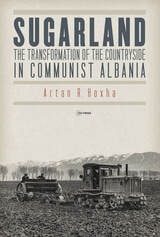
Sugarland
The Transformation of the Countryside in Communist AlbaniaArtan R. Hoxha
Central European University Press, 2023
In this historical monograph on non-urban communist Albania, Artan Hoxha discusses the ambitious development project that turned a swampland into a site of sugar production after 1945. The author seeks to free the history of Albanian communism from the stereotypes that still circulate about it with stigmas of an aberration, paranoia, extreme nationalism, and xenophobia.
This micro-history of the agricultural and industrial transformation of a zone in southeastern Albania, explores a wide range of issues including modernization, development, and social, cultural, and economic policies. In addition to analyzing the collectivization of agriculture, Hoxha shows how communism affected the lives of ordinary rural people. As elsewhere in the Communist Bloc, the Albanian regime borrowed developmental projects from the past and implemented them using social mobilization and a command economy. The abundant archival resources along with interviews in the field attest to the authorities’ efforts to increase consumption and to radically transform people’s tastes. But the book argues that despite the repressive environment, people involved in the sugar project were not simply passive receivers of models from the nation's capital. The author also describes that—in defiance of Cold War bipolarity—technological requirements and social policy considerations required a degree of engagement with the broader world.

Supersizing Urban America
How Inner Cities Got Fast Food with Government HelpChin Jou
University of Chicago Press, 2017
What doesn’t get mentioned in all this? The fact that the federal government helped create the obesity crisis in the first place—especially where it is strikingly acute, among urban African-American communities. Supersizing Urban America reveals the little-known story of how the U.S. government got into the business of encouraging fast food in inner cities, with unforeseen consequences we are only beginning to understand. Chin Jou begins her story in the late 1960s, when predominantly African-American neighborhoods went from having no fast food chain restaurants to being littered with them. She uncovers the federal policies that have helped to subsidize that expansion, including loan guarantees to fast food franchisees, programs intended to promote minority entrepreneurship, and urban revitalization initiatives. During this time, fast food companies also began to relentlessly market to urban African-American consumers. An unintended consequence of these developments was that low-income minority communities were disproportionately affected by the obesity epidemic.
In the first book about the U.S. government’s problematic role in promoting fast food in inner-city America, Jou tells a riveting story of the food industry, obesity, and race relations in America that is essential to understanding health and obesity in contemporary urban America.
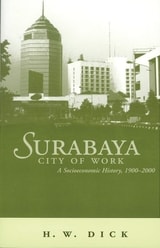
Surabaya, City of Work
A Socioeconomic History, 1900–2000Howard Dick
Ohio University Press, 2002
Surabaya is Indonesia’s second largest city but is not well known to the outside world. Yet in 1900, Surabaya was a bigger city than Jakarta and one of the main commercial centers of Asia. Collapse of sugar exports during the 1930s depression, followed by the Japanese occupation, revolution, and independence, brought on a long period of stagnation and retreat from the international economy. Not until the export boom of the 1990s did Surabaya regain prominence as Southeast Asia’s leading non–capital–city industrial area.
Previous thinking on Indonesia is being reassessed in light of recent political and economic upheaval. Surabaya, City of Work offers an alternative to the Jakarta-centric focus of most writing on the country. It is a multifaceted view of a fascinating and complex city in the dimensions of time and space, economy and society, and the current transition toward decentralization makes it highly topical.
Exploration of this eventful economic history gives new insight into Indonesia’s modern economic development. Industrialization is recognized as being associated with rapid urbanization, but this is the first study of Indonesia from an explicitly urban perspective. Surabaya, City of Work takes a broad approach that links industrialization to socioeconomic trends, the increasing role of government, changing land use, and trade patterns.
This well–illustrated local history encompassing national events and trends will be a central work on Indonesia for years to come.

Survival Arts of the Primitive Paiutes
Margaret M. Wheat
University of Nevada Press, 1977

Sustainable Failures
Environmental Policy and Democracy in a Petro-dependent WorldSherry Cable
Temple University Press, 2012
Environmental policies fail in conspicuous and egregious ways to sustain the natural resource base and protect citizens from production-generated risky exposures. In her engaging study, Sustainable Failures, Sherry Cable asks, why does environmental policy seem to be a contributing cause rather than a partial solution to environmental problems?
Melding a biophysical science perspective of environmental processes with sociological insights into human behavior, Cable examines the people, policies, and issues of petrochemical dependence and broader environment questions. She insists that our present policies around the manufacture and use of petroleum products violate rudimentary ecological principles—and do so in complicated ways.
Sustainable Failures is a blistering wake-up call to what is at stake not only regarding the failure of policy outcomes and grievous natural resource depletion and pollution, but also concerning democracy and ecological survival, and eventually, potentially, the existence of our species.

Sustaining the Borderlands in the Age of NAFTA
Development, Politics, and Participation on the US-Mexico BorderSuzanne Simon
Vanderbilt University Press, 2014
Although the key to the side accords' anticipated success lay in their ostensibly generous encouragement of a participatory politics and sustainable development opportunities, Sustaining the Borderlands reveals that the Mexican border populations for which they were largely created are effectively excluded from participating due to the ongoing online, territorial, class, and cultural barriers that shape the borderlands. Rather than experiencing the side accords and their companion institutions as transparent and accessible, residents experienced them as opaque and indecipherable. Simon concludes that the side accords have failed to deliver on their promise of bringing democracy to Mexico because practical mechanisms that would ensure their effective implementation were never put in place.
NAFTA took effect at a time when Mexico was undergoing a democratic transition. The treaty was supposed to encourage this transition and improve environmental and labor conditions on the US-Mexico border. This book demonstrates that, twenty years later, the promises of NAFTA have not come to pass.

Sweet Greeks
First-Generation Immigrant Confectioners in the HeartlandAnn Flesor Beck
University of Illinois Press, 2020
Ann Flesor Beck's charming personal account recreates the atmosphere of her grandfather's candy kitchen with its odors of chocolate and popcorn and the comings-and-goings of family members. "The Store" represented success while anchoring the business district of Gus's chosen home. It also embodied the Midwest émigré experience of chain migration, immigrant networking, resistance and outright threats by local townspeople, food-related entrepreneurship, and tensions over whether later generations would take over the business.
An engaging blend of family memoir and Midwest history, Sweet Greeks tells how Greeks became candy makers to the nation, one shop at a time.
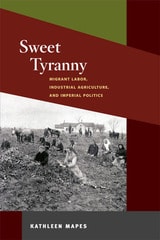
Sweet Tyranny
Migrant Labor, Industrial Agriculture, and Imperial PoliticsKathleen Mapes
University of Illinois Press, 2008