Results by title
683 books match the query 'Middle East' and 36 start with s

Sabra and Shatila
September 1982Bayan Nuwayhed Al-Hout
Pluto Press, 2004
The book covers the history of the Sabra and Shatila massacre, which took place over three bloody days in the Lebanese capital Beirut. It was committed against Palestinian refugees by Lebanese militias, aided and supervised by the Israeli Army, which had encircled the district.
Now available for the first time in English, this classic book is the most comprehensive, authoritative account of what happened and who was responsible. The author, Bayan Nuwayhed al-Hout, was a Professor at the Lebanese University at the time. Driven by the horror of what occurred, she interviewed survivors and set up an oral history project immediately after the massacre to preserve testimonies. This book is the result.
Following a general introduction, the first part contains interviews mainly with victims' families. The second part analyses statistical data and attempts to determine the number of victims. The conclusion, 'Who Was Responsible?', sheds light on the various parties responsible.
Over five-hundred pages long, illustrated with photographs and maps, unrivalled in detail and scope, this book is a courageous attempt to make sense of what happened and an important political document in its own right.
Safavid Iran and Her Neighbors
Michel M. Mazzaoui
University of Utah Press, 2013
Safavid Iran and Her Neighbors focuses primarily on Persian external relations during this period. The wide-ranging contributions to this volume cover dervish orders, the Central Asian hajj, developments in Shi'i legal theory, cultural relations between Persia and Mughal India, and diplomatic relations between Iran, Russia, and Ottoman Turkey.
Safed, Zionist Culture, and Jewish History
Toward a New Historical PerspectiveAmnon Raz-Krakotzkin
Brandeis University Press, 2026
Brings the legacy of sixteenth-century Safed into modern scholarship on Zionism to propose a new model of Jewish existence.
Sixteenth-century Safed was one of the most important centers of thought and learning in Jewish history, yet Zionist historical narratives, which emphasize the continuity of Jewish presence in Palestine, have consistently downplayed or ignored it. Amnon Raz-Krakotzkin investigates this strange contradiction. His new book argues that Safed articulates a model of early modern Jewish national revival, one closely connected to the land and its material geography, yet radically different from the Zionist model that emerged in the late nineteenth century. While Zionism set out to restore Biblical Jewish sovereignty, rabbinic Safed’s emphasis on the Mishnah proposed a non-sovereign Jewish connection to the land.
As much a polemic as a historical and theological analysis, Safed, Zionist Culture, and Jewish History offers a provocative new perspective on questions related to nationalism, Judaism, and Israel.
Sara
My Whole Life Was a StruggleSakine Cansiz
Pluto Press, 2018
This is the first chapter of her iconic life, leading up to her arrest in 1979, penned as dramatic events unfolded against the backdrop of the Turkish revolutionary left. She writes about the excitement of entering the movement as a young woman, discovering she would have to challenge traditional gender roles as she rose amongst its ranks. She was one of the first to demand the recruitment and education of female revolutionaries, and demanded total gender equality within the PKK, which is now one of its central tenets.
Today, 'Sara' is an inspiration to women fighting for liberation across the world. This is her story in her own words, and is in turns shocking, violent and path-breaking.
Translated by Janet Biehl.
Sarah the Priestess
The First Matriarch of GenesisSavina Teubal
Ohio University Press, 1984
In a patriarchal environment such as the Canaan of Genesis, the situation is discordant and problematic. Dr. Teubal suggests that the difficulty is eliminated, however, if we understand that Sarah and the other matriarchs mentioned in the narratives acted within the established, traditional Mesopotamian role of priestess, of a class of women who retained a highly privileged position vis-a-vis their husbands.
Dr. Teubal shows that the “Sarah tradition” represents a nonpatriarchal system struggling for survival in isolation, in the patriarchal environment of what was for Sarah a foreign society. She further indicates that the insistence of Sarah and Rebekah that their sons and heirs marry wives from the old homeland had to do not so much with preference for endogamy and cousin marriage as with their intention of ensuring the continuation of their old kahina-tradition against the overwhelming odds represented by patriarchal Canaan.
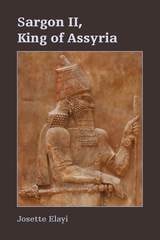
Sargon II, King of Assyria
Josette Elayi
SBL Press, 2017
A critical resource that traces the reign of Sargon in context
Josette Elayi's book is the only existing biography of Sargon II, the famous Assyrian king, who was a megalomaniac and a warlord. Elayi addresses such important questions, including what was his precise role in the disappearance of the kingdom of Israel; how did Sargon II succeed in enlarging the borders of the Assyrian Empire by several successful campaigns; how did he organize his empire (administration, trade, agriculture, libraries), and what was the so-called sin of Sargon?
Features:
- Interpretations of decisive events during the life and reign of the Assyrian king
- An evaluation of Sargon II s reign
- Maps, tables, and illustrations
Sasun
The History of an 1890s Armenian RevoltJustin McCarthy
University of Utah Press, 2014
Satan's Stones
By Moniru Ravanipur
University of Texas Press, 1996
Women writers occupy prominent positions in late 20th century Iranian literature, despite the increased legal and cultural restrictions placed upon women since the 1978-1979 Islamic Revolution. One of these writers is Moniru Ravanipur, author of the critically acclaimed The Drowned and Heart of Steel.
Satan's Stones is the first English translation of her 1991 short story collection Sangha-ye Sheytan. Often set in the remote regions of Iran, these stories explore many facets of contemporary Iranian life, particularly the ever-shifting relations between women and men. Their bold literary experimentation marks a new style in Persian fiction akin to "magical realism."
Reports from Iran indicated that Satan's Stones had been banned there by government authorities. While its frank explorations of Iranian society may have offended Islamic leaders, they offer Western readers fresh perspectives on Iranian culture from one of the country's most distinguished writers.
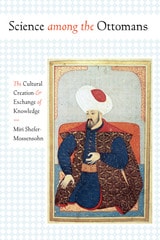
Science among the Ottomans
The Cultural Creation and Exchange of KnowledgeBy Miri Shefer-Mossensohn
University of Texas Press, 2015
Scholars have long thought that, following the Muslim Golden Age of the medieval era, the Ottoman Empire grew culturally and technologically isolated, losing interest in innovation and placing the empire on a path toward stagnation and decline. Science among the Ottomans challenges this widely accepted Western image of the nineteenth- and early twentieth-century Ottomans as backward and impoverished.
In the first book on this topic in English in over sixty years, Miri Shefer-Mossensohn contends that Ottoman society and culture created a fertile environment that fostered diverse scientific activity. She demonstrates that the Ottomans excelled in adapting the inventions of others to their own needs and improving them. For example, in 1877, the Ottoman Empire boasted the seventh-longest electric telegraph system in the world; indeed, the Ottomans were among the era’s most advanced nations with regard to modern communication infrastructure. To substantiate her claims about science in the empire, Shefer-Mossensohn studies patterns of learning; state involvement in technological activities; and Turkish- and Arabic-speaking Ottomans who produced, consumed, and altered scientific practices. The results reveal Ottoman participation in science to have been a dynamic force that helped sustain the six-hundred-year empire.

Second Life
A West Bank MemoirJanet Gunn
University of Minnesota Press, 1995
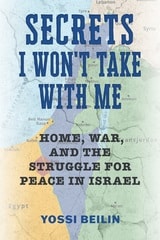
Secrets I Won't Take with Me
Home, War, and the Struggle for Peace in IsraelYossi Beilin
University of Alabama Press, 2025
An Israeli political leader’s riveting first-hand account of pivotal moments from recent Israeli history, including the Oslo Peace Accords, the founding of the Birthright Initiative, the assassination of Yitzhak Rabin, the rise of the Israeli far right, and more
In Secrets I Won't Take with Me, Yossi Beilin, a key Israeli political and ministerial leader, offers an intimate and candid memoir that chronicles pivotal events in the nation’s recent history. From the crucible of its founding to the complexities of the modern era, Beilin reveals an insider’s perspective and previously undocumented insights about the events that have and continue to shape Israel.
Beginning his career as an academic and a journalist, Beilin became the spokesperson of the Labor Party in 1977. Among his many career highlights include the chairmanship of the Meretz-Yachad Party, Minister of Justice, Minister of Religious Affairs, and Deputy Finance Minister, and perhaps most significantly, as Deputy Foreign Minister during the Israel-PLO Oslo Peace Accords. As a key architect of the Oslo Peace Accords, he shares unprecedented details of the negotiations that defined an era.
Beyond diplomacy, Beilin illuminates his role in shaping Israel’s identity, from steering Israel away from its alliance with apartheid South Africa to the foundation of the influential Birthright program. With unflinching honesty, Beilin navigates the triumphs and tragedies of a nation, from the euphoria of the Six-Day War to the heartbreak of Yitzhak Rabin’s assassination. A deeply personal memoir of one man’s life interwoven with a nation’s, Beilin’s stunning account of his career serves as a masterful tour d’horizon of Israel’s recent past and evolving future.
Seeds of Hate
How America's Flawed Middle East Policy Ignited the JihadLawrence Pintak
Pluto Press, 2003
Sex in the Middle East and North Africa
L. L. Wynn
Vanderbilt University Press, 2022
The book is organized into three sections: Single and Dating, Engaged and Married, and It's Complicated. The allusion to categories of relationship status on social media is at once a nod to the compulsion to categorize, recognition of the many ways that categorization is rarely straightforward, and acknowledgment that much of the intimate lives described by the contributors is mediated by online technologies.
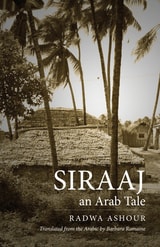
Siraaj
An Arab TaleBy Radwa Ashour
University of Texas Press, 2007
Set in the late nineteenth century on a mythical island off the coast of Yemen, Radwa Ashour's Siraaj: An Arab Tale tells the poignant story of a mother and son as they are drawn inextricably into a revolt against their island's despotic sultan.
Amina, a baker in the sultan's palace, anxiously awaits her son's return from a long voyage at sea, fearful that the sea has claimed Saïd just as it did his father and grandfather. Saïd, left behind in Alexandria by his ship as the British navy begins an attack on the city, slowly begins to make his way home, witnessing British colonial oppression along the way.
Saïd's return brings Amina only a short-lived peace. The lessons he learned from the Egyptians' struggle against the British have radicalized him. When Saïd learns the island's slave population is planning a revolt against the sultan's tyrannical rule, both he and Amina are soon drawn in.
Beautifully rendered from Arabic into English by Barbara Romaine, Radwa Ashour's novella speaks of the unity that develops among varied peoples as they struggle against a common oppressor and illuminates the rich cultures of both the Arab and African inhabitants of the island. Sub-Saharan African culture is a subject addressed by few Arabic novelists, and Radwa Ashour's novella does much to fill that void.
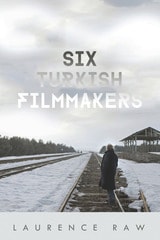
Six Turkish Filmmakers
Laurence Raw
University of Wisconsin Press, 2017
In analysis of and personal interviews with Dervis Zaim, Zeki Demirkubuz, Semih Kaplanoglu, Çagan Irmak, Tolga Örnek, and Palme d'Or winner Nuri Bilge Ceylan, Raw draws connections with Turkish theater, art, sculpture, literature, poetry, philosophy, and international cinema. A native of England and a twenty-five-year resident of Turkey, Raw interleaves his film discussion with thoughtful commentary on nationalism, gender, personal identity, and cultural pluralism.
Slavery, Agriculture, and Malaria in the Arabian Peninsula
Benjamin Reilly
Ohio University Press, 2015
In Slavery, Agriculture, and Malaria in the Arabian Peninsula, Benjamin Reilly illuminates a previously unstudied phenomenon: the large-scale employment of people of African ancestry as slaves in agricultural oases within the Arabian Peninsula. The key to understanding this unusual system, Reilly argues, is the prevalence of malaria within Arabian Peninsula oases and drainage basins, which rendered agricultural lands in Arabia extremely unhealthy for people without genetic or acquired resistance to malarial fevers. In this way, Arabian slave agriculture had unexpected similarities to slavery as practiced in the Caribbean and Brazil.
This book synthesizes for the first time a body of historical and ethnographic data about slave-based agriculture in the Arabian Peninsula. Reilly uses an innovative methodology to analyze the limited historical record and a multidisciplinary approach to complicate our understandings of the nature of work in an area that is popularly thought of solely as desert. This work makes significant contributions both to the global literature on slavery and to the environmental history of the Middle East—an area that has thus far received little attention from scholars.
Sleeping with Custer and the 7th Cavalry
An Embedded Reporter in IraqWalter C. Rodgers
Southern Illinois University Press, 2005
An essential document of the first American war of the new century
Under a full opalescent moon in the spring of 2003, CNN correspondent Walter C. Rodgers and three colleagues climbed into an unarmored Humvee loaded with satellite transmission equipment and fell into column formation with the MIAI Abrams battle tanks and Bradley fighting vehicles of Apache Troop, Third Squadron, of the storied 7th Cavalry and crossed the Line of Departure between Kuwait and Iraq. Sleeping with Custer and the 7th Cavalry: An Embedded Reporter in Iraq is Rodgers’s account of the fight from the Kuwaiti border to the Iraqi capital of Baghdad.
Rodgers was embedded with the “tip of the tip of the spear,” the armored reconnaissance unit tasked with clearing the way for the invasion of Iraq. For the next three weeks Rodgers—a seasoned combat correspondent who has covered armed conflicts in the West Bank, along the “Green Line” in Lebanon, and in Sarajevo, Azerbaijan, and Afghanistan—was a first-person witness to the opening campaign of the most significant war America has embarked upon since Vietnam.
Rodgers and his journalistic colleagues in Operation Iraqi Freedom became pioneers in the process of embedding, the placing of journalists who can transmit video reports in real time under combat conditions with no censoring authority to block their reporting. During this journey into war, Rodgers and his crew embraced the dangers, the numbing fatigue, and the moments of stark fear of the young armored cavalrymen they lived with twenty-four hours each day, an experience that created for them the lifelong bond that only soldiers serving together under fire share.
Rodgers also details his return visit to Iraq a year later, reflecting on the nature of war and sharing his personal feelings about a conflict that has claimed the lives of over fifteen hundred American men and women. The volume is illustrated with photographs taken during the invasion by Jeff Barwise, the CNN engineer who accompanied Rodgers.
So Far from Allah, So Close to Mexico
Middle Eastern Immigrants in Modern MexicoBy Theresa Alfaro-Velcamp
University of Texas Press, 2007
Middle Eastern immigration to Mexico is one of the intriguing, untold stories in the history of both regions. In So Far from Allah, So Close to Mexico, Theresa Alfaro-Velcamp presents the fascinating findings of her extensive fieldwork in Mexico as well as in Lebanon and Syria, which included comprehensive data collection from more than 8,000 original immigration cards as well as studies of decades of legal publications and the collection of historiographies from descendents of Middle Eastern immigrants living in Mexico today.
Adding an important chapter to studies of the Arab diaspora, Alfaro-Velcamp's study shows that political instability in both Mexico and the Middle East kept many from fulfilling their dreams of returning to their countries of origin after realizing wealth in Mexico, in a few cases drawing on an imagined Phoenician past to create a class of economically powerful Lebanese Mexicans. She also explores the repercussions of xenophobia in Mexico, the effect of religious differences, and the impact of key events such as the Mexican Revolution.
Challenging the post-revolutionary definitions of mexicanidad and exposing new aspects of the often contradictory attitudes of Mexicans toward foreigners, So Far from Allah, So Close to Mexico should spark timely dialogues regarding race and ethnicity, and the essence of Mexican citizenship.
Social Origins of the Iranian Revolution
Parsa, Misagh
Rutgers University Press, 1989
Existing theories of revolution explain earlier revolutions better than the Iranian revolution. In Iran most of the protest was in urban areas, the peasants never played a major role, and power was transferred to the clergy, not to an intelligentsia. In the 1970s, oil revenues increased, the economy developed rapidly but unevenly, and the state's expanded intervention undermined market forces and politicized capital accumulation. Systematic repression of workers, aid to the upper class, and attacks on secular and religious opposition showed that the state was serving the interests of particular groups. When the state tried to check high inflation by imposing price controls on bazaaris (merchants, shopkeepers, artisans), their protests forced the state to introduce reforms, providing an opportunity for industrial workers, white-collar workers, intellectuals, and the clergy to mobilize against the state. Thus, structural features rendered the state vulnerable to challenge and attack.
Parsa's thorough explanation of the collective actions of each major group in Iran in the three decades prior to the revolution shows how a coalition of classes and groups, using mosques as safe gathering places and led by a segment of the clergy, brought down the monarch of 1979. In the years since the revolution, the conflicts that existed before the revolution seem to be reemerging, in slightly altered form. The clergy now has control, and the state has become centrally and powerfully involved in the economy of the country.
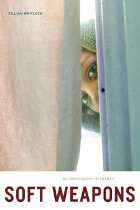
Soft Weapons
Autobiography in TransitGillian Whitlock
University of Chicago Press, 2007
Azar Nafisi’s Reading Lolita in Tehran,Marjane Satrapi’s comics, and “Baghdad Blogger” Salam Pax’s Internet diary are just a few examples of the new face of autobiography in an age of migration, globalization, and terror. But while autobiography and other genres of life writing can help us attend to people whose experiences are frequently unseen and unheard, life narratives can also be easily co-opted into propaganda. In Soft Weapons, Gillian Whitlock explores the dynamism and ubiquity of contemporary life writing about the Middle East and shows how these works have been packaged, promoted, and enlisted in Western controversies.
Considering recent autoethnographies of Afghan women, refugee testimony from Middle Eastern war zones, Jean Sasson’s bestsellers about the lives of Arab women, Norma Khouri’s fraudulent memoir Honor Lost, personal accounts by journalists reporting the war in Iraq, Satrapi’s Persepolis, Nafisi’s book, and Pax’s blog, Whitlock explores the contradictions and ambiguities in the rapid commodification of life memoirs. Drawing from the fields of literary and cultural studies, Soft Weapons will be essential reading for scholars of life writing and those interested in the exchange of literary culture between Islam and the West.
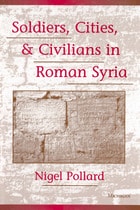
Soldiers, Cities, and Civilians in Roman Syria
Nigel Pollard
University of Michigan Press, 2000
Nigel Pollard is currently a Research Assistant at the Institute of Archaeology, University of Oxford.
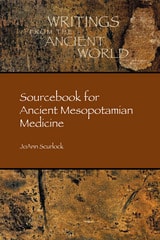
Sourcebook for Ancient Mesopotamian Medicine
JoAnn Scurlock
SBL Press, 2014
In this collection JoAnn Scurlock assembles and translates medical texts that provided instructions for ancient doctors and pharmacists. Scurlock unpacks the difficult, technical vocabulary that describes signs and symptoms as well as procedures and plants used in treatments. This fascinating material shines light on the development of medicine in the ancient Near East, yet these tablets were essentially inaccessible to anyone without an expertise in cuneiform. Scurlock’s work fills this gap by providing a key resource for teaching and research.
Features:
- Accessible translations and transliterations for both specialists and non-specialists
- Texts include a range of historical periods and regions
- Therapeutic, pharmacological, and diagnostic texts
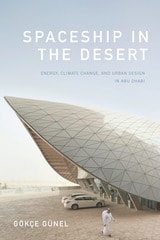
Spaceship in the Desert
Energy, Climate Change, and Urban Design in Abu DhabiGökçe Günel
Duke University Press, 2019
Spacing Debt
Obligations, Violence, and Endurance in Ramallah, PalestineChristopher Harker
Duke University Press, 2020
Spies and Holy Wars
The Middle East in 20th-Century Crime FictionBy Reeva Spector Simon
University of Texas Press, 2010
Illuminating a powerful intersection between popular culture and global politics, Spies and Holy Wars draws on a sampling of more than eight hundred British and American thrillers that are propelled by the theme of jihad—an Islamic holy war or crusade against the West. Published over the past century, the books in this expansive study encompass spy novels and crime fiction, illustrating new connections between these genres and Western imperialism.
Demonstrating the social implications of the popularity of such books, Reeva Spector Simon covers how the Middle Eastern villain evolved from being the malleable victim before World War II to the international, techno-savvy figure in today's crime novels. She explores the impact of James Bond, pulp fiction, and comic books and also analyzes the ways in which world events shaped the genre, particularly in recent years. Worldwide terrorism and economic domination prevail as the most common sources of narrative tension in these works, while military "tech novels" restored the prestige of the American hero in the wake of post-Vietnam skepticism. Moving beyond stereotypes, Simon examines the relationships between publishing trends, political trends, and popular culture at large—giving voice to the previously unexamined truths that emerge from these provocative page-turners.
Spokesmen for the Despised
Fundamentalist Leaders of the Middle EastEdited by R. Scott Appleby
University of Chicago Press, 1997
The deeds of the men profiled in this book make history and headlines, whether through the anti-American rhetoric of the late Iranian revolutionary, Ayatollah Ruhollah Khomeini; the violent acts of Hizbullah, the Lebanese Shi'ite movement headed by Sayyid Muhammad Husayn Fadlallah; or the group of Jewish rabbis who appear to have inspired the assassination of Israeli Prime Minister Yitzhak Rabin. No one better exemplifies this history-making than Shaykh Ahmad Yasin, the spiritual leader of Hamas, who from his Israeli jail cell continues to influence Hamas's efforts to eliminate both Israel and the PLO. Also featured are the spiritual guides of the radical Jewish settler movement Gush Emunim, the Sudanese sponsor of "the Islamic Awakening," the preacher who inflamed Upper Egypt, and the ideological leader of the Zionist International Christian Embassy.
These riveting biographies include interviews with true believers and bitter opponents, and in several cases with the subjects themselves, carefully placing the lives of these charismatic leaders in the contexts of their religious traditions and their varied social, political, and religious settings. Spokesmen for the Despised is an essential volume for anyone wishing to understand the relationship between religion and politics in the Middle East.
Contributors: Ziad Abu Amr, Gideon Aran, Yaakov Ariel, Daniel Brumberg, Patrick D. Gaffney, Samuel Heilman, Martin Kramer, and Judith Miller
Staple Security
Bread and Wheat in EgyptJessica Barnes
Duke University Press, 2022
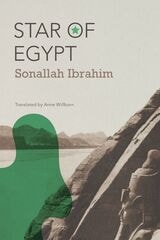
Star of August
Sonallah Ibrahim
Seagull Books, 2026
In the summer of 1965, a journalist newly released from prison finds himself stranded at the sprawling site of the Aswan High Dam, the flagship project of Gamal Abdel Nasser’s modern Egypt. Amid oppressive heat, unreliable transport, a mysterious epidemic, and the oppressive gaze of state surveillance, he confronts a dramatic transformation underway: villages erased, communities displaced, and a rich past disappearing beneath the waters of a new lake. As the journalist journeys south along the Nile, his observations illuminate a key moment in Cold War politics and a society wrestling with the promises and perils of progress.
Originally published in Arabic in 1974, Star of August is a masterwork by Sonallah Ibrahim—a writer who lived through these upheavals firsthand—and a timeless exploration of ideology, power, and the price of change.
State of Israel, Diaspora, and Jewish Continuity
Essays on the “Ever-Dying People”Simon Rawidowicz
Brandeis University Press, 1998
Straight Power Concepts in the Middle East
US Foreign Policy, Israel and World HistoryGregory Harms
Pluto Press, 2010
How did the US become a world power? How did it become involved in the Middle East? What is the history and nature of its 'special relationship' with Israel?
Given the increase in tensions in the Middle East, and the United States' involvement in them, news coverage is in abundance. Yet, the reportage and discussion of American foreign policy is often narrow in scope, offering little background or context. The subject is routinely treated with the vocabulary provided by government officials, presenting best intentions while conceding occasional mistakes and unfortunate incidents. As Gregory Harms demonstrates in Straight Power Concepts, the historical record bears out a different vocabulary and tells a story that sharply contrasts with the common assumptions.
In this brief and accessible account, the reader is guided through the panoramic sweep of world and American history, reviewing how the US became a world power, how the Middle East became 'modern' and how Israel became an American 'strategic asset.' In so doing, the book provides a broad frame of reference, illustrating that recent developments are closer to business-as-usual and nothing resembling the rhetoric commonly used by heads of state, press secretaries, news media, and commentators.
As in his highly successful book The Palestine-Israel Conflict, Harms makes complex subjects accessible to everyone, without sacrificing analytical rigour. This book should be the first port of call for students and anyone seeking clarity and a historical elucidation of current events involving the United States, Israel, and the Middle East.
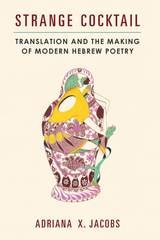
Strange Cocktail
Translation and the Making of Modern Hebrew PoetryAdriana X. Jacobs
University of Michigan Press, 2018
For centuries, poets have turned to translation for creative inspiration. Through and in translation, poets have introduced new poetic styles, languages, and forms into their own writing, sometimes changing the course of literary history in the process. Strange Cocktail is the first comprehensive study of this phenomenon in modern Hebrew literature of the late nineteenth century to the present day. Its chapters on Esther Raab, Leah Goldberg, Avot Yeshurun, and Harold Schimmel offer close readings that examine the distinct poetics of translation that emerge from reciprocal practices of writing and translating. Working in a minor literary vernacular, the translation strategies that these poets employed allowed them to create and participate in transnational and multilingual poetic networks. Strange Cocktail thereby advances a comparative and multilingual reframing of modern Hebrew literature that considers how canons change and are undone when translation occupies a central position—how lines of influence and affiliation are redrawn and literary historiographies are revised when the work of translation occupies the same status as an original text, when translating and writing go hand in hand.
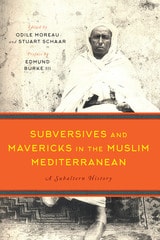
Subversives and Mavericks in the Muslim Mediterranean
A Subaltern HistoryEdited by Odile Moreau and Stuart Schaar; preface by Edmund Burke III
University of Texas Press, 2016
Subaltern studies, the study of non-elite or underrepresented people, have revolutionized the writing of Middle Eastern history. Subversives and Mavericks in the Muslim Mediterranean represents the next step in this transformation. The book explores the lives of eleven nonconformists who became agents of political and social change, actively organizing new forms of resistance—against either colonial European regimes or the traditional societies in which they lived—that disrupted the status quo, in some cases, with dramatic results. These case studies highlight cross-border connections in the Mediterranean world, exploring how these channels were navigated.
Chapters in the book examine the lives of subversives and mavericks, such as Tawhida ben Shaykh, the first Arab woman to receive a medical degree; Mokhtar al-Ayari, a radical Tunisian labor leader; Nazli Hanem, Kmar Bayya, and Khiriya bin Ayyad, three aristocractic women who resisted the patriarchal structures of their societies by organizing and participating in intellectual salons for men and women and advocating social reform; Qaid Najim al-Akhsassi, an ex-slave and military officer, who fought against French and Spanish colonial expansion; and Boubeker al-Ghandjawi, a nearly illiterate trader who succeeded, though his diverse connections, in establishing important relations between the Moroccan sultan and the representative of the British government. Although based on individual and local perspectives, Subversives and Mavericks in the Muslim Mediterranean reveals new and unrecognized trans-local connections across the Muslim world, illuminating our understanding of these societies beyond narrow elite circles.
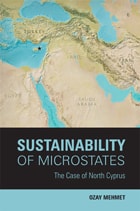
Sustainability of Microstates
The Case of North CyprusOzay Mehmet
University of Utah Press, 2009
Utah Series in Middle East Studies
This interdisciplinary study discusses the development, economics, and politics of North Cyprus, a divided state since 1960 when sovereignty was surrendered by the British to both Greek and Turkish Cypriots. Mehmet works to demonstrate that, as a microstate with an area of just 3,442 square kilometers, North Cyprus possesses certain inherent comparative economic advantages in the service sectors that enable it to be sustainable in today's rapidly globalizing and competitive economic world.
Mehmet bases his arguments for the potential sustainability of North Cyprus on the concept of economic rationalism, in which participating parties work to optimize their own self-interest. In an ethnic conflict like that of North Cyprus, the logic of optimization demands a rational, free, and objective balancing of competing interests to reach an agreed solution. The economic rationalist approach sharply contrasts with the highly emotional political, historical, cultural, and legal approaches that have thus far dominated the study and discussion of the Cyprus problem, approaches that have largely resulted in a protracted conflict.
While recognizing the negative forces of ethnic tension and the very real possibility of a continued divided Cyprus state, Sustainability of Microstates nevertheless remains hopeful, designed to unleash the forces of convergence that may be deduced from economic rationalism, and unwavering in its conviction of the ultimate sustainability of North Cyprus.
Symbiotic Antagonisms
Competing Nationalisms in TurkeyAyse Kadioglu
University of Utah Press, 2011
Utah Series in Middle East Studies
Today, nationalism and nationalist sentiments are becoming more and more pronounced, creating a global emergence of ethno-nationalist and religious fundamentalist identity conflicts. In the post-9/11 era of international terrorism, it is appropriate to suggest that nationalism will retain its central place in politics and local and world affairs for the foreseeable future. It is in this vein that there has been a recent upsurge of interest concerning the power of nationalist tendencies as one of the dominant ideologies of modern times.
Symbiotic Antagonisms looks at the state-centric mode of modernization in Turkey that has constituted the very foundation on which nationalism has acquired its ideological status and transformative power. The book documents a symposium held at Sabanci University, presenting nationalism as a multidimensional, multiactor-based phenomenon that functions as an ideology, a discourse, and a political strategy. Turkish, Kurdish, and Islamic nationalisms are systematically compared in this timely and significant work.
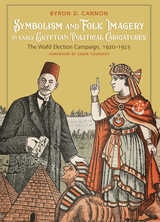
Symbolism and Folk Imagery in Early Egyptian Political Caricatures
The Wafd Election Campaign, 1920–1923Byron D. Cannon, Foreword by Samir Toubassy
University of Utah Press, 2019
Art is politics and politics is art in this study of post–World War I caricature art in Egypt and Egyptian politics. This book explores the complex meaning and significance of caricature art drawn to support the ascendant Egyptian Wafdpolitical party and its push for independence from British colonial control. The works of previously neglected Egyptian lithographers are also explored, especially those who adopted sophisticated European techniques while experimenting with a variety of new styles during a remarkable period in Egyptian history.
Caricature art by Wafd party artists was almostsui generis. It is distinguished especially by its sincere use of iconic, folkloric imagery, intended to rally nationalistic sentiments among an emerging Egyptian electorate that included many nonliterate citizens. Cannon’s research breathes new life into an influential yet largely forgotten artistic movement in Egypt, one that deserves recognition for its contribution to Egypt’s share of modern Middle East cultural history. Includes full color reproductions.
Syrian and Lebanese Patricios in São Paulo
From the Levant to BrazilOswaldo Truzzi. Translated by Ramon J. Stern
University of Illinois Press, 2018
Oswaldo Truzzi's original work on these so-called patrícios changed the face of Brazilian studies. Now available in an English translation, Truzzi's pioneering book identifies the complex social paths blazed by Syrian and Lebanese immigrants and their descendants from the 1890s to the 1960s. He considers their relationships to other groups within São Paulo's kaleidoscopic mix of cultures. He also reveals the differences--real and perceived--between Syrians and Lebanese in terms of religious and ethnic affinities and in the economic sphere. Finally, he compares the two groups with their counterparts in the United States and looks at the wave of Lebanese Muslims to São Paulo that began in the 1960s.