Results by title
939 books match the query 'Religious aspects' and 87 start with s
Sacred Attunement
A Jewish TheologyMichael Fishbane
University of Chicago Press, 2008
The first part of the book regrounds theology in this setting and opens up new pathways through nature, art, and the theological dimension as a whole. In the second section, Fishbane introduces his hermeneutical theology—one grounded in the interpretation of scripture as a distinctly Jewish practice. The third section focuses on modes of self-cultivation for awakening and sustaining a covenant theology. The final section takes up questions of scripture, authority, belief, despair, and obligation as theological topics in their own right.
The first full-scale Jewish theology in America since Abraham J. Heschel’s God in Search of Man and the first comprehensive Jewish philosophical theology since Franz Rosenzweig’s Star of Redemption, Sacred Attunement is a work of uncommon personal integrity and originality from one of the most distinguished scholars of Judaica in our time.
Sacred Darkness
A Global Perspective on the Ritual Use of CavesHolley Moyes
University Press of Colorado, 2014
Covering the ritual use of caves in Europe, Asia, Australia, Africa, Mesoamerica, and the US Southwest and Eastern woodlands, this book brings together case studies by prominent scholars whose research spans from the Paleolithic period to the present day. These contributions demonstrate that cave sites are as fruitful as surface contexts in promoting the understanding of both ancient and modern religious beliefs and practices.
This state-of-the-art survey of ritual cave use will be one of the most valuable resources for understanding the role of caves in studies of religion, sacred landscape, or cosmology and a must-read for any archaeologist interested in caves.
Sacred Desire
Growing in Compassionate LivingNancy K. Morrison
Templeton Press, 2009
Is the call to spirituality embedded in human biology? Authors Nancy K. Morrison and Sally K. Severino draw on cutting-edge research, including the recent discovery of brain "mirror neurons" and the elucidation of the physiology of social affiliation and attachment, to make a bold case that we are, in fact, biologically wired to seek oneness with the divine. They have termed this innate urge "sacred Desire."
In their new book on the subject, ,em>Sacred Desire: Growing in Compassionate Living, Morrison and Severino, both highly esteemed academic psychiatrists, draw on neurophysiology, relationship studies, research on spiritual development, and psychotherapy to show how spirituality is intimately connected with our physical being. The authors offer several clinical examples of how recognizing sacred Desire can advance a person's healing and they provide an action plan for using Desire to move from fear to love of self, others, and all creation.
In addition to psychiatrists and neurophysiologists, who will undoubtedly welcome this significant contribution to their fields of study, Sacred Desire is sure to appeal as well to the much wider audience of spiritual seekers looking for intellectually and scientifically credible ways to understand spirituality in today's world.
Sacred Divorce
Religion, Therapeutic Culture, and Ending Life PartnershipsJenkins, Kathleen E
Rutgers University Press, 2014
For more than five years, Jenkins observed religious support groups and workshops for the divorced and interviewed religious practitioners in the midst of divorces, along with clergy members who advised them. Her findings appear here in the form of eloquent and revealing stories about individuals managing emotions in ways that make divorce a meaningful, even sacred process. Clergy from mainline Protestant denominations to Baptist churches, Jewish congregations, Unitarian fellowships, and Catholic parishes talk about the concealed nature of divorce in their congregations. Sacred Divorce describes their cautious attempts to overcome such barriers, and to assemble meaningful symbols and practices for members by becoming compassionate listeners, delivering careful sermons, refitting existing practices like Catholic annulments and Jewish divorce documents (gets), and constructing new rituals.
With attention to religious, ethnic, and class variations, covering age groups from early thirties to mid-sixties and separations of only a few months to up to twenty years, Sacred Divorce offers remarkable insight into individual and cultural responses to divorce and the social emotions and spiritual strategies that the clergy and the faithful employ to find meaning in the breach. At once a sociological document, an ethnographic analysis, and testament of personal experience, Sacred Divorce provides guidance, strategies and answers to readers looking for answers and those looking to heal.
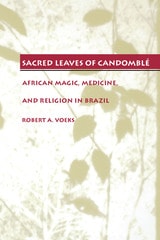
Sacred Leaves of Candomblé
African Magic, Medicine, and Religion in BrazilBy Robert A. Voeks
University of Texas Press, 1997
Winner, Hubert Herring Book Award, Pacific Coast Council on Latin American Studies
Candomblé, an African religious and healing tradition that spread to Brazil during the slave trade, relies heavily on the use of plants in its spiritual and medicinal practices. When its African adherents were forcibly transplanted to the New World, they faced the challenge not only of maintaining their culture and beliefs in the face of European domination but also of finding plants with similar properties to the ones they had used in Africa.
This book traces the origin, diffusion, medicinal use, and meaning of Candomblé's healing pharmacopoeia—the sacred leaves. Robert Voeks examines such topics as the biogeography of Africa and Brazil, the transference—and transformation—of Candomblé as its adherents encountered both native South American belief systems and European Christianity, and the African system of medicinal plant classification that allowed Candomblé to survive and even thrive in the New World. This research casts new light on topics ranging from the creation of African American cultures to tropical rain forest healing floras.
Sacred Place
W Scott Olsen
University of Utah Press, 1996
Some of today's most significant writers and poets explore the relation between what we call the sacred and what we witness in the apparent world.
This unprecedented anthology brings together a provocative mix of new and well known writers whose poetry and prose broaches the possibility of something "bigger" going on, something more significant at stake. Is some powerful agency at work in what we see or are we just wishing (or fearing) that there were? Who can say? Who would dare? What’s most intriguing about the selections in this volume is that the authors do dare. What’s most attractive about them is that they resist answering that dare with reductions. They prefer the swoon of multiple possibilities over the relative comfort of conclusions. Various as they are, the works collected in The Sacred Place share a common reverence for the word itself, and perhaps best of all—they share a common understanding that no one of them comprehends fully what that means. They seem to desire instead a sense that the humble stuff surrounding us affords a likely enough habitation for the sacred, even now.
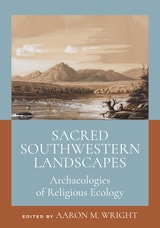
Sacred Southwestern Landscapes
Archaeologies of Religious EcologyEdited by Aaron M. Wright
University of Utah Press, 2024
Hailing from various academic and cultural backgrounds, contributors invoke a range of theoretical currents and methodological practices to examine how these relationships developed and evolved. Nearly all the places, people, and paradigms at play in contemporary southwestern scholarship find room among these pages, from the Sonoran and Chihuahuan Deserts to the Colorado Plateau; from diverse cultures, including Ancestral Pueblo, Mogollon, Hohokam, Pataya, Trincheras, Navajo (Diné), and Nuevomexicano; and from theoretical frameworks drawing upon phenomenology, materiality, bundling, and semiotics. This collective engagement showcases how religious ecologies can be studied from multiple perspectives and through sundry lines of evidence, leaving readers with appreciation and reverence for the rich and robust sacredness in southwestern landscapes.
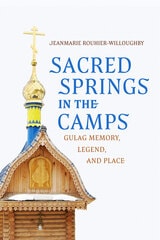
Sacred Springs in the Camps
Gulag Memory, Legend, and PlaceJeanmarie Rouhier-Willoughby
University of Wisconsin Press, 2026
Grounded by detailed ethnography, Sacred Springs in the Camps explores how legend creates, negotiates, and challenges collective memory; how lived religious practices intersect with the current revival of the Russian Orthodox Church; how politics intertwine with belief; and how the social construction of sacred places affects folk narratives, faith, and local identity. These unlikely holy waters thus reflect important facets of contemporary Russian religion, politics, and society, refracting and reframing memories of the socialist past even as they offer important lessons for the present moment.

Sacred Stacks
The Higher Purpose of Libraries and LibrarianshipNancy Kalikow Maxwell
American Library Association, 2006

Same-Sex Dynamics among Nineteenth-Century Americans
A MORMON EXAMPLED. Michael Quinn
University of Illinois Press, 1996
Santeria Enthroned
Art, Ritual, and Innovation in an Afro-Cuban ReligionDavid H. Brown
University of Chicago Press, 2003
Focusing on the royal throne as a potent metaphor in Santería belief and practice, Brown shows how negotiation among ideologically competing interests have shaped the religion's symbols, rituals, and institutions from the nineteenth century to the present. Rich case studies of change in Cuba and the United States, including a New Jersey temple and South Carolina's Oyotunji Village, reveal patterns of innovation similar to those found among rival Yoruba kingdoms in Nigeria. Throughout, Brown argues for a theoretical perspective on culture as a field of potential strategies and "usable pasts" that actors draw upon to craft new forms and identities—a perspective that will be invaluable to all students of the African Diaspora.
American Acemy of Religion Award for Excellence in the Study of Religion (Analytical-Descriptive Category)
Science Of Love
Wisdom Of Well BeingThomas Oord
Templeton Press, 2004
We all know the saying, "Love can change the world." When science looks at love, it considers cosmology, sociobiology, evolutionary psychology, neurology, sex and romance, and the role of emotions as each relates to love. It also explores religious, ethical, and philosophical issues, such as virtue, creation ex nihilo, progress, divine action, agape, values, religious practices, pacifism, sexuality, friendship, freedom, and marriage. All affect the ways in which people understand each other and interact with one another. In this book, Oord explores these varied dimensions of love, illuminating the love-science symbiosis for both scholars and general readers.
His definition of love is "to act intentionally, in sympathetic response to others (including God), to promote overall well-being. Love acts are influenced by previous actions and executed in the hope of attaining a high degree of good for all." He begins his study with an exploration of the role love plays in all major world religions: Hinduism, Buddhism, Confucianism, Judaism, Islam, and Christianity. He explains how divine love in action can be viewed as consonant with the big bang theory and the continual creation of the universe.
He looks at pacifism and concludes that nonviolence is not always the most loving thing (sometimes violence must be used to rescue victims or prevent holocausts). He explores the animal kingdom to see how creatures work together with the Creator to make the world a better place. And he analyzes the fundamentals of love, the basic characteristics of existence that must be present for love to be expressed. He concludes with the important argument that progress can best be made when religion and science work together to both understand and promote love.
Sculpting the Self
Islam, Selfhood, and Human FlourishingMuhammad U. Faruque
University of Michigan Press, 2021
Sculpting the Self addresses “what it means to be human” in a secular, post-Enlightenment world by exploring notions of self and subjectivity in Islamic and non-Islamic philosophical and mystical thought. Alongside detailed analyses of three major Islamic thinkers (Mullā Ṣadrā, Shāh Walī Allāh, and Muhammad Iqbal), this study also situates their writings on selfhood within the wider constellation of related discussions in late modern and contemporary thought, engaging the seminal theoretical insights on the self by William James, Jean-Paul Sartre, and Michel Foucault. This allows the book to develop its inquiry within a spectrum theory of selfhood, incorporating bio-physiological, socio-cultural, and ethico-spiritual modes of discourse and meaning-construction. Weaving together insights from several disciplines such as religious studies, philosophy, anthropology, critical theory, and neuroscience, and arguing against views that narrowly restrict the self to a set of cognitive functions and abilities, this study proposes a multidimensional account of the self that offers new options for addressing central issues in the contemporary world, including spirituality, human flourishing, and meaning in life.
This is the first book-length treatment of selfhood in Islamic thought that draws on a wealth of primary source texts in Arabic, Persian, Urdu, Greek, and others. Muhammad U. Faruque’s interdisciplinary approach makes a significant contribution in the growing field of cross-cultural dialogue, as it opens up the way for engaging premodern and modern Islamic sources from a contemporary perspective by going beyond the exegesis of historical materials. He initiates a critical conversation between new insights into human nature as developed in neuroscience and modern philosophical literature and millennia-old Islamic perspectives on the self, consciousness, and human flourishing as developed in Islamic philosophical, mystical, and literary traditions.
Secrecy
Silence, Power, and ReligionHugh B. Urban
University of Chicago Press, 2021
With Secrecy, Urban investigates several revealing instances of the power of secrecy in religion, including nineteenth-century Scottish Rite Freemasonry, the sexual magic of a Russian-born Parisian mystic; the white supremacist BrüderSchweigen or “Silent Brotherhood” movement of the 1980s, the Five Percenters, and the Church of Scientology. An electrifying read, Secrecy is the culmination of decades of Urban’s reflections on a vexed, ever-present subject.
Secret Body
Erotic and Esoteric Currents in the History of ReligionsJeffrey J. Kripal
University of Chicago Press, 2017
Kripal tells his story, biographically, historically and politically contextualizing each of the six books of his Chicago corpus, from Kali’s Child to Mutants and Mystics, all the while answering his censors and critics and exploring new implications of his thought. In the process, he begins to sketch out a speculative “new comparativism” in twenty theses. The result is a new vision for the study of religion, one that takes in the best of the past, engages with outside critiques from the sciences and the humanities, and begins to blaze a new positive path forward. A major work decades in the making, Secret Body will become a landmark in the study of religion.

Secret Covenants
New Insights on Early Mormon PolygamyBruno, Cheryl L.
Signature Books, 2024
Navigating the intricate labyrinth of early Mormon plural marriage can be fascinating, frustrating, and often confusing. The essays in this volume venture into the depths of historical inquiry, presenting a diverse array of perspectives on the subject. Authored by a consortium of esteemed scholars and researchers in the field of Mormon studies, it addresses the nuanced intricacies of Joseph Smith’s involvement in plural marriage.
Delving into the core of this discourse, these experts meticulously analyze foundational documents, highlighting the complexities Joseph Smith faced in practicing plural marriage and shedding light on the legal aspects of polygamy in 1840s Illinois. It navigates lesser-known details of Smith’s proposals and relationships, including the enigmatic story of Fanny Alger.
Secret Covenants presents a balanced exploration. It critiques traditional portrayals, providing multiple viewpoints, such as the examination of Emma Smith’s vehement rejection of polygamy after her husband’s death, and an analysis of the societal impact on women within polygamous unions. Furthermore, the authors address evolving doctrinal debates triggered by the “Marriage Revelation” and its impact on Mormon philosophy and thought.
This anthology serves as a foundational resource for academic scholars, individuals interested in religious history, and anyone seeking to understand the many layers of Mormon plural marriage.
Secular Scriptures
Modern Theological Poetics in the Wake of DanteWilliam Franke
The Ohio State University Press, 2015
Secular Scriptures examines, through its own original speculative outlook, some of the most compelling exemplars of religious-poetic revelation in modern Western literature. The essays taken as an ensemble revolve around and are bookended by Dante, but they also explore the work of Chaucer, Shakespeare, Milton, Blake, Leopardi, Baudelaire, Dickinson, and Yeats. Looking both backward and forward from the vantage of Dante, Franke explores the roots of secularized religious vision in antiquity and the Middle Ages, even as he also looks forward toward its fruits in modern poetry and poetics. Ultimately, Franke’s analyses demonstrate the possibilities opened by understanding literature as secularized religious revelation.
Securing the Sacred
Religion, National Security, and the Western StateRobert M. Bosco
University of Michigan Press, 2014
Despite significant theoretical distinctions between securitization on the domestic and the international levels, he finds that the outcome of addressing religion within the context of security hinges upon partnerships. Whereas states may harness the power of international allies, they cannot often find analogous domestic allies; therefore, states that attempt to securitize religion at home are more vulnerable to counterattack and more likely to abandon their efforts. Securing the Sacred makes a significant contribution to the fields of political theory, international relations, Islamic studies, and security/military studies.
Seeing Silence
Mark C. Taylor
University of Chicago Press, 2020
“To hear silence is to find stillness in the midst of the restlessness that makes creative life possible and the inescapability of death acceptable.” So writes Mark C. Taylor in his latest book, a philosophy of silence for our nervous, chattering age. How do we find silence—and more importantly, how do we understand it—amid the incessant buzz of the networks that enmesh us? Have we forgotten how to listen to each other, to recognize the virtues of modesty and reticence, and to appreciate the resonance of silence? Are we less prepared than ever for the ultimate silence that awaits us all?
Taylor wants us to pause long enough to hear what is not said and to attend to what remains unsayable. In his account, our way to hearing silence is, paradoxically, to see it. He explores the many variations of silence by considering the work of leading modern and postmodern visual artists, including Barnett Newman, Ad Reinhardt, James Turrell, and Anish Kapoor. Developing the insights of philosophers, theologians, writers, and composers, Taylor weaves a rich narrative modeled on the Stations of the Cross. His chapter titles suggest our positions toward silence: Without. Before. From. Beyond. Against. Within. Between. Toward. Around. With. In. Recasting Hegel’s phenomenology of spirit and Kierkegaard’s stages on life’s way, Taylor translates the traditional Via Dolorosa into a Nietzschean Via Jubilosa that affirms light in the midst of darkness.
Seeing Silence is a thoughtful meditation that invites readers to linger long enough to see silence, and, in this way, perhaps to hear once again the wordless Word that once was named “God.”
Seeing with the Eyes of the Heart
Cultivating a Sacramental Imagination in an Age of PornographyElizabeth T. Groppe
Catholic University of America Press, 2020
Seeking the Straight and Narrow
Weight Loss and Sexual Reorientation in Evangelical AmericaLynne Gerber
University of Chicago Press, 2011
Self-Determination and Women’s Rights in Muslim Societies
Edited by Chitra Raghavan and James P. Levine
Brandeis University Press, 2012
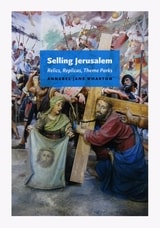
Selling Jerusalem
Relics, Replicas, Theme ParksAnnabel Jane Wharton
University of Chicago Press, 2006
From relics of the True Cross and Templar replicas of the Holy Sepulchre to Franciscan recreations of the Passion to nineteenth-century mass-produced prints and contemporary theme parks, Wharton describes the evolving forms by which the city has been possessed in the West. She also maps those changing embodiments of the Holy City against shifts in the western market. From the gift-and-barter economy of the early Middle Ages to contemporary globalization, both money and the representations of Jerusalem have become progressively incorporeal, abstract, illusionistic, and virtual.
Selling Jerusalem offers a penetrating introduction to the explosive combination of piety and capital at work in religious objects and global politics. It is sure to interest students and scholars of art history, economic history, popular culture, religion, and architecture, as well as those who want to better understand Jerusalem’s problematic place in history.
Sensational Devotion
Evangelical Performance in Twenty-First-Century AmericaJill Stevenson
University of Michigan Press, 2015
Serbian Orthodox Fundamentals
The Quest for an Eternal IdentityChristos Mylonas
Central European University Press, 2003
Seven Ways of Looking at Pointless Suffering
What Philosophy Can Tell Us about the Hardest Mystery of AllScott Samuelson
University of Chicago Press, 2018
It’s right there in the Book of Job: “Man is born unto trouble as the sparks fly upward.” Suffering is an inescapable part of the human condition—which leads to a question that has proved just as inescapable throughout the centuries: Why? Why do we suffer? Why do people die young? Is there any point to our pain, physical or emotional? Do horrors like hurricanes have meaning?
In Seven Ways of Looking at Pointless Suffering, Scott Samuelson tackles that hardest question of all. To do so, he travels through the history of philosophy and religion, but he also attends closely to the real world we live in. While always taking the question of suffering seriously, Samuelson is just as likely to draw lessons from Bugs Bunny as from Confucius, from his time teaching philosophy to prisoners as from Hannah Arendt’s attempts to come to terms with the Holocaust. He guides us through the arguments people have offered to answer this fundamental question, explores the many ways that we have tried to minimize or eliminate suffering, and examines people’s attempts to find ways to live with pointless suffering. Ultimately, Samuelson shows, to be fully human means to acknowledge a mysterious paradox: we must simultaneously accept suffering and oppose it. And understanding that is itself a step towards acceptance.
Wholly accessible, and thoroughly thought-provoking, Seven Ways of Looking at Pointless Suffering is a masterpiece of philosophy, returning the field to its roots—helping us see new ways to understand, explain, and live in our world, fully alive to both its light and its darkness.
Sex and Virtue
An Introduction to Sexual Ethics (Catholic Moral Thought, Volume 2)John S. Grabowski
Catholic University of America Press, 2003
Sexual Identity and Faith
Helping Clients Find CongruenceMark A. Yarhouse
Templeton Press, 2019
Christians who struggle with a conflict between their sexual and religious identities have few therapeutic options available to them. ‘Sexual orientation change efforts’ (SOCE) have rightly fallen out of favor and are no longer practiced by most clinicians. At the same time, the common approach of gay affirmative therapy (GAT) can at times present challenges and may not be a good fit when clients hold to conventional religious beliefs and values.
An alternative to these methods is Sexual Identity Therapy (SIT)—an approach that aims to provide individuals with a safe therapeutic space to explore the tension between their sexuality and their faith. Working within the SIT framework, clients are able to resolve their inner conflict to their personal satisfaction and to freely choose a coherent identity that enables them to move forward in life.
SIT has several stages, each designed to enable the client to make meaning out of his or her same-sex sexuality. At no point in the process is the client encouraged to choose one sexual identity over another. The ultimate goal of SIT is congruence. Congruence is achieved when a person freely adopts an identity and lives it out in ways that are in keeping with his or her beliefs and values. The SIT model is brought to life throughout the book with the help of case studies drawn from the author’s 20 years of experience.
Written for both Christian and non-religious clinicians, Sexual Identity and Faith is an informed, respectful, and nuanced guide to help people navigate the difficult conflict between who they are sexually and what they believe religiously.
Sexuality and Authority in the Catholic Church
Monica Migliorino Miller
University of Scranton Press, 1995
If authority is derived from Eucharistic worship, then authority is fundamentally the authority of a covenant. This book shows that this covenant is spoken according to a primordial sexual language rooted in creation itself.
Shades of White Flight
Evangelical Congregations and Urban DepartureMark T. Mulder
Rutgers University Press, 2015
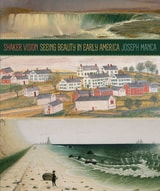
Shaker Vision
Seeing Beauty in Early AmericaJoseph Manca
University of Massachusetts Press, 2019
In Shaker Vision, Joseph Manca explores original texts, especially diaries and travel journals, and material culture to demonstrate that Shakers enjoyed a remarkably deep experience of the visual world. Shakers shared tastes with mainstream Americans and often employed a similar aesthetic vocabulary, but all within a belief system that made them distinct. In addition to their well-known ascetic architecture, furniture, and handicraft styles, they expressed themselves through ornate and detailed spiritual art and in vivid, visionary experiences. Based on firsthand accounts of the believers themselves, this richly illustrated volume will dramatically change how we assess the visual world of this uniquely American religious sect.
Shakespeare's Tribe
Church, Nation, and Theater in Renaissance EnglandJeffrey Knapp
University of Chicago Press, 2004
To be sure, Renaissance playwrights rarely sermonized in their plays, which seemed preoccupied with sex, violence, and crime. During a time when acting was regarded as a kind of vice, many theater professionals used their apparent godlessness to advantage, claiming that it enabled them to save wayward souls the church could not otherwise reach. The stage, they argued, made possible an ecumenical ministry, which would help transform Reformation England into a more inclusive Christian society.
Drawing on a variety of little-known as well as celebrated plays, along with a host of other documents from the English Renaissance, Shakespeare's Tribe changes the way we think about Shakespeare and the culture that produced him.
Winner of the Best Book in Literature and Language from the Association of American Publishers' Professional/Scholarly division, the Conference on Christianity and Literature Book Award, and the Roland H. Bainton Prize for Literature from the Sixteenth Century Society and Conference.
Shaking the World for Jesus
Media and Conservative Evangelical CultureHeather Hendershot
University of Chicago Press, 2004
Thousands of products promoting the Christian faith are sold to millions of consumers each year through the Web, mail order catalogs, and even national chains such as Kmart and Wal-Mart. Heather Hendershot explores in this book the vast industry of film, video, magazines, and kitsch that evangelicals use to spread their message. Focusing on the center of conservative evangelical culture—the white, middle-class Americans who can afford to buy "Christian lifestyle" products—she examines the industrial history of evangelist media, the curious subtleties of the products themselves, and their success in the religious and secular marketplace.
To garner a wider audience, Hendershot argues, evangelicals have had to carefully temper their message. But in so doing, they have painted themselves into a corner. In the postwar years, evangelical media wore the message of salvation on its sleeve, but as the evangelical media industry has grown, many of its most popular products have been those with heavily diluted Christian messages. In the eyes of many followers, the evangelicals who purvey such products are sellouts—hucksters more interested in making money than spreading the word of God.
Working to understand evangelicalism rather than pass judgment on it, Shaking the World for Jesus offers a penetrating glimpse into a thriving religious phenomenon.
Shamans of the Foye Tree
Gender, Power, and Healing among Chilean MapucheBy Ana Mariella Bacigalupo
University of Texas Press, 2007
Drawing on anthropologist Ana Mariella Bacigalupo's fifteen years of field research, Shamans of the Foye Tree: Gender, Power, and Healing among Chilean Mapuche is the first study to follow shamans' gender identities and performance in a variety of ritual, social, sexual, and political contexts.
To Mapuche shamans, or machi, the foye tree is of special importance, not only for its medicinal qualities but also because of its hermaphroditic flowers, which reflect the gender-shifting components of machi healing practices. Framed by the cultural constructions of gender and identity, Bacigalupo's fascinating findings span the ways in which the Chilean state stigmatizes the machi as witches and sexual deviants; how shamans use paradoxical discourses about gender to legitimatize themselves as healers and, at the same time, as modern men and women; the tree's political use as a symbol of resistance to national ideologies; and other components of these rich traditions.
The first comprehensive study on Mapuche shamans' gendered practices, Shamans of the Foye Tree offers new perspectives on this crucial intersection of spiritual, social, and political power.
Shots in the Dark
Japan, Zen, and the WestShoji Yamada
University of Chicago Press, 2009
In the years after World War II, Westerners and Japanese alike elevated Zen to the quintessence of spirituality in Japan. Pursuing the sources of Zen as a Japanese ideal, Shoji Yamada uncovers the surprising role of two cultural touchstones: Eugen Herrigel’s Zen in the Art of Archery and the Ryoanji dry-landscape rock garden. Yamada shows how both became facile conduits for exporting and importing Japanese culture.
First published in German in 1948 and translated into Japanese in 1956, Herrigel’s book popularized ideas of Zen both in the West and in Japan. Yamada traces the prewar history of Japanese archery, reveals how Herrigel mistakenly came to understand it as a traditional practice, and explains why the Japanese themselves embraced his interpretation as spiritual discipline. Turning to Ryoanji, Yamada argues that this epitome of Zen in fact bears little relation to Buddhism and is best understood in relation to Chinese myth. For much of its modern history, Ryoanji was a weedy, neglected plot; only after its allegorical role in a 1949 Ozu film was it popularly linked to Zen. Westerners have had a part in redefining Ryoanji, but as in the case of archery, Yamada’s interest is primarily in how the Japanese themselves have invested this cultural site with new value through a spurious association with Zen.
Shuva
The Future of the Jewish PastYehuda Kurtzer
Brandeis University Press, 2012
Signs and Wonders
Religious Rhetoric and the Preservation of Sign LanguageTracy Ann Morse
Gallaudet University Press, 2014
In Chapter One, Morse analyzes Thomas Hopkins Gallaudet’s use of religious references in his 1817 maiden address at the first American school for deaf students. She examines his and other speeches as examples of the intersection of education for deaf Americans and Protestant missionary efforts to convert them. In the second chapter, she presents the different religious perspectives of the two deaf education camps: Manualists argued that sign language was a gift from God, while Oralists viewed hand gestures as animal-like, indicative of lower evolutionary development.
Chapter Three explores the religious rhetoric in churches, sanctuaries where sign language flourished and deaf members formed relationships. In the fourth chapter, Morse shows how Deaf activist George Veditz signed using religious themes in his political films. She also comments on the impact of the bilingual staging of Big River: The Adventures of Huckleberry Finn, which began to change the hearing world’s opinion about the Deaf community. Morse concludes with speculation on the shifting terrain for deaf people due to technological innovations that might supplant religious rhetoric as a tool to support the Deaf community.
Signs of the Spirit
Music and the Experience of Meaning in Ndau Ceremonial LifeTony Perman
University of Illinois Press, 2020
Perman's encounters with the spirits, the mediums who bring them back, and the accompanying rituals form the heart of his ethnographic account of how the Ndau experience ceremonial musicking. As Perman witnessed other ceremonies, he discovered that music and dancing shape the emotional lives of Ndau individuals by inviting them to experience life's milestones or cope with its misfortunes as a group. Signs of the Spirit explores the historical, spiritual, and social roots of ceremonial action and details how that action influences the Ndau's collective approach to their future. The result is a vivid ethnomusicological journey that delves into the immediacy of musical experience and the forces that transform ceremonial performance into emotions and community.
Silencing the Drum
Religious Racism and Afro-Brazilian Sacred MusicDanielle N. Boaz and Umi Vaughan
Amherst College Press, 2024
Silencing the Drum exposes the profound struggle of Afro-Brazilian sacred music against escalating intolerance. Danielle N. Boaz and Umi Vaughan blend legal scholarship with ethnomusicology, offering a compelling narrative rooted in interviews with religious leaders, musicians, and activists across Brazil. This multidisciplinary exploration examines the relentless attacks against the practitioners of Afro-Brazilian religions—from discriminatory noise complaints in Bahia to vigilante violence in Rio de Janeiro.
The volume integrates multimedia elements including musical samples to vividly illustrate the struggles and resilience of Afro-Brazilian communities in the face of discrimination. As Silencing the Drum confronts the larger global issues of racism and religious freedom, it provides essential insights for scholars, activists, and anyone passionate about human rights and cultural preservation.
Sir John Templeton
Supporting Scientific Research For Spiritual DiscoveriesRobert Herrmann
Templeton Press, 2004
Sisters for Justice
Small Acts in the Transformation of Apartheid South AfricaCatherine Higgs
University of Wisconsin Press, 2025
Based on extensive oral history interviews with white and Black sisters as well as deep archival research, this groundbreaking book reveals a largely untold story, nested within the broader literature of women’s activism in South Africa. The result is a new perspective that expands and intensifies our understanding of a dramatic period during which individual actions, in the aggregate, contributed to social change.
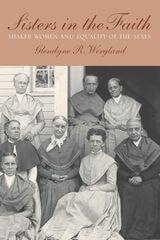
Sisters in the Faith
Shaker Women and Equality of the SexesGlendyne R. Wergland
University of Massachusetts Press, 2011
In 1788, following the death of charismatic founder Mother Ann Lee, the celibate religious group known as the Shakers set out to institutionalize equality of the sexes in their theology, government, and daily practice. In this book, Glendyne Wergland evaluates how well they succeeded in that mission by examining the experiences of women within Shaker communities over more than a century.
Drawing on an extensive archive of primary documents, Wergland discusses topics ranging from girlhood, health, and dress to why women joined the Shakers and how they were viewed by those outside their community. She analyzes the division of labor between men and women, showing that there was considerable cooperation and reciprocity in carrying out most tasks—from food production to laundering to gathering firewood—even as gendered conflicts remained.
In her conclusion, Wergland draws together all of these threads to show that Shaker communities achieved a remarkable degree of gender equality at a time when women elsewhere still suffered under the legal and social strictures of the traditional patriarchal order. In so doing, she argues, the experience of Shaker women served as a model for promoting women's rights in American political culture.
Slandering the Sacred
Blasphemy Law and Religious Affect in Colonial IndiaJ. Barton Scott
University of Chicago Press, 2023
Why is religion today so often associated with giving and taking offense? To answer this question, Slandering the Sacred invites us to consider how colonial infrastructures shaped our globalized world. Through the origin and afterlives of a 1927 British imperial law (Section 295A of the Indian Penal Code), J. Barton Scott weaves a globe-trotting narrative about secularism, empire, insult, and outrage. Decentering white martyrs to free thought, his story calls for new histories of blasphemy that return these thinkers to their imperial context, dismantle the cultural boundaries of the West, and transgress the borders between the secular and the sacred as well as the public and the private.

Slave of Allah
Zacarias Moussaoui Vs the USAKatherine C. Donahue
Pluto Press, 2007
The book begins with his arrest and moves to the courtroom, telling the tale of Moussaoui's struggle with his defense lawyers and raising questions about his ability to be "represented" given his national and personal identity. Donahue explores his background in France as the son of Moroccan immigrants and follows him to London, Afghanistan, and Malaysia as he joins the growing fraternity of an Islam without borders. He acquires an extra-national identity in which his loyalty is no longer constituted by his national identity, but by his allegiance to fundamental Islam.
Social Justice and Subsidiarity
Luigi Taparelli and the Origins of Modern Catholic Social ThoughtThomas C. Behr
Catholic University of America Press, 2020
Sodomy in Reformation Germany and Switzerland, 1400-1600
Helmut Puff
University of Chicago Press, 2003
Written with precision and meticulously researched, this revealing study will interest historians of gender, sexuality, and religion, as well as scholars of medieval and early modern history and culture.
Soft Patriarchs, New Men
How Christianity Shapes Fathers and HusbandsW. Bradford Wilcox
University of Chicago Press, 2004
According to W. Bradford Wilcox, the divergent family ideologies of evangelical and mainline churches do not translate into large differences in family behavior between evangelical and mainline Protestant men who are married with children. Mainline Protestant men, he contends, are "new men" who take a more egalitarian approach to the division of household labor than their conservative peers and a more involved approach to parenting than men with no religious affiliation. Evangelical Protestant men, meanwhile, are "soft patriarchs"—not as authoritarian as some would expect, and given to being more emotional and dedicated to their wives and children than both their mainline and secular counterparts. Thus, Wilcox argues that religion domesticates men in ways that make them more responsive to the aspirations and needs of their immediate families.
Songs for the Spirits
Music and Mediums in Modern VietnamBarley Norton
University of Illinois Press, 2008
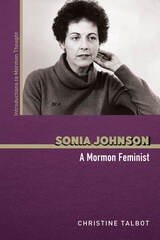
Sonia Johnson
A Mormon FeministChristine Talbot
University of Illinois Press, 2024
Few figures in the history of the Church of Jesus Christ of Latter-day Saints provoke such visceral responses as Sonia Johnson. Her unrelenting public support of the Equal Rights Amendment (ERA) made her the face of LDS feminism while her subsequent excommunication roiled the faith community.
Christine Talbot tells the story of Sonia’s historic confrontation with the Church within the context of the faith’s first large-scale engagement with the feminist movement. A typical if well-educated Latter-day Saints homemaker, Sonia was moved to action by the all-male LDS leadership’s opposition to the ERA and a belief the Church should stay out of politics. Talbot uses the activist’s experiences and criticisms to explore the ways Sonia’s ideas and situation sparked critical questions about LDS thought, culture, and belief. She also illuminates how Sonia’s excommunication shaped LDS feminism, the Church’s antagonism to feminist critiques, and the Church itself in the years to come.
A revealing and long-overdue account, Sonia Johnson explores the life, work, and impact of the LDS feminist.
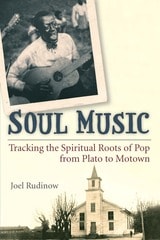
Soul Music
Tracking the Spiritual Roots of Pop from Plato to MotownJoel Rudinow
University of Michigan Press, 2010
"Exceptionally illuminating and philosophically sophisticated."
---Ted Cohen, Professor of Philosophy, University of Chicago
"In this audacious and long-awaited book, Joel Rudinow takes seriously a range of interrelated issues that most music theorizing is embarrassed to tackle. People often ask me about music and spirituality. With Soul Music, I can finally recommend a book that offers genuine philosophical insight into the topic."
---Theodore Gracyk, Professor of Philosophy, Minnesota State University Moorhead
The idea is as strange as it is commonplace---that the "soul" in soul music is more than just a name, that somehow the music truly taps into something essential rooted in the spiritual notion of the soul itself. Or is it strange? From the civil rights movement and beyond, soul music has played a key, indisputable role in moments of national healing. Of course, American popular music has long been embroiled in controversies over its spiritual purity (or lack thereof). But why? However easy it might seem to dismiss these ideas and debates as quaint and merely symbolic, they persist.
In Soul Music: Tracking the Spiritual Roots of Pop from Plato to Motown, Joel Rudinow, a philosopher of music, takes these peculiar notions and exposes them to serious scrutiny. How, Rudinow asks, does music truly work upon the soul, individually and collectively? And what does it mean to say that music can be spiritually therapeutic or toxic? This illuminating, meditative exploration leads from the metaphysical idea of the soul to the legend of Robert Johnson to the philosophies of Plato and Leo Strauss to the history of race and racism in American popular culture to current clinical practices of music therapy.
Joel Rudinow teaches in the Philosophy and Humanities Departments at Santa Rosa Junior College and is the coauthor of Invitation to Critical Thinking and the coeditor of Ethics and Values in the Information Age.