Results by title
828 books match the query 'Research' and 68 start with s

SCHOLAR ADVENTURERS
Richard D. Altick
The Ohio State University Press, 1987
Samuel Steward and the Pursuit of the Erotic Sexuality, Literature, Archives
Sexuality, Literature, ArchivesEdited by Debra A. Moddelmog and Martin Joseph Ponce
The Ohio State University Press, 2017
With work by prominent scholars in queer, transgender, and sexuality studies, and with topics such as the queer archive, hoarding, masochism, the queer mystery, race and desire, sexology, and gay pornography, Samuel Steward and the Pursuit of the Erotic will appeal to a wide range of readers across a variety of disciplines invested in queer experience. Closing on a personal recollection from one of Steward’s last close friends, the volume will also appeal to readers interested in the personal aspects of this fascinating, idiosyncratic figure’s multifaceted life.
Schooled and Sorted
How Educational Categories Create InequalityThurston Domina
Russell Sage Foundation, 2023
Some educational categories have broadly egalitarian consequences. Indeed, Domina, Penner, and Penner argue that when societies enroll young people in school, making them students, they mark them as individuals who are worthy of rights. But other educational categories reinforce powerful social categories—including race, gender, and class—and ultimately reproduce social and economic inequality in society. Elite colleges, tracked high schools, and elementary school gifted programs provide not only different educational experiences, but also create merit and inequality by sorting students into categories that are defined by the students who are excluded.
Schooled & Sorted highlights that many of the decisions that define educational categories occur in school-based committee meetings and other relatively local settings. The local nature of these decisions provides many opportunities to define educational categories differently, and for school communities to bring about change.
Schooled & Sorted is an illuminating investigation into the ways sorting within schools translates into inequality in the larger world. While some educational categorization may be unavoidable, the authors suggest ways to build a more equitable system—and thus a more equitable society.
Science 3.0
Real Science, Real KnowledgeFrank Miedema
Amsterdam University Press, 2013

Science Bought and Sold
Essays in the Economics of ScienceEdited by Philip Mirowski and Esther-Mirjam Sent
University of Chicago Press, 2001
Bringing together central themes in this emerging discipline, the editors have assembled important articles that provide a wider context and background against which the economics of science can be evaluated. Roughly one-third of the essays presented here are original papers, and the rest are critical articles previously published in the field. From essays examining economic welfare to the idea of scientists as agents to the digital aspects of higher education,Science Bought and Sold presents a comprehensive overview of the new directions of this expanding area.
Contributors:
Kenneth J. Arrow
Mario Biagioli
William A. Brock
Michel Callon
Partha Dasgupta
Paul A. David
Steven N. Durlauf
Paul Forman
Steve Fuller
D. Wade Hands
Shaun P. Hargreaves Heap
Philip Kitcher
Sharon G. Levin
Richard R. Nelson
David F. Noble
Michael Polanyi
Gary Rhoades
Charles Sanders Peirce
Sheila Slaughter
Paula E. Stephan
Stephen Turner
James R. Wible
John Ziman
Science and Ecosystem Management in the National Parks
Edited by William L. Halvorson and Gary E. Davis
University of Arizona Press, 1996
Science and Ecosystem Management in the National Parks presents twelve case studies of long-term research conducted in and around national parks that address major natural resource issues. These cases demonstrate how the use of longer time scales strongly influence our understanding of ecosystems and how interpretations of short-term patterns in nature often change when viewed in the context of long-term data sets. Most importantly, they show conclusively that scientific research significantly reduces uncertainty and improves resource management decisions. Chosen by scientists and senior park managers, the cases offer a broad range of topics, including: air quality at Grand Canyon; interaction between moose and wolf populations on Isle Royale; control of exotic species in Hawaiian parks; simulation of natural fire in the parks of the Sierra Nevada; and the impact of urban expansion on Saguaro National Monument.
Because national parks are increasingly beset with conflicting views of their management, the need for knowledge of park ecosystems becomes even more critical--not only for the parks themselves, but for what they can tell us about survival in the rest of our world. This book demonstrates to policymakers and managers that decisions based on knowledge of ecosystems are more enduring and cost effective than decisions derived from uninformed consensus. It also provides scientists with models for designing research to meet threats to our most precious natural resources. "If we can learn to save the parks," observe Halvorson and Davis, "perhaps we can learn to save the world."

Science and the University
Edited by Paula E. Stephan and Ronald G. Ehrenberg
University of Wisconsin Press, 2007
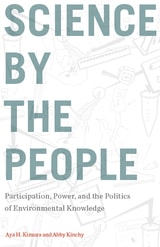
Science by the People
Participation, Power, and the Politics of Environmental KnowledgeAya H. Kimura
Rutgers University Press, 2019
Citizen science—research involving nonprofessionals in the research process—has attracted both strong enthusiasts and detractors. Many environmental professionals, activists, and scholars consider citizen science part of their toolkit for addressing environmental challenges. Critics, however, contend that it represents a corporate takeover of scientific priorities. In this timely book, two sociologists move beyond this binary debate by analyzing the tensions and dilemmas that citizen science projects commonly face. Key lessons are drawn from case studies where citizen scientists have investigated the impact of shale oil and gas, nuclear power, and genetically engineered crops. These studies show that diverse citizen science projects face shared dilemmas relating to austerity pressures, presumed boundaries between science and activism, and difficulties moving between scales of environmental problems. By unpacking the politics of citizen science, this book aims to help people negotiate a complex political landscape and choose paths moving toward social change and environmental sustainability.
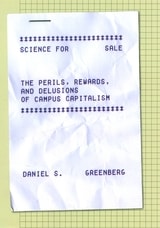
Science for Sale
The Perils, Rewards, and Delusions of Campus CapitalismDaniel S. Greenberg
University of Chicago Press, 2007
With Science for Sale, acclaimed journalist Daniel S. Greenberg reveals that campus capitalism is more complicated—and less profitable—than media reports would suggest. While universities seek out corporate funding, news stories rarely note that those industry dollars are dwarfed by government support and other funds. Also, while many universities have set up technology transfer offices to pursue profits through patents, many of those offices have been financial busts. Meanwhile, science is showing signs of providing its own solutions, as highly publicized misdeeds in pursuit of profits have provoked promising countermeasures within the field.
But just because the threat is overhyped, Greenberg argues, doesn’t mean that there’s no danger. From research that has shifted overseas so corporations can avoid regulations to conflicts of interest in scientific publishing, the temptations of money will always be a threat, and they can only be countered through the vigilance of scientists, the press, and the public.
Based on extensive, candid interviews with scientists and administrators, Science for Sale will be indispensable to anyone who cares about the future of scientific research.

Science in the American Southwest
A Topical HistoryGeorge E. Webb
University of Arizona Press, 2002
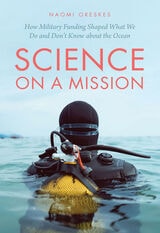
Science on a Mission
How Military Funding Shaped What We Do and Don’t Know about the OceanNaomi Oreskes
University of Chicago Press, 2021
What difference does it make who pays for science?
Some might say none. If scientists seek to discover fundamental truths about the world, and they do so in an objective manner using well-established methods, then how could it matter who’s footing the bill? History, however, suggests otherwise. In science, as elsewhere, money is power. Tracing the recent history of oceanography, Naomi Oreskes discloses dramatic changes in American ocean science since the Cold War, uncovering how and why it changed. Much of it has to do with who pays.
After World War II, the US military turned to a new, uncharted theater of warfare: the deep sea. The earth sciences—particularly physical oceanography and marine geophysics—became essential to the US Navy, which poured unprecedented money and logistical support into their study. Science on a Mission brings to light how this influx of military funding was both enabling and constricting: it resulted in the creation of important domains of knowledge but also significant, lasting, and consequential domains of ignorance.
As Oreskes delves into the role of patronage in the history of science, what emerges is a vivid portrait of how naval oversight transformed what we know about the sea. It is a detailed, sweeping history that illuminates the ways funding shapes the subject, scope, and tenor of scientific work, and it raises profound questions about the purpose and character of American science. What difference does it make who pays? The short answer is: a lot.

Scientific Characters
Rhetoric, Politics, and Trust in Breast Cancer ResearchLisa Keränen
University of Alabama Press, 2010

Scientific Evidence and Equal Protection of the Law
Ancheta, Angelo N
Rutgers University Press, 2006
Scientific and social scientific evidence has informed judicial decisions and the making of constitutional law for decades, but for much of U.S. history it has also served as a rhetorical device to justify inequality. It is only in recent years that scientific and statistical research has helped redress discrimination—but not without controversy.
Scientific Evidence and Equal Protection of the Law provides unique insights into the judicial process and scientific inquiry by examining major decisions of the U.S. Supreme Court, civil rights advocacy, and the nature of science itself. Angelo Ancheta discusses leading equal protection cases such as Brown v. Board of Education and recent litigation involving race-related affirmative action, gender inequality, and discrimination based on sexual orientation. He also examines less prominent, but equally compelling cases, including McCleskey v. Kemp, which involved statistical evidence that a state’s death penalty was disproportionately used when victims were white and defendants were black, and Castaneda v. Partida, which established key standards of evidence in addressing the exclusion of Latinos from grand jury service. For each case, Ancheta explores the tensions between scientific findings and constitutional values.
Scientific Style and Format
The CSE Manual for Authors, Editors, and Publishers, Eighth EditionCouncil of Science Editors
University of Chicago Press, 2014

Sea Turtles of the Eastern Pacific
Advances in Research and ConservationEdited by Jeffrey A. Seminoff and Bryan P. Wallace; Foreword by Peter C. H. Pritchard
University of Arizona Press, 2012
Sea turtles are flagship species for the world's oceans. They traverse international boundaries during their migrations, serve as vehicles for marine nutrients to terrestrial habitats, and embody the often tenuous relationship between human action and ecosystem health. The East Pacific Ocean is home to some of the most dynamic marine ecosystems, and the most unique sea turtles. Marine biodiversity within this massive ocean region abounds in mangrove estuaries, seagrass pastures, coral reefs, the open ocean, and many other habitats, with sea turtles often the most conspicuous species present. The distinctive traits of the Eastern Pacific have resulted in the smallest leatherbacks, a singular morph of the green turtle, dark and steeply domed olive ridleys, and the most cryptic hawksbills on the planet. Only now are we beginning to understand how these varieties have evolved.
However, the oceanographic conditions that make this an epicenter of sea turtle activity also promote massive artisanal and industrial fishing efforts that, coupled with illegal harvesting of eggs and turtles, have led to declines of several turtle populations in the region. The essays and stories in Sea Turtles of the Eastern Pacific describe for the first time the history of this exploitation, as well as recent sea turtle conservation initiatives and scientific research in the region. The first third of the book considers the biology of the turtles, focusing on general overviews of current ecological management challenges facing the turtles' survival. The second third treats issues of marine policy related to turtle conservation. In conclusion, the book offers six compelling stories of conservation success. By the end, readers will have gained a in-depth view not only of these magnificent creatures, but also the people involved in research and conservation efforts in one of the most remarkable regions of our planet.
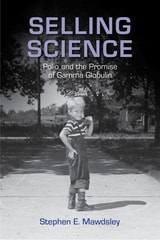
Selling Science
Polio and the Promise of Gamma GlobulinMawdsley, Stephen E
Rutgers University Press, 2016
Drawing on oral history interviews, medical journals, newspapers, meeting minutes, and private institutional records, Selling Science sheds light on the ethics of scientific conduct, and on the power of marketing to shape public opinion about medical experimentation.
Serendipity in Rhetoric, Writing, and Literacy Research
Maureen Daly Goggin
Utah State University Press, 2018
In the course of research, most scholars have known moments of surprise, catastrophe, or good fortune, though they seldom refer to these occurrences in reports or discuss them with students. Serendipity in Rhetoric, Writing, and Literacy Research reveals the different kinds of work scholars, particularly those in rhetoric, writing, and literacy, need to do in order to recognize a serendipitous discovery or a missed opportunity.
In published scholarship and research, the path toward discovery seems clean and direct. The dead ends, backtrackings, start-overs, and stumbles that occur throughout the research process are elided, and seems that the researchers started at point A and arrived safely and neatly at point B without incident, as if by magic. The path, however, is never truly clear and straight. Research and writing is messy. Serendipity in Rhetoric, Writing, and Literacy Research features chapters from twenty-three writing scholars who have experienced moments of serendipity in their own work—not by magic or pure chance but through openness and active waiting, which offer an opportunity to prepare the mind.
Serendipity in Rhetoric, Writing, and Literacy Research illustrates the reality of doing research: there is no reliable prescription or one-size-fits-all manual, but success can be found with focused dedication and an open mind.
Contributors: Ellen Barton, Zachary C. Beare, Lynn Z. Bloom, Jennifer Clary-Lemon, Caren Wakerman Converse, Gale Coskan-Johnson, Kim Donehower, Bill Endres, Shirley E. Faulkner-Springfield, Lynée Lewis Gaillet, Brad Gyori, Judy Holiday, Gesa E. Kirsch, Lori Ostergaard, Doreen Piano, Liz Rohan, Ryan Skinnell, Patricia Wilde, Daniel Wuebben
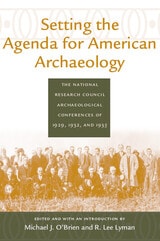
Setting the Agenda for American Archaeology
The National Research Council Archaeological Conferences of 1929, 1932, and 1935Edited and with an introduction by Michael J. O'Brien and R. Lee Lyman
University of Alabama Press, 2001
A Dan Josselyn Memorial Publication
This collection elucidates the key role played by the National Research Council seminars, reports, and pamphlets in setting an agenda that has guided American archaeology in the 20th century.
In the 1920s and 1930s, the fascination that Americans had for the continent's prehistoric past was leading to a widespread and general destruction of archaeological evidence. In a drive toward the commercialization of antiquities, amateur collectors and "pot hunters" pillaged premier and lesser-known sites before the archaeological record could be properly investigated and documented. Adding to the problem was a dearth of professionals and scholars in the field to conduct professional investigations and to educate the public about the need for preservation and scientific research methods.
In stepped the National Research Council, a division of the National Academy of Sciences, the Committee on State Archaeological Surveys. The CSAS initiated an enormously successful outreach program to enlist the aid of everyday citizens in preserving the fragile but valuable prehistoric past. Meetings held in St. Louis, Birmingham, and Indianapolis provided nuts-and-bolts demonstrations by trained archaeologists and laid out research agendas that both professionals and amateurs could follow.
Setting the Agenda contains the complete reports of the three NRC conferences, a short publication on the methods and techniques for conducting archaeological surveys, and a guide for amateur archaeologists. An extensive introduction by the editors sets these documents in context and provides insight into the intentions of the NRC committee members as they guided the development of American archaeology.

Sex Isn't Real
The Invention of an Incoherent BinaryBeans Velocci
Duke University Press, 2026
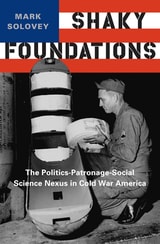
Shaky Foundations
The Politics-Patronage-Social Science Nexus in Cold War AmericaSolovey, Mark
Rutgers University Press, 2015
Numerous popular and scholarly accounts have exposed the deep impact of patrons on the production of scientific knowledge and its applications. Shaky Foundations provides the first extensive examination of a new patronage system for the social sciences that emerged in the early Cold War years and took more definite shape during the 1950s and early 1960s, a period of enormous expansion in American social science.
By focusing on the military, the Ford Foundation, and the National Science Foundation, Mark Solovey shows how this patronage system presented social scientists and other interested parties, including natural scientists and politicians, with new opportunities to work out the scientific identity, social implications, and public policy uses of academic social research. Solovey also examines significant criticisms of the new patronage system, which contributed to widespread efforts to rethink and reshape the politics-patronage-social science nexus starting in the mid-1960s.
Based on extensive archival research, Shaky Foundations addresses fundamental questions about the intellectual foundations of the social sciences, their relationships with the natural sciences and the humanities, and the political and ideological import of academic social inquiry.
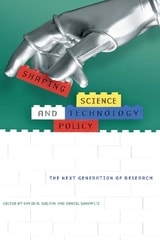
Shaping Science and Technology Policy
The Next Generation of ResearchEdited by David H. Guston and Daniel Sarewitz
University of Wisconsin Press, 2006
With scientific progress occurring at a breathtaking pace, science and technology policy has never been more important than it is today. Yet there is a very real lack of public discourse about policy-making, and government involvement in science remains shrouded in both mystery and misunderstanding. Who is making choices about technology policy, and who stands to win or lose from these choices? What criteria are being used to make decisions and why? Does government involvement help or hinder scientific research?
Shaping Science and Technology Policy brings together an exciting and diverse group of emerging scholars, both practitioners and academic experts, to investigate current issues in science and technology policy. Essays explore such topics as globalization, the shifting boundary between public and private, informed consent in human participation in scientific research, intellectual property and university science, and the distribution of the costs and benefits of research.
Contributors: Charlotte Augst, Grant Black, Mark Brown, Kevin Elliott, Patrick Feng, Pamela M. Franklin, Carolyn Gideon, Tené N. Hamilton, Brian A. Jackson, Shobita Parthasarathy, Jason W. Patton, A. Abigail Payne, Bhaven Sampat, Christian Sandvig, Sheryl Winston Smith, Michael Whong-Barr
Shaping Science with Rhetoric
The Cases of Dobzhansky, Schrodinger, and WilsonLeah Ceccarelli
University of Chicago Press, 2001
In Shaping Science with Rhetoric, Leah Ceccarelli addresses such questions through close readings of three scientific monographs in their historical contexts—Theodosius Dobzhansky's Genetics and the Origin of Species (1937), which inspired the "modern synthesis" of evolutionary biology; Erwin Schrödinger's What Is Life? (1944), which catalyzed the field of molecular biology; and Edward O. Wilson's Consilience (1998), a so far not entirely successful attempt to unite the social and biological sciences. She examines the rhetorical strategies used in each book and evaluates which worked best, based on the reviews and scientific papers that followed in their wake.
Ceccarelli's work will be important for anyone interested in how interdisciplinary fields are formed, from historians and rhetoricians of science to scientists themselves.
Shaping Science
Organizations, Decisions, and Culture on NASA’s TeamsJanet Vertesi
University of Chicago Press, 2020
In Shaping Science, Janet Vertesi draws on a decade of immersive ethnography with NASA’s robotic spacecraft teams to create a comparative account of two great space missions of the early 2000s. Although these missions featured robotic explorers on the frontiers of the solar system bravely investigating new worlds, their commands were issued from millions of miles away by a very human team. By examining the two teams’ formal structures, decision-making techniques, and informal work practices in the day-to-day process of mission planning, Vertesi shows just how deeply entangled a team’s local organizational context is with the knowledge they produce about other worlds.
Using extensive, embedded experiences on two NASA spacecraft teams, this is the first book to apply organizational studies of work to the laboratory environment in order to analyze the production of scientific knowledge itself. Engaging and deeply researched, Shaping Science demonstrates the significant influence that the social organization of a scientific team can have on the practices of that team and the results they yield.
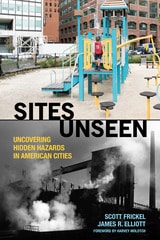
Sites Unseen
Uncovering Hidden Hazards in American CitiesScott Frickel
Russell Sage Foundation, 2018
From a dive bar in New Orleans to a leafy residential street in Minneapolis, many establishments and homes in cities across the nation share a troubling and largely invisible past: they were once sites of industrial manufacturers, such as plastics factories or machine shops, that likely left behind carcinogens and other hazardous industrial byproducts. In Sites Unseen, sociologists Scott Frickel and James Elliott uncover the hidden histories of these sites to show how they are regularly produced and reincorporated into urban landscapes with limited or no regulatory oversight. By revealing this legacy of our industrial past, Sites Unseen spotlights how city-making has become an ongoing process of social and environmental transformation and risk containment.
To demonstrate these dynamics, Frickel and Elliott investigate four very different cities—New Orleans, Minneapolis, Philadelphia, and Portland, Oregon. Using original data assembled and mapped for thousands of former manufacturers’ locations dating back to the 1950s, they find that more than 90 percent of such sites have now been converted to urban amenities such as parks, homes, and storefronts with almost no environmental review. And because manufacturers tend to open plants on new, non-industrial lots rather than on lots previously occupied by other manufacturers, associated hazards continue to spread relatively unabated. As they do, residential turnover driven by gentrification and the rising costs of urban living further obscure these sites from residents and regulatory agencies alike.
Frickel and Elliott show that these hidden processes have serious consequences for city-dwellers. While minority and working class neighborhoods are still more likely to attract hazardous manufacturers, rapid turnover in cities means that whites and middle-income groups also face increased risk. Since government agencies prioritize managing polluted sites that are highly visible or politically expedient, many former manufacturing sites that now have other uses remain invisible. To address these oversights, the authors advocate creating new municipal databases that identify previously undocumented manufacturing sites as potential environmental hazards. They also suggest that legislation limiting urban sprawl might reduce the flow of hazardous materials beyond certain boundaries.
A wide-ranging synthesis of urban and environmental scholarship, Sites Unseen shows that creating sustainable cities requires deep engagement with industrial history as well as with the social and regulatory processes that continue to remake urban areas through time.
A Volume in the American Sociological Association's Rose Series in Sociology.

Sixteen Modern American Authors
A Survey of Research and CriticismJackson R. Bryer, ed.
Duke University Press, 1973

Sixteen Modern American Authors
A Survey of Research and Criticism since 1972Jackson R. Bryer, ed.
Duke University Press, 1989
“Students of modern American literature have for some years turned to Fifteen Modern American Authors (1969) as an indispensable guide to significant scholarship and criticism about twentieth-century American writers. In its new form—Sixteenth Modern American Authors—it will continue to be indispensable. If it is not a desk-book for all Americanists, it is a book to be kept in the forefront of the bibliographical compartment of their brains.”—American Studies
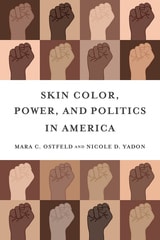
Skin Color, Power, and Politics in America
Mara Cecilia Ostfeld
Russell Sage Foundation, 2022
Ostfeld and Yadon surveyed over 1,300 people about their political views, including party affiliation, their opinions on welfare, and the importance of speaking English in the U.S. The authors created a matrix grounded in their “Roots of Race” framework, which predicts the relationship between skin color and political attitudes for each ethnoracial group based on the blurriness of the group’s boundaries and historical levels of privilege. They draw upon three distinct measures of skin color to conceptualize the relationship between skin color and political views: “Machine-Rated Skin Color,” measured with a light-reflectance meter; “Self-Assessed Skin Color,” using the Yadon-Ostfeld Skin Color Scale; and “Skin Color Discrepancy,” the difference between one’s Machine-Rated and Self-Assessed Skin Color.
Ostfeld and Yadon examine patterns that emerge among these measures, and their relationships with life experiences and political stances. Among Latinos, a group with relatively blurry group boundaries and low levels of historical privilege, the authors find a robust relationship between political views and Self-Assessed Skin Color. Latinos who overestimate the lightness of their skin color are more likely to hold conservative views on current racialized political issues, such as policing. Latinos who overestimate the darkness of their skin color, on the other hand, are more likely to hold liberal political views. As America’s major political parties remain divided on issues of race, this suggests that for Latinos, self-reported skin color is used as a means of aligning oneself with valued political coalitions.
African Americans, another group with low levels of historical privilege but with more clearly defined group boundaries, demonstrated no significant relationship between skin color and political attitudes. Thus, the lived experiences associated with being African American appeared to supersede the differences in life experiences due to skin color.
Whites, a group with more historical privilege and increasingly blurry group boundaries, showed a clear relationship between machine-assessed skin color and attitudes on political issues. Those with darker Machine-Rated Skin Color are more likely to hold conservative views, suggesting that they are responding to the threat of losing their privilege in a multicultural society.
At a time when the U.S. is both more diverse and politically divided, Skin Color, Power, and Politics in Americais a timely account of the ways in which skin color and politics are intertwined.
Small Places, Large Issues
An Introduction to Social and Cultural AnthropologyThomas Hylland Eriksen
Pluto Press, 2015
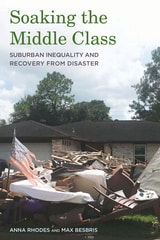
Soaking the Middle Class
Suburban Inequality and Recovery from DisasterAnna Rhodes
Russell Sage Foundation, 2022
In 2017, Hurricane Harvey dropped record-breaking rainfall in Southeast Texas resulting in more than $125 billion in direct damages. Rhodes and Besbris followed 59 flooded households in Friendswood, Texas, for two years after the storm to better understand the recovery process in a well-resourced, majority-White, middle-class suburban community. As such, Friendswood should have been highly resilient to storms like Harvey, yet Rhodes and Besbris find that the recovery process exacerbated often-invisible economic inequality between neighbors. Two years after Harvey, some households were in better financial positions than they were before the storm, while others still had incomplete repairs, were burdened with large new debts, and possessed few resources to draw on should another disaster occur.
Rhodes and Besbris find that recovery policies were significant drivers of inequality, with flood insurance playing a key role in the divergent recovery outcomes within Friendswood. Households with flood insurance prior to Harvey tended to have higher incomes than those that did not. These households received high insurance payouts, enabling them to replace belongings, hire contractors, and purchase supplies. Households without coverage could apply for FEMA assistance, which offered considerably lower payouts, and for government loans, which would put them into debt. Households without coverage found themselves exhausting their financial resources, including retirement savings, to cover repairs, which put them in even more financially precarious positions than they were before the flood.
The vast majority of Friendswood residents chose to repair and return to their homes after Hurricane Harvey. Even this devastating flood did not alter their plans for long-term residential stability, and the structure of recovery policies only further oriented homeowners towards returning to their homes. Prior to Harvey, many Friendswood households relied on flood damage from previous storms to judge their vulnerability and considered themselves at low risk. After Harvey, many found it difficult to assess their level of risk for future flooding. Without strong guidance from federal agencies or the local government on how to best evaluate risk, many residents ended up returning to potentially unsafe places.
As climate-related disasters become more severe, Soaking the Middle Class illustrates how inequality in the United States will continue to grow if recovery policies are not fundamentally changed.
Social Aspects of the Prolongation of Life
Diana Crane
Russell Sage Foundation, 1969

Social Indicator Models
Kenneth C. Land
Russell Sage Foundation, 1975

Social Knowledge Creation in the Humanities
Volume 1Edited by Alyssa Arbuckle, Aaron Mauro, and Daniel Powell
Iter Press, 2017
The ubiquity of social media has transformed the scope and scale of scholarly communication in the arts and humanities. The consequences of this new participatory and collaborative environment for humanities research has allowed for fresh approaches to communicating research. Social Knowledge Creation takes up the norms and customs of online life to reorient, redistribute, and oftentimes flatten traditional academic hierarchies. This book discusses the implications of how humanists communicate with the world and looks to how social media shapes research methods. This volume addresses peer-review, open access publishing, tenure and promotion, mentorship, teaching, collaboration, and interdisciplinarity as a comprehensive introduction to these rapidly changing trends in scholarly communication, digital pedagogy, and educational technology. Collaborative structures are rapidly augmenting disciplinary focus of humanities curriculum and the public impact of humanities research teams with new organizational and disciplinary thinking. Social Knowledge Creation represents a particularly dynamic and growing field in which the humanities seeks to find new ways to communicate the legacy and traditions of humanities based inquiry in a 21st century context.
New Technologies in Medieval and Renaissance Studies Volume 7.
Edited by Alyssa Arbuckle, Aaron Mauro, and Daniel Powell
Social Knowledge in the Making
Edited by Charles Camic, Neil Gross, and Michèle Lamont
University of Chicago Press, 2011

Social Life in Northwest Alaska
The Structure of Inupiaq Eskimo NationsErnest Burch Jr.
University of Alaska Press, 2006
Social Programs that Work
Jonathan Crane
Russell Sage Foundation, 1998

Social Research for our Times
Thomas Coram Research Unit past, Present and FutureEdited by Claire Cameron, Alison Koslowski, Alison Lamont, and Peter Moss
University College London, 2023
For fifty years, researchers at UCL’s Thomas Coram Research Unit have been undertaking ground-breaking policy-relevant social research. Their main focus has been social issues affecting children, young people, and families and the services provided for them. Social Research for our Times brings together different generations of researchers from the Unit to share some of the most important results of their studies.
Two sections focus on the main findings and conclusions from research into children and children services and on family life, minoritized groups, and gender. A third section is devoted to the innovative methods that have been developed and used to undertake research in these complex areas. Running through the book is a key strategic question: what should be the relationship between research and policy? Or put another way, what does “policy-relevant research” mean? This perennial question has gained new importance in the post-COVID, post-Brexit world that we have entered, making this text a timely intervention for sharing decades of experience. Taking a unique opportunity to reflect on the research context as well as research findings, this book will be of interest to researchers, teachers, students, and those involved in policy-making both in and beyond dedicated research units, and it can be read as a whole or sampled for individual standalone chapters.
Social Research in the Judicial Process
Cases, Readings, and TextWallace D. Loh
Russell Sage Foundation, 1984
Social Science for What?
Philanthropy and the Social Question in a World Turned Rightside UpAlice O'Connor
Russell Sage Foundation, 2007
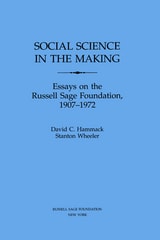
Social Science in the Making
Essays on the Russell Sage Foundation, 1907-1972David C. Hammack
Russell Sage Foundation, 1994

Social Work Research
Methods for the Helping ProfessionsEdited by Norman A. Polansky
University of Chicago Press, 1975
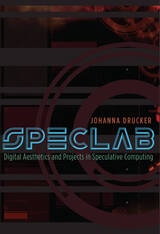
SpecLab
Digital Aesthetics and Projects in Speculative ComputingJohanna Drucker
University of Chicago Press, 2009
Nearly a decade ago, Johanna Drucker cofounded the University of Virginia’s SpecLab, a digital humanities laboratory dedicated to risky projects with serious aims. In SpecLab she explores the implications of these radical efforts to use critical practices and aesthetic principles against the authority of technology based on analytic models of knowledge.
Inspired by the imaginative frontiers of graphic arts and experimental literature and the technical possibilities of computation and information management, the projects Drucker engages range from Subjective Meteorology to Artists’ Books Online to the as yet unrealized ’Patacritical Demon, an interactive tool for exposing the structures that underlie our interpretations of text. Illuminating the kind of future such experiments could enable, SpecLab functions as more than a set of case studies at the intersection of computers and humanistic inquiry. It also exemplifies Drucker’s contention that humanists must play a role in designing models of knowledge for the digital age—models that will determine how our culture will function in years to come.
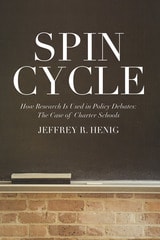
Spin Cycle
How Research Gets Used in Policy Debates--The Case of Charter SchoolsJeffrey R. Henig
Russell Sage Foundation, 2008

Spiritual Dimensions of Nursing Practice
Revised EditionVerna Benner Carson
Templeton Press, 2008
Ever since the first edition of Verna Benner Carson's Spiritual Dimensions of Nursing Practice went out of print, second-hand copies have been highly sought after by practitioners in the field and nursing school faculty who appreciated the comprehensive scope of the seminal work on spirituality and health. In this highly anticipated revised edition, Carson and her co-editor, Harold G. Koenig, have thoroughly revised and updated this classic in the field.
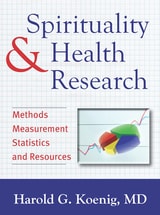
Spirituality and Health Research
Methods, Measurements, Statistics, and ResourcesHarold G Koenig
Templeton Press, 2011
In Spirituality and Health Research: Methods, Measurement, Statistics, and Resources, Dr. Harold G. Koenig leads a comprehensive overview of this complex subject. Dr. Koenig is one of the world’s leading authorities on the relationship between spirituality and health, and a leading researcher on the topic. As such, he is distinctively qualified to author such a book.

Sport History in the Digital Era
Edited by Gary Osmond and Murray G. Phillips
University of Illinois Press, 2015
Chapters consider how the philosophical and theoretical understanding of the meaning of history influence a willingness to engage with digital history, and conceptualize the relationship between history making and the digital era. As the writers show, digital media's mostly untapped potential for studying the recent past via blogs, chat rooms, gambling sites, and the like forge a symbiosis between sports and the internet, and offer historians new vistas to explore and utilize.
Sport History in the Digital Era also shows how the best digital history goes beyond a static cache of curated documents. Instead, it becomes a truly public history that serves as a dynamic site of enquiry and discussion. In such places, scholars enter into a give-and-take with individuals while inviting the audience to grapple with, rather than passively absorb, the evidence being offered.
Timely and provocative, Sport History in the Digital Era affirms how the information revolution has transformed sport and sport history--and shows the road ahead.
Contributors include Douglas Booth, Mike Cronin, Martin Johnes, Matthew Klugman, Geoffery Z. Kohe, Tara Magdalinski, Fiona McLachlan, Bob Nicholson, Rebecca Olive, Gary Osmond, Murray G. Phillips, Stephen Robertson, Synthia Sydnor, Holly Thorpe, and Wayne Wilson.

Stable Peace
By Kenneth E. Boulding; illustrations by Ed Lindlof
University of Texas Press, 1978
The human race has often put a high value on struggle, strife, turmoil, and excitement. Peace has been regarded as a utopian, unattainable, perhaps dull ideal or as some random element over which we have no control. However, the desperate necessities of the nuclear age have forced us to take peace seriously as an object of both personal and national policy. Stable Peace attempts to answer the question, If we had a policy for peace, what would it look like?
A policy for peace aims to speed up the historically slow, painful, but persistent transition from a state of continual war and turmoil to one of continual peace. In a stable peace, the war-peace system is tipped firmly toward peace and away from the cycle of folly, illusion, and ill will that leads to war.
Boulding proposes a number of modest, easily attainable, eminently reasonable policies directed toward this goal. His recommendations include the removal of national boundaries from political agendas, the encouragement of reciprocal acts of good will between potential enemies, the exploration of the theory and practice of nonviolence, the development of governmental and nongovernmental organizations to promote peace, and the development of research in the whole area of peace and conflict management.
Written in straightforward, lucid prose, Stable Peace will be of importance to politicians, policy makers, economists, diplomats, all concerned citizens, and all those interested in international relations and the resolution of conflict.
Starving the Beast
Ronald Reagan and the Tax Cut RevolutionMonica Prasad
Russell Sage Foundation, 2018
Drawing on never-before seen archival documents, Prasad traces the history of the 1981 tax cut—the famous “supply side” tax cut, which became the cornerstone for the next several decades of Republican domestic economic policy. She demonstrates that the main impetus behind this tax cut was not business group pressure, racial animus, or a belief that tax cuts would pay for themselves.
Rather, the tax cut emerged because in America--unlike in the rest of the advanced industrial world—progressive policies are not embedded within a larger political economy that is favorable to business. Since the end of World War II, many European nations have combined strong social protections with policies to stimulate economic growth such as lower taxes on capital and less regulation on businesses than in the United State. Meanwhile, the United States emerged from World War II with high taxes on capital and some of the strongest regulations on business in the advanced industrial world. This adversarial political economy could not survive the economic crisis of the 1970s.
Starving the Beast suggests that taking inspiration from the European model of progressive policies embedded in market-promoting political economy could serve to build an American economy that works better for all.
Stories of Becoming
Demystifying the Professoriate for Graduate Students in Composition and RhetoricClaire Lutkewitte
Utah State University Press, 2021
Using data from the study, the authors offer six specific strategies—including how to manage time, how to create a work/life balance, and how to collaborate with others—that readers can use to prepare for the composition and rhetoric job market and to begin their careers as full-time faculty members. Readers will learn about the possible responsibilities they may take on as new faculty, particularly those that go beyond teaching, research, service, and administration to include navigating the politics of higher education and negotiating professional identity construction. And they will also engage in activities and answer questions designed to deepen their understanding of the field and help them identify their own values and desired career trajectory.
Stories of Becoming demystifies the professoriate, compares what current new faculty have to say of their job expectations with the realities that students might face when on the job, and brings to light the invisible, behind-the-scenes work done by new faculty. It will be invaluable to graduate students, those who teach graduate students, new faculty, and hiring administrators in composition and rhetoric.
Storytelling and Conversation
Discourse in Deaf CommunitiesElizabeth A. Winston
Gallaudet University Press, 1999
In this intriguing book, renowned sociolinguistics experts explore the importance of discourse analysis, a process that examines patterns of language to understand how users build cooperative understanding in dialogues. It presents discourse analyses of sign languages native to Bali, Italy, England, and the United States.
Studies of internal context review the use of space in ASL to discuss space, how space in BSL is used to “package” complex narrative tasks, how signers choose linguistic tools to structure storytelling, and how affect, emphasis, and comment are added in text telephone conversations. Inquiries into external contexts observe the integration of deaf people and sign language into language communities in Bali, and the language mixing that occurs between deaf parents and their hearing children.
Both external and internal contexts are viewed together, first in an examination of applying internal ASL text styles to teaching written English to Deaf students and then in a consideration of the language choices of interpreters who must shift footing to manage the “interpreter’s paradox.” Storytelling and Conversation casts new light on discourse analysis, which will make it a welcome addition to the sociolinguistics canon.

Streaming Video Resources for Teaching, Learning, and Research
Julie A. American Library Association
American Library Association, 2014