Results by title
4127 books match the query 'Science' and 313 start with s

Saharan Winds
Energy Systems and Aeolian Imaginaries in Western SaharaAllan, Joanna
West Virginia University Press, 2024
Winner, ASLE-UKI Critical Book Prize, 2025
Finalist, Ecocritical Book Award, 2025, Association for the Study of Literature and Environment (ASLE)
Longlisted, Bread and Roses Award for Radical Publishing, 2025
Saharan Winds contributes to a fairer energy horizon by illuminating the role of imaginaries--how we understand energy sources such as wind and the meanings we attach to wind--in determining the wider politics, whether oppressive or just, associated with energy systems. This book turns to various cultures and communities across different time periods in one space, Western Sahara, to explore how wind imaginaries affect the development, management, and promotion of windfarms; the distribution of energy that windfarms produce; and, vitally, the type of politics mediated by all these elements combined. Highlighting the wind-fueled oppression of colonial energy systems, the book shows the potential offered by nomadic, Indigenous wind imaginaries for contributing to a fairer energy future.

Sailing with Noah
Stories from the World of ZoosJeffrey P. Bonner
University of Missouri Press, 2013
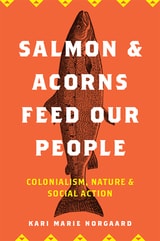
Salmon and Acorns Feed Our People
Colonialism, Nature, and Social ActionKari Marie Norgaard
Rutgers University Press, 2019
Since time before memory, large numbers of salmon have made their way up and down the Klamath River. Indigenous management enabled the ecological abundance that formed the basis of capitalist wealth across North America. These activities on the landscape continue today, although they are often the site of intense political struggle. Not only has the magnitude of Native American genocide been of remarkable little sociological focus, the fact that this genocide has been coupled with a reorganization of the natural world represents a substantial theoretical void. Whereas much attention has (rightfully) focused on the structuring of capitalism, racism and patriarchy, few sociologists have attended to the ongoing process of North American colonialism. Salmon and Acorns Feed Our People draws upon nearly two decades of examples and insight from Karuk experiences on the Klamath River to illustrate how the ecological dynamics of settler-colonialism are essential for theorizing gender, race and social power today.

Salmon, People, and Place
A Biologist's Search for Salmon RecoveryJim Lichatowich
Oregon State University Press, 2013
In Salmon, People, and Place, acclaimed fisheries biologist Jim Lichatowich eloquently exposes the misconceptions underlying salmon management and recovery programs that have fueled the catastrophic decline in Northwest salmon populations for more than a century. These programs will continue to fail, he suggests, so long as they regard salmon as products and ignore their essential relationship with their habitat.
But Lichatowich offers hope. In Salmon, People, and Place he presents a concrete plan for salmon recovery, one based on the myriad lessons learned from past mistakes. What is needed to successfully restore salmon, Lichatowich states, is an acute commitment to healing the relationships among salmon, people, and place.
A significant contribution to the literature on Pacific salmon, Salmon, People, and Place: A Biologist’s Search for Salmon Recovery is an essential read for anyone concerned about the fate of this Pacific Northwest icon.
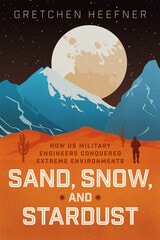
Sand, Snow, and Stardust
How US Military Engineers Conquered Extreme EnvironmentsGretchen Heefner
University of Chicago Press, 2025
Deserts, the Arctic, outer space—these extreme environments are often seen as inhospitable places at the edges of our maps. But from the 1940s through the 1960s, spurred by the diverse and unfamiliar regions the US military had navigated during World War II, the United States defense establishment took a keen interest in these places, dispatching troops to the Aleutian Islands, North Africa, the South Pacific, and beyond. To preserve the country’s status as a superpower after the war, to pave runways and build bridges, engineers had to understand and then conquer dunes, permafrost, and even the surface of the moon.
Sand, Snow, and Stardust explores how the US military generated a new understanding of these environments and attempted to master them, intending to cement America’s planetary power. Operating in these regions depended as much on scientific and cultural knowledge as on military expertise and technology. From General George S. Patton learning the hard way that the desert is not always hot, to the challenges of constructing a scientific research base under the Arctic ice, to the sheer implausibility of modeling Martian environments on Earth, Gretchen Heefner takes us on a wry expedition into the extremes and introduces us to the people who have shaped our insight into these extraordinary environments. Even decades after the first manned space flight, plans for human space exploration and extraplanetary colonization are still based on what we know about stark habitats on Earth.
An entertaining survey of the relationship between environmental history and military might, Sand, Snow, and Stardust also serves as a warning about the further transformation of the planet—whether through desertification, melting ice caps, or attempts to escape it entirely.

Satellites
Edited by Joseph A. Burns and Mildred Shapley Mathews
University of Arizona Press, 1986

Satellites of Jupiter
David Morrison
University of Arizona Press, 1982
From the original publication:
The findings of Voyager have brought Jupiter's moons out from the shadows. Now as much of interest to geologists as to astronomers, these satellites are brought under closer scrutiny by more than 50 international authorities in this volume. Included is research on thermal evolution, surface composition, cratering time scales, and other subjects; but also key chapters focusing on the satellite Io's volcanic eruptions, thermodynamics, phase composition and more. These 24 contributions constitute a reference that will stand as the decade's definitive work on Jupiter's satellites and a springboard to further hypotheses.
Saturation
An Elemental PoliticsMelody Jue and Rafico Ruiz, editors
Duke University Press, 2021
Contributors. Marija Cetinić, Jeff Diamanti, Bishnupriya Ghosh, Lisa Yin Han, Stefan Helmreich, Mél Hogan, Melody Jue, Rahul Mukherjee, Max Ritts, Rafico Ruiz, Bhaskar Sarkar, John Shiga, Avery Slater, Janet Walker, Joanna Zylinska
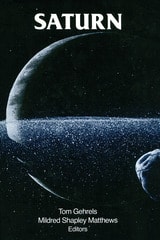
Saturn
Tom Gehrels
University of Arizona Press, 1984
Originally published in 1984
From the original publication:
The Saturn system is the most complex in the solar system, and this book is to summarize it all: the planet, rings, satellites, the magnetospheres, and the interaction with the interplanetary medium. The effective date of the material is approximately November 1983.

Savage Ecology
War and Geopolitics at the End of the WorldJairus Victor Grove
Duke University Press, 2019

Saving Orchids
Stories of Species Survival in a Changing WorldPhilip Seaton and Lawrence W. Zettler
University of Chicago Press, 2025
A gorgeously illustrated ode to the beauty and significance of orchids—and to those fighting to save these unique plants across the globe.
Until recently, a myriad of lifeforms enriched our lives. In some places, listening to a nighttime chorus of frogs in the neighborhood marsh was an archetypal touchstone of childhood. Children would search for tadpoles, just steps away from native Lady’s Tresses orchids. Year by year, the chorus became quieter. Today, only a few frogs and orchids remain. Is this the world we want our children to inherit? Do we want orchids to slip through our fingers and, eventually, to vanish?
For biologists Philip Seaton and Lawrence W. Zettler, and the intrepid orchid defenders they introduce in this book, the answer is no. Seaton and Zettler have traveled the world over the past three decades, studying orchids—flagship species for plant conservation. Stunningly illustrated, this book is a culmination of stories about the people—young and old alike—dedicated to protecting these remarkable plants from extinction. In the 19th century, collectors removed, shipped, and sold vast numbers of orchids from the wild. Today, scientists strive to reverse this harm—to protect and rebuild remnants of orchids’ original habitats against human disruption, including climate change. Seaton and Zettler reveal these plants’ bizarre pollination partners, risky liaisons with fungi, and adaptation to human domestication to show that learning orchids’ scientific secrets—and finding human helpers—is key to these plants’ survival.
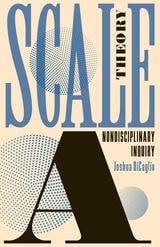
Scale Theory
A Nondisciplinary InquiryJoshua DiCaglio
University of Minnesota Press, 2021
A pioneering call for a new understanding of scale across the humanities
How is it possible that you are—simultaneously—cells, atoms, a body, quarks, a component in an ecological network, a moment in the thermodynamic dispersal of the sun, and an element in the gravitational whirl of galaxies? In this way, we routinely transform reality into things already outside of direct human experience, things we hardly comprehend even as we speak of DNA, climate effects, toxic molecules, and viruses. How do we find ourselves with these disorienting layers of scale? Enter Scale Theory, which provides a foundational theory of scale that explains how scale works, the parameters of scalar thinking, and how scale refigures reality—that teaches us how to think in terms of scale, no matter where our interests may lie.
Joshua DiCaglio takes us on a fascinating journey through six thought experiments that provide clarifying yet provocative definitions for scale and new ways of thinking about classic concepts ranging from unity to identity. Because our worldviews and philosophies are largely built on nonscalar experience, he then takes us slowly through the ways scale challenges and reconfigures objects, subjects, and relations.
Scale Theory is, in a sense, nondisciplinary—weaving together a dizzying array of sciences (from nanoscience to ecology) with discussions from the humanities (from philosophy to rhetoric). In the process, a curious pattern emerges: attempts to face the significance of scale inevitably enter terrain closer to mysticism than science. Rather than dismiss this connection, DiCaglio examines the reasons for it, redefining mysticism in terms of scale and integrating contemplative philosophies into the discussion. The result is a powerful account of the implications and challenges of scale, attuned to the way scale transforms both reality and ourselves.

Scandalous Knowledge
Science, Truth, and the HumanBarbara Herrnstein Smith
Duke University Press, 2006
With keen wit, Smith demonstrates that the familiar charges involved in these scandals—including the recurrent invocation of “postmodern relativism”—protect intellectual orthodoxy by falsely associating important intellectual developments with logically absurd and morally or politically disabling positions. She goes on to offer bold, original, and insightful perspectives on the currently strained relations between the natural sciences and the humanities; on the grandiose but dubious claims of evolutionary psychology to explain human behavior, cognition, and culture; and on contemporary controversies over the psychology, biology, and ethics of animal-human relations. Scandalous Knowledge is a provocative and compelling intervention into controversies that continue to roil through journalism, pulpits, laboratories, and classrooms throughout the United States and Europe.
Scenes from Deep Time
Early Pictorial Representations of the Prehistoric WorldMartin J. S. Rudwick
University of Chicago Press, 1992

Science
Steve Fuller
University of Minnesota Press, 1998
Science 3.0
Real Science, Real KnowledgeFrank Miedema
Amsterdam University Press, 2013
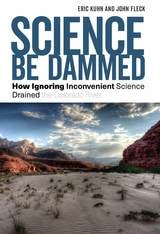
Science Be Dammed
How Ignoring Inconvenient Science Drained the Colorado RiverEric Kuhn and John Fleck
University of Arizona Press, 2019
Arguing that the science of the early twentieth century can shed new light on the mistakes at the heart of the over-allocation of the Colorado River, authors Eric Kuhn and John Fleck delve into rarely reported early studies, showing that scientists warned as early as the 1920s that there was not enough water for the farms and cities boosters wanted to build. Contrary to a common myth that the authors of the Colorado River Compact did the best they could with limited information, Kuhn and Fleck show that development boosters selectively chose the information needed to support their dreams, ignoring inconvenient science that suggested a more cautious approach.
Today water managers are struggling to come to terms with the mistakes of the past. Focused on both science and policy, Kuhn and Fleck unravel the tangled web that has constructed the current crisis. With key decisions being made now, including negotiations for rules governing how the Colorado River water will be used after 2026, Science Be Dammed offers a clear-eyed path forward by looking back.
Understanding how mistakes were made is crucial to understanding our contemporary problems. Science Be Dammed offers important lessons in the age of climate change about the necessity of seeking out the best science to support the decisions we make.
Science Bought and Sold
Essays in the Economics of ScienceEdited by Philip Mirowski and Esther-Mirjam Sent
University of Chicago Press, 2001
Bringing together central themes in this emerging discipline, the editors have assembled important articles that provide a wider context and background against which the economics of science can be evaluated. Roughly one-third of the essays presented here are original papers, and the rest are critical articles previously published in the field. From essays examining economic welfare to the idea of scientists as agents to the digital aspects of higher education,Science Bought and Sold presents a comprehensive overview of the new directions of this expanding area.
Contributors:
Kenneth J. Arrow
Mario Biagioli
William A. Brock
Michel Callon
Partha Dasgupta
Paul A. David
Steven N. Durlauf
Paul Forman
Steve Fuller
D. Wade Hands
Shaun P. Hargreaves Heap
Philip Kitcher
Sharon G. Levin
Richard R. Nelson
David F. Noble
Michael Polanyi
Gary Rhoades
Charles Sanders Peirce
Sheila Slaughter
Paula E. Stephan
Stephen Turner
James R. Wible
John Ziman
Science Communication Online
Engaging Experts and Publics on the InternetAshley Rose Mehlenbacher
The Ohio State University Press, 2019
Bringing together genre studies and the rhetoric of science, Mehlenbacher examines a range of new forms of science communication that challenge traditional presumptions about experts and nonexperts—including Twitter and Reddit AMAs, crowdfunding proposals such as Kickstarter and Experiment.com, civic-minded databases such as Safecast, and the PLOS blogging network. Science Communication Online illustrates the unique features of these genres and connects them to their rhetorical functions and the larger context leading to their emergence and evolution—from the democratization of science, challenges to expertise and expert status, and new political economies. Science Communication Online captures the important moment we find ourselves in now—one not defined by science and society but science in society.
Science In The New Age
The Paranormal, Its Defenders & Debunkers,David J. Hess
University of Wisconsin Press, 1993
Hess begins by looking at each group’s unique version of knowledge, science, and religion and at its story about the other groups. Comparing the various discourses, texts, writers, and groups as cultures, he shows how skeptics, parapsychologists, and New Agers may disagree vehemently with each other, but end up sharing many rhetorical strategies, metaphors, models, values, and cultural categories. Furthermore, he argues, their shared “paraculture” has a great deal in common with the larger culture of the United States. The dialogue on the paranormal, Hess concludes, has as much to do with gender, power, and cultural values as it does with spirits, extrasensory perception, and crystal healing.

Science Incarnate
Historical Embodiments of Natural KnowledgeEdited by Christopher Lawrence and Steven Shapin
University of Chicago Press, 1998
Bringing body and knowledge into such intimate contact is occasionally seen as funny, sometimes as enraging, and more often just as pointless. Vividly written and well illustrated, Science Incarnate offers concrete historical answers to such skeptical questions about the relationships between body, mind, and knowledge.
Focusing on the seventeenth century to the present, Science Incarnate explores how intellectuals sought to establish the value and authority of their ideas through public displays of their private ways of life. Patterns of eating, sleeping, exercising, being ill, and having (or avoiding) sex, as well as the marks of gender and bodily form, were proof of the presence or absence of intellectual virtue, integrity, skill, and authority. Intellectuals examined in detail include René Descartes, Isaac Newton, Charles Darwin, and Ada Lovelace.
Science Incarnate is at once very funny and deeply serious, addressing issues of crucial importance to present-day discussions about the nature of knowledge and how it is produced. It incorporates much that will interest cultural and social historians, historians of science and medicine, philosophers, sociologists, and anthropologists.
Science Of Love
Wisdom Of Well BeingThomas Oord
Templeton Press, 2004
We all know the saying, "Love can change the world." When science looks at love, it considers cosmology, sociobiology, evolutionary psychology, neurology, sex and romance, and the role of emotions as each relates to love. It also explores religious, ethical, and philosophical issues, such as virtue, creation ex nihilo, progress, divine action, agape, values, religious practices, pacifism, sexuality, friendship, freedom, and marriage. All affect the ways in which people understand each other and interact with one another. In this book, Oord explores these varied dimensions of love, illuminating the love-science symbiosis for both scholars and general readers.
His definition of love is "to act intentionally, in sympathetic response to others (including God), to promote overall well-being. Love acts are influenced by previous actions and executed in the hope of attaining a high degree of good for all." He begins his study with an exploration of the role love plays in all major world religions: Hinduism, Buddhism, Confucianism, Judaism, Islam, and Christianity. He explains how divine love in action can be viewed as consonant with the big bang theory and the continual creation of the universe.
He looks at pacifism and concludes that nonviolence is not always the most loving thing (sometimes violence must be used to rescue victims or prevent holocausts). He explores the animal kingdom to see how creatures work together with the Creator to make the world a better place. And he analyzes the fundamentals of love, the basic characteristics of existence that must be present for love to be expressed. He concludes with the important argument that progress can best be made when religion and science work together to both understand and promote love.
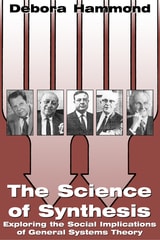
Science Of Synthesis
Debora Hammond
University Press of Colorado, 2003
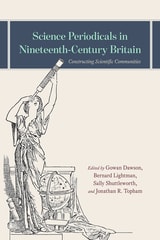
Science Periodicals in Nineteenth-Century Britain
Constructing Scientific CommunitiesEdited by Gowan Dawson, Bernard Lightman, Sally Shuttleworth, and Jonathan R. Topham
University of Chicago Press, 2020
The essays in this volume set the historical exploration of the scientific and medical periodicals of the era on a new footing, examining their precise function and role in the making of nineteenth-century science and enhancing our vision of the shifting communities and practices of science in the period. This radical rethinking of the scientific journal offers a new approach to the reconfiguration of the sciences in nineteenth-century Britain and sheds instructive light on contemporary debates about the purpose, practices, and price of scientific journals.

Science Policy under Thatcher
Jon Agar
University College London, 2019
Thatcher was a working scientist before she became a professional politician, and she maintained a close watch on science matters as prime minister. Scientific knowledge and advice were important to many urgent issues of the 1980s, from late Cold War questions of defense to emerging environmental problems, such as acid rain and climate change. Drawing on newly released primary sources, Jon Agar explores how Thatcher worked with and occasionally against the structures of scientific advice, as the scientific aspects of such issues were balanced or conflicted with other demands and values. To what extent, for example, was the freedom of the individual scientist to choose research projects balanced against the desire to secure more commercial applications? What was Thatcher’s stance towards European scientific collaboration and commitments? How did cuts in public expenditure affect the publicly funded research and teaching of universities?
In weaving together numerous topics, including AIDS and bioethics, the nuclear industry and strategic defense, Agar adds to the picture we have of Thatcher and her radically Conservative agenda, and argues that the science policy devised under her leadership, not least in relation to industrial strategy, had a prolonged influence on the culture of British science.
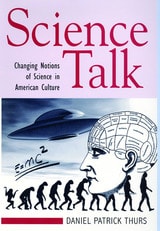
Science Talk
Changing Notions of Science in American CultureDaniel Patrick Thurs
Rutgers University Press, 2007
Science news is met by the public with a mixture of fascination and disengagement. On the one hand, Americans are inflamed by topics ranging from the question of whether or not Pluto is a planet to the ethics of stem-cell research. But the complexity of scientific research can also be confusing and overwhelming, causing many to divert their attentions elsewhere and leave science to the “experts.”
Whether they follow science news closely or not, Americans take for granted that discoveries in the sciences are occurring constantly. Few, however, stop to consider how these advances—and the debates they sometimes lead to—contribute to the changing definition of the term “science” itself. Going beyond the issue-centered debates, Daniel Patrick Thurs examines what these controversies say about how we understand science now and in the future. Drawing on his analysis of magazines, newspapers, journals and other forms of public discourse, Thurs describes how science—originally used as a synonym for general knowledge—became a term to distinguish particular subjects as elite forms of study accessible only to the highly educated.

Science Unfettered
A Philosophical Study in Sociohistorical OntologyJames E. McGuire
Ohio University Press, 2000
Working on a large canvas, Science Unfettered contributes to the ongoing debates in the philosophy of science. The ambitious aim of its authors is to reconceptualize the orientation of the subject, and to provide a new framework for understanding science as a human activity. Mobilizing the literature of the philosophy of science, the history of science, the sociology of science, and philosophy in general, Professors McGuire and Tuchanska build on these fields with the view of transforming their insights into a new epistemological and ontological basis for studying the enterprise of science.
In this approach, McGuire and Tuchanska have combined work from both Anglo-American and Continental traditions of philosophy. As a result, the works of Popper, Kuhn, Quine, and Lakatos, as well as Heidegger, Gadamer, Nietzsche, Foucault, and Feyerabend, are called into play. In addition, Science Unfettered deals extensively with history and historicity, offering a theory of historicity of science as it emerges in sociocultural contexts.
Unorthodox in its approach, Science Unfettered articulates an alternative that views science ontologically as a “practice,” a perspective from which traditional issues concerning the relationship of experiment to theory, the cognitive to the social, the relation between historical change and epistemic validity, the meaning of “objectivity” and the like can be addressed in a more fruitful way than is possible by starting with the traditional, ontological framework of subject and object.
Science Unlimited?
The Challenges of ScientismEdited by Maarten Boudry and Massimo Pigliucci
University of Chicago Press, 2017
In this wide-ranging collection, contributors ask whether the term scientism in fact (or in belief) captures an interesting and important intellectual stance, and whether it is something that should alarm us. Is scientism a well-developed position about the superiority of science over all other modes of human inquiry? Or is it more a form of excessive confidence, an uncritical attitude of glowing admiration? What, if any, are its dangers? Are fears that science will marginalize the humanities and eradicate the human subject—that it will explain away emotion, free will, consciousness, and the mystery of existence—justified? Does science need to be reined in before it drives out all other disciplines and ways of knowing? Both rigorous and balanced, Science Unlimited? interrogates our use of a term that is now all but ubiquitous in a wide variety of contexts and debates. Bringing together scientists and philosophers, both friends and foes of scientism, it is a conversation long overdue.

Science Wars
Andrew Ross, ed.
Duke University Press, 1996
At a time when scientific knowledge is systematically whisked out of the domain of education and converted into private capital, the essays in this volume are sharply critical of the conservative defense of a value-free science. They suggest that in a world steeped in nuclear, biogenic, and chemical overdevelopment, those who are skeptical of technology are more than entitled to ask for evidence of rationality in those versions of scientific progress that respond only to the managerial needs of state, corporate, and military elites. Whether uncovering the gender-laden assumptions built into the Western scientific method, redefining the scientific claim to objectivity, showing the relationship between science’s empirical worldview and that of mercantile capitalism, or showing how the powerful language of science exercises its daily cultural authority in our society, the essays in Science Wars announce their own powerful message. Analyzing the antidemocratic tendencies within science and its institutions, they insist on a more accountable relationship between scientists and the communities and environments affected by their research.
Revised and expanded from a recent issue of Social Text, Science Wars will provoke thought and controversy among scholars and general readers interested in science studies and current cultural politics.
Contributors. Stanley Aronowitz, Sarah Franklin, Steve Fuller, Sandra Harding, Roger Hart, N. Katherine Hayles, Ruth Hubbard, Joel Kovel, Les Levidow, George Levine, Richard Levins, Richard C. Lewontin, Michael Lynch, Emily Martin, Dorothy Nelkin, Hilary Rose, Andrew Ross, Sharon Traweek, Langdon Winner
Science Without Frontiers
Cosmopolitanism and National Interests in the World of Learning, 1870–1940Robert Fox
Oregon State University Press, 2016
Fostered by international congresses and societies, scientific collaboration flourished across linguistic and national borders from the mid-nineteenth century up until, and even after, the First World War. Projects such as the universal language Esperanto and the Dewey decimal system relied on optimistic visions of the future and were fueled by dramatic improvements in communications and transportation. The Institut international de bibliographie, founded in Brussels in 1895, emerged as a center for this collaborative endeavor.
After the First World War, scientific internationalism met with new challenges as governments increasingly sought to control the uses of science and technology. Fox details the fate of cooperative scientific internationalism in Europe and the challenges posed to it by the rise of totalitarianism and the increasingly conflicting force of nationalism. He explores public expressions of scientific nationalism in museum exhibits and, most tellingly, in rival national pavilions at the Paris International Exposition of 1937.
World War II might have shattered internationalist ideals for good, but grounds for optimism remain in the successes of international organizations like UNESCO and in the potential of electronic media as a way to achieve a vision of universal access to knowledge. Science without Frontiers offers a new way to think about science and culture and its relationship to politics amid the crises of the twentieth century.
Science among the Ottomans
The Cultural Creation and Exchange of KnowledgeBy Miri Shefer-Mossensohn
University of Texas Press, 2015
Scholars have long thought that, following the Muslim Golden Age of the medieval era, the Ottoman Empire grew culturally and technologically isolated, losing interest in innovation and placing the empire on a path toward stagnation and decline. Science among the Ottomans challenges this widely accepted Western image of the nineteenth- and early twentieth-century Ottomans as backward and impoverished.
In the first book on this topic in English in over sixty years, Miri Shefer-Mossensohn contends that Ottoman society and culture created a fertile environment that fostered diverse scientific activity. She demonstrates that the Ottomans excelled in adapting the inventions of others to their own needs and improving them. For example, in 1877, the Ottoman Empire boasted the seventh-longest electric telegraph system in the world; indeed, the Ottomans were among the era’s most advanced nations with regard to modern communication infrastructure. To substantiate her claims about science in the empire, Shefer-Mossensohn studies patterns of learning; state involvement in technological activities; and Turkish- and Arabic-speaking Ottomans who produced, consumed, and altered scientific practices. The results reveal Ottoman participation in science to have been a dynamic force that helped sustain the six-hundred-year empire.

Science and Ceremony
The Institutional Economics of C. E. AyresEdited by William Breit and William Patton Culbertson, Jr.
University of Texas Press, 1976
Clarence Edwin Ayres was the leading American institutionalist economist in the post–World War II era. His innovative theories concerning the causes and significance of technological change provided the philosophical framework for that school of economics called institutionalism. In his recognition that the critical economic issues of the future would be the realization of the full economic potential of industrial society and the development of the third world, he was at least twenty years ahead of his time. In addition, Ayres's influence as an economics teacher at the University of Texas at Austin went well beyond the discipline of economics to students of anthropology, psychology, philosophy, education, and even music and art.
This book constitutes the first major appraisal of the work and influence of C. E. Ayres. The essays are written from a transatlantic as well as a national viewpoint and do not evince anyone ideological bias. As John Kenneth Galbraith says in his Foreword, the essays are not meant as a monument to Ayres; instead, they critique what he thought and did, showing "his range of interests, his diligence, his originality of mind and method."
Contributions to the volume are "Clarence Edwin Ayres: An Intellectual's Portrait" by editors William Breit and William Patton Culbertson, Jr.; "Clarence Ayres's Place in the History of American Economics: An Interim Assessment" by A. W. Coats; "C. E. Ayres on the Industrial Revolution" by R. M. Hartwell; "Clarence Ayres and the Roots of Economic Progress" by S. Herbert Frankel; "Technology and the Price System" by W. W. Rostow; "Limits to Growth: Biospheric or Institutional?" by Joseph J. Spengler; "Science's Feet of Clay" by Gordon Tullock; "Ayres's Views on Moral Relativism" by Alfred F. Chalk; "Methods and Morals in Economics: The Ayres-Knight Discussion" by James M. Buchanan; " Clarence Ayres's Economics and Sociology" by Talcott Parsons; and "Clarence E. Ayres as a University Teacher" by Marion J. Levy, Jr.

Science and Civilisation between Islam and Christianity
Muhammad Abduh
Gingko, 2025
This book is a translation of Muhammad Abduh’s Al-Islam wa-l-Nasraniyya maa al-Ilm wa-l-Madaniyya (Science and Civilization between Islam and Christianity). Abduh was an Egyptian jurist, religious scholar, theologian, and reformer of Al-Azhar—Egypt’s oldest university and a renowned seat of Islamic learning—who died in 1905. His impact on modern Islam cannot be overstated. In fact, much of modern Muslim thought has, in one way or another, been a reaction to his ideas. Although he is the subject of numerous English studies, only one treatise of his has been translated into English: Risalat al-tawhid (Theology of Unity) by Ishaq Masaad and Kenneth Cragg, in 1966.
Far too little attention has been paid to the treatise translated here and its impact on the Islamic theology of Christianity. This first English translation fills a serious gap in the genre of Islam and Christian-Muslim relations.

Science and Creation
The Search for UnderstandingJohn C. Polkinghorne
Templeton Press, 2006
John C. Polkinghorne, internationally renowned priest-scientist, addresses fundamental questions about how scientific and theological worldviews relate to each other in this, the second volume (originally published in 1988) of his trilogy, which also included Science and Providence and One World.
Dr. Polkinghorne illustrates how a scientifically minded person approaches the task of theological inquiry, postulating that there exists a close analogy between theory and experiment in science and belief and understanding in theology. He offers a fresh perspective on such questions as: Are we witnessing today a revival a natural theology—the search for God through the exercise of reason and the study of nature? How do the insights of modern physics into the interlacing of order and disorder relate to the Christian doctrine of Creation? What is the relationship between mind and matter?
Polkinghorne states that the "remarkable insights that science affords us into the intelligible workings of the world cry out for an explanation more profound than that which it itself can provide. Religion, if it is to take seriously its claim that the world is the creation of God, must be humble enough to learn from science what that world is actually like.The dialogue between them can only be mutually enriching."
Science and Culture
Popular and Philosophical EssaysHermann von Helmholtz
University of Chicago Press, 1995
From the 1850s to the 1890s, Helmholtz delivered more than two dozen popular lectures, seeking to educate the public and to enlighten the leaders of European society and governments about the potential benefits of science and technology to a developing modern society. David Cahan has selected fifteen of these lectures, which reflect the wide range of topics of crucial importance to Helmholtz and his audiences. Among the subjects discussed are the origins of the planetary system, the relation of natural science to science in general, the aims and progress of the physical sciences, the problems of perception, and academic freedom in German universities. This collection also includes Helmholtz's fascinating lectures on the relation of optics to painting and the physiological causes of harmony in music, which provide insight into the relations between science and aesthetics.
Science and Culture makes available again Helmholtz's eloquent arguments on the usefulness, benefits, and, intellectual pleasures of understanding the natural world. With Cahan's Introduction to set these essays in their broader context, this collection makes an important contribution to the philosophical and intellectual history of Europe at a time when science played an increasingly significant role in social, economic, and cultural life.

Science and Ecosystem Management in the National Parks
Edited by William L. Halvorson and Gary E. Davis
University of Arizona Press, 1996
Science and Ecosystem Management in the National Parks presents twelve case studies of long-term research conducted in and around national parks that address major natural resource issues. These cases demonstrate how the use of longer time scales strongly influence our understanding of ecosystems and how interpretations of short-term patterns in nature often change when viewed in the context of long-term data sets. Most importantly, they show conclusively that scientific research significantly reduces uncertainty and improves resource management decisions. Chosen by scientists and senior park managers, the cases offer a broad range of topics, including: air quality at Grand Canyon; interaction between moose and wolf populations on Isle Royale; control of exotic species in Hawaiian parks; simulation of natural fire in the parks of the Sierra Nevada; and the impact of urban expansion on Saguaro National Monument.
Because national parks are increasingly beset with conflicting views of their management, the need for knowledge of park ecosystems becomes even more critical--not only for the parks themselves, but for what they can tell us about survival in the rest of our world. This book demonstrates to policymakers and managers that decisions based on knowledge of ecosystems are more enduring and cost effective than decisions derived from uninformed consensus. It also provides scientists with models for designing research to meet threats to our most precious natural resources. "If we can learn to save the parks," observe Halvorson and Davis, "perhaps we can learn to save the world."

Science and Emotions after 1945
A Transatlantic PerspectiveEdited by Frank Biess and Daniel M. Gross
University of Chicago Press, 2014
In Science and Emotions after 1945, Frank Biess and Daniel M. Gross chronicle the curious resurgence of emotion studies and show that it was fueled by two very different sources: social movements of the 1960s and brain science. A central claim of the book is that the relatively recent neuroscientific study of emotion did not initiate – but instead consolidated – the emotional turn by clearing the ground for multidisciplinary work on the emotions. Science and Emotions after 1945 tells the story of this shift by looking closely at scientific disciplines in which the study of emotions has featured prominently, including medicine, psychiatry, neuroscience, and the social sciences, viewed in each case from a humanities perspective.
Science and Engineering Careers in the United States
An Analysis of Markets and EmploymentEdited by Richard B. Freeman and Daniel L. Goroff
University of Chicago Press, 2009
Beginning in the early 2000s, there was an upsurge of national concern over the state of the science and engineering job market that sparked a plethora of studies, commission reports, and a presidential initiative, all stressing the importance of maintaining American competitiveness in these fields. Science and Engineering Careers in the United States is the first major academic study to probe the issues that underlie these concerns.
This volume provides new information on the economics of the postgraduate science and engineering job market, addressing such topics as the factors that determine the supply of PhDs, the career paths they follow after graduation, and the creation and use of knowledge as it is reflected by the amount of papers and patents produced. A distinguished team of contributors also explores the tensions between industry and academe in recruiting graduates, the influx of foreign-born doctorates, and the success of female doctorates. Science and Engineering Careers in the United States will raise new questions about stimulating innovation and growth in the American economy.
Science and Medicine in Twentieth-Century China
Research and EducationJohn Z. Bowers, J. William Hess, and Nathan Sivin, Editors
University of Michigan Press, 1988
Science and Providence
God's Interaction with the WorldJohn C. Polkinghorne
Templeton Press, 2005
Internationally renowned priest-scientist Dr. John C. Polkinghorne examines whether a personal, interacting God is a credible concept in today's scientific age. Encouraging the belief that there is a compatibility between the insights of science and the insights of religion, this book, previously published in the United Kingdom, focuses on the viewpoint that the world is one in which both human beings and God have the freedom to act.
A modern understanding of the physical world is applied to questions of prayer and providence, such as: Do miracles happen? Can prayer change anything? Why does evil exist? Why does God allow suffering? Why does God need us to ask him?
God's involvement in time is considered, from both a temporal and an eternal perspective. The roles of incarnation and sacrament are discussed in terms of whether or not they have a credible place in today's worldview. And the Final Anthropic Principle (FAP) is presented, with its attempt at a physical eschatology, showing it to be an inadequate basis for hope. Real hope can reside only with God, Polkinghorne concludes.
Science and Relativism
Some Key Controversies in the Philosophy of ScienceLarry Laudan
University of Chicago Press, 1990
Science and Religion
A Critical SurveyHolmes Rolston
Templeton Press, 2006
opportunities been greater for fertile interaction between these fields, with mutual benefits to both,” states Rolston. The re-publication of this book provides current researchers and students in the field an invaluable, timeless methodological resource.The new introduction offers updated insights based on new scientific research.

Science and Salvation
Evangelical Popular Science Publishing in Victorian BritainAileen Fyfe
University of Chicago Press, 2004
A fascinating study of the tenuous relationship between science and religion in evangelical publishing, Science and Salvation examines questions of practice and faith from a fresh perspective. Rather than highlighting works by expert men of science, Aileen Fyfe instead considers a group of relatively undistinguished authors who used thinly veiled Christian rhetoric to educate first, but to convert as well. This important volume is destined to become essential reading for historians of science, religion, and publishing alike.
Science and Social Inequality
Feminist and Postcolonial IssuesSandra Harding
University of Illinois Press, 2006
In Science and Social Inequality, Sandra Harding makes the provocative argument that the philosophy and practices of today's Western science, contrary to its Enlightenment mission, work to insure that more science will only worsen existing gaps between the best and worst off around the world. She defends this claim by exposing the ways that hierarchical social formations in modern Western sciences encode antidemocratic principles and practices, particularly in terms of their services to militarism, the impoverishment and alienation of labor, Western expansion, and environmental destruction. The essays in this collection--drawing on feminist, multicultural, and postcolonial studies--propose ways to reconceptualize the sciences in the global social order.
At issue here are not only social justice and environmental issues but also the accuracy and comprehensiveness of our understandings of natural and social worlds. The inadvertent complicity of the sciences with antidemocratic projects obscures natural and social realities and thus blocks the growth of scientific knowledge. Scientists, policy makers, social justice movements and the consumers of scientific products (that is, the rest of us) can work together and separately to improve this situation.

Science and Technology Encyclopedia
The University of Chicago Press
University of Chicago Press, 2000
It includes:
*More than 6,500 authoritative A-Z entries covering earth and life sciences (including natural history, physics, chemistry, medicine, information technology, and other disciplines)
*Biographical entries for more than 850 famous scientists, detailing their careers and achievements
*Over 20,000 cross-references
*More than 250 detailed illustrations, including schematic diagrams, representational natural history artwork, and technical cutaway diagrams

Science and Technology Policy in the United States
Open Systems in ActionKraemer, Sylvia
Rutgers University Press, 2006
During the latter half of the twentieth century, federal funding in the United States for scientific research and development increased dramatically. Yet despite the infusion of public funds into research centers, the relationship between public policy and research and development remains poorly understood.
How does the federal government attempt to harness scientific knowledge and resources for the nation's economic welfare and competitiveness in the global marketplace? Who makes decisions about controversial scientific experiments, such as genetic engineering and space exploration? Who is held accountable when things go wrong?
In this lucidly-written introduction to the topic, Sylvia Kraemer draws upon her extensive experience in government to develop a useful and powerful framework for thinking about the American approach to shaping and managing scientific innovation. Kraemer suggests that the history of science, technology, and politics is best understood as a negotiation of ongoing tensions between open and closed systems. Open systems depend on universal access to information that is complete, verifiable, and appropriately used. Closed systems, in contrast, are composed of unique and often proprietary features, which are designed to control usage.
From the Constitution's patent clause to current debates over intellectual property, stem cells, and internet regulation, Kraemer shows the promise-as well as the limits-of open systems in advancing scientific progress as well as the nation's economic vitality.
Science and an African Logic
Helen Verran
University of Chicago Press, 2001
In this captivating book, Helen Verran addresses precisely that question by looking at how science, mathematics, and logic come to life in Yoruba primary schools. Drawing on her experience as a teacher in Nigeria, Verran describes how she went from the radical conclusion that logic and math are culturally relative, to determining what Westerners find so disconcerting about Yoruba logic, to a new understanding of all generalizing logic. She reveals that in contrast to the one-to-many model found in Western number systems, Yoruba thinking operates by figuring things as wholes and their parts. Quantity is not absolute but always relational. Certainty is derived not from abstract logic, but from cultural practices and associations.
A powerful story of how one woman's investigation in this everday situation led to extraordinary conclusions about the nature of numbers, generalization, and certainty, this book will be a signal contribution to philosophy, anthropology of science, and education.
Science and the American Century
Readings from "Isis"Edited and with an Introduction by Sally Gregory Kohlstedt and David Kaiser
University of Chicago Press, 2013

Science and the Bible
Evidence-Based Christian BeliefTed Burge
Templeton Press, 2005
Does scientific evidence give credence to religious belief? Ted Burge, a highly respected physicist in the United Kingdom, draws on his background in the fields of science and theology to address the issue.
The book begins with an analysis of evidence found in the text of the Bible in different translations, proceeds to an examination of interpretations of the Old and New Testaments, and then looks at evidence from the sciences, including archeological findings, geological mappings, and carbon-dating, alongside data from the arts, hymns, literature, and historians' testimonies.
Evidence is presented on:
•Physical, geological, and biological evolution, and their relation to the Genesis story of creation•Original sin, the origin of death, and the immortality of the soul, as described in Babylonian and other stories, including the Flood and the Tower of Babel
•The Resurrection and Ascension of Jesus, Incarnation and Atonement
•Free will and the nature of love
•Miracles as described in the Bible
•The evolution of belief
•Meditation and prayer as a "conscious interchange of thoughts with God"
Knowledge of science is knowledge of God's creation and often helps to identify some of the things we can say about God, the author points out.

Science and the Creative Imagination in Latin America
Edited by Evelyn Fishburn and Eduardo L. Ortiz
University of London Press, 2004
Chapters include: Darwin in South America: Geology, Imagination and Encounter Walking Backward to the Future: Time, Travel and Race Natural Parts and Unnatural Others: A reflection on Patrimony at the Turn of the 19th Century On the Transition from Realism to the Fantastic in the Argentina of the 1870s: Holmberg and the Six of Cordoba Literature and Science in Martinez Estrada's Work The Nature Effect in Latin American Science Publications: The Case of the Journal Redes Two Scientific Traditions in Martin Fierro Heisenberg's Uncertainty Principle in Contemporary Spanish American Fiction Constructing Postcoloniality: Scientific Enquiries in Cien Anos de Soledad Holograms and Simulacra: Bioy Casares, Subiela, Piglia The Desert Poetics of Mario Montalbetti: Writing, Knowledge, Topologies