Results by title
113 books match the query 'Selected Poems' and 26 start with s
Seasonal Time Change
Selected PoemsMichael Krüger
Seagull Books, 2015
Bearing witness to Krüger’s interactions with renowned poets and artists through his time as director of Hanser publishing house, proximity and relationships are ongoing themes in this volume. Together, the poems remind us of our own mortality and of the finiteness of nature, but also our need for celebration even—perhaps especially—in times of darkness.
Selected Poems
Lee Gerlach
Ohio University Press, 2005
Lee Gerlach’s Selected Poems is a rigorous culling from the life’s work of a remarkable and prolific poet. Written over a period of fifty years, the poetry of Lee Gerlach is a full spectrum of human expression, vision, and experience. It reflects a wisdom and maturity of character that has been constant during the entire span of Gerlach’s writing career. This selection, chosen by the poet, is the retrospective of a true twentieth-century American original.
Selected Poems
James Applewhite
Duke University Press, 2005
In impeccable and surprising language, Applewhite depicts the social conventions, changes, frictions, and continuities of small southern towns. He celebrates that which he values as decent and life-enhancing, and his veneration is perhaps most apparent in his response to the natural world, to the rivers and trees and flowers. Yet Applewhite’s love for his native land is not straightforward. His verse chronicles his conflicted feelings for the region that gave him the initial, evocative language of place and immersed him in a blazing sensory world while it also bequeathed the distortions, denials, and prejudices that make it so painful a labyrinth. Rendering troubled legacies as well as profound decency, Applewhite reveals the universally human in a distinctively local voice, within dramatic and mundane moments of hope and sorrow and faith.
Selected Poems
Johann W. Goethe
Northwestern University Press, 1998
Selected Poems
John Frederick Nims
University of Chicago Press, 1982
Selected Poems
Lorna Goodison
University of Michigan Press, 1993
Selected Poems
Vladimir Mayakovsky, Translated from the Russian by James H. McGavran III
Northwestern University Press, 2013

Selected Poems
Jean Garrigue. Introduction by J. D. McClatchy
University of Illinois Press, 1992
Selected Poems is compiled from the best works in Jean Garrigue's eight published collections. Garrigue (1914-72) is recognized as a leading American poet of the fifties and sixties. Among her awards and honors were a Guggenheim fellowship and a National Institute of Arts and Letters grant.
Selected Poems
Luigi Di Ruscio
Seagull Books, 2023
Born in a sub-proletarian ghetto in Italy in 1930 under the fascist regime, Luigi Di Ruscio was an urchin running wild in the countryside, a Communist with clear anarchist leanings, a jack-of-all-trades. In 1957 he emigrated to Oslo, where he worked for forty years in a steel-wire factory, spending his evenings at the typewriter, delving with furious energy into his native Italian. Di Ruscio insisted that whereas the language of power is always a contrived, one-way fabrication, the language of the underprivileged is upfront and direct, aiming straight and sharp for the truth. Caustic as a shopfloor scouring agent, exhilarating in its overabundance, humor, and outspokenness, Selected Poems stands as a testament of tenacity, a record of class struggle, and a vital presence for our times.
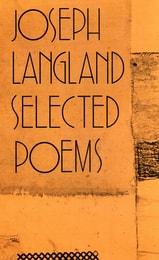
Selected Poems
Joseph Langland
University of Massachusetts Press, 1991
This book offers a selection of sixty-five poems from forty years of distinguished and prize-winning publication by Joseph Langland. These poems speak in a strong, natural voice that has mastered the craft and moves confidently within it. In them, one hears speech and music together in a wide-ranging world of ideas.

Selected Poems Of Janet Lewis
Janet Lewis
Ohio University Press, 2000
Since the appearance in print of her early poems over seventy-five years ago, the poetry of Janet Lewis has grown in quiet acclaim and popularity. Although she is better known as a novelist of historical fiction, her first and last writings were poems. With the publication of her selected poems, Swallow Press celebrates the distinguished career of one of its most cherished authors.
Critics as disparate as Kenneth Rexroth, Timothy Steele, Theodore Roethke, Larry McMurtry, N. Scott Momaday, and Dana Gioia have sung the praises of her work over the decades. Her career as a poet was remarkable not only for its longevity but also for the fact that even well into her tenth decade she wrote poems that stand with her very best work.
Characterized by the vigor and sharpness of her images and the understated lyricism that permeates her rhythmic lines, The Selected Poems of Janet Lewis is a survey of modern poetry unto itself.
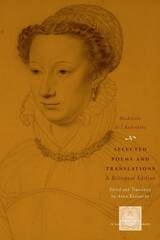
Selected Poems and Translations
A Bilingual EditionMadeleine de l'Aubespine
University of Chicago Press, 2007
Rather than adopt the conventional self-effacement that defined female poets of the time, l’Aubespine’s speakers are sexual, dominant, and defiant; and her subjects are women who are able to manipulate, rebuke, and even humiliate men.
Unavailable in English until now and only recently identified from scattered and sometimes misattributed sources, l’Aubespine’s poems and literary works are presented here in Anna Klosowska’s vibrant translation. This collection, which features one of the first French lesbian sonnets as well as reproductions of l’Aubespine’s poetic translations of Ovid and Ariosto, will be heralded by students and scholars in literature, history, and women’s studies as an important addition to the Renaissance canon.
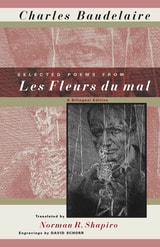
Selected Poems from Les Fleurs du mal
A Bilingual EditionCharles Baudelaire
University of Chicago Press, 1998
"A fine, formal translation of the best poems of France's founder of the symbolist movement."—St. Louis Post-Dispatch
"It's rare to find a rewarding translation of a masterwork, particularly a collection of groundbreaking poetry. . . . Through Shapiro's skillful wordsmithing, the reader can fully appreciate Baudelaire's control of the soul and the word which is the ancient and indefatigable ambition of all great poets. . . . Shapiro's interpretations set the standard for future English translations."—Virginia Quarterly Review
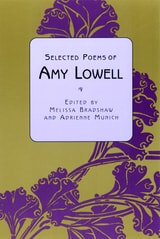
Selected Poems of Amy Lowell
Bradshaw, Melissa
Rutgers University Press, 2002
Amy Lowell (1874–1925), American poet and critic, was one of the most influential and best-known writers of her era. Within a thirteen-year period, she produced six volumes of poetry, two volumes of criticism, a two-volume biography of John Keats, and countless articles and reviews that appeared in many popular periodicals. As a herald of the New Poetry, Lowell saw herself and her kind of work as a part of a newly forged, diverse, American people that registered its consciousness in different tonalities but all in a native idiom. She helped build the road leading to the later works of Allen Ginsberg, May Sarton, Sylvia Plath, and beyond. Except for the few poems that invariably appear in American literature anthologies, most of her writings are out of print. This will be the first volume of her work to appear in decades, and the depth, range, and surprising sensuality of her poems will be a revelation.
The poetry is organized according to Lowell’s characteristic forms, from traditional to experimental. In each section the works appear in chronological order. Section one contains sonnets and other traditional verse forms. The next section covers her translations and adaptations of Chinese and Japanese poetry, whereby she beautifully renders the spirit of these works. Also included here are several of Lowell’s own Asian-influenced poems. Lowell’s free, or cadenced verse appears in the third part. The last section provides samples of Lowell’s polyphonic prose, an ambitious and vigorous art form that employs all of the resources of poetry.
The release of The Selected Poems of Amy Lowell will be a major event for readers who have not been able to find a representative sampling of work from this vigorous, courageous poet who gave voice to an erotic, thoroughly American sensibility.
Selected Poems of August Strindberg
Lotta Lofgren
Southern Illinois University Press, 2002
August Strindberg (1849–1912) was one of the great innovators of modern drama as well as a novelist, poet, and master of the Swedish language. In this collection, Selected Poems of August Strindberg, editor and translator Lotta M. Löfgren has chosen poems from all three volumes of Strindberg’s verse—Poems in Verse and Prose, Sleepwalking Nights on Awake Days, and Word Play and Minor Art—to illustrate to the English-speaking reader the development, strengths, and versatility of Strindberg the poet.
Löfgren explains, “Although August Strindberg is internationally acknowledged as a pioneering realist, expressionist, and surrealist playwright, his poetry is still relatively unknown outside Sweden. The only English translation of [his] poems to date is the 1978 translation of Sleepwalking Nights by Arvid Paulson . . . that gives an incomplete and misleading picture of Strindberg’s poetry.”
Löfgren’s translation seeks to correct that picture. Strindberg’s stature as a dramatist alone may be adequate justification for offering a translation of his verse, but his poetry stands well on its own. All three volumes broke new ground and paved the way for younger generations of poets. Löfgren hopes that her translation will not only introduce Strindberg’s verse to English-speaking readers but will also inspire other scholars to revisit his poetry and give it the attention it deserves.
Selected Poems of August Strindberg received the American-Scandinavian Foundation’s Translation Prize in 2000.
Selected Poems of Garcilaso de la Vega
A Bilingual EditionGarcilaso de la Vega
University of Chicago Press, 2009
Garcilaso de la Vega (ca. 1501–36), a Castilian nobleman and soldier at the court of Charles V, lived a short but glamorous life. As the first poet to make the Italian Renaissance lyric style at home in Spanish, he is credited with beginning the golden age of Spanish poetry. Known for his sonnets and pastorals, gracefully depicting beauty and love while soberly accepting their passing, he is shown here also as a calm student of love’s psychology and a critic of the savagery of war.
This bilingual volume is the first in nearly two hundred years to fully represent Garcilaso for an Anglophone readership. In facing-page translations that capture the music and skill of Garcilaso’s verse, John-Dent Young presents the sonnets, songs, elegies, and eclogues that came to influence generations of poets, including San Juan de la Cruz, Luis de Leon, Cervantes, and Góngora. The Selected Poems of Garcilaso de la Vega will help to explain to the English-speaking public this poet’s preeminence in the pantheon of Spanish letters.
Selected Poems of Jacint Verdaguer
A Bilingual EditionJacint Verdaguer
University of Chicago Press, 2007
Selected Poems is the first book-length translation of Verdaguer’s works into English. Ronald Puppo offers readable and faithful verse adaptations of poetry from all periods of the poet-priest’s life, from his days as a seminary student and farmhand to his journeys as a ship’s chaplain and eventual spiritual crisis. These adroit translations will recover Verdaguer as a major figure in the modern literary tradition of the West, restoring him to the pantheon of world letters.
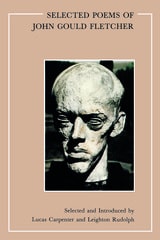
Selected Poems of John Gould Fletcher
John Fletcher
University of Arkansas Press, 1988
A Pulitzer Prize winner best known as an imagist, John Gould Fletcher experimented with every facet of Modernist poetry and influenced poets in both England and the United States. this is the first collection to span his entire career, and brings again to the public eye work that has been unavailable for thirty-five years.
Fletcher is responsible for introducing Ezra Pound to French symbolism, and Amy Lowell to “polyphonic prose,” and his connection with the Southern Fugitive Agrarian movement adds to his significance as the first modern Southern poet. The editors have chosen representative works for his many stages of development and discuss in the introduction Fletcher’s influence on the better-known modernists.
Selected Poems of John Gould Fletcher is the first n a series of books by or about Fletcher to fill an important space in home and public libraries with American literature collections.
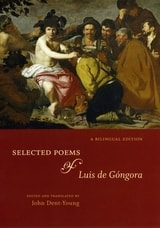
Selected Poems of Luis de Góngora
A Bilingual EditionLuis de Góngora
University of Chicago Press, 2007
Making Luis de Góngora’s work available to contemporary English-language readers without denying his historical context, Selected Poems of Luis de Góngora presents him as not only one of the greatest and most complex poets of his time, but also the funniest and most charismatic. From longer works, such as “The Fable of Polyphemus and Galatea,” to shorter ballads, songs, and sonnets, John Dent-Young’s free translations capture Góngora’s intensely musical voice and transmit the individuality and self-assuredness of the poet. Substantial introductions and extensive notes provide personal and historical context, explain the ubiquitous puns and erotic innuendo, and discuss translation choices. A significant edition of this seminal and challenging poet, Selected Poems of Luis de Góngora will find an eager audience among students of poetry and scholars studying the history and literature of Spain.
Selected Poems of Rubén Darío
By Rubén Darío
University of Texas Press, 1965
Toward the close of the last century, the poetry of the Spanish-speaking world was pallid, feeble, almost a corpse. It needed new life and a new direction. The exotic, erratic, revolutionary poet who changed the course of Spanish poetry and brought it into the mainstream of twentieth-century Modernism was Félix Rubén García Sarmiento (1867-1916) of Nicaragua, who called himself Rubén Darío.
Since its original publication in 1965, this edition of Darío's poetry has made English-speaking readers better acquainted with the poet who, as Enrique Anderson Imbert said, "divides literary history into 'before' and 'after.'" The selection of poems is intended to represent the whole range of Darío's verse, from the stinging little poems of Thistles to the dark, brooding lines of Songs of the Argentine and Other Poems. Also included, in the Epilogue, is a transcript of a radio dialogue between two other major poets, Federico García Lorca of Spain and Pablo Neruda of Chile, who celebrate the rich legacy of Rubén Darío.
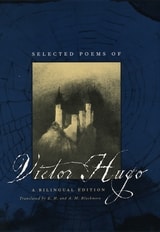
Selected Poems of Victor Hugo
A Bilingual EditionVictor Hugo
University of Chicago Press, 2001
Although best known as the author of Notre Dame de Paris and Les Misérables, Victor Hugo was primarily a poet—one of the most important and prolific in French history. Despite his renown, however, there are few comprehensive collections of his verse available and even fewer translated editions.
Translators E. H. and A. M. Blackmore have collected Victor Hugo's essential verse into a single, bilingual volume that showcases all the facets of Hugo's oeuvre, including intimate love poems, satires against the political establishment, serene meditations, religious verse, and narrative poems illustrating his mastery of the art of storytelling and his abiding concern for the social issues of his time. More than half of this volume's eight thousand lines of verse appear here for the first time in English, providing readers with a new perspective on each of the fascinating periods of Hugo's career and aspects of his style. Introductions to each section guide the reader through the stages of Hugo's writing, while notes on individual poems provide information not found in even the most detailed French-language editions.
Illustrated with Hugo's own paintings and drawings, this lucid translation pays homage to this towering figure of nineteenth-century literature by capturing the energy of his poetry, the drama and satirical force of his language, and the visionary beauty of his writing as a whole.
Selected Poems, 1968–1998
John Wood
University of Arkansas Press, 1999
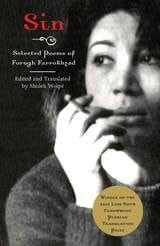
Sin
Selected Poems of Forugh FarrokhzadSholeh Wolpe
University of Arkansas Press, 2010
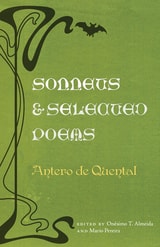
Sonnets and Selected Poems
Antero de Quental, Edited by Onésimo T. Almeida and Mario Pereira
Tagus Press, 2022
Grappling with metaphysical questions of suffering, death, and infinity, Antero de Quental’s sonnets have been widely celebrated by writers and intellectuals around the world, with Fernando Pessoa calling him “one of the greatest poets of the nineteenth century.” Irreverent and nonconformist, Antero became the ideologue and moving spirit behind the group of progressive intellectuals known as the Generation of 1870 who rebelled against tradition and attempted to reverse Portugal’s intellectual stagnation. This is the first bilingual (Portuguese-English) edition of Antero's sonnets and poems, as well as the first to assemble the translations by Aubrey F. G. Bell, Roy Campbell, Richard Garnett, George Monteiro, S. Griswold Morley, Fernando Pessoa, Edgar Prestage, and Richard Zenith in a single volume.
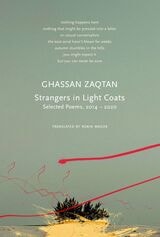
Strangers in Light Coats
Selected Poems, 2014–2020Ghassan Zaqtan
Seagull Books, 2023
Ghassan Zaqtan is not only one of the most significant Palestinian poets at work today, but one of the most important poets writing in Arabic. Since the publication of his first collection in 1980, Zaqtan’s presence as a poet has evolved with the same branching and cumulative complexity as his poems—an invisible system of roots insistently pushing through the impacted soil of political and national narratives.
Strangers in Light Coats is the third collection of Zaqtan’s poetry to appear in English. It brings together poems written between 2014 and 2020 drawn from six volumes of poetry. Catching and holding the smallest particles of observation and experience in their gravity, the poems sprout and grow as though compelled, a trance of process in which fable, myth, and elegy take form only to fall apart and reconfigure, each line picked apart by the next and brought into the new body.
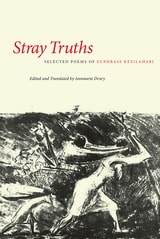
Stray Truths
Selected Poems of Euphrase KezilahabiAnnmarie Drury
Michigan State University Press, 2015