Results by title
3064 books match the query 'Social conditions' and 211 start with s
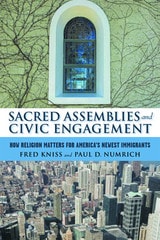
Sacred Assemblies and Civic Engagement
How Religion Matters for America's Newest ImmigrantsNumrich, Paul D
Rutgers University Press, 2007
Immigration to the United States has been a major source of population growth and cultural change throughout much of America’s history. Currently, about 40 percent of the nation’s annual population growth comes from the influx of foreign-born individuals and their children. As these new voices enter America’s public conversations, they bring with them a new understanding of Buddhism, Hinduism, Islam, Judaism, and Christianity to a society that has been marked by religious variety.
Sacred Assemblies and Civic Engagement takes an in-depth look at one particular urban area—the Chicago metropolitan region—and examines how religion affects the civic engagement of the nation’s newest residents. Chapters focus on important religious factors, including sectarianism, moral authority, and moral projects; on several areas of social life, including economics, education, marriage, and language, where religion impacts civic engagement; and on how notions of citizenship and community are influenced by sacred assemblies.
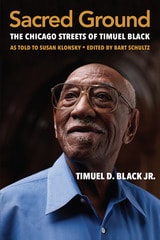
Sacred Ground
The Chicago Streets of Timuel BlackTimuel D. Black Jr., as told to Susan Klonsky, edited by Bart Schultz
Northwestern University Press, 2019
Sacred Ground opens in 1919, during the summer of the Chicago race riot, when infant Black and his family arrive in Chicago from Birmingham, Alabama, as part of the first Great Migration. He recounts in vivid detail his childhood and education in the Black Metropolis of Bronzeville and South Side neighborhoods that make up his "sacred ground."
Revealing a priceless trove of experiences, memories, ideas, and opinions, Black describes how it felt to belong to this place, even when stationed in Europe during World War II. He relates how African American soldiers experienced challenges and conflicts during the war, illuminating how these struggles foreshadowed the civil rights movement. A labor organizer, educator, and activist, Black captures fascinating anecdotes and vignettes of meeting with famous figures of the times, such as Duke Ellington and Martin Luther King Jr., but also with unheralded people whose lives convey lessons about striving, uplift, and personal integrity.
Rounding out this memoir, Black reflects on the legacy of his friend and mentee, Barack Obama, as well as on his public works and enduring relationships with students, community workers, and some very influential figures in Chicago and the world.
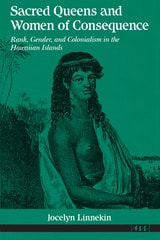
Sacred Queens and Women of Consequence
Rank, Gender, and Colonialism in the Hawaiian IslandsJocelyn Linnekin
University of Michigan Press, 1990
Sacred Queens and Women of Consequence is a pathbreaking examination of the contact encounter in Hawaii from the perspective of Hawaiian women. Jocelyn Linnekin offers a reconstruction of Hawaiian women's authority and status before contact with the West and examines changes in their cultural valuation and social position during the first century of Western contact. Through a detailed analysis of women's roles in exchange, production, kinship, and politics during the political and economic transformations of the nineteenth century, Linnekin challenges the view that Polynesian women were doomed to a peripheral status by the ritual logic of pollution. She demonstrates how Hawaiian women maintained their position as points of access to land and power, while frequently resisting the constraints of the tabu system as well as later Western-influenced attempts to abridge their authority.This book is a unique and important contribution to the scholarship on Hawaiian history as well as to the growing literature on women and colonialism and women and social stratification. It will appeal to scholars and students who work in the areas of gender studies, social stratification, cultural change, Oceania, and historical anthropology.
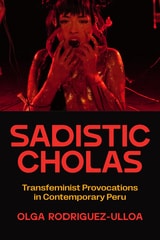
Sadistic Cholas
Transfeminist Provocations in Contemporary PeruOlga Rodriguez-Ulloa
University of Texas Press, 2026
Analyzing how Peruvian feminist art and activism subverts and reclaims the chola stereotype to confront colonial and patriarchal institutions.
Indigenous Andean women have long been derided in Peru, spurned by colonial and then national elites as depraved cholas. Olga Rodriguez-Ulloa shows how contemporary artists and activists not only reclaim this term of abuse but also mobilize the stereotype of the angry and perverted chola to confront the cruelties of patriarchy, capitalism, and white supremacy.
Sadistic Cholas examines music, visual arts, literature, and grassroots organizing by self-identified cholas—in particular, Black women and trans and queer feminists. Under colonial domination, cholas were destined for sexual coercion, labor extraction, and reproductive exploitation. While exhuming historical traces of chola resistance, Rodriguez-Ulloa argues that this condition of oppression persisted through the internal war of the 1980s, when Marxist women at the forefront of the armed campaign were condemned as hypersexual deviants. Inspired by their leftist forebears, today’s artists experiment with an aesthetic of sadistic vengeance, configured as rightful self-defense. Yet, in spite of their violent imagery, activist cholas pursue nonviolent goals, promoting a commons of care incorporating people, animals, and the environment.
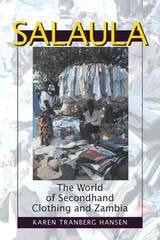
Salaula
The World of Secondhand Clothing and ZambiaKaren Tranberg Hansen
University of Chicago Press, 2000
Essential for the African economy, the secondhand clothing business is wildly popular, to the point of threatening the indigenous textile industry. But, Hansen shows, wearing secondhand clothes is about much more than imitating Western styles. It is about taking a garment and altering it to something entirely local, something that adheres to current cultural norms of etiquette. By unraveling how these garments becomes entangled in the economic, political, and cultural processes of contemporary Zambia, Hansen also raises provocative questions about environmentalism, charity, recycling, and thrift.
Salem's Centuries
New Perspectives on the History of an Old American CityEdited by Donna A. Seger and Brad Austin
Temple University Press, 2026
In advance of the city’s quadricentennial, the editors and contributors highlight the depth and diversity of Salem’s history, including stories of indigenous peoples, early settlers, African Americans, and immigrants, spanning from the American and industrial revolutions to World War II and the present. Chronologically arranged by century, chapters examine how Salem’s history has been lost or distorted in its public presentations over time.
Salem’s Centuries is a fresh look at an old American city. And yes, it includes the accused witches.
Contributors: Kimberly S. Alexander, Emerson W. Baker, Aviva Chomsky, Andrew Darien, Elizabeth Duclos-Orsello, Theresa Giard, Marilyn Hayward, Bethany Jay, Michele Louro, Elizabeth McKeigue, Robert W. McMicken, Dane A. Morrison, Maria Pride, J.D. Scrimgeour, Margo Shea, Hans Schwartz, Brian Valimont, Maryann Zujewski, and the editors
In the series History and the Public
Saltillo, 1770-1810
Town and Region in the Mexican NorthLeslie S. Offutt
University of Arizona Press, 2001
Salvadoran Imaginaries
Mediated Identities and Cultures of ConsumptionCecilia M. Rivas
Rutgers University Press, 2014
In Salvadoran Imaginaries, Cecilia M. Rivas takes us on a journey through twenty-first century El Salvador and to the diverse range of sites where the nation’s postwar identity is being forged. Combining field ethnography with media research, Rivas deftly toggles between the physical spaces where the new El Salvador is starting to emerge and the virtual spaces where Salvadoran identity is being imagined, including newspapers, literature, and digital media. This interdisciplinary approach enables her to explore the multitude of ways that Salvadorans negotiate between reality and representation, between local neighborhoods and transnational imagined communities, between present conditions and dreams for the future.
Everyday life in El Salvador may seem like a simple matter, but Rivas digs deeper, across many different layers of society, revealing a wealth of complex feelings that the nation’s citizens have about power, opportunity, safety, migration, and community. Filled with first-hand interviews and unique archival research, Salvadoran Imaginaries offers a fresh take on an emerging nation and its people.
Salvadorans in Costa Rica
Displaced LivesBridget Hayden
University of Arizona Press, 2003
Salvadorans in Costa Rica: Displaced Lives introduces readers to people from a wide range of class and educational backgrounds who had come to Costa Rica from all over El Salvador. All shared the experience of having become refugees and having settled in a new country under the same circumstances, and when the war in their own country ended, they shared a concern about the issues involved in deciding whether to return there. Their diversity allows Hayden to examine the ways in which the language of national identity played out in different contexts and sometimes contradictory ways.
Drawing on contemporary theories of migration and space, Hayden identifies the discourses, narratives, and concepts that Salvadorans in Costa Rica had in common and then analyzes the ways in which their experiences and their uses of those discourses varied. She focuses on key spatial concepts that Salvadorans used in talking about displacement and re-emplacement in order to show how they constructed the experience of settlement and how such variables as gender and age influenced their experiences. Because "nationality" was an idiom they used to relate their experiences, she pays particular attention to the role of national belonging and national difference—in terms of both the ways in which the Salvadorans were received by Costa Ricans and their reactions to their new lives in Costa Rica. A concluding chapter compares them with Salvadorans who emigrated to other countries.
The story of these displaced Salvadorans, focusing on the lives of real people, can give us a new understanding of how individuals feel a sense of belonging to a sociocultural space. By exploring many meanings of the nation and national belonging for different people under varying conditions, Hayden's study provides fresh insights into the dynamics of migration, gender, and nationalism.
Same Sex, Different Politics
Success and Failure in the Struggles over Gay RightsGary Mucciaroni
University of Chicago Press, 2008

Sanctioning Matrimony
Western Expansion and Interethnic Marriage in the Arizona BorderlandsSal Acosta
University of Arizona Press, 2016
Following the Treaty of Mesilla (1853), interethnic relationships played a significant part in the Southwest. Acosta provides previously unseen archival research on the scope and tenor of interracial marriages in Arizona. Contending that scholarship on intermarriage has focused on the upper classes, Acosta takes us into the world of the working and lower classes and illuminates how church and state shaped the behavior of participants in interracial unions.
Marriage practices in Tucson reveal that Mexican women were pivotal in shaping family and social life between 1854 and 1930. Virtually all intermarriages before 1900 were, according to Acosta, between Mexican women and white men, or between Mexican women and blacks or Chinese until the 1920s, illustrating the importance of these women during the transformation of Tucson from a Mexican pueblo to an American town.
Acosta’s deep analysis of vital records, census data, and miscegenation laws in Arizona demonstrates how interethnic relationships benefited from and extended the racial fluidity of the Arizona borderlands.

Sanctuary
Exclusion, Violence, and Indigenous Migrants in the East BayCruz Medina
The Ohio State University Press, 2024
Taking a Northern California community of migrants from Guatemala as a case study, Medina demonstrates the ways in which immigration policy and educational barriers exclude Indigenous migrant populations. He follows the community at the “Sanctuary”—a Spanish-speaking church in the East Bay Area that serves as a place of worship, English language instruction, and refuge for migrants. Medina assembles participant observations, interviews, surveys, and other data to provide points of entry into intersecting issues of immigration, violence, language, and property and to untangle aspects of citizenship, exclusion, and assumptions about literacy.

Sans Papiers
The Social and Economic Lives of Young Undocumented MigrantsAlice Bloch, Nando Sigona, and Roger Zetter
Pluto Press, 2014
Undocumented migration is a huge global phenomenon, yet little is known about the reality of life for those involved. Sans Papiers combines a contemporary account of the theoretical and policy debates with an in-depth exploration of the lived experiences of undocumented migrants in the UK from Zimbabwe, China, Brazil, Ukraine and Turkish Kurdistan.
Built around their voices, the book provides a unique understanding of migratory processes, gendered experiences and migrant aspirations. Moving between the uniqueness of individual experience and the search for commonalities, the book explores the ambiguities and contradictions of being an undocumented migrant.
With its insights into personal experiences alongside analysis of wider policy issues, Sans Papiers will have wide appeal for students, academics, policy-makers and practitioners.
Sanuma Memories
Yanomami Ethnography in Times of CrisisAlcida Rita Ramos
University of Wisconsin Press, 1995
The Yanomami people of Brazil first attracted anthropological and popular attention in the 1960s, when they were portrayed as essentially primitive and violent in the widely read book Yanomamo: The Fierce People. To this image of the Yanomami another has recently been added: that of victims of the economic rapacity devouring the Amazon.
Sanumá Memories moves beyond these images to provide the first anthropologically sophisticated account of the Yanomami and their social organization, kinship, and marriage, capturing both individual experiences and the broader sociological trends that engulf them. A poignant personal story as well, it draws on Alcida Ramos's extensive fieldwork among the Sanumá (the northernmost Yanomami subgroup) from 1968 to 1992, as she reports on the brutal impact of many invasions—from road construction to the gold rush that brought the Yanomami social chaos, thousands of deaths, devastation of gardens and forest, and a disquietingly uncertain future.
At the cutting edge of anthropological description and analysis, Sanumá Memories ponders the importance of "otherness" to the Sanumá; describes Sanumá spaces, from the grandiosity of the rain forest to cozy family compartments; analyzes their notions of time, from the minute reckoning of routine village life to historical and metaphysical macro-time; shows how power and authority are generated and allocated in space and time; and examines the secrecy of personal names and the all-pervading consequences of disclosing them.

Sarajevo
A Bosnian KaleidoscopeFran Markowitz
University of Illinois Press, 2010
This fascinating urban anthropological analysis of Sarajevo and its cultural complexities examines contemporary issues of social divisiveness, pluralism, and intergroup dynamics in the context of national identity and state formation. Rather than seeing Bosnia-Herzegovina as a volatile postsocialist society, the book presents its capital city as a vibrant yet wounded center of multicultural diversity, where citizens live in mutual recognition of difference while asserting a lifestyle that transcends boundaries of ethnicity and religion. It further illuminates how Sarajevans negotiate group identity in the tumultuous context of history, authoritarian rule, and interactions with the built environment and one another.
As she navigates the city, Fran Markowitz shares narratives of local citizenry played out against the larger dramas of nation and state building. She shows how Sarajevans' national identities have been forged in the crucible of power, culture, language, and politics. Sarajevo: A Bosnian Kaleidoscope acknowledges this Central European city's dramatic survival from the ravages of civil war as it advances into the present-day global arena.

Saving the Security State
Exceptional Citizens in Twenty-First-Century AmericaInderpal Grewal
Duke University Press, 2017

Scammer's Yard
The Crime of Black Repair in JamaicaJovan Scott Lewis
University of Minnesota Press, 2020
Tells the story of Jamaican “scammers” who use crime to gain autonomy, opportunity, and repair
There is romance in stealing from the rich to give to the poor, but how does that change when those perceived rich are elderly white North Americans and the poor are young Black Jamaicans? In this innovative ethnography, Jovan Scott Lewis tells the story of Omar, Junior, and Dwayne. Young and poor, they strive to make a living in Montego Bay, where call centers and tourism are the two main industries in the struggling economy. Their experience of grinding poverty and drastically limited opportunity leads them to conclude that scamming is the best means of gaining wealth and advancement. Otherwise, they are doomed to live in “sufferation”—an inescapable poverty that breeds misery, frustration, and vexation.
In the Jamaican lottery scam run by these men, targets are told they have qualified for a large loan or award if they pay taxes or transfer fees. When the fees are paid, the award never arrives, netting the scammers tens of thousands of U.S. dollars. Through interviews, historical sources, song lyrics, and court testimonies, Lewis examines how these scammers justify their deceit, discovering an ethical narrative that reformulates ideas of crime and transgression and their relationship to race, justice, and debt.
Scammer’s Yard describes how these young men, seeking to overcome inequality and achieve autonomy, come to view crime as a form of liberation. Their logic raises unsettling questions about a world economy that relegates postcolonial populations to deprivation even while expecting them to follow the rules of capitalism that exacerbate their dispossession. In this groundbreaking account, Lewis asks whether true reparation for the legacy of colonialism is to be found only through radical—even criminal—means.

Scandinavians in Michigan
Jeffrey W. Hancks
Michigan State University Press, 2006
The Scandinavian countries, Denmark, Norway, and Sweden, are commonly grouped together by their close historic, linguistic, and cultural ties. Their age-old bonds continued to flourish both during and after the period of mass immigration to the United States in the nineteenth and early twentieth centuries. Scandinavians felt comfortable with each other, a feeling forged through centuries of familiarity, and they usually chose to live in close proximity in communities throughout the Upper Midwest of the United States.
Beginning in the middle of the nineteenth century and continuing until the 1920s, hundreds of thousands left Scandinavia to begin life in the United States and Canada. Sweden had the greatest number of its citizens leave for the United States, with more than one million migrating between 1820 and 1920. Per capita, Norway was the country most affected by the exodus; more than 850,000 Norwegians sailed to America between 1820 and 1920. In fact, Norway ranks second only to Ireland in the percentage of its population leaving for the New World during the great European migration. Denmark was affected at a much lower rate, but it too lost more than 300,000 of its population to the promise of America. Once gone, the move was usually permanent; few returned to live in Scandinavia. Michigan was never the most popular destination for Scandinavian immigrants. As immigrants began arriving in the North American interior, they settled in areas to the west of Michigan, particularly in Wisconsin, Minnesota, Illinois, Iowa, and North and South Dakota. Nevertheless, thousands pursued their American dream in the Great Lakes State. They settled in Detroit and played an important role in the city’s industrial boom and automotive industry. They settled in the Upper Peninsula and worked in the iron and copper mines. They settled in the northern Lower Peninsula and worked in the logging industry. Finally, they settled in the fertile areas of west Michigan and contributed to the state’s burgeoning agricultural sector. Today, a strong Scandinavian presence remains in town names like Amble, in Montcalm County, and Skandia, in Marquette County, and in local culinary delicacies like æbleskiver, in Greenville, and lutefisk, found in select grocery stores throughout the state at Christmastime.

Scarlett Doesn't Live Here Anymore
SOUTHERN WOMEN IN THE CIVIL WAR ERALaura F. Edwards
University of Illinois Press, 2000
Positing the household as the central institution of southern society, Edwards delineates the inseparable links between domestic relations and civil and political rights in ways that highlight women's active political role throughout the nineteenth century. She draws on diaries, letters, newspaper accounts, government records, legal documents, court proceedings, and other primary sources to explore the experiences and actions of individual women in the changing South, demonstrating how family, kin, personal reputation, and social context all merged with gender, race, and class to shape what particular women could do in particular circumstances.
Meet Harriet Jacobs, the escaped slave who hid in a tiny, unheated attic on her master's property for seven years until she could free her children and herself. Marion Singleton Deveaux Converse, the southern belle who leaped out a second-story window to escape her second husband's "discipline" and received temporary shelter from her slaves. Sarah Guttery, a white, poor, unwed mother of two, whose hard work and clean living earned her community's respect despite her youthful transgressions. Aunt Lucy, who led her fellow slaves in taking over her master's abandoned plantation and declared herself the new mistress.
Through vivid portraits of these and other slaves, free blacks, common whites, and the white elite, Edwards shows how women's domestic situations determined their lives before the war and their responses to secession and armed conflict. She also documents how women of various classes entered into the process of rebuilding, asserting new rights and exploring new roles after the war.
An ideal basic text on society in the Civil War era, Scarlett Doesn't Live Here Anymore demonstrates how women on every step of the social ladder worked actively throughout the period to shape southern society in ways that fulfilled their hopes for the future. They used the resources at their disposal to fashion their own positive identities, to create the social bonds that sustained them in difficult times, and to express powerful social critiques that helped them make sense of their lives.

School Talk
Gender and Adolescent CultureEder, Donna
Rutgers University Press, 1995
KACTIS revealed many social and ethical issues, launching Eder into more research, this time learning from Navajo and Kenyan storytellers how children can understand ethics and diversity through practices used in oral cultures. She borrowed non-Western concepts of learning as she crafted a service-learning project, Storytelling as Reflecting Time (START), which became the basis of a service-learning course, Knowledge and Community, taught to sociology majors and honor students.
The approach is so effective that Eder cannot accommodate all of the requests she receives for START, which is conducted both in the classroom and through extracurricular activities throughout Bloomington. She works with the Hutton Philanthropic Initiative, where students use storytelling to interact with community children in a meaningful way. Students in her Community Building Across Generations course take their storytelling to a nursing home and a program for children whose families are escaping domestic violence.
Eder also mentors other instructors on campus who are interested in service-learning.

School Talk
Gender and Adolescent CultureEder, Donna
Rutgers University Press, 1995
KACTIS revealed many social and ethical issues, launching Eder into more research, this time learning from Navajo and Kenyan storytellers how children can understand ethics and diversity through practices used in oral cultures. She borrowed non-Western concepts of learning as she crafted a service-learning project, Storytelling as Reflecting Time (START), which became the basis of a service-learning course, Knowledge and Community, taught to sociology majors and honor students.
The approach is so effective that Eder cannot accommodate all of the requests she receives for START, which is conducted both in the classroom and through extracurricular activities throughout Bloomington. She works with the Hutton Philanthropic Initiative, where students use storytelling to interact with community children in a meaningful way. Students in her Community Building Across Generations course take their storytelling to a nursing home and a program for children whose families are escaping domestic violence.
Eder also mentors other instructors on campus who are interested in service-learning.

Schoolteacher
A Sociological StudyDan C. Lortie
University of Chicago Press, 2002

Scots in Michigan
Alan T. Forrester
Michigan State University Press, 2003
Scots began settling in North America in the earliest colonial days. They were heavily involved in the Great Lakes region’s major industries, as these evolved from fur trade to farming and lumbering to industry. From early settlement to the industrial revolution, Scots brought to the state a pioneer spirit and an extraordinary level of education. Though rendered almost invisible both by clustering under the umbrella of the British Commonwealth and by the fact that few Scottish traditions are considered whatsoever foreign, ethnic, or exotic, Scottish influences run deep in Michigan history and culture. From ice hockey to industry, much of what represents Michigan has roots that were embedded in Scotland. Although Alan T. Forrester notes that symbolic Scottish ethnicity—Highland Games, Scottish Festivals, and Burns Night Suppers—is practically the only obvious relic of Scottish heritage in Michigan, he illuminates how much more of this legacy is a part of this state.

Scrap Theory
Reproductive Injustice in the Black Feminist ImaginationMali D. Collins
The Ohio State University Press, 2025

Scream from the Shadows
The Women’s Liberation Movement in JapanSetsu Shigematsu
University of Minnesota Press, 2012
More than forty years ago a women’s liberation movement called ūman ribu was born in Japan amid conditions of radicalism, violence, and imperialist aggression. Setsu Shigematsu’s book is the first to present a sustained history of ūman ribu’s formation, its political philosophy, and its contributions to feminist politics across and beyond Japan. Through an in-depth analysis of ūman ribu, Shigematsu furthers our understanding of Japan’s gender-based modernity and imperialism and expands our perspective on transnational liberation and feminist movements worldwide.
In Scream from the Shadows, Shigematsu engages with political philosophy while also contextualizing the movement in relation to the Japanese left and New Left as well as the anti–Vietnam War and radical student movements. She examines the controversial figure Tanaka Mitsu, ūman ribu’s most influential activist, and the movement’s internal dynamics. Shigematsu highlights ūman ribu’s distinctive approach to the relationship of women—and women’s liberation—to violence: specifically, the movement’s embrace of violent women who were often at the margins of society and its recognition of women’s complicity in violence against other women.
Scream from the Shadows provides a powerful case study of a complex and contradictory movement with a radical vision of women’s liberation. It offers a unique opportunity to reflect on the blind spots within our contemporary and dominant views of feminism across their liberal, marxist, radical, Euro-American, postcolonial, and racial boundaries.
Sculpting Quito
Religious Art across Domestic SpacesLeslie E. Todd
University of Texas Press, 2026
A study of domestic religious sculptures in Quito.
During the eighteenth century, the colonial capital of Quito established itself as a prolific producer of wooden polychrome sculpture. With large glass eyes, smooth shiny surfaces, and minute attention to detail, the sculptures possessed an artistic refinement that enchanted contemporaries. While these objects depicted Christian sacred personages, they were not always sequestered in churches and shrines. They filled domestic spaces, becoming signifiers not only of holiness but also of a distinctive Quitenian culture.
Devotional sculpture was, on its face, an aesthetic reifiction of the colonial project, commissioned by creole elites. However, drawing on published accounts and archival evidence, including wills and dowries, Leslie Todd shows that sculpture was diffused across society, contributing to a complex localized identity. As makers, viewers, and owners of sculpture, Quiteños of Indigenous and mixed heritage and varying socioeconomic backgrounds took active roles in creating the city’s visual culture. In doing so, Todd argues, they simultaneously underscored and challenged colonial class and power systems, investing a European form with styles that revealed and reinforced specifically Spanish American subjectivity.
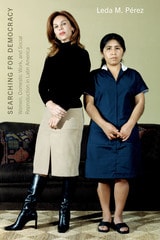
Searching for Democracy
Women, Domestic Work, and Social Reproduction in Latin AmericaLeda M. Pérez
Temple University Press, 2026
How can we achieve lasting social and political equality for women? Leda Pérez tackles this thorny question in Searching for Democracy by interrogating egalitarianism in Latin America, where nearly 20% of women work in domestic service. She examines how women’s participation in society, labor, and politics continues to be conditioned by their relationship to domestic and care work.
Pérez argues that women’s relationship to these spheres of life is indicative of a nation’s development and democracy. She provides a comparative focus on the socio-cultural valuation of this labor and the experiences of women in Bolivia, Chile, Peru, and Uruguay, among other countries. Pérez asserts that it is only by changing sociocultural views on this “women’s work” that nations can create political change, foster equitable legislation, and ensure implementation of effective policies that benefit women.
Searching for Democracy shows why real and lasting equality cannot be achieved without fully enfranchising women in the lowest tiers of employment and closing the equality gap among women. Pérez’s models for gender equality are relevant for women around the world.
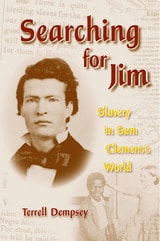
Searching for Jim
Slavery in Sam Clemens's WorldTerrell Dempsey
University of Missouri Press, 2005
During Sam’s earliest years, his father, John Marshall Clemens, had significant interaction with slaves. Newly discovered court records show the senior Clemens in his role as justice of the peace in Hannibal enforcing the slave ordinances. With the death of his father, young Sam was apprenticed to learn the printing and newspaper trade. It was in the newspaper that slaves were bought and sold, masters sought runaways, and life insurance was sold on slaves. Stories the young apprentice typeset helped Clemens learn to write in black dialect, a skill he would use throughout his writing, most notably in Huckleberry Finn.
Missourians at that time feared abolitionists across the border in Illinois and Iowa. Slave owners suspected every traveling salesman, itinerant preacher, or immigrant of being an abolition agent sent to steal slaves. This was the world in which Sam Clemens grew up. Dempsey also discusses the stories of Hannibal’s slaves: their treatment, condition, and escapes. He uncovers new information about the Underground Railroad, particularly about the role free blacks played in northeast Missouri.
Carefully reconstructed from letters, newspaper articles, sermons, speeches, books, and court records, Searching for Jim offers a new perspective on Clemens’s writings, especially regarding his use of race in the portrayal of individual characters, their attitudes, and worldviews. This fascinating volume will be valuable to anyone trying to measure the extent to which Clemens transcended the slave culture he lived in during his formative years and the struggles he later faced in dealing with race and guilt. It will forever alter the way we view Sam Clemens, Hannibal, and Mark Twain.

Season of Rains
Africa in the WorldStephen Ellis
University of Chicago Press, 2012
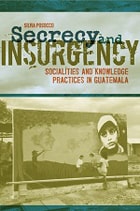
Secrecy and Insurgency
Socialities and Knowledge Practices in GuatemalaSilvia Posocco
University of Alabama Press, 2014
Drawing on a broad field of contemporary theory, Silvia Posocco’s Secrecy and Insurgency presents a vivid ethnographic account of secrecy as both sociality and a set of knowledge practices. Informed by multi-sited anthropological fieldwork among displaced communities with experiences of militancy in the guerrilla organization Fuerzas Armadas Rebeldes, the book traces the contours of dispersed and intermittent guerrilla social relations, unraveling the gendered dimensions of guerrilla socialities and subjectivities in a local context marked by violence and rapid social change.
The chapters chart shifting regimes of governance in the northern departamento of Petén; the inception of violence and insurgency; guerrilla practices of naming and secret relations; moral orders based on sameness and sharing; and forms of relatedness, embodiment, and subjectivity among the combatants. The volume develops new critical idioms for grappling with partiality, perspective, and incompleteness in ethnography and contributes to new thinking on the anthropology of Guatemala.
Secrecy and Insurgency will be of interest to social and cultural anthropologists, human geographers, and scholars in Latin American studies, human rights, women’s studies, and gender studies.

Secular Days, Sacred Moments
The America Columns of Robert ColesRobert Coles
Michigan State University Press, 2013
Secularism as Misdirection
Critical Thought from the Global SouthNivedita Menon
Duke University Press, 2024
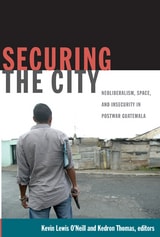
Securing the City
Neoliberalism, Space, and Insecurity in Postwar GuatemalaKevin Lewis O Neill and Kedron Thomas, eds.
Duke University Press, 2011
Contributors. Peter Benson, Manuela Camus, Avery Dickins de Girón, Edward F. Fischer, Deborah Levenson, Thomas Offit, Kevin Lewis O’Neill, Kedron Thomas, Rodrigo José Véliz

Securing the Future
Investing in Children From Birth to CollegeSheldon Danziger
Russell Sage Foundation, 2000
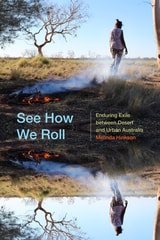
See How We Roll
Enduring Exile between Desert and Urban AustraliaMelinda Hinkson
Duke University Press, 2021
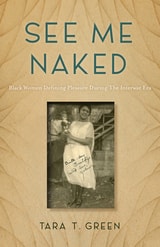
See Me Naked
Black Women Defining Pleasure in the Interwar EraTara T. Green
Rutgers University Press, 2022
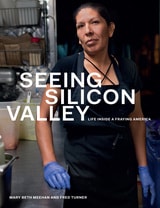
Seeing Silicon Valley
Life inside a Fraying AmericaMary Beth Meehan and Fred Turner
University of Chicago Press, 2021
It’s hard to imagine a place more central to American mythology today than Silicon Valley. To outsiders, the region glitters with the promise of extraordinary wealth and innovation. But behind this image lies another Silicon Valley, one segregated by race, class, and nationality in complex and contradictory ways. Its beautiful landscape lies atop underground streams of pollutants left behind by decades of technological innovation, and while its billionaires live in compounds, surrounded by redwood trees and security fences, its service workers live in their cars.
With arresting photography and intimate stories, Seeing Silicon Valley makes this hidden world visible. Instead of young entrepreneurs striving for efficiency in minimalist corporate campuses, we see portraits of struggle—families displaced by an impossible real estate market, workers striving for a living wage, and communities harmed by environmental degradation. If the fate of Silicon Valley is the fate of America—as so many of its boosters claim—then this book gives us an unvarnished look into the future.
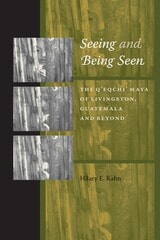
Seeing and Being Seen
The Q'eqchi' Maya of Livingston, Guatemala, and BeyondBy Hilary E. Kahn
University of Texas Press, 2006
The practice of morality and the formation of identity among an indigenous Latin American culture are framed in a pioneering ethnography of sight that attempts to reverse the trend of anthropological fieldwork and theory overshadowing one another.
In this vital and richly detailed work, methodology and theory are treated as complementary partners as the author explores the dynamic Mayan customs of the Q'eqchi' people living in the cultural crossroads of Livingston, Guatemala. Here, Q'eqchi', Ladino, and Garifuna (Caribbean-coast Afro-Indians) societies interact among themselves and with others ranging from government officials to capitalists to contemporary tourists.
The fieldwork explores the politics of sight and incorporates a video camera operated by multiple people—the author and the Q'eqchi' people themselves—to watch unobtrusively the traditions, rituals, and everyday actions that exemplify the long-standing moral concepts guiding the Q'eqchi' in their relationships and tribulations. Sharing the camera lens, as well as the lens of ethnographic authority, allows the author to slip into the world of the Q'eqchi' and capture their moral, social, political, economic, and spiritual constructs shaped by history, ancestry, external forces, and time itself.
A comprehensive history of the Q'eqchi' illustrates how these former plantation laborers migrated to lands far from their Mayan ancestral homes to co-exist as one of several competing cultures, and what impact this had on maintaining continuity in their identities, moral codes of conduct, and perception of the changing outside world.
With the innovative use of visual methods and theories, the author's reflexive, sensory-oriented ethnographic approach makes this a study that itself becomes a reflection of the complex set of social structures embodied in its subject.
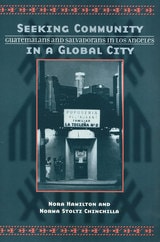
Seeking Community In Global City
Guatemalans & Salvadorans In Los AngelesNora Hamilton
Temple University Press, 2001
Based on twenty years of work with the Los Angeles Central American community and filled with facts, figures, and personal narratives, Seeking Community in a Global City presents this saga from many perspectives. The authors examine the forces in Central America that sent thousands of people streaming across international borders. They discuss economic, political, and demographic changes in the Los Angeles region and the difficulties the new immigrants faced in negotiating a new, urban environment. They look at family roles, networking, work strategies, and inter-ethnic relations. But they also consider policy issues and alliances, changing expectations, shifting priorities, and the reciprocal effect of the migrants and the city on each other.

Seems Like Murder Here
Southern Violence and the Blues TraditionAdam Gussow
University of Chicago Press, 2002
Seems Like Murder Here offers a revealing new account of the blues tradition. Far from mere laments about lost loves and hard times, the blues emerge in this provocative study as vital responses to spectacle lynchings and the violent realities of African American life in the Jim Crow South. With brilliant interpretations of both classic songs and literary works, from the autobiographies of W. C. Handy, David Honeyboy Edwards, and B. B. King to the poetry of Langston Hughes and the novels of Zora Neale Hurston, Seems Like Murder Here will transform our understanding of the blues and its enduring power.

Selected Works of Herbert Blumer
A PUBLIC PHILOSOPHY FOR MASS SOCIETYEdited, with Critical Commentary and an Afterword, by Stanford M. Lyman and Arthur J. Vidich
University of Illinois Press, 1988
Balancing essays on Herbert Blumer with Blumer's own writings on race relations, labor and management conflict, urbanization, and popular culture, this volume--originally published as Social Order and the Public Philosophy--establishes Blumer's thought as a basis for a public policy that remains faithful to the essential character of human life in a permanently pluralized and segmented society.
Stanford M. Lyman and Arthur J. Vidich situate Blumer's ideas in the context of earlier public philosophers, such as William Graham Sumner, Herbert Croly, and Walter Lippmann. They consider the implications of Blumer's works for America's most pressing social issues and propose a sophisticated civic sociology of their own based on his studies and methods. Their new afterword affirms the rich harvest Blumer's philosophy continues to yield for postmodern society.
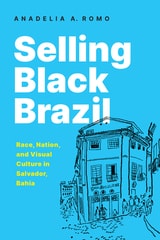
Selling Black Brazil
Race, Nation, and Visual Culture in Salvador, BahiaAnadelia Romo
University of Texas Press, 2022
2023 Honorable Mention, Brazil Section Humanities Book Prize, Latin American Studies Association (LASA)
This book explores visual portrayals of blackness in Brazil to reveal the integral role of visual culture in crafting race and nation across Latin America.
In the early twentieth century, Brazil shifted from a nation intent on whitening its population to one billing itself as a racial democracy. Anadelia Romo shows that this shift centered in Salvador, Bahia, where throughout the 1950s, modernist artists and intellectuals forged critical alliances with Afro-Brazilian religious communities of Candomblé to promote their culture and their city. These efforts combined with a growing promotion of tourism to transform what had been one of the busiest slaving depots in the Americas into a popular tourist enclave celebrated for its rich Afro-Brazilian culture. Vibrant illustrations and texts by the likes of Jorge Amado, Pierre Verger, and others contributed to a distinctive iconography of the city, with Afro-Bahians at its center. But these optimistic visions of inclusion, Romo reveals, concealed deep racial inequalities. Illustrating how these visual archetypes laid the foundation for Salvador’s modern racial landscape, this book unveils the ways ethnic and racial populations have been both included and excluded not only in Brazil but in Latin America as a whole.
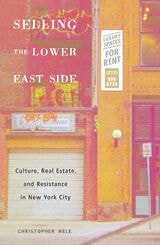
Selling The Lower East
Culture, Real Estate, and Resistance in New York CityChristopher Mele
University of Minnesota Press, 2000
Tracks the shifting views of the Lower East Side from ghetto to desirable urban niche.
The Lower East Side of Manhattan is rich in stories-of poor immigrants who flocked there in the late nineteenth and early twentieth centuries; of beatniks, hippies, and artists who peopled it mid-century; and of the real estate developers and politicians who have always shaped what is now termed the "East Village." Today, the musical Rent plays on Broadway to a mostly white and suburban audience, MTV exploits the neighborhood’s newly trendy squalor in a film promotion, and on the Internet a cyber soap opera and travel-related Web pages lure members of the middle class to enjoy a commodified and sanitized version of the neighborhood.
In this sweeping account, Christopher Mele analyzes the political and cultural forces that have influenced the development of this distinctive community. He describes late nineteenth-century notions of the Lower East Side as a place of entrenched poverty, ethnic plurality, political activism, and "low" culture that elicited feelings of revulsion and fear among the city’s elite and middle classes. The resulting-and ongoing-struggle between government and residents over affordable and decent housing has in turn affected real estate practices and urban development policies. Selling the Lower East Side recounts the resistance tactics used by community residents, as well as the impulse on the part of some to perpetuate the image of the neighborhood as dangerous, romantic, and bohemian, clinging to the marginality that has been central to the identity of the East Village and subverting attempts to portray it as "new and improved." Ironically, this very image of urban grittiness has been appropriated by a cultural marketplace hungry for new fodder. Mele explores the ways that developers, media executives, and others have coopted the area’s characteristics-analyzing the East Village as a "style provider" where what is being marketed is "difference." The result is a visionary look at how political and economic actions transform neighborhoods and at what happens when a neighborhood is what is being "consumed."A comprehensive web site for Selling the Lower East Side can be found at www.upress.umn.edu/sles.
Sensing Chicago
Noisemakers, Strikebreakers, and MuckrakersAdam Mack
University of Illinois Press, 2015
In Sensing Chicago, Adam Mack lets fresh air into the sensory history of Chicago in the nineteenth and early twentieth centuries by examining five case studies: the Chicago River, the Great Fire, the 1894 Pullman Strike, the publication of Upton Sinclair's The Jungle, and the rise and fall of the White City amusement park. His vivid recounting of the smells, sounds, and tactile miseries of city life reveals how input from the five human senses influenced the history of class, race, and ethnicity in the city. At the same time, he transports readers to an era before modern refrigeration and sanitation, when to step outside was to be overwhelmed by the odor and roar of a great city in progress.

Sensory Futures
Deafness and Cochlear Implant Infrastructures in IndiaMichele Ilana Friedner
University of Minnesota Press, 2022
What happens when cochlear implants, heralded as the first successful bionic technologies, make their way around the globe and are provided by both states and growing private markets? As Sensory Futures follows these implants from development to domestication and their unequal distribution in India, Michele Ilana Friedner explores biotechnical intervention in the realm of disability and its implications for state politics in the Global South.
A signing and speaking deaf bilateral cochlear implant user, Friedner weaves personal reflections into this fine-grained ethnography of everyday negotiations, activist aspirations, and the space of the family. She places sensory anthropology in conversation with disability studies to analyze how normative sensoria are cultivated and the pursuit of listening and speaking capability is enacted. She argues that the conditions of potentiality that have emerged through cochlear implantation have, in fact, resulted in ever narrower understandings of future life possibilities. Rejecting sensory hierarchies that privilege audition, Friedner calls for multisensory, multimodal, and multipersonal ways of relating to the world.
Sensory Futures explores deaf people’s desires to create habitable worlds and grapple with what their futures might look like, in India and beyond, amid a surge in both biotechnical interventions and disability rights activism. With implications for a broad range of disability experiences, this sensitive, in-depth research focuses on the specific experiences of deaf people, both children and adults, and the structural, political, and social possibilities offered by both biotechnological and social “cures.”
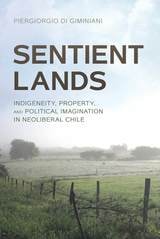
Sentient Lands
Indigeneity, Property, and Political Imagination in Neoliberal ChilePiergiorgio Di Giminiani
University of Arizona Press, 2018
Sentient Lands is a historically grounded ethnography of the Mapuche people’s engagement with state-run reconciliation and land-restitution efforts. Piergiorgio Di Giminiani analyzes environmental relations, property, state power, market forces, and indigeneity to illustrate how land connections are articulated, in both landscape experiences and land claims. Rather than viewing land claims as simply bureaucratic procedures imposed on local understandings and experiences of land connections, Di Giminiani reveals these processes to be disputed practices of world making.
Ancestral land formation is set in motion by the entangled principles of Indigenous and legal land ontologies, two very different and sometimes conflicting processes. Indigenous land ontologies are based on a relation between two subjects—land and people—both endowed with sentient abilities. By contrast, legal land ontologies are founded on the principles of property theory, wherein land is an object of possession that can be standardized within a regime of value. Governments also use land claims to domesticate Indigenous geographies into spatial constructs consistent with political and market configurations.
Exploring the unexpected effects on political activism and state reparation policies caused by this entanglement of Indigenous and legal land ontologies, Di Giminiani offers a new analytical angle on Indigenous land politics.

Sentimental Education
The Story of a Young ManGustave Flaubert
University of Minnesota Press, 2024
A fresh and vivid translation of Flaubert’s influential bildungsroman
Gustave Flaubert conceived Sentimental Education, his final complete novel, as the history of his own generation, one that failed to fulfill the promise of the Revolution of 1848. Published a few months before the start of the 1870 Franco–Prussian War, it offers both a sweeping panorama of French society over three decades and an intimate bildungsroman of a young man from a small town who arrives in Paris when protests against the monarchy are increasing.
The novel’s protagonist, Frédéric Moreau, alternates between aimlessness and ambition as he searches for a meaningful life through love affairs and republican politics. Flaubert’s narrative includes scenes of high drama, as scattered protests across Paris swell into revolution, and quiet moments of self-aware romanticism, crafting a story that possesses the sweep and scope of a historical novel combined with deep emotion and scandalous intimacy. Suffused with tragedy and the poignancy of lost chances and wasted lives, Sentimental Education is sharpened by satirical observations of what Flaubert condemned as the Second Empire’s endemic hypocrisy and willful blindness.
This vibrant, new translation by Raymond N. MacKenzie includes an extensive critical introduction and annotations to help the modern reader appreciate Flaubert’s achievement. Sentimental Education intertwines the personal, the intimate, and the subjective with the political, social, and cultural, embedding Frédéric’s story in the larger arc of what Flaubert saw as France’s decline into mediocrity and imbecility in its politics and manners.
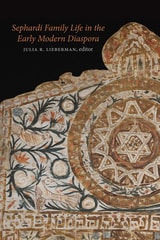
Sephardi Family Life in the Early Modern Diaspora
Edited by Julia R. Lieberman
Brandeis University Press, 2010

Serbia under the Swastika
A World War II OccupationAlexander Prusin
University of Illinois Press, 2017
Deftly merging political and social history, Serbia under the Swastika looks at the interactions between Germany’s occupation policies, the various forces of resistance and collaboration, and the civilian population. Alexander Prusin reveals a German occupying force at war with itself. Pragmatists intent on maintaining a sedate Serbia increasingly gave way to Nazified agencies obsessed with implementing the expansionist racial vision of the Third Reich. As Prusin shows, the increasing reliance on terror catalyzed conflict between the nationalist Chetniks, communist Partisans, and the collaborationist government. Prusin unwraps the winding system of expediency that at times led the factions to support one-another against the Germans--even as they fought a ferocious internecine civil war to determine the future of Yugoslavia.
Comprehensive and judicious, Serbia under the Swastika is a rare English-language foray into the still-fraught history of Serbia in World War II.
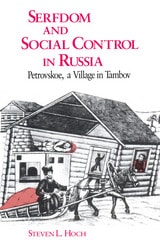
Serfdom and Social Control in Russia
Petrovskoe, a Village in TambovSteven L. Hoch
University of Chicago Press, 1986