Results by title
2194 books match the query 'Women's Studies' and 186 start with s

Sacred Pens and Public Voices
Latter-day Saint Women in Dialogue with AmericaLori Motzkus Wilkinson
University of Illinois Press, 2026
Though intellectually connected to figures outside the Church, the LDS women saw them less as
women's rights activists to emulate and more as speakers of truths that, regardless of the origin, should be embraced and harnessed. Wilkinson reveals how Emmeline B. Wells, Susa Young Gates, and other Latter-day Saint women supported and upheld institutional LDS authority and utilized the importance of women’s roles in the home and society as mechanisms for women’s advancement. Even as LDS women continued to engage with prominent national thinkers, their writings and lives demonstrated that they connected with the larger sphere of women’s rights activism before drawing on the LDS concept of women’s divine nature to reshape those ideals to uniquely religious ends.
Original and eye-opening, Sacred Pens and Public Voices revises established narratives about how LDS women interacted with and used ideas taken from national women’s movements.
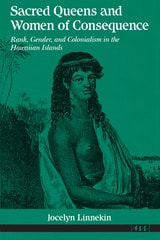
Sacred Queens and Women of Consequence
Rank, Gender, and Colonialism in the Hawaiian IslandsJocelyn Linnekin
University of Michigan Press, 1990
Sacred Queens and Women of Consequence is a pathbreaking examination of the contact encounter in Hawaii from the perspective of Hawaiian women. Jocelyn Linnekin offers a reconstruction of Hawaiian women's authority and status before contact with the West and examines changes in their cultural valuation and social position during the first century of Western contact. Through a detailed analysis of women's roles in exchange, production, kinship, and politics during the political and economic transformations of the nineteenth century, Linnekin challenges the view that Polynesian women were doomed to a peripheral status by the ritual logic of pollution. She demonstrates how Hawaiian women maintained their position as points of access to land and power, while frequently resisting the constraints of the tabu system as well as later Western-influenced attempts to abridge their authority.This book is a unique and important contribution to the scholarship on Hawaiian history as well as to the growing literature on women and colonialism and women and social stratification. It will appeal to scholars and students who work in the areas of gender studies, social stratification, cultural change, Oceania, and historical anthropology.

Sacred Sisterhoods
A Celebration of Black Women's Friendships on Television and in FilmEdited by Imani M. Cheers
The Ohio State University Press, 2025
Creative visionaries from Debbie Allen to Quinta Brunson, along with shows and films from Living Single to Hidden Figures—and many others—receive their due in these rigorous, lively, and accessible essays. Spotlighting the nuances and normalcy of Black women’s sacred sisterhoods, contributors reveal the indelible mark modern Black consciousness and creative control leave on our popular culture every day in an anthology that will be essential to scholars and students of contemporary media, race, and gender, as well as to general readers.
Contributors:
Imani M. Cheers, Monique A. Gamble, Marquita Gammage, Kandace Harris, Crystal L. Holmes, Makeba Lavan, Rondrea Danielle Mathis, Miriam J. Petty-Adams, De Anna Reese, Randi Richardson, Beretta E. Smith-Shomade, Andrene M. Taylor, Kristen Warner, and Shauntae Brown White
Sadistic Cholas
Transfeminist Provocations in Contemporary PeruOlga Rodriguez-Ulloa
University of Texas Press, 2026
Analyzing how Peruvian feminist art and activism subverts and reclaims the chola stereotype to confront colonial and patriarchal institutions.
Indigenous Andean women have long been derided in Peru, spurned by colonial and then national elites as depraved cholas. Olga Rodriguez-Ulloa shows how contemporary artists and activists not only reclaim this term of abuse but also mobilize the stereotype of the angry and perverted chola to confront the cruelties of patriarchy, capitalism, and white supremacy.
Sadistic Cholas examines music, visual arts, literature, and grassroots organizing by self-identified cholas—in particular, Black women and trans and queer feminists. Under colonial domination, cholas were destined for sexual coercion, labor extraction, and reproductive exploitation. While exhuming historical traces of chola resistance, Rodriguez-Ulloa argues that this condition of oppression persisted through the internal war of the 1980s, when Marxist women at the forefront of the armed campaign were condemned as hypersexual deviants. Inspired by their leftist forebears, today’s artists experiment with an aesthetic of sadistic vengeance, configured as rightful self-defense. Yet, in spite of their violent imagery, activist cholas pursue nonviolent goals, promoting a commons of care incorporating people, animals, and the environment.
Safe Space
Finding Safety in Solidarity and Self-DeterminationRaphaëlle Red
Seagull Books, 2026
An urgent and intimate meditation on what it means to feel—and to be—safe.
In Safe Space, Raphaëlle Red traces the physiological toll of insecurity on marginalized lives across literature, film, music, and political discourse. In conversation with artists and thinkers such as James Baldwin, Nina Simone, June Jordan, Ja’Tovia Gary, and Leslie Feinberg, she maps the genealogy of “safe spaces,” from their radical origins to their contested place in today’s public debates. Rather than dismissing or defending the concept, Red asks what we might recover if we redefined safety not as fragility or withdrawal, but as self-determination, collective defense, and the right to opacity. She explores the tension between feeling and reality, protection and powerlessness, the language of safety, and the politics it sustains. Along the way, she grounds her reflections in personal narrative, European and North American contexts, and contemporary movements of resistance. At once theoretical and deeply personal, Safe Space refuses easy answers. Instead, it imagines safe space as temporary, regenerative, and insurgent—a practice of care and solidarity that unsettles hierarchies rather than reproducing them. A book for anyone wrestling with fear, vulnerability, and the fragile promise of collective liberation.

Safe in a Midwife's Hands
Birthing Traditions from Africa to the American SouthLinda Janet Holmes
The Ohio State University Press, 2023

Sainted Women of the Dark Ages
Jo Ann McNamara, John E. Halborg, and Gordon Whatley, eds.
Duke University Press, 1992
Three of these holy women were queens who turned to religion only after a period of intense worldly activity. Others were members of the Carolingian family, deeply implicated in the political ambitions of their male relatives. Some were partners in the great Irish missions to the pagan countryside and others worked for the physical salvation of the poor. From the peril and suffering of their lives they shaped themselves as paragons of power and achievement. Beloved by their sisters and communities for their spiritual gifts, they ultimately brought forth a new model of sanctity.
These biographies are unusually authentic. At least two were written by women who knew their subjects, while others reflect the direct testimony of sisters within the cloister walls. Each biography is accompanied by an introduction and notes that clarify its historical context. This volume will be an excellent source for students and scholars of women's studies and early medieval social, religious, and political history.

Sandino's Daughters Revisited
Feminism in NicaraguaRandall, Margaret
Rutgers University Press, 1994
Sandino's Daughters, Margaret Randall's conversations with Nicaraguan women in their struggle against the dictator Somoza in 1979, brought the lives of a group of extraordinary female revolutionaries to the American and world public. The book remains a landmark. Now, a decade later, Randall returns to interview many of the same women and others. In Sandino's Daughters Revisited, they speak of their lives during and since the Sandinista administration, the ways in which the revolution made them strong — and also held them back. Ironically, the 1990 defeat of the Sandinistas at the ballot box has given Sandinista women greater freedom to express their feelings and ideas.
Randall interviewed these outspoken women from all walks of life: working-class Diana Espinoza, head bookkeeper of a employee-owned factory; Daisy Zamora, a vice minister of culture under the Sandinistas; and Vidaluz Meneses, daughter of a Somozan official, who ties her revolutionary ideals to her Catholicism. The voices of these women, along with nine others, lead us to recognize both the failed promises and continuing attraction of the Sandinista movement for women. This is a moving account of the relationship between feminism and revolution as it is expressed in the daily lives of Nicaraguan women.

Sandino's Daughters
Testimonies of Nicaraguan Women in StruggleRandall, Margaret
Rutgers University Press, 1995
"A collection of varied and amazing lives, all bent on shaping history. Together, these experienced, undeterred Nicaraguan women offer powerful clues about a truly revolutionary and democratizing feminism."––Adrienne Rich
"If it were not for writers like Margaret, how would women around the world find each other when there is such an institutional effort to keep us apart and silent? Here Margaret brings us the voice of Sandino's daughters, honoring his hat and wearing their own, wiser now, having been part of political and personal revolution."––Holly Near
"Powerful, moving, and challenging. Everyone interested in decency and justice will want to read Sandino's Daughters Revisited."––Blanche Wiesen Cook
Sandino's Daughters, Margaret Randall's conversations with Nicaraguan women in their struggle against the dictator Somoza in 1979, brought the lives of a group of extraordinary female revolutionaries to the American and world public. The book remains a landmark. Now, a decade later, Randall returns to interview many of the same women and others. In Sandino's Daughters Revisited, they speak of their lives during and since the Sandinista administration, the ways in which the revolution made them strong––and also held them back. Ironically, the 1990 defeat of the Sandinistas at the ballot box has given Sandinista women greater freedom to express their feelings and ideas.
Randall interviewed these outspoken women from all walks of life: working-class Diana Espinoza, head bookkeeper of a employee-owned factory; Daisy Zamora, a vice minister of culture under the Sandinistas; and Vidaluz Meneses, daughter of a Somozan official, who ties her revolutionary ideals to her Catholicism. The voices of these women, along with nine others, lead us to recognize both the failed promises and continuing attraction of the Sandinista movement for women. This is a moving account of the relationship between feminism and revolution as it is expressed in the daily lives of Nicaraguan women.
Sapphic Primitivism
Productions of Race, Class, and Sexuality in Key Works of Modern FictionHackett, Robin
Rutgers University Press, 2003
In this book, Robin Hackett examines portrayals of race, class, and sexuality in modernist texts by white women to argue for the existence of a literary device that she calls “Sapphic primitivism.” The works vary widely in their form and content and include Olive Schreiner’s proto-modernist exploration of New Womanhood, The Story of an African Farm; Virginia Woolf’s high modernist “play-poem,” The Waves; Sylvia Townsend Warner’s historical novel, Summer Will Show; and Willa Cather’s Southern pastoral, Sapphira and the Slave Girl. In each, blackness and working-class culture are figured to represent sexual autonomy, including lesbianism, for white women. Sapphic primitivism exposes the ways several classes of identification were intertwined with the development of homosexual identities at the turn of the century. Sapphic primitivism is not, however, a means of disguising lesbian content. Rather, it is an aesthetic displacement device that simultaneously exposes lesbianism and exploits modern, primitivist modes of self-representation. Hackett’s revelations of the mutual interests of those who study early twentieth-century constructions of race and sexuality and twenty-first-century feminists doing anti-racist and queer work are a major contribution to literary studies and identity theory.

Sara
My Whole Life Was a StruggleSakine Cansiz
Pluto Press, 2018
This is the first chapter of her iconic life, leading up to her arrest in 1979, penned as dramatic events unfolded against the backdrop of the Turkish revolutionary left. She writes about the excitement of entering the movement as a young woman, discovering she would have to challenge traditional gender roles as she rose amongst its ranks. She was one of the first to demand the recruitment and education of female revolutionaries, and demanded total gender equality within the PKK, which is now one of its central tenets.
Today, 'Sara' is an inspiration to women fighting for liberation across the world. This is her story in her own words, and is in turns shocking, violent and path-breaking.
Translated by Janet Biehl.
Satiric Advice on Women and Marriage
From Plautus to ChaucerWarren S. Smith, Editor
University of Michigan Press, 2005
Advice on sex and marriage in the literature of antiquity and the middle ages typically stressed the negative: from stereotypes of nagging wives and cheating husbands to nightmarish visions of women empowered through marriage. Satiric Advice on Women and Marriage brings together the leading scholars of this fascinating body of literature. Their essays examine a variety of ancient and early medieval writers' cautionary and often eccentric marital satire beginning with Plautus in the third century B.C.E. through Chaucer (the only non-Latin author studied). The volume demonstrates the continuity in the Latin tradition which taps into the fear of marriage and intimacy shared by ancient ascetics (Lucretius), satirists (Juvenal), comic novelists (Apuleius), and by subsequent Christian writers starting with Tertullian and Jerome, who freely used these ancient sources for their own purposes, including propaganda for recruiting a celibate clergy and the promotion of detachment and asceticism as Christian ideals.
Warren S. Smith is Professor of Classical Languages at the University of New Mexico.
Scarlet and Black, Volume Two
Constructing Race and Gender at Rutgers, 1865-1945Kendra Boyd
Rutgers University Press, 2020
To learn more about the work of the Committee on Enslaved and Disenfranchised Population in Rutgers History, visit the project's website at http://scarletandblack.rutgers.edu

Scarlett's Women
Gone With the Wind and Its Female FansTaylor, Helen
Rutgers University Press, 1989

Scarlett's Women
Gone With the Wind and Its Female FansTaylor, Helen
Rutgers University Press, 1969
Sciences from Below
Feminisms, Postcolonialities, and ModernitiesSandra Harding
Duke University Press, 2008
Describing the work of the post-Kuhnian science studies scholars Bruno Latour, Ulrich Beck, and the team of Michael Gibbons, Helga Nowtony, and Peter Scott, Harding reveals how, from different perspectives, they provide useful resources for rethinking the modernity versus tradition binary and its effects on the production of scientific knowledge. Yet, for the most part, they do not take feminist or postcolonial critiques into account. As Harding demonstrates, feminist science studies and postcolonial science studies have vital contributions to make; they bring to light not only the male supremacist investments in the Western conception of modernity and the historical and epistemological bases of Western science but also the empirical knowledge traditions of the global South. Sciences from Below is a clear and compelling argument that modernity studies and post-Kuhnian, feminist, and postcolonial sciences studies each have something important, and necessary, to offer to those formulating socially progressive scientific research and policy.
Scream from the Shadows
The Women’s Liberation Movement in JapanSetsu Shigematsu
University of Minnesota Press, 2012
More than forty years ago a women’s liberation movement called ūman ribu was born in Japan amid conditions of radicalism, violence, and imperialist aggression. Setsu Shigematsu’s book is the first to present a sustained history of ūman ribu’s formation, its political philosophy, and its contributions to feminist politics across and beyond Japan. Through an in-depth analysis of ūman ribu, Shigematsu furthers our understanding of Japan’s gender-based modernity and imperialism and expands our perspective on transnational liberation and feminist movements worldwide.
In Scream from the Shadows, Shigematsu engages with political philosophy while also contextualizing the movement in relation to the Japanese left and New Left as well as the anti–Vietnam War and radical student movements. She examines the controversial figure Tanaka Mitsu, ūman ribu’s most influential activist, and the movement’s internal dynamics. Shigematsu highlights ūman ribu’s distinctive approach to the relationship of women—and women’s liberation—to violence: specifically, the movement’s embrace of violent women who were often at the margins of society and its recognition of women’s complicity in violence against other women.
Scream from the Shadows provides a powerful case study of a complex and contradictory movement with a radical vision of women’s liberation. It offers a unique opportunity to reflect on the blind spots within our contemporary and dominant views of feminism across their liberal, marxist, radical, Euro-American, postcolonial, and racial boundaries.
Screening Culture, Viewing Politics
An Ethnography of Television, Womanhood, and Nation in Postcolonial IndiaPurnima Mankekar
Duke University Press, 1999
Mankekar examines both “entertainment” narratives and advertisements designed to convey particular ideas about the nation. Organizing her study around the recurring themes in these shows—Indian womanhood, family, community, constructions of historical memory, development, integration, and sometimes violence—Mankekar dissects both the messages televised and her New Delhi subjects’ perceptions of and reactions to these messages. In the process, her ethnographic analysis reveals the texture of these women’s daily lives, social relationships, and everyday practices. Throughout her study, Mankekar remains attentive to the tumultuous historical and political context in the midst of which these programs’ integrationalist messages are transmitted, to the cultural diversity of the viewership, and to her own role as ethnographer. In an enlightening epilogue she describes the effect of satellite television and transnational programming to India in the 1990s.
Through its ethnographic and theoretical richness, Screening Culture, Viewing Politics forces a reexamination of the relationship between mass media, social life, and identity and nation formation in non-Western contexts. As such, it represents a major contribution to a number of fields, including media and communication studies, feminist studies, anthropology, South Asian studies, and cultural studies.
Scrutinizing Feminist Epistemology
An Examination of Gender in SciencePinnick, Cassandra
Rutgers University Press, 2003
This volume presents the first systematic evaluation of a feminist epistemology of sciences’ power to transform both the practice of science and our society. Unlike existing critiques, this book questions the fundamental feminist suggestion that purging science of alleged male biases will advance the cause of both science and by extension, social justice.
The book is divided into four sections: the strange status of feminist epistemology, testing feminist claims about scientific practice, philosophical and political critiques of feminist epistemology, and future prospects of feminist epistemology. Each of the essays¾most of which are original to this text¾ directly confronts the very idea that there could be a feminist epistemology or philosophy of science. Rather than attempting to deal in detail with all of the philosophical views that fall under the general rubric of feminist epistemology, the contributors focus on positions that provide the most influential perspectives on science. Not all of the authors agree amongst themselves, of course, but each submits feminist theories to careful scrutiny. Scrutinizing Feminist Epistemology provides a timely, well-rounded, and much needed examination of the role of gender in scientific research.

Seam
Tarfia Faizullah
Southern Illinois University Press, 2014
Winner, Great Lakes Colleges Association New Writers Award, 2014
Winner, Binghamton University Milt Kessler Poetry Book Award, 2015
Winner, Drake University Emerging Writers Award, 2015
The poems in this captivating collection weave beauty with violence, the personal with the historic as they recount the harrowing experiences of the two hundred thousand female victims of rape and torture at the hands of the Pakistani army during the 1971 Liberation War. As the child of Bangladeshi immigrants, the poet in turn explores her own losses, as well as the complexities of bearing witness to the atrocities these war heroines endured.
Throughout the volume, the narrator endeavors to bridge generational and cultural gaps even as the victims recount the horror of grief and personal loss. As we read, we discover the profound yet fragile seam that unites the fields, rivers, and prisons of the 1971 war with the poet’s modern-day hotel, or the tragic death of a loved one with the holocaust of a nation.
Moving from West Texas to Dubai, from Virginia to remote villages in Bangladesh and back again, the narrator calls on the legacies of Willa Cather, César Vallejo, Tomas Tranströmer, and Paul Celan to give voice to the voiceless. Fierce yet loving, devastating and magical at once, Seam is a testament to the lingering potency of memory and the bravery of a nation’s victims.
Searching for Democracy
Women, Domestic Work, and Social Reproduction in Latin AmericaLeda M. Pérez
Temple University Press, 2026
How can we achieve lasting social and political equality for women? Leda Pérez tackles this thorny question in Searching for Democracy by interrogating egalitarianism in Latin America, where nearly 20% of women work in domestic service. She examines how women’s participation in society, labor, and politics continues to be conditioned by their relationship to domestic and care work.
Pérez argues that women’s relationship to these spheres of life is indicative of a nation’s development and democracy. She provides a comparative focus on the socio-cultural valuation of this labor and the experiences of women in Bolivia, Chile, Peru, and Uruguay, among other countries. Pérez asserts that it is only by changing sociocultural views on this “women’s work” that nations can create political change, foster equitable legislation, and ensure implementation of effective policies that benefit women.
Searching for Democracy shows why real and lasting equality cannot be achieved without fully enfranchising women in the lowest tiers of employment and closing the equality gap among women. Pérez’s models for gender equality are relevant for women around the world.

Searching for Emma
Gustave Flaubert and Madame BovaryDacia Maraini
University of Chicago Press, 1997
Maraini argues that in their desire to claim Emma Bovary as a standard-bearer of revolt, women have often overlooked the bitter, pitiless way in which Flaubert evokes Emma's insignificance and vulgarity. Searching for Emma guides the reader through Flaubert's novel and many of his letters, seeking out the sources of his obsessive cruelty toward Emma. Maraini relates Flaubert's contempt for Emma to his relationship with his mistress, Louise Colet, to his general terror of women, and to his own self-loathing. It was entirely in spite of himself, Maraini writes, that Flaubert created the female Don Quixote so admired for her restlessness and determination.
Searching for Emma offers a novelist's insight into the complex relationship between author and character, and into the deepest motivations of fiction.
Searching for Safe Spaces
Afro-Caribbean Women Writers in ExileMyriam Chancy
Temple University Press, 1997
Understanding exile as flight from political persecution or types of oppression that single out women, Chancy concentrates on diasporic writers and filmmakers who depict the vulnerability of women to poverty and exploitation in their homelands and their search for safe refuge. These Afro-Caribbean feminists probe the complex issues of race, nationality, gender, sexuality, and class that limit women's lives. They portray the harsh conditions that all too commonly drive women into exile, depriving them of security and a sense of belonging in their adopted countries -- the United States, Canada, or England.
As they rework traditional literary forms, artists such as Joan Riley, Beryl Gilroy, M. Noubese Philip, Dionne Brand, Makeda Silvera, Audre Lorde, Rosa Guy, Michelle Cliff, and Mari Chauvet give voice to Åfro-Caribbean women's alienation and longing to return home. Whether their return is realized geographically or metaphorically, the poems, fiction, and film considered in this book speak boldly of self-definition and transformation.
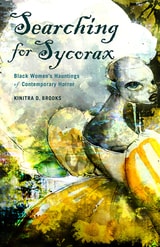
Searching for Sycorax
Black Women's Hauntings of Contemporary HorrorBrooks, Kinitra D
Rutgers University Press, 2018
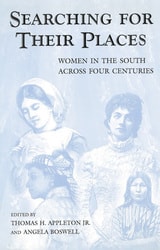
Searching for Their Places
Women in the South across Four CenturiesEdited by Thomas H. Appleton, Jr. & Angela Boswell
University of Missouri Press, 2003
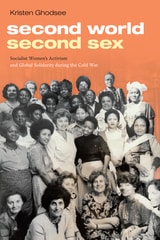
Second World, Second Sex
Socialist Women's Activism and Global Solidarity during the Cold WarKristen Ghodsee
Duke University Press, 2019
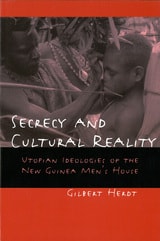
Secrecy and Cultural Reality
Utopian Ideologies of the New Guinea Men's HouseGilbert Herdt
University of Michigan Press, 2003
Secularisms
Janet R. Jakobsen and Ann Pellegrini, eds.
Duke University Press, 2008
With essays addressing secularism in India, Iran, Turkey, Great Britain, China, and the United States, this collection crucially complicates the dominant narrative by showing that secularism is multifaceted. How secularism is lived and experienced varies with its national, regional, and religious context. The essays explore local secularisms in relation to religious traditions ranging from Islam to Judaism, Hinduism to Christianity. Several contributors explicitly take up the way feminism has been implicated in the dominant secularization story. Ultimately, by dislodging secularism’s connection to the single (and singular) progress narrative, this volume seeks to open spaces for other possible narratives about both secularism and religion—as well as for other possible ways of inhabiting the contemporary world.
Contributors: Robert J. Baird, Andrew Davison, Tracy Fessenden, Janet R. Jakobsen, Laura Levitt,
Molly McGarry, Afsaneh Najmabadi, Taha Parla, Geeta Patel, Ann Pellegrini, Tyler Roberts,
Ranu Samantrai, Banu Subramaniam, Rajeswari Sunder Rajan, Angela Zito

Securing Paradise
Tourism and Militarism in Hawai'i and the PhilippinesVernadette Vicuña Gonzalez
Duke University Press, 2013
Security Disarmed
Critical Perspectives on Gender, Race, and MilitarizationMorgen, Sandra
Rutgers University Press, 2008
In Security Disarmed, scholars, policy planners, and activists come together to think critically about the human cost of violence and viable alternatives to armed conflict. Arranged in four parts--alternative paradigms of security, cross-national militarization, militarism in the United States, and pedagogical and cultural concerns--the book critically challenges militarization and voices an alternative encompassing vision of human security by analyzing the relationships among gender, race, and militarization. This collection of essays evaluates and resists the worldwide crisis of militarizationùincluding but going beyond American military engagements in the twenty-first century.

Seeing Sarah Bernhardt
Performance and Silent FilmVictoria Duckett
University of Illinois Press, 2015
Seeking Justice for Gendered Violence
Courts, Communities, and Care in GuatemalaErin Beck and Lynn Stephen
Duke University Press, 2026

Selected Letters of Lucretia Coffin Mott
Lucretia Coffin Mott. Edited by Beverly Wilson Palmer: With the Assistance of Holly Byers Ochoa, Associate Editor, and Carol Faulkner, Editing Fellow
University of Illinois Press, 2002
This landmark volume collects Lucretia Mott's correspondence for the first time, highlighting the length and breadth of her work as an activist dedicated to reform of almost every kind and providing an intimate glimpse of her family life.
Mott’s achievements left a mark on reform movements from abolition to women's rights. The letters cover her work in these causes as well as her founding of key antislavery organizations; her friendships with Harriet Tubman and Sojourner Truth; her efforts to bring Quakers into the abolitionist movement; and her part in organizing the 1848 Seneca Falls Woman's Rights Convention. Other correspondence cover her fifty-six-year marriage, the five children she raised to adulthood, and informal insights and news with and about her cherished family.
An invaluable resource, Selected Letters of Lucretia Coffin Mott reveals the incisive mind, sense of mission, and level-headed personality that made this extraordinary figure a major force in nineteenth-century American life.

Selected Philosophical and Scientific Writings
Emilie Du Châtelet
University of Chicago Press, 2009
Though most historians remember her as the mistress of Voltaire, Emilie Du Châtelet (1706–49) was an accomplished writer in her own right, who published multiple editions of her scientific writings during her lifetime, as well as a translation of Newton’s Principia Mathematica that is still the standard edition of that work in French. Had she been a man, her reputation as a member of the eighteenth-century French intellectual elite would have been assured.
In the 1970s, feminist historians of science began the slow work of recovering Du Châtelet’s writings and her contributions to history and philosophy. For this edition, Judith P. Zinsser has selected key sections from Du Châtelet’s published and unpublished works, as well as related correspondence, part of her little-known critique of the Old and New Testaments, and a treatise on happiness that is a refreshingly uncensored piece of autobiography—making all of them available for the first time in English. The resulting volume will recover Châtelet’s place in the pantheon of French letters and culture.

Selected Poems
Lorna Goodison
University of Michigan Press, 1993

Selected Poems of Amy Lowell
Bradshaw, Melissa
Rutgers University Press, 2002
Amy Lowell (1874–1925), American poet and critic, was one of the most influential and best-known writers of her era. Within a thirteen-year period, she produced six volumes of poetry, two volumes of criticism, a two-volume biography of John Keats, and countless articles and reviews that appeared in many popular periodicals. As a herald of the New Poetry, Lowell saw herself and her kind of work as a part of a newly forged, diverse, American people that registered its consciousness in different tonalities but all in a native idiom. She helped build the road leading to the later works of Allen Ginsberg, May Sarton, Sylvia Plath, and beyond. Except for the few poems that invariably appear in American literature anthologies, most of her writings are out of print. This will be the first volume of her work to appear in decades, and the depth, range, and surprising sensuality of her poems will be a revelation.
The poetry is organized according to Lowell’s characteristic forms, from traditional to experimental. In each section the works appear in chronological order. Section one contains sonnets and other traditional verse forms. The next section covers her translations and adaptations of Chinese and Japanese poetry, whereby she beautifully renders the spirit of these works. Also included here are several of Lowell’s own Asian-influenced poems. Lowell’s free, or cadenced verse appears in the third part. The last section provides samples of Lowell’s polyphonic prose, an ambitious and vigorous art form that employs all of the resources of poetry.
The release of The Selected Poems of Amy Lowell will be a major event for readers who have not been able to find a representative sampling of work from this vigorous, courageous poet who gave voice to an erotic, thoroughly American sensibility.

Selected Poetry and Prose
A Bilingual EditionChiara Matraini
University of Chicago Press, 2007
Mostly available in only a handful of rare book collections, her writings are now adeptly translated here for an English-speaking audience and situated historically in an introduction by noted Matraini expert Giovanna Rabitti. Selected Poetry and Prose allows the poet to finally take her place as one of the seminal authors of the Renaissance, next to her contemporaries Vittoria Colonna and Laura Battiferra, also published in the Other Voice series.

Selected Writings
A Bilingual EditionMarguerite de Navarre
University of Chicago Press, 2008
Selected Writings brings together a representative sampling of Marguerite’s varied writings, most of it never before translated into English, enabling Anglophone readers to enjoy the full breadth of her work for the first time. From verse letters and fables to mythological-pastoral tales, from spiritual songs to a selection of novellas from the Heptameron, the wide range of works included here will reveal Marguerite de Navarre to be one of the most important writers—male or female—of sixteenth-century France.
Selecting Women, Electing Women
Political Representation and Candidate Selection in Latin AmericaMagda Hinojosa
Temple University Press, 2012
Selecting Women, Electing Women is a groundbreaking book that examines how the rules for candidate selection affect women’s political representation in Latin America. Focusing particularly on Chile and Mexico, Magda Hinojosa presents counterintuitive assumptions about factors that promote the election of women. She argues that primaries—which are regularly thought of as the most democratic process for choosing candidates—actually produce fewer female nominees than centralized and seemingly exclusionary candidate selection procedures.
Hinojosa astutely points out the role of candidate selection processes in explaining variation in women’s representation that exists both across and within political parties. Selecting Women, Electing Women makes critical inroads to the study of gender and politics, candidate selection, and Latin American politics.
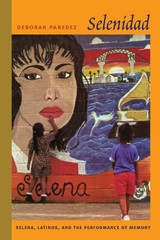
Selenidad
Selena, Latinos, and the Performance of MemoryDeborah Paredez
Duke University Press, 2009
Paredez argues that Selena’s death galvanized Latina/o efforts to publicly mourn collective tragedies (such as the murders of young women along the U.S.-Mexico border) and to envision a brighter future. At the same time, reactions to the star’s death catalyzed political jockeying for the Latino vote and corporate attempts to corner the Latino market. Foregrounding the role of performance in the politics of remembering, Paredez unravels the cultural, political, and economic dynamics at work in specific commemorations of Selena. She analyzes Selena’s final concert, the controversy surrounding the memorial erected in the star’s hometown of Corpus Christi, and the political climate that served as the backdrop to the touring musicals Selena Forever and Selena: A Musical Celebration of Life. Paredez considers what “becoming” Selena meant to the young Latinas who auditioned for the biopic Selena, released in 1997, and she surveys a range of Latina/o queer engagements with Selena, including Latina lesbian readings of the star’s death scene and queer Selena drag. Selenidad is a provocative exploration of how commemorations of Selena reflected and changed Latinidad.
Self-Determination and Women’s Rights in Muslim Societies
Edited by Chitra Raghavan and James P. Levine
Brandeis University Press, 2012
Selling Women's History
Packaging Feminism in Twentieth-Century American Popular CultureWestkaemper, Emily
Rutgers University Press, 2017

Senda Berenson
The Unlikely Founder of Women's BasketballRalph Melnick
University of Massachusetts Press, 2007
In the winter of 1892 the new instructor of physical training at Smith College, a diminutive young woman with a heavy accent, introduced her students to an adaptation of James Naismith's new game of Basket Ball. An immediate if unexpected success, the game spread to other women's schools across the country, and soon its founder, Senda Berenson (1868–1954), was called upon to codify its distinctive set of gender-specific rules. Emphasizing team passing and position over individual play, the version she instituted defined women's basketball for seventy years and eventually earned her the honor of being the first female elected to the Basketball Hall of Fame.
Yet as Ralph Melnick points out, Berenson's pioneering role in the history of women's athletics was more a matter of accident than destiny. A Jewish immigrant from Lithuania, prone to ill health throughout her childhood, she enrolled in the Boston Normal School for Gymnastics in the fall of 1890 with the hope of strengthening herself so that she could pursue a career as a pianist, dancer, or painter. Instead she soon became both a practitioner and a proponent of a new approach to women's physical education, one aimed at providing a “natural outlet of the play instinct,” developing “endurance and physical courage” as well as “quickness of thought and action,” and promoting through teamwork the “power of organization” women needed to achieve full social equality.
Extending her work into the factories and blighted urban tenements of America, Berenson later won the recognition of Jane Addams, Margaret Sanger, and other progressive reformers. Believing that “Americans have forgotten how to play,” she wanted to teach others to live “joyfully—beautifully.” For Berenson, the physical culture of exercise and games, played not for competition but for personal and social development as well as sheer enjoyment, was but another form of art.
This convergence of athletics and aesthetics was hardly surprising, Melnick explains, because the single most important influence on Senda Berenson's life was her brother, the renowned art critic and connoisseur Bernard Berenson. The two siblings wrote frequently to each other over the course of their lives, and the author draws heavily on their correspondence throughout the book to create an intimate and insightful portrait of a remarkable American woman.
Sensible Ecstasy
Mysticism, Sexual Difference, and the Demands of HistoryAmy Hollywood
University of Chicago Press, 2001
What is particular to these thinkers, Hollywood reveals, is their attention to forms of mysticism associated with women. They regard mystics such as Angela of Foligno, Hadewijch, and Teresa of Avila not as emotionally excessive or escapist, but as unique in their ability to think outside of the restrictive oppositions that continue to afflict our understanding of subjectivity, the body, and sexual difference. Mystics such as these, like their twentieth-century descendants, bridge the gaps between action and contemplation, emotion and reason, and body and soul, offering new ways of thinking about language and the limits of representation.

Sensing Health
Bodies, Data, and Digital Health TechnologiesMikki Kressbach
University of Michigan Press, 2024
To capture and analyze digital health experiences, Kressbach develops a method that combines descriptive practices from Film and Media Studies and Phenomenology. After examining the design and feedback structures of digital health platforms and devices, the author uses her own first-person accounts to analyze the impact of the technology on her body, behaviors, and perception of health. Across five chapters focused on different categories of digital health—menstrual trackers, sexual wellness technologies, fitness trackers, meditation and breathing technologies, and posture and running wearables—Sensing Health demonstrates a method of analysis that acknowledges and critiques the biomedical structures of digital health technology while remaining attentive to the lived experiences of users. Through a focus on the intersection of technological design and experience, this method can be used by researchers, scholars, designers, and developers alike.

Separate Spheres No More
Gender Convergence in American Literature, 1830-1930Monika Elbert
University of Alabama Press, 2000
Examines the intersection of male and female spheres in American literature
Although they wrote in the same historical milieu as their male counterparts, women writers of the 19th- and early 20th-centuries have generally been "ghettoized" by critics into a separate canonical sphere. These original essays argue in favor of reconciling male and female writers, both historically and in the context of classroom teaching.
While some of the essays pair up female and male authors who write in a similar style or with similar concerns, others address social issues shared by both men and women, including class tensions, economic problems, and the Civil War experience. Rather than privileging particular genres or certain well-known writers, the contributors examine writings ranging from novels and poetry to autobiography, utopian fiction, and essays. And they consider familiar figures like Harriet Beecher Stowe, Emily Dickinson, and Ralph Waldo Emerson alongside such lesser-known writers as Melusina Fay Peirce, Susie King Taylor, and Mary Gove Nichols.
Each essay revises the binary notions that have been ascribed to males and females, such as public and private, rational and intuitive, political and domestic, violent and passive. Although they do not deny the existence of separate spheres, the contributors show the boundary between them to be much more blurred than has been assumed until now.
Sephardi Family Life in the Early Modern Diaspora
Edited by Julia R. Lieberman
Brandeis University Press, 2010

Serving Our Country
Japanese American Women in the Military during World War IIMoore, Brenda L
Rutgers University Press, 2003
Following the 1941 attack on Pearl Harbor and America's declaration of war on Japan, the U.S. War Department allowed up to five hundred second-generation, or "Nisei," Japanese American women to enlist in the Women's Army Corps and, in smaller numbers, in the Army Medical Corps.
Through in-depth interviews with surviving Nisei women who served, Brenda L. Moore provides fascinating firsthand accounts of their experiences. Interested primarily in shedding light on the experiences of Nisei women during the war, the author argues for the relevance of these experiences to larger questions of American race relations and views on gender and their intersections, particularly in the country's highly charged wartime atmosphere. Uncovering a page in American history that has been obscured, Moore adds nuance to our understanding of the situation of Japanese Americans during the war.

Settling
Women Who Sued the NewsAshley Walter
University of Massachusetts Press, 2026
A history of courage and collective action inside the most powerful newsrooms in America
In 1971, Susan Smith, a young researcher at Reader’s Digest, dared to imagine herself as an editor. Her ambition was swiftly dismissed by a hiring manager who told her, “Single girls just don’t do well in this job.” Crushed—and then furious—Smith sought out Harriet Rabb, the attorney who had successfully sued Newsweek for sex discrimination just a year earlier. Their meeting helped spark a class-action lawsuit that ultimately united two thousand women at the magazine and became part of a broader revolt inside American newsrooms. Smith’s experience was far from unique. For much of American history, journalism has been rigidly segregated by gender, with women confined to research, clerical work, or the “women’s pages,” while men dominated reporting, editing, and leadership. That system began to crack in the 1970s, as the 1964 Civil Rights Act and the women’s liberation movement emboldened newswomen to challenge daily discrimination. Yet this development has remained largely hidden, buried by editors reluctant to document inequities within their own institutions. Settling recovers this lost story.
Tracing class-action sex discrimination lawsuits at some of the most powerful news organizations in the United States—including The Washington Post, the Associated Press, The New York Times, and Time—Ashley Walter draws on oral histories and long-forgotten documents to reconstruct legal battles at eight major outlets. She argues that meaningful change came not from institutional goodwill but from the courage of women who organized, testified, and risked their careers to demand equality. Their victories reshaped journalism itself. As women assumed reporting and editorial roles, they broadened the scope of who counted as newsworthy, covering women as workers, political leaders, and authoritative sources. With this new illumination of women’s full participation in public life, newswomen shifted social norms and helped build women’s power across American society. By recovering these accounts, Settling reveals how newsroom struggles for gender equality transformed both journalism and the nation, offering urgent lessons for our present moment.

Seven Stories of Threatening Speech
Women's Suffrage Meets Machine CodeRuth A. Miller
University of Michigan Press, 2012
This book thus represents a radical methodological initiative not just for scholars of history and language but for specialists in law, political theory, political science, gender studies, semiotics, and science and technology studies. It takes posthumanist scholarship to an exciting and essential, if sometimes troubling, conclusion.
“It is an erudite work by a scholar of enormous talent, who advances a thesis that is richly insightful and deeply provocative.”—Mary Hawkesworth, Rutgers University