Results by title
3258 books match the query 'Performing Arts' and 306 start with s
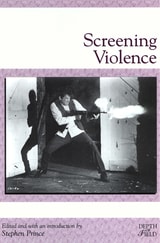
Screening Violence
Prince, Stephen
Rutgers University Press, 2000
Graphic cinematic violence is a magnet for controversy. From passionate defenses to outraged protests, theories abound concerning this defining feature of modern film: Is it art or exploitation, dangerous or liberating?
Screening Violence provides an even-handed examination of the history, merits, and effects of cinematic “ultraviolence.” Movie reviewers, cinematographers, film scholars, psychologists, and sociologists all contribute essays exploring topics such as:
· the origins and innovations of film violence and attempts to regulate it
(from Hollywood’s Production Code to the evolution of the ratings system)
· the explosion of screen violence following the 1967 releases of Bonnie and Clyde and The Dirty Dozen, and the lasting effects of those landmark films
· the aesthetics of increasingly graphic screen violence
· the implications of our growing desensitization to murder and mayhem, from The Wild Bunch to The Terminator
Screening Violence
Prince, Stephen
Rutgers University Press, 2000
Graphic cinematic violence is a magnet for controversy. From passionate defenses to outraged protests, theories abound concerning this defining feature of modern film: Is it art or exploitation, dangerous or liberating?
Screening Violence provides an even-handed examination of the history, merits, and effects of cinematic “ultraviolence.” Movie reviewers, cinematographers, film scholars, psychologists, and sociologists all contribute essays exploring topics such as:
· the origins and innovations of film violence and attempts to regulate it
(from Hollywood’s Production Code to the evolution of the ratings system)
· the explosion of screen violence following the 1967 releases of Bonnie and Clyde and The Dirty Dozen, and the lasting effects of those landmark films
· the aesthetics of increasingly graphic screen violence
· the implications of our growing desensitization to murder and mayhem, from The Wild Bunch to The Terminator
Screening the Beats
Media Culture and the Beat SensibilityDavid Sterritt
Southern Illinois University Press, 2004
Film critic David Sterritt’s Screening the Beats: Media Culture and the Beat Sensibility showcases the social and aesthetic viewpoints of lynchpin Beat writers Jack Kerouac, William S. Burroughs, and Allen Ginsberg, juxtaposing their artistry with 1950s culture and achieving what Kerouac might have called a “bookmovie” riff. In clear prose, Sterritt captures the raw energy of the Beats and joins in their celebration of aesthetic freakishness. Tapping into the diversified spirit of the Beat Generation and its nuanced relationship with postwar American culture, Sterritt considers how the Beats variously foreground, challenge, and illuminate major issues in Hollywood and avant-garde film, critical and cultural theory, and music in the mass-media age.
Sterritt engages the creative and spiritual facets of the Beats, emulating their desire to evoke ephemeral aspects of human existence. Dealing with both high and low cultures as well as various subcultures, he highlights the complementary contributions to cultural creativity made by these authors. Screening the Beats grapples with paradoxes in Beat writing, in particular the conflict between spiritual purity and secular connectedness, which often materialized in the beatific bebop spontaneity, Zen-like transcendentalism, and plain hipster smarts that characterized the writings of Kerouac, Burroughs, and Ginsberg.
This interdisciplinary study tackles such topics as Ginsberg’s and Kerouac’s uses of racial and ethnic stereotypes prevalent in the popular movies of the 1950s era; the uses and limitations of improvisation as a creative tool in literature, jazz, and film; Kerouac’s use of cinematic metaphor to evoke Buddhist concepts; and intersections of the grotesque and carnivalesque in works as seemingly diverse as autobiographical novels by Kerouac, a radio play by Antonin Artaud, cultural theories of Gilles Deleuze and Félix Guattari, and the boisterous lunacy of Three Stooges farce. Deftly threading literary, musical, and cinematic works with a colorful array of critical theories, Screening the Beats illuminates the relationship between American culture and the imaginative forces of the Beat Generation.
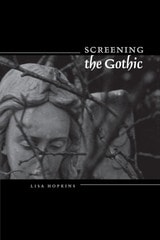
Screening the Gothic
By Lisa Hopkins
University of Texas Press, 2005
Filmmakers have long been drawn to the Gothic with its eerie settings and promise of horror lurking beneath the surface. Moreover, the Gothic allows filmmakers to hold a mirror up to their own age and reveal society's deepest fears. Franco Zeffirelli's Jane Eyre, Francis Ford Coppola's Bram Stoker's Dracula, and Kenneth Branagh's Hamlet are just a few examples of film adaptations of literary Gothic texts. In this ground-breaking study, Lisa Hopkins explores how the Gothic has been deployed in these and other contemporary films and comes to some surprising conclusions. For instance, in a brilliant chapter on films geared to children, Hopkins finds that horror resides not in the trolls, wizards, and goblins that abound in Harry Potter, but in the heart of the family.
Screening the Gothic offers a radical new way of understanding the relationship between film and the Gothic as it surveys a wide range of films, many of which have received scant critical attention. Its central claim is that, paradoxically, those texts whose affiliations with the Gothic were the clearest became the least Gothic when filmed. Thus, Hopkins surprises readers by revealing Gothic elements in films such as Sense and Sensibility and Mansfield Park, as well as exploring more obviously Gothic films like The Mummy and The Fellowship of the Ring. Written in an accessible and engaging manner, Screening the Gothic will be of interest to film lovers as well as students and scholars.
Screening the Operatic Stage
Television and BeyondChristopher Morris
University of Chicago Press, 2024
From the early days of television broadcasts to today’s live streams, opera houses have embraced technology as a way to reach new audiences. But how do these new forms of remediated opera extend, amplify, or undermine production values, and what does the audience gain or lose in the process? In Screening the Operatic Stage, Christopher Morris critically examines the cultural implications of opera’s engagement with screen media.
Foregrounding the potential for a playful exchange and self-awareness between stage and screen, Morris uses the conceptual tools of media theory to understand the historical and contemporary screen cultures that have transmitted the opera house into living rooms, onto desktops and portable devices, and across networks of movie theaters. If these screen cultures reveal how inherently “technological” opera is as a medium, they also highlight a deep suspicion among opera producers and audiences toward the intervention of media technology. Ultimately, Screening the Operatic Stage shows how the conventions of televisual representation employed in opera have masked the mediating effects of technology in the name of fidelity to live performance.

Screening the Transition
Spanish Cinema and the Challenges of DemocracyFederico Bonaddio
Intellect Books, 2026
A timely study of Spanish cinema during the country’s transition to democracy, including how popular and auteur films grappled with the authoritarian past.
Screening the Transition examines how Spanish cinema produced in the years immediately following Francisco Franco’s death articulated—through its narratives and characterizations—the social and cultural challenges encountered during the country’s transition to democracy. These films reflect emergent post-dictatorship realities, including increased openness toward sexuality and nudity; the erosion of traditional family structures; persistent attachments to, and reckonings with, the Francoist past; the development of political plurality and expanded freedom of expression; and various forms of marginalization, whether economic or based on gender and sexuality. In doing so, the analysis conceptualizes Spain’s transition not solely in political terms, as is commonly the case, but as a profoundly personal and affective process.
Federico Bonaddio demonstrates the limitations of cinema in this period, which at times revealed an inability to transcend deep-seated prejudices and forms of reticence cultivated over nearly four decades of authoritarian rule. These limitations surface in the prurient treatment of female nudity and sexual violence; in the deployment of comedy to belittle or trivialize democratic change; in a preference for metaphor and allegory over direct political engagement; and in the restricted investigative ambitions of historical dramas.
Considering both popular and auteur cinema, the book is primarily concerned with how filmmaking registered the difficulties of consigning the dictatorship fully to the past, despite the so-called pact of forgetting promoted by political elites to facilitate national reconciliation.
Screenwriting
Horton, Andrew
Rutgers University Press, 2014
Reaching back to the early days of Hollywood, when moonlighting novelists, playwrights, and journalists were first hired to write scenarios and photoplays, Screenwriting illuminates the profound ways that screenwriters have contributed to the films we love. This book explores the social, political, and economic implications of the changing craft of American screenwriting from the silent screen through the classical Hollywood years, the rise of independent cinema, and on to the contemporary global multi-media marketplace. From The Birth of a Nation (1915), Gone With the Wind (1939), and Gentleman’s Agreement (1947) to Chinatown (1974), American Beauty (1999), and Lost in Translation (2003), each project began as writers with pen and ink, typewriters, or computers captured the hopes and dreams, the nightmares and concerns of the periods in which they were writing.
As the contributors take us behind the silver screen to chronicle the history of screenwriting, they spotlight a range of key screenplays that changed the game in Hollywood and beyond. With original essays from both distinguished film scholars and accomplished screenwriters, Screenwriting is sure to fascinate anyone with an interest in Hollywood, from movie buffs to industry professionals.
Screenwriting for Neurotics
A Beginner's Guide to Writing a Feature-Length Screenplay from Start to FinishScott Winfield Sublett
University of Iowa Press, 2014
Rather than throwing you into the writing process headfirst, Sublett guides you through the various decisions you need to make—about plot, character, structure, conflict—in the order you need to make them. He explains in straightforward terms the terminology and jargon, the theory and industry standards, and dispels common myths about screenwriting that can discourage or hold back a beginning writer.
Balancing theory and practice and offering valuable and insightful examples from recognizable and well-known classic and contemporary films, ranging from Casablanca to A Christmas Story to Clerks, Sublett provides the new writer with the necessary tools to successfully write a feature-length screenplay and offers a roadmap of where to go next. With an emphasis on helping a writer not just to begin, but also to finish a script, Screenwriting for Neurotics is the screenwriting book to help you actually write one.
Scripted Affects, Branded Selves
Television, Subjectivity, and Capitalism in 1990s JapanGabriella Lukács
Duke University Press, 2010
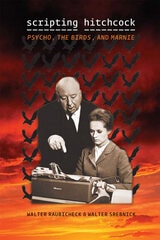
Scripting Hitchcock
Psycho, The Birds, and MarnieWalter Raubicheck and Walter Srebnick
University of Illinois Press, 2011
Hitchcock allowed his writers a great deal of creative freedom, which resulted in dynamic screenplays that expanded traditional narrative and defied earlier conventions. Critically examining the question of authorship in film, Raubicheck and Srebnick argue that Hitchcock did establish visual and narrative priorities for his writers, but his role in the writing process was that of an editor. While the writers and their contributions have generally been underappreciated, this study reveals that all the dialogue and much of the narrative structure of the films were the work of screenwriters Jay Presson Allen, Joseph Stefano, and Evan Hunter. The writers also shaped American cultural themes into material specifically for actors such as Janet Leigh, Tippi Hedren, and Tony Perkins. This volume gives due credit to those writers who gave narrative form to Hitchcock's filmic vision.
Scripting Survival
Yiddish Theater in Cold War RomaniaCorina L. Petrescu
Rutgers University Press, 2027
In Cold War Romania, the Jewish State Theater in Bucharest (TES) was a site for high-stakes cultural negotiations. While the state used the theater to consolidate Yiddish stagecraft into a tool for state propaganda, a more nuanced story unfolded behind the scenes: TES was also a vehicle for preserving and advancing Yiddish culture within the confines of a socialist state. This book focuses on five commemorative volumes published between 1956 and 1976 by editors who were Shoah survivors—individuals uniquely torn between their passion for Yiddish culture and the communist ideal. By analyzing these volumes, the study reveals the hidden ideological tensions and cultural ambitions embedded within the theater’s operations and provides a rare window into the struggle to maintain a distinctive Jewish identity while navigating the rigid political realities of the time. It is a compelling look at the editorial strategies used to safeguard a vanishing heritage.
Scriptwork
A Director's Approach to New Play DevelopmentDavid Kahn and Donna Breed. Foreword by Lanford Wilson
Southern Illinois University Press, 1995
Despite the popular myth that plays arrive at the theater fully formed and ready for production, the truth is that for centuries, most scripts have been developed through a collaborative process in rehearsal and in concert with other theater artists. David Kahn and Donna Breed provide the first codified approach to this time-honored method of play development, with a flexible methodology that takes into account differing environments and various stages of formation.
Directors can use this unique guidebook for new play development from the beginning to the end of the process. Kahn and Breed explore ways of choosing new projects, talk about where to find new scripts, and explore the legal aspects of script development. They present a detailed system for theatrical analysis of the new script and show how to continue exploration and development of the script within the laboratory of the theater. Most importantly, they delineate the parameters of the relationship between the director and the playwright, offering proven methods to help the playwright and help facilitate the healthy development of the script.
Breed and Kahn offer suggestions on casting, incorporating rewrites, and script handling plus how and when to use audience response and how to decide what step to take next. They also include extended interviews with developmental directors, dramaturgs, and playwrights, who give credence to the new script development process.
In short, Kahn and Breed demystify a common, though often convoluted, theater process, providing a unique codification of ways to work on new plays.
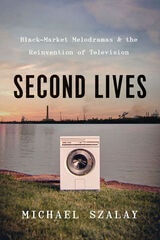
Second Lives
Black-Market Melodramas and the Reinvention of TelevisionMichael Szalay
University of Chicago Press, 2023
In Second Lives, Michael Szalay defines a new television genre that has driven the breathtaking ascent of TV as a cultural force over the last two decades: the black-market melodrama. Exemplified by the likes of The Sopranos and Breaking Bad, the genre moves between a family’s everyday life and its secret second life, which may involve illegal business, espionage, or even an alternate reality. Second lives allow characters (and audiences) to escape what feels like endless work into a revanchist vision of the white middle class family. But there is for this grimly resigned genre no meaningful way back to the Fordist family wage for which it longs. In fact, Szalay argues, black-market melodramas lament the very economic transformations that untethered TV viewing from the daily rhythms of the nine-to-five job and led, ultimately, to prestige TV.
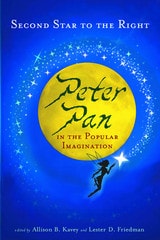
Second Star to the Right
Peter Pan in the Popular ImaginationFriedman, Lester D
Rutgers University Press, 2008
Since 2003 the characters from this story have had a highly visible presence in nearly every genre of popular culture: two major films, a literary sequel to the original adventures, a graphic novel featuring a grown-up Wendy Darling, and an Argentinean novel about a children's book writer inspired by J. M. Barrie. Simultaneously, Barrie surfaced as the subject of two major biographies and a feature film. The engaging essays in Second Star to the Right approach Pan from literary, dramatic, film, television, and sociological perspectives and, in the process, analyze his emergence and preservation in the cultural imagination.
Secondhand China
Spain, the East, and the Politics of TranslationCarles Prado-Fonts
Northwestern University Press, 2022
Uncovering an eclectic and surprising archive, Prado-Fonts draws on diverse cultural artifacts from popular literature, journalism, and early cinema to offer a rich account of how China was seen across the West between 1880 and 1930. Enrique Gaspar, Luis de Oteyza, Vicente Blasco Ibáñez, and lesser-known authors writing in Spanish and Catalan put themselves in dialogue with Leo Tolstoy, John Dewey, W. Somerset Maugham, Bertrand Russell, Pearl Buck, and André Malraux, as well as stereotypical figures from popular culture like Fu Manchu and Charlie Chan. Throughout, Prado-Fonts exposes translation as a technology of cultural hegemony and China as an appealing object for representation. A timely contribution to our understanding of how we create and consume knowledge about the world, Secondhand China is essential reading for scholars and students of Orientalism, postcolonial studies, translation studies, comparative literature, and cultural studies.
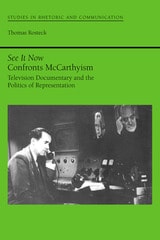
See It Now Confronts McCarthyism
Television Documentary and the Politics of RepresentationThomas Rosteck
University of Alabama Press, 1994
See It Now, Edward R. Murrow and Fred W. Friendly’s early documentary television program, has come to be recognized as the exemplar of nonfiction television. One important element in its reputation is a series of four telecasts directly dealing with abuses of McCarthyism and the Red Scare. This book is about those programs, but it is also about the early 1950s in America, the troubled era in which these programs were broadcast. This book is, then, both cultural history and media analysis.
As media analysis, this book seeks to understand the symbolic form, the aesthetic construction, and the subsequent experience that these four programs offered viewers. This sort of critical analysis is a development of recent vintage in American media studies. Whereas a decade ago television and the media were studied largely through an empiricist social scientific paradigm, now humanistic approaches to media discourses engage the interest of scholars in history, rhetoric and communication, political science, anthropology, and American studies. As case study, then, this book bridges classical humanist and contemporary mass media approaches, and as we go, I shall essay the utility of humanistic methods for the understanding and explication of mass media that is primarily visual in nature.
As cultural history, this book seeks to illuminate a unique era in the recent American past. My aim is to understand the programs as articulations of public “common sense” and as artifacts that help convey this common sense. Thus, a second theme of this book will be to locate-through the analysis of public discourse cast in the television documentary form—an American ideology: a set of “templates” that both ground the programs and reveal the cultural assumptions of the historical period.
In addition, from a slightly different historical perspective, our increased understanding of these See It Now broadcasts gives us an appreciation of the development of the television industry and the genre of television documentary. Coming at a time when few Americans had television sets, these See It Now programs coincided with an exponential increase in television ownership and popularity. As an elaborate defense of free speech for the medium, these documentaries may have helped to establish autonomy and a direction for a nascent broadcasting industry. More specifically, as the paradigm for the television documentary and as the first regularly scheduled documentary series, these See It Now programs shaped expectations and set the benchmark to which all nonfiction television, from Twentieth Century to White Paper to Sixty Minutes, has been compared. Thus, a third theme will be the implications of these seminal programs for media institutions and for the genre of television news documentary.
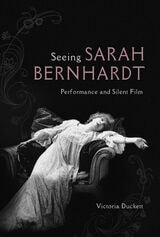
Seeing Sarah Bernhardt
Performance and Silent FilmVictoria Duckett
University of Illinois Press, 2015
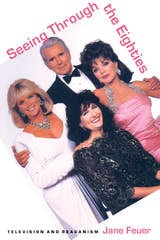
Seeing Through the Eighties
Television and ReaganismJane Feuer
Duke University Press, 1995
With a cast of characters including Michael, Hope, Elliot, Nancy, Melissa, and Gary; Alexis, Krystle, Blake, and all the other Carringtons; not to mention Maddie and David; even Crockett and Tubbs, Feuer smoothly blends close readings of well-known programs and analysis of television’s commercial apparatus with a thorough-going theoretical perspective engaged with the work of Baudrillard, Fiske, and others. Her comparative look at Yuppie TV, Prime Time Soaps, and made-for-TV-movie Trauma Dramas reveals the contradictions and tensions at work in much prime-time programming and in the frustrations of the American popular consciousness. Seeing Through the Eighties also addresses the increased commodification of both the producers and consumers of television as a result of technological innovations and the introduction of new marketing techniques. Claiming a close relationship between television and the cultures that create and view it, Jane Feuer sees the eighties through televison while seeing through television in every sense of the word.
Seeing by Electricity
The Emergence of Television, 1878-1939Doron Galili
Duke University Press, 2020
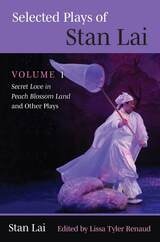
Selected Plays of Stan Lai
Volume 1: Secret Love in Peach Blossom Land and Other PlaysStan Lai, edited by Lissa Tyler Renaud
University of Michigan Press, 2021
Volume One contains:
Secret Love in Peach Blossom Land
Look Who's Crosstalking Tonight
The Island and the Other Shore
I Me She Him
Ménage à 13
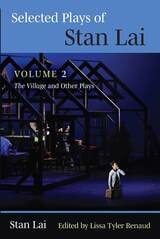
Selected Plays of Stan Lai
Volume 2: The Village and Other PlaysStan Lai, edited by Lissa Tyler Renaud
University of Michigan Press, 2021
Volume Two contains:
Millennium Teahouse
Sand on a Distant Star
Like Shadows
The Village
Writing in Water
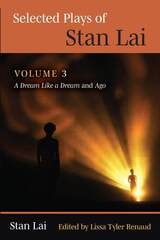
Selected Plays of Stan Lai
Volume 3: A Dream Like a Dream and AgoStan Lai, edited by Lissa Tyler Renaud
University of Michigan Press, 2021
Volume Three contains:
A Dream Like a Dream
Ago
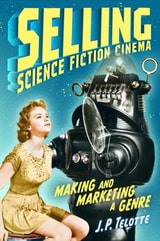
Selling Science Fiction Cinema
Making and Marketing a GenreJ. P. Telotte
University of Texas Press, 2023
How science fiction films in the 1950s were marketed and helped create the broader genre itself.
For Hollywood, the golden age of science fiction was also an age of anxiety. Amid rising competition, fluid audience habits, and increasing government regulation, studios of the 1950s struggled to make and sell the kinds of films that once were surefire winners. These conditions, the leading media scholar J. P. Telotte argues, catalyzed the incredible rise of science fiction.
Though science fiction films had existed since the earliest days of cinema, the SF genre as a whole continued to resist easy definition through the 1950s. In grappling with this developing genre, the industry began to consider new marketing approaches that viewed films as fluid texts and audiences as ever-changing. Drawing on trade reports, film reviews, pressbooks, trailers, and other archival materials, Selling Science Fiction Cinema reconstructs studio efforts to market a promising new genre and, in the process, shows how salesmanship influenced what that genre would become. Telotte uses such films as The Thing from Another World, Forbidden Planet, and The Blob, as well as the influx of Japanese monster movies, to explore the shifting ways in which the industry reframed the SF genre to market to no-longer static audience expectations. Science fiction transformed the way Hollywood does business, just as Hollywood transformed the meaning of science fiction.
Selling the Air
A Critique of the Policy of Commercial Broadcasting in the United StatesThomas Streeter
University of Chicago Press, 1996
With an impressive command of broadcast history, as well as critical and cultural studies of the media, Streeter shows that liberal marketplace principles—ideas of individuality, property, public interest, and markets—have come into contradiction with themselves. Commercial broadcasting is dependent on government privileges, and Streeter provides a searching critique of the political choices of corporate liberalism that shape our landscape of cultural property and electronic intangibles.

Selling the Silver Bullet
The Lone Ranger and Transmedia Brand LicensingBy Avi Santo
University of Texas Press, 2015
Originating as a radio series in 1933, the Lone Ranger is a cross-media star who has appeared in comic strips, comic books, adult and juvenile novels, feature films and serials, clothing, games, toys, home furnishings, and many other consumer products. In his prime, he rivaled Mickey Mouse as one of the most successfully licensed and merchandised children’s properties in the United States, while in more recent decades, the Lone Ranger has struggled to resonate with consumers, leading to efforts to rebrand the property. The Lone Ranger’s eighty-year history as a lifestyle brand thus offers a perfect case study of how the fields of licensing, merchandizing, and brand management have operated within shifting industrial and sociohistorical conditions that continue to redefine how the business of entertainment functions.
Deciphering how iconic characters gain and retain their status as cultural commodities, Selling the Silver Bullet focuses on the work done by peripheral consumer product and licensing divisions in selectively extending the characters’ reach and in cultivating investment in these characters among potential stakeholders. Tracing the Lone Ranger’s decades-long career as intellectual property allows Avi Santo to analyze the mechanisms that drive contemporary character licensing and entertainment brand management practices, while at the same time situating the licensing field’s development within particular sociohistorical and industrial contexts. He also offers a nuanced assessment of the ways that character licensing firms and consumer product divisions have responded to changing cultural and economic conditions over the past eighty years, which will alter perceptions about the creative and managerial authority these ancillary units wield.
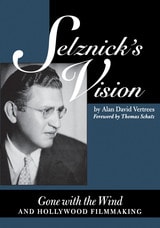
Selznick's Vision
Gone with the Wind and Hollywood FilmmakingBy Alan David Vertrees
University of Texas Press, 1997
Gone with the Wind has generated interest in every aspect of its production. Yet one crucial aspect has never been fully understood or appreciated—the vital shaping role played by executive producer David O. Selznick.
In this book, Alan David Vertrees challenges the popular image of Selznick as a megalomaniacal meddler whose hiring and firing of directors and screenwriters created a patchwork film that succeeded despite his interference. Drawing on ten years of research in the Selznick archives, and examining the screenplay's successive drafts, dramatic continuity designs and "storyboard" sketches (many of which are reproduced here), and production correspondence and memoranda, Vertrees interprets the producer's actions as manipulation, not indecision, establishing Selznick's "vision" as the guiding intelligence behind the film's success.
In his drive to create a cinematic monument, Selznick also reformed many key facets of studio filmmaking, inventing jobs such as "production designer" (inaugurated by William Cameron Menzies), which persist today. This book thus adds an important chapter to the story of classical Hollywood cinema and the making of the film that has been lauded variously as the "Sistine Chapel of movies" and the "single most beloved entertainment ever produced."
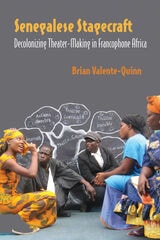
Senegalese Stagecraft
Decolonizing Theater-Making in Francophone AfricaBrian Valente-Quinn
Northwestern University Press, 2021
Through a study of the innovative work of Senegalese theater-makers from the 1930s onward, Senegalese Stagecraft explores a wide range of historical contexts and themes, including French colonial education, cultural Pan‑Africanism, West African Sufism, uses of television and mass media, and popular theater and activism. Using a multidisciplinary approach that includes field, archival, and literary methods, Valente‑Quinn offers a fresh look at performance cultures of West Africa and the Global South in a book that will interest students and scholars in African, Francophone, and performance studies.
Sensational Devotion
Evangelical Performance in Twenty-First-Century AmericaJill Stevenson
University of Michigan Press, 2015
Sensing the City through Television
Urban Identities in Fictional DramaPeter Billingham
Intellect Books, 2000

Serial Fu Manchu
The Chinese Supervillain and the Spread of Yellow Peril IdeologyRuth Mayer
Temple University Press, 2013
In the series Asian American History and Culture, edited by Sucheng Chan, David Palumbo-Liu, Michael Omi, K. Scott Wong, and Linda Trinh Võ
Serious Play
Modern Clown PerformanceLouise Peacock
Intellect Books, 2009
Slapstick comedy is the primary mode of performance for clowns, and in Serious Play, drama scholar Louise Peacock explores the evolution over the past fifty years of this unique brand of physical comedy. Though an analysis of clowning in a range of settings—theaters, circuses, hospitals, refugee camps, and churches—Peacock offers a framework for the evaluation of clowning, and she examines the therapeutic potential of the comedic performance. This is the first book to consider clowning venues and styles in light of play theory, including comparisons of traditional clown comedy and contemporary circuses like Cirque du Soleil. A distinctive study, Serious Play also provides authoritative definitions of clowns and clown performance styles that establishes a critical vocabulary for clowning performance.
Seriously Mad
Mental Distress and the Broadway MusicalAleksei Grinenko
University of Michigan Press, 2023
Theatermakers in the United States have long been drawn to madness as a source of dramatic spectacle. During the Broadway musical’s golden age in the mid-twentieth century, creative teams used the currently in-vogue psychoanalytic ideas about mental life to construct troubled characters at odds with themselves and their worlds. As the clinical and cultural profile of madness transformed over the twentieth century, musicals continued to delve into the experience of those living with mental pain, trauma, and unhappiness.
Seriously Mad offers a dynamic account of stage musicals’ engagement with historically significant theories about mental distress, illness, disability, and human variance in the United States. By exploring who is considered mad and what constitutes madness at different moments in U.S. history, Aleksei Grinenko shows how, in attempts to bring the musicals closer to highbrow sophistication, theater dramatized serious medical conditions and social problems. Among the many Broadway productions discussed are Next to Normal, A Strange Loop, Sweeney Todd, Man of La Mancha, Gypsy, Oklahoma!, and Lady in the Dark.

Sessue Hayakawa
Silent Cinema and Transnational StardomDaisuke Miyao
Duke University Press, 2007
Drawing on early-twentieth-century sources in both English and Japanese, including Japanese-language newspapers in the United States, Miyao illuminates the construction and reception of Hayakawa’s stardom as an ongoing process of cross-cultural negotiation. Hayakawa’s early work included short films about Japan that were popular with American audiences as well as spy films that played upon anxieties about Japanese nationalism. The Jesse L. Lasky production company sought to shape Hayakawa’s image by emphasizing the actor’s Japanese traits while portraying him as safely assimilated into U.S. culture. Hayakawa himself struggled to maintain his sympathetic persona while creating more complex Japanese characters that would appeal to both American and Japanese audiences. The star’s initial success with U.S. audiences created ambivalence in Japan, where some described him as traitorously Americanized and others as a positive icon of modernized Japan. This unique history of transnational silent-film stardom focuses attention on the ways that race, ethnicity, and nationality influenced the early development of the global film industry.

Settler Attachments and Asian Diasporic Film
Beenash Jafri
University of Minnesota Press, 2025
A cinematic study of Asian–Indigenous relationality
Settler Attachments and Asian Diasporic Film is an interdisciplinary examination of the stubborn attachment of Asian diasporas to settler-colonial ideals and of the decolonial possibilities Asian diasporic films imagine. Beenash Jafri uniquely addresses the complexities of Asian–Indigenous relationality through film and visual media, urging film scholars to approach their subjects with an eye to the entanglements of race, diaspora, and Indigeneity.
Highlighting how Asian diasporic attachments to settler colonialism are structural, she explores how they are manifested through melancholic yearning within the figure of the Asian cowboy in films such as Cowgirl and Wild West and through the aesthetic and representational politics of body and land in experimental films by Shani Mootoo and Vivek Shraya. While recognizing the pervasive violence of settler colonialism, Jafri maintains a hopeful outlook, showcasing how Asian diasporic filmmakers persistently work toward decolonial worldmaking. This emerging vision can be seen in the radical friendship between Ali Kazimi and Onondaga artist Jeffrey Thomas in Kazimi’s film Shooting Indians, in the queer relational survivance depicted in films such as This Place and Scarborough, and in the sensory disruptions of Jin-me Yoon’s interactive art project Untunnelling Vision.
From film and media studies to diaspora studies and critical ethnic studies, Indigenous studies to queer theory, Settler Attachments and Asian Diasporic Film provides a critical framework for engaging cinematic media to understand and imagine beyond the entrenched settler-colonial dynamics within Asian diasporic communities.
Retail e-book files for this title are screen-reader friendly with images accompanied by short alt text and/or extended descriptions.
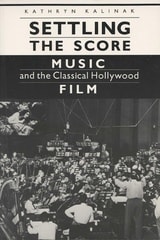
Settling the Score
Music and the Classical Hollywood FilmKathryn Kalinak
University of Wisconsin Press, 1992
Beginning with the earliest experiments in musical accompaniment carried out in the Edison Laboratories, Kathryn Kalinak uses archival material to outline the history of American music and film. Focusing on the scores of several key composers of the sound era, including Erich Wolfgang Korngold’s Captain Blood, Max Steiner’s The Informer, Bernard Herrmann’s The Magnificent Ambersons, and David Raksin’s Laura, Kalinak concludes that classical scoring conventions were designed to ensure the dominance of narrative exposition. Her analyses of contemporary work such as John Williams’ The Empire Strikes Back and Basil Poledouris’ RoboCop demonstrate how the traditions of the classical era continue to influence scoring practices today.
Seven Gothic Dramas, 1789–1825
1789-1825Jeffrey N. Cox
Ohio University Press, 1994
The Gothic drama came at a critical moment in the history of the theater, of British culture, and of European politics in the shadow of France’s revolution and the fall of Napoleon. It offered playwrights a medium to express the prevailing ideological tensions of romanticism and revolution, and also responded to a growing and changing theater audience.
In a wide-ranging introduction, Cox explores Gothic drama’s links with romanticism and its relation to other social and ideological shifts of the day. The texts are presented so as to reflect the dual life of dramatic works—on the stage and on the page. The plays are annotated and accompanied by biographic and bibliographic sketches.
Includes The Kentish Barons, by Francis North; Julia of Louvain; or, Monkish Cruelty, by J.C. Cross; The Castle Spectre, by Matthew G. Lewis; The Captive, by Matthew G. Lewis; De Monfort, by Joanna Baillie; Bertram; or, The Castle of St. Aldobrand, by C.R. Maturin; and Presumption; or, The Fate of Frankenstein, by R.B. Peake.
Sex Ed
Film, Video, and the Framework of DesireEberwein, Robert
Rutgers University Press, 1999
Eberwein starts his investigation in the silent and early sound eras with educational films used both to warn audiences about venereal disease and to provide basic contraception information. World War II movies, he states, waged their own war against venereal disease-in the armed services and at home. Newer works deal with birth control and focus in particular on AIDS.
Sex Ed also highlights the classroom. Eberwein draws connections between the earliest and most recent examples of educational films as he analyzes their ideological complexity. He concludes by examining marriage-manual films of the early 1970s and very recent videos for couples and individuals seeking instruction in sexual techniques to increase pleasure.
Sex Scene
Media and the Sexual RevolutionEric Schaefer, ed.
Duke University Press, 2014
Contributors. Joseph Lam Duong, Jeffrey Escoffier, Kevin M. Flanagan, Elena Gorfinkel, Raymond J. Haberski Jr., Joan Hawkins, Kevin Heffernan, Eithne Johnson, Arthur Knight, Elana Levine, Christie Milliken, Eric Schaefer, Jeffrey Sconce, Jacob Smith, Leigh Ann Wheeler, Linda Williams
Sex for Sale
Six Progressive-Era Brothel DramasKatie N. Johnson
University of Iowa Press, 2015
The volume includes the work of major figures including Eugene O’Neill, John Reed, Rachel Crothers, and Elizabeth Robins. Now largely forgotten and some previously unpublished, these plays were among the most celebrated and debated productions of their day. Together, their portrayals of commercialized vice, drug addiction, poverty, white slavery, and interracial desire reveal the Progressive Era’s fascination with the underworld and the theatre’s power to regulate sexuality. Additional plays, commentary, and teaching materials are available at brotheldrama.lib.miamioh.edu.
Plays included:
Ourselves (1913) by Rachel Crothers
The Web (1913) by Eugene O’Neill
My Little Sister (1913) by Elizabeth Robins
Moondown (1915) by John Reed
Cocaine (1916) by Pendleton King
A Shanghai Cinderella (renamed East is West, 1918) by Samuel Shipman and John B. Hymer
Sex on Stage
Gender and Sexuality in Post-War British TheatreAndrew Wyllie
Intellect Books, 2009
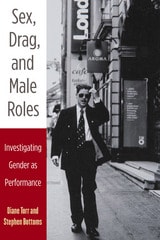
Sex, Drag, and Male Roles
Investigating Gender as PerformanceDiane Torr and Stephen Bottoms
University of Michigan Press, 2010
"Few books blend the critical and creative approaches to drag performance this provocatively and engagingly, and none provides both the historical and the personal perspectives so effectively. Torr and Bottoms fundamentally challenge many long-standing ideas about drag kings and the performance of masculinity."
---Sarah Bay-Cheng, University at Buffalo
"This book brings the reader inside an artist's creative imagination and intellect, showing us Diane Torr's work in a detailed, thoughtful, and engaging way. We discover how Torr uses different physical disciplines to explore how gender is constructed, interpreted, and expressed. Along the way---by taking us into various venues in which she performed---she evokes the lively, dynamic scene in New York in the '80s and '90s."
---Alisa Solomon, Columbia University
Why would women want to perform as men? Why is gender crossing so compelling, whether it happens onstage or in everyday life? What can drag performance teach, and what aesthetic, political, and personal questions does it raise?
Performance artist Diane Torr has been experimenting with the performance of gender for thirty years---exploring everything from feminist go-go dancing to masculine power play. One of the key pioneers of "drag king" performance, Torr has been celebrated internationally for her gender transformation workshops, in which she has taught hundreds of ordinary women how to pass as men on city streets around the world. This cultural subterfuge appeals to participants for many different reasons: personal confidence-building, sexual frisson, gender subversion, trans-curiosity, or simply the appeal of disguise and role play.
Sex, Drag, and Male Roles documents the evolution of Torr's work by blending first-person memoir and commentary from Torr with critical reflections and contextualization from leading performance critic Stephen J. Bottoms. The book includes a consideration of the long cultural history of female-to-male cross-dressing and concludes with Torr's "Do-It-Yourself" guide to becoming a "Man for a Day."
Diane Torr developed her cross-disciplinary art in the downtown New York art scene from 1976 to 2002. Now living in Scotland, Torr has earned an international reputation for her performances and gender transformation workshops (featured on HBO, BBC, and This American Life on NPR, among others). Her work is the focus of a feature film, Man for a Day.
Stephen J. Bottoms is Wole Soyinka Professor of Drama and Theatre Studies at the University of Leeds. His books include Playing Underground: A Critical History of the 1960s Off-Off-Broadway Movement and Small Acts of Repair: Performance, Ecology, and Goat Island.
Cover: Diane Torr walks the streets of London, 1995. Photo by Debbie Humphreys.
Shaded Lives
African American Women and TelevisionBeretta E Smith-Shomade
Rutgers University Press, 2002
In Shaded Lives, Beretta Smith-Shomade sets out to dissect images of the African American woman in television from the 1980s. She calls their depiction "binaristic," or split. African American women, although an essential part of television programming today, are still presented as distorted and deviant. By closely examining the television texts of African-American women in comedy, music video, television news and talk shows (Oprah Winfrey is highlighted), Smith-Shomade shows how these voices are represented, what forces may be at work in influencing these images, and what alternate ways of viewing might be available.
Smith-Shomade offers critical examples of where the sexist and racist legacy of this country collide with the cultural strength of Black women in visual and real-lived culture. As the nation's climate of heightened racial divisiveness continues to relegate the representation of Black women to depravity and display, her study is not only useful, it is critical.
Shadow of the New Deal
The Victory of Public BroadcastingJosh Shepperd
University of Illinois Press, 2023
- Winner of the 2024 BEA Book Award
- Runner-up in the History Division of the Association for Education in Journalism and Mass Communication (AEJMC)
- Runner-up for the AJHA Book of the Year (American Journalism Historians Association).
Despite uncertain beginnings, public broadcasting emerged as a noncommercial media industry that transformed American culture. Josh Shepperd looks at the people, institutions, and influences behind the media reform movement and clearinghouse the National Association of Educational Broadcasters (NAEB) in the drive to create what became the Public Broadcasting Service and National Public Radio.
Founded in 1934, the NAEB began as a disorganized collection of undersupported university broadcasters. Shepperd traces the setbacks, small victories, and trial and error experiments that took place as thousands of advocates built a media coalition premised on the belief that technology could ease social inequality through equal access to education and information. The bottom-up, decentralized network they created implemented a different economy of scale and a vision of a mass media divorced from commercial concerns. At the same time, they transformed advice, criticism, and methods adopted from other sectors into an infrastructure that supported public broadcasting in the 1960s and beyond.
Shadows, Specters, Shards
Making History in Avant-Garde FilmJeffrey Skoller
University of Minnesota Press, 2005
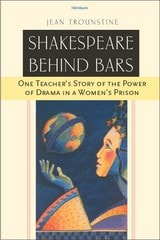
Shakespeare Behind Bars
One Teacher's Story of the Power of Drama in a Women's PrisonJean Trounstine
University of Michigan Press, 2004
Originally published in cloth in 2001, the paperback includes a new foreword that will inspire all teachers who work with students others have deemed unteachable. A new afterword updates readers on the prison art's program -- and the author herself -- since 2001.
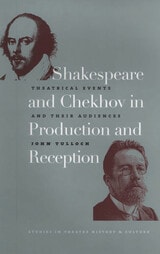
Shakespeare and Chekhov in Production and Reception
Theatrical Events and Their AudiencesTulloch, John
University of Iowa Press, 2005
With a focus on the canonical institutions of Shakespeare and Chekhov, John Tulloch brings together for the first time new concepts of “the theatrical event” with live audience analysis. Using mainstream theatre productions from across the globe that were highly successful according to both critics and audiences, this book of case studies—ethnographies of production and reception—offers a combined cultural and media studies approach to analyzing theatre history, production, and audience.
Tulloch positions these concepts and methodologies within a broader current theatrical debate between postmodernity and risk modernity. He also describes the continuing history of Shakespeare and Chekhov as a series of stories “currently and locally told” in the context of a blurring of academic genres that frames the two writers. Drawn from research conducted over nearly a decade in Australia, Britain, and the U.S., Shakespeare and Chekhov in Production and Reception will be of interest to students and scholars of theatre studies, media studies, and audience research.
Shakespeare and Contemporary Fiction
Theorizing Foundling and Lyric PlotsBarbara L. Estrin
University of Delaware Press, 2012
In the first book to use fiction as theory, Barbara L. Estrin reverses chronological direction, beginning with contemporary novels to arrive at a re-visioned Shakespeare, uncovering a telling difference in the stories that script us and that influence our political unconscious in ways that have never been explored in literary-critical interpretations. Describing the animus against foreign blood, central to the dynamic of the foundling and lyric plots that form the nexus of her study, Estrin describes how late modern writers change those plots. Reading backward through the theoretical lens of their revisions allows us to rethink the Shakespeare we thought we knew. That innovative methodology, in turn, encourages us to read forward again with different tellings, ones that challenge the mythological homogeneity of the traditional classifications and that suggest new formulaic paradigms.
With close readings of four contemporary novels and three Shakespeare plays, Estrin identifies the cultural walls that contribute to political gate-keeping as she chronicles the connection between plot variations and gender revisionism in the work of Caryl Phillips, Liz Jensen, Anne Michaels, and W.G. Sebald, as well as two film-makers (Mona Hatoum and Mieke Bal) who demonstrate an understanding that mythical repercussions prove dangerous in the twentieth and twenty-first centuries even as they suggest how the heritage shaping their work, and to which they are themselves drawn, in turn proposes an alternative Shakespeare, one who frees us to ask other questions: At the time that the nation state was beginning to coalesce, what does Shakespeare’s frequent use of the foundling plot and his significant variations portend? How does his infusion of a revised lyric dynamic in The Merchant of Venice, Othello and The Winter’s Tale change our reading of plays where the two plots coalesce as they do in the contemporary novels that shape Estrin’s late modern interpretations? All the works in this study share the underlying premise that the connection between cultural origins and political destinies is reciprocal and that it is necessary and possible to transform the constructs—in memory and imagination—that continue to shape our lives.
Published by University of Delaware Press. Distributed worldwide by Rutgers University Press.
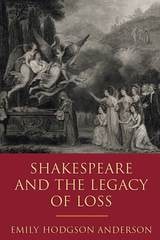
Shakespeare and the Legacy of Loss
Emily Hodgson Anderson
University of Michigan Press, 2018
How do we recapture, or hold on to, the live performances we most love, and the talented artists and performers we most revere? Shakespeare and the Legacy of Loss tells the story of how 18th-century actors, novelists, and artists, key among them David Garrick, struggled with these questions through their reenactments of Shakespearean plays. For these artists, the resurgence of Shakespeare, a playwright whose works just decades earlier had nearly been erased, represented their own chance for eternal life. Despite the ephemeral nature of performance, Garrick and company would find a way to make Shakespeare, and through him the actor, rise again.
In chapters featuring Othello, Richard III, Hamlet, The Winter’s Tale, and The Merchant of Venice, Emily Hodgson Anderson illuminates how Garrick’s performances of Shakespeare came to offer his contemporaries an alternative and even an antidote to the commemoration associated with the monument, the portrait, and the printed text. The first account to read 18th-century visual and textual references to Shakespeare alongside the performance history of his plays, this innovative study sheds new light on how we experience performance, and why we gravitate toward an art, and artists, we know will disappear.
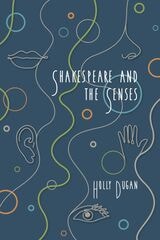
Shakespeare and the Senses
Holly E. Dugan
Arizona Center for Medieval and Renaissance Studies, 2024
Could something as seemingly natural as a smell, taste, sight, or sound be socially constructed and change over time? Shakespeare and the Senses argues that understanding the original conditions in which Shakespeare’s plays were performed allows us to explore the senses as both visceral, bodily experiences and constructed, social phenomena. As Ben Jonson famously wrote in the First Folio of 1623, Shakespeare can seem to be “not of an age, but for all time.” While this is clever marketing, Shakespeare did write his plays in a particular time and place far removed from our own. Many of his most powerful metaphors rely on sensory details—Aaron’s black hue; Cleopatra’s strange, invisible perfumes; Fluellen’s Welsh accent; Lady Macbeth’s overly scrubbed hands; Malvolio’s yellow stockings—which Elizabethan-era audiences may have understood very differently from us.
Shakespeare and the Senses draws on interdisciplinary research methods in the new field of sensory studies to expand our understanding of what Shakespeare meant to his first audiences.

Shakespeare at the Cineplex
The Kenneth Branagh EraSamuel Crowl
Ohio University Press, 2005
Samuel Crowl’s Shakespeare at the Cineplex: The Kenneth Branagh Era is the first thorough exploration of the fifteen major Shakespeare films released since the surprising success of Kenneth Branagh’s Henry V (1989). Crowl presents the rich variety of these films in the “long decade: between the fall of the Berlin Wall and the terrorist attacks on September 11, 2001.” The productions range from Hollywood-saturated films such as Franco Zeffirelli’s Hamlet and Michael Hoffman’s A Midsummer Night’s Dream to more modest, experimental offerings, such as Christine Edzard’s As You Like It. Now available in paperback, Shakespeare at the Cineplex will be welcome reading for fans, students, and scholars of Shakespeare in performance.