828 books match the query 'Research' and 68 start with s
cover of Structured Luck: Downstream Effects of the U.S. Diversity Visa Program

Structured Luck

Downstream Effects of the U.S. Diversity Visa Program

Onoso Imoagene

Russell Sage Foundation, 2024

The Diversity Immigrant Visa Program is a lottery that awards winners from underrepresented countries the chance to apply for legal permanent residence in the United States. Most lottery winners think of themselves as lucky, viewing the win as an opportunity to pursue better lives for themselves and their families. In Structured Luck, sociologist Onoso Imoagene uses immigrants’ stories to show that while the visa program benefits many recipients, the program’s design can also lead to exploitation in their countries of origin and reduced potential once they are in the United States.

Combining ethnographic observation in Africa and interviews with immigrants, their family members, and friends from Ghana and Nigeria, Imoagene demonstrates that the visa program is a process of “structured luck,” from how people hear about the lottery, who registers for it, and who participates in it to the application requirements for the visa. In Ghana and Nigeria, people often learn about the lottery through friends, colleagues, or relatives who persuade them to enter for the perceived benefits of receiving a visa: opportunities for upward mobility, permanent legal status, and the ability to bring along family members. Though anyone can enter the lottery, not everyone who wins obtains a visa. The visa application process requires proof of a high school diploma or artisan skills, a medical exam, a criminal background check, an interview with U.S. consular officers, and payment of fees.  Such requirements have led to the growth of visa entrepreneurs, who often charge exorbitant fees to steer immigrants through the process. Visa recipients who were on track to obtain university degrees at home often leave in the middle of their studies for the United States but struggle to continue their education due to high U.S. tuition costs. And though their legal status allows them to escape the demoralizing situations that face the undocumented, these immigrants lack the social support that the government sometimes provides for refugees and other migrants. Ultimately, Imoagene notes, the real winner of the visa lottery is not the immigrants themselves but the United States, which benefits from their relatively higher levels of education. Consequently, she argues, the U.S. must do more to minimize the visa program’s negative consequences.

Structured Luck illuminates the trauma, resilience, and determination of immigrants who come to the United States through the Diversity Visa Program and calls for the United States to develop policies that will better integrate them into society.
 
[more]
cover of Student Self-Support at the University of Minnesota

Student Self-Support at the University of Minnesota

James Umstattd

University of Minnesota Press, 1932

Student Self-Support at the University of Minnesota was first published in 1932. Minnesota Archive Editions uses digital technology to make long-unavailable books once again accessible, and are published unaltered from the original University of Minnesota Press editions.This volume reports the results of an investigation conducted under the University Committee on Educational Research. Dr. Umstattd found that 55 per cent of the students enrolled in the University of Minnesota were earning a part or all of their college expenses. His book is a study of the means used by students to support themselves while in college, the employment services rendered by the university, types of students earning their way, amount of money earned, relationship between students and employers, and effect of self-support on scholastic standing, college activities, health, and various other factors.
[more]
cover of Studies in Higher Education: Biennial Report of the Committee on Educational Research, University of Minnesota, 1940-42

Studies in Higher Education

Biennial Report of the Committee on Educational Research, University of Minnesota, 1940-42

Committee Committee on Educational Research

University of Minnesota Press, 1943
Studies in Higher Education was first published in 1943. Minnesota Archive Editions uses digital technology to make long-unavailable books once again accessible, and are published unaltered from the original University of Minnesota Press editions.The Biennial Report of the Committee on Educational Research, 1940-42During this period the Committee on Educational Research devoted its resources primarily to two university-wide studies: those concerned with faculty services, and with the curriculum. The teaching load investigation formed the basis for establishing a sensible teaching load and provided a comprehensive analysis of the manifold activities for which the faculty and administrative staff are responsible. The curriculum study will be of greatest value if followed by more intensive studies in particular departments or colleges, some of which are already under way.
[more]
cover of Studies in Outdoor Recreation, 3rd ed.: Search and Research for Satisfaction

Studies in Outdoor Recreation, 3rd ed.

Search and Research for Satisfaction

Robert E. Manning

Oregon State University Press, 2011

[more]
cover of Studies in Outdoor Recreation: Search and Research for Satisfaction

Studies in Outdoor Recreation

Search and Research for Satisfaction

Robert E. Manning

Oregon State University Press, 1999
[more]
cover of Studies in Outdoor Recreation: Search and Research for Satisfaction

Studies in Outdoor Recreation

Search and Research for Satisfaction

Robert E. Manning

Oregon State University Press, 2022

Since its original publication in 1986, Studies in Outdoor Recreation has been a standard text in courses on parks and outdoor recreation and serves as an invaluable reference for park and recreation managers. The first book to integrate the social science literature on outdoor recreation, it reviews studies from this broad, interdisciplinary field and synthesizes them into a body of knowledge, providing an historical perspective on outdoor recreation research and developing its practical management implications.
 
This fourth edition includes a new preface and is completely revised to reflect current research and new concerns in the field. A new chapter examines emerging issues such as sustainable transportation and the impacts of climate change.
 
An essential resource for students, scholars, and professionals, Studies in Outdoor Recreation explores the theoretical and methodological issues in outdoor recreation and describes the management implications of outdoor recreation research.

Contributors to the fourth edition include Laura Anderson, Megha Budruk, Kelly Goonan, Jeffrey Hallo, Daniel Laven, Steven Lawson, Rebecca Stanfield McCown, Ben Minteer, Peter Newman, Elizabeth Perry, Peter Pettengill, Nathan Reigner, William Valliere, Carena van Riper, and Xiao Xiao.

[more]
cover of Studies in the Metabolism of Vitamin B12

Studies in the Metabolism of Vitamin B12

Alfred Doscherholmen

University of Minnesota Press, 1965
Studies in the Metabolism of Vitamin B12 was first published in 1965.Dr. Doscherholmen has conducted extensive studies of the physiological aspects of vitamin B12 metabolism in man, and in this book he describes the investigations, reports the findings, and reviews the literature. He also reports on laboratory animal studies which contribute to a knowledge of the subject.The major investigations were performed in a clinical setting and involved the administration of doses of radiocyanocobalamin, the radioactive form of vitamin B12, to patients offlicted with various diseases and to normal subjects. In order to diagnose malabsorption of B12, the Schilling test was performed on patients having pernicious anemia, partial or total gastrectomy, histamine-fasct achlorhydria, posterolateral column disease without anemia, intestinal megaloblastic anemia, regional ileitis, sprue, secondary steatorrhea, cirrhosis of the liver, leukemia, and various types of neuritis.The author assesses the most commonly used methods of testing B12 absorption, the urinary excretion test, and reports his attempts to improve the urinary recovery of radioactivity. He describes a new technique for the measurement of B12 absorption -- the plasma absorption test -- and evaluates its clinical usefulness. He also reports on studies of the basic mechanism of the Schilling test, the organ distribution of radioactivity, and the kinetics of cyanocobalamin in man after the oral ingestion of physiologic doses of radiocyanocobalamin. Additional studies described are concerned with the B12 binding power of serum as determined through an ultrafiltration technique, the enzymatic release of B12 in the small intestine of rats, and the hepatic storage of radiocyanocobalamin. There is an extensive bibliography.
[more]
cover of Studying Diversity, Migration and Urban Multiculture: Convivial Tools for Research and Practice

Studying Diversity, Migration and Urban Multiculture

Convivial Tools for Research and Practice

Edited by Mette Louise Berg and Magdalena Nowicka

University College London, 2019

Antimigrant populism is on the rise across Europe, and diversity and multiculturalism are increasingly presented as threats to social cohesion. Yet diversity is also a mundane social reality in urban neighborhoods. With this in mind, Studying Diversity, Migration and Urban Multiculture explores how we can live together with difference. What is needed for conviviality to emerge and what role can research play? This volume demonstrates how collaboration among scholars, civil society and practitioners can help to answer these questions. 
Drawing on a range of innovative and participatory methods, each chapter examines conviviality in different cities across the United Kingdom. The contributors ask how the research process itself can be made more convivial and show how power relations between researchers, those researched, and research users can be reconfigured—in the process producing much needed new knowledge and understanding about urban diversity, multiculturalism and conviviality. Examples include embroidery workshops with diverse faith communities, arts work with child language brokers in schools, and life story and walking methods with refugees. Studying Diversity, Migration and Urban Multiculture is interdisciplinary in scope and includes contributions from sociologists, anthropologists, and social psychologists, as well as chapters by practitioners and activists. It provides fresh perspectives on methodological debates in qualitative social research, and will be of interest to scholars, students, practitioners, activists, and policymakers who work on migration, urban diversity, conviviality and conflict, and integration and cohesion.
 
[more]
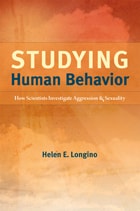
cover of Studying Human Behavior: How Scientists Investigate Aggression and Sexuality

Studying Human Behavior

How Scientists Investigate Aggression and Sexuality

Helen E. Longino

University of Chicago Press, 2013

In Studying Human Behavior, Helen E. Longino enters into the complexities of human behavioral research, a domain still dominated by the age-old debate of “nature versus nurture.” Rather than supporting one side or another or attempting to replace that dichotomy with a different framework for understanding behavior, Longino focuses on how scientists study it, specifically sexual behavior and aggression, and asks what can be known about human behavior through empirical investigation.
 
She dissects five approaches to the study of behavior—quantitative behavioral genetics, molecular behavior genetics, developmental psychology, neurophysiology and anatomy, and social/environmental methods—highlighting the underlying assumptions of these disciplines, as well as the different questions and mechanisms each addresses. She also analyzes efforts to integrate different approaches. Longino concludes that there is no single “correct” approach but that each contributes to our overall understanding of human behavior. In addition, Longino reflects on the reception and transmission of this behavioral research in scientific, social, clinical, and political spheres. A highly significant and innovative study that bears on crucial scientific questions, Studying Human Behavior will be essential reading not only for scientists and philosophers but also for science journalists and anyone interested in the engrossing challenges of understanding human behavior.
[more]
cover of Styles of Scientific Thought: The German Genetics Community, 1900-1933

Styles of Scientific Thought

The German Genetics Community, 1900-1933

Jonathan Harwood

University of Chicago Press, 1992

In this detailed historical and sociological study of the development of scientific ideas, Jonathan Harwood argues that there is no such thing as a unitary scientific method driven by an internal logic. Rather, there are national styles of science that are defined by different values, norms, assumptions, research traditions, and funding patterns.

The first book-length treatment of genetics in Germany, Styles of Scientific Thought demonstrates the influence of culture on science by comparing the American with the German scientific traditions. Harwood examines the structure of academic and research institutions, the educational backgrounds of geneticists, and cultural traditions, among many factors, to explain why the American approach was much more narrowly focussed than the German.

This tremendously rich book fills a gap between histories of the physical sciences in the Weimar Republic and other works on the humanities and the arts during the intellectually innovative 1920s, and it will interest European historians, as well as sociologists and philosophers of science.
[more]
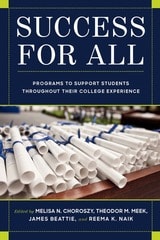
cover of Success for All: Programs to Support Students Throughout Their College Experience

Success for All

Programs to Support Students Throughout Their College Experience

Melisa N. Choroszy

University of Nevada Press, 2019

While the most important measure of success for many degree-seeking students is the timely attainment of a Bachelor’s degree, there remains a host of other indicators of student success that vary by student population and students’ personal goals. Many of these smaller successes lead to the ultimate goal of graduation and are significant triumphs throughout the journey through higher education.

Success for All is a strategic guide for administrators and educators that offers methods for advising students through the myriad of challenges they face. Every bit of success contributes to the accomplishment of a larger goal, and this book highlights success at every level. It provides a specific roadmap to the research, services, and programs at the University of Nevada, Reno and Truckee Meadows Community College that support student success in undergraduate and graduate programs regardless of a student’s social, emotional, or prior academic experiences. Contributors discuss how to make students feel welcome in their social and educational environments and how to directly assist them with the timely completion of their degree. Administrators and educators demonstrate how these programs help make a positive contribution to the students and the institutions they serve while implementing practical solutions to increase graduation rates.
 
[more]
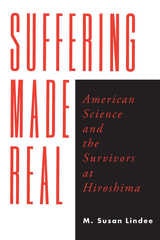
cover of Suffering Made Real: American Science and the Survivors at Hiroshima

Suffering Made Real

American Science and the Survivors at Hiroshima

M. Susan Lindee

University of Chicago Press, 1994

The atomic bombs dropped on Hiroshima and Nagasaki in August of 1945 unleashed a force as mysterious as it was deadly—radioactivity. In 1946, the United States government created the Atomic Bomb Casualty Commission (ABCC) to serve as a permanent agency in Japan with the official mission of studying the medical effects of radiation on the survivors. The next ten years saw the ABCC's most intensive research on the genetic effects of radiation, and up until 1974 the ABCC scientists published papers on the effects of radiation on aging, life span, fertility, and disease.

Suffering Made Real is the first comprehensive history of the ABCC's research on how radiation affected the survivors of the atomic bomb. Arguing that Cold War politics and cultural values fundamentally shaped the work of the ABCC, M. Susan Lindee tells the compelling story of a project that raised disturbing questions about the ethical implications of using human subjects in scientific research.
How did the politics of the emerging Cold War affect the scientists' biomedical research and findings? How did the ABCC document and publicly present the effects of radiation? Why did the ABCC refuse to provide medical treatment to the survivors? Through a detailed examination of ABCC policies, archival materials, the minutes of committee meetings, newspaper accounts, and interviews with ABCC scientists, Lindee explores how political and cultural interests were reflected in the day-to-day operations of this controversial research program.

Set against a period of conflicting views of nuclear weapons and nuclear power, Suffering Made Real follows the course of a politically charged research program and reveals in detail how politics and cultural values can shape the conduct, results, and uses of science.
[more]
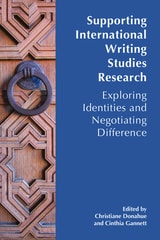
cover of Supporting International Writing Studies Research: Cultivating Capacity through International Exchanges

Supporting International Writing Studies Research

Cultivating Capacity through International Exchanges

Tiane Donahue

University Press of Colorado, 2025

Shedding light on international and transnational writing studies, this edited collection addresses the complexities of research and writing across global contexts. Based on the observation that knowledge-making transcends national borders and is contingent upon the interplay of local cultures and practices, the contributors to the volume contradict the notion that knowledge circulates freely in a “flat world.” Presenting diverse perspectives on writing research, they showcase the need for mutual understanding across borders and reflect the rich tapestry of writing research traditions worldwide, emphasizing interconnectedness and collective insight rather than hierarchical models of knowledge dissemination. Supporting International Writing Studies Research encourages readers and researchers to engage with and respect scholarship beyond English-language contexts, advocates for collaborative global dialogues in writing education, and underscores the importance of continued efforts to incorporate diverse scholarly voices and methodologies in the evolving landscape of writing studies.
[more]
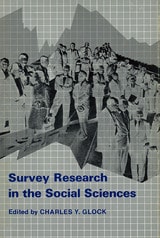
cover of Survey Research in the Social Sciences

Survey Research in the Social Sciences

Charles Y. Glock

Russell Sage Foundation, 1967
Survey research was for a long time thought of primarily as a sociological tool. It is relatively recently that this research method has been adopted by other social sciences and related professional disciplines. The amount and quality of its use, however, vary considerably from field to field. This volume describes the elementary logic of survey design and analysis and provides, for each discipline, an evaluation of how survey research has been used and conceivably may be used to deal with the central problems of each field.
[more]
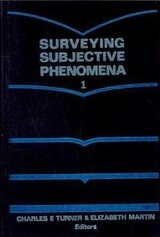
cover of Surveying Subjective Phenomena

Surveying Subjective Phenomena

Charles Turner

Russell Sage Foundation, 1984
In January 1980 a panel of distinguished social scientists and statisticians assembled at the National Academy of Sciences to begin a thorough review of the uses, reliability, and validity of surveys purporting to measure such subjective phenomena as attitudes, opinions, beliefs, and preferences. This review was prompted not only by the widespread use of survey results in both academic and non-academic settings, but also by a proliferation of apparent discrepancies in allegedly equivalent measurements and by growing public concern over the value of such measurements. This two-volume report of the panel's findings is certain to become one of the standard works in the field of survey measurement. Volume I summarizes the state of the art of surveying subjective phenomena, evaluates contemporary measurement programs, examines the uses and abuses of such surveys, and candidly assesses the problems affecting them. The panel also offers strategies for improving the quality and usefulness of subjective survey data. In volume II, individual panel members and other experts explore in greater depth particular theoretical and empirical topics relevant to the panel's conclusions. For social scientists and policymakers who conduct, analyze, and rely on surveys of the national state of mind, this comprehensive and current review will be an invaluable resource.
[more]
cover of Surveying Subjective Phenomena

Surveying Subjective Phenomena

Charles Turner

Russell Sage Foundation, 1984
In January 1980 a panel of distinguished social scientists and statisticians assembled at the National Academy of Sciences to begin a thorough review of the uses, reliability, and validity of surveys purporting to measure such subjective phenomena as attitudes, opinions, beliefs, and preferences. This review was prompted not only by the widespread use of survey results in both academic and non-academic settings, but also by a proliferation of apparent discrepancies in allegedly equivalent measurements and by growing public concern over the value of such measurements. This two-volume report of the panel's findings is certain to become one of the standard works in the field of survey measurement. Volume I summarizes the state of the art of surveying subjective phenomena, evaluates contemporary measurement programs, examines the uses and abuses of such surveys, and candidly assesses the problems affecting them. The panel also offers strategies for improving the quality and usefulness of subjective survey data. In volume II, individual panel members and other experts explore in greater depth particular theoretical and empirical topics relevant to the panel's conclusions. For social scientists and policymakers who conduct, analyze, and rely on surveys of the national state of mind, this comprehensive and current review will be an invaluable resource.
[more]
cover of Surveying Subjective Phenomena

Surveying Subjective Phenomena

Charles Turner

Russell Sage Foundation, 1984
In January 1980 a panel of distinguished social scientists and statisticians assembled at the National Academy of Sciences to begin a thorough review of the uses, reliability, and validity of surveys purporting to measure such subjective phenomena as attitudes, opinions, beliefs, and preferences. This review was prompted not only by the widespread use of survey results in both academic and non-academic settings, but also by a proliferation of apparent discrepancies in allegedly equivalent measurements and by growing public concern over the value of such measurements. This two-volume report of the panel's findings is certain to become one of the standard works in the field of survey measurement. Volume I summarizes the state of the art of surveying subjective phenomena, evaluates contemporary measurement programs, examines the uses and abuses of such surveys, and candidly assesses the problems affecting them. The panel also offers strategies for improving the quality and usefulness of subjective survey data. In volume II, individual panel members and other experts explore in greater depth particular theoretical and empirical topics relevant to the panel's conclusions. For social scientists and policymakers who conduct, analyze, and rely on surveys of the national state of mind, this comprehensive and current review will be an invaluable resource.
[more]
cover of Synthesizing Hope: Matter, Knowledge, and Place in South African Drug Discovery

Synthesizing Hope

Matter, Knowledge, and Place in South African Drug Discovery

Anne Pollock

University of Chicago Press, 2019

Synthesizing Hope opens up the material and social world of pharmaceuticals by focusing on an unexpected place: iThemba Pharmaceuticals. Founded in 2009 with a name taken from the Zulu word for hope, the small South African startup with an elite international scientific board was tasked with drug discovery for tuberculosis, HIV, and malaria. Anne Pollock uses this company as an entry point for exploring how the location of scientific knowledge production matters, not only for the raw materials, manufacture, licensing, and distribution of pharmaceuticals but also for the making of basic scientific knowledge.

Consideration of this case exposes the limitations of global health frameworks that implicitly posit rich countries as the only sites of knowledge production. Analysis of iThemba identifies the problems inherent in global north/south divides at the same time as it highlights what is at stake in who makes knowledge and where. It also provides a concrete example for consideration of the contexts and practices of postcolonial science, its constraints, and its promise.

Synthesizing Hope explores the many legacies that create conditions of possibility for South African drug discovery, especially the specific form of settler colonialism characterized by apartheid and resource extraction. Paying attention to the infrastructures and laboratory processes of drug discovery underscores the materiality of pharmaceuticals from the perspective of their makers, and tracing the intellectual and material infrastructures of South African drug discovery contributes new insights about larger social, political, and economic orders.
[more]