Results by title
3064 books match the query 'Social conditions' and 211 start with s
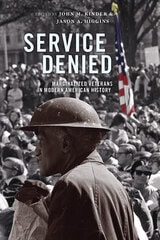
Service Denied
Marginalized Veterans in Modern American HistoryEdited by John M. Kinder and Jason A. Higgins
University of Massachusetts Press, 2022
Wartime military service is held up as a marker of civic duty and patriotism, yet the rewards of veteran status have never been equally distributed. Certain groups of military veterans—women, people of color, LGBTQ people, and former service members with stigmatizing conditions, “bad paper” discharges, or criminal records—have been left out of official histories, excised from national consciousness, and denied state recognition and military benefits.
Chronicling the untold stories of marginalized veterans in the twentieth and twenty-first centuries, Service Denied uncovers the generational divides, cultural stigmas, and discriminatory policies that affected veterans during and after their military service. Together, the chapters in this collection recast veterans beyond the archetype, inspiring an innovative model for veterans studies that encourages an intersectional and interdisciplinary analysis of veterans history. In addition to contributions from the volume editors, this collection features scholarship by Barbara Gannon, Robert Jefferson, Evan P. Sullivan, Steven Rosales, Heather Marie Stur, Juan Coronado, Kara Dixon Vuic, John Worsencroft, and David Kieran.
Settlement Ecology
The Social and Spatial Organization of Kofyar AgricultureGlenn Davis Stone
University of Arizona Press, 1996
Settler City Limits
Indigenous Resurgence and Colonial Violence in the Urban Prairie WestHeather Dorries
Michigan State University Press, 2019

Sex Offenders, Stigma, and Social Control
Rickard, Diana
Rutgers University Press, 2016

Sex Tourism in Bahia
Ambiguous EntanglementsErica Lorraine Williams
University of Illinois Press, 2013
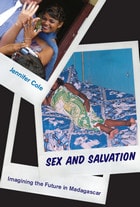
Sex and Salvation
Imagining the Future in MadagascarJennifer Cole
University of Chicago Press, 2010
Sex and Salvation chronicles the coming of age of a generation of women in Tamatave in the years that followed Madagascar’s economic liberalization. Eager to forge a viable future amid poverty and rising consumerism, many young women have entered the sexual economy in hope of finding a European husband. Just as many Westerners believe that young people break with the past as they enter adulthood, Malagasy citizens fear that these women have severed the connection to their history and culture.
Jennifer Cole’s elegant analysis shows how this notion of generational change is both wrong and consequential. It obscures the ways young people draw on long-standing ideas of gender and sexuality, it ignores how urbanites relate to their rural counterparts, and it neglects the relationship between these husband-seeking women and their elders who join Pentecostal churches. And yet, as talk about the women circulates through the city’s neighborhoods, bars, Internet cafes, and churches, it teaches others new ways of being.
Cole’s sophisticated depiction of how a generation’s coming of age contributes to social change eschews a narrow focus on crisis. Instead, she reveals how fantasies of rupture and conceptions of the changing life course shape the everyday ways that people create the future.

Sex, Power, and Slavery
Gwyn Campbell
Ohio University Press, 2014
Sexual exploitation was and is a critical feature of enslavement. Across many different societies, slaves were considered to own neither their bodies nor their children, even if many struggled to resist. At the same time, paradoxes abound: for example, in some societies to bear the children of a master was a potential route to manumission for some women. Sex, Power, and Slavery is the first history of slavery and bondage to take sexuality seriously.
Twenty-six authors from diverse scholarly backgrounds look at the vexed, traumatic intersections of the histories of slavery and of sexuality. They argue that such intersections mattered profoundly and, indeed, that slavery cannot be understood without adequate attention to sexuality. Sex, Power, and Slavery brings into conversation historians of the slave trade, art historians, and scholars of childhood and contemporary sex trafficking. The book merges work on the Atlantic world and the Indian Ocean world and enables rich comparisons and parallels between these diverse areas.
Contributors: David Brion Davis, Martin Klein, Richard Hellie, Abdul Sheriff, Griet Vankeerberghen, E. Ann McDougall, Matthew S. Hopper, Marie Rodet, George La Rue, Ulrike Schmieder, Tara Iniss, Mariana Candido, James Francis Warren, Johanna Ransmeier, Roseline Uyanga with Marie-Luise Ermisch, Francesca Ann Louise Mitchell, Shigeru Sato, Gabeba Baderoon, Charmaine Nelson, Ana Lucia Araujo, Brian Lewis, Ronaldo Vainfas, Salah Trabelsi, Joost Coté, Sandra Evers, and Subho Basu
Sex, Sickness, and Slavery
Illness in the Antebellum SouthMarli F. Weiner with Mazie Hough
University of Illinois Press, 2014
Sexuality and the Rise of China
The Post-1990s Gay Generation in Hong Kong, Taiwan, and Mainland ChinaTravis S. K. Kong
Duke University Press, 2023
Shade-Grown Slavery
The Lives of Slaves on Coffee Plantations in CubaWilliam C. Van Norman
Vanderbilt University Press, 2013
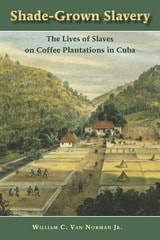
In this broad, interdisciplinary study, William Van Norman describes how each type of plantation and the amount of manual labor it required directly influenced the nature of slave life in that community. Slaves on coffee plantations lived in a unique context in comparison to that of their fellow slaves on sugar plantations, one that gave them greater flexibility in cultural and artistic creativity. To gain a deeper understanding of plantation slavery in Cuba, Van Norman explores what life and labor was like for coffee slaves and how it was different from what sugar slaves experienced. Shade-Grown Slavery reconstructs their world and in turn deconstructs the picture we now have of Cuba in the late eighteenth and early nineteenth centuries.
Ultimately, Shade-Grown Slavery reveals the lives of enslaved Africans on Cuban coffee plantations and shows how they were able to maintain and transform their cultural traditions in spite of slavery.
Shades of White
White Kids and Racial Identities in High SchoolPamela Perry
Duke University Press, 2002
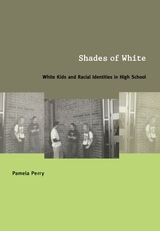
Through ethnographic research and in-depth interviews of students in two demographically distinct U.S. high schools—one suburban and predominantly white; the other urban, multiracial, and minority white—Perry shares students’ candor about race and self-identification. By examining the meanings students attached (or didn’t attach) to their social lives and everyday cultural practices, including their taste in music and clothes, she shows that the ways white students defined white identity were not only markedly different between the two schools but were considerably diverse and ambiguous within them as well. Challenging reductionist notions of whiteness and white racism, this study suggests how we might go “beyond whiteness” to new directions in antiracist activism and school reform.
Shades of White is emblematic of an emerging second wave of whiteness studies that focuses on the racial identity of whites. It will appeal to scholars and students of anthropology, sociology, and cultural studies, as well as to those involved with high school education and antiracist activities.

Shadow Bodies
Black Women, Ideology, Representation, and PoliticsJordan-Zachery, Julia S.
Rutgers University Press, 2018
Grounded in Black feminist thought, Julia S. Jordan-Zachery looks at the functioning of scripts ascribed to Black women’s bodies in the framing of HIV/AIDS, domestic abuse, and mental illness and how such functioning renders some bodies invisible in Black politics in general and Black women’s politics specifically.

Shadows in the Valley
A Cultural History of Illness, Death, and Loss in New England, 1840-1916Alan Swedlund
University of Massachusetts Press, 2010
How does the experience of sickness, death, and loss change over time? We know that the incidence and virulence of particular diseases have varied from one period to another, as has their medical treatment. But what was it like for the individuals who suffered and died from those illnesses, for the health practitioners and institutions that attended to them, and for the families who buried and mourned them?
In Shadows in the Valley, Alan Swedlund addresses these questions by closely examining the history of mortality in several small communities in western Massachusetts from the mid-nineteenth to the early twentieth century—from just before the acceptance of the germ theory of disease through the early days of public health reform in the United States. This was a time when most Americans lived in rural areas or small towns rather than large cities. It was also a time when a wide range of healing practices was available to the American public, and when the modern form of Western medicine was striving for dominance and authority. As Swedlund shows, this juncture of competing practices and ideologies provides a rich opportunity for exploring the rise of modern medicine and its impact on the everyday lives of ordinary Americans.
To indicate how individuals in different stages of their lives were exposed to varying assaults on their health, the book is structured in a way that superimposes what the author calls “life-course time” onto chronological time. Thus the early chapters look at issues of infancy and childhood in the 1840s and 1850s and the last chapters at the problems of old age after 1900. The reader becomes familiar with specific individuals and families as they cope with the recurrent loss of children, struggle to understand the causes of new contagions, and seek to find meaning in untimely death. By using a broad time frame and a narrow geographical lens, Swedlund is able to engage with both the particularities and generalities of evolving medical knowledge and changing practice, and to highlight the differences in personal as well as collective responses to illness and loss.

Shake Terribly the Earth
Stories from an Appalachian FamilySarah Beth Childers
Ohio University Press, 2013
In a thoughtful, humorous voice born of Appalachian storytelling, Childers brings to life in these essays events that affected the entire region: large families that squeezed into tiny apartments during the Great Depression, a girl who stepped into a rowboat from a second-story window during Huntington’s 1937 flood, brothers who were whisked away to World War II and Vietnam, and a young man who returned home from the South Pacific and worked his life away as a railroad engineer.
Childers uses these family tales to make sense of her personal journey and find the joy and clarity that often emerge after the earth shakes terribly beneath us.
Shamanism and Vulnerability on the North and South American Great Plains
Kathleen Bolling Lowrey
University Press of Colorado, 2020
The book reveals the various ways in which anthropologists, historians, folklorists, and other writers have often misrepresented indigenous shamanism and revitalization movements by unconsciously projecting ideologies and assumptions derived from modern ‘contract societies’ onto ethnographic and historical realities. Lowrey also provides alternative ways of understanding indigenous American communities and their long histories of interethnic relations with expanding colonial and national states in the Americas. A creative historical and ethnographical reevaluation of the last few decades of scholarship on shamanism, disability, and dependence, Shamanism and Vulnerability on the North and South American Great Plains will be of interest to scholars of North and South American anthropology, indigenous history, American studies, and feminism.
Shamanism, Colonialism, and the Wild Man
A Study in Terror and HealingMichael Taussig
University of Chicago Press, 1987
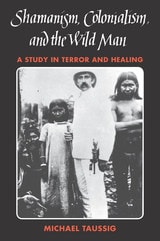
"This extraordinary book . . . will encourage ever more critical and creative explorations."—Fernando Coronil, [I]American Journal of Sociology[/I]
"Taussig has brought a formidable collection of data from arcane literary, journalistic, and biographical sources to bear on . . . questions of evil, torture, and politically institutionalized hatred and terror. His intent is laudable, and much of the book is brilliant, both in its discovery of how particular people perpetrated evil and others interpreted it."—Stehen G. Bunker, Social Science Quarterly
Shameful Victory
The Los Angeles Dodgers, the Red Scare, and the Hidden History of Chavez RavineJohn H. M. Laslett
University of Arizona Press, 2015
John H. M. Laslett offers a new interpretation of the Chavez Ravine tragedy, paying special attention to the early history of the barrio, the reform of Los Angeles's destructive urban renewal policies, and the influence of the evictions on the collective memory of the Mexican American community.
In addition to examining the political decisions made by power brokers at city hall, Shameful Victory argues that the tragedy exerted a much greater influence on the history of the Los Angeles civil rights movement than has hitherto been appreciated. The author also sheds fresh light on how the community grew, on the experience of individual home owners who were evicted from the barrio, and on the influence that the event had on the development of recent Chicano/a popular music, drama, and literature.
Shanghai Rising
State Power and Local Transformations in a Global MegacityXiangming Chen
University of Minnesota Press, 2009
Analyzing a Chinese city’s dazzling rise to global megacity status
Until around 1990, Shanghai was China’s premier but sluggish industrial center. Now at the beginning of the twenty-first century, the joint impact of global forces and state power has turned Shanghai into a dynamic megacity. Shanghai’s remarkable growth in economy, infrastructure, and global presence has prompted questions about the Shanghai “miracle.” This collection places the city’s unprecedented rise in a rare comparative examination of U.S. cities, as well as with Asian megacities Singapore and Hong Kong, providing a nuanced account of how Shanghai’s politics, economy, society, and space have been transformed by macro- and micro-level forces.
Contributors: Stephen W. K. Chiu, Chinese U of Hong Kong; K. C. Ho, National U of Singapore; John D. Kasarda, U of North Carolina; Hanlong Lu, Shanghai Academy of Social Sciences; Tai-lok Lui, Chinese U of Hong Kong; Ann R. Markusen, U of Minnesota; Anthony M. Orum, U of Illinois, Chicago; Yuan Ren, Fudan U Shanghai; Saskia Sassen, Columbia U; Jiaming Sun, Texas A&M U, Commerce; Fulong Wu, Cardiff U; Pingkang Yu, George Washington U; Tingwei Zhang, U of Illinois, Chicago; Zhenhua Zhou, Development Research Center, Shanghai Municipal Government.
Shaping Tradition
Women's Roles in Ceremonial Rituals of the AgwaguneDavid Uru Iyam
University of Wisconsin Press, 2021
Using this community as a case study, David Uru Iyam asserts that these women are not stereotypically submissive, oppressed, or passive. Agwagune women participate in male ceremonies by pretending to be unaware of them, concealing their authority under a veneer of secrecy. Instead of focusing on obvious male political power, Iyam highlights the overlooked domestic and public contributions of women that uphold—and change—entire social systems.
Shaping the Discourse on Space
Charity and Its Wards in Nineteenth-Century San Juan, Puerto RicoBy Teresita Martínez-Vergne
University of Texas Press, 1999
As an inchoate middle class emerged in Puerto Rico in the early nineteenth century, its members sought to control not only public space, but also the people, activities, and even attitudes that filled it. Their instruments were the San Juan town council and the Casa de Beneficencia, a state-run charitable establishment charged with responsibility for the poor.
In this book, Teresita Martínez-Vergne explores how municipal officials and the Casa de Beneficencia shaped the discourse on public and private space and thereby marginalized the worthy poor and vagrants, "liberated" Africans, indigent and unruly women, and destitute children. Drawing on extensive and innovative archival research, she shows that the men who comprised the San Juan ayuntamiento and the board of charity regulated the public discourse on topics such as education, religious orthodoxy, hygiene, and family life, thereby establishing norms for "correct" social behavior and chastising the "deviant" lifestyles of the working poor.
This research clarifies the ways in which San Juan's middle class defined itself in the midst of rapid social and economic change. It also offers new insights into notions of citizenship and the process of nation-building in the Caribbean.
Shaping the Motherhood of Indigenous Mexico
Vania Smith-Oka
Vanderbilt University Press, 2013
The cash transfer program is Oportunidades, which enrolls more than a fifth of Mexico's population. It expects mothers to become involved in their children's lives at three nodes--health, nutrition, and education. If women do not comply with the standards of modern motherhood, they are dropped from the program and lose the bi-monthly cash payments. Smith-Oka explores the everyday implementation of the program and its unintended consequences.
The mothers are often berated by clinicians for having too many children (Smith-Oka provides background on the history of eugenics and population control in Mexico) and for other examples of their "backward" ways. An entire chapter focuses on the humor indigenous women use to cope with disrespectful comments. Ironically, this form of resistance allows the women to accept the situation that controls their behavior.

Sharing the Land, Sharing a Future
The Legacy of the Royal Commission on Aboriginal PeoplesKatherine Graham
University of Manitoba Press, 2021
Shattered
Fragments of a Black LifeMatthieu Chapman
West Virginia University Press, 2023
From a distance, Matthieu Chapman’s life and accomplishments serve as an example of racial progress in America: the first in his family to go to college, he earns two master’s degrees and a doctorate and then becomes a professor of theater. Despite his personal and academic success, however, the specter of antiblackness continues to haunt his every moment and interaction.
Told through fragments, facets, shards, slivers, splinters, and absences, Shattered places Chapman’s own story in dialogue with US history and structural analysis of race to relay the experience of being very alive in a demonstrably antiblack society—laying bare the impact of the American way on black bodies, black psyches, and black lives. From the Church of Jesus Christ of Latter-day Saints to the offices of higher education, from a Loyal White Knights flyer on his windshield to a play with black students written by a black playwright, Chapman’s life story embodies the resistance that occurs, the shattering, collapsing, and reconfiguring of being that happens in the collisions between conceptions of blackness. Shattered is a heartrending and thought-provoking challenge to narratives of racial progress and postracial America—an important reminder that systemic antiblack racism affects every black person regardless of what they achieve in spite of it.
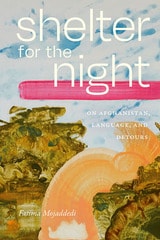
Shelter for the Night
On Afghanistan, Language, and DetoursFatima Mojaddedi
Duke University Press, 2026
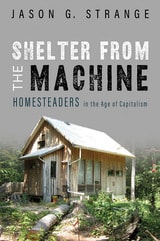
Shelter from the Machine
Homesteaders in the Age of CapitalismJason G. Strange
University of Illinois Press, 2020
Jason Strange shows where homesteaders fit, and don't fit, within contemporary America. Blending history with personal stories, Strange visits pig roasts and bohemian work parties to find people engaged in a lifestyle that offers challenge and fulfillment for those in search of virtues like self-employment, frugality, contact with nature, and escape from the mainstream. He also lays bare the vast differences in education and opportunity that leave some homesteaders dispossessed while charting the tensions that arise when people seek refuge from the ills of modern society—only to find themselves indelibly marked by the system they dreamed of escaping.
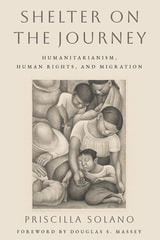
Shelter on the Journey
Humanitarianism, Human Rights, and MigrationPriscilla Solano
Temple University Press, 2024
Solano, who volunteered at shelters in Mexico, chronicles the activity in three of the nearly 100 shelters along a unique humanitarian trail that many Central Americans take to reach the United States. She outlines the constraints faced by these sites and their potential to create social transformation and considers how and why migration security is currently framed and managed as both a criminal and humanitarian issue.
Shelter on the Journey explores the politics of the shelters, their social world, and the dynamics of charity and solidarity, as well as the need for humanitarian assistance and advocacy for dignified and free transit migration.
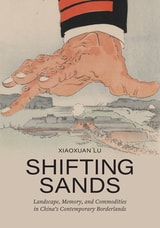
Shifting Sands
Landscape, Memory, and Commodities in China's Contemporary BorderlandsXiaoxuan Lu
University of Texas Press, 2023
How China’s borderlands transformed politically and culturally throughout the twentieth and twenty-first centuries.
China’s land borders, shared with fourteen other nations, are the world’s longest. Like all borders, they are not just lines on a map but also spaces whose histories and futures are defined by their frontier status. An ambitious appraisal of China’s borderlands, Shifting Sands addresses the full scope and importance of these regions, illustrating their transformation from imperial backwaters to hotbeds of resource exploitation and human development in the age of neoliberal globalization.
Xiaoxuan Lu brings to bear an original combination of archival research, fieldwork, cartography, and landscape analysis, broadening our understanding of the political economy and cultural changes in China’s borderlands in the twentieth and twenty-first centuries. While conventional wisdom looks to the era of Deng Xiaoping for China’s “opening,” Lu shows the integration of China’s borderlands into national and international networks from Sun Yat-sen onward. Yet, while the state has left a firm imprint on the borderlands, they were hardly created by China alone. As the Chinese case demonstrates, all borderlands are transnational, their physical and socioeconomic landscapes shaped by multidirectional flows of materials, ideas, and people.
Shipwrecked Identities
Navigating Race on Nicaragua's Mosquito CoastPineda, Baron
Rutgers University Press, 2006
Global identity politics rest heavily on notions of ethnicity and authenticity, especially in contexts where indigenous identity becomes a basis for claims of social and economic justice. In contemporary Latin America there is a resurgence of indigenous claims for cultural and political autonomy and for the benefits of economic development. Yet these identities have often been taken for granted.
In this historical ethnography, Baron Pineda traces the history of the port town of Bilwi, now known officially as Puerto Cabezas, on the Atlantic coast of Nicaragua to explore the development, transformation, and function of racial categories in this region. From the English colonial period, through the Sandinista conflict of the 1980s, to the aftermath of the Contra War, Pineda shows how powerful outsiders, as well as Nicaraguans, have made efforts to influence notions about African and Black identity among the Miskito Indians, Afro-Nicaraguan Creoles, and Mestizos in the region. In the process, he provides insight into the causes and meaning of social movements and political turmoil. Shipwrecked Identities also includes important critical analysis of the role of anthropologists and other North American scholars in the Contra-Sandinista conflict, as well as the ways these scholars have defined ethnic identities in Latin America.
As the indigenous people of the Mosquito Coast continue to negotiate the effects of a long history of contested ethnic and racial identity, this book takes an important step in questioning the origins, legitimacy, and consequences of such claims.
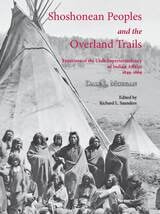
Shoshonean Peoples and the Overland Trail
Frontiers of the Utah Superintendency of Indian Affairs, 1849–1869Richard Saunders
Utah State University Press, 2007
This compilation of Dale Morgan’s historical work on Indians in the Intermountain West focuses primarily on the Shoshone who lived near the Oregon and California trails. Three connected works by Morgan are included: First is his classic article on the history of the Utah Superintendency of Indian Affairs. This is followed by an important set of government reports and correspondence from the National Archives concerning the Eastern Shoshone and their leader Washakie. Morgan heavily annotated these for serial publication in the Annals of Wyoming. He also wrote a previously unpublished history of early relations among the Western Shoshone, emigrants, and the government along the California Trail. Morgan biographer Richard L. Saunders introduced, edited, and further annotated this collection. His introduction includes an intellectual biography of Morgan that focuses on the place of the anthologized pieces in Morgan’s corpus. Gregory E. Smoak, a leading historian of the Shoshone, contributed an ethnohistorical essay as additional context for Morgan’s work.

Showdown in Desire
The Black Panthers Take a Stand in New OrleansOrissa Arend
University of Arkansas Press, 2009
Showroom City
Real Estate and Resistance in the Furniture Capital of the WorldJohn Joe Schlichtman
University of Minnesota Press, 2022
A unique and engaging account of local urban decision-making within the globalizing world
High Point, North Carolina, is known as the “Furniture Capital of the World.” Once a manufacturing stronghold, most of its furniture factories have closed over the past forty years, with production shipped off to low-wage countries. Yet as manufacturing left, the city tightened its hold on a biannual global exposition that serves as the world’s furniture fashion runway. At the High Point Market, visitors from more than one hundred nations traverse twelve million square feet of meticulous design. Downtown buildings—once courthouses, movie theaters, post offices, and gas stations—are now chic showroom spaces, even as many sit empty between each exposition.
In Showroom City, John Joe Schlichtman applies an ethnographic lens to the global exposition’s relationship with High Point after it defeated rival Chicago in the 1960s and established itself as the world’s dominant furniture center. In recent decades, following trends in global finance, private equity firms were increasingly behind downtown High Point’s real estate transactions, coordinated by buyers far removed from the region. Then, in one massive transaction in 2011, a firm funded by Bain Capital purchased every major showroom building, and the majority of downtown real estate was under one owner.
Showroom City is a story of exclusionary growth and unchecked development, of a city flailing to fill the void left by its dwindling factories. But beyond that Schlichtman engages the general lessons behind both High Point’s deindustrialization and its stunning reinvention as a furniture fashion, merchandising, and design node. With great nuance, he delves deeply to reveal how power operates locally and how citizens may affirm, exploit, influence, and resist the takeover of their community.
Side Affects
On Being Trans and Feeling BadHil Malatino
University of Minnesota Press, 2022
How the “bad feelings” of trans experience inform trans survival and flourishing
Some days—or weeks, or months, or even years—being trans feels bad. Yet as Hil Malatino points out, there is little space for trans people to think through, let alone speak of, these bad feelings. Negative emotions are suspect because they unsettle narratives of acceptance or reinforce virulently phobic framings of trans as inauthentic and threatening.
In Side Affects, Malatino opens a new conversation about trans experience that acknowledges the reality of feeling fatigue, envy, burnout, numbness, and rage amid the ongoing onslaught of casual and structural transphobia in order to map the intricate emotional terrain of trans survival. Trans structures of feeling are frequently coded as negative on both sides of transition. Before transition, narratives are framed in terms of childhood trauma and being in the “wrong body.” Posttransition, trans individuals—especially trans people of color—are subject to unrelenting transantagonism. Yet trans individuals are discouraged from displaying or admitting to despondency or despair.
By moving these unloved feelings to the center of trans experience, Side Affects proposes an affective trans commons that exists outside political debates about inclusion. Acknowledging such powerful and elided feelings as anger and exhaustion, Malatino contends, is critical to motivating justice-oriented advocacy and organizing—and recalibrating new possibilities for survival and well-being.

Sideways Developments
Queer and Trans Aesthetics of Global Hong KongKai Hang Cheang
University of Michigan Press, 2026
In this moment of multiple crises, Sideways Developments offers a timely hermeneutic and theory of solidarity and sustainability. The book tracks how sideways aesthetics have evolved from a feature of LGBTQ+ plots, performance, and nonlinear approaches to space-time to a form of togetherness that links postcolonial Hong Kong with struggles worldwide. Using what Cheang terms intersectional formalism as an analytical tool, the book provides a multilayered examination of the alternative pathways exemplified by queer and trans resilience and regeneration.

Signifying God
Social Relation and Symbolic Act in the York Corpus Christi PlaysSarah Beckwith
University of Chicago Press, 2001
Introducing a radical new understanding of these plays as "sacramental theater," Beckwith shows how organizing the plays served as a political mechanism for regulating labor, and how theater and sacrament combined in them to do important theological work. She argues, for instance, that the theology of Corpus Christi in the resurrection plays can only be understood as a theatrical exploration of eucharistic absence and presence. Beckwith frames her study with discussions of twentieth-century manifestations of sacramental theater in Barry Unsworth's novel Morality Play and Denys Arcand's film Jesus of Montreal, and the connections between contemporary revivals of the York Corpus Christi plays and England's heritage culture.
Signs and Voices
Deaf Culture, Identity, Language, and ArtsKristin A. Lindgren
Gallaudet University Press, 2008
Cochlear implants, mainstreaming, genetic engineering, and other ethical dilemmas confronting deaf people mandated a new, wide-ranging examination of these issues, fulfilled by Signs and Voices: Deaf Culture, Identity, Language, and Arts. This collection, carefully chosen from the 2004 Signs and Voices Conference, the Presidential Forum on American Sign Language at the Modern Language Association Convention, and other sources, addresses all of the factors now changing the cultural landscape for deaf people. To ensure quality and breadth of knowledge, editors Kristin A. Lingren, Doreen DeLuca, and Donna Jo Napoli selected the work of renowned scholars and performers Shannon Allen, H-Dirksen L. Bauman, Adrian Blue, Brenda Jo Brueggemann, Teresa Blankmeyer Burke, Peter Cook, David P. Corina, Michael Davidson, Kristen Harmon, Tom Humphries, Sotaro Kita, Heather Knapp, Robert G. Lee, Irene W. Leigh, Kenny Lerner, Carole Neidle, Peter Novak, AslI Özyürek, David M. Perlmutter, Anne Senghas, and Ronnie Wilbur.
Signs and Voices is divided into three sections—Culture and Identity, Language and Literacy, and American Sign Language in the Arts—each of which focuses on a particular set of theoretical and practical concerns. Also, the included DVD presents many of the performances from the Arts section. Taken together, these essays and DVD point to new directions in a broad range of fields, including cognitive science, deaf studies, disability studies, education, linguistics, literary criticism, philosophy, and psychology. This extraordinary showcase of innovative and rigorous cross-disciplinary study will prove invaluable to everyone interested in the current state of the Deaf community.
Silenced Resistance
Women, Dictatorships, and Genderwashing in Western Sahara and Equatorial GuineaJoanna Allan
University of Wisconsin Press, 2021
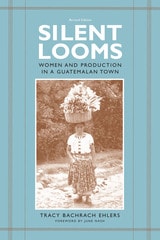
Silent Looms
Women and Production in a Guatemalan TownBy Tracy Bachrach Ehlers
University of Texas Press, 2000
Based on new fieldwork in 1997, Tracy Bachrach Ehlers has updated her classic study of the effects of economic development on the women weavers of San Pedro Sacatepéquez. Revisiting many of the women she interviewed in the 1970s and 1980s and revising her earlier hopeful assessment of women's entrepreneurial opportunities, Ehlers convincingly demonstrates that development and commercial growth in the region have benefited men at the expense of women.
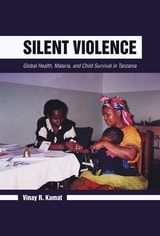
Silent Violence
Global Health, Malaria, and Child Survival in TanzaniaVinay R. Kamat
University of Arizona Press, 2013
Malaria control, according to Kamat, has become increasingly medicalized, a trend that overemphasizes biomedical and pharmaceutical interventions while neglecting the social, political, and economic conditions he maintains are central to Africa’s malaria problem. Kamat offers recent findings on global health governance, neoliberal economic and health policies, and their impact on local communities.
Seeking to link wider social, economic, and political forces to local experiences of sickness and suffering, Kamat analyzes the lived experiences and practices of people most seriously affected by malaria—infants and children. The persistence of childhood malaria is a form of structural violence, he contends, and the resultant social suffering in poor communities is closely tied to social inequalities.
Silent Violence illustrates the evolving nature of local responses to the global discourse on malaria control. It advocates for the close study of disease treatment in poor communities as an integral component of global health funding. This ethnography combines a decade of fieldwork with critical review and a rare anthropological perspective on the limitations of the bureaucratic, technological, institutional, medical, and political practices that currently determine malaria interventions in Africa.
Silicon Valley Imperialism
Techno Fantasies and Frictions in Postsocialist TimesErin McElroy
Duke University Press, 2024
Silver “Thieves," Tin Barons, and Conquistadors
Small-Scale Mineral Production in Southern BoliviaMary Van Buren
University of Arizona Press, 2024
The methods of historian Bertell Ollman, particularly a dialectical approach and “doing history backwards,” are used to examine small-scale mineral production in Porco, Bolivia. The research is based on nine seasons of archaeological fieldwork and historical research, with a particular focus on labor and technology. Van Buren argues that artisanal mineral production must be understood in relation to large-scale mining rather than as a traditional practice and that the Bolivian case is a culturally specific instantiation of a broader economic phenomenon that began under colonial regimes.

Simple Story Of A Soldier
Life And Service in the 2d Mississippi InfantrySamuel W. Hankins
University of Alabama Press, 2004
This fast-paced memoir was written in 1905 by 61-year-old Samuel W. Hankins while he was living in the Soldiers Home in Gulfport, Mississippi. It vividly details his years as a Confederate rifleman from the spring of 1861, when at a mere sixteen years of age he volunteered for the 2d Mississippi Infantry, through the end of the war in 1865, when he was just twenty years old and maimed for life.
The 2d Mississippi was part of the Army of Northern Virginia and as such saw action at Bull Run/Manassas, Seven Pines and the Peninsular Campaign, and Gettysburg. Besides being hospitalized with measles, suffering severely frostbitten feet, and being wounded by a minié ball at Railroad Cut, Hankins was captured by Federal forces and sent to a prisoner of war camp on David’s Island, New York. Later, he was transferred to a South Carolina hospital, returned home on furlough, joined a cavalry unit that fought at Atlanta. He was stationed in Selma, Alabama, when the war ended.
The strength of Hankins’s text lies in his straightforward narrative style virtually free of Lost Cause sentiment. Both Union and Confederate veterans could relate to his stories because so many of them had faced similar challenges during the war. Full of valuable information on a common soldier’s experience, the memoir still conjures the sights, sounds, and smells of warfare.

Sinking of the Princess Sophia
Taking the North Down with HerKen Coates and Bill Morrison
University of Alaska Press, 1991
On October 23, 1918, a storm rose and the Canadian Pacific steamer Princess Sophia ran aground on Vanderbilt Reef, northwest of Juneau, Alaska. Tragically, there were no survivors. The 353 aboard represented a significant cross-section of the population of the Yukon and Alaska, and their loss was a heavy blow to a society that, with the end of the gold rush, was already in decline. This book tells the dramatic stories of many of the passengers, how they had gone to the north, what they did there, and why they were leaving that fall, and sheds light on a little-known aspect of Alaska's history.
Sista, Speak!
Black Women Kinfolk Talk about Language and LiteracyBy Sonja L. Lanehart
University of Texas Press, 2002
2003 — Honorable Mention, Myers Outstanding Book Award – The Gustavus Myers Center for the Study of Bigotry and Human Rights in North America
The demand of white, affluent society that all Americans should speak, read, and write "proper" English causes many people who are not white and/or middle class to attempt to "talk in a way that feel peculiar to [their] mind," as a character in Alice Walker's The Color Purple puts it. In this book, Sonja Lanehart explores how this valorization of "proper" English has affected the language, literacy, educational achievements, and self-image of five African American women—her grandmother, mother, aunt, sister, and herself.
Through interviews and written statements by each woman, Lanehart draws out the life stories of these women and their attitudes toward and use of language. Making comparisons and contrasts among them, she shows how, even within a single family, differences in age, educational opportunities, and social circumstances can lead to widely different abilities and comfort in using language to navigate daily life. Her research also adds a new dimension to our understanding of African American English, which has been little studied in relation to women.
Sisters in Spirit
Christianity, Affect, and Community Building in East Africa, 1860–1970Andreana C. Prichard
Michigan State University Press, 2017
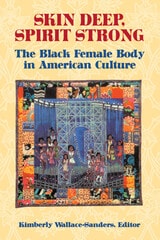
Skin Deep, Spirit Strong
The Black Female Body in American CultureKimberly Wallace-Sanders, Editor
University of Michigan Press, 2002
The collection blends original and classic essays to reveal the interconnections among art, literature, public policy, the history of medicine, and theories about sexuality with regard to bodies that are both black and female. Contributors include Rachel Adams, Elizabeth Alexander, Lisa Collins, Bridgette Davis, Lisa E.Farrington, Anne Fausto-Sterling, Beverly Guy-Sheftall, Evelynn Hammonds, Terri Kapsalis, Jennifer L. Morgan, Siobhan B. Somerville, Kimberly Wallace-Sanders, Carla Williams, and Doris Witt.
Skin Deep, Spirit Strong: The Black Female Body in American Culture will appeal to both the academic reader attempting to integrate race into discussion about the female body and to the general reader curious about the history of black female representation.
Kimberly Wallace-Sanders is Assistant Professor, Graduate Institute of Liberal Arts and Institute of Women's Studies, Emory University.

Skin for Skin
Death and Life for Inuit and InnuGerald M. Sider
Duke University Press, 2014
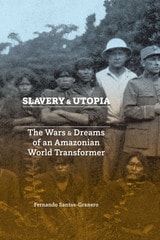
Slavery and Utopia
The Wars and Dreams of an Amazonian World TransformerBy Fernando Santos-Granero,
University of Texas Press, 2018
In the first half of the twentieth century, a charismatic Peruvian Amazonian indigenous chief, José Carlos Amaringo Chico, played a key role in leading his people, the Ashaninka, through the chaos generated by the collapse of the rubber economy in 1910 and the subsequent pressures of colonists, missionaries, and government officials to assimilate them into the national society. Slavery and Utopia reconstructs the life and political trajectory of this leader whom the people called Tasorentsi, the name the Ashaninka give to the world-transforming gods and divine emissaries that come to this earth to aid the Ashaninka in times of crisis.
Fernando Santos-Granero follows Tasorentsi’s transformations as he evolved from being a debt-peon and quasi-slave to being a slave raider; inspirer of an Ashaninka movement against white-mestizo rubber extractors and slave traffickers; paramount chief of a multiethnic, anti-colonial, and anti-slavery uprising; and enthusiastic preacher of an indigenized version of Seventh-Day Adventist doctrine, whose world-transforming message and personal influence extended well beyond Peru’s frontiers. Drawing on an immense body of original materials ranging from archival documents and oral histories to musical recordings and visual works, Santos-Granero presents an in-depth analysis of chief Tasorentsi’s political discourse and actions. He demonstrates that, despite Tasorentsi’s constant self-reinventions, the chief never forsook his millenarian beliefs, anti-slavery discourse, or efforts to liberate his people from white-mestizo oppression. Slavery and Utopia thus convincingly refutes those who claim that the Ashaninka proclivity to messianism is an anthropological invention.
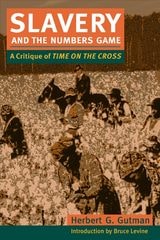
Slavery and the Numbers Game
A CRITIQUE OF TIME ON THE CROSSHerbert G. Gutman
University of Illinois Press, 1975
This detailed analysis of slavery in the antebellum South was written in 1975 in response to the prior year's publication of Robert Fogel and Stanley Engerman's controversial Time on the Cross, which argued that slavery was an efficient and dynamic engine for the southern economy and that its success was due largely to the willing cooperation of the slaves themselves.
Noted labor historian Herbert G. Gutman was unconvinced, even outraged, by Fogel and Engerman's arguments. In this book he offers a systematic dissection of Time on the Cross, drawing on a wealth of data to contest that book's most fundamental assertions. A benchmark work of historical inquiry, Gutman's critique sheds light on a range of crucial aspects of slavery and its economic effectiveness.
Gutman emphasizes the slaves' responses to their treatment at the hands of slaveowners. He shows that slaves labored, not because they shared values and goals with their masters, but because of the omnipresent threat of 'negative incentives,' primarily physical violence.
In his introduction to this new edition, Bruce Levine provides a historical analysis of the debate over Time on the Cross. Levine reminds us of the continuing influence of the latter book, demonstrated by Robert W. Fogel's 1993 Nobel Prize in Economic Sciences, and hence the importance and timeliness of Gutman's critique.
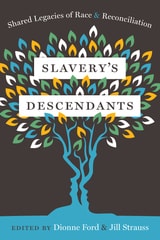
Slavery's Descendants
Shared Legacies of Race and ReconciliationJill Strauss
Rutgers University Press, 2019
Slavery’s Descendants brings together contributors from a variety of racial backgrounds, all members or associates of a national racial reconciliation organization called Coming to the Table, to tell their stories of dealing with America’s racial past through their experiences and their family histories. Some are descendants of slaveholders, some are descendants of the enslaved, and many are descendants of both slaveholders and slaves. What they all have in common is a commitment toward collective introspection, and a willingness to think critically about how the nation’s histories of oppression continue to ripple into the present, affecting us all.
The stories in Slavery’s Descendants deal with harrowing topics—rape, lynching, cruelty, shame—but they also describe acts of generosity, gratitude, and love. Together, they help us confront the legacy of slavery to reclaim a more complete picture of U.S. history, one cousin at a time.
Funding for the production of this book was provided by Furthermore, a program of the J. M. Kaplan Fund (https://www.furthermore.org).
Slavery
A Problem in American Institutional and Intellectual LifeStanley M. Elkins
University of Chicago Press, 1987