Results by title
18293 books match the query 'United States' and 1182 start with s

Stephen King's America
Jonathan P. Davis
University of Wisconsin Press, 1994
Stephen King's America aims to heighten awareness of the numerous American issues that resonate throughout King's fiction, issues that bear universal application to the evolution of the human condition.
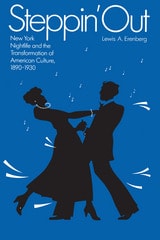
Steppin' Out
New York Nightlife and the Transformation of American CultureLewis A. Erenberg
University of Chicago Press, 1984
Stepping Away
Returning to the Faculty After Senior Academic LeadershipLisa Jasinski
Rutgers University Press, 2023
Stepping Into Zion
Hatzaad Harishon, Black Jews, and the Remaking of Jewish IdentityJanice W. Fernheimer
University of Alabama Press, 2014
Considers the question “Who is a Jew?”— a critical rhetorical issue with far-reaching consequences for Jews and non-Jews alike
Hatzaad Harishon ("The First Step") was a New York-based, multiracial Jewish organization that worked to increase recognition and legitimacy for Black Jews in the sixties and seventies. In Stepping into Zion, Janice W. Fernheimer examines the history and archives of Hatzaad Harishon to illuminate the shifting definitions and borders of Jewish identity, which have critical relevance to Jews of all traditions as well as to non-Jews.
Fernheimer focuses on a period when Jewish identity was in flux and deeply influenced by the Civil Rights and Black Power movements. In 1964, white and Black Jews formed Hatzaad Harishon to foster interaction and unity between Black and white Jewish communities. They raised the question of who or what constitutes Jewishness or Jewish identity, and in searching for an answer succeeded—both historically and rhetorically—in gaining increased recognition for Black Jews. Fernheimer traces how, despite deep disagreement over definitions, members of Hatzaad Harishon were able to create common ground in a process she terms "interruptive invention": an incremental model for rhetorical success that allows different groups to begin and continue important but difficult discussions when they share little common ground or make unequal claims to institutional and discursive power, or when the nature of common ground is precisely what is at stake. Consequently, they provide a practical way out of the seemingly incommensurable stalemate incompatible worldviews present.
Through insightful interpretations of Hatzaad Harishon's archival materials, Fernheimer chronicles the group's successes and failures within the larger rhetorical history of conflicts that emerge when cultural identities shift or expand.
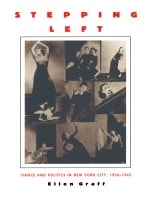
Stepping Left
Dance and Politics in New York City, 1928–1942Ellen Graff
Duke University Press, 1997
From Communist Party pageants to union hall performances to benefits for the Spanish Civil War, Graff documents the passionate involvement of American dancers in the political and social controversies that raged throughout the Depression era. Dancers formed collectives and experimented with collaborative methods of composition at the same time that they were marching in May Day parades, demonstrating for workers’ rights, and protesting the rise of fascism in Europe. Graff records the explosion of choreographic activity that accompanied this lively period—when modern dance was trying to establish legitimacy and its own audience. Stepping Left restores a missing legacy to the history of American dance, a vibrant moment that was supressed in the McCarthy era and almost lost to memory. Revisiting debates among writers and dancers about the place of political content and ethnicity in new dance forms, Stepping Left is a landmark work of dance history.
Stepping Out of the Shadows
Alabama Women, 1819–1990Mary Martha Thomas
University of Alabama Press, 1995
Discover the women who transformed Alabama's past and continue to inspire its future.
The history of Alabama has been told, but most often in terms of white men and their politics and economics. Now a more complex story of the state is emerging from the shadows of history in a new book that investigates the place of women from the perspective of race, class, and gender. Stepping Out of the Shadows, is a compilation of articles first presented at the 1990 Alabama Women’s History Forum in Birmingham, and edited by Mary Martha Thomas. The writers discuss the lives of women in antebellum Alabama and reexamine the roles of both black and white women as missionaries during Reconstruction, as reformers and suffrage leaders in the Progressive era, and as members of the state legislature in the 20th century.
Steve Lacy
ConversationsJason Weiss, ed.
Duke University Press, 2006
This volume brings together interviews that appeared in a variety of magazines between 1959 and 2004. Conducted by writers, critics, musicians, visual artists, a philosopher, and an architect, the interviews indicate the evolution of Lacy’s extraordinary career and thought. Lacy began playing the soprano saxophone at sixteen, and was soon performing with Dixieland musicians much older than he. By nineteen he was playing with the pianist Cecil Taylor, who ignited his interest in the avant-garde. He eventually became the foremost proponent of Thelonious Monk’s music. Lacy played with a broad range of musicians, including Monk and Gil Evans, and led his own bands. A voracious reader and the recipient of a MacArthur “genius” grant, Lacy was particularly known for setting to music literary texts—such as the Tao Te Ching, and the work of poets including Samuel Beckett, Robert Creeley, and Taslima Nasrin—as well as for collaborating with painters and dancers in multimedia projects.
Lacy lived in Paris from 1970 until 2002, and his music and ideas reflect a decades-long cross-pollination of cultures. Half of the interviews in this collection originally appeared in French sources and were translated specifically for this book. Jason Weiss provides a general introduction, as well as short introductions to each of the interviews and to the selection of Lacy’s own brief writings that appears at the end of the book. The volume also includes three song scores, a selected discography of Lacy’s recordings, and many photos from the personal collection of his wife and longtime collaborator, Irene Aebi.
Interviews by: Derek Bailey, Franck Bergerot, Yves Bouliane, Etienne Brunet, Philippe Carles, Brian Case, Garth W. Caylor Jr., John Corbett, Christoph Cox, Alex Dutilh, Lee Friedlander, Maria Friedlander, Isabelle Galloni d'Istria, Christian Gauffre, Raymond Gervais, Paul Gros-Claude, Alain-René Hardy, Ed Hazell, Alain Kirili, Mel Martin, Franck Médioni, Xavier Prévost, Philippe Quinsac, Ben Ratliff, Gérard Rouy, Kirk Silsbee, Roberto Terlizzi, Jason Weiss
Steve McQueen
The Great EscapeWes D. Gehring
Indiana Historical Society Press, 2009
Sticky Rice
A Politics of Intraracial DesireCynthia Wu
Temple University Press, 2018
Cynthia Wu’s provocative Sticky Rice examines representations of same-sex desires and intraracial intimacies in some of the most widely read pieces of Asian American literature. Analyzing canonical works such as John Okada’s No-No Boy, Monique Truong’s The Book of Salt, H. T. Tsiang’s And China Has Hands, and Lois-Ann Yamanaka’s Blu’s Hanging, as well as Philip Kan Gotanda’s play, Yankee Dawg You Die, Wu considers how male relationships in these texts blur the boundaries among the homosocial, the homoerotic, and the homosexual in ways that lie beyond our concepts of modern gay identity.
The “sticky rice” of Wu’s title is a term used in gay Asian American culture to describe Asian American men who desire other Asian American men. The bonds between men addressed in Sticky Rice show how the thoughts and actions founded by real-life intraracially desiring Asian-raced men can inform how we read the refusal of multiple normativities in Asian Americanist discourse. Wu lays bare the trope of male same-sex desires that grapple with how Asian America’s internal divides can be resolved in order to resist assimilation.

Still Connected
Family and Friends in America Since 1970Claude S. Fischer
Russell Sage Foundation, 2011
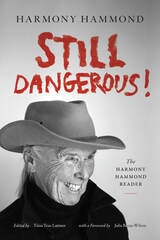
Still Dangerous!
The Harmony Hammond ReaderHarmony Hammond. Edited by Tirza True Latimer.
Duke University Press, 2026
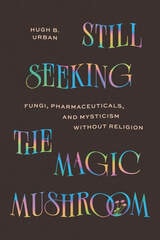
Still Seeking the Magic Mushroom
Fungi, Pharmaceuticals, and Mysticism Without ReligionHugh B. Urban
University of Chicago Press, 2026
A sweeping cultural history of our yearning for psychedelics to free us from both modern life and traditional religion.
In 1957, Life Magazine published an article called “Seeking the Magic Mushroom” about a Mexican healing ritual centered on an obscure psychedelic: Psilocybe mushrooms. Readers raced to experiment with the drug for their own spiritual, therapeutic, and recreational purposes until a psychedelic wave swept the nation. Today, though psilocybin has been transformed from a sacred fungus into a pharmaceutical product, many people still turn to the enigmatic mushroom to encounter profound spiritual experiences without the baggage of traditional religion.
In Still Seeking the Magic Mushroom, Hugh B. Urban examines the alluring promise of mysticism without religion. With psychedelics, one need not fast, flagellate, or even worship a god to encounter the transcendent; a carefully timed ingestion of psilocybin will suffice. But, Urban argues, stripping the trip from its religion came at a cost: the erasure of Indigenous culture and the eventual commercialization and scientification of the psychedelic underground. Urban shows that psychedelic mushrooms, far from the fringe or countercultural margins, have been central players in shaping American attitudes toward religion and science over the last century. He argues that our love affair with the intoxicating fungus reveals a deep frustration with a disenchanted world, desire for meaning beyond religion, yearning for nature amid ecological crisis, faith in science to save us, and the relentless power of capitalism to turn everything into commodities.
Still The Big News
Racial Oppression In AmericaBob Blauner
Temple University Press, 2001
Blauner launched his concept of internal colonialism in the turbulent 1960's, a period in which many Americans worried that racial conflicts would propel the country into another civil war. The notion that the systematic oppression of people of color in the United States resembles the situation of colonized populations in Third World countries still informs much of the academic research on race as well as public discourse. Indeed, today's critical race and whiteness studies are deeply indebted to Blauner's work on internal colonialism and the pervasiveness of white privilege. Offering a radical perspective on the United States' racial landscape, Bob Blauner forcefully argues that we ignore the persistence of oppression and our continuing failure to achieve equality at our own peril.
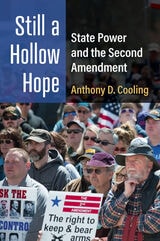
Still a Hollow Hope
State Power and the Second AmendmentAnthony D. Cooling
University of Michigan Press, 2022
The U.S. Supreme Court increasingly matters in American political life when those across the political spectrum look at the Court for relief from policies they oppose and as another venue for advancing their own policy agendas. However, the evidence is mounting, to include this book in a big way, that courts are more of a sideshow to the culture war. While court decisions, especially Supreme Court decisions, do have importance, the decisions emanating from the Court reflect social, cultural, and political change that occurred long prior to their decision ever being made.
This book tests how much political and social change has been made primarily through Gerald Rosenberg’s framework from his seminal work, The Hollow Hope: Can Courts Bring About Social Change, but it also utilizes Daniel Elazar’s Political Culture Theory to explain state level variations in political and social change. The findings indicate that while courts are not powerless institutions, reformers will not have success unless supported by the public and the elected branches, and most specifically, that preexisting state culture is a determining factor in the amount of change courts make. In short, federalism still matters.
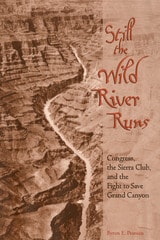
Still the Wild River Runs
Congress, the Sierra Club, and the Fight to Save Grand CanyonByron E. Pearson
University of Arizona Press, 2002
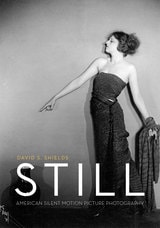
Still
American Silent Motion Picture PhotographyDavid S. Shields
University of Chicago Press, 2013
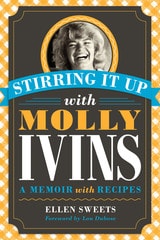
Stirring It Up with Molly Ivins
A Memoir with RecipesBy Ellen Sweets
University of Texas Press, 2011
You probably knew Molly Ivins as an unabashed civil libertarian who used her rapier wit and good ole Texas horse sense to excoriate political figures she deemed unworthy of our trust and respect. But did you also know that Molly was one helluva cook? And we're not just talking chili and chicken-fried steak, either. Molly Ivins honed her culinary skills on visits to France—often returning with perfected techniques for saumon en papillote or delectable clafouti aux cerises. Friends who had the privilege of sharing Molly's table got not only a heaping helping of her insights into the political shenanigans of the day, but also a mouth-watering meal, prepared from scratch with the finest ingredients and assembled with the same meticulous attention to detail that Molly devoted to skewering a political recalcitrant.
In Stirring It Up with Molly Ivins, her longtime friend, fellow reporter, and frequent sous-chef Ellen Sweets takes us into the kitchen with Molly and introduces us to the private woman behind the public figure. She serves up her own and others' favorite stories about Ivins as she recalls the fabulous meals they shared, complete with recipes for thirty-five of Molly's signature dishes. These stories reveal a woman who was even more fascinating and complex than the "professional Texan" she enjoyed playing in public. Friends who ate with Molly knew a cultured woman who was a fluent French speaker, voracious reader, rugged outdoors aficionado, music lover, loyal and loving friend, and surrogate mom to many of her friends' children, as well as to her super-spoiled poodle. They also came to revere the courageous woman who refused to let cancer stop her from doing what she wanted, when she wanted. This is the Molly you'll be delighted to meet in Stirring It Up with Molly Ivins.

Stolen Bases
Why American Girls Don't Play BaseballJennifer Ring
University of Illinois Press, 2013
Jennifer Ring questions the forces that try to keep girls who want to play baseball away from the game. Focusing on a history that, unfortunately, repeats itself, Ring describes the circumstances that twice stole baseball from American girls: once in the late nineteenth and early twentieth century, and again in the late twentieth century, after it was no longer legal to exclude girls who wanted to play. In the early twentieth century, Albert Goodwill Spalding--sporting goods magnate, baseball player, and promoter--declared baseball off limits for women and envisioned global baseball on a colonialist scale, using the American sport to teach men from non-white races and non-European cultures to become civilized and rational. And by the late twentieth century, baseball had become serious business for boys and men at all levels, with female players perceived as obstacles or detriments to rising male players' chances of success.
Stolen Bases also looks at the backgrounds of American softball, which was originally invented by men who wanted to keep playing baseball indoors during cold winter months but has become the consolation sport for most female players. Throughout her analysis, Ring searches for ways to rescue baseball from its arrogance and sense of exclusionary entitlement.
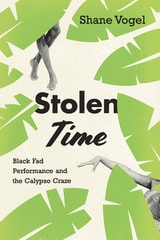
Stolen Time
Black Fad Performance and the Calypso CrazeShane Vogel
University of Chicago Press, 2018
Stone Tower
The Political Theater of Arthur MillerJeffrey D. Mason
University of Michigan Press, 2008
Stop the Presses (So I Can Get Off)
Tales from Forty Years of Sports WritingClyde Bolton
University of Alabama Press, 2005
A delightful blend of memoir, opinion, and sports from an Alabama original.
For 31 years, Clyde Bolton wrote four sports columns per week for the Birmingham News. By his estimation, this makes him the most widely read Alabamian in history. He may be right.
In Stop the Presses (So I Can Get Off) he takes the reader along on a joyride through more than three decades of Alabama sports. Unsurprisingly, tales of Bear Bryant and Shug Jordan, Roll Tide and War Eagle, dominate, but at one point or another, Clyde covered just about every type of sporting event in the state. Personalities and events from the realms of high school sports, minor league baseball, college basketball, and Nextel Cup Racing are just some of the many facets of his personal and professional life that he shares in this, his 17th book.
In relating the outlines of his life, Bolton pays homage to his mentors, including famed sports editor Benny Marshall, and shares some insights he’s gained after a lifetime in the newspaper game. But throughout the book, he never forgets that any good journalist—any good writer—is in the business of telling stories. And oh, what stories!
Bolton writes of meeting Michael Jordan during the basketball star’s year with the Birmingham Barons; of having dinner with Muhammad Ali at the Lambda Chi Alpha fraternity house at Auburn University; of walking incognito down sunny Birmingham sidewalks with Hall-of-Famer Johnny Unitas. He explains why Bear Bryant, in his opinion, is the greatest football coach ever, tells of interviewing Joe Namath in the men’s bathroom, and reveals why his grandmother watched professional wrestling on her hands and knees on the floor in front of the television.
Stop the Presses (So I Can Get Off) is a joyous romp through the SEC, the Nextel Cup Circuit, and, in the end, life itself.
Stop the Presses! I Want to Get Off!
A Brief History of the Prisoners’ Digest InternationalJoseph W. Grant
Michigan State University Press, 2012
The final book in the groundbreaking Voices from the Underground series, Stop the Presses! I Want to Get Off!, is the inspiring, frenetic, funny, sad, always-cash-starved story of Joe Grant, founder and publisher of Prisoners’ Digest International, the most important prisoners’ rights underground newspaper of the Vietnam era. From Grant’s military days in pre-Revolutionary Cuba during the Korean War, to his time as publisher of a pro-union newspaper in Cedar Rapids and his eventual imprisonment in Leavenworth, Kansas, Grant’s personal history is a testament to the power of courage under duress. One of the more notorious federal penitentiaries in the nation, Leavenworth inspired Grant to found PDI in an effort to bring hope to prisoners and their families nationwide.
Stories Employers Tell
Race, Skill, and Hiring in AmericaPhilip Moss
Russell Sage Foundation, 2001

Stories Of Raymond Carver
A Critical StudyKirk Nesset
Ohio University Press, 1994
In this comprehensive study of Carver, Nesset discusses the relationship of minimalism and postmodern trends and the rise of new realism. By locating Carver in the gallery of American letters, Nesset shows him to be at once more simple and more complex than we might have believed, skillfully laying the groundwork for Carver studies to come.
Stories from First-Year Composition
FYC Pedagogies that Foster Student Writing Identity and AgencyJo-Anne Kerr
University Press of Colorado, 2020
Stories from Jonestown
Leigh Fondakowski
University of Minnesota Press, 2010
The saga of Jonestown didn’t end on the day in November 1978 when more than nine hundred Americans died in a mass murder-suicide in the Guyanese jungle. While only a handful of people present at the agricultural project survived that day in Jonestown, more than eighty members of Peoples Temple, led by Jim Jones, were elsewhere in Guyana on that day, and thousands more members of the movement still lived in California. Emmy-nominated writer Leigh Fondakowski, who is best known for her work on the play and HBO film The Laramie Project, spent three years traveling the United States to interview these survivors, many of whom have never talked publicly about the tragedy. Using more than two hundred hours of interview material, Fondakowski creates intimate portraits of these survivors as they tell their unforgettable stories.
Collectively this is a record of ordinary people, stigmatized as cultists, who after the Jonestown massacre were left to deal with their grief, reassemble their lives, and try to make sense of how a movement born in a gospel of racial and social justice could have gone so horrifically wrong—taking with it the lives of their sons and daughters, husbands and wives, fathers and mothers, and brothers and sisters. As these survivors look back, we learn what led them to join the Peoples Temple movement, what life in the church was like, and how the trauma of Jonestown’s end still affects their lives decades later.
What emerges are portrayals both haunting and hopeful—of unimaginable sadness, guilt, and shame but also resilience and redemption. Weaving her own artistic journey of discovery throughout the book in a compelling historical context, Fondakowski delivers, with both empathy and clarity, one of the most gripping, moving, and humanizing accounts of Jonestown ever written.
Stories from the Wreckage
A Great Lakes Maritime History Inspired by ShipwrecksJohn Odin Jensen
Wisconsin Historical Society Press, 2019
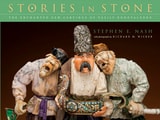
Stories in Stone
The Enchanted Gem Carvings of Vasily KonovalenkoStephen E. Nash
University Press of Colorado, 2016
Part art catalogue and part life history, Stories in Stone tells the tale of Konovalenko’s impressive works, explaining their conception, creation, and symbolism. Each handcrafted figure depicts a scene from life in the Soviet Union—a bowman hunting snow geese, a woman reposing in a hot spring surrounded by ice, peasants spinning wool, a pair of gulag prisoners sawing lumber—painstakingly rendered in precious stones and metals. The materials used to make the figurines are worth millions of dollars, but as cultural artifacts, the sculptures are priceless. Author Stephen Nash draws upon oral history and archival research to detail the life of their creator, revealing a rags-to-riches and life-imitates-art narrative full of Cold War intrigue, Communist persecution, and capitalist exploitation.
Augmented by Richard M. Wicker’s exquisite and revelatory photographs of sixty-five Konovalenko sculptures from museums, state agencies, and private collections around the world, Stories in Stone is a visually stunning glimpse into a unique corner of Russian art and cultural history, the craft and science of gem carving, and the life of a Russian artist and immigrant who loved people everywhere.
Co-published with the Denver Museum of Nature & Science, home to the most significant collection of Russian gem-carving sculptures by Vasily Konovalenko in the world.
Stories of Becoming
Demystifying the Professoriate for Graduate Students in Composition and RhetoricClaire Lutkewitte
Utah State University Press, 2021
Using data from the study, the authors offer six specific strategies—including how to manage time, how to create a work/life balance, and how to collaborate with others—that readers can use to prepare for the composition and rhetoric job market and to begin their careers as full-time faculty members. Readers will learn about the possible responsibilities they may take on as new faculty, particularly those that go beyond teaching, research, service, and administration to include navigating the politics of higher education and negotiating professional identity construction. And they will also engage in activities and answer questions designed to deepen their understanding of the field and help them identify their own values and desired career trajectory.
Stories of Becoming demystifies the professoriate, compares what current new faculty have to say of their job expectations with the realities that students might face when on the job, and brings to light the invisible, behind-the-scenes work done by new faculty. It will be invaluable to graduate students, those who teach graduate students, new faculty, and hiring administrators in composition and rhetoric.
Stories of New Jersey
Stockton, Frank
Rutgers University Press, 1961
Stories of Our Lives
Memory, History, NarrativeFrank de Caro
Utah State University Press, 2013

Stories of Raising Boys
Masculinity, Disability, Gender Expansiveness, and AnxietyJulie-Ann Scott-Pollock
Temple University Press, 2026
In her poignant, affecting autoethnography, Stories of Raising Boys, Julie-Ann Scott-Pollock investigates the meaning of disability, gender, race, and privilege in contemporary culture. Scott-Pollock is a white mother living with a physical disability raising four boys—Theo, a three-year-old risktaker; Tony, ten, who lives with seizures; Vinny, eight, who is gender expansive; and five-year-old Nico, who is also gender expansive and experiences anxiety. They live on the southeastern U.S. coast with their father, Evan, and their baby sister, Rosalie.
Through narrative analysis, Scott-Pollock compares and contrasts her circumstances to the ways in which adult interviewees manage the same lived experiences as her sons. She also includes their opinions about masculinity and identity, as well as parenting boys. In doing so, Stories of Raising Boys deepens the cultural complexity of parent–child relationships and expands our collective understanding of how they form and emerge. In addition, Scott-Pollock uses a metaphor of swimming through the ocean near her family’s home to illustrate resisting marginalization while also promoting strong cultural identities, especially in turbulent waters.
Stories of Raising Boys offers an absorbing cultural reflection on the intersectionality of identity, power, and privilege.

Stories of Survival
Arkansas Farmers during the Great DepressionWilliam Downs Jr.
University of Arkansas Press, 2015

Stories, Songs, and Stretches!
Creating Playful Storytimes with Yoga and MovementKatie Scherrer
American Library Association, 2017
Storm Beat
A Journalist Reports from the Oregon CoastLori Tobias
Oregon State University Press, 2020
The Oregon Coast is a rugged, beautiful region. Separated from the state’s population centers by the Coast Range, it is a land of small towns reliant primarily on fishing and tourism, known for its dramatic landscapes and dramatic storms. Many of the stories Tobias covered were tragedies: car crashes, falls, drownings, capsizings. And those are just the accidents; Tobias covered plenty of violent crimes as well. But her stories also include more lighthearted moments, including her own experiences learning to live on and cover the coast. Tobias’s story is as much her own as it is the coast’s; she takes the reader through familiar beats of life (regular trips back east as her parents age), the decline of journalism in the twenty-first century, and the unexpected (and not entirely glamorous) experiences of a working reporter—such as a bout of vertigo after rappelling from a helicopter onto a ship. Ultimately, Tobias tells a compelling story of a region that many visit but few truly know.
Storm of Words
Science, Religion, and Evolution in the Civil War EraMonte Harrell Hampton
University of Alabama Press, 2014
A study of the ways that southern Presbyterians in the wake of the Civil War contended with a host of cultural and theological questions
Southern Presbyterian theologians enjoyed a prominent position in antebellum southern culture. Respected for both their erudition and elite constituency, these theologians identified the southern society as representing a divine, Biblically ordained order. Beginning in the 1840s, however, this facile identification became more difficult to maintain, colliding first with antislavery polemics, then with Confederate defeat and reconstruction, and later with women’s rights, philosophical empiricism, literary criticisms of the Bible, and that most salient symbol of modernity, natural science.
As Monte Harrell Hampton shows in Storm of Words, modern science seemed most explicitly to express the rationalistic spirit of the age and threaten the Protestant conviction that science was the faithful “handmaid” of theology. Southern Presbyterians disposed of some of these threats with ease. Contemporary geology, however, posed thornier problems. Ambivalence over how to respond to geology led to the establishment in 1859 of the Perkins Professorship of Natural Science in Connexion with Revealed Religion at the seminary in Columbia, South Carolina. Installing scientist-theologian James Woodrow in this position, southern Presbyterians expected him to defend their positions.
Within twenty-five years, however, their anointed expert held that evolution did not contradict scripture. Indeed, he declared that it was in fact God’s method of creating. The resulting debate was the first extended evolution controversy in American history. It drove a wedge between those tolerant of new exegetical and scientific developments and the majority who opposed such openness. Hampton argues that Woodrow believed he was shoring up the alliance between science and scripture—that a circumscribed form of evolution did no violence to scriptural infallibility. The traditionalists’ view, however, remained interwoven with their identity as defenders of the Lost Cause and guardians of southern culture.
The ensuing debate triggered Woodrow’s dismissal. It also capped a modernity crisis experienced by an influential group of southern intellectuals who were grappling with the nature of knowledge, both scientific and religious, and its relationship to culture—a culture attempting to define itself in the shadow of the Civil War and Reconstruction.

Storming the City
U.S. Military Performance in Urban Warfare from World War II to VietnamAlec Wahlman
University of North Texas Press, 2015
Storming the Reality Studio
A Casebook of Cyberpunk & Postmodern Science FictionLarry McCaffery, ed.
Duke University Press, 1992
By bringing together original fiction by well-known contemporary writers (William Burroughs, Thomas Pynchon, Don DeLillo, Kathy Acker, J. G. Ballard, Samuel R. Delany), critical commentary by some of the major theorists of postmodern art and culture (Jacques Derrida, Fredric Jameson, Timothy Leary, Jean-François Lyotard), and work by major practitioners of cyberpunk (William Gibson, Rudy Rucker, John Shirley, Pat Cadigan, Bruce Sterling), Storming the Reality Studio reveals a fascinating ongoing dialog in contemporary culture.
What emerges most strikingly from the colloquy is a shared preoccupation with the force of technology in shaping modern life. It is precisely this concern, according to McCaffery, that has put science fiction, typically the province of technological art, at the forefront of creative explorations of our unique age.
A rich opporunity for reading across genres, this anthology offers a new perspective on the evolution of postmodern culture and ultimately shows how deeply technological developments have influenced our vision and our art.
Selected Fiction contributors: Kathy Acker, J. G. Ballard, William S. Burroughs, Pat Cadigan, Samuel R. Delany, Don DeLillo, William Gibson, Harold Jaffe, Richard Kadrey, Marc Laidlaw, Mark Leyner, Joseph McElroy, Misha, Ted Mooney, Thomas Pynchon, Rudy Rucker, Lucius Shepard, Lewis Shiner, John Shirley, Bruce Sterling, William Vollman
Selected Non-Fiction contributors: Jean Baudrillard, Jacques Derrida, Joan Gordon, Veronica Hollinger, Fredric Jameson, Arthur Kroker and David Cook, Timothy Leary, Jean-François Lyotard, Larry McCaffery, Brian McHale, Dave Porush, Bruce Sterling, Darko Suvin, Takayuki Tatsumi
Storying Writing Center Labor for Anti-Capitalist Futures
Genie Nicole Giaimo
University Press of Colorado, 2025
Storytelling and Science
Rewriting Oppenheimer in the Nuclear AgeDavid K. Hecht
University of Massachusetts Press, 2015
No single figure embodies Cold War science more than the renowned physicist J. Robert Oppenheimer. Although other scientists may have been more influential in establishing the institutions and policies of the nuclear age, none has loomed larger in the popular imagination than the “father of the atomic bomb.” Americans have been drawn to the story of the Manhattan Project Oppenheimer helped lead and riveted by the McCarthy-era politics that caught him in its crosshairs. Journalists and politicians, writers and artists have told Oppenheimer's story in many different ways since he first gained notoriety in 1945. In Storytelling and Science, David K. Hecht examines why they did so, and what they hoped to achieve through their stories.
From the outset, accounts of Oppenheimer's life and work were deployed for multiple ends: to trumpet or denigrate the value of science, to settle old scores or advocate new policies, to register dissent or express anxieties. In these different renditions, Oppenheimer was alternately portrayed as hero and villain, establishment figure and principled outsider, “destroyer of worlds” and humanist critic. Yet beneath the varying details of these stories, Hecht discerns important patterns in the way that audiences interpret, and often misinterpret, news about science. In the end, he argues, we find that science itself has surprisingly little to do with how its truths are assimilated by the public. Instead its meaning is shaped by narrative traditions and myths that frame how we think and write about it.
Storytelling in Queer Appalachia
Imagining and Writing the Unspeakable OtherHillery Glasby
West Virginia University Press, 2020
Focusing especially on disciplinary approaches from rhetoric and composition, the volume explores sexual identities in rural places, community and individual meaning-making among the Appalachian diaspora, the storytelling infrastructure of queer Appalachia, and the role of the metronormative in discourses of difference. Storytelling in Queer Appalachia affirms queer people, fights for queer visibility over queer erasure, seeks intersectional understanding, and imagines radically embodied queer selves through social media.
Storytimes for Everyone!
Developing Young Children's Language and LiteracySaroj Nadkarni Ghoting
American Library Association, 2013
Storytimes for Two-Year-Olds
Judy American Library Association
American Library Association, 2007
Storyville, New Orleans
Being an Authentic, Illustrated Account of the Notorious Red-Light DistrictAl Rose
University of Alabama Press, 1978
A true-to-life impression of Storyville, the only legally established red light district in the US
At the turn of the twentieth-century, there were hundreds of red-light districts in the United States, ranging in size from a discreet “house” or two in or near small towns and cities to block after bawdy block of brothels in larger cities such as Chicago and San Francisco. Storyville, New Orleans: Being an Authentic, Illustrated Account of the Notorious Red Light District seeks to offer the reader a reasonably true-to-life impression of Storyville, the most famous of the large districts and the only such district in the United States that was legally established.
Storyville was an area, carefully defined by law, outside of which prostitutes or women “notoriously abandoned to lewdness” were not permitted to live or work. Prostitutes working within the District were considered to be engaged in legal enterprises so long as they confined themselves to prostitution and other related activities such as dispensing food and drink to their customers.
From the early days of the French colony of Louisiana, a great number of prostitutes, women from correctional centers, and those with so-called “loose morals” were transported to the New World, resulting in a large proportion of the earliest female residents in New Orleans engaging in prostitution. During the course of Storyville’s legal existence from January 1, 1898 to November 12, 1917—it is evident that in establishing this district the New Orleans city council acted out of a sense of frustration after decades of attempting to deal rationally with a serious social problem. As the author says in the preface, “You may see this as a disorderly book about disorderly houses—and so it may be. But I doubt you will find it dull.”
Stowe in Her Own Time
A Biographical Chronicle of Her Life, Drawn from Recollections, Interviews, and Memoirs by Family, FSusan Belasco
University of Iowa Press, 2009
One of the first celebrity authors, Harriet Beecher Stowe (1811–1896) became famous almost overnight when Uncle Tom’s Cabin—which sold more than 300,000 copies in its first year of publication—appeared in 1852. Known by virtually all famous writers in the United States and many in England and regarded by many women writers as a role model because of her influence in the literary marketplace, Stowe herself was the subject of many books, articles, essays, and poems during her lifetime.
This volume brings together for the first time a range of primary materials about Stowe’s private and public life written by family members, friends, and fellow writers who knew or were influenced by her before and after Uncle Tom’s Cabin catapulted her to fame. Included are periodical articles by Fanny Fern and Charles Dudley Warner; biographical essays by Sarah Josepha Hale and Rose Terry Cooke; letters by Oliver Wendell Holmes, Elizabeth Barrett Browning, and Harriet Jacobs; recollections by Frederick Douglass, Annie Adams Fields, Isabella Beecher Hooker, and Charles Beecher; and poems by Paul Laurence Dunbar and John Greenleaf Whittier. An introduction at the beginning of each essay connects it to its historical and cultural context, explanatory notes provide information about people and places, and the book includes a detailed introduction and a chronology of Stowe’s life.
The thirty-eight recollections gathered in Stowe in Her Own Time form a biographical narrative designed to provide several perspectives on the famous author, sometimes in conflict and sometimes in agreement but always perceptive. The figure who emerges from this insightful, analytical collection is far more complex than the image she helped construct in her lifetime.
Straddling Worlds
The Jewish-American Journey of Professor Richard W. LeopoldSteven J. Harper
Northwestern University Press, 2008
Author Steven J. Harper pays tribute to a well-respected teacher with this biography of a distinguished William Smith Mason Professor of History at Northwestern University, Richard W. Leopold. Harper had maintained contact with his former professor, as had hundreds of other alumni, meeting with him in the apartment to which his age and health confined him. When Leopold invited him to review his biographical materials to prepare a New York Times obituary, Harper began to catch glimpses of a deeper history in Leopold’s life: that of Jews in America after the turn of the century.
Across two years of Sundays, Leopold’s life came together and Harper began to notice parallels between the life of his professor and the life of his recently deceased father-in-law. Both grew up in less orthodox households but were still identified as Jewish by others; both attended Ivy League colleges, fighting (and beating) anti-Semitism there; and both served their country with distinction in World War II. The two men persevered through a twentieth century Jewish-American experience that they and many others shared, but rarely discussed. Steven Harper has caught them both on the page just in time to document their lives, their culture, and the nation that grew and changed alongside them.
Straddling the Border
Immigration Policy and the INSBy Lisa Magaña
University of Texas Press, 2003
With the dual and often conflicting responsibilities of deterring illegal immigration and providing services to legal immigrants, the U. S. Immigration and Naturalization Service (INS) is a bureaucracy beset with contradictions. Critics fault the agency for failing to stop the entry of undocumented workers from Mexico. Agency staff complain that harsh enforcement policies discourage legal immigrants from seeking INS aid, while ever-changing policy mandates from Congress and a lack of funding hinder both enforcement and service activities.
In this book, Lisa Magaña convincingly argues that a profound disconnection between national-level policymaking and local-level policy implementation prevents the INS from effectively fulfilling either its enforcement or its service mission. She begins with a history and analysis of the making of immigration policy which reveals that federal and state lawmakers respond more to the concerns, fears, and prejudices of the public than to the realities of immigration or the needs of the INS. She then illustrates the effects of shifting and conflicting mandates through case studies of INS implementation of the Immigration Reform and Control Act of 1986, Proposition 187, and the 1996 Welfare Reform and Responsibility Act and their impact on Mexican immigrants. Magaña concludes with fact-based recommendations to improve the agency's performance.
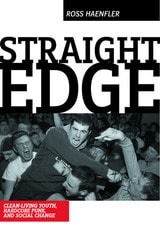
Straight Edge
Hardcore Punk, Clean Living Youth, and Social ChangeHaenfler, Ross
Rutgers University Press, 2006
Straight edge is a clean-living youth movement that emerged from the punk rock subculture in the early 1980s. Its basic tenets promote a drug-free, tobacco-free, and sexually responsible lifestyle—tenets that, on the surface, seem counter to those typical of teenage rebellion. For many straight-edge kids, however, being clean and sober was (and still is) the ultimate expression of resistance—resistance to the consumerist and self-indulgent ethos that defines mainstream U.S. culture.
In this first in-depth sociological analysis of the movement, Ross Haenfler follows the lives of dozens of straight-edge youths, showing how for these young men and women, and thousands of others worldwide, the adoption of the straight-edge doctrine as a way to better themselves evolved into a broader mission to improve the world in which they live. Straight edge used to signify a rejection of mind-altering substances and promiscuous sex, yet modern interpretations include a vegetarian (or vegan) diet and an increasing involvement in environmental and political issues.
The narrative moves seamlessly between the author’s personal experiences and theoretical concerns, including how members of subcultures define “resistance,” the role of collective identity in social movements, how young men experience multiple masculinities in their quest to redefine manhood, and how young women establish their roles in subcultures. This book provides fresh perspectives on the meaning of resistance and identity in any subculture.

Straight Power Concepts in the Middle East
US Foreign Policy, Israel and World HistoryGregory Harms
Pluto Press, 2010
How did the US become a world power? How did it become involved in the Middle East? What is the history and nature of its 'special relationship' with Israel?
Given the increase in tensions in the Middle East, and the United States' involvement in them, news coverage is in abundance. Yet, the reportage and discussion of American foreign policy is often narrow in scope, offering little background or context. The subject is routinely treated with the vocabulary provided by government officials, presenting best intentions while conceding occasional mistakes and unfortunate incidents. As Gregory Harms demonstrates in Straight Power Concepts, the historical record bears out a different vocabulary and tells a story that sharply contrasts with the common assumptions.
In this brief and accessible account, the reader is guided through the panoramic sweep of world and American history, reviewing how the US became a world power, how the Middle East became 'modern' and how Israel became an American 'strategic asset.' In so doing, the book provides a broad frame of reference, illustrating that recent developments are closer to business-as-usual and nothing resembling the rhetoric commonly used by heads of state, press secretaries, news media, and commentators.
As in his highly successful book The Palestine-Israel Conflict, Harms makes complex subjects accessible to everyone, without sacrificing analytical rigour. This book should be the first port of call for students and anyone seeking clarity and a historical elucidation of current events involving the United States, Israel, and the Middle East.
Strained Relations
US Foreign-Exchange Operations and Monetary Policy in the Twentieth CenturyMichael D. Bordo, Owen F. Humpage, and Anna J. Schwartz
University of Chicago Press, 2015