Results by title
3576 books match the query 'American' and 241 start with s
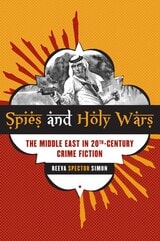
Spies and Holy Wars
The Middle East in 20th-Century Crime FictionBy Reeva Spector Simon
University of Texas Press, 2010
Illuminating a powerful intersection between popular culture and global politics, Spies and Holy Wars draws on a sampling of more than eight hundred British and American thrillers that are propelled by the theme of jihad—an Islamic holy war or crusade against the West. Published over the past century, the books in this expansive study encompass spy novels and crime fiction, illustrating new connections between these genres and Western imperialism.
Demonstrating the social implications of the popularity of such books, Reeva Spector Simon covers how the Middle Eastern villain evolved from being the malleable victim before World War II to the international, techno-savvy figure in today's crime novels. She explores the impact of James Bond, pulp fiction, and comic books and also analyzes the ways in which world events shaped the genre, particularly in recent years. Worldwide terrorism and economic domination prevail as the most common sources of narrative tension in these works, while military "tech novels" restored the prestige of the American hero in the wake of post-Vietnam skepticism. Moving beyond stereotypes, Simon examines the relationships between publishing trends, political trends, and popular culture at large—giving voice to the previously unexamined truths that emerge from these provocative page-turners.
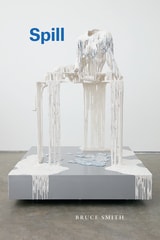
Spill
Bruce Smith
University of Chicago Press, 2018
Spill is a book in contradictions, embodying helplessness in the face of our dual citizenship in the realms of trauma and gratitude, artistic aspiration and political reality. The centerpiece of this collection is a lyrical essay that recalls the poet’s time working at the Federal Penitentiary at Lewisburg in the 1960s. Mentored by the insouciant inmate S, the speaker receives a schooling in race, class, and culture, as well as the beginning of an apprenticeship in poetry. As he and S consult the I Ching, the Book of Changes, the speaker becomes cognizant of other frequencies, other identities; poetry, divination, and a synchronous, alternative reading of life come into focus. On either side of this prose poem are related poems of excess and witness, of the ransacked places and of new territories that emerge from the monstrous. Throughout, these poems inhabit rather than resolve their contradictions, their utterances held in tension “between the hemispheres of songbirds and the hemispheres of men.”

Spinoza in Her Youth
Norma Cole
Omnidawn, 2002
Spiral Jetta Summer
Swimming in the Great Salt LakeErin Hogan
University of Chicago Press, 2008
Spirit Within, Spirits Throughout
A Spiritual Exploration Through PoetryAntoinette M. Schippers
Parkhurst Brothers, Inc., 2022
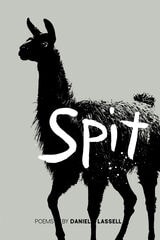
Spit
Daniel Lassell
Michigan State University Press, 2021
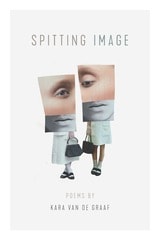
Spitting Image
Kara van de Graaf
Southern Illinois University Press, 2018
Taking as its primary theme the exploration of the female body in current culture, Spitting Image considers the myriad intersections of the body and gender, desire, relationships, and otherness. Van de Graaf interrogates underrepresented elements of the female experience, especially the physical, rhetorical, and aesthetic limitations of fatness in poetry and other arts. She then complicates those limitations through her use of innovative forms and imaginative verse, implicitly calling for poetry to engage with the female form in fresh ways. Throughout, Van de Graaf’s poems ask: In a time where we have more agency to define ourselves than ever before, what barriers still remain? What do our bodies mean to who we are?
At turns oblique and direct, Van de Graaf’s poems strive to create space for themselves not only in the field of contemporary poetry but also in a larger world that has been prone to ignoring or shaming women for their bodies. That these poems succeed on both counts is a testament to this remarkable new poet, who claims “That millimeter of space that means / all of us are apart, that means / we can never really touch / anything. . . . Yes, I want that, too.”
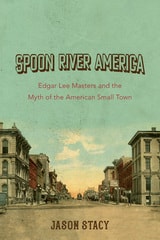
Spoon River America
Edgar Lee Masters and the Myth of the American Small TownJason Stacy
University of Illinois Press, 2021
A literary and cultural milestone, Spoon River Anthology captured an idea of the rural Midwest that became a bedrock myth of life in small-town America. Jason Stacy places the book within the atmosphere of its time and follows its progress as the poetry took root and thrived. Published by Edgar Lee Masters in 1915, Spoon River Anthology won praise from modernists while becoming an ongoing touchstone for American popular culture. Stacy charts the ways readers embraced, debated, and reshaped Masters's work in literary controversies and culture war skirmishes; in films and other media that over time saw the small town as idyllic then conflicted then surreal; and as the source of three archetypes—populist, elite, and exile—that endure across the landscape of American culture in the twenty-first century.
A wide-ranging reconsideration of a literary landmark, Spoon River America tells the story of how a Midwesterner's poetry helped change a nation's conception of itself.

Spoon River Anthology
An Annotated EditionEdgar Lee Masters. Edited and with an Introduction and Annotations by John E. Hallwas
University of Illinois Press, 1992
What lies beneath the surface of Masters' timeless classic
One of the most striking and original achievements in American poetry is now available in a remarkable edition that comprehends the poet and his book in an entirely new way.
This edition of Spoon River Anthology probes the social background of the small-town world that Edgar Lee Masters loved and hated--and finally transmuted into powerful literary art. Extensive annotations identify the people whose lives inspired the 243 poetic accounts of frustration, violence, struggle, and triumph that shocked American readers.
The most extraordinary feature of this edition is the extensive introduction that provides the key to this misunderstood American classic. The book's relationship to Whitman is clearly established, and the important influences of Browning, Goethe, Spinoza, and others are revealed for the first time. John Hallwas' approach combines cultural, biographical, philosophical, psychoanalytic, mythic, and symbolic insights--and concludes with a stunning reassessment of "Our New Poet."
The annotated Spoon River Anthology supersedes seventy-five years of largely misdirected critical commentary. It will send a new generation of readers back to this surprisingly complex book that probes so deeply into the American consciousness.
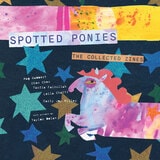
Spotted Ponies
The Collected ZinesMag Gabbert, Chen Chen, Tarfia Faizullah, Leila Chatti, and Carly Joy Miller with artwork by Taylor Dolan
Bridwell Press, 2025
Spring
Oni Buchanan
University of Illinois Press, 2008
Spring and a Thousand Years (Unabridged)
PoemsJudy Halebsky
University of Arkansas Press, 2020
A translator’s notebook, an almanac, an ecological history, Judy Halebsky’s Spring and a Thousand Years (Unabridged) moves between multiple intersections and sign systems connected in a long glossary poem that serves as the book’s guide to what is lost, erased, or disrupted in transition both from experience to written word and from one language, location, and time period to another.
Writers Li Bai, Matsuo Bashō, Sei Shōnagon, and Du Fu make frequent appearances in centuries ranging from the eighth to the twenty-first, and appear in conversation with Grace Paley, Donald Hall, and Halebsky herself, as the poet explores subjects ranging from work and marriage to environmental destruction. Asking what would happen if these poets—not just their work—appeared in California, the poems slip between different geographies, syntaxes, times, and cultural frameworks.
The role of the literary translator is to bring text from one language into another, working to at once shift and retain the context of the original—from one alphabet to another, one point in time to another. These are poems in homage to translation; they rely on concepts that can bridge time and space, and as a result are as likely to find meaning in donuts or Zumba as they are to find it in the ocean. Spring and a Thousand Years (Unabridged) finds reasons for hope not in how the world should be, but in how it has always been.
Squander
Elena Karina Byrne
Omnidawn, 2016
Staged Readings
Contesting Class in Popular American Theater and Literature, 1835-75Michael D’Alessandro
University of Michigan Press, 2022
Based in the historical archive, Staged Readings presents a panoramic display of mid-century leisure and entertainment. It examines best-selling novels, such as Harriet Beecher Stowe’s Uncle Tom’s Cabin and George Lippard’s The Quaker City. But it also analyzes a series of sensational melodramas, parlor theatricals, doomsday speeches, tableaux vivant displays, curiosity museum exhibits, and fake volcano explosions. These oft-overlooked spectacles capitalized on consumers’ previous cultural encounters and directed their social identifications. The book will be particularly appealing to those interested in histories of popular theater, literature and reading, social class, and mass culture.
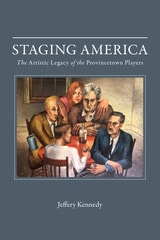
Staging America
The Artistic Legacy of the Provincetown PlayersJeffery Kennedy
University of Alabama Press, 2023
A comprehensive history of the Provincetown Players and their influence on modern American theatre
The Provincetown Players created a revolution in American theatre, making room for truly modern approaches to playwriting, stage production, and performance unlike anything that characterized the commercial theatre of the early twentieth century. In Staging America: The Artistic Legacy of the Provincetown Players, Jeffery Kennedy gives readers the unabridged story in a meticulously researched and comprehensive narrative that sheds new light on the history of the Provincetown Players. This study draws on many new sources that have only become available in the last three decades; this new material modifies, refutes, and enhances many aspects of previous studies.
At the center of the study is an extensive account of the career of George Cram Cook, the Players’ leader and artistic conscience, as well as one of the most significant facilitators of modernist writing in early twentieth-century American literature and theatre. It traces Cook’s mission of “cultural patriotism,” which drove him toward creating a uniquely American identity in theatre. Kennedy also focuses on the group of friends he calls the “Regulars,” perhaps the most radical collection of minds in America at the time; they encouraged Cook to launch the Players in Provincetown in the summer of 1915 and instigated the move to New York City in fall 1916.
Kennedy has paid particular attention to the many legends connected to the group (such as the “discovery” of Eugene O’Neill), and also adds to the biographical record of the Players’ forty-seven playwrights, including Susan Glaspell, Neith Boyce, Edna St. Vincent Millay, Floyd Dell, Rita Wellman, Mike Gold, Djuna Barnes, and John Reed. Kennedy also examines other fascinating artistic, literary, and historical personalities who crossed the Players’ paths, including Emma Goldman, Charles Demuth, Berenice Abbott, Sophie Treadwell, Theodore Dreiser, Claudette Colbert, and Charlie Chaplin. Kennedy highlights the revolutionary nature of those living in bohemian Greenwich Village who were at the heart of the Players and the America they were responding to in their plays.
Staging Consciousness
Theater and the Materialization of MindWilliam W. Demastes
University of Michigan Press, 2002
William W. Demastes makes use of the writings of such varied theater practitioners as Antonin Artaud, Jerzy Grotowski, Samuel Beckett, Tony Kushner, Sam Shepard, Spalding Gray, Peter Shaffer, and others, illuminating theater as proof that mind is an extension of body. The living stage incubates and materializes thought in a way that highlights the processes of daily existence outside the theater. This book offers a new way for theater practitioners to look at the unique value of the theater and an invitation for philosophers and scientists to search for new paradigms in theater, the oldest of art forms.
William W. Demastes is Professor of English, Louisiana State University. His previous books include Theatre of Chaos: Beyond Absurdism, into Disorderly Order.
Stand Up Poetry
An Expanded AnthologyCharles Harper Webb
University of Iowa Press, 2002
Contributors:
Kim Addonizio
Dorothy Barresi
Charles Bukowski
Maxine Chernoff
Lucille Clifton
Billy Collins
Philip Dacey
Stephen Dunn
Deborah Harding
Edward Hirsch
Tony Hoagland
Allison Joseph
Jesse Lee Kercheval
Lisa Lewis
Bill Mohr
Ed Ochester
Lawrence Raab
Maureen Seaton
James Tate
Rafael Zepeda
plus many more
Witty, sexy, gritty, outrageous, emotional, hilarious, honest, courageous. What do these words describe? A growing movement in American literary circles: Stand Up Poetry.
Over twenty years ago, Charles Harper Webb discovered a vibrant and invigorating poetry scene in southern California. Featuring some of America's best contemporary poets, this scene, according to Webb, “showed insight, imagination, craft, philosophical depth, but most of all, it was funny, and it was fun.” Stand Up Poetry: The Poetry of Los Angeles and Beyond (1990) was the result of Webb's enthusiasm for this poetic genre.
A decade later, the popularity of performance poetry, poetry slams, and poetry readings is on the rise, and Webb has expanded his anthology to include a greater sampling of poets from across the country. From Charles Bukowski to Billy Collins and Allison Joseph, the poets included in this collection are popular and emerging, classical and experimental, young and old; yet all exhibit the characteristics so important to Stand Up Poetry—humor, performability, accessibility, individuality. Most important, these poems are enjoyable when read silently or aloud, on the page or on the stage.
Stand Up Poetry: An Expanded Anthology is at its core a celebration of poetry offering readers a wonderful lesson in the power of words to entertain and inspire.
Standards of Value
Money, Race, and Literature in AmericaGermana, Michael
University of Iowa Press, 2010
In Standards of Value, Michael Germana reveals how tectonic shifts in U.S. monetary policy—from the Coinage Act of 1834 to the abolition of the domestic gold standard in 1933–34—correspond to strategic changes by American writers who renegotiated the value of racial difference. Populating the pages of this bold and innovative study are authors as varied as Harriet Beecher Stowe, George Washington Cable, Charles Chesnutt, James Weldon Johnson, Nella Larsen, Jessie Redmon Fauset, and Ralph Ellison—all of whom drew analogies between the form Americans thought the nation's money should take and the form they thought race relations and the nation should take.
A cultural history of race organized around and enmeshed within the theories of literary and monetary value, Standards of Value also recovers a rhetorical tradition in American culture whose echoes can be found in the visual and lyrical grammars of hip hop, the paintings of John W. Jones and Michael Ray Charles, the cinematography of Spike Lee, and many other contemporary forms and texts.
This reconsideration of American literature and cultural history has implications for how we value literary texts and how we read shifting standards of value. In vivid prose, Germana explains why dollars and cents appear where black and white bodies meet in American novels, how U.S. monetary policy gave these symbols their cultural currency, and why it matters for scholars of literary and cultural studies.
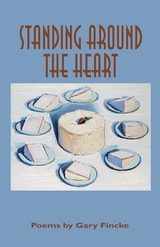
Standing around the Heart
PoemsGary Fincke
University of Arkansas Press, 2005
Star Apocrypha
Christopher Buckley
Northwestern University Press, 2001

Star Ledger
Lynda Hull
University of Iowa Press, 1991
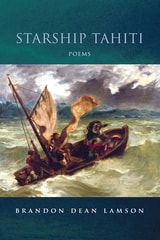
Starship Tahiti
PoemsBrandon Dean Lamson
University of Massachusetts Press, 2013
The poems in Brandon Dean Lamson's first volume, Starship Tahiti, explore imprisoned bodies and the tension between captivity and imagination. Beginning on Rikers Island, the book traces a creation myth in reverse, moving from prison to the spacious arches of Grand Central Station to the shores of the Chesapeake Bay.
Lamson examines themes of violence, gender, and identity in various real and imagined settings where inmates read Antigone, Howlin' Wolf sings in a black barbershop, and Metallica records burn on a Viking altar. Throughout these shifts, the poems construct fractured narratives that subvert linear storytelling. The layering of voice and imagery in this collection transgresses boundaries between the secular and the sacred, and between the communal and the personal. As the speaker of “Portland Bardo” says, “The fragile, in between state of larvae hatching / is no less desirable than full bloom in a city of roses, if such a city can ever be found.”
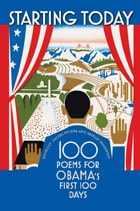
Starting Today
100 Poems for Obama’s First 100 DaysRachel Zucker
University of Iowa Press, 2010
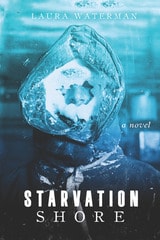
Starvation Shore
Laura Waterman
University of Wisconsin Press, 2019
Drawing upon historic records, diaries, and letters of the men who inhabited the makeshift shelter they called Camp Clay, Laura Waterman reimagines the true story of polar explorers fighting for their lives and their sanity under dehumanizing conditions. This gripping, tragic tale of hunger, fear, and hope is told through the eyes of men at their worst—and most desperate—moments.

State Blues
The Michigan Review of Prisoner Creative Writing, Volume 13Michigan Publishing Services, 2021
www.prisonarts.org
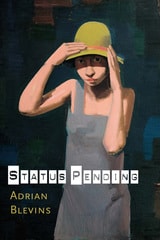
Status Pending
Adrian Blevins
Four Way Books, 0
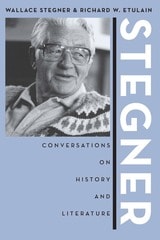
Stegner
Conversations On History And LiteratureWallace Stegner
University of Nevada Press, 1996
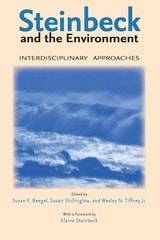
Steinbeck and the Environment
Interdisciplinary ApproachesSusan F. Beegel
University of Alabama Press, 2007
This interdisciplinary collection of essays explores in-depth a topic previously neglected by scholars: John Steinbeck's early continuing preoccupation with ecology and marine biology and the effect of that interest on his writings. Written by scholars from various disciplines, the essays offer a dynamic contribution to the study of John Steinbeck by considering his writings from an environmental perspective. They reveal Steinbeck as a prophet that was ahead of his time and supremely relevant to our own.
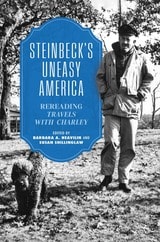
Steinbeck’s Uneasy America
Rereading “Travels with Charley”Edited by Barbara A. Heavilin and Susan Shillinglaw
University of Alabama Press, 2025
A road trip through Steinbeck’s America—revisited, reimagined, and reinterpreted.
Steinbeck’s Uneasy America is the first collection of critical scholarship devoted to Travels with Charley in Search of America, John Steinbeck’s best-selling, late-career travel memoir. In 1960, Steinbeck was a renowned man of American letters. Many considered him America’s troubadour of ordinary people, the conscience of the country. But weakened by two small strokes and anxious that he had lost touch with America, he embarked on a cross-country road trip accompanied by his wife’s standard poodle, Charley. Two years later, he published Travels with Charley to popular acclaim and robust sales.
Throughout this narrative, Steinbeck insists that all of our perceptions are “warped” by personality, history, and society. And while this hybrid and experimental book has long been accepted as an accurate account of his journey, journalists and scholars agree that the narrative is part factual, part fiction—America as seen through Steinbeck’s particular “warp.” The work is long overdue for scholarly assessment.
Steinbeck’s Uneasy America explores three main topics. Part 1 explores genre and form to consider the degree to which the work is fiction or nonfiction. Part 2 assesses Steinbeck’s increasingly bleak assessment of America—almost a jeremiad that warns citizens of ecological excess and political apathy. Part 3 focuses on Travels with Charley as a road text, travel adventure, and literary influence.
This volume’s authors offer rich scholarly insights and a wealth of stories, facts, and anecdotes about Steinbeck and the adventures and misadventures he and Charley met on the road. Lively and groundbreaking, the collection both enlightens and enlivens discussions of Steinbeck and of the twentieth-century American book world.
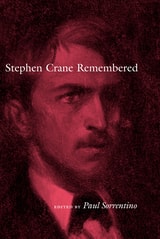
Stephen Crane Remembered
Edited by Paul Sorrentino
University of Alabama Press, 2006
Revealing episodes in the life of the elusive writer, as told by acquaintances
This book collects reminiscences by contemporaries, friends, and associates of Stephen Crane that illuminate the life of this often misunderstood and misrepresented writer. Although Crane is widely regarded as a major American author, conclusions about his life, work, and thought remain obscure due to the difficulties in separating fact from fiction. His first biographer recorded mostly vague impressions and, to mythologize his subject, invented a multitude of the episodes and letters used in his account of Crane’s life. Subsequent biographies were either cursory summations or compendiums of verifiable facts. Crane himself was both reclusive and mercurial, protective of his inner life while projecting a variety of personae to suit others.
A flamboyant personality and close friend of writers such as William Dean Howells, Henry James, and Joseph Conrad, Crane made telling impressions on his contemporaries. They often constitute the best assessments of Crane’s own personality and work. The 90 reminiscences gathered here offer a much-needed account of Crane’s life from a variety of viewpoints, as well as important information about the contributors themselves.
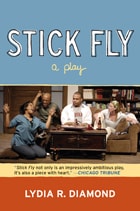
Stick Fly
A PlayLydia R. Diamond
Northwestern University Press, 2008
Adept at capturing the experience of the upper-middle-class African-American, Diamond lays out two families' worth of secrets in this precise play. With only six characters, she constructs a vivid weekend of crossed pasts and uncertain but optimistic futures. On Martha's Vineyard, an affluent African-American family gathers in their vacation home, joined by the housekeeper's daughter, who is filling in for her mother. The family patriarch is a philandering physician; one of his sons has followed in his footsteps, while the other, after numerous false starts in a variety of careers, is a struggling novelist. Both bring along their current girlfriends, to meet the family for the first time. With such highly--perhaps over--educated vacationers, the conversation and the barbs fly, on subjects ranging from race to economics to politics. But there is also more than enough human drama, which reaches its climax when an old family secret comes out. Through lively exchanges and simmering wit, the family tackles a history filled with complications both within the family and in the outer world.
Still Here, Still Now
Robert Pack
University of Chicago Press, 2008
The first section of the book contains traditional lyrics that celebrate family ties and seek consolations for the passing of personal and evolutionary time. The poems in this group address a named or unnamed auditor in a voice of intimate engagement. Featuring the most narrative selections in the book, the second section consists of fable-like stories, rich with innuendo and implication. The characters in these poems make choices that press against the events and circumstances that challenge and define them. Embodying what Harold Bloom has called Pack’s “courage to surmount suffering,” the poems of the third section are largely devoted to biblical themes and philosophical speculations on the meaning of happiness and the uses of suffering. Here, Pack’s empathy for the human condition as well as his forebodings about the prospect of human survival are on poignant display. The final section of the book turns to Pack's abiding interest in landscape and the ways in which the place one inhabits contains and animates our individual lives.
Ripe with many years, Pack remains a vital presence in American letters. Still Here, Still Now is an affecting and graceful addition to the oeuvre of a poet whose compelling and distinct voice will continue to resonate among his loyal readers.

Stories Of Raymond Carver
A Critical StudyKirk Nesset
Ohio University Press, 1994
In this comprehensive study of Carver, Nesset discusses the relationship of minimalism and postmodern trends and the rise of new realism. By locating Carver in the gallery of American letters, Nesset shows him to be at once more simple and more complex than we might have believed, skillfully laying the groundwork for Carver studies to come.
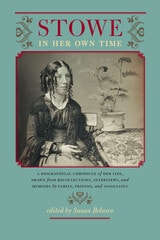
Stowe in Her Own Time
A Biographical Chronicle of Her Life, Drawn from Recollections, Interviews, and Memoirs by Family, FSusan Belasco
University of Iowa Press, 2009
One of the first celebrity authors, Harriet Beecher Stowe (1811–1896) became famous almost overnight when Uncle Tom’s Cabin—which sold more than 300,000 copies in its first year of publication—appeared in 1852. Known by virtually all famous writers in the United States and many in England and regarded by many women writers as a role model because of her influence in the literary marketplace, Stowe herself was the subject of many books, articles, essays, and poems during her lifetime.
This volume brings together for the first time a range of primary materials about Stowe’s private and public life written by family members, friends, and fellow writers who knew or were influenced by her before and after Uncle Tom’s Cabin catapulted her to fame. Included are periodical articles by Fanny Fern and Charles Dudley Warner; biographical essays by Sarah Josepha Hale and Rose Terry Cooke; letters by Oliver Wendell Holmes, Elizabeth Barrett Browning, and Harriet Jacobs; recollections by Frederick Douglass, Annie Adams Fields, Isabella Beecher Hooker, and Charles Beecher; and poems by Paul Laurence Dunbar and John Greenleaf Whittier. An introduction at the beginning of each essay connects it to its historical and cultural context, explanatory notes provide information about people and places, and the book includes a detailed introduction and a chronology of Stowe’s life.
The thirty-eight recollections gathered in Stowe in Her Own Time form a biographical narrative designed to provide several perspectives on the famous author, sometimes in conflict and sometimes in agreement but always perceptive. The figure who emerges from this insightful, analytical collection is far more complex than the image she helped construct in her lifetime.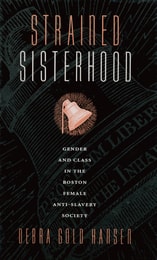
Strained Sisterhood
Gender and Class in the Boston Female Anti-Slavery SocietyDebra Gold Hansen
University of Massachusetts Press, 1993
Debra Gold Hansen explores the origins of the equality-versus-difference debate by examining the Boston Female Anti-Slavery Society, which disbanded in 1840 over this very issue. After establishing a historical framework for women's lives in early nineteenth-century Boston, Hansen analyzes the membership of the Society along the lines of race, religion, and socioeconomic status. Through her findings, she concludes that many of the issues that estranged female abolitionists in antebellum Boston continue to divide women today, testifying not to the strength of the bonds between women but to the fragility of those ties.
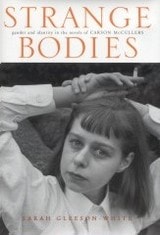
Strange Bodies
Gender and Identity in the Novels of Carson McCullersSarah Gleeson-White
University of Alabama Press, 2003
Adapts Mikhail Bakhtin's theory of the grotesque, as well as the latest in gender and psychoanalytic theory, to the major works of acclaimed southern writer Carson McCullers.
This innovative reconsideration of the themes of Carson McCullers's fiction argues that her work has heretofore suffered under the pall of narrow gothic interpretations, obscuring a more subversive agenda. By examining McCullers’s major novels—The Heart is a Lonely Hunter, Reflections in a Golden Eye, The Member of the Wedding, and The Ballad of the Sad Café—Gleeson-White locates a radical and specific form of the grotesque in the author's fiction: the liberating and redemptive possibilities of errant gender roles and shifting sexuality. She does this by employing Bakhtin's theory of the grotesque, which is both affirming and revolutionary, and thereby moves McCullers's texts beyond the 'gloom and doom' with which they have been charged for over fifty years.
The first chapter explores female adolescence by focusing on McCullers's tomboys in the context of oppressive southern womanhood. The second chapter analyzes McCullers's fascinating struggle to depict homosexual desire outside of traditional stereotypes. Gleeson-White then examines McCullers's portrayals of feminine and masculine gender through the tropes of cross-dressing, transvestism, and masquerade. The final chapter takes issue with earlier readings of androgyny in the texts to suggest a more useful concept McCullers herself called "the hybrid." Underpinning the whole study is the idea of a provocative, dynamic form of the grotesque that challenges traditional categories of normal and abnormal.
Because the characters and themes of McCullers's fiction were created in the 1940s and 1950s, a time of tension between the changing status of women and the southern ideal of womanhood, they are particularly fertile ground for a modern reexamination of this nature. Gleeson-White's study will be valued by scholars of American literature and gender and queer studies, by students of psychology, by academic libraries, and by readers of Carson McCullers. Strange Bodies is a thoughtful, highly credible analysis that adds dimension to the study of southern literature.
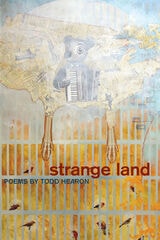
Strange Land
Todd Hearon
Southern Illinois University Press, 2010
Todd Hearon’s haunting debut collection chronicles the twin paths of isolation and desire in the search for meaning and union with others. On his pilgrimage through the lost worlds of earth and the soul, the speaker encounters drought in both the literal and spiritual sense as he confronts desolate landscapes, from the brown remnants of ruined cities, to the depths of the human heart and man’s capacity for utter destruction. Yet even though he frequently encounters darkness, he never ceases to seek beauty. He is a man who wears many faces, from Adam, staring down a bleak future bereft of Paradise, to the doomed poet Shelley, drowned off the coast of Italy. He speaks as a man adrift in his own life, seeking an answer to his emptiness, an estranged traveler through memory and longing. Lyrical and intense, Strange Land is a quest for understanding and human connection.
Strange Land
It goes without saying
a word: the world under cover
of midnight snow, what we have known
of pageantry and lilac, leaf and song
subsumed in starless silence.
Waking at dawn into the tremulous blue
of the room, as in earth’s afterglow,
we lie, lidless, listening, as crows
call out the ear’s horizons.
What year is it? Into what country were we born
and now must make our way? Outside the pane
the stillness feels ancestral but the ghosts
not yours, not mine. My émigré,
we are cut off. An ocean to the east
churns in chiaroscuro while unseen
ranges to the south deflect our passage,
what passage might have been.
This country seems the passing of a dream
to a moonscape’s still immitigable white,
a land’s amnesia where against the sky
three needling black birds fly
and slip like an ellipsis out of sight.
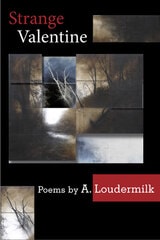
Strange Valentine
A. Loudermilk
Southern Illinois University Press, 2005
A. Loudermilk utilizes confessional, persona, and third-person poems throughout this intimate yet socially conscious first collection. Strange Valentine is an indictment of love, fixating on the paranoid relationship between body and state, on the dangerous relationship between family history and sexual history, and on the elusive relationship between gender and sexuality—specifically as experienced in the working-class towns of the southernmost Midwest. Riding highly crafted rhythms in sound, line, and invented form, Loudermilk’s multivoiced storytelling resounds with the characters and heartbreaks of the heartland.
Strangers
A Book of PoemsDavid Ferry
University of Chicago Press, 1983
"Strangers is a remarkably good book for a reader sufficiently attentive to hear its quiet power, to let it work in its distinctive way."—Boston Globe
"The poems of David Ferry's Strangers are in fact one book, and it is a splendid one. There is the same austere and poignant voice throughout, asking the unanswerable things, speaking of all that is withheld from us, confronting the unknownness that dwells even in the familiar and dear. Painful and touching, the book offers a distinctive vision which is at the same time inescapably true."—Richard Wilbur
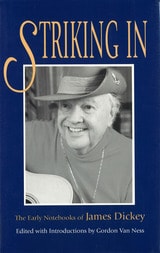
Striking In
The Early Notebooks of James DickeyEdited & Intro by Gordon Van Ness
University of Missouri Press, 1996
Striking In provides the first detailed look at the artistic beginnings of one of America's most accomplished writers. Chronicling James Dickey's close scrutiny of a wide variety of literary, philosophical, and anthropological works, his extensive experimentation with the possibilities of language, and his projected outlines for poems, stories, and novels, the notebooks serve as a critical tool in understanding Dickey's literary apprenticeship during the fifties.
Although the notebooks identify the influence of writers such as George Barker, Hart Crane, and Dylan Thomas, they primarily present a man endeavoring to chart his own artistic course or destination. The entries depict the process by which Dickey developed the ideas and images that characterize what he himself has labeled his "early motion," revealing the origin of Into the Stone, Drowning with Others, and Helmets, his first three published books of poetry, and suggesting the material and techniques of later volumes.
The introductions by Gordon Van Ness place each notebook in a biographical context and assess its individual significance, and an appendix lists all of Dickey's poems published in the fifties. Extensive footnotes provide further information on many of the specific references within Dickey's entries. Of special importance is the inclusion of ten never-before-published poems as well as fourteen others never collected in Dickey's books.
These notebooks show a young man obsessively committed to improving his creative and critical practice. By providing a direct glimpse into Dickey's mind before he achieved notoriety, Striking In sheds important new light on Dickey's struggle to discover a style and subject matter uniquely his own and will be essential reading for anyone interested in the complexities of Dickey's literary career.
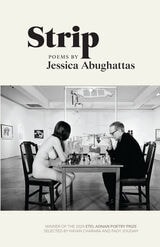
Strip
PoemsJessica Abughattas
University of Arkansas Press, 2020
“The mystery that Abughattas composes is always moving toward an impossible freeing of the self from its numerous frames. Yet frame by frame . . . she suspends our disbelief, catalogs those potentialities in an America always ready to shoot, direct, and produce the film of itself. Strip is ‘in love with possibility,’ ‘in praise of here I am, here I’ve been,’ USA style. Strip celebrates the body—its rise and fall, ebb and flow, in a carnival of parties—restlessly, shamelessly, searching for a way out…. Even as Abughattas claims that ‘I can’t believe sometimes I have a body,’ her poems teem with an awareness of the body’s unavoidable centrality in our lives—in how we view our lives, and how others view them; in how they progress, and how they end; in how they become meaningful, and how they are stripped of meaning. And no stripping escapes memory. Whether in terms of dispossession or sexuality, admiration or pity, Abughattas renders her treatment of the body with candor and poignancy. . . . The most startling moments in Abughattas’s poems, however, depend not on shocking or intimate details—but on the ‘I’ pulling away from the self, abandoning the ego, and gazing outward. She tries to see something else, to escape the body’s restraints.”
—Fady Joudah and Hayan Charara, from the Preface
Structuring the Void
The Struggle for Subject in Contemporary American FictionJerome Klinkowitz
Duke University Press, 1992
Among the writers Klinkowitz discusses are Richard Brautigan, Kurt Vonnegut, Max Apple, Saul Bellow, Erica Jong, Susan Quist, Gerald Rosen, Rob Swigart, and Grace Paley. He shows how, in the absence of subject matter, these writers persist in the act of structuring—by organizing autobiography as a narrative device, ritualizing national history and popular culture, or formalizing a comic response to a new imaginative state, the state of California. Klinkowitz also considers subjects such as gender and war, which, though they cannot be represented, nevertheless exercise contraints on a writer’s intention to structure.
What emerges from Klinkowitz’s analysis is a clear sense of what today’s fiction—and fiction writing—is about. As such, Structuring the Void will prove invaluable to anyone with an interest in contemporary literature.
Study for Necessity
JoEllen Kwiatek
University of Iowa Press, 2015
Stumbling Blocks
Roman PoemsKarl Kirchwey
Northwestern University Press, 2017
As in his 1998 New York Times Notable Book The Engrafted Word, the city of Rome becomes a lens through which to understand the contemporary human experience and the upheavals of human loss. Stumbling Blocks takes as its starting point the shattered ancient Roman ruins described in Renaissance poet Joachim du Bellay's celebrated sonnet—a landscape of death feeding upon itself and restored to life in the imagination of each successive generation to salvage its own narratives.
Kirchwey builds new arches and mythological intersections in exquisite poems that take long walks in the Eternal City, through landscapes far away and deep within. This gorgeous collection takes us back in time and brings us forward through our Old and New Worlds, revealing through the religion of art both beauty and atrocity.

Style as Argument
Contemporary American NonfictionChirs Anderson
Southern Illinois University Press, 1987
Taking the position that style has a value in its own right, that language forms a major component of the story a nonfiction writer has to tell, Anderson analyzes the work of America’s foremost practitioners of New Journalism—Tom Wolfe, Truman Capote, Norman Mailer, and Joan Didion.
Anderson does for nonfiction what insightful critics have long been doing for fiction and poetry. His approach is rhetorical, and his message is that the rhetoric of Wolfe, Capote, Mailer, and Didion is a direct response to the problem of trying to convey to a general audience the sublime, inexplicable, or private and intuitive experiences that conventional rhetoric cannot evoke.
The emphasis in this book is on style, not genre, and the analysis characterizes the distinctive styles of four American writers, showing how the richness and complexity of their prose discloses an important argument about the value of language itself. Their prose is complex, nuanced, layered, affecting, always aware of itself as style. This self-consciousness, Anderson contends, prepares the reader to regard style as argument, a “tacit but powerful statement about the value of form as form, style as style.”
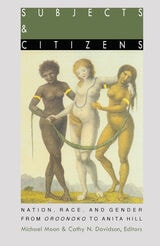
Subjects and Citizens
Nation, Race, and Gender from Oroonoko to Anita HillMichael Moon and Cathy N. Davidson, eds.
Duke University Press, 1995
Defining the landscape of the New American literary history, these essays are united by three interrelated concerns: ideas of origin (where does "American literature" begin?), ideas of nation (what does "American literature" mean?), and ideas of race and gender (what does "American literature" include and exclude and how?). Work by writers as diverse as Aphra Behn, James Fenimore Cooper, Edgar Allan Poe, Frances Harper, Harriet Beecher Stowe, Herman Melville, William Faulkner, Harriet Jacobs, Frederick Douglass, Abraham Lincoln, Bharati Mukherjee, Booker T. Washington, Mark Twain, Kate Chopin, Américo Paredes, and Toni Morrison are discussed from several theoretical perspectives, using a variety of methodologies. Issues of the "frontier" and the "border" as well as those of coloniality and postcoloniality are explored. In each case, these essays emphasize the ideological nature of national identity and, more specifically, the centrality of race and gender to our concept of nationhood.
Collected from recent issues of American Literature, with three new essays added, Subjects and Citizens charts the new directions being taken in American literary studies.
Contributors. Daniel Cooper Alarcón, Lori Askeland, Stephanie Athey, Nancy Bentley, Lauren Berlant, Michele A. Birnbaum, Kristin Carter-Sanborn, Russ Castronovo, Joan Dayan, Julie Ellison, Sander L. Gilman, Karla F. C. Holloway, Annette Kolodny, Barbara Ladd, Lora Romero, Ramón Saldívar, Maggie Sale, Siobhan Senier, Timothy Sweet, Maurice Wallace, Elizabeth Young
Subterranean
Richard Greenfield
Omnidawn, 2018
Suburban Plots
Men at Home in Nineteenth-Century American Print CultureMaura D'Amore
University of Massachusetts Press, 2014
In Suburban Plots, Maura D'Amore explores how Henry David Thoreau, Henry Ward Beecher, Donald Grant Mitchell, Nathaniel Hawthorne, Nathaniel Parker Willis, and others utilized the pen to plot opportunities for a new sort of male agency grounded, literarily and spatially, in a suburbanized domestic landscape. D'Amore uncovers surprising narratives that do not fit easily into standard critical accounts of midcentury home life. Taking men out of work spaces and locating them in the domestic sphere, these writers were involved in a complex process of portraying men struggling to fulfill fantasies outside of their professional lives, in newly emerging communities. These representations established the groundwork for popular conceptions of suburban domestic life that remain today.
Such Rich Hour
Cole Swensen
University of Iowa Press, 2001
Covering a variety of subjects—from the plague and the first danse macabre to the development of perspective and recipes for pigments—the poems in Cole Swensen's new collection are set in fifteenth-century France and explore the end of the medieval world and its gradual transition into the Renaissance. The collection is loosely based on the calendar illuminations from the Très Riches Heures, the well-known book of hours, and uses them to explore the ways that the arts—visual and verbal—interact with history, at times prefiguring it, at times shaping it, and at times offering wry commentary or commiseration.
Suffering Soldiers
Revolutionary War Veterans, Moral Sentiment, and Political Culture in the Early RepublicJohn Resch
University of Massachusetts Press, 1999