Results by title
8812 books match the query 'Political Science' and 537 start with s
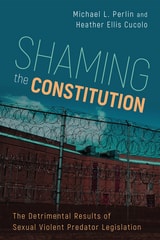
Shaming the Constitution
The Detrimental Results of Sexual Violent Predator LegislationMichael L. Perlin
Temple University Press, 2017
Convicted sexually violent predators are more vilified, more subject to media misrepresentation, and more likely to be denied basic human rights than any other population. Shaming the Constitution authors Michael Perlin and Heather Cucolo question the intentions of sex offender laws, offering new approaches to this most complex (and controversial) area of law and social policy.
The authors assert that sex offender laws and policies are unconstitutional and counter-productive. The legislation largely fails to add to public safety—even ruining lives for what are, in some cases, trivial infractions. Shaming the Constitution draws on law, behavioral sciences, and other disciplines to show that many of the “solutions” to penalizing sexually violent predators are “wrong,” as they create the most repressive and useless laws.
In addition to tracing the history of sex offender laws, the authors address the case of Jesse Timmendequas, whose crime begat “Megan’s Law;” the media’s role in creating a “moral panic;” recidivism statistics and treatments, as well as international human rights laws. Ultimately, they call attention to the flaws in the system so we can find solutions that contribute to public safety in ways that do not mock Constitutional principles.
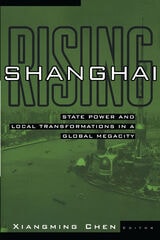
Shanghai Rising
State Power and Local Transformations in a Global MegacityXiangming Chen
University of Minnesota Press, 2009
Analyzing a Chinese city’s dazzling rise to global megacity status
Until around 1990, Shanghai was China’s premier but sluggish industrial center. Now at the beginning of the twenty-first century, the joint impact of global forces and state power has turned Shanghai into a dynamic megacity. Shanghai’s remarkable growth in economy, infrastructure, and global presence has prompted questions about the Shanghai “miracle.” This collection places the city’s unprecedented rise in a rare comparative examination of U.S. cities, as well as with Asian megacities Singapore and Hong Kong, providing a nuanced account of how Shanghai’s politics, economy, society, and space have been transformed by macro- and micro-level forces.
Contributors: Stephen W. K. Chiu, Chinese U of Hong Kong; K. C. Ho, National U of Singapore; John D. Kasarda, U of North Carolina; Hanlong Lu, Shanghai Academy of Social Sciences; Tai-lok Lui, Chinese U of Hong Kong; Ann R. Markusen, U of Minnesota; Anthony M. Orum, U of Illinois, Chicago; Yuan Ren, Fudan U Shanghai; Saskia Sassen, Columbia U; Jiaming Sun, Texas A&M U, Commerce; Fulong Wu, Cardiff U; Pingkang Yu, George Washington U; Tingwei Zhang, U of Illinois, Chicago; Zhenhua Zhou, Development Research Center, Shanghai Municipal Government.
Shantytown Protest in Pinochet's Chile
Cathy Lisa Schneider
Temple University Press, 1995
Shaped by the State
Toward a New Political History of the Twentieth CenturyEdited by Brent Cebul, Lily Geismer, and Mason B. Williams
University of Chicago Press, 2019
Brent Cebul, Lily Geismer, and Mason B. Williams have brought together first-rate scholars from a wide range of subfields who are making structures of state power—not moments of crisis or partisan realignment—integral to their analyses. All of the contributors see political history as defined less by elite subjects than by tensions between state and economy, state and society, and state and subject—tensions that reveal continuities as much as disjunctures. This broader definition incorporates investigations of the crosscurrents of power, race, and identity; the recent turns toward the history of capitalism and transnational history; and an evolving understanding of American political development that cuts across eras of seeming liberal, conservative, or neoliberal ascendance. The result is a rich revelation of what political history is today.

Shaping Citizenship through Talk Radio
Listening to the 2024 UK ElectionStephen Coleman
Intellect Books, 2026
Can the mass media contribute to meaningful public debate in the run-up to an election?
Talk radio in the United States is said to have contributed to a political atmosphere in which the loudest, crudest, and simplest arguments prevail. Is there a different model of public talk that can contribute to a kinder, wiser, more empathetic democracy? In the run-up to the 2024 UK general election, Stephen Coleman listened to callers to the BBC’s daily phone-in show in the hope of finding answers to these questions. In this year-long study, we see the public expressing its mood, telling its stories, and testing its arguments.
Shaping Citizenship through Talk Radio argues that even in a time of democratic anxiety and rising division, people are still finding ways to talk, listen, and act together. It explains why democracies need reliable public spaces that help citizens connect and communicate across their differences. Reporting on what he found, Coleman also proposes a way forward for a more empathetic democratic discourse.

Shaping Migration between Europe and Latin America
New Perspectives and ChallengesEdited by Ana Margheritis
University of London Press, 2018
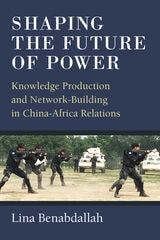
Shaping the Future of Power
Knowledge Production and Network-Building in China-Africa RelationsLina Benabdallah
University of Michigan Press, 2020
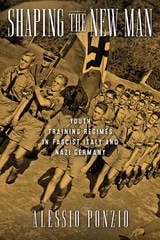
Shaping the New Man
Youth Training Regimes in Fascist Italy and Nazi GermanyAlessio Ponzio
University of Wisconsin Press, 2017
Ponzio shows how the Italian Fascists' pedagogical practices influenced the origin and evolution of the Hitler Youth. He dissects similarities and differences in the training processes of the youth leaders of the Opera Nazionale Balilla, Gioventù Italiana del Littorio, and Hitlerjugend. And, he explores the transnational institutional interactions and mutual cooperation that flourished between Mussolini's and Hitler's youth organizations in the 1930s and 1940s.

Shareveillance
The Dangers of Openly Sharing and Covertly Collecting DataClare Birchall
University of Minnesota Press, 2017
Cracking open the politics of transparency and secrecy
In an era of open data and ubiquitous dataveillance, what does it mean to “share”? This book argues that we are all “shareveillant” subjects, called upon to be transparent and render data open at the same time as the security state invests in practices to keep data closed. Drawing on Jacques Rancière’s “distribution of the sensible,” Clare Birchall reimagines sharing in terms of a collective political relationality beyond the veillant expectations of the state.
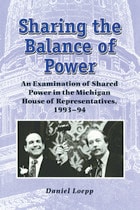
Sharing the Balance of Power
An Examination of Shared Power in the Michigan House of Representatives, 1993-1994Daniel Loepp
University of Michigan Press, 1999
Like national politicians, state legislators all too often focus on partisanship instead of policy making, engaging themselves in rancorous debate that achieves little beyond gridlock. However, during one short period in Michigan's history, legislators stopped bickering and focused on forging compromise. Daniel Loepp's Sharing the Balance of Power chronicles the 87th Michigan Legislature (1993-1994), in which Republicans and Democrats successfully shared power.
In 1992, Michigan voters elected exactly fifty-five Republicans and fifty-five Democrats to the state house. As a result, the two parties each elected a co-speaker, and a shared power agreement was forged. Given the history of intense partisanship in the state house, political pundits predicted that any plan for shared power would disintegrate within months. What resulted instead was one of the most productive legislatures in Michigan history.
Author Daniel Loepp, chief of staff to Democratic Co-Speaker Curtis Hertel at the time, skillfully takes the reader "inside" the State Capitol, examining the key policy debates (including school finance reform), important personalities, and difficult negotiations. Loepp's balanced presentation is testimony to the two years of bi-partisan cooperation in which he took part.
In an age of public cynicism about the legislative process, Daniel Loepp offers the reader a refreshing story about two co-speakers and their 108 colleagues who came together in the spirit of bi-partisan representation to successfully serve their constituents, the people of Michigan.
Daniel Loepp is a partner in the firm of Karoub Associates, Michigan's oldest multi-client lobbying firm.

Sharing the Land of Canaan
Human Rights and the Israeli-Palestinian StruggleMazin B. Qumsiyeh
Pluto Press, 2004
There is no more compelling and dramatic unfolding story, with more profound international ramifications, than the conflict in the Middle East.
Sharing the Land of Canaan is a critical examination of the core issues of the conflict that dares to put forward a radical but logical solution: that a shared state is the best way to achieve justice and peace for Israelis and Palestinians.
Mazin B. Qumsiyeh, a human rights activist based at Yale University, offers an overview of the issues at stake, and outlines his vision for a lasting peace based on upholding the principles of human rights for all. Tackling taboo subjects, myths and obstacles, he argues convincingly that apartheid in the form of a two-state solution is no longer a feasible way to achieve enduring peace.
At this critical time, when the 'road map' to peace looks more uncertain than ever, this book provides a refreshing counterpoint to the failed strategies of the past. It is a direct and accessible account of the history - and mythology - of the fabled 'Land of Canaan', which lays out hopeful ideas for the future of this truly multiethnic and multicultural region.
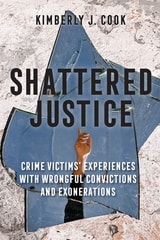
Shattered Justice
Crime Victims' Experiences with Wrongful Convictions and ExonerationsKimberly J. Cook
Rutgers University Press, 2022

Shays' Rebellion
The Making of an Agrarian InsurrectionDavid P. Szatmary
University of Massachusetts Press, 1980
Shays' Rebellion: The Making of an Agrarian Insurrection is a landmark work of early American social and economic history that offers a comprehensive examination of one of the most consequential, and often misunderstood, uprisings in the history of the early American republic. Between 1786 and 1787, debt-ridden farmers across western Massachusetts, many of them veterans of the Revolutionary War, rose in armed protest against the state government's crushing tax and debt collection policies. Under the informal leadership of Daniel Shays, the rebels sought to prevent court foreclosures on their farms, demand tax relief, and reform a judicial system they saw as serving the interests of wealthy creditors at the expense of ordinary citizens. The uprising—ultimately suppressed by a privately funded state militia—sent shockwaves through the young nation, alarming leading figures including George Washington and James Madison, and powerfully accelerating the movement toward a stronger central government and the drafting of the U.S. Constitution.
Szatmary frames the rebellion not as an isolated outbreak of lawlessness, but as a deeply rooted agrarian insurrection produced by the collision of two fundamentally different economic worlds in post-Revolutionary New England. His analysis begins by establishing the divergent economic realities of the region: on one side, the commercial and mercantile economy of New England's coastal towns, driven by creditors, merchants, and professional elites integrated into transatlantic trade networks; on the other, the subsistence farming communities of the interior, whose inhabitants operated largely outside the cash economy and bore a disproportionate burden of wartime debt and postwar taxation. Drawing on this structural conflict, Szatmary traces the chain of debt that left rural farmers increasingly unable to meet their obligations, the escalating cycle of court actions and property seizures that pushed them toward organized resistance, and the government's responses, ultimately military, to the protests.
The book is also attentive to the rebellion's broader political consequences, examining how Shays' Rebellion transformed the national debate about governance, federal authority, and the relationship between popular democracy and social order in the new republic. Described by one reviewer as a "well-balanced" study that "classifies Shays' Rebellion as the historical watershed it truly is," the book remains a standard reference in the historiography of the Early American Republic, the Articles of Confederation period, and the origins of the Constitutional Convention.

Sheep Industry of Territorial New Mexico
Livestock, Land, and DollarsJon M. Wallace
University Press of Colorado, 2023
Author Jon Wallace tells the story of evolving living conditions as the sheep industry came to encompass innumerable families of modest means. The transformation improved many New Mexicans’ lives and helped establish the territory as a productive part of the United States. There was a cost, however, with widespread ecological changes to the lands—brought about in large part by heavy grazing. Following the US annexation of New Mexico, new markets for mutton and wool opened. Well-connected, well-financed Anglo merchants and growers who had recently arrived in the territory took advantage of the new opportunity and joined their Hispanic counterparts in entering the sheep industry.
The Sheep Industry of Territorial New Mexico situates this socially imbued economic story within the larger context of the environmental consequences of open-range grazing while examining the relationships among Hispanic, Anglo, and Indigenous people in the region. Historians, students, general readers, and specialists interested in the history of agriculture, labor, capitalism, and the US Southwest will find Wallace’s analysis useful and engaging.
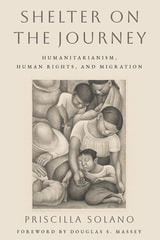
Shelter on the Journey
Humanitarianism, Human Rights, and MigrationPriscilla Solano
Temple University Press, 2024
Solano, who volunteered at shelters in Mexico, chronicles the activity in three of the nearly 100 shelters along a unique humanitarian trail that many Central Americans take to reach the United States. She outlines the constraints faced by these sites and their potential to create social transformation and considers how and why migration security is currently framed and managed as both a criminal and humanitarian issue.
Shelter on the Journey explores the politics of the shelters, their social world, and the dynamics of charity and solidarity, as well as the need for humanitarian assistance and advocacy for dignified and free transit migration.
Shifting Obsessions
Three Essays on the Politics of AnticorruptionAryeh Neier
Central European University Press, 2004
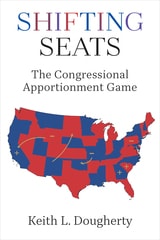
Shifting Seats
The Congressional Apportionment GameKeith L. Dougherty
University of Michigan Press, 2027
Winning presidential elections isn’t just about the ballot box; it is shaped by the rules of the “apportionment game.” Shifting Seats uncovers the gritty history of how politicians fought for greater legislative influence and how those decisions determined control of Congress—and sometimes the presidency. Moving beyond abstract debates, Keith L. Dougherty takes readers inside high-stakes bargaining from the Founding era, the Antebellum period, and post–Civil War struggles over representation. Within these periods, Dougherty models how legislators manipulated the building blocks of apportionment—including metrics, ratios, House sizes, and rounding methods—to maximize their state’s proportion of seats. He explains how a 1920s stalemate fixed the House’s size at 435 members and created the automatic system in use today.
Bridging the gap between political history and formal theory, the book identifies the long-term mechanisms that stabilize or disrupt distributions of power. Further, it shows how different apportionment methods could have flipped some presidential elections. By connecting these clashes to our current polarized climate, Shifting Seats explains why some apportionment rules endure while others fail, revealing the hidden mechanics that continue to dictate the balance of power in Washington today.
Shining and Other Paths
War and Society in Peru, 1980-1995Steve J. Stern, ed.
Duke University Press, 1998
The contributors—a team of Peruvian and U.S. historians, social scientists, and human rights activists—explore the origins, social dynamics, and long-term consequences of the effort by Shining Path to effect an armed communist revolution. The book begins by interpreting Shining Path’s emergence and decision for war as one logical culmination, among several competing culminations, of trends in oppositional politics and social movements. It then traces the experiences of peasants and refugees to demonstrate how human struggle and resilience came together in grassroots determination to defeat Shining Path, and explores the unsuccessful efforts of urban shantytown dwellers, as well as rural and urban activists, to build a “third path” to social justice. Integral to this discussion is an examination of women’s activism and consciousness during the years of the crisis. Finally, this book analyzes the often paradoxical and unintended legacies of this tumultuous period for social and human rights movements, and for presidential and military leadership in Peru.
Extensive field research, broad historical vision, and strong editorial coordination enable the authors to write a coherent and deeply humanistic account, one that draws out the inner tragedies, ambiguities, and conflicts of the war.
Providing historically grounded explication of the conflicts that reshaped contemporary Peru, Shining and Other Paths will be widely read by Latin Americanists, historians, anthropologists, gender theorists, sociologists, political scientists, and human rights activists.
Contributors. Jo-Marie Burt, Marisol de la Cadena, Isabel Coral Cordero, Carlos Iván Degregori, Iván Hinojosa, Carlos Basombrío Iglesias, Florencia E. Mallon, Nelson Manrique, Hortensia Muñoz, Enrique Obando, Patricia Oliart, Ponciano del Pino H., José Luis Rénique, Orin Starn, Steve J. Stern
Shock and Yawn
Resisting Banal Terror Through Queer StorytellingMegan Sibbett
The Ohio State University Press, 2026
Building on queer theorists’ critiques of intimate and administrative violence, especially Gloria Anzaldúa’s “intimate terrorism,” Sibbett develops methodologies for conceptualizing and subverting violence aimed at queer, racialized, and gendered bodies in this era of surveillance and increasing authoritarianism. Sibbett addresses book bans, anti-trans legislation, idealized histories of westward expansion, and more, examining materials that include public service announcements, advertising, social media, news reports, poems, interviews, and novels. In so doing, she demonstrates the crucial role queer testimonies—and queer histories and queer futures—play in revealing systemic violence and illuminating the transformative potential of everyday resistance.

Shopping Our Way to Safety
How We Changed from Protecting the Environment to Protecting OurselvesAndrew Szasz
University of Minnesota Press, 2007
“Not long ago, people did not worry about the food they ate. They did not worry about the water they drank or the air they breathed. It never occurred to them that eating, drinking water, satisfying basic, mundane bodily needs might be a dangerous thing to do. Parents thought it was good for their kids to go outside, get some sun.
“That’s all changed now.” —from the Introduction
Many Americans today rightly fear that they are constantly exposed to dangerous toxins in their immediate environment: tap water is contaminated with chemicals; foods contain pesticide residues, hormones, and antibiotics; even the air we breathe, outside and indoors, carries invisible poisons. Yet we have responded not by pushing for governmental regulation, but instead by shopping. What accounts for this swift and dramatic response? And what are its unintended consequences?
Andrew Szasz examines this phenomenon in Shopping Our Way to Safety. Within a couple of decades, he reveals, bottled water and water filters, organic food, “green” household cleaners and personal hygiene products, and “natural” bedding and clothing have gone from being marginal, niche commodities to becoming mass consumer items. Szasz sees these fatalistic, individual responses to collective environmental threats as an inverted form of quarantine, aiming to shut the healthy individual in and the threatening world out.
Sharply critiquing these products’ effectiveness as well as the unforeseen political consequences of relying on them to keep us safe from harm, Szasz argues that when consumers believe that they are indeed buying a defense from environmental hazards, they feel less urgency to actually do something to fix them. To achieve real protection, real security, he concludes, we must give up the illusion of individual solutions and together seek substantive reform.
Andrew Szasz is professor and chair of the department of sociology at the University of California at Santa Cruz and author of the award-winning EcoPopulism (Minnesota, 1994).

Short-Changed?
South Africa since ApartheidColin Bundy
Ohio University Press, 2015
What have been the most significant developments—political, social, economic—in South Africa since 1994? How much has changed since the demise of apartheid, and how much remains stubbornly the same? Should one celebrate a robust democracy now two decades old, or lament the corrosive effects of factionalism, greed, and corruption on political life? Colin Bundy tries to answer such questions, while avoiding simplistic or one-sided assessments of life under Mandela, Mbeki, and Zuma. He recognizes real advances under ANC rule but also identifies the limits and contradictions of such progress. Bundy demonstrates, too, how the country’s past permeates the present, complicating and constraining the politics of transition, so that genuine transformation has been short-changed.
Shortcut or Piecemeal
Economic Development Strategies and Structural ChangeJan Winiecki
Central European University Press, 2016

Shostakovich
Brian Morton
Haus Publishing, 2021
Internationally esteemed, Soviet composer Dmitri Shostakovich is widely considered to have been the last great classical symphonist, and his reputation has continued to increase since his death in 1975.
Shostakovich wrote his First Symphony at the age of nineteen, then he soon embarked on a dual career as a concert pianist and composer. His early avant-gardism resulted in the triumph of his 1934 opera Lady Macbeth of Mtsensk. Though at first highly praised by Stalin, Shostakovich would later suffer from a complex and brutalizing relationship with the Soviet dictator and the governments that followed him. Despite this persecution, his Seventh Symphony was embraced as a potent symbol of Russian resistance to the invading Nazi army in both the USSR and the West. Though his later years were marked by ill health, his rate of composition remained prolific. His music became increasingly beloved as he established himself as the most popular composer of serious music in the middle of the twentieth century.

Showdown in the Show-Me State
The Fight Over Conceal-and-Carry Gun Laws in MissouriWilliam T. Horner
University of Missouri Press, 2005

Showing Teeth to the Dragons
State-building by Colombian President Álvaro Uribe Vélez, 2002–2006Harvey F. Kline
University of Alabama Press, 2009
Kline argues that the first administration of Colombian President Álvaro Uribe Vélez marks a decisive break in a seemingly endless cycle of civil war. Not only were the levels of homicide and kidnapping dramatically reduced, but the state took the offensive against the insurgents, strengthening the armed forces which in turn demonstrated clear support for the president's policy.
The civil war in Colombia has waxed and waned for sixty years, with shifting goals, programs, and tactics among the contending parties. Bursts of appalling violence are punctuated by uneasy truces, cease-fires, and attempts at reconciliation. Varieties of Marxism, the economics of narco-trafficking, peasant land hunger, poverty, and oppression mix together in a toxic stew that has claimed the uncounted lives of peasants, conscript soldiers, and those who simply got in the way.
Kline believes that the changes of the President, although dramatic, are not necessarily permanent. He discusses what challenges must be overcome for the permanent reduction of organized violence in this war-torn nation.

Showroom City
Real Estate and Resistance in the Furniture Capital of the WorldJohn Joe Schlichtman
University of Minnesota Press, 2022
A unique and engaging account of local urban decision-making within the globalizing world
High Point, North Carolina, is known as the “Furniture Capital of the World.” Once a manufacturing stronghold, most of its furniture factories have closed over the past forty years, with production shipped off to low-wage countries. Yet as manufacturing left, the city tightened its hold on a biannual global exposition that serves as the world’s furniture fashion runway. At the High Point Market, visitors from more than one hundred nations traverse twelve million square feet of meticulous design. Downtown buildings—once courthouses, movie theaters, post offices, and gas stations—are now chic showroom spaces, even as many sit empty between each exposition.
In Showroom City, John Joe Schlichtman applies an ethnographic lens to the global exposition’s relationship with High Point after it defeated rival Chicago in the 1960s and established itself as the world’s dominant furniture center. In recent decades, following trends in global finance, private equity firms were increasingly behind downtown High Point’s real estate transactions, coordinated by buyers far removed from the region. Then, in one massive transaction in 2011, a firm funded by Bain Capital purchased every major showroom building, and the majority of downtown real estate was under one owner.
Showroom City is a story of exclusionary growth and unchecked development, of a city flailing to fill the void left by its dwindling factories. But beyond that Schlichtman engages the general lessons behind both High Point’s deindustrialization and its stunning reinvention as a furniture fashion, merchandising, and design node. With great nuance, he delves deeply to reveal how power operates locally and how citizens may affirm, exploit, influence, and resist the takeover of their community.
Sick Building Syndrome and the Problem of Uncertainty
Environmental Politics, Technoscience, and Women WorkersM. Murphy
Duke University Press, 2006
Sick building syndrome embodied a politics of uncertainty that continues to characterize contemporary American environmental debates. Murphy explores the production of uncertainty by juxtaposing multiple histories, each of which explains how an expert or lay tradition made chemical exposures perceptible or imperceptible, existent or nonexistent. They show how uncertainty emerged from a complex confluence of feminist activism, office worker protests, ventilation engineering, toxicology, popular epidemiology, corporate science, and ecology. In an illuminating case study, she reflects on EPA scientists’ efforts to have their headquarters recognized as a sick building. Murphy brings all of these histories together in what is not only a thorough account of an environmental health problem but also a much deeper exploration of the relationship between history, materiality, and uncertainty.
Side Effects and Complications
The Economic Consequences of Health-Care ReformCasey B. Mulligan
University of Chicago Press, 2015
Looking specifically at the labor market, Mulligan reveals how the costs of health care under the ACA actually create implicit taxes on individuals, and how increased costs to employers will be passed on to their employees. Mulligan shows how, as a result, millions of workers will find themselves in a situation in which full-time work, adjusted for the expense of health care, will actually pay less than part-time work or even not working at all. Analyzing the incentives—or lack thereof—for people to earn more by working more, Mulligan offers projections on how many hours people will work and how productively they will work, as well as how much they will spend in general. Using the powerful tools of economics, he then illustrates the detrimental consequences on overall employment in the near future.
Drawing on extensive knowledge of the labor market and the economic theories at its foundation, Side Effects and Complications offers a crucial wake-up call about the risks the ACA poses for the economy. Plainly laying out the true costs of the ACA, Mulligan’s grounded and thorough predictions are something that workers and policy makers cannot afford to ignore.
Signaling Goodness
Social Rules and Public ChoicePhillip J. Nelson and Kenneth V. Greene
University of Michigan Press, 2003
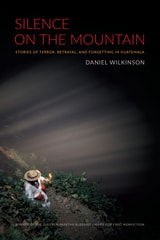
Silence on the Mountain
Stories of Terror, Betrayal, and Forgetting in GuatemalaDaniel Wilkinson
Duke University Press, 2004
Decades of terror-inspired fear have led the Guatemalans to adopt a survival strategy of silence so complete that it verges on collective amnesia. The author’s great triumph is that he finds a way for people to tell their stories, and it is through these stories—dramatic, intimate, heartbreaking—that we are shown the anatomy of a thwarted revolution that has relevance not only to Guatemala but also to countless places around the world where terror has been used as a political tool.
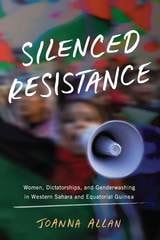
Silenced Resistance
Women, Dictatorships, and Genderwashing in Western Sahara and Equatorial GuineaJoanna Allan
University of Wisconsin Press, 2021
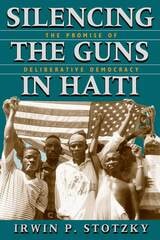
Silencing the Guns in Haiti
The Promise of Deliberative DemocracyIrwin P. Stotzky
University of Chicago Press, 1997
"A provocative study of the prospects for the rule of law in Haiti."—Marilyn Bowden, Miami Today
"[Stotzky] deepens insights into the contradictory obstacles to democratic governance in Haiti."—Library Journal
"Controversial and stimulating."—Choice
"Lucid and informative. . . . Stotzky gives readers a good foundation for understanding the pressures facing the impoverished but determined Caribbean island."—Islands

Silent Cells
The Secret Drugging of Captive AmericaAnthony Ryan Hatch
University of Minnesota Press, 2019
A critical investigation into the use of psychotropic drugs to pacify and control inmates and other captives in the vast U.S. prison, military, and welfare systems
For at least four decades, U.S. prisons and jails have aggressively turned to psychotropic drugs—antidepressants, antipsychotics, sedatives, and tranquilizers—to silence inmates, whether or not they have been diagnosed with mental illnesses. In Silent Cells, Anthony Ryan Hatch demonstrates that the pervasive use of psychotropic drugs has not only defined and enabled mass incarceration but has also become central to other forms of captivity, including foster homes, military and immigrant detention centers, and nursing homes.
Silent Cells shows how, in shockingly large numbers, federal, state, and local governments and government-authorized private agencies pacify people with drugs, uncovering patterns of institutional violence that threaten basic human and civil rights. Drawing on publicly available records, Hatch unearths the coercive ways that psychotropics serve to manufacture compliance and docility, practices hidden behind layers of state secrecy, medical complicity, and corporate profiteering.
Psychotropics, Hatch shows, are integral to “technocorrectional” policies devised to minimize public costs and increase the private profitability of mass captivity while guaranteeing public safety and national security. This broad indictment of psychotropics is therefore animated by a radical counterfactual question: would incarceration on the scale practiced in the United States even be possible without psychotropics?
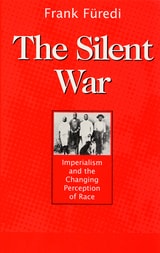
Silent War
Furedi, Frank
Rutgers University Press, 1999
"The Silent War transcends the disciplinary line that divides race relations from international relations. It is an enterprise in sociological investigation which seeks to mobilize the insights of history to clarify how the consciousness of race has evolved." - Kofi Buenor Hadjor
Racial identity has been one of the defining characteristics of the twentieth century. Yet, argues Frank Furedi in this provocative study, advocates of racial identity have long felt uncomfortable with the racialized global order which they created.
Furedi traces the history of Western colonial racist ideology and its role in subjugating non-Western peoples. He analyzes the changing perception of racism in the West and how the use of "race" has altered during the course of the twentieth century.
Focusing on the Second World War as the critical turning point in racist ideology, Furedi argues that the defeat of Nazism left the West uneasy with its own racist past. He assesses how this was redefined in the postwar period-especially during the Cold War- and demonstrates that, although white supremacist views gradually became obsolete in international affairs, Western nations were initially unwilling to accept criticism of their past and sought to portray racism as a natural part of human condition. As a result the West continued to adopt the moral high ground well into the postwar period, to the ultimate detriment of non-Western nations.

Simple Not Easy
Reflections on community social responsibility and toleranceTerrence Roberts
Parkhurst Brothers, Inc., 2010
HE MADE HISTORY. HE TELLS THE TRUTHS HE KNOWS.
LEAD TITLE/Our National Conversation Series
----Margot Stern Strom, Executive Director, Facing History and Ourselves, Inc.
"Terrence Roberts challenges all of us to make the world more inclusive by adjusting our 'mental maps.' He reminds us that we will not achieve that long-sought beloved community until we recognize the value of each individual-until we affirm each other. Simple, NotEasy is one trailblazer's mingling of history and contemporary mattersto engage a new conversations on community, social responsibility and tolerance. A powerful book by a civil rights legend."
--- Lawrence J. Pijeaux, Jr., Ed.D.,

Simulating Good and Evil
The Morality and Politics of VideogamesMarcus Schulzke
Rutgers University Press, 2020
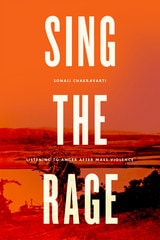
Sing the Rage
Listening to Anger after Mass ViolenceSonali Chakravarti
University of Chicago Press, 2014
Chakravarti takes up the issue from Adam Smith and Hannah Arendt, who famously understood both the dangers of anger in politics and the costs of its exclusion. Building on their perspectives, she argues that the expression and reception of anger reveal truths otherwise unavailable to us about the emerging political order, the obstacles to full civic participation, and indeed the limits—the frontiers—of political life altogether. Most important, anger and the development of skills needed to truly listen to it foster trust among citizens and recognition of shared dignity and worth. An urgent work of political philosophy in an era of continued revolution, Sing the Rage offers a clear understanding of one of our most volatile—and important—political responses.

Singapore's Grand Strategy
Cheng Guan Ang
National University of Singapore Press, 2023
Even small states can have grand strategies. Singapore, despite its poor natural resource endowment, small population, and size, has often been described as punching above its weight in international affairs. Part of this stems from the way Singapore strategically integrates the different diplomatic, political, and defense-oriented tools at its disposal. To explore this, Singapore’s Grand Strategy offers a fresh and useful diplomatic, defense, and security history of Singapore, from its independence in 1965 through today’s period of strategic realignment.
Most previous studies of grand strategy have focused on super- or at least middle powers, but this book presents an important contribution to international relations and strategic studies by showing how the concept can help explain the strategic posture and achievements of small states as well. Moreover, he brings a historian's perspective to a subject usually tackled by political scientists. The result will be useful and important for scholars in these fields.

Singing with Invisible Worlds
Fermenting Sake on Microbial TimeMaya Hey
University of Minnesota Press, 2026
Rethinking life with microbes through the art of natural fermentation
Within us and around us, microbes are everywhere, constantly reshaping what it means to be human as we interact with them—sometimes knowingly, sometimes not. Singing with Invisible Worlds theorizes human–microbe relationships through a rare ethnographic account of the fermentation process at the 350-year-old Terada Honke, one of only two natural sake breweries in Japan.
Painting a vivid picture of how sake brewers collaborate with bacteria, molds, and yeasts, Maya Hey reveals that ambient microbes are not controlled but courted, cultivated, and deliberately choreographed. As the brewers adapt to shifting microbial dynamics, they engage in what Hey calls an “improvisational ethic”—a way of responding to the unknown with care and attentiveness through each phase of blooming and waning across weeks, months, and even centuries. In documenting these remarkable practices, Singing with Invisible Worlds offers an intimate, situated understanding of how we can come to know and live with microbial life, with implications for feminist theory, science and technology studies, and multispecies ethnography.
Unsettling simplistic notions of “good” or “bad” microbes, this book presents a compelling vision for planetary coexistence—one that starts not with grand solutions but with small, rhythmic acts of microscopic attunement.
Retail e-book files for this title are screen-reader friendly with images accompanied by short alt text and/or extended descriptions.
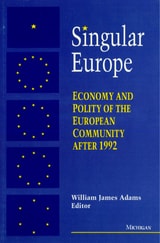
Singular Europe
Economy and Polity of the European Community after 1992William James Adams, Editor
University of Michigan Press, 1994

Sinking Chicago
Climate Change and the Remaking of a Flood-Prone EnvironmentHarold L. Platt
Temple University Press, 2018
In Sinking Chicago, Harold Platt shows how people responded to climate change in one American city over a hundred-and-fifty-year period. During a long dry spell before 1945, city residents lost sight of the connections between land use, flood control, and water quality. Then, a combination of suburban sprawl and a wet period of extreme weather events created damaging runoff surges that sank Chicago and contaminated drinking supplies with raw sewage.
Chicagoans had to learn how to remake a city built on a prairie wetland. They organized a grassroots movement to protect the six river watersheds in the semi-sacred forest preserves from being turned into open sewers, like the Chicago River. The politics of outdoor recreation clashed with the politics of water management. Platt charts a growing constituency of citizens who fought a corrupt political machine to reclaim the region’s waterways and Lake Michigan as a single eco-system. Environmentalists contested policymakers’ heroic, big-technology approaches with small-scale solutions for a flood-prone environment. Sinking Chicago lays out a roadmap to future planning outcomes.
Sinn Fein and the Politics of Left Republicanism
Eoin O'Broin
Pluto Press, 2009
Sinn Féin is a growing force in Irish politics. Now the country's third largest party, Sinn Féin have been one of the central architects of the peace process and are increasingly setting the terms of political debate in Ireland north and south. Despite this, the party remains much misunderstood and often misrepresented.
In Sinn Féin & The Politics of Left Republicanism, Sinn Féin activist Eoin Ó Broin explores the ideological and organisational origins of the party, charts their history and recent political development and assesses their possible futures.
He argues that Sinn Féin is part of a distinct left-republican tradition in Irish society whose future lies in the globally resurgent radical democratic left.
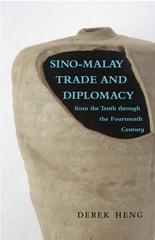
Sino–Malay Trade and Diplomacy from the Tenth through the Fourteenth Century
Derek Heng
Ohio University Press, 2009
China has been an important player in the international economy for two thousand years and has historically exerted enormous influence over the development and nature of political and economic affairs in the regions beyond its borders, especially its neighbors.
Sino–Malay Trade and Diplomacy from the Tenth through the Fourteenth Century examines how changes in foreign policy and economic perspectives of the Chinese court affected diplomatic intercourse as well as the fundamental nature of economic interaction between China and the Malay region, a subregion of Southeast Asia centered on the Strait of Malacca.
This study’s uniqueness and value lie in its integration of archaeological, epigraphic, and textual data from both China and Southeast Asia to provide a rich, multilayered picture of Sino–Southeast Asian relations in the premodern era. Derek Heng approaches the topic from both the Southeast Asian and Chinese perspectives, affording a dual narrative otherwise unavailable in the current body of Southeast Asian and China studies literature.

Sins Of The Parents
Politics Of National Apologies In The U.S.Brian A. Weiner
Temple University Press, 2005
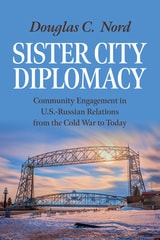
Sister City Diplomacy
Community Engagement in U.S.–Russian Relations from the Cold War to TodayDouglas C. Nord
University of Wisconsin Press, 2025
Sister City Diplomacy offers a historical account of citizen diplomacy set in a unique political and social environment. But in its theoretical grounding and informed arguments, this study speaks to much broader and contemporary concerns, both in terms of United States–Russian relations today and with regard to the challenges and opportunities of community-based diplomacy in general. Lessons learned along the shores of Lakes Superior and Onega in the last days of the Cold War hold great value given the heightened tensions of current geopolitics.
Situated Marxism
Theoretical Practices in State Socialist EuropeAdela Hincu
Central European University Press, 2026

Six Women Who Shaped What Americans Eat
Food Choice in an Age of AbundanceMichelle Mart, Foreword by Mark D. Hersey
University of Alabama Press, 2025
How six groundbreaking women redefined American food—what we eat, how we eat it, and why it matters.
From wartime nutrition science to modern food activism, Six Women Who Shaped What Americans Eat examines the pivotal roles six women played in rewriting the rules of American cuisine. Michelle Mart offers a rich and accessible narrative that connects dietary trends, food marketing, and public health movements to the voices of the women who helped drive them.
Part one highlights Hazel Stiebeling’s development of dietary guidelines and RDAs, Poppy Cannon’s promotion of processed foods for convenience and gourmet meals, and Julia Child’s introduction of French cuisine with an emphasis on fresh ingredients and culinary techniques. Part two shifts the focus to women who challenged the food system itself: Frances Moore Lappé’s advocacy for vegetarianism and sustainable practices, Marion Nestle’s exposure of food corporations’ manipulative practices, and Alice Waters’s emphasis on locally sourced, organic ingredients and sustainable food systems. Thoughtful and timely, this book explores how culture, politics, and personal vision collided in the kitchens and campaigns of six food pioneers—leaving a lasting imprint on what America eats today.
Sizing Up the Senate
The Unequal Consequences of Equal RepresentationFrances E. Lee and Bruce I. Oppenheimer
University of Chicago Press, 1999
But does it matter that California's 32 million people have the same number of Senate votes as Wyoming's 480,000? Frances Lee and Bruce Oppenheimer systematically show that the Senate's unique apportionment scheme profoundly shapes legislation and representation. The size of a state's population affects the senator-constituent relationship, fund-raising and elections, strategic behavior within the Senate, and, ultimately, policy decisions. They also show that less populous states consistently receive more federal funding than states with more people. In sum, Lee and Oppenheimer reveal that Senate apportionment leaves no aspect of the institution untouched.
This groundbreaking book raises new questions about one of the key institutions of American government and will interest anyone concerned with issues of representation.

Skepticism
Aryeh Botwinick
Temple University Press, 1990
Aryeh Botwinick argues for the recovery of a radical democratic tradition that emphasizes the role of individual participation in the development and control of social and political institutions. Such involvement implies philosophical skepticism—the assumption that the truth about what is the best course of action cannot be known with certainty and that, therefore, every person’s opinion has an equal claim to be considered. The crucial stumbling block to reappropriating this radical egalitarian tradition is the supposed unviability of a consistent skepticism. In an effort to chart a new course of philosophical inquiry into political matters, Botwinick grapples with the formulation of a consistent version of skepticism, claiming that it provides "a continually renewing impetus for the expansion of political participation."
Twentieth-century philosophers have, for the most part, opted for some version of mitigated skepticism, which, the author argues, "has blinded them to the radical political implications of skepticism." Underscoring a pattern of convergence between Anglo-American and Continental philosophy, Botwinick proposes a number of strategies to rehabilitate the rationality of participatory democratic political institutions by articulating an acceptable version of consistent skepticism.

Skepticism And Ideology
Shelley'S Political ProseTerence Allan Hoagwood
University of Iowa Press, 1988