Results by title
8812 books match the query 'Political Science' and 537 start with s
South Africa’s Resistance Press
Alternative Voices in the Last Generation under ApartheidLes Switzer
Ohio University Press, 2000
South Africa’s Struggle for Human Rights
Saul Dubow
Ohio University Press, 2012
The human rights movement in South Africa’s transition to a postapartheid democracy has been widely celebrated as a triumph for global human rights. It was a key aspect of the political transition, often referred to as a miracle, which brought majority rule and democracy to South Africa. The country’s new constitution, its Truth and Reconciliation Commission, and the moral authority of Nelson Mandela stand as exemplary proof of this achievement. Yet, less than a generation after the achievement of freedom, the status of human rights and constitutionalism in South Africa is uncertain. In government the ANC has displayed an inconsistent attitude to the protection, and advancement, of hard-won freedoms and rights, and it is not at all clear that a broader civic and political consciousness of the importance of rights is rooting itself more widely in popular culture.
South Africa’s Suspended Revolution
Hopes and ProspectsAdam Habib
Ohio University Press, 2013
South Africa’s Suspended Revolution tells the story of South Africa’s democratic transition and the prospects for the country to develop a truly inclusive political system. Beginning with an account of the transition in the leadership of the African National Congress from Thabo Mbeki to Jacob Zuma, the book then broadens its lens to examine the relationship of South Africa’s political elite to its citizens. It also examines the evolution of economic and social policies through the democratic transition, as well as the development of a postapartheid business community and a foreign policy designed to re-engage South Africa with the world community.
Written by one of South Africa’s leading scholars and political commentators, the book combines historical and contemporary analysis with strategies for an alternative political agenda. Adam Habib connects the lessons of the South African experience with theories of democratic transition, social change, and conflict resolution. Political leaders, scholars, students, and activists will all find material here to deepen their understanding of the challenges and opportunities of contemporary South Africa.

South Vietnam Trial and Experience
A Challenge for DevelopmentAng Tuan Nguyen
Ohio University Press, 1987
Dr. Nguyen Anh Tuan, former Minister of Finance of the Republic of South Vietnam, addresses a common perception of Vietnam: that South Vietnam was a fragmented society which did not deserve to succeed because of its internal weaknesses. According to Tuan, however, South Vietnam in the last decade of its life developed considerable governmental cohesion and internal social strength. Before the final failure of will, the South and its defenders were well on the way to becoming a viable society that had managed with American assistance to lift itself by its bootstraps to the point to economic take-off. Tuan argues that South Vietnam’s fall was not inevitable. This controversial book will be of great interest to all those concerned with the Vietnamese experience during the period 1954-1975.

South-South Solidarity and the Latin American Left
Jessica Stites Mor
University of Wisconsin Press, 2024
Jessica Stites Mor looks at four in-depth case studies: the use of legal reform to accomplish the goals of solidarity embedded in Mexico's revolutionary constitution, visual and print media circulated by Cuba and its influence on the agenda of the Afro-Asian block at the United Nations, organizing on behalf of Palestinian nationalism in reshaping Argentina's socialist left, and the role of Latin American Catholic activists in challenging the South African apartheid state. These examples serve as a much-needed road map to navigate our current political climate and show us how solidarity movements might approach future struggles.

South-South
The Architecture of Non-Alignment and CooperationEdited by Amit Srivastava, Vladimir Kulic, and Peter Scriver
National University of Singapore Press, 2027
Recovers the untold history of how the Global South cooperated to construct its own modernity.
During the era of decolonization, architecture began to travel along unprecedented paths. Newly independent nations in the Global South did not only build within their own borders; they built with one another, exchanging designs, experts, materials, and entire construction technologies across Africa, Asia, and Latin America. Exchanges operated through a range of formal frameworks, from the Non-Aligned Movement to the Afro-Asian Housing Organization, but also through a dense weave of professional and personal networks, connecting Bandung and Cairo to Kampala, Colombo, and Havana.
South-South considers architecture as a form of “worldmaking,” by which postcolonial nations imagined and materialized alternatives to both colonial legacies and Cold War binaries. Organized around the lenses of staging, cooperation, and mobilities, the contributions attend as much to lofty solidarities as to pragmatic necessities and persistent Northern dependencies, all of which shaped architecture on the ground. The result reframes modern architectural history, not as a story of influence flowing south, but of lateral exchange among so-called peripheries, an unfinished project whose stakes have only grown as the Global South reasserts itself today.
Southeast Asia After the Cold War
A Contemporary HistoryAng Cheng Guan
National University of Singapore Press, 2019
With Southeast Asia After the Cold War, Ang Cheng Guan offers a complete, analytically informed contemporary history that covers the whole region, tracing developments since 1990 and highlighting change, continuity, and the larger context in which decisions have been made. Crucial as a tool for making sense of the dynamics of the region, this account of Southeast Asia’s international relations will also be of immediate relevance to those in the United States and elsewhere who engage with the region, with its young, dynamic population, and its strategic position at between the Indian Ocean and the Pacific.

Southeast Asian/American Studies, Volume 20
Mimi Thi Nguyen
Duke University Press, 0
The contributors represent a new generation of scholars, some of whom are themselves migrants and refugees, who seek to reinvent the study of displaced populations and their diasporas. One essay considers the historical production of the refugee soldier during the “secret wars” of Laos. An ethnography of Southeast Asian American youth protests post-9/11 reveals how neoliberal rationalization of “personal responsibility” created a context for both deportation and the youth movement against it. Several contributions explore concepts of exile, belonging, and the nation-state via media representations of masculinity and the erotic, including the Hmong actors who appear in Clint Eastwood’s film Gran Torino, campy pan-Asian boy bands, and Vietnam Idol, a reality show that, like its British and American counterparts, illustrates specific cultural imagination and national ambitions.
Fiona I. B. Ngô and Mimi Thi Nguyen are both assistant professors of gender and women’s studies and Asian American studies at the University of Illinois, Urbana-Champaign. Nguyen is the author of The Gift of Freedom: War, Debt, and Other Refugee Passages and a co-editor of Alien Encounters: Popular Culture in Asian America, both also published by Duke University Press.
Contributors: Diem-My T. Bui, Long Bui, Thang Dao, Ly Chong Thong Jalao, Soo Ah Kwon, Mariam B. Lam, Viet Le, Fiona I.B. Ngô, Mimi Thi Nguyen, Viet Thanh Nguyen,
Louisa Schein, Cathy J. Schlund-Vials, Va-Megn Thoj, Khatharya Um, Julie Thi Underhill, Bee Vang, Ma Vang
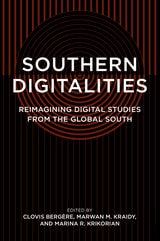
Southern Digitalities
Reimagining Digital Studies from the Global SouthEdited by Clovis Bergère, Marwan M. Kraidy, and Marina R. Krikorian
University of Illinois Press, 2026
Beyond entrenched notions of digital studies research
Western histories and ideas dominate studies of digital technologies despite the fact most of today’s digital users live outside the West. Clovis Bergère, Marwan M. Kraidy, and Marina R. Krikorian curate essays that explore new ways of understanding global digital life by centering the experiences, practices, and infrastructures of Africa, Asia, Latin America, and the Middle East.
The contributors proceed from the idea that the plural term “digitalities” reflects how material conditions, social hierarchies, and local histories shape digital life. Their approach sees so-called Southern digitalities as a gateway to rethinking digital theory from a starting point that draws on grounded knowledge, multilingual concepts, and place‑based research. Four organizing themes—data, belonging, work, and epistemologies—reveal how scholars can navigate and reinterpret digital systems with concepts and methods that challenge established ways of studying and understanding international digital life.
A merger of the theoretical and imaginative, Southern Digitalities provides a blueprint for uncovering more inclusive understandings of contemporary digital worlds.
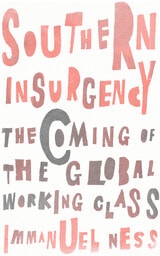
Southern Insurgency
The Coming of the Global Working ClassImmanuel Ness
Pluto Press, 2015
The product of extensive firsthand field research, Southern Insurgency paints a picture of the new industrial proletariat in the Global South—a group that lives a precarious, frightening existence yet at the same time offers hope for new approaches to solidarity and the anti-capitalist struggle.
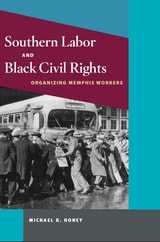
Southern Labor and Black Civil Rights
Organizing Memphis WorkersMichael K. Honey
University of Illinois Press, 1993
Winner of the Charles S. Sydnor Award, given by the Southern Historical Association, 1994. Winner of the James A. Rawley Prize given by the Organization of American Historians, 1994. Winner of the Herbert G. Gutman Award for an outstanding book in American social history.
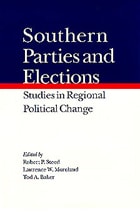
Southern Parties and Elections
Studies in Regional Political ChangeRobert P. Steed
University of Alabama Press, 1997
Clarifies the recent and dramatic development of party competition in the South
Southern politics has changed dramatically during the past half century. While new developments have touched virtually every aspect of the region's politics, change has been especially marked in the South's political party and electoral systems. Southern Parties and Elections explores the contemporary developments in party realignment and examines the relationship between regional party change and electoral behavior and the larger patterns in national politics.
The collection's first group of essays examines some of the key legal issues in contemporary southern politics: the legal battle over majority-minority districting, the electoral consequences of such districting, the practice-fairly widespread in the South-of separating presidential elections from state and local elections, and the connections between the electorate and party change.
The second section of essays focuses on nominations, elections, and partisan developments in the South, including the recent surge of voter participation in southern Republican primaries, the comparative importance of the South and selected states with large blocks of electoral votes in presidential election outcomes, and the southern contribution to patterns of voting in Congress. The final two chapters examine changes in southern state legislatures-one a case study of the Virginia General Assembly and the other an analysis of state legislatures in the region as a whole.
Collectively these essays add important pieces to the enduring puzzle of "southern politics."
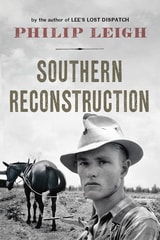
Southern Reconstruction
Philip Leigh
Westholme Publishing, 0
The Reconstruction Era—the years immediately following the Civil War when Congress directed the reintegration of the former Confederate states into the Union—remains, as historian Eric Foner suggests, “America’s unfinished revolution.” But Reconstruction is more than a story of great racial injustice; it has left a complex legacy involving both blacks and whites, Southerners and Northerners, that is reflected today by the fact that many of the states with the highest rates of poverty were part of the former Confederacy. In Southern Reconstruction, Philip Leigh examines Federal wartime legislation in order to broaden our understanding of Reconstruction, revealing how it led to African Americans being used as political pawns, first to ensure continued Republican rule, and finally to be blamed for the South’s hardships in order to draw poor whites away from Populism and back to the aristocratic white Democratic banner.
Civil War laws, such as the Confiscation Acts, Pacific Railroad Acts, Homestead Act, Legal Tender Act, National Banking Act, and Veterans Pensions Acts, transformed America’s banking system, built a railroad web, and launched the Gilded Age in the North and West, but it also created a dubious alliance between banks and government, sparked corruption, purposely depressed Southern industry, trapped Southern farmers—both black and white—in endless annual peonage cycles, and failed to provide lands for freedmen. While Reconstruction was intended to return the South to the Union, it could not be effective with laws that abetted Southern poverty, disfranchised many whites, fostered racial animosity to a point where lynchings and Jim Crow laws erupted, and lined the pockets of wealthy or politically well-connected business leaders outside of the region.
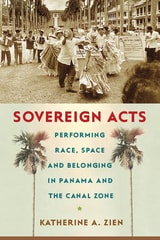
Sovereign Acts
Performing Race, Space, and Belonging in Panama and the Canal ZoneZien, Katherine A.
Rutgers University Press, 2017
Winner of the 2017 Annual Book Prize from the Canadian Association of Latin American and Caribbean Studies (CALACS)
Sovereign Acts explores how artists, activists, and audiences performed and interpreted sovereignty struggles in the Panama Canal Zone, from the Canal Zone’s inception in 1903 to its dissolution in 1999. In popular entertainments and patriotic pageants, opera concerts and national theatre, white U.S. citizens, West Indian laborers, and Panamanian artists and activists used performance as a way to assert their right to the Canal Zone and challenge the Zone’s sovereignty, laying claim to the Zone’s physical space and imagined terrain.
By demonstrating the place of performance in the U.S. Empire’s legal landscape, Katherine A. Zien transforms our understanding of U.S. imperialism and its aftermath in the Panama Canal Zone and the larger U.S.-Caribbean world.
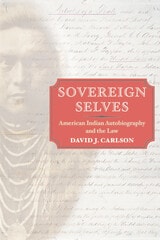
Sovereign Selves
American Indian Autobiography and the LawDavid J. Carlson
University of Illinois Press, 2005
Carlson argues that by drawing on the conventions of early colonial treaty-making, nineteenth- and early twentieth-century Indian autobiographers sought to adapt and redefine the terms of Indian law as a way to assert specific property-based and civil rights. Focusing primarily on the autobiographical careers of two major writers (William Apess and Charles Eastman), Sovereign Selves traces the way that their sustained engagement with colonial legal institutions gradually enabled them to produce a new rhetoric of "Indianness."
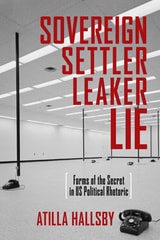
Sovereign, Settler, Leaker, Lie
Forms of the Secret in US Political RhetoricAtilla Hallsby
The Ohio State University Press, 2026
In Sovereign, Settler, Leaker, Lie, Atilla Hallsby argues that secrets play a pivotal role in organizing political discourse in the United States. Hallsby takes up contemporary case studies—ranging from the Valerie Plame scandal during the George W. Bush presidency, to the use of Saul Alinsky’s name as a partisan codeword for politicizing Obama’s Blackness, to Chelsea Manning’s public naming and outing—to show how dramatic revelations increasingly fail to produce meaningful change and instead reproduce entrenched racial, gendered, and colonial hierarchies.
The core feature of these interlinked moments of crisis is the secret: a rhetorical patterning of political life organized by specific forms, each one lending a familiar shape to the shadows of American empire. These forms, theorized here as tropes, connect decades of secrets, linking the George W. Bush administration’s War on Terror to the Trump-era reemergence of “deep state” conspiracy theories. As an extension of secrecy and surveillance studies, and with the aim of attaining a more accountable and just form of US governmentality, Sovereign, Settler, Leaker, Lie explains how still-unfolding political realities in the United States emerged, transformed, and regenerate.

Sovereigns, Quasi Sovereigns, and Africans
Race and Self-Determination in International LawSiba N’Zatioula Grovogui
University of Minnesota Press, 1996
Sovereigns, Quasi Sovereigns, and Africans was first published in 1996. Minnesota Archive Editions uses digital technology to make long-unavailable books once again accessible, and are published unaltered from the original University of Minnesota Press editions.
In this trenchant critique, Siba N'Zatioula Grovogui demonstrates the failure of international law to address adequately the issues surrounding African self-determination during decolonization. Challenging the view that the only requirement for decolonization is the elimination of the legal instruments that provided for direct foreign rule, Sovereigns, Quasi Sovereigns, and Africans probes the universal claims of international law.
Grovogui begins by documenting the creation of the "image of Africa" in European popular culture, examining its construction by conquerors and explorers, scientists and social scientists, and the Catholic Church. Using the case of Namibia to illuminate the general context of Africa, he demonstrates that the principles and rules recognized in international law today are not universal, but instead reflect relations of power and the historical dominance of specific European states.
Grovogui argues that two important factors have undermined the universal applicability of international law: its dependence on Western culture and the way that international law has been structured to preserve Western hegemony in the international order. This dependence on Europeandominated models and legal apparatus has resulted in the paradox that only rights sanctioned by the former colonial powers have been accorded to the colonized, regardless of the latter's needs. In the case of Namibia, Grovogui focuses on the discursive strategies used by the West and their southern African allies to control the legal debate, as well as the tactics used by the colonized to recast the terms of the discussion.
Grovogui blends critical legal theory, historical research, political economy, and cultural studies with profound knowledge of contemporary Africa in general and Namibia in particular. Sovereigns, Quasi Sovereigns, and Africans represents the very best of the new scholarship, moving beyond narrow disciplinary boundaries to illuminate issues of decolonization in Africa.
Siba N'Zatioula Grovogui is assistant professor of political science at Johns Hopkins University. He previously practiced law in his native Guinea.
Sovereignty and Extortion
A New State Form in MexicoClaudio Lomnitz
Duke University Press, 2024
Sovereignty and Survival
Power, Conflict and Climate Change in BurmaAshley South
National University of Singapore Press, 2027
Evaluates Burma at a pivotal tipping point after the 2021 military coup.
The 2021 military coup in Burma/Myanmar triggered popular resistance and a spreading civil war, reigniting long-standing struggles for ethnic self-determination. The chaos has enabled a huge rise in transnational criminal activities, including drug trafficking and the emergence of scam centers. The country's geopolitical importance, not least as a source of rare earths, is also heightening the struggle for power. At the same time, accelerating climate change is destabilizing local ecologies and livelihoods, driving food production, socio-economic systems, and civil society towards collapse or massive change. Together, these forces have undermined the coherence of Burma as a centralized state. However, new forms of resistance and political organization have emerged in liberated areas across the country. At this critical juncture, rather than “state failure,” Burma demonstrates novel forms of complex, asymmetrical, and sometimes messy state-building, a “bottom-up” federalism based on the agency and resilience of Indigenous communities and anti-junta forces.
Sovereignty and the Responsibility to Protect
A New HistoryLuke Glanville
University of Chicago Press, 2013
In Sovereignty and the Responsibility to Protect, Luke Glanville argues that this responsibility extends back to the sixteenth and seventeenth centuries, and that states have since been accountable for this responsibility to God, the people, and the international community. Over time, the right to national self-governance came to take priority over the protection of individual liberties, but the noninterventionist understanding of sovereignty was only firmly established in the twentieth century, and it remained for only a few decades before it was challenged by renewed claims that sovereigns are responsible for protection.
Glanville traces the relationship between sovereignty and responsibility from the early modern period to the present day, and offers a new history with profound implications for the present.
Sovereignty and the Sacred
Secularism and the Political Economy of ReligionRobert A. Yelle
University of Chicago Press, 2018
Developing this close analogy between two elemental domains of society, Sovereignty and the Sacred offers a new theory of religion while suggesting alternative ways of organizing our political and economic life. By rethinking the transcendent foundations and liberating potential of both religion and politics, Yelle points to more hopeful and ethical modes of collective life based on egalitarianism and popular sovereignty. Deliberately countering the narrowness of currently dominant economic, political, and legal theories, he demonstrates the potential of a revived history of religions to contribute to a rethinking of the foundations of our political and social order.
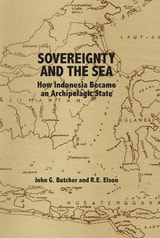
Sovereignty and the Sea
How Indonesia Became an Archipelagic StateJohn G. Butcher and R. E. Elson
National University of Singapore Press, 2017
Sovereignty in Ruins
A Politics of CrisisGeorge Edmondson and Kalus Mladek, editors
Duke University Press, 2017
Contributors. Judith Butler, George Edmondson, Roberto Esposito, Carlo Galli, Klaus Mladek, Alberto Moreiras, Andrew Norris, Eric L. Santner, Adam Sitze, Carsten Strathausen, Rei Terada, Cary Wolfe

Sovereignty, Inc.
Three Inquiries in Politics and EnjoymentWilliam Mazzarella, Eric L. Santner, and Aaron Schuster
University of Chicago Press, 2020
Drawing on anthropology, political theory, philosophy, psychoanalysis, and theater, William Mazzarella, Eric L. Santner, and Aaron Schuster show how politics in the age of Trump functions by mobilizing a contradictory and convoluted enjoyment, an explosive mixture of drives and fantasies that eludes existing portraits of our era. The current political moment turns out to be not so much exceptional as exceptionally revealing of the constitutive tension between enjoyment and economy that has always been a key component of the social order. Santner analyzes the collective dream-work that sustains a new sort of authoritarian charisma or mana, a mana-facturing process that keeps us riveted to an excessively carnal incorporation of sovereignty. Mazzarella examines the contemporary merger of consumer brand and political brand and the cross-contamination of politics and economics, warning against all too easy laments about the corruption of politics by marketing. Schuster, focusing on the extreme theatricality and self-satirical comedy of the present, shows how authority reasserts itself at the very moment of distrust and disillusionment in the system, profiting off its supposed decline. A dazzling diagnostic of our present, Sovereignty, Inc., forces us to come to terms with our complicity in Trump’s political presence and will immediately take its place in discussions of contemporary politics.

Soviet Auteur Cinema After the Thaw
Edited by Marina Rojavin and Tim Harte
University of Wisconsin Press, 2027
Following Stalin’s death, Soviet film—like Soviet culture—changed in meaningful ways. Emerging from a system that had stymied individual, creative voices, prominent directors now found their own respective styles, as they embraced their personal visions to produce works that diverged significantly from the mainstream. Grounded in auteur theory, this volume explores how these filmmakers expressed themselves through creative cinematic means rather than through a narrow emphasis on narrative or in accordance with popular—and governmental—whims.
Each chapter focuses on a specific filmmaker, from well-known auteurs Aleksei German Sr., Kira Muratova, Andrei Tarkovsky, Sergei Parajanov, and Larisa Shepit’ko, to others less familiar in the West: Sergei Solovyov, Roman Balayan, Otar Iosseliani, Tengiz Aduladze, and Ali Khamraev. Hailing from a range of Soviet republics, they all impacted the Soviet cinematic sphere despite harsh censorship and the repression of artists throughout the nation. By integrating cinematic and theoretical perspectives into a discussion of auteur Soviet films, this volume illuminates the significance of a cinematic trend that took place in both Soviet culture and international film history.
Contributors: Robert Efird, Tim Harte, Lilya Kaganovsky, David Gomiero Molina, Lida Oukaderova, Elizabeth A. Papazian, Marina Rojavin, Rita Safariants, Sydney Stotter, Sergey Toymentsev
Soviet Military Intervention in Hungary, 1956
Alexandr Kirov
Central European University Press, 2000
This first detailed account of Soviet military operations is based on access to unpublished material in Soviet archives, which have recently been reclassified.
The major contribution made by the book is its source material, which reveals new information on the organization, command, strategy, and tactics of the Soviet armed forces which invaded Hungary in 1956. Particularly interesting is the precise documentation of the irrationally large size of the forces. The volume is based on research in Soviet archives, and this alone makes it of unique scholarly importance.
The book opens with a substantial introductory essay by the editors, and includes a major study by the Russian military historian Alexandr Kirov, based on research in Soviet military archives. One of the real strengths of the book is that it also includes the memoirs of General Yevgeny Malashenko, in 1956 a colonel in the Soviet Army and acting Chief of Staff of the Special Corps in Budapest. He provides unparalleled insights into Soviet military procedures, politico-military co-operation, and the actual fighting strengths and weaknesses of the Red Army. Very few other high-ranking Soviet officers have ever published their memoirs in the West.
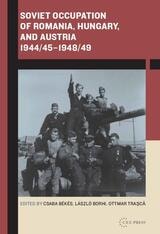
Soviet Occupation of Romania, Hungary, and Austria 1944/45–1948/49
László Borhi
Central European University Press, 2015

Soviet-American Relations After the Cold War
Robert Jervis and Seweryn Bialer, eds.
Duke University Press, 1991
Moving beyond the boundaries of traditional studies of international relations, the contributors here focus on such topics as public opinion and the relationship of domestic policy to foreign policy. Other areas of consideration include the Soviet-U.S. relationship and the Third World and East Asia, the role of the United Nations in Soviet and American policy in the 1990s, international environmental protection, and the Soviet opening to nonprovocative defense. A final section concludes with policy choices for the future regarding security strategies and prospects for peace.
Contributors. Seweryn Bialer, Robert Dallek, Charles Gati, Toby Trister Gati, Colin S. Gray, Ole R. Holsti, Robert Jervis, Alexander J. Motyl, John Mueller, Eric A. Nordlinger, George H. Quester, Harold H. Sanders, Glenn E. Schweitzer, Jack Snyder, Donald S. Zagoria, William Zimmerman
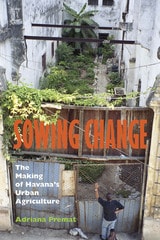
Sowing Change
The Making of Havana's Urban AgricultureAdriana Premat
Vanderbilt University Press, 2012

Sowing the Seeds of Change
The Story of the Community Food Bank of Southern ArizonaSeth Schindler
University of Arizona Press, 2021
The numbers are no less shocking in southern Arizona: one in six residents, and one in four children, are food insecure. How can this be in the richest country in the world? This book explores that paradox and the innovative solutions that one organization has developed to create a healthier, more secure tomorrow for the less fortunate among us.
The Community Food Bank of Southern Arizona (CFB) is one of the oldest and most respected food banks in America. It is a widely recognized leader not simply in providing hunger relief but in attacking the root causes of hunger and poverty through community development, education, and advocacy. In 2018, Feeding America—the national organization of food banks—named it “Food Bank of the Year.” The CFB serves as a model for all nonprofits to follow, no matter their mission.
This profusely illustrated book chronicles the CFB’s amazing success and evolution from a tiny grassroots hunger-relief organization to one with more than six thousand workers and an annual budget exceeding $100 million. The book gives voice to the thousands of CFB participants past and present, weaving their profiles and quotes throughout the book. These profiles personalize the history of the CFB and give readers an insider’s perspective on the people and events that shaped the food bank’s success. It shows how individuals working together can help prevent hunger and break the cycle of poverty that is its cause.
The aim of Sowing the Seeds of Change is not to laud the CFB’s achievements. It is to demonstrate to readers that the war against hunger, despite the obstacles, can be won. And not tomorrow. Now!
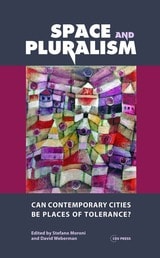
Space and Pluralism
Can Contemporary Cities Be Places of Tolerance?Stefano Moroni
Central European University Press, 2016

Spaceflight and the Myth of Presidential Leadership
Edited by Roger D. Launius and Howard E. McCurdy
University of Illinois Press, 1997
Setting the tone for the collection, NASA chief historian Roger D. Launius and Howard McCurdy maintain that the nation's presidency had become imperial by the mid-1970s and that supporters of the space program had grown to find relief in such a presidency, which they believed could help them obtain greater political support and funding. Subsequent chapters explore the roles and political leadership, vis-à-vis government policy, of presidents Eisenhower, Kennedy, Johnson, Nixon, Ford, Carter, and Reagan.
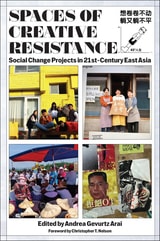
Spaces of Creative Resistance
Social Change Projects in Twenty-First-Century East AsiaAndrea Gevurtz Arai
Rutgers University Press, 2025
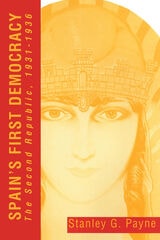
Spain's First Democracy
The Second Republic, 1931–1936Stanley G. Payne
University of Wisconsin Press, 1993
Payne’s detailed study places the Republic within the historical framework of Spanish liberalism and the rapid modernization of interwar Europe, which was unlike any other period in Spain’s history. Payne discusses the Republicans’ efforts to establish Spain’s first democratic political systems and to institute major reforms within the Republic. In highlighting reforms in politics and government, church-state relations, education and culture, public works, military affairs, and society as a whole, he assesses the successes and failures of these reforms as well as the reasons for their limitations. He also examines the economic and foreign policy issues of the period.
Focusing particularly on political conflict and social cleavage, Payne brilliantly explores the sources and character of the political polarization that developed as a result of the assaults on the Republic from the Left and the Right. He identifies the main political actors in this schism and their role in the eventual breakdown of the Republic. Tracing the progressive collapse of the Republican polity in the first half of 1936, Payne stresses the importance of political violence in the democracy’s downfall.
In restoring perspectives that have been ignored or bypassed, Payne presents a consistent and detailed interpretation of Spain’s Second Republic, demonstrating its striking parallels to the Weimar Republic in Germany.

Spain
A Unique HistoryStanley G. Payne
University of Wisconsin Press, 2010
From bloodthirsty conquest to exotic romance, stereotypes of Spain abound. This new volume by distinguished historian Stanley G. Payne draws on his half-century of experience to offer a balanced, broadly chronological survey of Spanish history from the Visigoths to the present. Who were the first “Spaniards”? Is Spain a fully Western country? Was Spanish liberalism a failure? Examining Spain’s unique role in the larger history of Western Europe, Payne reinterprets key aspects of the country’s history.
Topics include Muslim culture in the peninsula, the Spanish monarchy, the empire, and the relationship between Spain and Portugal. Turning to the twentieth century, Payne discusses the Second Republic and the Spanish Civil War. The book’s final chapters focus on the Franco regime, the nature of Spanish fascism, and the special role of the military. Analyzing the figure of Franco himself, Payne seeks to explain why some Spaniards still regard him with respect, while many others view the late dictator with profound loathing.
Framed by reflections on the author’s own formation as a Hispanist and his evaluation of the controversy about “historical memory” in contemporary Spain, this volume offers deeply informed insights into both the history and the historiography of a unique country.
A Choice Outstanding Academic Book

Spain
The Rise of the First World PowerJohn Fraser Ramsey with a Foreword by James D. Mixson
University of Alabama Press, 2026
Before Britain. Before America. There was Spain.
In Spain: The Rise of the First World Power, John Fraser Ramsey traces the evolution of Spain from a battleground of Romans, Visigoths, Moors, and Christians to the most formidable empire of its age. Not merely a chronicle of kings, battles, and dynasties, the book reveals how institutions, beliefs, ambitions, and accidents combined to propel a stubborn and quarrelsome people onto history’s center stage.
In his memorable, avuncular style, Ramsey shows how nations are a mix of virtues and flaws, complicated human communities held together by ingenuity, conviction, and occasional luck. His Spain is not populated solely by monarchs in brocade and generals on horseback. Merchants, clerics, adventurers, bureaucrats, and visionaries all take their places in the procession, forming the untidy pageant from which great powers invariably emerge. The effect is less a lecture than a guided expedition through the machinery of history.
This reissue of Ramsey's longest work arrives at an opportune hour. Amid fissiparous debates about identity, borders, religion, and power, Ramsey supplies the rarer commodity of perspective. Readers interested in Spanish history, European civilization, empire, exploration, military affairs, political institutions, religious history, and cultural exchange will find a rich larder of insight. It is especially suited to those who suspect that the past is more instructive than the slogans with which moderns so industriously replace it.

Spaniards and Nazi Germany
Collaboration in the New OrderWayne H. Bowen
University of Missouri Press, 2000
Using recently declassified documents from Spain and the United States, personal interviews, and unpublished and published Spanish, German, British, and U.S. records, Spaniards and Nazi Germany makes a significant contribution to the understanding of Hispano-German relations during the 1930s and 1940s. This study shows that Naziphiles within the Spanish Falange, Spain's fascist party, made a concerted effort to bring their nation into World War II, and that only the indecisiveness of dictator Francisco Franco and diplomatic mistakes by the Nazis prevented them from succeeding.
Bowen demonstrates that while Spain was neutral in World War II, its policies clearly favored the Axis, at least in the early stages of the war. Franco, who had emerged victorious from the Spanish Civil War in 1939 largely because of support from Adolf Hitler and Benito Mussolini, even carefully considered entering World War II on the side of Nazi Germany.
By the late 1930s, members of the Falange saw World War II as a revolutionary opportunity, a chance to lead Spain into a new age as a partner with Nazi Germany and Fascist Italy at the head of a New Europe of social justice and authoritarian regimes. By the end of 1939, a significant minority of pro- Nazi Spaniards were unhappy that Spain had not entered the war and remade itself to fit better into Hitler's New Order. Bowen argues that support for Nazi Germany in Spain and among Spanish communities throughout Europe was both wide and deep, and that this enthusiasm for the Third Reich and the New Order it promised to bring lasted until the end of the war. Despite statements of neutrality by the Spanish government, the Franco regime was well aware of this collaboration by Spanish citizens as late as 1944-1945 and did little to stop it. Had Hitler been more interested in bringing Spain into his empire, or exploiting the pro-Nazi sentiments of these thousands of Spaniards, he might have replaced Franco with someone more willing to support his interests even as late as 1943.
Spaniards and Nazi Germany presents many possibilities for what might have been a far different outcome of World War II in Europe. It shows that even without the full support of the Spanish or German governments, pro-Nazi Spaniards, even if they did not quite bring Spain into the war, added to the strength of the Third Reich by serving in its armies, working in its factories, and promoting its ideas to other nations.

Spark of Independence
The American Revolution in the Northern Colonies, 1775–1776Michael Cecere
Westholme Publishing, 2024
The Independence Trilogy (Spark of Independence, United for Independence, March to Independence) seeks to answer one simple question. What happened in the thirteen colonies after bloodshed erupted at Lexington and Concord in April 1775 until independence was declared in July 1776?
For the Northern colonies, the traditional view is that they reacted as one in their opposition to Great Britain, each sending troops to Massachusetts to help form an Army of Observation that within two months of Lexington became the Continental Army. This is indeed what happened, and the events at Lexington and Concord, Bunker Hill, and the siege of Boston had a tremendous impact on each New England colony.But so too did other events that occurred in New Hampshire, Massachusetts, Rhode Island and Connecticut. Clashes with the British navy in far-away Machias, on the coast of present-day Maine, as well as in Boston Harbor, Massachusetts Bay, Buzzards Bay, Narragansett Bay, and the Long Island Sound; the destruction of Falmouth (present-day Portland, Maine), the bombardment of Stonington, Connecticut, and the threatened destruction of Portsmouth, New Hampshire, and Newport, Rhode Island, all contributed to the growing sentiment for independence that grew in New England following the outbreak of war. New Englanders, too, participated in the American effort to seize Canada in 1775 with troops under Colonel Benedict Arnold who marched through the wilderness of Maine to Quebec. New Englanders also joined General Philip Schuyler and participated in the capture of St. Jeans and Montreal. New England soldiers captured Fort Ticonderoga in New York just a few weeks after Lexington, and of course most notably, the Continental Army that besieged Boston in 1775 was comprised almost entirely of New England volunteers.
Like its companion volumes, Spark of Independence: The American Revolution in the Northern Colonies, 1775–1776 by historian Michael Cecere extensively uses primary source documents to explore both the well known and less-known clashes and events that occurred during the fifteen months between Lexington and Concord and the Declaration of Independence, and how these events contributed to the growing support across the colonies for independence from Great Britain by 1776.
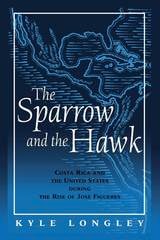
Sparrow and the Hawk
Costa Rica and the United States during the Rise of Jose FigueresKyle Longley
University of Alabama Press, 1997
Using Costa Rica as a example, Longley carefully examines the development of the successful relationship between a nonindustrialized country and the United States, revealing the complex forces at work in resistance and accommodation.
During World War II and the immediate postwar era, both the United States and Costa Rica experienced dramatic changes. The United States assumed world leadership and the accompanying responsibilities; Costa Rica encountered far-reaching difficulties that culminated in the Civil War of 1948 and the rise to power of José Figueres. Longley examines why the United States supported Figueres and emphasizes the history and role of Costa Ricans, primarily the figueristas, in maintaining good relations in such a difficult era. Figueres implemented economic and political nationalism, which produced domestic and international tensions, and in spite of its rejection of similar policies in Guatemala and Iran, the United States supported Figueres against domestic and foreign threats.

Speaking Respect, Respecting Speech
Richard L. Abel
University of Chicago Press, 1998
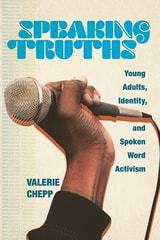
Speaking Truths
Young Adults, Identity, and Spoken Word ActivismValerie Chepp
Rutgers University Press, 2022
Drawing upon detailed observations and in-depth interviews, Chepp tells the story of a diverse group of young adults from Washington, D.C. who use spoken word to create a more just and equitable world. Outlining the contours of this approach, she interrogates spoken word activism’s emphasis on personal storytelling and “truth,” the strategic uses of aesthetics and emotions to politically engage across difference, and the significance of healing in sustainable movements for change. Weaving together their poetry and personally told stories, Chepp shows how poets tap into the beautiful, emotional, personal, and therapeutic features of spoken word to empathically connect with others, advance intersectional and systemic analyses of inequality, and make social justice messages relatable across a diverse public. By creating allies and forging connections based on friendship, professional commitments, lived experiences, emotions, artistic kinship, and political views, this activist approach is highly integrated into the everyday lives of its practitioners, online and face-to-face.
Chepp argues that spoken word activism is a product of, and a call to action against, the neoliberal era in which poets have come of age, characterized by widening structural inequalities and increasing economic and social vulnerability. She illustrates how this deeply personal and intimate activist approach borrows from, builds upon, and diverges from previous social movement paradigms. Spotlighting the complexity and mutual influence of modern-day activism and the world in which it unfolds, Speaking Truths contributes to our understanding of contemporary social change-making and how neoliberalism has shaped this political generation’s experiences with social injustice.
Speaking Up, Speaking Out
Lived Experiences of Non-Tenure-Track Faculty in Writing StudiesJessica Edwards
Utah State University Press, 2020
Each chapter suggests tangible ways that writing departments and supporters can be more thoughtful about their policies and practices as they work to create more equitable spaces for NTTF. Speaking Up, Speaking Out considers the rhetorical power of labeling and asserts why contingent faculty, for far too long, have been compared to and against TT faculty and often encouraged to reach the same or similar productivity with scholarship, teaching, and service that TT faculty produce. The myopic ideas about what is valued and whose position is deemed more important impacts contingent faculty in ways that, as contributors in this collection share, effect and affect faculty productivity, emotional health, and overall community involvement.
Contributors: Norah Ashe-McNalley, Sarah Austin, Rachel Azima, Megan Boeshart Burelle, Peter Brooks, Denise Comer, Jessica Cory, Liz Gumm, Brendan Hawkins, Heather Jordan, Nathalie Joseph, Julie Karaus, Christopher Lee, John McHone, Angie McKinnon Carter, Dauvan Mulally, Seth Myers, Liliana M. Naydan, Linda Shelton, Erica Stone, Elizabeth Vincelette, Lacey Wootton

Speaking of Abortion
Television and Authority in the Lives of WomenAndrea L. Press and Elizabeth R. Cole
University of Chicago Press, 1999
Speaking of America
Great Conversations at the Library of CongressDavid M. Rubenstein
Duke University Press, 2026
Featuring interviews with eminent historians, journalists, and writers, Speaking of America brings together nineteen wide-ranging conversations from philanthropist and financier David M. Rubenstein’s long-running Congressional Dialogues series of interviews at the Library of Congress. Highlights include Ken Burns on documenting American history, Stacy Schiff on Samuel Adams, Manisha Sinha on Reconstruction, and David McCullough on the American frontier.
Published in association with the Library of Congress
Featuring interviews with eminent historians, journalists, and writers, Speaking of America brings together nineteen wide-ranging conversations from philanthropist and financier David M. Rubenstein’s long-running Congressional Dialogues series of interviews at the Library of Congress. Rubenstein and his guests bring to life notable figures, events, and trends drawn from American history and culture and beyond.
Highlights include Ken Burns on bringing American history to life, Stacy Schiff on Samuel Adams, Manisha Sinha on Reconstruction, David McCullough on the American frontier, Beverly Gage on J. Edgar Hoover, Chris Wallace on the presidential election of 1960, Evan Thomas on Justice Sandra Day O’Connor, Eric Schmidt on artificial intelligence, Arthur Brooks on happiness, and David Grann on The Wager, his best-selling story of shipwreck and mutiny. Taken together, the conversations in Speaking of America all build toward the same shared message of dialogue, cooperation, and the importance of knowledge and reflection, highlighting how the study of history can enrich our understanding of current-day challenges in politics and policy.
Speaking of Indigenous Politics
Conversations with Activists, Scholars, and Tribal LeadersJ. Kehaulani Kauanui
University of Minnesota Press, 2018
“A lesson in how to practice recognizing the fundamental truth that every inch of the Americas is Indigenous territory” —Robert Warrior, from the Foreword
Many people learn about Indigenous politics only through the most controversial and confrontational news: the Standing Rock Sioux Tribe’s efforts to block the Dakota Access Pipeline, for instance, or the battle to protect Bears Ears National Monument in Utah, a site sacred to Native peoples. But most Indigenous activism remains unseen in the mainstream—and so, of course, does its significance. J. Kēhaulani Kauanui set out to change that with her radio program Indigenous Politics. Issue by issue, she interviewed people who talked candidly and in an engaging way about how settler colonialism depends on erasing Native peoples and about how Native peoples can and do resist. Collected here, these conversations speak with clear and compelling voices about a range of Indigenous politics that shape everyday life.
Land desecration, treaty rights, political status, cultural revitalization: these are among the themes taken up by a broad cross-section of interviewees from across the United States and from Canada, Mexico, Chile, Bolivia, Peru, Australia, and New Zealand. Some speak from the thick of political action, some from a historical perspective, others from the reaches of Indigenous culture near and far. Writers, like Comanche Paul Chaat Smith, author of Everything You Know about Indians Is Wrong, expand on their work—about gaming and sovereignty, for example, or protecting Native graves, the reclamation of land, or the erasure of Indian identity. These conversations both inform and engage at a moment when their messages could not be more urgent.
Contributors: Jessie Little Doe Baird (Mashpee Wampanoag), Omar Barghouti, Lisa Brooks (Abenaki), Kathleen A. Brown-Pérez (Brothertown Indian Nation), Margaret “Marge” Bruchac (Abenaki), Jessica Cattelino, David Cornsilk (Cherokee Nation), Sarah Deer (Muskogee Creek Nation), Philip J. Deloria (Dakota), Tonya Gonnella Frichner (Onondaga Nation), Hone Harawira (Ngapuhi Nui Tonu), Suzan Shown Harjo (Cheyenne and Hodulgee Muscogee), Rashid Khalidi, Winona LaDuke (White Earth Ojibwe), Maria LaHood, James Luna (Luiseño), Aileen Moreton-Robinson (Quandamooka), Chief Mutáwi Mutáhash (Many Hearts) Marilynn “Lynn” Malerba (Mohegan), Steven Newcomb (Shawnee/Lenape), Jean M. O’Brien (White Earth Ojibwe), Jonathan Kamakawiwo‘ole Osorio (Kanaka Maoli), Steven Salaita, Paul Chaat Smith (Comanche), Circe Sturm (Mississippi Choctaw descendant), Margo Taméz (Lipan Apache), Chief Richard Velky (Schaghticoke), Patrick Wolfe.
Speaking the Same Language
Speech and Audience in Thucydides' Spartan DebatesPaula Debnar
University of Michigan Press, 2002
Speaking the Same Language seeks to recover the role played by the audiences within the History. By restoring the internal audiences to a more prominent place, Debnar emphasizes the perspective of the participants in the war and heightens the dramatic immediacy of the debates. She thoroughly analyzes twelve speeches delivered by or to the Spartans, demonstrating how the earlier speeches illustrate the role of discourse in the construction of Sparta's identity and the unification of her Dorian allies in the face of their primarily Ionian adversaries.
Combining close textual analysis with an examination of narrative and historical context, Debnar bridges the gap between literary and historical studies of Thucydides. Accessible to specialists and nonspecialists alike, her work will interest those working in the fields of Greek literature, ancient historiography, rhetoric, political science, and ethnic studies.
Paula Debnar is Associate Professor of Classics, Mount Holyoke College.
Speaking to the People
The Rhetorical Presidency in Historical PerspectiveRichard Ellis
University of Massachusetts Press, 1998
Spear of the Nation
Umkhonto weSizwe: South Africa’s Liberation Army, 1960s–1990sJanet Cherry
Ohio University Press, 2011
Umkhonto weSizwe, Spear of the Nation, was arguably the last of the great liberation armies of the twentieth century—but it never got to “march triumphant into Pretoria.” MK—as it was known—was the armed wing of the African National Congress, South Africa’s liberation movement, that challenged the South African apartheid government. A small group of revolutionaries committed to the seizure of power, MK discovered its principal members engaged in negotiated settlement with the enemy and was disbanded soon after.
The history of MK is one of paradox and contradiction, of successes and failures. In this short study, which draws widely on the personal experiences of—and commentary by—MK soldiers, Janet Cherry offers a new and nuanced account of the Spear of the Nation. She presents in broad outline the various stages of MK’s thirty-year history, considers the difficult strategic and moral problems the revolutionary army faced, and argues that its operations are likely to be remembered as a just war conducted with considerable restraint.
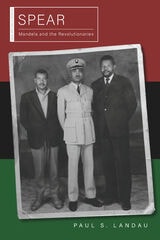
Spear
Mandela and the RevolutionariesPaul S. Landau
Ohio University Press, 2022

Special?
The Chequered History of the UK-US RelationshipSimon McDonald
Haus Publishing, 2027
Special? investigates the unique, but increasingly weak, relationship between the US and UK and contemplates how it might develop in the future.
Many relationships in international affairs are singular, but the United Kingdom’s relationship with the United States has always been different. For a time, what Churchill dubbed the "special" relationship had consequences far beyond the borders of the two countries—a closeness that has provoked envy, curiosity, and bewilderment.
In this new volume, Simon McDonald takes stock of this special relationship and speculates about its future. Starting with its sixteenth-century origins, he takes a longer look at the twentieth century and the two nations' relationship today, before looking forward at how, and if, it may develop in the coming centuries. Just how important are ties in defense, intelligence, language, and culture? What can we make of the United States’s ambivalent relationship with the Royal Family? Has the US ever acted benevolently towards the UK, or has it always taken decisions in its own interest?
Today, the relationship is weaker than Churchill, Thatcher, or even Blair understood it; much that made it special belongs to a rapidly receding past. Though it can no longer be claimed that the relationship is central to international relations, McDonald asks if recent events represent a temporary cooling of what remains a vital relationship to the UK and an important one to the US; or a rift that will only grow wider.