Results by title
1116 books match the query 'Africa' and 222 start with t
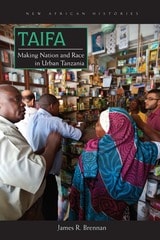
Taifa
Making Nation and Race in Urban TanzaniaJames R. Brennan
Ohio University Press, 2012
Taifa is a story of African intellectual agency, but it is also an account of how nation and race emerged out of the legal, social, and economic histories in one major city, Dar es Salaam. Nation and race—both translatable as taifa in Swahili—were not simply universal ideas brought to Africa by European colonizers, as previous studies assume. They were instead categories crafted by local African thinkers to make sense of deep inequalities, particularly those between local Africans and Indian immigrants. Taifa shows how nation and race became the key political categories to guide colonial and postcolonial life in this African city.
Using deeply researched archival and oral evidence, Taifa transforms our understanding of urban history and shows how concerns about access to credit and housing became intertwined with changing conceptions of nation and nationhood. Taifa gives equal attention to both Indians and Africans; in doing so, it demonstrates the significance of political and economic connections between coastal East Africa and India during the era of British colonialism, and illustrates how the project of racial nationalism largely severed these connections by the 1970s.
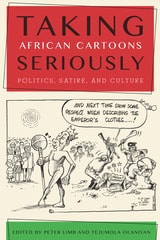
Taking African Cartoons Seriously
Politics, Satire, and CulturePeter Limb
Michigan State University Press, 2018
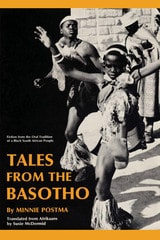
Tales from the Basotho
By Minnie Postma
University of Texas Press, 1974
"They say that the eldest of the chief's daughters..." So begins a tale from the Basotho, unfolded by the meager light of a dung fire that burns smokily behind the reed screen sheltering the entrance of the hut. The old ones of the tribe wait until dark before telling their stories, for everyone knows horns will grow from the head of one who tells a story during daylight hours. Tales from the Basotho abounds with elements familiar to folk narrative. The heroes and heroines are the chiefs and their wives, their sons and their daughters. Fantastic creatures frequent the narratives. exhibiting their awful powers.
Rustic peace and beauty pervade the stories, as Minnie Postma amply demonstrates in her versions of the tales. Something fearful may be occurring—the dreaded Koeoko pulling the only son of the chief under water—but, at the same time, girls with babies tied to their backs are searching for edible bulbs in the veld, and an old woman dreams in the gentle sunlight in front of the huts.
These tales from the Basotho are for entertainment only. There is a tabu against telling tales while the sun shines, because daylight hours must be saved for work. The telling itself is the· reason the story exists, for the audience is already aware of the outcome of each tale. As Wm. Hugh Jansen emphasizes in his foreword, "text" and "context" are often easily interpreted and made accessible in a translation, but Tales from the Basotho is ultimately successful for its rendering of "texture." And texture is doubly hard to convey when the telling itself is of primary importance. Minnie Postma and Susie McDermid have transferred the art of the Basotho raconteur onto the printed page. All the simple, understandable formulas, exclamations, and repetitions used so skillfully by the native storyteller are present. Rhythm is an important element in the tales, and a word, a phrase, even a whole paragraph will be repeated until the rhythm satisfies the storyteller, in tum increasing the appreciation of the listeners.
Teller Tales
HistoriesJo Carson
Ohio University Press, 2007
“All my work fits in my mouth,” Jo Carson says. “I write performance material no matter what else the pieces get called, and whether they are for my voice or other characters’ voices … they are first to be spoken aloud.” Following an oral tradition that has strong roots in her native Tennessee, the author of Teller Tales invites the reader to participate in events in a way that no conventional history book can.
Both stories in this book are set in East Tennessee in the mid-eighteenth century and share certain characters. The first narrative, “What Sweet Lips Can Do,” recounts the story of the Overmountain Men and the battle of King’s Mountain, a tide-turning battle in the American Revolution. “Men of Their Time” is an exploration of white-Cherokee relationships from early contact through the time of the Revolution.
Although not well known to the outside world, the stories recounted in Teller Tales are cornerstones in the heritage of the Appalachian region and of American history. In ways that will appeal to young and old alike, Jo Carson’s irreverent telling will broaden the audience and the understanding for the stories of native Americans, settlers, explorers, and revolutionaries of early America.

Testimony
Found Poems from the Special Court for Sierra LeoneShanee Stepakoff
Bucknell University Press, 2021
Sierra Leone’s devastating civil war barely caught the attention of Western media, but it raged on for over a decade, bringing misery to millions of people in West Africa from 1991 to 2002. The atrocities committed in this war and the accounts of its survivors were duly recorded by international organizations, but they run the risk of being consigned to dusty historical archives.
Derived from public testimonies at a UN-backed war crimes tribunal in Freetown, this remarkable poetry collection aims to breathe new life into the records of Sierra Leone’s civil war, delicately extracting heartbreaking human stories from the morass of legal jargon. By rendering selected trial transcripts in poetic form, Shanee Stepakoff finds a novel way to communicate not only the suffering of Sierra Leone’s people, but also their courage, dignity, and resilience. Her use of innovative literary techniques helps to ensure that the voices of survivors are not forgotten, but rather heard across the world.
This volume also includes an introduction that explores how the genre of “found poetry” can serve as a uniquely powerful means through which writers may bear witness to atrocity. This book’s unforgettable excavation and shaping of survivor testimonies opens new possibilities for speaking about the unspeakable.
Thabo Mbeki
Adekeye Adebajo
Ohio University Press, 2017
The ANC Women’s League
Sex, Gender and PoliticsShireen Hassim
Ohio University Press, 2015
First formed in the early twentieth century, the ANC Women’s League has grown into a leading organization in the women’s movement in South Africa. The league has been at the forefront of the nation’s century-long transition from an authoritarian state to a democracy that espouses gender equality as a core constitutional value. It has, indeed, always regarded itself as the women’s movement, frequently asserting its primacy as a vanguard organization and as the only legitimate voice of the women of South Africa. But, as this deeply insightful book shows, the history of the league is a more complicated affair—it was neither the only women’s organization in the political field nor an easy ally for South African feminism.
The ANC Youth League
Clive Glaser
Ohio University Press, 2012
This brilliant little book tells the story of the African National Congress (ANC) Youth League from its origins in the 1940s to the present and the controversies over Julius Malema and his influence in contemporary youth politics. Glaser analyzes the ideology and tactics of its founders, some of whom (notably Nelson Mandela and Oliver Tambo) later became iconic figures in South African history as well as inspirational figures such as A. P. Mda (father of author Zakes Mda) and Anton Lembede. It shows how the early Youth League gave birth not only to the modern ANC but also to its rival, the Pan Africanist Congress. Dormant for many years, the Youth League reemerged in the transition era under the leadership of Peter Mokaba—infused with the tradition of the militant youth politics of the 1980s. Throughout its history the Youth League has tried to “dynamize” and criticize the ANC from within, while remaining devoted to the mother body and struggling to find a balance between loyalty and rebellion.
The Actual True Story of Ahmed and Zarga
Mohamedou Ould Slahi
Ohio University Press, 2021

The African AIDS Epidemic
A HistoryJohn Iliffe
Ohio University Press, 2006
A Choice Significant University Press Titles for Undergraduates, 2005–2006
This history of the African AIDS epidemic is a much-needed, accessibly written historical account of the most serious epidemiological catastrophe of modern times. The African AIDS Epidemic: A History answers President Thabo Mbeki’s provocative question as to why Africa has suffered this terrible epidemic.
While Mbeki attributed the causes to poverty and exploitation, others have looked to distinctive sexual systems practiced in African cultures and communities. John Iliffe stresses historical sequence. He argues that Africa has had the worst epidemic because the disease was established in the general population before anyone knew the disease existed. HIV evolved with extraordinary speed and complexity, and because that evolution took place under the eyes of modern medical research scientists, Iliffe has been able to write a history of the virus itself that is probably unique among accounts of human epidemic diseases. In giving the African experience a historical shape, Iliffe has written one of the most important books of our time.
The African experience of AIDS has taught the world much of what it knows about HIV/AIDS, and this fascinating book brings into focus many aspects of the epidemic in the longer context of massive demographic growth, urbanization, and social change in Africa during the latter half of the twentieth century. The African AIDS Epidemic: A History is a brilliant introduction to the many aspects of the epidemic and the distinctive character of the virus.

The African Experience with Higher Education
J. F. Ade Ajayi
Ohio University Press, 1996
There have been institutions of higher learning for centuries in Africa, but the phenomenal growth has taken place in the last fifty years, first in the later days of colonialism and then in the heady days of independence and commodity boom. Without them, there would have been no development.
The three highly distinguished authors have written the first comprehensive assessment of universities and higher education in Africa south of the Sahara. As can be seen from their biographies, they draw on experience from both francophone and anglophone Africa and from teaching in both the sciences and the arts.
The African Genius
Basil Davidson
Ohio University Press, 2004
The African Genius presents the ideas, social systems, religions, moral values, arts, and metaphysics of a range of African peoples. Basil Davidson points toward the Africa that might emerge from an ancient civilization that was overlaid and battered by colonialism, then torn apart by the upheaval of colonialism’s dismantlement. Davidson disputes the notion that Africa gained under colonialism by entering the modern world. He sees, instead, an ancient order replaced by modern dysfunction. Davidson’s depiction of the sophisticated “native genius” that has carried Africans through centuries of change is vital to an understanding of modern Africa as well.
The African Roots of Marijuana
Chris S. Duvall
Duke University Press, 2019
The African Transformation of Western Medicine and the Dynamics of Global Cultural Exchange
David Baronov
Temple University Press, 2010
The book analyzes biomedicine as a complex and dynamic sociocultural form, the conceptual premises of which make it necessarily subject to ongoing change and development as it travels the globe. David Baronov captures the complexities of this cultural exchange by using world-systems analysis in a way that places global cultural processes on equal footing with political and economic processes. In doing so, he both allows the story of Africa’s transformation of “Western” biomedicine to be told and offers new insights into the capitalist world system.
The African Union's Africa
New Pan-African Initiatives in Global GovernanceRita Kiki Edozie
Michigan State University Press, 2014

The Afro-Asian Century, Volume 11
Andrew F. Jones and Nikhil Pal Singh, eds.
Duke University Press, 0
By bringing instances of Afro-Asian traffic in the realms of politics, economics, and culture to the foreground, this collection maps an alternative global circuit. The issue examines the non-Eurocentric form of cosmopolitanism that emerged from creative encounters of racialized people in Jazz Age Paris, the Harlem Renaissance, and colonial Shanghai. It reconceptualizes the Indian Ocean as a crucial site for Afro-Asian cross-pollination and investigates the cinematic culture of kung fu as a global discourse of Afro-Asian anti-imperialism.
Contributors. Brent Edwards, Andrew F. Jones, Yukiko Koshiro, Bill Mullen, Vijay Prashad, William Schaefer, Nikhil Pal Singh, Françoise Vergès, Daniel Widener
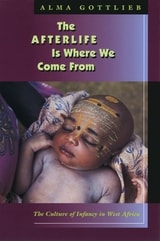
The Afterlife Is Where We Come From
Alma Gottlieb
University of Chicago Press, 2003
In this unique and engaging ethnography of babies, Alma Gottlieb explores how religious ideology affects every aspect of Beng childrearing practices—from bathing infants to protecting them from disease to teaching them how to crawl and walk—and how widespread poverty limits these practices. A mother of two, Gottlieb includes moving discussions of how her experiences among the Beng changed the way she saw her own parenting. Throughout the book she also draws telling comparisons between Beng and Euro-American parenting, bringing home just how deeply culture matters to the way we all rear our children.
All parents and anyone interested in the place of culture in the lives of infants, and vice versa, will enjoy The Afterlife Is Where We Come From.
"This wonderfully reflective text should provide the impetus for formulating research possibilities about infancy and toddlerhood for this century." — Caren J. Frost, Medical Anthropology Quarterly
The Age of Sex
Custom, Law, and Ritual in Twentieth-Century East AfricaCorrie Decker
University of Wisconsin Press, 2025
In The Age of Sex, Decker demonstrates how maturation became defined as the hypothetical moment when a girl becomes a woman capable of engaging in heterosexual activity and a boy becomes a man imbued with the right and responsibility to have heterosexual intercourse. Colonial ethnographic studies reduced complex precolonial rites of passage to “puberty rites” fixated on these sexual transformations. The resulting stereotypes influenced, in turn, how colonial and postcolonial court officials decided age-of-consent and other sex crime cases. Court rituals thus legally transformed girls into women by ruling on their sexual maturity and boys into men by sentencing them to corporal punishment, marking their acceptance of heterosexual responsibilities.
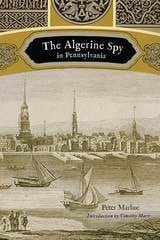
The Algerine Spy in Pennsylvania
Peter Markoe
Westholme Publishing, 2008
An Important Book in America’s Early Encounter with the Arab World
“A pungent satire on American affairs.” —Samuel Eliot Morison
In 1787, while American sailors languished in a Barbary prison, delegates debated the Constitution in Philadelphia. Despite America’s desire to respond to the crisis, without a central government, the new republic had no means to create a naval force. Enter an anonymously published book, The Algerine Spy in Pennsylvania: or, Letters Written by a Native of Algiers on the Affairs of the United States in America, which began circulating among the delegates. Consisting of a series of letters ostensibly written by an Algerian agent “Mehmet” back to his leader, the spy predicted that the former colonies would never be able to resolve their differences and be “ruined by disunion.” The book created a sensation and it helped tip the balance for those in favor of adopting the new Constitution. Following the Constitution’s final ratification in 1789, the United States created a navy and began asserting its power overseas. With its commentary about men and women, business and pleasure, and historical and religious comparisons between nations, The Algerine Spy in Pennsylvania provides both a contemporary snapshot of early American life and the political ideas of the period. Never before reprinted, and recently rated one of the five best works in the history of America’s encounter with the Arab world, this new edition is edited by historian Timothy Marr, who reconsiders the importance of this early work in the political and literary history of the United States.

The Algorithmic Age of Personality
African Literature and Cancel CultureJames Yékú
Michigan State University Press, 2025
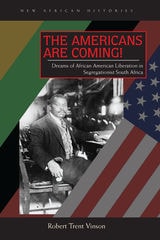
The Americans Are Coming!
Dreams of African American Liberation in Segregationist South AfricaRobert Trent Vinson
Ohio University Press, 2011
For more than half a century before World War II, black South Africans and “American Negroes”—a group that included African Americans and black West Indians—established close institutional and personal relationships that laid the necessary groundwork for the successful South African and American antiapartheid movements. Though African Americans suffered under Jim Crow racial discrimination, oppressed Africans saw African Americans as free people who had risen from slavery to success and were role models and potential liberators.
Many African Americans, regarded initially by the South African government as “honorary whites” exempt from segregation, also saw their activities in South Africa as a divinely ordained mission to establish “Africa for Africans,” liberated from European empires. The Jamaican-born Marcus Garvey’s Universal Negro Improvement Association, the largest black-led movement with two million members and supporters in forty-three countries at its height in the early 1920s, was the most anticipated source of liberation. Though these liberation prophecies went unfulfilled, black South Africans continued to view African Americans as inspirational models and as critical partners in the global antiapartheid struggle.
The Americans Are Coming! is a rare case study that places African history and American history in a global context and centers Africa in African Diaspora studies.
The Anatomy of a South African Genocide
The Extermination of the Cape San PeoplesMohamed Adhikari
Ohio University Press, 2011
The Anthropology of Slavery
The Womb of Iron and GoldClaude Meillassoux
University of Chicago Press, 1991
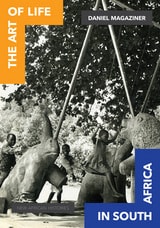
The Art of Life in South Africa
Daniel Magaziner
Ohio University Press, 2016
From 1952 to 1981, South Africa’s apartheid government ran an art school for the training of African art teachers at Indaleni, in what is today KwaZulu-Natal. The Art of Life in South Africa is the story of the students, teachers, art, and politics that circulated through a small school, housed in a remote former mission station. It is the story of a community that made its way through the travails of white supremacist South Africa and demonstrates how the art students and teachers made together became the art of their lives.
Daniel Magaziner radically reframes apartheid-era South African history. Against the dominant narrative of apartheid oppression and black resistance, as well as recent scholarship that explores violence, criminality, and the hopeless entanglements of the apartheid state, this book focuses instead on a small group’s efforts to fashion more fulfilling lives for its members and their community through the ironic medium of the apartheid-era school.
There is no book like this in South African historiography. Lushly illustrated and poetically written, it gives us fully formed lives that offer remarkable insights into the now clichéd experience of black life under segregation and apartheid.
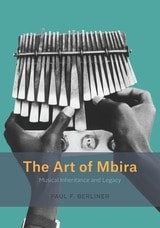
The Art of Mbira
Musical Inheritance and LegacyPaul F. Berliner
University of Chicago Press, 2020
In this book, Berliner provides insight into the communities of study, performance, and worship that surround mbira. He chronicles how master player Cosmas Magaya and his associates have developed their repertory and practices over more than four decades, shaped by musical interaction, social and political dynamics in Zimbabwe, and the global economy of the music industry. At once a detailed exposition of the music’s forms and practices, it is also an indispensable historical and cultural guide to mbira in a changing world.
Together with Berliner and Magaya's compendium of mbira compositions, Mbira’s Restless Dance, The Art of Mbira breaks new ground in the depth and specificity of its exploration of an African musical tradition, and in the entwining of the authors’ collaborative voices. It is a testament to the powerful relationship between music and social life—and the rewards of lifelong musical study, performance, and friendship.
The Assembly Line
Robert Linhart
University of Massachusetts Press, 1981
The Atlantic Slave Trade
A CensusPhilip D. Curtin
University of Wisconsin Press, 1972
Curtin combines modern research and statistical methods with his broad knowledge of the field to present the first book-length quantitative analysis of the Atlantic slave trade. Its basic evidence suggests revision of currently held opinions concerning the place of the slave trade in the economies of the Old World nations and their American colonies.
The Atlantic Slave Trade
Effects on Economies, Societies and Peoples in Africa, the Americas, and EuropeJoseph E. Inikori and Stanley L. Engerman
Duke University Press, 1992
Among the questions these essays address are: the social cost to Africa of this forced migration; the role of slavery in the economic development of Europe and the United States; the short-term and long-term effects of the slave trade on black mortality, health, and life in the New World; and the racial and cultural consequences of the abolition of slavery. Some of these essays originally appeared in recent issues of Social Science History; the editors have added new material, along with an introduction placing each essay in the context of current debates.
Based on extensive archival research and detailed historical examination, this collection constitutes an important contribution to the study of an issue of enduring significance. It is sure to become a standard reference on the Atlantic slave trade for years to come.
Contributors. Ralph A. Austen, Ronald Bailey, William Darity, Jr., Seymour Drescher, Stanley L. Engerman, David Barry Gaspar, Clarence Grim, Brian Higgins, Jan S. Hogendorn, Joseph E. Inikori, Kenneth Kiple, Martin A. Klein, Paul E. Lovejoy, Patrick Manning, Joseph C. Miller, Johannes Postma, Woodruff Smith, Thomas Wilson

The Beautiful Skin
Football, Fantasy, and Cinematic Bodies in AfricaVlad Dima
Michigan State University Press, 2020
The Black and White Rainbow
Reconciliation, Opposition, and Nation-Building in Democratic South AfricaCarolyn E. Holmes
University of Michigan Press, 2020
Based on ethnographic and interview-based fieldwork conducted in 2012–13, The Black and White Rainbow: Reconciliation, Opposition, and Nation-Building in Democratic South Africa explores various themes of nation- and democracy-building, including the emotional and banal content of symbols of the post-apartheid state, the ways that gender and race condition nascent nationalism, the public performance of nationalism and other group-based identities, integration and sharing of space, language diversity, and the role of democratic functioning including party politics and modes of opposition. Each of these thematic chapters aims to explicate a feature of the multifaceted nature of identity-building, and link the South African case to broader literatures on both nationalism and democracy.
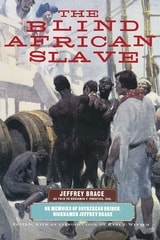
The Blind African Slave
Memoirs of Boyrereau Brinch, Nicknamed Jeffrey BraceJeffrey Brace, as told to Benjamin F. Prentiss, Esq.
University of Wisconsin Press, 2005
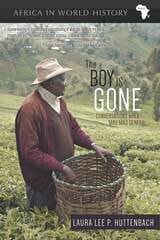
The Boy Is Gone
Conversations with a Mau Mau GeneralLaura Lee P. Huttenbach
Ohio University Press, 2015
A story with the power to change how people view the last years of colonialism in East Africa, The Boy Is Gone portrays the struggle for Kenyan independence in the words of a freedom fighter whose life spanned the twentieth century’s most dramatic transformations. Born into an impoverished farm family in the Meru Highlands, Japhlet Thambu grew up wearing goatskins and lived to stand before his community dressed for business in a pressed suit, crisp tie, and freshly polished shoes. For most of the last four decades, however, he dressed for work in the primary school classroom and on his lush tea farm.
The General, as he came to be called from his leadership of the Mau Mau uprising sixty years ago, narrates his life story in conversation with Laura Lee Huttenbach, a young American who met him while backpacking in Kenya in 2006. A gifted storyteller with a keen appreciation for language and a sense of responsibility as a repository of his people’s history, the General talks of his childhood in the voice of a young boy, his fight against the British in the voice of a soldier, and his long life in the voice of shrewd elder. While his life experiences are his alone, his story adds immeasurably to the long history of decolonization as it played out across Africa, Asia, and the Americas.
The Brink of Freedom
Improvising Life in the Nineteenth-Century Atlantic WorldDavid Kazanjian
Duke University Press, 2016
The Briny South
Displacement and Sentiment in the Indian Ocean WorldNienke Boer
Duke University Press, 2023
The Cape Herders
A History of the Khoikhoi of Southern AfricaEmile Boonzaier
Ohio University Press, 1996
The Cape Herders provides the first comprehensive picture of the Khoikhoi people. In doing so, it fills a long-standing gap in the resources of Southern African studies, and at a time when interest in the indigenous populations of South Africa is growing daily.
Combining the insights of archaeology, history, and anthropology, this account ranges from the origins of the Khoikhoi in Southern Africa to the contemporary politics of the Namaqualand “reserves.” Its authors have produced a scholarly, yet accessible, book, lavishly illustrated and supplemented with short biographies and fascinating detail.
The Cape Herders explodes a variety of South African myths—not least those surrounding the negative stereotype of the “Hottentot” and those which contribute to the idea that the Khoikhoi are by now “a vanished people.” The story it tells instead is one of enduring interest—the history of a herding people in Southern Africa, its society, economy, and culture, its relationship to the indigenous hunters of the Cape, its encounters with European expeditions, and its subsequent exposure to the first effects of colonization. It is a story of change and adaptation, and it confirms the Khoikhoi’s central role in the making of today’s South Africa.
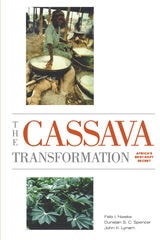
The Cassava Transformation
Africa's Best-Kept SecretFelix I. Nweke
Michigan State University Press, 2002
Cassava is Africa's "poverty fighter" and second most important food crop. This book discusses Cassava's real role and traces research over the past 65 years. The "Cassava transformation" that is now underway in Africa has changed this traditional, reserve crop to a high-yield cash crop. However, Cassava is being neglected by governments and donor agencies because of myths and half-truths about its nutritional value and role in farm systems.
The Center Cannot Hold
Decolonial Possibility in the Collapse of a Tanzanian NGOJenna N. Hanchey
Duke University Press, 2023
The Changing Past
Trends in South African Historical WritingKen Smith
Ohio University Press, 1989
E.H. Carr said: “Before you study the history, study the historian.” Written history often tells us more about the historian’s own times than it does of the times about which he is writing. The historians and the way in which each generation has rewritten history in the light of its own preoccupations is the subject of The Changing Past. This is the first book-length survey in English that covers all the main trends in South African historiography. Starting with the first documents and histories, it goes on to trace the 19th century. British and settler “schools,” Afrikaans historiography from its pre-academic 19th century phase to the present, and the liberal historians who struck out in a new direction from the 1920s. The book highlights the break with the past that historians of the “new radical school” have made in the last 15 years, and surveys the position of historical writing to the present.
The canvas is delineated in bold strokes that sketch in the main outlines rather than seek an exhaustive treatment of all existing literature. This, together with a conscious effort to minimize theoretical discussion, makes it a highly readable text.
The Children Of Africa Confront AIDS
From Vulnerability To PossibilityArvind Singhal
Ohio University Press, 2003
The City Electric
Infrastructure and Ingenuity in Postsocialist TanzaniaMichael Degani
Duke University Press, 2022
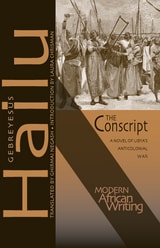
The Conscript
A Novel of Libya’s Anticolonial WarGebreyesus Hailu
Ohio University Press, 2013
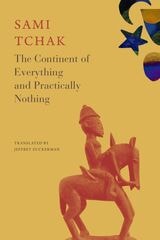
The Continent of Everything and Practically Nothing
Sami Tchak
Seagull Books, 2026
A Togolese novel that delivers a rich, intimate portrait of a scholar whose life is inextricably bound to Africa.
For the French ethnologist Maurice Boyer, Africa isn't just a place; it’s a mirage, an enigma, a mirror reflecting his desires and doubts. The fieldwork he undertook in Tèdi, Togo, where he lived for years among the Tem people and tried to understand their customs and rituals, has left him with questions that have lingered: Who was a friend and who was a foe? Which stories were true and which were illusions? As decades pass and the roles of Aurélie, his wife, and Safi, his former student, begin to shift, Boyer finds himself wrestling not only with his own choices but with the legacy of knowledge itself.
Through the lens of this profound postcolonial quest, Sami Tchak explores Africa’s rich, complex reality through this intimate story of a scholar reconsidering his own understanding of culture, ethnology, and history. The Continent of Everything and Practically Nothing asks whether assembling more data can truly capture the complexity of a continent, and explores how academic ambition, history, and emotion shape how we understand the world, and how we live in it.
The Culture and Commerce of Texts
Scribal Publication in Seventeenth-Century EnglandHarold Love
University of Massachusetts Press, 1998
Long after the establishment of printing in England, many writers and composers still preferred to publish their work through handwritten copies. Texts so transmitted included some of the most distinguished poetry and music of the seventeenth century, along with a rich variety of political, scientific, antiquarian, and philosophical writings. While censorship was one reason for this persistence of the older practice, scribal publication remained the norm for texts that were required only in small numbers, or whose authors wished to avoid the “stigma” of print.
This is the first book to consider the trade in manuscripts as an important supplement to that in printed books, and to describe the agencies that met the need for rapid duplication of key texts.
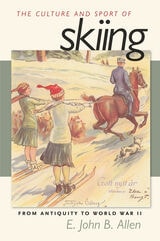
The Culture and Sport of Skiing
From Antiquity to World War llE. John B. Allen
University of Massachusetts Press, 2007
Of all the individuals who contributed to the modernization of skiing before World War II, Allen identifies three who were especially influential: Fridtjof Nansen of Norway, whose explorations on skis paradoxically inspired the idea of skiing as sport; Arnold Lunn of England, whose invention of downhill skiing and the slalom were foundations of the sport's globalization; and Hannes Schneider, whose teachings introduced both speed and safety into the sport.
Underscoring the extent to which ancient ways persisted despite modernization, the book ends with the Russo-Finnish War, a conflict in which the Finns, using equipment that would have been familiar a thousand years before, were able to maneuver in snow that had brought the mechanized Soviet army to a halt.
More than fifty images not only illustrate this rich history but provide further opportunity for analysis of its cultural significance.
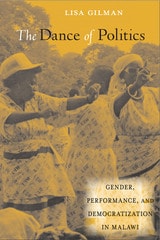
The Dance of Politics
Gender, Performance, and Democratization in MalawiLisa Gilman
Temple University Press, 2011
Election campaigns, political events, and national celebration days in Malawi usually feature groups of women who dance and perform songs of praise for politicians and political parties. These lively performances help to attract and energize throngs of prospective voters. However, as Lisa Gilman explains, “praise performing” is one of the only ways that women are allowed to participate in a male-dominated political system.
Although political performances by women are not unique to Malawi, the case in Malawi is complicated by the fact that until 1994 all Malawianwomen were required to perform on behalf of the long-reigning political party and its self-declared “President for Life,” Dr. Hastings Kamuzu Banda+. This is the first book to examine the present-day situation, where issues of gender, economics and politics collide in surprising ways. Along with its solid grounding in the relevant literature, The Dance of Politics draws strength from Gilman’s first-hand observations and her interviews with a range of participants in the political process, from dancers to politicians.

The Dark Sahara
America's War on Terror in AfricaJeremy Keenan
Pluto Press, 2009
The US is keen to build a substantial military presence in Africa, citing the need to combat the growth of Al-Qaeda in Somalia, Algeria and other countries on the continent. This book reveals the secret US agenda behind the 'war on terror' in Africa and the shocking methods used to perpetuate the myth that the region is a hot-bed of Islamic terrorism.
Africa expert Jeremy Keenan points to overwhelming evidence suggesting that, from 2003, the Bush administration and Algerian government were responsible for hostage takings blamed on Islamic militants. This created a permissive public attitude, allowing the US to establish military bases in the region and pursue multiple imperial objectives in the name of security.
The shocking revelations in this book seriously undermine the mainstream view of Africa as a legitimate 'second front' in the 'war on terror'.

The Deaf-Mute Boy
Joseph Geraci
University of Wisconsin Press, 2006
The Decolonization Of Africa
David Birmingham
Ohio University Press, 1995
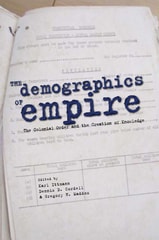
The Demographics of Empire
The Colonial Order and the Creation of KnowledgeKarl Ittmann
Ohio University Press, 2010
The Demographics of Empire is a collection of essays examining the multifaceted nature of the colonial science of demography in the last two centuries. The contributing scholars of Africa and the British and French empires focus on three questions: How have historians, demographers, and other social scientists understood colonial populations? What were the demographic realities of African societies and how did they affect colonial systems of power? Finally, how did demographic theories developed in Europe shape policies and administrative structures in the colonies? The essays approach the subject as either broad analyses of major demographic questions in Africa’s history or focused case studies that demonstrate how particular historical circumstances in individual African societies contributed to differing levels of fertility, mortality, and migration. Together, the contributors to The Demographics of Empire question demographic orthodoxy, and in particular the assumption that African societies in the past exhibited a single demographic regime characterized by high fertility and high mortality.