Results by title
935 books match the query 'Ancient' and 221 start with t
Tacitus and the Incomplete
Edited by Panayiotis Christoforou and Bram L. H. ten Berge
University of Michigan Press, 2026
Widely regarded as ancient Rome’s greatest historian, Tacitus has shaped much of early modern and modern thought on Rome and its emperors. Substantial portions of his major historical works Histories and Annals, however, have not survived, depriving us of his account of crucial episodes and developments in Rome's early imperial history. This first-of-its-kind volume seeks to fill those gaps, using a range of historical and linguistic approaches to reconstruct the missing portions of Tacitus’ work. The volume offers reconstructions of the fragmentary Tacitean emperors (Augustus, Caligula, Nero, Vespasian, Titus, and Domitian) and of important lost episodes such as the destruction of the Temple of Jerusalem and the eruption of Mt. Vesuvius.
By utilizing the concept of incompleteness as a narrative tool, Tacitus and the Incomplete provides novel insights into what Tacitus’ oeuvre might have been like if the lost books had survived, and also expands on recent work on counterfactual historiography, the influence of hindsight on historical writing, the use of prolepsis and other narrative techniques, and on the limitations of historiography in the imperial period.
Tales of Dionysus
The Dionysiaca of Nonnus of PanopolisEdited by William Levitan and Stanley Lombardo
University of Michigan Press, 2022
Tales of Dionysus is the first English verse translation of one of the most extraordinary poems of the Greek literary tradition, the Dionysiaca of Nonnus of Panopolis. By any standard, the Dionysiaca is a formidable work. It is by far the longest poem surviving from the classical world, a massive mythological epic stretching to over 20,000 lines, written in the tradition of Homer, using Homer’s verse, Homer’s language, his narrative turns and motifs, and invoking his ancient Muses. But it is also the last ancient epic to follow a Homeric model, composed so late in fact that it stands as close in time to the Renaissance as it does to archaic Greece. Like its titular hero, Dionysus, with his fluidity of forms, names, and divine incarnations, the poem itself is continually shifting shape. Out of its formal epic frame spills a tumult of ancient literary types: tragedy, elegy, didactic, panegyric, pastoral idyll, and the novel are all parts of this gigantic enterprise, each genre coming to the fore one after the other.
Tales of Dionysus brings together forty-two translators from a wide range of backgrounds, with different experiences and different potential relationships to the text of Nonnus’ poem. All work in their own styles and with their own individual approaches to the poem, to translation, and to poetic form. This variety turns Tales of Dionysus into a showcase of the multiple possibilities open to classical translation in the contemporary world.
Talking Classics
The Shock of the OldMary Beard
University of Chicago Press, 2026
Why the ongoing fascination with the ancient world? This witty, approachable book asks why—for better or (sometimes) worse—antiquity continues to exert such a powerful hold on the contemporary imagination. Recalling a formative childhood encounter with a four-thousand-year-old piece of bread in a museum, Beard introduces the idea of thauma, or wonder, that kick-started a lifetime engaging with classics. It was not the canonical “greats” of ancient literature and art that initially drew her in, she confesses, but rather the more intimate, messy, and humdrum evidence of daily life in the remote past.
Confronting the uses and abuses of symbols of the ancient world, Beard reminds us that the traditions and “masterpieces” of Greece and Rome have certainly been politicized, but they belong to neither the left nor the right. Happily, no one owns the past. She warns us not to let a sense of reverence or overfamiliarity dampen the “shock of the old,” arguing that one of the most important things that classics teach us is how to grapple with complicated and controversial things. “The Greeks and Romans are long dead, they cannot answer back, and you can say what you like about them,” she reminds readers. “The simple fact that classics belong to none of us can offer a safe space to argue about the most difficult debates we face now.”
Beard welcomes everyone into classics. “It is not compulsory to be excited by the ancient world,” she writes. “But it can be a shame not to be.” This charming, sharp, and readable book from one of the world’s most entertaining classicists offers something for both new and established fans of classics, bringing new wonder and curiosity to even the most ancient of ideas.
Talking Classics
The Shock of the OldMary Beard
University of Chicago Press, 2026
Why the ongoing fascination with the ancient world? This witty, approachable book asks why—for better or (sometimes) worse—antiquity continues to exert such a powerful hold on the contemporary imagination. Recalling a formative childhood encounter with a four-thousand-year-old piece of bread in a museum, Beard introduces the idea of thauma, or wonder, that kick-started a lifetime engaging with classics. It was not the canonical “greats” of ancient literature and art that initially drew her in, she confesses, but rather the more intimate, messy, and humdrum evidence of daily life in the remote past.
Confronting the uses and abuses of symbols of the ancient world, Beard reminds us that the traditions and “masterpieces” of Greece and Rome have certainly been politicized, but they belong to neither the left nor the right. Happily, no one owns the past. She warns us not to let a sense of reverence or overfamiliarity dampen the “shock of the old,” arguing that one of the most important things that classics teach us is how to grapple with complicated and controversial things. “The Greeks and Romans are long dead, they cannot answer back, and you can say what you like about them,” she reminds readers. “The simple fact that classics belong to none of us can offer a safe space to argue about the most difficult debates we face now.”
Beard welcomes everyone into classics. “It is not compulsory to be excited by the ancient world,” she writes. “But it can be a shame not to be.” This charming, sharp, and readable book from one of the world’s most entertaining classicists offers something for both new and established fans of classics, bringing new wonder and curiosity to even the most ancient of ideas.
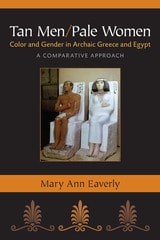
Tan Men/Pale Women
Color and Gender in Archaic Greece and Egypt, a Comparative ApproachMary Ann Eaverly
University of Michigan Press, 2013
One of the most obvious stylistic features of Athenian black-figure vase painting is the use of color to differentiate women from men. By comparing ancient art in Egypt and Greece, Tan Men/Pale Women uncovers the complex history behind the use of color to distinguish between genders, without focusing on race. Author Mary Ann Eaverly considers the significance of this overlooked aspect of ancient art as an indicator of underlying societal ideals about the role and status of women. Such a commonplace method of gender differentiation proved to be a complex and multivalent method for expressing ideas about the relationship between men and women, a method flexible enough to encompass differing worldviews of Pharaonic Egypt and Archaic Greece. Does the standard indoor/outdoor explanation—women are light because they stay indoors—hold true everywhere, or even, in fact, in Greece? How “natural” is color-based gender differentiation, and, more critically, what relationship does color-based gender differentiation have to views about women and the construction of gender identity in the ancient societies that use it?
The depiction of dark men and light women can, as in Egypt, symbolize reconcilable opposites and, as in Greece, seemingly irreconcilable opposites where women are regarded as a distinct species from men. Eaverly challenges traditional ideas about color and gender in ancient Greek painting, reveals an important strategy used by Egyptian artists to support pharaonic ideology and the role of women as complementary opposites to men, and demonstrates that rather than representing an actual difference, skin color marks a society’s ideological view of the varied roles of male and female.
Telling Wonders
Ethnographic and Political Discourse in the Work of HerodotusRosaria Munson
University of Michigan Press, 2001
As he explores the causes of the East-West conflict from its most remote antecedents, Herodotus includes conflicting traditions about different historical periods as well as apparently tangential descriptions of the customs of faraway peoples. What was his aim in combining such diverse material? Rosaria Vignolo Munson argues that Herodotus' aim was two-fold: to use historical narrative to illuminate the present and to describe barbarian customs so that the Greeks might understand themselves.
Herodotus assumes the role of advisor to his audience, acting as a master of metaphor and oracular speech and as an intellectual fully aware of new philosophical and political trends. By comparing, interpreting, and evaluating facts through time and space or simply by pointing them out as objects of "wonder," he teaches that correct political action is linked to an appropriate approach to foreigners and additional "others." Munson relies on traditional scholarship and modern studies in narratology and related critical fields to distinguish between narrative and metanarrative, providing a framework for analyzing the construction of Herodotus' discourse and his presentation of himself through it.
Munson's work will be useful to classicists and ancient historians and will also engage anthropologists interested in cultural interaction and notions of ethnicity and literary critics interested in narrative constructions.
Texts from the Pyramid Age
Nigel C. Strudwick
SBL Press, 2005
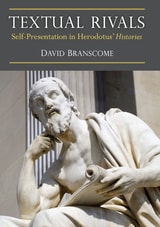
Textual Rivals
Self-Presentation in Herodotus’ HistoriesDavid Branscome
University of Michigan Press, 2013
Textual Rivals studies some of the most debated issues in Herodotean scholarship. One such is Herodotus’ self-presentation: the conspicuousness of his authorial persona is one of the most remarkable features of his Histories. So frequently does he interject first-person comments into the narrative that Herodotus at times almost becomes a character within his own text.
Important issues are tied to Herodotus’ self-presentation. First is the narrator’s relationship to truth: to what extent does he expect readers to trust his narrative? While judgments regarding Herodotus’ overall veracity have often been damning, scholars have begun to concentrate on how Herodotus presents his truthfulness. Second is the precise genre Herodotus means to create with his work. Excluding the anachronistic term historian, exactly what would Herodotus have called himself, as author? Third is the presence of “self-referential” characters, whose actions often mirror Herodotus’ as narrator/researcher, in the Histories.
David Branscome’s investigative text points to the rival inquirers in Herodotus’ Histories as a key to unraveling these interpretive problems. The rival inquirers are self-referential characters Herodotus uses to further his authorial self-presentation. Through the contrast Herodotus draws between his own exacting standards as an inquirer and the often questionable standards of those rivals, Herodotus underlines just how truthful readers should find his own work.
Textual Rivals speaks to those interested in Greek history and historiography, narratology, and ethnography. Those in the growing ranks of Herodotus fans will find much to invite and intrigue.
The Aeneid
Virgil
University of Chicago Press, 2017
The paperback and e-book editions include a new introduction by Richard F. Thomas, along with a new glossary of names that makes the book even more accessible for students and for general readers coming to the Aeneid for the first time who may need help acclimating to Virgil’s world.
The Aeneid of Virgil
Virgil
University of Michigan Press, 1995
In this new translation Edward McCrorie has performed the difficult task of rendering Virgil's compact, dense Latin into fine, readable, modern English verse. The sometimes complex text is made clear and comprehensible even for first-time readers, and a glossary of names helps identify characters and place-names in the poem. The translation is well suited for students at all levels, and readers already familiar with Virgil will find many fresh images and ideas.
"A brilliant effort."--Robert Bly
"I admire the ambition of the project, and the generosity of many of the lines."--Robert Fagles
Edward McCrorie is Professor of English, Providence College. His poetry and translations of Latin verse have been widely published.
The Afterlife of Apuleius
Edited by F. Bistagne, C. Boidin, and R. Mouren
University of London Press, 2020
The volume gathers the proceedings of an international conference held in March 2016 at the Warburg Institute in London, in association with the Institute of Classical Studies. It includes both diachronic overviews and specific case-studies. A first series of papers focuses on The Golden Ass and its historical and geographical diffusion, from High Medieval Europe to early modern Mexico. The oriental connections of the book are also taken into account. The second part of the book examines the textual and visual destiny of Psyche’s story from the Apuleian fabula to allegorical retellings, in poetical or philosophical books and on stage. As the third series of essays indicates, the fortunes of the book led many ancient and early modern writers and translators to use it as a canonical model for reflections about the status of fiction. It also became, mostly around the beginning of the fifteenth century, a major linguistic and stylistic reference for lexicographers and neo-Latin writers. The last papers of the book deal with Renaissance polemics about "‘Apuleianism" and the role of editors and commentators.
This is the sixth and last of the volumes in the series of ‘Afterlives’ of the Classics, which is being produced jointly by the Institute of Classical Studies and the Warburg Institute.
The Afterlife of Greek and Roman Sculpture
Late Antique Responses and PracticesTroels Myrup Kristensen and Lea Stirling, editors
University of Michigan Press, 2016
The Afterlife of Herodotus and Thucydides
Edited by John North and Peter Mack
University of London Press, 2019
The Age of Attila
Fifth-Century Byzantium and the BarbariansC.D. Gordon
University of Michigan Press, 2013
This book describes the tragic and bloody collapse of Roman civilization in the West in the fifth century and the near ruin of the Eastern Roman Empire. The hundred years from the death of Theodosius I to the conquest of Italy by Theodoric the Ostrogoth were years of chaos, havoc, and destruction. In the East we see the confusion of the imperial government, the palace intrigues, and the sinister role of the palace eunuchs—but survival. The events are dramatically described by eyewitnesses to the disasters—the Byzantine historians Priscus, Malchus, Olympiodorus, John of Antioch, and Candidus. The contemporary accounts are translated into English and provided with a running commentary by C. D. Gordon to form a continuous narrative of an age of turmoil—the Age of Attila.
David S. Potter has added translations of significant passages not in the original volume. He has also added extensive new notes to place the book in the contemporary study of the ancient world, as well as a new bibliography and a concordance with modern editions.
“David Potter’s re-edition, really updating, expanding, reshaping, and refreshing Colin Gordon's classic Age of Attila is a very welcome development. The Age of Attila, in Potter's expanded version, provides in English the most important literary sources for the immensely important period of the transition or decline, depending on one's view, of the Roman empire to the post-Roman kingdoms in the West, and for Roman history in the fifth century CE in general. This decisive century has always been hotly debated, but rising interest in economic history and a new wave of Attila books make this an especially fortuitous moment to have Gordon anew: no historian, no student of the later Roman Empire will be able to live without David Potter's edition of Gordon's Age of Attila!”
—Susanna Elm, University of California, Berkeley
“It has been half a century since C. D. Gordon published this valuable introduction to the fifth century, a narrative reconstituted from the fragmentary but tantalizing sources remaining for the period. David Potter has revitalized this classic work, updating it with reference to the latest critical editions and rewriting its notes to take account of recent scholarship. The book provides an excellent entry point into a world that saw the western Roman Empire crumble, Byzantium rise from its remains, and the barbarian peoples of central and western Eurasia reshape human history.”
—Noel Lenski, University of Colorado Boulder
The Ages of Homer
A Tribute to Emily Townsend VermeuleEdited by Jane B. Carter and Sarah P. Morris
University of Texas Press, 1995
Homer’s Iliad and Odyssey have fascinated listeners and readers for over twenty-five centuries. In this volume of original essays, collected to honor the distinguished career of Emily T. Vermeule, thirty-four leading experts in Homeric studies and related fields provide up-to-date, multidisciplinary accounts of the most current issues in the study of Homer.
The book is divided into three sections. The first section treats the Bronze Age setting of the poems (around 1200 B.C.), using archaeological evidence to reveal how poetic memory preserves, distorts, and invents the past. The second section explores the early Iron Age, in which the poems were written (c. 800-500 B.C.), using the strategies of comparative philology and mythology, literary theory, historical linguistics, anthropology, and iconography to determine how the poems took shape. The final section traces the use of Homer for literary and artistic inspiration by classical Greece and Rome.
The Ahhiyawa Texts
Gary M. Beckman
SBL Press, 2011
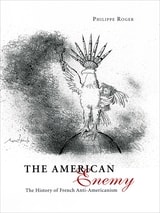
The American Enemy
The History of French Anti-AmericanismPhilippe Roger
University of Chicago Press, 2005
Buffon, as Philippe Roger demonstrates here, was just one of the first in a long line of Frenchmen who have built a history of anti-Americanism in that country, a progressive history that is alternately ludicrous and trenchant. The American Enemy is Roger's bestselling and widely acclaimed history of French anti-Americanism, presented here in English translation for the first time.
With elegance and good humor, Roger goes back 200 years to unearth the deep roots of this anti-Americanism and trace its changing nature, from the belittling, as Buffon did, of the "savage American" to France's resigned dependency on America for goods and commerce and finally to the fear of America's global domination in light of France's thwarted imperial ambitions. Roger sees French anti-Americanism as barely acquainted with actual fact; rather, anti-Americanism is a cultural pillar for the French, America an idea that the country and its culture have long defined themselves against.
Sharon Bowman's fine translation of this magisterial work brings French anti-Americanism into the broad light of day, offering fascinating reading for Americans who care about our image abroad and how it came about.
“A brilliant and exhaustive guide to the history of French Ameriphobia.”—Simon Schama, New Yorker

The Ancient Art of Emulation
Studies in Artistic Originality and Tradition from the Present to Classical AntiquityElaine K. Gazda, Editor
University of Michigan Press, 2002
The Ancient Egyptian Netherworld Books
John Coleman Darnell
SBL Press, 2018
The first, complete English translation of the ancient Egyptian Netherworld Books
The ancient Egyptian Netherworld Books, important compositions that decorated the New Kingdom royal tombs in the Valley of the Kings, present humanity's oldest surviving attempts to provide a scientific map of the unseen realms beyond the visible cosmos and contain imagery and annotations that represent ancient Egyptian speculation (essentially philosophical and theological) about the events of the solar journey through the twelve hours of the night. The Netherworld Books describe one of the central mysteries of Egyptian religious belief—the union of the solar god Re with the underworldly god Osiris—and provide information on aspects of Egyptian theology and cosmography not present in the now more widely read Book of the Dead. Numerous illustrations provide overview images and individual scenes from each Netherworld Book, emphasizing the unity of text and image within the compositions. The major texts translated include the Book of Adoring Re in the West (the Litany of Re), the Book of the Hidden Chamber (Amduat), the Book of Gates, the Book of Caverns, the Books of the Creation of the Solar Disk, and the Books of the Solar-Osirian Unity.
Features:
- Accessible presentations of the main concepts of the Netherworld Books and the chief features of each text
- Notes and commentary address major theological themes within the texts as well as lexicographic and/or grammatical issues
- An overview of later uses of these compositions during the first millennium BCE
The Ancient Egyptian Pyramid Texts
James P. Allen
SBL Press, 2005
The Ancient Egyptian Pyramid Texts, Second Edition
James P. Allen
SBL Press, 2015
Completely revised and updated
James P. Allen provides a translation of the oldest corpus of ancient Egyptian religious texts from the six royal pyramids of the Fifth and Sixth Dynasties (ca. 2350–2150 BCE). Allen’s revisions take into account recent advances in the understanding of Egyptian grammar.
Features:
- Sequential translations based on all available sources, including texts newly discovered in the last decade
- Texts numbered according to the most widely used numbering system with new numbers from the latest 2013 concordance
- Translations reflect the primarily atemporal verbal system of Old Egyptian, which conveys the timeless quality that the text’s authors understood the texts to have
The Ancient Greek Roots of Human Rights
By Rachel Hall Sternberg
University of Texas Press, 2021
2022 PROSE Award Finalist in Classics
Although the era of the Enlightenment witnessed the rise of philosophical debates around benevolent social practice, the origins of European humane discourse date further back, to Classical Athens. The Ancient Greek Roots of Human Rights analyzes the parallel confluences of cultural factors facing ancient Greeks and eighteenth-century Europeans that facilitated the creation and transmission of humane values across history. Rachel Hall Sternberg argues that precursors to the concept of human rights exist in the ancient articulation of emotion, though the ancient Greeks, much like eighteenth-century European societies, often failed to live up to those values.
Merging the history of ideas with cultural history, Sternberg examines literary themes upholding empathy and human dignity from Thucydides’s and Xenophon’s histories to Voltaire’s Candide, and from Greek tragic drama to the eighteenth-century novel. She describes shared impacts of the trauma of war, the appeal to reason, and the public acceptance of emotion that encouraged the birth and rebirth of humane values.
The Ancient Roman Afterlife
Di Manes, Belief, and the Cult of the DeadBy Charles W. King
University of Texas Press, 2020
In ancient Rome, it was believed some humans were transformed into special, empowered beings after death. These deified dead, known as the manes, watched over and protected their surviving family members, possibly even extending those relatives’ lives. But unlike the Greek hero-cult, the worship of dead emperors, or the Christian saints, the manes were incredibly inclusive—enrolling even those without social clout, such as women and the poor, among Rome's deities. The Roman afterlife promised posthumous power in the world of the living.
While the manes have often been glossed over in studies of Roman religion, this book brings their compelling story to the forefront, exploring their myriad forms and how their worship played out in the context of Roman religion’s daily practice. Exploring the place of the manes in Roman society, Charles King delves into Roman beliefs about their powers to sustain life and bring death to individuals or armies, examines the rituals the Romans performed to honor them, and reclaims the vital role the manes played in the ancient Roman afterlife.
The Appian Way
Ghost Road, Queen of RoadsRobert A. Kaster
University of Chicago Press, 2012
The Roman poet Statius called the via Appia “the Queen of Roads,” and for nearly a thousand years that description held true, as countless travelers trod its path from the center of Rome to the heel of Italy. Today, the road is all but gone, destroyed by time, neglect, and the incursions of modernity; to travel the Appian Way today is to be a seeker, and to walk in the footsteps of ghosts.
Our guide to those ghosts—and the layers of history they represent—is Robert A. Kaster. In The Appian Way, he brings a lifetime of studying Roman literature and history to his adventures along the ancient highway. A footsore Roman soldier pushing the imperial power south; craftsmen and farmers bringing their goods to the towns that lined the road; pious pilgrims headed to Jerusalem, using stage-by-stage directions we can still follow—all come to life once more as Kaster walks (and drives—and suffers car trouble) on what’s left of the Appian Way. Other voices help him tell the story: Cicero, Goethe, Hawthorne, Dickens, James, and even Monty Python offer commentary, insight, and curmudgeonly grumbles, their voices blending like the ages of the road to create a telescopic, perhaps kaleidoscopic, view of present and past.
To stand on the remnants of the Via Appia today is to stand in the pathway of history. With The Appian Way, Kaster invites us to close our eyes and walk with him back in time, to the campaigns of Garibaldi, the revolt of Spartacus, and the glory days of Imperial Rome. No traveler will want to miss this fascinating journey.
The Art of Living in Avant-Garde Paris
Ethics and Self-Making in Dada, Simultanism, and SurrealismRachel Silveri
University of Chicago Press, 2026
With The Art of Living in Avant-Garde Paris, Rachel Silveri takes a fresh look at the desire to unify art and life, an ambition long regarded as foundational to the European historical avant-gardes. She reveals how many early twentieth-century artists saw their own everyday lives—their bodies, identities, and relationships—as a type of creative material and a central component to their avant-garde practice. These artists abandoned traditional forms of artmaking and venues of art viewing, instead aspiring to integrate art with everyday life, creating an “art of living.”
Considering Tristan Tzara’s performances of Dadaist identity, Sonia Delaunay’s simultaneous fashions and self-branding, and the collective endeavor to open and operate the Surrealist Research Bureau, Silveri offers a new narrative about how the artists of interwar Paris developed experiential life practices that resisted dominant forms of “lifestyle” and normative discourses surrounding gender, ethnicity, and office work. This book argues that ethical questions of “How should I live?” and “How should I relate to others?” were as important to the avant-garde as politics, and that aspirations to change the world played out in daily practices of self-making.
The Art of Memory
Frances A. Yates
University of Chicago Press, 1974
In The Art of Memory Yates traces this technique of memorization from its treatment by Greek orators through its Gothic transformations in the Middle Ages to the occult forms it took in the Renaissance, and finally to its use in the seventeenth century. This book, the first to relate the art of memory to the history of culture as a whole, was revolutionary when it first appeared and continues to mesmerize readers with its lucid and revelatory insights.
The Art of the Roman Jurists
An American PerspectiveEssays by Bruce W. Frier Edited by Thomas A.J. McGinn Introduction by Paul J. du Plessis
University of Michigan Press, 2027
The Art of the Roman Jurists offers a clear, detailed, and thorough account of the relationship between Roman law and society from 100 BCE to 235 CE and traces the rise of the group of legal experts known as jurists. While prominent in the first century BCE, they consolidated their position in the first years of the Principate. But it is only in the second century, starting in the reign of Antoninus Pius (138–161), that, in author Bruce W. Frier’s view, they most emphatically come into their own. The collection reveals how the jurists can evince an awareness of the impact their holdings portend for the social and economic reality. Frier's method is anchored in the ancient sources, extending far beyond the legal evidence, offering a perspective on Roman jurisprudence as it was lived. This collection of published and unpublished articles from Frier examines crucial aspects of his methodology and looks to the future of the study of Roman law.
The Athenian Empire Restored
Epigraphic and Historical StudiesHarold B. Mattingly
University of Michigan Press, 1996
This volume collects Harold B. Mattingly's most important essays on the question, and offers them in updated form together with a new introduction and notes, and a concordance of inscriptions. A preface by Mortimer Chambers helps place the volume amid the decades- long controversy about events in and around Athens, and describes the scientific technique that has proven Mattingly's argument.
In the process of establishing a sounder methodology for investigating this crucial period of Greek--and Western--history, Mattingly in these groundbreaking essays turns a beacon of light on many aspects of Greek and Athenian society and history.
The Athenian Experiment
Building an Imagined Political Community in Ancient Attica, 508-490 B.C.Greg Anderson
University of Michigan Press, 2003
The Babylonian Genesis
The Story of the CreationAlexander Heidel
University of Chicago Press, 1963
The Babylonian Genesis offers, in one compact, accessible volume, a complete translation of all the published cuneiform tablets of the various Babylonian creation stories, of both the Semitic Babylonian and the Sumerian material. Each creation account is preceded by a brief introduction from renowned scholar and translator Alexander Heidel dealing with the age and provenance of the tablets, the aim and purpose of the story, and everything else that a reader of any level of knowledge needs to understand these stories in their context. Also included is a translation and discussion of two Babylonian creation versions written in Greek. The final chapter presents a detailed examination of the Babylonian creation accounts in their relation to our Old Testament literature.
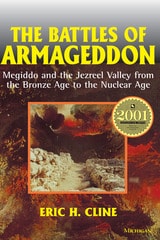
The Battles of Armageddon
Megiddo and the Jezreel Valley from the Bronze Age to the Nuclear AgeEric H. Cline
University of Michigan Press, 2002
> Best Popular Book on Archaeology
--Biblical Archaeology Society
Apocalypse. Judgment Day. The End Time. Armageddon. Students of the Bible know it as the place where the cataclysmic battle between the forces of good and the forces of evil will unfold. Many believe that this battle will take place in the very near future. But few know that Armageddon is a real place--one that has seen more fighting and bloodshed than any other spot on earth.
The name Armageddon is a corruption of the Hebrew phrase Har Megiddo, and it means "Mount of Megiddo." More than thirty bloody conflicts have been fought at the ancient site of Megiddo and adjacent areas of the Jezreel Valley during the past four thousand years. Egyptians, Israelites, Greeks, Muslims, Crusaders, Mongols, British, Germans, Arabs, and Israelis have all fought and died here. The names of the warring leaders reverberate throughout history: Thutmose III, Deborah, Gideon, Saul and Jonathan, Jezebel, Saladin, Napoleon, and Allenby, to name but the most famous. Throughout history Megiddo and the Jezreel Valley have been ground zero for battles that determined the very course of civilization. No wonder that the author of Revelation believed Armageddon, the penultimate battle between good and evil, would also take place here!
The Battles of Armageddon introduces readers to a rich cast of ancient and modern warriors, while bringing together for the first time the wide range of conflicts that have been fought at Megiddo and the Jezreel Valley from the Bronze Age to the Nuclear Age.
Eric H. Cline has participated in more than seventeen seasons of excavation and survey in Israel, Egypt, Jordan, Greece, and the United States. He is currently a Senior Staff Archaeologist at the ongoing excavations of Megiddo.
The Beginnings of Western Science
The European Scientific Tradition in Philosophical, Religious, and Institutional Context, Prehistory to A.D. 1450, Second EditionDavid C. Lindberg
University of Chicago Press, 2008
The Beginnings of Western Science is a landmark, the best book to ever to present a unified account of both ancient and medieval science in a single volume. Chronicling the development of scientific ideas, practices, and institutions from pre-Socratic Greek philosophy to late-Medieval scholasticism, David C. Lindberg surveys all the most important themes in the history of science, including developments in cosmology, astronomy, mechanics, optics, alchemy, natural history, and medicine. In addition, he offers an illuminating account of the transmission of Greek science to medieval Islam and subsequently to medieval Europe.
The Birth of the State
Ancient Egypt, Mesopotamia, India and ChinaPetr Charvát
Karolinum Press, 2013
The Book of Looms
A History of the Handloom from Ancient Times to the PresentEric Broudy
University Press of New England, 1993
The Brutus Revival
Parricide and Tyrranicide During the RenaissanceManfredi Piccolomini
Southern Illinois University Press, 1991
In a discussion of the Renaissance revival of classical culture, Piccolomini considers the period’s mythologizing of Brutus, Caesar’s assassin. He cites Dante as the initiator of an important literary, dramatic, political, and artistic theme and explains how the historical Brutus was changed by literature and theatre into a symbol of the just citizen rebelling against the unjust tyrant.
Piccolomini discusses several Renaissance political conspiracies modeled after Brutus’ act and explores how those conspiracies, in turn, formed the basis for the theme’s recurrence in Italian, French, and English theatre of the period.
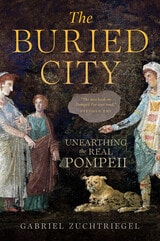
The Buried City
Unearthing the Real PompeiiGabriel Zuchtriegel
University of Chicago Press, 2025
In The Buried City, Gabriel Zuchtriegel takes us on a behind-the-scenes tour of Pompeii and reveals new archaeological finds that are being unearthed at the site’s biggest dig in a generation. As director of the Pompeii Archaeological Park, Zuchtriegel presents a uniquely intimate perspective on this city that was tragically destroyed and frozen in time by the eruption of Mount Vesuvius in 79 CE. Among the ruins, we find unmade beds, dishes left drying, and bodies of victims encased in ash, but Zuchtriegel shows that we’ve only begun to understand this fascinating place, as a third of the site remains unexcavated.
Zuchtriegel leads us into the heart of the city, reconstructing Pompeii as it would have been, showing us who lived there, what mattered to them, and what happened in their final hours. The Buried City reveals the latest discoveries unearthed at Pompeii—including a banquet hall with murals of Greek gods, a fresco of what appears to be a pizza, and the remains of individuals crushed by debris—all buried for almost two thousand years. Zuchtriegel offers a vivid portrait of this World Heritage site as a vibrant and diverse city, connecting us to a past that is much closer than we think and inviting us to reflect on our role as keepers of the site and its history.
The Buried City
Unearthing the Real PompeiiGabriel Zuchtriegel
University of Chicago Press, 2025
The director of the Pompeii Archaeological Park offers a vivid view of daily life in the lost city, shares the latest discoveries, and reflects on preserving heritage.
In The Buried City, Gabriel Zuchtriegel takes us on a behind-the-scenes tour of Pompeii and reveals new archaeological finds that are being unearthed at the site’s biggest dig in a generation. As director of the Pompeii Archaeological Park, Zuchtriegel presents a uniquely intimate perspective on this city that was tragically destroyed and frozen in time by the eruption of Mount Vesuvius in 79 CE. Among the ruins, we find unmade beds, dishes left drying, and bodies of victims encased in ash, but Zuchtriegel shows that we’ve only begun to understand this fascinating place, as a third of the site remains unexcavated.
Zuchtriegel leads us into the heart of the city, reconstructing Pompeii as it would have been, showing us who lived there, what mattered to them, and what happened in their final hours. The Buried City reveals the latest discoveries unearthed at Pompeii—including a banquet hall with murals of Greek gods, a fresco of what appears to be a pizza, and the remains of individuals crushed by debris—all buried for almost two thousand years. Zuchtriegel offers a vivid portrait of this World Heritage site as a vibrant and diverse city, connecting us to a past that is much closer than we think and inviting us to reflect on our role as keepers of the site and its history.
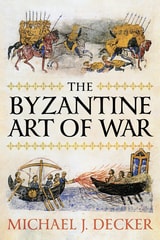
The Byzantine Art of War
Michael J. Decker
Westholme Publishing, 2013
The Byzantine Art of War explores the military history of the thousand-year empire of the eastern Mediterranean, Byzantium. Throughout its history the empire faced a multitude of challenges from foreign invaders seeking to plunder its wealth and to occupy its lands, from the deadly Hunnic hordes of Attila, to the Arab armies of Islam, to the western Crusaders bent on carving out a place in the empire or its former lands. In order to survive the Byzantines relied on their army that was for centuries the only standing, professional force in Europe. Leadership provided another key to survival; Byzantine society produced a number of capable strategic thinkers and tacticians—and several brilliant ones. These officers maintained a level of professionalism and organization inherited and adapted from Roman models. The innovations of the Byzantine military reforms of the sixth century included the use of steppe nomad equipment and tactics, the most important of which was the refinement of the Roman mounted archer. Strategy and tactics evolved in the face of victory and defeat; the shock of the Arab conquests led to a sharp decline in the number and quality of imperial forces. By the eighth and ninth centuries Byzantine commanders mastered the art of the small war, waging guerrilla campaigns, raids, and flying column attacks that injured the enemy but avoided the decisive confrontation the empire was no longer capable of winning. A century later they began the most sustained, glorious military expansion of their history. This work further sketches the key campaigns, battles, and sieges that illustrate Byzantine military doctrine, vital changes from one era to another, the composition of forces and the major victories and defeats that defined the territory and material well-being of its citizens. Through a summary of their strategies, tactics, and innovations in the tools of war, the book closes with an analysis of the contributions of this remarkable empire to world military history.
The Byzantine Empire
Charles W. C. Oman
Westholme Publishing, 2009
The Byzantine Empire centered at the city of Constantinople grew from a small Greek colonial village into the capital of the Eastern Roman empire. Ultimately, Byzantium represented what remained of Roman power in late antiquity. Established as the seat of Constantine the Great in 328 AD, the empire grew and matured over the centuries, reaching its pinnacle in the sixth century during the reign of Justinian and his loyal general, Belisarius. In the process of empire building, Byzantium battled the Goths, the Germanic tribes, the Persians, the Lombards, and ultimately the Islamic armies of the Near East. Byzantium remained a buffer against Muslim expansion, and by the time the remnants of the empire and the city of Constantinople were finally conquered by the Ottomans in the fourteenth century, European states to the west were able to resist any further encroachment.
In tracing the empire’s history from its humble beginnings through its ascendancy and final decay, distinguished historian Charles W. C. Oman blends his engaging narrative style with his impeccable command of primary source material. Here, Oman dispels the misconception that the Byzantine court was one plagued by corruption and intrigue—a canard that added “Byzantine” to the English language; instead, Byzantium was one of the most stable governments of late antiquity. Never before reprinted in paperback, The Byzantine Empire is a model of concise popular scholarship.
The Byzantines
Edited by Guglielmo Cavallo
University of Chicago Press, 1997
Through a series of remarkably detailed composite portraits, an international collection of distinguished scholars has created a startlingly clear vision of the Byzantines and their social world. Paupers, peasants, soldiers, teachers, bureaucrats, clerics, emperors, and saints—all are vividly and authentically presented in the context of ordinary Byzantine life. No comparable volume exists that so fascinatingly recovers from the past the men and women of Byzantium, their culture and their lifeways, and their strikingly modern worldview.
The Case for the Prosecution in the Ciceronian Era
Michael C. Alexander
University of Michigan Press, 2003
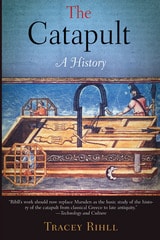
The Catapult
A HistoryTracey Rihll
Westholme Publishing, 2007
The most recognized military device of ancient times and the source of continued fascination and popular appeal, the catapult represented a major shift in the conduct of warfare. The catapult which literally means a device to “hurl [an object] across” was originally a sort of crossbow invented at the beginning of the fourth century B.C. in Syrakuse. Bows soon grew to the length of a modern bus, and in due course a completely new and better power source was invented. Instead of compound bows made of stretched sinew and compressed horn, the energy used to launch an object was stored in twisted ropes made of animal sinews: the torsion catapult had arrived. The torsion catapult quickly became the chief weapon of ancient arsenals and gave armies for the first time a weapon that could strike enemies at a distance with devastating effect, including shooting to and from ships, battering fortifications, and sending projectiles over walls. Catapults of all sizes became part of the regular equipment of the Roman army, and were used for centuries across the length and breadth of the empire to seize territory, and to defend it.
In The Catapult: A History, an authority on this device, historian Tracey Rihll, uses ancient literary sources and the latest archaeological findings to tell the story of this first machine of war. Dispelling any notion that the catapult was precision engineered in the modern sense, the author explains how a robust formulaic design allowed a variety of machines and missiles to be used for particular battlefield conditions or military tasks. Also included are details of the author’s intriguing discovery that there were little personal catapults that were used like rifles. Although the catapult was displaced by the introduction of gunpowder and cannon, this device marks the beginning of mechanized warfare, the hallmark of modern fighting. Complete with line drawings and photographs, The Catapult is a major contribution to the history of technology and conflict.
The Ciceronian Tradition in Political Theory
Edited by Daniel J. Kapust and Gary Remer
University of Wisconsin Press, 2021
Individual chapters examine the ways thinkers throughout history, specifically Augustine, John of Salisbury, Thomas More, Machiavelli, Montaigne, Hobbes, Locke, Adam Smith, and Edmund Burke, have engaged with and been influenced by Cicero. A final chapter surveys the impact of Cicero’s ideas on political thought in the second half of the twentieth century. By tracing the long reception of these ideas, the collection demonstrates not only Cicero’s importance to both medieval and modern political theorists but also the comprehensive breadth and applicability of his philosophy.
The City Wall of Imperial Rome
An Account of Its Architectural Development from Aurelian to NarsesIan A. Richmond
Westholme Publishing, 2013
The City Wall of Imperial Rome: An Account of Its Architectural Development from Aurelian to Narses by Sir Ian A. Richmond was first published in 1930 and reprinted in facsimile in 1971. This scarce, essential work on the imperial fortifications of Rome has lost none of its relevance since its original publication. Despite the Wall’s great importance for our understanding of Roman fortifications, there have been no further major investigations. Rome had originally been fortified by the old Servian Wall, built during the Republican period in the late fourth century BC. The city expanded greatly over the centuries and by the time of the emperor Augustus (27 BC–14 AD) little trace of the wall remained. However, there was not a need for a protective wall until the crisis of the third century AD, when barbarian tribes in 270 broke into northern Italy. In response to this new threat, the Aurelian Walls were constructed between 271 and 275 to protect the capital against barbarian raids. The walls enclosed all of Rome on both sides of the Tiber River—an area of about 5.3 square miles— and ran for some 12.5 miles. The construction project was one of the greatest in the history of the city of Rome and the walls were built in a remarkably short time, with the emperor Aurelian himself overseeing the project. Initially, the main aim of the wall was not to withstand prolonged siege warfare but to deter barbarian invaders who were insufficiently equipped for siege warfare. Later, emperor Honorius improved both the walls and gates, so that Rome could withstand a real siege and be defended by a smaller garrison. During the time of the Gothic War (535–552), five thousand Roman troops withstood a year-long siege by an estimated 150,000 Goths due to the strength of the walls. When Rome was captured in 545 by the Ostrogothic king Totila, part of the walls were deliberately destroyed to prevent the Romans from ever using them again. The Aurelian Walls remain remarkably well preserved today, due largely to their constant use as Rome’s primary fortification until the nineteenth century. The walls are the largest monument of ancient Rome still to be seen in the city. In this new edition, Late Antiquity specialist Torsten Cumberland Jacobsen provides current information about the state of the walls and their preservation, an updated bibliography, and an essay about Sir Richmond and his career.
The Codex and Crafts in Late Antiquity
Georgios Boudalis
Bard Graduate Center, 2018
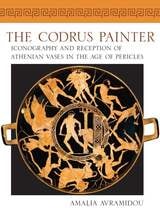
The Codrus Painter
Iconography and Reception of Athenian Vases in the Age of PericlesAmalia Avramidou
University of Wisconsin Press, 2011
The Codrus Painter was a painter of cups and vases in fifth-century B.C.E. Athens with a distinctive style; he is named after Codrus, a legendary Athenian king depicted on one of his most characteristic vases. He was active as an artist during the rule of Pericles, as the Parthenon was built and then as the troubled times of the Peloponnesian War began. In contrast to the work of fellow artists of his day, the vases of the Codrus Painter appear to have been created almost exclusively for export to markets outside Athens and Greece, especially to the Etruscans in central Italy and to points further west.
Amalia Avramidou offers a thoroughly researched, amply illustrated study of the Codrus Painter that also comments on the mythology, religion, arts, athletics, and daily life of Greece depicted on his vases. She evaluates his style and the defining characteristics of his own hand and of the minor painters associated with him. Examining the subject matter, figure types, and motifs on the vases, she compares them with sculptural works produced during the same period. Avramidou’s iconographic analysis not only encompasses the cultural milieu of the Athenian metropolis, but also offers an original and intriguing perspective on the adoption, meaning, and use of imported Attic vases among the Etruscans.
The Collection of Antiquities of the American Academy in Rome
Larissa Bonfante and Helen Nagy, editors
University of Michigan Press, 2016
The Commerce of War
Exchange and Social Order in Latin EpicNeil Coffee
University of Chicago Press, 2009
Latin epics such as Virgil’s Aeneid, Lucan’s Civil War, and Statius’s Thebaid addressed Roman aristocrats whose dealings in gifts, favors, and payments defined their conceptions of social order. In The Commerce of War, Neil Coffee argues that these exchanges play a central yet overlooked role in epic depictions of Roman society.
Tracing the collapse of an aristocratic worldview across all three poems, Coffee highlights the distinction they draw between reciprocal gift giving among elites and the more problematic behaviors of buying and selling. In the Aeneid, customary gift and favor exchanges are undermined by characters who view human interaction as short-term and commodity-driven. The Civil War takes the next logical step, illuminating how Romans cope once commercial greed has supplanted traditional values. Concluding with the Thebaid, which focuses on the problems of excessive consumption rather than exchange, Coffee closes his powerful case that these poems constitute far-reaching critiques of Roman society during its transition from republic to empire.
The Complete Poetry of Catullus
Catullus; Translated and with commentary by David Mulroy
University of Wisconsin Press, 2002
Catullus’ life was akin to pulp fiction. In Julius Caesar’s Rome, he engages in a stormy affair with a consul’s wife. He writes her passionate poems of love, hate, and jealousy. The consul, a vehement opponent of Caesar, dies under suspicious circumstances. The merry widow romances numerous young men. Catullus is drawn into politics and becomes a cocky critic of Caesar, writing poems that dub Julius a low-life pig and a pervert. Not surprisingly, soon after, no more is heard of Catullus.
David Mulroy brings to life the witty, poignant, and brutally direct voice of a flesh-and-blood man, a young provincial in the Eternal City, reacting to real people and events in a Rome full of violent conflict among individuals marked by genius and megalomaniacal passions. Mulroy’s lively, rhythmic translations of the poems are enhanced by an introduction and commentary that provide biographical and bibliographical information about Catullus, a history of his times, a discussion of the translations, and definitions and notes that ease the way for anyone who is not a Latin scholar.
The Complex Friendships of Alexander the Great
Loyalty, Love, Advantage, and IntrigueJoseph Roisman
University of Texas Press, 2026
A first-of-its-kind study of Alexander the Great that examines the diverse manifestations and pivotal role of friendship in his campaigns, decisions, and enduring legacy.
Modern scholarship has illuminated nearly every aspect of Alexander the Great’s life and campaigns––but Joseph Roisman turns to a dimension of Alexander’s world that has yet to receive sustained analysis: the structure and function of friendship in the king’s regime. In this first-of-its-kind study, The Complex Friendships of Alexander the Great explores the central role friendship played in Alexander’s social, political, and cultural world. Moving beyond utilitarian perspectives, Roisman shows that friendship with the king involved affective, noninstrumental bonds that shaped his decisions, successes, and failures.
Using Aristotle’s philosophy of friendship as a starting point, Roisman examines the making, breaking, and remaking of bonds with Macedonian companions, including his closest allies, as well as with foreigners encountered during his campaigns. The book concludes with the first comprehensive list of Alexander’s friends drawn from ancient sources. Combining meticulous scholarship with new interpretive insight, this study reevaluates how we understand Alexander the Great’s leadership, social networks, and legacy.