Results by title
1038 books match the query 'Antiquities' and 214 start with t
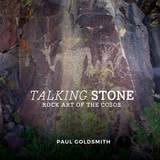
Talking Stone
Rock Art of the CososPaul Goldsmith
University of Utah Press, 2017
Hidden away in the canyons of a highly restricted military base on the edge of the Mojave Desert is the largest concentration of rock art in North America, possibly in the world. Images of animals, shamans, and puzzling abstract forms were pecked and painted on stone over thousands of years by a now long-gone culture. Talking Stone: Rock Art of the Cosos is a multivocal investigation of this art.
Acclaimed cinematographer Paul Goldsmith takes the reader on a visual journey through this limited access area with more than 160 stunning color photographs. The book is structured around Goldsmith’s treks into the remote desert canyons and his meetings with archaeologists, Native Americans, a psychologist, an artist, bow hunters, and the commanding officer in charge of the military base. The result is a visually striking book that gives the viewer a personal and visceral experience of this enigmatic art.
Includes 160 color photographs.
Talking Taino
Caribbean Natural History from a Native PerspectiveWilliam F. Keegan and Lisabeth A. Carlson
University of Alabama Press, 2008
Keegan and Carlson, combined, have spent over 45 years conducting archaeological research in the Caribbean, directing projects in Trinidad, Grenada, St. Lucia, Puerto Rico, the Dominican Republic, Haiti, Cuba, Jamaica, Grand Cayman, the Turks & Caicos Islands, and throughout the Bahamas. Walking hundreds of miles of beaches, working without shade in the Caribbean sun, diving in refreshing and pristine waters, and studying the people and natural environment around them has given them insights into the lifeways of the people who lived in the Caribbean before the arrival of Christopher Columbus. Sadly, harsh treatment extinguished the culture that we today call Taíno or Arawak.
In an effort to repay their debt to the past and the present, the authors have focused on the relationship between the Taínos of the past (revealed through archaeological investigations) and the present natural history of the islands. Bringing the past to life and highlighting commonalities between past and present, they emphasize Taíno words and beliefs about their worldview and culture.
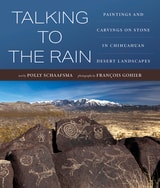
Talking to the Rain
Paintings and Carvings on Stone in Chihuahuan Desert LandscapesPolly Schaafsma, photographs by François Gohier
University of Utah Press, 2025
In this visually stunning volume, Polly Schaafsma, leading authority on pre-Hispanic Indian rock imagery and kiva murals of the greater American Southwest, provides an insightful journey into the petroglyphs and rock paintings of the Jornada Mogollon farmers in southern New Mexico's lower Chihuahuan Desert.
Talking to the Rain defines the Rio Grande Tradition, emphasizing the foundational Jornada Style as exemplified by its Mimbres-like imagery as well as its diverse and complex rain-making symbolism. By examining visual metaphors of cosmology and place-making, the book reveals an ancient dialogue between farmers and the cosmos that places rain for crops as its central concern. Exceptional color photographs by François Gohier invite readers to experience the landscapes and locations selected for creating these images. Both scholarly and accessible, Talking to the Rain offers a fresh perspective on cultural landscapes and the profound connections between people, art, and environment, making it essential for understanding Southwest cultural history.
Tel Dan in Its Northern Cultic Context
Andrew R. Davis
SBL Press, 2013
Temples for Cahokia Lords
Preston Holder's 1955–1956 Excavations of Kunnemann MoundTimothy R. Pauketat with contributions by John R. Bozell, Sandra L. Dunavan, and a foreword by John O'Shea
University of Michigan Press, 1993
Tenahaha and the Wari State
A View of the Middle Horizon from the Cotahuasi ValleyEdited by Justin Jennings and Willy Yépez Álvarez
University of Alabama Press, 2015
Tenahaha and the Wari State contains a series of essays that challenge current beliefs about the Wari state and suggest a reassessment of this pivotal era in Andean history. In this collection, a picture emerges of Wari power projected across the region’s rugged and formidable topography less as a conquering empire than as a source of ideas, styles, and material culture voluntarily adopted by neighboring peoples.
Much of the previous fieldwork on Wari history took place in the Wari heartland and in Wari strongholds, not areas where Wari power and influence were equivocal. In Tenahaha and the Wari State, editors Justin Jennings and Willy Yépez Álvarez set out to test whether current theories of the Wari state as a cohesive empire were accurate or simply reflective of the bias inherent in studying Wari culture in its most concentrated centers. The essays in this collection examine instead life in the Cotahuasi Valley, an area into which Wari influence expanded during the Middle Horizon period.
Drawing on ten years of exhaustive field work both at the ceremonial site of Tenahaha and in the surrounding valley, Jennings and Yépez Álvarez posit that Cotahuasinos at Tenahaha had little contact with the Wari state. Their excavations and survey in the area tell the story of a region in flux rather than of a people conquered by Wari. In a time of uncertainty, they adopted Wari ideas and culture as ways to cope with change.
Teotihuacan and Early Classic Mesoamerica
Multiscalar Perspectives on Power, Identity, and Interregional RelationsClaudia García-Des Lauriers
University Press of Colorado, 2021
The volume offers a multiscalar view of power and identity, showing that the spread of Teotihuacan-related material culture may have resulted from direct and indirect state administration, colonization, emulation by local groups, economic transactions, single-event elite interactions, and various kinds of social and political alliances. The contributors explore questions concerning who interacted with whom; what kinds of materials and ideas were exchanged; what role interregional interactions played in the creation, transformation, and contestation of power and identity within the city and among local polities; and how interactions on different scales were articulated. The answers to these questions reveal an Early Classic Mesoamerican world engaged in complex economic exchanges, multidirectional movements of goods and ideas, and a range of material patterns that require local, regional, and macroregional contextualization.
Focusing on the intersecting themes of identity and power, Teotihuacan and Early Classic Mesoamerica makes a strong contribution to the understanding of the role of this important metropolis in the Early Classic history of the region. The volume will be of interest to scholars and graduate students of Mesoamerican archaeology, the archaeology of interaction, and the archaeology of identity.
Contributors: Sarah C. Clayton, Fiorella Fenoglio Limón, Agapi Filini, Julie Gazzola, Sergio Gómez-Chávez, Haley Holt Mehta, Carmen Pérez, Patricia Plunket, Juan Carlos Saint Charles Zetina, Yoko Sugiura, Gabriela Uruñuela, Gustavo Jaimes Vences

That Guy Wolf Dancing
Elizabeth Cook-Lynn
Michigan State University Press, 2014
The Absent Stone
Mexican Patrimony and the Aftershocks of State TheftSandra Rozental
Duke University Press, 2026
The American Southeast at the End of the Ice Age
Edited by D. Shane Miller, Ashley M. Smallwood, and Jesse W. Tune
University of Alabama Press, 2022
Synthesizes archaeological and environmental evidence to reinterpret how early human populations adapted to dynamic climatic changes during the Late Pleistocene, reshaping our understanding of Paleoindian lifeways and migration in the Southeastern United States.
The 1996 benchmark volume The Paleoindian and Early Archaic Southeast, edited by David G. Anderson and Kenneth E. Sassaman, was the first study to summarize what was known of the peoples who lived in the Southeast when ice sheets covered the northern part of the continent and mammals such as mammoths, saber-toothed cats, and ground sloths roamed the landscape.
The American Southeast at the End of the Ice Age provides an updated, definitive synthesis of current archaeological research gleaned from an array of experts in the region. It is organized in three parts: state records, the regional perspective, and reflections and future directions. Chapters survey a diversity of topics including the distribution of the earliest archaeological sites in the region, chipped-stone tool technology, the expanding role of submerged archaeology, hunter-gatherer lifeways, past climate changes and the extinction of megafauna on the transitional landscape, and evidence of demographic changes at the end of the Ice Age. Discussion of the ethical responsibilities regarding the use of private collections and the relationship of archaeologists and the avocational community, insight from outside the Southeast, and considerations for future research round out the volume.
The Ancient Culture of the Fremont River in Utah
Report on the Explorations under the Claflin-Emerson Fund, 1928-1929Noel Morss
University of Utah Press, 2009
One such survey was conducted by author Noel Morss during the summer of 1928, resulting in an unexpected revelation: the Fremont (Dirty Devil) River drainage area being surveyed proved to be host to a prehistoric culture different from all other established Southwestern cultures. Excavations completed the following field season confirmed Morss’s findings. This distinct culture was defined by unique unpainted black or gray pottery, sole use of a primitive moccasin type, elaborate clay figurines, and abundant distinctive pictographs. Though too definite and well developed to be confined to a single drainage, Morss concluded that the Fremont were nonetheless a periphery culture and not an integral part of the mainstream of Southwestern development.
Originally published in 1931 and now featuring a new foreword by Duncan Metcalfe, The Ancient Culture of the Fremont River in Utah has become a classic in Southwestern archaeology, furthering a conversation about the early peoples of southern Utah that continues even today.
The Ancient Maya Marketplace
The Archaeology of Transient SpaceEdited by Eleanor M. King
University of Arizona Press, 2015
The Ancient Maya Marketplace reviews the debate on Maya markets and offers compelling new evidence for the existence and identification of ancient marketplaces in the Maya Lowlands. Its authors rethink the prevailing views about Maya economic organization and offer new perspectives. They attribute the dearth of Maya market research to two factors: persistent assumptions that Maya society and its rainforest environment lacked complexity, and an absence of physical evidence for marketplaces—a problem that plagues market research around the world.
Many Mayanists now agree that no site was self-sufficient, and that from the earliest times robust local and regional exchange existed alongside long-distance trade. Contributors to this volume suggest that marketplaces, the physical spaces signifying the presence of a market economy, did not exist for purely economic reasons but served to exchange information and create social ties as well.
The Ancient Maya Marketplace offers concrete links between Maya archaeology, ethnohistory, and contemporary cultures. Its in-depth review of current research will help future investigators to recognize and document marketplaces as a long-standing Maya cultural practice. The volume also provides detailed comparative data for premodern societies elsewhere in the world.
The Anthropology of Florida
Aleš Hrdlicka
University of Alabama Press, 2007
This volume, originally published in 1922, constitutes the most complete summary of anthropological information on Florida up until that point. Not only does it consider all previous research on Florida archaeology, physical anthropology, and aboriginal history, it also contains Hrdlicka’s analysis of every human bone from Florida that he could find in collections. He made remarkably accurate observations about the general physical types of prehistoric Florida Indians and how they compared to native peoples of surrounding regions.
The Antiquities Act
A Century of American Archaeology, Historic Preservation, and Nature ConservationEdited by David Harmon, Frances P. McManamon, and Dwight T. Pitcaithley
University of Arizona Press, 2006
Enacted in 1906, the Antiquities Act is one of the most important pieces of conservation legislation in American history and has had a far-reaching influence on the preservation of our nation’s cultural and natural heritage. Thanks to the foresight of thirteen presidents, parks as diverse as Acadia, Grand Canyon, and Olympic National Park, along with historic and archaeological sites such as Thomas Edison’s Laboratory and the Gila Cliff Dwellings, have been preserved for posterity.
A century after its passage, this book presents a definitive assessment of the Antiquities Act and its legacy, addressing the importance and breadth of the act—as well as the controversy it has engendered. Authored by professionals intimately involved with safeguarding the nation’s archaeological, historic, and natural heritage, it describes the applications of the act and assesses its place in our country’s future. With a scope as far-reaching as the resources the act embraces, this book offers an unparalleled opportunity for today’s stewards to reflect on the act’s historic accomplishments, to remind fellow professionals and the general public of its continuing importance, and to look ahead to its continuing implementation in the twenty-first century.
The Antiquities Act invites all who love America’s natural and cultural treasures not only to learn about the act’s rich legacy but also to envision its next hundred years.

The Antiquities of Wisconsin, as Surveyed and Described
I. A. Lapham; Foreword by Robert A. Birmingham and Introduction by Robert P. Nurre
University of Wisconsin Press, 2001
First published in 1855 and long out of print, The Antiquities of Wisconsin remains invaluable as a detailed record of Wisconsin’s rich archaeological heritage of mounds and mound groups, many of which were later destroyed by farming and urban growth. Lapham was among the first scientists to produce evidence that the earthworks had been built by the ancestors of modern Native Americans, not some mythical "lost race," as was believed by many white authorities of the time. Modern researchers still use Lapham’s maps and descriptions to locate vestiges of sites that once existed, or to help reconstruct Wisconsin’s ancient cultural landscape. This edition includes a foreword by Wisconsin state archaeologist Robert A. Birmingham and an introduction by Robert P. Nurre, a Lapham scholar.

The Anxiety of Obsolescence
The American Novel in the Age of TelevisionKathleen Fitzpatrick
Vanderbilt University Press, 2006
It almost goes without saying that the rise in popularity of television has killed the audience for "serious" literature. This is such a given that reading Fitzpatrick's challenge to this notion can be very disconcerting, as she traces the ways in which a small cadre of writers of "serious" literature--DeLillo, Pynchon, and Franzen, for instance--have propagated this myth in order to set themselves up as the last bastions of good writing. Fitzpatrick first explores whether serious literature was ever as all-pervasive as critics of the television culture claim and then asks the obvious question: what, or who, exactly, are these guys defending good writing against?
Fitzpatrick examines the ways in which the anxiety about the supposed death of the novel is built on a myth of the novel's past ubiquity and its present displacement by television. She explores the ways in which this myth plays out in and around contemporary fiction and how it serves as a kind of unacknowledged discourse about race, class, and gender. The declaration constructs a minority status for the "white male author" who needs protecting from television's largely female and increasingly non-white audience. The novel, then, is transformed from a primary means of communication into an ancient, almost forgotten, and thus, treasured form reserved for the well-educated and well-to-do, and the men who practice it are exalted as the practitioners of an almost lost art.
Such positioning serves to further marginalize women writers and writers of color because it makes the novel, by definition, the preserve of the poor endangered white man. If the novel is only a product of a small group of white men, how can the contributions of women and writers of color be recognized? Instead, this positioning abandons women and people of color to television as a creative outlet, and in return, cedes television to them. Fitzpatrick argues that there's a level of unrecognized patronization in assuming that television serves no purpose but to provide dumb entertainment to bored women and others too stupid to understand novels. And, instead, she demonstrates the real positive effects of a televisual culture.
The Archaeological Guide to Iowa
William E. Whittaker, Lynn M. Alex, Mary De La Garza
University of Iowa Press, 2015
Fortunately, there are many sites open to the public where the remnants of the past are visible, either in their original location or in nearby museum exhibits. Few things are more inspiring than walking among the Malchow Mounds, packed so tightly it is hard to tell where one ends and the other begins. Strolling around downtown Des Moines is a lot more interesting when you are aware of the mounds, Indian villages, and the fort that once stood there. And, although you can’t visit the Wanampito site, you can see the splendid seventeenth-century artifacts excavated from it at Heery Woods State Park.
For people who want to experience Iowa’s archaeological heritage first hand, this one-of-a-kind guidebook shows the way to sixty-eight important sites. Many are open to visitors or can be seen from a public location; others, on private land or no longer visible on the landscape, live on through artifact displays. The guide also includes a few important sites that are not open to visitors because these places have unique stories to tell. Sites of every type, from every time period, and in every corner of the state are featured. Whether you have a few hours to indulge your curiosity or are planning a road trip across the state, this guide will take you to places where Iowa’s deep history comes to life.
The Archaeology Of The Donner Party
Donald L Hardesty
University of Nevada Press, 2005
The Archaeology and Rock Art of Swordfish Cave
Clayton G. Lebow
University of Utah Press, 2015
Swordfish Cave is a well-known rock art site located on Vandenberg Air Force Base in south central California. Named for the swordfish painted on its wall, the cave is a sacred Chumash site. It was under threat from various processes and required measures to conserve it. Nearly all of the cave’s interior was excavated to create a rock art viewing area. That effort revealed previously unknown rock art and made it possible to closely examine how early occupants used the space inside the cave. They identified three periods of human use, including an initial occupation around 3,550 years ago, an occupation about 660 years later, and a final Native American occupation that occurred much later, between A.D. 1787 and 1804. The discovery of tools used to make the pictographs linked the art to the two early occupations, pushing back the generally understood antiquity of rock art on California’s Central Coast by more than 2,000 years.
Two aspects make this study unusual: datable materials associated with rock art and complete removal of cave deposits. Well illustrated with photographs, maps, and drawings of both the art itself and the excavations and materials revealed therein, the book presents a rare opportunity to directly link archaeology and rock art and to examine the spatial organization of prehistoric human habitation.
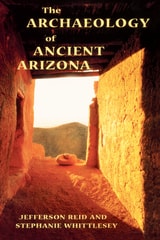
The Archaeology of Ancient Arizona
Jefferson Reid and Stephanie Whittlesey
University of Arizona Press, 1997
This book invites us to step into a Hohokam village with its sounds of barking dogs, children's laughter, and the ever-present grinding of mano on metate to produce the daily bread. Here, too, readers will marvel at the skills of Clovis elephant hunters and touch the lives of other ancestral people known as Mogollon, Anasazi, Sinagua, and Salado. Descriptions of long-ago people are balanced with tales about the archaeologists who have devoted their lives to learning more about "those who came before." Trekking through the desert with the famed Emil Haury, readers will stumble upon Ventana Cave, his "answer to a prayer." With amateur archaeologist Richard Wetherill, they will sense the peril of crossing the flooded San Juan River on the way to Chaco Canyon. Others profiled in the book are A. V. Kidder, Andrew Ellicott Douglass, Julian Hayden, Harold S. Gladwin, and many more names synonymous with the continuing saga of southwestern archaeology.
This book is an open invitation to general readers to join in solving the great archaeological puzzles of this part of the world. Moreover, it is the only up-to-date summary of a field advancing so rapidly that much of the material is new even to professional archaeologists. Lively and fast paced, the book will appeal to anyone who finds magic in a broken bowl or pueblo wall touched by human hands hundreds of years ago. For all readers, these pages offer a sense of adventure, that "you are there" stir of excitement that comes only with making new discoveries about the distant past.
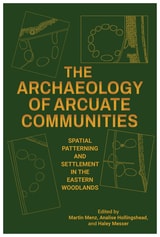
The Archaeology of Arcuate Communities
Spatial Patterning and Settlement in the Eastern WoodlandsEdited by Martin Menz, Analise Hollingshead, and Haley Messer
University of Alabama Press, 2024
A comparative archaeological synthesis examining the spatial, social, and ceremonial logics underpinning circular community formations across the Eastern Woodlands from 10,000 BC to the sixteenth century.
The Archaeology of Arcuate Communities is an edited collection of ten essays that illuminate how Indigenous communities of the Eastern Woodlands, from 10,000 BC to the 1550s, are analyzed and interpreted by archaeologists today. Volume editors Martin Menz, Analise Hollingshead, and Haley Messer define the persistent circular or “arcuate” pattern of Native settlements in this region as a spatial manifestation of community activities that reinforced group identity alongside plazas, mounds, and other architectural features.
The varied case studies in this volume focus on specific communities, how they evolved, and the types of archaeological data that have been used to assess them. Part I, “Defining the Domestic Unit in Arcuate Communities,” reveals social distinctions between households and household clusters in arcuate communities, how they differ in terms of stylistic patterns and exchange, and how they combined to form distinct social groups at different scales within a broader community. Part II, “Organizing Principles of Arcuate Communities,” broadens the scope to identify the organizing principles of entire arcuate communities, such as the central role of plazas in structuring their development, how the distribution of households and central features within communities was contested and reorganized, and the importance of mounds in both delineating arcuate communities and marking their position on the landscape. Part III, “Comparison and Change in Arcuate Communities,” comprises case studies that examine changes in the organization of arcuate communities over time. Rounding out the volume is a concluding chapter that assesses how and why communities around the world formed in circular patterns.
A valuable resource for archaeologists, this collection will also be of interest to those seeking to learn about Native North American settlement, ceremony, and community organization.
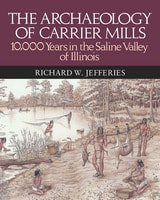
The Archaeology of Carrier Mills
10,000 Years in the Saline Valley of IllinoisRichard W. Jefferies
Southern Illinois University Press, 1987
Archaeological sites throughout southern Illinois provide a chronicle of the varying ways people have lived in that area during the past 10,000 years. This book focuses on the results of a five-year archaeological investigation in a 143-acre area known as the Carrier Mills Archaeological District. This area, rich in archaeological treasures, offers many keys to the prehistoric people of southern Illinois. Archaeologists in this study have sought to learn the ages of the various prehistoric occupations represented at the sites; to better understand the technology and social organization of these prehistoric people; to collect information about diet, health, and physical characteristics of the prehistoric inhabitants; and to investigate the remains of the 19th-century Lakeview settlement.
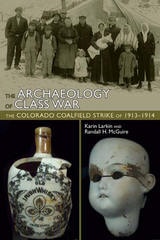
The Archaeology of Class War
The Colorado Coalfield Strike of 1913-1914Karin Larkin
University Press of Colorado, 2009
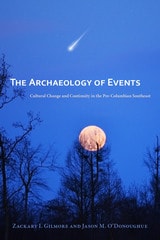
The Archaeology of Events
Cultural Change and Continuity in the Pre-Columbian SoutheastZackary I. Gilmore and Jason M. O'Donoughue
University of Alabama Press, 2015
Across the social sciences, gradualist evolutionary models of historical dynamics are giving way to explanations focused on the punctuated and contingent “events” through which history is actually experienced. The Archaeology of Events is the first book-length work that systematically applies this new eventful approach to major developments in the pre-Columbian Southeast.
Traditional accounts of pre-Columbian societies often portray them as “cold” and unchanging for centuries or millennia. Events-based analyses have opened up archaeological discourse to the more nuanced and flexible idea of context-specific, rapidly transpiring, and broadly consequential historical “events” as catalysts of cultural change.
The Archaeology of Events, edited by Zackary I. Gilmore and Jason M. O’Donoughue, considers a variety of perspectives on the nature and scale of events and their role in historical change. These perspectives are applied to a broad range of archeological contexts stretching across the Southeast and spanning more than 7,000 years of the region’s pre-Columbian history. New data suggest that several of this region’s most pivotal historical developments, such as the founding of Cahokia, the transformation of Moundville from urban center to vacated necropolis, and the construction of Poverty Point’s Mound A, were not protracted incremental processes, but rather watershed moments that significantly altered the long-term trajectories of indigenous Southeastern societies.
In addition to exceptional occurrences that impacted entire communities or peoples, southeastern archaeologists are increasingly recognizing the historical importance of localized, everyday events, such as building a house, crafting a pot, or depositing shell. The essays collected by Gilmore and O’Donoughue show that small-scale events can make significant contributions to the unfolding of broad, regional-scale historical processes and to the reproduction or transformation of social structures.
The Archaeology of Events is the first volume to explore the archaeological record of events in the Southeastern United States, the methodologies that archaeologists bring to bear on this kind of research, and considerations of the event as an important theoretical concept.
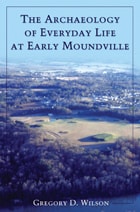
The Archaeology of Everyday Life at Early Moundville
Gregory D. Wilson
University of Alabama Press, 2007
Complex Mississippian polities were neither developed nor sustained in a vacuum. A broad range of small-scale social groups played a variety of roles in the emergence of regionally organized political hierarchies that governed large-scale ceremonial centers. Recent research has revealed the extent to which interactions among corporately organized clans led to the development, success, and collapse of Moundville. These insights into Moundville’s social complexity are based primarily on the study of monumental architecture and mortuary ceremonialism. Less is known about how everyday domestic practices produced and were produced by broader networks of power and inequality in the region.
Wilson’s research addresses this gap in our understanding by analyzing and interpreting large-scale architectural and ceramic data sets from domestic contexts. This study has revealed that the early Mississippian Moundville community consisted of numerous spatially discrete multi-household groups, similar to ethnohistorically described kin groups from the southeastern United States. Hosting feasts, dances, and other ceremonial events were important strategies by which elite groups created social debts and legitimized their positions of authority. Non-elite groups, on the other hand, maintained considerable economic and ritual autonomy through diversified production activities, risk sharing, and household ceremonialism. Organizational changes in Moundville’s residential occupation highlight the different ways kin groups defined and redefined their corporate status and identities over the long term.
The Archaeology of Houses and Households in the Native Southeast
Benjamin A. Steere
University of Alabama Press, 2017
The Archaeology of Houses and Households in the Native Southeast contributes enormously to the study of household archaeology and domestic architecture in the region. This significant volume combines both previously published and unpublished data on communities from the Southeast and is the first systematic attempt to understand the development of houses and households as interpreted through a theoretical framework developed from broad-ranging studies in cultural anthropology and archaeology.
Steere’s major achievement is the compilation of one of the largest and most detailed architectural datasets for the Southeast, including data for 1,258 domestic and public structures from 65 archaeological sites in North Carolina, Georgia, Alabama, Tennessee, Kentucky, and the southern parts of Missouri, Indiana, and Illinois. Rare data from hard-to-find cultural resource management reports is also incorporated, creating a broad temporal and geographic scope and serving as one of many remarkable features of the book, which is sure to be of considerable value to archaeologists and anthropologists interested in comparative studies of architecture.
Similar to other analyses, Steere’s research uses multiple theoretical angles and lines of evidence to answer archaeological questions about houses and the people who built them. However, unlike other examinations of household archaeology, this project spans multiple time periods (Woodland, Mississippian, and Historic); is focused squarely on the Southeast; features a more unified approach, using data from a single, uniform database; and privileges domestic architecture as a line of evidence for reconstructing daily life at major archaeological sites on a much broader scale than other investigations.
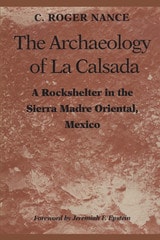
The Archaeology of La Calsada
A Rockshelter in the Sierra Madre Oriental, MexicoBy C. Roger Nance
University of Texas Press, 1992
On a remote mountainside 2,000 meters above sea level in the northern Sierra Madre Oriental, the rockshelter at La Calsada has yielded basic archaeological data for one of the least understood regions of prehistoric North America, the state of Nuevo León in northern Mexico. This comprehensive site report, with detailed information on artifacts and stratigraphy, provides baseline data for further explorations in the region and comparisons with other North American hunter-gatherer groups.
Radiocarbon dating traces the earliest component at the site to 8600-7500 B.C., giving La Calsada arguably the earliest well-dated lithic complex in Mexico. Nance describes some 1,140 recovered stone tools, with comparisons to the archaeology of southern and southwestern Texas, as well as reported sites in Tamaulipas, Coahuila, and Nuevo León, Mexico.
From the lithic and stratigraphic analysis, Nance deduces occupational patterns at the site, beginning with Paleo-Indian cultures that lived in the area until about 7500 B.C. Through changes in tool technology, he follows the rise of the Abasolo tradition around 3000 B.C. and the appearance of a new culture with a radically different lithic industry around 1000 A.D.
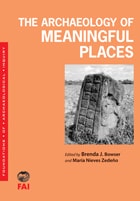
The Archaeology of Meaningful Places
Brenda J Bowser
University of Utah Press, 2009
Diverse spatial and temporal contexts in two culture areas--Mesoamerica and the Greater Southwest--serve as backdrops for nine chapters in which fourteen contributors show how place is an ideal starting point to begin unraveling the human past. Several authors further address the enduring significance of places of the past for contemporary peoples. Among the many strengths of this volume is the careful way in which powerful concepts, diverse lines of thought, and empirical models are integrated to reveal the multiple facets of meaningful places, and to illustrate ways in which places may be approached archaeologically, theoretically, and culturally. Ultimately, the book’s contributors champion the notion that place is a valid and useful analytical unit for describing, reconstructing, interpreting, and explaining the form, structure, and temporality of the meanings humans ascribe to their environment.
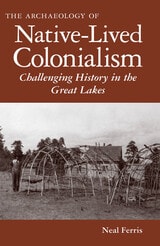
The Archaeology of Native-Lived Colonialism
Challenging History in the Great LakesNeal Ferris
University of Arizona Press, 2009
In reconsidering Native adaptation and resistance to colonial British rule, Ferris reviews five centuries of interaction that are usually read as a single event viewed through the lens of historical bias. He first examines patterns of traditional lifeway continuity among the Ojibwa, demonstrating their ability to maintain seasonal mobility up to the mid-nineteenth century and their adaptive response to its loss. He then looks at the experience of refugee Delawares, who settled among the Ojibwa as a missionary-sponsored community yet managed to maintain an identity distinct from missionary influences. And he shows how the archaeological history of the Six Nations Iroquois reflected patterns of negotiating emergent colonialism when they returned to the region in the 1780s, exploring how families managed tradition and the contemporary colonial world to develop innovative ways of revising and maintaining identity.
The Archaeology of Native-Lived Colonialism convincingly utilizes historical archaeology to link the Native experience of the eighteenth and nineteenth centuries to the deeper history of sixteenth- and seventeenth-century interactions and with pre-European times. It shows how these Native communities succeeded in retaining cohesiveness through centuries of foreign influence and material innovations by maintaining ancient, adaptive social processes that both incorporated European ideas and reinforced historically understood notions of self and community.
The Archaeology of Ocmulgee Old Fields, Macon, Georgia
Carol I. Mason, with a new foreword by Marvin T. Smith
University of Alabama Press, 2005
A 17th-century trading post and Indian town in central Georgia reveal evidence of culture contact and change
Ocmulgee Old Fields near Macon, Georgia, is the site of a Lower Creek village and associated English trading house dating from the late 17th and early 18th centuries. It was excavated in the early 1930s as part of a WPA project directed by A. R. Kelly, which focused primarily on the major Mississippian temple mounds of Macon Plateau. The specific data for the Old Fields was not analyzed until nearly 30 years after the excavation.
Part of the significance of this site lies in its secure identification with a known group of people and the linkage of those people with recognizable archaeological remains. The Old Fields site was among the very first for which this kind of identification was possible and stands at the head of a continuing tradition of historic sites archaeology in the Southeast.
Carol I. Mason's classic study of the Ocmulgee Old Fields site has been a model for contact-period Indian archaeology since the 1960s. The report includes a discussion of the historic setting and an analysis of the archaeological materials with an identification of the Lower Creek town and possibly of the English trader who lived there. Now, for the first time, the original report is widely available in book form. With a new foreword by the author and a new introduction from Southeastern archaeology expert Marvin T. Smith, readers have the benefit of a contemporary view of this very fine piece of careful scholarship.
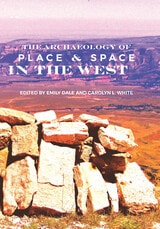
The Archaeology of Place and Space in the West
Edited by Emily Dale and Carolyn L. White
University of Utah Press, 2021
Contributors tackle questions of how historical archaeologists theoretically and methodologically define the West, conveying the historical, mythological, and physical manifestations of placemaking. They confront issues of community and how diverse ethnic, racial, gendered, labor-based, and other demographic populations expressed their identities on and in the Western landscape. Authors also address the continued creation and re-creation of the West today, exploring the impact of the past on people in the present and its influence on modern conceptions of the American West.
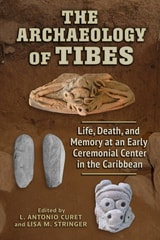
The Archaeology of Tibes
Life, Death, and Memory at an Early Ceremonial Center in the CaribbeanEdited by L. Antonio Curet and Lisa M. Stringer
University of Alabama Press, 2025
A collection of new essays that brings archaeological insights and discoveries at the Tibes Ceremonial Center up to date
The Archaeology of Tibes is a collection of essays offering a fresh analysis of this important ceremonial center. It brings new insights about social structure, illuminating the smaller-scale daily lives of ancient peoples rather than focusing on large-scale chiefdoms.
Tibes is the earliest known (ca. 400 to 1300 CE) ceremonial center in Puerto Rico. It has been the focus of one of the largest and longest-running archaeological programs in the Caribbean. Early researchers interpreted evidence in the area of a shift from dispersed villages to a ceremonial center as suggesting the development of social stratification and accumulation of power. Seen as the seat of an early chiefdom, Tibes served as a model applied broadly across the Greater Antilles.
New discoveries prompted archaeologists to question their original assumptions about ancient Puerto Rico, and later research failed to produce evidence of social stratification at Tibes. The Archaeology of Tibes therefore incorporates updated and wider perspectives on social formation. It considers agency, decisions, and events and the possibility of more than one form of social organization. It also presents a more accurate “humanized” past: the sociological meanings of that space and its significance for the people who created, used, and occupied it and who influenced rituals, social memory, and community.
Summarizing findings from excavations at Tibes after 2010, the collection also reviews the geoarchaeology of the site. Additional essays cover ceramic pastes, lithic production, faunal remains, coral, burials, and rock art. This work will engender discussion and future research by archaeologists across the Caribbean and beyond.
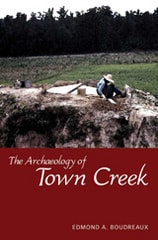
The Archaeology of Town Creek
Edmond A. Boudreaux III
University of Alabama Press, 2007
The sequence of change for public architecture during the Mississippian period may reflect a centralization of political power through time. In the research presented here, some of the community-level assumptions attributed to the appearance of Mississippian mounds are tested against the archaeological record of the Town Creek site—the remains of a town located on the northeastern edge of the Mississippian culture area. In particular, the archaeological record of Town Creek is used to test the idea that the appearance of Mississippian platform mounds was accompanied by the centralization of political authority in the hands of a powerful chief.
A compelling argument has been made that mounds were the seats and symbols of political power within Mississippian societies. While platform mounds have been a part of Southeastern Native American communities since at least 100 B.C., around A.D. 400 leaders in some communities began to place their houses on top of earthen mounds—an act that has been interpreted as an attempt to legitimize personal authority by a community leader through the appropriation of a powerful, traditional, community-oriented symbol. Platform mounds at a number of sites were preceded by a distinctive type of building called an earthlodge—a structure with earth-embanked walls and an entrance indicated by short, parallel wall trenches. Earthlodges in the Southeast have been interpreted as places where a council of community leaders came together to make decisions based on consensus. In contrast to the more inclusive function proposed for premound earthlodges, it has been argued that access to the buildings on top of Mississippian platform mounds was limited to a much smaller subset of the community. If this was the case and if ground-level earthlodges were more accessible than mound-summit structures, then access to leaders and leadership may have decreased through time.
Excavations at the Town Creek archaeological site have shown that the public architecture there follows the earthlodge-to-platform mound sequence that is well known across the South Appalachian subarea of the Mississippian world. The clear changes in public architecture coupled with the extensive exposure of the site's domestic sphere make Town Creek an excellent case study for examining the relationship among changes in public architecture and leadership within a Mississippian society.
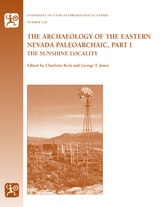
The Archaeology of the Eastern Nevada Paleoarchaic, Part 1
The Sunshine LocalityCharlotte Beck
University of Utah Press, 2009
The Sunshine Locality in the geographic center of the Great Basin has been the focus of scientific research since the mid-1960s. Authors Charlotte Beck and George T. Jones began studies there in 1992 and carried out excavations between 1993 and 1997 with the assistance of Hamilton College Field School. The area has yielded a rich and varied collection of diagnostic lithic tools, including fluted and unfluted lanceolate projectile points and a crescent, and a variety of gravers, scrapers, notches, and other tools common in Paleoindian toolkits across North America.
This volume provides the first comprehensive treatment that combines historical research with the more recent studies. Analysis and interpretations of the stratigraphic sequence in Sunshine Wash are presented, including analyses of sedimentary textures and structure, depositional processes, and chronology. Faunal remains are used to evaluate local and regional environmental changes. Finally, the authors address the nature of the processes that created the archaeological record at Sunshine Locality, its age, and whether artifacts and remains of extinct mammals also recovered at the site are associated. This work begins to answer unresolved questions about the paleoenvironmental resources of the Sunshine Locality.
The Archaeology of the Sierra Blanca Region of Southeastern New Mexico
Jane Holden Kelley
University of Michigan Press, 1984
The Archaeology, Ethnohistory, and Environment of the Marismas Nacionales
Michael S. Foster
University of Utah Press, 2017
Between 1967 and 1975 archaeologists from SUNY-Buffalo led a multidisciplinary project in the Marismas Nacionales, a vast, resource-rich estuary and mangrove forest of coastal Sinaloa and Nayarit, west Mexico. Michael Foster and fellow archaeologists provide a much-needed synthesis of these investigations, drawing from previously unpublished data and published reports to provide a comprehensive look at the region.
While in the field, the SUNY team recovered a variety of material artifacts and 248 human remains. Their findings, along with the project’s background, history, and analyses, are detailed in this volume’s thirteen chapters and nine appendices. Also included are supporting geomorphic, environmental, and ethnohistoric studies that establish the context for local human settlement and change. Evidence indicates that as the coastal plain grew, ceramic-bearing agriculturalists moved into the area and participated in far-reaching exchanges of goods and resources. This book makes a significant and lasting contribution to our knowledge of what today remains an understudied region of greater Mesoamerica.
Marismas Burial Descriptions, Supplemental Digital Material
The Archaic Southwest
Foragers in an Arid LandEdited by Bradley J. Vierra
University of Utah Press, 2018

The Archeology of New Hampshire
Exploring 10,000 Years in the Granite StateDavid Starbuck
University of New Hampshire Press, 2006
Several states already boast volumes showcasing their archeological history, but not New Hampshire—until now. David R. Starbuck's volume fills that void. Going beyond standard state guides that focus primarily on prehistoric sites, Starbuck also devotes equal time to historic, industrial, and nautical sites. This approach reflects the thinking of most contemporary archeologists who conduct research at a diverse range of sites.
A veteran of thirty years of field research throughout the Granite State, Starbuck revisits some of his own sites, including excavations at the New England Glassworks in Temple, two prehistoric sites on the Merrimack River, the Joseph Hazeltine pottery workshop outside Concord, the Governor Wentworth Estate in Wolfeboro, and his own long-term survey and excavation project at Canterbury Shaker Village. At the same time, though, Starbuck includes the work of other contemporary New Hampshire archeologists, representative sites of “old-timers” whose digs preceded his arrival, and the investigations of avocational diggers.
Starbuck's introduction offers an anecdotal history of archeological research in New Hampshire through the people who shaped it. Part I discusses discoveries that predate white settlement: the Paleo-Indian Period; the Archaic Period; and the Woodland Period. Part II moves from the seventeenth century to the present. Chapters include historical archeology (forts, farms, potters, Shakers); industrial archeology (mills, factories, railroads, dams, and bridges); and nautical archeology (discoveries in the state's lakes and on the seacoast).
In addition to summarizing some of the more interesting finds, Starbuck includes stories about archeologists and the techniques they have used to glean information from the past. Overall, he provides a lively account of what it is like to practice archeology in a small but dynamic New England state.
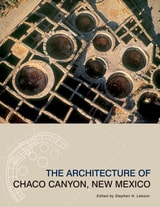
The Architecture of Chaco Canyon, New Mexico
Lekson, Stephen H
University of Utah Press, 2007
The structures of Chaco Canyon, built by native peoples between AD 850 and 1130, are among the most compelling ancient monuments on earth. Recognized as a World Heritage Site, these magnificent ruins are consistently featured in scholarly books and popular media. Yet, like Chaco itself, these buildings are anomalous in Southwestern archaeology and much debated.
In a century of study, our understanding and means of approaching these ruins have grown considerably. Important tree-ring dating, GIS research, and computer imaging point to the need for a new volume on Chaco architecture that unifies older information with the new.
The chapters in this volume focus on Chaco Great Houses and consider three overlapping themes: studies of technology and building types, analyses of architectural change, and readings of the built environment. To aid reconsideration there are over 150 maps, floor plans, elevations, and photos, including a number of color illustrations.

The Arctic Small Tool Tradition in Manitoba
Ronald J. Nash
University of Manitoba Press, 1969
The Art and Archaeology of the Moche
An Ancient Andean Society of the Peruvian North CoastEdited by Steve Bourget and Kimberly L. Jones
University of Texas Press, 2008
Renowned for their monumental architecture and rich visual culture, the Moche inhabited the north coast of Peru during the Early Intermediate Period (AD 100-800). Archaeological discoveries over the past century and the dissemination of Moche artifacts to museums around the world have given rise to a widespread and continually increasing fascination with this complex culture, which expressed its beliefs about the human and supernatural worlds through finely crafted ceramic and metal objects of striking realism and visual sophistication.
In this standard-setting work, an international, multidisciplinary team of scholars who are at the forefront of Moche research present a state-of-the-art overview of Moche culture. The contributors address various issues of Moche society, religion, and material culture based on multiple lines of evidence and methodologies, including iconographic studies, archaeological investigations, and forensic analyses. Some of the articles present the results of long-term studies of major issues in Moche iconography, while others focus on more specifically defined topics such as site studies, the influence of El Niño/Southern Oscillation on Moche society, the nature of Moche warfare and sacrifice, and the role of Moche visual culture in decoding social and political frameworks.
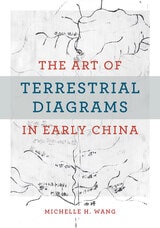
The Art of Terrestrial Diagrams in Early China
Michelle H. Wang
University of Chicago Press, 2023
This is the first English-language monograph on the early history of maps in China, centering on those found in three tombs that date from the fourth to the second century BCE and constitute the entire known corpus of early Chinese maps (ditu). More than a millennium separates them from the next available map in the early twelfth century CE. Unlike extant studies that draw heavily from the history of cartography, this book offers an alternative perspective by mobilizing methods from art history, archaeology, material culture, religion, and philosophy. It examines the diversity of forms and functions in early Chinese ditu to argue that these pictures did not simply represent natural topography and built environments, but rather made and remade worlds for the living and the dead. Wang explores the multifaceted and multifunctional diagrammatic tradition of rendering space in early China.
The Asturian of Cantabria
Early Holocene Hunter-Gatherers in Northern SpainGeoffrey A. Clark
University of Arizona Press, 1983
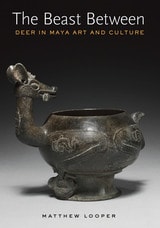
The Beast Between
Deer in Maya Art and CultureBy Matthew Looper
University of Texas Press, 2019
The first book to focus on the multifaceted images of deer and hunting in ancient Maya art, from the award-winning author of To Be Like Gods: Dance in Ancient Maya Civilization.
Winner, CHOICE Outstanding Academic Title, 2019
The white-tailed deer had a prominent status in Maya civilization: it was the most important wild-animal food source at many inland Maya sites and also functioned as a major ceremonial symbol. Offering an in-depth semantic analysis of this imagery, The Beast Between considers iconography, hieroglyphic texts, mythological discourses, and ritual narratives to translate the significance and meaning of the vibrant metaphors expressed in a variety of artifacts depicting deer and hunting.
Charting the importance of deer as a key component of the Maya diet, especially for elites, and analyzing the coupling of deer and maize in the Maya worldview, The Beast Between reveals a close and long-term interdependence between the Maya and these animals. Not only are deer depicted naturalistically in hunting and ritual scenes, but also they are assigned human attributes. This rich imagery reflects the many ways in which deer hunting was linked to status, sexuality, and war as part of a deeper process to ensure the regeneration of both agriculture and ancestry. Drawing on methodologies of art history, archaeology, and ethnology, this illuminating work is poised to become a key resource for multiple fields.
The Bioarchaeology of Virginia Burial Mounds
Debra L. Gold
University of Alabama Press, 2004
Uncovering the stories of Virginia's ancient peoples through the science of bioarchaeology.
By the 14th century more than a dozen accretional burial mounds—reaching heights of 12 to 15 feet—marked the floodplains of interior Virginia. Today, none of these mounds built by the nearly forgotten Monacan Indians remain on the landscape, having been removed over the centuries by a variety of natural and cultural causes. This study uses what remains of the mounds—excavated from the 1890s to the 1980s— to gain a new understanding of the Monacans and to gauge their importance in the realm of the late prehistoric period in the Eastern Woodlands.
Based on osteological examinations of dozens of complete skeletons and thousands of isolated bones and bone fragments, this work constructs information on Monacan demography, diet, health, and mortuary ritual in the 10th through the 15th centuries. The results show an overall pattern of stability and local autonomy among the Late Woodland village societies of interior Virginia in which a mixture of maize farming and the collection of wild food resources were successful for more than 600 years.
This book—uniting biological and cultural aspects of the data for a holistic understanding of everyday life in the period—will be of interest to ethnohistorians, osteologists, bioarchaeologists, and anyone studying Late Woodland, Mississippian, and contact periods, as well as middle range societies, in the Eastern Woodlands.
The Bridgeport Township Site
Archaeological Investigation at 20SA620, Saginaw County, MichiganEdited by John M. O'Shea and Michael Shott with contributions by Kathryn Egan, William Farrand, Claire McHale Milner, and Karen Mudar
University of Michigan Press, 1990
The Burials of Cerro Azul, Peru
Joyce Marcus
University of Michigan Press, 2024
The Buried City
Unearthing the Real PompeiiGabriel Zuchtriegel
University of Chicago Press, 2025
In The Buried City, Gabriel Zuchtriegel takes us on a behind-the-scenes tour of Pompeii and reveals new archaeological finds that are being unearthed at the site’s biggest dig in a generation. As director of the Pompeii Archaeological Park, Zuchtriegel presents a uniquely intimate perspective on this city that was tragically destroyed and frozen in time by the eruption of Mount Vesuvius in 79 CE. Among the ruins, we find unmade beds, dishes left drying, and bodies of victims encased in ash, but Zuchtriegel shows that we’ve only begun to understand this fascinating place, as a third of the site remains unexcavated.
Zuchtriegel leads us into the heart of the city, reconstructing Pompeii as it would have been, showing us who lived there, what mattered to them, and what happened in their final hours. The Buried City reveals the latest discoveries unearthed at Pompeii—including a banquet hall with murals of Greek gods, a fresco of what appears to be a pizza, and the remains of individuals crushed by debris—all buried for almost two thousand years. Zuchtriegel offers a vivid portrait of this World Heritage site as a vibrant and diverse city, connecting us to a past that is much closer than we think and inviting us to reflect on our role as keepers of the site and its history.
The Carnegie Maya III
Carnegie Institution of Washington Notes on Middle American Archaeology and Ethnology, 1940-1957John M. Weeks
University Press of Colorado, 2011
The series began in 1940 as an outlet for information that may have been considered too unimportant, brief, or restricted to be submitted for formal publication. However, these notes are often of great interest to the specialists for whom they are designed and to whom their distribution is restricted. The majority of the essays-most of which are on the Maya-are on archaeological subjects, epigraphy, ethnohistory and ethnography, and linguistics. As few original copies of the Notes series are known to exist in U.S. and Canadian libraries, the book will make these essays easily accessible to students, academics, and researchers in the field.
Purchase of the print book comes with free individual access to the Adobe Digital Editions Carnegie Maya Series Ebook, which contains the complete set of The Carnegie Maya, The Carnegie Maya II, The Carnegie Maya III and The Carnegie Maya IV, thus making hundreds of documents from the Carnegie Institution's Maya program available in one source.
The Carnegie Maya IV
Carnegie Institution of Washington Theoretical Approaches to Problems, 1941-1947John M. Weeks
University Press of Colorado, 2012
Only a few sets of these three contributions to the Theoretical Approaches to Problems series are known to have survived, making The Carnegie Maya IV an essential reference and research resource.
The corresponding ebook, for individual download, contains the complete set of The Carnegie Maya, The Carnegie Maya II, The Carnegie Maya III and The Carnegie Maya IV, thus making hundreds of documents from the Carnegie Institution's Maya program available in one source.