Results by title
304 books match the query 'Death' and 69 start with t
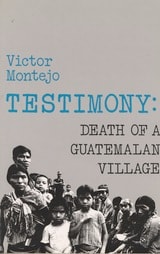
Testimony
Death of a Guatemalan VillageVictor Montejo
Northwestern University Press, 1987
The Afterlife of Data
What Happens to Your Information When You Die and Why You Should CareCarl Öhman
University of Chicago Press, 2024
A short, thought-provoking book about what happens to our online identities after we die.
These days, so much of our lives takes place online—but what about our afterlives? Thanks to the digital trails that we leave behind, our identities can now be reconstructed after our death. In fact, AI technology is already enabling us to “interact” with the departed. Sooner than we think, the dead will outnumber the living on Facebook. In this thought-provoking book, Carl Öhman explores the increasingly urgent question of what we should do with all this data and whether our digital afterlives are really our own—and if not, who should have the right to decide what happens to our data.
The stakes could hardly be higher. In the next thirty years alone, about two billion people will die. Those of us who remain will inherit the digital remains of an entire generation of humanity—the first digital citizens. Whoever ends up controlling these archives will also effectively control future access to our collective digital past, and this power will have vast political consequences. The fate of our digital remains should be of concern to everyone—past, present, and future. Rising to these challenges, Öhman explains, will require a collective reshaping of our economic and technical systems to reflect more than just the monetary value of digital remains.
As we stand before a period of deep civilizational change, The Afterlife of Data will be an essential guide to understanding why and how we as a human race must gain control of our collective digital past—before it is too late.
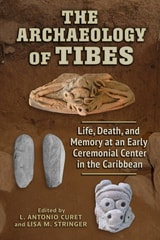
The Archaeology of Tibes
Life, Death, and Memory at an Early Ceremonial Center in the CaribbeanEdited by L. Antonio Curet and Lisa M. Stringer
University of Alabama Press, 2025
A collection of new essays that brings archaeological insights and discoveries at the Tibes Ceremonial Center up to date
The Archaeology of Tibes is a collection of essays offering a fresh analysis of this important ceremonial center. It brings new insights about social structure, illuminating the smaller-scale daily lives of ancient peoples rather than focusing on large-scale chiefdoms.
Tibes is the earliest known (ca. 400 to 1300 CE) ceremonial center in Puerto Rico. It has been the focus of one of the largest and longest-running archaeological programs in the Caribbean. Early researchers interpreted evidence in the area of a shift from dispersed villages to a ceremonial center as suggesting the development of social stratification and accumulation of power. Seen as the seat of an early chiefdom, Tibes served as a model applied broadly across the Greater Antilles.
New discoveries prompted archaeologists to question their original assumptions about ancient Puerto Rico, and later research failed to produce evidence of social stratification at Tibes. The Archaeology of Tibes therefore incorporates updated and wider perspectives on social formation. It considers agency, decisions, and events and the possibility of more than one form of social organization. It also presents a more accurate “humanized” past: the sociological meanings of that space and its significance for the people who created, used, and occupied it and who influenced rituals, social memory, and community.
Summarizing findings from excavations at Tibes after 2010, the collection also reviews the geoarchaeology of the site. Additional essays cover ceramic pastes, lithic production, faunal remains, coral, burials, and rock art. This work will engender discussion and future research by archaeologists across the Caribbean and beyond.
The Art of Life and Death
Radical Aesthetics and Ethnographic PracticeAndrew Irving
HAU, 2016
Encompassing twenty years of working alongside persons living with HIV/AIDS in New York, Irving documents the radical but often unspoken and unvoiced transformations in perception, knowledge, and understanding that people experience in the face of death. By bringing an “experience-near” ethnographic focus to the streams of inner dialogue, imagination, and aesthetic expression that are central to the experience of illness and everyday life, this monograph offers a theoretical, ethnographic, and methodological contribution to the anthropology of time, finitude, and the human condition. With relevance well-beyond the disciplinary boundaries of anthropology, this book ultimately highlights the challenge of capturing the inner experience of human suffering and hope that affect us all—of the trauma of the threat of death and the surprise of continued life.
The Black Heavens
Abraham Lincoln and DeathBrian R. Dirck
Southern Illinois University Press, 2019
From multiple personal tragedies to the terrible carnage of the Civil War, death might be alongside emancipation of the slaves and restoration of the Union as one of the great central truths of Abraham Lincoln’s life. Yet what little has been written specifically about Lincoln and death is insufficient, sentimentalized, or devoid of the rich historical literature about death and mourning during the nineteenth century. The Black Heavens: Abraham Lincoln and Death is the first in-depth account of how the sixteenth president responded to the riddles of mortality, undertook personal mourning, and coped with the extraordinary burden of sending hundreds of thousands of soldiers to be killed on battlefields.
Going beyond the characterization of Lincoln as a melancholy, tragic figure, Brian R. Dirck investigates Lincoln’s frequent encounters with bereavement and sets his response to death and mourning within the social, cultural, and political context of his times. At a young age Lincoln saw the grim reality of lives cut short when he lost his mother and sister. Later, he was deeply affected by the deaths of two of his sons, three-year-old Eddy in 1850 and eleven-year-old Willie in 1862, as well as the combat deaths of close friends early in the war. Despite his own losses, Lincoln learned how to approach death in an emotionally detached manner, a survival skill he needed to cope with the reality of his presidency.
Dirck shows how Lincoln gradually turned to his particular understanding of God’s will in his attempts to articulate the meaning of the atrocities of war to the American public, as showcased in his allusions to religious ideas in the Gettysburg Address and the Second Inaugural. Lincoln formed a unique approach to death: both intellectual and emotional, typical and yet atypical of his times. In showing how Lincoln understood and responded to death, both privately and publicly, Dirck paints a compelling portrait of a commander in chief who buried two sons and gave the orders that sent an unprecedented number of Americans to their deaths.
The Blood of the Lamb
A NovelPeter De Vries
University of Chicago Press, 2005
One of John Green's "favorite books ever," a powerful, moving novel of family, parenthood, and loss
The most poignant of all Peter De Vries's novels, The Blood of the Lamb is also the most autobiographical. It follows the life of Don Wanderhop from his childhood in an immigrant Calvinist family living in Chicago in the 1950s through the loss of a brother, his faith, his wife, and finally his daughter-a tragedy drawn directly from De Vries's own life. Despite its foundation in misfortune, The Blood of the Lamb offers glimpses of the comic sensibility for which De Vries was famous. Engaging directly with the reader in a manner that buttresses the personal intimacy of the story, De Vries writes with a remarkableblend of grief, love, wit, and fury.

The Boys of Winter
Life and Death in the U.S. Ski Troops During the Second World WarCharles J. Sanders
University Press of Colorado, 2005
The Boys of Winter tells the true story of three young American ski champions and their brutal, heroic, and fateful transformation from athletes to infantrymen with the 10th Mountain Division. Charles J. Sanders's fast-paced narrative draws on dozens of interviews and extensive research to trace these boys' lives from childhood to championships and from training at Mount Rainier and in the Colorado Rockies to battling against the Nazis.
The Carnivalesque Defunto
Death and the Dead in Modern Brazilian LiteratureRobert H. Moser
Ohio University Press, 2008
Robert H. Moser details the emergence of a prominent motif in modern Brazilian literature, namely the carnivalesque defunto (the dead) that, in the form of a protagonist or narrator, returns to beseech, instruct, chastise, or even seduce the living. Drawing upon the works of esteemed Brazilian writers such as Machado de Assis, Érico Veríssimo, and Jorge Amado, Moser demonstrates how the defunto, through its mocking laughter and Dionysian resurrection, simultaneously subverts and inverts the status quo, thereby exposing underlying points of tension within Brazilian social and political history.
Incorporating elements of both a celestial advocate and an untrustworthy specter, the defunto also serves as a metaphor for one of modern Brazil’s greatest dilemmas: reconciling the past with the present.
The Carnivalesque Defunto offers a comparative framework by juxtaposing the Brazilian literary ghost with other Latin American, Caribbean, and North American examples. It also presents a cross-disciplinary approach toward understanding the complex relationship forged between Brazil’s spiritual traditions and literary expressions.
The Cassowary's Revenge
The Life and Death of Masculinity in a New Guinea SocietyDonald Tuzin
University of Chicago Press, 1997
The Cassowary's Revenge is an intimate account of how Ilahita’s men and women think, emote, dream, and explain themselves. Tuzin also explores how the death of masculinity in a remote society raises disturbing implications for gender relations in our own society. In this light Tuzin's book is about men and women in search of how to value one another, and in today's world there is no theme more universal or timely.
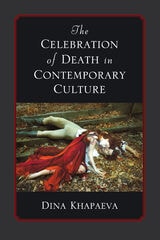
The Celebration of Death in Contemporary Culture
Dina Khapaeva
University of Michigan Press, 2017
This book links the mounting demand for images of violent death with dramatic changes in death-related social rituals. It offers a conceptual framework that connects observations of fictional worlds—including The Twilight Saga, The Vampire Diaries, and the Harry Potter series—with real-world sociocultural practices, analyzing the aesthetic, intellectual, and historical underpinnings of the cult of death. It also places the celebration of death in the context of a longstanding critique of humanism and investigates the role played by 20th-century French theory, posthumanism, transhumanism, and the animal rights movement in shaping the current antihumanist atmosphere.
This timely, thought-provoking book will appeal to scholars of culture, film, literature, anthropology, and American and Russian studies, as well as general readers seeking to understand a defining phenomenon of our age.
The Day of Shelly's Death
The Poetry and Ethnography of GriefRenato Rosaldo
Duke University Press, 2014
The Death and Life of Chinese Civil Society
Mujun Zhou
University of Michigan Press, 2026
Mujun Zhou employs the concept of interstitial space, or the space where the exercise of power has not been fully institutionalized, to examine the history of the civil society project over the past three decades and its changing relationship with other social movements. Zhou suggests that by advocating for civil society the liberals gained allies and thematized many social problems rising during China’s economic reform; however, liberals’ activism also produced new forms of power inequalities.
The Death and Life of Drama
Reflections on Writing and Human NatureBy Lance Lee
University of Texas Press, 2005
What makes a film "work," so that audiences come away from the viewing experience refreshed and even transformed in the way they understand themselves and the world around them? In The Death and Life of Drama, veteran screenwriter and screenwriting teacher Lance Lee tackles this question in a series of personal essays that thoroughly analyze drama's role in our society, as well as the elements that structure all drama, from the plays of ancient Athens to today's most popular movies.
Using examples from well-known classical era and recent films, Lee investigates how writers handle dramatic elements such as time, emotion, morality, and character growth to demonstrate why some films work while others do not. He seeks to define precisely what "action" is and how the writer and the viewer understand dramatic reality. He looks at various kinds of time in drama, explores dramatic context from Athens to the present, and examines the concept of comedy. Lee also proposes a novel "five act" structure for drama that takes account of the characters' past and future outside the "beginning, middle, and end" of the story. Deftly balancing philosophical issues and practical concerns, The Death and Life of Drama offers a rich understanding of the principles of successful dramatic writing for screenwriters and indeed everyone who enjoys movies and wants to know why some films have such enduring appeal for so many people.
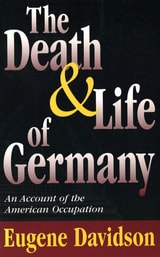
The Death and Life of Germany
An Account of the American OccupationEugene Davidson
University of Missouri Press, 1999
Offering much more than a detached historical account of the "German miracle"—a ruined, war-torn nation evolving within a decade into the most flourishing country in Europe—Eugene Davidson delves into this intriguing story as a "participant observer." Drawing on countless interviews with Germans and Americans of various backgrounds and perspectives, from High Commissioner's office personnel to occupation troop GIs, storekeepers to housewives, Davidson insightfully conveys the atmosphere of postwar Germany and the role of the American occupation in achieving the nation's economic miracle.
The Death and Life of Germany examines the transformation of Germany, focusing on such key episodes as the unprecedented war-crimes tribunal at Nuremberg, the almost unceasing attempts of the Western Allies to cooperate with the Russians, the startling effects of the currency reform and Marshall Plan aid, the break between East and West Germany that culminated in the Berlin airlift, the heroic East German uprising of June 17, 1953, and the eventual formation of the Federal Republic of Germany and the German Democratic Republic.
Davidson traces the progress of thought among Germans and Americans alike as their conceptions of postwar Germany gradually evolved and the leaders of a new, democratic West Germany emerged from the ashes of defeat.
The strength of Davidson's research and analysis and the continuing relevance of this important volume make The Death and Life of Germany an invaluable addition to the collections of scholars and general readers interested in the evolution of postwar Germany.
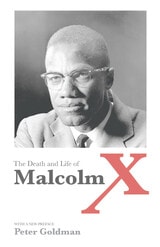
The Death and Life of Malcolm X
Peter Goldman
University of Illinois Press, 2013
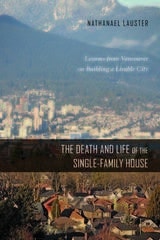
The Death and Life of the Single-Family House
Lessons from Vancouver on Building a Livable CityNathanael Lauster
Temple University Press, 2016
Vancouver today is recognized as one of the most livable cities in the world as well as an international model for sustainability and urbanism. Single-family homes in this city are “a dying breed.” Most people live in the various low-rise and high-rise urban alternatives throughout the metropolitan area.
The Death and Life of the Single-Family House explains how residents in Vancouver attempt to make themselves at home without a house. Local sociologist Nathanael Lauster has painstakingly studied the city’s dramatic transformation to curb sprawl. He tracks the history of housing and interviews residents about the cultural importance of the house as well as the urban problems it once appeared to solve.
Although Vancouver’s built environment is unique, Lauster argues that it was never predestined by geography or demography. Instead, regulatory transformations enabled the city to renovate, build over, and build around the house. Moreover, he insists, there are lessons here for the rest of North America. We can start building our cities differently, and without sacrificing their livability.
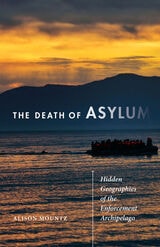
The Death of Asylum
Hidden Geographies of the Enforcement ArchipelagoAlison Mountz
University of Minnesota Press, 2020
Investigating the global system of detention centers that imprison asylum seekers and conceal persistent human rights violations
Remote detention centers confine tens of thousands of refugees, asylum seekers, and undocumented immigrants around the world, operating in a legal gray area that hides terrible human rights abuses from the international community. Built to temporarily house eight hundred migrants in transit, the immigrant “reception center” on the Italian island of Lampedusa has held thousands of North African refugees under inhumane conditions for weeks on end. Australia’s use of Christmas Island as a detention center for asylum seekers has enabled successive governments to imprison migrants from Asia and Africa, including the Sudanese human rights activist Abdul Aziz Muhamat, held there for five years.
In The Death of Asylum, Alison Mountz traces the global chain of remote sites used by states of the Global North to confine migrants fleeing violence and poverty, using cruel measures that, if unchecked, will lead to the death of asylum as an ethical ideal. Through unprecedented access to offshore detention centers and immigrant-processing facilities, Mountz illustrates how authorities in the United States, the European Union, and Australia have created a new and shadowy geopolitical formation allowing them to externalize their borders to distant islands where harsh treatment and deadly force deprive migrants of basic human rights.
Mountz details how states use the geographic inaccessibility of places like Christmas Island, almost a thousand miles off the Australian mainland, to isolate asylum seekers far from the scrutiny of humanitarian NGOs, human rights groups, journalists, and their own citizens. By focusing on borderlands and spaces of transit between regions, The Death of Asylum shows how remote detention centers effectively curtail the basic human right to seek asylum, forcing refugees to take more dangerous risks to escape war, famine, and oppression.
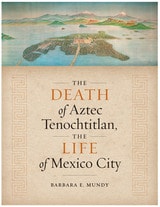
The Death of Aztec Tenochtitlan, the Life of Mexico City
By Barbara E. Mundy
University of Texas Press, 2015
Winner, Book Prize in Latin American Studies, Colonial Section of Latin American Studies Association (LASA), 2016
ALAA Book Award, Association for Latin American Art/Arvey Foundation, 2016
The capital of the Aztec empire, Tenochtitlan, was, in its era, one of the largest cities in the world. Built on an island in the middle of a shallow lake, its population numbered perhaps 150,000, with another 350,000 people in the urban network clustered around the lake shores. In 1521, at the height of Tenochtitlan’s power, which extended over much of Central Mexico, Hernando Cortés and his followers conquered the city. Cortés boasted to King Charles V of Spain that Tenochtitlan was “destroyed and razed to the ground.” But was it?
Drawing on period representations of the city in sculptures, texts, and maps, The Death of Aztec Tenochtitlan, the Life of Mexico City builds a convincing case that this global capital remained, through the sixteenth century, very much an Amerindian city. Barbara E. Mundy foregrounds the role the city’s indigenous peoples, the Nahua, played in shaping Mexico City through the construction of permanent architecture and engagement in ceremonial actions. She demonstrates that the Aztec ruling elites, who retained power even after the conquest, were instrumental in building and then rebuilding the city. Mundy shows how the Nahua entered into mutually advantageous alliances with the Franciscans to maintain the city's sacred nodes. She also focuses on the practical and symbolic role of the city’s extraordinary waterworks—the product of a massive ecological manipulation begun in the fifteenth century—to reveal how the Nahua struggled to maintain control of water resources in early Mexico City.
The Death of Homo Economicus
Work, Debt and the Myth of Endless AccumulationPeter Fleming
Pluto Press, 2017
In The Death of Homo Economicus, Fleming presents this controversial claim with the same fierce logic and perception that launched his Guardian column into popularity. Fleming argues that as an invented model of a human being, Homo economicus is, in reality, a tool used by economists and capitalists to manage our social world through the state, business, and even family. As workers, we are barraged with constant reminders that we should always strive toward this ideal persona. It’s implied—and sometimes directly stated—that if we don’t then we are failures. Ironically, the people most often encouraged to emulate this model are those most predisposed to fail due to their socioeconomic circumstances: the poor, the unemployed, students, and prisoners.
Fleming illuminates why a peculiar proactive negativity now marks everyday life in capitalist societies, and he explores how this warped, unattainable model for workers would cause chaos if enacted to the letter. Timely and revelatory, The Death of Homo Economicus offers a sharp, scathing critique of who we are supposed to be in the workplace and beyond.
The Death of Mr. Baltisberger
Bohumil Hrabal
Northwestern University Press, 2010
The Death of Ramón González
The Modern Agricultural DilemmaBy Angus Wright
University of Texas Press, 2005
The Death of Ramón González has become a benchmark book since its publication in 1990. It has been taught in undergraduate and graduate courses in every social science discipline, sustainable and alternative agriculture, environmental studies, ecology, ethnic studies, public health, and Mexican, Latin American, and environmental history. The book has also been used at the University of California-Santa Cruz as a model of interdisciplinary work and at the University of Iowa as a model of fine journalism, and has inspired numerous other books, theses, films, and investigative journalism pieces.
This revised edition of The Death of Ramón González updates the science and politics of pesticides and agricultural development. In a new afterword, Angus Wright reconsiders the book's central ideas within the context of globalization, trade liberalization, and NAFTA, showing that in many ways what he called "the modern agricultural dilemma" should now be thought of as a "twenty-first century dilemma" that involves far more than agriculture.
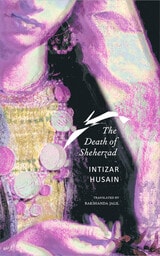
The Death of Sheherzad
Intizar Husain
Seagull Books, 2016
The fifteen stories in The Death of Sheherzad ably represent Intizar Husain’s oeuvre, defying narrative tradition and exploring the past, specifically the Partition of India, as a means of unraveling the present. He imaginatively revisits a syncretic, tolerant, pluralistic past to analyze why the tide turned so irreversibly. Questioning everything—faith, violence, society—Husain probes the horrors of Partition in a manner as oblique as it is trenchant. Imbued with dark wit and literary brilliance, these stories at once shock, agitate, and entertain.
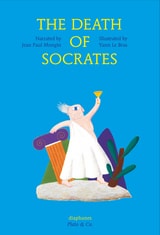
The Death of Socrates
Jean Paul Mongin and Yann Le Bras
Diaphanes, 2015
“Tell us, Delphic Oracle, who is the wisest man in all of Greece?” So begins The Death of Socrates. No mortal man is wiser than Socrates, who, on his daily walks through Athens, talks to all the people he meets. When the person he talks to takes himself to be very wise, Socrates asks so many questions that the person ends up admitting he knows nothing. When he runs into people who know little, Socrates sets them on the way to wisdom. But not everyone shares Socrates’s love for the truth. When the people of Athens become angry with him for his ceaseless questioning, how will he find the courage to continue to speak the truth?
Plato & Co.’s clear approach and charming illustrations make this series the perfect addition to any little library.
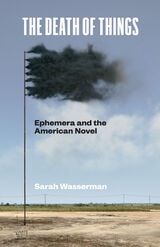
The Death of Things
Ephemera and the American NovelSarah Wasserman
University of Minnesota Press, 2020
A comprehensive study of ephemera in twentieth-century literature—and its relevance to the twenty-first century
“Nothing ever really disappears from the internet” has become a common warning of the digital age. But the twentieth century was filled with ephemera—items that were designed to disappear forever—and these objects played crucial roles in some of that century’s greatest works of literature. In The Death of Things, author Sarah Wasserman delivers the first comprehensive study addressing the role ephemera played in twentieth-century fiction and its relevance to contemporary digital culture.
Representing the experience of perpetual change and loss, ephemera was central to great works by major novelists like Don DeLillo, Ralph Ellison, and Marilynne Robinson. Following the lives and deaths of objects, Wasserman imagines new uses of urban space, new forms of visibility for marginalized groups, and new conceptions of the marginal itself. She also inquires into present-day conundrums: our fascination with the durable, our concerns with the digital, and our curiosity about what new fictional narratives have to say about deletion and preservation.
The Death of Things offers readers fascinating, original angles on how objects shape our world. Creating an alternate literary history of the twentieth century, Wasserman delivers an insightful and idiosyncratic journey through objects that were once vital but are now forgotten.
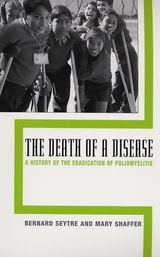
The Death of a Disease
A History of the Eradication of PoliomyelitisSeytre, Bernard
Rutgers University Press, 2005
In 1988, the World Health Organization launched a campaign for the global eradication of polio. Today, this goal is closer than ever. Fewer than 1,300 people were paralyzed from the disease in 2004, down from approximately 350,000 in 1988.
In The Death of a Disease, science writers Bernard Seytre and Mary Shaffer tell the dramatic story of this crippling virus that has evoked terror among parents and struck down healthy children for centuries. Beginning in ancient Egypt, the narrative explores the earliest stages of research, describes the wayward paths taken by a long line of scientists-each of whom made a vital contribution to understanding this enigmatic virus-and traces the development of the Salk and Sabin vaccines. The book also tracks the contemporary polio story, detailing the remaining obstacles as well as the medical, governmental, and international health efforts that are currently being focused on developing countries such as India, Pakistan, Nigeria, and Niger.
At a time when emerging diseases and the threat of bioterrorism are the focus of much media and public attention, this book tells the story of a crippling disease that is on the verge of disappearing. In the face of tremendous odds, the near-eradication of polio offers an inspiring story that is both encouraging and instructive to those at the center of the continued fight against communicable diseases.
The Death of the American Trial
Robert P. Burns
University of Chicago Press, 2009
In The Death of the American Trial, distinguished legal scholar Robert P. Burns makes an impassioned case for reversing the rapid decline of the trial before we lose one of our public culture’s greatest achievements. As a practice that is adapted for modern times yet rooted in ancient wisdom, the trial is uniquely suited to balance the tensions—between idealism and realism, experts and citizens, contextual judgment and reliance on rules—that define American culture. Arguing that many observers make a grave mistake by taking a complacent or even positive view of the trial’s demise, Burns concludes by laying out the catastrophic consequences of losing an institution that so perfectly embodies democratic governance.
The Death of the Child Valerio Marcello
Margaret L. King
University of Chicago Press, 1994
This child, scion of a family of power and privilege at Venice's time of greatness, left his father in a state of despair so profound and so public that it occasioned an outpouring of consoling letters, orations, treatises, and poems. In these documents, we find a firsthand account, richly colored by humanist conventions and expectations, of the life of the fifteenth-century boy, the passionate devotion of his father, the feelings of his brothers and sisters, the striking absence of his mother. The father's story is here as well: the career of a Venetian nobleman and scholar, patron and soldier, a participant in Venice's struggle for dominion in the north of Italy.
Through these sources also King traces the cultural trends that made Marcello's century famous. Her work enlarges our view of the literature of consolation, which had a distinctive tradition in Venice, and shifting attitudes toward death from the late Middle Ages onward.
For the depth and acuity of its insights into political, cultural, and private life in fifteenth-century Venice, this book will be essential reading for students of the Renaissance. For the grace and drama of its storytelling, it will be savored by anyone who wishes to look into life and death in a palace, and a city, long ago.
The Death of the Detective
A NovelMark Smith
Northwestern University Press, 2007
The Death of the Detective is a quest novel in the tradition of Don Quixote, Moby-Dick, and Dead Souls. During his frenetic and blood-soaked odyssey, Mark Smith's detective moves through the city on highways, boulevards, side streets, and alleys. He tracks "the death-maker" from a mansion in Lake Forest to the underbelly of the South Side, from a glass high-rise on the Gold Coast to a run-down tavern in the northwestern suburbs, and everywhere in between. In this New York Times best seller and finalist for the 1974 National Book Award, Smith takes hold of the reader and doesn't let go until the last page of his relentless journey into the dark recesses of the American soul.
The Dominion of the Dead
Robert Pogue Harrison
University of Chicago Press, 2003
This elegantly conceived work devotes particular attention to the practice of burial. Harrison contends that we bury our dead to humanize the lands where we build our present and imagine our future. As long as the dead are interred in graves and tombs, they never truly depart from this world, but remain, if only symbolically, among the living. Spanning a broad range of examples, from the graves of our first human ancestors to the empty tomb of the Gospels to the Vietnam Veterans Memorial, Harrison also considers the authority of predecessors in both modern and premodern societies. Through inspired readings of major writers and thinkers such as Vico, Virgil, Dante, Pater, Nietzsche, Heidegger, and Rilke, he argues that the buried dead form an essential foundation where future generations can retrieve their past, while burial grounds provide an important bedrock where past generations can preserve their legacy for the unborn.
The Dominion of the Dead is a profound meditation on how the thought of death shapes the communion of the living. A work of enormous scope, intellect, and imagination, this book will speak to all who have suffered grief and loss.
The Evolutionary Origins of Life and Death
Pierre M. Durand
University of Chicago Press, 2021
These two processes have been studied from philosophical, theoretical, experimental, and genomic angles, but no one has yet integrated the information from these various disciplines. In this work, Durand synthesizes cellular studies of life and death looking at the origin of life and the evolutionary significance of programmed cellular death. The exciting and unexpected outcome of Durand’s analysis is the realization that life and death exhibit features of coevolution. The evolution of more complex cellular life depended on the coadaptation between traits that promote life and those that promote death. In an ironic twist, it becomes clear that, in many circumstances, programmed cell death is essential for sustaining life.

The Face on the Screen
Death, Recognition & SpectatorshipTherese Davis
Intellect Books, 1995
The constant bombardment of the super-enlarged, computer-enhanced faces of advertising, the endless 'talking heads' of television and the ever-changing array of film stars' faces have reduced the face to a banal image, while the dream of early film theorists that the 'giant severed heads' of the screen could reveal 'the soul of man' to the masses is long since dead. And yet the end of this dream opens up the possibility for a different view of the face on the screen. The aim of the book is to seize this opportunity to rethink the facial close-up in terms other than subjectivity and identity by shifting the focus to questions of death and recognition.
In doing so, the book proposes a dialectical reversal or about-face. It suggests that we focus our attention on the places in contemporary media where the face becomes unrecognisable, for it is here that the facial close-up expresses the powers of death. Using Walter Benjamin's theory of the dialectical image as a critical tool, the book provides detailed studies of a wide range of media spectacles of faces becoming unrecognisable. It shows how the mode of recognition enabled by these faces is a shock experience that can open our eyes to the underside of the mask of self - the unrecognisable mortal face of self we spend our lives trying not to see. Turning on itself, so to speak, the face exposes the fragile relationship between social recognition and facial recognizability in the images-cultures of contemporary media.

The Faulkes Chronicle
David Huddle
Tupelo Press, 2015
The Flowery Death
The Image of Death in the Nahua Songs of Cantares MexicanosKatarzyna Szoblik
University Press of Colorado, 2026
The Flowery Death is a groundbreaking exploration of xochimiquiztli, or “flowery death,” a central concept in the pre-Hispanic Nahua worldview. In the highly militarized societies of the Valley of Mexico, dying in honor of the gods—on the battlefield, in ritual sacrifice, or in childbirth—was not only a social expectation but also a path to spiritual glory. While this idea appears throughout colonial sources, previous studies have relied largely on the writings of Bernardino de Sahagún and other European chroniclers, whose perspectives often simplify or distort Indigenous understandings.
Drawing on the rich oral tradition preserved in the sixteenth-century manuscript Cantares Mexicanos, this book provides one of the first English translations of these songs since John Bierhorst’s 1985 translation. It combines paleographic fidelity, literal English translation, and detailed interpretation, revealing the metaphor- and symbol-rich meanings behind the songs. The book is divided into two interrelated parts: The first reconstructs the Nahua worldview, contextualizing war, death, and sacrifice through myths, chronicles, and visual sources; the second presents selected songs, offering readers the tools to understand their metaphors, historical references, and symbolic language, making the work both a scholarly reference and an accessible guide for students and enthusiasts.
By examining the cultural, religious, and social significance of xochimiquiztli, The Flowery Death provides fresh insights into Nahua ideology, gender roles, and collective memory. It is essential reading for anyone interested in Mesoamerican culture, early colonial history, and the power of Indigenous oral traditions.
The Gift of Death
Jacques Derrida
University of Chicago Press, 1995
A major work, The Gift of Death resonates with much of Derrida's earlier writing and will be of interest to scholars in anthropology, philosophy, and literary criticism, along with scholars of ethics and religion.
"The Gift of Death is Derrida's long-awaited deconstruction of the foundations of the project of a philosophical ethics, and it will long be regarded as one of the most significant of his many writings."—Choice
"An important contribution to the critical study of ethics that commends itself to philosophers, social scientists, scholars of relgion . . . [and those] made curious by the controversy that so often attends Derrida."—Booklist
"Derrida stares death in the face in this dense but rewarding inquiry. . . . Provocative."—Publishers Weekly

The Gift of Death, Second Edition & Literature in Secret
Jacques Derrida
University of Chicago Press, 2008
The Gift of Death, Second Edition & Literature in Secret
Jacques Derrida
University of Chicago Press, 2008
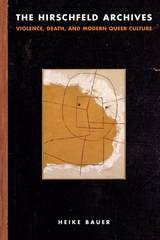
The Hirschfeld Archives
Violence, Death, and Modern Queer CultureHeike Bauer
Temple University Press, 2017
Influential sexologist and activist Magnus Hirschfeld founded Berlin’s Institute of Sexual Sciences in 1919 as a home and workplace to study homosexual rights activism and support transgender people. It was destroyed by the Nazis in 1933. This episode in history prompted Heike Bauer to ask, Is violence an intrinsic part of modern queer culture? The Hirschfeld Archives answers this critical question by examining the violence that shaped queer existence in the first part of the twentieth century.
Hirschfeld himself escaped the Nazis, and many of his papers and publications survived. Bauer examines his accounts of same-sex life from published and unpublished writings, as well as books, articles, diaries, films, photographs and other visual materials, to scrutinize how violence—including persecution, death and suicide—shaped the development of homosexual rights and political activism.
The Hirschfeld Archives brings these fragments of queer experience together to reveal many unknown and interesting accounts of LGBTQ life in the early twentieth century, but also to illuminate the fact that homosexual rights politics were haunted from the beginning by racism, colonial brutality, and gender violence.
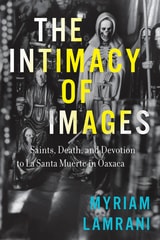
The Intimacy of Images
Saints, Death, and Devotion to La Santa Muerte in OaxacaMyriam Lamrani
University of Texas Press, 2024
2026 Edie Turner First Book Prize in Ethnographic Writing, Society for Humanistic Anthropology
La Santa Muerte becomes a lens for understanding how Oaxacans relate to saints, loved ones, and other “special dead.”
In Oaxaca, images of saints and loved ones, as well as of victims of political or criminal violence, are seemingly everywhere. While Oaxacans relate to all sorts of “special dead,” they are particularly devoted to La Santa Muerte (Saint Death), a female reaper-like figure whose popularity has risen in tandem with violence throughout Mexico.
The Intimacy of Images recontextualizes Oaxacans’ relationships with their “special dead” through the lens of La Santa Muerte, examining how devotees closely interact with what Lamrani terms “intimate images”: not only devotional effigies but also photographs, films, tattoos, and murals, and even dreams and visions. Though Mexicans have a well-known cultural familiarity with death, Lamrani argues that devotion to La Santa Muerte builds upon this intimacy even as it also participates in the production of terror and reflects political and criminal violence. Ultimately, Lamrani finds that these human-image interactions represent more than Catholic devotion; they reveal the secrets of Oaxacan political, religious, and social life, embody changing relationships to mortality and violence, and even offer insight into the practice of anthropology itself.
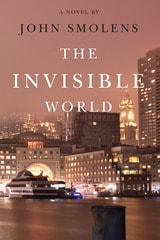
The Invisible World
John Smolens
Michigan State University Press, 2017
After Sam's mother dies and is cremated, her ashes are stolen. Believing that his father is responsible, Sam pursues the man he has not seen in years. He discovers that he is not the only one searching for his father—federal agents, a disgraced politician, a retired Boston cop, and several journalists join the chase.
“The Invisible World is more than a first-rate political thriller,” says The Boston Globe. “It’s an absorbing tale of alienation and loss, and the ramifications of a rootless, troubled family.” What Sam Adams ultimately discovers is that the shadowy realm of conspiracies conjures a world of hidden truths and intrigue in which the familiar is the most mysterious force of all.
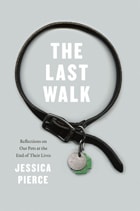
The Last Walk
Reflections on Our Pets at the End of Their LivesJessica Pierce
University of Chicago Press, 2012
The product of a lifetime of loving pets, studying philosophy, and collaborating with scientists at the forefront of the study of animal behavior and cognition, The Last Walk asks—and answers—the toughest questions pet owners face. The result is informative, moving, and consoling in equal parts; no pet lover should miss it.
The Last Word
Women, Death, and Divination in Inner ManiC. Nadia Seremetakis
University of Chicago Press, 1991
The Life and Death of Gus Reed
A Story of Race and Justice in Illinois during the Civil War and ReconstructionThomas Bahde
Ohio University Press, 2014
Gus Reed was a freed slave who traveled north as Sherman’s March was sweeping through Georgia in 1864. His journey ended in Springfield, Illinois, a city undergoing fundamental changes as its white citizens struggled to understand the political, legal, and cultural consequences of emancipation and black citizenship. Reed became known as a petty thief, appearing time and again in the records of the state’s courts and prisons. In late 1877, he burglarized the home of a well-known Springfield attorney—and brother of Abraham Lincoln’s former law partner—a crime for which he was convicted and sentenced to the Illinois State Penitentiary.
Reed died at the penitentiary in 1878, shackled to the door of his cell for days with a gag strapped in his mouth. An investigation established that two guards were responsible for the prisoner’s death, but neither they nor the prison warden suffered any penalty. The guards were dismissed, the investigation was closed, and Reed was forgotten.
Gus Reed’s story connects the political and legal cultures of white supremacy, black migration and black communities, the Midwest’s experience with the Civil War and Reconstruction, and the resurgence of nationwide opposition to African American civil rights in the late nineteenth century. These experiences shaped a nation with deep and unresolved misgivings about race, as well as distinctive and conflicting ideas about justice and how to achieve it.
The Life and Death of Texas German
Eileen Boris, ed.
Duke University Press, 0
By comparing and contrasting present-day data with data from the German dialects brought to Texas since the 1840s, the volume offers an in-depth analysis of mutual interaction between the German-speaking community and English-speaking Texans, long-term accommodation of Texas German speakers in this new community, and language hybridization on the Texas frontier. The volume also analyzes a number of phonological, syntactic, and morphological changes in Texas German over the past century and examines sociolinguistic aspects of the Texas German community from its foundation to today, providing insight into the dynamics underlying new-dialect formation, diglossia, language shift, language maintenance, and language death. Finally, the volume investigates the rapid disappearance of languages, which has global social and cultural implications for areas beyond linguistics.

The Life and Death of Texas German
Hans C. Boas
Duke University Press, 0
This volume presents the first major study of Texas German as spoken in the twenty-first century, focusing on its formation and the linguistic changes it has undergone. This New World dialect, formed more than 150 years ago in German communities in central Texas, is an unusual example of a formerly high-status dialect that declined for sociopolitical reasons. An important case study for dialect research, Texas German is now critically endangered and will probably be extinct by 2050.
By comparing and contrasting present-day data with data from the German dialects brought to Texas since the 1840s, the volume offers an in-depth analysis of mutual interaction between the German-speaking community and English-speaking Texans, long-term accommodation of Texas German speakers in this new community, and language hybridization on the Texas frontier. The volume also analyzes a number of phonological, syntactic, and morphological changes in Texas German over the past century and examines sociolinguistic aspects of the Texas German community from its foundation to today, providing insight into the dynamics underlying new-dialect formation, diglossia, language shift, language maintenance, and language death. Finally, the volume investigates the rapid disappearance of languages, which has global social and cultural implications for areas beyond linguistics.
The Many Deaths of Inocencio Rodriguez
Iliana Rocha
Tupelo Press, 2022
The Memory Sessions
Suzanne Farrell Smith
Bucknell University Press, 2019
Published by Bucknell University Press. Distributed worldwide by Rutgers University Press.
The Monstered Self
Narratives of Death and Performance in Latin American FictionEduardo González
Duke University Press, 1992
What interests González is the signature of authorial selfhood in narrative and performance, which he finds willfully and temptingly disfigured in the works he examines: horrific and erotic, subservient and tyrannical, charismatic and repellent. Searching out the personal image and plot, González uncovers two fundamental types of narrative: one that strips character of moral choice; and another in which characters' choices deprive them of personal autonomy and hold them in ritual bondage to a group. Thus The Monstered Self becomes a study of the conflict between individual autonomy and the stereotypes of solidarity.
Written in a characteristically allusive, elliptical style, and drawing on psychoanalysis, religion, mythology, and comparative literature, The Monstered Self is in itself a remarkable performance, one that will engage readers in anthropology, psychology, and cultural history as well as those specifically interested in Latin American narrative.
The Montesi Scandal
The Death of Wilma Montesi and the Birth of the Paparazzi in Fellini's RomeKaren Pinkus
University of Chicago Press, 2003
How this news item of everyday life exploded into one of the greatest scandals of a modern democracy is the story Karen Pinkus tells in The Montesi Scandal. Wilma's death brought to the surface every simmering element of Italian culture: bitter aspiring actresses, corrupt politicians, nervous Jesuits in sunglasses, jaded princes. Italians of all types lined up to testify-in court or to journalists of varying legitimacy-about the death of the middle-class carpenter's daughter, in the process creating a media frenzy and the modern culture of celebrity. Witnesses sold their stories to the tabloids, only to retract them. They posed for pictures, pretending to shun the spotlight. And they in turn became celebrities in their own right.
Pinkus takes us through the alleys and entryways of Rome in the 1950s, linking Wilma's death to the beginnings of the dolce vita, now synonymous with modern Roman life. Pinkus follows the first paparazzi on their scooters as they shoot the protagonists and gives us an insider's view of the stories and trials that came to surround this lonely figure that washed up on the shores of Ostia. Full of the magnificent paparazzi photos of the protagonists in the drama and film stills from the era's landmark movies, The Montesi Scandal joins true crime with "high" culture in an original form, one true to both the period and the cinematic conception of life it created. More than a meditation of the intricate ties among movies, paparazzo photography, and Italian culture, The Montesi Scandal narrates Wilma's story and its characters as the notes for an unrealized film, but one that, as the reader discovers, seems impossible to produce.
The Mystery of Death and Beyond
Kenneth Baker, S.J.
St. Augustine's Press, 2016
Man is unlike all other animals, because he has a soul endowed with intelligence and free will. Because man’s soul is spiritual, it is immortal. Death is the separation of that soul from the body; the body decays and returns to the dust from which it was taken, but the soul continues to live and is in the hands of God. But what happens to the soul after death? There are two possibilities—heaven or hell. We know from divine revelation and from the infallible teaching of the Church that the soul after death goes immediately to heaven (perhaps first for a time to purgatory to be totally cleansed and sanctified), or immediately to hell, a state or place of eternal misery.
The next life is a life without time—it is a perpetual now, with no before and after. It has a beginning but not end. It is also unchangeable, that is, souls in heaven are there forever and they cannot lose it; souls in hell are there forever and they can never be freed from it.
This is a very serious and certain reality for each one of us. The most important thing we will ever do is to die, and to die in the state of God’s grace so that we are his friends and will be admitted to his presence, which is what is meant by heaven. Therefore we must prepare ourselves to die in the grace of God, which is our ticket to heaven. We do that by doing God’s will for us, which means to keep his commandments, especially to love God above all things and practice love of neighbor.
This short book will help people think about their death and how important it is for their permanent happiness. It will help them to arrange their life in such a way that they will live it as God wants them to live it and so ultimately obtain eternal life with God because: “no eye has seen, nor ear heard, nor the heart of man conceived, what God has prepared for those who love him” (1 Cor. 2:9).
The Ottoman Army 1914 - 1918
Disease and Death on the BattlefieldHikmet Ozdemir
University of Utah Press, 2008
What kind of relationship exists between wars and epidemics? It is widely held that epidemics affected the outcomes of many wars and, until World War II, more victims of war died of disease than of battle wounds. Many disease vectors are present in times of conflict, including mass movements of people across borders and increased contact between persons of different geographic regions, yet disease is rarely treated in depth in histories of war.
Hikmet Özdemir’s The Ottoman Army, 1914–1918 provides extensive documentation of disease and death across the Ottoman Empire during World War I, when epidemic diseases annihilated armies and caused civilians to perish en masse. Drawing on hospital records and information on regional disease prevalence, Özdemir examines the effects that disease and epidemic had on the outcome of the war.
The information on disease mortality explains much that has never been properly understood about wartime events and government actions, events that only begin to make sense when the disease factor is considered. Rich in detail, this is an extremely valuable book that illuminates a facet of the war that has not been adequately considered until now.