Results by title
154 books match the query 'East' and 33 start with t
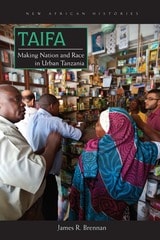
Taifa
Making Nation and Race in Urban TanzaniaJames R. Brennan
Ohio University Press, 2012
Taifa is a story of African intellectual agency, but it is also an account of how nation and race emerged out of the legal, social, and economic histories in one major city, Dar es Salaam. Nation and race—both translatable as taifa in Swahili—were not simply universal ideas brought to Africa by European colonizers, as previous studies assume. They were instead categories crafted by local African thinkers to make sense of deep inequalities, particularly those between local Africans and Indian immigrants. Taifa shows how nation and race became the key political categories to guide colonial and postcolonial life in this African city.
Using deeply researched archival and oral evidence, Taifa transforms our understanding of urban history and shows how concerns about access to credit and housing became intertwined with changing conceptions of nation and nationhood. Taifa gives equal attention to both Indians and Africans; in doing so, it demonstrates the significance of political and economic connections between coastal East Africa and India during the era of British colonialism, and illustrates how the project of racial nationalism largely severed these connections by the 1970s.
Teller Tales
HistoriesJo Carson
Ohio University Press, 2007
“All my work fits in my mouth,” Jo Carson says. “I write performance material no matter what else the pieces get called, and whether they are for my voice or other characters’ voices … they are first to be spoken aloud.” Following an oral tradition that has strong roots in her native Tennessee, the author of Teller Tales invites the reader to participate in events in a way that no conventional history book can.
Both stories in this book are set in East Tennessee in the mid-eighteenth century and share certain characters. The first narrative, “What Sweet Lips Can Do,” recounts the story of the Overmountain Men and the battle of King’s Mountain, a tide-turning battle in the American Revolution. “Men of Their Time” is an exploration of white-Cherokee relationships from early contact through the time of the Revolution.
Although not well known to the outside world, the stories recounted in Teller Tales are cornerstones in the heritage of the Appalachian region and of American history. In ways that will appeal to young and old alike, Jo Carson’s irreverent telling will broaden the audience and the understanding for the stories of native Americans, settlers, explorers, and revolutionaries of early America.
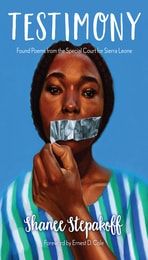
Testimony
Found Poems from the Special Court for Sierra LeoneShanee Stepakoff
Bucknell University Press, 2021
Sierra Leone’s devastating civil war barely caught the attention of Western media, but it raged on for over a decade, bringing misery to millions of people in West Africa from 1991 to 2002. The atrocities committed in this war and the accounts of its survivors were duly recorded by international organizations, but they run the risk of being consigned to dusty historical archives.
Derived from public testimonies at a UN-backed war crimes tribunal in Freetown, this remarkable poetry collection aims to breathe new life into the records of Sierra Leone’s civil war, delicately extracting heartbreaking human stories from the morass of legal jargon. By rendering selected trial transcripts in poetic form, Shanee Stepakoff finds a novel way to communicate not only the suffering of Sierra Leone’s people, but also their courage, dignity, and resilience. Her use of innovative literary techniques helps to ensure that the voices of survivors are not forgotten, but rather heard across the world.
This volume also includes an introduction that explores how the genre of “found poetry” can serve as a uniquely powerful means through which writers may bear witness to atrocity. This book’s unforgettable excavation and shaping of survivor testimonies opens new possibilities for speaking about the unspeakable.
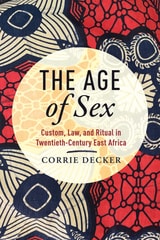
The Age of Sex
Custom, Law, and Ritual in Twentieth-Century East AfricaCorrie Decker
University of Wisconsin Press, 2025
In The Age of Sex, Decker demonstrates how maturation became defined as the hypothetical moment when a girl becomes a woman capable of engaging in heterosexual activity and a boy becomes a man imbued with the right and responsibility to have heterosexual intercourse. Colonial ethnographic studies reduced complex precolonial rites of passage to “puberty rites” fixated on these sexual transformations. The resulting stereotypes influenced, in turn, how colonial and postcolonial court officials decided age-of-consent and other sex crime cases. Court rituals thus legally transformed girls into women by ruling on their sexual maturity and boys into men by sentencing them to corporal punishment, marking their acceptance of heterosexual responsibilities.
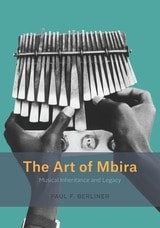
The Art of Mbira
Musical Inheritance and LegacyPaul F. Berliner
University of Chicago Press, 2020
In this book, Berliner provides insight into the communities of study, performance, and worship that surround mbira. He chronicles how master player Cosmas Magaya and his associates have developed their repertory and practices over more than four decades, shaped by musical interaction, social and political dynamics in Zimbabwe, and the global economy of the music industry. At once a detailed exposition of the music’s forms and practices, it is also an indispensable historical and cultural guide to mbira in a changing world.
Together with Berliner and Magaya's compendium of mbira compositions, Mbira’s Restless Dance, The Art of Mbira breaks new ground in the depth and specificity of its exploration of an African musical tradition, and in the entwining of the authors’ collaborative voices. It is a testament to the powerful relationship between music and social life—and the rewards of lifelong musical study, performance, and friendship.
The Briny South
Displacement and Sentiment in the Indian Ocean WorldNienke Boer
Duke University Press, 2023
The Center Cannot Hold
Decolonial Possibility in the Collapse of a Tanzanian NGOJenna N. Hanchey
Duke University Press, 2023
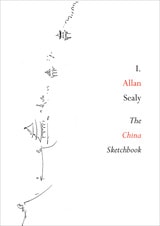
The China Sketchbook
I. Allan Sealy
Seagull Books, 2016
Sealy is known for both his fiction and his travelogue From Yukon to Yukatan: A Western Journey. This facsimile edition of The China Sketchbook, however, adds a special dimension to a travel narrative—the sketches and scribbles give readers a more immediate and unrestrained insight into the mind of a very fine writer and chart an unusual and quirky travel diary.
The City Electric
Infrastructure and Ingenuity in Postsocialist TanzaniaMichael Degani
Duke University Press, 2022
The Development of Higher Education and Social Change
Teshome Wagaw
Michigan State University Press, 1990
Begun while the author taught at the Ethiopian National University, this study examines the development of the institutions of higher education and the roles they played in transforming traditional Ethiopian society.
Wagaw sets out to prove that, although other modernizing institutions of learning may contribute significantly to social and economic change, institutions of higher education and their students already have effected profound revolution and proven indispensable to the established order.
His study argues that Ethiopian institutions of higher education were germane to the emerging society. They led Ethiopia down an often unpeaceful path from its oppressively traditional past toward progress and enlightenment.
The Dilemma of Dominic Ongwen
From Child Soldier to the International Criminal CourtKjell Anderson
Rutgers University Press, 2027
Dominic Ongwen was abducted by Joseph Kony's Lord's Resistance Army while walking to school at the age of nine. He later rose through its ranks committing, and ultimately being convicted by the International Criminal Court (ICC) of, many of the same crimes of which he was once a victim. The Dilemma of Dominic Ongwen tells this extraordinary story through the voices of those who knew him best: family members, fighters, commanders, “wives,” victims, and trial participants. Their testimonies, gathered in Uganda and The Hague, form the backbone of a narrative that interlaces survivor accounts with legal analysis and vivid excerpts from the ICC trial. The book offers a rare, human-centered lens on international justice, illuminating the dilemmas of prosecuting a former child soldier for mass atrocities. It provides indispensable insights for scholars of international criminal law, transitional justice, political violence, trauma, and human rights.
The Edge of Islam
Power, Personhood, and Ethnoreligious Boundaries on the Kenya CoastJanet McIntosh
Duke University Press, 2009
The Edge of Islam explores themes as wide-ranging as spirit possession, divination, healing rituals, madness, symbolic pollution, ideologies of money, linguistic code-switching, and syncretism and its alternatives. McIntosh shows how the differing versions of Islam practiced by Swahili and Giriama, and their differing understandings of personhood, have figured in the growing divisions between the two groups. Her ethnographic analysis helps to explain why Giriama view Islam, a supposedly universal religion, as belonging more deeply to certain ethnic groups than to others; why Giriama use Islam in their rituals despite the fact that so many do not consider the religion their own; and how Giriama appropriations of Islam subtly reinforce a distance between the religion and themselves. The Edge of Islam advances understanding of ethnic essentialism, religious plurality, spirit possession, local conceptions of personhood, and the many meanings of “Islam” across cultures.
The Emperor's Clothes
A Personal Viewpoint of Politics and Administration in the Imperial Ethiopian Government, 1941-1974Gaitachew Bekele
Michigan State University Press, 1993
. . . An engaging personal account of a public service career n the period leading to the 1974 revolution. It ...persuades and provides real insight into the genuine noblesse oblige of the first generation of technocrats drawn from the social elite of the post- war period.
-James McCann, Boston University
The Ethiopian Army
From Victory to Collapse, 1977-1991Fantahun Ayele
Northwestern University Press, 2014
The Ethiopian popular revolution of 1974 ended a monarchy that claimed descent from King Solomon and the Queen of Sheba, and brought to power a military government that created one of the largest and best-equipped armies in Africa. In his panoramic study of the Ethiopian army, Fantahun Ayele draws upon his unprecedented access to Ethiopian Ministry of Defense archives to study the institution that was able to repel the Somali invasion of 1977 and suppress internal uprisings, but collapsed in 1991 under the combined onslaught of armed insurgencies in Eritrea and Tigray. Besides military operations, The Ethiopian Army discusses tactical areas such as training, equipment, intelligence, and logistics, as well as grand strategic choices such as ending the 1953 Ethio-American Mutual Defense Agreement and signing a treaty of military assistance with the Soviet Union. The result sheds considerable light on the military developments that have shaped Ethiopia and the Horn in the twentieth century.
The Evolution of Settlement Systems in the Region of Vohémar, Northeast Madagascar
Henry T. Wright, Robert E. Dewar, Chantal Radimilahy, and Lucien Marie Aimé Rakotozafy
University of Michigan Press, 2021
The Forgotten Frontier
Colonist and Khoisan on the Cape's Northern Frontier in the 18th CenturyNigel Penn
Ohio University Press, 2006
Traditionally, the Eastern Cape frontier of South Africa has been regarded as the preeminent contact zone between colonists and the Khoi (“Hottentots”) and San (“Bushmen”). But there was an earlier frontier in which the conflict between Dutch colonists and these indigenous herders and hunters was in many ways more decisive in its outcome, more brutal and violent in its manner, and just as significant in its effects on later South African history.
This was the frontier north of Cape Town, where Dutch settlers began advancing into the interior. By the end of the eighteenth century, the frontier had reached the Orange (Gariep) River. The indigenous Khoisan people, after initial resistance, had been defeated and absorbed as an underclass into the colonial world or else expelled beyond it, to regions where new creole communities emerged.
Nigel Penn is a master storyteller who brings a novelist’s sensitivity to plot and character and a command of the archival record to bear in recovering this epic and forgotten story. Filled with extraordinary personalities and memorable episodes, and set in the often harsh landscape of the Western and Northern Cape, The Forgotten Frontier will appeal both to the general reader and to the student of history.
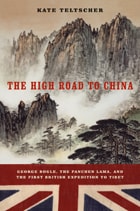
The High Road to China
George Bogle, the Panchen Lama, and the First British Expedition to TibetKate Teltscher
Northwestern University Press, 2008
Bogle was able to gain an audience with the Panchen Lama, and in him he found much more than a business partner; the Incarnate Lama was a friendly man who loved to discuss politics, science, art, and culture. Bogle gradually became less of a tourist and less of a colonist, growing comfortable and happy the longer he spent in Tibet even as his mission to open China failed. All the while, he kept a detailed journal—his prose by turn playful, self-deprecating, grandiose, and shrewd—and this revelatory document gives readers an exhilarating front seat to the beginnings of international relationships that exert their effects even now.
Teltscher’s portrayal of Bogle’s unique diplomatic relationship with the holy man is an admission that history is made by people—and people have emotions, flaws, and feelings that enrich and affect history.
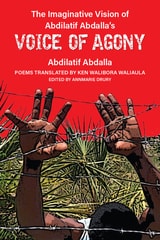
The Imaginative Vision of Abdilatif Abdalla’s Voice of Agony
Abdilatif Abdalla, edited by Annmarie Drury
University of Michigan Press, 2024
Yet, Imaginative Vision is also something more. Even as it centers on a literary translation of a singularly beautiful and influential book of poetry, it tells English-language readers the story of that book. Supporting materials illuminate the circumstances of its inception when Abdilatif, aged 22, was arrested and tried. They explore what the volume meant to its first readers and its affiliations with subsequent extraordinary works of prison literature by Alamin Mazrui and Ngũgĩ wa Thiong’o. They trace its links to literary art of the past, including the nineteenth-century poet Muyaka bin Haji, and to writing that followed. And they explain social and historical aspects of the Swahili coastal world that nurtured Abdilatif’s political engagement and stunning verbal art. Under the editorship of scholar, translator, and poet Annmarie Drury, contributors bring insights from their diverse backgrounds to present contextualizing material that illuminates the poems at the heart of this book.
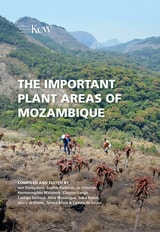
The Important Plant Areas of Mozambique
Edited by Iain Darbyshire, Sophie Richards, and Jo Osborne
Royal Botanic Gardens, Kew, 2023
The Important Plant Areas of Mozambique is based on the Mozambique TIPAs project run in collaboration between Royal Botanic Gardens, Kew, Mozambique’s Agricultural Research Institute (Instituto de Investigação Agrária de Moçambique – IIAM), and the University Eduardo Mondlane. Drawing on information from the TIPAs database, The Important Plant Areas of Mozambique includes color maps and photographs, site descriptions, and tables to present information on the botanical significance, habitat, and geology of the region. The book will also address conservation issues and ecosystem services to promote Mozambique’s critical plant sites and inform conservation leaders in government, NGOs, universities, and local communities about Mozambique’s threatened habitats.
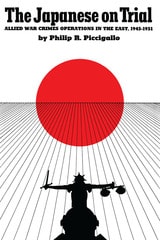
The Japanese On Trial
Allied War Crimes Operations in the East, 1945–1951By Philip R. Piccigallo
University of Texas Press, 1979
This comprehensive treatment of post–World War II Allied war crimes trials in the Far East is a significant contribution to a neglected subject. While the Nuremberg and, to a lesser degree, Tokyo tribunals have received considerable attention, this is the first full-length assessment of the entire Far East operation, which involved some 5,700 accused and 2,200 trials.
After discussing the Tokyo trial, Piccigallo systematically examines the operations of each Allied nation, documenting procedure and machinery as well as the details of actual trials (including hitherto unpublished photographs) and ending with a statistical summary of cases.
This study allows a completely new assessment of the Far East proceedings: with a few exceptions, the trials were carefully and fairly conducted, the efforts of defense counsel and the elaborate review procedures being especially noteworthy. Piccigallo’s approach to this emotion-filled subject is straightforward and evenhanded throughout. He concludes with a discussion of the broader implications of such war crimes trials, a matter of interest to the general reader as well as to specialists in history, law, and international affairs.
The Legacy of Division
East and West after 1989Ferenc Laczó
Central European University Press, 2020
This volume examines the legacy of the East–West divide since the implosion of the communist regimes in Europe. The ideals of 1989 have largely been frustrated by the crises and turmoil of the past decade. The liberal consensus was first challenged as early as the mid-2000s. In Eastern Europe, grievances were directed against the prevailing narratives of transition and ever sharper ethnic-racial antipathies surfaced in opposition to a supposedly postnational and multicultural West. In Western Europe, voices regretting the European Union's supposedly careless and premature expansion eastward began to appear on both sides of the left–right and liberal–conservative divides. The possibility of convergence between Europe's two halves has been reconceived as a threat to the European project.
In a series of original essays and conversations, thirty-three contributors from the fields of European and global history, politics and culture address questions fundamental to our understanding of Europe today: How have perceptions and misperceptions between the two halves of the continent changed over the last three decades? Can one speak of a new East–West split? If so, what characterizes it and why has it reemerged? The contributions demonstrate a great variety of approaches, perspectives, emphases, and arguments in addressing the daunting dilemma of Europe's assumed East–West divide.
The Names of the Python
Belonging in East Africa, 900 to 1930David L. Schoenbrun
University of Wisconsin Press, 2023
Grounded in Schoenbrun’s skillful mastery of historical linguistics and vernacular texts, The Names of the Python supplements and redirects current debates about ethnicity in ex-colonial Africa and beyond. This timely volume carefully distinguishes past from present and shows the many possibilities that still exist for the creative cultural imagination.
The Pate Chronicle
Marina Tolmacheva
Michigan State University Press, 1993
In late October 1890, a British force led by Admiral Fremantle assaulted and subdued the East African town of Witu, the mainland capital of the Nabahani rulers of Pate; five years later, the entire region and the adjacent coastal islands came under British administration. One of the great tragedies suffered as a result of Admiral Fremantle's initial attack was the loss of the original manuscript of the history of Pate, The Book of the Kings of Pate.
This historical work in its various forms is representative of a living historical tradition developed in the coastal city-states of East Africa and is considered one of the important literary treasures of their culture and society. It also stands as the most important indigenous source for Swahili history, the history of the Swahili language, its dialects, and its written tradition. The four Arabic-Swahili versions (manuscripts 177, 321, 344, and 358 of the Library of the University of Dar es Salaam) presented here in The Pate Chronicle add significantly to the growing pool of information available about Pate and East Africa before the era of European colonialism.
The Post-State State
Urban Futures in South SudanChristian J. Doll
University of Minnesota Press, 2027
Rethinking the state through everyday life in South Sudan
In 2011, after decades of war, South Sudan became the newest nation-state to emerge in the twenty-first century. Independence brought hopes for peace and self-determination, yet those aspirations soon confronted renewed conflict and the challenges of building a nation amid significant political, environmental, and economic uncertainty. The Post-State State is a political and urban ethnography of how South Sudanese people navigate this unsettled moment by imagining and striving for their possible futures in an open-ended state of becoming.
Christian J. Doll explores how residents of the capital, Juba, make and remake urban space through everyday practices of state-making and state-imagining. In a place where civilians’ fear of the state’s violent potential and the limits of territorial sovereignty are particularly extreme, Doll centers the ways South Sudanese people transform uncertainty into possibility. Hope, disappointment, and anticipation emerge not as opposing forces but as intertwined ways of understanding and acting in the world.
Through analyses of political rituals, social infrastructures, ethnic spatial claims, humanitarian governance, and plans for a new capital city, The Post-State State offers a new understanding of how the state is imagined and enacted. In doing so, this book advances broader conversations about state-making, sovereignty, precarity, and futurity in an increasingly uncertain political world.
Retail e-book files for this title are screen-reader friendly with images accompanied by short alt text and/or extended descriptions.
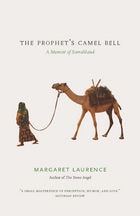
The Prophet's Camel Bell
A Memoir of SomalilandMargaret Laurence
University of Chicago Press, 1963
In 1950, as a young bride, Margaret Laurence set out with her engineer husband to what was then Somaliland: a British protectorate in North Africa few Canadians had ever heard of. Her account of this voyage into the desert is full of wit and astonishment. Laurence honestly portrays the difficulty of colonial relationships and the frustration of trying to get along with Somalis who had no reason to trust outsiders. There are moments of surprise and discovery when Laurence exclaims at the beauty of a flock of birds only to discover that they are locusts, or offers medical help to impoverished neighbors only to be confronted with how little she can help them. During her stay, Laurence moves past misunderstanding the Somalis and comes to admire memorable individuals: a storyteller, a poet, a camel-herder. The Prophet’s Camel Bell is both a fascinating account of Somali culture and British colonial characters, and a lyrical description of life in the desert.
The Risks of Knowledge
Investigations into the Death of the Hon. Minister John Robert Ouko in Kenya, 1990David William Cohen
Ohio University Press, 2004
In February 1990 assailants murdered Kenya’s distinguished Minister of Foreign Affairs and International Cooperation, Robert Ouko. The horror of the attack, the images of his mutilated and burned corpse, the evidence of a notorious cover-up, and the revelations of the pressures, conflicts, and fears he faced in his last weeks have engaged Kenya’s publics for years. The Risks of Knowledge minutely examines the multiple and unfinished investigations into the crime.
Among the probes was an extensive 1990 inquiry organized by a New Scotland Yard team invited to Kenya by the government, as well as an open public commission of inquiry appointed by President Daniel arap Moi. The commission ran for seventeen months in 1990-91 before the president shut it down. International and Kenyan unrest over Ouko’s brutal death brought increasing attention to corruption and violence associated with the Moi government, leading in late 1991 to multiparty politics and in December 2002 to the elections that ended the Moi era.
This powerfully argued book raises important issues about the production of knowledge and the politics of memory that will interest a large interdisciplinary audience.
The Sacred Meadows
A Structural Analysis of Religious Symbolism in an East African TownAbdul Hamid M. el Zein
Northwestern University Press, 1974
The Spirit of the Laws in Mozambique
Juan Obarrio
University of Chicago Press, 2014
Having made the transition from a people’s republic to democratic rule in the 1990s, Mozambique offers a fascinating case of postwar reconstruction, economic opening, and transitional justice, one in which the customary has played a central role. Obarrio shows how its sovereignty has met countless ambiguities within the entanglements of local community, nation-state, and international structures. The postcolonial nation-state emerges as a maze of entangled jurisdictions. Ultimately, he looks toward local rituals and relations as producing an emergent kind of citizenship in Africa, which he dubs “customary citizenship,” forming not a vestige of the past but a yet ill-defined political future.
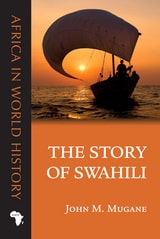
The Story of Swahili
John M. Mugane
Ohio University Press, 2015
Swahili was once an obscure dialect of an East African Bantu language. Today more than one hundred million people use it: Swahili is to eastern and central Africa what English is to the world. From its embrace in the 1960s by the black freedom movement in the United States to its adoption in 2004 as the African Union’s official language, Swahili has become a truly international language. How this came about and why, of all African languages, it happened only to Swahili is the story that John M. Mugane sets out to explore.
The remarkable adaptability of Swahili has allowed Africans and others to tailor the language to their needs, extending its influence far beyond its place of origin. Its symbolic as well as its practical power has evolved from its status as a language of contact among diverse cultures, even as it embodies the history of communities in eastern and central Africa and throughout the Indian Ocean world.
The Story of Swahili calls for a reevaluation of the widespread assumption that cultural superiority, military conquest, and economic dominance determine a language’s prosperity. This sweeping history gives a vibrant, living language its due, highlighting its nimbleness from its beginnings to its place today in the fast-changing world of global communication.
The Trials of Mrs. K.
Seeking Justice in a World with WitchesAdam Ashforth
University of Chicago Press, 2018
In The Trials of Mrs. K., Adam Ashforth studies this and similar stories of witchcraft that continue to circulate in Malawi. At the heart of the book is Ashforth’s desire to understand how claims to truth, the pursuit of justice, and demands for security work in contemporary Africa, where stories of witchcraft can be terrifying. Guiding us through the history of legal customs and their interactions with the court of public opinion, Ashforth asks challenging questions about responsibility, occult forces, and the imperfect but vital mechanisms of law. A beautifully written and provocative book, The Trials of Mrs. K. will be an essential text for understanding what justice means in a fragile and dangerous world.
The Wombs of Women
Race, Capital, FeminismFrançoise Vergès
Duke University Press, 2020
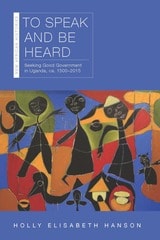
To Speak and Be Heard
Seeking Good Government in Uganda, ca. 1500–2015Holly Elisabeth Hanson
Ohio University Press, 2021
A history of a political practice through which East Africans have sought to create calm, harmonious polities for five hundred years.
“To speak and be heard” is a uniquely Ugandan approach to government that aligns power with groups of people that actively demonstrate their assent both through their physical presence and through essential gifts of goods and labor. In contrast to a parliamentary democracy, the Ugandan system requires a level of active engagement much higher than simply casting a vote in periodic elections.
These political strategies—assembly, assent, and powerful gifts—can be traced from before the emergence of kingship in East Africa (ca. 1500) through enslavement, colonial intervention, and anticolonial protest. They appear in the violence of the Idi Amin years and are present, sometimes in dysfunctional ways, in postcolonial politics. Ugandans insisted on the necessity of multiple voices contributing to and affirming authority, and citizens continued to believe in those principles even when colonial interference made good governance through building relationships almost impossible.
Through meticulous research, Holly Hanson tells a history of the region that differs from commonly accepted views. In contrast to the well-established perception that colonial manipulation of Uganda’s tribes made state failure inevitable, Hanson argues that postcolonial Ugandans had the capacity to launch a united, functional nation-state and could have done so if leaders in Buganda, Britain, and Uganda’s first governments had made different choices.
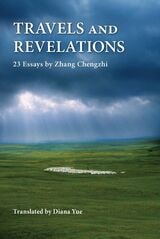
Travels and Revelations
23 Essays by Zhang ChengzhiChengzhi Zhang
Hong Kong University Press, 2026
This is an English translation of twenty-three essays written by the Chinese author Zhang Chengzhi, spanning over twenty years. The collection of prose covers Zhang’s memories when living in Inner Mongolia, his perception of the Western part of China, his views on several figures, and events in modern Chinese history and contemporary China.