Results by title
98 books match the query 'Existentialism' and 29 start with t
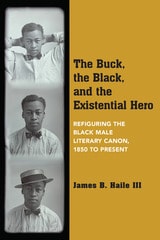
The Buck, the Black, and the Existential Hero
Refiguring the Black Male Literary Canon, 1850 to PresentJames B. Haile III
Northwestern University Press, 2020
The Buck, the Black, and the Existential Hero: Refiguring the Black Male Literary Canon, 1850 to Present combines philosophy, literary theory, and jazz studies with Africana studies to develop a theory of the black male literary imagination. In doing so, it seeks to answer fundamental aesthetic and existential questions: How does the experience of being black and male in the modern West affect the telling of a narrative, the shape or structure of a novel, the development of characters and plot lines, and the nature of criticism itself?
James B. Haile argues that, since black male identity is largely fluid and open to interpretation, reinterpretation, and misinterpretation, the literature of black men has developed flexibility and improvisation, termed the “jazz of life.” Our reading of this literature requires the same kind of flexibility and improvisation to understand what is being said and why, as well as what is not being said and why. Finally, the book attempts to offer this new reading experience by placing texts by well-known authors, such as Frederick Douglass, Ralph Ellison, and Colson Whitehead, in conversation with texts by those who are less well known and those who have, for the most part, been forgotten, in particular, Cecil Brown. Doing so challenges the reader to visit and revisit these novels with a new perspective about the social, political, historical, and psychic realities of black men.
The Debate Between Sartre and Merleau-Ponty
Jon Stewart
Northwestern University Press, 1998
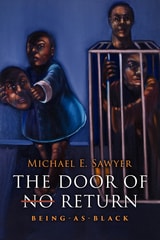
The Door of No Return
Being-As-BlackMichael E. Sawyer
Temple University Press, 2026
Using critical theory and philosophy, Sawyer decouples Black identity and Black philosophy from White and Western frames by building on Toni Morrison’s ideas of Black Thought and encouraging an understanding of Black Self-Consciousness and Black Self-Identity on Black terms. The Door of No Return uses music, literature, visual art, and a variety of physical disciplines to imagine a world that differs from one that confounds the positive formation of Black Self-Consciousness under the coercive regime of white supremacy and Anti-Black racism.
The Essential Supernatural
A Dialogical Study in Kierkegaard and BlondelMaurice Ashley Agbaw-Ebai
St. Augustine's Press, 2022
Like these philosophers who have preceded him, Agbaw-Ebai exhorts us to never allow the sense of our relation to the supernatural as a settled matter. The philosophy of religion we have inherited does not protect us from having to confront our own subjectivity with autonomy: to be God without God and against God, or to be God with and through God.
The Existential Self in Society
Edited by Joseph A. Kotarba and Andrea Fontana
University of Chicago Press, 1984
The Family Idiot
Gustave Flaubert, 1821–1857, An Abridged EditionJean-Paul Sartre
University of Chicago Press, 2023
From 1981 to 1994, the University of Chicago Press published a five-volume translation of Jean-Paul Sartre’s The Family Idiot: Gustave Flaubert, 1821-1857, a sprawling masterwork by one of the greatest intellects of the twentieth century. This new volume delivers a compact abridgment of the original by renowned Sartre scholar, Joseph Catalano.
Sartre claimed that his existential approach to psychoanalysis required a new Freud, and in his study of Gustave Flaubert, Sartre becomes that Freud. The work summarizes Sartre’s overarching aim to reveal that human life is a meaningful adventure of freedom. In discussing Flaubert’s work, particularly his classic novel Madame Bovary, Sartre unleashes a fierce critique of modernity as nihilistic and demeaning of human dignity.
The Fourfold
Reading the Late HeideggerAndrew J. Mitchell
Northwestern University Press, 2015
Heidegger’s later thought is a thinking of things, so argues Andrew J. Mitchell in The Fourfold. Heidegger understands these things in terms of what he names “the fourfold”—a convergence of relationships bringing together the earth, the sky, divinities, and mortals—and Mitchell’s book is the first detailed exegesis of this neglected aspect of Heidegger’s later thought. As such it provides entrée to the full landscape of Heidegger’s postwar thinking, offering striking new interpretations of the atomic bomb, technology, plants, animals, weather, time, language, the holy, mortality, dwelling, and more. What results is a conception of things as ecstatic, relational, singular, and, most provocatively, as intrinsically tied to their own technological commodification. A major new work that resonates beyond the confines of Heidegger scholarship, The Fourfold proposes nothing less than a new phenomenological thinking of relationality and mediation for understanding the things around us.
The Fragile We
Ethical Implications Of Heidegger's "Being and Time"Lawrence Vogel
Northwestern University Press, 1994
In The Fragile "We": Ethical Implications of Heidegger's "Being and Time," Lawrence Vogel presents three interpretations of authentic existence—the existentialist, the historicist, and the cosmopolitan—each of which is a plausible version of the personal ideal depicted in Being and Time. He then draws parallels between these interpretations and three moments in the contemporary liberal-communitarian debate over the relationship of the "I" and the "We." His book contributes both to a diagnosis of what there is about Being and Time that invites moral nihilism and to a sense of how fundamental ontology might be recast so that "the other" is accorded an appropriate place in an account of human existence.
The History of Continental Philosophy
Edited by Alan D. Schrift
University of Chicago Press, 2010
From Kant to Kierkegaard, from Hegel to Heidegger, continental philosophers have indelibly shaped the trajectory of Western thought since the eighteenth century. Although much has been written about these monumental thinkers, students and scholars lack a definitive guide to the entire scope of the continental tradition. The most comprehensive reference work to date, this eight-volume History of Continental Philosophy will both encapsulate the subject and reorient our understanding of it. Beginning with an overview of Kant’s philosophy and its initial reception, the History traces the evolution of continental philosophy through major figures as well as movements such as existentialism, phenomenology, hermeneutics, and poststructuralism. The final volume outlines the current state of the field, bringing the work of both historical and modern thinkers to bear on such contemporary topics as feminism, globalization, and the environment. Throughout, the volumes examine important philosophical figures and developments in their historical, political, and cultural contexts.
The first reference of its kind, A History of Continental Philosophy has been written and edited by internationally recognized experts with a commitment to explaining complex thinkers, texts, and movements in rigorous yet jargon-free essays suitable for both undergraduates and seasoned specialists. These volumes also elucidate ongoing debates about the nature of continental and analytic philosophy, surveying the distinctive, sometimes overlapping characteristics and approaches of each tradition. Featuring helpful overviews of major topics and plotting road maps to their underlying contexts, A History of Continental Philosophy is destined to be the resource of first and last resort for students and scholars alike.
The Life and Thought of Alexandre Kojève
Marco Filoni and David Broder (Trans.)
Northwestern University Press, 2025
A fresh and vivid reappraisal of one of the most influential intellects of the modern era
Alexandre Kojève is one of the twentieth century’s most seductive and intriguing figures. A product of the Russian merchant bourgeoisie, he became, depending on one’s point of view, either an overzealous bureaucrat or a secret agent who infiltrated the upper echelons of French state bureaucracy, spending the last twenty years of his life working in international diplomacy and high finance. Marco Filoni describes each facet of Kojève’s different lives in crystalline detail: the cultural circles of his youth, his studies, his philosophical passions, his fundamental theoretical choices, and his intellectual network, as well as the students who would become part of the intellectual elite, including Lacan, Bataille, and Merleau-Ponty. Drawing on rich archival material, unpublished texts, correspondence, and written and oral testimonies, The Life and Thought of Alexandre Kojève is a major benchmark for scholars of Kojève and of twentieth-century intellectual and political history. Filoni paints a vibrant portrait of one of the most influential intellectuals of the modern era, deftly composing Kojève’s personal, political, and philosophical lives.
The Michel Henry Reader
Edited by Scott Davidson and Frédéric Seyler
Northwestern University Press, 2019
The Michel Henry Reader is an indispensable resource for those who are approaching Henry for the first time as well as for those who are already familiar with his work. It provides broad coverage of the major themes in his philosophy and new translations of Henry’s most important essays. Sixteen chapters are divided into four parts that demonstrate the profound implications of Henry’s philosophy of life: for phenomenology; for subjectivity; for politics, art, and language; and for ethics and religion.
The Natural World as a Philosophical Problem
Jan Patocka, edited by Ivan Chvatík and Lubica Ucnik, translated by Erika Abrams, foreword by Ludwig Landgrebe
Northwestern University Press, 2016

The New Century
Bergsonism, Phenomenology, and Responses to Modern ScienceEdited by Keith Ansell-Pearson and Alan D. Schrift
University of Chicago Press, 2010
From Kant to Kierkegaard, from Hegel to Heidegger, continental philosophers have indelibly shaped the trajectory of Western thought since the eighteenth century. Although much has been written about these monumental thinkers, students and scholars lack a definitive guide to the entire scope of the continental tradition. The most comprehensive reference work to date, this eight-volume History of Continental Philosophy will both encapsulate the subject and reorient our understanding of it. Beginning with an overview of Kant’s philosophy and its initial reception, the History traces the evolution of continental philosophy through major figures as well as movements such as existentialism, phenomenology, hermeneutics, and poststructuralism. The final volume outlines the current state of the field, bringing the work of both historical and modern thinkers to bear on such contemporary topics as feminism, globalization, and the environment. Throughout, the volumes examine important philosophical figures and developments in their historical, political, and cultural contexts.
The first reference of its kind, A History of Continental Philosophy has been written and edited by internationally recognized experts with a commitment to explaining complex thinkers, texts, and movements in rigorous yet jargon-free essays suitable for both undergraduates and seasoned specialists. These volumes also elucidate ongoing debates about the nature of continental and analytic philosophy, surveying the distinctive, sometimes overlapping characteristics and approaches of each tradition. Featuring helpful overviews of major topics and plotting road maps to their underlying contexts, A History of Continental Philosophy is destined to be the resource of first and last resort for students and scholars alike.
The Other Emerson
Branka Arsic
University of Minnesota Press, 2010
Considering Emerson first and foremost as a daring and original thinker, The Other Emerson focuses on three Emersonian subjects-subjectivity, the political, and the nature of philosophy-and range in topic from Emerson's relationships to slavery and mourning to his place in the development of Romanticism as reread by contemporary systems theory. It is Emerson's appreciation of truth's instability that link him to the European philosophical tradition.
Contributors: Eduardo Cadava, Princeton U; Sharon Cameron, Johns Hopkins U; Russell B. Goodman, U of New Mexico; Paul Grimstad, Yale U; Eric Keenaghan, U at Albany, SUNY; Gregg Lambert, Syracuse U; Sandra Laugier, Université de Picardie Jules Verne; Donald Pease, Dartmouth College.
The Palm at the End of the Mind
Relatedness, Religiosity, and the RealMichael Jackson
Duke University Press, 2009
Through sixty-one beautifully crafted essays based on sojourns in Europe, West Africa, the United States, Australia, and New Zealand, and taking his cue from Wallace Stevens’s late poem, “Of Mere Being,” Jackson explores a range of experiences where “the palm at the end of the mind” stands “beyond thought,” on “the edge of space,” “a foreign song.” Moments of crisis as well as everyday experiences in cafés, airports, and offices disclose the subtle ways in which a single life shades into others, the boundaries between cultures become blurred, fate unfolds through genealogical time, elective affinities make their appearance, and different values contend.
The Phenomenon of Life
Toward a Philosophical BiologyHans Jonas
Northwestern University Press, 2001
The Possibility of Philosophy
Course Notes from the Collège de France, 1959–1961Maurice Merleau-Ponty, Edited by Stéphanie Ménasé with a foreword by Claude Lefort, Translated from the French by Keith Whitmoyer
Northwestern University Press, 2022
The Prose of the World
Maurice Merleau-Ponty
Northwestern University Press, 1973
The Religion of Existence
Asceticism in Philosophy from Kierkegaard to SartreNoreen Khawaja
University of Chicago Press, 2016
At the heart of existentialism, Noreen Khawaja argues, is a story about secular thought experimenting with the traditions of European Christianity. This book explores how a distinctly Protestant asceticism formed the basis for the chief existentialist ideal, personal authenticity, which is reflected in approaches ranging from Kierkegaard’s religious theory of the self to Heidegger’s phenomenology of everyday life to Sartre’s global mission of atheistic humanism. Through these three philosophers, she argues, we observe how ascetic norms have shaped one of the twentieth century’s most powerful ways of thinking about identity and difference—the idea that the “true” self is not simply given but something that each of us is responsible for producing.
Engaging with many central figures in modern European thought, this book will appeal to philosophers and historians of European philosophy, scholars of modern Christianity, and those working on problems at the intersection of religion and modernity.
The Saint and the Atheist
Thomas Aquinas and Jean-Paul SartreJoseph S. Catalano
University of Chicago Press, 2021
Compact and open to readers of varying backgrounds, this book represents Catalano’s efforts to bring a lifetime of work on Sartre into an accessible consideration of philosophical questions by placing him in conversation with Aquinas, and it serves as a primer on key ideas of both philosophers. By bringing together these two figures, Catalano offers a fruitful space for thinking through some of the central questions about faith, conscience, freedom, and the meaning of life.
The Sensible World and the World of Expression
Course Notes from the Collège de France, 1953Maurice Merleau-Ponty, Translated from the French with an introduction and notes by Bryan Smyth
Northwestern University Press, 2020
The Sensible World and the World of Expression was a course of lectures that Merleau-Ponty gave at the Collège de France after his election to the chair of philosophy in 1952. The publication and translation of Merleau-Ponty’s notes from this course provide an exceptional view into the evolution of his thought at an important point in his career.
In these notes, we see that Merleau-Ponty’s consideration of the problem of the perception of movement leads him to make a self-critical return to Phenomenology of Perception in order to rethink the perceptual encounter with the sensible world as essentially expressive, and hence to revise his understanding of the body schema accordingly in terms of praxical motor possibilities. Sketching out an embodied dialectic of expressive praxis that would link perception with art, language, and other cultural and intersubjective phenomena, up to and including truth, Merleau-Ponty’s notes for these lectures thus afford an exciting glimpse of how he aspired to overcome the impasse of ontological dualism.
Situated midway between Phenomenology of Perception and The Visible and the Invisible, these notes mark a juncture of crucial importance with regard to Merleau-Ponty’s later efforts to work out the ontological underpinnings of phenomenology in terms of a new dialectical conception of nature and history.
The Story I Tell Myself
A Venture in Existentialist AutobiographyHazel E. Barnes
University of Chicago Press, 1997
The Word and the Spiritual Realities (the I and the Thou)
Ferdinand Ebner
Catholic University of America Press, 2021
The Writings of Jean-Paul Sartre Volume 2
Selected ProseJean-Paul Sartre
Northwestern University Press, 1974
Thomistic Existentialism and Cosmological Reasoning
John F. X. Knasas
Catholic University of America Press, 2019
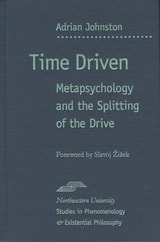
Time Driven
Metapsychology and the Splitting of the DriveAdrian Johnston
Northwestern University Press, 2005
Johnston draws on Jacques Lacan's oeuvre in conjunction with certain philosophical resources-elements from transcendental philosophy, structuralism, and phenomenology-to rectify the inconsistencies within the Freudian metapsychological model of drive. In doing so, he helps to answer a question haunting Freud at the end of his career: Why is humanity plagued by a perpetual margin of discontent, despite technological and cultural progress?
In Time Driven, Johnston is able to make sense of Freud's metapsychology both as a whole and in its historical development of Lacan's reinterpretation of Freud, and of the place of both Freud and Lacan in modern philosophy.
Time and Freedom
Christophe Bouton
Northwestern University Press, 2014
Toward Another Kingdom
Two Dramas of the Darker Yearstraub
St. Augustine's Press, 2022
Marcel's dramas require characters to respond authentically and from their true selves. He thereby offers the vision of how individual compromises may build up to break the world and condemn, or, conversely, contribute to the discovery and meaning of relation and redemption. Traub's new translation will interest the player as much as the scholar, and Marcel's aptitude for theatrical writing is proven once again. His intellectual sensitivity creates characters that beckon performance, which is an added dimension to the presentation of the human condition.
Turning Emotion Inside Out
Affective Life beyond the SubjectEdward S. Casey
Northwestern University Press, 2022
This book begins with a brief critique of internalist views of emotion that hold that feelings are sequestered within a subject. Casey affirms that while certain emotions are felt as resonating within our subjectivity, many others are experienced as occurring outside any such subjectivity. These include intentional or expressive feelings that transpire between ourselves and others, such as an angry exchange between two people, as well as emotions or affects that come to us from beyond ourselves. Casey claims that such far‑out emotions must be recognized in a full picture of affective life. In this way, the book proposes to “turn emotion inside out.”