Results by title
340 books match the query 'Folklore' and 60 start with t
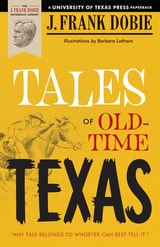
Tales of Old-Time Texas
By J. Frank Dobie
University of Texas Press, 1955
It is for good reason that J. Frank Dobie is known as the Southwest's master storyteller. With his eye for color and detail, his ear for the rhythm of language and song, and his heart open to the simple truth of folk wisdom and ways, he movingly and unpretentiously spins the tales of our collective heritages. This he does in Tales of Old-Time Texas, a heartwarming array of twenty-eight stories filled with vivid characters, exciting historical episodes, and traditional themes. As Dobie himself says: "Any tale belongs to whoever can best tell it." Here, then, is a collection of the best Texas tales—by the Texan who can best tell them.
Dobie's recollections include such classics in Lone Star State lore as the tale of Jim Bowie's knife, the legend of the Texas bluebonnet, the story of the Wild Woman of the Navidad, and the account of the headless horseman of the mustangs. Other stories in this outstanding collection regale us with odd and interesting characters and events: the stranger of Sabine Pass, the Apache secret of the Guadalupes, the planter who gambled away his bride, and the Robinhooding of Sam Bass. These stories, and many more, make Tales of Old-Time Texas a beloved classic certain to endure for generations.
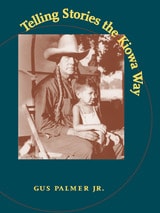
Telling Stories the Kiowa Way
Gus Palmer
University of Arizona Press, 2003
This book explores the traditional art of storytelling still practiced by Kiowas today as Gus Palmer shares conversations held with storytellers. Combining narrative, personal experience, and ethnography in an original and artful way, Palmer—an anthropologist raised in a traditional Kiowa family—shows not only that storytelling remains an integral part of Kiowa culture but also that narratives embedded in everyday conversation are the means by which Kiowa cultural beliefs and values are maintained.
Palmer's study features contemporary oral storytelling and other discourses, assembled over two and a half years of fieldwork, that demonstrate how Kiowa storytellers practice their art. Focusing on stories and their meaning within a narrative and ethnographic context, he draws on a range of material, including dream stories, stories about the coming of Táimê (the spirit of the Sun Dance) to the Kiowas, and stories of tricksters and tribal heroes. He shows how storytellers employ the narrative devices of actively participating in oral narratives, leaving stories wide open, or telling stories within stories. And he demonstrates how stories can reflect a wide range of sensibilities, from magical realism to gossip.
Firmly rooted in current linguistic anthropological thought, Telling Stories the Kiowa Way is a work of analysis and interpretation that helps us understand story within its larger cultural contexts. It combines the author's unique literary talent with his people's equally unique perspective on anthropological questions in a text that can be enjoyed on multiple levels by scholars and general readers alike.
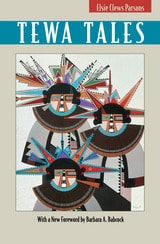
Tewa Tales
Elsie Clews Parsons
University of Arizona Press, 1994
This collection of more than one hundred tales from both New Mexico and Arizona Tewa, first published in 1926, bears witness to their rich cultural history. In addition to emergence and animal stories, these tales also provide an account of many social customs such as wedding ceremonials and relay racing--that show marked differences between the two tribal groups. A comparison of tales from the two divisions of the tribe reveals something of what has happened to both emigrant and home-staying Tewa over two centuries of separation. Yet, while only half of the Arizona tales are distinctly parallel to the New Mexican, additional similarities may be found in such narrative features as the helpfulness of Spider old woman and her possession of medicine, creating life magically under a blanket, or Coyote beguiling girls into marriage.
Elsie Clews Parsons was a pioneering anthropologist in the Southwest whose works included the encyclopedic Pueblo Indian Religion. The Tewa tales she gathered for this volume are thus notable not only as fascinating stories that will delight curious readers, but also as authentic reflections of a people less known to scholars.
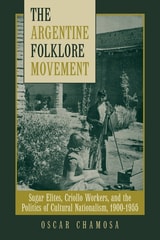
The Argentine Folklore Movement
Sugar Elites, Criollo Workers, and the Politics of Cultural Nationalism, 1900–1955Oscar Chamosa
University of Arizona Press, 2010
Oscar Chamosa combines intellectual history with ethnographic and sociocultural analysis to reconstruct the process by which mestizo culture—in Argentina called criollo culture—came to occupy the center of national folklore in a country that portrayed itself as the only white nation in South America. The author finds that the conservative plantation owners—the “sugar elites”—who exploited the criollo peasants sponsored the folklore movement that romanticized them as the archetypes of nationhood. Ironically, many of the composers and folk singers who participated in the landowner-sponsored movement adhered to revolutionary and reformist ideologies and denounced the exploitation to which those criollo peasants were subjected. Chamosa argues that, rather than debilitating the movement, these opposing and contradictory ideologies permitted its triumph and explain, in part, the enduring romanticizing of rural life and criollo culture, essential components of Argentine nationalism.
The book not only reveals the political motivations of culture in Argentina and Latin America but also has implications for understanding the articulation of local culture with national politics and entertainment markets that characterizes contemporary cultural processes worldwide today.
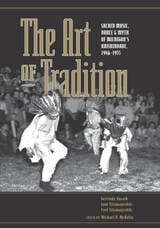
The Art of Tradition
Sacred Music, Dance & Myth of Michigan's Anishinaabe, 1946-1955Michael D. McNally
Michigan State University Press, 2009
The Art of Tradition documents the complexity of Native life and culture at a critical juncture in Native American history, where the rekindling of pride in Native cultures characteristic of the later twentieth century met the generation of elders who spent their early years speaking Native tongues but who came of age in boarding schools and amid strong pressures of assimilation. Because this period was deemed by most ethnographers of the time to be one of "acculturation," marking the end of traditional Native cultures, the authors' appreciation for the integrity of mid-century Native culture stands out markedly from other scholarship of the day. The songs, dance steps, and stories collected here are evidence of the artful work of maintaining and breathing new life into traditions, often in contexts that seem anything but traditional, by indigenous elders and artists. As the editor notes, there are no "Native informants" in this study, only collaborators whose lives are shown to be as resilient as the repertories they performed.
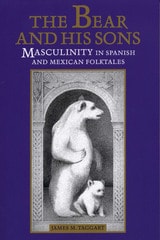
The Bear and His Sons
Masculinity in Spanish and Mexican FolktalesBy James M. Taggart
University of Texas Press, 1997
All the world over, people tell stories to express their deepest feelings about such things as what makes a "real" man or woman; what true love, courage, or any other virtue is; what the proper relationships are between people. Often groups of people widely separated by space or time will tell the same basic story, but with differences in the details that reveal much about a particular group's worldview.
This book looks at differences in the telling of several common Hispanic folktales. James Taggart contrasts how two men—a Spaniard and an Aztec-speaking Mexican—tell such tales as "The Bear's Son." He explores how their stories present different ways of being a man in their respective cultures.
Taggart's analysis contributes to a revision of Freud's theory of gender, which was heavily grounded in biological determinism. Taggart focuses instead on how fathers reproduce different forms of masculinity in their sons. In particular, he shows how fathers who care for their infant sons teach them a relational masculinity based on a connected view of human relationships. Thus, The Bear and His Sons will be important reading not only in anthropology and folklore, but also in the growing field of men's studies.

The Bird Who Cleans the World and Other Mayan Fables
Victor Montejo
Northwestern University Press, 1995
The Buffalo Book
The Full Saga Of The American AnimalDavid A. Dary
Ohio University Press, 1989
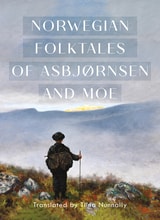
The Complete and Original Norwegian Folktales of Asbjørnsen and Moe
Peter Christen Asbjørnsen
University of Minnesota Press, 2019
The definitive English translation of the celebrated story collection regarded as a landmark of Norwegian literature and culture—now in paperback
The extraordinary folktales collected by Peter Christen Asbjørnsen and Jørgen Moe began appearing in Norway in 1841. Over the next two decades the publication of subsequent editions under the title Norske folkeeventyr made the names Asbjørnsen and Moe synonymous with Norwegian storytelling traditions. Tiina Nunnally’s vivid translation of their monumental collection is the first new English translation in more than 150 years—and the first ever to include all sixty original tales.
Magic and myth inhabit these pages in figures both familiar and strange. Giant trolls and talking animals are everywhere. The winds take human form. A one-eyed old woman might seem reminiscent of the Norse god Odin. We meet sly aunts, resourceful princesses, and devious robbers. The clever and fearless boy Ash Lad often takes center stage as he ingeniously breaks spells and defeats enemies to win half the kingdom. These stories, set in Norway’s majestic landscape of towering mountains and dense forests, are filled with humor, mischief, and sometimes surprisingly cruel twists of fate. All are rendered in the deceptively simple narrative style perfected by Asbjørnsen and Moe—now translated into an English that is as finely tuned to the modern ear as it is true to the original Norwegian.
Included here—for the very first time in English—are Asbjørnsen and Moe’s Forewords and Introductions to the early Norwegian editions of the tales. Asbjørnsen gives us an intriguing glimpse into the actual collection process and describes how the stories were initially received, both in Norway and abroad. Equally fascinating are Moe’s views on how central characters might be interpreted and his notes on the regions where each story was originally collected. Nunnally’s informative Translator’s Note places the tales in a biographical, historical, and literary context for the twenty-first century.
The Norwegian folktales of Asbjørnsen and Moe are timeless stories that will entertain, startle, and enthrall readers of all ages.
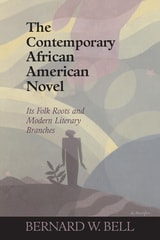
The Contemporary African American Novel
Its Folk Roots and Modern Literary BranchesBernard W. Bell
University of Massachusetts Press, 2004

The Cree Language is Our Identity
The La Ronge lectures of Sarah WhitecalfSarah Whitecalf
University of Manitoba Press, 1983
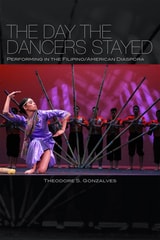
The Day the Dancers Stayed
Performing in the Filipino/American DiasporaTheodore S. Gonzalves
Temple University Press, 2009
Pilipino Cultural Nights at American campuses have been a rite of passage for youth culture and a source of local community pride since the 1980s. Through performances—and parodies of them—these celebrations of national identity through music, dance, and theatrical narratives reemphasize what it means to be Filipino American. In The Day the Dancers Stayed, scholar and performer Theodore Gonzalves uses interviews and participant observer techniques to consider the relationship between the invention of performance repertoire and the development of diasporic identification.
Gonzalves traces a genealogy of performance repertoire from the 1930s to the present. Culture nights serve several functions: as exercises in nostalgia, celebrations of rigid community entertainment, and occasionally forums for political intervention. Taking up more recent parodies of Pilipino Cultural Nights, Gonzalves discusses how the rebellious spirit that enlivened the original seditious performances has been stifled.
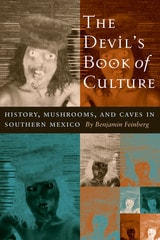
The Devil's Book of Culture
History, Mushrooms, and Caves in Southern MexicoBy Benjamin Feinberg
University of Texas Press, 2003
Since the 1950s, the Sierra Mazateca of Oaxaca, Mexico, has drawn a strange assortment of visitors and pilgrims—schoolteachers and government workers, North American and European spelunkers exploring the region's vast cave system, and counterculturalists from hippies (John Lennon and other celebrities supposedly among them) to New Age seekers, all chasing a firsthand experience of transcendence and otherness through the ingestion of psychedelic mushrooms "in context" with a Mazatec shaman. Over time, this steady incursion of the outside world has significantly influenced the Mazatec sense of identity, giving rise to an ongoing discourse about what it means to be "us" and "them."
In this highly original ethnography, Benjamin Feinberg investigates how different understandings of Mazatec identity and culture emerge through talk that circulates within and among various groups, including Mazatec-speaking businessmen, curers, peasants, intellectuals, anthropologists, bureaucrats, cavers, and mushroom-seeking tourists. Specifically, he traces how these groups express their sense of culture and identity through narratives about three nearby yet strange discursive "worlds"—the "magic world" of psychedelic mushrooms and shamanic practices, the underground world of caves and its associated folklore of supernatural beings and magical wealth, and the world of the past or the past/present relationship. Feinberg's research refutes the notion of a static Mazatec identity now changed by contact with the outside world, showing instead that identity forms at the intersection of multiple transnational discourses.
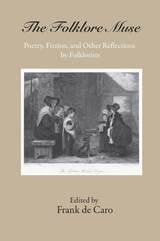
The Folklore Muse
Poetry, Fiction, and Other Reflections by FolkloristsFrank de Caro
Utah State University Press, 2008
Folklore—the inherently creative expression, transmission, and performance of cultural traditions—has always provided a deep well of material for writers, musicians, and artists of all sorts. Folklorists usually employ descriptive and analytical prose, but they, like scholars in other social sciences, have increasingly sought new, creative and reflexive modes of discourse. Many folklorists are also creative writers, some well known as such, and the folk traditions they research often provide shape and substance to their work. This collection of creative writing grounded in folklore and its study brings together some of the best examples of such writing.
Contributors to this collection include Teresa Bergen, John Burrison, Norma E. Cantu, Frank de Caro, Holly Everett, Danusha Goska, Neil R. Grobman, Carrie Hertz, Edward Hirsch, Laurel Horton, Rosan Augusta Jordan, Paul Jordan-Smith, Elaine J. Lawless, Cynthia Levee, Jens Lund, Mary Magoulick, Bernard McCarthy, Joanne B. Mulcahy, Kirin Narayan, Ted Olson, Daniel Peretti, Leslie Prosterman, Jo Radner, Susan Stewart, Jeannie Banks Thomas, Jeff Todd Titon, Libby Tucker, Margaret Yocom, and Steve Zeitlin.

The Folklore and Folklife of New Jersey
David Steven Cohen
Rutgers University Press, 1983
The Frank C. Brown Collection of NC Folklore
Vol. VII: Popular Beliefs and Superstitions from North Carolina, pt. 2Frank C. Brown
Duke University Press, 1970

The Glacier Park Reader
David Stanley
University of Utah Press, 2017
Soon after the park was established in 1910, visitors began to arrive, often with pen in hand. They included such well-known authors as mystery writer Mary Roberts Rinehart, historian Agnes C. Laut, fiction writer Dorothy Johnson, humorist Irvin S. Cobb, poet Vachel Lindsay, and artist Maynard Dixon—all featured in the book. Readers will encounter colorful characters who lived in and around the park in its early days, including railroad magnate and conservationist Louis Hill, renegade ranger and poacher Joe Cosley, bootlegger Josephine Doody, and old-time cowboy guide Jim Whilt. Blackfeet and Kalispel myths, politically charged descriptions by early explorers such as John Muir and George Bird Grinnell, and full-color reproductions of the illustrated letters of cowboy artist and Glacier resident Charles M. Russell are also included.
Copublished with the Glacier National Park Conservancy.
The Glacier National Park Conservancy preserves the Park for generations to come. Learn more about our work at www.glacier.org
Part of the National Park Reader series, edited by Lance Newman and David Stanley
The Grand Teton Reader
Robert W. Righter
University of Utah Press, 2021
Editor Robert Righter has selected thirty-five contributors whose work takes readers from the Tetons’ geological origins to the time of Euro-American encroachment and the park’s politically tumultuous creation. Selections range from Laine Thom’s Shoshone legend of the Snake River and Owen Wister’s essay “Great God! I’ve Just Killed a Bear,” to Grace Gallatin Seton-Thompson’s humorous yet fearful account of crossing the Snake River, and William Owen’s first attempt to climb the Grand Teton. Conservationists, naturalists, and environmentalists are also represented: Terry Tempest Williams chronicles her multiyear encounter with her “Range of Memory,” and Olaus and Mardy Murie recount the difficulties of “park-making” in an often-hostile human environment.
Anyone seeking a deeper understanding of the park’s wild beauty and controversial past will want to read these stories by people who lived it.
The Jealous Potter
Claude Lévi-Strauss
University of Chicago Press, 1988
"Electrifying. . . . A brilliant demonstration of structural analysis in action. . . . Can be read with pleasure and profit by anyone interested in that aspect of self-discovery that comes through knowledge of the universal and timeless myths that live on in all of us."—Jonathan Sharp, San Francisco Examiner-Chronicle
"A characteristic tour de force. . . . One remains awed by him."—Colin Thubron, Sunday Times
"With all its epistemological depth, the book reads at times like a Simenon or a Lewis Carroll, fusing concise methodology with mastery of style."—Bernadette Bucher, American Ethnologist
"[An] engagingly provocative exploration of mythology in the Americas. . . . Always a good read."—Choice
"A playful, highly entertaining book, fluently and elegantly translated by Bénédicte Chorier."—Wendy Doniger O'Flaherty, New York Times Book Review
The Last Cannibals
A South American Oral HistoryBy Ellen B. Basso
University of Texas Press, 1995
An especially comprehensive study of Brazilian Amazonian Indian history, The Last Cannibals is the first attempt to understand, through indigenous discourse, the emergence of Upper Xingú society. Drawing on oral documents recorded directly from the native language, Ellen Basso transcribes and analyzes nine traditional Kalapalo stories to offer important insights into Kalapalo historical knowledge and the performance of historical narratives within their nonliterate society.
This engaging book challenges the familiar view of biography as a strictly Western literary form. Of special interest are biographies of powerful warriors whose actions led to the emergence of a more recent social order based on restrained behaviors from an earlier time when people were said to be fierce and violent.
From these stories, Basso explores how the Kalapalo remember and understand their past and what specific linguistic, psychological, and ideological materials they employ to construct their historical consciousness. Her book will be important reading in anthropology, folklore, linguistics, and South American studies.
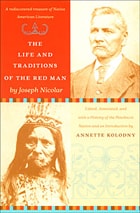
The Life and Traditions of the Red Man
A rediscovered treasure of Native American literatureJoseph Nicolar
Duke University Press, 2007
The Life and Traditions of the Red Man has not been widely available until now, largely because Nicolar passed away just a few months after the printing of the book was completed, and shortly afterwards most of the few hundred copies that had been printed were lost in a fire. This new edition has been prepared with the assistance of Nicolar’s descendants and members of the Penobscot Nation. It includes a summary history of the tribe; an introduction that illuminates the book’s narrative strategies, the aims of its author, and its key themes; and annotations providing historical context and explaining unfamiliar words and phrases. The book also contains a preface by Nicolar’s grandson, Charles Norman Shay, and an afterword by Bonnie D. Newsom, former Director of the Penobscot Nation’s Department of Cultural and Historic Preservation. The Life and Traditions of the Red Man is a remarkable narrative of Native American culture, spirituality, and literary daring.
The Lost Gold Mine of Juan Mondragón
A Legend from New Mexico performed by Melaquías RomeroEdited by Charles L. Briggs and Julián Josué Vigil
University of Arizona Press, 1990
The Marrow of Human Experience
Essays on Folklore by William A. Wilsonedited by William A. Wilson and Jill Terry Rudy
Utah State University Press, 2006
The Naked Man
Mythologiques, Volume 4Claude Lévi-Strauss
University of Chicago Press, 1990
"Lévi-Strauss uses the structural method he developed to analyze and 'decode' the mythology of native North Americans, focusing on the area west of the Rockies. . . . [The author] takes the opportunity to refute arguments against his method; his chapter 'Finale' is a defense of structural analysis as well as the closing statement of this four-volume opus which started with an 'Ouverture' in The Raw and the Cooked."—Library Journal
"The culmination of one of the major intellectual feats of our time."—Paul Stuewe, Quill and Quire

The Nehalem Tillamook
An EthnographyElizabeth D. Jacobs
Oregon State University Press, 2003
The New Book of Plots
Constructing Engaging Narratives for Oral and Written StorytellingLoren Niemi
Parkhurst Brothers, Inc., 2012
In the space of the thirty-some years I have called myself a storyteller, the balance of what I tell has shifted from children’s stories and traditional folk and fairy tales told in schools, churches, and community centers to stories drawn directly from my own experiences. But I also understand that by adapting and re-imagining traditional folk and fairy tale material, you can provide a point of entry for contemporary listeners to experience, as psychologist Bruno Bettelheim has suggested in his book The Uses of Enchantment, the continuing power of the old stories to speak to the imagination and heart.
Wanting to make a connection between the older stories and our existential circumstance, I sought to re-interpret folk and fairy tales by placing them in a more contemporary context. The confusing Black Forest of the Brothers Grimm became the crowded shopping mall. Rapunzel’s mother sought a more familiar drug than the painkilling herbs of the witch’s garden. I also created stories that were in the style of the older folk and fairy tales. One featured a lowly cucumber plant that, after consuming radioactive water and junk-food compost, became the glowing, green Godzilla of pickles. Another featured a boy named Jack, who found fame and fortune racing inner-city cockroaches.
In creating and performing original stories and reimagined folk tales, as well as teaching stories to students of all ages, it has become clear to me that how we tell the story, as much as why, is at the very heart of the art. By “how,” I do not mean how we use voice and gesture, etc., but how we organize stories to get across their meanings to an audience.
There are two central facts at the heart of the oral story. The first is that it begins when the teller begins and ends when the teller ends it, though I could argue that it actually ends when the audience dismisses it. This is fundamentally different from the written story, where a reader can go back and read the same words again. With the spoken word, we are in the moment. Even if we could ask the teller to go back and say something again, the very act of asking would alter the way in which the information is conveyed to us. This leads directly to the second basic fact: the act of telling is an expression of the relationship of the teller to the audience. We always tell to someone, even if it is to ourselves. It is incumbent upon us to recognize that the choice we make about how we tell a story to a given audience is as much about our understanding of who that audience is as it is about what we are saying to the audience.
It is this crucial understanding of how the narrative is shaped and the choices we make as tellers to share a particular version of a story with a particular audience that I wish to explore with you. Whether we are working with a live audience in performance or with an imagined one while typing away on our laptops, the creation of compelling fiction and non-fiction begins with how to frame the story.
This book is for storytellers and would-be storytellers, whether you call yourself a writer, minister, politician, journalist, lawyer, teacher, therapist, or street-corner b.s.’er. Whatever the name, the benefit you derive from the application of this material to your creative process will come from understanding how narrative is shaped and making conscious decisions about shaping that narrative content. This book was developed in workshops and classes I’ve conducted with storytellers and writers since 1986. In the course of those years, this teaching practice has refined my thinking and improved my ability to help participants discover new approaches to creating powerful, authentic, and entertaining stories.
Much of what I say will be framed around the creation of stories as oral performance, but the concepts and exercises I suggest apply to written material as well. Whether the stories are oral or written, this book is about three things: the choice of an appropriate narrative form to provide the story’s structure, the choice of an appropriate point of view and timeframe to support the story’s emotional arc, and how those choices help or hinder the transmission of the meaning of the story to an audience.
The Oral and Beyond
Doing Things with Words in AfricaRuth Finnegan
University of Chicago Press, 2007
The Oral and Beyond looks simultaneously backwards and forwards, reviewing and critiquing the achievements of scholarship on African oral literature, revisiting issues of perennial contention, and highlighting some of the most interesting new ideas and approaches in the field. Exploring such fundamental questions as how texts and textuality relate to performance, how ideology inflects language, and how traditional forms adapt to modern media and popular culture, Finnegan essentially crafts an intellectual history of her field. At the same time, she propels the ethnography of language forward, bringing the techniques and knowledge developed through her fieldwork in Africa to bear on issues that transcend African studies and reach into the larger world of anthropology and beyond.

The Origin of Table Manners
Mythologiques, Volume 3Claude Lévi-Strauss
University of Chicago Press, 1990
"An immense anthropological erudition is here wielded by one of the world's finest minds, and the myths themselves have never been taken more seriously. . . . [Lévi-Strauss] raises issues and then resolves them with the suspenseful cunning of a mystery novelist."—John Updike, New Yorker
The Origins of Russian Literary Theory
Folklore, Philology, FormJessica Merrill
Northwestern University Press, 2022
The Origins of Russian Literary Theory reconstructs lost Formalist theories of authorship, of the psychology of narrative structure, and of the social spread of poetic innovations. According to these theories, literary form is always a product of human psychology and cultural history. By recontextualizing Russian Formalism within this philological paradigm, the book highlights the aspects of Formalism’s legacy that speak to the priorities of twenty-first-century literary studies.
The Ozarks
An American Survival of Primitive SocietyVance Randolph
University of Arkansas Press, 2017
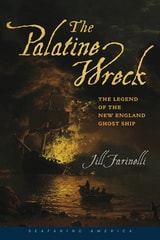
The Palatine Wreck
The Legend of the New England Ghost ShipJill Farinelli
University Press of New England, 2017
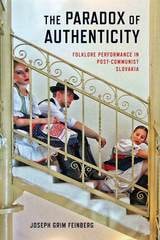
The Paradox of Authenticity
Folklore Performance in Post-Communist SlovakiaJoseph Grim Feinberg
University of Wisconsin Press, 2018
In Slovakia and elsewhere in Eastern Europe after World War II, Communist governments promoted folklore revivals and staged performances of song and dance as representations of "the people." When the Communists fell from power in Slovakia in 1989, folklore was also discredited in the eyes of many. By the early twenty-first century, however, a new generation launched a movement to revive folklore's reputation and reintroduce it to a broad public.
Weaving together personal narrative, ethnographic analysis, and philosophical reflection, Feinberg examines the aspirations and difficulties of young folk dance devotees as they recognize that authenticity is more easily prized than achieved. He sheds new light on the problems of specialized performance and broad participation, the uneasy relationship between folklore and the public sphere, and the paradoxical pursuit of authenticity in the modern world.
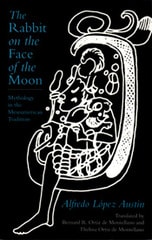
The Rabbit on the Face of the Moon
Mythology in the Mesoamerican TraditionAlfredo Lopez Austin
University of Utah Press, 1996
Eighteen essays provide an accessible, entertaining look into a system of millennia-old legends and beliefs.
Mythology is one of the great creations of humankind. It forms the core of sacred books and reflects the deepest preoccupations of human beings, their most intimate secrets, their glories, and their infamies.
In 1990, Alfredo López Austin, one of the foremost scholars of ancient Mesoamerican thought, began a series of essays about mythology in the Mesoamerican tradition, published in México Indígena. Although his articles were written for general readers, they were also intended to engage specialists. They span a divers subject matter: myths and names, eclipses, stars, left and right, Méxican origins, Aztec incantations, animals, and the incorporation of Christian elements into the living mythologies of Mexico. The title essay relates the Mesoamerican myth explaining why there is a rabbit o the moon’s face to a Buddhist image and suggests the importance of the profound mythical concepts presented by each image.
The eighteen essays in this volume are unified by their basis in Mesoamerican tradition and provide an accessible, entertaining look into a system of millennia-old legends and beliefs.
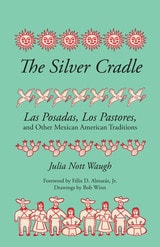
The Silver Cradle
Las Posadas, Los Pastores, and Other Mexican American TraditionsBy Julia Nott Waugh
University of Texas Press, 1955
Originally published in 1955, The Silver Cradle is the story of a year in the life of the Mexican American people of San Antonio, Texas. During the 1950s, Julia Nott Waugh recorded the performances of such seasonal and religious traditions as Las Posadas, Los Pastores, Las Calaveras, the Blessing of the Animals, the liturgical observances of Holy Week, and festivities of el diez y seis de septiembre (Mexican Independence Day), among others.
Although years have passed and many of the details of observances have changed, the festival calendar and the joy and sincerity of the Mexican American people in honoring its customs and obligations have not disappeared. Now, in fact, a much wider population shares and appreciates the pageantry preserved for us by people like Graciana Reyes, in whose prized silver cradle the Christ Child slept every year at Christmas, and like Doroteo Domínguez, whose annual devotion to presenting a thousand-year-old pastoral epic in his back yard was legendary.
Waugh has done much more than just open a window onto a charming past. She has captured for us one of the true gifts of our Mexican American heritage—the willingness to ritually celebrate the passage of time and to embellish the occasions with sensitivity and fervor. This book will appeal to the general reader as well as to those interested in folk traditions and Mexican American culture.
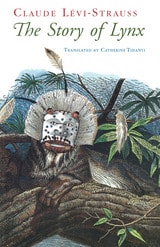
The Story of Lynx
Claude Lévi-Strauss
University of Chicago Press, 1995
So begins the Nez Percé myth that lies at the heart of The Story of Lynx, Claude Lévi-Strauss's most accessible examination of the rich mythology of American Indians. In this wide-ranging work, the master of structural anthropology considers the many variations in a story that occurs in both North and South America, but especially among the Salish-speaking peoples of the Northwest Coast. He also shows how centuries of contact with Europeans have altered the tales.
Lévi-Strauss focuses on the opposition between Wild Cat and Coyote to explore the meaning and uses of gemellarity, or twinness, in Native American culture. The concept of dual organization that these tales exemplify is one of non-equivalence: everything has an opposite or other, with which it coexists in unstable tension. In contrast, Lévi-Strauss argues, European notions of twinness—as in the myth of Castor and Pollux—stress the essential sameness of the twins. This fundamental cultural difference lay behind the fatal clash of European and Native American peoples.
The Story of Lynx addresses and clarifies all the major issues that have occupied Lévi-Strauss for decades, and is the only one of his books in which he explicitly connects history and structuralism. The result is a work that will appeal to those interested in American Indian mythology.
The Story of Stone
Intertextuality, Ancient Chinese Stone Lore, and the Stone Symbolism in <i>Dream of the Red Chamber</i>, <i>Water Margin</i>, and <i>The Journey to the West</i>Jing Wang
Duke University Press, 1992
Bringing together Chinese myth, religion, folklore, art, and literature, this book is the first in any language to amass the sources of stone myth and stone lore in Chinese culture. Uniting classical Chinese studies with contemporary Western theoretical concerns, Wang examines these stone narratives by analyzing intertextuality within Chinese traditions. She offers revelatory interpretations to long-standing critical issues, such as the paradoxical character of the monkey in The Journey to the West, the circularity of narrative logic in The Dream of the Red Chamber, and the structural necessity of the stone tablet in Water Margin.
By both challenging and incorporating traditional sinological scholarship, Wang’s The Story of Stone reveals the ideological ramifications of these three literary works on Chinese cultural history and makes the past relevant to contemporary intellectual discourse. Specialists in Chinese literature and culture, comparative literature, literary theory, and religious studies will find much of interest in this outstanding work, which is sure to become a standard reference on the subject.
The Three Nephites
Saints, Service, and Supernatural LegendJulie Swallow, Christopher James Blythe, Eric A. Eliason, and Jill Terry Rudy
University of Illinois Press, 2025
The Tongue Is Fire
South African Storytellers and ApartheidHarold E. Scheub
University of Wisconsin Press, 1996
With tape-recorder and camera in hand, Scheub registered the testaments of Swati, Xhosa, Ndebele, and Zulu storytellers, farming people who lived in the remote reaches of rural South Africa. While young people fought in the streets of Soweto and South African writers made the world aware of apartheid’s evils, the rural storytellers resisted apartheid in their own way, using myth and metaphor to preserve their traditions and confront their oppressors. For more than 20 years, Scheub kept the promise he made to the storytellers to publish his translations of their stories only when freedom came to South Africa. The Tongue Is Fire presents these voices of South African oral tradition—the historians, the poets, the epic-performers, the myth-makers—documenting their enduring faith in the power of the word to sustain tradition in the face of determined efforts to distort or eliminate it. These texts are a tribute to the storytellers who have always, in periods of crisis, exercised their art to inspire their own people.
The Uncoiling Python
South African Storytellers and ResistanceHarold Scheub
Ohio University Press, 2010
There are many collections of African oral traditions, but few as carefully organized as The Uncoiling Python. Harold Scheub, one of the world’s leading scholars of African oral traditions and folklore, explores the ways in which oral traditions have served to combat and subvert colonial domination in South Africa. From the time colonial forces first came to southern Africa in 1487, oral and written traditions have been a bulwark against what became 350 years of colonial rule, characterized by the racist policies of apartheid. The Uncoiling Python: South African Storytellers and Resistance is the first in-depth study of oral tradition as a means of survival.
In open insurrections and other subversive activities Africans resisted the daily humiliations of colonial rule, but perhaps the most effective and least apparent expression of subversion was through indigenous storytelling and poetic traditions. Harold Scheub has collected the stories and poetry of the Xhosa, Zulu, Swati, and Ndebele peoples to present a fascinating analysis of how the apparently harmless tellers of tales and creators of poetry acted as front-line soldiers.

The Village Project
Rural Revitalization in Contemporary BulgariaSarah Craycraft
University of Wisconsin Press, 2026
Since the collapse of socialism, Bulgaria’s population has been on the move—out of rural regions and into cities, or out of the country altogether. Yet today there is a countermovement of young, urban Bulgarians, born around 1989, seeking to repopulate rural villages and reclaim traditional Bulgarian folklife. Though many of these young Bulgarians have no direct experience with a rural lifestyle nor memories of thriving village life, their actions and movements are inspired by a nostalgic vision of the past. And so, beyond a spatial return, this rural revitalization movement speaks to visions of an alternate future, one sparked by dismay with the conditions of contemporary life.
Using ethnographic and folkloristic methods, Sarah Craycraft paints a complex, detailed picture of responses to Europeanization, carried out through neoliberal folklife projects as they collide with ongoing efforts to build a revitalized rural Bulgaria in the ruins of the past. Contextualized within a particular Southeast European nation, the study speaks to broader questions of rural revival, public-facing culture work, intergenerational folklore, and the imbrication of folklore with politics and culture.
The War for the Heart and Soul of a Highland Maya Town
Revised EditionBy Robert S. Carlsen, with a contribution by Martín Prechtel
University of Texas Press, 2011
This compelling ethnography explores the issue of cultural continuity and change as it has unfolded in the representative Guatemala Mayan town Santiago Atitlán. Drawing on multiple sources, Robert S. Carlsen argues that local Mayan culture survived the Spanish Conquest remarkably intact and continued to play a defining role for much of the following five centuries. He also shows how the twentieth-century consolidation of the Guatemalan state steadily eroded the capacity of the local Mayas to adapt to change and ultimately caused some factions to reject—even demonize—their own history and culture. At the same time, he explains how, after a decade of military occupation known as la violencia, Santiago Atitlán stood up in unity to the Guatemalan Army in 1990 and forced it to leave town.
This new edition looks at how Santiago Atitlán has fared since the expulsion of the army. Carlsen explains that, initially, there was hope that the renewed unity that had served the town so well would continue. He argues that such hopes have been undermined by multiple sources, often with bizarre outcomes. Among the factors he examines are the impact of transnational crime, particularly gangs with ties to Los Angeles; the rise of vigilantism and its relation to renewed religious factionalism; the related brutal murders of followers of the traditional Mayan religion; and the apocalyptic fervor underlying these events.
The White Snake
A PlayMary Zimmerman
Northwestern University Press, 2013
The Winged
An Upper Missouri River Ethno-ornithologyKaitlyn Chandler, Wendi Field Murray, María Nieves Zedeño, Samrat Clements, and Robert James
University of Arizona Press, 2017
The Missouri River Basin is home to thousands of bird species that migrate across the Great Plains of North America each year, marking the seasonal cycle and filling the air with their song. In time immemorial, Native inhabitants of this vast region established alliances with birds that helped them to connect with the gods, to learn the workings of nature, and to live well.
This book integrates published and archival sources covering archaeology, ethnohistory, historical ethnography, folklore, and interviews with elders from the Blackfoot, Assiniboine, Mandan, Hidatsa, Arikara, and Crow communities to explore how relationships between people and birds are situated in contemporary practice, and what has fostered its cultural persistence. Native principles of ecological and cosmological knowledge are brought into focus to highlight specific beliefs, practices, and concerns associated with individual bird species, bird parts, bird objects, the natural and cultural landscapes that birds and people cohabit, and the future of this ancient alliance.
Detailed descriptions critical to ethnohistorians and ethnobiologists are accompanied by thirty-four color images. A unique contribution, The Winged expands our understanding of sets of interrelated dependencies or entanglements between bird and human agents, and it steps beyond traditional scientific and anthropological distinctions between humans and animals to reveal the intricate and eminently social character of these interactions.
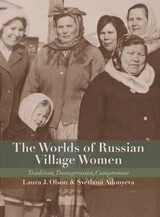
The Worlds of Russian Village Women
Tradition, Transgression, CompromiseLaura J. Olson and Svetlana Adonyeva
University of Wisconsin Press, 2012
Based upon nearly three decades of fieldwork, from 1983 to 2010, The Worlds of Russian Rural Women follows three generations of Russian women and shows how they alternately preserve, discard, and rework the cultural traditions of their forebears to suit changing needs and self-conceptions. In a major contribution to the study of folklore, Laura J. Olson and Svetlana Adonyeva document the ways that women’s tales of traditional practices associated with marriage, childbirth, and death reflect both upholding and transgression of social norms. Their romance songs, satirical ditties, and healing and harmful magic reveal the complexity of power relations in the Russian villages.
Theory and History of Folklore
Vladimir Propp
University of Minnesota Press, 1984
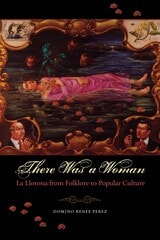
There Was a Woman
La Llorona from Folklore to Popular CultureBy Domino Renee Perez
University of Texas Press, 2008
"How is it that there are so many lloronas?" A haunting figure of Mexican oral and literary traditions, La Llorona permeates the consciousness of her folk community. From a ghost who haunts the riverbank to a murderous mother condemned to wander the earth after killing her own children in an act of revenge or grief, the Weeping Woman has evolved within Chican@ imaginations across centuries, yet no truly comprehensive examination of her impact existed until now. Tracing La Llorona from ancient oral tradition to her appearance in contemporary material culture, There Was a Woman delves into the intriguing transformations of this provocative icon.
From La Llorona's roots in legend to the revisions of her story and her exaltation as a symbol of resistance, Domino Renee Perez illuminates her many permutations as seductress, hag, demon, or pitiful woman. Perez draws on more than two hundred artifacts to provide vivid representations of the ways in which these perceived identities are woven from abstract notions—such as morality or nationalism—and from concrete, often misunderstood concepts from advertising to television and literature. The result is a rich and intricate survey of a powerful figure who continues to be reconfigured.
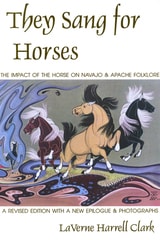
They Sang for Horses
The Impact of the Horse on Navajo and Apache FolkloreLaVerne Harrell Clark
University Press of Colorado, 2001
No Native American groups placed more emphasis on the horse in their lives than did the Navajo and Apache of the Southwest. They Sang for Horses, first published in 1966 and now considered a classic, remains the only comprehensive treatment of the profound mystical influence that the horse has exerted for more than 300 years.
In this completely redesigned and expanded edition, LaVerne Harrell Clark examines how storytellers, singers, medicine men, and painters created the animal's evolving symbolic significance by adapting existing folklore and cultural symbols. Exploring the horse's importance in ceremonies, songs, prayers, customs, and beliefs, she investigates the period of the horse's most pronounced cultural impact on the Navajo and the Apache, starting from the time of its acquisition from the Spanish in the seventeenth century and continuing to the mid-1960s, when the pickup truck began to replace it as the favored means of transportation. In addition, she presents a look at how Navajos and Apaches today continue to redefine the horse's important role in their spiritual as well as material lives.
This classic work is a must for historians, readers interested in Native American folklore and mythology, and anyone who has ever been captivated by the magic and romance of the horse.
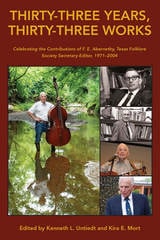
Thirty-three Years, Thirty-three Works
Celebrating the Contributions of F.E. Abernethy, Texas Folklore Society Secretary-Editor, 1971-2004Kenneth L. Untiedt
University of North Texas Press, 2016
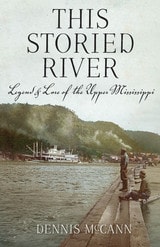
This Storied River
Legend & Lore of the Upper MississippiDennis McCann
Wisconsin Historical Society Press, 2017
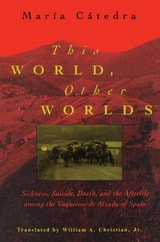
This World, Other Worlds
Sickness, Suicide, Death, and the Afterlife among the Vaqueiros de Alzada of SpainMaría Cátedra
University of Chicago Press, 1992
Applying sensitive ethnographic insight to a rich body of oral testimony, Cátedra discloses an unsuspected symbolic universe native to the Vaqueiros. Death is seen here in close, coherent relation to pain, age, and suffering; sickness and suicide, one must understand the cultural valuation of different ways of dying and the conditions under which suicides take place. To understand what it means to be a Vaqueiro is to understand how suicide can be perceived by a people as acceptable.
A groundbreaking work in European ethnography, This World, Other Worlds takes symbolic analysis to a new level. In its illumination of local conceptions of death, grace, and sainthood, the book also makes a substantial contribution to the anthropology of religion.