Results by title
511 books match the query 'Government policy' and 100 start with t
Targeting Investments in Children
Fighting Poverty When Resources Are LimitedEdited by Phillip B. Levine and David J. Zimmerman
University of Chicago Press, 2010
A substantial number of American children experience poverty: about 17 percent of those under the age of eighteen meet the government’s definition, and the proportion is even greater within minority groups. Childhood poverty can have lifelong effects, resulting in poor educational, labor market, and physical and mental health outcomes for adults. These problems have long been recognized, and there are numerous programs designed to alleviate or even eliminate poverty; as these programs compete for scarce resources, it is important to develop a clear view of their impact as tools for poverty alleviation.
Targeting Investments in Children tackles the problem of evaluating these programs by examining them using a common metric: their impact on earnings in adulthood. The volume’s contributors explore a variety of issues, such as the effect of interventions targeted at children of different ages, and study a range of programs, including child care, after-school care, and drug prevention. The results will be invaluable to educational leaders and researchers as well as policy makers.
Technologies of Suspicion and the Ethics of Obligation in Political Asylum
Bridget M. Haas
Ohio University Press, 2019
Across the globe, migration has been met with intensifying modes of criminalization and securitization, and claims for political asylum are increasingly met with suspicion. Asylum seekers have become the focus of global debates surrounding humanitarian obligations, on the one hand, and concerns surrounding national security and border control, on the other. In Technologies of Suspicion and the Ethics of Obligation in Political Asylum, contributors provide fine-tuned analyses of political asylum systems and the adjudication of asylum claims across a range of sociocultural and geopolitical contexts.
The contributors to this timely volume, drawing on a variety of theoretical perspectives, offer critical insights into the processes by which tensions between humanitarianism and security are negotiated at the local level, often with negative consequences for asylum seekers. By investigating how a politics of suspicion within asylum systems is enacted in everyday practices and interactions, the authors illustrate how asylum seekers are often produced as suspicious subjects by the very systems to which they appeal for protection.
Contributors: Ilil Benjamin, Carol Bohmer, Nadia El-Shaarawi, Bridget M. Haas, John Beard Haviland, Marco Jacquemet, Benjamin N. Lawrance, Rachel Lewis, Sara McKinnon, Amy Shuman, Charles Watters

Technology in American Health Care
Policy Directions for Effective Evaluation and ManagementAlan B. Cohen and Ruth S. Hanft, with William E. Encinosa, Stephanie M. Spernak, Shirley A. Stewart, and Catherine C. White
University of Michigan Press, 2004
---The World Future Society, Best Books and Reports
"This excellent book provides a broad overview of the development, impact, and evaluation of health technology in the United States. . . .The authors take a well-organized and thorough approach to address these topics, combining reviews of each with case examples of particular technologies. . . .Given the broad scope of the book, it could serve as a text for students, an introduction to the field for healthcare professionals, or a tool for academics and policymakers wishing to fill knowledge gaps outside their disciplines. . . .The book makes a compelling case for the logic and potential benefits of medical technology evaluation as a tool for improving health care."
---Journal of the American Medical Association
"By being comprehensive in their review, the authors chart a clear path to understanding the future of health care technology in America. They clarify the technical methods for evaluation and provide insight into the sociopolitical aspects of development and diffusion. Case studies are informative. Excellent reading for students and health professionals either as a textbook or as an off-the-shelf guide to methods for deciding among alternative technologies."
---Norman W. Weissman, University of Alabama
"Technology today dominates every aspect of health care. This useful book offers a diverse range of perspectives for students, professors, and medical practitioners who wish to understand how to evaluate medical technology."
---Joel Howell, University of Michigan Medical School
Technology in American Health Care is a comprehensive, multidisciplinary guide to understanding how medical advances-new drugs, biological devices, and surgical procedures-are developed, brought to market, evaluated, and adopted into health care.
Cost-effective delivery of evidence-based health care is the sine qua non of American medicine in the twenty-first century. Health care decision makers, providers, payers, policymakers, and consumers all need vital information about the risks, benefits, and costs of new technologies in order to make informed decisions about which ones to adopt and how to use them. Alan B. Cohen and Ruth S. Hanft explore the evolving field of medical technology evaluation (MTE), as well as the current controversies surrounding the evaluation and diffusion of medical technologies, including the methods employed in their assessment and the policies that govern their adoption and use.
The book opens with an introduction that provides basic definitions and the history of technological change in American medicine, and a second chapter that explores critical questions regarding medical technology in health care. Part I discusses biomedical innovation, the development and diffusion of medical technology, and the adoption and use of technology by hospitals, physicians, and other health care organizations and professions under changing health care market conditions. Part II examines the methods of MTE-including randomized controlled trials, meta-analyses, economic evaluation methods (such as cost-benefit, cost-effectiveness, and cost-utility analyses), and clinical decision analysis. Part III focuses on key public policy issues and concerns that affect the organization, financing, and delivery of health care and that relate importantly to medical technology, including safety, efficacy, quality, cost, access, equity, social, ethical, legal, and evaluation concerns. All three parts of the book provide a historical perspective on the relevant issues, methods, and policy concerns and contain examples of technologies whose development, adoption, evaluation, and use have contributed to our understanding of the field.
This book will be invaluable in making MTE more accessible to individuals who are directly involved in the evaluation process and those who are touched by it in their professional lives-policymakers, clinicians, managers, and researchers.

Tell
Love, Defiance, and the Military Trial at the Tipping Point for Gay RightsMajor Margaret Witt
University Press of New England, 2017
Ten Years After
A History of Roma School Desegregation in Central and Eastern EuropeIulius Rostas
Central European University Press, 2012

Terrorism
The Self-Fulfilling ProphecyJoseba Zulaika
University of Chicago Press, 2009
In counterterrorism circles, the standard response to questions about the possibility of future attacks is the terse one-liner: “Not if, but when.” This mantra supposedly conveys a realistic approach to the problem, but, as Joseba Zulaika argues in Terrorism, it functions as a self-fulfilling prophecy. By distorting reality to fit their own worldview, the architects of the War on Terror prompt the behavior they seek to prevent—a twisted logic that has already played out horrifically in Iraq. In short, Zulaika contends, counterterrorism has become pivotal in promoting terrorism.
Exploring the blind spots of counterterrorist doctrine, Zulaika takes readers on a remarkable intellectual journey. He contrasts the psychological insight of Truman Capote’s In Cold Blood with The 9/11 Commission Report, plumbs the mindset of terrorists in works by Orianna Fallaci and Jean Genet, maps the continuities between the cold war and the fight against terrorism, and analyzes the case of a Basque terrorist who tried to return to civilian life. Zulaika’s argument is powerful, inventive, and rich with insights and ideas that provide a new and sophisticated perspective on the War on Terror.
Terrorizing Latina/o Immigrants
Race, Gender, and Immigration Policy Post-9/11Anna Sampaio
Temple University Press, 2015
Immigration politics has been significantly altered by the advent of America’s war on terror and the proliferation of security measures. In her cogent study, Terrorizing Latina/o Immigrants, Anna Sampaio examines how these processes are racialized and gendered and how they impose inequitable burdens on Latina/o immigrants. She interrogates the rise of securitization, restrictive legislation, and the return of large-scale immigration raids and describes how these re-articulate and re-inscribe forms of racial and gender hierarchy.
Terrorizing Latina/o Immigrants demonstrates how the ascendance of America as a security state serves as a template to scrutinize, harass, and encumber immigrants while also reconfiguring citizenship. Sampaio uses intersectional analysis coupled with theoretical and empirical approaches to develop a critical framework for analyzing current immigration politics.
Sampaio provides a sustained and systematic examination of policy and enforcement shifts impacting Latinas/os. Her book concludes with an examination of immigration reform under the Obama administration, contrasting the promise of hope and change with the reality of increased detentions, deportations, and continued marginalization.

The Aztec Palimpsest
Mexico in the Modern ImaginationDaniel Cooper Alarcón
University of Arizona Press, 1997
He shows how the Chicano myth of Aztlan was constructed upon earlier Mesoamerican myths, discusses representations of Mexico in texts by nineteenth- and twentieth-century writers, and analyzes the content of tourist literature, thereby revealing the economic, social, and political interests that drive the production of Mexicanness today. This original linking of seemingly incongruous discourses corrects the misconception that Mexicanness is produced only by hegemonic groups. Cooper shows how Mexico has been defined and represented, by both Mexicans and non-Mexicans, as more than a political or geographic entity, and he particularly reveals how Mexicanness has been exploited by Mexicans themselves through the promotion of tourism as a form of neocolonialism.
Cooper's work is valuable both for identifying attempts to revise and control Mexican myth, history, and culture and for defining the intricate relationship between history, historiography, and cultural nationalism. The Aztec Palimpsest extends existing analyses of Mexicanness into new theoretical realms and provides a fresh perspective on the relationship between the United States and Mexico at a time when these two nations are becoming more intimately linked.
The Banality of Good
The UN's Global Fight against Human TraffickingLieba Faier
Duke University Press, 2024
The Battle to Stay in America
Immigration's Hidden Front LineMichael Kagan
University of Nevada Press, 2025
The Battle to Stay in America is the story of a community coming to grips with the federal government’s crackdown on immigrants, and learning how to defend itself. Informative and personal, this is a story about mothers and fathers, lawyers and activists, local police and federal agencies, and a struggle for the identity of a nation. This is the quintessential story of the war on immigrants, as fought and felt on the front lines in the heart of America.
The Biopolitics of Disability
Neoliberalism, Ablenationalism, and Peripheral EmbodimentDavid T. Mitchell with Sharon L. Snyder
University of Michigan Press, 2015

The Black Reproductive
Unfree Labor and Insurgent MotherhoodSara Clarke Kaplan
University of Minnesota Press, 2021
How Black women’s reproduction became integral to white supremacy, capitalism, and heteropatriarchy—and remains key to their dismantling
In the United States, slavery relied on the reproduction and other labors of unfree Black women. Nearly four centuries later, Black reproductivity remains a vital technology for the creation, negotiation, and transformation of sexualized and gendered racial categories. Yet even as Black reproduction has been deployed to resolve the conflicting demands of white supremacy, capitalism, and heteropatriarchy, Sara Clarke Kaplan argues that it also holds the potential to destabilize the oppressive systems it is supposed to maintain.
The Black Reproductive convenes Black literary and cultural studies with feminist and queer theory to read twentieth- and twenty-first-century texts and images alongside their pre-emancipation counterparts. These provocative, unexpected couplings include how Toni Morrison’s depiction of infanticide regenders Orlando Patterson’s theory of social death, and how Mary Prince’s eighteenth-century fugitive slave narrative is resignified through the representational paradoxes of Gayl Jones’s blues novel Corregidora. Throughout, Kaplan offers new perspectives on Black motherhood and gendered labor, from debates over the relationship between President Thomas Jefferson and Sally Hemings, to the demise of racist icon Aunt Jemima, to discussions of Black reproductive freedom and abortion.
The Black Reproductive gives vital insight into the historic and ongoing conditions of Black unfreedom, and points to the possibilities for a Black feminist practice of individual and collective freedom.
The Border Within
The Economics of Immigration in an Age of FearTara Watson and Kalee Thompson
University of Chicago Press, 2021
For decades, immigration has been one of the most divisive, contentious topics in American politics. And for decades, urgent calls for its policy reform have gone mostly unanswered. As the discord surrounding the modern immigration debate has intensified, border enforcement has tightened. Crossing harsher, less porous borders makes unauthorized entry to the United States a permanent, costly undertaking. And the challenges don’t end on the other side.
At once enlightening and devastating, The Border Within examines the costs and ends of America’s interior enforcement—the policies and agencies, including ICE, aimed at removing immigrants already living in the country. Economist Tara Watson and journalist Kalee Thompson pair rigorous analysis with deeply personal stories from immigrants and their families to assess immigration’s effects on every aspect of American life, from the labor force to social welfare programs to tax revenue. What emerges is a critical, utterly complete examination of what non-native Americans bring to the country, including immigration’s tendency to elevate the wages and skills of those who are native-born.
News coverage has prompted many to question the humanity of American immigration policies; The Border Within opens a conversation of whether it is effective. The United States spends billions each year on detention and deportation, all without economic gain and at a great human cost. With depth and discipline, the authors dissect the shock-and-awe policies that make up a broken, often cruel system, while illuminating the lives caught in the chaos. It is an essential work with far-reaching implications for immigrants and non-immigrants alike.
The Borders of America
Migration, Control, and Resistance Across Latin America and the CaribbeanSoledad Álvarez Velasco, Nicholas De Genova, Gustavo Dias, and Eduardo Domenech, editors
Duke University Press, 2026
Contributors. Soledad Álvarez Velasco, Tanya Basok, Janneth Clavijo, Nicholas De Genova, Gustavo Dias, Eduardo Domenech, Roberto Dufraix-Tapia, Jonathan Echeverri Zuluaga, Valentina Glockner Fagetti, Luin Goldring, Patricia Landolt, Carolina Moulin, Margarita Luz Núñez Chaim, Juan Ordóñez, Daniel Quinteros, Romina Ramos, Martha Rojas-Wiesner, Fabio Santos, Amarela Varela-Huerta, and Laura Velasco Ortiz
The Borders of Responsibility
Migration Control in the Mediterranean SeaKiri Olivia Santer
Duke University Press, 2026
The Causes and Consequences of Antitrust
The Public-Choice PerspectiveEdited by Fred S. McChesney and William F. Shughart II
University of Chicago Press, 1995
The contributors are Peter Asch, George Bittlingmayer, Donald J. Boudreaux, Malcolm B. Coate, Louis De Alessi, Thomas J. DiLorenzo, B. Epsen Eckbo, Robert B. Ekelund, Jr., Roger L. Faith, Richard S. Higgins, William E. Kovacic, Donald R. Leavens, William F. Long, Fred S. McChesney, Mike McDonald, Stephen Parker, Richard A. Posner, Paul H. Rubin, Richard Schramm, Joseph J. Seneca, William F. Shughart II, Jon Silverman, George J. Stigler, Robert D. Tollison, Charlie M. Weir, Peggy Wier, and Bruce Yandle.
The Chinese in Mexico, 1882-1940
By Robert Chao Romero
University of Arizona Press, 2010
Robert Romero argues that Chinese immigrants turned to Mexico as a new land of economic opportunity after the passage of the U.S. Chinese Exclusion Act of 1882. As a consequence of this legislation, Romero claims, Chinese immigrants journeyed to Mexico in order to gain illicit entry into the United States and in search of employment opportunities within Mexico’s developing economy. Romero details the development, after 1882, of the “Chinese transnational commercial orbit,” a network encompassing China, Latin America, Canada, and the Caribbean, shaped and traveled by entrepreneurial Chinese pursuing commercial opportunities in human smuggling, labor contracting, wholesale merchandising, and small-scale trade.
Romero’s study is based on a wide array of Mexican and U.S. archival sources. It draws from such quantitative and qualitative sources as oral histories, census records, consular reports, INS interviews, and legal documents. Two sources, used for the first time in this kind of study, provide a comprehensive sociological and historical window into the lives of Chinese immigrants in Mexico during these years: the Chinese Exclusion Act case files of the U.S. Immigration and Naturalization Service and the 1930 Mexican municipal census manuscripts. From these documents, Romero crafts a vividly personal and compelling story of individual lives caught in an extensive network of early transnationalism.

The Collected Works of William Howard Taft, Volume V
Popular Government and The Anti-trust Act and the Supreme CourtDavid H. Burton
Ohio University Press, 2003
The fifth volume of The Complete Works of William Howard Taft presents two publications Taft wrote as Kent Professor of Constitutional Law at Yale University, the position he assumed in 1913 after he was defeated in his bid for re-election as U.S. president. The first, Popular Government, was prepared for a series of lectures, but was motivated by Taft’s passion over the issue of constitutional interpretation, which had been hotly contested during the campaign. Organized around the preamble of the Constitution, the lectures and later the book were opportunities for Taft to restate his opposition to the direct democracy movement and to reveal the workings of a conservative mind.
In the second, The Anti-trust Act and the Supreme Court, Taft articulates his position in the ongoing debate over the conventional nineteenth-century notion of “laissez faire” and the provisions of the Sherman Antitrust Act. Taft had pursued a policy of vigorous antitrust enforcement during his presidency. In this book he intended to demonstrate that restraint of trade was part of the common law, thereby arguing to good effect in favor of reasonable restraint of trade in his own time.
Taft's careful distinction between predatory monopolistic practices and the reasonable business practices of well-behaved corporations continues to inform today's chambers of government.
The Consequences of Counterterrorism
Martha Crenshaw
Russell Sage Foundation, 2010

The Corporation That Changed the World
How the East India Company Shaped the Modern MultinationalNick Robins
Pluto Press, 2012
"Elegantly written and sharply argued, Nick Robins' gripping account of the rise and fall of the English East India Company brings to life a crucial episode in the history of globalization."—Sankar Muthu, University of Chicago
The English East India Company was the mother of the modern multinational. Its trading empire encircled the globe, importing Asian luxuries such as spices, textiles, and teas. But it also conquered much of India with its private army and broke open China's markets with opium. The Company's practices shocked its contemporaries and still reverberate today, offering lessons about unfettered capitalism, corporate responsibility, and the legacy of colonialism.
The Corporation That Changed the World is the first book to reveal the Company's enduring legacy as a corporation. This expanded edition explores how the four forces of scale, technology, finance, and regulation drove its spectacular rise and fall. For decades, the Company was simply too big to fail, and stock market bubbles, famines, drug-running, and even duels between rival executives are to be found in this new account.
Table of Contents:
Introduction
Chronology
1 The Hidden Wound
2 The Imperious Company
3 Out of the Shadows
4 The Bengal Revolution
5 The Great East Indian Crash
6 Regulating the Company
7 Justice Will Be Done
8 The Toxic Exchange
10 The Unfettered Business
Epilogue
For Robins, the Company's story provides vital lessons on both the role of corporations in world history and the steps required to make global business accountable today.
The Costs and Benefits of Price Stability
Edited by Martin Feldstein
University of Chicago Press, 1999
In a seminal article published in 1997, Martin Feldstein developed a framework for calculating the gains in economic welfare that might result from a move from a low level of inflation to full price stability. The present volume extends that analysis, focusing on the likely costs and benefits of achieving price stability not only in the United States, but in Germany, Spain, and the United Kingdom as well. The results show that even small changes in already low inflation rates can have a substantial impact on the economic performance of different countries, and that variations in national tax rules can affect the level of gain from disinflation.
The Cultivation of Whiteness
Science, Health, and Racial Destiny in AustraliaWarwick Anderson
Duke University Press, 2006
“[Anderson] writes with passion, wit, and panache, and the principal virtues of The Cultivation of Whiteness are the old-fashioned ones of thoroughness, accuracy, and impeccable documentation. . . . [His] sensitive study is a model of how contentious historical issues can be confronted.”—W. F. Bynum, Times Literary Supplement
“One of the virtues of The Cultivation of Whiteness is that it brings together aspects of Australian life and history that are now more often separated—race and environment, blood and soil, medicine and geography, tropical science and urban health, biological thought and national policy, Aboriginality and immigration, the body and the mind. The result is a rich and subtle history of ideas that is both intellectual and organic, and that vividly evokes past states of mind and their lingering, haunting power.”—Tom Griffiths, Sydney Morning Herald
The Cunning of Gender Violence
Geopolitics and FeminismLila Abu-Lughod, Rema Hammami, and Nadera Shalhoub-Kevorkian, editors
Duke University Press, 2023
Contributors. Lila Abu-Lughod, Nina Berman, Inderpal Grewal, Rema Hammami, Janet R. Jakobsen, Shenila Khoja-Moolji, Vasuki Nesiah, Samira Shackle, Sima Shakhsari, Nadera Shalhoub-Kevorkian, Dina M Siddiqi, Shahla Talebi, Leti Volpp, Rafia Zakaria
The Dance That Makes You Vanish
Cultural Reconstruction in Post-Genocide IndonesiaRachmi Diyah Larasati
University of Minnesota Press, 2013
Indonesian court dance, a purportedly pure and untouched tradition, is famed throughout the world for its sublime calm and stillness. Yet this unyieldingly peaceful surface conceals a time of political repression and mass killing. Between 1965 and 1966, some one million Indonesians—including a large percentage of the country’s musicians, artists, and dancers—were killed, arrested, or disappeared as Suharto established a virtual dictatorship that ruled for the next thirty years.
In The Dance That Makes You Vanish, an examination of the relationship between female dancers and the Indonesian state since 1965, Rachmi Diyah Larasati elucidates the Suharto regime’s dual-edged strategy: persecuting and killing performers perceived as communist or left leaning while simultaneously producing and deploying “replicas”—new bodies trained to standardize and unify the “unruly” movements and voices of those vanished—as idealized representatives of Indonesia’s cultural elegance and composure in bowing to autocratic rule. Analyzing this history, Larasati shows how the Suharto regime’s obsessive attempts to control and harness Indonesian dance for its own political ends have functioned as both smoke screen and smoke signal, inadvertently drawing attention to the site of state violence and criminality by constantly pointing out the “perfection” of the mask that covers it.
Reflecting on her own experiences as an Indonesian national troupe dancer from a family of persecuted female dancers and activists, Larasati brings to life a powerful, multifaceted investigation of the pervasive use of culture as a vehicle for state repression and the global mass-marketing of national identity.
The Darién Gap
A Reporter's Journey through the Deadly Crossroads of the AmericasBelén Fernández
Rutgers University Press, 2025
The narrow Darién Gap, the only land bridge connecting South and Central America, encompasses a spectacularly hostile jungle, covered in steep mountains, dense rainforests, and flood-prone marshes. Known in Spanish as el infierno verde, or “the green hell,” it is one of the most inhospitable places in the world. Its terrain is too treacherous for roads, yet hundreds of thousands of refuge seekers contend with its horrors every year in the hopes of reaching the United States, still some three thousand miles away. And of the countless who set out for the border, an untold number never arrive.
In this book, journalist Belén Fernández travels through the Darién Gap to report on the dehumanizing and deadly stretch of land that has become a mass graveyard for migrants. Fernández’s journey brings her into contact with refuge seekers, people smugglers, law enforcement officials, and many more whose stories bring life to a place overwhelmingly associated with death. Combining history, on-the-ground reporting, travelogue, memoir, and searing politico-economic analysis, she shines light on a largely made-in-the-USA crisis that has come to define our modern era.
Engrossing and heartrending, The Darién Gap is a poignant and compassionate indictment of structural inequality and institutionalized inhumanity in a world where the have-nots must risk death for a chance at a better life—or any life at all.
The DeMarco Factor
Transforming Public Will into Political PowerMichael Pertschuk
Vanderbilt University Press, 2010
DeMarco's unique strategic template, developed over two decades of serial campaigning, includes momentum-building stages over a multiyear campaign; unrelenting, skillful access to the media for engaging public support; coalitions of hundreds, even thousands, of faith, community, labor, public health, and business groups; and a hard press on candidates to support legislation before elections, rather than after they are comfortably in office. As an organizer/leader, Demarco also succeeds in his campaigns through force of personality: his unquenchable exuberance and idiosyncrasies delight and madden his opponents--sometimes his allies, too.
Michael Pertschuk, himself a veteran advocate, here chronicles three of DeMarco's campaigns, each facing a different obstacle course. His deep analysis draws out strategic and leadership lessons that engaged citizens and advocates for popular causes stonewalled by powerful lobbies can put to immediate and practical use.
The Death of Asylum
Hidden Geographies of the Enforcement ArchipelagoAlison Mountz
University of Minnesota Press, 2020
Investigating the global system of detention centers that imprison asylum seekers and conceal persistent human rights violations
Remote detention centers confine tens of thousands of refugees, asylum seekers, and undocumented immigrants around the world, operating in a legal gray area that hides terrible human rights abuses from the international community. Built to temporarily house eight hundred migrants in transit, the immigrant “reception center” on the Italian island of Lampedusa has held thousands of North African refugees under inhumane conditions for weeks on end. Australia’s use of Christmas Island as a detention center for asylum seekers has enabled successive governments to imprison migrants from Asia and Africa, including the Sudanese human rights activist Abdul Aziz Muhamat, held there for five years.
In The Death of Asylum, Alison Mountz traces the global chain of remote sites used by states of the Global North to confine migrants fleeing violence and poverty, using cruel measures that, if unchecked, will lead to the death of asylum as an ethical ideal. Through unprecedented access to offshore detention centers and immigrant-processing facilities, Mountz illustrates how authorities in the United States, the European Union, and Australia have created a new and shadowy geopolitical formation allowing them to externalize their borders to distant islands where harsh treatment and deadly force deprive migrants of basic human rights.
Mountz details how states use the geographic inaccessibility of places like Christmas Island, almost a thousand miles off the Australian mainland, to isolate asylum seekers far from the scrutiny of humanitarian NGOs, human rights groups, journalists, and their own citizens. By focusing on borderlands and spaces of transit between regions, The Death of Asylum shows how remote detention centers effectively curtail the basic human right to seek asylum, forcing refugees to take more dangerous risks to escape war, famine, and oppression.
The Design and Implementation of US Climate Policy
Edited by Don Fullerton and Catherine D. Wolfram
University of Chicago Press, 2012

The Dimensions of Federalism
State Governments and Pollution Control PoliciesWilliam R. Lowry
Duke University Press, 1991
The Dying Sahara
US Imperialism and Terror in AfricaJeremy Keenan
Pluto Press, 2013
In The Dark Sahara (Pluto, 2009), Jeremy Keenan exposed the collusion between the US and Algeria in fabricating terrorism to justify a new ‘Saharan front’ in Washington’s War on Terror. Now, in The Dying Sahara, he reveals how the designation of the region as a ‘Terror Zone’ has destroyed the lives and livelihoods of thousands of innocent people.
Beginning in 2004, with what local people called the US ‘invasion’ of the Sahel, The Dying Sahara shows how repressive, authoritarian regimes - cashing in on US terrorism ‘rents’ - provoked Tuareg rebellions in both Niger and Mali. Further, he argues that US activity has unleashed a new, narco-trafficking branch of Al-Qaeda.
Keenan's chillingly detailed research shows that the US and its new combatant African command (AFRICOM) have created instability in a region the size of western Europe.
The Economic Sociology of Immigration
Essays on Networks, Ethnicity, and EntrepreneurshipAlejandro Portes
Russell Sage Foundation, 1995
The Environmental Politics and Policy of Western Public Lands
Erika Allen Wolters
Oregon State University Press, 2020
While a number of scholars work on the politics and policy of public land management, there has been no central book on the topic since the publication of Charles Davis's Western Public Lands and Environmental Politics (Westview, 2001). In The Environmental Politics and Policy of Western Public Lands, Erika Allen Wolters and Brent Steel have assembled a stellar cast of scholars to consider long-standing issues and topics such as endangered species, land use, and water management while addressing more recent challenges to western public lands like renewable energy siting, fracking, Native American sovereignty, and land use rebellions. Chapters also address the impact of climate change on policy dimensions and scope.
The Evolution of Retirement
An American Economic History, 1880-1990Dora L. Costa
University of Chicago Press, 1998

The Fixer
Visa Lottery ChroniclesCharles Piot with Kodjo Nicolas Batema
Duke University Press, 2019

The Fundamental Institution
Poverty, Social Welfare, and Agriculture in American Poor FarmsMegan Birk
University of Illinois Press, 2022
In-depth and innovative, The Fundamental Institution offers an overdue portrait of rural social welfare in the United States.

The Great Texas Wind Rush
How George Bush, Ann Richards, and a Bunch of Tinkerers Helped the Oil and Gas State Win the Race to Wind PowerBy Kate Galbraith and Asher Price
University of Texas Press, 2013
In the late 1990s, West Texas was full of rundown towns and pumpjacks, aging reminders of the oil rush of an earlier era. Today, the towns are thriving as 300-foot-tall wind turbines tower above those pumpjacks. Wind energy has become Texas’s latest boom, with the Lone Star State now leading the nation. How did this dramatic transformation happen in a place that fights federal environmental policies at every turn? In The Great Texas Wind Rush, environmental reporters Kate Galbraith and Asher Price tell the compelling story of a group of unlikely dreamers and innovators, politicos and profiteers.
The tale spans a generation and more, and it begins with the early wind pioneers, precocious idealists who saw opportunity after the 1970s oil crisis. Operating in an economy accustomed to exploiting natural resources and always looking for the next big thing, their ideas eventually led to surprising partnerships between entrepreneurs and environmentalists, as everyone from Enron executives to T. Boone Pickens, as well as Ann Richards, George W. Bush and Rick Perry, ended up backing the new technology. In this down-to-earth account, the authors explain the policies and science that propelled the “windcatters” to reap the great harvest of Texas wind. They also explore what the future holds for this relentless resource that is changing the face of Texas energy.
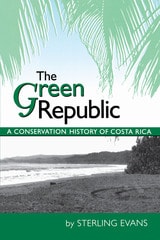
The Green Republic
A Conservation History of Costa RicaBy Sterling Evans
University of Texas Press, 1999
With over 25 percent of its land set aside in national parks and other protected areas, Costa Rica is renowned worldwide as "the green republic." In this very readable history of conservation in Costa Rica, Sterling Evans explores the establishment of the country's national park system as a response to the rapid destruction of its tropical ecosystems due to the expansion of export-related agriculture.
Drawing on interviews with key players in the conservation movement, as well as archival research, Evans traces the emergence of a conservation ethic among Costa Ricans and the tangible forms it has taken. In Part I, he describes the development of the national park system and "the grand contradiction" that conservation occurred simultaneously with massive deforestation in unprotected areas. In Part II, he examines other aspects of Costa Rica's conservation experience, including the important roles played by environmental education and nongovernmental organizations, campesino and indigenous movements, ecotourism, and the work of the National Biodiversity Institute.
The Guantanamo Files
The Stories of the 774 Detainees in America's Illegal PrisonAndy Worthington
Pluto Press, 2007
Deprived of the safeguards of the Geneva Conventions, and, for the most part, sold to the Americans by their allies in Afghanistan and Pakistan, the detainees have struggled for five years to have their stories heard. Looking in detail at the circumstances of their capture, and at the coercive interrogations and unsubstantiated allegations that have been used to justify their detention. Stories of torture in Afghanistan and Guantanamo are uncovered, as well as new information about the process of 'extraordinary rendition' that underpins the US administration's 'war on terror'.
Who will speak for the 773 men who have been held in Guantanamo? This passionate and brilliantly detailed book brings their stories to the world for the first time.
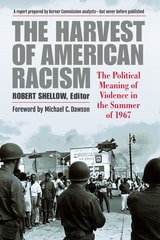
The Harvest of American Racism
The Political Meaning of Violence in the Summer of 1967Robert Shellow
University of Michigan Press, 2018
In the summer of 1967, in response to violent demonstrations that rocked 164 U.S. cities, the National Advisory Commission on Civil Disorders, a.k.a. the Kerner Commission, was formed. The Commission sought reasons for the disturbances, including the role that law enforcement played. Chief among its research projects was a study of 23 American cities, headed by social psychologist Robert Shellow. An early draft of the scientists’ analysis, titled “The Harvest of American Racism: The Political Meaning of Violence in the Summer of 1967,” provoked the Commission’s staff in November 1967 by uncovering political causes for the unrest; the team of researchers was fired, and the controversial report remained buried at the LBJ Presidential Library until now.
The first publication of the Harvest report half a century later reveals that many of the issues it describes are still with us, including how cities might more effectively and humanely react to groups and communities in protest. In addition to the complete text of the suppressed Harvest report, the book includes an introduction by Robert Shellow that provides useful historical context; personal recollections from four of the report’s surviving social scientists, Robert Shellow, David Boesel, Gary T. Marx, and David O. Sears; and an appendix outlining the differences between the unpublished Harvest analysis and the well-known Kerner Commission Report that followed it.
“The [Harvest of American Racism] report was rejected by Johnson administration functionaries as being far too radical—politically ‘unviable’… Social science can play an extremely positive role in fighting racial and other injustice and inequality, but only if it is matched with a powerful political will to implement the findings. That will has never come from within an American presidential administration—that will has only been forged in black and other radical communities’ movements for justice. The political power for change, as incremental as it has been, has come from within those communities. Washington responds, it does not lead."
—from the Foreword by Michael C. Dawson
The Huddled Masses Myth
Immigration And Civil RightsKevin R. Johnson
Temple University Press, 2003
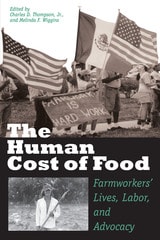
The Human Cost of Food
Farmworkers' Lives, Labor, and AdvocacyEdited by Charles D. Thompson, Jr., and Melinda F. Wiggins
University of Texas Press, 2002
Finding fresh fruits and vegetables is as easy as going to the grocery store for most Americans—which makes it all too easy to forget that our food is cultivated, harvested, and packaged by farmworkers who labor for less pay, fewer benefits, and under more dangerous conditions than workers in almost any other sector of the U.S. economy. Seeking to end the public's ignorance and improve workers' living and working conditions, this book addresses the major factors that affect farmworkers' lives while offering practical strategies for action on farmworker issues.
The contributors to this book are all farmworker advocates—student and community activists and farmworkers themselves. Focusing on workers in the Southeast United States, a previously understudied region, they cover a range of issues, from labor organizing, to the rise of agribusiness, to current health, educational, and legal challenges faced by farmworkers. The authors blend coverage of each issue with practical suggestions for working with farmworkers and other advocates to achieve justice in our food system both regionally and nationally.
The Idea of Race in Latin America, 1870-1940
Edited and with an introduction by Richard Graham
University of Texas Press, 1990
From the mid-nineteenth century until the 1930s, many Latin American leaders faced a difficult dilemma regarding the idea of race. On the one hand, they aspired to an ever-closer connection to Europe and North America, where, during much of this period, "scientific" thought condemned nonwhite races to an inferior category. Yet, with the heterogeneous racial makeup of their societies clearly before them and a growing sense of national identity impelling consideration of national futures, Latin American leaders hesitated. What to do? Whom to believe?
Latin American political and intellectual leaders' sometimes anguished responses to these dilemmas form the subject of The Idea of Race in Latin America. Thomas Skidmore, Aline Helg, and Alan Knight have each contributed chapters that succinctly explore various aspects of the story in Brazil, Argentina, Cuba, and Mexico. While keenly alert to the social and economic differences that distinguish one Latin American society from another, each author has also addressed common issues that Richard Graham ably draws together in a brief introduction. Written in a style that will make it accessible to the undergraduate, this book will appeal as well to the sophisticated scholar.
The Intended and Unintended Effects of U.S. Agricultural and Biotechnology Policies
Edited by Joshua S. Graff Zivin and Jeffrey M. Perloff
University of Chicago Press, 2012
Using economic models and empirical analysis, this volume examines a wide range of agricultural and biofuel policy issues and their effects on American agricultural and related agrarian insurance markets. Beginning with a look at the distribution of funds by insurance programs—created to support farmers but often benefiting crop processors instead—the book then examines the demand for biofuel and the effects of biofuel policies on agricultural price uncertainty. Also discussed are genetically engineered crops, which are assuming an increasingly important role in arbitrating tensions between energy production, environmental protection, and the global food supply. Other contributions discuss the major effects of genetic engineering on worldwide food markets. By addressing some of the most challenging topics at the intersection of agriculture and biotechnology, this volume informs crucial debates.

The Kukotsky Enigma
A NovelLudmila Ulitskaya; Translated from the Russian by Diane Nemec Ignashev
Northwestern University Press, 2016
Translated from the Russian by Diane Nemec Ignashev
The central character in Ludmila Ulitskaya’s celebrated novel The Kukotsky Enigma is a gynecologist contending with Stalin’s prohibition of abortions in 1936. But, in the tradition of Russia’s great family novels, the story encompasses the history of two families and unfolds in Moscow, St. Petersburg, and the ruins of ancient civilizations on the Black Sea. Their lives raise profound questions about family heritage and genetics, nurture and nature, and life and death. In his struggle to maintain his professional integrity and to keep his work from dividing his family, Kukotsky confronts the moral complexity of reproductive science. Winner of the 2001 Russian Booker Prize and the basis for a blockbuster television miniseries, The Kukotsky Enigma is an engrossing, searching novel by one of contemporary literature’s most brilliant writers.
The Last Drop
The Politics of WaterMike Gonzalez and Marianella Yanes
Pluto Press, 2015
This book looks at how we got here and what we can and should do next. Laying out the complex arguments surrounding water, its ownership and access to it, Mike Gonzalez and Marianella Yanes make the technical and scientific aspects of the discussion clear and accessible—and thereby enable themselves to make the political questions more urgent. Pushing back against the market fundamentalists, the authors argue that it is both possible and necessary that considerations of equity and social justice prevail in the debates about water. Powerful and polemical, The Last Drop will be a vital resource for water activists worldwide.
The Last Resort
Success And Failure In Campaigns For CasinosJohn Dombrink
University of Nevada Press, 1990

The Lion's Share
Scientific Nutrition and the British World SystemAlma Igra
University of Chicago Press, 2026
Reveals how nutrition science emerged from Britain’s attempts to mold the food chain to its imperial interests.
The Lion’s Share offers a biography of nutrition as a scientific discipline, from its imperial birth, through its rise to fame, to its integration into an environmental and political global order. Even though medical knowledge involved food since ancient times, at the beginning of the twentieth century, nutrition was not yet a scientific discipline in an institutional or practical sense. Nevertheless, by the 1930s, it was one of the most politically influential scientific fields, with nutritionists operating as medical diplomats within national, international, and imperial organizations. As historian Alma Igra explains, it is through the global networks of British power that a decidedly marginal field of technical knowledge concerned with agricultural productivity and animal feeding evolved into an area of expertise governing the human diet and related issues of public health, economic development, and humanitarian aid.
The Lion’s Share visits five pivotal moments that prompted new nutritional research at transnational meetings in Scotland, Iraq, Vienna, Geneva, and the Netherlands. Through the eyes of the experts, Igra tracks how nutrition became an international science, with mobile labs, collaborations among institutions, and a constant clash between local and imperial practices. Standardization of food measurement created new ways for food to be international and allowed politicians to imagine the world as one. Yet tensions remained that shaped international policy in the twentieth century and still affect international land policy today.
The Long War on Drugs
Anne L. Foster
Duke University Press, 2023
The Making and Meaning of Hospital Policy in the United States and Canada
Terry Boychuk
University of Michigan Press, 1999
The Making of Federal Coal Policy
Robert H. Nelson
Duke University Press, 1983