72 books match the query 'Hinduism' and 31 start with t
cover of Textual Sources for the Study of Hinduism

Textual Sources for the Study of Hinduism

Edited by Wendy Doniger O'Flaherty

University of Chicago Press, 1990
"A wider range than usual of Sanskrit texts: not only interesting Vedic, epic, and mythological texts but also a good sampling of ritual and ethical texts. . . . There are also extracts from texts usually neglected, such as medical treatises, works on practical politics, and guides to love and marriage. . . . Readings from the vernacular Hindi, Bengali, and Tamil traditions [serve to] enrich the collection and demonstrate how Hinduism flourished not just in Sanskrit but also in its many mother tongues."—Francis X. Clooney, Journal of Asian Studies
[more]
cover of The Alchemical Body: Siddha Traditions in Medieval India

The Alchemical Body

Siddha Traditions in Medieval India

David Gordon White

University of Chicago Press, 1996

The Alchemical Body excavates and centers within its Indian context the lost tradition of the medieval Siddhas. Working from previously unexplored alchemical sources, David Gordon White demonstrates for the first time that the medieval disciplines of Hindu alchemy and hatha yoga were practiced by one and the same people, and that they can be understood only when viewed together. White opens the way to a new and more comprehensive understanding of medieval Indian mysticism, within the broader context of south Asian Hinduism, Buddhism, Jainism, and Islam.

"White proves a skillful guide in disentangling historical and theoretical complexities that have thus far bedeviled the study of these influential aspects of medieval Indian culture."—Yoga World

"Anyone seriously interested in finding out more about authentic tantra, original hatha yoga, embodied liberation . . . sacred sexuality, paranormal abilities, healing, and of course alchemy will find White's extraordinary book as fascinating as any Tom Clancy thriller."—Georg Feuerstein, Yoga Journal

[more]
cover of The Analyst and the Mystic: Psychoanalytic Reflections on Religion and Mysticism

The Analyst and the Mystic

Psychoanalytic Reflections on Religion and Mysticism

Sudhir Kakar

University of Chicago Press, 1992

"This work is of importance for psychoanalysts and scholars of the psychology of religion. Kakar makes a scholarly and significant contribution to the objectification of what psychoanalysis and Hindu mystical tradition have in common."—Ana Maria Rizzuto, Tufts University
[more]
cover of The Bhagavadgita in the Mahabharata

The Bhagavadgita in the Mahabharata

Edited by J. A. B. van Buitenen

University of Chicago Press, 1981

No other Sanskrit work approaches the Bhagavadgita in the influence it has exerted in the West. Philosophers such as Emerson and the other New England Transcendentalists were deeply affected by its insights, a dozen or more scholars, including Annie Besant and Mahatma Gandhi, have attempted its translation, and thousands of individuals struggling with the problems divided loyalties have found comfort and wisdom in its pages.

The Bhagavadgita ("Song of the Lord") tells of the young and virtuous Prince Arjuna who is driven to lead his forces into battle against an opposing army composed of close relatives and others whom he loves. The Lord Krsna, appearing in the poem as Arjuna's friend and charioteer, persuades him that he must do battle, and we see Arjuna changing from revulsion at the thought of killing members of his family to resignation and awareness of duty, to manly acceptance of his role as warrior and defender of his kingdom.

The Bhagavadgita is a self-contained episode in the Mahabharata, a vast collection of epics, legends, romances, theology, and metaphysical doctrine that reflects the history and culture of the whole of Hindu civilization. The present edition forms a part of J. A. B. van Buitenen's widely acclaimed translation of this great work. Here English and Sanskrit are printed on facing pages, enabling those with some knowledge of Sanskrit to appreciate van Buitenen's accurate rendering of the intimate, familial tone and directness of the original poem.
[more]
cover of The Bodo of Assam: Revisiting a Classical Study from 1951

The Bodo of Assam

Revisiting a Classical Study from 1951

Halfdan Siiger

National University of Singapore Press, 2015
The Bodo (or Boros) are one of the indigenous tribal peoples of Assam. During colonial times they resisted Christianization and in recent decades they have been involved both in interethnic violence and separatist insurgencies. Much research has gone into understanding the Boros and their aspirations but an issue has been that earlier accounts of this once-animist people are meagre and date from the colonial period. The rediscovery and publication of the ethnographic material based on fieldwork carried out by Halfdan Siiger among the Boros in 1949–50 is thus hugely important. Siiger’s manuscript is unique, offering detailed descriptions of the social and ritual life of the Boros and new insights into the traditions and myths as they were told in the village he studied before the transformation of religious life in recent decades. Thanks to Siiger’s diligent translation and interpretation, the manuscript also preserves a number of ritual formulas and songs in the Boro language. Siiger’s manuscript is given even greater relevance by the inclusion of more recent material contributed by the editors and other contemporary scholars. In addition, his original photos are augmented by new photos from the village and by rare images from the collections of the National Museum of Denmark.
[more]
cover of The Broken World of Sacrifice: An Essay in Ancient Indian Ritual

The Broken World of Sacrifice

An Essay in Ancient Indian Ritual

J. C. Heesterman

University of Chicago Press, 1993

In this book, J. C. Heesterman attempts to understand the origins and nature of Vedic sacrifice—the complex compound of ritual practices that stood at the center of ancient Indian religion.

Paying close attention to anomalous elements within both the Vedic ritual texts, the brahmanas, and the ritual manuals, the srautasutras, Heesterman reconstructs the ideal sacrifice as consisting of four moments: killing, destruction, feasting, and contest. He shows that Vedic sacrifice all but exclusively stressed the offering in the fire—the element of destruction—at the expense of the other elements. Notably, the contest was radically eliminated. At the same time sacrifice was withdrawn from society to become the sole concern of the individual sacrificer. The ritual turns in on the individual as "self-sacrificer" who realizes through the internalized knowledge of the ritual the immortal Self. At this point the sacrificial cult of the fire recedes behind doctrine of the atman's transcendence and unity with the cosmic principle, the brahman.

Based on his intensive analysis Heesterman argues that Vedic sacrifice was primarily concerned with the broken world of the warrior and sacrificer. This world, already broken in itself by the violence of the sacrificial contest, was definitively broken up and replaced with the ritrualism of the single, unopposed sacrificer. However, the basic problem of sacrifice—the riddle of life and death—keeps breaking too surface in the form of incongruities, contradictions, tensions, and oppositions that have perplexed both the ancient ritual theorists and the modern scholar.
[more]
cover of The Cow in the Elevator: An Anthropology of Wonder

The Cow in the Elevator

An Anthropology of Wonder

Tulasi Srinivas

Duke University Press, 2018
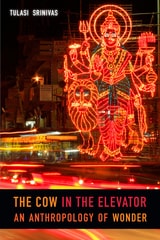
In The Cow in the Elevator Tulasi Srinivas explores a wonderful world where deities jump fences and priests ride in helicopters to present a joyful, imaginative, yet critical reading of modern religious life. Drawing on nearly two decades of fieldwork with priests, residents, and devotees, and her own experience of living in the high-tech city of Bangalore, Srinivas finds moments where ritual enmeshes with global modernity to create wonder—a feeling of amazement at being overcome by the unexpected and sublime. Offering a nuanced account of how the ruptures of modernity can be made normal, enrapturing, and even comical in a city swept up in globalization's tumult, Srinivas brings the visceral richness of wonder—apparent in creative ritual in and around Hindu temples—into the anthropological gaze. Broaching provocative philosophical themes like desire, complicity, loss, time, money, technology, and the imagination, Srinivas pursues an interrogation of wonder and the adventure of writing true to its experience. The Cow in the Elevator rethinks the study of ritual while reshaping our appreciation of wonder's transformative potential for scholarship and for life.
[more]
cover of The Crisis of Secularism in India

The Crisis of Secularism in India

Anuradha Dingwaney Needham and Rajeswari Sunder Rajan, eds.

Duke University Press, 2007

While secularism has been integral to India’s democracy for more than fifty years, its uses and limits are now being debated anew. Signs of a crisis in the relations between state, society, and religion include the violence directed against Muslims in Gujarat in 2002 and the precarious situation of India’s minority religious groups more generally; the existence of personal laws that vary by religious community; the affiliation of political parties with fundamentalist religious organizations; and the rallying of a significant proportion of the diasporic Hindu community behind a resurgent nationalist Hinduism. There is a broad consensus that a crisis of secularism exists, but whether the state can resolve conflicts and ease tensions or is itself part of the problem is a matter of vigorous political and intellectual debate. In this timely, nuanced collection, twenty leading Indian cultural theorists assess the contradictory ideals, policies, and practices of secularism in India.

Scholars of history, anthropology, religion, politics, law, philosophy, and media studies take on a broad range of concerns. Some consider the history of secularism in India; others explore theoretical issues such as the relationship between secularism and democracy or the shortcomings of the categories “majority” and “minority.” Contributors examine how the debates about secularism play out in schools, the media, and the popular cinema. And they address two of the most politically charged sites of crisis: personal law and the right to practice and encourage religious conversion. Together the essays inject insightful analysis into the fraught controversy about the shortcomings and uncertain future of secularism in the world today.

Contributors. Flavia Agnes, Upendra Baxi, Shyam Benegal, Akeel Bilgrami, Partha Chatterjee, V. Geetha, Sunil Khilnani, Nivedita Menon, Ashis Nandy, Anuradha Dingwaney Needham, Gyanendra Pandey, Gyan Prakash, Arvind Rajagopal, Paula Richman, Sumit Sarkar, Dwaipayan Sen, Rajeswari Sunder Rajan, Shabnum Tejani, Romila Thapar, Ravi S. Vasudevan, Gauri Viswanathan
[more]
cover of The Cult of Draupadi, Volume 1: Mythologies: From Gingee to Kuruksetra

The Cult of Draupadi, Volume 1

Mythologies: From Gingee to Kuruksetra

Alf Hiltebeitel

University of Chicago Press, 1988

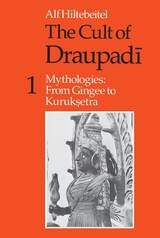
This is the first volume of a three-volume work on the little-known South Indian folk cult of the goddess Draupadi and on the classical epic, the Mahabharata, that the cult brings to life in mythic, ritual, and dramatic forms. Draupadi, the chief heroine of the Sanskrit Mahābhārata, takes on many unexpected guises in her Tamil cult, but her dimensions as a folk goddess remain rooted in a rich interpretive vision of the great epic. By examining the ways that the cult of Draupadi commingles traditions about the goddess and the epic, Alf Hiltebeitel shows the cult to be singularly representative of the inner tensions and working dynamics of popular devotional Hinduism. 


Volume 1 focuses on the Draupadī cult’s own double mythology, moving from its stories about Draupadī’s “primal temple” near the capital of the medieval South Indian Kingdom of Gingee to its version of the Mahābhārata war on the North Indian plain of Kurukṣetra. Throughout, Hiltebeitel intertwines “regional” data, gathered from both oral and written sources, with the “epic,” drawn from the cult’s own performative traditions as well as from classical versions of the Mahābhārata in both Tamil and Sanskrit. Pivotal to the overlap of these Gingee and Kurukṣetra mythologies are two folk figures unknown to classical epic traditions: Draupadī’s two guardians, Pōttu Rāja and Muttāl Rāvuttaṉ.
 

[more]
cover of The Cult of Draupadi, Volume 2: On Hindu Ritual and the Goddess

The Cult of Draupadi, Volume 2

On Hindu Ritual and the Goddess

Alf Hiltebeitel

University of Chicago Press, 1991

A groundbreaking work in the history of popular devotional Hinduism 
 
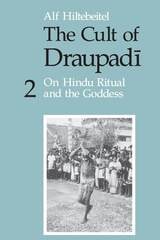
This is the second volume of a two-volume work on the little-known South Indian folk cult of the goddess Draupadi and on the classical epic, the Mahabharata, that the cult brings to life in mythic, ritual, and dramatic forms. Draupadi, the chief heroine of the Sanskrit Mahabharata, takes on many unexpected guises in her Tamil cult, but her dimensions as a folk goddess remain rooted in a rich interpretive vision of the great epic. By examining the ways that the cult of Draupadi commingles traditions about the goddess and the epic, Alf Hiltebeitel shows the cult to be singularly representative of the inner tensions and working dynamics of popular devotional Hinduism. 

Volume 2 looks at the cultic rituals and argues that these rituals cannot be interpreted independent of other Hindu traditions. Hiltebeitel draws upon his recent fieldwork to demonstrate the remarkable regional and local variations in the practice of the Draupadī cult rituals, from the core area around the ancient center of gingee to the thanjavur area just to the south. He brings to the forefront the differences between the complex rituals of cities, towns, and villages and discusses variations related to their proximity to the central temple in gingee and to the castes from which their customs are derived. using as its model the festival of the Tindivanam temple, Hiltebeitel’s study follows the order of the festival itself and investigates in turn the festival’s four interrelated arenas: the Draupadī temple, a drama stage, a ritual battlefield (paṭukaḷam), and a firewalking area. He explains how the Draupadī festival orchestrates movements back and forth between these arenas to produce a “ritual of battle” in which Draupadī emerges as the victorious goddess.

 

[more]
cover of The Cult of the Goddess Pattini

The Cult of the Goddess Pattini

Gananath Obeyesekere

University of Chicago Press, 1984

Pattini—goddess, virgin, wife, and mother; folk deity of Sinhala Buddhists and Jains; and assimilated goddess of the Hindu pantheon—has been worshiped in Sri Lanka and South India for fifteen hundred years or more, as she still is today. This long-awaited book is the culmination of Gananath Obeyesekere's comprehensive study of the Pattini cult and its historical, sociological, and psychoanalytical role in the culture of South Asia. A well-known anthropologist and a native of Sri Lanka, Obeyesekere displays his impeccable scholarship and a stunning range of theoretical perspectives in this work, the most detailed analysis of a single religious complex in South Asian ethnography (and possibly in all of anthropology).
[more]
cover of The Destiny of a King

The Destiny of a King

Georges Dumézil

University of Chicago Press, 1988

The preeminent scholar of comparative studies of Indo-European society, Georges Dumézil theorized that ancient and prehistoric Indo-European culture and literature revolved around three major functions: sovereignty, force, and fertility. This work treats these functions as they are articulated through "first king" legends found in Indian, Iranian, and Celtic epics, particularly the Mahabharata. Dumézil, drawing on an extraordinarily broad range of Indo-European sources from Scandinavia to India and offering an original and provocative analytic method, set a new agenda for studies in comparative oral literature, historical linguistics, comparative mythology, and history of religions.

The Destiny of a King examines one of the "little" epics within the Mahabharata—the legend of King Yayati, a distant ancestor of the Pandavas, the heroes of the larger epic. Dumézil compares Yayati's attributes and actions with those of the legendary Celtic king Eochaid Feidlech and also finds striking similarities in the stories surrounding the daughters of these two kings, the Indian Madhavi and the Celtic Medb. When he compares these two traditions with the "first king" legends from Iran, he finds such common themes as the apportionment of the earth and the "sin of the sovereign."
[more]
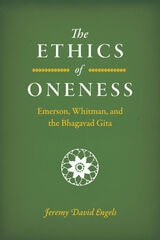
cover of The Ethics of Oneness: Emerson, Whitman, and the Bhagavad Gita

The Ethics of Oneness

Emerson, Whitman, and the Bhagavad Gita

Jeremy David Engels

University of Chicago Press, 2021

We live in an era defined by a sense of separation, even in the midst of networked connectivity. As cultural climates sour and divisive political structures spread, we are left wondering about our ties to each other. Consequently, there is no better time than now to reconsider ideas of unity.

In The Ethics of Oneness, Jeremy David Engels reads the Bhagavad Gita alongside the works of American thinkers Ralph Waldo Emerson and Walt Whitman. Drawing on this rich combination of traditions, Engels presents the notion that individuals are fundamentally interconnected in their shared divinity. In other words, everything is one. If the lessons of oneness are taken to heart, particularly as they were expressed and celebrated by Whitman, and the ethical challenges of oneness considered seriously, Engels thinks it is possible to counter the pervasive and problematic American ideals of hierarchy, exclusion, violence, and domination. 
 
[more]
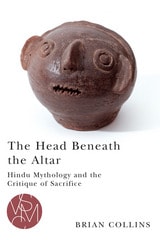
cover of The Head Beneath the Altar: Hindu Mythology and the Critique of Sacrifice

The Head Beneath the Altar

Hindu Mythology and the Critique of Sacrifice

Brian Collins

Michigan State University Press, 2014
In the beginning, says the ancient Hindu text the Rg Veda, was man. And from man’s sacrifice and dismemberment came the entire world, including the hierarchical ordering of human society. The Head Beneath the Altar is the first book to present a wide-ranging study of Hindu texts read through the lens of René Girard’s mimetic theory of the sacrificial origin of religion and culture. For those interested in Girard and comparative religion, the book also performs a careful reading of Girard’s work, drawing connections between his thought and the work of theorists like Georges Dumézil and Giorgio Agamben. Brian Collins examines the idea of sacrifice from the earliest recorded rituals through the flowering of classical mythology and the ancient Indian institutions of the duel, the oath, and the secret warrior society. He also uncovers implicit and explicit critiques in the tradition, confirming Girard’s intuition that Hinduism offers an alternative anti-sacrificial worldview to the one contained in the gospels.
[more]
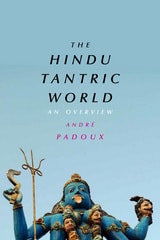
cover of The Hindu Tantric World: An Overview

The Hindu Tantric World

An Overview

André Padoux

University of Chicago Press, 2017

Tantra occupies a unique position in Western understandings of Hindu spirituality. Its carnal dimension has made its name instantly recognizable, but this popular fascination with sex has obscured its philosophical depth and ritual practices, to say nothing of its overall importance to Hinduism.
 
This book offers a clear, well-grounded overview of Tantra that offers substantial new insights for scholars and practitioners. André Padoux opens by detailing the history of Tantra, beginning with its origins, founding texts, and major beliefs. The second part of the book delves more deeply into key concepts relating to the tantric body, mysticism, sex, mantras, sacred geography, and iconography, while the final part considers the practice of Tantra today, both in India and in the West. The result is an authoritative account of Tantra’s history and present place in the world.
 
[more]
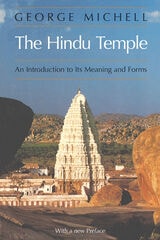
cover of The Hindu Temple: An Introduction to Its Meaning and Forms

The Hindu Temple

An Introduction to Its Meaning and Forms

George Michell

University of Chicago Press, 1988

For more than 1500 years, from the Indian subcontinent to the islands of the Indonesian archipelago, the temple has embodied and symbolized the Hindu worldview at its deepest level and inspired the greatest architectural and artistic achievements in Hindu Asia. In The Hindu Temple, considered the standard introduction to the subject, George Michell explains the cultural, religious, and architectural significance of the temple. He illustrates his points with a profusion of photographs, building plans, and drawings of architectural details, making the book a useful guide for travelers to Asia as well as an illuminating text for students of architecture, religion, and Asian civilizations.

Michell's discussion of the meaning and forms of the temple in Hindu society encompasses the awe-inspiring rock-cut temples at Ellora and Elephanta, the soaring superstructures and extraordinary sexual exhibitionism of the sculptures at Khajuraho, and the colossal mortuary temple of Angkor Vat, as well as the tiny iconic shrines that many Hindus wear around their necks and the simple shrines found under trees or near ponds.
[more]
cover of The Hungry God: Hindu Tales of Filicide and Devotion

The Hungry God

Hindu Tales of Filicide and Devotion

David Shulman

University of Chicago Press, 1993

India's folklore and classical literature abound with stories of parents who sacrifice their children. In The Hungry God, David Shulman examines one set of such tales—Hindu texts that bear similarities to the biblical aqedah, the account of Abraham's near-sacrifice of Isaac. In all the stories that Shulman explores, the sacrifice proceeds from a divine command and has no utilitarian explanation or rationale.
[more]
cover of The Madness of the Saints: Ecstatic Religion in Bengal

The Madness of the Saints

Ecstatic Religion in Bengal

June McDaniel

University of Chicago Press, 1989
Although ecstasy has been explored in several Indian contexts, surprisingly little scholarship has been devoted to its central role in Bengali devotion. In The Madness of the Saints, June McDaniel undertakes the first comprehensive study of religious ecstasy in Bengal, examining the texts that describe it, the people who experience it, and the traditions that support it.
[more]
cover of The Mahabharata, Volume 1: Book 1:  The Book of the Beginning

The Mahabharata, Volume 1

Book 1: The Book of the Beginning

Edited by J. A. B. van Buitenen

University of Chicago Press, 1974
The Mahabharata, an ancient and vast Sanskrit poem, is a remarkable collection of epics, legends, romances, theology, and ethical and metaphysical doctrine. The core of this great work is the epic struggle between five heroic brothers, the Pandavas, and their one hundred contentious cousins for rule of the land. This is the first volume in what will ultimately become a multi volume edition encompassing all eighteen books.
[more]
cover of The Mahabharata, Volume 2: Book 2:  The Book of Assembly; Book 3: The Book of the Forest

The Mahabharata, Volume 2

Book 2: The Book of Assembly; Book 3: The Book of the Forest

Edited by J. A. B. van Buitenen

University of Chicago Press, 1975
The Mahabharata, an ancient and vast Sanskrit poem, is a remarkable collection of epics, legends, romances, theology, and ethical and metaphysical doctrine. The core of this great work is the epic struggle between five heroic brothers, the Pandavas, and their one hundred contentious cousins for rule of the land. This is the second volume of van Buitenen's acclaimed translation of the definitive Poona edition of the text. Book two, The Book of the Assembly Hall, is an epic dramatization of the Vedic ritual of consecration that is central to the book. Book three, The Book of the Forest, traces the further episodes of the heroes during their years in exile. Also included are the famous story of Nala, dealing with the theme of love in separation, and the story of Rama, the subject of the other great Sanskrit epic, the Ramayana, as well as other colorful tales.
[more]
cover of The Mahabharata, Volume 3: Book 4:  The Book of the Virata; Book 5: The Book of the Effort

The Mahabharata, Volume 3

Book 4: The Book of the Virata; Book 5: The Book of the Effort

Edited by J. A. B. van Buitenen

University of Chicago Press, 1978
The Mahabharata, an ancient and vast Sanskrit poem, is a remarkable collection of epics, legends, romances, theology, and ethical and metaphysical doctrine. The core of this great work is the epic struggle between five heroic brothers, the Pandavas, and their one hundred contentious cousins for rule of the land. This is the third volume of van Buitenen's acclaimed translation of the definitive Poona edition of the text. Book 4, The Book of Virata, begins as a burlesque, but the mood soon darkens amid molestation, raids, and Arjuna's battle with the principal heroes of the enemy. Book 5, The Book of the Effort, relates the attempts of the Pandavas to negotiate the return of their patrimony. They are refused so much as a "pinprick of land," and both parties finally march to battle.
[more]
cover of The Mahabharata, Volume 7: Book 11: The Book of the Women Book 12: The Book of Peace, Part 1

The Mahabharata, Volume 7

Book 11: The Book of the Women Book 12: The Book of Peace, Part 1

Edited by James L. Fitzgerald

University of Chicago Press, 2004

What is found in this epic may be elsewhere;
What is not in this epic is nowhere else.
—from The Mahabharata

The second longest poem in world literature, The Mahabharata is an epic tale, replete with legends, romances, theology, and metaphysical doctrine written in Sanskrit. One of the foundational elements in Hindu culture, this great work consists of nearly 75,000 stanzas in eighteen books, and this volume marks the much anticipated resumption of its first complete modern English translation. With the first three volumes, the late J. A. B. van Buitenen had taken his translation up to the threshold of the great war that is central to the epic. Now James Fitzgerald resumes this work with translations of the books that chronicle the wars aftermath: The Book of Women and part one of The Book of Peace. These books constitute volume 7 of the projected ten-volume edition. Volumes 4, 5, 6, 8, 9, and 10 of the series will be published over the next several years.

In his introductions to these books, Fitzgerald examines the rhetoric of The Mahabharatas representations of the wars aftermath. Indeed, the theme of The Book of Women is the grief of the women left by warriors slain in battle. The book details the keening of palace ladies as they see their dead husbands and sons, and it culminates in a mass cremation where the womens tears turn into soothing libations that help wash the deaths away. Fitzgerald shows that the portrayal of the womens grief is much more than a sympathetic portrait of the sufferings of war. The scenes of mourning in The Book of Women lead into a crisis of conscience that is central to The Book of Peace and, Fitzgerald argues, the entire Mahabharata. In this book, the man who has won power in the great war is torn between his own sense of guilt and remorse and the obligation to rule which ultimately he is persuaded to embrace.

The Mahabharata is a powerful work that has inspired awe and wonder for centuries. With a penetrating glimpse into the trauma of war, this volume offers two of its most timely and unforgettable chapters.

[more]
cover of The Mahabharata, Volume 8: Book 12, The Book of Peace, Part 2

The Mahabharata, Volume 8

Book 12, The Book of Peace, Part 2

Translated and Edited by James L. Fitzgerald

University of Chicago Press, 2026

A translation of the twelfth book of The Mah­­ābhārata, an epic tale of history and kingship, reinforced with legends, romances, and metaphysical, theological, and ethical teachings written in Sanskrit 1700 or more years ago.

A remarkable composition of 100,000 couplets, The Mah­­ābhārata is the second-longest poem in world literature. In this volume, James L. Fitzgerald completes his translation of the twelfth of The Mah­­ābhārata’s eighteen books, the vast Shanti Parvan, or The Book of Peace. Covering a wide range of ancient Indian intellectual history, The Book of Peace was intended to serve as a comprehensive, brahmin-inspired basis for living a Good Life in a Good Society in a Good Polity and is one of the most important and complex books of the poem.

Fitzgerald’s previous contribution to the Chicago edition of The Mahābhārata, volume 7, opened with Book 11, The Book of the Women, which movingly portrayed the grief of the wives, mothers, and sisters of the many warriors slain in the epic’s central war narrative. The crises of grief presented in The Book of the Women give particular poignancy and depth to the shanti, or pacification, that is the theme of Book 12, The Book of Peace. Volume 7 included the first half of The Book of Peace, and volume 8 now completes it with the second half, which is focused particularly on the ways people can escape the cycle of rebirth and realize sublime beatitude by way of saving knowledge or yoga meditation or devotion to God Viṣṇu-Nārāyaṇa. Supported by an extensive introduction and notes, this publication will be greeted as a major event in Sanskrit studies.
[more]
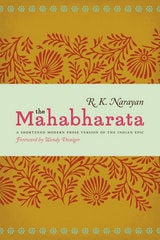
cover of The Mahabharata: A Shortened Modern Prose Version of the Indian Epic

The Mahabharata

A Shortened Modern Prose Version of the Indian Epic

R. K. Narayan

University of Chicago Press, 2013

The Mahabharata tells a story of such violence and tragedy that many people in India refuse to keep the full text in their homes, fearing that if they do, they will invite a disastrous fate upon their house. Covering everything from creation to destruction, this ancient poem remains an indelible part of Hindu culture and a landmark in ancient literature.

Centuries of listeners and readers have been drawn to The Mahabharata, which began as disparate oral ballads and grew into a sprawling epic. The modern version is famously long, and at more than 1.8 million words—seven times the combined lengths of the Iliad and Odyssey—it can be incredibly daunting.

Contemporary readers have a much more accessible entry point to this important work, thanks to R. K. Narayan’s masterful translation and abridgement of the poem. Now with a new foreword by Wendy Doniger, as well as a concise character and place guide and a family tree, The Mahabharata is ready for a new generation of readers. As Wendy Doniger explains in the foreword, “Narayan tells the stories so well because they’re all his stories.” He grew up hearing them, internalizing their mythology, which gave him an innate ability to choose the right passages and their best translations.

In this elegant translation, Narayan ably distills a tale that is both traditional and constantly changing. He draws from both scholarly analysis and creative interpretation and vividly fuses the spiritual with the secular. Through this balance he has produced a translation that is not only clear, but graceful, one that stands as its own story as much as an adaptation of a larger work.
[more]
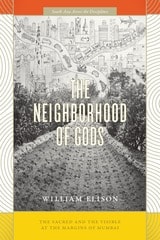
cover of The Neighborhood of Gods: The Sacred and the Visible at the Margins of Mumbai

The Neighborhood of Gods

The Sacred and the Visible at the Margins of Mumbai

William Elison

University of Chicago Press, 2018

There are many holy cities in India, but Mumbai is not usually considered one of them. More popular images of the city capture the world’s collective imagination—as a Bollywood fantasia or a slumland dystopia. Yet for many, if not most, people who live in the city, the neighborhood streets are indeed shared with local gods and guardian spirits. In The Neighborhood of Gods, William Elison examines the link between territory and divinity in India’s most self-consciously modern city. In this densely settled environment, space is scarce, and anxiety about housing is pervasive. Consecrating space—first with impromptu displays and then, eventually, with full-blown temples and official recognition—is one way of staking a claim. But how can a marginalized community make its gods visible, and therefore powerful, in the eyes of others?
 
The Neighborhood of Gods explores this question, bringing an ethnographic lens to a range of visual and spatial practices: from the shrine construction that encroaches on downtown streets, to the “tribal art” practices of an indigenous group facing displacement, to the work of image production at two Bollywood film studios. A pioneering ethnography, this book offers a creative intervention in debates on postcolonial citizenship, urban geography, and visuality in the religions of India.
 
[more]
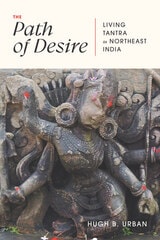
cover of The Path of Desire: Living Tantra in Northeast India

The Path of Desire

Living Tantra in Northeast India

Hugh B. Urban

University of Chicago Press, 2024

A provocative study of contemporary Tantra as a dynamic living tradition.
 
Tantra, one of the most important religious currents in South Asia, is often misrepresented as little more than ritualized sex. Through a mixture of ethnography and history, Hugh B. Urban reveals a dynamic living tradition behind the sensationalist stories. Urban shows that Tantric desire goes beyond the erotic, encompassing such quotidian experiences as childbearing and healing. He traces these holistic desires through a series of unique practices: institutional Tantra centered on gurus and esoteric rituals; public Tantra marked by performance and festival; folk Tantra focused on magic and personal well-being; and popular Tantra imagined in fiction, film, and digital media. The result is a provocative new description of Hindu Tantra that challenges us to approach religion as something always entwined with politics and culture, thoroughly entangled with ordinary needs and desires.
[more]
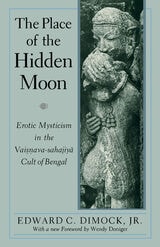
cover of The Place of the Hidden Moon: Erotic Mysticism in the Vaisnava-Sahajiya Cult of Bengal

The Place of the Hidden Moon

Erotic Mysticism in the Vaisnava-Sahajiya Cult of Bengal

Edward C. Dimock Jr.

University of Chicago Press, 1989

The Vaisnava-sahajiya cult that arose in Bengal in the sixteenth century was an intensely emotional attempt to reconcile the sensual and the ascetic. Exploring the history and doctrine of this cult, Edward C. Dimock, Jr., examines the works of numerous poets who are the source of knowledge about this sect. Dimock examines the life of the saint Caitanya, the mad Baul singers, the doctrines of Tantrism, the origins of the figure of Radha, and the worship of Krishna. His study will appeal to students of the history of religion as well as of Indian culture. This edition includes a new Foreword by Wendy Doniger.

"This is a magnificent book—painstakingly researched and gracefully written. . . . Professor Dimock's book is one of the most rewarding and stimulating studies to appear in recent years."—G. Richard Weldon, Journal of Asian Studies
[more]
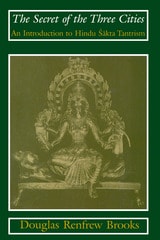
cover of The Secret of the Three Cities: An Introduction to Hindu Sakta Tantrism

The Secret of the Three Cities

An Introduction to Hindu Sakta Tantrism

Douglas Renfrew Brooks

University of Chicago Press, 1990
The esoteric Hindu traditions of Tantrism have profoundly influenced the development of Indian thought and civilization. Emerging from elements of yoga and wisdom traditions, shamanism, alchemy, eroticism, and folklore, Tantrism began to affect brahmanical Hinduism in the ninth century. Nevertheless, Tantrism and its key historical figures have been ignored by scholars. This accessible work introduces the concepts and practices of Hindu Sakta Tantrism to all those interested in Hinduism and the comparative study of religion.
[more]
cover of The Tamil Veda: Pillan's Interpretation of the Tiruvaymoli

The Tamil Veda

Pillan's Interpretation of the Tiruvaymoli

John Carman and Vasudha Narayanan

University of Chicago Press, 1989
In this multifaceted work, John Carman and Vasudha Narayanan clarify historical developments in South Asian religion and make important contributions to the methodology of textual interpretation and the comparative study of world religions.
[more]
cover of The Work of Culture: Symbolic Transformation in Psychoanalysis and Anthropology

The Work of Culture

Symbolic Transformation in Psychoanalysis and Anthropology

Gananath Obeyesekere

University of Chicago Press, 1990

"The Work of Culture is the product of two decades of field research by Sri Lanka's most distinguished anthropological interpreter, and its combination of textual analysis, ethnographic sensitivity, and methodological catholicity makes it something of a blockbuster."—Arjun Appadurai, Journal of Asian Studies
[more]
cover of Trance-Migrations: Stories of India, Tales of Hypnosis

Trance-Migrations

Stories of India, Tales of Hypnosis

Lee Siegel

University of Chicago Press, 2014

Listen to what I am about to tell you: do not read this book alone. You really shouldn’t. In one of the most playful experiments ever put between two covers, every other section of Trance-Migrations prescribes that you read its incantatory tales out loud to a lover, friend, or confidant, in order to hypnotize in preparation for Lee Siegel’s exploration of an enchanting India. To read and hear this book is to experience a particular kind of relationship, and that’s precisely the point: hypnosis, the book will demonstrate, is an essential aspect of our most significant relationships, an inherent dimension of love, religion, medicine, politics, and literature, a fundamental dynamic between lover and beloved, deity and votary, physician and patient, ruler and subject, and, indeed, reader and listener.
           
Even if you can’t read this with a partner—and I stress that you certainly ought to—you will still be in rich company. There is Shambaraswami, an itinerant magician, hypnotist, and storyteller to whom villagers turn for spells that will bring them wealth or love; José-Custodio de Faria, a Goan priest hypnotizing young and beautiful women in nineteenth-century Parisian salons; James Esdaile, a Scottish physician for the East India Company in Calcutta, experimenting on abject Bengalis with mesmerism as a surgical anesthetic; and Lee Siegel, a writer traveling in India to learn all that he can about hypnosis, yoga, past life regressions, colonialism, orientalism, magic spells, and, above all, the power of story. And then there is you: descending through these histories—these tales within tales, trances within trances, dreams within dreams—toward a place where the distinctions between reverie and reality dissolve.
           
Here the world within the book and that in which the book is read come startlingly together. It’s one of the most creative works we have ever published, a dazzling combination of literary prowess, scholarly erudition, and psychological exploration—all tempered by warm humor and a sharp wit. It is informing, entertaining, and, above all, mesmerizing. 
[more]