Results by title
102 books match the query 'Indians' and 24 start with t

That Guy Wolf Dancing
Elizabeth Cook-Lynn
Michigan State University Press, 2014
The Americas That Might Have Been
Native American Social Systems through TimeJulian Granberry
University of Alabama Press, 2005
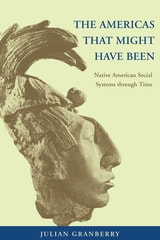
This work answers the hypothetical question: What would the Americas be like today—politically, economically, culturally—if Columbus and the Europeans had never found them, and how would American peoples interact with the world’s other societies? It assumes that Columbus did not embark from Spain in 1492 and that no Europeans found or settled the New World afterward, leaving the peoples of the two American continents free to follow the natural course of their Native lives.
The Americas That Might Have Been is a professional but layman-accessible, fact-based, nonfiction account of the major Native American political states that were thriving in the New World in 1492. Granberry considers a contemporary New World in which the glories of Aztec Mexico, Maya Middle America, and Inca Peru survived intact. He imagines the roles that the Iroquois Confederacy of the American Northeast, the powerful city-states along the Mississippi River in the Midwest and Southeast, the Navajo Nation and the Pueblo culture of the Southwest, the Eskimo Nation in the Far North, and the Taino/Arawak chiefdoms of the Caribbean would play in American and world politics in the 21st Century.
Following a critical examination of the data using empirical archaeology, linguistics, and ethnohistory, Granberry presents a reasoned and compelling discussion of native cultures and the paths they would have logically taken over the past five centuries. He reveals the spectacular futures these brilliant pre-Columbian societies might have had, if not for one epochal meeting that set off a chain of events so overwhelming to them that the course of human history was forever changed.
The Darker Side of the Renaissance
Literacy, Territoriality, & Colonization, 2nd EditionWalter D. Mignolo
University of Michigan Press, 2003
Walter D. Mignolo is Professor in the Department of Romance Studies and the Program in Literature, Duke University.
The Darker Side of the Renaissance
Literacy, Territoriality, and ColonizationWalter D. Mignolo
University of Michigan Press, 1995
The Fabric of Resistance
Textile Workshops and the Rise of Rebellious Landscapes in Colonial PeruDi Hu
University of Alabama Press, 2022
Textiles as sites of power, production, and rebellion in the early modern Andes.
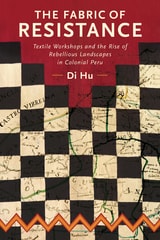
The Fabric of Resistance: Textile Workshops and the Rise of Rebellious Landscapes in Colonial Peru documents the impact of Spanish colonial institutions of labor on identity and social cohesion in Peru. Through archaeological and historical lines of evidence, Di Hu examines the long-term social conditions that enabled the large-scale rebellions in the late Spanish colonial period in Peru. Hu argues that ordinary people from different backgrounds pushed back against the top-down identity categories imposed by the Spanish colonial government and in the process created a cosmopolitan social landscape that later facilitated broader rebellion.
Hu’s case study is Pomacocha, the site of an important Spanish colonial hacienda (agricultural estate) and obraje (textile workshop). At its height, the latter had more than one hundred working families and sold textiles all over the Andes. Through analysis of this site, Hu explores three main long-term causes of rebellions against Spanish oppression. First, the Spanish colonial economy provided motivation and the social spaces for intercaste (indigenous, African, and mestizo) mixing at textile workshops. Second, new hybrid cultural practices and political solidarity arose there that facilitated the creation of new rebellious identities. Third, the maturation in the eighteenth century of popular folklore that reflected the harsh nature of Spanish labor institutions helped workers from diverse backgrounds gain a systemic understanding of exploitation.
This study provides a fresh archaeological and historical perspectives on the largest and most cosmopolitan indigenous-led rebellions of the Americas. Hu interweaves analyses of society at multiple scales including fine-grained perspectives of social networks, demography, and intimate details of material life in the textile workshop. She examines a wide range of data sources including artifacts, food remains, architectural plans, account books, censuses, court documents, contracts, maps, and land title disputes.

The German Texas Frontier
Ferdinand Lindheimer’s Newspaper Accounts of the Environment, Gold, and IndiansDaniel J. Gelo
University of North Texas Press, 2024
The Indians of Hungry Hollow
Bill Dunlop and Marcia Fountain-Blacklidge
University of Michigan Press, 2004
The Indians of Iowa
Foster, Lance M.
University of Iowa Press, 2009
Foster begins with a history of Lewis and Clark’s travels along the Missouri River adjacent to western Iowa. Next, he focuses on the tribes most connected to Iowa from prehistoric times to the present day: the Ioway, Meskwaki, Sauk, Omaha and Ponca, Otoe and Missouria, Pawnee and Arikara, Potawatomi, Illinois Confederacy, Santee and Yankton Sioux, and Winnebago. In between each tribal account, “closer look” essays provide details on Indian women in Iowa, traditional ways of life, Indian history and spirituality, languages and place-names, archaeology, arts and crafts, and houses and landscapes. Finally, Foster brings readers into the present with chapters called “Going to a Powwow,” “Do You Have Indian Blood?” and “Indians in Iowa Today.” The book ends with information about visiting Native American museums, historic sites, and communities in Iowa as well as tribal contacts and a selection of published and online resources.
The story of the Indians of Iowa is long and complicated. Illustrated with maps and stunning original art, Lance Foster’s absorbing, accessible overview of Iowa’s Indian tribes celebrates the rich native legacy of the Hawkeye State. It is essential reading for students, teachers, and everyone who calls Iowa home.
The Indians of New Jersey
Dickon Among the LenapesHarrington, M. R
Rutgers University Press, 1963
In presenting the lore and heritage of the Lenapes, Dr. M.R. Harrington does so through the eyes of a shipwrecked English boy who became a captive of the Indians, and was eventually adopted into the tribe. The narrative is lively reading, and the facts on which it is based are accurate. With the accompanying Clarence Ellsworth line drawings, the reader can understand and even reproduce many of the objects the author describes: the Lenape bows and arrows, muccasins and mats, baskets and bowls.
This new edition is a reissue of an often asked for an unavailable New Jersey classic, first published in 1938.
The Indians of Point of Pines, Arizona
A Comparative Study of Their Physical CharacteristicsKenneth A. Bennett
University of Arizona Press, 1973
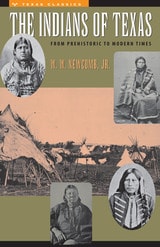
The Indians of Texas
From Prehistoric to Modern TimesBy William W. Newcomb, Jr.
University of Texas Press, 1961
The Indians of the Western Great Lakes, 1615 to 1760
W. Vernon Kinietz
University of Michigan Press, 1940

The Indians of the Western Great Lakes, 1615-1760
W. Vernon Kinietz
University of Michigan Press, 1965
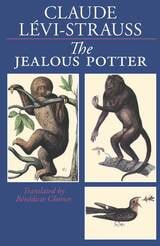
The Jealous Potter
Claude Lévi-Strauss
University of Chicago Press, 1988
"Electrifying. . . . A brilliant demonstration of structural analysis in action. . . . Can be read with pleasure and profit by anyone interested in that aspect of self-discovery that comes through knowledge of the universal and timeless myths that live on in all of us."—Jonathan Sharp, San Francisco Examiner-Chronicle
"A characteristic tour de force. . . . One remains awed by him."—Colin Thubron, Sunday Times
"With all its epistemological depth, the book reads at times like a Simenon or a Lewis Carroll, fusing concise methodology with mastery of style."—Bernadette Bucher, American Ethnologist
"[An] engagingly provocative exploration of mythology in the Americas. . . . Always a good read."—Choice
"A playful, highly entertaining book, fluently and elegantly translated by Bénédicte Chorier."—Wendy Doniger O'Flaherty, New York Times Book Review
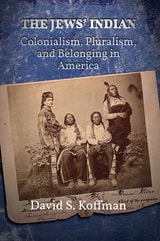
The Jews’ Indian
Colonialism, Pluralism, and Belonging in AmericaKoffman, David S
Rutgers University Press, 2019
Honorable Mention, 2021 Saul Viener Book Prize
The Jews’ Indian investigates the history of American Jewish relationships with Native Americans, both in the realm of cultural imagination and in face-to-face encounters. These two groups’ exchanges were numerous and diverse, proving at times harmonious when Jews’ and Natives people’s economic and social interests aligned, but discordant and fraught at other times. American Jews could be as exploitative of Native cultural, social, and political issues as other American settlers, and historian David Koffman argues that these interactions both unsettle and historicize the often triumphant consensus history of American Jewish life. Focusing on the ways Jewish class mobility and civic belonging were wrapped up in the dynamics of power and myth making that so severely impacted Native Americans, this books is provocative and timely, the first history to critically analyze Jewish participation in, and Jews’ grappling with the legacies of Native American history and the colonial project upon which America rests.
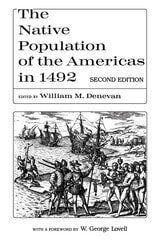
The Native Population of the Americas in 1492
Edited by William M. Denevan
University of Wisconsin Press, 1992
William M. Denevan writes that, "The discovery of America was followed by possibly the greatest demographic disaster in the history of the world." Research by some scholars provides population estimates of the pre-contact Americas to be as high as 112 million in 1492, while others estimate the population to have been as low as eight million. In any case, the native population declined to less than six million by 1650.
In this collection of essays, historians, anthropologists, and geographers discuss the discrepancies in the population estimates and the evidence for the post-European decline. Woodrow Borah, Angel Rosenblat, William T. Sanders, and others touch on such topics as the Indian slave trade, diseases, military action, and the disruption of the social systems of the native peoples. Offering varying points of view, the contributors critically analyze major hemispheric and regional data and estimates for pre- and post-European contact.
This revised edition features a new introduction by Denevan reviewing recent literature and providing a new hemispheric estimate of 54 million, a foreword by W. George Lovell of Queen's University, and a comprehensive updating of the already extensive bibliography. Research in this subject is accelerating, with contributions from many disciplines. The discussions and essays presented here can serve both as an overview of past estimates, conflicts, and methods and as indicators of new approaches and perspectives to this timely subject.
The Nature and Status of Ethnobotany, 2nd ed
Edited by Richard I. Ford with a new introduction by Richard I. Ford
University of Michigan Press, 1994

The Newspaper Indian
Native American Identity in the Press, 1820-90John M. Coward
University of Illinois Press, 1999
How newspapers shaped the image of Native Americans
John M. Coward looks at how nineteenth-century newspapers and news making practices shaped the contradictory and still persistent representation of Native Americans. As Coward reveals, journalism failed to describe Indigenous people on their own terms. Instead, reporters chose portrayals that adhered to the norms of the majority white, Anglo-Saxon, Protestant society that read their papers. In addition, Coward shows how journalists turned Native Americans into symbolic and ambiguous figures used to measure American progress.
An in-depth look at the power of the press, The Newspaper Indian provides insight into how journalism wove a skewed idea of Native Americans into the fabric of American life.
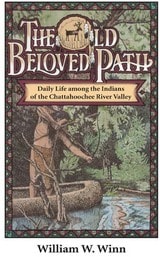
The Old Beloved Path
Daily Life amond the Indians of the Chattahooche River ValleyWilliam W. Winn
University of Alabama Press, 2008

The Origin of Table Manners
Mythologiques, Volume 3Claude Lévi-Strauss
University of Chicago Press, 1990
"An immense anthropological erudition is here wielded by one of the world's finest minds, and the myths themselves have never been taken more seriously. . . . [Lévi-Strauss] raises issues and then resolves them with the suspenseful cunning of a mystery novelist."—John Updike, New Yorker
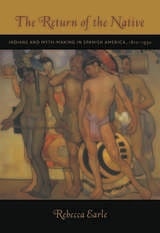
The Return of the Native
Indians and Myth-Making in Spanish America, 1810–1930Rebecca Earle
Duke University Press, 2007
Starting with the anti-Spanish wars of independence in the early nineteenth century, Earle charts the changing importance elite nationalists ascribed to the pre-Columbian past through an analysis of a wide range of sources, including historical writings, poems and novels, postage stamps, constitutions, and public sculpture. This eclectic archive illuminates the nationalist vision of creole elites throughout Spanish America, who in different ways sought to construct meaningful national myths and histories. Traces of these efforts are scattered across nineteenth-century culture; Earle maps the significance of those traces. She also underlines the similarities in the development of nineteenth-century elite nationalism across Spanish America. By offering a comparative study focused on Mexico, Guatemala, Colombia, Peru, Chile, and Ecuador, The Return of the Native illustrates both the common features of elite nation-building and some of the significant variations. The book ends with a consideration of the pro-indigenous indigenista movements that developed in various parts of Spanish America in the early twentieth century.
The Unconverted Self
Jews, Indians, and the Identity of Christian EuropeJonathan Boyarin
University of Chicago Press, 2009
Europe’s formative encounter with its “others” is still widely assumed to have come with its discovery of the peoples of the New World. But, as Jonathan Boyarin argues, long before 1492 Christian Europe imagined itself in distinction to the Jewish difference within. The presence and image of Jews in Europe afforded the Christian majority a foil against which it could refine and maintain its own identity. In fundamental ways this experience, along with the ongoing contest between Christianity and Islam, shaped the rhetoric, attitudes, and policies of Christian colonizers in the New World.
The Unconverted Self proposes that questions of difference inside Christian Europe not only are inseparable from the painful legacy of colonialism but also reveal Christian domination to be a fragile construct. Boyarin compares the Christian efforts aimed toward European Jews and toward indigenous peoples of the New World, bringing into focus the intersection of colonial expansion with the Inquisition and adding significant nuance to the entire question of the colonial encounter.
Revealing the crucial tension between the Jews as “others within” and the Indians as “others without,” The Unconverted Self is a major reassessment of early modern European identity.
The Word Tree
Revitalizing Indigenous Languages in Abya YalaEdited by Adela Pineda Franco and Socorro VenegasTranslated by Tanya Huntington
University of Texas Press, 2025
A collaborative effort to address some of the chronic issues affecting the preservation and revitalization of indigenous languages.
What does it mean to "revitalize" an indigenous language when approximately 6,700 of the nearly 7,000 left in the world need protection? Where to begin? Each language offers a sense of history, identity, and belonging within society to the people actively using it. The Word Tree begins by hearing directly from those still communicating in some of these less dominant languages, from Achi'es to Zapotec, and offers the metaphor of a tree whose political roots sustain the trunk of education that will bear the fruit of learning languages anew. Whether describing the tension between indigenous and state-recognized languages; the process of linguistics displacement resulting from migration; or the value of locally focused efforts in a cultural cooperative, these nine essays offer fresh and useful perspectives.
The Word Tree is the result of a collaboration between the National Autonomous University of Mexico and the University of Texas at Austin. Gathering diverse concerns, experiences, explorations, proposals, and perspectives on the revitalization of some of the continent's most imperiled indigenous languages, the contributors aim to introduce their struggle for existence to a modern world. From south to north, the Quecha or Runasimi, Maya, Zapotec or Diidxazá, Chatino, Mè'pháá or Tlapaneco, Mixteco, Mixe or Auukj, and Nahuatl languages exist in all their vast complexities and contexts. At its most fundamental level, this book is a call to develop alternative paths for human existence in which caring for one another is the consensus.
Tracing the Relational
The Archaeology of Worlds, Spirits, and TemporalitiesMeghan E. Buchanan and B. Jacob Skousen
University of Utah Press, 2015