Results by title
944 books match the query 'Indians of North America' and 180 start with t
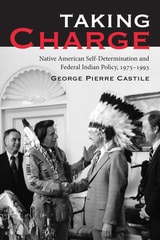
Taking Charge
Native American Self-Determination and Federal Indian Policy, 1975–1993George Pierre Castile
University of Arizona Press, 2006
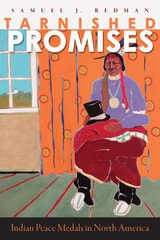
Tarnished Promises
Indian Peace Medals in North AmericaSamuel J. Redman
University Press of Colorado, 2026
Using a collection of medals held at the Denver Museum of Nature & Science, Tarnished Promises presents an updated overview of the history and story of peace medals through an examination of their legacy in the modern world. Accompanying the history and analysis are images of thirteen exemplar peace medals from the DMNS collections and their accompanying object biographies.
Peace medals paradoxically worked as tools of colonialism and also Native American agency, sovereignty, power, resistance, and change in response to growing challenges. Their widespread adoption by Native people in North America both prefigured and coincided with the many ways in which Native Americans and First Nations peoples worked to adapt to the unwelcome and undesirable changes wrought by expanding western colonialism. The unique individual histories behind the medals and the larger peace medal story suggest how material objects can hold several, sometimes contradictory, meanings and be influenced by varied strands of culture and historical memory. Tarnished Promises tells this complex story in two parts, with the first detailing the history of Indian peace medals from 1670 to the present day and the second part exploring their meaning at different points in time and to different peoples.
The first book-length treatment of peace medals using an anticolonialist perspective, Tarnished Promises is significant to scholars and the general public interested in numismatics, American history, Indigenous studies, and museum collections.
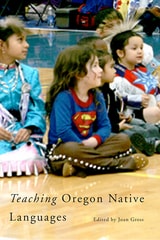
Teaching Oregon Native Langauges
Joan Gross
Oregon State University Press, 2007
Temples for Cahokia Lords
Preston Holder's 1955–1956 Excavations of Kunnemann MoundTimothy R. Pauketat with contributions by John R. Bozell, Sandra L. Dunavan, and a foreword by John O'Shea
University of Michigan Press, 1993

That Guy Wolf Dancing
Elizabeth Cook-Lynn
Michigan State University Press, 2014
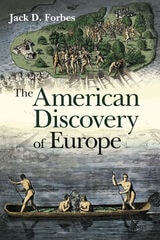
The American Discovery of Europe
Jack D. Forbes
University of Illinois Press, 2011
The American Southeast at the End of the Ice Age
Edited by D. Shane Miller, Ashley M. Smallwood, and Jesse W. Tune
University of Alabama Press, 2022
Synthesizes archaeological and environmental evidence to reinterpret how early human populations adapted to dynamic climatic changes during the Late Pleistocene, reshaping our understanding of Paleoindian lifeways and migration in the Southeastern United States.
The 1996 benchmark volume The Paleoindian and Early Archaic Southeast, edited by David G. Anderson and Kenneth E. Sassaman, was the first study to summarize what was known of the peoples who lived in the Southeast when ice sheets covered the northern part of the continent and mammals such as mammoths, saber-toothed cats, and ground sloths roamed the landscape.
The American Southeast at the End of the Ice Age provides an updated, definitive synthesis of current archaeological research gleaned from an array of experts in the region. It is organized in three parts: state records, the regional perspective, and reflections and future directions. Chapters survey a diversity of topics including the distribution of the earliest archaeological sites in the region, chipped-stone tool technology, the expanding role of submerged archaeology, hunter-gatherer lifeways, past climate changes and the extinction of megafauna on the transitional landscape, and evidence of demographic changes at the end of the Ice Age. Discussion of the ethical responsibilities regarding the use of private collections and the relationship of archaeologists and the avocational community, insight from outside the Southeast, and considerations for future research round out the volume.
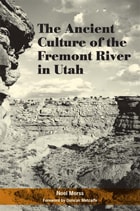
The Ancient Culture of the Fremont River in Utah
Report on the Explorations under the Claflin-Emerson Fund, 1928-1929Noel Morss
University of Utah Press, 2009
One such survey was conducted by author Noel Morss during the summer of 1928, resulting in an unexpected revelation: the Fremont (Dirty Devil) River drainage area being surveyed proved to be host to a prehistoric culture different from all other established Southwestern cultures. Excavations completed the following field season confirmed Morss’s findings. This distinct culture was defined by unique unpainted black or gray pottery, sole use of a primitive moccasin type, elaborate clay figurines, and abundant distinctive pictographs. Though too definite and well developed to be confined to a single drainage, Morss concluded that the Fremont were nonetheless a periphery culture and not an integral part of the mainstream of Southwestern development.
Originally published in 1931 and now featuring a new foreword by Duncan Metcalfe, The Ancient Culture of the Fremont River in Utah has become a classic in Southwestern archaeology, furthering a conversation about the early peoples of southern Utah that continues even today.
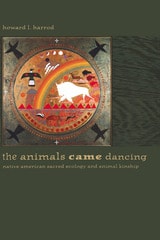
The Animals Came Dancing
Native American Sacred Ecology and Animal KinshipHoward L. Harrod
University of Arizona Press, 2000
Drawing on memories of Native Americans recorded by anthropologists, fur traders, missionaries, and other observers, Harrod examines cultural practices that flourished from the mid-eighteenth to the mid-nineteenth century. He reconstructs the complex rituals of Plains peoples, which included buffalo hunting ceremonies employing bundles or dancing, and rituals such as the Sun Dance for the renewal of animals. In a closing chapter, Harrod examines the meanings of Indian-animal relations for a contemporary society that values human dominance over the natural world—one in which domestic animals are removed from our consciousness as a source of food, wild animals are managed for humans to "experience," and hunting has become a form of recreation. His meticulous scholarship re-imagines a vanished way of life, while his keen insights give voice to a hunger among many contemporary people for the recovery of a ritual relationship between themselves and the natural sources of their lives.
The Anthropology of Florida
Aleš Hrdlicka
University of Alabama Press, 2007
This volume, originally published in 1922, constitutes the most complete summary of anthropological information on Florida up until that point. Not only does it consider all previous research on Florida archaeology, physical anthropology, and aboriginal history, it also contains Hrdlicka’s analysis of every human bone from Florida that he could find in collections. He made remarkably accurate observations about the general physical types of prehistoric Florida Indians and how they compared to native peoples of surrounding regions.
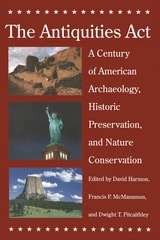
The Antiquities Act
A Century of American Archaeology, Historic Preservation, and Nature ConservationEdited by David Harmon, Frances P. McManamon, and Dwight T. Pitcaithley
University of Arizona Press, 2006
Enacted in 1906, the Antiquities Act is one of the most important pieces of conservation legislation in American history and has had a far-reaching influence on the preservation of our nation’s cultural and natural heritage. Thanks to the foresight of thirteen presidents, parks as diverse as Acadia, Grand Canyon, and Olympic National Park, along with historic and archaeological sites such as Thomas Edison’s Laboratory and the Gila Cliff Dwellings, have been preserved for posterity.
A century after its passage, this book presents a definitive assessment of the Antiquities Act and its legacy, addressing the importance and breadth of the act—as well as the controversy it has engendered. Authored by professionals intimately involved with safeguarding the nation’s archaeological, historic, and natural heritage, it describes the applications of the act and assesses its place in our country’s future. With a scope as far-reaching as the resources the act embraces, this book offers an unparalleled opportunity for today’s stewards to reflect on the act’s historic accomplishments, to remind fellow professionals and the general public of its continuing importance, and to look ahead to its continuing implementation in the twenty-first century.
The Antiquities Act invites all who love America’s natural and cultural treasures not only to learn about the act’s rich legacy but also to envision its next hundred years.

The Antiquities of Wisconsin, as Surveyed and Described
I. A. Lapham; Foreword by Robert A. Birmingham and Introduction by Robert P. Nurre
University of Wisconsin Press, 2001
First published in 1855 and long out of print, The Antiquities of Wisconsin remains invaluable as a detailed record of Wisconsin’s rich archaeological heritage of mounds and mound groups, many of which were later destroyed by farming and urban growth. Lapham was among the first scientists to produce evidence that the earthworks had been built by the ancestors of modern Native Americans, not some mythical "lost race," as was believed by many white authorities of the time. Modern researchers still use Lapham’s maps and descriptions to locate vestiges of sites that once existed, or to help reconstruct Wisconsin’s ancient cultural landscape. This edition includes a foreword by Wisconsin state archaeologist Robert A. Birmingham and an introduction by Robert P. Nurre, a Lapham scholar.
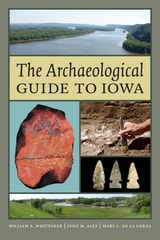
The Archaeological Guide to Iowa
William E. Whittaker, Lynn M. Alex, Mary De La Garza
University of Iowa Press, 2015
Fortunately, there are many sites open to the public where the remnants of the past are visible, either in their original location or in nearby museum exhibits. Few things are more inspiring than walking among the Malchow Mounds, packed so tightly it is hard to tell where one ends and the other begins. Strolling around downtown Des Moines is a lot more interesting when you are aware of the mounds, Indian villages, and the fort that once stood there. And, although you can’t visit the Wanampito site, you can see the splendid seventeenth-century artifacts excavated from it at Heery Woods State Park.
For people who want to experience Iowa’s archaeological heritage first hand, this one-of-a-kind guidebook shows the way to sixty-eight important sites. Many are open to visitors or can be seen from a public location; others, on private land or no longer visible on the landscape, live on through artifact displays. The guide also includes a few important sites that are not open to visitors because these places have unique stories to tell. Sites of every type, from every time period, and in every corner of the state are featured. Whether you have a few hours to indulge your curiosity or are planning a road trip across the state, this guide will take you to places where Iowa’s deep history comes to life.
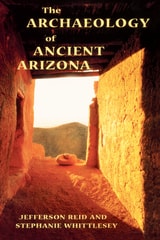
The Archaeology of Ancient Arizona
Jefferson Reid and Stephanie Whittlesey
University of Arizona Press, 1997
This book invites us to step into a Hohokam village with its sounds of barking dogs, children's laughter, and the ever-present grinding of mano on metate to produce the daily bread. Here, too, readers will marvel at the skills of Clovis elephant hunters and touch the lives of other ancestral people known as Mogollon, Anasazi, Sinagua, and Salado. Descriptions of long-ago people are balanced with tales about the archaeologists who have devoted their lives to learning more about "those who came before." Trekking through the desert with the famed Emil Haury, readers will stumble upon Ventana Cave, his "answer to a prayer." With amateur archaeologist Richard Wetherill, they will sense the peril of crossing the flooded San Juan River on the way to Chaco Canyon. Others profiled in the book are A. V. Kidder, Andrew Ellicott Douglass, Julian Hayden, Harold S. Gladwin, and many more names synonymous with the continuing saga of southwestern archaeology.
This book is an open invitation to general readers to join in solving the great archaeological puzzles of this part of the world. Moreover, it is the only up-to-date summary of a field advancing so rapidly that much of the material is new even to professional archaeologists. Lively and fast paced, the book will appeal to anyone who finds magic in a broken bowl or pueblo wall touched by human hands hundreds of years ago. For all readers, these pages offer a sense of adventure, that "you are there" stir of excitement that comes only with making new discoveries about the distant past.
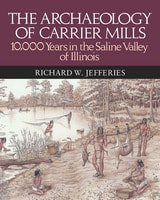
The Archaeology of Carrier Mills
10,000 Years in the Saline Valley of IllinoisRichard W. Jefferies
Southern Illinois University Press, 1987
Archaeological sites throughout southern Illinois provide a chronicle of the varying ways people have lived in that area during the past 10,000 years. This book focuses on the results of a five-year archaeological investigation in a 143-acre area known as the Carrier Mills Archaeological District. This area, rich in archaeological treasures, offers many keys to the prehistoric people of southern Illinois. Archaeologists in this study have sought to learn the ages of the various prehistoric occupations represented at the sites; to better understand the technology and social organization of these prehistoric people; to collect information about diet, health, and physical characteristics of the prehistoric inhabitants; and to investigate the remains of the 19th-century Lakeview settlement.
The Archaeology of Events
Cultural Change and Continuity in the Pre-Columbian SoutheastZackary I. Gilmore and Jason M. O'Donoughue
University of Alabama Press, 2015
Across the social sciences, gradualist evolutionary models of historical dynamics are giving way to explanations focused on the punctuated and contingent “events” through which history is actually experienced. The Archaeology of Events is the first book-length work that systematically applies this new eventful approach to major developments in the pre-Columbian Southeast.
Traditional accounts of pre-Columbian societies often portray them as “cold” and unchanging for centuries or millennia. Events-based analyses have opened up archaeological discourse to the more nuanced and flexible idea of context-specific, rapidly transpiring, and broadly consequential historical “events” as catalysts of cultural change.
The Archaeology of Events, edited by Zackary I. Gilmore and Jason M. O’Donoughue, considers a variety of perspectives on the nature and scale of events and their role in historical change. These perspectives are applied to a broad range of archeological contexts stretching across the Southeast and spanning more than 7,000 years of the region’s pre-Columbian history. New data suggest that several of this region’s most pivotal historical developments, such as the founding of Cahokia, the transformation of Moundville from urban center to vacated necropolis, and the construction of Poverty Point’s Mound A, were not protracted incremental processes, but rather watershed moments that significantly altered the long-term trajectories of indigenous Southeastern societies.
In addition to exceptional occurrences that impacted entire communities or peoples, southeastern archaeologists are increasingly recognizing the historical importance of localized, everyday events, such as building a house, crafting a pot, or depositing shell. The essays collected by Gilmore and O’Donoughue show that small-scale events can make significant contributions to the unfolding of broad, regional-scale historical processes and to the reproduction or transformation of social structures.
The Archaeology of Events is the first volume to explore the archaeological record of events in the Southeastern United States, the methodologies that archaeologists bring to bear on this kind of research, and considerations of the event as an important theoretical concept.
The Archaeology of Houses and Households in the Native Southeast
Benjamin A. Steere
University of Alabama Press, 2017
The Archaeology of Houses and Households in the Native Southeast contributes enormously to the study of household archaeology and domestic architecture in the region. This significant volume combines both previously published and unpublished data on communities from the Southeast and is the first systematic attempt to understand the development of houses and households as interpreted through a theoretical framework developed from broad-ranging studies in cultural anthropology and archaeology.
Steere’s major achievement is the compilation of one of the largest and most detailed architectural datasets for the Southeast, including data for 1,258 domestic and public structures from 65 archaeological sites in North Carolina, Georgia, Alabama, Tennessee, Kentucky, and the southern parts of Missouri, Indiana, and Illinois. Rare data from hard-to-find cultural resource management reports is also incorporated, creating a broad temporal and geographic scope and serving as one of many remarkable features of the book, which is sure to be of considerable value to archaeologists and anthropologists interested in comparative studies of architecture.
Similar to other analyses, Steere’s research uses multiple theoretical angles and lines of evidence to answer archaeological questions about houses and the people who built them. However, unlike other examinations of household archaeology, this project spans multiple time periods (Woodland, Mississippian, and Historic); is focused squarely on the Southeast; features a more unified approach, using data from a single, uniform database; and privileges domestic architecture as a line of evidence for reconstructing daily life at major archaeological sites on a much broader scale than other investigations.
The Archaeology of Meaningful Places
Brenda J Bowser
University of Utah Press, 2009
Diverse spatial and temporal contexts in two culture areas--Mesoamerica and the Greater Southwest--serve as backdrops for nine chapters in which fourteen contributors show how place is an ideal starting point to begin unraveling the human past. Several authors further address the enduring significance of places of the past for contemporary peoples. Among the many strengths of this volume is the careful way in which powerful concepts, diverse lines of thought, and empirical models are integrated to reveal the multiple facets of meaningful places, and to illustrate ways in which places may be approached archaeologically, theoretically, and culturally. Ultimately, the book’s contributors champion the notion that place is a valid and useful analytical unit for describing, reconstructing, interpreting, and explaining the form, structure, and temporality of the meanings humans ascribe to their environment.
The Archaeology of Ocmulgee Old Fields, Macon, Georgia
Carol I. Mason, with a new foreword by Marvin T. Smith
University of Alabama Press, 2005
A 17th-century trading post and Indian town in central Georgia reveal evidence of culture contact and change
Ocmulgee Old Fields near Macon, Georgia, is the site of a Lower Creek village and associated English trading house dating from the late 17th and early 18th centuries. It was excavated in the early 1930s as part of a WPA project directed by A. R. Kelly, which focused primarily on the major Mississippian temple mounds of Macon Plateau. The specific data for the Old Fields was not analyzed until nearly 30 years after the excavation.
Part of the significance of this site lies in its secure identification with a known group of people and the linkage of those people with recognizable archaeological remains. The Old Fields site was among the very first for which this kind of identification was possible and stands at the head of a continuing tradition of historic sites archaeology in the Southeast.
Carol I. Mason's classic study of the Ocmulgee Old Fields site has been a model for contact-period Indian archaeology since the 1960s. The report includes a discussion of the historic setting and an analysis of the archaeological materials with an identification of the Lower Creek town and possibly of the English trader who lived there. Now, for the first time, the original report is widely available in book form. With a new foreword by the author and a new introduction from Southeastern archaeology expert Marvin T. Smith, readers have the benefit of a contemporary view of this very fine piece of careful scholarship.
The Archaeology of Town Creek
Edmond A. Boudreaux III
University of Alabama Press, 2007
The sequence of change for public architecture during the Mississippian period may reflect a centralization of political power through time. In the research presented here, some of the community-level assumptions attributed to the appearance of Mississippian mounds are tested against the archaeological record of the Town Creek site—the remains of a town located on the northeastern edge of the Mississippian culture area. In particular, the archaeological record of Town Creek is used to test the idea that the appearance of Mississippian platform mounds was accompanied by the centralization of political authority in the hands of a powerful chief.
A compelling argument has been made that mounds were the seats and symbols of political power within Mississippian societies. While platform mounds have been a part of Southeastern Native American communities since at least 100 B.C., around A.D. 400 leaders in some communities began to place their houses on top of earthen mounds—an act that has been interpreted as an attempt to legitimize personal authority by a community leader through the appropriation of a powerful, traditional, community-oriented symbol. Platform mounds at a number of sites were preceded by a distinctive type of building called an earthlodge—a structure with earth-embanked walls and an entrance indicated by short, parallel wall trenches. Earthlodges in the Southeast have been interpreted as places where a council of community leaders came together to make decisions based on consensus. In contrast to the more inclusive function proposed for premound earthlodges, it has been argued that access to the buildings on top of Mississippian platform mounds was limited to a much smaller subset of the community. If this was the case and if ground-level earthlodges were more accessible than mound-summit structures, then access to leaders and leadership may have decreased through time.
Excavations at the Town Creek archaeological site have shown that the public architecture there follows the earthlodge-to-platform mound sequence that is well known across the South Appalachian subarea of the Mississippian world. The clear changes in public architecture coupled with the extensive exposure of the site's domestic sphere make Town Creek an excellent case study for examining the relationship among changes in public architecture and leadership within a Mississippian society.
The Archaeology of the Sierra Blanca Region of Southeastern New Mexico
Jane Holden Kelley
University of Michigan Press, 1984
The Archaic Southwest
Foragers in an Arid LandEdited by Bradley J. Vierra
University of Utah Press, 2018

The Archeology of New Hampshire
Exploring 10,000 Years in the Granite StateDavid Starbuck
University of New Hampshire Press, 2006
Several states already boast volumes showcasing their archeological history, but not New Hampshire—until now. David R. Starbuck's volume fills that void. Going beyond standard state guides that focus primarily on prehistoric sites, Starbuck also devotes equal time to historic, industrial, and nautical sites. This approach reflects the thinking of most contemporary archeologists who conduct research at a diverse range of sites.
A veteran of thirty years of field research throughout the Granite State, Starbuck revisits some of his own sites, including excavations at the New England Glassworks in Temple, two prehistoric sites on the Merrimack River, the Joseph Hazeltine pottery workshop outside Concord, the Governor Wentworth Estate in Wolfeboro, and his own long-term survey and excavation project at Canterbury Shaker Village. At the same time, though, Starbuck includes the work of other contemporary New Hampshire archeologists, representative sites of “old-timers” whose digs preceded his arrival, and the investigations of avocational diggers.
Starbuck's introduction offers an anecdotal history of archeological research in New Hampshire through the people who shaped it. Part I discusses discoveries that predate white settlement: the Paleo-Indian Period; the Archaic Period; and the Woodland Period. Part II moves from the seventeenth century to the present. Chapters include historical archeology (forts, farms, potters, Shakers); industrial archeology (mills, factories, railroads, dams, and bridges); and nautical archeology (discoveries in the state's lakes and on the seacoast).
In addition to summarizing some of the more interesting finds, Starbuck includes stories about archeologists and the techniques they have used to glean information from the past. Overall, he provides a lively account of what it is like to practice archeology in a small but dynamic New England state.

The Arctic Small Tool Tradition in Manitoba
Ronald J. Nash
University of Manitoba Press, 1969
The Arkansas Post of Louisiana
Morris S. Arnold
University of Arkansas Press, 2017
Arkansas Post, the first European settlement in what would become Jefferson’s Louisiana, had an important mission as the only settlement between Natchez and the Illinois Country, a stretch of more than eight hundred miles along the Mississippi River. The Post was a stopping point for shelter and supplies for those travelling by boat or land, and it was of strategic importance as well, as it nurtured and sustained a crucial alliance with the Quapaw Indians, the only tribe that occupied the region.
The Arkansas Post of Louisiana covers the most essential aspects of the Post’s history, including the nature of the European population, their social life, the economy, the architecture, and the political and military events that reflected and shaped the Post’s mission.
Beautifully illustrated with maps, portraits, lithographs, photographs, documents, and superb examples of Quapaw hide paintings, The Arkansas Post of Louisiana is a perfect introduction to this fascinating place at the confluence of the Arkansas and Mississippi Rivers, a place that served as a multicultural gathering spot, and became a seminal part of the history of Arkansas and the nation.
The Basket Woman
A Book Of Indian TalesMary Austin
University of Nevada Press, 1999
The Biological and Social Analyses of a Mississippian Cemetery from Southeast Missouri
The Turner Site, 23BU21AThomas K. Black, III
University of Michigan Press, 1979

The Bird is Gone
A ManifestoStephen Graham Jones
University of Alabama Press, 2003
A lost pipe holds the power to rewrite a nation.
Cleverly blending alternate history, mystery, and indigenous resurgence, Stephen Graham Jones’s The Bird Is Gone unfolds in a transformed Great Plains where a visionary conservation act has made the land truly “Indian again.” Fourteen years later, a motley crew led by LP Deal converges in a bowling alley within Indian Territories, on a quest for a forgotten treaty pipe—sealed in a locker and flushed into oblivion—that could return all of America to Indigenous hands. Surreal, suspenseful, and richly original, this manifesto of resistance challenges readers to reconsider power, history, and the stakes of reclaiming a stolen world.

The Black Shoals
Offshore Formations of Black and Native StudiesTiffany Lethabo King
Duke University Press, 2019
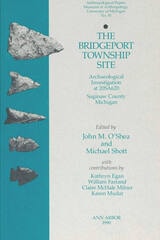
The Bridgeport Township Site
Archaeological Investigation at 20SA620, Saginaw County, MichiganEdited by John M. O'Shea and Michael Shott with contributions by Kathryn Egan, William Farrand, Claire McHale Milner, and Karen Mudar
University of Michigan Press, 1990
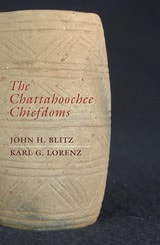
The Chattahoochee Chiefdoms
John H. Blitz and Karl G. Lorenz
University of Alabama Press, 2006
As objects from the mounds were unearthed, occasionally illustrated and discussed in print, attention became focused on the aesthetic qualities of the artifacts, the origins of the remains, and the possible relationship to the Creek Indians. Beginning in the 20th century, new concerns emerged as the developing science of archaeology was introduced to the region. As many of the sites became threatened or destroyed by reservoir construction, trained archaeologists initiated extensive excavations of the mounds. Although classification of artifacts and sites into a chronological progression of cultures was the main objective of this effort, a second concern, sometimes more latent than manifest, was the reconstruction of a past way of life. Archaeologists hoped to achieve a better understanding of the sociopolitical organization of the peoples who built the mounds and of how those organizations changed through time.
Contemporary archaeologists, while in agreement on many aspects of the ancient cultures, debate the causes, forms, and degrees of sociopolitical complexity in the ancient Southeast. Do the mounds mark the capitals of political territories? If so, what was the scale and scope of these ancient “provinces”? What manner of society constructed the mound settlements? What was the sociopolitical organization of these long-dead populations? How can archaeologists answer such queries with the mute and sometimes ordinary materials with which they work: pottery, stone tools, organic residues, and the strata of remnant settlements, buildings, and mounds?
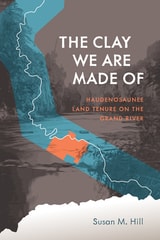
The Clay We Are Made Of
Haudenosaunee Land Tenure on the Grand RiverSusan M. Hill
University of Manitoba Press, 2017
The Collected Works of Benjamin Hawkins, 1796–1810
Benjamin Hawkins, edited and with an introduction by H. Thomas Foster, II
University of Alabama Press, 2003
In 1795 Benjamin Hawkins, a former US senator and advisor to George Washington, was appointed US Indian agent and superintendent of all the tribes south of the Ohio River. Unlike most other agents, he lived among the Creek Indians for his entire tenure, from 1796 to 1816. Journeying forth from his home on the Flint River in Georgia, he served southeastern Indians as government intermediary during one of the longest eras of peace in the historic period.
Hawkins’s journals provide detailed information about European-Indian relations in the 18th-century frontier of the South. His descriptions of the natural and cultural environment are considered among the best sources for the ethnohistory of the Choctaw, Cherokee, Chickasaw, and, especially, the Creek Indians and the natural history of their territory.
Two previously published bodies of work by Benjamin Hawkins are included here—A Sketch of the Creek Country in the Years 1798 and 1799 and The Letters of Benjamin Hawkins 1796-1806. A third body of work that has never been published, “A Viatory or Journal of Distances” (describing routes and distances of a 3,578-mile journey through parts of Georgia, Alabama, and Mississippi), has been added. Together, these documents make up the known body of Hawkins’ work—his talks, treaties, correspondence, aboriginal vocabularies, travel journals, and records of the manners, customs, rites, and civil polity of the tribes. Hawkins' work provides an invaluable record of the time period.
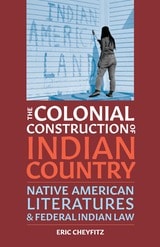
The Colonial Construction of Indian Country
Native American Literatures and Federal Indian LawEric Cheyfitz
University of Minnesota Press, 2024
A guide to the colonization and projected decolonization of Native America
In The Colonial Construction of Indian Country, Eric Cheyfitz mounts a pointed historical critique of colonialism through careful analysis of the dialogue between Native American literatures and federal Indian law. Illuminating how these literatures indict colonial practices, he argues that if the decolonization of Indian country is to be achieved, then federal Indian law must be erased and replaced with independent Native nation sovereignty—because subordinate sovereignty, the historical regime, is not sovereignty at all.
At the same time, Cheyfitz argues that Native American literatures, specifically U.S. American Indian literatures, cannot be fully understood without a knowledge of U.S. federal Indian law: the matrix of colonialism in Indian country. Providing intersectional readings of a range of literary and legal texts, he discusses such authors as Louise Erdrich, Frances Washburn, James Welch, Gerald Vizenor, Simon Ortiz, Leslie Marmon Silko, and others. Cheyfitz examines how American Indian writers and critics have responded to the impact of law on Native life, revealing recent trends in Native writing that build upon traditional modes of storytelling and governance.
With a focus on resistance to the colonial regime of federal Indian law, The Colonial Construction of Indian Country not only elucidates how Native American literatures and federal Indian law are each crucial to any reading of the other, it also guides readers to better understand the genocidal assault on Indigenous peoples by Western structures of literacy, politics, and law.
The Commissioners of Indian Affairs
The United States Indian Service and the Making of Federal Indian Policy, 1824 to 2017David H. DeJong
University of Utah Press, 2020
By examining the work of the Indian affairs commissioners and the assistant secretaries, DeJong gives new insight into how federal Indian policy has evolved and been shaped by the social, political, and cultural winds of the day.
The Common Pot
The Recovery of Native Space in the NortheastLisa Brooks
University of Minnesota Press, 2008
Illuminates the significance of writing to colonial-era Native American resistance
Literary critics frequently portray early Native American writers either as individuals caught between two worlds or as subjects who, even as they defied the colonial world, struggled to exist within it. In striking counterpoint to these analyses, Lisa Brooks demonstrates the ways in which Native leaders—including Samson Occom, Joseph Brant, Hendrick Aupaumut, and William Apess—adopted writing as a tool to reclaim rights and land in the Native networks of what is now the northeastern United States.
“The Common Pot,” a metaphor that appears in Native writings during the eighteenth and nineteenth centuries, embodies land, community, and the shared space of sustenance among relations. Far from being corrupted by forms of writing introduced by European colonizers, Brooks contends, Native people frequently rejected the roles intended for them by their missionary teachers and used the skills they acquired to compose petitions, political tracts, and speeches; to record community councils and histories; and most important, to imagine collectively the routes through which the Common Pot could survive.Reframing the historical landscape of the region, Brooks constructs a provocative new picture of Native space before and after colonization. By recovering and reexamining Algonquian and Iroquoian texts, she shows that writing was not a foreign technology but rather a crucial weapon in the Native Americans’ arsenal as they resisted—and today continue to oppose—colonial domination.The Community Apart
A Case Study of a Canadian Indian Reserve CommunityYngve Georg Lithman
University of Manitoba Press, 1984
The Crimson Cowboys
The Remarkable Odyssey of the 1931 Claflin-Emerson ExpeditionJerry D. Spangler and James M. Aton
University of Utah Press, 2018
In 1931 a group from Harvard University’s Peabody Museum accomplished something that had never been attempted in the history of American archaeology: a six-week, four-hundred-mile horseback survey of Fremont prehistoric sites through some of the West’s most rugged terrain. The expedition was successful, but a report on the findings was never completed. What should have been one of the great archaeological stories in American history was relegated to boxes and files in the basement of the Peabody Museum at Harvard.
Now, based on over a thousand pages of documents (field journals, correspondence, and receipts) and over four hundred photographs, this book recounts the remarkable day-to-day adventures of this crew of one professor, five students, and three Utah guides who braved heat, fatigue, and the dangerous canyon wilderness to reveal vestiges of the Fremont culture in the Tavaputs Plateau and Uinta Basin areas. To better tell this story, authors Spangler and Aton undertook extensive fieldwork to confirm the sites; their recent photographs and those of the original expedition are shared on these pages. This engaging narrative situates the 1931 survey and its discoveries within the history of American archaeology.
Click here for a podcast with the APEX hour and Jim Aton about The Crimson Cowboys.

The Daring Trader
Jacob Smith in the Michigan Territory, 1802-1825Kim Crawford
Michigan State University Press, 2012
A fur trader in the Michigan Territory and confidant of both the U.S. government and local Indian tribes, Jacob Smith could have stepped out of a James Fenimore Cooper novel. Controversial, mysterious, and bold during his lifetime, in death Smith has not, until now, received the attention he deserves as a pivotal figure in Michigan’s American period and the War of 1812. This is the exciting and unlikely story of a man at the frontier’s edge, whose missions during both war and peace laid the groundwork for Michigan to accommodate settlers and farmers moving west. The book investigates Smith’s many pursuits, including his role as an advisor to the Indians, from whom the federal government would gradually gain millions of acres of land, due in large part to Smith’s work as an agent of influence. Crawford paints a colorful portrait of a complicated man during a dynamic period of change in Michigan’s history.
The Deadly Politics of Giving
Exchange and Violence at Ajacan, Roanoke, and JamestownSeth Mallios
University of Alabama Press, 2006
The Development of Southeastern Archaeology
Edited by Jay K. Johnson
University of Alabama Press, 1993
Ten scholars whose specialties range from ethnohistory to remote sensing and lithic analysis to bioarchaeology chronicle changes in the way prehistory in the Southeast has been studied since the 19th century. Each brings to the task the particular perspective of his or her own subdiscipline in this multifaceted overview of the history of archaeology in a region that has had an important but variable role in the overall development of North American archaeology.
Some of the specialties discussed in this book were traditionally relegated to appendixes or ignored completely in site reports more than 20 years old. Today, most are integral parts of such reports, but this integration has been hard won. Other specialties have been and will continue to be of central concern to archaeologists. Each chapter details the way changes in method can be related to changes in theory by reviewing major landmarks in the literature. As a consequence, the reader can compare the development of each subdiscipline.
As the first book of this kind to deal specifically with the region, it be will valuable to archaeologists everywhere. The general reader will find the book of interest because the development of southeastern archaeology reflects trends in the development of social science as a whole.
Contributors include:
Jay K. Johnson, David S. Brose, Jon L. Gibson, Maria O. Smith, Patricia K. Galloway, Elizabeth J. Reitz, Kristen J. Gremillion, Ronald L. Bishop, Veletta Canouts, and W. Fredrick Limp
The Diaries of John Gregory Bourke, Volume 5
May 23, 1881--August 26, 1881Charles M. Robinson III
University of North Texas Press, 2003
The Discovery of New Mexico by the Franciscan Monk Friar Marcos de Niza in 1539
Adolph F. Bandelier; Translated and Edited by Madeleine Turrell Rodack
University of Arizona Press, 1980
The East Florida Expeditions of Clarence Bloomfield Moore
Clarence Bloomfield Moore, edited by Jeffrey M. Mitchem
University of Alabama Press, 1999
A Dan Josselyn Memorial Publication
This comprehensive compilation of Moore's archaeological publications on eastern Florida will prove an invaluable primary resource for Florida archaeologists.
Clarence B. Moore (1852-1936), a wealthy Philadelphia socialite, paper company heir, and photographer made the archaeology of the Southeast his passion beginning in the 1870s. This volume collects 17 of Moore's publications on East Florida, originally published between 1892 and 1903. These invaluable and copiously illustrated works document the results of Moore's numerous archaeological expeditions along Florida's eastern coastline from the Georgia border to Lake Okeechobee and focus primarily on sites along the St. Johns River and its tributaries. Moore's archaeological work in East Florida was arguably his best and most thorough research from a modern perspective.
Jeffrey Mitchem's introduction to this volume describes and analyzes Moore's work in East Florida, summarizes what we know about the sites Moore investigated, and surveys subsequent archaeological work conducted in this area since Moore's expeditions. Mitchem's introduction highlights the significance of Moore's work on the shell heaps along the St. Johns River. It led to the earliest recorded instance of a researcher noting the changes in pottery styles in the region, a major key to establishing chronologies.In 1894, Moore wrote of his hope "that the archaeology of Florida may be redeemed from the obscurity that has hitherto characterized it." Over a century later, this Press has aimed to fulfill Moore's wish by reprinting this and other collections of his archaeological publications.
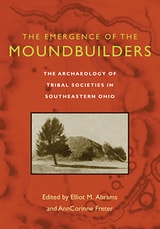
The Emergence of the Moundbuilders
The Archaeology of Tribal Societies in Southeastern OhioElliot M. Abrams
Ohio University Press, 2004
Native American societies, often viewed as unchanging, in fact experienced a rich process of cultural innovation in the millennia prior to recorded history. Societies of the Hocking River Valley in southeastern Ohio, part of the Ohio River Valley, created a tribal organization beginning about 2000 bc.
Edited by Elliot M. Abrams and AnnCorinne Freter, The Emergence of the Moundbuilders: The Archaeology of Tribal Societies in Southeastern Ohio presents the process of tribal formation and change in the region based on analyses of all available archaeological data from the Hocking River Valley. Drawing on the work of scholars in archaeology, anthropology, geography, geology, and botany, the collection addresses tribal society formation through such topics as the first pottery made in the valley, aggregate feasting by nomadic groups, the social context for burying their dead in earthen mounds, the formation of religious ceremonial centers, and the earliest adoption of corn.
Providing the most current research on indigenous societies in the Hocking Valley, The Emergence of the Moundbuilders is distinguished by its broad, comparative overview of tribal life.
The Encyclopedia of Native Music
More Than a Century of Recordings from Wax Cylinder to the InternetBrian Wright-McLeod
University of Arizona Press, 2005
In addition to the widely heard sounds of Carlos Nakai’s flute, Native music embraces a wide range of forms: country and folk, jazz and swing, reggae and rap. Brian Wright-McLeod, producer/host of Canada’s longest-running Native radio program, has gathered the musicians and their music into this comprehensive reference, an authoritative source for biographies and discographies of hundreds of Native artists.
The Encyclopedia of Native Music recognizes the multifaceted contributions made by Native recording artists by tracing the history of their commercially released music. It provides an overview of the surprising abundance of recorded Native music while underlining its historical value.
With almost 1,800 entries spanning more than 100 years, this book leads readers from early performers of traditional songs like William Horncloud to artists of the new millennium such as Zotigh. Along the way, it includes entries for jazz and blues artists never widely acknowledged for their Native roots—Oscar Pettiford, Mildred Bailey, and Keely Smith—and traces the recording histories of contemporary performers like Rita Coolidge and Jimmy Carl Black, “the Indian of the group” in the original Mothers of Invention. It also includes film soundtracks and compilation albums that have been instrumental in bringing many artists to popular attention. In addition to music, it lists spoken-word recordings, including audio books, comedy, interviews, poetry, and more.
With this unprecedented breadth of coverage and extensively cross-referenced, The Encyclopedia of Native Music is an essential guide for enthusiasts and collectors. More than that, it is a gateway to the authentic music of North America—music of the people who have known this land from time immemorial and continue to celebrate it in sound.
The Fast Red Road
A PlainsongStephen Graham Jones
University of Alabama Press, 2000
A road trip through myth, memory, and madness.
The Fast Red Road—A Plainsong is a novel which plunders, in a gleeful, two-fisted fashion, the myth and pop-culture surrounding the American Indian. It is a story fueled on pot fumes and blues, borrowing and distorting the rigid conventions of the traditional western. Indians, cowboys, and outlaws are as interchangeable as their outfits; men strike poses from Gunsmoke, and horses are traded for Trans-Ams. Pidgin, the half-blood protagonist, inhabits a world of illusion—of aliens, ghosts, telekinesis, and water-pistol violence—where television offers redemption, and “the Indian always gets it up the ass.”
Having escaped the porn factories of Utah, Pidgin heads for Clovis, NM to bury his father, Cline. But the body is stolen at the funeral, and Pidgin must recover it. With the aid of car thief Charlie Ward, he criscrosses a wasted New Mexico, straying through bars, junkyards, and rodeos, evading the cops, and tearing through barriers "Dukestyle." "Charlie Ward slid his thin leather belt from his jeans and held it out the window, whipping the cutlass faster, faster, his dyed black hair unbraiding in the fifty mile per hour wind, and they never stopped for gas." Along the way, Pidgin escapes a giant coyote, survives a showdown with Custer, and encounters the remnants of the Goliard Tribe—a group of radicals to which Cline belonged.
Pidgin's search allows him to reconcile the death of his father with five hundred years of colonial myth-making, and will eventually place him in a position to rewrite history. Jones tells his tale in lean, poetic prose. He paints a bleak, fever-burnt west—a land of strip-joints, strip-malls, and all you can eat beef-fed-beef stalls, where the inhabitants speak a raw, disposable lingo. His vision is dark yet frighteningly recognizable. In the tradition of Gerald Vizenor's Griever, The Fast Red Road—A Plainsong blazes a trail through the puppets and mirrors of myth, meeting the unexpected at every turn, and proving that the past—the texture of the road—can and must be changed.

The Feathered Heart
Mark Turcotte
Michigan State University Press, 1998
This revised and expanded edition of The Feathered Heart, Mark Turcotte's celebrated collection of Native American poetry, brings traditional oral culture to print. Torn, painful, vibrant, and full of hope, his poetry weaves together the multilayered and textured fabric of contemporary Native American urban and rural existence. Appropriately, each poem in The Feathered Heart possesses a deeply lyrical quality. Raw emotion echoes in Turcotte's voice, in his verse, in the things he sees. "Ten Thousand Thousand Bones," for example, "a poem about the desecration of Native American burial sites and objects by archeologists," is dedicated "to an ancient woman taken from the Earth near New Lenox, Illinois in the winter 1993/94."
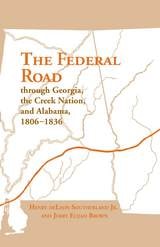
The Federal Road Through Georgia, the Creek Nation, and Alabama, 1806–1836
Henry deLeon Southerland
University of Alabama Press, 1990
The Federal Road was a major influence in settlement of the Mississippi Territory during the period between the Louisiana Purchase and removal of the Creek Indians
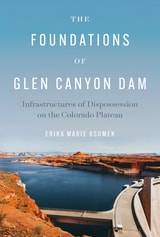
The Foundations of Glen Canyon Dam
Infrastructures of Dispossession on the Colorado PlateauErika Marie Bsumek
University of Texas Press, 2023
2024 Best Indigenous Studies Award, The Mormon History Association
2024 Southwest Book of the Year, Pima County Public Library
A history of how the construction of the Glen Canyon Dam was built and sustained by social inequalities
The second highest concrete-arch dam in the United States, Glen Canyon Dam was built to control the flow of the Colorado River throughout the Western United States. Completed in 1966, the dam continues to serve as a water storage facility for residents, industries, and agricultural use across the American West. The dam also generates hydroelectric power for residents in Colorado, Wyoming, New Mexico, Utah, Nevada, Arizona, and Nebraska. More than a massive piece of physical infrastructure and an engineering feat, the dam exposes the cultural structures and complex regional power relations that relied on Indigenous knowledge and labor while simultaneously dispossessing the Indigenous communities of their land and resources across the Colorado Plateau.
Erika Marie Bsumek reorients the story of the dam to reveal a pattern of Indigenous erasure by weaving together the stories of religious settlers and Indigenous peoples, engineers and biologists, and politicians and spiritual leaders. Infrastructures of dispossession teach us that we cannot tell the stories of religious colonization, scientific exploration, regional engineering, environmental transformation, or political deal-making as disconnected from Indigenous history. This book is a provocative and essential piece of modern history, particularly as water in the West becomes increasingly scarce and fights over access to it continue to unfold.