Results by title
642 books match the query 'Linguistics' and 113 start with t
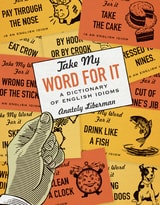
Take My Word for It
A Dictionary of English IdiomsAnatoly Liberman
University of Minnesota Press, 2022
Three centuries of English idioms—their unusual origins and unexpected interpretations
To pay through the nose. Raining cats and dogs. By hook or by crook. Curry favor. Drink like a fish. Eat crow. We hear such phrases every day, but this book is the first truly all-encompassing etymological guide to both their meanings and origins. Spanning more than three centuries, Take My Word for It is a fascinating, one-of-a-kind window into the surprisingly short history of idioms in English. Widely known for his studies of word origins, Anatoly Liberman explains more than one thousand idioms, both popular and obscure, occurring in both American and British standard English and including many regional expressions.
The origins, and even the precise meaning, of most idioms are often obscure and lost in history. Based on a critical analysis of countless conjectures, with exact, in-depth references (rare in the literature on the subject), Take My Word for It provides not only a large corpus of idiomatic phrases but also a vast bibliography. Detailed indexes and a thesaurus make the content accessible at a glance, and Liberman’s introduction and conclusion add historical dimensions. The result of decades of research by a leading authority, this book is both instructive and absorbing for scholars and general readers, who won’t find another resource as comparable in scope or based on data even remotely as exhaustive.
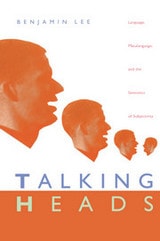
Talking Heads
Language, Metalanguage, and the Semiotics of SubjectivityBenjamin Lee
Duke University Press, 1997
Talking Heads synthesizes the views and works of a breathtaking range of the most influential modern theorists of the humanities and social sciences, including Austin, Searle, Derrida, Jakobson, Bakhtin, Wittgenstein, Peirce, Frege, Kripke, Donnellan, Putnam, Saussure, and Whorf. After illuminating these many strands of thought, Lee moves beyond disciplinary biases and re-embeds within the context of the public sphere the questions of subjectivity and language raised by these theorists. In his examination of how subjectivity relates not just to grammatical patterns but also to the specific social institutions in which these patterns develop and are sustained, Lee discusses such topics as the concept of public opinion and the emergence of Western nation-states.
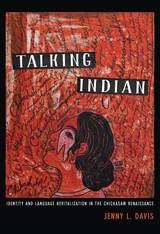
Talking Indian
Identity and Language Revitalization in the Chickasaw RenaissanceJenny L. Davis
University of Arizona Press, 2018
In south-central Oklahoma and much of “Indian Country,” using an Indigenous language is colloquially referred to as “talking Indian.” Among older Chickasaw community members, the phrase is used more often than the name of the specific language, Chikashshanompa’ or Chickasaw. As author Jenny L. Davis explains, this colloquialism reflects the strong connections between languages and both individual and communal identities when talking as an Indian is intimately tied up with the heritage language(s) of the community, even as the number of speakers declines.
Today a tribe of more than sixty thousand members, the Chickasaw Nation was one of the Native nations removed from their homelands to Oklahoma between 1837 and 1838. According to Davis, the Chickasaw’s dispersion from their lands contributed to their disconnection from their language over time: by 2010 the number of Chickasaw speakers had radically declined to fewer than seventy-five speakers.
In Talking Indian, Davis—a member of the Chickasaw Nation—offers the first book-length ethnography of language revitalization in a U.S. tribe removed from its homelands. She shows how in the case of the Chickasaw Nation, language programs are intertwined with economic growth that dramatically reshape the social realities within the tribe. She explains how this economic expansion allows the tribe to fund various language-learning forums, with the additional benefit of creating well-paid and socially significant roles for Chickasaw speakers. Davis also illustrates how language revitalization efforts are impacted by the growing trend of tribal citizens relocating back to the Nation.
Teaching and Learning in Bilingual Classrooms
New ScholarshipKristin J. Mulrooney
Gallaudet University Press, 2014
After extensive SoTL training, the GSTLI professors reviewed interaction in their respective classrooms. Through meticulous study of class videos and written assignments in three General Studies Requirements courses for first-year students, the teachers learned how to ensure connecting with students who have a variety of language differences and communication methods.
The other professors assessed bottlenecks in classes on the linguistic structure of ASL, and on criminal justice. The linguistics professor identified the bottleneck as the students’ inability to conceptualize the interrelationship between definitions and examples, a fundamental skill to scientific thinking. In the criminal justice class, the professor saw the need to guide students through linguistic bottlenecks by providing materials in both ASL and English. The successes of the GSTLI presented in this unique volume can benefit other teachers by better preparing them to meet the needs of bilingual diverse learners in more effective ways.
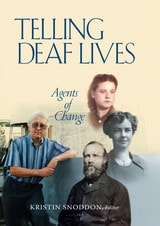
Telling Deaf Lives
Agents of ChangeKristin Snoddon
Gallaudet University Press, 2014
Due to the dearth of formal research on deaf people, Deaf community historians drove the preservation of the stories in this collection. Their diversity is remarkable: Melissa Anderson and Breda Carty describe the Cosmopolitan Correspondence Club, a group of Deaf individuals who corresponded in the early 20th century from Australia to Western Europe to the United States; Ulla-Bell Thorin recounts first-hand growing up deaf in Sweden and her process in authoring six memoirs; Harry Lang reflects on writing biographies of numerous Deaf Americans in the arts and science; Akio Suemori profiles the first Deaf president of a Japanese school for the Deaf; Tatiana Davidenko writes about her Deaf family’s experience during the World War II siege of Leningrad; Theara Yim and Julie Chateauvert look at the evolution of ASL poetry by analyzing works of prominent ASL poets Clayton Valli, Peter Cook, and Kenny Lerner. These and the other contributions here enshrine Deaf people in collective memory by virtue of disseminating and preserving their stories.

Tender Grammars
Serena Alagappan
Duke University Press, 2027
Tense and Narrativity
From Medieval Performance to Modern FictionBy Suzanne Fleischman
University of Texas Press, 1990
In this pathfinding study, Suzanne Fleischman brings together theory and methodology from various quarters to shed important new light on the linguistic structure of narrative, a primary and universal device for translating our experiences into language.
Fleischman sees linguistics as laying the foundation for all narratological study, since it offers insight into how narratives are constructed in their most primary context: everyday speech. She uses a linguistic model designed for "natural" narrative to explicate the organizational structure of "artificial" narrative texts, primarily from the Middle Ages and the postmodern period, whose seemingly idiosyncratic use of tenses has long perplexed those who study them. Fleischman develops a functional theory of tense and aspect in narrative that accounts for the wide variety of functions—pragmatic as well as grammatical—that these two categories of grammar are called upon to perform in the linguistic economy of a narration.
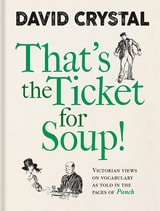
That’s the Ticket for Soup!
Victorian Views on Vocabulary as Told in the Pages of PunchDavid Crystal
Bodleian Library Publishing, 2020
The vocabulary of the past is always intriguing, especially when it is no longer used in modern English. Many of the words and phrases that were popular in Victorian England may sound foreign today, but looking to original sources and texts can yield fascinating insight, especially when we see how vocabulary was pilloried by the satirists of the day.
In That’s the Ticket for Soup!, the renowned language expert David Crystal returns to the pages of Punch magazine, England’s widely read satirical publication. Crystal has pored through the pages of Punch between its first issue in 1841 and the death of Queen Victoria in 1901 and extracted the articles and cartoons that poked fun at the jargon of the day. Here we have Victorian high and low society, with its fashionable and unfashionable slang, its class awareness on display in the vocabulary of steam engines, motor cars, and other products of the Industrial Revolution. Then, as now, people had strong feelings about the flood of new words entering English. Swearing, new street names, and the many borrowings from French provoked continual irritation and mockery, as did the Americanisms increasingly encountered in the British press. In addition to these entertaining examples, Crystal includes commentary on the context of the times and informative glossaries. This original and amusing collection reveals how many present-day feelings about words can be traced to the satire of a century ago.

The Afro-Bolivian Spanish Determiner Phrase
A Microparametric AccountSandro Sessarego
The Ohio State University Press, 2014
This dialect presents phenomena that offer a real challenge to current linguistic theory. The Afro-Bolivian Spanish Determiner Phrase elaborates on the importance of enhancing a stronger dialogue between formal generative theory and sociolinguistic methodology, in line with recent work in the field of minimalist syntax. Sessarego’s study combines sociolinguistic techniques of data collection with generative models of data analysis to obtain more fine-grained, empirically testable generalizations.

The Alchemy of English
The Spread, Functions, and Models of Non-native EnglishesBraj Kachru
University of Illinois Press, 1990
of an entire field, rather than merely the fruitful exploration of a topic.
. . . [Kachru] is to be congratulated for having taken us as far as he
already has and for doing so in so stimulating and so productive a fashion."
-- World Englishes
"A potent addition to theoretical, sociolinguistic, attitudinal
and methodological explorations vis-à-vis the spread and functions
of, and innovations in, English from the viewpoint of a non-Western scholar."
-- The Language Teacher
Winner of the Joint First Prize, Duke of Edinburgh English Language
Book Competition of the English-Speaking Union of the Commonwealth, 1987
The Arapaho Language
Andrew Cowell
University Press of Colorado, 2015
Cowell and Moss detail strategies used by speakers of this highly polysynthetic language to form complex words and illustrate how word formation interacts with information structure. They discuss word order and discourse-level features, treat the special features of formal discourse style and traditional narratives, and list gender-specific particles, which are widely used in conversation. Appendices include full sets of inflections for a variety of verbs.
Arapaho is spoken primarily in Wyoming, with a few speakers in Oklahoma. The corpus used in The Arapaho Language spans more than a century of documentation, including multiple speakers from Wyoming and Oklahoma, with emphasis on recent recordings from Wyoming. The book cites approximately 2,000 language examples drawn largely from natural discourse - either recorded spoken language or texts written by native speakers.
With The Arapaho Language, Cowell and Moss have produced a comprehensive document of a language that, in its departures from its nearest linguistic neighbors, sheds light on the evolution of grammar.
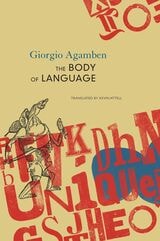
The Body of Language
esperruquancluzelubelouzerireluGiorgio Agamben
Seagull Books, 2025
An erudite exploration of transgressive language from the Renaissance by one of Europe’s greatest living philosophers.
This book explores how early modern authors broke linguistic boundaries, creating new words and languages that challenged traditional grammar and lexicon, providing historical insight into today’s debates on the politics of language. Through a scholarly analysis by Giorgio Agamben, the text delves into the boundary-shifting language of the Renaissance, exemplified by giants like Pantagruel and Gargantua, whose outsized bodies mirror the vastness of their speech. The macaronic language invented by Teofilo Folengo, blending Latin and vernacular, embodies a linguistic rebellion that transforms language into a tangible, unruly force. Featuring illustrations from the Songes drolatiques de Pantagruel and Folengo’s Baldo, this volume offers a vivid portrayal of language as a physical, dynamic entity that defies grammatical norms.
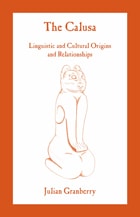
The Calusa
Linguistic and Cultural Origins and RelationshipsJulian Granberry
University of Alabama Press, 2012
Presents a full phonological and morphological analysis of the total corpus of surviving Calusa language data left by a literate Spanish captive held by the Calusa from his early youth to adulthood
The linguistic origins of Native American cultures and the connections between these cultures as traced through language in prehistory remain vexing questions for scholars across multiple disciplines and interests. Native American linguist Julian Granberry defines the Calusa language, formerly spoken in southwestern coastal Florida, and traces its connections to the Tunica language of northeast Louisiana.
Archaeologists, ethnologists, and linguists have long assumed that the Calusa language of southwest Florida was unrelated to any other Native American language. Linguistic data can offer a unique window into a culture’s organization over space and time; however, scholars believed the existing lexical data was insufficient and have not previously attempted to analyze or define Calusa from a linguistic perspective.
In The Calusa: Linguistic and Cultural Origins and Relationships, Granberry presents a full phonological and morphological analysis of the total corpus of surviving Calusa language data left by a literate Spanish captive held by the Calusa from his early youth to adulthood. In addition to further defining the Calusa language, this book presents the hypothesis of language-based cultural connections between the Calusa people and other southeastern Native American cultures, specifically the Tunica. Evidence of such intercultural connections at the linguistic level has important implications for the ongoing study of life among prehistoric people in North America. Consequently, this thoroughly original and meticulously researched volume breaks new ground and will add new perspectives to the broader scholarly knowledge of ancient North American cultures and to debates about their relationships with one another.
The Clan of the Flapdragon and Other Adventures in Etymology by B. M. W. Schrapnel, Ph.D.
Richard McKee
University of Alabama Press, 1997
This potpourri of satire on language use in Western culture will trigger chuckles and guffaws from an eclectic readership
In The Clan of the Flapdragon and Other Adventures in Etymology by B. M. W. Schrapnel, Ph.D., the pseudonymous critic satirizes a variety of subjects in and out of academe. These adventurous essays include lampoons on writing, language, and literature, and the collection is a delightful spoof of much in contemporary culture—especially areas of intellectual pretension. Readers will be entertained by anachronistic allusions, improbable parodies, whimsical etymologies, tongue-in-cheek word play, and stunning purple prose—examples of just some of the liberties Schrapnel takes with the language.
Dr. Schrapnel includes a wide array of audience reactions in the form of bogus letters from fictional readers, confirming that language and literature are everyone’s business. He also offers an annual list of words that writers and speakers should use more often—a lexicographer’s equivalent to the endangered species list—and coins terms such as prufrockery and grendelish.
The Comparative Method of Language Acquisition Research
Clifton Pye
University of Chicago Press, 2017
Pye here applies the comparative method to three Mayan languages—K’iche’, Mam, and Ch’ol—showing how differences in the use of verbs are connected to differences in the subject markers and pronouns used by children and adults. His holistic approach allows him to observe how small differences between the languages lead to significant differences in the structure of the children’s lexicon and grammar, and to learn why that is so. More than this, he expects that such careful scrutiny of related languages’ variable solutions to specific problems will yield new insights into how children acquire complex grammars. Studying such an array of related languages, he argues, is a necessary condition for understanding how any particular language is used; studying languages in isolation, comparing them only to one’s native tongue, is merely collecting linguistic curiosities.
The Construction of Meaning
Edited by David I. Beaver, Luis D. Casillas Martinez, Brady Z. Clark, and Stefan
CSLI, 2002
The Converting Imagination
Linguistic Theory and Swift's Satiric ProseMarilyn Francus
Southern Illinois University Press, 1994
By illuminating Jonathan Swift’s fascination with language, Marilyn Francus shows how the linguistic questions posed by his work are at the forefront of twentieth-century literary criticism: What constitutes meaning in language? How do people respond to language? Who has (or should have) authority over language? Is linguistic value synonymous with literary value?
Francus starts with a detailed analysis of Swift’s linguistic education, which straddled a radical transition in linguistic thought, and its effect on his prose. This compelling beginning includes sometimes surprising historical information about the teaching and learning of linguistics and language theory in the seventeenth and eighteenth centuries. Swift’s academic studies reflected the traditional universalist view that seeks an Adamic language to reverse the fragmentation of Babel and achieve epistemological unity. But Swift’s tutor also exposed him to the contemporary linguistics of the scientific societies and of John Locke, who argued that the assignment of linguistic meaning is arbitrary and subjective, capturing an individual’s understanding at a particular instant. These competing theories, Francus maintains, help explain the Irish writer’s conflicting inclinations toward both linguistic order and freewheeling creativity.
To develop a complete vision of Swiftian linguistics, Francus focuses on A Tale of a Tub as the archetypal linguistic text in the Swift canon, but she also includes evidence from his other famous works, including Gulliver’s Travels, A Modest Proposal, Journal to Stella, and The Bickerstaff Papers, as well as from his lesser known religious and political tracts and his correspondence. In addition, Francus draws on the relevant work of contemporary linguists (such as Wilkins, Watts, Dyche, and Stackhouse), philosophers (Hobbes and Locke), and authors (including Temple, Sprat, Dryden, Pope, Addison, and Defoe).
Francus concludes that Swift occupies a pivotal place in literary history: his conscious emphasis on textuality and extended linguistic play anticipates not only the future of satiric prose but the modern novel as well.

The Core and the Periphery
Data-Driven Perspectives on Syntax Inspired by Ivan A. SagEdited by Philip Hofmeister and Elisabeth Norcliffe
CSLI, 2013
The Crip Linguistics Reader
Octavian Robinson
Gallaudet University Press, 2025
The Deseret Alphabet
A Fixed and Unalterable SoundRyan K. Shosted and N. E. Davis
University of Illinois Press, 2026
Shosted and Davis draw on a wide range of sources, including previously unpublished archival material, to trace the alphabet’s roots in Joseph Smith’s esoteric translations and its role in shaping Latter-day Saint identity. Their account brings together theology, linguistics, and culture. As they show, the Deseret Alphabet remains relevant as a living artifact of a religion wrestling with its visionary origins and the divine potential of words.
In-depth and up to date, The Deseret Alphabet traces the script’s creation, use, and legacy across Latter-day Saint history.

The Design of Agreement
Evidence from ChamorroSandra Chung
University of Chicago Press, 1998
The Discourse of Police Interviews
Edited by Marianne Mason and Frances Rock
University of Chicago Press, 2020
The first book to focus exclusively on the discourses of police interviewing, The Discourse of Police Interviews examines leading debates, approaches, and topics in contemporary police interview research. Among other topics, the book explores the sociolegal, psychological, and discursive framework of popular police interview techniques employed in the United States and the United Kingdom, such as PEACE and Reid, and the discursive practices of institutional representatives like police officers and interpreters that can influence the construction and quality of linguistic evidence. Together, the contributions situate the police interview as part of a complex, and multistage, criminal justice process. The book will be of interest to both scholars and practitioners in a variety of fields, such as linguistic anthropology, interpreting studies, criminology, law, and sociology.
The Dynamics of Lexical Interfaces
Ruth Kempson, Eleni Gregoromichelaki, Christine Howes
CSLI, 2011
Dynamic Syntax is a formal model of utterance description that attempts to articulate and substantiate the claim that human linguistic knowledge is essentially the ability to process language in context. The model provides an explicit demonstration of how interpretation is built up incrementally from the information provided by the words as they are encountered. Drawing from a range of analyses of natural language data, the authors use formal definitions, step-by-step derivations, and detailed lexical definitions to illustrate this new form of syntactic analysis and to show how the model can be applied to a broad range of constructions and languages.
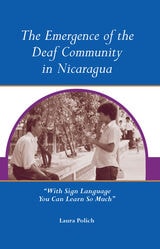
The Emergence of the Deaf Community in Nicaragua
“With Sign Language You Can Learn So Much”Laura Polich
Gallaudet University Press, 2005
The sudden discovery of Nicaraguan Sign Language (NSL) enthralled scholars worldwide who hoped to witness the evolution of a new language. But controversy erupted regarding the validity of NSL as a genuinely spontaneous language created by young children. Laura Polich’s fascinating book recounts her nine-year study of the Deaf community in Nicaragua and her findings about its formation and that of NSL in its wake.
Polich crafted The Emergence of the Deaf Community in Nicaragua from her copious research in Nicaragua’s National Archives, field observations of deaf pupils in 20 special education schools, polls of the teachers for deaf children about their education and knowledge of deafness, a survey of 225 deaf individuals about their backgrounds and living conditions, and interviews with the oldest members of the National Nicaraguan Association of the Deaf.
Polich found that the use of a “standardized” sign language in Nicaragua did not emerge until there was a community of users meeting on a regular basis, especially beyond childhood. The adoption of NSL did not happen suddenly, but took many years and was fed by multiple influences. She also discovered the process that deaf adolescents used to attain their social agency, which gained them recognition by the larger Nicaraguan hearing society. Her book illustrates tremendous changes during the past 60 years, and the truth in one deaf Nicaraguan’s declaration, “With sign language you can learn so much.”

The Empirical Base of Linguistics
Grammaticality Judgments and Linguistic MethodologyCarson T. Schütze
University of Chicago Press, 1996
Integrating substantive and methodological findings, Schütze proposes a model in which judgments result from interactions of linguistic competence with general cognitive processes, and offers practical suggestions about collecting more useful data. The result is a work of importance to linguists, cognitive psychologists, and philosophers of language alike.
The Gaelic Crisis in the Vernacular Community
A Comprehensive Sociolinguistic Survey of Scottish GaelicConchúr Ó Giollagáin, Gòrdan Camshron, Pàdruig Moireach, Brian Ó Curnáin, Iain Caimbeul, Brian MacDonald and Tamás Péterváry
Aberdeen University Press, 2020
The Geometry of Visual Phonology
Linda Ann N. Uyechi
CSLI, 1996
The Grammar of Negation
Jong-Bok Kim
CSLI, 2000
The Great Eskimo Vocabulary Hoax and Other Irreverent Essays on the Study of Language
Geoffrey K. Pullum
University of Chicago Press, 1991
Geoffrey K. Pullum's writings began as columns in Natural Language and Linguistic Theory in 1983. For six years, in almost every issue, under the banner "TOPIC. . .COMMENT," he published a captivating mélange of commentary, criticism, satire, whimsy, and fiction. Those columns are reproduced here—almost exactly as his friends and colleagues originally warned him not to publish them—along with new material including a foreword by James D. McCawley, a prologue, and a new introduction to each of these clever pieces. Whether making a sneak attack on some sacred cow, delivering a tongue-in-cheek protest against current standards, or supplying a caustic review of some recent development, Pullum remains in touch with serious concerns about language and society. At the same time, he reminds the reader not to take linguistics too seriously all of the time.
Pullum will take you on an excursion into the wild and untamed fringes of linguistics. Among the unusual encounters in store are a conversation between Star Trek's Commander Spock and three real earth linguists, the strange tale of the author's imprisonment for embezzling funds from the Campaign for Typographical Freedom, a harrowing account of a day in the research life of four unhappy grammarians, and the true story of how a monograph on syntax was suppressed because the examples were judged to be libelous. You will also find a volley of humorous broadsides aimed at dishonest attributional practices, meddlesome copy editors, mathematical incompetence, and "cracker-barrel philosophy of science." These learned and witty pieces will delight anyone who is fascinated by the quirks of language and linguists.
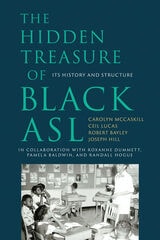
The Hidden Treasure of Black ASL
Its History and StructureCarolyn McCaskill
Gallaudet University Press, 2020
Black ASL has long been recognized as a distinct variety of American Sign Language based on abundant anecdotal evidence. The Hidden Treasure of Black ASL, originally published in 2011, presents the first sociohistorical and linguistic study of this language variety. Based on the findings of the Black ASL Project, which undertook this unprecedented research, Hidden Treasure documents the stories and language of the African American Deaf community. With links to online supplemental video content that includes interviews with Black ASL users (formerly on DVD), this volume is a groundbreaking scholarly contribution and a powerful affirmation for Black Deaf people.
This paperback edition includes an updated foreword by Glenn B. Anderson, a new preface that reflects on the impact of this research, and an expanded list of references and resources on Black ASL.
The supplemental video content is available online at the Gallaudet University Press YouTube Channel. Under Playlists, click “The Hidden Treasure of Black ASL: Companion Video to the Book.” The original Black ASL Project research videos are also available.
Featured in the film Signing Black in America: The Story of Black ASL, produced by The Language and Life Project at North Carolina State University (Dr. Walt Wolfram, Executive Producer). Look for it on PBS.
The History of Tense/Aspect/Mood/Voice in the Mayan Verbal Complex
By John S. Robertson
University of Texas Press, 1992
Mayan civilization, renowned for its mathematics, writing, architecture, religion, calendrics, and agriculture, fascinates scholars and a wide lay public as archaeology and glyphic decipherment reveal more of its secrets. In this pathfinding study of the Mayan language family, John S. Robertson explores major changes that have occurred in the core of Mayan grammar from the earliest, reconstructed ancestral language down through the colonial languages to the modern languages that are spoken today.
Building on groundwork already laid in phonological studies and in the study of the pronominal system, Robertson's examination of tense/ aspect/ mood/voice is the next logical step in the general linguistic study of Mayan. Robertson offers careful consideration of all the major subgroups of Mayan, from Yucatecan to Quichean, as they are spoken today. He also draws extensively on colonial documents assembled by bilingual Spanish-Mayan speaking clerics. These documents provide a check on the accuracy of both the reconstructed ancient language, Common Mayan, and the theoretical evolution of the modern languages from this ancestor. The study will also be of value to students of the Maya glyphs, since it discusses the grammatical system that most probably underlies the glyphic representations.
Beyond its obvious interest for Mayan linguistics, the study proposes a theory of language change that will be important for all students of comparative linguistics. Robertson's work sets forth the basic, universal assumptions that provide for an appropriate description of the grammatical systems of all languages. It will be a significant reference for future researchers.
The Holocaust & the Exile of Yiddish
A History of the Algemeyne EntsiklopedyeBarry Trachtenberg
Rutgers University Press, 2022
The Holocaust & the Exile of Yiddish untangles the complicated saga of the Algemeyne entsiklopedye and its editors. The editors continued to publish volumes and revise the encyclopedia’s mission while their primary audience, Eastern European Jews, faced persecution and genocide under Nazi rule, and the challenge of reestablishing themselves in the first decades after World War II. Historian Barry Trachtenberg reveals how, over the course of the middle decades of the twentieth century, the project sparked tremendous controversy in Jewish cultural and political circles, which debated what the purpose of a Yiddish encyclopedia should be, as well as what knowledge and perspectives it should contain. Nevertheless, this is not only a story about destruction and trauma, but also one of tenacity and continuity, as the encyclopedia’s compilers strove to preserve the heritage of Yiddish culture, to document its near-total extermination in the Holocaust, and to chart its path into the future.
The Indo-European Dialects
Antoine Meillet
University of Alabama Press, 1967
The Indo‑European Dialects is a foundational work of historical linguistics that investigates how the Indo‑European language family diversified into its major regional branches. Originally delivered as lectures and first published in the early twentieth century, the book remains essential reading for understanding how phonological, morphological, and lexical evidence reveals ancient patterns of language contact, migration, and cultural development. Including Indo‑European, Indo‑Iranian, Greek, Italic (including Latin), Celtic, Germanic, Baltic, Slavic, Armenian, Albanian, Anatolian, and Tocharian, Meillet’s comparative approach situates dialect differences within a broader historical framework, making this volume a lasting contribution to Indo‑European studies and to the methods of linguistic reconstruction more generally.
The author, Antoine Meillet, was one of the most influential linguists of the twentieth century and a central figure in the development of Indo‑European comparative grammar. This edition is expertly translated by Samuel N. Rosenberg, whose careful scholarship preserves Meillet’s analytical precision while making the work accessible to modern English‑language readers. The volume is further enhanced by scholarly notes, bibliographical references, and indexes that increase its usefulness for research and teaching.
This book will be of interest to linguists, philologists, classicists, and historians of language, as well as graduate and advanced undergraduate students studying historical linguistics. It will also appeal to readers interested in how language evidence informs the study of prehistoric societies and cultural connections across Europe and Asia.
The Interaction of Tone with Voicing and Foot Structure
Evidence from Kera Phonetics and PhonologyMary D. Pearce
CSLI, 2013
This book investigates the topics of tone, vowel harmony, and metrical structure, with special reference to Kera, a Chadic language spoken in Chad and Cameroon. Kera is a tone language where a change in the pitch of the word can make a difference to its meaning. Drawing on a decade of experience living and working with the Kera, Mary D. Pearce looks at both the phonetics and phonology to examine how tone interacts with the vowel quality and rhythm of the language. The implications arising from this research are relevant for phonologists and Africanists far beyond the boundaries of Chad and should be useful to anyone working on languages with interesting tonal and rhythmic properties.
The Interpretation of Dialogue
Edited by Tulio Maranhão
University of Chicago Press, 1990
The Know-Nothing Campaign Against Higher Learning
James Chandler
Prickly Paradigm Press, 2026
Irony and satire in the contemporary American moment.
The second Trump administration has committed itself to upending the knowledge systems and deliberative institutions that have been essential to modern democracy, with the American university—site of scientific research and liberal education—a primary target. In The Know-Nothing Campaign Against Higher Learning, literary and film critic James Chandler spotlights an American tradition of such hostility to intellectual life, especially the nativist movement of the 1850s that persecuted Catholic immigrants from Ireland and Germany. Ironically, Steve Bannon, the self-proclaimed “Know-Nothing vulgarian” who long ago recruited candidate Trump to his anti-intellectual crusade, is himself the great-grandson of an Irish immigrant who would have faced Know-Nothing backlash in that era.
Such dark ironies define our moment, Chandler argues, and they call out not only for intellectual critique but also for satire. Yet in the midst of the MAGA campaign’s calamitous effects on American public discourse, even satire must confront the “kayfabe” practices imported by Trump from professional wrestling, which mix illusion and reality to turn political life into a “spectacle without thought.” Drawing widely on cultural critics from Jonathan Swift and Alexis de Tocqueville to Roland Barthes, Chandler’s pamphlet offers an elegant and bracing account of the MAGA campaign against higher learning and its transformative effects on criticism and democracy itself.
The Language Parallax
Linguistic Relativism and Poetic IndeterminacyBy Paul Friedrich
University of Texas Press, 1986
Humankind has always been fascinated and troubled by the way languages and dialects differ. Linguistically based differences in point of view have preoccupied many original minds of the past, such as Kant, and remain at the forefront of language study: in philosophy, anthropology, literary criticism, and other fields.
Paul Friedrich's The Language Parallax argues persuasively that the "locus and focus" of differences among languages lies not so much in practical or rational aspects as in the complexity and richness of more poetic dimensions—in the nuances of words, or the style and voice of an author. This poetic reformulation of what has been called "linguistic relativism" is grounded in the author's theory of the imagination as a main source of poetic indeterminacy. The reformulation is also based on the intimate relation of the concentrated language of poetry to the potential or possibilities for poetry in ordinary conversation, dreams, and other experiences. The author presents challenging thoughts on the order and system of language in their dynamic relation to indeterminacy and, ultimately, disorder and chaos.
Drawing on his considerable fieldwork in anthropology and linguistics, Friedrich interweaves distinct and provocative elements: the poetry of language difference, the indeterminacy in dialects and poetic forms, the discovery of underlying orders, the workings of different languages, the strength of his own poetry. The result is an innovative and organic whole.
The Language Parallax, then, is a highly original work with a single bold thesis. It draws on research and writing that has involved, in particular, English, Russian, and the Tarascan language of Mexico, as well as the personal and literary study of the respective cultures. Anthropologist, linguist, and poet, Friedrich synthesizes from his experience in order to interrelate language variation and structure, the creative individual, ideas of system-in-process, and questions of scientific and aesthetic truth. The result is a new view of language held to the light of its potentially creative nature.

The Language of Languages
Ngugi wa Thiong’o
Seagull Books, 2023
With clear, conversational prose, this is the first book dedicated entirely to Ngũgĩ wa Thiong’o’s writings on translation.
Through his many critically acclaimed novels, stories, essays, plays, and memoirs, Kenyan writer Ngũgĩ wa Thiong’o has been at the forefront of world literature for decades. He has also been, in his own words, “a language warrior,” fighting for indigenous African languages to find their rightful place in the literary world. Having begun his writing career in English, Ngũgĩ shifted to writing in his native language Gikũyũ in 1977, a stance both creatively and politically significant. For decades now, Ngũgĩ has been translating his Gikũyũ works into English himself, and he has used many platforms to champion the practice and cause of literary translations, which he calls “the language of languages.”
This volume brings together for the first time Ngũgĩ’s essays and lectures about translation, written and delivered over the past two decades. Here we find Ngũgĩ discussing translation as a conversation between cultures, proposing that dialogue among African languages is the way to unify African peoples, reflecting on the complexities of auto-translation or translating one’s own work, exploring the essential task translation performed in the history of the propagation of thought, and pleading for the hierarchy of languages to be torn down. He also shares his many experiences of writing across languages, including his story The Upright Revolution, which has been translated into more than a hundred languages around the globe and is the most widely translated text written by an African author.
At a time when dialogues between cultures and peoples are more essential than ever, The Language of Languages makes an outspoken case for the value of literature without borders.
The Language of Statutes
Laws and Their InterpretationLawrence M. Solan
University of Chicago Press, 2010
Pulling the rug out from debates about interpretation, The Language of Statutes joins together learning from law, linguistics, and cognitive science to illuminate the fundamental issues and problems in this highly contested area. Here, Lawrence M. Solan argues that statutory interpretation is alive, well, and not in need of the major overhaul that many have suggested. Rather, he suggests, the majority of people understand their rights and obligations most of the time, with difficult cases occurring in circumstances that we can predict from understanding when our minds do not work in a lawlike way.
Solan explains that these cases arise because of the gap between our inability to write crisp yet flexible laws on one hand and the ways in which our cognitive and linguistic faculties are structured on the other. Making our lives easier and more efficient, we’re predisposed to absorb new situations into categories we have previously formed—but in the legislative and judicial realms this can present major difficulties. Solan provides an excellent introduction to statutory interpretation, rejecting the extreme arguments that judges have either too much or too little leeway, and explaining how and why a certain number of interpretive problems are simply inevitable.

The Language of the Inka since the European Invasion
By Bruce Mannheim
University of Texas Press, 1991
The Inka empire, Tawantinsuyu, fell to Spanish invaders within a year's time (1532-1533), but Quechua, the language of the Inka, is still the primary or only language of millions of Inka descendants throughout the southern Andes. In this innovative study, Bruce Mannheim synthesizes all that is currently known about the history of Southern Peruvian Quechua since the Spanish invasion, providing new insights into the nature of language change in general, into the social and historical contexts of language change, and into the cultural conditioning of linguistic change.
Mannheim first discusses changes in the social setting of language use in the Andes from the time of the first European contact in the sixteenth century until today. He reveals that the modern linguistic homogeneity of Spanish and Quechua is a product of the Spanish conquest, since multilingualism was the rule in the Inka empire. He identifies the social and political forces that have influenced the kinds of changes the language has undergone. And he provides the first synthetic history of Southern Peruvian Quechua, making it possible at last to place any literary document or written text in a chronological and social context.
Mannheim also studies changes in the formal structure of Quechua. He finds that changes in the sound system were motivated primarily by phonological factors and also that the changes were constrained by a set of morphological and syntactic conditions. This last conclusion is surprising, since most historical linguists assume that sound change is completely independent of other aspects of language. Thus, The Language of the Inka since the European Invasion makes an empirical contribution to a general theory of linguistic change.
Written in an engaging style that is accessible to the nonlinguist, this book will have a special appeal to readers interested in the history and anthropology of native South America.
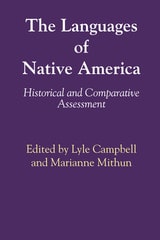
The Languages of Native America
Historical and Comparative AssessmentEdited by Lyle Campbell and Marianne Mithun
University of Texas Press, 1979
These essays were drawn from the papers presented at the Linguistic Society of America's Summer Institute at the State University of New York at Oswego in 1976. The contents are as follows:
- Lyle Campbell and Marianne Mithun, "Introduction: North American Indian Historical Linguistics in Current Perspective"
- Ives Goddard, "Comparative Algonquian"
- Marianne Mithun, "Iroquoian"
- Wallace L. Chafe, "Caddoan"
- David S. Rood, "Siouan"
- Mary R. Haas, "Southeastern Languages"
- James M. Crawford, "Timucua and Yuchi: Two Language Isolates of the Southeast"
- Ives Goddard, "The Languages of South Texas and the Lower Rio Grande"
- Irvine Davis, "The Kiowa-Tanoan, Keresan, and Zuni Languages"
- Susan Steele, "Uto-Aztecan: An Assessment for Historical and Comparative Linguistics"
- William H. Jacobsen, Jr., "Hokan lnter-Branch Comparisons"
- Margaret Langdon, "Some Thoughts on Hokan with Particular Reference to Pomoan and Yuman"
- Michael Silverstein, "Penutian: An Assessment"
- Laurence C. Thompson, "Salishan and the Northwest"
- William H. Jacobsen, Jr., "Wakashan Comparative Studies"
- William H. Jacobsen, Jr., "Chimakuan Comparative Studies"
- Michael E. Krauss, "Na-Dene and Eskimo-Aleut"
- Lyle Campbell, "Middle American Languages"
- Eric S. Hamp, "A Glance from Now On"
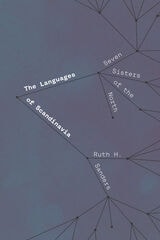
The Languages of Scandinavia
Seven Sisters of the NorthRuth H. Sanders
University of Chicago Press, 2017
While the two linguistic families that comprise Scandinavia’s languages ultimately have differing origins, the Seven Sisters have coexisted side by side for millennia. As Sanders reveals, a crisscrossing of names, territories, and even to some extent language genetics—intimate language contact—has created a body of shared culture, experience, and linguistic influences that is illuminated when the story of these seven languages is told as one. Exploring everything from the famed whalebone Lewis Chessmen of Norse origin to the interactions between the Black Death and the Norwegian language, The Languages of Scandinavia offers profound insight into languages with a cultural impact deep-rooted and far-reaching, from the Icelandic sagas to Swedish writer Stieg Larsson’s internationally popular Millennium trilogy. Sanders’s book is both an accessible work of linguistic scholarship and a fascinating intellectual history of language.
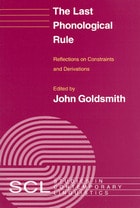
The Last Phonological Rule
Reflections on Constraints and DerivationsEdited by John A. Goldsmith
University of Chicago Press, 1993
In this provocative book, leading linguists and computer scientists consider the challenges that computational innovations pose to current rule-based phonological theories and speculate about the advantages of phonological models based on artificial neural networks and other computer designs. The authors offer new conceptions of phonological theory for the 1990s, the most radical of which proposes that phonological processes cannot be characterized by rules at all, but arise from the dynamics of a system of phonological representations in a high-dimensional vector space of the sort that a neural network embodies. This new view of phonology is becoming increasingly attractive to linguists and others in the cognitive sciences because it answers some difficult questions about learning while drawing on recent results in philosophy, psychology, artificial intelligence, and neuroscience.
The contributors are John A. Goldsmith, Larry M. Hyman, George Lakoff, K. P. Mohanan, David S. Touretzky, and Deirdre W. Wheeler.
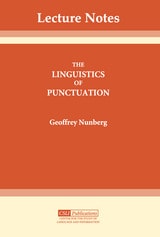
The Linguistics of Punctuation
Geoffrey Nunberg
CSLI, 1990
The Madison Women
Gender, Higher Education, and Literacy in Nineteenth-Century AppalachiaAmanda E Hayes
West Virginia University Press, 2024
Incorporating captivating mini-biographies of women who attended Madison College and who went on to change their communities in ways large and small, this book reveals how the lives of its students impart lessons about history, regional culture, and how we can shape the Appalachia's future.
The Many Faces of Agreement
Morphology, Syntax, Semantics, and Discourse Factors in Serbo-Croatian AgreementStephen Wechsler and Larisa Zlatic
CSLI, 2003
With this framework in place, the authors explore a number of factors that affect agreement processes. The theory even explains the striking cross-linguistic generalizations expressed in Corbett's Agreement Hierarchy. Agreement is shown to be a distributed phenomenon, manifesting its many faces among the various components of grammar.
The Music between Us
Is Music a Universal Language?Kathleen Marie Higgins
University of Chicago Press, 2012
The Nature of Explanation in Linguistic Theory
Edited by John Moore and Maria Polinsky
CSLI, 2003
The Nature of Legal Interpretation
What Jurists Can Learn about Legal Interpretation from Linguistics and PhilosophyEdited by Brian G. Slocum
University of Chicago Press, 2017
To fully engage and probe these questions of interpretation, this volume draws upon a variety of experts from several fields, who collectively examine the interpretation of legal texts. In The Nature of Legal Interpretation, the contributors argue that the meaning of language is crucial to the interpretation of legal texts, such as statutes, constitutions, and contracts. Accordingly, expert analysis of language from linguists, philosophers, and legal scholars should influence how courts interpret legal texts. Offering insightful new interdisciplinary perspectives on originalism and legal interpretation, these essays put forth a significant and provocative discussion of how best to characterize the nature of language in legal texts.
The Neural Mind
How Brains ThinkGeorge Lakoff and Srini Narayanan
University of Chicago Press, 2025
What is an idea, and where does it come from? We experience thought as if it were abstract, but every thought is actually a physical thing, carried out by the neural systems of our brains. Thought does not occur neuron-by-neuron; it happens when neurons come together to form circuits and when simple circuits combine to form complex ones. Thoughts, then, derive their structures from the circuitry we also use for vision, touch, and hearing. This circuitry is what allows simple thoughts to come together into complex concepts, making meaning, creating metaphors, and framing our social and political ideas.
With The Neural Mind, George Lakoff, a pioneering cognitive linguist, and computer scientist Srini Narayanan deftly combine insights from cognitive science, computational modeling, and linguistics to show how thoughts arise from the neural circuitry that runs throughout our bodies. They answer key questions about the ways we make meaning: How does neural circuitry create the conceptual “frames” through which we understand our social lives? What kind of neural circuitry characterizes metaphorical thought, in which ideas are understood in terms of other ideas with similar structures? Lively and accessible, the book shows convincingly that the “metaphors we live by”—to use Lakoff’s famous phrase—aren’t abstractions but deeply embodied neural constructs.
The Neural Mind is the first book of its kind, bringing together the ideas of multiple disciplines to offer a unified, accessible theory of thought. A field-defining work, Lakoff and Narayanan’s book will be of interest not just to linguists and cognitive scientists but also to psychologists, philosophers, anthropologists, journalists, sociologists, and political scientists—and anyone who wants to understand how we really think.