Results by title
941 books match the query 'Military' and 248 start with t
Tactical Inclusion
Difference and Vulnerability in U.S. Military AdvertisingJeremiah Favara
University of Illinois Press, 2024
Compelling and eye-opening, Tactical Inclusion combines original analysis with personal experience to chart advertising’s role in building the all-volunteer military.
Tail of the Storm
Flying Missions in the First Gulf WarAlan Cockrell
University of Alabama Press, 1995
A Gulf War memoir that captures the poetry and peril of flight.
Within days of Saddam Hussein’s invasion of Kuwait, the far reaching arm of American airpower sprang into action. The skyscapes of the North Atlantic, Europe, and the Mediterranean became laced with the contrails of great jets flowing day and night toward the Persian Gulf. From the skies, manpower and material poured onto the bleak sands under the ominous clouds of the gathering storm, and in only a few weeks the size of the effort eclipsed that of the Berlin Airlift.
The thousands of crewmembers flying the jets, as well as those servicing and managing them, became the backbone of history’s largest air logistical operation. Many of these men and women were Air Force reservists, and the author participated as a pilot of a C-141B Starlifter with the Mississippi Air National Guard.
Cockrell writes lyrically about flying and about the emotional and intellectual satisfaction enjoyed by those who fly. His focus is on the people recalled to active duty, who flew thousands of hours, coping with fatigue, cracked wings, missile attacks, and, in some cases, deteriorating businesses and families at home. Tail of the Storm gives expression to their love of flight, as well as their dedication to the endangered values of duty, honor, country. This story is good reading—not only for those who share the author’s enthusiasm for flying but also for those who read for pleasure and have a curiosity about a pilot’s world.
Technology in Russian Strategic Culture
From the Nineteenth Century to the Present DayAnzhelika Solovyeva
Karolinum Press, 2024
This book traces the dynamics of military-technological innovation in Russia over the last hundred and fifty years, particularly focusing on three distinct periods: the introduction of rifled breech-loading weapons in Imperial Russia in the nineteenth century, the invention of nuclear weapons in the Soviet Union in the twentieth century, and the development of precision-guided weapons in post-Soviet Russia in the twenty-first century. The analysis relies extensively on primary data obtained from Russian archives, complemented by a series of expert interviews, and deciphers Russia’s distinct strategic cultural approach to military-technological innovation.
Tecumseh's War
The Epic Conflict for the Heart of AmericaDonald R. Hickey
Westholme Publishing, 2026
The Shawnee leader Tecumseh came to prominence in a war against the United States waged from 1811 to 1815. In 1805, Tecumseh’s younger brother Lalawethika (soon to be known as “the Prophet”) had a vision for an Indian revitalization movement that would restore Native culture and resist American expansion. Tecumseh organized the growing support for this movement, which came from Indigenous peoples across the Old Northwest and parts of the Great Plains, into a loose but powerful military alliance.
In late 1811, while Tecumseh was away on a recruiting mission in the South, General William Henry Harrison led an army to the center of Native resistance at Prophetstown in present-day Indiana. In the early morning hours of November 7, in what came to be known as the Battle of Tippecanoe, Harrison’s men fought off an Indian attack, which marked the beginning of Tecumseh’s War. Seven months later, when the United States declared war on Britain, thus initiating the War of 1812, the British and Tecumseh forged an alliance against the United States. Initially, the Anglo-Indian alliance enjoyed considerable success at Detroit, Chicago, Mackinac, and elsewhere, exposing much of the Old Northwest to border warfare, but the tide turned in 1813 when Harrison invaded Canada. On October 5 the American army defeated a much smaller Anglo-Indian force in the climactic Battle of the Thames. Tecumseh was killed in this battle, and although his confederacy disintegrated, British support ensured that the Indian war would continue for another two years with the Sauk chief Black Hawk now providing the inspiration and leadership. Tecumseh’s War ended only in late 1815 after the British made peace with the United States and abandoned their native allies.
Tecumseh’s War: The Epic Conflict for the Heart of America is the first complete story of this major conflict. Distinguished historian Donald R. Hickey detaches it from the War of 1812, moving Tecumseh’s confederation to center stage to tell the sweeping and engrossing story of this last great Indian War—the last time that Indigenous Peoples had a powerful European ally to oppose United States expansion and thus the lastchance they had of shaping the future of the continent.
Teddy Roosevelt and Leonard Wood
Partners in CommandJohn S. D. Eisenhower
University of Missouri Press, 2013
Theodore Roosevelt was a man of wide interests, strong opinions, and intense ambition for both himself and his country. When he met Leonard Wood in 1897, he recognized a kindred spirit. Moreover, the two men shared a zeal for making the United States an imperial power that would challenge Great Britain as world leader. For the remainder of their lives, their careers would intertwine in ways that shaped the American nation.
When the Spanish American War came, both men seized the opportunity to promote the goals of American empire. Roosevelt resigned as assistant secretary of the navy in William McKinley’s administration to serve as a lieutenant colonel of the Rough Riders, a newly organized volunteer cavalry. Wood, then a captain in the medical corps and physician to McKinley, was promoted to colonel and given charge of the unit.
Roosevelt later took over command of the Rough Riders. In the Battle of San Juan Hill, he led it in a charge up Kettle Hill that would end in victory for the American troops and make their daring commander a household name, a war hero, and, eventually, president of the United States.
At the Treaty of Paris in 1898, Spain ceded Cuba, Puerto Rico, Guam, and the Philippines to the United States. The next year, Wood became military governor of Cuba. He remained in the post until 1902. By that time Roosevelt was president. One of the major accomplishments of his administration was reorganization of the War Department, which the war with Spain had proved disastrously outdated. In 1909, when William Howard Taft needed a strong army chief of staff to enforce the new rules, he appointed Leonard Wood.
Both Wood and Roosevelt were strong proponents of preparedness, and when war broke out in Europe in August 1914, Wood, retired as chief of staff and backed by Roosevelt, established the “Plattsburg camps,” a system of basic training camps. When America entered the Great War, the two men’s foresight was justified, but their earlier push for mobilization had angered Woodrow Wilson, and both were denied the command positions they sought in Europe.
Roosevelt died in 1919 while preparing for another presidential campaign. Wood made a run in his place but was never taken seriously as a candidate. He retired from the army and spent the last seven years of his life as civilian governor of the Philippines.
It was a quiet end for two men who had been giants of their time. While their modernization of the army is widely admired, they were not without their critics. Roosevelt and Wood saw themselves as bold leaders but were regarded by some as ruthless strivers. And while their shared ambitions for the United States were tempered by a strong sense of duty, they could, in their certainty and determination, trample those who stood in their path. Teddy Roosevelt and Leonard Wood: Partners in Command is a revealing and long overdue look at the dynamic partnership of this fascinating pair and will be welcomed by scholars and military history enthusiasts alike.
Tennesseans at War, 1812–1815
Andrew Jackson, the Creek War, and the Battle of New OrleansTom Kanon
University of Alabama Press, 2014
Although frequently discussed as separate military conflicts, the War of 1812 against Great Britain and the Creek War against Native Americans in the territory that would become Alabama were part of the same forceful projection of growing American power. Success in both wars won for America security against attack from abroad and vast tracks of new land in “the Old Southwest.” In Tennesseans at War, 1812–1815, Tom Kanon explains the role Tennesseans played in these changes and how they remade the south.
Because it was a landlocked frontier state, Tennessee’s economy and security depended heavily upon the river systems that traversed the region; some, like the Tennessee River, flowed south out of the state and into Native American lands. Tennesseans of the period perceived that gaining mastery of these waterways formed an urgent part of their economic survival and stability.
The culmination of fifteen years’ research, Kanon’s work draws on state archives, primary sources, and eyewitness accounts, bringing the information in these materials together for first time. Not only does he narrate the military campaigns at the heart of the young nation’s expansion, but he also deftly recalls the economic and social pressures and opportunities that encouraged large numbers of Tennesseans to leave home and fight. He expertly weaves these themes into a cohesive narrative that culminates in the vivid military victories of the War of 1812, the Creek War, and the legendary Battle of New Orleans—the victory that catapulted Tennessee’s citizen-soldier Andrew Jackson to the presidency.
Expounding on the social roles and conditions of women, slaves, minorities, and Native Americans in Tennessee, Kanon also brings into focus the key idea of the “home front” in the minds of Tennesseans doing battle in Alabama and beyond. Kanon shows how the goal of creating, strengthening, and maintaining an ordered society permeated the choices and actions of the American elites on the frontiers of the young nation.
Much more than a history of Tennesseans or the battles they fought in Alabama, Tennesseans at War, 1812–1815, is the gripping story of a pivotal turning point in the history of the young American republic.

Texian Iliad
A Military History of the Texas Revolution, 1835-1836By Stephen L. Hardin
University of Texas Press, 1996
Winner, T. R. Fehrenbach Book Award, Texas Historical Commission
Summerfield G. Roberts Award, Sons of the Republic of Texas
Honorable Mention, Certificate of Commendation, American Association for State and Local History
Hardly were the last shots fired at the Alamo before the Texas Revolution entered the realm of myth and controversy. French visitor Frederic Gaillardet called it a "Texian Iliad" in 1839, while American Theodore Sedgwick pronounced the war and its resulting legends "almost burlesque."
In this highly readable history, Stephen L. Hardin discovers more than a little truth in both of those views. Drawing on many original Texan and Mexican sources and on-site inspections of almost every battlefield, he offers the first complete military history of the Revolution. From the war's opening in the "Come and Take It" incident at Gonzales to the capture of General Santa Anna at San Jacinto, Hardin clearly describes the strategy and tactics of each side. His research yields new knowledge of the actions of famous Texan and Mexican leaders, as well as fascinating descriptions of battle and camp life from the ordinary soldier's point of view.
This award-winning book belongs on the bookshelf of everyone interested in Texas or military history.
Thai Military Power
A Culture of Strategic AccommodationGregory Vincent Raymond
National University of Singapore Press, 2018
The 1838 Mormon War in Missouri
Stephen C. LeSueur
University of Missouri Press, 1990
In the summer and fall of 1838, animosity between Mormons and their neighbors in western Missouri erupted into an armed conflict known as the Mormon War. The conflict continued until early November, when the outnumbered Mormons surrendered and agreed to leave the state.
In this major new interpretation of those events, LeSueur argues that while a number of prejudices and fears stimulated the opposition of Missourians to their Mormon neighbors, Mormon militancy contributed greatly to the animosity between them. Prejudice and poor judgment characterized leaders on both sides of the struggle. In addition, LeSueur views the conflict as an expression of attitudes and beliefs that have fostered a vigilante tradition in the United States. The willingness of both Missourians and Mormons to adopt extralegal measures to protect and enforce community values led to the breakdown of civil control and to open warfare in northwestern Missouri.
The 4th Michigan Infantry in the Civil War
Martin N. Bertera
Michigan State University Press, 2010
This fascinating narrative tells the story of a remarkable regiment at the center of Civil War history. The real-life adventure emerges from accounts of scores of soldiers who served in the 4th Michigan Infantry, gleaned from their diaries, letters, and memoirs; the reports of their officers and commanders; the stories by journalists who covered them; and the recollections of the Confederates who fought against them. The book includes tales of life in camp, portraying the Michigan soldiers as everyday people—recounting their practical jokes, illnesses, political views, personality conflicts, comradeship, and courage.
The book also tells the true story of what happened to Colonel Harrison Jeffords and the 4th Michigan when the regiment marched into John Rose's wheat field on a sweltering early July evening at Gettysburg. Beyond the myths and romanticized newspaper stories, this account presents the historical evidence of Jeffords's heroic, yet tragic, hand-to-hand struggle for his regiment's U.S. flag.
The Abongo Abroad
Military-Sponsored Travel in Ghana, the United States, and the World, 1959-1992John V. Clune
Vanderbilt University Press, 2017
Merging newly discovered documents from Ghana's armed forces and declassified sources on American military assistance to Africa, this work argues that military-sponsored travel made individual Ghanaians' outlooks on the world more international, just as military assistance planners hoped they would, but the Ghanaian state struggled to turn that new identity into political or economic progress.

The Age of Attila
Fifth-Century Byzantium and the BarbariansC.D. Gordon
University of Michigan Press, 2013
This book describes the tragic and bloody collapse of Roman civilization in the West in the fifth century and the near ruin of the Eastern Roman Empire. The hundred years from the death of Theodosius I to the conquest of Italy by Theodoric the Ostrogoth were years of chaos, havoc, and destruction. In the East we see the confusion of the imperial government, the palace intrigues, and the sinister role of the palace eunuchs—but survival. The events are dramatically described by eyewitnesses to the disasters—the Byzantine historians Priscus, Malchus, Olympiodorus, John of Antioch, and Candidus. The contemporary accounts are translated into English and provided with a running commentary by C. D. Gordon to form a continuous narrative of an age of turmoil—the Age of Attila.
David S. Potter has added translations of significant passages not in the original volume. He has also added extensive new notes to place the book in the contemporary study of the ancient world, as well as a new bibliography and a concordance with modern editions.
“David Potter’s re-edition, really updating, expanding, reshaping, and refreshing Colin Gordon's classic Age of Attila is a very welcome development. The Age of Attila, in Potter's expanded version, provides in English the most important literary sources for the immensely important period of the transition or decline, depending on one's view, of the Roman empire to the post-Roman kingdoms in the West, and for Roman history in the fifth century CE in general. This decisive century has always been hotly debated, but rising interest in economic history and a new wave of Attila books make this an especially fortuitous moment to have Gordon anew: no historian, no student of the later Roman Empire will be able to live without David Potter's edition of Gordon's Age of Attila!”
—Susanna Elm, University of California, Berkeley
“It has been half a century since C. D. Gordon published this valuable introduction to the fifth century, a narrative reconstituted from the fragmentary but tantalizing sources remaining for the period. David Potter has revitalized this classic work, updating it with reference to the latest critical editions and rewriting its notes to take account of recent scholarship. The book provides an excellent entry point into a world that saw the western Roman Empire crumble, Byzantium rise from its remains, and the barbarian peoples of central and western Eurasia reshape human history.”
—Noel Lenski, University of Colorado Boulder
The Agony of Heroes
Medical Care for America's Besieged Legions from Bataan to Khe SanhThomas S. Helling
Westholme Publishing, 2024
Bataan, Anzio, Bastogne, Chosin, Khe Sanh: names that define the American spirit. They are synonymous with courage, resilience, and determination against great odds. At each of these battles American soldiers and Marines weathered desperation and fear to survive, advance, and triumph. Along with these heroes of the battlefield were no less determined and courageous providers of medical care. From the heat and disease-ridden jungles of Bataan, the precarious beachhead of Anzio, the encircled town of Bastogne, the frozen fields of Chosin, and the forsaken plateau of Khe Sanh, doctors and nurses worked under intense conditions with whatever means at hand, to staunch bleeding, repair damage, and resurrect the dying. In so doing they gave a glimmer of hope for the warriors facing possible death or capitulation. Often completely cut off from vital supplies and modern technology, and under the threat of enemy fire, these medical professionals—men and women—never lost sight of their passionate commitment to the sick and wounded. As noncombatants, this took extraordinary resolve to ignore the mortal threats of explosions and gunfire to focus on the mission of relieving pain, dragging from the brink of death damaged soldiers completely dependent on their resourcefulness. Some of these brave men and women would suffer the same fate as their fighting comrades, cut down by enemy fire in the prime of life, many times in the very task of rendering the bottomless compassion that was their hallmark and sometimes their only tonic.
In The Agony of Heroes: Medical Care for America’s Besieged Legions from Bataan to Khe Sanh, distinguished surgeon Thomas S. Helling relates the inspirational and compelling stories of the doctors, nurses, corpsmen, aides, and others who braved the most frightening conditions in order to save lives. Their experiences testify to the indomitable human grit that, when asked, transforms ordinary behavior into extraordinary achievements.
The American Girl Goes to War
Women and National Identity in U.S. Silent FilmLiz Clarke
Rutgers University Press, 2022
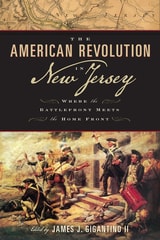
The American Revolution in New Jersey
Where the Battlefront Meets the Home FrontJames J. Gigantino II
Rutgers University Press, 2015
Battles were fought in many colonies during the American Revolution, but New Jersey was home to more sustained and intense fighting over a longer period of time. The nine essays in The American Revolution in New Jersey, depict the many challenges New Jersey residents faced at the intersection of the front lines and the home front.
The American Warfare State
The Domestic Politics of Military SpendingRebecca U. Thorpe
University of Chicago Press, 2014
The Arc of War
Origins, Escalation, and TransformationJack S. Levy and William R. Thompson
University of Chicago Press, 2011
The Art of Military Coercion
Why the West's Military Superiority Scarcely MattersRob de Wijk
Amsterdam University Press, 2014
The Art of Occupation
Crime and Governance in American-Controlled Germany, 1944–1949Thomas J. Kehoe
Ohio University Press, 2019
The literature describing social conditions during the post–World War II Allied occupation of Germany has been divided between seemingly irreconcilable assertions of prolonged criminal chaos and narratives of strict martial rule that precluded crime. In The Art of Occupation, Thomas J. Kehoe takes a different view on this history, addressing this divergence through an extensive, interdisciplinary analysis of the interaction between military government and social order.
Focusing on the American Zone and using previously unexamined American and German military reports, court records, and case files, Kehoe assesses crime rates and the psychology surrounding criminality. He thereby offers the first comprehensive exploration of criminality, policing, and both German and American fears around the realities of conquest and potential resistance, social and societal integrity, national futures, and a looming threat from communism in an emergent Cold War. The Art of Occupation is the fullest study of crime and governance during the five years from the first Allied incursions into Germany from the West in September 1944 through the end of the military occupation in 1949. It is an important contribution to American and German social, military, and police histories, as well as historical criminology.
The Art of Surrender
Decomposing Sovereignty at Conflict's EndRobin Wagner-Pacifici
University of Chicago Press, 2005
The Art of Surrender explores these ritual concessions as acts of warfare, performances of submission, demonstrations of power, and representations of shifting, unstable worlds. Wagner-Pacifici analyzes three significant military surrenders in the history of warfare—the Thirty Years' War of the seventeenth century, the American Civil War, and World War II—through the use of period documents and forms, maps, literature, witness accounts, photographs, and paintings that were left as proof of victory and defeat. In her analyses of such archival material and iconic works of art, she considers the limits of sovereignty at conflict's end, showing how the ways we concede loss can be as important as the ways we claim victory.

The Art of War in Western World
Archer Jones
University of Illinois Press, 1987
The Artillery Service in the War of the Rebellion, 1861–65
John C. Tidball
Westholme Publishing, 2011
A Rediscovered History That Will Become Essential Reading for Civil War Studies
The Artillery Service in the War of the Rebellion, 1861–65, is a comprehensive overview and analysis of the U.S. Army’s field artillery service in the Civil War’s principal battles, written by John C. Tidball, a distinguished artilleryman of the era. The overview, which appeared in the Journal of the Military Service Institution from 1891 to 1893, and nearly impossible to find today, examines the Army of the Potomac, including the battles of Fair Oaks, Gaines’s Mill, Mechanicsville, Malvern Hill, Antietam, Fredericksburg, Chancellorsville, and Gettysburg; the Army of the Tennessee, including the battles of Stones River and Chickamauga, and the Army of the Ohio’s battle of Shiloh. Tidball, a decorated Civil War veteran and superintendent of artillery instruction for the army, expertly presents the war through an artilleryman’s eyes in explaining the organization, equipping, and manning of the artillery service. His analysis highlights how the improper use of artillery, tying batteries down to relatively small infantry commands that diluted their firepower, seriously undermined the army’s effectiveness until reforms produced independent artillery commands that could properly mass artillery fire in battle.
The Artillery Service in the War of the Rebellion, edited by historian Lawrence M. Kaplan and presented here in one volume for the first time, includes additional material from an unpublished paper Tidball wrote in 1905 which contains further insights into the artillery service, as well as a general overview of the Petersburg campaign. A major new discovery in Civil War scholarship, The Artillery Service in the War of the Rebellion contains essential information that will change earlier historical interpretations of key battles and will be essential reading for all those interested in the war or contemplating writing about it.

The Bases of Empire
The Global Struggle Against U.S. Military PostsCatherine Lutz
Pluto Press, 2008
The Battle for the Rhineland
Reginald W. Thompson
Westholme Publishing, 2012
In this fascinating account of the critical final campaign against Nazi Germany on the western front, Reginald W. Thompson focuses on both the command decisions by the British and American generals and the performance of the enlisted men in order to explain the complex series of events that led to the German defeat in World War II. During the planning and run-up to what was intended to be a massive joint British and American push across the Rhine River and into the heart of Germany, the Allies encountered unexpected setbacks. Operation Market-Garden, the Allied aerial assault of the Low Countries, ended in disaster, while the attack through the Hu¨rtgen Forest was met by unexpected heavy resistance due to the build-up for the German surprise counterstrike planned for December 1944, what would become known as the Battle of the Bulge. The author identifies the attack on the town of Schmidt in the Hu¨rtgen Forest as the key battle that set in motion a series of events that both prolonged the war and shaped Allied strategy in their effort to cross the Rhine. Here the reader will learn the chain of decisions that allowed the Allies to pressure German forces between the Roer and Rhine rivers and move on Cologne, Dusseldorf, and other key points, including the famous bridge over the Rhine at Remagen, near Bonn. Based on both American and British official reports and the author’s independent research and originally published in 1958, The Battle for the Rhineland is a lucid, balanced, and engaging account of a critical period in Western Europe during the Second World War.
The Battle of Gloucester, 1777
Garry Wheeler Stone
Westholme Publishing, 2022
In The Battle of Gloucester, 1777, archaeological historian Garry Wheeler Stone, with the assistance of historian Paul W. Schopp, recreates this minor but important clash during the Philadelphia campaign. Relying on both primary source documents and the latest archaeological interpretations, the authors have determined the course of this fascinating “battle,” as Benjamin Franklin later proclaimed it to be. As a result of this action, when Washington requested that Lafayette be given a division, Congress agreed. On December 4, 1777, the marquis, promoted to major-general, took command of the brigades of Generals Woodford and Scott to begin what would be a glorious career in American service.
Small Battles: Military History as Local History
Mark Edward Lender and James Kirby Martin, Series Editors
Small Battles offers a fresh and important new perspective on the story of America’s early conflicts. It was the small battles, not the clash of major armies, that truly defined the fighting during the colonial wars, the American Revolution, the War of 1812, and the hostilities on the frontiers. This is dramatic military history as seen through the prism of local history—history with a depth of detail, a feeling for place, people, and the impact of battle and its consequences that the story of major battles often cannot convey. The Small Battles series focuses on America’s military conflicts at their most intimate and revealing level.
The Battle of Hengyang
Japan's Fateful Siege of World War IIShifen Fox
Westholme Publishing, 2026
The first English language history of China's Most Important Battle in World War II
In April 1944, Imperial Japan launched Operation Ichigo to secure a transport route linking Japanese forces in northern China and Southeast Asia, while eliminating American airfields in the region. The Japanese army quickly overran Chinese resistance and pushed fast toward the city of Hengyang, a key railway junction in south-central China. The Battle of Hengyang began on June 23, 1944. With just 17,000 troops and besieged in an area of less than ten square miles, the Chinese 10th Army held off a Japanese force totaling more than 110,000 men, supported by aircraft, tanks, chemical weapons, and artillery, for forty-seven days. The fighting was among the most savage of the entire Second World War. Hengyang finally fell on August 8, but the Chinese defenders and undaunted American pilots had stopped Ichigo’s momentum. The Japanese military’s failure to quickly conquer such a small city led to the fall of Japanese Prime Minister Tojo’s cabinet in July 1944, ultimately weakening Japan’s resolve to prosecute the war. News accounts compared the battle to the German defeat at Stalingrad in its ferocity and to the Battle of Suiyang, the most famous siege in ancient Chinese history.
In the aftermath of World War II, the battle was erased from Chinese history books since Communist propaganda insisted that only they, not the Nationalists, had successfully resisted the Japanese. But the survivors, both soldiers and civilians, kept the battle alive in their memories, and during the early part of the twenty-first century, the truth of Hengyang was finally presented to the Chinese people. The Battle of Hengyang: Japan’s Fateful Siege of World War II by Shifen Fox is the first English language history of one of the most important battles of the Second World War. The author returned to China where she interviewed survivors and children of survivors, read private letters, and had access to normally closed archives; in addition, she read memoirs written by Japanese survivors and referenced Japanese historical records. Learning late in life that her father perished in the battle, she also explains how the role of her father and this heroic defense was censored by China, but more than eighty years later has now been restored to its place in Chinese and world history.

The Battles of Connecticut Farms and Springfield, 1780
Edward G. Lengel
Westholme Publishing, 2020
By the spring of 1780, American fortunes were at a low point. Charleston, South Carolina, fell to British forces on May 12. At Morristown, New Jersey, George Washington’s army struggled to recover from the worst winter of the entire war. The national economy failing, his troops short of supplies and on the verge of mutiny, Washington prepared for an all-out assault on British-occupied New York City with the support of approaching French naval and land forces under General Rochambeau. The planned attack was a gamble born of desperation. Washington felt he had to risk it, or face certain defeat. In New York City, German General Wilhelm von Knyphausen sensed opportunity. Commanding there in the absence of British General Henry Clinton, who was on his way back from Charleston, Knyphausen hoped that a quick strike into New Jersey could deliver a staggering blow to Washington’s weakened army. The June 7–8 Battle of Connecticut Farms, however, found American militia and Continentals—mostly soldiers of General William Maxwell’s New Jersey Brigade—to be shockingly stalwart. In a series of sharp engagements, fought hard on both sides, the Americans convinced Knyphausen to turn back. Clinton, fresh from his victory in the South, tried again on June 23 to end the war. His advance into New Jersey, intended to draw Washington into the open and perhaps capture Morristown, culminated in the Battle of Springfield. Once again, though, Washington’s hardened soldiers, led by men like Colonel Israel Angell, Colonel Elias Dayton, and Major “Light Horse Harry” Lee, fought Clinton’s forces to a standstill.
The Battles for Connecticut Farms and Springfield, 1780, by distinguished historian Edward G. Lengel, chronicles these two important battles that marked a turning of the tide in the Revolutionary War. Drawing on newly available primary sources, the author presents a fresh and engaging interpretation of these events, which exposed King George III’s declining military fortunes in North America even as they revealed the resilience of George Washington’s army.
The Small Battles Series: Military History as Local History
Mark Edward Lender and James Kirby Martin, Series Editors
Small Battles offers a fresh and important new perspective on the story of America’s early conflicts. It was the small battles, not the clash of major armies, that truly defined the fighting during the colonial wars, the American Revolution, the War of 1812, and the hostilities on the frontiers. This is dramatic military history as seen through the prism of local history—history with a depth of detail, a feeling for place, people, and the impact of battle and its consequences that the story of major battles often cannot convey. The Small Battles Series focuses on America’s military conflicts at their most intimate and revealing level.
The Behavioral Origins of War
D. Scott Bennett and Allan C. Stam
University of Michigan Press, 2003
Challenging the view that theories of war are nothing more than competing explanations for observed behavior, this expansive study incorporates variables from multiple theories and thus accounts for war's multiplicity of causes. While individual theories offer partial explanations for international conflict, only a valid set of theories can provide a complete explanation. Bennett and Stam's unconventional yet methodical approach opens the way for cumulative scientific progress in international relations.
D. Scott Bennett is Professor of Political Science at the Pennsylvania State University. Allan C. Stam is Associate Professor in the Government Department at Dartmouth College.
The Best Writings of Ulysses S. Grant
Edited by John F. Marszalek
Southern Illinois University Press, 2015
Famous for his military acumen and for his part in saving the Union during the American Civil War, Ulysses S. Grant also remains known for his two-volume memoirs, considered among the greatest military memoirs ever written. Grant’s other writings, however, have not received the same acclaim, even though they show the same literary skill. Originally published in the thirty-two volumes of The Papers of Ulysses S. Grant, the letters and speeches are the major source of information about Grant’s life and era and have played a key role in elevating his reputation to that of the leading general of the Civil War and the first of the modern presidents. In this collection, editor John F. Marszalek presents excerpts from Grant’s most insightful and skillfully composed writings and provides perspective through introductory comments tying each piece to the next. The result is a fascinating overview of Grant’s life and career.
In sixteen chronological chapters, selections from Grant’s letters and other writings reveal his personal thoughts on the major events of his momentous life, including the start of the Civil War, the capture of Vicksburg, Lincoln’s reelection, Lee’s surrender, his terms as president, the Panic of 1873, and his bouts of mouth and throat cancer. Throughout, Grant’s prose reveals clearly the power of his words and his ability to present them well. Although some historians have maligned his presidency as one of the most corrupt periods in American history, these writings reinforce Grant’s greatness as a general, demonstrate the importance of his presidency, and show him to be one of the driving forces of the nineteenth century.
With this compendium, Marszalek not only celebrates the literary talent of one of America’s greatest military figures but also vindicates an individual who, for so long, has been unfairly denigrated. A concise reference for students of American history and Civil War enthusiasts as well as a valuable introduction for those who are new to Grant’s writings, this volume provides intriguing insight into one of the nineteenth century’s most important Americans.
The Black Citizen-Soldiers of Kansas, 1864-1901
Roger D. Cunningham
University of Missouri Press, 2008
Roger Cunningham examines a lost history to show that, in addition to black regulars, hundreds of other black militiamen and volunteers from the Sunflower State provided military service from the Civil War until the dawn of the twentieth century. He tells how African Americans initially filled segregated companies hurriedly organized to defend the state from the threat of Confederate invasion, with some units ordered into battle around Kansas City. Then after the state constitution was amended to admit blacks into the Kansas National Guard, but its generals still refused to integrate, blacks served in reserve militia and independent companies and in all-black regiments that were raised for the Spanish-American and Philippine wars.
Cunningham has researched service records, African American newspapers, and official correspondence to give voice to these citizen-soldiers. He shares stories of real people like William D. Matthews, a captain in the First Kansas Colored Infantry who was refused a commission when his regiment was mustered into the Union army; Charles Grinsted, who commanded the first black militia company after the Civil War; and other unsung heroes.
More than a military history, Cunningham’s account records the quest of black men, many of them former slaves, for inclusion in American society. Many came from the bottom of the socioeconomic order and found that as militiamen they could gain respect within their communities. And by marching in public ceremonies and organizing fund-raising activities to compensate for lack of financial support from the state, they also strengthened the ties that bound African American communities together.
The Border between Them
Violence and Reconciliation on the Kansas-Missouri LineJeremy Neely
University of Missouri Press, 2007
The most bitter guerrilla conflict in American history raged along the Kansas-Missouri border from 1856 to 1865, making that frontier the first battleground in the struggle over slavery. That fiercely contested boundary represented the most explosive political fault line in the United States, and its bitter divisions foreshadowed an entire nation torn asunder. Jeremy Neely now examines the significance of the border war on both sides of the Kansas-Missouri line and offers a comparative, cross-border analysis of its origins, meanings, and consequences.
A narrative history of the border war and its impact on citizens of both states, The Border between Them recounts the exploits of John Brown, William Quantrill, and other notorious guerrillas, but it also uncovers the stories of everyday people who lived through that conflict. Examining the frontier period to the close of the nineteenth century, Neely frames the guerrilla conflict within the larger story of the developing West and squares that violent period with the more peaceful—though never tranquil—periods that preceded and followed it.
Focusing on the countryside south of the big bend in the Missouri River, an area where there was no natural boundary separating the states, Neely examines three border counties in each state that together illustrate both sectional division and national reunion. He draws on the letters and diaries of ordinary citizens—as well as newspaper accounts, election results, and census data—to illuminate the complex strands that helped bind Kansas and Missouri together in post–Civil War America. He shows how people on both sides of the line were already linked by common racial attitudes, farming practices, and ambivalence toward railroad expansion; he then tells how emancipation, industrialization, and immigration eventually eroded wartime divisions and facilitated the reconciliation of old foes from each state.
Today the “border war” survives in the form of interstate rivalries between collegiate Tigers and Jayhawks, allowing Neely to consider the limits of that reconciliation and the enduring power of identities forged in wartime. The Border between Them is a compelling account of the terrible first act of the American Civil War and its enduring legacy for the conflict’s veterans, victims, and survivors, as well as subsequent generations.
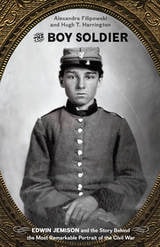
The Boy Soldier
Edwin Jemison and the Story Behind the Most Remarkable Portrait of the Civil WarAlexandra Filipowski and Hugh T. Harrington
Westholme Publishing, 2016
Since its first publication over fifty years ago, the haunting image of Private Edwin F. Jemison has attracted widespread attention from those interested in the Civil War and other wars. His likeness has been compared to that of the Mona Lisa, and it rivals Abraham Lincoln as being one of the Civil War’s most recognized photographs. And yet, his name is not widely known. Some believe that there is something about the mouth that is special, or his hands. Others, perhaps the majority, find his eyes to be powerful and thought provoking. Some wonder if they are looking into the future: Eddie’s own future or the future of all soldiers. Is there a sense of fear or a resignation to fate? He is, foremost, strikingly boyish.
Despite the great interest in the photograph almost nothing has been known of the young man himself, and misinformation about him has circulated since he was properly identified twenty years ago. The authors have spent decades researching the story behind the photograph seeking primary sources for accurate details of Jemison’s life. The result is The Boy Soldier: Edwin Jemison and the Story Behind the Most Remarkable Portrait of the Civil War, the only biography of this young Confederate soldier. We first encounter Eddie as he travels from Louisiana in 1857 to stay with relatives and attend school in Georgia. In the spring of 1861, after Louisiana had seceded from the Union, Eddie enlists in the Confederate army. A little over a week after enlistment, and with minimal training, he is sent to Virginia to fight in the greatest struggle this nation has ever endured. Over 150 years later the intrigue around his photograph is matched by the very peculiar accounts of his death, as well as the controversy of his burial location. The authors examine both issues to complete the story of the young soldier’s life and death.

The Boy of Battle Ford and the Man
W. S. Blackman
Southern Illinois University Press, 2012
A classic story of a young man’s journey to adulthood, The Boy of Battle Ford covers Blackman’s years growing up in early post-settlement Illinois, where he gave in to temptations such as drinking, gambling, and the lure of prostitutes before joining the army, finding God and becoming a preacher. Blackman, who notes that he is determined to “write facts” in this book, peppers his story with the sordid details of the sinful times of his life as well as with discussions of faith and of struggling to understand his God and his beliefs.
The Boys of Winter
Life and Death in the U.S. Ski Troops During the Second World WarCharles J. Sanders
University Press of Colorado, 2005
The Boys of Winter tells the true story of three young American ski champions and their brutal, heroic, and fateful transformation from athletes to infantrymen with the 10th Mountain Division. Charles J. Sanders's fast-paced narrative draws on dozens of interviews and extensive research to trace these boys' lives from childhood to championships and from training at Mount Rainier and in the Colorado Rockies to battling against the Nazis.
The British Army of the Rhine
Turning Nazi Enemies into Cold War PartnersPeter Speiser
University of Illinois Press, 2016
Peter Speiser charts the BAOR's fraught transformation from occupier to ally by looking at the charged nexus where British troops and their families interacted with Germany's civilian population. Examining the relationship on many levels, Speiser ranges from how British mass media representations of Germany influenced BAOR troops to initiatives taken by the Army to improve relations. He also weighs German perceptions, surveying clashes between soldiers and civilians and comparing the popularity of the British services with that of the other occupying powers. As Speiser shows, the BAOR's presence did not improve the relationship between British servicemen and the German populace, but it did prevent further deterioration during a crucial and dangerous period of the early Cold War.
An incisive look at an under-researched episode, The British Army of the Rhine sheds new light on Anglo-German diplomatic, political, and social relations after 1945, and evaluates their impact on the wider context of European integration in the postwar era.
The British Soldier in America
A Social History of Military Life in the Revolutionary PeriodBy Sylvia R. Frey
University of Texas Press, 1981
In her investigation of the social history of the common British soldier in the era of the American Revolution, Sylvia Frey has extensively surveyed recruiting records, contemporary training manuals, statutes, and memoirs in an attempt to provide insight into the soldier's "life and mind." In the process she has discovered more about the common soldier than anyone thought possible: his social origins and occupational background, his size, age, and general physical condition, his personal economics and daily existence. Her findings dispel the traditional assumption that the army was made up largely of criminals and social misfits.
Special attention is given to soldiering as an occupation. Focusing on two of the major campaigns of the war—the Northern Campaign which culminated at Saratoga and the Southern Campaign which ended at Yorktown—Frey describes the human face of war, with particular emphasis on the physical and psychic strains of campaigning in the eighteenth century.
Perhaps the most important part of the work is the analysis of the moral and material factors which induced men to accept the high risks of soldiering. Frey rejects the traditional assumption that soldiers were motivated to fight exclusively by fear and force and argues instead that the primary motivation to battle was generated by regimental esprit, which in the eighteenth century substituted for patriotism. After analyzing the sources of esprit, she concludes that it was the sustaining force for morale in a long and discouraging war.
This book is a contribution to our understanding of the eighteenth century and should appeal not only to military historians but also to social and economic historians and to those interested in the history of medicine.
The Broken Seal
"Operation Magic" and the Secret Road to Pearl HarborLadislas Farago
Westholme Publishing, 1967
“In this fascinating account. . . . Mr. Farago’s investigation suggests that the real villain was the system itself.”—New York Times
“In this well-written and informative account. . . Mr. Farago provides many new facts from both American and Japanese sources.”—Library Journal
“A good history of Japanese and American code-breaking operations between 1921 and December 7, 1941. . . . Farago is important because in this technical study of cryptology he has arrived independently at the same general conclusion as did the non-revisionist diplomatic historians: there was no plot by Roosevelt or his advisers.”—Choice
“His conclusions should act as a corrective to the enthusiasts who claim that intelligence always provides the complete answer.”—Times Literary Supplement
The Broken Seal: The Story of “Operation Magic” and the Pearl Harbor Disaster explores the questions of why, if the United States knew the Japanese codes, did we not anticipate the December 7, 1941 surprise attack and how did the Japanese spy system in Hawaii operate? As a chief of research and planning in the Special Warfare Branch of the Office of Naval Intelligence, the author had access to both Japanese and American classified material to write this study. The author’s intent was to independently ascertain the validity of earlier claims that the Pearl Harbor attack could have been avoided. The result is an eminently readable and engrossing story, first published in 1968, of the relationship between America and Japan in the interwar years and the relentless cat-and-mouse intelligence game conducted by both sides. Despite more recent suppositions that there was a conspiracy among American and British officials to ignore warnings of a Japanese attack that had been gleaned from deciphered diplomatic codes in order to force America into a world war, the author confirms that human error and misjudgment and the actual state of intelligence interpretation at the time made an accurate assessment of Japanese intentions impossible.
The Burning of His Majesty's Schooner Gaspee
An Attack on Crown Rule Before the American RevolutionSteven Park
Westholme Publishing, 2016
Between the Boston Massacre in 1770 and the Boston Tea Party in 1773—a period historians refer to as “the lull”—a group of prominent Rhode Islanders rowed out to His Majesty’s schooner Gaspee,which had run aground six miles south of Providence while on an anti-smuggling patrol. After threatening and shooting its commanding officer, the raiders looted the vessel and burned it to the waterline. Despite colony-wide sympathy for the June 1772 raid, neither the government in Providence nor authorities in London could let this pass without a response. As a result, a Royal Commission of Inquiry headed by Rhode Island governor Joseph Wanton zealously investigated the incident. In The Burning of His Majesty’s Schooner Gaspee: An Attack on Crown Rule Before the American Revolution, historian Steven Park reveals that what started out as a customs battle over the seizure of a prominent citizen’s rum was soon transformed into the spark that re-ignited Patriot fervor. The significance of the raid was underscored by a fiery Thanksgiving Day sermon given by a little-known Baptist minister in Boston. His inflammatory message was reprinted in several colonies and was one of the most successful pamphlets of the pre-Independence period. The commission turned out to be essentially a sham and made the administration in London look weak and ineffective. In the wake of the Gaspee affair, Committees of Correspondence soon formed in all but one of the original thirteen colonies, and later East India Company tea would be defiantly dumped into Boston Harbor.
The Byzantine Art of War
Michael J. Decker
Westholme Publishing, 2013
The Byzantine Art of War explores the military history of the thousand-year empire of the eastern Mediterranean, Byzantium. Throughout its history the empire faced a multitude of challenges from foreign invaders seeking to plunder its wealth and to occupy its lands, from the deadly Hunnic hordes of Attila, to the Arab armies of Islam, to the western Crusaders bent on carving out a place in the empire or its former lands. In order to survive the Byzantines relied on their army that was for centuries the only standing, professional force in Europe. Leadership provided another key to survival; Byzantine society produced a number of capable strategic thinkers and tacticians—and several brilliant ones. These officers maintained a level of professionalism and organization inherited and adapted from Roman models. The innovations of the Byzantine military reforms of the sixth century included the use of steppe nomad equipment and tactics, the most important of which was the refinement of the Roman mounted archer. Strategy and tactics evolved in the face of victory and defeat; the shock of the Arab conquests led to a sharp decline in the number and quality of imperial forces. By the eighth and ninth centuries Byzantine commanders mastered the art of the small war, waging guerrilla campaigns, raids, and flying column attacks that injured the enemy but avoided the decisive confrontation the empire was no longer capable of winning. A century later they began the most sustained, glorious military expansion of their history. This work further sketches the key campaigns, battles, and sieges that illustrate Byzantine military doctrine, vital changes from one era to another, the composition of forces and the major victories and defeats that defined the territory and material well-being of its citizens. Through a summary of their strategies, tactics, and innovations in the tools of war, the book closes with an analysis of the contributions of this remarkable empire to world military history.
The Byzantine Empire
Charles W. C. Oman
Westholme Publishing, 2009
The Byzantine Empire centered at the city of Constantinople grew from a small Greek colonial village into the capital of the Eastern Roman empire. Ultimately, Byzantium represented what remained of Roman power in late antiquity. Established as the seat of Constantine the Great in 328 AD, the empire grew and matured over the centuries, reaching its pinnacle in the sixth century during the reign of Justinian and his loyal general, Belisarius. In the process of empire building, Byzantium battled the Goths, the Germanic tribes, the Persians, the Lombards, and ultimately the Islamic armies of the Near East. Byzantium remained a buffer against Muslim expansion, and by the time the remnants of the empire and the city of Constantinople were finally conquered by the Ottomans in the fourteenth century, European states to the west were able to resist any further encroachment.
In tracing the empire’s history from its humble beginnings through its ascendancy and final decay, distinguished historian Charles W. C. Oman blends his engaging narrative style with his impeccable command of primary source material. Here, Oman dispels the misconception that the Byzantine court was one plagued by corruption and intrigue—a canard that added “Byzantine” to the English language; instead, Byzantium was one of the most stable governments of late antiquity. Never before reprinted in paperback, The Byzantine Empire is a model of concise popular scholarship.
The Campaign of the Marne
Sewell Tyng
Westholme Publishing, 2007
The Definitive Account of the Battle of the Marne, One of World War I's Most Important Events
"A masterly account of the First World War in the West."—John Keegan
"A distinguished piece of historical writing."—Journal of Modern History
"Admirable... clear and interesting."—Foreign Affairs
"Direct and clear... it lays bare a most complicated course of events so that even the layman can follow."—New Republic
Named as One of The 100 Best Nonfiction Books of the Twentieth Century
With diplomacy unraveling during the summer of 1914, Germany swept into Belgium during the first week of August in an audacious attempt to catch France and England off guard. First contemplated after the Franco-Prussian War, the Schlieffen Plan was designed to keep Germany from fighting on two fronts. With a quick and decisive victory over France and its allies to the west, Germany could then confront Russia to the east. Despite the surprise of Germany's initial advance, the plan ultimately failed because it required much more mobile troops than were available at the time - something that would have to await the mechanized blitzkrieg of World War II—allowing France and British Expeditionary Forces to establish a tenacious defense. What followed was a stalemate along the Marne River and the beginning of four long years of destructive trench warfare that would only be lifted by a joint French, British, and American offensive across this same river plain in 1918. In The Campaign of the Marne, the entire genesis of the Schlieffen Plan, its modification, implementation, and the complex series of grueling battles that followed is laid out with the intent to make the entire episode comprehensible to the general reader. Hailed as one of the 100 best nonfiction books of the twentieth century by eminent military historian John Keegan, this is the first time the book has been available since its original publication in 1935.
The Captain Departs
Ulysses S. Grant's Last CampaignThomas M. Pitkin. Foreword by John Y. Simon
Southern Illinois University Press, 1973
Early in 1885 Americans learned that General Grant was writing his Memoirs in a desperate race for time against an incurable cancer. Not generally known was the General’s precarious personal finances, made so by imprudent investments, and his gallant effort to provide for his family by his writing. For six months newspaper readers followed the dramatic contest, and the hearts of Americans were touched by the General’s last battle.
Grant’s last year was one of both personal and literary triumph in the midst of tragedy, as Thomas M. Pitkin shows in this memorable and inspiring book. The Memoirs was completed; its remarkable literary quality made ita triumph. Ultimately more than 300,000sets of the two-volume work were sold. And Grant accepted the inevitable with quiet courage, and faded away in a manner sadly familiar to many American families.
Though told without maudlin touches, the story of Grant’s last year will leave few readers emotionally uninvolved, for itis an account of pain and suffering as well as mighty deeds, and truly deserves to be considered the General’s final victory.
The Capture Chain
US Military Detainment from Truman to TrumpRichard Nisa
University of Minnesota Press, 2027
A penetrating look into the hidden networks of wartime capture, circulation, and detainment by United States military personnel
The Capture Chain offers a detailed history of the United States’ detention practices and the evolving infrastructure designed for the apprehension, control, and transportation of people during times of war. Spanning eight decades and several major conflicts, this work examines the hidden spaces and logistical networks connecting the front lines and prisoner-of-war camps—sites that exist at the fraught intersection of life maintenance and death distribution.
Detailing the routes, protocols, research methods, and technical systems that constitute what Richard Nisa terms the global capture chain, this book underscores how such military architectures have become increasingly sophisticated and technologically advanced since the dawn of the Cold War. Drawing on declassified military documents, diplomatic records from the Geneva Conventions, and memoirs written by soldiers and prisoners, The Capture Chain offers unprecedented insight into this shifting geography of psychological and physical violence.
Using archival research to draw links between behavioral science studies during the Korean War, Vietnam-era computation, and post-9/11 rendition networks and digital biometrics, The Capture Chain introduces new ways of understanding urgent contemporary debates around autonomous warfare, mass surveillance, and detainment. By introducing the capture chain as both a historical object and a methodological lens, Nisa highlights the legal and moral grey area that constitutes the ongoing militarized maintenance of human life.
Retail e-book files for this title are screen-reader friendly with images accompanied by short alt text and/or extended descriptions.
The Catapult
A HistoryTracey Rihll
Westholme Publishing, 2007
The most recognized military device of ancient times and the source of continued fascination and popular appeal, the catapult represented a major shift in the conduct of warfare. The catapult which literally means a device to “hurl [an object] across” was originally a sort of crossbow invented at the beginning of the fourth century B.C. in Syrakuse. Bows soon grew to the length of a modern bus, and in due course a completely new and better power source was invented. Instead of compound bows made of stretched sinew and compressed horn, the energy used to launch an object was stored in twisted ropes made of animal sinews: the torsion catapult had arrived. The torsion catapult quickly became the chief weapon of ancient arsenals and gave armies for the first time a weapon that could strike enemies at a distance with devastating effect, including shooting to and from ships, battering fortifications, and sending projectiles over walls. Catapults of all sizes became part of the regular equipment of the Roman army, and were used for centuries across the length and breadth of the empire to seize territory, and to defend it.
In The Catapult: A History, an authority on this device, historian Tracey Rihll, uses ancient literary sources and the latest archaeological findings to tell the story of this first machine of war. Dispelling any notion that the catapult was precision engineered in the modern sense, the author explains how a robust formulaic design allowed a variety of machines and missiles to be used for particular battlefield conditions or military tasks. Also included are details of the author’s intriguing discovery that there were little personal catapults that were used like rifles. Although the catapult was displaced by the introduction of gunpowder and cannon, this device marks the beginning of mechanized warfare, the hallmark of modern fighting. Complete with line drawings and photographs, The Catapult is a major contribution to the history of technology and conflict.
The Chattanooga Campaign
Steven E. Woodworth and Charles D. Grear
Southern Illinois University Press, 2012
When the Confederates emerged as victors in the Chickamauga Campaign, the Union Army of the Cumberland lay under siege in Chattanooga, with Braxton Bragg’s Army of Tennessee on nearby high ground at Missionary Ridge and Lookout Mountain. A win at Chattanooga was essential for the Confederates, both to capitalize on the victory at Chickamauga and to keep control of the gateway to the lower South. Should the Federal troops wrest control of that linchpin, they would cement their control of eastern Tennessee and gain access to the Deep South. In the fall 1863 Chattanooga Campaign, the new head of the western Union armies, Ulysses S. Grant, sought to break the Confederate siege. His success created the opportunity for the Union to start a campaign to capture Atlanta the following spring.
Woodworth’s introduction sets the stage for ten insightful essays that provide new analysis of this crucial campaign. From the Battle of Wauhatchie to the Battle of Chattanooga, the contributors’ well-researched and vividly written assessments of both Union and Confederate actions offer a balanced discussion of the complex nature of the campaign and its aftermath. Other essays give fascinating examinations of the reactions to the campaign in northern newspapers and by Confederate soldiers from west of the Mississippi River.
Complete with maps and photos, The Chattanooga Campaign contains a wealth of detailed information about the military, social, and political aspects of the campaign and contributes significantly to our understanding of the Civil War’s western theater.
Univeristy Press Books for Public and Secondary Schools 2013 edition
The Chickamauga Campaign
Edited by Steven E. Woodworth
Southern Illinois University Press, 2010
From mid-August to mid-September 1863, Union major general William S. Rosecrans’s Army of the Cumberland maneuvered from Tennessee to north Georgia in a bid to rout Confederate general Braxton Bragg’s Army of Tennessee and blaze the way for further Union advances. Meanwhile, Confederate reinforcements bolstered the numbers of the Army of Tennessee, and by the time the two armies met at the Battle of Chickamauga, in northern Georgia, the Confederates had gained numerical superiority.
Although the Confederacy won its only major victory west of the Appalachians, it failed to achieve the truly decisive results many high-ranking Confederates expected. In The Chickamauga Campaign,Steven E. Woodworth assembles eight thought-provoking new essays from an impressive group of authors to offer new insight into the complex reasons for this substantial, yet ultimately barren, Confederate victory.
This broad collection covers every angle of the campaign, from its prelude to its denouement, from the points of view of key players of all ranks on both sides. In addition to analyzing the actions taken by Union leaders Thomas L. Crittenden, Alexander McCook, and James S. Negley, and Confederate commanders Braxton Bragg, Patrick Cleburne, Daniel Harvey Hill, Thomas C. Hindman, James Longstreet, and Alexander P. Stewart, the book probes the campaign’s impact on morale in the North and South, and concludes with an essay on the campaign’s place in Civil War memory. The final essay pays particular attention to Union veteran Henry Van Ness Boynton, the founder and developer of Chickamauga and Chattanooga State Military Park, whose achievements helped shape how the campaign would be remembered.
This second volume in the Civil War Campaigns in the Heartland seriesprovides a profound understanding of the campaign’s details as well as its significance to Civil War history.
Contributors:
John R. Lundberg
Alexander Mendoza
David Powell
Ethan S. Rafuse
William G. Robertson
Timothy B. Smith
Lee White
Steven E. Woodworth
The Choctaw Civil War
Women, Justice, and Sovereignty in the Native SouthMatthew J. Sparacio
University of Alabama Press, 2026
Reexamines the contested geopolitical landscape of the lower Mississippi River Valley in 1740s, centering Choctaw perspectives
Matthew J. Sparacio’s comprehensive history, The Choctaw Civil War: Women, Justice, and Sovereignty in the Native South, delivers a rich portrait of eighteenth-century Choctaw life and recasts the Native South as a region shaped by Choctaw decisions.
In the 1730s and 1740s, the Choctaw Nation leveraged competing European imperial agendas while establishing reciprocal diplomatic ties with other tribes, including their neighboring “brothers,” the Chickasaws. Choctaws drew strength from their multifaceted understanding of sovereignty: connections to land, contributions to society through work, generosity, respect, kinship obligations, and justice. A series of attacks on Choctaw women, however, tested the limits of justice and obligation within and between Choctaw communities. Mounting pressures from both Louisiana and South Carolina added to this factionalism, ultimately leading to civil war.
Relying on Chahta anumpa (“Choctaw language”) training and tribal histories, gender theory, and ethnohistorical methods, Sparacio highlights women’s contributions to Choctaw society and governance. Intense eighteenth-century debates over justice, kinship, and responsibility created several Choctaw movements for justice that still inspire efforts in Oklahoma and Mississippi to end the Missing and Murdered Indigenous Persons’ crisis. Tribal and bodily sovereignty shaped the Native South and will shape its future.
The Choctaw Civil War is a major reinterpretation of Choctaw history and the colonial South. This will be a must-read for historians, scholars of the Native South, and anyone interested in sovereignty movements today.
The Civil War
Jeremy Black
St. Augustine's Press, 2025
European military historian Jeremy Black reorients readers to see what was extraordinary in the civil war of 'the American colonies' and why this was warfare unlike anything that could be properly understood on the world stage at that time. He also examines with expertise the role of foreign powers (or lack thereof).
Black's treatment might be the doom of civil war counterfactuals. Was the south destined to fail? Was it weaker motive, faulty strategy, or lack of European support? Was the north just lucky, or possessed of foresight and providential endowment? Black dispels romanticism and sentimentalist hindsight––the American Civil War is unparalleled in many respects, but it is not without clear lessons in warcraft, diplomacy, and cultural–economic impasse.
Furthermore, Black's Civil War is a new resource that teaches, reaffirms, and reminds readers of the intensity of the American past––in both error and idealistic impulse––that might continue to guide us to the best future and avoid the lose-lose circumstances of a civil war. Black's acumen for historical review in this case renders a kind of warning: May the leaders of men in the future come to a better way of self-realization than give way to the internal conflict that pits father against son, and sister against brother. But if he must engage, at least understand the distinction between war and politics.
Black's objective and concise account is a treasure for students and experts alike who need clarity and insight without too much of an investment. The take-away is an appreciation for the American spirit that civil strife petrified and an understanding of the tactical progression of this conflict and the context of combat of that era.
The Civil War Diary of Gideon Welles, Lincoln's Secretary of the Navy
The Original Manuscript EditionGideon Welles, Edited by William E. Gienapp and Erica L. Gienapp; Foreword by James M. McPherson
University of Illinois Press, 2014
Perhaps the hardest-working member of the cabinet, Welles still found time to keep a detailed diary that has become one of the key documents for understanding the inner workings of the Lincoln administration. In this new edition, William E. and Erica L. Gienapp have restored Welles’s original observations, gleaned from the manuscript diaries at the Library of Congress and freed from his many later revisions, so that the reader can experience what he wrote in the moment. With his vitriolic pen, Welles captures the bitter disputes over strategy and war aims, lacerates colleagues from Secretary of State William H. Seward to General-in-Chief Henry Halleck, and condemns the actions of the self-serving southern elite he sees as responsible for the war. He just as easily waxes eloquent about the Navy's wartime achievements, extols the virtues of Lincoln, and drops in a tidbit of Washington gossip.
Carefully edited and extensively annotated, this edition contains a wealth of supplementary material. The appendixes include short biographies of the members of Lincoln’s cabinet, the retrospective Welles wrote after leaving office covering the period missing from the diary proper, and important letters regarding naval matters and international law.
The Civil War Memoirs of a Virginia Cavalryman
Lt. Robert T. Hubard Jr., Edited by Thomas P. Nanzig
University of Alabama Press, 2007
Robert Hubard was an enlisted man and officer of the 3rd Virginia Cavalry in the Army of Northern Virginia (CSA) from 1861 through 1865. He wrote his memoir during an extended convalescence spent at his father’s Virginia plantation after being wounded at the battle of Five Forks on April 1, 1865. Hubard served under such Confederate luminaries as Jeb Stuart, Fitz Lee, Wade Hampton, and Thomas L. Rosser. He and his unit fought at the battles of Antietam, on the Chambersburg Raid, in the Shenandoah Valley, at Fredericksburg, Kelly’s Ford, Chancellorsville, Gettysburg, Bristoe Station, and down into Virginia from the Wilderness to nearly the end of the war at Five Forks.
Hubard was like many of his class and station a son of privilege and may have felt that his service was an act of noblesse oblige. Unlike many of his contemporaries, however, he was a keen observer and a writer of unusual grace, clarity, humor, and intelligence. The editor has fleshed out his memoir by judicious use of Hubard’s own wartime letters, which not only fill in gaps but permit the reader to see developments in the writer’s thinking after the passage of time. Because he was a participant in events of high drama and endured the quotidian life of a soldier, Hubard’s memoir should be of value to both scholars and avocational readers.