Results by title
120 books match the query 'Multicultural Education' and 25 start with t
Teacher Education across Minority-Serving Institutions
Programs, Policies, and Social JusticePetchauer, Emery
Rutgers University Press, 2017
The first of its kind, Teacher Education across Minority-Serving Institutions brings together innovative work from the family of institutions known as minority-serving institutions: Historically Black Colleges and Universities, Tribal Colleges and Universities, Hispanic Serving Institutions, and Asian American and Native American Pacific Islander Serving Institutions. The book moves beyond a singular focus on teacher racial diversity that has characterized scholarship and policy work in this area. Instead, it pushes for scholars to consider that racial diversity in teacher education is not simply an end in itself but is, a means to accomplish other goals, such as developing justice-oriented and asset-based pedagogies.
Teaching U.S.-Educated Multilingual Writers
Pedagogical Practices from and for the ClassroomMark Roberge, Kay M. Losey, Margi Wald
University of Michigan Press, 2015
All of the contributors are teachers who are writing about and reflecting on their own experiences and outcomes and interweaving those experiences and outcomes with current theory and research in the field. The volume thus portrays teachers as active, reflective participants engaged in critical inquiry. Contributors represent community college, college, and university contexts; academic ESL, developmental writing, and first-year composition classes; and face-to-face, hybrid, and online contexts.
This book was developed primarily to meet the needs of practicing writing teachers in college-level ESL, basic writing, and college composition classrooms, but will also be useful to pre-service teachers in TESOL, Composition, and Education graduate programs.
Teaching Working Class
Sherry Lee Linkon
University of Massachusetts Press, 1999
Teaching about Race and Racism in the College Classroom
Notes from a White ProfessorCyndi Kernahan
West Virginia University Press, 2019
Teaching about race and racism can be a difficult business. Students and instructors alike often struggle with strong emotions, and many people have robust preexisting beliefs about race. At the same time, this is a moment that demands a clear understanding of racism. It is important for students to learn how we got here and how racism is more than just individual acts of meanness. Students also need to understand that colorblindness is not an effective anti-racism strategy.
In this book, Cyndi Kernahan argues that you can be honest and unflinching in your teaching about racism while also providing a compassionate learning environment that allows for mistakes and avoids shaming students. She provides evidence for how learning works with respect to race and racism along with practical teaching strategies rooted in that evidence to help instructors feel more confident. She also differentiates between how white students and students of color are likely to experience the classroom, helping instructors provide a more effective learning experience for all students.
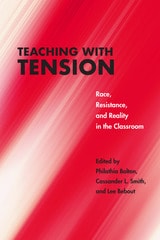
Teaching with Tension
Race, Resistance, and Reality in the ClassroomEdited by Philathia Bolton, Cassander L. Smith, and Lee Bebout
Northwestern University Press, 2019
Drawing together personal reflection, pedagogical strategies, and critical theory, Teaching with Tension offers concrete examinations that will foster student learning. The essays are organized into three thematic sections: "Teaching in Times and Places of Struggle" examines the dynamics of teaching race during the current moment, marked by neoconservative politics and twenty-first century freedom struggles. "Teaching in the Neoliberal University" focuses on how pressures and exigencies of neoliberalism (such as individualism, customer-service models of education, and online courses) impact the way in which race is taught and conceptualized in college classes. The final section, "Teaching How to Read Race and (Counter)Narratives," homes in on direct strategies used to historicize race in classrooms comprised of millennials who grapple with race neutral ideologies. Taken together, these sections and their constitutive essays offer rich and fruitful insight into the complex dynamics of contemporary race and ethnic studies education.
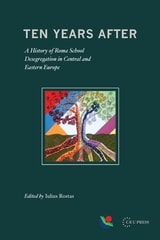
Ten Years After
A History of Roma School Desegregation in Central and Eastern EuropeIulius Rostas
Central European University Press, 2012

The Black Model Minority Student
African Immigrants and the Contradictions of Race in AmericaMercy Agyepong
University of Chicago Press, 2027
Explores the contradictory perceptions of African immigrant students in New York City and reveals how anti-Blackness persists even within predominantly Black and Brown schools.
African immigrant students are often celebrated in the United States as academically successful and culturally disciplined. But what happens when praise itself becomes part of a racial hierarchy? In The Black Model Minority Student, sociologist of education Mercy Agyepong traces the complex experiences of West African immigrant students attending public high schools in New York City.
Using ethnographic and interview data from predominantly Black and Brown schools in the Bronx, Agyepong shows that African immigrant students are often viewed through two competing yet coexisting narratives: as intellectually capable and hardworking, yet also as uncivilized or socially inferior. These perceptions are not incidental, but central to how anti-Blackness operates and how racial hierarchies are sustained in the United States. While the model minority stereotype shaped their experiences in Black and Brown high schools, West African immigrant students found that this seemingly favorable stereotype mattered less once they graduated and entered the white spaces of higher education and other social settings. At every step, African students—regardless of their national origins—were disadvantaged by racial stereotypes.
Theoretically grounded yet deeply human, The Black Model Minority Student offers an important new perspective on race, immigration, and education in contemporary America.
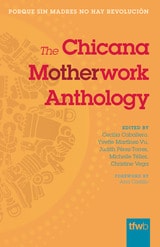
The Chicana Motherwork Anthology
Edited by Cecilia Caballero, Yvette Martínez-Vu, Judith Pérez-Torres, Michelle Téllez, Christine Vega; Foreword by Ana Castillo
University of Arizona Press, 2019
The volume is organized in four parts: (1) separation, migration, state violence, and detention; (2) Chicana/Latina/WOC mother-activists; (3) intergenerational mothering; and (4) loss, reproductive justice, and holistic pregnancy. Contributors offer a just framework for Chicana and Women of Color mother-scholars, activists, and allies to thrive within and outside of the academy. They describe a new interpretation of motherwork that addresses the layers of care work needed for collective resistance to structural oppression and inequality.
This anthology is a call to action for justice. Contributions are both theoretical and epistemological, and they offer an understanding of motherwork through Chicana and Women of Color experiences.
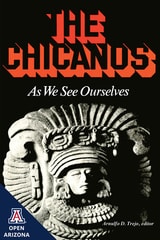
The Chicanos
As We See OurselvesEdited by Arnulfo D. Trejo
University of Arizona Press, 1979
“We have come a long way,” says Arnulfo D. Trejo, editor of this volume, “from the time when the Mexicano silently accepted the stereotype drawn of him by the outsider.” He identifies himself as a Chicano, and his “promised land” is Aztlán, home of the ancient Aztecs, which now provides spiritual unity and a vision of the future for Chicanos.
In these twelve original compositions, says Trejo, “our purpose is not to talk to ourselves, but to open a dialogue among all concerned people.” The personal reactions to Chicano women’s struggles, political experiences, bicultural education and history provide a wealth of information for laymen as well as scholars. In addition, the book provides the most complete recorded definition of the Chicano Movement, what it has accomplished, and its goals for the future.
Contributors:
Fausto Avendaño
Roberto R. Bacalski-Martínez
David Ballesteros
José Antonio Burciaga
Rudolph O. de la Garza
Ester Gallegos y Chávez
Sylvia Alicia Gonzales
Manuel H. Guerra
Guillermo Lux
Martha A. Ramos
Reyes Ramos
Carlos G. Vélez-Ibáñez
Maurilio E. Vigil
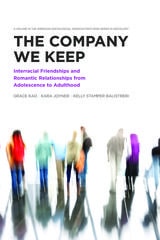
The Company We Keep
Interracial Friendships and Romantic Relationships from Adolescence to AdulthoodGrace Kao
Russell Sage Foundation, 2019
While research on interracial social ties has often focused on whites and blacks, Hispanics are the largest minority group and Asian Americans are the fastest growing racial group in the United States. The Company We Keep examines friendships and romantic relationships among blacks, whites, Hispanics, and Asian Americans to better understand the full spectrum of contemporary race relations. Using data from the National Longitudinal Study of Adolescent to Adult Health, the authors explore the social ties of more than 15,000 individuals from their first survey responses as middle and high school students in the mid-1990s through young adulthood nearly fifteen years later. They find that while approval for interracial marriages has increased and is nearly universal among young people, interracial friendships and romantic relationships remain relatively rare, especially for whites and blacks. Black women are particularly disadvantaged in forming interracial romantic relationships, while Asian men are disadvantaged in the formation of any romantic relationships, both as adolescents and as young adults. They also find that people in same-sex romantic relationships are more likely to have partners from a different racial group than are people in different-sex relationships. The authors pay close attention to how the formation of interracial friendships and romantic relationships depends on opportunities for interracial contact. They find that the number of students choosing different-race friends and romantic partners is greater in schools that are more racially diverse, indicating that school segregation has a profound impact on young people’s social ties.
Kao, Joyner, and Balistreri analyze the ways school diversity and adolescent interracial contact intersect to lay the groundwork for interracial relationships in young adulthood. The Company We Keep provides compelling insights and hope for the future of living and loving across racial divides.
The Education Alibi
Tracing Education's Entanglements Across Contemporary AfricaElizabeth Cooper, Erdmute Alber, and Wandia Njoya, Editors
University of Michigan Press, 2025
The Education of a WASP
Lois M. Stalvey
University of Wisconsin Press, 1989
Brimming with honestly and passion, The Education of a WASP chronicles one white woman's discovery of racism in 1960s America. First published in 1970 and highly acclaimed by reviewers, Lois Stalvey's account is as timely now as it was then. Nearly twenty years later, with ugly racial incidents occurring on college campuses, in neighborhoods, and in workplaces everywhere, her account of personal encounters with racism remains deeply disturbing. Educators and general readers interested in the subtleties of racism will find the story poignant, revealing, and profoundly moving.
“Delightful and horrible, a singular book.” —Choice
“An extraordinarily honest and revealing book that poses the issue: loyalty to one’s ethnic group or loyalty to conscience.” —Publishers Weekly
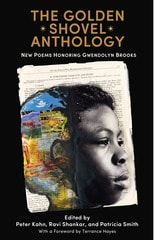
The Golden Shovel Anthology
New Poems Honoring Gwendolyn BrooksPeter Kahn
University of Arkansas Press, 2019
—Claudia Rankine in the New York Times
The Golden Shovel Anthology celebrates the life and work of poet and civil rights icon Gwendolyn Brooks through a dynamic new poetic form, the Golden Shovel, created by National Book Award–winner Terrance Hayes.
An array of writers—including winners of the Pulitzer Prize, the T. S. Eliot Prize, and the National Book Award, as well as a couple of National Poets Laureate—have written poems for this exciting new anthology: Rita Dove, Billy Collins, Danez Smith, Nikki Giovanni, Sharon Olds, Tracy K. Smith, Mark Doty, Sharon Draper, Richard Powers, and Julia Glass are just a few of the contributing poets.
This second edition includes Golden Shovel poems by two winners and six runners-up from an international student poetry competition judged by Nora Brooks Blakely, Gwendolyn Brooks’s daughter. The poems by these eight talented high school students add to Ms. Brooks’s legacy and contribute to the depth and breadth of this anthology.
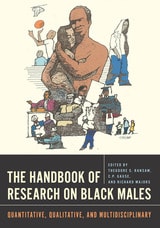
The Handbook of Research on Black Males
Quantitative, Qualitative, and MultidisciplinaryTheodore S. Ransaw
Michigan State University Press, 2018
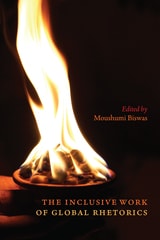
The Inclusive Work of Global Rhetorics
Moushumi Biswas
Utah State University Press, 2026
Envisioning the next step in the ongoing scholarly movement advocating inclusion of global rhetorics in the composition curriculum, The Inclusive Work of Global Rhetorics demonstrates that the question of why or whether to incorporate tenets of global/non-Western rhetorics into writing is long past. The focus has shifted to how to make this change—and to the best practices of such inclusion.
This book showcases the latest scholarship on rethinking the borders of traditional rhetorical studies, which are typically drawn within Greco-Roman and Euro-American confines, with the objective of incorporating non-Eurocentric rhetorical tenets into rhetoric and composition. This work fosters a spirit of inclusivity in the writing classroom by incorporating the many ways of rhetorical thinking gleaned from global/non-Western communication practices while also reflecting on their situatedness and intersectionalities.
Sitting at the crossroads of theory, methodology, and pedagogy, The Inclusive Work of Global Rhetoric puts in perspective a landmark moment in rhetorical studies, a time when it has become imperative to acknowledge the proliferation of non-Western rhetorical traditions in rhetorical practices and communication. Providing heuristics for creating inclusive composition/rhetoric pedagogy, this book serves students, teachers, scholars, and researchers of rhetoric, writing, and communication as both a classroom guide and a reference at the undergraduate and graduate level
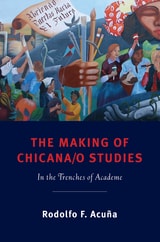
The Making of Chicana/o Studies
In the Trenches of AcademeAcuña, Rodolfo F
Rutgers University Press, 2011
The Making of Chicana/o Studies traces the philosophy and historical development of the field of Chicana/o studies from precursor movements to the Civil Rights era to today, focusing its lens on the political machinations in higher education that sought to destroy the discipline. As a renowned leader, activist, scholar, and founding member of the movement to establish this curriculum in the California State University system, which serves as a model for the rest of the country, Rodolfo F. Acuña has, for more than forty years, battled the trend in academia to deprive this group of its academic presence.
The book assesses the development of Chicana/o studies (an area of studies that has even more value today than at its inception)--myths about its epistemological foundations have remained uncontested. Acuña sets the record straight, challenging those in the academy who would fold the discipline into Latino studies, shadow it under the dubious umbrella of ethnic studies, or eliminate it altogether.
Building the largest Chicana/o studies program in the nation was no easy feat, especially in an atmosphere of academic contention. In this remarkable account, Acuña reveals how California State University, Northridge, was instrumental in developing an area of study that offers more than 166 sections per semester, taught by 26 tenured and 45 part-time instructors. He provides vignettes of successful programs across the country and offers contemporary educators and students a game plan--the mechanics for creating a successful Chicana/o studies discipline--and a comprehensive index of current Chicana/o studies programs nationwide.
Latinas/os, of which Mexican Americans are nearly seventy percent, comprise a complex sector of society projected to be just shy of thirty percent of the nation's population by 2050. The Making of Chicana/o Studies identifies what went wrong in the history of Chicana/o studies and offers tangible solutions for the future.

The Myth of Political Correctness
The Conservative Attack on Higher EducationJohn K. Wilson
Duke University Press, 1995
The phrase "political correctness" is on everyone’s lips, on radio and television, and in newspapers and magazines. The phenomenon itself, however, has been deceptively described. Wilson steps into the nation’s favorite cultural fray to reveal that many of the most widely publicized anecdotes about PC are in fact more myth than reality. Based on his own experience as a student and in-depth research, he shows what’s really going on beneath the hysteria and alarmism about political correctness and finds that the most disturbing examples of thought policing on campus have come from the right. The image of the college campus as a gulag of left-wing totalitarianism is false, argues Wilson, created largely through the exaggeration of deceptive stories by conservatives who hypocritically seek to silence their political opponents.
Many of today’s most controversial topics are here: multiculturalism, reverse discrimination, speech codes, date rape, and sexual harassment. So are the well-recognized protagonists in the debate: Dinesh D’Souza, William Bennett, and Lynne Cheney, among others. In lively fashion and in meticulous detail, Wilson compares fact to fiction and lays one myth after another to rest, revealing the double standard that allows "conservative correctness" on college campuses to go unchallenged.

The Power of Dialogue between Israelis and Palestinians
Stories of Change from the School for PeaceSonnenschein, Nava
Rutgers University Press, 2019
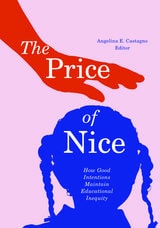
The Price of Nice
How Good Intentions Maintain Educational InequityAngelina E. Castagno
University of Minnesota Press, 2019
How being “nice” in school and university settings works to reinforce racialized, gendered, and (dis)ability-related inequities in education and society
Being nice is difficult to critique. Niceness is almost always portrayed and felt as a positive quality. In schools, nice teachers are popular among students, parents, and administrators. And yet Niceness, as a distinct set of practices and discourses, is not actually good for individuals, institutions, or communities because of the way it maintains and reinforces educational inequity.
In The Price of Nice, an interdisciplinary group of scholars explores Niceness in educational spaces from elementary schools through higher education to highlight how this seemingly benign quality reinforces structural inequalities. Grounded in data, personal narrative, and theory, the chapters show that Niceness, as a raced, gendered, and classed set of behaviors, functions both as a shield to save educators from having to do the hard work of dismantling inequity and as a disciplining agent for those who attempt or even consider disrupting structures and ideologies of dominance.
Contributors: Sarah Abuwandi, Arizona State U; Colin Ben, U of Utah; Nicholas Bustamante, Arizona State U; Aidan/Amanda J. Charles, Northern Arizona U; Jeremiah Chin, Arizona State U; Sally Campbell Galman, U of Massachusetts; Frederick Gooding Jr., Texas Christian U; Deirdre Judge, Tufts U; Katie A. Lazdowski; Román Liera, U of Southern California; Sylvia Mac, U of La Verne; Lindsey Malcolm-Piqueux, California Institute of Technology; Giselle Martinez Negrette, U of Wisconsin–Madison; Amber Poleviyuma, Arizona State U; Alexus Richmond, Arizona State U; Frances J. Riemer, Northern Arizona U; Jessica Sierk, St. Lawrence U; Bailey B. Smolarek, U of Wisconsin–Madison; Jessica Solyom, Arizona State U; Megan Tom, Arizona State U; Sabina Vaught, U of Oklahoma; Cynthia Diana Villarreal, U of Southern California; Kristine T. Weatherston, Temple U; Joseph C. Wegwert, Northern Arizona U; Marguerite Anne Fillion Wilson, Binghamton U; Jia-Hui Stefanie Wong, Trinity College; Denise Gray Yull, Binghamton U.
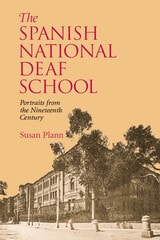
The Spanish National Deaf School
Portraits from the Nineteenth CenturySusan Plann
Gallaudet University Press, 2007
In nineteenth-century Spain, the education of deaf students took shape through various contradictory philosophies and practices. Susan Plann depicts this ambivalence by profiling a select group of teachers and students in her detailed history The Spanish National Deaf School: Portraits from the Nineteenth Century.
Plann’s subjects reveal the political, financial, and identity issues that dominated the operation of the National School for Deaf-Mutes and the Blind in Madrid from 1805 to1899. Roberto Francisco Prádez y Gautier, the first deaf teacher in Spain, taught art from 1805–36; he also was the last deaf teacher for the next 50 years. Juan Manuel Ballesteros, the hearing director from 1835 to1868, enacted an “ableist” policy that barred deaf professors. At the same time, another hearing teacher, Francisco Fernández Villabrille, wrote the first Spanish Sign Language dictionary. In the 1870s, two deaf students, Manuel Tinoco and Patricio García, resisted the physical abuse they received and set the stage for the growth of a Deaf identity that opposed the deprecating medical model of deafness. Marcelina Ruiz Ricote y Fernández a hearing female teacher who taught from 1869 to 1897, combated the school’s sexist polices. The Spanish National Deaf School concludes with Martín de Martín y Ruiz, the most famous deaf-blind student from the Madrid school. Through these portraits, Plann has brought life to the major issues that defined education in nineteenth-century Spain, themes that have influenced the status of deaf Spaniards today.

The Two-Way Mirror
National Status in Foreign Students’ AdjustmentRichard Morris
University of Minnesota Press, 1960
They Came to Wisconsin
Julia Pferdehirt
Wisconsin Historical Society Press, 2002
They Came to Wisconsin presents three themes of the state’s immigrant history: leaving the homeland, making the journey, and enduring the first year of settlement. Journal and diary entries and letters from European groups and oral histories from African American, Latino, Hmong, and Amish sources make this book dynamic and wholly inclusive. They Came to Wisconsin breaks fresh ground in presenting document-centered Wisconsin history to a young audience. More important, these firsthand stories add a real human dimension to history, helping students to compare the experiences of the varied groups who came to Wisconsin in the last two hundred years.
Distributed for the Wisconsin Historical Society Press.
They Came to Wisconsin
Teacher's Guide and Student MaterialsHarriet Brown
Wisconsin Historical Society Press, 2002
Distributed for the Wisconsin Historical Society Press.
Transforming the Academy
Faculty Perspectives on Diversity and PedagogyWillie-LeBreton, Sarah
Rutgers University Press, 2016
Trauma-Sensitive Practices in English Language Teaching
Janine J. Darragh and Luis Javier Pentón Herrera
University of Michigan Press, 2026