Results by title
598 books match the query 'Religious' and 168 start with t
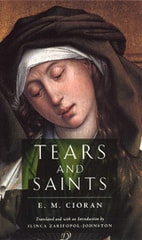
Tears and Saints
E. M. Cioran
University of Chicago Press, 1995
"Who can tell?" he wrote in the first paragraph of this book, first published in Romania in 1937. "To be sure, tears are their trace. Tears did not enter the world through the saints; but without them we would never have known that we cry because we long for a lost paradise." By following in their traces, "wetting the soles of one's feet in their tears," Cioran hoped to understand how a human being can renounce being human. Written in Cioran's characteristic aphoristic style, this flamboyant, bold, and provocative book is one of his most important—and revelatory—works.
Cioran focuses not on martyrs or heroes but on the mystics—primarily female—famous for their keening spirituality and intimate knowledge of God. Their Christianity was anti-theological, anti-institutional, and based solely on intuition and sentiment. Many, such as Catherine of Siena, Teresa of Avila, and Saint John of the Cross, have produced classic works of mystical literature; but Cioran celebrates many more minor and unusual figures as well.
Following Nietzsche, he focuses explicitly on the political element hidden in saints' lives. In his hands, however, their charitable deeds are much less interesting than their thirst for pain and their equally powerful capacity to endure it. Behind their suffering and their uncanny ability to renounce everything through ascetic practices, Cioran detects a fanatical will to power.
"Like Nietzsche, Cioran is an important religious thinker. His book intertwines God and music with passion and tears. . . . [Tears and Saints] has a chillingly contemporary ring that makes this translation important here and now."—Booklist

Teleology and the Conceptual Genesis of the Modern State
Essays on the Nature of PhilosophyFrancis Slade
Catholic University of America Press, 2027
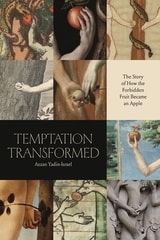
Temptation Transformed
The Story of How the Forbidden Fruit Became an AppleAzzan Yadin-Israel
University of Chicago Press, 2022
How did the apple, unmentioned by the Bible, become the dominant symbol of temptation, sin, and the Fall? Temptation Transformed pursues this mystery across art and religious history, uncovering where, when, and why the forbidden fruit became an apple.
Azzan Yadin-Israel reveals that Eden’s fruit, once thought to be a fig or a grape, first appears as an apple in twelfth-century French art. He then traces this image back to its source in medieval storytelling. Though scholars often blame theologians for the apple, accounts of the Fall written in commonly spoken languages—French, German, and English—influenced a broader audience than cloistered Latin commentators. Azzan Yadin-Israel shows that, over time, the words for “fruit” in these languages narrowed until an apple in the Garden became self-evident. A wide-ranging study of early Christian thought, Renaissance art, and medieval languages, Temptation Transformed offers an eye-opening revisionist history of a central religious icon.
The Adeodatus Handbook on Catholic Education and Culture
Volume 1: From Jesus the Teacher to St. John Henry NewmanAlex E. Lessard
Catholic University of America Press, 2025
The Age of the Cathedrals
Art and Society, 980-1420Georges Duby
University of Chicago Press, 1981
"If Age of the Cathedrals has a fault, it is that Professor Duby knows too much, has too many new ideas and takes such a delight in setting them out. . . insights whiz to and fro like meteorites."—John Russell, New York Times Book Review
The Altruism Reader
Selections from Writings on Love, Religion, and ScienceThomas Oord
Templeton Press, 2007
This anthology brings together, for the first time, leading essays and book chapters from theologians, philosophers, and scientists on their research on ethics, altruism, and love. Because the general consensus today is that scholarship in moral theory requires empirical research, the arguments of the leading scholars presented in this book will be fundamental to those examining issues in love, ethics, religion, and science.
The first half of The Altruism Reader offers essential selections from religious texts, leading contemporary scholars, and cutting-edge ethicists. Buddhism, Christianity, Hinduism, Islam, and Judaism are represented. Among the highly respected writers are Thomas Aquinas, the Dalai Lama, Thich Nhat Hanh, John Polkinghorne, Stephen Pope, Louis Fischer, Amira Shamma Abdin, Katharine Doob Sakenfeld, and Daniel Day Williams.
The book’s second half features primary readings on love and altruism from the sciences. Here the focus is on anthropology, psychology, sociology, biology, and neurology, with material written by Daniel C. Batson, David Sloan Wilson, Robert Wright, Stephen G. Post, Robert Axelrod, Richard Dawkins, Holmes Rolston III, and other renowned scientists and philosophers.
“Virtually all people act—and often talk—as if they have some clue about love. We speak about loving food, falling in love, loving God, feeling loved, and loving a type of music. We say that love hurts, love waits, love stinks, and love means never having to say you’re sorry. We use the word and its derivatives in a wide variety of ways . . . . My definition of love is this: To love is to act intentionally, in sympathetic response to others (including God), to promote well-being.” —Thomas Jay Oord
The Apostle of Tennessee
The Indefatigable Life and Ministry of Father Aloysius OrengoJoe Pagetta
Vanderbilt University Press, 2026
When Nashville became a Catholic diocese in 1837, it was mostly an aspirational exercise. The few Catholics scattered throughout the state were ministered to only occasionally by missionary priests who traveled by horseback from Kentucky. It is believed that Hugh Rogan, who arrived in Middle Tennessee in 1780 after working as a surveyor for the Continental Army, did not see a priest for fifty years.
That all changed when the Italian-born Father Aloysius “Luigi” Orengo arrived in Nashville in 1848. He traveled all over the state, sleeping in the woods, using his saddle for a pillow, and eating cheese and crackers. He’s credited with building churches in Franklin, Columbia, Pulaski, East Nashville, Tracy City, Gallatin, Humboldt, Brownsville, Grand Junction, Covington, Jackson, and McEwen.
But as influential as he was, Father Orengo’s story remained untold—until now.
The Arab Christ
Towards an Arab Christian Theology of ConvivialityMouchir Basile Aoun
Gingko, 2022
This work explores the Christian faith in the current intercultural context of Arab societies. It argues that Arab Christianity seeks to express the Christian faith through openness to Muslim otherness, existential conviviality, and fraternal solidarity. In order to safeguard not only the physical existence of these communities but also and above all the relevance and richness of their message of life, the theological reflection presented here takes on a three-part task. First, it faithfully describes the sociopolitical and sociocultural reality of the historical integration of Arab Christian communities. Second, it reinterprets the content of the Christ event with reference to the challenge of Muslim otherness. And finally, it offers a path for conversion that involves a form not only of evangelical practice, designed to foster bonds of fraternal solidarity between the inhabitants of the Arab world but also of shared spiritual quest for moral and political commitment.
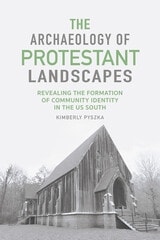
The Archaeology of Protestant Landscapes
Revealing the Formation of Community Identity in the US SouthKimberly Pyszka
University of Alabama Press, 2023
How religious institutions used landscapes and architecture to express their religious and social ideologies
The Archaeology of Protestant Landscapes focuses on three religious institutions in the US South in the eighteenth and nineteenth centuries: St. Paul’s Parish Church in coastal South Carolina, St. Luke’s Episcopal Church in central Alabama, and Cane Hill College in Northwest Arkansas. Drawing from archaeological surveys and excavations, artifact analysis, archival research, geophysical testing, and architectural information on religious structures, Kimberly Pyszka offers case studies of these institutions, which were located in developing communities that varied socially, politically, and economically.
Pyszka uses these case studies to demonstrate that select religious institutions used and modified natural landscape features to create cultural landscapes to express their ideology, identity, goals, and social, religious, and political power. She notes that where those structures were constructed, how they sat on the landscape, their architectural style, and their overall visual appearance were well-considered decisions made by religious leaders to benefit their organizations, communities, and, sometimes, themselves.
Pyszka also uses these case studies to highlight the social roles that religious organizations played in the development of communities. She points to landscape decisions—specifically to how the architectural design of religious structures was used, intentionally or not, to unite people, often those of differing religious backgrounds—as contributing to the creation of a common identity among people living in new and still-growing settlements, aiding in community development. This book contributes to the growing body of work within historical archaeology on churches, churchyards, and cemeteries and to the increasing awareness among archaeologists of how these sites contribute to questions of identity, consumerism, trade, and colonialism.
The Art of Biblical Interpretation
Visual Portrayals of Scriptural NarrativesHeidi J. Hornik
SBL Press, 2021
A richly illustrated collection of essays on visual biblical interpretation
For centuries Christians have engaged their sacred texts as much through the visual as through the written word. Yet until recent decades, the academic disciplines of biblical studies and art history largely worked independently. This volume bridges that gap with the interdisciplinary work of biblical scholars and art historians. Focusing on the visualization of biblical characters from both the Old and New Testaments, essays illustrate the potential of such collaboration for a deeper understanding of the Bible and its visual reception. Contributions from Ian Boxall, James Clifton, David B. Gowler, Jonathan Homrighausen, Heidi J. Hornik, Jeff Jay, Christine E. Joynes, Yohana A. Junker, Meredith Munson, and Ela Nuțu foreground diverse cultural contexts and chronological periods for scholars and students of the Bible and art.

The Art of Medieval Technology
Images of Noah the ShipbuilderUnger, Richard W.
Rutgers University Press, 1991
The Autobiography of Daniel Parker, Frontier Universalist
Daniel Parker
Ohio University Press, 2021
A vastly informative and rare early-American pioneer autobiography rescued from obscurity.
In this remarkable memoir, Daniel Parker (1781–1861) recorded both the details of everyday life and the extraordinary historical events he witnessed west of the Appalachian Mountains between 1790 and 1840. Once a humble traveling salesman for a line of newly invented clothes washing machines, he became an outspoken advocate for abolition and education. With his wife and son, he founded Clermont Academy, a racially integrated, coeducational secondary school—the first of its kind in Ohio.
However, Parker’s real vocation was as a self-ordained, itinerant preacher of his own brand of universal salvation. Raised by Presbyterian parents, he experienced a dramatic conversion to the Halcyon Church, an alternative, millenarian religious movement led by the enigmatic prophet Abel Sarjent, in 1803. After parting ways with the Halcyonists, he continued his own biblical and theological studies, arriving at the universalist conclusions that he would eventually preach throughout the Ohio River Valley.
David Torbett has transcribed Parker’s manuscript and publishes it here for the first time, together with an introduction, epilogue, bibliography, and extensive notes that enrich and contextualize this rare pioneer autobiography.
The Autobiography of the Rev. William Stevenson
Ted A. Campbell
Bridwell Press, 2024

The Backslider
Peterson, Levi
Signature Books, 2013
Frank comes into contact with a host of rural and urban characters. Of central importance is his Lutheran girlfriend, Marianne, whom Frank seduces, begrudgingly marries, and eventually loves. Frank’s extended family is just a generation removed from polygamy and still energized by old-time grudges and deprivations. Along the way Frank encounters a closeted secular humanist, a polygamist prophet, a psychiatrist, a Mason, government employees, college professors, lawyers, and entrepreneurs—all drawn with heightened realism reminiscent of Charles Dickens or the grotesque forms of William Faulkner and Flannery O’Connor.
The story engages readers as it alternates almost imperceptibly between Frank’s naïve consciousness and the more informed awareness of its narrator. It can be read as a love story, a satiric comedy, or a dark and sobering study of self-mutilation. Shifting from one to another, it builds suspense and elicits
complex emotions, among them a profound sense of compassion. More joyous than cynical, it sympathizes deeply with the plight of all of God’s backsliders.
The Bad Conscience
Vladimir Jankélévitch
University of Chicago Press, 2014
To this careful and sensitive English-language translation of The Bad Conscience, translator Andrew Kelley has added a substantial introduction situating the work in historical and intellectual context. Notes throughout indicate differences between this and earlier editions. A thought-provoking critique of standard conceptions of moral philosophy, The Bad Conscience restores this work by an important philosopher who has only recently begun to receive his due from the English-speaking world.
The Becoming of Time
Integrating Physical and Religious TimeLawrence W. Fagg
Duke University Press, 2002
Integrating concepts of time derived from the physical sciences and world religions, The Becoming of Time examines various questions about time, including its origin, its relation to space and motion, its irreversible nature, the notion of timelessness, and the reality of the future. Lawrence W. Fagg contends that the use of spatial metaphors to describe time obscures its true character. He offers an alternative, non-spatial description of time by developing the concept of time as becoming.
”This lucid and wide-ranging study sets out to reconcile the objective and subjective perspectives in the investigation of the phenomenon of time. [Lawrence W. Fagg] . . . explores the wondrous subtleties of time that modern physics continues to reveal, but complements them with the rich insights of the spiritual perspectives on time that the world's major religions have to offer.”—Helga Nowotny, Former President, International Society for the Study of Time
”Lawrence W. Fagg has made a fundamental contribution to our reflection upon time. His work immediately takes its place as a basic text for students and researchers, from college to seminary and university levels.”—Philip Hefner, Director, Zygon Center for Religion and Science
The Beginnings of Western Science
The European Scientific Tradition in Philosophical, Religious, and Institutional Context, 600 B.C. to A.D. 1450David C. Lindberg
University of Chicago Press, 1992
Lindberg surveys all the most important themes in the history of ancient and medieval science, including developments in cosmology, astronomy, mechanics, optics, alchemy, natural history, and medicine. He synthesizes a wealth of information in superbly organized, clearly written chapters designed to serve students, scholars, and nonspecialists alike. In addition, Lindberg offers an illuminating account of the transmission of Greek science to medieval Islam and subsequently to medieval Europe. And throughout the book he pays close attention to the cultural and institutional contexts within which scientific knowledge was created and disseminated and to the ways in which the content and practice of science were influenced by interaction with philosophy and religion. Carefully selected maps, drawings, and photographs complement the text.
Lindberg's story rests on a large body of important scholarship produced by historians of science, philosophy, and religion over the past few decades. However, Lindberg does not hesitate to offer new interpretations and to hazard fresh judgments aimed at resolving long-standing historical disputes. Addressed to the general educated reader as well as to students, his book will also appeal to any scholar whose interests touch on the history of the scientific enterprise.
The Beginnings of Western Science
The European Scientific Tradition in Philosophical, Religious, and Institutional Context, Prehistory to A.D. 1450, Second EditionDavid C. Lindberg
University of Chicago Press, 2008
The Beginnings of Western Science is a landmark, the best book to ever to present a unified account of both ancient and medieval science in a single volume. Chronicling the development of scientific ideas, practices, and institutions from pre-Socratic Greek philosophy to late-Medieval scholasticism, David C. Lindberg surveys all the most important themes in the history of science, including developments in cosmology, astronomy, mechanics, optics, alchemy, natural history, and medicine. In addition, he offers an illuminating account of the transmission of Greek science to medieval Islam and subsequently to medieval Europe.
The Big Questions in Science and Religion
Keith Ward
Templeton Press, 2008
In The Big Questions in Science and Religion, Keith Ward, an Anglican priest who was once an atheist, offers compelling insights into the often contentious relationship between diverse religious views and new scientific knowledge. He identifies ten basic questions about the nature of the universe and human life. Among these are:
•Does the universe have a goal or purpose?•Do the laws of nature exclude miracles?
•Can science provide a wholly naturalistic explanation for moral and religious beliefs?
•Has science made belief in God obsolete? Are there any good science-based arguments for God?
With his expertise in the study of world religions, Ward considers concepts from Buddhism, Confucianism, Taoism, Islam, Hinduism, Judaism, and Christianity, while featuring the speculations of cosmologists, physicians, mathematicians, and philosophers. In addition, Ward examines the implications of ancient laws and modern theories and evaluates the role of religious experience as evidence of a nonphysical reality.
Writing with enthusiasm, passion, and clarity, Keith Ward conveys the depth, difficulty, intellectual excitement, and importance of the greatest intellectual and existential questions of the modern scientific age.
The Book of Job and the Immanent Genesis of Transcendence
Davis Hankins
Northwestern University Press, 2014
Winner of the 2017 Manfred Lautenschlaeger Award for Theological Promise
Job is often understood to be a trite folktale about human limitation in the face of confounding and absolute transcendence. On the contrary, Hankins demonstrates that Job is a drama about the struggle to create a just and viable life in a material world that is ontologically incomplete and consequently open to radical, unpredictable transformation. Job’s abiding legacy for any future materialist theology becomes clear as Hankins analyzes Job’s dramatizations of a transcendence that is not externally opposed to but that emerges from an ontologically incomplete material world.
The Boy of Battle Ford and the Man
W. S. Blackman
Southern Illinois University Press, 2012
A classic story of a young man’s journey to adulthood, The Boy of Battle Ford covers Blackman’s years growing up in early post-settlement Illinois, where he gave in to temptations such as drinking, gambling, and the lure of prostitutes before joining the army, finding God and becoming a preacher. Blackman, who notes that he is determined to “write facts” in this book, peppers his story with the sordid details of the sinful times of his life as well as with discussions of faith and of struggling to understand his God and his beliefs.

The Breeze Behind the Breeze
Joseph Donahue
Duke University Press, 2027
The Cashaway Psalmody
Transatlantic Religion and Music in Colonial CarolinaStephen A. Marini
University of Illinois Press, 2019
Stephen A. Marini, discoverer of The Cashaway Psalmody, offers the fascinating story of the tunebook and its many meanings. From its musical, literary, and religious origins in England, he moves on to the life of Durham Hills; how Carolina communities used the book; and the Psalmody's significance in understanding how ritual song—transmitted via transatlantic music, lyrics, and sacred singing—shaped the era's development. Marini also uses close musical and textual analyses to provide a critical study that offers music historians and musicologists valuable insights on the Pslamody and its period.
Meticulous in presentation and interdisciplinary in scope, The Cashaway Psalmody unlocks an important source for understanding life in the Lower South in the eighteenth century.

The Chigi Codex
Sacred Music from Burgundy and France; Vatican City, Biblioteca Apostolica Vaticana, MS Chigi C VIII 234Edited by Edward F. Houghton
University of Chicago Press, 2027
Compiled between 1500 and 1504, The Chigi Codex contains the complete contents of an extraordinary illuminated manuscript, an anthology of forty polyphonic masses and motets associated with the royal courts of France and Burgundy. This edition includes nearly the complete oeuvre of Johannes Ockeghem, five motets by Johannes Regis, and compositions by Josquin des Prez, Henricus Isaac, Antoine Busnoys, Pierre de la Rue, Jean Mouton, Alexander Agricola, and others. Twelve works are unique to The Chigi Codex; seven motets were added by a Spanish scribe after 1515. The complete contents are presented here with transcriptions of the music accessible to musicians today, with a critical commentary on the music and concordant sources. The Codex transmits works that were copied in manuscripts and prints throughout Europe later in the sixteenth century.
In addition to its monumental repertory, The Chigi Codex includes notable works of visual art in the double-folio openings of thirty-six works with miniature paintings, coats of arms, inhabited capitals, family mottos, bizarre creatures, and colorful borders, all in the famed Ghent-Bruges style. Herbert Kellman discusses these as well as the history of the Codex and its long journey from its original patron, the Burgundian seigneur Philippe Bouton, to the Spanish families Folch de Cardona and Fernández de Córdoba, and finally to Rome and to the library of Fabio Chigi, Pope Alexander VII. The Chigi library is now an important part of the Vatican Library.
Making the manuscript accessible to the public and musicians, this edition of The Chigi Codex supports the study, performance, and understanding of its music and art in the musical, cultural, and historical contexts of its creation.
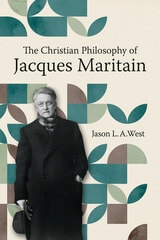
The Christian Philosophy of Jacques Maritain
Jason L.A. West
Catholic University of America Press, 2025
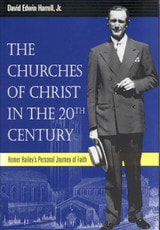
The Churches of Christ in the 20th Century
Homer Hailey's Personal Journey of FaithDavid Edwin Harrell
University of Alabama Press, 2002
The story of one of this country's major religious movements is told through the spiritual odyssey of one of its prominent spokesmen.
When Homer Hailey sparked controversy within Churches of Christ congregations over his stand on divorce and remarriage, he spoke to a movement already sundered. Historian David Edwin Harrell tells Hailey's story as a means of presenting the larger drama of faith and feuding within those churches.
A nondenominational movement of autonomous congregations, Churches of Christ have been among the fastest-growing religious bodies in the 20th century. Throughout the movement's history, church leaders debated issues ranging from missionary societies to the use of instrumental music in worship. Although some disagreements affected only the ties between congregations, others led to the creation of three distinct groups calling themselves Churches of Christ identified by their sociological and theological positions.
This book shows how the story of the Churches of Christ is reflected by Homer Hailey, a preacher, educator, and author whose life puts in perspective the personal journeys traveled by members in this century. Writing from the perspective of the non-institutional wing within the movement, Harrell avoids mainstream biases to describe the various dissenting views as fully and fairly as possible.
Combining institutional history and biography, Harrell's book is the first to bring the story of the Churches of Christ to century's end. It provides new insight into how this movement realigned itself and shows how one man's career reflected a century of spiritual growth and change for the church as a whole.
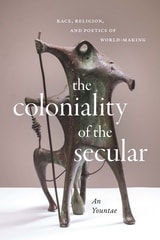
The Coloniality of the Secular
Race, Religion, and Poetics of World-MakingAn Yountae
Duke University Press, 2024
The Complementarity of Women and Men
Philosophy, Theology, Psychology, and ArtPaul C. Vitz
Catholic University of America Press, 2021

The Complete Ezra Taft Benson FBI File
Signature Books
Signature Books, 2020
Shortly after Benson’s nomination as agricultural secretary, the FBI began keeping a routine file on him, as they did other prominent Americans slated for Eisenhower’s cabinet. Filled with letters, memoranda, newspaper clippings, speeches, published writings, and other items, the file spans Benson’s eight-year tenure with the administration and well beyond. Some of the documents date past the Eisenhower era and even into Benson’s years as president of the LDS Church (1985–94). The material not only deals with Benson’s life and political views, but his association with the John Birch Society, its leaders, and even threats made against his life in the late 1980s. The 570-page dossier is as much a revelation about the workings of the FBI as about the man they were investigating.
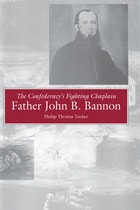
The Confederacy's Fighting Chaplain
Father John B. BannonPhillip Thomas Tucker
University of Alabama Press, 1992
The Confederacy’s Fighting Chaplain is the remarkable story of the Irishman who brought the Bible and his own resourcefulness and daring to both the battlefield and the diplomatic field—a story that has been largely ignored for more than 130 years. The biography of John B. Bannon also chronicles the forgotten Southerners—the Irish immigrants of the Confederacy—whose colorful and crucial role in the Civil War has been seriously neglected.
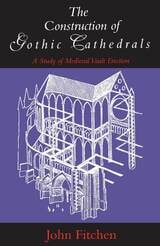
The Construction of Gothic Cathedrals
A Study of Medieval Vault ErectionJohn Fitchen
University of Chicago Press, 1981
In The Construction of Gothic Cathedrals, John Fitchen systematically walks readers through the process of erecting the great edifices of the Gothic era. He explains the building equipment and falsework needed, the actual operations undertaken, and the sequence of these operations as specifically as they can be deduced today. In the absence of contemporary accounts of the techniques used by medieval builders, Fitchen's study brilliantly pieces together clues from manuscript illuminations, pictorial representations, and the fabrics of the building themselves. The result is the clearest picture available of the innovations and techniques that enabled these buildings, which still generate awe today, to rise majestically above the low buildings of their surrounding towns. It's a book that will enthrall readers of history, and one that, as Progressive Architecture noted, "no student of architecture should miss."
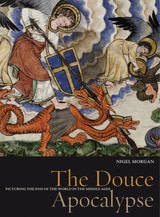
The Douce Apocalypse
Picturing the End of the World in the Middle AgesNigel Morgan
Bodleian Library Publishing, 2006
Now the manuscript—created sometime between 1250 and 1275—reaches an entirely new audience at the hands of noted scholar Nigel Morgan. The Douce Apocalypse explores the manuscript’s royal patronage, looks at its fascinating imagery, and examines its significance in light of contemporary prophecy. The commentary is accompanied by lush, full-color illustrations.
As Morgan relates, the Douce Apocalypse is especially enlightening because of its unfinished nature. A few of its images remain incomplete—and such absences give insight into the artist’s painstaking techniques of drawing, gilding, and painting. The second volume in the Treasures from the Bodleian Library series, The Douce Apocalypse will convey both the beauty of the original and the enduring fascination of its contents.

The Education of Phillips Brooks
John F. Woolverton
University of Illinois Press, 1995
The Education of Phillips Brooks probes the formative years of one of the best-known figures of Victorian America's "Gilded Age". Rigorously researched, bringing as yet untapped archival material into play, John F. Woolverton's book is an extremely readable and fascinating look at a gifted, persuasive clergyman and public figure. The sermon Brooks delivered at his Holy Trinity Church in Philadelphia while Abraham Lincoln's body lay in state overnight in Independence Hall was published, making him nationally famous overnight. He also is known for penning the lyrics to "O Little Town of Bethlehem". Although Brooks was not a major theologian, he was nurtured in an atmosphere of serious religious thought. In the crisis era of pre-Civil War America, he sought a religious and cultural ideal in the "perfect manhood" of Jesus Christ and consequently "won a name" for himself, as his slightly envious cousin, Henry Adams, once remarked. Woolverton places Brooks in his cultural context and shows how this religious leader was shaped psychologically and by his times and how those factors helped him forge a spiritual ideal for a troubled nation.
The Erotic Phenomenon
Jean-Luc Marion
University of Chicago Press, 2006
While humanists have pondered the subject of love to the point of obsessiveness, philosophers have steadfastly ignored it. One might wonder whether the discipline of philosophy even recognizes love. The word philosophy means “love of wisdom,” but the absence of love from philosophical discourse is curiously glaring. So where did the love go? In The Erotic Phenomenon, Jean-Luc Marion asks this fundamental question of philosophy, while reviving inquiry into the concept of love itself.
Marion begins his profound and personal book with a critique of Descartes’ equation of the ego’s ability to doubt with the certainty that one exists—“I think, therefore I am”—arguing that this is worse than vain. We encounter being, he says, when we first experience love: I am loved, therefore I am; and this love is the reason I care whether I exist or not. This philosophical base allows Marion to probe several manifestations of love and its variations, including carnal excitement, self-hate, lying and perversion, fidelity, the generation of children, and the love of God. Throughout, Marion stresses that all erotic phenomena, including sentimentality, pornography, and even boasts about one’s sexual conquests, stem not from the ego as popularly understood but instead from love.
A thoroughly enlightening and captivating philosophical investigation of a strangely neglected subject, The Erotic Phenomenon is certain to initiate feverish new dialogue about the philosophical meanings of that most desirable and mysterious of all concepts—love.
The Ethics of Oneness
Emerson, Whitman, and the Bhagavad GitaJeremy David Engels
University of Chicago Press, 2021
In The Ethics of Oneness, Jeremy David Engels reads the Bhagavad Gita alongside the works of American thinkers Ralph Waldo Emerson and Walt Whitman. Drawing on this rich combination of traditions, Engels presents the notion that individuals are fundamentally interconnected in their shared divinity. In other words, everything is one. If the lessons of oneness are taken to heart, particularly as they were expressed and celebrated by Whitman, and the ethical challenges of oneness considered seriously, Engels thinks it is possible to counter the pervasive and problematic American ideals of hierarchy, exclusion, violence, and domination.
The Eucharist in Modern Philosophy
Xavier Tilliette
Catholic University of America Press, 2022
The Fantasy of J.R.R. Tolkien
Mythopeia and the Recovery of CreationRobert J. Dobie, Robert J.
Catholic University of America Press, 2024
The Figural Jew
Politics and Identity in Postwar French ThoughtSarah Hammerschlag
University of Chicago Press, 2010
The rootless Jew, wandering disconnected from history, homeland, and nature, was often the target of early twentieth-century nationalist rhetoric aimed against modern culture. But following World War II, a number of prominent French philosophers recast this maligned figure in positive terms, and in so doing transformed postwar conceptions of politics and identity.
Sarah Hammerschlag explores this figure of the Jew from its prewar usage to its resuscitation by Jean-Paul Sartre, Emmanuel Levinas, Maurice Blanchot, and Jacques Derrida. Sartre and Levinas idealized the Jew’s rootlessness in order to rethink the foundations of political identity. Blanchot and Derrida, in turn, used the figure of the Jew to call into question the very nature of group identification. By chronicling this evolution in thinking, Hammerschlag ultimately reveals how the figural Jew can function as a critical mechanism that exposes the political dangers of mythic allegiance, whether couched in universalizing or particularizing terms.
Both an intellectual history and a philosophical argument, The Figural Jew will set the agenda for all further consideration of Jewish identity, modern Jewish thought, and continental philosophy.
The Fittingness of the Incarnation
Essays in Analytic Thomistic Philosophy and TheologyDavid Braine, David
Catholic University of America Press, 2025
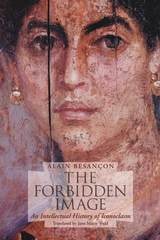
The Forbidden Image
An Intellectual History of IconoclasmAlain Besançon
University of Chicago Press, 2001
Philosophers and theologians have long engaged in intense debate and introspection over the representation of the deity, its possibilities and its proscriptions. The Forbidden Image traces the dual strains of “iconophilia” and iconoclasm, the privileging and prohibition of religious images, over a span of two and a half millennia in the West.
Alain Besançon’s work begins with a comprehensive examination of the status of the image in Greek, Judaic, Islamic, and Christian thought. The author then addresses arguments regarding the moral authority of the image in European Christianity from the medieval through the early modern periods. Besançon completes The Forbidden Image with an examination of how iconophilia and iconoclasm have been debated in the modern period.
“Even the reader who has heard something of the Byzantine quarrels about images and their theological background will be surprised by a learned and convincing interpretation of the works of Mondrian, Kandinsky, and Malevich in terms of religiously inspired iconoclasm. . . . This is an immensely rich and powerful masterpiece.”—Leszek Kolakowski, Times Literary Supplement

The Friday Mosque in the City
Liminality, Ritual, and PoliticsEdited by A. Hilâl Ugurlu and Suzan Yalman
Intellect Books, 2020
This edited volume explores the dynamic relationship between the Friday mosque and the Islamic city, addressing the traditional topics through a fresh new lens and offering a critical examination of each case study in its own spatial, urban, and socio-cultural context. While these two well-known themes—concepts that once defined the field—have been widely studied by historians of Islamic architecture and urbanism, this compilation specifically addresses the functional and spatial ambiguity or liminality between these spaces.
Instead of addressing the Friday mosque as the central signifier of the Islamic city, this collection provides evidence that there was (and continues to be) variety in the way architectural borders became fluid in and around Friday mosques across the Islamic world, from Cordoba to Jerusalem and from London to Lahore. By historicizing different cases and exploring the way human agency, through ritual and politics, shaped the physical and social fabric of the city, this volume challenges the generalizing and reductionist tendencies in earlier scholarship.
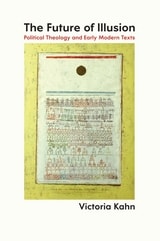
The Future of Illusion
Political Theology and Early Modern TextsVictoria Kahn
University of Chicago Press, 2013
Kahn draws on theorists such as Carl Schmitt, Leo Strauss, Walter Benjamin, and Hannah Arendt and their readings of Shakespeare, Hobbes, Machiavelli, and Spinoza to illustrate that the dialogue between these modern and early modern figures can help us rethink the contemporary problem of political theology. Twentieth-century critics, she shows, saw the early modern period as a break from the older form of political theology that entailed the theological legitimization of the state. Rather, the period signaled a new emphasis on a secular notion of human agency and a new preoccupation with the ways art and fiction intersected the terrain of religion.
The Gathering
Sherah Bloor
Omnidawn, 2026
Poetry that serves as a broad collection of historical incidents and considers how we weigh and value events.
Named for a sura of the Quran, The Gathering is an epic in cantos that indiscriminately records deeds and events that have taken place on this earth. Its speaker—a nearly omniscient archivist—is propelled by a force more elemental than causation to visit moments and subjects, moving swiftly through thoughts, physiologies, and environments. Under an imperative to record everything encountered—however small, cruel, or sad—the archivist must grant radically equal weight to each thing. Yet as these entries accumulate, a strange significance accrues, and the negligible seems necessary. Each mundane fragment of life finds consolation. What was, was; what happened, got to happen.
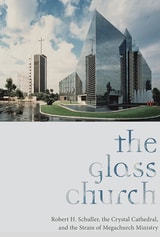
The Glass Church
Robert H. Schuller, the Crystal Cathedral, and the Strain of Megachurch MinistryMark T. Mulder
Rutgers University Press, 2020
Robert H. Schuller’s ministry—including the architectural wonder of the Crystal Cathedral and the polished television broadcast of Hour of Power—cast a broad shadow over American Christianity. Pastors flocked to Southern California to learn Schuller’s techniques. The President of United States invited him sit prominently next to the First Lady at the State of the Union Address. Muhammad Ali asked for the pastor’s autograph. It seemed as if Schuller may have started a second Reformation. And then it all went away. As Schuller’s ministry wrestled with internal turmoil and bankruptcy, his emulators—including Rick Warren, Bill Hybels, and Joel Osteen— nurtured megachurches that seemed to sweep away the Crystal Cathedral as a relic of the twentieth century. How did it come to this?
Certainly, all churches depend on a mix of constituents, charisma, and capital, yet the size and ambition of large churches like Schuller’s Crystal Cathedral exert enormous organizational pressures to continue the flow of people committed to the congregation, to reinforce the spark of charismatic excitement generated by high-profile pastors, and to develop fresh flows of capital funding for maintenance of old projects and launching new initiatives. The constant attention to expand constituencies, boost charisma, and stimulate capital among megachurches produces an especially burdensome strain on their leaders. By orienting an approach to the collapse of the Crystal Cathedral on these three core elements—constituency, charisma, and capital—The Glass Church demonstrates how congregational fragility is greatly accentuated in larger churches, a notion we label megachurch strain, such that the threat of implosion is significantly accentuated by any failures to properly calibrate the inter-relationship among these elements.

The Glory Road
A Gospel Gypsy LifeAnita Faye Garner
University of Alabama Press, 2021
“This is a story central to the origins of country music: the marriage of Saturday night and Sunday morning, and the literal marriage of two musicians, sometimes at odds with each other creatively and personally.” —Rosanne Cash
An essential memoir of music, memory, and the American South.
Anita Faye Garner grew up in the South—just about every corner of it. She and her musical family lived in Texarkana, Bossier City, Hot Springs, Jackson, Vicksburg, Hattiesburg, Pascagoula, Bogalusa, Biloxi, Gulfport, New Orleans, and points between, picking up sticks every time her father, a Pentecostal preacher known as “Brother Ray,” took over a new congregation.
In between jump-starting churches, Brother Ray took his wife and kids out on the gospel revival circuit as the Jones Family Singers. Ray could sing and play, and “Sister Fern” (Mama) was a celebrated singer and songwriter, possessed of both talent and beauty. Rounding out the band were the young Garner (known as Nita Faye then) and her big brother Leslie Ray. At all-day singings and tent revivals across the South, the Joneses made a joyful noise for the faithful and loaded into the car for the next stage of their tour.
But growing up gospel wasn’t always joyous. The kids practically raised and fended for themselves, bonding over a shared dislike of their rootless life and strict religious upbringing. Sister Fern dreamed of crossing over from gospel to popular music and recording a hit record. An unlikely combination of preacher’s wife and glamorous performer, she had the talent and presence to make a splash, and her remarkable voice brought Saturday night rock and roll to Sunday morning music. Always singing, performing, and recording at the margins of commercial success, Sister Fern shared a backing band with Elvis Presley and wrote songs recorded by Johnny Cash and many other artists.
In her touching memoir The Glory Road, Anita Faye Garner re-creates her remarkable upbringing. The story begins with Ray’s attempts to settle down and the family’s inevitable return to the gospel circuit and concludes with Sister Fern’s brushes with stardom and the family’s journey west to California where they finally landed—with some unexpected detours along the way. The Glory Road carries readers back to the 1950s South and the intersections of faith and family at the very roots of American popular music.
For more information about the book and Anita Garner, visit www.thegloryroad.com or www.anitagarner.com
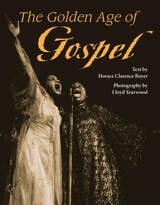
The Golden Age of Gospel
Text by Horace Clarence BoyerPhotography by Lloyd Yearwood
University of Illinois Press, 1995
Skillfully blending music history and social context, Boyer traces the development of gospel from its earliest beginnings through the Golden Age (1945-55) and into the 1960s when gospel entered the concert hall. He introduces dozens of the genre's most gifted contributors, from Thomas A. Dorsey and Mahalia Jackson to the Soul Stirrers and Aretha Franklin, evoking their distinctive styles and distinguishing among the characteristic sounds of gospel music in Chicago, Philadelphia, Detroit, St. Louis, and other locations.
Capturing the essence of a thrilling performance tradition, The Golden Age of Gospel clearly establishes gospel's importance as an authentic American art form and a musical statement of profound belief.
The Guide of the Perplexed
Complete in One VolumeMoses Maimonides
University of Chicago Press, 1963
The twelfth-century Judeo-Arabic text The Guide of the Perplexed is a monument of rabbinical exegesis and one of the most important works in the history of Jewish thought. Written by Moses ben Maimon,commonly known as Maimonides, the Guide aims to liberate people from the perplexities that arise from an understanding of the Bible based only on its literal meaning.
Shlomo Pines’s translation has served students and scholars for decades, and it is presented here, with Leo Strauss’s influential introduction, in one volume for the first time.

The Hajj and the Arts of Pilgrimage
Essays in Honour of Nasser David KhaliliEdited by Qaisra M. Khan and Nahla Nassar
Gingko, 2023
Hajj and the Arts of Pilgrimage consists of twenty-seven essays addressing objects in the remarkable collection of Nasser David Khalili. The collection features more than five thousand objects relating to the arts of pilgrimage, from the eighth century to today, and includes Qur’ans, illustrated manuscripts, rare books, scientific instruments, textiles, coins, paintings, prints, and photo-postcards, as well as archival material, unique historical documents, and examples of the work of some of the earliest Muslim photographers of Hajj. Together the essays collected in Hajj and the Arts of Pilgrimage provide a comprehensive overview of Hajj, illustrating the religious, spiritual, cultural, and artistic aspects of pilgrimage to the Holy Sanctuaries of Islam and the cosmopolitan nature of Hajj itself. Each essay is written by a prominent specialist in the field and beautifully illustrated with full-color images of objects from the collection, some of which have never been seen in print before. Taking readers from the early history of Islam to the fascinating story of the Western view of Muslim pilgrimage, these essays will transform our perception of Hajj.
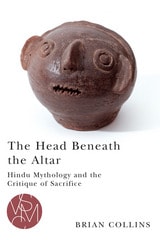
The Head Beneath the Altar
Hindu Mythology and the Critique of SacrificeBrian Collins
Michigan State University Press, 2014
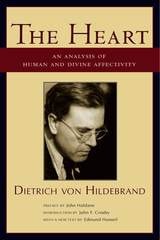
The Heart
An Analysis of Human and Divine AffectationDietrich von Hildebrand
St. Augustine's Press, 2007
This new edition of The Heart (out of print for nearly 30 years) is the flagship volume in a series of Dietrich von Hildebrand’s works to be published by St. Augustine’s Press in collaboration with the Dietrich von Hildebrand Legacy Project. Founded in 2004, the Legacy Project exists in the first place to translate the many German writings of von Hildebrand into English.
While many revere von Hildebrand as a religious author, few realize that he was a philosopher of great stature and importance. Those who knew von Hildebrand as philosopher held him in the highest esteem. Louis Bouyer, for example, once said that “von Hildebrand was the most important Catholic philosopher in Europe between the two world wars.” Joseph Cardinal Ratzinger expressed even greater esteem when he said: “I am personally convinced that, when, at some time in the future, the intellectual history of the Catholic Church in the twentieth century is written, the name of Dietrich von Hildebrand will be most prominent among the figures of our time.”
The Heart is an accessible yet important philosophical contribution to the understanding of the human person. In this work von Hildebrand is concerned with rehabilitating the affective life of the human person. He thinks that for too long philosophers have held it in suspicion and thought of it as embedded in the body and hence as being much inferior to intellect and will. In reality, he argues, the heart, the center of affectivity, has many different levels, including an eminently personal level; at this level affectivity is just as important a form of personal life as intellect and will. Von Hildebrand develops the idea that properly personal affectivity, far than tending away from an objective relation to being, is in fact one major way in which we transcend ourselves and give being its due. Von Hildebrand also developed the important idea that the heart “in many respects is more the real self of the person than his intellect or will.”
At the same time, the author shows full realism about the possible deformities of affective life; he offers rich analyses of what he calls affective atrophy and affective hypertrophy. The second half of The Heart offers a remarkable analysis of the affectivity of the God-Man.