Results by title
397 books match the query 'Rome' and 97 start with t
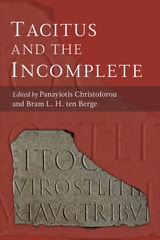
Tacitus and the Incomplete
Edited by Panayiotis Christoforou and Bram L. H. ten Berge
University of Michigan Press, 2026
Widely regarded as ancient Rome’s greatest historian, Tacitus has shaped much of early modern and modern thought on Rome and its emperors. Substantial portions of his major historical works Histories and Annals, however, have not survived, depriving us of his account of crucial episodes and developments in Rome's early imperial history. This first-of-its-kind volume seeks to fill those gaps, using a range of historical and linguistic approaches to reconstruct the missing portions of Tacitus’ work. The volume offers reconstructions of the fragmentary Tacitean emperors (Augustus, Caligula, Nero, Vespasian, Titus, and Domitian) and of important lost episodes such as the destruction of the Temple of Jerusalem and the eruption of Mt. Vesuvius.
By utilizing the concept of incompleteness as a narrative tool, Tacitus and the Incomplete provides novel insights into what Tacitus’ oeuvre might have been like if the lost books had survived, and also expands on recent work on counterfactual historiography, the influence of hindsight on historical writing, the use of prolepsis and other narrative techniques, and on the limitations of historiography in the imperial period.
The Aeneid
Virgil
University of Chicago Press, 2017
The paperback and e-book editions include a new introduction by Richard F. Thomas, along with a new glossary of names that makes the book even more accessible for students and for general readers coming to the Aeneid for the first time who may need help acclimating to Virgil’s world.
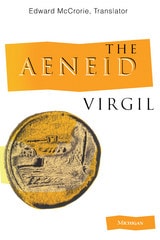
The Aeneid of Virgil
Virgil
University of Michigan Press, 1995
In this new translation Edward McCrorie has performed the difficult task of rendering Virgil's compact, dense Latin into fine, readable, modern English verse. The sometimes complex text is made clear and comprehensible even for first-time readers, and a glossary of names helps identify characters and place-names in the poem. The translation is well suited for students at all levels, and readers already familiar with Virgil will find many fresh images and ideas.
"A brilliant effort."--Robert Bly
"I admire the ambition of the project, and the generosity of many of the lines."--Robert Fagles
Edward McCrorie is Professor of English, Providence College. His poetry and translations of Latin verse have been widely published.
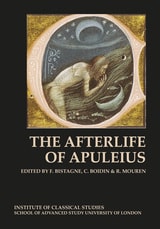
The Afterlife of Apuleius
Edited by F. Bistagne, C. Boidin, and R. Mouren
University of London Press, 2020
The volume gathers the proceedings of an international conference held in March 2016 at the Warburg Institute in London, in association with the Institute of Classical Studies. It includes both diachronic overviews and specific case-studies. A first series of papers focuses on The Golden Ass and its historical and geographical diffusion, from High Medieval Europe to early modern Mexico. The oriental connections of the book are also taken into account. The second part of the book examines the textual and visual destiny of Psyche’s story from the Apuleian fabula to allegorical retellings, in poetical or philosophical books and on stage. As the third series of essays indicates, the fortunes of the book led many ancient and early modern writers and translators to use it as a canonical model for reflections about the status of fiction. It also became, mostly around the beginning of the fifteenth century, a major linguistic and stylistic reference for lexicographers and neo-Latin writers. The last papers of the book deal with Renaissance polemics about "‘Apuleianism" and the role of editors and commentators.
This is the sixth and last of the volumes in the series of ‘Afterlives’ of the Classics, which is being produced jointly by the Institute of Classical Studies and the Warburg Institute.
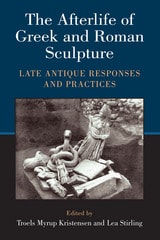
The Afterlife of Greek and Roman Sculpture
Late Antique Responses and PracticesTroels Myrup Kristensen and Lea Stirling, editors
University of Michigan Press, 2016
The Age of Attila
Fifth-Century Byzantium and the BarbariansC.D. Gordon
University of Michigan Press, 2013
This book describes the tragic and bloody collapse of Roman civilization in the West in the fifth century and the near ruin of the Eastern Roman Empire. The hundred years from the death of Theodosius I to the conquest of Italy by Theodoric the Ostrogoth were years of chaos, havoc, and destruction. In the East we see the confusion of the imperial government, the palace intrigues, and the sinister role of the palace eunuchs—but survival. The events are dramatically described by eyewitnesses to the disasters—the Byzantine historians Priscus, Malchus, Olympiodorus, John of Antioch, and Candidus. The contemporary accounts are translated into English and provided with a running commentary by C. D. Gordon to form a continuous narrative of an age of turmoil—the Age of Attila.
David S. Potter has added translations of significant passages not in the original volume. He has also added extensive new notes to place the book in the contemporary study of the ancient world, as well as a new bibliography and a concordance with modern editions.
“David Potter’s re-edition, really updating, expanding, reshaping, and refreshing Colin Gordon's classic Age of Attila is a very welcome development. The Age of Attila, in Potter's expanded version, provides in English the most important literary sources for the immensely important period of the transition or decline, depending on one's view, of the Roman empire to the post-Roman kingdoms in the West, and for Roman history in the fifth century CE in general. This decisive century has always been hotly debated, but rising interest in economic history and a new wave of Attila books make this an especially fortuitous moment to have Gordon anew: no historian, no student of the later Roman Empire will be able to live without David Potter's edition of Gordon's Age of Attila!”
—Susanna Elm, University of California, Berkeley
“It has been half a century since C. D. Gordon published this valuable introduction to the fifth century, a narrative reconstituted from the fragmentary but tantalizing sources remaining for the period. David Potter has revitalized this classic work, updating it with reference to the latest critical editions and rewriting its notes to take account of recent scholarship. The book provides an excellent entry point into a world that saw the western Roman Empire crumble, Byzantium rise from its remains, and the barbarian peoples of central and western Eurasia reshape human history.”
—Noel Lenski, University of Colorado Boulder
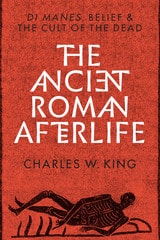
The Ancient Roman Afterlife
Di Manes, Belief, and the Cult of the DeadBy Charles W. King
University of Texas Press, 2020
In ancient Rome, it was believed some humans were transformed into special, empowered beings after death. These deified dead, known as the manes, watched over and protected their surviving family members, possibly even extending those relatives’ lives. But unlike the Greek hero-cult, the worship of dead emperors, or the Christian saints, the manes were incredibly inclusive—enrolling even those without social clout, such as women and the poor, among Rome's deities. The Roman afterlife promised posthumous power in the world of the living.
While the manes have often been glossed over in studies of Roman religion, this book brings their compelling story to the forefront, exploring their myriad forms and how their worship played out in the context of Roman religion’s daily practice. Exploring the place of the manes in Roman society, Charles King delves into Roman beliefs about their powers to sustain life and bring death to individuals or armies, examines the rituals the Romans performed to honor them, and reclaims the vital role the manes played in the ancient Roman afterlife.
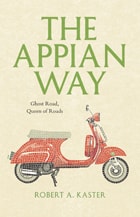
The Appian Way
Ghost Road, Queen of RoadsRobert A. Kaster
University of Chicago Press, 2012
The Roman poet Statius called the via Appia “the Queen of Roads,” and for nearly a thousand years that description held true, as countless travelers trod its path from the center of Rome to the heel of Italy. Today, the road is all but gone, destroyed by time, neglect, and the incursions of modernity; to travel the Appian Way today is to be a seeker, and to walk in the footsteps of ghosts.
Our guide to those ghosts—and the layers of history they represent—is Robert A. Kaster. In The Appian Way, he brings a lifetime of studying Roman literature and history to his adventures along the ancient highway. A footsore Roman soldier pushing the imperial power south; craftsmen and farmers bringing their goods to the towns that lined the road; pious pilgrims headed to Jerusalem, using stage-by-stage directions we can still follow—all come to life once more as Kaster walks (and drives—and suffers car trouble) on what’s left of the Appian Way. Other voices help him tell the story: Cicero, Goethe, Hawthorne, Dickens, James, and even Monty Python offer commentary, insight, and curmudgeonly grumbles, their voices blending like the ages of the road to create a telescopic, perhaps kaleidoscopic, view of present and past.
To stand on the remnants of the Via Appia today is to stand in the pathway of history. With The Appian Way, Kaster invites us to close our eyes and walk with him back in time, to the campaigns of Garibaldi, the revolt of Spartacus, and the glory days of Imperial Rome. No traveler will want to miss this fascinating journey.

The Art of the Roman Jurists
An American PerspectiveEssays by Bruce W. Frier Edited by Thomas A.J. McGinn Introduction by Paul J. du Plessis
University of Michigan Press, 2027
The Art of the Roman Jurists offers a clear, detailed, and thorough account of the relationship between Roman law and society from 100 BCE to 235 CE and traces the rise of the group of legal experts known as jurists. While prominent in the first century BCE, they consolidated their position in the first years of the Principate. But it is only in the second century, starting in the reign of Antoninus Pius (138–161), that, in author Bruce W. Frier’s view, they most emphatically come into their own. The collection reveals how the jurists can evince an awareness of the impact their holdings portend for the social and economic reality. Frier's method is anchored in the ancient sources, extending far beyond the legal evidence, offering a perspective on Roman jurisprudence as it was lived. This collection of published and unpublished articles from Frier examines crucial aspects of his methodology and looks to the future of the study of Roman law.
The Black Widows of the Eternal City
The True Story of Rome's Most Infamous PoisonersCraig A. Monson
University of Michigan Press, 2020
In the present study, Craig A. Monson takes advantage of a recent discovery—the 1,450-page notary’s transcript of the 1659 investigation. It is supplemented here by many ancillary archival sources, unknown to all previous writers. Since the story of Gironima Spana and the would-be widows is partially about what people believed to be true, however, this investigation also juxtaposes some of the “alternative facts” from earlier, sensational accounts with what the notary’s transcript and other, more reliable archival documents reveal.
Written in a style that avoids arcane idioms and specialist jargon, the book can potentially speak to students and general readers interested in seventeenth-century social history and gender issues. It rewrites the life story of Gironima Spana (largely unknown until now), who has dominated all earlier accounts, usually in caricatures that reiterate the tropes of witchcraft. It also concentrates on the dozen other widows whose stories could be the most recovered from archival sources and whom Spana had totally eclipsed in earlier accounts. Most were women “of a very ordinary sort” (prostitutes; beggars; wives of butchers, barbers, dyers, lineners, innkeepers), the kinds of women commonly lost to history. The book seeks to explain why some women were hanged (only six, in fact, most of whom may not have directly poisoned anyone), while dozens of others who did poison their husbands escaped the gallows and, in some cases, were not even interrogated. It also reveals what happened to these other alleged perpetrators, whose fates have remained unknown until now. Other purported culprits, about whom less complete pictures emerge, are briefly discussed in an appendix.
The study incorporates illustrations of archival manuscripts to demonstrate the challenges of deciphering them and illustrates “scenes of the crime” and other important locations, identified on seventeenth-century, bird’s eye-perspective views of Rome and in modern photographs. It also includes GPS coordinates for any who might wish to revisit the sites.
The Brutus Revival
Parricide and Tyrranicide During the RenaissanceManfredi Piccolomini
Southern Illinois University Press, 1991
In a discussion of the Renaissance revival of classical culture, Piccolomini considers the period’s mythologizing of Brutus, Caesar’s assassin. He cites Dante as the initiator of an important literary, dramatic, political, and artistic theme and explains how the historical Brutus was changed by literature and theatre into a symbol of the just citizen rebelling against the unjust tyrant.
Piccolomini discusses several Renaissance political conspiracies modeled after Brutus’ act and explores how those conspiracies, in turn, formed the basis for the theme’s recurrence in Italian, French, and English theatre of the period.
The Buried City
Unearthing the Real PompeiiGabriel Zuchtriegel
University of Chicago Press, 2025
In The Buried City, Gabriel Zuchtriegel takes us on a behind-the-scenes tour of Pompeii and reveals new archaeological finds that are being unearthed at the site’s biggest dig in a generation. As director of the Pompeii Archaeological Park, Zuchtriegel presents a uniquely intimate perspective on this city that was tragically destroyed and frozen in time by the eruption of Mount Vesuvius in 79 CE. Among the ruins, we find unmade beds, dishes left drying, and bodies of victims encased in ash, but Zuchtriegel shows that we’ve only begun to understand this fascinating place, as a third of the site remains unexcavated.
Zuchtriegel leads us into the heart of the city, reconstructing Pompeii as it would have been, showing us who lived there, what mattered to them, and what happened in their final hours. The Buried City reveals the latest discoveries unearthed at Pompeii—including a banquet hall with murals of Greek gods, a fresco of what appears to be a pizza, and the remains of individuals crushed by debris—all buried for almost two thousand years. Zuchtriegel offers a vivid portrait of this World Heritage site as a vibrant and diverse city, connecting us to a past that is much closer than we think and inviting us to reflect on our role as keepers of the site and its history.
The Buried City
Unearthing the Real PompeiiGabriel Zuchtriegel
University of Chicago Press, 2025
The director of the Pompeii Archaeological Park offers a vivid view of daily life in the lost city, shares the latest discoveries, and reflects on preserving heritage.
In The Buried City, Gabriel Zuchtriegel takes us on a behind-the-scenes tour of Pompeii and reveals new archaeological finds that are being unearthed at the site’s biggest dig in a generation. As director of the Pompeii Archaeological Park, Zuchtriegel presents a uniquely intimate perspective on this city that was tragically destroyed and frozen in time by the eruption of Mount Vesuvius in 79 CE. Among the ruins, we find unmade beds, dishes left drying, and bodies of victims encased in ash, but Zuchtriegel shows that we’ve only begun to understand this fascinating place, as a third of the site remains unexcavated.
Zuchtriegel leads us into the heart of the city, reconstructing Pompeii as it would have been, showing us who lived there, what mattered to them, and what happened in their final hours. The Buried City reveals the latest discoveries unearthed at Pompeii—including a banquet hall with murals of Greek gods, a fresco of what appears to be a pizza, and the remains of individuals crushed by debris—all buried for almost two thousand years. Zuchtriegel offers a vivid portrait of this World Heritage site as a vibrant and diverse city, connecting us to a past that is much closer than we think and inviting us to reflect on our role as keepers of the site and its history.
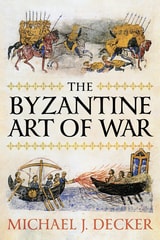
The Byzantine Art of War
Michael J. Decker
Westholme Publishing, 2013
The Byzantine Art of War explores the military history of the thousand-year empire of the eastern Mediterranean, Byzantium. Throughout its history the empire faced a multitude of challenges from foreign invaders seeking to plunder its wealth and to occupy its lands, from the deadly Hunnic hordes of Attila, to the Arab armies of Islam, to the western Crusaders bent on carving out a place in the empire or its former lands. In order to survive the Byzantines relied on their army that was for centuries the only standing, professional force in Europe. Leadership provided another key to survival; Byzantine society produced a number of capable strategic thinkers and tacticians—and several brilliant ones. These officers maintained a level of professionalism and organization inherited and adapted from Roman models. The innovations of the Byzantine military reforms of the sixth century included the use of steppe nomad equipment and tactics, the most important of which was the refinement of the Roman mounted archer. Strategy and tactics evolved in the face of victory and defeat; the shock of the Arab conquests led to a sharp decline in the number and quality of imperial forces. By the eighth and ninth centuries Byzantine commanders mastered the art of the small war, waging guerrilla campaigns, raids, and flying column attacks that injured the enemy but avoided the decisive confrontation the empire was no longer capable of winning. A century later they began the most sustained, glorious military expansion of their history. This work further sketches the key campaigns, battles, and sieges that illustrate Byzantine military doctrine, vital changes from one era to another, the composition of forces and the major victories and defeats that defined the territory and material well-being of its citizens. Through a summary of their strategies, tactics, and innovations in the tools of war, the book closes with an analysis of the contributions of this remarkable empire to world military history.
The Case for the Prosecution in the Ciceronian Era
Michael C. Alexander
University of Michigan Press, 2003
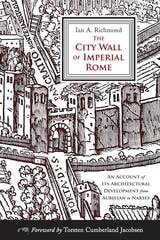
The City Wall of Imperial Rome
An Account of Its Architectural Development from Aurelian to NarsesIan A. Richmond
Westholme Publishing, 2013
The City Wall of Imperial Rome: An Account of Its Architectural Development from Aurelian to Narses by Sir Ian A. Richmond was first published in 1930 and reprinted in facsimile in 1971. This scarce, essential work on the imperial fortifications of Rome has lost none of its relevance since its original publication. Despite the Wall’s great importance for our understanding of Roman fortifications, there have been no further major investigations. Rome had originally been fortified by the old Servian Wall, built during the Republican period in the late fourth century BC. The city expanded greatly over the centuries and by the time of the emperor Augustus (27 BC–14 AD) little trace of the wall remained. However, there was not a need for a protective wall until the crisis of the third century AD, when barbarian tribes in 270 broke into northern Italy. In response to this new threat, the Aurelian Walls were constructed between 271 and 275 to protect the capital against barbarian raids. The walls enclosed all of Rome on both sides of the Tiber River—an area of about 5.3 square miles— and ran for some 12.5 miles. The construction project was one of the greatest in the history of the city of Rome and the walls were built in a remarkably short time, with the emperor Aurelian himself overseeing the project. Initially, the main aim of the wall was not to withstand prolonged siege warfare but to deter barbarian invaders who were insufficiently equipped for siege warfare. Later, emperor Honorius improved both the walls and gates, so that Rome could withstand a real siege and be defended by a smaller garrison. During the time of the Gothic War (535–552), five thousand Roman troops withstood a year-long siege by an estimated 150,000 Goths due to the strength of the walls. When Rome was captured in 545 by the Ostrogothic king Totila, part of the walls were deliberately destroyed to prevent the Romans from ever using them again. The Aurelian Walls remain remarkably well preserved today, due largely to their constant use as Rome’s primary fortification until the nineteenth century. The walls are the largest monument of ancient Rome still to be seen in the city. In this new edition, Late Antiquity specialist Torsten Cumberland Jacobsen provides current information about the state of the walls and their preservation, an updated bibliography, and an essay about Sir Richmond and his career.
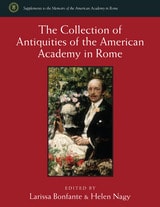
The Collection of Antiquities of the American Academy in Rome
Larissa Bonfante and Helen Nagy, editors
University of Michigan Press, 2016
The Commerce of War
Exchange and Social Order in Latin EpicNeil Coffee
University of Chicago Press, 2009
Latin epics such as Virgil’s Aeneid, Lucan’s Civil War, and Statius’s Thebaid addressed Roman aristocrats whose dealings in gifts, favors, and payments defined their conceptions of social order. In The Commerce of War, Neil Coffee argues that these exchanges play a central yet overlooked role in epic depictions of Roman society.
Tracing the collapse of an aristocratic worldview across all three poems, Coffee highlights the distinction they draw between reciprocal gift giving among elites and the more problematic behaviors of buying and selling. In the Aeneid, customary gift and favor exchanges are undermined by characters who view human interaction as short-term and commodity-driven. The Civil War takes the next logical step, illuminating how Romans cope once commercial greed has supplanted traditional values. Concluding with the Thebaid, which focuses on the problems of excessive consumption rather than exchange, Coffee closes his powerful case that these poems constitute far-reaching critiques of Roman society during its transition from republic to empire.
The Complete Poetry of Catullus
Catullus; Translated and with commentary by David Mulroy
University of Wisconsin Press, 2002
Catullus’ life was akin to pulp fiction. In Julius Caesar’s Rome, he engages in a stormy affair with a consul’s wife. He writes her passionate poems of love, hate, and jealousy. The consul, a vehement opponent of Caesar, dies under suspicious circumstances. The merry widow romances numerous young men. Catullus is drawn into politics and becomes a cocky critic of Caesar, writing poems that dub Julius a low-life pig and a pervert. Not surprisingly, soon after, no more is heard of Catullus.
David Mulroy brings to life the witty, poignant, and brutally direct voice of a flesh-and-blood man, a young provincial in the Eternal City, reacting to real people and events in a Rome full of violent conflict among individuals marked by genius and megalomaniacal passions. Mulroy’s lively, rhythmic translations of the poems are enhanced by an introduction and commentary that provide biographical and bibliographical information about Catullus, a history of his times, a discussion of the translations, and definitions and notes that ease the way for anyone who is not a Latin scholar.
The Conquest of Ruins
The Third Reich and the Fall of RomeJulia Hell
University of Chicago Press, 2019
Hell examines centuries of European empire-building—from Charles V in the sixteenth century and Napoleon’s campaigns of the late seventeenth and early eighteenth centuries to the atrocities of Mussolini and the Third Reich in the 1930s and ’40s—and sees a similar fascination with recreating the Roman past in the contemporary image. In every case—particularly that of the Nazi regime—the ruins of Rome seem to represent a mystery to be solved: how could an empire so powerful be brought so low? Hell argues that this fascination with the ruins of greatness expresses a need on the part of would-be conquerors to find something to ward off a similar demise for their particular empire.
The Context of Ancient Drama
Eric Csapo and William J. Slater
University of Michigan Press, 1995
The Crisis of Masculinity in the Age of Augustus
Melanie Racette-Campbell
University of Wisconsin Press, 2023
Careful reading of contemporary texts reveals a decades-long process as tumultuous and unsteady as the political events they echoed, one in which multiple and competing strategies for reconceiving the nature of masculinity were tested, employed, discarded, and adopted in a complex public-private discourse. The eventual reconstitution of a definition of Roman manhood was not easily agreed upon. Masculinity in both the Republic and the Empire are well-studied subjects, but by shining a light on the precise moment of transition Racette-Campbell unveils the complexity, contours, and nuances of the Augustan crisis of masculinity.
The Crowd in Rome in the Late Republic
Fergus Millar
University of Michigan Press, 2002
In this important study, Fergus Millar explores the development of the Roman Republic, which, as it drew to a close in the middle decades of the first century B.C.E., had come to cover most of Italy. There were nearly a million adult male voters in the time of Cicero, but there were no constituencies, and no absentee ballots. To exercise their rights, voters had to come in person to Rome and to meet in the Forum. Millar takes the period from the dictatorship of Sulla to Caesar's crossing of the Rubicon and shows how the politics of the crowd was central to the great changes that took place year after year, and altered the Republic forever.
The originality of Millar's highly accessible work lies first in its serious treatment of the importance of open-air oratory in Roman public life, and second, in its use of the narratives of events that evidence provides. Third, it refuses to interpret these narratives in the light of modern theories about the importance of the client-patron system, or the domination of the Senate. This work questions how we should understand the Roman Republic: as a network of aristocratic families dominating the people, or an erratic and volatile democracy in which power was exercised by the tiny proportion of citizens who actually came to listen to speeches and to vote.
This work speaks to those interested in ancient history and its consequences in the modern world.
Fergus Millar is Camden Professor of Ancient History, Brasenose College, Oxford University.
The Discourse of Marriage in the Greco-Roman World
Edited by Jeffrey Beneker and Georgia Tsouvala
University of Wisconsin Press, 2022
Through aesthetically informed and sensitive modes of analysis, these contributors examine a wealth of representations—including violence in weddings and spousal devotion after death. The Discourse of Marriage in the Greco-Roman World demonstrates the varying conceptions of an institution that was central to ancient social and political life—and remains prominent in the modern world. This volume will contribute to scholars' understanding of the era and fascinate anyone interested in historic depictions of marriage and the role and status of women in the late Hellenistic and early Imperial periods.
The Discovery of the Fact
Clifford Ando and William P. Sullivan, Editors
University of Michigan Press, 2020
The Dramaturgy of Senecan Tragedy
Thomas D. Kohn
University of Michigan Press, 2013
The first-century Roman tragedies of Seneca, like all ancient drama, do not contain the sort of external stage directions that we are accustomed to today; nevertheless, a careful reading of the plays reveals such stage business as entrances, exits, setting, sound effects, emotions of the characters, etc. The Dramaturgy of Senecan Tragedy teases out these dramaturgical elements in Seneca's work and uses them both to aid in the interpretation of the plays and to show the playwright's artistry.
Thomas D. Kohn provides a detailed overview of the corpus, laying the groundwork for appreciating Seneca's techniques in the individual dramas. Each of the chapters explores an individual tragedy in detail, discussing the dramatis personae and examining how the roles would be distributed among a limited number of actors, as well as the identity of the Chorus. The Dramaturgy of Senecan Tragedymakes a compelling argument for Seneca as an artist and a dramaturg in the true sense of the word: "a maker of drama." Regardless of whether Seneca composed his plays for full-blown theatrical staging, a fictive theater of the mind, or something in between, Kohn demonstrates that he displays a consistency and a careful attentiveness to details of performance. While other scholars have applied this type of performance criticism to individual tragedies or scenes, this is the first comprehensive study of all the plays in twenty-five years, and the first ever to consider not just stagecraft, but also metatheatrical issues such as the significant distribution of roles among a limited number of actors, in addition to the emotional states of the characters. Scholars of classics and theater, along with those looking to stage the plays, will find much of interest in this study.
The Drunken Duchess of Vassar
Communication, Images, and Identity in the Classical WorldMaurizio Bettini
The Ohio State University Press, 2011
The Earliest Romans
A Character SketchRamsay MacMullen
University of Michigan Press, 2013
"A vibrant account that puts flesh on the bare bones of early Roman history."
---Celia Schultz, University of Michigan
The ancient Romans' story down to 264 B.C. can be made credible by stripping away their later myths and inventions to show how their national character shaped their destiny.
After many generations of scholarly study, consensus is clear: the account in writers like Livy is not to be trusted because their aims were different from ours in history-writing. They wanted their work to be both improving and diverting. It should grow out of the real past, yes, but if that reality couldn't be recovered, or was uncertain, their art did not forbid invention. It more than tolerated dramatic incidents, passions, heroes, heroines, and villains. If, however, all this resulting ancient fiction and adornment are pruned away, a national character can be seen in the remaining bits and pieces of credible information, to explain the familiar story at least in its outlines.
To doubt the written sources has long been acceptable, but this or that detail or narrative section must always be left for salvage by special pleading. To press home the logic of doubt is new. To reach beyond the written sources for a better support in excavated evidence is no novelty; but it is a novelty, to find in archeology the principal substance of the narrative---which is the choice in this book. To use this in turn for the discovery of an ethnic personality, a Roman national character, is key and also novel.
What is repeatedly illustrated and emphasized here is the distance traveled by the art or craft of understanding the past---"history" in that sense---over the course of the last couple of centuries. The art cannot be learned, because it cannot be found, through studying Livy and Company. Readers who care about either of the two disciplines contrasted, Classics and History, may find this argument of interest.
"Like Thucydides of the hyperactive Athenians and de Tocqueville of the nation-building Americans, MacMullen here draws a character sketch of the early Romans---the men who built Rome, conquered Italy, and created an empire. Based on profound familiarity with history, evidence, and their better-known descendants, attention to what they did and failed to do, remarkable insight, empathy, constructive imagination, and not without humor, he reconstructs the homo Romanus and thus helps us imagine what he was like, and understand why he achieved what he did. This little book is informative, full of important ideas, and delightful to read."
---Kurt Raaflaub, Brown University
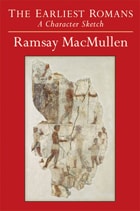
Jacket image: Marcus Fabius and Quintus Tannius. Fresco. Musei Capitolini, Rome, Italy. Courtesy of Scala / Art Resource, NY..
The Economy of Prostitution in the Roman World
A Study of Social History and the BrothelThomas A. J. McGinn
University of Michigan Press, 2004
The End of Sacrifice
Religious Transformations in Late AntiquityGuy G. Stroumsa
University of Chicago Press, 2009
The religious transformations that marked late antiquity represent an enigma that has challenged some of the West’s greatest thinkers. But, according to Guy Stroumsa, the oppositions between paganism and Christianity that characterize prevailing theories have endured for too long. Instead of describing this epochal change as an evolution within the Greco-Roman world from polytheism to monotheism, he argues that the cause for this shift can be found not so much around the Mediterranean as in the Near East.
The End of Sacrifice points to the role of Judaism, particularly its inventions of new religious life following the destruction of the Second Temple in 70 CE. The end of animal sacrifice gave rise to new forms of worship, with a concern for personal salvation, scriptural study, rituals like praying and fasting, and the rise of religious communities and monasticism. It is what Christianity learned from Judaism about texts, death, and, above all, sacrifice that allowed it to supersede Greco-Roman religions and, Stroumsa argues, transform religion itself.
A concise and original approach to a much-studied moment in religious history, The End of Sacrifice will be heralded by all scholars of late antiquity.
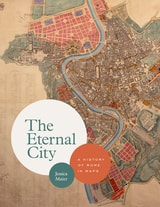
The Eternal City
A History of Rome in MapsJessica Maier
University of Chicago Press, 2020
In this unique and visually engaging book, Jessica Maier considers Rome through the eyes of mapmakers and artists who have managed to capture something of its essence over the centuries. Viewing the city as not one but ten “Romes,” she explores how the varying maps and art reflect each era’s key themes. Ranging from modest to magnificent, the images comprise singular aesthetic monuments like paintings and grand prints as well as more popular and practical items like mass-produced tourist plans, archaeological surveys, and digitizations. The most iconic and important images of the city appear alongside relatively obscure, unassuming items that have just as much to teach us about Rome’s past. Through 140 full-color images and thoughtful overviews of each era, Maier provides an accessible, comprehensive look at Rome’s many overlapping layers of history in this landmark volume.
The first English-language book to tell Rome’s rich story through its maps, The Eternal City beautifully captures the past, present, and future of one of the most famous and enduring places on the planet.
The Eye of Command
Kimberly Kagan
University of Michigan Press, 2006
Challenging Keegan's seminal work, The Eye of Command offers a new approach to studying and narrating battles, based upon an analysis of the works of the Roman military authors Julius Caesar and Ammianus Marcellinus. Kimberly Kagan argues that historians cannot explain a battle's outcome solely on the basis of soldiers' accounts of small-unit actions. A commander's view, exemplified in Caesar's narratives, helps explain the significance of a battle's major events, how they relate to one another and how they lead to a battle's outcome. The "eye of command" approach also answers fundamental questions about the way commanders perceive battles as they fight them-questions modern military historians have largely ignored.
"The Eye of Command is a remarkable book-smart, thoughtful, clear, vigorous, factual but creative, and grounded in the practical. It is at once scholarly and readable, combining classical scholarship and military theory. Rarely have I come across a book that makes two-thousand-year-old events seem so alive."
-Barry Strauss, Professor of History, Cornell University
"In a work well written, concisely presented, and convincingly argued, Kagan uses examples from Caesar's Gallic Wars to challenge John Keegan's focus on lower-echelon experiences of battle in favor of 'The eye of command': a narrative technique emphasizing decisions and events that shape a battle's outcome."
-Dennis Showalter, Professor of History, Colorado College
"To know whether a battle is won or lost is not enough. Kagan's deep analysis of theory and practice points to a new way of understanding complex army-commander and small-unit perspectives that can properly claim the status of history."
-Gordon Williams, Thacher Professor of Latin Emeritus, Yale University
Kimberly Kagan was an Assistant Professor of History at the United States Military Academy between 2000 and 2005. Since then, she has served as a lecturer in International Affairs, History, and the Humanities at Yale University and as an adjunct professor at Georgetown's Edmund A. Walsh School of Foreign Service and at American University's Department of History. She received her Ph.D. in Ancient History from Yale University.
The First Urban Churches 6
Rome and OstiaJames R. Harrison
SBL Press, 2021
An examination of early Roman Christianity by New Testament and classical scholars
Building on the methodologies introduced in the first volume of The First Urban Churches and supplementing the in-depth studies of Corinth, Ephesus, Philippi, Colossae, Hierapolis, and Laodicea (vols. 2–5), essays in this volume challenge readers to reexamine what we know about the early church within Rome and the port city of Ostia. In the introductory section of the book, James R. Harrison discusses the material and documentary evidence of both cities, which sets the stage for the essays that follow. In the second section, Mary Jane Cuyler, James R. Harrison, Richard Last, Annelies Moeser, Thomas A. Robinson, Michael P. Theophilos, and L. L. Welborn examine a range of topics, including the Ostian Synagogue, Romans 1:2–4 against the backdrop of Julio-Claudian adoption and apotheosis traditions, and the epistle of 1 Clement. In the final section of this volume, Jutta Dresken-Welland and Mark Reasoner engage Peter Lampe’s magnum opus From Paul to Valentinus; Lampe wraps up the section and the volume with a response. Throughout, readers are provided with a rich demonstration of how the material evidence of the city of Rome illuminates the emergence of Roman Christianity, especially in the first century CE.
The Fractured Voice
Silence and Power in Imperial Roman LiteratureAmy A. Koenig
University of Wisconsin Press, 2023
In this volume, Amy Koenig deftly confronts the trope of muteness in Imperial Roman literature, arguing that this understanding of silence is incomplete. By unpacking the motif of voicelessness across a wide range of written sources, she shows that the Roman perception of silence was more complicated than a simple binary and that elite male authors used muted or voiceless characters to interrogate the concept of voicelessness in ways that would be taboo in other contexts. Paradoxically, Koenig illustrates that silence could in fact be freeing—that the loss of voice permits an untethering from other social norms and expectations, thus allowing a freedom of expression denied to many of the voiced.
The Gardens of Sallust
A Changing LandscapeBy Kim J. Hartswick
University of Texas Press, 2003
Pleasure gardens, or horti, offered elite citizens of ancient Rome a retreat from the noise and grime of the city, where they could take their leisure and even conduct business amid lovely landscaping, architecture, and sculpture. One of the most important and beautiful of these gardens was the horti Sallustiani, originally developed by the Roman historian Sallust at the end of the first century B.C. and later possessed and perfected by a series of Roman emperors. Though now irrevocably altered by two millennia of human history, the Gardens of Sallust endure as a memory of beauty and as a significant archaeological site, where fragments of sculpture and ruins of architecture are still being discovered.
In this ambitious work, Kim Hartswick undertakes the first comprehensive history of the Gardens of Sallust from Roman times to the present, as well as its influence on generations of scholars, intellectuals, and archaeologists. He draws from an astonishing array of sources to reconstruct the original dimensions and appearance of the gardens and the changes they have undergone at specific points in history. Hartswick thoroughly discusses the architectural features of the garden and analyzes their remains. He also studies the sculptures excavated from the gardens and discusses the subjects and uses of many outstanding examples.
The Gift of Correspondence in Classical Rome
Friendship in Cicero's Ad Familiares and Seneca's Moral EpistlesAmanda Wilcox
University of Wisconsin Press, 2012
Amanda Wilcox offers an innovative approach to two major collections of Roman letters—Cicero’s Ad Familiares and Seneca’s Moral Epistles—informed by modern cross-cultural theories of gift-giving.
By viewing letters and the practice of correspondence as a species of gift exchange, Wilcox provides a nuanced analysis of neglected and misunderstood aspects of Roman epistolary rhetoric and the social dynamics of friendship in Cicero’s correspondence. Turning to Seneca, she shows that he both inherited and reacted against Cicero’s euphemistic rhetoric and social practices, and she analyzes how Seneca transformed the rhetoric of his own letters from an instrument of social negotiation into an idiom for ethical philosophy and self-reflection. Though Cicero and Seneca are often viewed as a study in contrasts, Wilcox extensively compares their letters, underscoring Cicero’s significant influence on Seneca as a prose stylist, philosopher, and public figure.
The Greco-Egyptian Magical Formularies
Libraries, Books, and Individual RecipesEdited by Christopher A. Faraone and Sofía Torallas Tovar
University of Michigan Press, 2022
In Greco-Roman Egypt, recipes for magical undertaking, called magical formularies, commonly existed for love potions, curses, attempts to best business rivals—many of the same challenges that modern people might face. In The Greco-Egyptian Magical Formularies: Libraries, Books, and Individual Recipes, volume editors Christopher Faraone and Sofia Torallas Tovar present a series of essays by scholars involved in a multiyear project to reedit and translate the various magical handbooks that were inscribed in the Roman period in the Greek or Egyptian languages. For the first time, the material remains of these papyrus rolls and codices are closely examined, revealing important information about the production of books in Egypt, the scribal culture in which they were produced, and the traffic in single recipes copied from them. Especially important for historians of the book and the Christian Bible are new insights in the historical shift from roll to codex, complicated methods of inscribing the bilingual papyri (in which the Greek script is written left to right and the demotic script right to left), and the new realization that several of the longest extant handbooks are clearly compilations of two or more shorter handbooks, which may have come from different places. The essays also reexamine and rethink the idea that these handbooks came from the personal libraries of practicing magicians or temple scriptoria, in one case going so far as to suggest that two of the handbooks had literary pretensions of a sort and were designed to be read for pleasure rather than for quotidian use in making magical recipes.
The Hellenistic, Roman, and Medieval Glass from Cosa
David Frederick Grose (R. T. Scott, editor)
University of Michigan Press, 2017
The research and analysis presented here are the work of the late David Frederick Grose, who began this project when no other city site excavations in Italy focused on ancient glass. He confirmed that the Roman glass industry began to emerge in the Julio-Claudian era, beginning in the principate of Augustus. His study traces the evolution of manufacturing techniques from core-formed vessels to free blown glass, and it documents changes in taste and style that were characteristic of the western glass industry throughout its long history.
At the time of Grose’s unexpected passing, his study was complete but not yet published. Nevertheless, the reputation of his work in this area has done much to establish the value and importance of excavating and researching Cosa’s glass. This volume, arranged and edited by R. T. Scott, makes Grose’s essential scholarship on the subject available for the first time.
The Humblest Sparrow
The Poetry of Venantius FortunatusMichael Roberts
University of Michigan Press, 2010
In The Humblest Sparrow, Michael Roberts illuminates the poetry of the sixth-century bishop and poet Venantius Fortunatus. Often regarded as an important transitional figure, Fortunatus wrote poetry that is seen to bridge the late classical and earlier medieval periods. Written in Latin, his poems combined the influences of classical Latin poets with a medieval tone, giving him a special place in literary history. Yet while interest has been growing in the early Merovingian period, and while the writing of Fortunatus' patron Gregory of Tours has been well studied, Fortunatus himself has often been neglected. This neglect is remedied by this in-depth study, which will appeal to scholars of late antique, early Christian, and medieval Latin poetry. Roberts divides Fortunatus' poetry into three main groups: poetry of praise, hagiographical poetry, and personal poetry. In addition to providing a general survey, Roberts discusses in detail many individual poems and proposes a number of theses on the nature, function, relation to social and linguistic context, and survival of Fortunatus' poetry, as well as the image of the poet created by his work.
The Idea of the Theater in Latin Christian Thought
Augustine to the Fourteenth CenturyDonnalee Dox
University of Michigan Press, 2004
---Margaret Knapp, Arizona State University
"...an elegantly concise survey of the way classical notions of theater have been interpreted in the Latin Middle Ages. Dox convincingly demonstrates that far from there being a single 'medieval' attitude towards theater, there was in fact much debate about how theater could be understood to function within Christian tradition, even in the so-called 'dark ages' of Western culture. This book makes an innovative contribution to studies of the history of the theater, seen in terms of the history of ideas, rather than of practice."
---Constant Mews, Director, Centre for the Study of Religion & Theology, University of Monash, Australia
"In the centuries between St. Augustine and Bartholomew of Bruges, Christian thought gradually moved from a brusque rejection of classical theater to a progressively nuanced and positive assessment of its value. In this lucidly written study, Donnalee Dox adds an important facet to our understanding of the Christian reaction to, and adaptation of, classical culture in the centuries between the Church Fathers and the rediscovery of Aristotle."
---Philipp W. Rosemann, University of Dallas
This book considers medieval texts that deal with ancient theater as documents of Latin Christianity's intellectual history. As an exercise in medieval historiography, this study also examines biases in modern scholarship that seek links between these texts and performance practices. The effort to bring these texts together and place them in their intellectual contexts reveals a much more nuanced and contested discourse on Greco-Roman theater and medieval theatrical practice than has been acknowledged. The book is arranged chronologically and shows the medieval foundations for the Early Modern integration of dramatic theory and theatrical performance.
The Idea of the Theater in Latin Christian Thought will be of interest to theater historians, intellectual historians, and those who work on points of contact between the European Middle Ages and Renaissance. The broad range of documents discussed (liturgical treatises, scholastic commentaries, philosophical tracts, and letters spanning many centuries) renders individual chapters useful to philosophers, aestheticians, and liturgists as well as to historians and historiographers. For theater historians, this study offers an alternative reading of familiar texts which may alter our understanding of the emergence of dramatic and theatrical traditions in the West. Because theater is rarely considered as a component of intellectual projects in the Middle Ages, this study opens a new topic in the writing of medieval intellectual history.
The Justice of Constantine
Law, Communication, and ControlJohn Noël Dillon
University of Michigan Press, 2012
As the first Christian emperor of Rome, Constantine the Great has long interested those studying the establishment of Christianity. But Constantine is also notable for his ability to control a sprawling empire and effect major changes. The Justice of Constantineexamines Constantine's judicial and administrative legislation and his efforts to maintain control over the imperial bureaucracy, to guarantee the working of Roman justice, and to keep the will of his subjects throughout the Roman Empire.
John Dillon first analyzes the record of Constantine's legislation and its relationship to prior legislation. His initial chapters also serve as an introduction to Roman law and administration in later antiquity. Dillon then considers Constantine's public edicts and internal communications about access to law, trials and procedure, corruption, and punishment for administrative abuses. How imperial officials relied on correspondence with Constantine to resolve legal questions is also considered. A study of Constantine's expedited appellate system, to ensure provincial justice, concludes the book.
Constantine's constitutions reveal much about the Theodosian Code and the laws included in it. Constantine consistently seeks direct sources of reliable information in order to enforce his will. In official correspondence, meanwhile, Constantine strives to maintain control over his officials through punishment; trusted agents; and the cultivation of accountability, rivalry, and suspicion among them.
The Laws of the Roman People
Public Law in the Expansion and Decline of the Roman RepublicCallie Williamson
University of Michigan Press, 2015
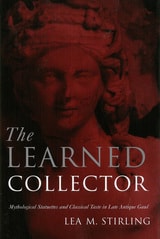
The Learned Collector
Mythological Statuettes and Classical Taste in Late Antique GaulLea M. Stirling
University of Michigan Press, 2005
The majority of statues in late antique homes were heirlooms and antiques. Mythological statuary, which would be interpreted in varying degrees of complexity, favored themes reflecting aristocratic pastimes such as dining and hunting. The Learned Collector investigates the manufacture of these distinctive statuettes in the later fourth century, the reasons for their popularity, and their modes of display in Gaul and the empire.
Although the destruction of ancient artwork looms large in the common view of late antiquity, statuary of mythological figures continued to be displayed and manufactured into the early fifth century. Stirling surveys the sculptural decor of late antique villas across the empire to reveal the universal and regional trends in the late antique confluence of literary education, mythological references, aristocratic mores, and classicizing taste. Deftly combining art historical, archaeological, and literary evidence, this book will be important to classicists and art historians alike. Stirling's accessible writing style makes this an important work for scholars, students, and anyone with an interest in Roman statues of this era.
Lea M. Stirling is Associate Professor of Classics at the University of Manitoba and holds a Canada Research Council Chair in Roman Archaeology. She co-directs excavations at the ancient city of Leptiminus, Tunisia.
The Life and Work of Francis Willey Kelsey
Archaeology, Antiquity, and the ArtsJohn Griffiths Pedley
University of Michigan Press, 2011
President of the Archaeological Institute of America, professor at the University of Michigan from 1889 to 1927, and president of the American Philological Association, Francis Kelsey was crucially involved in the founding or growth of major educational institutions. He came to maturity in a period of great technological change in communications, transportation, and manufacturing. Kelsey took full advantage of such innovations in his ceaseless drive to promote education for all, to further the expansion of knowledge, and to champion the benefits of the study of antiquity.
A vigorous traveler around the United States, Europe, and the Mediterranean, Kelsey strongly believed in the value of personally viewing sites ancient and modern and collecting artifacts that could be used by the new museums and universities that were springing up in the United States. This collecting habit put him in touch with major financiers of the day, including Charles Freer, Andrew Carnegie, and J. P. Morgan, as he sought their help for important projects.
Drawing heavily on Kelsey's daily diaries now held at the University of Michigan's Bentley Historical Library, John Griffiths Pedley gives us a biography that records the wide-ranging activities of a gifted and energetic scholar whose achievements mirrored the creative and contributive innovations of his contemporary Americans.
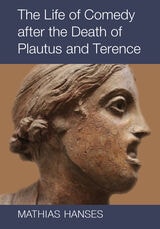
The Life of Comedy after the Death of Plautus and Terence
Mathias Hanses
University of Michigan Press, 2020
Scholars have commonly believed that the plays fell out of favor with theatrical audiences by the end of the first century BCE, but The Life of Comedy demonstrates that performances of these comedies continued at least until the turn of the second century CE. Mathias Hanses traces the plays’ reception in Latin literature from the late first century BCE to the early second century CE, and shines a bright light on the relationships between comic texts and the works of contemporary and later Latin writers.
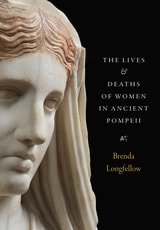
The Lives and Deaths of Women in Ancient Pompeii
Brenda Longfellow
University of Texas Press, 2025
A study of women’s lives in the public sphere of the ancient city of Pompeii.
Pompeii’s well-preserved remains provide a unique opportunity for the close study of ancient lives. Drawing on statues, inscriptions, graffiti, wall paintings, and the architecture of tombs, sanctuaries, houses, and public spaces, The Lives and Deaths of Women in Ancient Pompeii examines the public lives of women in Pompeii. Art historian Brenda Longfellow explores how historical women of all social backgrounds acted in public and exerted agency on behalf of themselves and others, ultimately finding that female initiatives in Pompeii were not only accepted but desired by the community to a greater extent than has previously been recognized.
Longfellow centers her study on a few key women—including the city’s most notable female patron, Eumachia—and uses them to examine female roles in postmortem commemorations, civic patronage and benefactions, commerce, the priesthood, and the home. By following these individuals, Longfellow examines women’s lives in Pompeii in both abstract and concrete ways, allowing readers to better understand their importance to the city and society. The result is a groundbreaking book that foregrounds the agency of women in everyday Pompeii.
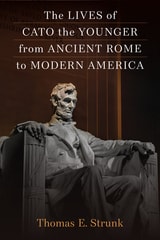
The Lives of Cato the Younger from Ancient Rome to Modern America
Thomas E. Strunk
University of Michigan Press, 2026
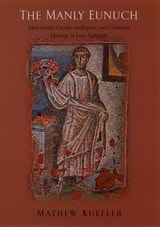
The Manly Eunuch
Masculinity, Gender Ambiguity, and Christian Ideology in Late AntiquityMathew Kuefler
University of Chicago Press, 2001
The cultural and demographic success of Christianity during this epoch lay in the ability of its leaders to recognize and respond to this crisis. Drawing on the tradition of gender ambiguity in early Christian teachings, which included Jesus's exhortation that his followers "make themselves eunuchs for the sake of the kingdom of heaven," Christian writers and thinkers crafted a new masculine ideal, one that took advantage of the changing social realities in Rome, inverted the Roman model of manliness, and helped solidify Christian ideology by reinstating the masculinity of its adherents.
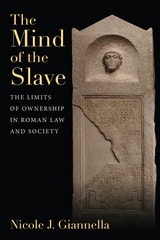
The Mind of the Slave
The Limits of Ownership in Roman Law and SocietyNicole J. Giannella
University of Michigan Press, 2026
In order to place Roman jurists in conversation with both technical and literary sources, Giannella grounds this study in philology and argues that conceptions of the mind of the slave were at the heart of legal and cultural debates about the nature of slavery and ownership. It also contributes to a wider debate about selfhood and autonomy, since philosophers often used the figure of the slave as a representation of humanity as its limits.
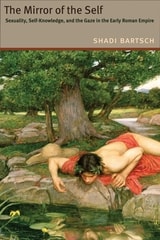
The Mirror of the Self
Sexuality, Self-Knowledge, and the Gaze in the Early Roman EmpireShadi Bartsch
University of Chicago Press, 2006
Weaving together literary theory, philosophy, and social history, Bartsch traces this complex notion of self from Plato’s Greece to Seneca’s Rome. She starts by showing how ancient authors envisioned the mirror as both a tool for ethical self-improvement and, paradoxically, a sign of erotic self-indulgence. Her reading of the Phaedrus, for example, demonstrates that the mirroring gaze in Plato, because of its sexual possibilities, could not be adopted by Roman philosophers and their students. Bartsch goes on to examine the Roman treatment of the ethical and sexual gaze, and she traces how self-knowledge, the philosopher’s body, and the performance of virtue all played a role in shaping the Roman understanding of the nature of selfhood. Culminating in a profoundly original reading of Medea, The Mirror of the Self illustrates how Seneca, in his Stoic quest for self-knowledge, embodies the Roman view, marking a new point in human thought about self-perception.
Bartsch leads readers on a journey that unveils divided selves, moral hypocrisy, and lustful Stoics—and offers fresh insights about seminal works. At once sexy and philosophical, The Mirror of the Self will be required reading for classicists, philosophers, and anthropologists alike.