Results by title
584 books match the query 'Short Stories (single author)' and 172 start with t
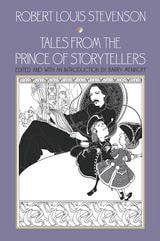
Tales from the Prince of Storytellers
Robert Louis Stevenson
Northwestern University Press, 1993
Included in this volume for the first time are versions of the stories "Markheim" and "The Isle of Voices" as they appear in Stevenson' s holograph manuscripts, plus his classics The Suicide Club, The Rajah's Diamond, "The Bottle Imp," "The Pavilion on the Links," "A Lodging for the Night," "The Merry Men," and "Thrawn Janet."

Tales of the Prague Ghetto
Siegfried Kapper
Karolinum Press, 2022
Trained in philosophy and medicine, the writer, translator, scholar, and political and cultural activist Siegfried Kapper (1821–1879) devoted significant effort to the advancement of Jewish culture in Bohemia, Jewish emancipation, and to the commitment of Jews to contemporary Czech society. The three stories in this collection, which first appeared in the press in the 1840s and were posthumously published as a collection at the end of the century, offer a Romantic and folkloric vision of Jewish culture in Prague.
The first story, “Genenda,” displays Kapper’s operatic eye for detail and drama with its account of a dutiful rabbi’s daughter being swept away by a dashing young man, a Christian nobleman disguised as a Jew. “The Curious Guest” is an intricate tale of a quest for wisdom and power. The final story, “Glowing Coals,” is a supernatural tale of romantic desire and revenge, displaying Kapper’s skill at deploying the tropes of folklore for dramatic literary effect. The collection not only provides a colorful snapshot of nineteenth-century Czech-Jewish culture but also resonates with universal human themes that transcend a single national experience.
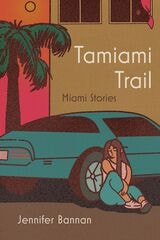
Tamiami Trail
Miami StoriesJennifer Bannan
Carnegie Mellon University Press, 2025
The Tamiami Trail cuts through the contradictions of Miami: a city shaped by swamps and skyscrapers, violence and desire. In Tamiami Trail: Miami Stories, Jennifer Bannan brings us eighteen vivid portraits of women navigating this teeming, volatile landscape.
An adolescent trapped in a toxic relationship. A middle-aged woman entangled with a reckless boy. A marketing executive profiting off the chaos of hurricanes. These women—mothers, daughters, lovers—take their chances in a world where environmental and personal disasters collide, where the ocean’s expanse mirrors the risks they take with their own lives.
Steamy, sharp, and deeply human, Tamiami Trail depicts the beauty and brutality of Miami, evoking its lush landscapes and relentless energy. With wit and sharp insight, Bannan maps the unruly desires that drive her unforgettable characters and the city that shapes them.
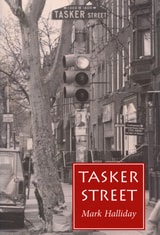
Tasker Street
Mark Halliday
University of Massachusetts Press, 1992
Tasker Street, winner of the Juniper Prize for poetry, is the second collection of poems by the acclaimed American poet Mark Halliday. Following his debut, Little Star (1987), which was selected for the National Poetry Series, Tasker Street confirmed Halliday as one of the most distinctive and engaging voices in contemporary American poetry.
Halliday's poems are marked by a restless, probing intelligence and a distinctly conversational energy. The poems in Tasker Street are personal in tone, narrative in impulse, and unafraid to range widely across the textures of everyday life: relationships, memory, desire, self-doubt, ambition, and the comic absurdities of being alive. These are poems that think out loud, circling back on themselves with a self-awareness that is at once disarming and deeply serious, even as they entertain with wit, verbal dexterity, and a refusal to settle for easy resolutions.
Drawing on the traditions of Frank O'Hara's personism and the narrative directness of the New York School, yet infused with a philosophical attentiveness honed by Halliday's scholarly engagement with the poetry of Wallace Stevens, the poems in Tasker Street balance accessibility with intellectual ambition. They invite readers into a voice that is simultaneously intimate and performative, one that embraces digression, self-interrogation, and the pleasures of language even while confronting questions of mortality, meaning, and the stubborn persistence of the self.
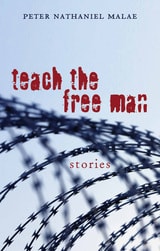
Teach the Free Man
StoriesPeter Nathaniel Malae
Ohio University Press, 2007
The twelve stories in Teach the Free Man mark the impressive debut of Peter Nathaniel Malae. The subject of incarceration thematically links the stories, yet their range extends beyond the prison’s barbed wire and iron bars. Avoiding sensationalism, Malae exposes the heart and soul in those dark, seemingly inaccessible corridors of the human experience.
The stories, often raw and startlingly honest, are distinguished by the colloquial voices of California’s prison inmates, who, despite their physical and cultural isolation, confront dilemmas with which we can all identify: the choice to show courage against peer pressure; the search for individual rights within a bureaucracy; and the desperate desire for honor in the face of great sacrifice. These stories present polished and poetic examples of finding something redemptive in the least among us.
The book’s epigraph by W. H. Auden, from which the book takes its title, exemplifies the spirit of these dynamic stories:
In the deserts of the heart
Let the healing fountain start.
In the prison of his days
Teach the free man how to praise.

Tell Everyone I Said Hi
Chad Simpson
University of Iowa Press, 2012
Poignant, fresh, and convincing, these are stories of women who smell of hairspray and beer and of landscapers who worry about their livers, of flooded basements and loud trucks, of bad exes and horrible jobs, of people who remain loyal to sports teams that always lose. Displaced by circumstances both in and out of their control, the characters who populate Tell Everyone I Said Hi are lost in their own surroundings, thwarted by misguided aspirations and long-buried disappointments, but fully open to the possibility that they will again find their way.
Tell Me
StoriesJoe Baumann
Northwestern University Press, 2024
Queer stories about love, loneliness, the surreal, and the self
The stories in Tell Me feature queer men of various ages reckoning with loneliness, selfishness, and the struggle for self-discovery and identity. In “The Vanisher,” a young bisexual man struggling with his own desire to be seen receives a bandana that allows him to become invisible. In “Retreat,” a widower travels to an artists’ colony to seek an audience with his recently deceased husband. And in “We Are Rendered Silent,” people lose their ability to speak when a man they love dies. Through Baumann’s inventive employment of the strange and surreal, these stories set out to explore the bizarre and often confounding experience of navigating modern-day queerness. With his unique voice and magnificent imagination, Baumann fully immerses readers in the queer experience.
Temporary Lives
StoriesRamola Dharmaraj
University of Massachusetts Press, 2010
In the title story, Rose Ammal, who married young and bore numerous children, survives her husband's betrayal and religious conversion by creating her own private redemptions and conversions. "The Next Corpse Collector" chronicles significant moments in the lives of two young brothers, Anwar and Amir, who seek to escape the destiny of corpse
collector, the job their father is determined to bequeath to them. "What the Watchman Saw" offers a glimpse into the life of Venkatesh, a longtime watchman who is faced with the dilemma of whether to report the theft of stolen antiquities from the house of his new neighbor.
"Esther" is a tale of the haunting, troubled spirit of Leeza's grandmother, who lingers in Leeza's childhood home and unexpectedly helps her during the summer her grandfather dies as she wakes to an adolescent infatuation with a neighbor boy. In "The Couple in the Park," a young middle-class wife, Laura, in a constrictive arranged marriage, finds comfort in watching a couple in the park who remind her of her own grandparents as she tips over the edge into schizophrenia. "The Man on the Veranda" traces a significant day in the life of retired government-worker Parameswaran—the day his wife finally leaves him.
Termination Shocks
Janice Margolis
University of Massachusetts Press, 2019
In astronomy, the termination shock is the boundary that marks the outer limits of the sun's influence—the ripple outward of our solar wind and its collision with the interstellar medium. This debut collection of stories evokes those moments when lives are unpredictably shaken and reset by forces beyond their grasp.
Making use of a diverse array of narrative modes, settings, and voices, these stories traverse space and time, moving from Egypt during the Second World War to modern-day Liberia and an unfamiliar Los Angeles. The title story, “Termination Shock,” offers a lyrical exploration of two traumatic moments in a woman's life that occur decades apart and continue to reverberate in humorous and poignant ways. Janice Margolis shows us characters on the precipice of change—including a narrator in fevered quarantine following the death of her mother from Ebola, a cross-cultural love in a swiftly transforming Syria, and the desolation of the Berlin Wall, which from its various sectors and coordinates, confesses its crimes and mourns its destruction.
Thank You for Being Concerned and Sensitive
Jim Henry
University of Iowa Press, 1997
Jim Henry's stories defy convention. There are no easy answers, no quick fixes. Although the plots vary—from a corpse returning to visit his family weeks after his burial, to the musings of a congressman grappling with the weight of history, to a wealthy family's elaborate plot to cheer their mysteriously wounded mother—all express a sense of the extraordinary in the ordinary, the absurd in the everyday.
Henry's characters are for the most part misfits, outsiders looking in on a world whose seemingly natural order is turned upside down. In a throw-away culture obsessed with sex and drugs, money and God, they struggle to connect with what is real while trying to convince themselves that anything is. And yet in the midst of their existential searching there remains always Henry's quirky sense of humor. As one character says, “Anything is possible,” and in this collection anything and everything happens.
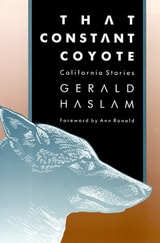
That Constant Coyote
California StoriesGerald W. Haslam
University of Nevada Press, 1990
That Constant Coyote contains twenty-five stories in all, nineteen selections previously published and six new pieces. The stories included in this anthology tell us what life is like in the regions of California and the West where drudgery characterizes each day, where menudo para desayuno or biscuits and gravy replace champagne brunch. Delve into these pages and you will quickly find a set of fascinating characters who inhabit "the other California"—a place Haslam knows well and so deftly describes. Foreword by Ann Ronald. Western Literature Series.
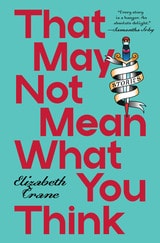
That May Not Mean What You Think
StoriesElizabeth Crane
Northwestern University Press, 2026
A visionary and profound new collection from innovative author Elizabeth Crane
Throughout her body of work, Elizabeth Crane’s literary vision has always been singular and innovative, twisting form and bending reality into new universes. Her latest collection, That May Not Mean What You Think, explores themes of aging and youth, gender and discrimination, and sex and love. In “Training Module,” Crane takes the structure and protocol of workplace harassment prevention training and turns it on its head; “The Box” tells the story of a woman trying to recover from divorce with the help of a literal unicorn; and “The Youngs” follows a group of teenagers experiencing loss for the first time, clinging to the belief that they’ll live forever. Across these delightfully weird and disarmingly truthful stories, American culture is refracted through humor and heart, asking readers to consider their complicity and to imagine new possibilities of participating in a better future.
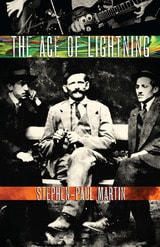
The Ace of Lightning
Stephen-Paul Martin
University of Alabama Press, 2017
Stephen-Paul Martin’s The Ace of Lightning is a series of interconnected stories focused on a turning point in Western history: the assassination in Sarajevo of Archduke Franz Ferdinand of Austria which triggered World War I, and the mysterious circumstances that led Gavrilo Princip to shoot and kill the heir apparent to one of Europe’s most powerful empires.
Far from being a conventional work of historical fiction, Martin’s collection asks readers to think about what truly constitutes history. What would the past look like if history was written under the influence of Mad Magazine and The Twilight Zone? What happens when the assassination in Sarajevo becomes “the assassination in Sarajevo,” when Gavrilo Princip becomes “Gavrilo Princip,” when the past and the present shape a textual future that looks suspiciously like a past that never was and a present that never is?
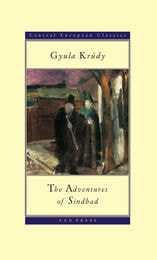
The Adventures of Sindbad
Gyula Krúdy
Central European University Press, 1998
In these marvellously written tales, Sindbad, a voyager in the realms of memory and imagination, travels through the centuries in pursuit of an ideal of love that is directed as much at the feminine essence as at his individual lovers. He is by nature a melancholy sensualist, but whether the women he seduces and loves are projections of his desire, or he of theirs, is a moot question.
These short stories flow without a strict narrative framework Sindbad journeys between the past and the present and is merely a ghost in many of his adventures. Although Sindbad can move through time, it is time that proves his chief enemy, and youth that remains his real love. This deeply autumnal book, full of resonances and associations, is an erotic elegy to the dying Habsburg Empire.
The stories are taken from the omnibus triple-volume Hungarian edition published as The Three Books of Sindbad in Hungary in 1944, which includes The Travels of Sindbad (1912), The Resurrection of Sindbad (1916), and The Youth and Grief of Sindbad (1917).
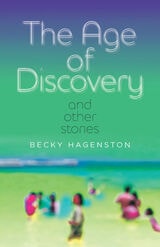
The Age of Discovery and Other Stories
Becky Hagenston
The Ohio State University Press, 2021
“These ingenious stories are so funny and sparkling and slyly inventive that their pain catches you by surprise, like a sunburn after a day at the beach.”—Eric Puchner
Winner, 2022 Mississippi Institute for Arts and Letters Prize for Best Fiction
In Becky Hagenston’s fourth collection, the real and the fantastic collide in stories that span from Mississippi to Europe, and from the recent past to the near future. The characters are sex-toy sellers, internet trolls, parents, students, and babysitters—all trying to make sense of a world where nothing is quite what it appears to be. A service robot makes increasingly disturbing requests. A middle school teacher is accused of witchcraft—and realizes the accusations might be true. Two college students devise a way to avoid getting hit on in bars. A baker finds bizarre anomalies in his sourdough. A librarian follows her dead ex-husband through the Atlanta airport. In these stories, men and women confront grief, danger, loneliness, and sometimes—the strangest discovery of all—unexpected joy. Hagenston delivers a collection that is, at its weird and shining heart, about people discovering what—for better or worse—they are capable of.
The Agriculture Hall of Fame
StoriesAndrew Malan Milward
University of Massachusetts Press, 2012
These powerful stories limn the complexities and dilemmas of life in Kansas, a state at “the center of the center of America,” as a billboard in one story announces. Andrew Malan Milward explores the less visible aspects of the Kansas experience—where its agrarian past comes into conflict with the harsh present reality of drugs, fundamentalism, and corporatism, relegating its agrarian identity to museums and amusement parks.
Presented in a triptych, the stories in Milward's debut collection range across a varied terrain, from tumbledown rural barns to modern urban hospitals, revealing the secrets contained therein.
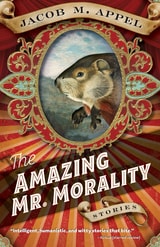
The Amazing Mr. Morality
StoriesJacob M. Appel
West Virginia University Press, 2018
The Amazing Mr. Morality features tenacious men and women whose determination to buck middle-class social convention draws them toward unforeseen challenges. A failed television producer insists upon having a woodchuck relocated from his lawn, only to receive desperate letters in which the woodchuck begs to return. An overconfident ne’er-do-well obtains a lucrative lecture invitation intended for a renowned ornithologist and decides to deliver the speech himself. An innocuous dispute over whether to rename a local street opens up racial fault lines that prove deadly.
The collection concludes with the title novella in which two unscrupulous ethicists, writing rival newspaper columns, seek to unseat each other by addressing questions such as: If you’re going to commit a murder, is it worse to kill when the victim is sleeping or awake?

The American Wife
Elaine Ford
University of Michigan Press, 2009
Of Elaine Ford’s novel, Missed Connections, the Washington Post wrote that it is a work “of small episodes, of precise sentences, of unusual clarity.” That same clarity proves an unsettling force in Ford’s stories, where precision of prose often belies uncertainties hidden beneath. In the title piece, an American woman in England, embroiled in a relationship doomed to fail, discovers how little she understands about her own desires and impulses. In another story, another American wife, abandoned in Greece by her archaeologist husband, struggles to solve a crime no one else believes to have been committed.
Throughout her stories Ford touches on the mysteries that make up our lives. Each story in itself is a masterpiece of such detail and power as to transform the way we see the world.
The Anchorage
PoemsMark Wunderlich
University of Massachusetts Press, 1999
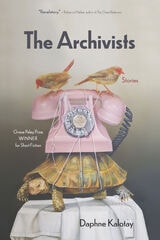
The Archivists
StoriesDaphne Kalotay
Northwestern University Press, 2023
Longlisted for the 2024 Joyce Carol Oates Prize
Longlisted for the 2024 Massachusetts Book Award
The characters in The Archivists are everyday people, but when private losses or the shocks of history set their worlds reeling, they find connection and liberation in surprising, buoyant ways. This vibrant collection brings transcendence, wry humor, and a touch of the uncanny to life’s absurdities and catastrophes—whether the 2008 economic crash, fallout after the 2016 presidential election, gentrification, pandemic lockdown, illness, or the intergenerational impacts of the Holocaust and Communist occupation of Eastern Europe.
A hardheaded realist is confronted by both her mortality and a would-be wizard. A thirteen-year-old girl in 1950s Toronto infiltrates the ranks of Bell Canada. A ninety-nine-year-old woman appears to be invincible. A group hikes in Germany, and a solitary woman is pursued on a walk in New Mexico. These deeply moving stories ingeniously consider issues of identity, history, and memory and our shared search for meaning in an off-kilter world.
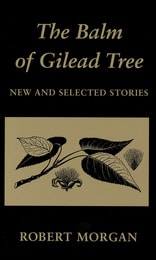
The Balm of Gilead Tree
New and Selected StoriesRobert Morgan
Ohio University Press, 1999
Published in 1999 by Gnomon Press
In The Balm of Gilead Tree, acclaimed author and poet Robert Morgan presents a masterful collection of seventeen short stories—ten new and seven selected from earlier volumes—that illuminate the lives of working-class people in the American South, particularly in the Appalachian region. With lyrical precision and deep empathy, Morgan explores themes of hardship, resilience, and transformation across generations.
From the haunting historical imagination of “The Tracks of Chief de Soto” to the visceral immediacy of “The Ratchet,” where a truck driver faces a terrifying descent with failed brakes, Morgan’s stories are rich in sensory detail and emotional depth. Characters grapple with environmental peril, economic uncertainty, and the quiet dramas of rural life, all rendered with Morgan’s signature clarity and reverence for the natural world.
This collection affirms Morgan’s place as a vital voice in Southern literature, offering readers both the balm of storytelling and the grit of lived experience.
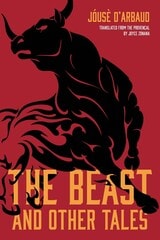
The Beast, and Other Tales
Jóusè d'Arbaud; Translated from the Provençal by Joyce Zonana
Northwestern University Press, 2020
Winner of the Global Humanities Prize
A classic of modern Provençal literature, Jóusè d’Arbaud’s 1926 masterpiece “The Beast of Vacarés” (also known as “The Beast of Vaccarès”) is a haunting parable. Set during the fifteenth century, the tale is narrated by a solitary bull herder—known as a gardian—who stumbles upon a starving creature that is half man, half goat. Terrified, the gardian is nonetheless drawn to the eloquent Beast, a dying demigod who laments the loss of his glorious past even as he wields power over the animals around him. Torn between pity and fear, unable to understand his experiences and afraid he will be condemned for heresy, the gardian records his encounters in a journal, hoping that one day readers will make sense of what he cannot.
Set in the vast, lonely landscape of the Camargue delta, where the Rhône meets the Mediterranean, The Beast seamlessly melds fantasy with naturalistic detail about the region’s flora and fauna. Three additional stories—“The Caraco,” “Pèire Guilhem’s Remorse,” and “The Longline”—explore the lives of twentieth-century gardians in the region. Each man succumbs to fears and social pressure, tragically losing what he most loves.
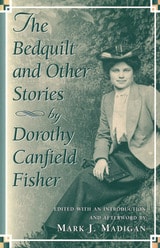
The Bedquilt and Other Stories
By Dorothy Canfield FisherEdited, Intro, & Afterword by Mark J. Madigan
University of Missouri Press, 1997
Dorothy Canfield Fisher, the prolific author of more than forty books, including translations, juveniles, and nonfiction, as well as novels and short-story collections, was one of the most popular and engaging American writers of the first half of the twentieth century. Although her work has been unduly neglected for several decades, it is currently enjoying a revival of critical attention. This colorful collection ranges in subject from New Englanders to the Basques of France to the struggles of African Americans to gain equal rights. Through her stories, many of which received literary awards, Fisher examined the complexities of modern life in the United States and abroad.
In addition to her writing, Fisher had a lifelong involvement in charitable work and social causes--so much so that Eleanor Roosevelt called her one of the most influential women of her time. As one of the earliest and most assertive members of the Book-of-the-Month Club selection committee, Fisher helped define literary taste in America for more than two decades. Mark J. Madigan discusses Fisher's extraordinary life and work in an Introduction and Afterword.
Because of Fisher's rare ability to distinguish enduring concerns from merely topical issues, her work will provide lasting pleasure for generations of readers to come.
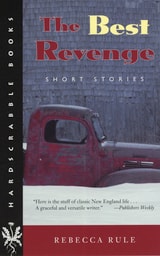
The Best Revenge
Short StoriesRebecca Rule
University of New Hampshire Press, 2004
Twice nominated for the Pushcart Prize, Rule captures the essence of small-town New England life as she paints with a sure hand the fallings-out and friendships, the trials and triumphs of the New England microcosm. In Yankee Curse, elderly Miranda knits placidly at a town meeting, pondering an amazing string of unspoken invective against an enemy but stopping short at a curse she would never levy, not even on Mort Wallace: to live too long. In Minna Runs for Selectman, a middle-aged woman's battlefield is the strange, incestuous politics of this eccentric little town but her real opponent is her own insecurity. In Jim's Boat a young couple wages a silent struggle over priorities in their marriage; in Fishing with George a small girl worries that there's a hole in our family that gets bigger every time her parents argue; and in the title story a mother copes with a hated neighbor through a sculpture that makes her laugh the kind of laugh that doesn't end in a sob. Children and grandmothers, trappers and college professors, lifetime Yankees or transplanted Flatlanders: each finds the truth in Rule's observation that revenge takes many forms -- some of which can heal.
The Birch Grove and Other Stories
Jaroslaw Iwaszkiewicz
Central European University Press, 2002
The Birth of Emma K.
Zsolt Láng
Seagull Books, 2022
The Birth of Emma K., a collection of twelve short stories rich with magic, introduces English-language readers to one of the most vibrant and original voices in contemporary Hungarian literature. Zsolt Láng’s new collection opens with God sitting on a bench looking over Budapest; later, a Hungarian man who has stumbled into a Romanian music theory class suddenly finds he is able to speak expertly about Hungarian composer Béla Bartok—and in perfect Romanian; and even later, against all odds, the embryo of Emma fights for her future life from within the womb. Drifting between melancholic and witty, in sentences that are winding, subtle, and colloquial, Láng’s stories are deeply rooted in Transylvanian culture and history. Reminiscent of the best writings of Irish modernist masters such as Samuel Beckett and Flann O’Brien, The Birth of Emma K. presents an unforgettable collage of human nature.
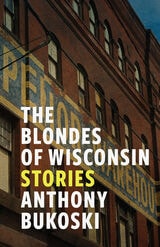
The Blondes of Wisconsin
Anthony Bukoski
University of Wisconsin Press, 2021
In Bukoski’s interconnected tales, the heart seeks its due despite familial conflict, the challenges of maritime work, and the slow yet inexorable decline of dementia. Beautiful vignettes express transformative moments: tenderness that can turn a cardboard crown into gold and the faint ghosts of memories long forgotten. A tour-de-force, The Blondes of Wisconsin knows what love is—and what it means to lose it.
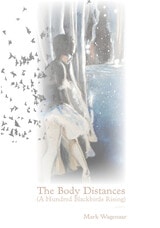
The Body Distances (A Hundred Blackbirds Rising)
Mark Wagenaar
University of Massachusetts Press, 2016
Let no lip, shoulder, hip, go untasted tonight. Let no one be unscathed.
And as you close the door & fold yourself in sleep against another
look for a moment at the empty stretch of dark between heaven
& earth: someone is missing from the world . . .
The Body Distances is filled with long, limber, nimble poems at once ecstatic and elegiac. These poems are odes to the miraculous embedded in the everyday, in which “the unlikely continues / to dovetail with the present.”
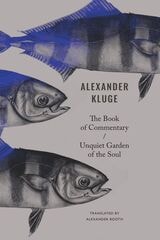
The Book of Commentary / Unquiet Garden of the Soul
Alexander Kluge
Seagull Books, 2023
The Book of Commentary / Unquiet Garden of the Soul confronts the reader with questions of existential meaning, questions rendered all the more potent by the backdrop of the Coronavirus pandemic: How fragile are we as human beings? How fragile are our societies? What is a “self,” an “I,” a “community”? How are we to orient ourselves? And what, if any, role does commentary play? In a fashion that will be familiar to longtime admirers of Alexander Kluge, the book stretches both back in time to the medieval glossators of Bologna and forward into interstellar space with imagined travel to the moon Europa. Kluge’s characteristic brief, vignette-like prose passages are interspersed with images from his own film work and QR codes, forming a highly engaging, thoroughly contemporary read.
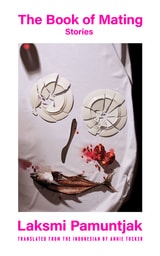
The Book of Mating
StoriesLaksmi Pamuntjak, Annie Tucker
Northwestern University Press, 2027
Winner of the Humanities in Translation Prize
The Book of Mating is a masterfully translated collection of stories in which Indonesian women explore the full spectrum of mating: marital, sexual, and spiritual; forced and free; transcendent, ruinous, and mundane. Laksmi Pamuntjak portrays both the constraints and opportunities facing women caught between the enduring restrictions of local norms and hierarchies and the tantalizing promises of globalized modern life, between internalized myths and social realities.
An experimental melding of Pamuntjak’s creative, journalistic, and activist work, these stories read as urgent dispatches from the Indonesian archipelago and diaspora—and as universal narratives of women’s lived experiences. Annie Tucker’s nuanced translation takes us from the prison island of Buru and the Bogor Botanical Gardens to Paris’s Left Bank, offering a polyphonic testament to the universal fight for women’s autonomy over their bodies and their lives.

The Book of Right and Wrong
Matt Debenham
The Ohio State University Press, 2010
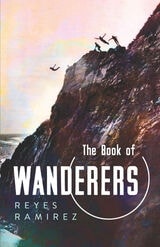
The Book of Wanderers
Reyes Ramirez
University of Arizona Press, 2022
Reyes Ramirez’s dynamic short story collection follows new lineages of Mexican and Salvadoran diasporas traversing life in Houston, across borders, and even on Mars. Themes of wandering weave throughout each story, bringing feelings of unease and liberation as characters navigate cultural, physical, and psychological separation and loss from one generation to the next in a tumultuous nation.
The Book of Wanderers deeply explores Houston, a Gulf Coast metropolis that incorporates Southern, Western, and Southwestern identities near the borderlands with a connection to the cosmos. As such, each story becomes increasingly further removed from our lived reality, engaging numerous genres from emotionally touching realist fiction to action-packed speculative fiction, as well as hallucinatory realism, magical realism, noir, and science fiction.
Fascinating characters and unexpected plots unpack what it means to be Latinx in contemporary—and perhaps future—America. The characters work, love, struggle, and never stop trying to control their reality. They dream of building communities and finding peace. How can they succeed if they must constantly leave one place for another? In a nation that demands assimilation, how can they define themselves when they have to start anew with each generation? The characters in The Book of Wanderers create their own lineages, philosophies for life, and markers for their humanity at the cost of home. So they remain wanderers . . . for now.
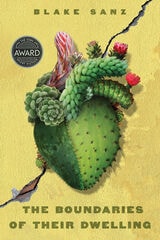
The Boundaries of Their Dwelling
Sanz, Blake
University of Iowa Press, 2021
In the collection’s second half, we follow a Veracruzan-born drifter, Manuel, and his estranged American son, Tommy. Over decades, they negotiate separate nations and personal tragicomedies on their journeys from innocence to experience. As Manuel participates in student protests in Mexico City in 1968, he drops out to pursue his art. In the 1970s, he immigrates to Louisiana, but soon leaves his wife and infant son behind after his art shop fails. Meanwhile, Tommy grows up in 1980s Louisiana, sometimes escaping his mother’s watchful eye to play basketball at a park filled with the threat of violence. In college, he seeks acceptance from teammates by writing their term papers. Years later, as Manuel nears death and Tommy reaches middle age, they reconnect, embarking on a mission to jointly interview a former riot policeman about his military days; in the process, father and son discover what it has meant to carry each other’s stories and memories from afar.

The Box in Which We Live
Barber, Samuel Rafael
University of Iowa Press, 2026
Encompassing a wide range of formal approaches and genres, Samuel Rafael Barber captures the disparate manifestations of power and powerlessness in this era of global neoliberalism. The stories in The Box in Which We Live investigate the existential torment inflicted upon marginalized people by individuals, institutions, and states complicit in oppression. Across these experiments, a comic absurdity emerges and a distance grows between the individual and the collective in a media-oversaturated world.
The Cape Cod Bicycle War
and Other StoriesBilly Kahora
Ohio University Press, 2020
The Celestial Twins
Poetry and Music through the AgesH.T. Kirby-Smith
University of Massachusetts Press, 2000
H. T. Kirby-Smith makes his case with wit and erudition, proceeding chronologically and citing numerous examples of specific poems—from Latin, Old French, Italian, Anglo-Saxon, modern French, and English. He points out that ancient Greek poetry, including the epics, was part of a musical context. By contrast, almost no surviving Latin poetry was written for musical performance, but the meters of Latin poetry were borrowed from Greek musical meters. Similarly, in their own ways, Thomas Hardy, T. S. Eliot, and Langston Hughes all wrote out of musical contexts: Hardy from west-of-England songs and dances; Eliot from Wagnerian opera and late Beethoven chamber music; and Hughes from blues, jazz, and spirituals.
Although poets from Horace to Shakespeare to Dickinson have instinctively recognized the separation of music and poetry, there have also been well-meaning attempts to bring these allied arts back into close association with each other. But in Kirby-Smith's view, poetry of the highest order has always maintained a respectful distance from music, even while retaining some memory of musical rhythms and organization.
The Centenary Edition of the Works of Nathaniel Hawthorne
VOL. X, MOSSES FROM AN OLD MANSENathaniel Hawthorne
The Ohio State University Press, 1974

The Chimeras
A NovelJoe Fletcher
University of Alabama Press, 2026
Blending literary fiction, speculative fiction, and lyric prose, The Chimeras explores how communities create meaning in the wake of radical uncertainty. At its core, the novel is concerned with enduring human questions of belonging, family, memory, and faith in language itself. The book will appeal to readers of contemporary literary fiction, speculative literature, and works that push the boundaries of narrative form.
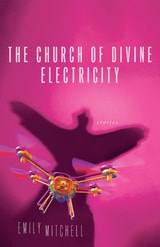
The Church of Divine Electricity
Emily Mitchell
University of Wisconsin Press, 2025
Whether being held by a giant and comforting machine, allowing micro-drones to record one’s every moment for a year to win prize money, or choosing self-mutilation in exchange for a bionic hand, these characters navigate technological and social change. The familiar can turn unrecognizable and disorienting—sometimes in a flash, sometimes gradually. Lyrical, haunting, and often funny, these stories ask us to consider what—and who—gets left out of a seemingly utopian future of technological advancements. Finely observed, thoughtful, and vivid, Mitchell’s stories get under your skin. It’s not that the best-laid plans could lead us astray—it’s that they may already have.
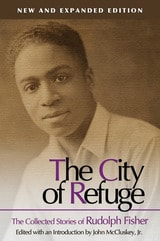
The City of Refuge [New and Expanded Edition]
The Collected Stories of Rudolph FisherRudolph Fisher, Edited & Intro by John McCluskey, Jr.
University of Missouri Press, 2008
A definitive collection of Fisher’s short stories, The City of Refuge offers vibrant tales that deal with the problems faced by newcomers to the city, ancestor figures who struggle to instill a sense of integrity in the young, problems of violence and vengeance, and tensions of caste and class. This anthology has now been expanded to include seven previously unpublished stories that take up such themes as marital infidelity and passing for black and also relate the further adventures of Jinx and Bubber, the comic duo who appeared in Fisher’s two novels.
This new edition also includes two unpublished speeches and the popular article “The Caucasian Storms Harlem,” describing the craze for black music and dance. John McCluskey’s introduction has been updated to place the additional works within the context of Fisher’s career while situating his oeuvre within the broader context of American writing during the twenties.
Fisher recognized the dramatic and comic power in African American folklore and music and frequented Harlem’s many cabarets, speakeasies, and nightclubs, and at the core of his work is a strong regard for music as context and counterpoint. The City of Refuge now better captures the sounds of the city experience by presenting all of Fisher’s known stories. It offers a portrait of Harlem unmatched in depth and range by Fisher’s contemporaries or successors, celebrating, as Booklist noted, “the complexity of black urban life in its encounter with the dangers and delights of the city.” This expanded edition adds new perspectives to that experience and will enhance Fisher’s status for a new generation of readers.
The Clouds in Memphis
Stories and NovellasC. J. Hribal
University of Massachusetts Press, 2000
The Collected Short Fiction of Marianne Hauser
Marianne Hauser
University of Alabama Press, 2005
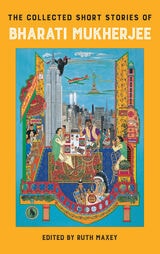
The Collected Short Stories of Bharati Mukherjee
Edited by Ruth Maxey
Temple University Press, 2023
Pioneering Indian American writer Bharati Mukherjee is best known for her novel, Jasmine, and her breakthrough collection, The Middleman and Other Stories, which won the 1988 National Book Critics Circle Award. Her writing is distinguished as much by its narrative style and shifting points of view as it is by Mukherjee’s piercing emotional observations on the immigrant experience and her depiction of racism, nostalgia, and displacement.
The Collected Short Stories of Bharati Mukherjee is the first volume to feature the author’s complete short fiction—all 35 stories. Leading Mukherjee scholar Ruth Maxey edits the collection, unearthing seven unknown stories: five in Mukherjee’s unpublished 1963 Iowa Writer’s Workshop M.F.A. thesis, The Shattered Mirror, and two tales from 2008.
Arranged chronologically, this essential collection brings many of Mukherjee’s stories back into print, from the semi-autobiographical story, “Hindus,” in her 1985 debut collection, Darkness, to her late stories, published from 1997-2012, as well as her classic, “The Management of Grief.”
Maxey contextualizes Mukherjee’s short fiction and the provocative, often prescient political questions it raises about migration, nationhood, class, and history. The Collected Short Stories of Bharati Mukherjee features a Forward by prominent literary studies scholar Nalini Iyer and Afterword by critically acclaimed writer Lysley Tenorio, one of Mukherjee’s former students. It is an essential volume for readers both familiar with Mukherjee’s work and new to her groundbreaking fiction.
The Collected Short Stories of Harriette Simpson Arnow
Harriette Simpson Arnow
Michigan State University Press, 2005
Harriette Simpson Arnow is an American treasure. Of the twenty-five stories in this collection, fifteen were previously unpublished. Until now, the short fiction of Arnow has remained relatively obscure despite the literary acclaim given to her novels The Dollmaker and Hunter’s Horn. These stories, written early in her career for the most part, reveal an artistic vision and narrative skill and serve as harbingers for her later work. They echo her interest in both agrarian and urban communities, the sharpening of her social conscience, and her commitment to creating credible and complex characters. This collection is organized against the backdrop of her life, from Kentucky in the 1920s to Ohio and Kentucky in the 1930s and to Michigan in the 1940s. As Arnow fans read these early gems, they will be led from gravel roads to city pavement and open layers of Arnow’s development as a novelist to expose the full range of her contributions to American literature.
In 1938, Esquire purchased "The Hunters," which was eventually published as "The Two Hunters," a chilling story of a seventeen-year- old boy’s confrontation with a deputy sheriff. At the time, Esquire did not accept submissions from women, and its editors had no idea that writer H. L. Simpson was not a man. Years later, she admitted in an interview, "it worried me a little, that big lie, but I thought if they wanted a story, let them have it." Esquire paid her $125 for this story. The contributor’s notes at the back of the magazine include a photo of "H.L.Simpson," actually a photo of one of her brothers-in-law. It was her little joke on a publisher that discriminated against women....
—from the Introduction
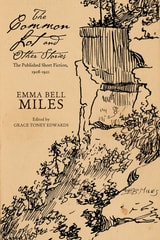
The Common Lot and Other Stories
The Published Short Fiction, 1908–1921Emma Bell Miles
Ohio University Press, 2016
The seventeen narratives of The Common Lot and Other Stories, published in popular magazines across the United States between 1908 and 1921 and collected here for the first time, are driven by Emma Bell Miles’s singular vision of the mountain people of her home in southeastern Tennessee. That vision is shaped by her strong sense of social justice, her naturalist’s sensibility, and her insider’s perspective.
Women are at the center of these stories, and Miles deftly works a feminist sensibility beneath the plot of the title tale about a girl caught between present drudgery in her father’s house and prospective drudgery as a young wife in her own. Wry, fiery, and suffused with details of both natural and social worlds, the pieces collected here provide a particularly acute portrayal of Appalachia in the early twentieth century.
Miles’s fiction brings us a world a century in the past, but one that will easily engage twenty-first-century readers. The introduction by editor and noted Miles expert Grace Toney Edwards places Miles in the literary context of her time. Edwards highlights Miles’s quest for women’s liberation from patriarchal domination and oppressive poverty, forces against which Miles herself struggled in making a name for herself as a writer and artist. Illustrations by the author and Miles family photographs complement the stories.
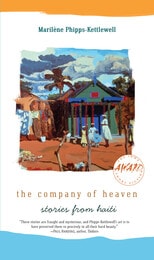
The Company of Heaven
Stories from HaitiMarilène Phipps-Kettlewell
University of Iowa Press, 2010
Marilène Phipps-Kettlewell’s award-winning stories transport you to Haiti—to a lush, lyrical, flamboyant, and spirit-filled Haiti where palm trees shine wet with moonlight and the sky paints a yellow screen over your head and the ocean sparkles with thousands of golden eyes—and keep you there forever. Her singular characters mysteriously address the deeper meanings of human existence. They also dream of escape, whether from themselves, from family, from Vodou, from financial and cultural difficulties and the politicians that create them, or from the country itself, but Haiti will forever remain part of their souls and part of the thoughts of her readers.
Some characters do achieve escape through the mind or through sea voyage—escape found by surrendering to spectacular fantasies and madness and love, bargaining with God, joining the boat people. Marie-Ange Saint-Jacques’s mother sacrifices everything to ensure her daughter’s survival on a perilous boat trip, Angelina waits to fly away to Nou Yòk, Vivi creates her own circus with dozens of rescued dogs, Gustave dies a martyr to his faith. Throughout, the “I” who moves in and out of these dream-filled stories embraces the heavenly mysteries found in “the room where all things lost are stored with grace.”
We begin our journey to Haiti with images of a little girl in a pink bedroom reading by candlelight a book about the life of Saint Bernadette, surrounded by the bewitching scents, sounds, and textures of a Caribbean night. Each story stands by itself, but some characters can be followed from one story to another through the transformations they undergo as a result of their life experiences. In this way, the collection can be read as one story, the story of a family trapped in a personal and cultural drama and the story of the people with whom the family interacts, themselves burdened by the need to survive within Haiti’s rigorously class-determined society and blessed by their relationship to the company of heaven in which they live and for which they are destined.
The Complete Short Stories, Volume 1
Enid Dinnis
Catholic University of America Press, 2023
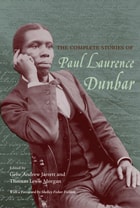
The Complete Stories of Paul Laurence Dunbar
Paul Laurence Dunbar
Ohio University Press, 2005
An ALA “Best of the Best” Book
The son of former slaves, Paul Laurence Dunbar was one of the most prominent figures in American literature at the turn of the twentieth century. Thirty-three years old at the time of his death in 1906, he had published four novels, four collections of short stories, and fourteen books of poetry, as well as numerous songs, plays, and essays in newspapers and magazines around the world.
In the century following his death, Dunbar slipped into relative obscurity, remembered mainly for his dialect poetry or as a footnote to other more canonical figures of the period. The Complete Stories of Paul Laurence Dunbar showcases his gifts as a writer of short fiction and provides key insights into the tensions and themes of Dunbar's literary achievement. The 104 stories written by Dunbar between 1890 and 1905 reveal Dunbar's attempts to maintain his artistic integrity while struggling with America's racist stereotypes. Making them available for the first time in one convenient, comprehensive, and definitive volume, The Complete Stories of Paul Laurence Dunbar illustrates the complexity of his literary life and legacy.
The Complete Tales of Nikolai Gogol, Volume 1
Nikolai Gogol
University of Chicago Press, 1985
The Complete Tales of Nikolai Gogol, Volume 2
Nikolai Gogol
University of Chicago Press, 1983