Results by title
479 books match the query 'Sources' and 117 start with t
THE PRESIDENTIAL AGENDA
SOURCES OF EXECUTIVE INFLUENCE IN CONGRESSROGER T LAROCCA
The Ohio State University Press, 2006
Larocca develops a theoretical model that explains how the president can raise the public salience of issues in his major addresses, long accepted as one of the president’s strongest agenda-setting tools. He also develops a theoretical model that explains how control over executive agency expertise yields a more reliable and persistent influence on the congressional agenda than presidential addresses.
The Presidential Agenda tests these theoretical models with an innovative empirical study of presidential agenda setting. Using data from all House and Senate Commerce Committee bills from 1979 to 2002, Larocca converts information about bills into information about policy issues and then traces the path of presidential influence through the committee and floor stages of legislative consideration.
Tales of a Minstrel of Reims in the Thirteenth Century
Samuel N. Rosenberg
Catholic University of America Press, 2021
Tatiana Romanov, Daughter of the Last Tsar
Diaries and Letters, 1913–1918Helen Azar
Westholme Publishing, 2016
Grand Duchess Tatiana Nikolaevna of Russia was the second of the four daughters of Tsar Nicholas II and his wife, the Empress Alexandra Feodorovna. Long recognized by historians as the undisputed “beauty” of the family, Tatiana was acknowledged for her poise, her elegance, and her innate dignity within her own family. Helen Azar, translator of the diaries of Olga Romanov, and Nicholas B. A. Nicholson, Russian Imperial historian, have joined together to present a truly comprehensive picture of this extraordinarily gifted, complex, and intelligent woman in her own words. Tatiana Romanov, Daughter of the Last Tsar: Diaries and Letters, 1913–1918, presents translations of material never before published in Russian or in English, as well as materials never published in their entirety in the West.
The brisk, modern prose of Tatiana’s diary entries reveals the character of a young woman who was far more than the sheltered imperial beauty as she previously has been portrayed. While many historians and writers describe her as a cold, haughty, and distant aristocrat, this book shows instead a remarkably down-to-earth and humorous young woman, full of life and compassion. A detail-oriented and observant participant in some of the most important historical events of the early twentieth century, she left firsthand descriptions of the tercentenary celebrations of the House of Romanov, the early years of Russia’s involvement in World War I, and the road to her family’s final days in Siberian exile. Her writings reveal extraordinary details previously unknown or unacknowledged. Lavishly annotated for the benefit of the nonspecialist reader, this book is not only a reevaluation of Tatiana’s role as more than just one of four sisters, but also a valuable reference on Russia, the First World War, the Russian Revolution, and the people closest to the Grand Duchess and her family.
Teaching with Primary Sources
Christopher Prom
Society of American Archivists, 2016
Texas Through Women's Eyes
The Twentieth-Century ExperienceBy Judith N. McArthur and Harold L. Smith
University of Texas Press, 2010
Winner, Liz Carpenter Award For Research in the History of Women, Texas State Historical Association, 2010
Texas women broke barriers throughout the twentieth century, winning the right to vote, expanding their access to higher education, entering new professions, participating fully in civic and political life, and planning their families. Yet these major achievements have hardly been recognized in histories of twentieth-century Texas. By contrast, Texas Through Women's Eyes offers a fascinating overview of women's experiences and achievements in the twentieth century, with an inclusive focus on rural women, working-class women, and women of color.
McArthur and Smith trace the history of Texas women through four eras. They discuss how women entered the public sphere to work for social reforms and the right to vote during the Progressive era (1900–1920); how they continued working for reform and social justice and for greater opportunities in education and the workforce during the Great Depression and World War II (1920–1945); how African American and Mexican American women fought for labor and civil rights while Anglo women laid the foundation for two-party politics during the postwar years (1945–1965); and how second-wave feminists (1965–2000) promoted diverse and sometimes competing goals, including passage of the Equal Rights Amendment, reproductive freedom, gender equity in sports, and the rise of the New Right and the Republican party.
Texcoco
Prehispanic and Colonial PerspectivesJongsoo Lee
University Press of Colorado, 2014
Contributors address some of the most pressing issues in Texcocan studies and bring new ones to light: the role of Texcoco in the Aztec empire, the construction and transformation of Prehispanic history in the colonial period, the continuity and transformation of indigenous culture and politics after the conquest, and the nature and importance of iconographic and alphabetic texts that originated in this city-state, such as the Codex Xolotl, the Mapa Quinatzin, and Fernando de Alva Ixtlilxochitl’s chronicles. Multiple scholarly perspectives and methodological approaches offer alternative paradigms of research and open a needed dialogue among disciplines—social, political, literary, and art history, as well as the history of science.
This comprehensive overview of Prehispanic and colonial Texcoco will be of interest to Mesoamerican scholars in the social sciences and humanities.
Texts from the Pyramid Age
Nigel C. Strudwick
SBL Press, 2005
Textual Sources for the Study of Judaism
Edited and Translated by Philip S. Alexander
University of Chicago Press, 1990
"The texts . . . which are drawn from over two thousand years of history, are usefully divided, annotated and glossed. They enable students to explore the tradition in a new way [and] give a marvellous insight into the richness and liveliness of the Jewish religion and culture: we are given wit and pathos in addition to popular story and religious law."—Janet Trotter, Resource
The Ageless Self
Sources of Meaning in Late LifeSharon R. Kaufman
University of Wisconsin Press, 1994
Among the many studies of aging and the aged, there is comparatively little material in which the aged speak for themselves. In this compelling study, Sharon Kaufman encourages just such expression, recording and presenting the voices of a number of old Americans. Her informants tell their life stories and relate their most personal feelings about becoming old. Each story is unique, and yet, presented together, they inevitable weave a clear pattern, one that clashes sharply with much current gerontological thought. With this book, Sharon Kaufman allows us to understand the experience of the aging by listening to the aged themselves.
Kaufman, while maintaining objectivity, is able to draw an intimate portrait of her subjects. We come to know these people as individuals and we become involved with their lives. Through their words, we find that the aging process is not merely a period of sensory, functional, economic, and social decline. Old people continue to participate in society, and—more important—continue to interpret their participation in the social world. Through themes constructed from these stories, we can see how the old not only cope with losses, but how they create new meaning as they reformulate and build viable selves. Creating identity, Kaufman stresses, is a lifelong process.
Sharon Kaufman's book will be of interest and value not only to students of gerontology and life span development, and to professionals in the field of aging, but to everyone who is concerned with the aging process itself. As Sharon Kaufman says, "If we can find the sources of meaning held by the elderly and see how individuals put it all together, we will go a long way toward appreciating the complexity of human aging and the ultimate reality of coming to terms with one's whole life."
The American 1890s
A Cultural ReaderSusan Harris Smith and Melanie Dawson, eds.
Duke University Press, 2000
To depict the many changes taking place in the United States at this time, Susan Harris Smith and Melanie Dawson have drawn from an eclectic range of periodicals: elite monthlies such as Scribner’s, Harper’s, and the Atlantic Monthly; political magazines such as the North American Review and Forum; magazines for general readers such as Cosmopolitan and McClures; and specialized publications including the Chatauquan, Outing, and Colored American Magazine. Authors represented in the collection include Andrew Carnegie, Edith Wharton, Theodore Roosevelt, Susan B. Anthony, Booker T. Washington, Stephen Crane,
W. E. B. DuBois, Jacob Riis, and Frederick Jackson Turner. A general introduction to the period, a brief contextualizing essay for each selection, and a comprehensive bibliography of secondary sources are provided as well. In examining and debating the decade’s momentous political and social developments, the essays, editorials, and stories in this anthology reflect a constantly shifting culture at a time of internal turmoil, unprecedented political expansion, and a renaissance of modern ideas and new technologies.
Bringing together a carefully chosen selection of primary sources, The American 1890s presents a remarkable variety of views—nostalgic, protective, imperialist, progressive, egalitarian, and democratic—held by American citizens a century ago.
The Ancient Egyptian Netherworld Books
John Coleman Darnell
SBL Press, 2018
The first, complete English translation of the ancient Egyptian Netherworld Books
The ancient Egyptian Netherworld Books, important compositions that decorated the New Kingdom royal tombs in the Valley of the Kings, present humanity's oldest surviving attempts to provide a scientific map of the unseen realms beyond the visible cosmos and contain imagery and annotations that represent ancient Egyptian speculation (essentially philosophical and theological) about the events of the solar journey through the twelve hours of the night. The Netherworld Books describe one of the central mysteries of Egyptian religious belief—the union of the solar god Re with the underworldly god Osiris—and provide information on aspects of Egyptian theology and cosmography not present in the now more widely read Book of the Dead. Numerous illustrations provide overview images and individual scenes from each Netherworld Book, emphasizing the unity of text and image within the compositions. The major texts translated include the Book of Adoring Re in the West (the Litany of Re), the Book of the Hidden Chamber (Amduat), the Book of Gates, the Book of Caverns, the Books of the Creation of the Solar Disk, and the Books of the Solar-Osirian Unity.
Features:
- Accessible presentations of the main concepts of the Netherworld Books and the chief features of each text
- Notes and commentary address major theological themes within the texts as well as lexicographic and/or grammatical issues
- An overview of later uses of these compositions during the first millennium BCE
The Anti-Federalist
An Abridgment of The Complete Anti-FederalistEdited by Herbert J. Storing
University of Chicago Press, 1985
This one-volume edition presents the essence of the other side of that crucial dialogue. It can be read as a genuine counterpart to the Federalist Papers; as an original source companion to Storing's brilliant essay What the Anti-Federalists Were For (volume I of The Complete Anti-Federalist, available as a separate paperback); or as a guide to exploring the full range of Anti-Federalist writing. The Anti-Federalist makes a fundamental source of our political heritage accessible to everyone.
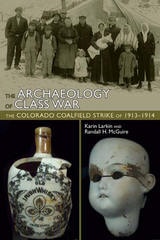
The Archaeology of Class War
The Colorado Coalfield Strike of 1913-1914Karin Larkin
University Press of Colorado, 2009
The Archival Turn in Feminism
Outrage in OrderKate Eichhorn
Temple University Press, 2014
A volume in the American Literatures Initiative
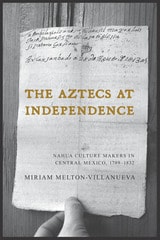
The Aztecs at Independence
Nahua Culture Makers in Central Mexico, 1799–1832Miriam Melton-Villanueva
University of Arizona Press, 2016
The Aztecs at Independence offers the first internal ethnographic view of these central Mexican indigenous communities in the critical transitional time of Independence. Miriam Melton-Villanueva uses previously unknown Nahuatl-language sources—primarily last wills and testaments—to provide a comprehensive understanding of indigenous societies during the transition from colonial to postcolonial times. The book describes the cultural life of people now called Nahuas or Mexicas in the nineteenth century—based on their own words, their own written records. The book uses previously unknown, unstudied, and untranslated indigenous texts to bring Nahua society into history, fleshing out glimpses of daily life in the early nineteenth century. Thus, The Aztecs at Independence describes life at the most local level: Nahua lineages of ritual and writing, guilds and societies, the people that take turns administering festivals and attending to the last wishes of the dying.
Interwoven with personal stories and memory, The Aztecs at Independence invites a general audience along on a scholarly journey, where readers are asked to imagine Nahua concepts and their contemporary meanings that give light to modern problems.
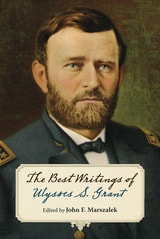
The Best Writings of Ulysses S. Grant
Edited by John F. Marszalek
Southern Illinois University Press, 2015
Famous for his military acumen and for his part in saving the Union during the American Civil War, Ulysses S. Grant also remains known for his two-volume memoirs, considered among the greatest military memoirs ever written. Grant’s other writings, however, have not received the same acclaim, even though they show the same literary skill. Originally published in the thirty-two volumes of The Papers of Ulysses S. Grant, the letters and speeches are the major source of information about Grant’s life and era and have played a key role in elevating his reputation to that of the leading general of the Civil War and the first of the modern presidents. In this collection, editor John F. Marszalek presents excerpts from Grant’s most insightful and skillfully composed writings and provides perspective through introductory comments tying each piece to the next. The result is a fascinating overview of Grant’s life and career.
In sixteen chronological chapters, selections from Grant’s letters and other writings reveal his personal thoughts on the major events of his momentous life, including the start of the Civil War, the capture of Vicksburg, Lincoln’s reelection, Lee’s surrender, his terms as president, the Panic of 1873, and his bouts of mouth and throat cancer. Throughout, Grant’s prose reveals clearly the power of his words and his ability to present them well. Although some historians have maligned his presidency as one of the most corrupt periods in American history, these writings reinforce Grant’s greatness as a general, demonstrate the importance of his presidency, and show him to be one of the driving forces of the nineteenth century.
With this compendium, Marszalek not only celebrates the literary talent of one of America’s greatest military figures but also vindicates an individual who, for so long, has been unfairly denigrated. A concise reference for students of American history and Civil War enthusiasts as well as a valuable introduction for those who are new to Grant’s writings, this volume provides intriguing insight into one of the nineteenth century’s most important Americans.
The Book of Pontiffs of the Church of Ravenna (Medieval Texts in Translation)
Deborah Mauskopf Agnellus of Ravenna
Catholic University of America Press, 2004
The Briny South
Displacement and Sentiment in the Indian Ocean WorldNienke Boer
Duke University Press, 2023
The Case for the Prosecution in the Ciceronian Era
Michael C. Alexander
University of Michigan Press, 2003
The Catholic Enlightenment
A Global AnthologyUlrich L. Lehner
Catholic University of America Press, 2021
The Central Intelligence Agency
History and DocumentsWilliam M. Leary
University of Alabama Press, 1984
In late 1974 the U.S. Senate Select Committee on the CIA, headed by Frank Church of Idaho, began collecting documents and materials to buttress the committee hearings on the CIA’s role and activities that were to begin in the fall of 1975. Among the materials prepared for the Church Committee is History of the Central Intelligence Agency, which was written by committee staff member Anne Karalekas.
This book reproduces the History, with an introduction by Leary that establishes the historical framework for the Church Committee hearings, and also includes ten relevant documents covering events from 1944 to 1981.
The Civil War Diary of Gideon Welles, Lincoln's Secretary of the Navy
The Original Manuscript EditionGideon Welles, Edited by William E. Gienapp and Erica L. Gienapp; Foreword by James M. McPherson
University of Illinois Press, 2014
Perhaps the hardest-working member of the cabinet, Welles still found time to keep a detailed diary that has become one of the key documents for understanding the inner workings of the Lincoln administration. In this new edition, William E. and Erica L. Gienapp have restored Welles’s original observations, gleaned from the manuscript diaries at the Library of Congress and freed from his many later revisions, so that the reader can experience what he wrote in the moment. With his vitriolic pen, Welles captures the bitter disputes over strategy and war aims, lacerates colleagues from Secretary of State William H. Seward to General-in-Chief Henry Halleck, and condemns the actions of the self-serving southern elite he sees as responsible for the war. He just as easily waxes eloquent about the Navy's wartime achievements, extols the virtues of Lincoln, and drops in a tidbit of Washington gossip.
Carefully edited and extensively annotated, this edition contains a wealth of supplementary material. The appendixes include short biographies of the members of Lincoln’s cabinet, the retrospective Welles wrote after leaving office covering the period missing from the diary proper, and important letters regarding naval matters and international law.
The Collected Works of Benjamin Hawkins, 1796–1810
Benjamin Hawkins, edited and with an introduction by H. Thomas Foster, II
University of Alabama Press, 2003
In 1795 Benjamin Hawkins, a former US senator and advisor to George Washington, was appointed US Indian agent and superintendent of all the tribes south of the Ohio River. Unlike most other agents, he lived among the Creek Indians for his entire tenure, from 1796 to 1816. Journeying forth from his home on the Flint River in Georgia, he served southeastern Indians as government intermediary during one of the longest eras of peace in the historic period.
Hawkins’s journals provide detailed information about European-Indian relations in the 18th-century frontier of the South. His descriptions of the natural and cultural environment are considered among the best sources for the ethnohistory of the Choctaw, Cherokee, Chickasaw, and, especially, the Creek Indians and the natural history of their territory.
Two previously published bodies of work by Benjamin Hawkins are included here—A Sketch of the Creek Country in the Years 1798 and 1799 and The Letters of Benjamin Hawkins 1796-1806. A third body of work that has never been published, “A Viatory or Journal of Distances” (describing routes and distances of a 3,578-mile journey through parts of Georgia, Alabama, and Mississippi), has been added. Together, these documents make up the known body of Hawkins’ work—his talks, treaties, correspondence, aboriginal vocabularies, travel journals, and records of the manners, customs, rites, and civil polity of the tribes. Hawkins' work provides an invaluable record of the time period.
The Complete Anti-Federalist
Edited by Herbert J. Storing
University of Chicago Press, 2007
The Complete Anti-Federalist, first published in 1981, contains an unprecedented collection of all the significant pamphlets, newspaper articles and letters, essays, and speeches that were written in opposition to the Constitution during the ratification debate. Storing’s work includes introductions to each entry, along with his own consideration of the Anti-Federalist thought.
This new three-volume set includes all the contents of the original seven-volume publication in a convenient, manageable format.
“A work of magnificent scholarship. Publication of these volumes is a civic event of enduring importance.”—Leonard W. Levy, New York Times Book Review
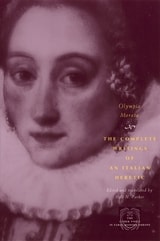
The Complete Writings of an Italian Heretic
Olympia Morata
University of Chicago Press, 2003
A brilliant scholar and one of the finest writers of her day, Olympia Morata (1526-1555) was attacked by some as a "Calvinist Amazon" but praised by others as an inspiration to all learned women. This book publishes, for the first time, all her known writings—orations, dialogues, letters, and poems—in an accessible English translation.
Raised in the court of Ferrara in Italy, Morata was educated alongside the daughters of the nobility. As a youth she gave public lectures on Cicero, wrote commentaries on Homer, and composed poems, dialogues, and orations in both Latin and Greek. She also became a prominent Protestant evangelical, studying the Bible extensively and corresponding with many of the leading theologians of the Reformation. After fleeing to Germany in search of religious freedom, Morata tutored students in Greek and composed what many at the time felt were her finest works—a series of translations of the Psalms into Greek hexameters and sapphics.
Feminists and historians will welcome these collected writings from one of the most important female humanists of the sixteenth century.
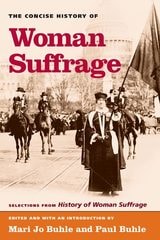
The Concise History of Woman Suffrage
Selections from History of Woman Suffrage, by Elizabeth Cady Stanton, Susan B. Anthony, Matilda Joslyn Gage, and the National American Woman Suffrage AssociationEdited and with an Introduction by Mari Jo Buhle and Paul Buhle
University of Illinois Press, 2005
In their Concise History of Woman Suffrage, Mari Jo Buhle and Paul Buhle have revitalized this classic text by carefully selecting from among its best material. The eighty-two chosen documents, now including interpretative introductory material by the editors, give researchers easy access to material that the original work's arrangement often caused readers to ignore or to overlook.
The volume contains the work of many reform agitators, among them Angelina Grimké, Lucy Stone, Carrie Chapman Catt, Charlotte Perkins Gilman, Anna Howard Shaw, Jane Addams, Sojourner Truth, and Victoria Woodhull, as well as Elizabeth Cady Stanton, Susan B. Anthony, Matilda Joslyn Gage, and Ida Husted Harper.

The Constitutional Convention and Formation of Union
Edited by Winton U. Solberg
University of Illinois Press, 1990
The Contest for Knowledge
Debates over Women's Learning in Eighteenth-Century ItalyMaria Gaetana Agnesi, Diamante Medaglia Faini, Aretafila Savini de' Rossi, and the Accademia de' Ricovrati
University of Chicago Press, 2005
The Contest for Knowledge reveals how these four women used the methods and themes of their male counterparts to add their voices to the vigorous and prolific debate over the education of women during the eighteenth century. In the texts gathered here, the women discuss the issues they themselves thought most urgent for the equality of women in Italian society specifically and in European culture more broadly. Their thoughts on this important subject reveal how crucial the eighteenth century was in the long history of debates about women in the academy.
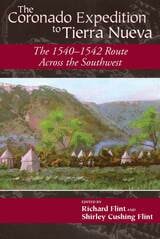
The Coronado Expedition to Tierra Nueva
The 1540-1542 Route across the SouthwestRichard Flint
University Press of Colorado, 1997
In search of where the expedition went and what peoples it encountered, this volume explores the fertile valleys of Sonora, the basins and ranges of southern Arizona, the Zuni pueblos and the Rio Grande Valley of New Mexico, and the Llano Estacado of the Texas panhandle.
The twenty-one contributors to the volume have pursued some of the most significant lines of research in the field in the last fifty years; their techniques range from documentary analysis and recording traditional stories to detailed examination of the landscape and excavation of campsites and Indian towns. With more confidence than ever before, researchers are closing in on the route of the conquistadors.

The Detroit Tigers Reader
Tom Stanton, Editor
University of Michigan Press, 2010
The story of the Tigers---like the story of Detroit itself---is one of resilience and endurance. For baseball fans it's also an intensely personal one: Detroit Tigers baseball has flowed through the veins of generations of families.
The essays, articles, and letters in The Detroit Tigers Reader capture those stories and the essence of the Tigers' spirit, tracing the history of the team from its first game on April 25, 1901, up through the arrival of "Pudge" Rodriguez in 2004. With contributions from some of the greatest sportswriters and athletes, as well as local journalists and fans, The Detroit Tigers Reader charts the highs and lows of one of the most extraordinary and celebrated teams in baseball history.
Includes contributions from
Mitch Albom
Dave Anderson
Joseph Durso
Joe Falls
Hank Greenberg
Ernie Harwell
Al Kaline
Mike Lupica
Grantland Rice
Damon Runyon
Babe Ruth
Neal Shine
The Diary of Olga Romanov
Royal Witness to the Russian RevolutionHelen Azar
Westholme Publishing, 2014

The Documentary Heritage Of Ohio
Phillip R. Shriver
Ohio University Press, 2010
Key to the successful teaching and learning of history is its personalization. In presenting documents that help Ohio’s rich history come alive in the minds of its readers, this book has purposely sought to provide eyewitness, first-person narratives that will make the reader want to turn the page and keep on reading. At the same time, mindful of the significance of guideposts basic to our understanding of the development of the state, care has been taken to include those documents such as constitutions, laws, and ordinances that have truly made a difference in the shaping of our institutions and the lives of our people.
With informative and accessible introductions to each document, editors Shriver and Wunderlin have produced a book of record that reveals the sources of Ohio’s heritage. The Documentary Heritage of Ohio is the second volume in the Ohio Bicentennial Series and a must for all libraries, schools, and the bookshelves of any who wish to appreciate the state’s historic accomplishments and rich heritage not only for the bicentennial of statehood in 2003 but for many years to come.
The Dragon's Tail
Americans Face the Atomic AgeRobert A. Jacobs
University of Massachusetts Press, 2010
When President Harry Truman introduced the atomic bomb to the world in 1945, he described it as a God-given harnessing of “the basic power of the universe.” Six days later a New York Times editorial framed the dilemma of the new Atomic Age for its readers: “Here the long pilgrimage of man on Earth turns towards darkness or towards light.” American nuclear scientists, aware of the dangers their work involved, referred to one of their most critical experiments as “tickling the dragon's tail.”
Even after Hiroshima and Nagasaki, most Americans may not have been sure what an atomic bomb was or how it worked. But they did sense that it had fundamentally changed the future of the human race. In this book, Robert Jacobs analyzes the early impact of nuclear weapons on American culture and society. He does so by examining a broad range of stories, or “nuclear narratives,” that sought to come to grips with the implications of the bomb's unprecedented and almost unimaginable power.
Beginning with what he calls the “primary nuclear narrative,” which depicted atomic power as a critical agent of social change that would either destroy the world or transform it for the better, Jacobs explores a variety of common themes and images related to the destructive power of the bomb, the effects of radiation, and ways of surviving nuclear war. He looks at civil defense pamphlets, magazines, novels, and films to recover the stories the U.S. government told its citizens and soldiers as well as those presented in popular culture.
According to Jacobs, this early period of Cold War nuclear culture—from 1945 to the banning of above-ground testing in 1963—was distinctive for two reasons: not only did atmospheric testing make Americans keenly aware of the presence of nuclear weapons in their lives, but radioactive fallout from the tests also made these weapons a serious threat to public health, separate from yet directly linked to the danger of nuclear war.
The French Revolution Confronts Pius VI
Volume 1: His Writings to Louis XVI, French Cardinals, Bishops, the National Assembly, and the People of France with Special Emphasis on the Civil Constitution of the ClergyJeffrey J. Langan
St. Augustine's Press, 2020
The writings of Pope Pius VI, head of the Catholic Church during the most destructive period of the French Revolution, were compiled in two volumes by M.N.S. Guillon and published in 1798 and 1800. But during the Revolution, the reign of Napoleon, and the various revolutionary movements of the 19th century, there were extraordinary efforts to destroy writings that critiqued the revolutionary ideology. Many books and treatises, if they survived the revolution or the sacking from Napoleon’s armies. To this day, no public copy of Guillon’s work exists in Paris.
Now, for the first time in English, these works comprising the letters, briefs, and other writings of Pius VI on the French Revolution are available. Volume I treats the first shock of the Revolution and the efforts of the Pope in 1790 and 1791 to oppose the Civil Constitution of the Clergy (which famous revolutionary and shrewd diplomat Talleyrand referred to as “the greatest fault of the National Assembly”). Volume II will be published later, and deals with the aftermath of the Civil Constitution through Pius’s death in exile). Editor and translator Jeffrey Langan presents the materials leading up to and directly connected with these decrees, in which the National Assembly attempted to set up a Catholic Church that would be completely submissive to the demands of the Assembly. Volume I also covers Pius’s efforts to deal with the immediate aftermath of the Constitution after the National Assembly implemented it, including his encyclical, Quod Aliquantum.
The letters will show how Pius chose to oppose the Civil Constitution. He did so not by a public campaign, for he had no real temporal power to oppose the violence, but by attempting to work personally with Louis XVI and various archbishops in France to articulate what were the points on which he could concede (matters dealing with the political structures of France) and what were the essential points in which he could not concede (matters dealing with the organization of dioceses and appointment of bishops).
Since the 1980s, with the writings and school that developed around François Furet, as well as Simon Schama’s Citizens, a new debate over the French Revolution has ensued, bringing forth a more objective account of the Revolution, one that avoids an excessively Marxist lens and that brings to light some of its defects and more gruesome parts – the destruction and theft of Church property, and the sadistic methods of torture and killing of priests, nuns, aristocrats, and fellow-revolutionaries.
An examination of the writings of Pius VI will not only help set the historical record straight for English-speaking students of the Revolution, it will also aid them to better understand the principles that the Catholic Church employs when confronted with chaotic political change. They will see that the Church has a principled approach to distinguishing, while not separating, the power of the Church and the power of the state. They will also see, as Talleyrand himself also saw, that one of the essential elements that makes the Church the Church is the right to appoint bishops and to discipline its own bishops. The Church herself recognizes that she cannot long survive without this principle that guarantees her unity.
Pius VI’s efforts were able to keep the Catholic Church intact (though badly bruised) so that she could reconstitute herself and build up a vibrant life in 19th-century France. (He did this in the face of the Church’s prestige having sunk to historic lows; some elites in Europe thought there would be no successor to Pius and jokingly referred to him as “Pius the Last.”) He began a process that led to the restoration of the prestige of the Papacy throughout the world, and he initiated a two-century process that led to the Church finally being able to select bishops without any interference from secular authorities. This had been at least a 1,000-year problem in the history of the Church. By 1990, only two countries of the world, China and Vietnam, were interfering in any significant way in the process that the Church used to select bishops.
Pius VI’s papacy, especially during the years of the French Revolution, was a pivotal point for the French Revolution and for the interaction between Church and state in Western history. All freedom-loving people will be happy to read his distinc-tions between the secular power and the spiritual power. His papacy also was important for the internal developments that the Church would make over the next 200 years with respect to its self-understanding of the Papacy and the role of the bishop.

The German Texas Frontier
Ferdinand Lindheimer’s Newspaper Accounts of the Environment, Gold, and IndiansDaniel J. Gelo
University of North Texas Press, 2024

The Great Water
A Documentary History of MichiganMatthew R Thick
Michigan State University Press, 2018
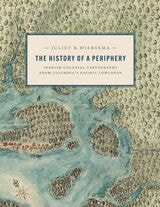
The History of a Periphery
Spanish Colonial Cartography from Colombia's Pacific LowlandsJuliet B. Wiersema
University of Texas Press, 2024
2025 ALAA Book Award, Association for Latin American Art/Arvey Foundation, College Art Association
An exploration of Colombian maps in New Granada.
During the late Spanish colonial period, the Pacific Lowlands, also called the Greater Chocó, was famed for its rich placer deposits. Gold mined here was central to New Granada’s economy yet this Pacific frontier in today’s Colombia was considered the “periphery of the periphery.” Infamous for its fierce, unconquered Indigenous inhabitants and its brutal tropical climate, it was rarely visited by Spanish administrators, engineers, or topographers and seldom appeared in detail on printed maps of the period.
In this lavishly illustrated and meticulously researched volume, Juliet Wiersema uncovers little-known manuscript cartography and makes visible an unexamined corner of the Spanish empire. In concert with thousands of archival documents from Colombia, Spain, and the United States, she reveals how a "periphery" was imagined and projected, largely for political or economic reasons. Along the way, she unearths untold narratives about ephemeral settlements, African adaptation and autonomy, Indigenous strategies of resistance, and tenuous colonialisms on the margins of a beleaguered viceroyalty.
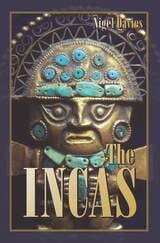
The Incas
Nigel Davies
University Press of Colorado, 1995
In this classic work, Nigel Davies offers a clear view into Inca political history, economy, governance, religion, art, architecture, and daily life. The Incas has become a classic in its many years in print; readers and scholars interested in ancient American cultures will relish this paperback edition.
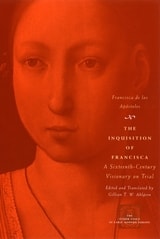
The Inquisition of Francisca
A Sixteenth-Century Visionary on TrialFrancisca de los Apóstoles
University of Chicago Press, 2005
This book contains what little is known about Francisca—the several letters she wrote as well as the transcript of her trial—and offers modern readers a perspective on the unique role and status of religious women in sixteenth-century Spain. Chronicling the drama of Francisca's interrogation and her spirited but ultimately unsuccessful defense, The Inquisition of Francisca—transcribed from more than three hundred folios and published for the first time in any language—will be a valuable resource for both specialists and students of the history and religion of Spain in the sixteenth century.

The Jumanos
Hunters and Traders of the South PlainsBy Nancy Parrott Hickerson
University of Texas Press, 1994
In the late sixteenth century, Spanish explorers described encounters with North American people they called "Jumanos." Although widespread contact with Jumanos is evident in accounts of exploration and colonization in New Mexico, Texas, and adjacent regions, their scattered distribution and scant documentation have led to long-standing disagreements: was "Jumano" simply a generic name loosely applied to a number of tribes, or were they an authentic, vanished people?
In the first full-length study of the Jumanos, anthropologist Nancy Hickerson proposes that they were indeed a distinctive tribe, their wide travel pattern linked over well-established itineraries. Drawing on extensive primary sources, Hickerson also explores their crucial role as traders in a network extending from the Rio Grande to the Caddoan tribes' confederacies of East Texas and Oklahoma.
Hickerson further concludes that the Jumanos eventually became agents for the Spanish colonies, drafted as mercenary fighters and intelligence-gatherers. Her findings reinterpret the cultural history of the South Plains region, bridging numerous gaps in the area's comprehensive history and in the chronicle of these elusive people.
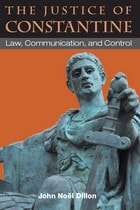
The Justice of Constantine
Law, Communication, and ControlJohn Noël Dillon
University of Michigan Press, 2012
As the first Christian emperor of Rome, Constantine the Great has long interested those studying the establishment of Christianity. But Constantine is also notable for his ability to control a sprawling empire and effect major changes. The Justice of Constantineexamines Constantine's judicial and administrative legislation and his efforts to maintain control over the imperial bureaucracy, to guarantee the working of Roman justice, and to keep the will of his subjects throughout the Roman Empire.
John Dillon first analyzes the record of Constantine's legislation and its relationship to prior legislation. His initial chapters also serve as an introduction to Roman law and administration in later antiquity. Dillon then considers Constantine's public edicts and internal communications about access to law, trials and procedure, corruption, and punishment for administrative abuses. How imperial officials relied on correspondence with Constantine to resolve legal questions is also considered. A study of Constantine's expedited appellate system, to ensure provincial justice, concludes the book.
Constantine's constitutions reveal much about the Theodosian Code and the laws included in it. Constantine consistently seeks direct sources of reliable information in order to enforce his will. In official correspondence, meanwhile, Constantine strives to maintain control over his officials through punishment; trusted agents; and the cultivation of accountability, rivalry, and suspicion among them.
The Karankawa Indians of Texas
An Ecological Study of Cultural Tradition and ChangeBy Robert A. Ricklis
University of Texas Press, 1996
Popular lore has long depicted the Karankawa Indians as primitive scavengers (perhaps even cannibals) who eked out a meager subsistence from fishing, hunting and gathering on the Texas coastal plains. That caricature, according to Robert Ricklis, hides the reality of a people who were well-adapted to their environment, skillful in using its resources, and successful in maintaining their culture until the arrival of Anglo-American settlers.
The Karankawa Indians of Texas is the first modern, well-researched history of the Karankawa from prehistoric times until their extinction in the nineteenth century. Blending archaeological and ethnohistorical data into a lively narrative history, Ricklis reveals the basic lifeway of the Karankawa, a seasonal pattern that took them from large coastal fishing camps in winter to small, dispersed hunting and gathering parties in summer. In a most important finding, he shows how, after initial hostilities, the Karankawa incorporated the Spanish missions into their subsistence pattern during the colonial period and coexisted peacefully with Euroamericans until the arrival of Anglo settlers in the 1820s and 1830s. These findings will be of wide interest to everyone studying the interactions of Native American and European peoples.
The Language of Sex
Five Voices from Northern France around 1200John W. Baldwin
University of Chicago Press, 1994
John Baldwin introduces five representative voices from the turn of the twelfth century in northern France: Pierre the Chanter speaks for the theological doctrine of Augustine; the Prose Salernitan Questions, for the medical theories of Galen; Andre the Chaplain, for the Ovidian literature of the schools; Jean Renart, for the contemporary romances; and Jean Bodel, for the emerging voices of the fabliaux. Baldwin juxtaposes their views on a range of essential subjects, including social position, the sexual body, desire and act, and procreation. The result is a fascinating dialogue of how they agreed or disagreed with, ignored, imitated, or responded to each other at a critical moment in the development of European ideas about sexual desire, fulfillment, morality, and gender.
These spokesmen allow us into the discussion of sexuality inside the church and schools of the clergy, in high and popular culture of the leity. This heterogeneous discussion also offers a startling glimpse into the construction of gender specific to this moment, when men and women enjoyed equal status in sexual matters, if nowhere else.
Taken together, these voices extend their reach, encompass their subject, and point to a center where social reality lies. By articulating reality at its varied depths, this study takes its place alongside groundbreaking works by James Brundage, John Boswell, and Leah Otis in extending our understanding of sexuality and sexual behavior in the Middle Ages.
"Superb work. . . . These five kinds of discourse are not often treated together in scholarly writing, let alone compared and contrasted so well."—Edward Collins Vacek, Theological Studies
"[Baldwin] has made the five voices speak to us in a language that is at one and the same time familiar and alien in its resonance and accents. This is a truly exceptional book, interdisciplinary in the real sense of the word, which is surely destined to become a landmark in medieval studies."—Keith Busby, Bryn Mawr Reviews
"[Baldwin's] attempt to 'listen' to these distant voices and translate their language of sex into our own raises challenging methodological questions that will be of great interest to historians and literary scholars alike."—John P. Dalton, Comitatus

The Last Generation
Work and Life in the Textile Mills of Lowell, Massachusetts, 1910-1960Mary H. Blewett
University of Massachusetts Press, 1990
Oral histories of many of the last generation of Lowell, MA, textile mill workers preceded by two introductory sections. The first presents the historic setting of economic development and subsequent decline of the textile industry in Lowell. The second is a brief explanation of the production process wherein the last generation of mill workers expended so many of their skills and so much of their energy.
The Last Superpower Summits
Reagan, Gorbachev and Bush. Conversations that Ended the Cold War.The National Security Archive Savranskaya
Central European University Press, 2017
The Lincoln Assassination
The EvidenceEdited by William C. Edwards and Edward Steers
University of Illinois Press, 2008
On April 22, 1865, Brevet Colonel H. L. Burnett was assigned to head the investigation into the murder of President Abraham Lincoln and the attempted murder of Secretary of State William H. Seward. Burnett orchestrated the collection of thousands of documents for the Military Commission’s trial of the conspirators. This deep archive of documentary evidence--consisting of letters, depositions, eyewitness accounts, investigative reports, and other documents--provides invaluable insight into the historical, cultural, and judicial context of the investigation. Only a fraction of the information presented in these documents ever made its way into the trial, and most of it has never been readily accessible. By presenting an annotated and indexed transcription of these documents, this volume offers significant new access to information on the events surrounding the assassination and a vast new store of social and political history of the Civil War era.
“With tears in my eyes I think it your duty to hang every rebel caught. I feel as bad as if was my own mother or father & will be one to volunteer to try & shoot every Southern man. May God have mercy on the man’s soul that done such a deed.
With much Respect for our Country,
I remain
Weeping”
--Anonymous letter, New York, April 15, 1865
“I know Booth. He was in the habit of coming to my place to shoot. . . . He shot well, and practiced to shoot with accuracy in every possible position. . . . He was a quick shot; always silent, reticent.”
--Deposition of Benjamin Barker, Pistol Gallery proprietor
The Lincoln Mailbag
America Writes to the President, 1861-1865Edited by Harold Holzer
Southern Illinois University Press, 2006
As president, Abraham Lincoln received between two hundred and five hundred letters a day—correspondence from public officials, political allies, and military leaders, as well as letters from ordinary Americans of all races who wanted to share their views with him. Here, and in his critically acclaimed volume Dear Mr. Lincoln, editor Harold Holzer has rescued these voices—sometimes eloquent, occasionally angry, at times poetic—from the obscurity of the archives of the Civil War. The Lincoln Mailbag includes letters written by African Americans, which Lincoln never saw, revealing to readers a more accurate representation of the nation’s mood than even the president knew. This first paperback edition of The Lincoln Mailbag includes a new index and fourteen illustrations, and Holzer’s introduction and annotations provide historical context for the events described and the people who wrote so passionately to their president in Lincoln's America.
The Lisle Letters
Edited by Muriel St. Clare Byrne
University of Chicago Press, 1981
The Lisle Letters
An AbridgementEdited by Muriel St. Clare Byrne
University of Chicago Press, 1983
The Luna Papers, 1559–1561
Volumes 1 & 2Translated and edited by Herbert Ingram Priestley, foreword by John E. Worth
University of Alabama Press, 2010
Marks the celebration by the modern city of Pensacola, Florida, of the 450th anniversary of Luna’s fateful colony
The 1559–1561 expedition of Don Tristán de Luna y Arellano to Florida was at the time of Spain’s most ambitious attempt yet to establish a colonial presence in southeastern North America. In June of 159, eleven ships carrying some five hundred soldiers and one thousand additional colonists, including not just Spaniards but also many of Aztec and African descent, sailed north from Veracruz, Mexico, on their way to the bay known then as Ochuse, and later as Pensacola. Finally arriving in mid-August, the colonists quickly sent word of their arrival back to Mexico and unloaded their supplies over the next five weeks, leaving vital food stores onboard the vessels until suitable warehouses could be constructed in the new settlement. When an unexpected hurricane struck on the night of September 19, 1559, however, seven of ten remaining vessels in Luna’s fleet were destroyed, and the expedition was instantaneously converted from a colonial venture to a mission in need of rescue.
Though ultimately doomed to failure by the hurricane that devastated their fleet and food stores, the Luna expedition nonetheless served as an immediate prelude to the successful establishment of a permanent colonial presence at St. Augustine on Florida’s Atlantic coast in 1565, and prefaced the eventual establishment after 1698 of three successive Spanish presidios at the same Pensacola Bay where Luna’s attempt had been made more than a century before.