Results by title
129 books match the query 'Technique' and 44 start with t
Talking about Detective Fiction
P. D. James
Bodleian Library Publishing, 2009
Techniques for Pollination Biologists
Carol A. Kearns
University Press of Colorado, 1993
This book presents techniques such as fluorescence microscopy to examine pollen tubes, high-pressure liquid chromatography for nectar analysis, and using particle counters to count pollen grains and nuclear magnetic resonance for floral odor analysis. In addition to these sophisticated methods, basic techniques are described for labeling plants, manipulating flowers, marking or excluding, and designing simple but elegant experiments with small budgets. The book also examines potential pitfalls for pollination studies and offers cautionary advice about designing and implementing different types of pollination experiments.

The Absent Man
The Narrative Craft of Charles W. ChesnuttCharles Duncan
Ohio University Press, 1998
As the first African-American fiction writer to achieve a national reputation, Ohio native Charles W. Chesnutt (1858–1932) in many ways established the terms of the black literary tradition now exemplified by such writers as Toni Morrison, Alice Walker, and Charles Johnson.
Following the highly autobiographical nonfiction produced by Frederick Douglass, Harriet Jacobs, and other slave narrative writers, Chesnutt’s complex, multi-layered short fiction transformed the relationship between African-American writers and their readers. But despite generous praise from W. D. Howells and other important critics of his day, and from such prominent readers as William L. Andrews, Henry Louis Gates, Jr., and Eric Sundquist in ours, Chesnutt occupies a curiously ambiguous place in American literary history.
In The Absent Man, Charles Duncan demonstrates that Chesnutt’s uneasy position in the American literary tradition can be traced to his remarkable narrative subtlety. Profoundly aware of the delicacy of his situation as a black intellectual at the turn of the century, Chesnutt infused his work with an intricate, enigmatic artistic vision that defies monolithic or unambiguously political interpretation, especially with regard to issues of race and identity that preoccupied him throughout his career.
In this first book-length study of the innovative short fiction, Duncan devotes particular attention to elucidating these sophisticated narrative strategies as the grounding for Chesnutt’s inauguration of a tradition of African-American fiction.
The Architecture of Story
A Technical Guide for the Dramatic WriterWill Dunne
University of Chicago Press, 2016
Through his workshops and book The Dramatic Writer’s Companion, Will Dunne has helped thousands of writers develop successful scripts. Now, in The Architecture of Story, he helps writers master the building blocks of dramatic storytelling by analyzing a trio of award-winning contemporary American plays: Doubt: A Parable by John Patrick Shanley, Topdog/Underdog by Suzan-Lori Parks, and The Clean House by Sarah Ruhl. Dismantling the stories and examining key components from a technical perspective enables writers to approach their own work with an informed understanding of dramatic architecture.
Each self-contained chapter focuses on one storytelling component, ranging from “Title” and “Main Event” to “Emotional Environment” and “Crisis Decision.” Dunne explores each component in detail, demonstrating how it has been successfully handled in each play and comparing and contrasting techniques. The chapters conclude with questions to help writers evaluate and improve their own scripts. The result is a nonlinear reference guide that lets writers work at their own pace and choose the topics that interest them as they develop new scripts. This flexible, interactive structure is designed to meet the needs of writers at all stages of writing and at all levels of experience.
The Art of Authorial Presence
Hawthorne's Provincial TalesG. R. Thompson
Duke University Press, 1993
By focusing on the provincial tales as they were originally conceived--as a narrative cycle--Thompson is able to recover intertextual references that reveal Hawthorne's preoccupation with framing strategies and variations on authorial presence. The author shows how Hawthorne deliberately constructs sentimental narratives, only to deconstruct them. Thompson's analysis provides a new aesthetic context for understanding the whole shape of Hawthorne's career as well as the narrative, ethical, and historical issues within individual works.
Revisionary in its view of one of America's greatest authors, The Art of Authorial Presence also offers invaluable insight into the problems of narratology and historiography, ethics and psychology, romanticism and idealism, and the cultural myths of America.
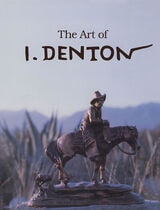
The Art of I. Denton
Ivan Denton
University of Arkansas Press, 1988
The remarkable detail and subtly stylized lines characterizing the artistry of celebrated woodcarver Ivan Denton are in abundant evidence in this beautifully illustrated volume of The Art of I. Denton. Behind each carving presented here, is its story from a piece of wood to a work of art, told in the words of Mr. Denton himself.
This is, in fact, a tour guided by Ivan Denton covering the best of his efforts, his love for the wood, and the process which turns a craftsman into an artist. As he says in describing his work: “Art exists only when you share it. When a tree falls in the woods, in school they said, ‘This tree doesn’t make a noise if someone doesn’t hear it.’ Because, you know, the sound waves don’t bump against the eardrum . . . The idea of not being able to get rid of a piece is basically the concept of an amateur. Not only does a professional need the money, and not only does he need his ego flattered, it’s just that the art doesn’t really exist until it’s shared. That’s an even deeper joy than the ego.”
Chosen from collections across the country, these pieces represent the masterworks from one of a disappearing breed of artisans. But The Art of I. Denton is more than a document of our cultural heritage, it is a tribute to the man and his art.
The Art of the Novel
Critical PrefacesHenry James
University of Chicago Press, 2011
This collection of prefaces, originally written for the 1909 multi-volume New York Edition of Henry James’s fiction, first appeared in book form in 1934 with an introduction by poet and critic R. P. Blackmur. In his prefaces, James tackles the great problems of fiction writing—character, plot, point of view, inspiration—and explains how he came to write novels such as The Portrait of a Lady and The American. As Blackmur puts it, “criticism has never been more ambitious, nor more useful.”
The latest edition of this influential work includes a foreword by bestselling author Colm Tóibín, whose critically acclaimed novel The Master is told from the point of view of Henry James. As a guide not only to James’s inspiration and execution, but also to his frustrations and triumphs, this volume will be valuable both to students of James’s fiction and to aspiring writers.
The Color of Paper
Representing Race in the Comics MediumChris Gavaler
The Ohio State University Press, 2026
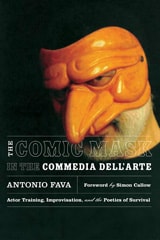
The Comic Mask in the Commedia dell'Arte
Actor Training, Improvisation, and the Poetics of SurvivalAntonio Fava
Northwestern University Press, 2007
Nobody says Shakespeare is dead, Antonio Fava tells us, but Commedia, they say, is dead. Why? Because clearly, he goes on, we have Shakespeare's texts, but nobody knows what to do with the improvisation that is the basis of the Commedia dell'Arte, despite massive documentation. This book by Fava, one of the few living master teachers of Commedia dell'Arte, is the first aesthetic and methodological study of the traditional Italian theater form--the first to describe, in a precise and practical way, what Commedia is and what it should be.
The mask--as object, symbol, character, theatrical practice, even spectacle itself--is the central metaphor around which Fava builds his discussion of structure, themes, characters, and methods. Drawing on twenty years of research conducted through his work as performer, director, mask maker, and scholar, he offers extensive practical, philosophical, and technical guidelines to performing the stock characters of Commedia, observing its structure, extracting its poetics, exploring its themes, and using the mask. A densely layered text combining historical fact, personal experience, philosophical speculation, and passionate opinion, and including copious illustrations--period drawings, prints, and color photographs of leather Commedia masks made by Fava himself--The Comic Mask in the Commedia dell'Arte is a rich work of singular insight into one of the world's most venerable forms of theater.
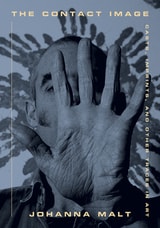
The Contact Image
Casts, Imprints, and Other Traces in ArtJohanna Malt
University of Minnesota Press, 2026
A new conceptual tool for understanding the history of art
From ancient cave paintings to contemporary sculpture, forms of indexical trace are vital to the human practice of artmaking. Through this wide-ranging exploration, Johanna Malt shows how casts, molds, and imprints (“contact images”) offer a paradigm for thinking about our relationship to objects and their surfaces as sites of meaning. Engaging and complicating philosophical dualities of absence and presence, art and non-art, original and copy, Malt introduces the contact image as an important new concept for the study of Western art.
Close reading examples from 30,000 years of art history, Malt cuts across eras and media to unite diverse forms of artistic production created through instances of contact with “the objects of the world.” From holy relics to Napoleon’s death mask to life casts of the human body by artists such as Duane Hanson and Janine Antoni, as well as conceptual and performance work by Jasper Johns and Yves Klein, The Contact Image traces themes of selfhood, time, negation, and vestige in these tactile encounters.
Revisiting fundamental questions about representation, perception, and aesthetics, The Contact Image is a sophisticated provocation for a theory of art built on the tension and oscillations that emerge when we explore how artworks embody opposites.
Retail e-book files for this title are screen-reader friendly with images accompanied by short alt text and/or extended descriptions.

The Craft Of Librarian Instruct Tion
Using Acting TechniquesJulie Artman
Assoc of College & Research Libraries, 2016

The Designer
Half a Century of Change in Image, Training, and TechniqueRosemary Sassoon
Intellect Books, 2008
The Dramatic Writer's Companion, Second Edition
Tools to Develop Characters, Cause Scenes, and Build StoriesWill Dunne
University of Chicago Press, 2017
Having spent decades working with dramatists to refine and expand their existing plays and screenplays, Dunne effortlessly blends condensed dramatic theory with specific action steps—over sixty workshop-tested exercises that can be adapted to virtually any individual writing process and dramatic script. Dunne’s in-depth method is both instinctual and intellectual, allowing writers to discover new actions for their characters and new directions for their stories. The exercises can be used by those just starting the writing process and by those who have scripts already in development. With each exercise rooted in real-life issues from Dunne’s workshops, readers of this companion will find the combined experiences of more than fifteen hundred workshops in a single guide.
This second edition is fully aligned with a brand-new companion book, Character, Scene, and Story, which offers forty-two additional activities to help writers more fully develop their scripts. The two books include cross-references between related exercises, though each volume can also stand alone.
No ordinary guide to plotting, this handbook centers on the principle that character is key. “The character is not something added to the scene or to the story,” writes Dunne. “Rather, the character is the scene. The character is the story.” With this new edition, Dunne’s remarkable creative method will continue to be the go-to source for anyone hoping to take their story to the stage.
The Dramatic Writer's Companion
Tools to Develop Characters, Cause Scenes, and Build StoriesWill Dunne
University of Chicago Press, 2009
Moss Hart once said that you never really learn how to write a play; you only learn how to write this play. Crafted with that adage in mind, The Dramatic Writer’s Companion is designed to help writers explore their own ideas in order to develop the script in front of them. No ordinary guide to plotting, this handbook starts with the principle that character is key. “The character is not something added to the scene or to the story,” writes author Will Dunne. “Rather, the character is the scene. The character is the story.”
Having spent decades working with dramatists to refine and expand their existing plays and screenplays, Dunne effortlessly blends condensed dramatic theory with specific action steps—over sixty workshop-tested exercises that can be adapted to virtually any individual writing process and dramatic script. Dunne’s in-depth method is both instinctual and intellectual, allowing writers to discover new actions for their characters and new directions for their stories.
Dunne’s own experience is a crucial element of this guide. His plays have been selected by the Eugene O’Neill Theatre Center for three U.S. National Playwrights Conferences and have earned numerous honors, including a Charles MacArthur Fellowship, four Bay Area Theatre Critics Circle Awards, and two Drama-Logue Playwriting Awards. Thousands of individuals have already benefited from his workshops, and The Dramatic Writer’s Companion promises to bring his remarkable creative method to an even wider audience.
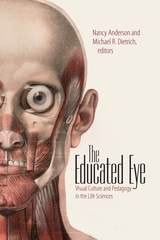
The Educated Eye
Visual Culture and Pedagogy in the Life SciencesEdited by Nancy Anderson
Dartmouth College Press, 2012
The End of Books--or Books Without End?
Reading Interactive NarrativesJ. Yellowlees Douglas
University of Michigan Press, 2001
The book examines criticism on interactive fiction from both proponents and skeptics and examines similarities and differences between print and hypertext fiction. It looks closely at critically acclaimed interactive works, including Stuart Moulthrop's Victory Garden and Michael Joyce's Afternoon: A Story that illuminate how these hypertext narratives "work." While she sees this as a still-evolving technology and medium, the author identifies possible developments for the future of storytelling from outstanding examples of Web-based fiction and CD-ROM narratives, possibilities that will enable narratives to both portray the world with greater realism an to transcend the boundaries of novels and films, character and plot alike.
Written to be accessible to a wide range of readers, this lively and accessibly-written volume will appeal to those interested in technology and cyberculture, as well as to readers familiar with literary criticism and modern fiction.
J. Yellowlees Douglas is the Director of the William and Grace Dial Center for Written and Oral Communication, University of Florida. She is the author of numerous articles and essays on the subject of hypertext and interactive literature.
The Escape
From a Seventeenth-Century Drawing Manual of the Face and Its ExpressionsDavid Schutter
University of Chicago Press, 2021
Collected here, Schutter’s work recreates not the subject matter but the very values of Lebrun’s drawings—light, gesture, scale, and handling of materials. The cross-hatching in the original was used to make classical tone and volume, in Schutter’s hand the technique makes for unstable impressions of strained neck and deeply furrowed brow, or for drawing marks and scribbles unto themselves. As such, these drawings end up denying a neat closure—unlike their academic source material—and render unsettling states of mind that require repeated viewing. Accompanied by essays from art critic Barry Schwabsky and Neubauer Collegium curator Dieter Roelstraete, The Escape will appeal to students, critics, and admirers of seventeenth-century, modern, and contemporary art alike.
The Ethos of Romance at the Turn of the Century
By William J. Scheick
University of Texas Press, 1994
The romance genre was a popular literary form among writers and readers in the nineteenth and early twentieth centuries, but since then it has often been dismissed as juvenile, unmodern, improper, or subversive. In this study, William J. Scheick seeks to recover the place of romance in fin-de-siècle England and America; to distinguish among its subgenres of eventuary, aesthetic, and ethical romance; and to reinstate ethical romance as a major mode of artistic expression.
Scheick argues that the narrative maneuvers of ethical romance dissolve the boundary between fiction and fact. In contrast to eventuary romances, which offer easily consumed entertainment, or aesthetic romances, which urge upon readers a passive appreciation of a wondrous work of art, ethical romances potentially disorient and reorient their readers concerning some metaphysical insight hidden within the commonplace. They prompt readers to question what is real and what is true, and to ponder the wonder of life and the text of the self, there to detect what the reader might do in the art of his or her own life
The authors whose works Scheick discusses are Nathaniel Hawthorne, H. Rider Haggard, Henry James, C. J. Cutcliffe Hyne, H. G. Wells, John Kendrick Bangs, Gilbert K. Chesterton, Richard Harding Davis, Stephen Crane, Mary Austin, Jack London, Robert Louis Stevenson, Mary Cholmondeley, and Rudyard Kipling. This wide selection expands the canon to include writers and works that highly merit re-reading by a new generation.
The Hundreds
Lauren Berlant and Kathleen Stewart
Duke University Press, 2019
The Language of Fiction
A Writer’s StylebookBrian Shawver
University Press of New England, 2013
The Metaphysics of Sound in Wallace Stevens
Anca Rosu
University of Alabama Press, 1995
Where sound speaks louder than meaning—Stevens’s poetry as a metaphysical echo.
Wallace Stevens dedicated his poetry to challenging traditional notions about reality, truth, knowledge, and the role of language as a means of representation. Rosu demonstrates that Stevens's experimentation with sound is not only essential to his poetics but also profoundly linked to the pragmatist ideas that informed his way of thinking about language. Her readings of Stevens's poems focus on revealing the dynamic through which meaning emerges in language patterns—a dynamic she calls "images of sound."
Rosu argues that the formal aspects of poetry are deeply ingrained in cultural realities and are, in fact, generated by their context. The sound pattern pervading Stevens's poems at once addresses and violates the reader's assumptions about the functioning of language and, along with them, ideas about reality, knowledge, and subjectivity. Sound is thus the starting point of an argument concerned with Stevens's epistemology and poetics—the way his poems insist on a movement past or through a normal poetic representation of the world to gesture toward a reality that lies outside or beyond systems of representation.
The relationship between sound and meaning isolated and analyzed in The Metaphysics of Sound in Wallace Stevens is firmly situated among critical debates concerning the poet's aesthetic and philosophical convictions. Rosu claims that Stevens's poetry is not ultimately about the powerlessness of language, nor is it a deconstructive enterprise of destabilizing culturally consecrated truths; rather it achieves meaning most frequently through patterns of sound. Sound helps Stevens make a deeply philosophical point in a language unavailable to philosophers.

The Mirror in the Text
Lucien Dällenbach
University of Chicago Press, 1989
In this classic study, Lucien Dällenbach provides the first systematic analysis of this device and its literary and artistic applications from Van Eyck and Velasquez to Gide, Beckett and the French nouveau roman.
Alongside this wealth of examples, Dällenbach constructs his theoretical argument with elegance and clarity, assuming no previous knowledge of arcane and specialized theory, but guiding the reader helpfully through the maze of literary criticism. The result is a new conceptual field, a new grammar of the mise en abyme, and an examination of its function within the work of art and literature.
The highly original study has been acclaimed as one of the most important works of contemporary literary theory. It will be of interest to all students of English and European literature, as well as to students of the visual arts.
The Natural History of the Traditional Quilt
By John Forrest and Deborah Blincoe
University of Texas Press, 1995
Traditional quilts serve many purposes over the course of a useful life. Beginning as a beautiful bed covering, a quilt may later function as a ground cover at picnics until years of wear relegate it to someone's ragbag for scrap uses.
Observing this life cycle led authors John Forrest and Deborah Blincoe to the idea that quilts, like living things, have a natural history that can be studied scientifically. They explore that natural history through an examination of the taxonomy, morphology, behavior, and ecology of quilts in their native environment—the homes of humans who make, use, keep, and bestow them.
The taxonomy proposed by Forrest and Blincoe is rooted in the mechanics of replicating quilts so that it can be used to understand evolutionary and genetic relationships between quilt types. The morphology section anatomizes normal and abnormal physical features of quilts, while the section on conception and birth in the life cycle discusses how the underlying processes of replication intersect with environmental factors to produce tangible objects.
This methodology is applicable to many kinds of crafts and will be of wide interest to students of folklore, anthropology, and art history. Case studies of traditional quilts and their makers in the Catskills and Appalachia add a warm, human dimension to the book.
The Nutshell Technique
Crack the Secret of Successful ScreenwritingBy Jill Chamberlain, Foreword by Patrick Wright
University of Texas Press, 2016
Veteran script consultant Jill Chamberlain discovered in her work that an astounding 99 percent of first-time screenwriters don’t know how to tell a story. These writers may know how to format a script, write snappy dialogue, and set a scene. They may have interesting characters and perhaps some clever plot devices. But, invariably, while they may have the kernel of a good idea for a screenplay, they fail to tell a story. What the 99 percent do instead is present a situation. In order to explain the difference, Chamberlain created the Nutshell Technique, a method whereby writers identify eight dynamic, interconnected elements that are required to successfully tell a story.
Now, for the first time, Chamberlain presents her unique method in book form with The Nutshell Technique: Crack the Secret of Successful Screenwriting. Using easy-to-follow diagrams (“nutshells”), she thoroughly explains how the Nutshell Technique can make or break a film script. Chamberlain takes readers step-by-step through thirty classic and contemporary movies, showing how such dissimilar screenplays as Casablanca, Chinatown, Pulp Fiction, The Usual Suspects, Little Miss Sunshine, Juno, Silver Linings Playbook, and Argo all have the same system working behind the scenes, and she teaches readers exactly how to apply these principles to their own screenwriting. Learn the Nutshell Technique, and you’ll discover how to turn a mere situation into a truly compelling screenplay story.
The Practical Shakespeare
The Plays in Practice and on the PageColin Butler
Ohio University Press, 2005
A comprehensive treatment of Shakespeare’s plays, The Practical Shakespeare: The Plays in Practice and on the Page illuminates for a general audience how and why the plays work so well.
Noting in detail the practical and physical limitations the Bard faced as he worked out the logistics of his plays, Colin Butler demonstrates how Shakespeare incorporated those limitations and turned them to his advantage: his management of entrances and exits; his characterization techniques; his handling of scenes off-stage; his control of audience responses; his organization of major scenes; and his use of prologues and choruses. A different aspect of the plays is covered in each chapter.
Butler draws most of his examples from mainstream plays, such as Macbeth, Othello, and Much Ado about Nothing. He brings special focus to A Midsummer Night’s Dream, which is treated as one of Shakespeare’s most important plays. Butler supports his major points with quotations, so readers can understand an issue even if they are unfamiliar with the particular play being discussed. The author also cross-references the use of dramatic devices in the plays, increasing the reader’s enjoyment and understanding of Shakespeare’s achievements.
Clear, jargon-free, easy-to-use, and comprehensive, The Practical Shakespeare looks at stagecraft and playwriting as conduits for students, teachers, and general audiences to engage with, understand, and appreciate the genius of Shakespeare.

The Reframing of Realism
Galdós & the Discourses of the 19th-Century Spanish NovelHazel Gold
Duke University Press, 1993
A close look at Galdós's novels reveals the artist at pains to contain and interpret what he perceived to be the distinctive and often disheartening experience of bourgeois liberalism of his day. At the same time, he can be seen here undermining or negating the accepted conventions of realist fiction. Looking beyond text to context, Gold examines the ways in which Galdós's work itself has been framed by readers and critics in accordance with changing allegiances to contemporary literary theory and the canon.
The highly ambiguous status of the frame in Galdós's fictions confirms the author's own signal position as a writer poised at the limits between realism and modernity. Gold's work will command the interest of students of Spanish and comparative literature, narrative theory, and the novel, as well as all those for whom realism and representation are at issue.
The Return of the Omniscient Narrator
Authorship and Authority in Twenty-First Century FictionPaul Dawson
The Ohio State University Press, 2013
To address this phenomenon, the book reformulates existing definitions of literary omniscience, shifting attention away from questions of narratorial knowledge and toward omniscient narration as a rhetorical performance of narrative authority that invokes and projects a historically specific figure of authorship. Through a study of fiction by authors such as Zadie Smith, Jonathan Franzen, Richard Powers, Martin Amis, Rick Moody, Edward P. Jones, and Nicola Barker, the book analyzes how the conventional narrative authority of omniscient narrators is parlayed into claims for the cultural authority of authors and of the novel itself.
In the course of its investigation, The Return of the Omniscient Narrator engages with major movements in narrative theory—rhetorical, cognitive, and feminist—to challenge and reconsider many key narratological categories, including Free Indirect Discourse, the relation between voice and focalization, and the narrative communication model. This challenge is framed by an argument for a discursive approach to narrative fiction that addresses the neglect of authorship in narrative theory.
The Rhetoric of Fiction
Wayne C. Booth
University of Chicago Press, 1983
For this new edition, Wayne C. Booth has written an extensive Afterword in which he clarifies misunderstandings, corrects what he now views as errors, and sets forth his own recent thinking about the rhetoric of fiction. The other new feature is a Supplementary Bibliography, prepared by James Phelan in consultation with the author, which lists the important critical works of the past twenty years—two decades that Booth describes as "the richest in the history of the subject."
The Rhetoric of Fictionality
Narrative Theory and the Idea of FictionRichard Walsh
The Ohio State University Press, 2007

The Rhetoric of Modernist Fiction
From a New Point of ViewMorton Levitt
University Press of New England, 2005

The Senses of Nonsense
Alison Rieke
University of Iowa Press, 1992
The Stowe Debate
Rhetorical Strategies in "Uncle Tom's Cabin"Mason I. Lowance
University of Massachusetts Press, 1994
The thirteen contributors to this volume enter these debates from a variety of critical perspectives. They address questions of language and ideology, the tradition of the sentimental novel, biblical influences, and the rhetoric of antislavery discourse. As much as they disagree on various points, they share a keen interest in the cultural work that texts can do and an appreciation of the enduring power of Uncle Tom's Cabin.
The Style of Hawthorne's Gaze
Regarding SubjectivityJohn Dolis
University of Alabama Press, 1993
Examining subjectivity and narrative perception in Hawthorne’s literary art.
The Style of Hawthorne’s Gaze is an unusual and insightful work that employs a combination of critical strategies drawn from art history, philosophy, psychoanalysis, and contemporary aesthetic and literary theory to explore Nathaniel Hawthorne’s narrative technique and his unique vision of the world. Dolis studies Hawthorne’s anti-technological and essentially Romantic view of the external world and examines the recurring phenomena of lighting, motion, aspectivity, fragmentation, and imagination as they relate to his descriptive techniques.
Dolis sets the world of Hawthorne’s work over and against the aesthetic and philosophical development of the world understood as a “view”, from its inception in the camera obscura and perspective in general, to its 19th-century articulation in photography. In light of this general technology of the image, and drawing upon a wide range of contemporary critical theories, Dolis begins his study of Hawthorne at the level of description, where the world of the work first arises in the reader’s consciousness. Dolis shows how the work of Heidegger, Merleau-Ponty, Freud, Lacan, and Derrida can provide fresh insights into the sophisticated style of Hawthorne’s perception of and system for representing reality.
The Technique of Thought
Nancy, Laruelle, Malabou, and Stiegler after NaturalismIan James
University of Minnesota Press, 2019
Interrogating the work of four contemporary French philosophers to rethink philosophy’s relationship to science and science’s relationship to reality
The Technique of Thought explores the relationship between philosophy and science as articulated in the work of four contemporary French thinkers—Jean-Luc Nancy, François Laruelle, Catherine Malabou, and Bernard Stiegler. Situating their writings within both contemporary scientific debates and the philosophy of science, Ian James elaborates a philosophical naturalism that is notably distinct from the Anglo-American tradition. The naturalism James proposes also diverges decisively from the ways in which continental philosophy has previously engaged with the sciences. He explores the technical procedures and discursive methods used by each of the four thinkers as distinct “techniques of thought” that approach scientific understanding and knowledge experimentally.
Moving beyond debates about the constructed nature of scientific knowledge, The Technique of Thought argues for a strong, variably configured, and entirely novel scientific realism. By bringing together post-phenomenological perspectives concerning individual or collective consciousness and first-person qualitative experience with science’s focus on objective and third-person quantitative knowledge, James tracks the emergence of a new image of the sciences and of scientific practice.
Stripped of aspirations toward total mastery of the universe or a “grand theory of everything,” this renewed scientific worldview, along with the simultaneous reconfiguration of philosophy’s relationship to science, opens up new ways of interrogating immanent reality.
The Textuality of Soulwork
Jack Kerouac's Quest for Spontaneous ProseTim Hunt
University of Michigan Press, 2014
Tim Hunt’s The Textuality of Soulwork: Jack Kerouac’s Quest for Spontaneous Proseexamines Kerouac’s work from a new critical perspective with a focus on the author’s unique methods of creating and working with text. Additionally, The Textuality of Soulwork delineates Kerouac’s development of “Spontaneous Prose” to differentiate the preliminary experiment of On the Road from the more radical experiment of Visions of Cody, and to demonstrate Kerouac’s transition from working within the textual paradigm of modern print to the textual paradigm of secondary orality. From these perspectives, Tim Hunt crafts a new critical approach to Beat poetics and textual theory, marking an important contribution to the current revival of Kerouac and Beat studies underway at universities in the U.S. and abroad, as reflected by a growing number of conferences, courses, and a renewal in scholarship.
The Theatricality of Greek Tragedy
Playing Space and ChorusGraham Ley
University of Chicago Press, 2007
Drawing on evidence from the surviving texts of tragedies by Aeschylus, Sophocles, and Euripides, Ley explains how scenes with actors were played in the open ground of the orchestra, often considered as exclusively the dancing place of the chorus. In reviewing what is known of the music and dance of Greek antiquity, Ley goes on to show that in the original productions the experience of the chorus—expressed in song and dance and in interaction with the characters—remained a vital characteristic in the performance of tragedy.
Combining detailed analysis with broader reflections about the nature of ancient Greek tragedy as an art form, this volume—supplemented with a series of illustrative drawings and diagrams—will be a necessary addition to the bookshelf of anyone interested in literature, theater, or classical studies.
The True Story of the Novel
Margaret Anne Doody
Rutgers University Press, 1997
Twentieth-century historians and critics defending the novel have emphasized its role as superseding something else, as a sort of legitimate usurper that deposed the Epic, a replacement of myth, or religious narrative. To say that the Age of Early Christianity was really also the Age of the Novel rumples such historical tidiness––but so it was. From the outset of her discussion, Doody rejects the conventional Anglo-Saxon distinction between Romance and Novel. This eighteenth-century distinction, she maintains, served both to keep the foreign––dark-skinned peoples, strange speakers, Muslims, and others––largely out of literature, and to obscure the diverse nature of the novel itself.
This deeply informed and truly comparative work is staggering in its breadth. Doody treats not only recognized classics, but also works of usually unacknowledged subgenres––new readings of novels like The Pickwick Papers, Puddn’head Wilson, L’Assommoir, Death in Venice, and Beloved are accompanied by insights into Death on the Nile or The Wind in the Willows. Non-Western writers like Chinua Achebe and Witi Ihimaera are also included. In her last section, Doody goes on to show that Chinese and Japanese novels, early and late, bear a strong and not incidental affinity to their Western counterparts. Collectively, these readings offer the basis for a serious reassessment of the history and the nature of the novel.
The True Story of the Novel marks the beginning of the twenty-first century’s understanding of fiction and of culture. It is essential reading for anyone with an interest in literature.
The Understructure of Writing for Film and Television
By Ben Brady and Lance Lee
University of Texas Press, 1988
This unique, comprehensive introduction to screenwriting offers practical advice for the beginning writer, whether college student or freelancer. Based on their experience as professional writers and as teachers in a large, successful screenwriting program at California State University, Northridge, the authors provide a progression of assignments at manageable screenwriting lengths for beginners. They lead students through development of a premise, treatment, stepsheet, and, finally, miniscreenplay—essential elements in writing a longer script.
A major feature of the text is the use of many example scenes from contemporary and classic American films, such as On the Waterfront, Kramer vs. Kramer, The Godfather, The Graduate, Tootsie, and more. Other scenes are drawn from international films and dramatic literature. The criticism of these scenes invites students to develop their own comparative models, while simultaneously providing exposure to the central analytical terms of good dramatic writing.
The authors also place screenwriting within the larger tradition of dramatic writing in order to put the beginning writer in touch with the wealth of art, experience, and practical ideas the drama contains. They provide an up-to-date, practical discussion of marketing and copywriting a screenplay, with addresses of relevant professional societies. Most importantly, they never offer an ill-advised shortcut or restrict students to only one way of thinking about a character, situation, or scene. In The Understructure of Writing for Film & Television, the student's thought and creativity are central.
The Varnish and the Glaze
Painting Splendor with Oil, 1100–1500Marjolijn Bol
University of Chicago Press, 2023
Panel painters in both the middle ages and the fifteenth century created works that evoke the luster of precious stones, the sheen of polished gold and silver, and the colorful radiance of stained glass. Yet their approaches to rendering these materials were markedly different. Marjolijn Bol explores some of the reasons behind this radical transformation by telling the history of the two oil painting techniques used to depict everything that glistens and glows—varnish and glaze.
For more than a century after his death, the fifteenth-century painter Jan van Eyck was widely credited with inventing varnish and oil paint, on account of his unique visual realism. Once this was revealed to be a myth, the verisimilitude of his work was attributed instead to a new translucent painting technique: the glaze. Today, most theories about how Van Eyck achieved this realism revolve around the idea that he was the first to discover or refine the glazing technique. Bol, however, argues that, rather than being a fifteenth-century refinement, varnishing and glazing began centuries before. Drawing from an extensive body of recipes, Bol pieces together how varnishes and glazes were first developed as part of the medieval art of material mimesis. Artisans embellished metalwork and wood with varnishes and glazes to imitate gold and gems; infused rock crystal with oil, resin, and colorants to imitate more precious minerals; and oiled parchment to transform it into the appearance of green glass. Likewise, medieval panel painters used varnishes and glazes to create the look of enamel, silk, and more.
The explorations of materials and their optical properties by these artists stimulated natural philosophers to come up with theories about transparent and translucent materials produced by the earth. Natural historians, influenced by medieval artists’ understanding of refraction and reflection, developed theories about gems, their creation, and their optical qualities.
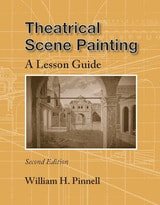
Theatrical Scene Painting
A Lesson GuideWilliam H. Pinnell
Southern Illinois University Press, 2008
Theatrical Scene Painting: A Lesson Guide, second edition, is a practical guide to scene painting for students and novices, as well as a reference for intermediate scene painters who wish to refresh or supplement their basic skills. Drawing on his extensive teaching and scene-painting experience, William H. Pinnell clarifies and expands on the lessons of the first edition, providing a detailed overview of the fundamentals of traditional scene painting.
The guide not only covers the basic tools of the trade and various methods of creating texture on scenery but also includes more advanced techniques for scene making, beginning with stonework, woodwork, and wallpaper before moving on to the more intricate techniques of moldings, paneling, drapery, foliage, shiny metal, perspective illusions, scale transfers, scenic drops, and scrims. Pinnell also includes refinements and embellishments that can lead to the development of personal style without sacrificing the goal of realism and more advanced work. Alternative methods to achieve different effects are also featured.
Theatrical Scene Painting: A Lesson Guide was the first book of its kind to provide clear step-by-step instructions in how to paint a wide variety of basic and advanced effects commonly needed for the theater. This new edition clarifies the origins of painting techniques and is supplemented with clearer step-by-step descriptions, new instructional photographs, and drawings that illustrate each major step. This edition also includes additional painting projects and their possible variations, a gallery of nineteen examples of professional scenic works, and an expanded glossary to eliminate confusion in terms.
Useful to both self-taught artists and students, each lesson in the guide can be a stand-alone topic or can form the foundation for a student to build skills for increasingly complex techniques.
The second edition of Theatrical Scene Painting provides many new essential scene painting projects in a clearer format, broadens the scope of the painting examples, and includes updated methods as well as new lessons. This clear and easily accessible guide gives students the ability to put together recognizable illusions.
Theatrical Scene Painting
A Lesson GuideWilliam H. Pinnell
Southern Illinois University Press, 1987
This handbook explains the techniques of traditional scene painting. A “how to” book for the novice, it shows the methods used in creating the illusion of three dimensions where only two exist. It provides a step-by-step explanation of each aspect of scene painting, using both color and black-and-white photographs for illustration.
Among the many illusions made possible through the magic of paint are stonework, wallpaper, woodwork, as well as mouldings, draperies, and foliage. To teach the beginner how to re-create reality through painted illusion, Pinnell emphasizes traditional scene painting, including basic tools, primary painting techniques, and methods for creating texture on scenery. He also illustrates refinements and embellishments that lead to more advanced work.
Thornton Wilder and the Puritan Narrative Tradition
Lincoln Konkle
University of Missouri Press, 2005
Toward a Theater of the Oppressed
The Dramaturgy of John ArdenJaved Malick
University of Michigan Press, 1995
Malick situates Arden's dramaturgy in the wider context of the radical alternative tradition in Western drama, drawing connections to Brecht, Piscator, the radical playwrights of the 1960s. He then explores the formal structure, ideological implications, and historical significance of Arden's work, treating his stage plays as one dramaturgically coherent opus- from the early Waters of Babylon to his and Margaretta D'Arcy's ambitious trilogy, The Island of the Mighty. Finally, he discusses the last phase of Arden and D'Arcy's political and artistic development, which led them to turn their backs on the professional theater circuit. He argues that Arden's rejection of the institutional stage was the logical outcome of his persistent search for alternative forms of political theater.
Toward a Theater of the Oppressed will be invaluable reading for those interested in modern drama, political theater, and popular performance, as well as students of contemporary British drama.
Javed Malick is Reader in English, Khalsa College, University of Delhi, India.
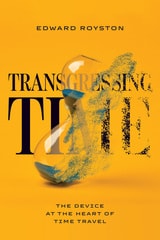
Transgressing Time
The Device at the Heart of Time TravelEdward Royston
The Ohio State University Press, 2026
Royston bolsters this concept through readings of classics such as Back to the Future and Octavia E. Butler’s Kindred, contemporary works such as the video game Outer Wilds and Scott Alexander Howard’s The Other Valley, and lesser-known works such as the nineteenth-century Spanish novel El Anacronópete. These readings demonstrate how time travel functions across different mediums and genres and spotlights the ways authors and creators have used anachronic metalepsis to contend with themes of exile, freedom and consequences, the powers and pitfalls of nostalgia, the nature of history and our relationship to it, and the nature of time itself.