Results by title
111 books match the query 'Trials, litigation, etc' and 36 start with t
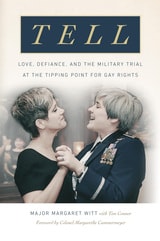
Tell
Love, Defiance, and the Military Trial at the Tipping Point for Gay RightsMajor Margaret Witt
University Press of New England, 2017
Terrorism on Trial
Political Violence and Abolitionist FuturesNicole Nguyen
University of Minnesota Press, 2023
A landmark sociological examination of terrorism prosecution in United States courts
Rather than functioning as a final arbiter of justice, U.S. domestic courts are increasingly seen as counterterrorism tools that can incapacitate terrorists, maintain national security operations domestically, and produce certain narratives of conflict. Terrorism on Trial examines the contemporary role that these courts play in the global war on terror and their use as a weapon of war: hunting, criminalizing, and punishing entire communities in the name of national security.
Nicole Nguyen advocates for a rethinking of popular understandings of political violence and its root causes, encouraging readers to consider anti-imperial abolitionist alternatives to the criminalization, prosecution, and incarceration of individuals marked as real or perceived terrorists. She exposes how dominant academic discourses, geographical imaginations, and social processes have shaped terrorism prosecutions, as well as how our fundamental misunderstanding of terrorism has led to punitive responses that do little to address the true sources of violence, such as military interventions, colonial occupations, and tyrannical regimes. Nguyen also explores how these criminal proceedings bear on the lives of defendants and families, seeking to understand how legal processes unevenly criminalize and disempower communities of color.
A retheorization of terrorism as political violence, Terrorism on Trial invites readers to carefully consider the role of power and politics in the making of armed resistance, addressing the root causes of political violence, with a goal of building toward a less violent and more liberatory world.

The Baneberry Disaster
A Generation of Atomic FalloutLarry C. Johns
University of Nevada Press, 2017
The authors are attorneys from Las Vegas who spent 25 years pursuing a lawsuit for the victims at Baneberry. The story begins in 1971, just after the Baneberry test vented, and takes the reader through the years leading up to the trial, the 41-day trial in 1979, and the multiple appeals following the trial. It discusses the claims and lawsuits filed by others exposed to atomic testing, and the congressional investigations that led to the enactment of the Radiation Exposure Compensation Act in 1990.
The Bellwomen
The Story of the Landmark AT&T Sex Discrimation CaseStockford, Marjorie A
Rutgers University Press, 2004
In the early 1970s, David Copus, a young, long-haired lawyer, teamed up with his government colleagues to confront the mature and staid executives of AT&T over the company’s treatment of its female and minority employees. Their disagreement resulted in a $38 million settlement that benefited 15,000 employees, more than 13,000 of them women, and changed our perceptions of women’s and men’s roles in the workplace forever.
Copus, who worked for the Equal Employment Opportunity Commission (EEOC), was charged with representing American citizens who suffered from employment discrimination. Time and again he saw young, black women in the South being turned down for available jobs in local phone companies—usually as telephone operators—often for no valid reason at all. He and the EEOC decided to challenge AT&T’s company-wide sex discrimination practices. Eventually, AT&T’s corporate colleagues, witnessing AT&T’s capitulation, began to hire and promote women into better jobs themselves. At the same time, the EEOC started to more aggressively push corporate America to give women better opportunities.
The Bellwomen recounts the history of this case in a novelistic style, illuminating the motivations, strengths, and weaknesses of all the players, from AT&T corporate leaders, to the lawyers of the EEOC, to the female activists fighting for what they believed. Stockford also profiles three beneficiaries of the case, presenting their ambitions and achievements.
Combined with the power of America’s civil rights laws and the influence of the second wave women’s movement, this case provided a catalyst that drove many more women into the paid workforce in non-traditional jobs. By the late twentieth century, when women could be seen working everywhere, from construction sites to corporate offices, it appeared that they belonged there and always had.
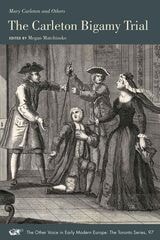
The Carleton Bigamy Trial
Mary Carleton
Iter Press, 2023
Mary Carleton was an ordinary woman from Canterbury who entered historical records when she was accused of bigamy. The seven pamphlets in this edition focus on the bigamy trial of Mary Carleton, in which the accused eloquently defends herself and is ultimately acquitted. Written in the early years of the English Restoration, they demonstrate that narratives presenting what “she said” and what “he said” can reveal, forcefully and painfully, how truth can be fragmented in the different arenas of law, love, and politics. Through their disparate accounts of a marriage gone wrong, these pamphlets reinforce the social status quo even while they radically shatter the very foundations that give it heft. In asking readers to question absolutes, they unmask the precarious relationship between words and the world.
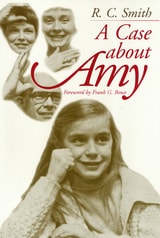
The Case About Amy
R. C. Smith, foreword by Frank G. Bowe
Temple University Press, 1996
The Rowley family's struggle began when Amy entered kindergarten and culminated five years later in a pivotal decision by the U.S. Supreme Court. In effect, the Court majority concluded that the Individuals with Disabilities Education Act did not mandate equal opportunity for children with disabilities in classes with typical children; a disappointing decision for disability advocates.
The Supreme Court decided that schools were required only to provide enough help for children with disabilities to pass from grade to grade. The Court reversed the lower courts' rulings, which had granted Amy an interpreter, setting a precedent that could affect the quality of education for all individuals with disabilities.
From the time Amy entered kindergarten in Peekskill, New York, her parents battled with school officials to get a sign language interpreter in the classroom. Nancy and Clifford Rowley, also deaf, struggled with officials for their own right to a communications process in which they could fully participate. Stuck in limbo was a bright, inquisitive child, forced to rely on partial lipreading of rapid classroom instruction and interaction, and sound amplifiers that were often broken and always cumbersome.
R.C. Smith chronicles the Rowley family's dealings with school boards, lawyers, teachers, expert consultants, advocates, and supporters, and their staunch determination to get through the exhaustive process of presenting the case time after time to school adjudicative bodies and finally the federal courts. The author also documents his own "coming to awareness" about how the "able" see the "disabled."
In the series Health, Society, and Policy, edited by Sheryl Ruzek and Irving Kenneth Zola.
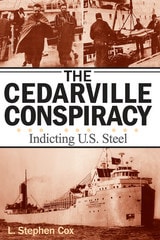
The Cedarville Conspiracy
Indicting U.S. SteelL. Stephen Cox
University of Michigan Press, 2005
The Cedarville Conspiracy is the story of that doomed ship and its crew. It is also the first Great Lakes history to expose the heroism, villainy, courage, and confusion surrounding the Cedarville disaster.
In atmospheric, cinematic style, L. Stephen Cox's gripping page-turner dramatizes the events surrounding the collision between the Norwegian and American freighters. As the mortally wounded Cedarville began to list and sink, U.S. Steel refused to allow the crew to escape to safety, while the captain secretly donned his life jacket and abandoned the sinking ship. Ten seamen died in the frigid waters that morning as the captain and survivors swam to safety.
Researching the story, author L. Stephen Cox interviewed the surviving crew and their rescuers and attorneys, examined more than 20,000 pages of Coast Guard reports, and discovered deposition transcripts and other documentary evidence that detailed the deterioration of the ship, the captain's disregard of Great Lakes navigational rules, the company's participation in the decision to confine the men aboard the sinking vessel, and the subsequent efforts by U.S. Steel to manipulate the evidence.
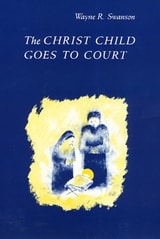
The Christ Child Goes to Court
Wayne R. Swanson
Temple University Press, 1992
In December 1981, when the American Civil Liberties Union challenged the Nativity scene in the Christmas display put on by the city of Pawtucket, Rhode Island, an emotional controversy erupted. Two federal courts disallowed the crèche because its religious impact in the taxpayer-supported display overstepped the constitutional boundary between church and state. In March 1984, the United States Supreme Court by a 5-4 vote in Lynch V. Donnelly overruled the lower courts, deciding that in the predominantly secular context of Pawtucket’s display, the purpose and effect of the Nativity scene was not to promote religion, but only to acknowledge the spirit of the holiday season. The Christ Child Goes to Court traces the judicial history of a case that lasted more than two years and explores its implications for future issues concerning the relationship between religion and government.
Wayne R. Swanson describes how this compelling constitutional issue polarized public opinion in Rhode Island and generated "unimaginable vilification" of the Roman Catholic judge who first ordered the crèche removed. He reports the reactions of local citizens, which echoed the national debate on this issue. By carefully documenting the case’s trek through the judiciary, Swanson illustrates the workings of the judicial process in the United States, the political nature of the courts, and how their interpretation of the Constitution helps to shape the development of public policy.
An important conclusion of this critical examination of the courts’ approach to a controversial church-state question is that judicial decisions are usually interim in nature and often lead to imperfect solutions. Lynch V. Donnelly did not solve the problems posed by government-supported Nativity scenes or other religious symbols. The controversy lives on and the courts continue to struggle with one of the most difficult First Amendment problems.

The Climate Trial
Law and Justice on a Melting PlanetNoah Walker-Crawford
Duke University Press, 2026
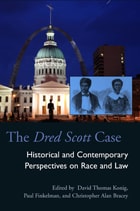
The Dred Scott Case
Historical and Contemporary Perspectives on Race and LawDavid Thomas Konig
Ohio University Press, 2010
In 1846 two slaves, Dred and Harriet Scott, filed petitions for their freedom in the Old Courthouse in St. Louis, Missouri. As the first true civil rights case decided by the U.S. Supreme Court, Dred Scott v. Sandford raised issues that have not been fully resolved despite three amendments to the Constitution and more than a century and a half of litigation.
The Dred Scott Case: Historical and Contemporary Perspectives on Race and Law presents original research and the reflections of the nation’s leading scholars who gathered in St. Louis to mark the 150th anniversary of what was arguably the most infamous decision of the U.S. Supreme Court. The decision, which held that African Americans “had no rights” under the Constitution and that Congress had no authority to alter that, galvanized Americans and thrust the issue of race and law to the center of American politics. This collection of essays revisits the history of the case and its aftermath in American life and law. In a final section, the present-day justices of the Missouri Supreme Court offer their reflections on the process of judging and provide perspective on the misdeeds of their nineteenth-century predecessors who denied the Scotts their freedom.
Contributors: Austin Allen, Adam Arenson, John Baugh, Hon. Duane Benton, Christopher Alan Bracey, Alfred L. Brophy, Paul Finkelman, Louis Gerteis, Mark Graber, Daniel W. Hamilton, Cecil J. Hunt II, David Thomas Konig, Leland Ware, Hon. Michael A. Wolff

The Grasping Hand
"Kelo v. City of New London" and the Limits of Eminent DomainIlya Somin
University of Chicago Press, 2015
In this detailed study of one of the most controversial Supreme Court cases in modern times, Ilya Somin argues that Kelo was a grave error. Economic development and “blight” condemnations are unconstitutional under both originalist and most “living constitution” theories of legal interpretation. They also victimize the poor and the politically weak for the benefit of powerful interest groups and often destroy more economic value than they create. Kelo itself exemplifies these patterns. The residents targeted for condemnation lacked the influence needed to combat the formidable government and corporate interests arrayed against them. Moreover, the city’s poorly conceived development plan ultimately failed: the condemned land lies empty to this day, occupied only by feral cats. The Supreme Court’s unpopular ruling triggered an unprecedented political reaction, with forty-five states passing new laws intended to limit the use of eminent domain. But many of the new laws impose few or no genuine constraints on takings. The Kelo backlash led to significant progress, but not nearly as much as it may have seemed.
Despite its outcome, the closely divided 5-4 ruling shattered what many believed to be a consensus that virtually any condemnation qualifies as a public use under the Fifth Amendment. It also showed that there is widespread public opposition to eminent domain abuse. With controversy over takings sure to continue, The Grasping Hand offers the first book-length analysis of Kelo by a legal scholar, alongside a broader history of the dispute over public use and eminent domain and an evaluation of options for reform.

The Grasping Hand
"Kelo v. City of New London" and the Limits of Eminent DomainIlya Somin
University of Chicago Press, 2015
In this detailed study of one of the most controversial Supreme Court cases in modern times, Ilya Somin argues that Kelo was a grave error. Economic development and “blight” condemnations are unconstitutional under both originalist and most “living constitution” theories of legal interpretation. They also victimize the poor and the politically weak for the benefit of powerful interest groups and often destroy more economic value than they create. Kelo itself exemplifies these patterns. The residents targeted for condemnation lacked the influence needed to combat the formidable government and corporate interests arrayed against them. Moreover, the city’s poorly conceived development plan ultimately failed: the condemned land lies empty to this day, occupied only by feral cats. The Supreme Court’s unpopular ruling triggered an unprecedented political reaction, with forty-five states passing new laws intended to limit the use of eminent domain. But many of the new laws impose few or no genuine constraints on takings. The Kelo backlash led to significant progress, but not nearly as much as it may have seemed.
Despite its outcome, the closely divided 5-4 ruling shattered what many believed to be a consensus that virtually any condemnation qualifies as a public use under the Fifth Amendment. It also showed that there is widespread public opposition to eminent domain abuse. With controversy over takings sure to continue, The Grasping Hand offers the first book-length analysis of Kelo by a legal scholar, alongside a broader history of the dispute over public use and eminent domain and an evaluation of options for reform.
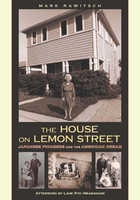
The House on Lemon Street
Japanese Pioneers and the American DreamMark Rawitsch
University Press of Colorado, 2013
Bringing this little-known story to light, The House on Lemon Street details the Haradas' decision to fight for the American dream. Chronicling their experiences from their immigration to the United States through their legal battle over their home, their incarceration during World War II, and their lives after the war, this book tells the story of the family's participation in the struggle for human and civil rights, social justice, property and legal rights, and fair treatment of immigrants in the United States.
The Harada family's quest for acceptance illuminates the deep underpinnings of anti-Asian animus, which set the stage for Executive Order 9066, and recognizes fundamental elements of our nation's anti-immigrant history that continue to shape the American story. It will be worthwhile for anyone interested in the Japanese American experience in the twentieth century, immigration history, public history, and law.
This publication was made possible with the support of Naomi, Kathleen, Ken, and Paul Harada, who donated funds in memory of their father, Harold Shigetaka Harada, honoring his quest for justice and civil rights. Additional support for this publication was also provided, in part, by UCLA's Aratani Endowed Chair as well as Wallace T. Kido, Joel B. Klein, Elizabeth A. Uno, and Rosalind K. Uno.
The Industrialist and the Mountaineer
The Eastham-Thompson Feud and the Struggle for West Virginia's Timber FrontierRONALD L. LEWIS
West Virginia University Press, 2017
The Eastham-Thompson feud pitted a former Confederate against a member of the new business elite who was, as a northern Republican, his cultural and political opposite. For Lewis, their clash was one flashpoint in a larger phenomenon central to US history in the second half of the nineteenth century: the often violent imposition of new commercial and legal regimes over holdout areas stretching from Appalachia to the trans-Missouri West. Taking a ground-level view of these so-called “wars of incorporation,” Lewis’s powerful microhistory shows just how strongly local communities guarded traditional relationships to natural resources. Modernizers sought to convict Eastham of murder, but juries drawn from the traditionalist population refused to comply. Although the resisters won the courtroom battle, the modernizers eventually won the war for control of the state’s timber frontier.
The Inquisition of Francisca
A Sixteenth-Century Visionary on TrialFrancisca de los Apóstoles
University of Chicago Press, 2005
This book contains what little is known about Francisca—the several letters she wrote as well as the transcript of her trial—and offers modern readers a perspective on the unique role and status of religious women in sixteenth-century Spain. Chronicling the drama of Francisca's interrogation and her spirited but ultimately unsuccessful defense, The Inquisition of Francisca—transcribed from more than three hundred folios and published for the first time in any language—will be a valuable resource for both specialists and students of the history and religion of Spain in the sixteenth century.
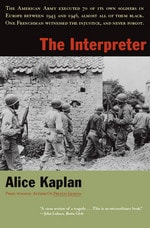
The Interpreter
Alice Kaplan
University of Chicago Press, 2007
No story of World War II is more triumphant than the liberation of France, made famous in countless photos of Parisians waving American flags and kissing GIs as columns of troops paraded down the Champs Élysées. But one of the least-known stories from that era is also one of the ugliest chapters in the history of Jim Crow. In The Interpreter, celebrated author Alice Kaplan recovers this story both as eyewitnesses first saw it, and as it still haunts us today.
The American Army executed 70 of its own soldiers between 1943 and 1946—almost all of them black, in an army that was overwhelmingly white. Through the French interpreter Louis Guilloux’s eyes, Kaplan narrates two different trials: one of a white officer, one of a black soldier, both accused of murder. Both were court-martialed in the same room, yet the outcomes could not have been more different.
Kaplan’s insight into character and setting creates an indelible portrait of war, race relations, and the dangers of capital punishment.
“A nuanced historical account that resonates with today’s controversies over race and capital punishment.” Publishers Weekly
“American racism could become deadly for black soldiers on the front. The Interpreter reminds us of this sad component of a heroic chapter in American military history.” Los Angeles Times
“With elegance and lucidity, Kaplan revisits these two trials and reveals an appallingly separate and unequal wartime U.S. military justice system.” Minneapolis Star Tribune
“Kaplan has produced a compelling look at the racial disparities as they were played out…She explores both cases in considerable and vivid detail.” Sacramento Bee
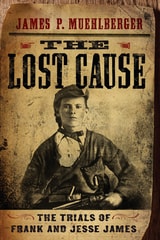
The Lost Cause
The Trials of Frank and Jesse JamesJames P. Muehlberger
Westholme Publishing, 2013
On a dreary December 7, 1869, two strangers entered the Daviess County Savings and Loan in Gallatin, Missouri. One of the men asked the cashier for change and then unexpectedly raised a revolver and shot him at point-blank range. Until now, this crime has been considered the first of a string of bank and train robberies committed by Jesse James, his brother Frank, and other gang members. But a story has circulated for more than a century that the case was actually brought to trial by a young Missouri lawyer—and it was through this case that twenty-two-year-old Jesse was first identified as a criminal to the country. But until recently no evidence for such an action could be found. After years of painstaking searches through dusty court archives across Missouri, defense attorney James P. Muehlberger finally discovered the historic documents in 2007. These fascinating and important records reveal that the gunmen were forced to leave behind a magnificent thoroughbred that linked James to the murder and, more intriguing, that the attack was not a bank robbery at all, but a calculated assassination in retribution for a Civil War killing.
The Lost Cause: The Trials of Frank and Jesse James is a thoroughly researched, thrilling account of the rise, pursuit, and prosecution of the legendary outlaw gang. Beginning with the newfound evidence of the Gallatin bank teller murder, the author explains how Jesse James attempted to avenge the death of his Confederate partisan leader, “Bloody Bill” Anderson, but shot the wrong man. Having lost his thoroughbred, Jesse stole another horse. Newly minted lawyer Henry McDougal brashly sued Jesse and Frank James for the loss of property, which would hang the murder on their heads. While Jesse professed his innocence and remained at large, his case was taken up by John Newman Edwards, editor of the Kansas City Times. Through Edwards’s pen, the James brothers were transformed from petty criminals to noble outlaws still fighting for Southern honor—the “Lost Cause.” Not fooled by Edwards’s rhetoric and populist appeal, McDougal and others, including Pinkerton detectives and the governor of Missouri, led a behind-the-scenes fight to bring down the gang. As the author explains, they first prosecuted lesser gang members, and by infiltrating the group, the authorities slowly unraveled the gang, with Jesse being shot by a paid informant in 1882. Frank James gave himself up, and in what was called the “trial of the century,” he was exonerated on all charges and retired to become a notable horse racing official until his death in 1915. Combining true crime, western adventure, and the transformation of America into a modern nation, The Lost Cause is engaging, entertaining history.
The Microsoft Case
Antitrust, High Technology, and Consumer WelfareWilliam H. Page and John E. Lopatka
University of Chicago Press, 2007
In 1998, the United States Department of Justice and state antitrust agencies charged that Microsoft was monopolizing the market for personal computer operating systems. More than ten years later, the case is still the defining antitrust litigation of our era. William H. Page and John E. Lopatka’s The Microsoft Case contributes to the debate over the future of antitrust policy by examining the implications of the litigation from the perspective of consumer welfare.
The authors trace the development of the case from its conceptual origins through the trial and the key decisions on both liability and remedies. They argue that, at critical points, the legal system failed consumers by overrating government’s ability to influence outcomes in a dynamic market. This ambitious book is essential reading for business, law, and economics scholars as well as anyone else interested in the ways that technology, economics, and antitrust law have interacted in the digital age.
“This book will become the gold standard for analysis of the monopolization cases against Microsoft. . . . No serious student of law or economic policy should go without reading it.”—Thomas C. Arthur, Emory University
The Modern Legislative Veto
Macropolitical Conflict and the Legacy of ChadhaMichael J. Berry
University of Michigan Press, 2016
Berry argues that, since the U.S. Supreme Court declared the legislative veto unconstitutional in Immigration and Naturalization Service (INS) v. Chadha (1983), Congress has strategically modified its use of the veto to give more power to appropriations committees. Using an original dataset of legislative veto enactments, Berry finds that Congress has actually increased its use of this oversight mechanism since Chadha, especially over defense and foreign policy issues. Democratic and Republican presidents alike have fought back by vetoing legislation containing legislative vetoes and by using signing statements with greater frequency to challenge the legislative veto’s constitutionality. A complementary analysis of state-level use of the legislative veto finds variation in oversight powers granted to state legislatures, but similar struggles between the legislature and the executive.
This ongoing battle over the legislative veto points to broader efforts by legislative and executive actors to control policy, efforts that continually negotiate how the democratic republic established by the Constitution actually operates in practice.
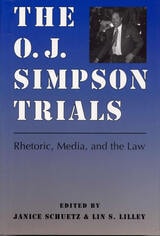
The O. J. Simpson Trials
Rhetoric, Media, and the LawEdited by Janice Schuetz and Lin S. Lilley
Southern Illinois University Press, 1999
The O. J. Simpson case captured the attention of the public like no other event in media history, and the Simpson criminal trial is arguably the most notable example of the media's ability to transform litigation. This collection of original essays provides a critical analysis of the Simpson criminal and civil trials. Edited by communications professor Janice Schuetz and professional trial consultant Lin S. Lilley, the book focuses on telelitigation, the media's transformation of sensational trials, with celebrity defendants and victims, into telemediated forms.
The contributors—Ann Burnett, Patricia M. Ganer, Ann M. Gill, Diane Furno-Lamude, Lin S. Lilley, and Janice Schuetz—describe media spectacles, analyze the opening statements of trial attorneys in both cases, investigate the testimony of Mark Fuhrman in the criminal trial and O. J. Simpson in the civil trial, analyze the summations of trial attorneys in both cases, look at the processes of jury decision making, and identify the unique legal and social outcomes of the trials.
The discussions focus on five "hot button" legal issues sparked by the Simpson trials: the perceived unfairness of the jury system; unprecedented calls for jury reform in both civil and criminal arenas; the fairness issues of jury nullification, wherein a jury disregards the law in a criminal case in favor of leniency; wealth and the question of "buying" justice; and ethical questions about the ways the Simpson trials were conducted, in particular the ways in which Simpson attorney Johnnie Cochran and the "Dream Team" repeatedly nudged and occasionally crossed the ethical line.
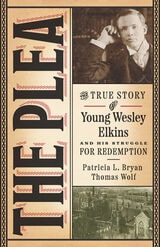
The Plea
The True Story of Young Wesley Elkins and His Struggle for RedemptionPatricia L. Bryan
University of Iowa Press, 2022
On a moonlit night in 1889, Iowa farmer John Elkins and his young wife, Hattie, were brutally murdered in their bed. Eight days later, their son, eleven-year-old Wesley Elkins, was arrested and charged with murder. The community reeled with shock by both the gruesome details of the homicides and the knowledge of the accused perpetrator—a small, quiet boy weighing just 75 pounds.
Accessible and fast-moving, The Plea delivers a complete, complex, and nuanced narrative of this horrific crime, while shedding light on the legal, social, and political environment of Iowa and the country in the late 1800s and early 1900s.
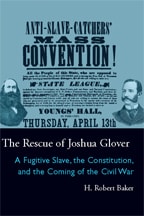
The Rescue of Joshua Glover
A Fugitive Slave, the Constitution, and the Coming of the Civil WarH. Robert Baker
Ohio University Press, 2006
On March 11, 1854, the people of Wisconsin prevented agents of the federal government from carrying away the fugitive slave, Joshua Glover. Assembling in mass outside the Milwaukee courthouse, they demanded that the federal officers respect his civil liberties as they would those of any other citizen of the state. When the officers refused, the crowd took matters into its own hands and rescued Joshua Glover. The federal government brought his rescuers to trial, but the Wisconsin Supreme Court intervened and took the bold step of ruling the Fugitive Slave Act unconstitutional.
The Rescue of Joshua Glover delves into the courtroom trials, political battles, and cultural equivocation precipitated by Joshua Glover’s brief, but enormously important, appearance in Wisconsin on the eve of the Civil War.
H. Robert Baker articulates the many ways in which this case evoked powerful emotions in antebellum America, just as the stage adaptation of Uncle Tom’s Cabin was touring the country and stirring antislavery sentiments. Terribly conflicted about race, Americans struggled mightily with a revolutionary heritage that sanctified liberty but also brooked compromise with slavery. Nevertheless, as The Rescue of Joshua Glover demonstrates, they maintained the principle that the people themselves were the last defenders of constitutional liberty, even as Glover’s rescue raised troubling questions about citizenship and the place of free blacks in America.
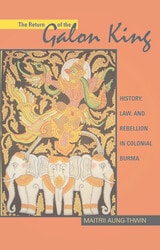
The Return of the Galon King
History, Law, and Rebellion in Colonial BurmaMaitrii Aung-Thwin
Ohio University Press, 2010
In late 1930, on a secluded mountain overlooking the rural paddy fields of British Burma, a peasant leader named Saya San crowned himself King and inaugurated a series of uprisings that would later erupt into one of the largest anti-colonial rebellions in Southeast Asian history. Considered an imposter by the British, a hero by nationalists, and a prophet-king by area-studies specialists, Saya San came to embody traditional Southeast Asia’s encounter with European colonialism in his attempt to resurrect the lost throne of Burma.
The Return of the Galon King analyzes the legal origins of the Saya San story and reconsiders the facts upon which the basic narrative and interpretations of the rebellion are based. Aung-Thwin reveals how counter-insurgency law produced and criminalized Burmese culture, contributing to the way peasant resistance was recorded in the archives and understood by Southeast Asian scholars.
This interdisciplinary study reveals how colonial anthropologists, lawyers, and scholar-administrators produced interpretations of Burmese culture that influenced contemporary notions of Southeast Asian resistance and protest. It provides a fascinating case study of how history is treated by the law, how history emerges in legal decisions, and how the authority of the past is used to validate legal findings.
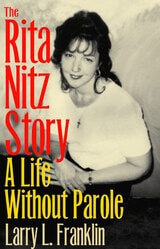
The Rita Nitz Story
Larry L. Franklin
Southern Illinois University Press, 2005
The April 1988 murder and decapitation of twenty-three-year-old Michael Miley in rural southern Illinois horrified and enraged local residents and law enforcement officials, some of whom suspected the homicide was a hate crime. The Rita Nitz Story: A Life Without Parole is an in-depth personal investigation into Miley’s murder, for which Rita Nitz was convicted as an accomplice to life in prison. Born in 1959, Rita was thirty when she was sentenced in 1989. Her husband, Richard Nitz, was convicted of the murder. Detailing the crime and its aftermath, Larry L. Franklin uncovers a disturbing set of facts that illuminate a possible miscarriage of justice.
Was Rita Nitz involved in the murder of Michael Miley? Franklin doesn’t purport her guilt or her innocence but instead details the plight of a troubled woman who was a victim of sexual abuse and domestic violence at the hands of family members and spouses and who may also have been a victim of inadequate legal representation and a judicial system more interested in delivering the maximal punishment than in serving justice. Consulting with experts in prosecutorial conduct, jury psychology, and forensic evidence, Franklin discovered details that were withheld from the jury and the public during the trial in 1989. He also suggests other theories and names possible perpetrators involved in the murder that further imply shoddy police work and a tainted criminal investigation.
Drawing on numerous conversations with Rita at the Dwight Correctional Center in Illinois, Franklin divulges the story of Rita’s tumultuous youth and her three problematic marriages. He shows her to be a battered woman who didn’t fully understand the circumstances and behavior that led to her being implicated in such a hideous crime and who lacked the financial resources and emotional strength to navigate the legal tangle that entrapped her.
Franklin also points out the disparity in justice between Rita and Richard, who is up for parole in less than twenty years, while Rita remains sentenced to life without parole. In attempting to reach the truth about Miley’s murder, Franklin highlights abuses in the Illinois correctional system and disparities between the treatment of male and female convicts, sketching a blueprint that could improve law enforcement and justice in rural Illinois.
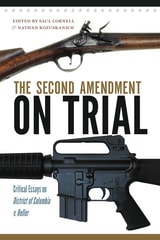
The Second Amendment on Trial
Critical Essays on District of Columbia v. HellerSaul A. Cornell
University of Massachusetts Press, 2013
On the final day of its 2008 term, a sharply divided U.S. Supreme Court issued a 5-to-4 decision striking down the District of Columbia's stringent gun control laws as a violation of the Second Amendment. Reversing almost seventy years of settled precedent, the high court reinterpreted the meaning of the “right of the people to keep and bear arms” to affirm an individual right to own a gun in the home for purposes of self-defense. The landmark ruling not only opened a new chapter in the contentious history of gun rights and gun control but also revealed both the strengths and problems of originalist constitutional theory and jurisprudence.
This volume brings together some of the best scholarship on the Heller case, with essays by legal scholars and historians representing a range of ideological viewpoints and applying different interpretive frameworks. Following the editors' introduction, which describes the issues involved and the arguments on each side, the essays are organized into four sections. The first includes two of the most important historical briefs filed in the case, while the second offers different views of the role of originalist theory. Section three presents opposing interpretations of the ruling and its relationship to modern constitutional doctrine. The final section explores historical research post-Heller, including new findings on patterns of gun ownership in colonial and Revolutionary America.
In addition to the editors, contributors include Nelson Lund, Joyce Lee Malcolm, Jack Rakove, Reva B. Siegel, Cass R. Sunstein, Kevin M. Sweeney, and J. Harvie Wilkinson III.
The Small Matter of Suing Chevron
Suzana Sawyer
Duke University Press, 2022

The Trial of Charles I
A Documentary HistoryEdited by David Lagomarsino and Charles T. Wood
Dartmouth College Press, 1989

The Two Lives of Sally Miller
A Case of Mistaken Racial Identity in Antebellum New OrleansWilson, Carol
Rutgers University Press, 2007
In 1843, the Louisiana Supreme Court heard the case of a slave named Sally Miller, who claimed to have been born a free white person in Germany. Sally, a very light-skinned slave girl working in a New Orleans caf, might not have known she had a case were it not for a woman who recognized her as Salom Muller, with whom she had emigrated from Germany over twenty years earlier. Sally decided to sue for her freedom, and was ultimately freed, despite strong evidence contrary to her claim.
In The Two Lives of Sally Miller, Carol Wilson explores this fascinating legal case and its reflection on broader questions about race, society, and law in the antebellum South. Why did a court system known for its extreme bias against African Americans help to free a woman who was believed by many to be a black slave? Wilson explains that while the notion of white enslavement was shocking, it was easier for society to acknowledge that possibility than the alternative-an African slave who deceived whites and triumphed over the system.
The Vote
Bush, Gore, and the Supreme CourtEdited by Cass R. Sunstein and Richard A. Epstein
University of Chicago Press, 2001
The contributors to this volume were highly visible in the national media while the controversy raged, and here they present fully fleshed-out arguments for the positions they promoted on the airwaves. Readers will find in The Vote equally impassioned defenses for and indictments of the Court's actions, and they will come to understand the practical and theoretical implications of the Court's ruling in the realms of both law and politics. No doubt a spate of books will appear on the 2000 presidential election, but none will claim as distinguished a roster of contributors better qualified to place these recent events in their appropriate historical, legal, and political contexts.
Leading constitutional scholars render their verdicts on the 2000 presidential election controversy
Contributors:
Richard A. Epstein
Elizabeth Garrett
Samuel Issacharoff
Pamela S. Karlan
Michael W. McConnell
Frank I. Michelman
Richard H. Pildes
Richard A. Posner
David A. Strauss
Cass R. Sunstein
John Yoo
An earlier electronic edition of The Vote was available on the University of Chicago Press Web site.
The Whole Truth?
A Case of Murder on the Appalachian TrailH. L. Pohlman
University of Massachusetts Press, 1999
On May 13, 1988, Stephen Roy Carr, a so-called mountain man living in Michaux State Forest in south central Pennsylvania, shot two female hikers while they were making love at a campsite near the Appalachian Trail. Rebecca Wight died at the scene. Claudia Brenner, despite five bullet wounds, survived to testify against her attacker.
In this book, H. L. Pohlman reconstructs the dramatic story of this murder case and traces its disposition through the criminal justice system. Drawing on interviews with participants as well as court records, he closely examines competing interpretations of the evidence. Was the attack a hate crime? A sex crime? A class crime? At the same time, he shows how a broad range of substantive and procedural issues—from the rights of the accused to evaluation of potential mitigating circumstances—can influence the assessment of culpability in homicide cases.
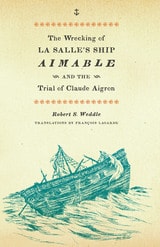
The Wrecking of La Salle's Ship Aimable and the Trial of Claude Aigron
By Robert S. Weddle
University of Texas Press, 2009
When Robert Cavelier, sieur de La Salle, landed on the Texas coast in 1685, bent on founding a French colony, his enterprise was doomed to failure. Not only was he hundreds of miles from his intended landfall—the mouth of the Mississippi—but his supply ship, Aimable, was wrecked at the mouth of Matagorda Bay, leaving the colonists with scant provisions and little protection against local Indian tribes. In anger and disgust, he struck out at the ship's captain, Claude Aigron, accusing him of wrecking the vessel purposely and maliciously.
Captain Aigron and his crew escaped the doomed colony by returning to France on the warship that had escorted the expedition on its ocean crossing. Soon after reaching France, Aigron found himself defendant in a civil suit filed by two of his officers seeking recompense for lost salary and personal effects, and then imprisoned on order of King Louis XIV while La Salle's more serious accusations were being investigated.
In this book, Robert Weddle meticulously recounts, through court documents, the known history of Aigron and the Aimable, and finds that despite La Salle's fervent accusations, the facts of the case offer no clear indictment. The court documents, deftly translated by François Lagarde, reveal Captain Aigron's successful defense and illuminate the circumstances of the wreck with Aigron's testimony. Much is also revealed about the French legal system and how the sea laws of the period were applied through the French government's L'Ordonnance de la Marine.
They Don't Want Her There
Fighting Sexual and Racial Harassment in the American UniversityCarolyn Chalmers
University of Iowa Press, 2022
As Jew gained accolades and advanced through the ranks at Iowa, she was met with increasingly vicious attacks on her character by her white male colleagues—implying that her sexuality had opened doors for her. After years of being subjected to demoralizing sexual, racial, and ethnic discrimination, finding herself without any higher-up departmental support, and noting her professional progression beginning to suffer by the hands of hate, Jean Jew decided to fight back. Carolyn Chalmers was her lawyer.
This book tells the inside story of pioneering litigation unfolding during the eight years of a university investigation, a watershed federal trial, and a state court jury trial. In the face of a university determined to defeat them and maintain the status quo, Jew and Chalmers forged an exceptional relationship between a lawyer and a client, each at the top of their game and part of the first generation of women in their fields. They Don’t Want Her There is a brilliant, original work of legal history that is deeply personal and shows today’s professional women just how recently some of our rights have been won—and at what cost.
Three Bullets Sealed His Lips
Bruce A. Rubenstein
Michigan State University Press, 1987
The gangland style slaying if State Senator Warren G. Hooper on January 11, 1945, three days before he was to testify before a grand jury investigating alleged corruption in the Michigan legislature, forced coverage of Allied war triumphs from the state's newspaper headlines. National media representatives flocked to Michigan to join local reporters in following the efforts of grand jury special prosecutor Kim Sigler and the State Police to apprehend the killers. Because no arrests ever were made, a 1951 journalistic prediction has proven true: "The Hooper case will continue to come back to remind the people and politicians of Michigan of the black days of 1945 when almost every official of the state had his price." For this reason, the Hooper murder has endured as one of the most intriguing unsolved mysteries in the annals of Michigan crime.
Utilizing interviews, trial transcripts, State police files, and a collection of grand jury testimony long thought to have been destroyed, Professors Bruce A. Rubenstein and Lawrence E. Ziewacz set forth the reason for Hooper's assassination. Written in a lively style, using dialogue taken from court records and correspondence, Three Bullets Sealed His Lips demonstrates that historical writing need not be dull.

Travesty
The Trial of Slobodan Milosevic and the Corruption of International JusticeJohn Laughland
Pluto Press, 2007
In this short book, Laughland gives a full account of the trial---the longest trial in history---from the moment the indictment was issued at the height of NATO's attack on Yugoslavia to the day of Milosevic's mysterious death in custody. "International justice" is supposed to hold war criminals to account, but---as the trials of both Milosevic and Saddam Hussein show---the indictments are politically motivated and the judicial procedures are irredeemably corrupt. Laughland argues that international justice is an impossible dream and that such show trials are little more than propaganda exercises designed to distract attention from the war crimes committed by Western states.
"Study this story. . . . The truth is hard to find, but in John Laughland we are fortunate to have a man blessed with the desire to find the truth."
---Ramsey Clark, from the Foreword

Trying Biology
The Scopes Trial, Textbooks, and the Antievolution Movement in American SchoolsAdam R. Shapiro
University of Chicago Press, 2013

Twilight of Impunity
The War Crimes Trial of Slobodan MilosevicJudith Armatta
Duke University Press, 2010