Results by title
8812 books match the query 'Political Science' and 1911 start with t

The Dying Sahara
US Imperialism and Terror in AfricaJeremy Keenan
Pluto Press, 2013
In The Dark Sahara (Pluto, 2009), Jeremy Keenan exposed the collusion between the US and Algeria in fabricating terrorism to justify a new ‘Saharan front’ in Washington’s War on Terror. Now, in The Dying Sahara, he reveals how the designation of the region as a ‘Terror Zone’ has destroyed the lives and livelihoods of thousands of innocent people.
Beginning in 2004, with what local people called the US ‘invasion’ of the Sahel, The Dying Sahara shows how repressive, authoritarian regimes - cashing in on US terrorism ‘rents’ - provoked Tuareg rebellions in both Niger and Mali. Further, he argues that US activity has unleashed a new, narco-trafficking branch of Al-Qaeda.
Keenan's chillingly detailed research shows that the US and its new combatant African command (AFRICOM) have created instability in a region the size of western Europe.

The Dynamics of Deterrence
Frank C. Zagare
University of Chicago Press, 1987
The Dynamics of Deterrence is the first comprehensive treatment of deterrence theory since the mid-1960s. Frank C. Zagare introduces a new theoretical framework for deterrence that is rigorous, consistent, and illuminating. By placing the deterrence relationship in a "theory of moves" framework, Zagare is able to remedy the defects of other models. His approach is illustrated by and applied to a number of complex deterrence situations: the Berlin crisis of 1948, the Middle East crises of 1967 and 1973, and The Falkland/Malvinas crisis of 1980. He also examines the strategic relationship between the United States and the Soviet Union from 1945 to the present.
Zagare studies the dynamics of both mutual and unilateral deterrence games in nuclear and non-nuclear situations, and the impact of credibility, capability, and power asymmetries on deterrence stability. He shows that his theory is applicable for analyzing deterrence situations between allies as well as between hostile states. One of the additional strengths of his model, however, is its general usefulness for other levels and settings, such as deterrence games played by husband and wife, parent and child, employer and employee, and the state and its citizens. With its lucid prose and illustrative examples, The Dynamics of Deterrence will be of interest to a wide audience in international relations, peace studies, and political science.

The Dynamics of Enduring Rivalries
Edited by Paul F. Diehl
University of Illinois Press, 1998
The Dynamics of European Integration
Causes and Consequences of Institutional ChoicesThomas König
University of Michigan Press, 2024
The Dynamics of Nuclear Proliferation
Stephen M. Meyer
University of Chicago Press, 1984

The Eagle Has Eyes
The FBI Surveillance of César Estrada Chávez of the United Farm Workers Union of America, 1965–1975José Angel Gutiérrez
Michigan State University Press, 2019

The Earthly Community
Achille Mbembe. Translated by Steven Corcoran.
Duke University Press, 2027
The Earthly Community
Achille Mbembe. Translated by Steven Corcoran.
Duke University Press, 2027
The Ebb of the Pink Tide
The Decline of the Left in Latin AmericaMike Gonzalez
Pluto Press, 2018
In this book, renowned Latin Americanist Mike Gonzalez explores the rocky course of the left in Latin American politics. Although the left-wing developments of the past twenty years have been widely celebrated by activists, Gonzalez cautions us to consider the problems and conflicts that have arisen during their tenure as well. Through critical examination of the failings of Argentina, Bolivia, Brazil, Chile, Ecuador, and Venezuela, Gonzalez is able to identify both weaknesses and strengths, and to suggest possible future pathways for the renewal of the left in nations across Latin America.
Providing a critical but sympathetic analysis of the records of the left governments across the continent, Gonzalez offers a refreshing reflection on the prospects and future of Latin American politics.
The Ecolaboratory
Environmental Governance and Economic Development in Costa RicaEdited by Robert Fletcher, Brian Dowd-Uribe, and Guntra A. Aistara
University of Arizona Press, 2020
This book explores these challenges, how Costa Rica is responding to them, and the lessons this holds for current and future trends regarding environmental governance and sustainable development. It provides the first comprehensive assessment of successes and challenges as they play out in a variety of sectors, including agricultural development, biodiversity conservation, water management, resource extraction, and climate change policy.
By framing Costa Rica as an “ecolaboratory,” the contributors in this volume examine the lessons learned and offer a path for the future of sustainable development research and policy in Central America and beyond.
The Economic History of American Inequality
New Evidence and PerspectivesEdited by Martha J. Bailey, Leah Platt Boustan, and William J. Collins
University of Chicago Press, 2025
A meticulous examination of the history and roots of economic inequality within the United States.
This volume refines and extends the economic history literature on economic inequality in the United States. Economic inequality manifests itself on various dimensions, including access to resources and economic security, as well as access to education and opportunities for migration, marriage, and other important life decisions. Measuring inequality and studying its variation over time and in response to economic shocks such as recessions and wars deepen our understanding of how the economy operates and can inform the design of public policies. The studies in this compendium present comprehensive evidence on income distribution during the nineteenth and early twentieth centuries, drawing on new data on wages and prices. They also consider disparities in economic well-being that are reflected in outcomes other than wage and salary income, such as homeownership and marriage. The volume also presents new evidence on the effects of income inequality on social outcomes. It concludes with an intellectual history of “human capital,” a core concept in the economic analysis of the underpinnings of labor market inequality.
The Economic Other
Inequality in the American Political ImaginationMeghan Condon and Amber Wichowsky
University of Chicago Press, 2020
Through an astute blend of experiments, surveys, and descriptions people offer in their own words, The Economic Other reveals that when less-advantaged Americans compare with the rich, they become more accurate about their own status and want more from government. But American society is structured to prevent upward comparison. In an increasingly divided, anxious nation, opportunities to interact with the country’s richest are shrinking, and people prefer to compare to those below to feel secure. Even when comparison with the rich does occur, many lose confidence in their power to effect change.
Laying bare how social comparisons drive political attitudes, The Economic Other is an essential look at the stubborn plight of inequality and the measures needed to solve it.
The Economics and the Ethics of Constitutional Order
James M. Buchanan
University of Michigan Press, 1991
The Ecosystem Approach in Anthropology serves as a foundational methodology guide for modern ecological and environmental anthropology. The book advocates for a rigorous, integrative approach to studying human societies by framing them as deeply interconnected components of larger biological ecosystems. Moran gathers a diverse cohort of leading researchers to demonstrate how abstract ecosystem concepts can be translated into concrete, empirical field practices across varying environments, ranging from tropical rainforests to arid landscapes. By bridging the gap between cultural anthropology and natural sciences like ecology, soil science, and demography, the volume offers critical frameworks for quantifying energy flows, resource consumption, and human-environmental feedback loops, making it an indispensable resource for analyzing complex social-ecological systems and anthropogenic environmental changes.

The Economics and the Ethics of Constitutional Order
James M. Buchanan
University of Michigan Press, 1991
The Economics of Aging
Edited by David A. Wise
University of Chicago Press, 1988
The Economics of Aging presents results from an ongoing National Bureau of Economic Research project. Contributors consider the housing mobility and living arrangements of the elderly, their labor force participation and retirement, the economics of their health care, and their financial status. The goal of the research is to further our understanding both of the factors that determine the well-being of the elderly and of the consequences that follow from an increasingly older population with longer individual life spans. Each paper is accompanied by critical commentary.
The Economics of Killing
How the West Fuels War and Poverty in the Developing WorldVijay Mehta
Pluto Press, 2012
Globalisation has created an interconnected world, but has not diminished violence, militarism and inequality. The Economics of Killing describes how the power of global elites, entrenched under globalisation, has created a deadly cycle of violence.
In this groundbreaking work, Vijay Mehta shows how attempts at peaceful national development are routinely blocked by Western powers. He locates the 2008 financial crisis in US attempts to block China's model of development. He shows how Europe and the US conspire with regional dictators to prevent countries from developing advanced industries, and how this system has fed terrorism.
Mehta argues that a different world is possible, based on policies of disarmament, demilitarisation and sustainable development. This original and thought-provoking book will be of great interest to anyone concerned about the consequences of endless war fuelled by the West.
The Economics of Place-Based Policies
Edited by Cecile Gaubert, Gordon H. Hanson, and David Neumark
University of Chicago Press, 2026
A wide-ranging collection of research examining the intricate economics of place-based policies.
After decades of skepticism about place-based policies, recent initiatives such as Opportunity Zones and elements of the Inflation Reduction Act signal renewed policy interest in targeting economically distressed areas. This volume surveys empirical findings from the US and Europe on the effectiveness of these policies, explores new theoretical rationales for geographic targeting, and examines the institutional contexts that shape policy design and implementation. The contributors evaluate major place-based initiatives and consider nontraditional approaches to supporting regional economies, including large-scale industrial interventions, public employment reallocation, and economic development on Native American reservations.
This collection is not limited to empirical policy impact evaluations as it takes a broader-ranging perspective. The contributors present evaluation evidence while also emphasizing the features, implementation processes, and institutional settings that shape policy effectiveness. They address critical questions such as: What new insights from economic theory can inform the design of place-based policies? What lessons from past policies are reflected—or ignored—in current approaches? How does US policymaking compare with European practices, and what takeaways can be derived from the comparison of the two?
The Economics of Place-Based Policies provides policymakers with evidence-based guidance on the design of effective interventions while offering researchers a comprehensive foundation for future study of how public policy can address geographic economic disparities.
The Economics of Property-Casualty Insurance
Edited by David F. Bradford
University of Chicago Press, 1998
The first paper, on external financing and insurance cycles, contains a wealth of information on trends and patterns in the industry's financial structure. The last essay, which compares performance of stock and mutual insurance companies, takes a fresh look at the way a company's organizational structure affects its responses to different economic situations. Two papers focus on rate regulation in the auto insurance industry, and provide broad overviews of the structure and economics of the insurance industry as a whole. Also addressed are the system of regulating insurance companies in the United States, who insures the insurers, and the effects of tax law changes in the 1980s on the prices of insurance policies.
The Economy and Material Culture of Russia, 1600-1725
Richard Hellie
University of Chicago Press, 1999
Impressive in scope and data analysis, Economy and Material Culture of Russia, 1600-1725 will be an invaluable resource and reference work for all readers interested in economic history and the history of material culture. Since there is no comparable one-volume work for any other society at any other time in history, Hellie's is a truly unique and profound achievement.
The Economy of Communist China, 1949–1969
Cheng Chu-yuan
University of Michigan Press, 1971
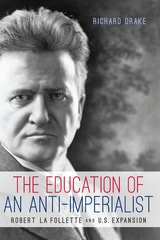
The Education of an Anti-Imperialist
Robert La Follette and U.S. ExpansionRichard Drake
University of Wisconsin Press, 2013
“An excellent book. . . . As Drake fully documents, La Follette's warnings about [World War I] profiteers and the lust for power were fully justified. Then as now, the American people were lied to by the government and media and manipulated into the stink and blood of war."—Mark Taylor, The Daily Call
“Scholars will . . . value the insights into La Follette's foreign policy education.”—The Historian
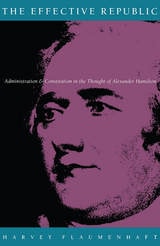
The Effective Republic
Administration and Constitution in the Thought of Alexander HamiltonHarvey Flaumenhaft
Duke University Press, 1992
Although Hamilton exterted an extraordinary influence on American institutions, his contribution and the thinking behind it often have been obscured and misconstrued by piecemeal approaches to his voluminous writings. Here, Flaumenhaft draws upon more than two dozen volumes of Hamilton’s papers to produce a comprehensive account of his thought on the principles of politics—the account which Hamilton himself hoped to give in a multivolume treatise, but died before producing.
Beginning with a discussion of the place of general principles in Hamilton’s thought, The Effective Republic proceeds to his views on popular representation as a safeguard of individual liberty. Flaumenhaft then elaborates on Hamilton’s thinking about efficacious administration, especially how the President and Senate meet the requirements of unity and duration in a republic, and on the importance of an independent judiciary for constitutional integrity. What emerges clearly as Hamilton’s chief concern is the need to make government not only safe but effective—hindered from doing harm by its popular base, but also, through the differentiation of administrative powers and tasks, capable of doing good.
Interpreting, linking, and, and arranging Hamilton’s words, Flaumenhaft allows Hamilton to speak for himself, to explain his benificiaries his vision of what the republican experiment needed in order to succeed.
The Effects of U.S. Trade Protection and Promotion Policies
Edited by Robert C. Feenstra
University of Chicago Press, 1997
The volume concludes that some policies can act to both protect imports and promote exports, that the threat of protectionist policies can often have effects that are as pronounced as their implementation, and that regulatory policy has as great an impact on trade and investment patterns as does trade policy itself. It will be of crucial interest to international trade economists, policy specialists, and political scientists.
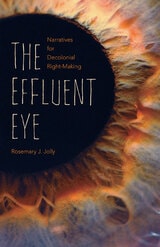
The Effluent Eye
Narratives for Decolonial Right-MakingRosemary J. Jolly
University of Minnesota Press, 2024
Why human rights don’t work
In The Effluent Eye, Rosemary J. Jolly argues for the decolonization of human rights, attributing their failure not simply to state and institutional malfeasance but to the very concept of human rights as anthropocentric—and, therefore, fatally shortsighted. In an engaging mix of literary and cultural criticism, Indigenous and Black critique, and substantive forays into the medical humanities, Jolly proposes right-making in the demise of human rights.
Using what she calls an “effluent eye,” Jolly draws on “Fifth Wave” structural public health to confront the concept of human rights—one of the most powerful and widely entrenched liberal ideas. She builds on Indigenous sovereignty work from authors such as Robin Wall Kimmerer, Leanne Betasamosake Simpson, and Mark Rifkin as well as the littoral development in Black studies from Christine Sharpe, Saidiya Hartman, and Tiffany Lethabo King to engage decolonial thinking on a range of urgent topics such as pandemic history and grief; gender-based violence and sexual assault; and the connections between colonial capitalism and substance abuse, the Anthropocene, and climate change.
Combining witnessed experience with an array of decolonial texts, Jolly argues for an effluent form of reading that begins with the understanding that the granting of “rights” to individuals is meaningless in a world compromised by pollution, poverty, and successive pandemics.
Retail e-book files for this title are screen-reader friendly.

The Effortless Economy of Science?
Philip Mirowski
Duke University Press, 2004
Mirowski contends that neoclassical economists have persistently presumed and advanced an “effortless economy of science,” a misleading model of a self-sufficient and conceptually self-referential social structure that transcends market operations in pursuit of absolute truth. In the stunning essays collected here, he presents a radical critique of the ways that neoclassical economics is used to support, explain, and legitimate the current social practices underlying the funding and selection of “successful” science projects. He questions a host of theories, including the portraits of science put forth by Karl Popper, Michael Polanyi, and Thomas Kuhn. Among the many topics he examines are the social stabilization of quantitative measurement, the repressed history of econometrics, and the social construction of the laws of supply and demand and their putative opposite, the gift economy. In The Effortless Economy of Science? Mirowski moves beyond grand abstractions about science, truth, and democracy in order to begin to talk about the way science is lived and practiced today.
The Electorate, the Campaign, and the Office
A Unified Approach to Senate and House ElectionsPaul Gronke
University of Michigan Press, 2001
The Elementary Forms of Corruption
Moral Imagination and Political Change in BrazilAaron Ansell
HAU, 2025
The Elementary Forms of Corruption is an ethnographic history of rural Brazilians’ shifting moral imagination in the context of their country’s recent corruption scandals and political crises. The book explores how Brazil’s cosmopolitan models of corruption, both left-wing and right-wing varieties, found their way to a small sertanejo (hinterland) municipality in the northeast, where people understood corruption very differently. Reckoning with both the leftist Workers’ Party, which sought to liberate sertanejos from patron-client relations, and the New Right populists who sought to stamp out the “communists” threatening the patriarchal family, the people of the sertanejo made recourse to older ideas about corruption—such as the betrayal of kinship obligations and communal trust—to decipher and shape national politics.
Challenging the discipline’s current aversion to generalizable, analytic categories that are useful for comparison across cultures or historical periods, The Elementary Forms of Corruption posits a general framework for understanding corruption at its most elementary level: the degradation of a moral gradient through the transgressive rechanneling of those currencies (e.g., gifts, favors) that sustain communal bonds when properly directed.
The Elusive Ideal
Equal Educational Opportunity and the Federal Role in Boston's Public Schools, 1950-1985Adam R. Nelson
University of Chicago Press, 2005
An ambitious study that spans more than thirty years and covers all facets of educational policy, from legal battles to tax strategies, The Elusive Ideal provides a model from which future inquiries will proceed. A probing and provocative work of urban history with deep relevance for urban public schools today, Nelson's book reveals why equal educational opportunity remains such an elusive ideal.
The Emergence of Dialectical Theory
Philosophy and Political InquiryScott Warren
University of Chicago Press, 1984
Scott Warren’s ambitious and enduring work sets out to resolve the ongoing identity crisis of contemporary political inquiry. In the Emergence of Dialectical Theory, Warren begins with a careful analysis of the philosophical foundations of dialectical theory in the thought of Kant, Hegel, and Marx. He then examines how the dialectic functions in the major twentieth-century philosophical movements of existentialism, phenomenology, neomarxism, and critical theory. Numerous major and minor philosophers are discussed, but the emphasis falls on two of the greatest dialectical thinkers of the previous century: Maurice Merleau-Ponty and Jürgen Habermas.
Warren’s shrewd critique is indispensable to those interested in the history of social and political thought and the philosophical foundations of political theory. His work offers an alternative for those who find postmodernism to be at a philosophical impasse.
The Emergence of a Euro-American Radical Right
Kaplan, Jeffrey
Rutgers University Press, 1998
The United States and Western Europe are experiencing a new and important cultural and political development: the appearance of a right wing extremist movement that crosses the Atlantic Ocean and transcends national boundaries with as much ease as do e-mail messages on the Internet. In this book, Jeffrey Kaplan and Leonard Weinberg argue that there now exists a set of conditions common to the United States and Western Europe that draws right wing radicals on both sides of the Atlantic closer together. These conditions, based on demographic pressures, social dislocation, economic changes, and technological advances, have set the stage for the formation of a new Euro-American radical right movement whose motives and characteristics differ from the right wing groups of the early twentieth century.
During the first thirty years of this century, radical right wing ideas and material support flowed primarily from Europe to the United States. In recent years, the inspiration for the movement has tended to flow in the opposite direction, with the establishment of various American-based groups, like the Ku Klux Klan and the White Aryan Resistance, on European soil. Kaplan and Weinberg contend that unlike their predecessors contemporary Western right wing groups develop a common identity based more on racial solidarity than on national identity. To support their argument, the authors provide a history of extreme right wing activity in the West and a comprehensive, detailed overview of major figures, groups, and characteristics that comprise the Euro-American radical right. They discuss the role of the Internet in facilitating the transatlantic community and offer personal, inside accounts of people involved in the various movements.
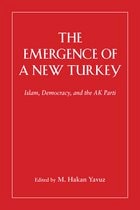
The Emergence of a New Turkey
Islam, Democracy, and the AK PartiYavuz, M. Hakan
University of Utah Press, 2006
The start of accession talks between Turkey and the European Union presents an important challenge for Europe and the Muslim world. Although Turkey has often been cited as a model for the accommodation of Islam and secularism, Islam is still a profound factor in Turkish politics.
This book explores the conditions under which an Islamic movement or party ceases to be Islamic. The Emergence of a New Turkey explains the social, economic, and historical origins of the ruling Justice and Development Party, which evolved from Turkey's half-century-old Islamic National Outlook movement. It focuses on the interplay between internal and external forces in the transformation of political Islam into a conservative democratic party. The book also discusses the effect of neoliberal economic policies in Turkey, offering keen insight into one of the most successful transformations of an Islamic movement in the Muslim world.
In addition to satisfying Turkish studies specialists, this lucidly written book is also suited for use in courses on comparative politics, social movements, and Middle East history and politics.
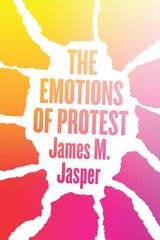
The Emotions of Protest
James M. Jasper
University of Chicago Press, 2018
There is an extensive body of research on protest, but the focus has mostly been on the calculating brain—a byproduct of structuralism and cognitive studies—and less on the feeling brain. James M. Jasper’s work changes that, as he pushes the boundaries of our present understanding of the social world. In The Emotions of Protest, Jasper lays out his argument, showing that it is impossible to separate cognition and emotion. At a minimum, he says, we cannot understand the Tea Party or Occupy Wall Street or pro- and anti-Trump rallies without first studying the fears and anger, moral outrage, and patterns of hate and love that their members feel.
This is a book centered on protest, but Jasper also points toward broader paths of inquiry that have the power to transform the way social scientists picture social life and action. Through emotions, he says, we are embedded in a variety of environmental, bodily, social, moral, and temporal contexts, as we feel our way both consciously and unconsciously toward some things and away from others. Politics and collective action have always been a kind of laboratory for working out models of human action more generally, and emotions are no exception. Both hearts and minds rely on the same feelings racing through our central nervous systems. Protestors have emotions, like everyone else, but theirs are thinking hearts, not bleeding hearts. Brains can feel, and hearts can think.
The Emperor's Clothes
A Personal Viewpoint of Politics and Administration in the Imperial Ethiopian Government, 1941-1974Gaitachew Bekele
Michigan State University Press, 1993
. . . An engaging personal account of a public service career n the period leading to the 1974 revolution. It ...persuades and provides real insight into the genuine noblesse oblige of the first generation of technocrats drawn from the social elite of the post- war period.
-James McCann, Boston University
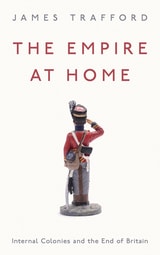
The Empire at Home
Internal Colonies and the End of BritainJames Trafford
Pluto Press, 2021
The Empire of Civilization
The Evolution of an Imperial IdeaBrett Bowden
University of Chicago Press, 2009
The term “civilization” comes with considerable baggage, dichotomizing people, cultures, and histories as “civilized”—or not. While the idea of civilization has been deployed throughout history to justify all manner of interventions and sociopolitical engineering, few scholars have stopped to consider what the concept actually means. Here, Brett Bowden examines how the idea of civilization has informed our thinking about international relations over the course of ten centuries.
From the Crusades to the colonial era to the global war on terror, this sweeping volume exposes “civilization” as a stage-managed account of history that legitimizes imperialism, uniformity, and conformity to Western standards, culminating in a liberal-democratic global order. Along the way, Bowden explores the variety of confrontations and conquests—as well as those peoples and places excluded or swept aside—undertaken in the name of civilization. Concluding that the “West and the rest” have more commonalities than differences,this provocative and engaging bookultimately points the way toward an authentic intercivilizational dialogue that emphasizes cooperation over clashes.
The Enchantment Of Reason
Pierre Schlag
Duke University Press, 1998
In examining the fierce resistance to questioning reason’s primacy, this renowned critic and professor of American law demonstrates how those who use and study the law perpetuate their own methodological blind spots. Claiming that reason has been endowed with a virtually mystical power to organize social life, Schlag unravels the seemingly rational world of judicial opinions, statutes, doctrines, and legal principles. In the process, he paints a shocking—and sure to be controversial—picture of the chaos and, indeed, violence of the American legal tradition.
This bold commentary on the irrationality of reason in American law and legal studies will interest not only legal scholars and philosophers but also serious thinkers across a broad disciplinary spectrum.
The End Of Capitalism (As We Knew It)
A Feminist Critique of Political EconomyJ. K. Gibson-Graham
University of Minnesota Press, 2006
“Paralyzing problems are banished by this dazzlingly lucid, creative, and practical rethinking of class and economic transformation.” —Meaghan Morris, Lingnan University, Hong Kong
“Profoundly imaginative.” —Eve Kosofsky Sedgwick, City University of New York “Filled with insights, it is clearly written and well supported with good examples of actual, deconstructive practices.” —International Journal of Urban and Regional Research
J. K. Gibson-Graham is the pen name of Katherine Gibson and Julie Graham, feminist economic geographers who work, respectively, at the Australian National University in Canberra and the University of Massachusetts Amherst.
The End and the Beginning
The Revolutions of 1989 and the Resurgence of HistoryVladimir Tismaneanu
Central European University Press, 2012
The End of Czechoslovakia
Jirí Musil
Central European University Press, 1995
Scholars and practitioners from both sides of the divide, Czech and Slovak, as well as international experts, take an in-depth look at the causes of Czechoslovakia's break-up, and explain why a seemingly successful country should disintegrate so quickly after the collapse of the communist regime. Besides exploring the political processes leading to the split, the authors analyse the underlying social, economic and cultural differences between the two nations and examine the historical roots of the problems. Particular attention is paid to changing Czech and Slovak attitudes towards the common state and towards each other, from the heyday of the First Republic to the disillusionment of the post-1989 period.

The End of Innocence?
Indonesian Islam and the Temptations of RadicalismAndrée Feillard, Rémy Madinier
National University of Singapore Press, 2013
The End of Jewish Modernity
Enzo Traverso
Pluto Press, 2016
Previously a beacon for critical thinking in the Western world, the mainstream of Jewish thought has, since the end of the war, undergone a conservative turn. With great sensitivity and nuance, Traverso traces this development to the virtual destruction of European Jewry by the Nazis, and the establishment of the United States and Israel as the new poles of Jewish communal life. This is a compelling narrative, hinged upon a highly original discussion of Hannah Arendt's writings on Jewishness and politics.
With provocative chapters on the relationship between antisemitism and Islamophobia, the ascendance of Zionism, and the new 'civil religion of the Holocaust', The End of Jewish Modernity is both an elegy to a lost tradition and an intellectual history of the present.
The End of Kings
A History of Republics and RepublicansWilliam R. Everdell
University of Chicago Press, 2000
"[An] energetic, aphoristic, wide-ranging book."—Marcus Cunliffe, Washington Post Book World
"Ambitious in conception and presented in a clear and sprightly prose. . . . [This] excellent study . . . is the best statement of the republican faith since Alphonse Aulard's essays almost a century ago." —Choice
"A book which ought to be in the hand of every American who agrees with Benjamin Franklin that the Founding Fathers gave us a Republic and hoped that we would be able to keep it."-Sam J. Ervin, Jr.
The End of Liberalism
Chilton Williamson
St. Augustine's Press, 2022
Williamson observes that this liberalism to nevertheless be collapsing, given the obvious opposition to the idea that it is essential to modernity. Liberalism is ironically a kind of unyielding control, "a relativist persuasion that discourages and resists fixed beliefs and certainties and the idea of truth itself." Williamson offers commentary on the present state of liberal ideas and their crimes against better judgment, and vindicates conservatism from being labeled reactionary. Liberalism is exposed as a faith we cannot accept, for it contains nothing to be believed and what it says about the order of things is pure fiction.
The End of Victory Culture
Cold War America and the Disillusioning of a GenerationThomas M. Engelhardt
University of Massachusetts Press, 2007
In a substantial new afterword to his classic account of the collapse of American triumphalism in the wake of World War II, Tom Engelhardt carries that story into the twenty-first century. He explores how, in the aftermath of September 11, 2001, the younger George Bush headed for the Wild West (Osama bin Laden, “Wanted, Dead or Alive”); how his administration brought “victory culture” roaring back as part of its Global War on Terror and its rush to invade Saddam Husseins's Iraq; and how, from its “Mission Accomplished” moment on, its various stories of triumph crashed and burned in that land.
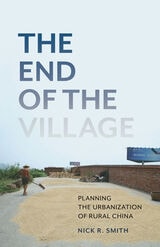
The End of the Village
Planning the Urbanization of Rural ChinaNick R. Smith
University of Minnesota Press, 2021
How China’s expansive new era of urbanization threatens to undermine the foundations of rural life
Since the beginning of the twenty-first century, China has vastly expanded its urbanization processes in an effort to reduce the inequalities between urban and rural areas. Centered on the mountainous region of Chongqing, which serves as an experimental site for the country’s new urban development policies, The End of the Village analyzes the radical expansion of urbanization and its consequences for China’s villagers. It reveals a fundamental rewriting of the nation’s social contract, as villages that once organized rural life and guaranteed rural livelihoods are replaced by an increasingly urbanized landscape dominated by state institutions.
Throughout this comprehensive study of China’s “urban–rural coordination” policy, Nick R. Smith traces the diminishing autonomy of the country’s rural populations and their subordination to larger urban networks and shared administrative structures. Outside Chongqing’s urban centers, competing forces are at work in reshaping the social, political, and spatial organization of its villages. While municipal planners and policy makers seek to extend state power structures beyond the boundaries of the city, village leaders and inhabitants try to maintain control over their communities’ uncertain futures through strategies such as collectivization, shareholding, real estate development, and migration.
As China seeks to rectify the development crises of previous decades through rapid urban growth, such drastic transformations threaten to displace existing ways of life for more than 600 million residents. Offering an unprecedented look at the country’s contentious shift in urban planning and policy, The End of the Village exposes the precarious future of rural life in China and suggests a critical reappraisal of how we think about urbanization.
The Ends of Freedom
Reclaiming America's Lost Promise of Economic RightsMark Paul
University of Chicago Press, 2023
Since the Founding, Americans have debated the true meaning of freedom. For some, freedom meant the provision of life’s necessities, those basic conditions for the “pursuit of happiness.” For others, freedom meant the civil and political rights enumerated in the Bill of Rights and unfettered access to the marketplace—nothing more. As Mark Paul explains, the latter interpretation—thanks in large part to a particularly influential cadre of economists—has all but won out among policymakers, with dire repercussions for American society: rampant inequality, endemic poverty, and an economy built to benefit the few at the expense of the many.
In this book, Paul shows how economic rights—rights to necessities like housing, employment, and health care—have been a part of the American conversation since the Revolutionary War and were a cornerstone of both the New Deal and the Civil Rights Movement. Their recuperation, he argues, would at long last make good on the promise of America’s founding documents. By drawing on FDR’s proposed Economic Bill of Rights, Paul outlines a comprehensive policy program to achieve a more capacious and enduring version of American freedom. Among the rights he enumerates are the right to a good job, the right to an education, the right to banking and financial services, and the right to a healthy environment.
Replete with discussions of some of today’s most influential policy ideas—from Medicare for All to a federal job guarantee to the Green New Deal—The Ends of Freedom is a timely and urgent call to reclaim the idea of freedom from its captors on the political right—to ground America’s next era in the country’s progressive history and carve a path toward a more economically dynamic and equitable nation.
The Ends of War, Volume 25
Patrick Deer , ed.
Duke University Press, 0
The contributors to this special issue—drawing on cultural studies, anthropology, economics, psychoanalysis, gender studies, postcolonial studies, and war literature—target the blind spots in current debates about war. One essay examines the financing of war, challenging the myth that our military-industrial complex generates economic bounty. Another contributor addresses strategies of high-tech urban warfare now being developed by the U.S. military and warns of the historical limits of colonial policing techniques that build on practices of surveillance. Other essays discuss the eroticization of “consent” embodied in the practice of torture at Abu Ghraib; the paradoxes of paramilitary policing and popular resistance along the militarized Mexico-U.S. border; and the continuities between the permanent war economy that emerged in the United States during World War II and the current disastrous confluence of militarism, global outsourcing, and economic depletion.
Contributors. Ashley Dawson, Patrick Deer, Jonathan Michael Feldman, Kennan Ferguson, Jean Franco, Randy Martin, Leerom Medovoi, Rosalind C. Morris, Gilberto Rosas
The Enduring Importance of Leo Strauss
Laurence Lampert
University of Chicago Press, 2013
The Enduring Legacy
Structured Inequality in America's Public SchoolsMark Ryan
University of Michigan Press, 2020
The Enduring Shadow of Racism
Race-Based Trauma in African American PoliticsJas M. Sullivan
University of Michigan Press, 2027
In 1961, James Baldwin was asked about being Black in America. He replied, “to be Black in this country and to be relatively conscious is to be in a rage almost all the time.” His words capture the emotional toll of living in a society where racial discrimination persists. More than six decades later, that toll can now be measured. The Enduring Shadow of Racism seeks to illuminate the deep psychological impact of these experiences, going beyond emotional responses like rage to reveal how race-based trauma symptoms shape the ways African Americans navigate the political world.
Rather than counting how frequently racism occurs or focusing on general emotional states, the book examines the trauma-like symptoms that emerge from those experiences. While political science often measures feelings like anger or fear as short-term reactions to specific events, social issues, or candidates, this book instead uses clinical indicators of trauma to assess the lasting psychological effects of racism, including intrusion, avoidance, and hypervigilance. This distinction highlights the difference between fleeting emotional responses and enduring trauma symptoms, revealing racism’s deeper psychological impact on individuals. In doing so, the book introduces a trauma-based framework for understanding the psychological consequences of racism, specifically the ways race-based trauma shapes political beliefs and behavior.