Results by title
2728 books match the query 'Education' and 609 start with t
The University of Illinois
Engine of InnovationEdited by Frederick E. Hoxie
University of Illinois Press, 2017
The University of Iowa in the Twentieth Century
An Institutional HistoryStow Persons
University of Iowa Press, 1990

The University of Manitoba
An Illustrated HistoryJ.M. Bumsted
University of Manitoba Press, 2001

The University of Michigan & China, 1845 – 2017
Neal McKenna
Michigan Publishing Services, 2017
Throughout the last two centuries U.S. administrations from President Lincoln to President Clinton have relied on U-M leaders and faculty to engage China and develop political and cultural relationships. The University of Michigan was one of the first universities in the U.S. to enroll Chinese students and has many prominent Chinese graduates, including a Nobel Laureate and the first female college president in China.
As U-M celebrates its own bicentennial, this book recounts the university's considerable history with Chinese governments, people and culture. The book also updates readers on the current and ongoing partnerships between different U-M departments and schools with Chinese institutions, and provides a list of several prominent Chinese graduates of the University of Michigan.
The University of Michigan MBA/MA in Asian Studies Retrospection and Reflections
A Bicentennial ContributionLinda Lim
Michigan Publishing Services, 2020

The University of Michigan in China
David Ward and Eugene Chen
Michigan Publishing Services, 2017
This book tells the story of twenty remarkable individuals, the country they transformed, and the University that helped them do it. There are many “firsts” in this book—first Chinese students at U-M, first female college president of China—and there are many “fathers” of disciplines: Wu Dayou, father of physics in China; Zheng Zuoxin, father of Chinese ornithology; Zeng Chengkui, father of marine botany.
While much has been written about these leaders and scholars in both English and Chinese, nowhere else is their collective story told or their shared bond with the University of Michigan celebrated.
The University of Michigan in China celebrates this nearly 200-year-old legacy.

The University of Nevada, 1874-2024
150 Years of Inspiring ExcellenceJohn Trent
University of Nevada Press, 2024
As both the University’s student body and the state’s population grew, the campus was transferred to Reno in 1885-86 as an effort to secure the fledgling institution’s prospects for survival. Many of the initial class of thirty-five students resided in Morrill Hall, the only building on campus, where they also received instruction and ate their meals. As the University enhanced its academic offerings, enrollment grew to more than 1,000 students by the turn of the century. A strong belief that the University must always be changing and evolving to meet the needs of its students and answer the challenges of a particular era became the guiding forces behind the administration’s decision-making. With an increasingly diverse student body and one of the most productive academic faculties in the country, the little school on the hill expanded during its first 100 years to become a leading public university in the western United States.
Today, the University continues to achieve institutional benchmarks, including a record 5,000 graduates during the 2019–20 academic year. It is exactly this kind of student success that has always been at the heart of the Wolf Pack Family’s mission to help students find the path that is right for them, and beckon others to share in their journey.
The 150th anniversary book is published in honor of this milestone and highlights numerous parts of the University’s history, showcasing why the University of Nevada, Reno has truly been a catalyst for success and change throughout the state’s story.
The Unlikely Celebrity
Bill Sackter's Triumph over DisabilityThomas Walz. Foreword by Barry Morrow
Southern Illinois University Press, 1998
Thomas Walz tells the story of Bill Sackter, a man who spent nearly half a century in a Minnesota mental institution and emerged to blossom into a most unlikely celebrity. Bill Sackter was committed to the Faribault State Hospital at the age of seven, there to remain until he was in his fifties. At the time of his commitment, Bill’s father had recently died; thus his sole contact with his family came through rare letters from his mother.
Some years after his discharge from Faribault as a result of the movement to deinstitutionalize the mentally ill in the 1960s, Bill enjoyed a serendipitous encounter with a young college student and part-time musician, Barry Morrow. Bill became part of the Morrow family and a regular in Morrow’s music group. When Morrow accepted a job at the School of Social Work at the University of Iowa, Bill followed him to Iowa City and was put in charge of a small coffee service.
Bill became an important part of the University of Iowa community, and Wild Bill’s Coffeeshop developed into an institution. A cheerful man of great good will who was a harmonica virtuoso, Bill began to inspire affectionate legends, and his life as a celebrity began in earnest. He was named Iowa’s Handicapped Person of the Year in 1977, and two television movies were made about his life—Bill, which earned Emmy awards for cowriter Barry Morrow and Mickey Rooney (as Bill) in 1981, and Bill on His Own in 1983. Years later, Morrow would earn an Oscar for his script of Rain Man.
Through vignettes ranging from hilarious to near tragic. Walz reveals a remarkable human being. An account of Bill's life in an institution is necessarily part of the story, but there is much more: Bill’s role in helping a young child recover from a coma, his menagerie of friends, his love for a pet parakeet, his late-life Bar Mitzvah, his failure as a woodworker, his success as Santa, and his dignified death at the age of seventy.
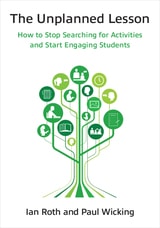
The Unplanned Lesson
How to Stop Searching for Activities and Start Engaging StudentsIan Roth and Paul Wicking
University of Michigan Press, 2023
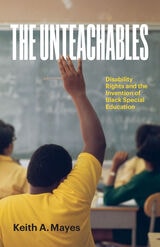
The Unteachables
Disability Rights and the Invention of Black Special EducationKeith A. Mayes
University of Minnesota Press, 2023
How special education used disability labels to marginalize Black students in public schools
The Unteachables examines the overrepresentation of Black students in special education over the course of the twentieth century. As African American children integrated predominantly white schools, many were disproportionately labeled educable mentally retarded (EMR), learning disabled (LD), and emotionally behavioral disordered (EBD). Keith A. Mayes charts the evolution of disability categories and how these labels kept Black learners segregated in American classrooms.
The civil rights and the educational disability rights movements, Mayes shows, have both collaborated and worked at cross-purposes since the beginning of school desegregation. Disability rights advocates built upon the opportunity provided by the civil rights movement to make claims about student invisibility at the level of intellectual and cognitive disabilities. Although special education ostensibly included children from all racial groups, educational disability rights advocates focused on the needs of white disabled students, while school systems used disability discourses to malign and marginalize Black students.
From the 1940s to the present, social science researchers, policymakers, school administrators, and teachers have each contributed to the overrepresentation of Black students in special education. Excavating the deep-seated racism embedded in both the public school system and public policy, The Unteachables explores the discriminatory labeling of Black students, and how it indelibly contributed to special education disproportionality, to student discipline and push-out practices, and to the school-to-prison pipeline effect.
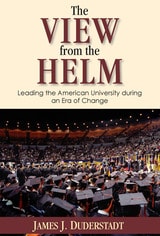
The View from the Helm
Leading the American University during an Era of ChangeJames J. Duderstadt
University of Michigan Press, 2009
Widely regarded as one of the most active and publicly engaged university presidents in modern academia, Duderstadt—who led the University of Michigan from 1988 to 1996—presided over a period of enormous change, not only for his institution, but for universities across the country. His presidency was a time of growth and conflict: of sweeping new affirmative-action and equal-opportunity programs, significant financial expansion, and reenergized student activism on issues from apartheid to codes of student conduct.
Under James Duderstadt’s stewardship, Michigan reaffirmed its reputation as a trailblazer among universities. Part memoir, part history, part commentary, The View from the Helm extracts general lessons from his experiences at the forefront of change in higher education, offering current and future administrators a primer on academic leadership and venturing bold ideas on how higher education should be steered into the twenty-first century.
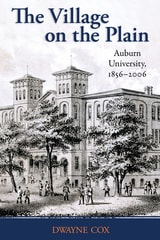
The Village on the Plain
Auburn University, 1856–2006Dwayne Cox
University of Alabama Press, 2016
The Village on the Plain tells the story of the founding of Auburn University as a small private college and the tumultuous history of its growth and transformation into the complex institution it is today.
Auburn University possesses a rich and storied past as well as an esprit de corps that is the envy of its rivals. Dwayne Cox’s The Village on the Plain traces the school’s history in fascinating detail from its origins as a private college through its emergence as a nationally recognized land-grant university.
Founded before the Civil War to provide a classical education, Auburn became the state’s land-grant college after the cessation of hostilities. This infused the school with a vision of the reborn South as a commercial and industrial power. By the 1880s, the applied sciences were at the core of Auburn’s growth and strength. Like most southern universities, Auburn never enjoyed financial abundance, and scarcity intensified internal debates over investments in liberal arts or science. Modest state funding for higher education also complicated Auburn’s rise. It became a source of competition with the University of Alabama. This rivalry was most intense between 1908 and 1948. The two schools did not meet on the gridiron but blocked and tackled one another in the legislature over the division of state funds.
On the idyllic plains of Lee County, Alabama, Auburn developed a unique, sometimes introspective culture, which is true of many universities founded far from urban centers. Long Auburn’s head archivist, Cox describes this culture with an insider’s insights and shows how it shaped the school's history and community.
Auburn University’s history is that of a small private college that rose to the challenges of convulsive state and national events, not only to survive but to emerge more vibrant and thriving. Offering much to students of higher education and Alabama history, as well as readers affiliated with Auburn University, The Village on the Plain tells the story of this complex and fascinating institution.
The Virtues
John H. Garvey
Catholic University of America Press, 2022
The Vocation of a Teacher
Rhetorical Occasions, 1967-1988Wayne C. Booth
University of Chicago Press, 1989
"[Booth] is unusually adept at addressing a wide variety of audiences. From deep in the heart of this academic jungle, he shows a clear eye and a firm step."—Alison Friesinger Hill, New York Times Book Review
"A cause for celebration. . . . What an uncommon man is Wayne Booth. What an uncommon book he has provided for our reflection."—James Squire, Educational Leadership
"This book stands as a vigorous reminder of the traditional virtues of the scholar-teacher."—Brian Cox, Times Literary Supplement
The Vulnerability of Public Higher Education
Michael Bernard-Donals
The Ohio State University Press, 2023
Reduced state funding to public institutions. The removal of tenure from state statutes. Attempts to silence faculty. Michael Bernard-Donals takes on these issues and other crises in higher education in The Vulnerability of Public Higher Education, exploring how values once used to justify higher education—the democratization of knowledge, the fostering of expertise, the creation of well-informed citizens, and critical engagement with issues—have been called into question.
Bernard-Donals argues that public higher education, especially the work of faculty, has become vulnerable—socially, politically, professionally—and this book takes seriously the idea of vulnerability, suggesting that university faculty see it not as an encumbrance to their work but as an opportunity to form relations of solidarity with one another through mutual recognition and shared, albeit different forms of, precarity. Through a series of case studies on faculty rights and responsibilities, the efficacy of diversity initiatives, and tenure and academic freedom, Bernard-Donals employs a rhetorical perspective to show how vulnerability can reshape faculty work and provide ways to shift the relations of materiality and power while opening up new forms of deliberation, engagement, and knowledge production.
The Way It Was
Duane C. Spriestersbach
University of Iowa Press, 1999
The fall of 1964 was an exciting time at the University of Iowa. Its fourteenth president, Howard Bowen, had just arrived, and on a sunny October afternoon he made his first speech to the faculty. This occasion was note worthy enough—former president Virgil Hancher had held the job for twenty-four years—to attract the attention of a professor of speech pathology who had previously confined his considerable energies to teaching and research. Bowen's vision of what the university could become was so intriguing, so compelling, that this professor wrote and offered to help him achieve his objectives in any way possible. This quixotic offer changed Duane Spriestersbach's life and becomes the starting point for his story of his years as a University of Iowa administrator.
Drawing upon his personal files, the university archives, and interviews with many faculty members and administrators, Spriestersbach has created both an institutional and a personal history of the university. Judged by any standard, these years were tumultuous ones for higher education. Economic pressures from the state legislature, issues surrounding grants from such agencies as the National Institutes of Health and the National Science Foundation, the civil rights movement, student and faculty protests during the Vietnam era, massive changes in the physical and administrative shape of the campus, and the computerization of all parts of campus life had far-reaching consequences. Spriestersbach was at the center of these events at the University of Iowa; his perspective is unique, refreshing, and educational.
Spriestersbach's account of the Vietnam years and of the evolution of computers at Iowa will be particularly interesting to readers. He reported to four presidents, served as acting president, managed hundreds of meetings both dramatic and mundane, and reacted to many administrative restructurings. In this story of his life at the University of Iowa, he reveals the truth behind these words from his 1964 letter to President Bowen: “I think I am an idealist, a person with imagination, and a guy in a hurry. I believe investigation will show that I am a person with competitive administrative and executive abilities.”
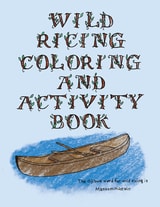
The Wild Ricing Coloring and Activity Book
Ojibwe Traditions Coloring Book SeriesCassie Brown
Wisconsin Historical Society Press, 2018
The Women Who Reconstructed American Jewish Education, 1910-1965
Edited by Carol K. Ingall
Brandeis University Press, 2010
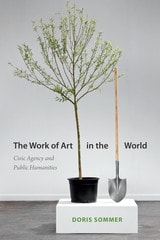
The Work of Art in the World
Civic Agency and Public HumanitiesDoris Sommer
Duke University Press, 2014
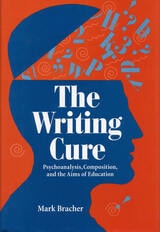
The Writing Cure
Psychoanalysis, Composition, and the Aims of EducationMark Bracher
Southern Illinois University Press, 1999
Psychoanalysis and writing instruction have much to offer each other, asserts Mark Bracher. In this book, Bracher examines the intersection between these two fields and proposes pedagogical uses of psychoanalytic technique for writing instruction.
Psychoanalysis reveals that the writing process is profoundly affected by factors that current theories have largely neglected—forces such as enjoyment, desire, fantasy, and anxiety, which, moreover, are often unconscious. Articulating an approach based on the work of Jacques Lacan, Bracher shows how a psychoanalytic perspective can offer useful insights into the nature of the writing process, the sources of writing problems, and the dynamics of writing instruction. He further demonstrates that writing instruction constitutes the most favorable venue outside of individual psychoanalytic treatment for pursuing psychoanalytic research and practice. Like psychoanalytic treatment proper, writing instruction can function as a way of reducing psychological conflict and as a means of pursuing psychoanalytic research into the workings of the mind. Empirical studies and personal testimonies have demonstrated the psychological (and even the physical) benefits of writing about personal conflict in an academic setting; such benefits promise to be enhanced and consolidated through the application of psychoanalytic principles to the teaching of writing.
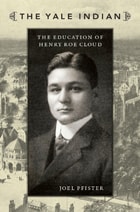
The Yale Indian
The Education of Henry Roe CloudJoel Pfister
Duke University Press, 2009
Roe Cloud’s white-collar activism was entwined with the Progressive Era formation of an Indian professional and managerial class, a Native “talented tenth,” whose members strategically used their contingent entry into arenas of white social, intellectual, and political power on behalf of Indians without such access. His Yale training provided a cross-cultural education in class-structured emotions and individuality. While at Yale, Roe Cloud was informally adopted by a white missionary couple. Through them he was schooled in upper-middle-class sentimentality and incentives. He also learned how interracial romance could jeopardize Indian acceptance into their class. Roe Cloud expanded the range of what modern Indians could aspire to and achieve.
The Young Adult Playbook
Living Like It MattersAnna Moreland
Catholic University of America Press, 2024
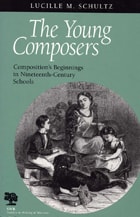
The Young Composers
Composition's Beginnings in Nineteenth-Century SchoolsLucille M. Schultz
Southern Illinois University Press, 1999
Lucille M. Schultz's The Young Composers: Composition's Beginnings in Nineteenth-Century Schools is the first full-length history of school-based writing instruction. Schultz demonstrates that writing instruction in nineteenth-century American schools is much more important in the overall history of writing instruction than we have previously assumed.
Drawing on primary materials that have not been considered in previous histories of writing instruction—little-known textbooks and student writing that includes prize-winning essays, journal entries, letters, and articles written for school newspapers—Schultz shows that in nineteenth-century American schools, the voices of the British rhetoricians that dominated college writing instruction were attenuated by the voice of the Swiss education reformer Johann Heinrich Pestalozzi. Partly through the influence of Pestalozzi's thought, writing instruction for children in schools became child-centered, not just a replica or imitation of writing instruction in the colleges.
It was also in these nineteenth-century American schools that personal or experience-based writing began and where the democratization of writing was institutionalized. These schools prefigured some of our contemporary composition practices: free writing, peer editing, and the use of illustrations as writing prompts. It was in these schools, in fact, where composition instruction as we know it today began, Schultz argues.
This book features a chapter on the agency of textbook iconography, which includes illustrations from nineteenth-century composition books as well as a cultural analysis of those illustrations. Schultz also includes a lengthy bibliography of nineteenth-century composition textbooks and student and school newspapers.
Theater Games for the Classroom
A Teacher's HandbookViola Spolin
Northwestern University Press, 1986
The most comprehensive theater instruction guide for all types of students
This best-selling book by Viola Spolin offers the most comprehensive theater instruction for all types of students, from small children to young adults. It includes over 130 theater games, plus exercises and instructional strategies. First developed by Spolin, the originator of modern improvisational theater techniques, these games have been tried and tested for over fifty years.

Theatre for Youth Third Space
Performance, Democracy, and Community Cultural DevelopmentStephani Etheridge Woodson
Intellect Books, 2015
Their Time Has Come
Youth with Disabilities on the Cusp of AdulthoodLeiter, Valerie
Rutgers University Press, 2012
In Their Time Has Come, Valerie Leiter argues that there are crucial missing links between federal disability policies and the lives of young people. Youth and their parents struggle to gather information about the resources that disability policies have created, and youth are not typically prepared to use their disability rights effectively. Her argument is based on thorough examination of federal disability policy and interviews with young people with disabilities, their parents, and rehabilitation professionals. Attention is given to the diversity of expectations, the resources available to them, and the impact of federal policy and public and private attitudes on their transition to adulthood.
Theory and Practice
Bite-Sized Activities for Teaching Reading SkillsAviva Katzenell
University of Michigan Press, 2023
There Goes the Neighborhood
Rural School Consolidation at the Grass Roots in Early Twentieth-Century IowaDavid R. Reynolds
University of Iowa Press, 2002
There Has to Be a Better Way
Lessons from Former Urban TeachersMawhinney, Lynnette
Rutgers University Press, 2019
Teacher attrition has long been a significant challenge within the field of education. It is a commonly-cited statistic that almost fifty percent of beginning teachers leave the field within their first five years, to the detriment of schools, students, and their own career development. There Has to be a Better Way offers an essential voice in understanding the dynamics of teacher attrition from the perspective of the teachers themselves. Drawing upon in-depth qualitative research with former teachers from urban schools in multiple regions of the United States, Lynnette Mawhinney and Carol R. Rinke identify several themes that uncover the rarely-spoken reasons why teachers so often willingly leave the classroom. The authors go further to provide concrete recommendations for how school administrators can better support their practicing teachers, as well as how teacher educators might enhance preparation for the next generation of educators. Complete with suggested readings and discussion questions, this book serves as an indispensable resource in understanding and building an effective and productive educational workforce for our nation’s students.
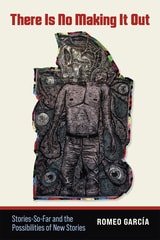
There Is No Making It Out
Stories-So-Far and the Possibilities of New StoriesRomeo García
Utah State University Press, 2025
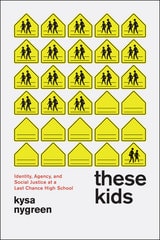
These Kids
Identity, Agency, and Social Justice at a Last Chance High SchoolKysa Nygreen
University of Chicago Press, 2013

These We Teach
A Study of General College StudentsCornelia T. Williams
University of Minnesota Press, 1943
These We Teach was first published in 1943. Minnesota Archive Editions uses digital technology to make long-unavailable books once again accessible, and are published unaltered from the original University of Minnesota Press editions.
They Came to Wisconsin
Julia Pferdehirt
Wisconsin Historical Society Press, 2002
They Came to Wisconsin presents three themes of the state’s immigrant history: leaving the homeland, making the journey, and enduring the first year of settlement. Journal and diary entries and letters from European groups and oral histories from African American, Latino, Hmong, and Amish sources make this book dynamic and wholly inclusive. They Came to Wisconsin breaks fresh ground in presenting document-centered Wisconsin history to a young audience. More important, these firsthand stories add a real human dimension to history, helping students to compare the experiences of the varied groups who came to Wisconsin in the last two hundred years.
Distributed for the Wisconsin Historical Society Press.
They Came to Wisconsin
Teacher's Guide and Student MaterialsHarriet Brown
Wisconsin Historical Society Press, 2002
Distributed for the Wisconsin Historical Society Press.

They Don't Want Her There
Fighting Sexual and Racial Harassment in the American UniversityCarolyn Chalmers
University of Iowa Press, 2022
As Jew gained accolades and advanced through the ranks at Iowa, she was met with increasingly vicious attacks on her character by her white male colleagues—implying that her sexuality had opened doors for her. After years of being subjected to demoralizing sexual, racial, and ethnic discrimination, finding herself without any higher-up departmental support, and noting her professional progression beginning to suffer by the hands of hate, Jean Jew decided to fight back. Carolyn Chalmers was her lawyer.
This book tells the inside story of pioneering litigation unfolding during the eight years of a university investigation, a watershed federal trial, and a state court jury trial. In the face of a university determined to defeat them and maintain the status quo, Jew and Chalmers forged an exceptional relationship between a lawyer and a client, each at the top of their game and part of the first generation of women in their fields. They Don’t Want Her There is a brilliant, original work of legal history that is deeply personal and shows today’s professional women just how recently some of our rights have been won—and at what cost.
Thinking Critically, Second Edition
World Issues for Reading, Writing, and ResearchMyra Shulman
University of Michigan Press, 2014
Just like its predecessor, Thinking Critically helps students improve reading, writing, and research skills while exploring and analyzing major global issues. Although many of the same topics are explored in this second edition—world hunger, global health, gender equality, regional conflict, cultural heritage, and immigration policies—all 31 authentic readings in the second edition are new. New topics included in this edition are cybersecurity, climate change, education reform, leadership, and human rights.
Each chapter contains two or three readings (from print and online news sources, journals, and blogs) designed to raise rather than provide answers; a vocabulary review and discussion questions for each reading; a reaction writing task; a question on the topic to research; a writing assignment for a specific academic or business genre (with models in an appendix); speaking activities (oral presentation, debate, or role-play); and a Thinking about It task. The Thinking about It task calls on students’ ability to evaluate a complex issue with objectivity and to propose a realistic approach, making this textbook good preparation for academic courses that require critical-thinking skills to express opinions both orally and in writing.
Several new academic/business written genres (abstract, fact sheet, briefing paper, report on a survey) have also been added.
Thinking Globally, Composing Locally
Rethinking Online Writing in the Age of the Global InternetRich Rice
Utah State University Press, 2018
Thinking Globally, Composing Locally explores how writing and its pedagogy should adapt to the ever-expanding environment of international online communication. Communication to a global audience presents a number of new challenges; writers seeking to connect with individuals from many different cultures must rethink their concept of audience. They must also prepare to address friction that may arise from cross-cultural rhetorical situations, variation in available technology and in access between interlocutors, and disparate legal environments.
The volume offers a pedagogical framework that addresses three interconnected and overarching objectives: using online media to contact audiences from other cultures to share ideas; presenting ideas in a manner that invites audiences from other cultures to recognize, understand, and convey or act upon them; and composing ideas to connect with global audiences to engage in ongoing and meaningful exchanges via online media. Chapters explore a diverse range of pedagogical techniques, including digital notebooks designed to create a space for active dialogic and multicultural inquiry, experience mapping to identify communication disruption points in international customer service, and online forums used in global distance education.
Thinking Globally, Composing Locally will prove an invaluable resource for instructors seeking to address the many exigencies of online writing situations in global environments.
Contributors: Suzanne Blum Malley, Katherine Bridgman, Maury Elizabeth Brown, Kaitlin Clinnin, Cynthia Davidson, Susan Delagrange, Scott Lloyd Dewitt, Amber Engelson, Kay Halasek, Lavinia Hirsu, Daniel Hocutt, Vassiliki Kourbani, Tika Lamsal, Liz Lane, Ben Lauren, J. C. Lee, Ben McCorkle, Jen Michaels, Minh-Tam Nguyen, Beau S. Pihlaja, Mª Pilar Milagros, Cynthia L. Selfe, Heather Turner, Don Unger, Josephine Walwema
Thinking Like a Historian
Rethinking History InstructionNikki Mandell
Wisconsin Historical Society Press, 2008
The contributors to Thinking Like a Historian are experienced historians and educators from elementary through university levels. This philosophical and pedagogical guide to history as a discipline uses published standards of the American Historical Association, the Organization of American Historians, the National Council for History Education, the National History Standards and state standards for Wisconsin and California.
Thinking Your Way to Freedom
A Guide to Owning Your Own Practical ReasoningSusan T. Gardner
Temple University Press, 2009
Thinking Your Way to Freedom is a critical-thinking textbook with a difference. Rather than focusing exclusively on improving college students’ academic achievement, Susan Gardner seeks to dramatically change how students think through issues that are important in their lives beyond school. Gardner created 66 original and entertaining comic strips—featuring her dogs, Diva and Ben—that add a light touch as they encourage intellectual and personal autonomy. Through a clear step-by-step method of practical reasoning, students are taught how to think impartially and how to neutralize invisible biases that limit their freedom of thought and action. With the help of Diva and Ben, readers learn to evaluate the strengths of arguments and to recognize fallacies, all the while avoiding the paralyzing effects of relativism.
Thinking Your Way to Freedom includes the writing of short essays so that students can improve their critical thinking and writing at the same time. A Teacher’s Manual for this book will be available online.
Third World Studies
Theorizing LiberationGary Y. Okihiro
Duke University Press, 2016
This Book is Free and Yours to Keep
Notes from the Appalachian Prison Book ProjectConnie Banta
West Virginia University Press, 2024
This Book Is Free and Yours to Keep presents a captivating collection of letters and artwork by people in prison that highlights the crucial work done by the Appalachian Prison Book Project (APBP), a nonprofit that provides books to incarcerated people in West Virginia, Virginia, Tennessee, Kentucky, Ohio, and Maryland. Through the words of people directly impacted by the criminal punishment system, the collection provides uncommon insight into reading practices and everyday life in prisons and jails while being an inspiration for prison book projects, prison reform, and abolition.
Simultaneously communicating the vital importance of access to books and education, and conveying the power of community, the letters sent to APBP by incarcerated people spark conversations about race, poverty, and incarceration and shed light on the movement for accountability for state violence. This Book Is Free and Yours to Keep elucidates the violence and neglect perpetuated by carceral systems and offers a way forward based on solidarity and collaboration.
This Fine Place So Far from Home
Voices of Academics from the Working Classedited by C. L. Barney Dews and Carolyn Leste Law
Temple University Press, 1995
These autobiographical and analytical essays by a diverse group of professors and graduate students from working-class families reveal an academic world in which "blue-collar work is invisible." Describing conflict and frustration, the contributors expose a divisive middle-class bias in the university setting. Many talk openly about how little they understood about the hierarchy and processes of higher education, while others explore how their experiences now affect their relationships with their own students. They all have in common the anguish of choosing to hide their working-class background, to keep the language of home out of the classroom and the ideas of school away from home. These startlingly personal stories highlight the fissure between a working-class upbringing and the more privileged values of the institution.
Thomas Shields and the Renewal of Catholic Education
Leonardo Franchi
Catholic University of America Press, 2023

Threatened Scholarship, Dynamics of Repression and Forms of Resistance
Towards Academic Freedom as a Transnational Human RightKerry Bystrom
Central European University Press, 2027
Three Cartesian Feminist Treatises
François Poullain de la Barre
University of Chicago Press, 2002
Poullain published three books (anonymously) on this topic in the 1670s, all of which are included in English translation in this volume. In On the Equality of the Two Sexes he argued that the supposedly "natural" inferiority of women was culturally produced. To help women recognize and combat this prejudice, Poullain advocated a modern, enlightened feminine education in On the Education of Ladies. Finally, since his contemporaries largely ignored Poullain's writings, he offered a rebuttal to his own arguments in On the Excellence of Men—a rebuttal that he promptly countered, strengthening his original positions.
A truly modern feminist, Poullain laid the intellectual groundwork for the women's liberation movement centuries before it happened.
Three to Get Ready
The Education of a White Family in Inner City SchoolsLois M. Stalvey
University of Wisconsin Press, 1996
Thriving as a Graduate Writer
Principles, Strategies, and Habits for Effective Academic WritingRachael Cayley
University of Michigan Press, 2023
Readers of Thriving as a Graduate Writer will:
- Learn how to establish an effective writing practice
- Discover how to position themselves as competent and engaged writers
- Learn how to structure their writing, craft effective sentences, and create movement with a text
- Develop processes for draft revisions
- Create individual writing strategies that will last throughout their careers
Through the Schoolhouse Door
Folklore, Community, CurrriculumPaddy Bowman and Lynne Hamer
Utah State University Press, 2011
The creative traditions and expressive culture of students' families, neighborhoods, towns, religious communities, and peer groups provide opportunities to extend classrooms, sustain learning beyond school buildings, and better connect students and schools with their communities. Folklorists and educators have long worked together to expand curricula through engagement with local knowledge and informal cultural arts-folk arts in education is a familiar rubric for these programs-but the unrealized potential here, for both the folklore scholar and the teacher, is large. The value folklorists "place on the local, the vernacular, and the aesthetics of daily life does not reverberate" throughout public education, even though, in the words of Paddy Bowman and Lynne Hamer, "connecting young people to family and community members and helping them to develop self-identity are vital to civic well-being and to school success."
Through the Schoolhouse Door offers a collection of experiences from exemplary school programs and the analysis of an expert group of folklorists and educators who are dedicated not only to getting students out the door and into their communities to learn about the folk culture all around them but also to honoring the culture teachers and students bring to the classroom.
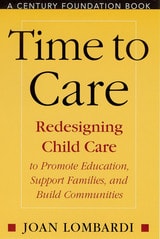
Time To Care
Redesigning Child Care To Promote Education,Joan Lombardi
Temple University Press, 2002
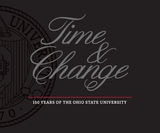
Time and Change
150 Years of The Ohio State UniversityTamar Chute with a Letter by President Michael V. Drake and an Afterword by Provost Bruce A. McPheron
The Ohio State University Press, 2019
Gain a visually stunning new perspective on iconic landmarks such as Mirror Lake, the Oval, Ohio Stadium, and the neighborhoods surrounding the Columbus and regional campuses. From beloved teams, symbols, and traditions to scenes from academic and campus life, reflect on time and change and rediscover the extraordinary connection that unites generations of Buckeyes.