Results by title
2706 books match the query 'European' and 622 start with t
Thomas Hardy's Brains
Psychology, Neurology, and Hardy's ImaginationSuzanne Keen
The Ohio State University Press, 2014
This study reveals how Hardy made sense of diverse sources of an affective human psychology, a discipline that expanded significantly during Hardy’s working life. From the 1870s to the turn of the twentieth century, the tools and techniques for studying the structures and function of the nervous system developed rapidly. Simultaneously, Hardy moved steadily toward realizing a more physiologically accurate rendering of brains and nerves.
Thomas Heywood's Art of Love
The First Complete English Translation of Ovid's Ars AmatoriaEdited, with Introduction, Notes, and Commentary by M. L. Stapleton
University of Michigan Press, 2000
The present edition represents the first instance in which the translation has been edited in a scholarly manner. Besides a full Introduction that accounts for the history of Loues Schoole, Ovid in the English Renaissance, and the editorial method, each of the three books of the poem includes a Commentary that provides cross-references within the text; glosses for unusual, archaic, or regional forms peculiar to Heywood's English; annotations from sourcebooks that Heywood used to identify or understand characters from classical history, literature, and mythology; and explanations for any emendations the editor deemed necessary. In his efforts to make the Ars a seventeenth-century poem, Heywood contemporizes Ovid's references to dress, behavior, courtship, marriage, games, theater, agriculture, horsemanship, war, literature --all of which the Commentary explains at great length.
Loues Schoole will find readership in these areas: early modern history, literature, and culture; classical studies; Renaissance drama; the history of sexuality; and translation theory.
M. L. Stapleton is Associate Professor of English and Philosophy, Stephen F. Austin State University.
Thomas J. Wise
Centenary StudiesEdited by William B. Todd
University of Texas Press, 1959
Thomas James Wise (1859–1937), though destined to receive in his own lifetime practically every honor the world of letters could bestow, is remembered today as perhaps the greatest malefactor in all of literary history. From 1934 to 1957 various enquiries have implicated him first in the manufacture of more than fifty predated "original" editions of eminent Victorian authors, then in seven additional forgeries, later in countless piracies of other nineteenth-century work, and finally in repeated acts of vandalism upon forty-one seventeenth-century plays. It is fitting that Wise himself appears as a contributor to this volume. Included are his original introduction to the Browning Library, his letters to bookseller J. E. Cornish, his extraordinary letter to Sir Edmund Gosse, and a note to H. Buxton Forman.
These Centenary Studies review the course of research over twenty-five years, designate topics requiring further investigation, and assess new evidence of Wise's villainies. One more forgery is identified, the provenance of others reexamined, the forger's method of purveying his wares closely appraised, his association with H. Buxton Forman and Sir Edmund Gosse more precisely defined, and the range of his activities summarized in an annotated handlist. The record includes at least 400 printings directly attributed to Wise, as well as 23 suppressed or abortive issues, and 29 others in which he seems to be somewhat involved. Through these perspectives the culprit appears even more contemptible and, possibly for this very reason, ever more intriguing as a cause célèbre in literary scholarship.
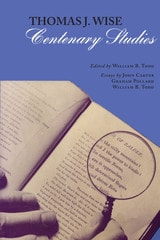
The illustration on the cover of this book reproduces, through a magnifying glass, the peculiar question mark appearing in certain forgeries printed for Wise by the firm of Richard Clay & Sons. The mark may also implicate Wise in other irregular printings, including The Death of Balder.
Thomas Mann's Artist-Heroes
Jeffrey Meyers
Northwestern University Press, 2014
Thomas Mann's World
Empire, Race, and the Jewish QuestionTodd Kontje
University of Michigan Press, 2011
Three Comedies
Behind the Scenes in Eden, Rigamaroles, and The Other WilliamG Racz
University Press of Colorado, 2004
Three Modern Italian Poets
Saba, Ungaretti, MontaleJoseph Cary
University of Chicago Press, 1993
Three Plays of Racine
Phaedra, Andromache, and BritannicusJean Baptiste Racine
University of Chicago Press, 1961
"His literal and flexible blank verse actually forms the nearest thing in English to the longer-measured rhymed couplets of Racine; even an ordinary reading aloud of so faithful a rendering provides something of the experience that Proust described."—Elliott Coleman, Poetry
"A superb introduction . . . flawless translations, infused with poetic fire and charm."—Margaret Carpenter, Norfolk Virginian-Pilot
Three Plays
Dark River, Arthur Aronymus and His Ancestors, and I and IElse Lasker-Schuler
Northwestern University Press, 2005
Famous for her poetry and infamous for her bohemian lifestyle, as well as her association with political radicals, Else Lasker-Schüler (1869–1945) is only now returning to just renown as one of the few women writers within the Expressionist movement of the early twentieth century. These plays-Dark River, Arthur Aronymus and His Ancestors, and I and I-in Jane Curtis's fluid translation, allow readers of English to experience the radically avant-garde style that put Lasker-Schüler on a par with Brecht in her day, as well as the passionate treatment of questions of gender, ethnicity, and sexuality that placed her well ahead of her time. Lasker-Schüler's plays reflect her unusual life among the Berlin Moderns of the 1910s and 20s. The daughter of a well-to-do Jewish banker and builder, Else Schüler gave up her bourgeois existence as a doctor's wife for the artistic, social, and political uncertainties that would characterize the rest of her life. Many of her finest poems and plays were written amidst the cafe society of Berlin, where she knew some of the great expressionist artists of the period. The death of her beloved son in 1927, which led her to intense introspection and reflection on the Jewish tradition, especially mysticism and the Kabbalah, also marked the beginning of Lasker-Schüler's years of tragedy, loss, and dislocation, culminating in her flight from Nazi Germany to Switzerland and then Jerusalem, where she ended her days as an eccentric pauper.
The plays in this volume mark Lasker-Schüler's movement away from the traditional aesthetic canon, revealing a unique formal development from naturalistic expressionist episodes in the lyrical Dark River to a historicizing politicization of the theater in Arthur Aronymous to the forms of montage and "epic" presentations in I and I. A short preface by Inca Molina Rumold places each play in its historical, biographical, and artistic context.
Three Spanish Querelle Texts
Grisel and Mirabella, The Slander against Women, and The Defense of Ladies against SlanderersPere Torrellas and Juan de Flores
Iter Press, 2013
Through the Past Darkly
History and Memory in François Mauriac’s Bloc-notesNathan Bracher
Catholic University of America Press, 2004
Through the Poet’s Eye
The Travels of Zagajewski, Herbert, and BrodskyBozena Shallcross
Northwestern University Press, 2009
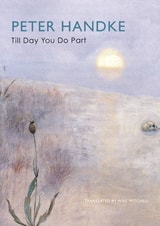
Till Day You Do Part Or A Question of Light
Peter Handke
Seagull Books, 2010
Described as an answer to or at least an echo of Samuel Beckett’s Krapp’s Last Tape?, Till Day You Do Part Or A Question of Light, by esteemed Austrian playwright and novelist Peter Handke, is a monologue delivered by the “she” in Beckett’s play. This unnamed female similarly recalls other significant women protagonists in Handke’s own work such as The Left-handed Woman. Handke prefaces the monologue in Till Day You Do PartOr a Question of Light with a description of two stone figures. While the male figure remains “as dead and gone as anyone can,” the female bursts into life, and her monologue gradually focuses on Krapp’s use of pauses and language to dominate the other characters in the Beckett play. Ultimately, however, her complaints and critique of Krapp become a declaration of her love for Krapp or at least an affirmation of their attachment, as the two of them are ultimately bound together, perhaps even inseparable.
Till Day You Do Part Or a Question of Light is Handke at his best, evidencing the great skill, psychological acumen, and vision for which his work has been celebrated.
Tilting Cervantes
Baroque Reflections on Postmodern CultureBruce R. Burningham
Vanderbilt University Press, 2008
Time Gifts
Zoran Zivkovic
Northwestern University Press, 2000
To Scorch or Freeze
Poems about the SacredDonald Davie
University of Chicago Press, 1988
"Few modern poets have managed to achieve Donald Davie's sense of human worth."—Times Higher Educational Supplement

To Set before the King
Katharina Schratt's Festive RecipesGertrud G. Champe
University of Iowa Press, 1996
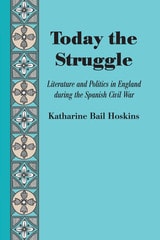
Today the Struggle
Literature and Politics in England during the Spanish Civil WarBy Katharine Bail Hoskins
University of Texas Press, 1969
Many writers, from Aristophanes to Joseph Heller, have written about politics. But at certain periods in history, often at times of conflict and turmoil, writers have consciously used their literary talents to support or oppose a specific cause. The 1930s, a decade of widespread social and political breakdown, was such a period.
Today the Struggle examines the political involvement of those leading British writers who dedicated their talents to the defense of Nationalists or Loyalists during the Spanish Civil War and who saw that war as symbolic of their own Right-Left dialogue.
Conservatives like William Butler Yeats and T. S. Eliot and Roman Catholics like Evelyn Waugh were passionately anti-Communist. They viewed fascism as a bulwark against communism but were unwilling to support the Franco cause actively. Other pro-Nationalists were not so hesitant: Roy Campbell and Wyndham Lewis were ardent participants in the fight against the British left wing.
Pro-Loyalists, united only in their antifascism, ranged from conservative to anarchist in political commitment. Their literary contributions included fine poems by W. H. Auden and Stephen Spender, experimental drama by Auden and Christopher Isherwood, and impassioned prose by Rex Warner, George Orwell, and Aldous Huxley.
Katharine Hoskins’s principal interest in Today the Struggle is to discover how and why certain writers supported specific political actions, to ascertain the effectiveness of their efforts, and to evaluate the influence of these efforts on their work.
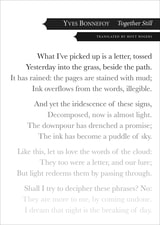
Together Still
Yves Bonnefoy
Seagull Books, 2017
The international community of letters mourned the recent death of Yves Bonnefoy, universally acclaimed as one of France’s greatest poets of the last half-century. A prolific author, he was often considered a candidate for the Nobel Prize and published a dozen major collections of poetry in verse and prose, several books of dream-like tales, and numerous studies of literature and art. His oeuvre has been translated into scores of languages, and he himself was a celebrated translator of Shakespeare, Yeats, Keats, and Leopardi.
Together Still is his final poetic work, composed just months before his death. The book is nothing short of a literary testament, addressed to his wife, his daughter, his friends, and his readers throughout the world. In these pages, he ruminates on his legacy to future generations, his insistence on living in the present, his belief in the triumphant lessons of beauty, and, above all, his courageous identification of poetry with hope.
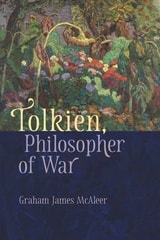
Tolkien, Philosopher of War
Graham McAleer
Catholic University of America Press, 2024
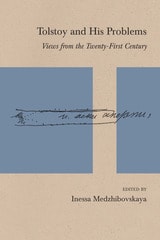
Tolstoy and His Problems
Views from the Twenty-First CenturyEdited by Inessa Medzhibovskaya
Northwestern University Press, 2019
In the broadest sense—with essays on a variety of issues that occupied Tolstoy, such as nihilism, mysticism, social theory, religion, Judaism, education, opera, and Shakespeare—the volume offers a fresh evaluation of Tolstoy's program to reform the ways we live, work, commune with nature and art, practice spirituality, exchange ideas and knowledge, become educated, and speak and think about history and social change.
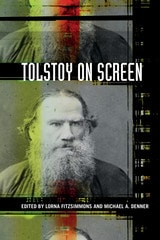
Tolstoy on Screen
Edited by Lorna Fitzsimmons and Michael A. Denner
Northwestern University Press, 2015
Scholarship on screen adaptation has proliferated in recent years, but it has remained largely focused on English- and Romance-language authors. Tolstoy on Screen aims to correct this imbalance with a comprehensive examination of film and television adaptations of Tolstoy’s fiction. Spanning the silent era to the present day, these essays consider well-known as well as neglected works in light of contemporary adaptation and media theory. The book is organized to facilitate a comparative, cross-cultural understanding of the various practices employed in different eras and different countries to bring Tolstoy’s writing to the screen. International in scope and rigorous in analysis, the essays cast new light on Tolstoy’s work and media studies alike.
Tolstoy
Plays: Volume III: 1894-1910Leo Tolstoy
Northwestern University Press, 1998
Now noted Slavic philologist Marvin Kantor and Tatiana Tulchinsky have prepared the first complete English translation of the great writer's plays. This volume contains plays written during the years 1894 to 1910, including:
Peter the Breadman
And the Light Shineth in Darkness
The Living Corpse
The Wisdom of Children
The Traveler and the Peasant
The Cause of It All
Tom Stoppard in Conversation
Paul Delaney, Editor
University of Michigan Press, 1994
This collection of interviews with British playwright Tom Stoppard, author of such well-known comedies as Travesties, Jumpers, and Rosencrantz and Guildenstern Are Dead, brings together for the first time Stoppard's most significant assessments of his own work.
A wide range of discussions are featured, from extensive conversations with the editors of Theatre Quarterly and Gambit to important interviews in lesser-known periodicals. The interviews include the playwright's unguarded comments to the daily press, from those of a dazzled young Stoppard the morning after the triumphant opening of Rosencrantz and Guildenstern to those of a veteran playwright still smarting from caustic reviews 36 hours after the opening of Hapgood. The interviews cover the full range of Stoppard's work, from his adaptations for the stage to his increasing involvement in film, and this volume makes many of them available for the first time. Also appearing for the first time in print are transcripts of radio interviews and an informal lecture by Stoppard called "The Event and the Text."
Tom Stoppard's conversations about his work shed light on questions of authorial intent and the creative process. Debates over interpretations of the plays will be enhanced by this record of Stoppard's own perceptions and insights. The collection also includes the most extensive bibliography and discography ever compiled of Stoppard's print interviews, broadcast interviews, and lectures.
Witty, illuminating, and informative, Tom Stoppard in Conversation will be of interest to scholars, students, directors, actors, and fans of Stoppard's work.
Tomb(e)
Hélène Cixous
Seagull Books, 2014
Too Beautiful to Picture
Zeuxis, Myth, and MimesisElizabeth C. Mansfield
University of Minnesota Press, 2007
Torture, Humiliate, Kill
Inside the Bosnian Serb Camp SystemHikmet Karcic
University of Michigan Press, 2022
Half a century after the Holocaust, on European soil, Bosnian Serbs orchestrated a system of concentration camps where they subjected their Bosniak Muslim and Bosnian Croat neighbors to torture, abuse, and killing. Foreign journalists exposed the horrors of the camps in the summer of 1992, sparking worldwide outrage. This exposure, however, did not stop the mass atrocities. Hikmet Karčić shows that the use of camps and detention facilities has been a ubiquitous practice in countless wars and genocides in order to achieve the wartime objectives of perpetrators. Although camps have been used for different strategic purposes, their essential functions are always the same: to inflict torture and lasting trauma on the victims.
Torture, Humiliate, Kill develops the author’s collective traumatization theory, which contends that the concentration camps set up by the Bosnian Serb authorities had the primary purpose of inflicting collective trauma on the non-Serb population of Bosnia and Herzegovina. This collective traumatization consisted of excessive use of torture, sexual abuse, humiliation, and killing. The physical and psychological suffering imposed by these methods were seen as a quick and efficient means to establish the Serb “living space.” Karčić argues that this trauma was deliberately intended to deter non-Serbs from ever returning to their pre-war homes. The book centers on multiple examples of experiences at concentration camps in four towns operated by Bosnian Serbs during the war: Prijedor, Bijeljina, Višegrad, and Bileća. Chosen according to their political and geographical position, Karčić demonstrates that these camps were used as tools for the ethno-religious genocidal campaign against non-Serbs. Torture, Humiliate, Kill is a thorough and definitive resource for understanding the function and operation of camps during the Bosnian genocide.
Tough Love
Amazon Encounters in the English RenaissanceKathryn Schwarz
Duke University Press, 2000
Despite seeming to function as signs for what is outside the social—the alien, the exotic, the other—Amazons in sixteenth- and seventeenth-century texts were often represented in conventionally domestic roles, as mothers and lovers, wives and queens, Schwarz demonstrates. She traces this pattern in works by Shakespeare, Spenser, Sidney, Raleigh, and Jonson, as well as in such materials as conduct manuals, explorers’ accounts, court spectacles, and political tracts. Through readings of these texts, Schwarz shows that the Amazon myth provided a language both for setting forth and for challenging the terms of social logic. In representations of Amazon encounters, she argues, homosocial bonds became indistinguishable from heterosexual desires, masculine agency attached itself as logically to women as it did to men, and sexual difference was made nearly impossible to sustain or define. Schwarz’s analysis unveils the Amazon as a theoretical term, one that illuminates the tensions and paradoxes through which ideologies of the domestic take shape.
Tough Love contributes to the ongoing discussion of gendered identity and sexual desire in the early modern period. It will interest students of queer theory, cultural studies, early modern history, feminism, and literature.
Tourists with Typewriters
Critical Reflections on Contemporary Travel WritingPatrick Holland and Graham Huggan
University of Michigan Press, 2000
The book maps new terrain in a growing area of critical study. Although critical of travel writing's complacency and its often unacknowledged ethnocentrism, the book recognizes its importance as both a literary and cultural form. While travel writing at its worst emerges as a crude expression of economic advantage, at its best it becomes a subtle instrument of cultural self-perception, a barometer for changing views of "other" (i.e., foreign, non-Western) cultures, and a trigger for the information circuits that tap us into the wider world.
Tourists with Typewriters gauges both the best and worst in contemporary travel writing, capturing the excitement of this most volatile--and at times infuriating--of literary genres. The book will appeal to general readers interested in a closer examination of travel writing and to academic readers in disciplines such as literary/cultural studies, geography, history, anthropology, and tourism studies.
"An eminently readable and informative study. It breathes tolerance and intelligence. It is critically perceptive and very au courant. It raises issues (coloniality, postmodernity, gender. . . ) and discusses books that readers of many different stripes will want to find out about." --Ross Chambers, University of Michigan
Patrick Holland, Associate Professor of English, University of Guelph, was born in New Zealand and educated in England, Australia, and Canada. Graham Huggan, Professor of English, University of Munich, was born in Hong Kong and educated in England and in British Columbia.
Toward a Premodern Posthumanism
Anarchic Ontologies of Earthly Life in Early Modern FranceChad Córdova
Northwestern University Press, 2025
Drawing on early modern French thought to free nature and aesthetics from metaphysical humanism
What good is aesthetics in a time of ecological crisis? Toward a Premodern Posthumanism: Anarchic Ontologies of Earthly Life in Early Modern France shows that philosophical aesthetics contains unheeded potentialities for challenging the ontological subjection of nature to the human subject. Drawing on deconstructive, ecological, and biopolitical thought, Chad Córdova uncovers in aesthetics something irreducible to humanist metaphysics: an account of how beings emerge and are interrelated, responsive, and even response-able without reason or why.
This anarchic and atelic ontology, recovered from Kant, becomes the guiding thread for a new, premodern trajectory of posthumanism. Charting a path from Aristotle to Heidegger to today’s plant-thinking, with new readings of Montaigne, Pascal, Diderot, Rousseau, and others along the way, this capacious study reveals the untimely relevance of pre-1800 practices of writing, science, and art. Enacting a multitemporal mode of reading, Córdova offers a defense and illustration of the importance of returning to early modern texts as a way to rethink nature, art, ethics, and politics in a time when these concepts are in flux and more contentious than ever.
Towards Reading Freud
Self-Creation in Milton, Wordsworth, Emerson, and Sigmund FreudMark Edmundson
University of Chicago Press, 2007
“Marvelous. . . . Edmundson’s book offers an extraordinary challenge both to practicing analysts and to a scholarly community which all too uncomplainingly inhabits and reinforces the Freudian paradigm of interpretation. Edmundson reinvents an adventurous and dissident Freud as an antidote to . . . weary psychoanalytic commonplaces.”—Malcolm Bowie, Raritan
“This book takes a distinguished place in the ongoing effort to recontextualize Freud by stressing the literary, rather than the scientific roots and character of his theory.”—Virginia Quarterly Review
Trade and Romance
Michael Murrin
University of Chicago Press, 2013
Trading in Lives?
Operations of the Jewish Relief and Rescue Committee in Budapest, 1944-1945Szabolcs Szita
Central European University Press, 2005
Tragedy and the Return of the Dead
John D. Lyons
Northwestern University Press, 2018
Early modernity rediscovered tragedy in the dramas and the theoretical writings of the ancient Greeks and Romans. Attempting to make new tragic fictions, writers like Shakespeare, Webster, Hardy, Corneille, and Racine created a dramatic form that would probably have been unrecognizable to the ancient Athenians. Tragedy and the Return of the Dead recovers a model of the tragic that fits ancient tragedies, early modern tragedies, as well as contemporary narratives and films no longer called “tragic” but which perpetuate the same elements.
Authoritative, wide-ranging, and thought provoking, Tragedy and the Return of the Dead uncovers a set of interlocking plots of family violence that stretch from Greek antiquity up to the popular culture of today. Casting aside the elite, idealist view that tragedy manifests the conflict between two equal goods or the human struggle against the divine, John D. Lyons looks closely at tragedy’s staging of gory and painful deaths, ignominious burials, and the haunting return of ghosts. Through this adjusted lens Le Cid, Hamlet, Frankenstein, The Spanish Tragedy, Romeo and Juliet, Phèdre, Macbeth, and other early modern works appear in a striking new light. These works are at the center of a panorama that stretches from Aeschylus’s Agamemnon to Hitchcock’s Psycho and are placed against the background of the Gothic novel, Freud’s “uncanny,” and Burke’s “sublime.”
Lyons demonstrates how tragedy under other names, such as “Gothic fiction” and “thrillers,” is far from dead and continues as a vital part of popular culture.
Tragic Effects
Ethics and Tragedy in the Age of TranslationTherese Augst
The Ohio State University Press, 2012
Tragic Effects: Ethics and Tragedy in the Age of Translation confronts the peculiar fascination with Greek tragedy as it shapes the German intellectual tradition, with particular focus on the often controversial practice of translating the Greeks. Whereas the tradition of emulating classical ideals in German intellectual life has generally emerged from the impulse to identify with models, the challenge of translating the Greeks underscores the linguistic and historical discontinuities inherent in the recourse to ancient material and inscribes that experience of disruption as fundamental to modernity.
Friedrich Hölderlin’s translations are a case in point. Regarded in his own time as the work of a madman, his renditions of Sophoclean tragedy intensify dramatic effect with the unsettling experience of familiar language slipping its moorings. His attention to marking the distances between ancient source text and modern translation has granted his Oedipus and Antigone a distinct longevity as objects of discussion, adaptation, and even retranslation. Cited by Walter Benjamin, Martin Heidegger, Bertolt Brecht, and others, Hölderlin’s Sophocles project follows a path both marked by various contexts and tinged by persistent quandaries of untranslatability.
Tragedy has long functioned as a cornerstone for questions about ethical life. By placing emphasis on processes of translation and adaptation, however, Tragic Effects approaches the question of ethics from a perspective informed by recent discourse in translation studies. Reconstructing an ancient text in this context requires negotiating the difficult tension between comprehending the distant past and preserving its radical singularity.
Tragic Encounters
Pushkin and European RomanticismMaksim Hanukai
University of Wisconsin Press, 2023
Many of Pushkin’s works move seamlessly between the closed world of traditional tragedy and the open world of Romantic tragic drama, and yet they follow neither the cathartic program prescribed by Aristotle nor the redemptive mythologies of the Romantics. Instead, the idiosyncratic and artistically mercurial Pushkin seized upon the newly unstable tragic mode to develop multiple, overlapping tragic visions. Providing new, innovative readings of such masterpieces as The Gypsies, Boris Godunov, The Little Tragedies, and The Bronze Horseman, Hanukai sheds light on an unexplored aspect of Pushkin’s work, while also challenging reigning theories about the fate of tragedy in the Romantic period.
Transatlantic Correspondence
Modernity, Epistolarity, and Literature in Spain and Spanish America, 1898–1992José Luis Venegas
The Ohio State University Press, 2014
Each chapter frames literary works by authors from both sides of the Atlantic within key historical events spanning the loss of Spain’s overseas possessions in 1898 to the commemoration of Columbus’s quincentennial in 1992. This broad range of historical reference is counterpointed by the nuanced examination of a single formal feature in a wide variety of canonical and non-canonical texts. Drawing on insights from postcolonial studies, the book addresses the link between historical transformations that traverse decades and continents and specific stylistic choices in order to foster an understanding of Hispanic literary and cultural studies that is not limited by categories such as “movement,” “generation,” and “national literature.”
Transatlantic Dialogue
Selected American Correspondence of Edmund GosseEdited by Paul F. Mattheisen and Michael Millgate
University of Texas Press, 1965
The mauve life and times of Edmund Gosse glow warmly in these letters, delightful to even the most casual reader, engrossing to one with an interest in the distinguished correspondents or in the late-Victorian and Edwardian eras.
An obscure figure today to all but literary connoisseurs, Gosse was, in his day, a near giant in both England and the United States. Max Beerbohm, that discriminating man, in a mural of prominent figures who were also his friends, sketched Edmund Gosse large among George Bernard Shaw, John Masefield, G. K. Chesterton, John Galsworthy, and Lytton Strachey.
This volume consists primarily of a selection of the letters exchanged between Gosse and a number of American writers, notably William Dean Howells, Edmund Clarence Stedman, Oliver Wendell Holmes, Richard Watson Gilder, Edith Wharton, and Henry James. The letters, most of them previously unpublished, contain much of biographical and general historical interest, but the main theme of the book is the exploration of Anglo-American literary relations during the last quarter of the nineteenth century and the early years of the twentieth.
The letters that passed between Gosse and Stedman provide valuable evidence for the study of literary taste on the two sides of the Atlantic and also show how each man sought to enhance the other's transatlantic reputation; the correspondence between Gosse and Gilder, particularly during the period when Gosse was London editor of Gilder's Century magazine, is especially revealing of cultural attitudes and antagonisms. A central thread is provided by the warm and long-sustained friendship between Gosse and Howells, the leading American man of letters of his day.
The long introduction to the book deals with such topics as Gosse's American reputation, his immensely successful visit to the United States in the winter of 1884–1885 (based on the manuscript diary that Gosse kept during the visit), and his American friendships, with particular attention to the relationship with Howells. The thoroughness and vitality of the annotation are extremely effective in familiarizing the reader with the people and events in the book.
Transatlantic Stowe
Harriet Beecher Stowe and European CultureDenise Kohn
University of Iowa Press, 2006
Transatlantic Women Travelers, 1688-1843
Misty Krueger
Bucknell University Press, 2021
Transculturality and German Discourse in the Age of European Colonialism
Chunjie Zhang
Northwestern University Press, 2017
Transfigurations Of The Maghreb
Feminism, Decolonization, and LiteraturesWinfred Woodhull
University of Minnesota Press, 1993
Through readings of some of the best-known texts in Algerian literature in French, Woodhull both challenges the separation between French and Francophone literatures and cultures in the academy and explores the ways in which "femininity" has been represented in the texts of North African and French writers since the mid-1950s.
Transformations of Memory and Forgetting in Sixteenth-Century France
Marguerite de Navarre, Pierre de Ronsard, Michel de MontaigneNicolas Russell
University of Delaware Press, 2011
This book proposes that in a number of French Renaissance texts, produced in varying contexts and genres, we observe a shift in thinking about memory and forgetting. Focusing on a corpus of texts by Marguerite de Navarre, Pierre de Ronsard, and Michel de Montaigne, it explores several parallel transformations of and challenges to traditional discourses on the human faculty of memory.
Throughout Classical Antiquity and the Middle Ages, a number of influential authors described memory as a powerful tool used to engage important human concerns such as spirituality, knowledge, politics, and ethics. This tradition had great esteem for memory and made great efforts to cultivate it in their pedagogical programs. In the early sixteenth century, this attitude toward memory started to be widely questioned. The invention of the printing press and the early stages of the scientific revolution changed the intellectual landscape in ways that would make memory less important in intellectual endeavors. Sixteenth-century writers began to question the reliability and stability of memory. They became wary of this mental faculty, which they portrayed as stubbornly independent, mysterious, unruly, and uncontrollable–an attitude that became the norm in modern Western thought as is illustrated by the works of Descartes, Locke, Freud, Proust, Foucault, and Nora, for example.
Writing in this new intellectual landscape, Marguerite de Navarre, Ronsard, and Montaigne describe memory not as a powerful tool of the intellect but rather as an uncontrollable mental faculty that mirrored the uncertainty of human life. Their characterization of memory emerges from an engagement with a number of traditional ideas about memory. Notwithstanding the great many differences in concerns of these writers and in the nature of their texts, they react against or transform their classical and medieval models in similar ways. They focus on memory’s unruly side, the ways that memory functions independently of the will. They associate memory with the fluctuations of the body (the organic soul) rather than the stability of the mind (the intellectual soul). In their descriptions of memory, these authors both reflect and contribute to a modern understanding of and attitude towards this mental faculty.
Published by University of Delaware Press. Distributed worldwide by Rutgers University Press.
Translating Human Rights in Education
The Influence of Article 24 UN CRPD in Nigeria and GermanyJulia Biermann
University of Michigan Press, 2022
The 2006 United Nations Convention on the Rights of Persons with Disabilities (UN CRPD) is the first human rights treaty to explicitly acknowledge the right to education for persons with disabilities. In order to realize this right, the convention’s Article 24 mandates state parties to ensure inclusive education systems that overcome outright exclusion as well as segregation in special education settings. Despite this major global policy change to tackle the discriminations persons with disabilities face in education, this has yet to take effect in most school systems worldwide.
Focusing on the factors undermining the realization of disability rights in education, Julia Biermann probes current meanings of inclusive education in two contrasting yet equally challenged state parties to the UN CRPD: Nigeria, whose school system overtly excludes disabled children, and Germany, where this group primarily learns in special schools. In both countries, policy actors aim to realize the right to inclusive education by segregating students with disabilities into special education settings. In Nigeria, this demand arises from the glaring lack of such a system. In Germany, conversely, from its extraordinary long-term institutionalization. This act of diverting from the principles embodied in Article 24 is based on the steadfast and shared belief that school systems, which place students into special education, have an innate advantage in realizing the right to education for persons with disabilities. Accordingly, inclusion emerges to be an evolutionary and linear process of educational expansion that depends on institutionalized special education, not a right of persons with disabilities to be realized in local schools on an equal basis with others. This book proposes a refined human rights model of disability in education that shifts the analytical focus toward the global politics of formal mass schooling as a space where discrimination is sustained.
Translation Effects
Language, Time, and Community in Medieval EnglandMary Kate Hurley
The Ohio State University Press, 2021
Transmedia Adaptation in the Nineteenth Century
Lissette Lopez Szwydky
The Ohio State University Press, 2020
In Transmedia Adaptation in the Nineteenth Century, Lissette Lopez Szwydky convincingly historicizes the practice of adaptation, drawing on multiple disciplines to illustrate narrative mobility across time, culture, and geography. Case studies from stage plays, literature, painting, illustration, chapbooks, and toy theaters position adaptation as a central force in literary history that ensures continued cultural relevance, accessibility, and survival. The history of these forms helps to inform and put into context our contemporary obsessions with popular media. Finally, in upending a traditional understanding of canon by arguing that adaptation creates canon and not the other way around, Szwydky provides crucial bridges between nineteenth-century literary scholarship, adaptation studies, and media studies, thus identifying new stakes for all.
Transnational Capitalism in East Central Europe's Heavy Industry
From Flagship Enterprises to SubsidiariesAleksandra Sznajder Lee
University of Michigan Press, 2016
This book has broad implications for the political economy of reform because it illuminates the political determinants of privatization and the resources used to resist it. In addition, Sznajder Lee sheds new light on why some countries are more likely than others to be subject to external constraints, such as IMF conditionality, and how some allegedly pro-market reformers manage to maintain public ownership over certain industry sectors.
Transpoetic Exchange
Haroldo de Campos, Octavio Paz, and Other Multiversal DialoguesMarília Librandi
Bucknell University Press, 2020
The volume is divided into three parts. “Essays” unites seven texts by renowned scholars who focus on the relationship between the two authors, their impact and influence, and their cultural resonance by exploring explore the historical background and the different stylistic and cultural influences on the authors, ranging from Latin America and Europe to India and the U.S. The second section, “Remembrances,” collects four experiences of interaction with Haroldo de Campos in the process of transcreating Paz’s poem and working on Transblanco and Galáxias. In the last section, “Poems,” five poets of international standing--Jerome Rothenberg, Antonio Cicero, Keijiro Suga, André Vallias, and Charles Bernstein.
Paz and Campos, one from Mexico and the other from Brazil, were central figures in the literary history of the second half of the 20th century, in Latin America and beyond. Both poets signal the direction of poetry as that of translation, understood as the embodiment of otherness and of a poetic tradition that every new poem brings back as a Babel re-enacted.
This volume is a print corollary to and expansion of an international colloquium and poetic performance held at Stanford University in January 2010 and it offers a discussion of the role of poetry and translation from a global perspective. The collection holds great value for those interested in all aspects of literary translation and it enriches the ongoing debates on language, modernity, translation and the nature of the poetic object.
Published by Bucknell University Press. Distributed worldwide by Rutgers University Press.
Transported to Botany Bay
Class, National Identity, and the Literary Figure of the Australian ConvictDorice Williams Elliott
Ohio University Press, 2019
Literary representations of British convicts exiled to Australia were the most likely way that the typical English reader would learn about the new colonies there. In Transported to Botany Bay, Dorice Williams Elliott examines how writers—from canonical ones such as Dickens and Trollope to others who were themselves convicts—used the figure of the felon exiled to Australia to construct class, race, and national identity as intertwined.
Even as England’s supposedly ancient social structure was preserved and venerated as the “true” England, the transportation of some 168,000 convicts facilitated the birth of a new nation with more fluid class relations for those who didn’t fit into the prevailing national image. In analyzing novels, broadsides, and first-person accounts, Elliott demonstrates how Britain linked class, race, and national identity at a key historical moment when it was still negotiating its relationship with its empire. The events and incidents depicted as taking place literally on the other side of the world, she argues, deeply affected people’s sense of their place in their own society, with transnational implications that are still relevant today.
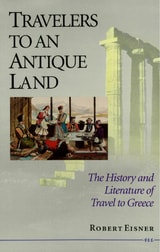
Travelers to an Antique Land
The History and Literature of Travel to GreeceRobert Eisner
University of Michigan Press, 1993