Results by title
4130 books match the query 'Science' and 981 start with t
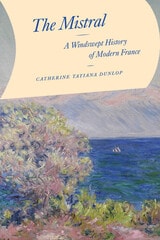
The Mistral
A Windswept History of Modern FranceCatherine Tatiana Dunlop
University of Chicago Press, 2024
Every year, the chilly mistral wind blows through the Rhône valley of southern France, across the Camargue wetlands, and into the Mediterranean Sea. Most forceful when winter turns to spring, the wind knocks over trees, sweeps trains off their tracks, and destroys crops. Yet the mistral turns the sky clear and blue, as it often appears in depictions of Provence. The legendary wind is central to the area’s regional identity and has inspired artists and writers near and far for centuries.
This force of nature is the focus of Catherine Dunlop’s The Mistral, a wonderfully written examination of the power of the mistral wind, and in particular, the ways it challenged central tenets of nineteenth-century European society: order, mastery, and predictability. As Dunlop shows, while the modernizing state sought liberation from environmental realities through scientific advances, land modification, and other technological solutions, the wind blew on, literally crushing attempts at control, and becoming increasingly integral to regional feelings of place and community.
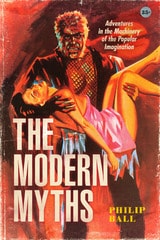
The Modern Myths
Adventures in the Machinery of the Popular ImaginationPhilip Ball
University of Chicago Press, 2021
Myths are usually seen as stories from the depths of time—fun and fantastical, but no longer believed by anyone. Yet, as Philip Ball shows, we are still writing them—and still living them—today. From Robinson Crusoe and Frankenstein to Batman, many stories written in the past few centuries are commonly, perhaps glibly, called “modern myths.” But Ball argues that we should take that idea seriously. Our stories of Dracula, Dr. Jekyll and Mr. Hyde, and Sherlock Holmes are doing the kind of cultural work that the ancient myths once did. Through the medium of narratives that all of us know in their basic outline and which have no clear moral or resolution, these modern myths explore some of our deepest fears, dreams, and anxieties. We keep returning to these tales, reinventing them endlessly for new uses. But what are they really about, and why do we need them? What myths are still taking shape today? And what makes a story become a modern myth?
In The Modern Myths, Ball takes us on a wide-ranging tour of our collective imagination, asking what some of its most popular stories reveal about the nature of being human in the modern age.
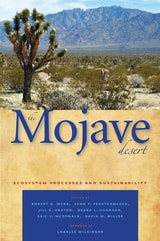
The Mojave Desert
Ecosystem Processes and SustainabilityRobert Webb
University of Nevada Press, 2009
In The Mojave Desert, thirty-eight scientists who are all specialists in desert ecology address the threats to the Mojave, as well as the potential for natural recovery and active restoration. The contributing authors discuss the desert from several perspectives: regional threats such as expanding human populations, climate change, atmospheric nitrogen deposition, and invasive plants; the impact of roads in a desert ecosystem; soils and plant communities; shrinking aquifers; and the monitoring and sustainability of this fragile ecosystem. Finally, they discuss the importance of long-term data and the ways scientists and resource managers can interact to enhance understanding of the processes of change in the Mojave Desert and to advance the preservation and restoration of its precious resources.The Mojave Desert offers the fruits of extensive research in a number of disciplines and a sound assessment of the current state and possible future of one of the world's major deserts. As human intrusion and climate change increasingly threaten the Mojave's ecosystem, studies like this are essential in helping scientists, land managers, and the general public understand what is at risk and what can be done to preserve this austere and hauntingly beautiful region.

The Mollusks of the Arid Southwest
With an Arizona Check ListJoseph C. Bequaert and Walter B. Miller
University of Arizona Press, 1973
Part I: Zoogeography of Southwestern Nearctic Mollusks
Integrates and evaluates information of interest to students of variation, evolution, zoogeography, and ecology of the fauna of the arid Southwest.
Part II: Annotated Check List of Recent Arizona Mollusks
Treatment of 173 valid species and 46 recognized subspecies gives nomenclature, type localities, distribution in Arizona, occurrence elsewhere in the Southwestern Molluscan Province, general Recent distribution, presence or absence in Late Cenozoic deposits, and synonymy.
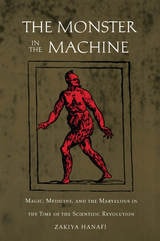
The Monster in the Machine
Magic, Medicine, and the Marvelous in the Time of the Scientific RevolutionZakiya Hanafi
Duke University Press, 2000
Noting that the word “monster” is derived from the Latin for “omen” or “warning,” Hanafi explores the monster’s early identity as a portent or messenger from God. Although monsters have always been considered “whatever we are not,” they gradually were tranformed into mechanical devices when new discoveries in science and medicine revealed the mechanical nature of the human body. In analyzing the historical literature of monstrosity, magic, and museum collections, Hanafi uses contemporary theory and the philosophy of technology to illuminate the timeless significance of the monster theme. She elaborates the association between women and the monstrous in medical literature and sheds new light on the work of Vico—particularly his notion of the conatus—by relating it to Vico’s own health. By explicating obscure and fascinating texts from such disciplines as medicine and poetics, she invites the reader to the piazzas and pulpits of seventeenth-century Naples, where poets, courtiers, and Jesuit preachers used grotesque figures of speech to captivate audiences with their monstrous wit.
Drawing from a variety of texts from medicine, moral philosophy, and poetics, Hanafi’s guided tour through this baroque museum of ideas will interest readers in comparative literature, Italian literature, history of ideas, history of science, art history, poetics, women’s studies, and philosophy.
The Moon over Wapakoneta
Fictions and Science Fictions from Indiana and BeyondMichael Martone
University of Alabama Press, 2018
The Moon over Wapakoneta is vintage Michael Martone, the visionary oracle of the American Midwest with the gift for discovering the marvelous in the mundane. In these stories Martone shows us how traveling across time zones from Ohio to Indiana is a form of time travel; how a beer bottle can serve as a kind of telescope, how Amish might power their spaceships with windmills as they travel through space and time. These stories capture the paradox of feeling that one is in the heart of the country while at the same time in the middle of nowhere, of natives who find themselves strangers in their once familiar, but now strange, lands.
On display is a love of obsolete technologies, small-town whimsy, home movies of proms and birthday parties, steam engines and baseball games. If Italo Calvino lived in Indiana rather than Italy, these are the fictions he might have made.
The Moral Austerity of Environmental Decision Making
Sustainability, Democracy, and Normative Argument in Policy and LawJohn Martin Gillroy and Joe Bowersox, eds.
Duke University Press, 2002
The contributors search for these assumptions and principles in short arguments and debates over the role of science, social justice, instrumental value, and intrinsic value in contemporary environmental policy. In their discussion of moral alternatives to enrich environmental decision making and in their search for a less austere and more robust role for normative discourse in practical policy making, they analyze a series of original case studies that deal with environmental sustainability and natural resources policy including pollution, land use, environmental law, globalism, and public lands. The unique structure of the book—which features the core contributors responding in a discourse format to the central chapters’ essays and debates—helps to highlight the role personal and public values play in democratic decision making generally and in the field of environmental politics specifically.
Contributors. Joe Bowersox, David Brower, Susan Buck, Celia Campbell-Mohn, John Martin Gillroy, Joel Kassiola, Jan Laitos, William Lowry, Bryan Norton, Robert Paehlke, Barry G. Rabe, Mark Sagoff, Anna K. Schwab, Bob Pepperman Taylor, Jonathan Wiener
The Moral Authority of Nature
Edited by Lorraine Daston and Fernando Vidal
University of Chicago Press, 2003
The Moral Authority of Nature offers a wide-ranging account of how people have used nature to think about what counts as good, beautiful, just, or valuable. The eighteen essays cover a diverse array of topics, including the connection of cosmic and human orders in ancient Greece, medieval notions of sexual disorder, early modern contexts for categorizing individuals and judging acts as "against nature," race and the origin of humans, ecological economics, and radical feminism. The essays also range widely in time and place, from archaic Greece to early twentieth-century China, medieval Europe to contemporary America.
Scholars from a wide variety of fields will welcome The Moral Authority of Nature, which provides the first sustained historical survey of its topic.
Contributors:
Danielle Allen, Joan Cadden, Lorraine Daston, Fa-ti Fan, Eckhardt Fuchs, Valentin Groebner, Abigail J. Lustig, Gregg Mitman, Michelle Murphy, Katharine Park, Matt Price, Robert N. Proctor, Helmut Puff, Robert J. Richards, Londa Schiebinger, Laura Slatkin, Julia Adeney Thomas, Fernando Vidal
The Moral Conflict of Law and Neuroscience
Peter A. Alces
University of Chicago Press, 2018
Peter A. Alces considers where and how the law currently fails to appreciate the neuroscientific revelation that humans may in key ways lack normative free will—and therefore moral responsibility. The most accessible setting in which to consider the potential impact of neuroscience is criminal law, as certain aspects of criminal law already reveal the naiveté of most normative reasoning, such as the inconsistent treatment of people with equally disadvantageous cognitive deficits, whether congenital or acquired. But tort and contract law also assume a flawed conception of human agency and responsibility. Alces reveals the internal contradictions of extant legal doctrine and concludes by considering what would be involved in constructing novel legal regimes based on emerging neuroscientific insights.
The Moral Meaning of Nature
Nietzsche’s Darwinian Religion and Its CriticsPeter J. Woodford
University of Chicago Press, 2018
We start with Friedrich Nietzsche, whose writings staged one of the first confrontations with the Christian tradition using the resources of Darwinian thought. The lebensphilosophie, or “life-philosophy,” that arose from his engagement with evolutionary ideas drew responses from other influential thinkers, including Franz Overbeck, Georg Simmel, and Heinrich Rickert. These critics all offered cogent challenges to Nietzsche’s appropriation of the newly transforming biological sciences, his negotiation between science and religion, and his interpretation of the implications of Darwinian thought. They also each proposed alternative ways of making sense of Nietzsche’s unique question concerning the meaning of biological evolution “for life.” At the heart of the discussion were debates about the relation of facts and values, the place of divine purpose in the understanding of nonhuman and human agency, the concept of life, and the question of whether the sciences could offer resources to satisfy the human urge to discover sources of value in biological processes. The Moral Meaning of Nature focuses on the historical background of these questions, exposing the complex ways in which they recur in contemporary philosophical debate.
The Mosquito Crusades
A History of the American Anti-Mosquito Movement from the Reed Commission to the First Earth DayPatterson, Gordon
Rutgers University Press, 2009
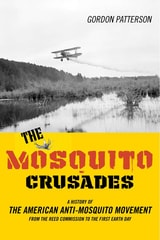
Providing readers with a fascinating exploration of the relationship between science, technology, and public policy, Gordon Patterson's narrative begins in New Jersey with John B. Smith's effort to develop a comprehensive plan and solution for mosquito control, one that would serve as a national model. From the Reed Commission's 1900 yellow fever experiment to the first Earth Day seventy years later, Patterson provides an eye-opening account of the crusade to curtail the deadly mosquito population.
The Most Powerful Idea in the World
A Story of Steam, Industry, and InventionWilliam Rosen
University of Chicago Press, 2012
This bracing history uses the earth-shaking development of the steam engine to show how the very idea of intellectual property was essential to the entire Industrial Revolution.
Hardly a week passes without some high-profile court case that features intellectual property at its center. But how did the belief that one could own an idea come about? And how did that belief change the way humankind lives and works?
William Rosen, author of Justinian's Flea, seeks to answer these questions and more with The Most Powerful Idea in the World. A lively and passionate study of the engineering and scientific breakthroughs that led to the steam engine, this book argues that the very notion of intellectual property drove not only the invention of the steam engine but also the entire Industrial Revolution: history’s first sustained era of economic improvement. To do so, Rosen conjures up an eccentric cast of characters, including the legal philosophers who enabled most the inventive society in millennia, and the scientists and inventors—Thomas Newcomen, Robert Boyle, and James Watt—who helped to create and perfect the steam engine over the centuries. With wit and wide-ranging curiosity, Rosen explores the power of creativity, capital, and collaboration in the brilliant engineering of the steam engine and how this power source, which fueled factories, ships, and railroads, changed human history.
Deeply informative and never dull, Rosen's account of one of the most important inventions made by humans is a rollicking ride through history, with careful scholarship and fast-paced prose in equal measure.

The Most Secret Quintessence of Life
Sex, Glands, and Hormones, 1850-1950Chandak Sengoopta
University of Chicago Press, 2006
Through a series of case studies drawn from Central Europe, the United States, and Britain, The Most Secret Quintessence of Life explores how the notion of sex hormones enabled scientists to remap the human body, encouraging hopes that glandular interventions could cure ills, malfunctions, and even social deviance in ways inconceivable to previous generations. Many of these dreams failed, but their history, Chandak Sengoopta shows, takes us into the very heart of scientific medicine, revealing how even its most arcane concerns are shaped by cultural preoccupations and anxieties.
The Mountain
A Political History from the Enlightenment to the PresentBernard Debarbieux and Gilles Rudaz
University of Chicago Press, 2015
In The Mountain, geographers Bernard Debarbieux and Gilles Rudaz trace the origins of the very concept of a mountain, showing how it is not a mere geographic feature but ultimately an idea, one that has evolved over time, influenced by changes in political climates and cultural attitudes. To truly understand mountains, they argue, we must view them not only as material realities but as social constructs, ones that can mean radically different things to different people in different settings.
From the Enlightenment to the present day, and using a variety of case studies from all the continents, the authors show us how our ideas of and about mountains have changed with the times and how a wide range of policies, from border delineation to forestry as well as nature protection and social programs, have been shaped according to them. A rich hybrid analysis of geography, history, culture, and politics, the book promises to forever change the way we look at mountains.
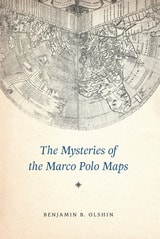
The Mysteries of the Marco Polo Maps
Benjamin B. Olshin
University of Chicago Press, 2014
In The Mysteries of the Marco Polo Maps, historian of cartography Benjamin B. Olshin offers the first credible book-length analysis of these artifacts, charting their course from obscure origins in the private collection of Italian-American immigrant Marcian Rossi in the 1930s; to investigations of their authenticity by the Library of Congress, J. Edgar Hoover, and the FBI; to the work of the late cartographic scholar Leo Bagrow; to Olshin’s own efforts to track down and study the Rossi maps, all but one of which are in the possession of Rossi’s great-grandson Jeffrey Pendergraft. Are the maps forgeries, facsimiles, or modernized copies? Did Marco Polo’s daughters—whose names appear on several of the artifacts—preserve in them geographic information about Asia first recorded by their father? Or did they inherit maps created by him? Did Marco Polo entrust the maps to Admiral Ruggero Sanseverino, who has links to Rossi’s family line? Or, if the maps have no connection to Marco Polo, who made them, when, and why?
Regardless of the maps’ provenance, Olshin’s tale—stretching from the remote reaches of the northern Pacific to early Chinese legends—takes readers on a journey confounding yet fascinating, offering insights into Italian history, the age of exploration, and the wonders of cartography.
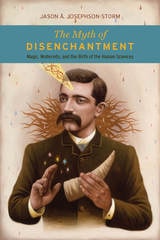
The Myth of Disenchantment
Magic, Modernity, and the Birth of the Human SciencesJason Ananda Josephson Storm
University of Chicago Press, 2017
Josephson-Storm traces the history of the myth of disenchantment in the births of philosophy, anthropology, sociology, folklore, psychoanalysis, and religious studies. Ironically, the myth of mythless modernity formed at the very time that Britain, France, and Germany were in the midst of occult and spiritualist revivals. Indeed, Josephson-Storm argues, these disciplines’ founding figures were not only aware of, but profoundly enmeshed in, the occult milieu; and it was specifically in response to this burgeoning culture of spirits and magic that they produced notions of a disenchanted world.
By providing a novel history of the human sciences and their connection to esotericism, The Myth of Disenchantment dispatches with most widely held accounts of modernity and its break from the premodern past.
The Myth of Human Races
Alain F. Corcos
Michigan State University Press, 1997
The idea that human races exist is a socially constructed myth that has no grounding in science. Regardless of skin, hair, or eye color, stature or physiognomy, we are all of one species. Nonetheless, scientists, social scientists, and pseudo-scientists have, for three centuries, tried vainly to prove that distinctive and separate "races" of humanity exist. These protagonists of race theory have based their flawed research on one or more of five specious assumptions:
- humanity can be classified into groups using identifiable physical characteristics,
- human characteristics are transmitted "through the blood,"
- distinct human physical characteristics are inherited together,
- physical features can be linked to human behavior,
- human groups or "races" are by their very nature unequal and, therefore, they can be ranked in order of intellectual, moral, and cultural superiority.
The Myth of Human Races systematically dispels these fallacies and unravels the web of flawed research that has been woven to demonstrate the superiority of one group of people over another.
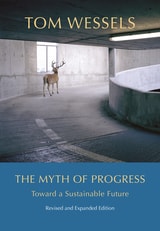
The Myth of Progress
Toward a Sustainable FutureTom Wessels
University Press of New England, 2013
The Myth of Progress
Toward a Sustainable FutureTom Wessels
Brandeis University Press, 2023
In this compelling, cogently argued, and acclaimed book, Tom Wessels demonstrates how our current path toward progress, based on continual economic expansion and inefficient use of resources, runs contrary to three foundational scientific laws that govern all complex natural systems. It is a myth, he contends, that progress depends on a growing economy. Wessels explains his theory with his three laws of sustainability: the law of limits to growth; the second law of thermodynamics, which exposes the dangers of increased energy consumption; and the law of self-organization, which results in the marvelous diversity of such highly evolved systems as the human body and complex ecosystems. Wessels argues that these laws, scientifically proven to sustain life in its myriad forms, have been cast aside since the eighteenth century, first by Western economists, political pragmatists, and governments attracted by the idea of unlimited growth, and more recently by a global economy dominated by large corporations, in which consolidation and oversimplification have created large-scale inefficiencies in both material and energy usage.
Wessels makes scientific theory readily accessible by offering examples of how the laws of sustainability function in the complex systems we can observe in the natural world around us. Demonstrating that all environmental problems have their source in a disregard for the laws of sustainability, he concludes with an impassioned argument for cultural change. This new edition has a new preface wherein the author regards The Myth of Progress as his most important work. It has been in constant demand since it was first published in 2006.

The Myth of Scientific Literacy
Shamos, Morris
Rutgers University Press, 1995
Why do we make every schoolchild and college student take science? Does every American really need to be scientifically literate? In this provocative book, Morris Shamos, a physicist and science educator of very broad experience, argues that universal scientific literacy is a futile goal, and urges a critical review of the purpose of general education in science. Shamos argues that a meaningful scientific literacy cannot be achieved in the first place, and the attempt is a misuse of human resources on a grand scale. He is skeptical about forecasts of Òcritical shortfalls in scientific manpowerÓ and about the motives behind crash programs to get more young people into the science pipeline. Finally, he is convinced that, as presently taught, the vast majority of students come out of science classes with neither an intellectual grasp nor a pragmatic appreciation of science.
Shamos advocates instead a practical science education curriculum that grants the impossibility of every American learning enough science to make independent judgments about major scientific issues. Rather than giving children the heavy diet of scientific terms and facts they now get, he would emphasize: an appreciation of science as an ongoing cultural enterprise; an awareness of technologyÕs impact on one's personal health, safety, and surroundings; and the need to use experts wisely in resolving science/society issues.
Whether you loved or hated your science classes, you will find Morris ShamosÕs arguments about the future of science education required reading. Teachers, parents, scientists, science educators, school administrators, legislators, and science and human resources policy analysts will be especially interested in this book.
The Natural Contract
Michel Serres
University of Michigan Press, 1995
World history is often referred to as the story of human conflict. Those struggles that are seen as our history must now include the uncontrolled violence that humanity perpetrates upon the earth, and the uncontrollable menace to human life posed by the earth in reaction to this violence. Just as a social contract once brought order to human relations, Serres believes that we must now sign a "natural contract" with the earth to bring balance and reciprocity to our relations with the planet that gives us life. Our survival depends on the extent to which humans join together and act globally, on an earth now conceived as an entity.
Tracing the ancient beginnings of modernity, Serres examines the origins and possibilities of a natural contract through an extended meditation on the contractual foundations of law and science. By invoking a nonhuman, physical world, Serres asserts, science frees us from the oppressive confines of a purely social existence, but threatens to become a totalitarian order in its own right. The new legislator of the natural contract must bring science and law into balance.
Serres ends his meditation by retelling the story of the natural contract as a series of parables. He sees humanity as a spacecraft that with the help of science and technology has cast off from familiar moorings. In place of the ties that modernity and analytic reason have severed, we find a network of relations both stranger and stronger than any we once knew, binding us to one another and to the world. The philosopher's harrowing and joyous task, Serres tells us, is that of comprehending and experiencing the bonds of violence and love that unite us in our spacewalk to the spaceship Mother Earth.
"Wise, rich and poetic . . . not simply a philosophical study of the Environment, or an ecological questioning of Philosophy . . . Nature is acknowledged as an inside force which breaks [the philosopher's] discourse, and opens it up to a vigilant poetic meditation."--Substance: A Review of Theory and Literary Criticism
The Natural History of Inbreeding and Outbreeding
Theoretical and Empirical PerspectivesEdited by Nancy Wilmsen Thornhill
University of Chicago Press, 1993
The authors ask whether inbreeding is as problematic as biologists have thought, under what ecological conditions inbreeding occurs, and whether organisms that inbreed have mechanisms to dampen the anticipated problems of reduced genetic variation. The studies, including theoretical and empirical work on wild and captive populations, demonstrate that many plants and animals inbreed to a greater extent than biologists have thought, with variable effects on individual fitness. Graduate students and researchers in evolutionary biology, animal behavior, ecology, and conservation biology will welcome this wide-ranging collection.
The Natural History of Madagascar
Edited by Steven M. Goodman and Jonathan P. Benstead
University of Chicago Press, 2003
The Natural History of Madagascar provides the most comprehensive, up-to-date synthesis available of this island nation's priceless biological treasures. Contributions by nearly three hundred world-renowned experts cover the history of scientific exploration in Madagascar, its geology and soils, climate, forest ecology, human ecology, marine and coastal ecosystems, plants, invertebrates, fishes, amphibians, reptiles, birds, and mammals. Detailed discussions of conservation efforts in Madagascar highlight several successful park reserve programs that could serve as models for other areas. Beautifully illustrated throughout, the book includes over one hundred color illustrations, with fifty color photos by nature photographer Harald Schütz, as well as more than three hundred black-and-white photographs and line drawings.
The Natural History of Madagascar will be the invaluable reference for anyone interested in the Malagasy environment, from biologists and conservationists to policymakers and ecotourists.
The Natural Origins of Economics
Margaret Schabas
University of Chicago Press, 2005
In The Natural Origins of Economics, Margaret Schabas traces the emergence and transformation of economics in the eighteenth and nineteenth centuries from a natural to a social science. Focusing on the works of several prominent economists—David Hume, Adam Smith, Thomas Malthus, David Ricardo, and John Stuart Mill—Schabas examines their conceptual debt to natural science and thus locates the evolution of economic ideas within the history of science. An ambitious study, The Natural Origins of Economics will be of interest to economists, historians, and philosophers alike.
The Natural World of Lewis and Clark
David A. Dalton
University of Missouri Press, 2007
On their journey westward, Lewis and Clark demonstrated an amazing ability to identify the new plants and animals they encountered, and their observations enriched science’s understanding of the trans-Mississippi West. Others have written about their discoveries and have faithfully cataloged their findings; now a twenty-first-century biologist reexamines some of those discoveries in the light of modern science to show for the first time their lasting biological significance.
The Natural World of Lewis and Clark interprets the expedition’s findings from a modern perspective to show how advances such as DNA research, modern understanding of proteins, and the latest laboratory methods shed new light on them. David Dalton recounts the expedition’s observations and, in clear, readily accessible terms, relates them to principles of ecology, genetics, physiology, and even animal behavior.
Writing in informal language with a bit of wry humor, Dalton invites readers to imagine the West that Lewis and Clark found, revealing the dynamic features of nature and the dramatic changes that earlier peoples brought about. He explains surprising facts, ranging from why Indians used cottonwood bark as winter feed for horses to why the explorers experienced gastric distress with some foods, and even why the Expedition’s dog would have been well-advised to avoid a diet of salmon.
Dalton introduces the tools and techniques of today’s science in a way that won’t intimidate nonspecialist readers. Throughout the book he expertly balances botanical and zoological information, with coverage ranging from the extinction of large animals in North America a few thousand years ago to the expected effects of invasive species and climate change in the coming centuries.
Enhanced with unusual and informative illustrations—not only nature photography but also historical images—this book will fascinate any reader with an interest in the natural history of the American West as well as broader issues in conservation and ecology. The Natural World of Lewis and Clark tells the story behind the story of this remarkable expedition and shows that its legacy extended not only across a continent but also into our own time.
The Nature and Nurture of Love
From Imprinting to Attachment in Cold War AmericaMarga Vicedo
University of Chicago Press, 2013
The Nature of Diversity
An Evolutionary Voyage of DiscoveryDaniel R. Brooks and Deborah A. McLennan
University of Chicago Press, 2002
Daniel R. Brooks and Deborah A. McLennan argue that it is impossible to comprehend the nature of life on earth unless evolution—the history of organisms—is restored to a central position in research. They demonstrate how the phylogenetic approach can be integrated with ecological and behavioral studies to produce a richer and more complete picture of evolution. Clearly setting out the conceptual, methodological, and empirical foundations of their research program, Brooks and McLennan show how scientists can use it to unravel the evolutionary history of virtually any characteristic of any living thing, from behaviors to ecosystems. They illustrate and test their approach with examples drawn from a wide variety of species and habitats.
The Nature of Diversity provides a powerful new tool for understanding, documenting, and preserving the world's biodiversity. It is an essential book for biologists working in evolution, ecology, behavior, conservation, and systematics. The argument in The Nature of Diversity greatly expands upon and refines the arguments made in the authors' previous book Phylogeny, Ecology, and Behavior.

The Nature of Natural Philosophy in the Late Middle Ages (Studies in Philosophy and the History of Philosophy, Volume 52)
Edward Grant
Catholic University of America Press, 2010
The Nature of Scientific Evidence
Statistical, Philosophical, and Empirical ConsiderationsEdited by Mark L. Taper and Subhash R. Lele
University of Chicago Press, 2004
Though the book uses ecology as an exemplary science, the interdisciplinary evaluation of the use of statistics in empirical research will be of interest to any reader engaged in the quantification and evaluation of data.
The Nature of Scientific Explanation
Jude P. Dougherty
Catholic University of America Press, 2013
The Nature of Selection
Evolutionary Theory in Philosophical FocusElliott Sober
University of Chicago Press, 1993
"Sober's is the answering philosophical voice, the voice of a first-rate philosopher and a knowledgeable student of contemporary evolutionary theory. His book merits broad attention among both communities. It should also inspire others to continue the conversation."-Philip Kitcher, Nature
"Elliott Sober has made extraordinarily important contributions to our understanding of biological problems in evolutionary biology and causality. The Nature of Selection is a major contribution to understanding epistemological problems in evolutionary theory. I predict that it will have a long lasting place in the literature."-Richard C. Lewontin
The Nature of the Book
Print and Knowledge in the MakingAdrian Johns
University of Chicago Press, 1998
"A compelling exposition of how authors, printers, booksellers and readers competed for power over the printed page. . . . The richness of Mr. Johns's book lies in the splendid detail he has collected to describe the world of books in the first two centuries after the printing press arrived in England."—Alberto Manguel, Washington Times
"[A] mammoth and stimulating account of the place of print in the history of knowledge. . . . Johns has written a tremendously learned primer."—D. Graham Burnett, New Republic
"A detailed, engrossing, and genuinely eye-opening account of the formative stages of the print culture. . . . This is scholarship at its best."—Merle Rubin, Christian Science Monitor
"The most lucid and persuasive account of the new kind of knowledge produced by print. . . . A work to rank alongside McLuhan."—John Sutherland, The Independent
"Entertainingly written. . . . The most comprehensive account available . . . well documented and engaging."—Ian Maclean, Times Literary Supplement
The Nature of the Future
Agriculture, Science, and Capitalism in the Antebellum NorthEmily Pawley
University of Chicago Press, 2020
The nostalgic mist surrounding farms can make it hard to write their history, encrusting them with stereotypical rural virtues and unrealistically separating them from markets, capitalism, and urban influences. The Nature of the Future dispels this mist, focusing on a place and period of enormous agricultural vitality—antebellum New York State—to examine the largest, most diverse, and most active scientific community in nineteenth-century America. Emily Pawley shows how “improving” farmers practiced a science where conflicting visions of the future landscape appeared and evaporated in quick succession. Drawing from US history, environmental history, and the history of science, and extensively mining a wealth of antebellum agricultural publications, The Nature of the Future reveals how improvers transformed American landscapes and American ideas of expertise, success, and exploitation from the ground up.
The Natures of Maps
Cartographic Constructions of the Natural WorldDenis Wood and John Fels
University of Chicago Press, 2008
To answer that question, the authors turn to a category of maps with a particularly strong reputation for objectivity: maps of nature. From depictions of species habitats and bird migrations to portrayals of the wilds of the Grand Canyon and the reaches of the Milky Way, such maps are usually presumed—even by users who should know better—to be strictly scientific. Yet by drawing our attention to every aspect of these maps’ self-presentation, from place names to titles and legends, the authors reveal the way that each piece of information collaborates in a disguised effort to mount an argument about reality. Without our realizing it, those arguments can then come to define our very relationship to the natural world—determining whether we see ourselves as humble hikers or rampaging despoilers, participants or observers, consumers or stewards.
Richly illustrated, and crafted in vivid and witty prose, The Natures of Maps will enlighten and entertain map aficionados, scholars, and armchair navigators alike. You’ll never be able to look at Google Maps quite the same way again.

The Nazi Symbiosis
Human Genetics and Politics in the Third ReichSheila Faith Weiss
University of Chicago Press, 2010
The Faustian bargain—in which an individual or group collaborates with an evil entity in order to obtain knowledge, power, or material gain—is perhaps best exemplified by the alliance between world-renowned human geneticists and the Nazi state. Under the swastika, German scientists descended into the moral abyss, perpetrating heinous medical crimes at Auschwitz and at euthanasia hospitals. But why did biomedical researchers accept such a bargain?
The Nazi Symbiosis offers a nuanced account of the myriad ways human heredity and Nazi politics reinforced each other before and during the Third Reich. Exploring the ethical and professional consequences for the scientists involved as well as the political ramifications for Nazi racial policies, Sheila Faith Weiss places genetics and eugenics in their larger international context. In questioning whether the motives that propelled German geneticists were different from the compromises that researchers from other countries and eras face, Weiss extends her argument into our modern moment, as we confront the promises and perils of genomic medicine today.

The Nether
A PlayJennifer Haley
Northwestern University Press, 2015
When the lines between reality and fantasy blur, what counts as ethical? Who decides?
The Nether, a daring examination of moral responsibility in virtual worlds, opens with a familiar interrogation scene given a technological twist. As Detective Morris, an online investigator, questions Mr. Sims about his activities in a role-playing realm so realistic it could be life, she finds herself on slippery ethical ground. Sims argues for the freedom to explore even the most deviant corners of our imagination. Morris holds that we cannot flesh out our malign fantasies without consequence. Their clash of wills leads to a consequence neither could have imagined. Suspenseful, ingeniously constructed, and fiercely intelligent, Haley’s play forces us to confront deeply disturbing questions about the boundaries of reality.
The Netherlands in a Nutshell
Highlights from Dutch History and CultureEdited by Frits van Oostrom
Amsterdam University Press, 2009
The Neural Mind
How Brains ThinkGeorge Lakoff and Srini Narayanan
University of Chicago Press, 2025
What is an idea, and where does it come from? We experience thought as if it were abstract, but every thought is actually a physical thing, carried out by the neural systems of our brains. Thought does not occur neuron-by-neuron; it happens when neurons come together to form circuits and when simple circuits combine to form complex ones. Thoughts, then, derive their structures from the circuitry we also use for vision, touch, and hearing. This circuitry is what allows simple thoughts to come together into complex concepts, making meaning, creating metaphors, and framing our social and political ideas.
With The Neural Mind, George Lakoff, a pioneering cognitive linguist, and computer scientist Srini Narayanan deftly combine insights from cognitive science, computational modeling, and linguistics to show how thoughts arise from the neural circuitry that runs throughout our bodies. They answer key questions about the ways we make meaning: How does neural circuitry create the conceptual “frames” through which we understand our social lives? What kind of neural circuitry characterizes metaphorical thought, in which ideas are understood in terms of other ideas with similar structures? Lively and accessible, the book shows convincingly that the “metaphors we live by”—to use Lakoff’s famous phrase—aren’t abstractions but deeply embodied neural constructs.
The Neural Mind is the first book of its kind, bringing together the ideas of multiple disciplines to offer a unified, accessible theory of thought. A field-defining work, Lakoff and Narayanan’s book will be of interest not just to linguists and cognitive scientists but also to psychologists, philosophers, anthropologists, journalists, sociologists, and political scientists—and anyone who wants to understand how we really think.
The New Ecological Order
Luc Ferry
University of Chicago Press, 1995
Traditional ecological movements, or "democratic ecology," seek to protect the environment of human societies; they are pragmatic and reformist. But another movement has become the refuge both of nostalgic counterrevolutionaries and of leftist illusions. This is "deep ecology." Its followers go beyond practical critiques of human greed and waste: they call into question the very possibility of human coexistence with nature. The human species is no longer at the center of the world, but subject to a new god called Nature. For these purists, man can only soil the harmony of the universe. In order to secure natural equilibrium, the only solution is to grant rights to animals, to trees, and to rocks.
Ferry launches his critique by examining early European legal cases concerning the status and rights of animals, including a few notorious cases where animals were brought to trial, found guilty, and publicly hanged. He then demonstrates that German Romanticism embraced certain key ideas of the deep ecology movement concerning the protection of animals and the environment. Later adopted by the Nazis, many of these ideas point to a profoundly antihumanistic component of deep ecology that is compatible with totalitarianism.
Ferry shows how deep ecology casts aside all the gains of human autonomy since the Enlightenment. He deciphers the philosophical and political assumptions of a movement that threatens to infantalize human society by preying on the fear of the authority of a new theological-political order. Far from denying our "duty in relation to nature," The New Ecological Order offers a bracing caution—against the dangers of environmental claims and, more important, against the threat to democracy contained in the deep ecology doctrine when pushed to its extreme.
"A book of intellectual power, full of insights, invention, and not without temerity, from one of the best political philosophers today."—Le Figaro
"Few books have analyzed in depth this phenomenon of the ecological movement as the most recent book by Luc Ferry has done. . . . It is a book that absolutely must be read."—Le Point
The New Flatlanders
A Seeker's Guide to the Theory of EverythingEric Middleton
Templeton Press, 2007
In The New Flatlanders, teacher, scientist, and chaplain Eric Middleton challenges traditional ways of looking at reality by engaging readers in a "voyage of discovery starting with questions." The book engagingly begins with a discussion group embarking on an exploratory conversation about the nature of the universe and the place of human beings in it. Daunting questions emerge, such as "How can there possibly be a tear or hole in three-dimensional space? And if there is a hole, can something fall through it? Where would it fall to?" In short order, students and teacher are on a quest to develop a "working theory of everything" that takes them from stone circles to quarks, superstrings, quantum theory, the anthropic principle, evolution, consciousness, miracles, chaos, and the spiritual universe.
The key to exploring these questions is finding a language with which to talk about the awe and wonder of today's science alongside the joy of experiencing the spiritual. This is done by interweaving into the discussions the philosophy of "Flatland," a nonreligious entry point to Jesus posited by nineteenth-century clergyman and educator Edwin A. Abbott in his classic parable Flatland: A Romance of Many Dimensions.
The New Math
A Political HistoryChristopher J. Phillips
University of Chicago Press, 2014
In this history, Christopher J. Phillips examines the rise and fall of the new math as a marker of the period’s political and social ferment. Neither the new math curriculum designers nor its diverse legions of supporters concentrated on whether the new math would improve students’ calculation ability. Rather, they felt the new math would train children to think in the right way, instilling in students a set of mental habits that might better prepare them to be citizens of modern society—a world of complex challenges, rapid technological change, and unforeseeable futures. While Phillips grounds his argument in shifting perceptions of intellectual discipline and the underlying nature of mathematical knowledge, he also touches on long-standing debates over the place and relevance of mathematics in liberal education. And in so doing, he explores the essence of what it means to be an intelligent American—by the numbers.
The New Plagues
Pandemics and Poverty in a Globalized WorldStefan Kaufmann
Haus Publishing, 2009
The New Political Sociology of Science
Institutions, Networks, and PowerEdited by Scott Frickel and Kelly Moore
University of Wisconsin Press, 2015
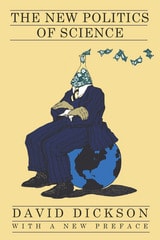
The New Politics of Science
David Dickson
University of Chicago Press, 1988
In The New Politics of Science, David Dickson points out that "the scientific community has its own internal power structures, its elites, its hierarchies, its ideologies, its sanctioned norms of social behavior, and its dissenting groups. And the more that science, as a social practice, forms an integral part of the economic structures of the society in which it is imbedded, the more the boundaries and differences between the two dissolve. Groups inside the scientific community, for example, will use groups outside the community—and vice versa—to achieve their own political ends." In this edition, Dickson has included a new preface commenting on the continuing and increasing influence of industrial and defense interests on American scientific research in the 1980s.
The New Prometheans
Faith, Science, and the Supernatural Mind in the Victorian Fin de SiècleCourtenay Raia
University of Chicago Press, 2019
The New Prometheans traces the evolution of psychical research through the intertwining biographies of four men: chemist Sir William Crookes, depth psychologist Frederic Myers, ether physicist Sir Oliver Lodge, and anthropologist Andrew Lang. All past presidents of the society, these men brought psychical research beyond academic circles and into the public square, making it part of a shared, far-reaching examination of science and society. By layering their papers, textbooks, and lectures with more intimate texts like diaries, letters, and literary compositions, Courtenay Raia returns us to a critical juncture in the history of secularization, the last great gesture of reconciliation between science and sacred truths.
The Newton Wars and the Beginning of the French Enlightenment
J. B. Shank
University of Chicago Press, 2008
A comprehensive study of public culture, The Newton Wars and the Beginning of the French Enlightenment digsbelow the surface of the commonplace narratives that link Newton with Enlightenment thought to examine the actual historical changes that brought them together in eighteenth-century time and space. Drawing on the full range of early modern scientific sources, from studied scientific treatises and academic papers to book reviews, commentaries, and private correspondence, J. B. Shank challenges the widely accepted claim that Isaac Newton’s solitary genius is the reason for his iconic status as the father of modern physics and the philosophemovement.
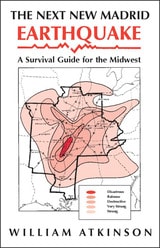
The Next New Madrid Earthquake
A Survival Guide for the MidwestWilliam Atkinson
Southern Illinois University Press, 1989
Scientists who specialize in the study of Mississippi Valley earthquakes say that the region is overdue for a powerful tremor that will cause major damage and undoubtedly some casualties.
The inevitability of a future quake and the lack of preparation by both individuals and communities provided the impetus for this book. Atkinson brings together applicable information from many disciplines: history, geology and seismology, engineering, zoology, politics and community planning, economics, environmental science, sociology, and psychology and mental health to provide the most comprehensive perspective to date of the myriad impacts of a major earthquake on the Mississippi Valley.
Atkinson addresses such basic questions as "What, actually, are earthquakes? How do they occur? Where are they likely to occur? Can they be predicted, perhaps even prevented?" He also addresses those steps that individuals can take to improve their chances for survival both during and after an earthquake.
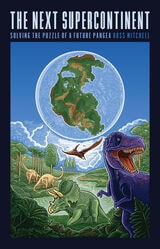
The Next Supercontinent
Solving the Puzzle of a Future PangeaRoss Mitchell
University of Chicago Press, 2023
An internationally recognized scientist shows that Earth’s separate continents, once together in Pangea, are again on a collision course.
You’ve heard of Pangea, the single landmass that broke apart some 175 million years ago to give us our current continents, but what about its predecessors, Rodinia or Columbia? These “supercontinents” from Earth’s past provide evidence that land repeatedly joins and separates. While scientists debate what that next supercontinent will look like—and what to name it—they all agree: one is coming.
In this engaging work, geophysicist Ross Mitchell invites readers to remote (and sometimes treacherous) lands for evidence of past supercontinents, delves into the phenomena that will birth the next, and presents the case for the future supercontinent of Amasia, defined by the merging of North America and Asia. Introducing readers to plate tectonic theory through fieldwork adventures and accessible scientific descriptions, Mitchell considers flows deep in the Earth’s mantle to explain Amasia’s future formation and shows how this developing theory can illuminate other planetary mysteries. He then poses the inevitable question: how can humanity survive the intervening 200 million years necessary to see Amasia?
An expert on the supercontinent cycle, Mitchell offers readers a front-row seat to a slow-motion mystery and an ongoing scientific debate.
The Next Tsunami
Living on a Restless CoastBonnie Henderson
Oregon State University Press, 2014
More than twenty years passed before geologists discovered that it was neither Seaside’s first nor worst tsunami. In fact, massive tsunamis strike the Pacific coast every few hundred years, triggered not by distant temblors but by huge quakes less than one hundred miles off the Northwest coast. Not until the late 1990s would scientists use evidence like tree rings and centuries-old warehouse records from Japan to fix the date, hour, and magnitude of the Pacific Northwest coast’s last megathrust earthquake: 9 p.m., January 26, 1700, magnitude 9.0—one of the largest quakes the world has known. When the next one strikes—this year or hundreds of years from now—the tsunami it generates is likely to be the most devastating natural disaster in the history of the United States.
In The Next Tsunami, Bonnie Henderson shares the stories of scientists like meteorologist Alfred Wegener, who formulated his theory of continental drift while gazing at ice floes calving from Greenland glaciers, and geologist Brian Atwater, who paddled his dented aluminum canoe up coastal streams looking for layers of peat sandwiched among sand and silt. The story begins and ends with Tom Horning, who grew up to become a geologist and return to his family home at the mouth of the river in Seaside—arguably the Northwest community with the most to lose from what scientist Atwater predicts will be an “apocalyptic” disaster. No one in Seaside understands earthquake science—and the politics and complicated psychology of living in a tsunami zone—better than Horning.
Henderson’s compelling story of how scientists came to understand the Cascadia Subduction Zone—a fault line capable of producing earthquakes even larger than the 2011 Tohoku quake in Japan—and how ordinary people cope with that knowledge is essential reading for anyone interested in the charged intersection of science, human nature, and public policy
The Nick of Time
Politics, Evolution, and the UntimelyElizabeth Grosz
Duke University Press, 2004
Grosz develops her argument by juxtaposing the work of three major figures in Western thought: Charles Darwin, Friedrich Nietzsche, and Henri Bergson. She reveals that in theorizing time as an active, positive phenomenon with its own characteristics and specific effects, each of these thinkers had a profound effect on contemporary understandings of the body in relation to time. She shows how their allied concepts of life, evolution, and becoming are manifest in the work of Gilles Deleuze and Luce Irigaray. Throughout The Nick of Time, Grosz emphasizes the political and cultural imperative to fundamentally rethink time: the more clearly we understand our temporal location as beings straddling the past and the future without the security of a stable and abiding present, the more transformation becomes conceivable.