Results by title
4030 books match the query 'Language Arts & Disciplines' and 760 start with t
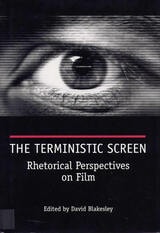
The Terministic Screen
Rhetorical Perspectives on FilmEdited by David Blakesley
Southern Illinois University Press, 2003
The Terministic Screen: Rhetorical Perspectives on Film examines the importance of rhetoric in the study of film and film theory. Rhetorical approaches to film studies have been widely practiced, but rarely discussed until now. Taking on such issues as Hollywood blacklisting, fascistic aesthetics, and postmodern dialogics, editor David Blakesley presents fifteen critical essays that examine rhetoric’s role in such popular films as The Fifth Element, The Last Temptation of Christ, The Usual Suspects, Deliverance, The English Patient, Pulp Fiction, The Music Man, Copycat, Hoop Dreams,and A Time to Kill.
Aided by sixteen illustrations, these insightful essays consider films rhetorically, as ways of seeing and not seeing, as acts that dramatize how people use language and images to tell stories and foster identification.
Contributors include David Blakesley, Alan Nadel, Ann Chisholm, Martin J. Medhurst, Byron Hawk, Ekaterina V. Haskins, James Roberts, Thomas W. Benson, Philip L. Simpson, Davis W. Houck, Caroline J.S. Picart, Friedemann Weidauer, Bruce Krajewski, Harriet Malinowitz, Granetta L. Richardson, and Kelly Ritter.
The Text and Beyond
Essays in Literary LinguisticsCynthia Bernstein
University of Alabama Press, 1997
A groundbreaking collection that bridges linguistics and literature, offering powerful tools to uncover how language shapes meaning, identity, and power in literary texts.
The Text and Beyond: Essays in Literary Linguistics, edited by Cynthia Bernstein, presents a groundbreaking collection of essays that demonstrate how linguistic tools can enrich literary analysis. The volume brings together scholars who explore the intersections of language, literature, and culture—examining how syntax, discourse, gender, power, and regional dialects shape meaning in texts. From Tennessee Williams to Harry Crews, from Dickens to immigrant literature, the essays offer models for integrating linguistic theory with literary interpretation. This book is essential for scholars of stylistics, discourse analysis, and anyone interested in the evolving relationship between language and literature.
The Theater of Michel Vinaver
David Bradby
University of Michigan Press, 1993
The Theoretical Aspects of Bantu Tone
Edited by Larry M. Hyman and Charles Kisseberth
CSLI, 1998

The Top Technologies Every Librarian Needs to Know
Kenneth J. Varnum
American Library Association, 2014
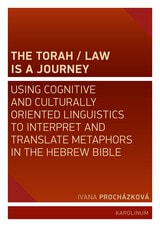
The Torah/Law Is a Journey
Using Cognitive and Culturally Oriented Linguistics to Interpret and Translate Metaphors in the Hebrew BibleIvana Procházková
Karolinum Press, 2022
The Old Testament is rich in metaphor. Metaphorical expressions appear not only in places where you might expect them, like the poetic verses, but also in the legal texts. They appear in the preambles to collections of laws, in their final summaries, in general considerations on compliance with and violation of the law, in texts concerning the meaning of the law, and those dealing with topics now reserved for legal theory and legal philosophy. These metaphorical expressions reveal how the authors of the relevant Torah/Law texts understood their function in society and what the society of the time preferred in the law.
Anchored in cognitive and cultural linguistics, The Torah/Law Is a Journey investigates Hebrew metaphorical expressions concerning the key Old Testament concept of Torah/Law. Ivana Procházková identifies Hebrew conceptual metaphors and explicates the metaphorical expressions. She also uses cognitive linguistic analysis to look at modern translations of selected metaphorical expressions into Czech and English. Procházková closes with an analysis of the metaphors used in the Council of Europe publication Compass: Manual for Human Rights Education with Young People to conceptualize human rights.
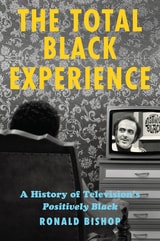
The Total Black Experience
A History of Television’s Positively BlackRonald Bishop
Rutgers University Press, 2026
The Total Black Experience is the first book to chronicle the history and social significance of Positively Black, one of the longest-running public affairs shows in the history of television. Spurred on by the findings of the Kerner Commission, executives at WNBC-TV greenlit the show and turned production over to a small but dedicated team of storytellers who quickly made it their mission to carve out a space for serious and nuanced discussion of issues important to the Black community and to celebrate all aspects of Black culture. They believed that accurate representation of their experiences was a right, not a privilege. The show’s first cohosts included the well-known Harlem-based activist Rev. Eugene Callender and Gus Heningburg, activist, successful consultant and mediator, and advocate for organized labor. Callender had founded Harlem Prep to equip young Black people for college, while Heningburg played a key role in stabilizing life in Newark following the rebellion there in the late 1960s. Both were adept at using the media to reach their constituencies. Combining in-depth interviews with painstaking archival research, The Total Black Experience introduces readers to key members of the Positively Black production team and analyzes thematic shifts in the show’s content. The book celebrates Positively Black’s longevity and challenges readers to explore the current state of Black representation on television.
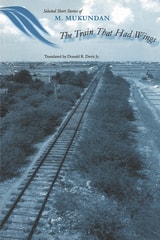
The Train That Had Wings
Selected Stories of M. MukundanM. Mukundan; Translated from the Malayalam by Donald R. Davis Jr.
University of Michigan Press, 2005
The Transformed Library
Jeannette Woodward
American Library Association, 2013
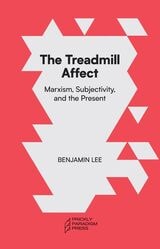
The Treadmill Affect
Marxism, Subjectivity, and the PresentBenjamin Lee
Prickly Paradigm Press, 2025
The Treadmill Affect draws upon the work of three University of Chicago professors, each a former program director at the Center for Transcultural Studies: literary and cultural critic Lauren Berlant, historian and social theorist Moishe Postone, and linguist Michael Silverstein. Through this intellectual synthesis, Benjamin Lee demonstrates the critical possibilities of uniting a revived linguistic turn with Marxist accounts of affect and subjectivity, adding new dimensions to the "treadmill" affective structure of cruel optimism.
The Truth about Language
What It Is and Where It Came FromMichael C. Corballis
University of Chicago Press, 2017
But as Michael C. Corballis shows in The Truth about Language, it’s time to reconsider those assumptions. Language, he argues, is not the product of some “big bang” 60,000 years ago, but rather the result of a typically slow process of evolution with roots in elements of grammatical language found much farther back in our evolutionary history. Language, Corballis explains, evolved as a way to share thoughts—and, crucially for human development, to connect our own “mental time travel,” our imagining of events and people that are not right in front of us, to that of other people. We share that ability with other animals, but it was the development of language that made it powerful: it led to our ability to imagine other perspectives, to imagine ourselves in the minds of others, a development that, by easing social interaction, proved to be an extraordinary evolutionary advantage.
Even as his thesis challenges such giants as Chomsky and Stephen Jay Gould, Corballis writes accessibly and wittily, filling his account with unforgettable anecdotes and fascinating historical examples. The result is a book that’s perfect both for deep engagement and as brilliant fodder for that lightest of all forms of language, cocktail party chatter.
The U.S.–China Trade War
Global News Framing and Public Opinion in the Digital AgeLouisa Ha
Michigan State University Press, 2022
The Unity of Unbounded Dependency Constructions
Robert D. Levine and Thomas E. Hukari
CSLI, 2006
The Universal Journalist
David Randall
Pluto Press, 2021
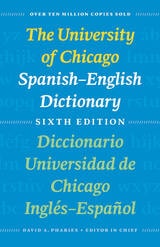
The University of Chicago Spanish-English Dictionary, Sixth Edition
Diccionario Universidad de Chicago Inglés-Español, Sexta EdiciónDavid A. Pharies, Editor in Chief
University of Chicago Press, 2012
A concise, authoritative, up-to-date guide to Spanish and English
The University of Chicago Spanish–English Dictionary has long set the standard for concise bilingual dictionaries. Portable yet remarkably thorough, the dictionary enables users to find the precise equivalents of the words and phrases they seek.
The Use of Language
Prashant Parikh
CSLI, 2001
The Vanishing Newspaper [2nd Ed]
Saving Journalism in the Information AgePhilip Meyer
University of Missouri Press, 2009
The Victory Album
Reflections on the Good Life after the Good WarPhilip D. Beidler
University of Alabama Press, 2010
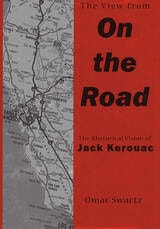
The View From On the Road
The Rhetorical Vision of Jack KerouacOmar Swartz
Southern Illinois University Press, 2000
Through careful analysis of Jack Kerouac’s On the Road, Omar Swartz argues that Kerouac’s influence on American society is largely rhetorical. Kerouac’s significance as a cultural icon can be best understood, Swartz asserts, in terms of traditional rhetorical practices and principles.
To Swartz, Kerouac is a rhetor who symbolically reconstructs his world and offers arguments and encouragements for others to follow. Swartz proposes that On the Road constitutes a “rhetorical vision,” a reality-defining discourse suggesting alternative possibilities for growth and change. Swartz asserts that the reader of Kerouac’s On theRoadbecomes capable of responding to the larger, confusing culture in a strategic manner. Kerouac's rhetorical vision of an alternative social and cultural reality contributes to the identity of localized cultures within the United States.
The View from Somewhere
Undoing the Myth of Journalistic ObjectivityLewis Raven Wallace
University of Chicago Press, 2019
In The View from Somewhere, Lewis Raven Wallace dives deep into the history of “objectivity” in journalism and how its been used to gatekeep and silence marginalized writers as far back as Ida B. Wells. At its core, this is a book about fierce journalists who have pursued truth and transparency and sometimes been punished for it—not just by tyrannical governments but by journalistic institutions themselves. He highlights the stories of journalists who question “objectivity” with sensitivity and passion: Desmond Cole of the Toronto Star; New York Times reporter Linda Greenhouse; Pulitzer Prize-winner Rachel Kaadzi Ghansah; Peabody-winning podcaster John Biewen; Guardian correspondent Gary Younge; former Buzzfeed reporter Meredith Talusan; and many others. Wallace also shares his own experiences as a midwestern transgender journalist and activist who was fired from his job as a national reporter for public radio for speaking out against “objectivity” in coverage of Trump and white supremacy.
With insightful steps through history, Wallace stresses that journalists have never been mere passive observers. Using historical and contemporary examples—from lynching in the nineteenth century to transgender issues in the twenty-first—Wallace offers a definitive critique of “objectivity” as a catchall for accurate journalism. He calls for the dismissal of this damaging mythology in order to confront the realities of institutional power, racism, and other forms of oppression and exploitation in the news industry.
The View from Somewhere is a compelling rallying cry against journalist neutrality and for the validity of news told from distinctly subjective voices.
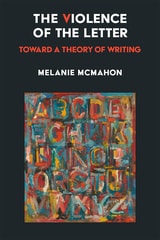
The Violence of the Letter
Toward a Theory of WritingMelanie McMahon
University of Michigan Press, 2023
Co-Winner of the 2024 ACLA Renè Wellek Prize for Monograph
The emergence of the alphabet in ancient Greece, usually heralded as the first step in the inexorable march toward reason and progress, in fact signaled the introduction of a chance technology that hijacked the future, with devastating consequences for humanity. By investigating an array of cultural artifacts, ranging from Kubrick's 2001: A Space Odyssey to the Oracle at Delphi to Luther's challenge to the Church, this book demonstrates how the apparently benign emergence of writing made possible far-ranging systems of organized domination and unprecedented levels of violence. The Violence of the Letter considers how a twenty-six-letter code changed the face of the world, and not always for the better.
The Virtual Reference Service
From Competencies to Assessment - Neal-Schuman PublishersAmerican Library Association, 2008
The Vocation of a Teacher
Rhetorical Occasions, 1967-1988Wayne C. Booth
University of Chicago Press, 1989
"[Booth] is unusually adept at addressing a wide variety of audiences. From deep in the heart of this academic jungle, he shows a clear eye and a firm step."—Alison Friesinger Hill, New York Times Book Review
"A cause for celebration. . . . What an uncommon man is Wayne Booth. What an uncommon book he has provided for our reflection."—James Squire, Educational Leadership
"This book stands as a vigorous reminder of the traditional virtues of the scholar-teacher."—Brian Cox, Times Literary Supplement
The Vulnerability of Public Higher Education
Michael Bernard-Donals
The Ohio State University Press, 2023
Reduced state funding to public institutions. The removal of tenure from state statutes. Attempts to silence faculty. Michael Bernard-Donals takes on these issues and other crises in higher education in The Vulnerability of Public Higher Education, exploring how values once used to justify higher education—the democratization of knowledge, the fostering of expertise, the creation of well-informed citizens, and critical engagement with issues—have been called into question.
Bernard-Donals argues that public higher education, especially the work of faculty, has become vulnerable—socially, politically, professionally—and this book takes seriously the idea of vulnerability, suggesting that university faculty see it not as an encumbrance to their work but as an opportunity to form relations of solidarity with one another through mutual recognition and shared, albeit different forms of, precarity. Through a series of case studies on faculty rights and responsibilities, the efficacy of diversity initiatives, and tenure and academic freedom, Bernard-Donals employs a rhetorical perspective to show how vulnerability can reshape faculty work and provide ways to shift the relations of materiality and power while opening up new forms of deliberation, engagement, and knowledge production.
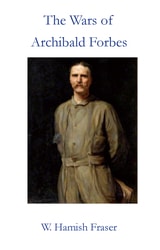
The Wars of Archibald Forbes
W. Hamish Fraser
Aberdeen University Press, 2015
The Wealth of Reality
An Ecology of CompositionMargaret A. Syverson
Southern Illinois University Press, 1999
Margaret A. Syverson discusses the ways in which a theory of composing situations as ecological systems might productively be applied in composition studies. She demonstrates not only how new research in cognitive science and complex systems can inform composition studies but also how composing situations can provide fruitful ground for research in cognitive science.
Syverson first introduces theories of complex systems currently studied in diverse disciplines. She describes complex systems as adaptive, self-organizing, and dynamic; neither utterly chaotic nor entirely ordered, these systems exist on the boundary between order and chaos. Ecological systems are "metasystems" composed of interrelated complex systems. Writers, readers, and texts, together with their environments, constitute one kind of ecological system.
Four attributes of complex systems provide a theoretical framework for this study: distribution, embodiment, emergence, and enaction. Three case studies provide evidence for the application of these concepts: an analysis of a passage from an autobiographical poem by Charles Reznikoff, a study of first-year college students writing collaboratively, and a conflict in a computer forum of social scientists during the Gulf War. The diversity of these cases tests the robustness of theories of distributed cognition and complex systems and suggests possibilities for wider application.
The Weeding Handbook
A Shelf-by-Shelf GuideRebecca Vnuk
American Library Association, 2015
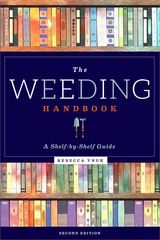
The Weeding Handbook
A Shelf-by-Shelf GuideRebecca Vnuk
American Library Association, 2022
"Manages to be a thorough and informative source on weeding library collections and yet also an easy, engaging read ... Recommended." That rave review from Technicalities sums up the acclaim and appeal of this bestselling resource’s first edition. Now Vnuk has revised and updated her text to keep pace with libraries’ longer-term shifts in collection development and access, such as a growing emphasis on digital collections and managing duplicate physical materials. She demonstrates how weeding helps a library thrive by focusing its resources on those parts of the collection that are the most useful to its users. Walking collections staff through the proverbial stacks shelf by shelf, this book
- includes a new “Tales from the Front” feature, providing real-life case studies of librarians working on weeding projects;
- explains why weeding is important for a healthy library and how it can positively affect library budgets;
- systematically walks readers through a library's shelves, with recommended weeding criteria and call-outs in each area for the different considerations of large collections and smaller collections;
- offers easily adaptable, updated sample development plans which reflect the latest thinking in collection development;
- advises readers on weeding problematic materials, such as those that include racist themes and depictions;
- presents updated and expanded guidance on special considerations for youth collections;
- addresses reference, media, magazines and newspapers, e-books, and other special materials;
- shares guidance for determining how to delegate responsibility for weeding, plus pointers for getting other staff members on board; and
- gives advice for educating the community about the process, how to head off PR disasters, and what to do with weeded materials.
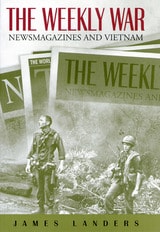
The Weekly War
Newsmagazines and VietnamJames Landers
University of Missouri Press, 2004
The Weimar Origins of Rhetorical Inquiry
David L. Marshall
University of Chicago Press, 2020
The Whole Library Handbook 5
Current Data, Professional Advice, and CuriosaGeorge M. Eberhart
American Library Association, 2013
The Whole Library Handbook
Teen ServicesHeather Booth
American Library Association, 2014
The Whole School Library Handbook 2
Blanche Woolls
American Library Association, 2013
The Wild Goose
Mori Ogai; Translated with an Introduction by Burton Watson
University of Michigan Press, 1995
The Will of a People
A Critical Anthology of Great African American SpeechesEdited with Introductions by Richard W. Leeman and Bernard K. Duffy
Southern Illinois University Press, 2012
Normal0falsefalsefalseEN-USX-NONEX-NONE
Drawing upon nearly two hundred years of recorded African American oratory, The Will of a People: A Critical Anthology of Great African American Speeches,edited by Richard W. Leeman and Bernard K. Duffy, brings together in one unique volume some of this tradition’s most noteworthy speeches, each paired with an astute introduction designed to highlight its most significant elements.
Arranged chronologically, from Maria Miller Stewart’s 1832 speech “Why Sit Ye Here and Die?” to President Barack Obama’s 2009 inaugural address, these orations are tied to many of the key themes and events of American history, as well as the many issues and developments in American race relations. These themes, events, and issues include the changing roles of women, Native American relations, American “manifest destiny,” abolitionism, the industrial revolution, Jim Crow, lynching, World War I and American self-determination, the rise of the New Deal and government social programs, the Civil Rights Movement and desegregation, the Vietnam War, Nixon and Watergate, gay and lesbian rights, immigration, and the rise of a mediated culture. Leeman and Duffy have carefully selected the most eloquent and relevant speeches by African Americans, including those by Sojourner Truth, Frederick Douglass, Frances Ellen Watkins Harper, Ida B. Wells-Barnett, Booker T. Washington, Mary Church Terrell, W. E. B. Du Bois, Marcus Garvey, Martin Luther King Jr., Malcolm X, Stokely Carmichael, Barbara Jordan, Jesse Jackson, and Marian Wright Edelman, many of which have never received significant scholarly attention.
The Will of a People is the first book to pair the full texts of the most important African American orations with substantial introductory essays intended to guide the reader’s understanding of the speaker, the speech, its rhetorical interpretation, and the historical context in which it occurred. Broadly representative of the African American experience, as well as what it means to be American, this valuable collectionwill serve as an essential guide to the African American oratory tradition.
The Wired City
Reimagining Journalism and Civic Life in the Post-Newspaper AgeDan Kennedy
University of Massachusetts Press, 2013
Although the Independent is the principal subject of The Wired City, Kennedy examines a number of other online news projects as well, including nonprofit organizations such as Voiceof San Diego and the Connecticut Mirror and for-profit ventures such as the Batavian, Baristanet, and CT News Junkie. Where legacy media such as major city newspapers are cutting back on coverage, entrepreneurs are now moving in to fill at least some of the vacuum.
The Wired City includes the perspectives of journalists, activists, and civic leaders who are actively re-envisioning how journalism can be meaningful in a hyperconnected age of abundant news sources. Kennedy provides deeper context by analyzing the decline of the newspaper industry in recent years and, in the case of those sites choosing such a path, the uneasy relationship between nonprofit status and the First Amendment.
At a time of pessimism over the future of journalism, The Wired City offers hope. What Kennedy documents is not the death of journalism but rather the uncertain and sometimes painful early stages of rebirth.

The World Color Survey
Paul Kay, Brent Berlin, Luisa Maffi, William R. Merrifield, and Richard Cook
CSLI, 2009
The 1969 publication of Brent Berlin and Paul Kay's Basic Color Terms proved explosive and controversial. Contrary to the then-popular doctrine of random language variation, Berlin and Kay's multilingual study of color nomenclature indicated a cross-cultural and almost universal pattern in the selection of colors that received abstract names in each language. The ensuing debate helped reform the views of anthropologists, linguists, and psychologists alike. After four decades in print, Basic Color Terms now has a sequel: in this book, the authors authoritatively extend the original survey, studying 110 additional unwritten languages in detail and in situ. The results are presented with charts showing the overall palette of color terms within each language as well as the levels of agreement among speakers.
The World Is Our Stage
The Global Rhetorical Presidency and the Cold WarAllison M. Prasch
University of Chicago Press, 2023
Crowds swarm when US presidents travel abroad, though many never hear their voices. The presidential body, moving from one secured location to another, communicates as much or more to these audiences than the texts of their speeches. In The World is Our Stage, Allison M. Prasch considers how presidential appearances overseas broadcast American superiority during the Cold War. Drawing on extensive archival research, Prasch examines five foundational moments in the development of what she calls the “global rhetorical presidency:” Truman at Potsdam, Eisenhower’s “Goodwill Tours,” Kennedy in West Berlin, Nixon in the People’s Republic of China, and Reagan in Normandy. In each case, Prasch reveals how the president’s physical presence defined the boundaries of the “Free World” and elevated the United States as the central actor in Cold War geopolitics.
The World in a Phrase
A Brief History of the Aphorism, Second EditionJames Geary
University of Chicago Press, 2025
Aphorisms are literature’s hand luggage. Light and compact, they contain everything you need to get through a rough day at the office or a dark night of the soul. Aphorisms, the oldest written art form on the planet, have been going viral for thousands of years, delivering the short, sharp shock of old forgotten truths. Today, visual artists are mixing pithy language with compelling imagery and using social media to take the form into the future. In a world of disinformation and deepfakes, aphorisms point to the power of fresh debate over tired dogma and inconvenient truths over comfortable lies.
Starting in ancient China and ending with contemporary meme-makers and street artists, The World in A Phrase tells the story of the aphorism through brief biographies of some of its greatest practitioners: sages like Lao-tzu and the Buddha, philosophers like Schopenhauer and Nietzsche, writers like George Eliot and Marie von Ebner-Eschenbach, humorists like Mark Twain and Dorothy Parker, activists like James Baldwin and Audre Lorde, poets like Langston Hughes and Kay Ryan, and artists like Jenny Holzer and David Byrne.
The World in A Phrase is for lovers of words and seekers of wisdom. This new edition of The New York Times bestseller features 26 additional aphorists and explores the aphorism in the age of social media, showing why these short sentences are the ultimate deep dives in an era when TL;DR has become a cultural catchphrase.
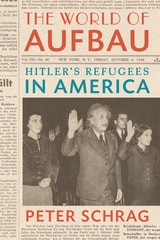
The World of Aufbau
Hitler's Refugees in AmericaPeter Schrag
University of Wisconsin Press, 2019
The book examines the columns and advertisements that chronicled the social and cultural life of that generation and maintained a detailed account of German-speaking cultures in exile. Peter Schrag is the first to present a definitive account of the influential publication that brought postwar refugees together and into the American mainstream.
The Writer in the Well
On Misreading and Rewriting LiteratureGary Weissman
The Ohio State University Press, 2016
Rethinking the methods and goals of literary analysis, Weissman’s study redefines the nature of authorial intention and reconceives literary interpretation as a writing-based practice. By integrating writing pedagogy with older and newer schools of thought—from psychoanalytic, reader-response, and poststructuralist theories to rhetorical narrative theory and cognitive literary studies—and bridging the fields of literary studies, composition and rhetoric, and creative writing, The Writer in the Well argues that the richest understanding of a literary work lies in probing how it has been misinterpreted and reconceived and offers a new “writer-response theory.”
This highly accessible and thought-provoking book, which includes the full text of Sher’s “The Man in the Well,” is designed to engage scholars, teachers, students, and avid readers of literature.
The Writer's Diet
A Guide to Fit ProseHelen Sword
University of Chicago Press, 2016
Helen Sword dispenses with excessive explanations and overwrought analysis. Instead, she offers an easy-to-follow set of writing principles: use active verbs whenever possible; favor concrete language over vague abstractions; avoid long strings of prepositional phrases; employ adjectives and adverbs only when they contribute something new to the meaning of a sentence; and reduce your dependence on four pernicious “waste words”: it, this, that, and there.
Sword then shows the rules in action through examples from William Shakespeare, Emily Dickinson, Martin Luther King Jr., John McPhee, A. S. Byatt, Richard Dawkins, Alison Gopnik, and many more. A writing fitness test encourages you to assess your own writing and get immediate advice on addressing problem areas. While The Writer’s Diet is as sleek and concise as the writing ideals contained within, this slim volume packs a powerful punch.
With Sword’s coaching writers of all levels can strengthen and tone their sentences with the stroke of a pen or the click of a mouse. As with any fitness routine, adhering to the rules requires energy and vigilance. The results, however, will speak for themselves.
The Writing Cure
Psychoanalysis, Composition, and the Aims of EducationMark Bracher
Southern Illinois University Press, 1999
Psychoanalysis and writing instruction have much to offer each other, asserts Mark Bracher. In this book, Bracher examines the intersection between these two fields and proposes pedagogical uses of psychoanalytic technique for writing instruction.
Psychoanalysis reveals that the writing process is profoundly affected by factors that current theories have largely neglected—forces such as enjoyment, desire, fantasy, and anxiety, which, moreover, are often unconscious. Articulating an approach based on the work of Jacques Lacan, Bracher shows how a psychoanalytic perspective can offer useful insights into the nature of the writing process, the sources of writing problems, and the dynamics of writing instruction. He further demonstrates that writing instruction constitutes the most favorable venue outside of individual psychoanalytic treatment for pursuing psychoanalytic research and practice. Like psychoanalytic treatment proper, writing instruction can function as a way of reducing psychological conflict and as a means of pursuing psychoanalytic research into the workings of the mind. Empirical studies and personal testimonies have demonstrated the psychological (and even the physical) benefits of writing about personal conflict in an academic setting; such benefits promise to be enhanced and consolidated through the application of psychoanalytic principles to the teaching of writing.
The Writing Habit
David Huddle
Brandeis University Press, 1994
The Writing Life
The Hopwood Lectures, Fifth SeriesNicholas Delbanco
University of Michigan Press, 2000
The Writing Studio Sampler
Stories about ChangeMark Sutton
University Press of Colorado, 2018
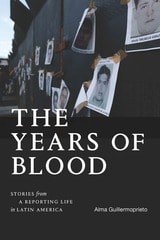
The Years of Blood
Stories from a Reporting Life in Latin AmericaAlma Guillermoprieto
Duke University Press, 2025
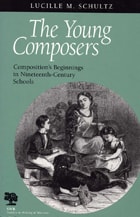
The Young Composers
Composition's Beginnings in Nineteenth-Century SchoolsLucille M. Schultz
Southern Illinois University Press, 1999
Lucille M. Schultz's The Young Composers: Composition's Beginnings in Nineteenth-Century Schools is the first full-length history of school-based writing instruction. Schultz demonstrates that writing instruction in nineteenth-century American schools is much more important in the overall history of writing instruction than we have previously assumed.
Drawing on primary materials that have not been considered in previous histories of writing instruction—little-known textbooks and student writing that includes prize-winning essays, journal entries, letters, and articles written for school newspapers—Schultz shows that in nineteenth-century American schools, the voices of the British rhetoricians that dominated college writing instruction were attenuated by the voice of the Swiss education reformer Johann Heinrich Pestalozzi. Partly through the influence of Pestalozzi's thought, writing instruction for children in schools became child-centered, not just a replica or imitation of writing instruction in the colleges.
It was also in these nineteenth-century American schools that personal or experience-based writing began and where the democratization of writing was institutionalized. These schools prefigured some of our contemporary composition practices: free writing, peer editing, and the use of illustrations as writing prompts. It was in these schools, in fact, where composition instruction as we know it today began, Schultz argues.
This book features a chapter on the agency of textbook iconography, which includes illustrations from nineteenth-century composition books as well as a cultural analysis of those illustrations. Schultz also includes a lengthy bibliography of nineteenth-century composition textbooks and student and school newspapers.
Theaters of Translation
Cosmopolitan Vernaculars in Shakespeare's EnglandAndrew S. Keener
University of Alabama Press, 2025
Explores the profound influence of multilingual dictionaries, dialogues, and grammars on English Renaissance playwrights
In Theaters of Translation, Andrew S. Keener offers a fascinating account of the ways that plays by Thomas Kyd, Mary Sidney Herbert, Ben Jonson, and their fellow English contemporaries were shaped by and part of a multilingual Europe where dictionaries, grammars, and language-learning materials circulated widely. He proposes a fresh, multilingual approach to English Renaissance drama that challenges the histories of early modern European languages as sites of national and linguistic cohesion.
Covering the period between 1570 and 1640, when England’s drama and the English language itself were evolving, Keener uses the term “cosmopolitan vernaculars” to examine how nonclassical European languages modeled transnational forms of belonging for playgoers, readers, and authors in Renaissance England. Combining recent contributions to cosmopolitan theory and transnational studies of early modern literature and culture, Keener highlights both the ways in which cosmopolitanism manifests through Europe’s vernacular languages—in print and performance—and the ways languages themselves can exhibit cosmopolitanism for those who encounter them on the page or on the stage.
Theaters of Translation opens up new transnational interpretations of English Renaissance plays and casts fresh light on historical anecdotes, such as Jonson inscribing a copy of Pietro Aretino’s scandalous Italian dialogues or Shakespeare’s First Folio being advertised for sale in Germany before its London publication. It offers much of interest to readers and scholars of Renaissance Europe, early modern drama, and the development of national European languages.

Theoretical Issues in Sign Language Research, Volume 1
LinguisticsEdited by Susan D. Fischer and Patricia Siple
University of Chicago Press, 1990
Edited by Susan Fischer and Patricia Siple, this collection is divided into four sections, reflecting the traditional core areas of phonology, morphology, syntax, and semantics. Although most of the contributions consider American Sign Language (ASL), five treat sign languages unrelated to ASL, offering valuable perspectives on sign universals. Since some of these languages or systems are only recently established, they provide a window onto the evolution and growth of sign languages.